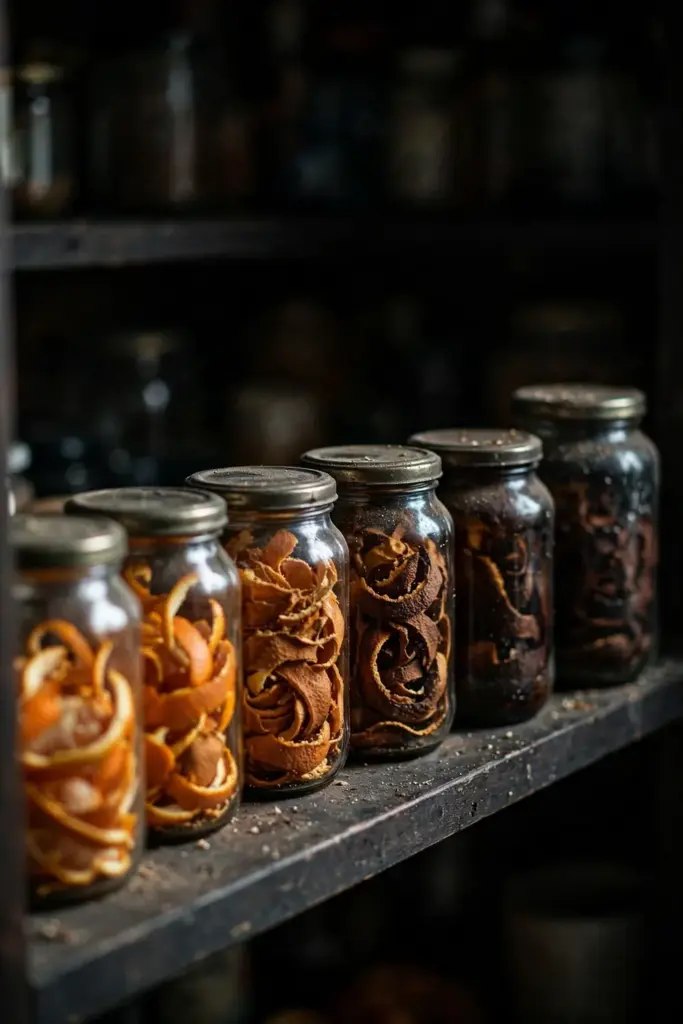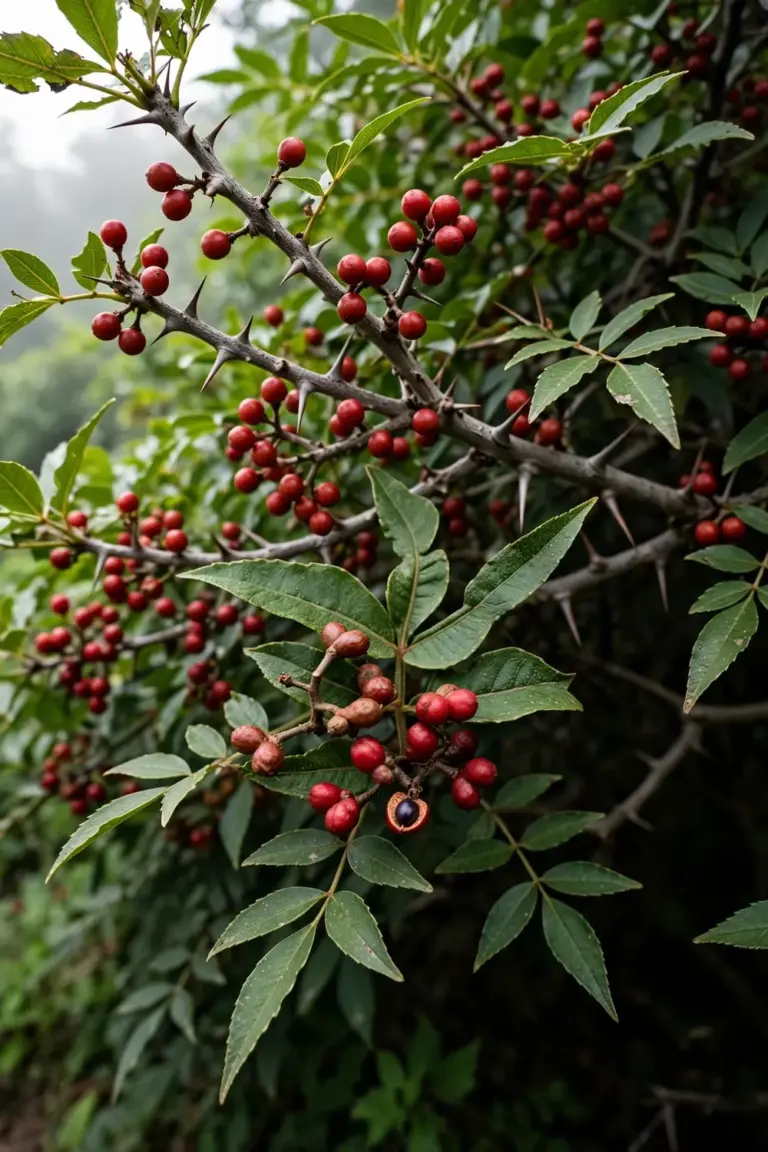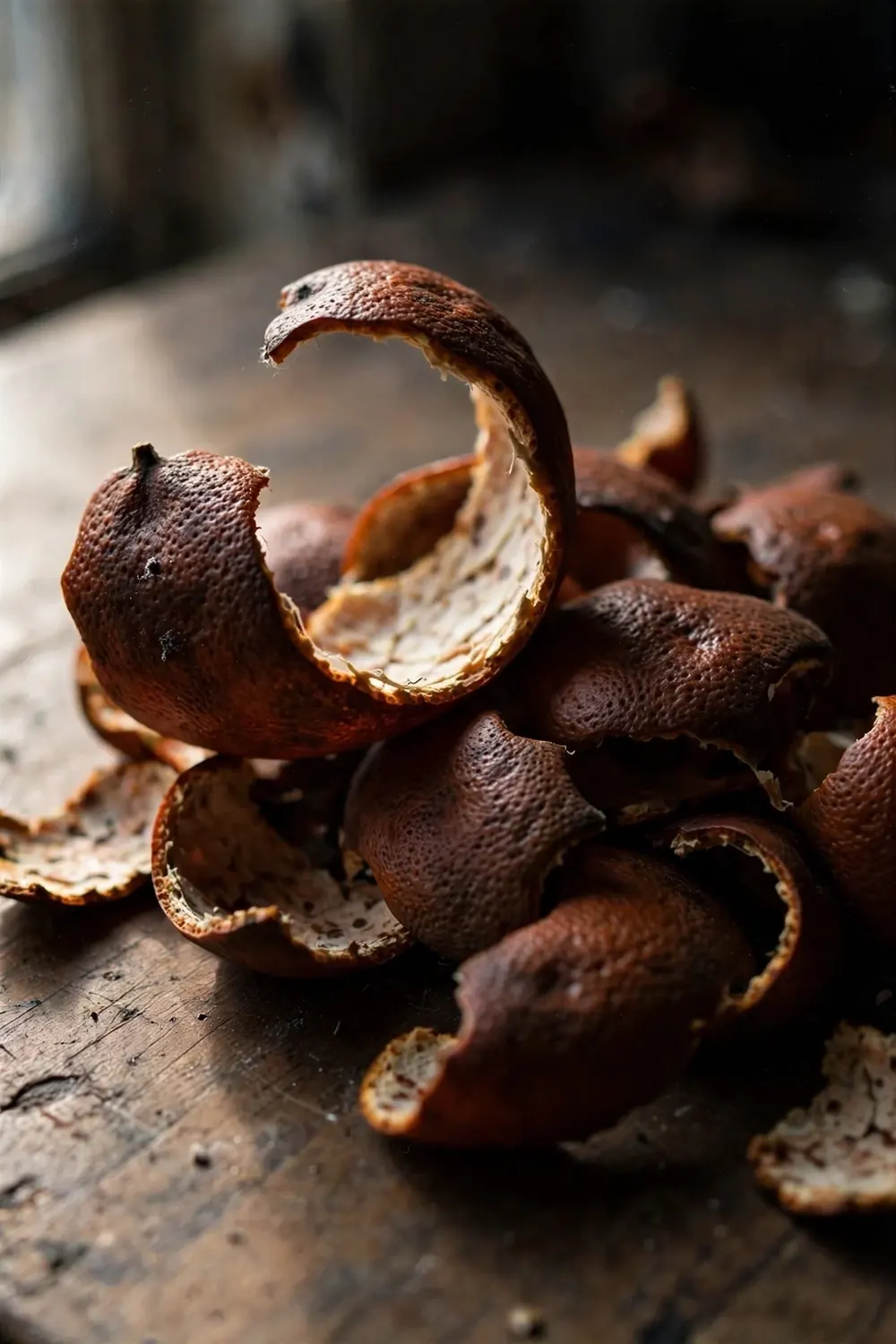

Buy 3 kilograms of tangerines this winter and you can make chen pi at home. That is how to make chen pi at home: dry the peel of mandarin oranges, then age it for at least three years until it darkens into the fragrant, bittersweet ingredient behind red bean soup, orange chicken, and slow-brewed tea. The rest of this page is 8 steps, from choosing the right fruit to brewing your first cup. I have learned that the honesty comes first with this project. Peel dried last month is not chen pi. It is dried tangerine peel. Real chen pi needs three years in the jar, and the steps below tell you exactly what to do during the wait.
Chen pi (陈皮, “aged peel”) is the dried, aged peel of the mandarin orange (Citrus reticulata). The most famous comes from Xinhui, a district in Guangdong, China, where growers raise a local mandarin for its peel rather than its juice. Home cooks cannot buy Xinhui fruit at most markets. Any loose-skinned tangerine or mandarin approximates it, and the principle behind the cultivar choice travels well: pick fruit whose peel smells strongly when you scratch it. The aging itself cannot be approximated. Time does the work that no shortcut replaces.
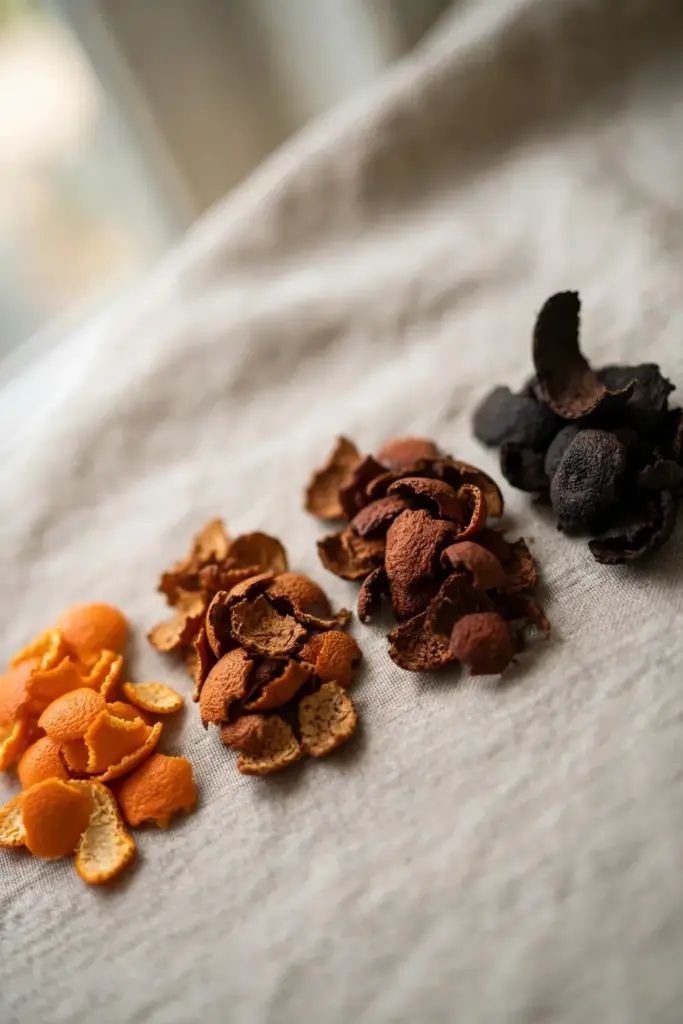
Fresh-dried peel smells bright and simple, like the fruit it came from. Three-year chen pi smells like something else entirely: darker, warmer, with a honeyed depth under the citrus. That transformation happens slowly in the jar, driven by oxidation of the peel’s oils over years, and it is the reason chen pi commands high prices while dried peel costs almost nothing. You are not just preserving a harvest. You are manufacturing time.
1. Buy Tangerines Grown for Peel, Not Juice
Choose loose-skinned tangerines or mandarins with fragrant, oily rind. Thin-skinned varieties dry faster and age better than thick navel oranges. Clementines and satsumas work, and the tangerine growing guide covers the varieties worth planting if you want a yearly peel harvest from your own tree. Thick-skinned sweet oranges do not; their peel stays spongy and bitter.
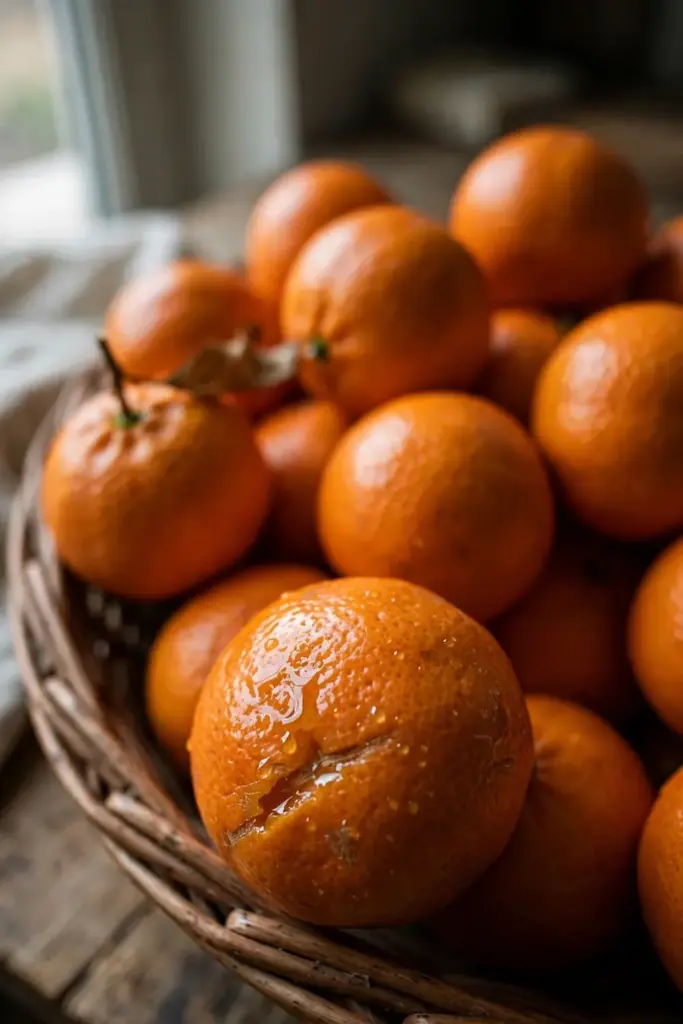
The Xinhui story explains why variety matters. In Xinhui, growers harvest a local mandarin called chazhi gan when the fruit is still green and sour, grown for peel rather than juice, as the dried mandarin peel guide from The Woks of Life explains. The peel is thick with aromatic oils and dries into strips that age for decades. That cultivar stays in southern China. The principle travels anyway: pick fruit whose peel smells strongly when you scratch it. Weak-smelling rind makes weak chen pi.
Buy fruit you would eat fresh. The peel carries whatever sat on the skin, so choose unwaxed fruit when you can find it, or plan to scrub the wax off in step 2. Three kilograms of fruit yields roughly one large jar of dried peel, enough for a year of tea once it matures. If you grow your own citrus, a mandarin tree gives you the ideal raw material, and the mandarin growing guide shows how to raise it.
2. Wash and Dry Every Fruit
Scrub each tangerine under running water with a vegetable brush. Commercial fruit often carries wax coatings and pesticide residues on the rind, and the rind is the entire ingredient here. A firm scrub removes most of it. For extra caution, soak the fruit for 10 minutes in water with a spoonful of baking soda, then scrub and rinse. The soak loosens wax that brushing alone misses.
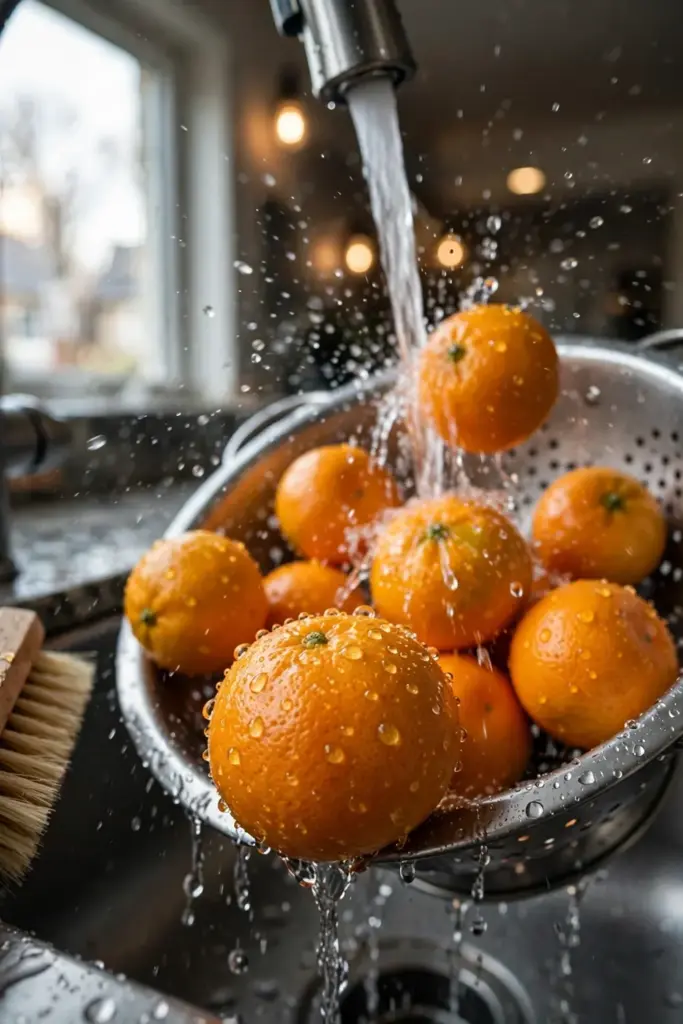
Towel-dry the fruit completely before peeling. Water on the skin invites mold during the first drying days, and mold is the one failure that ruins a whole batch. Work in small batches of six to eight fruit so nothing sits wet while you peel. If your kitchen runs humid, point a fan at the drying tray later; the same humidity that slows drying also feeds mold.
3. Score and Peel in Three Connected Lobes
Lightly score the peel from the stem end about two-thirds down toward the base, in three or four lines. Do not cut into the fruit. Juice wetting the peel is the enemy; the tangerine peel how-to from The Woks of Life stresses this exact point, because moist peel spoils instead of drying.
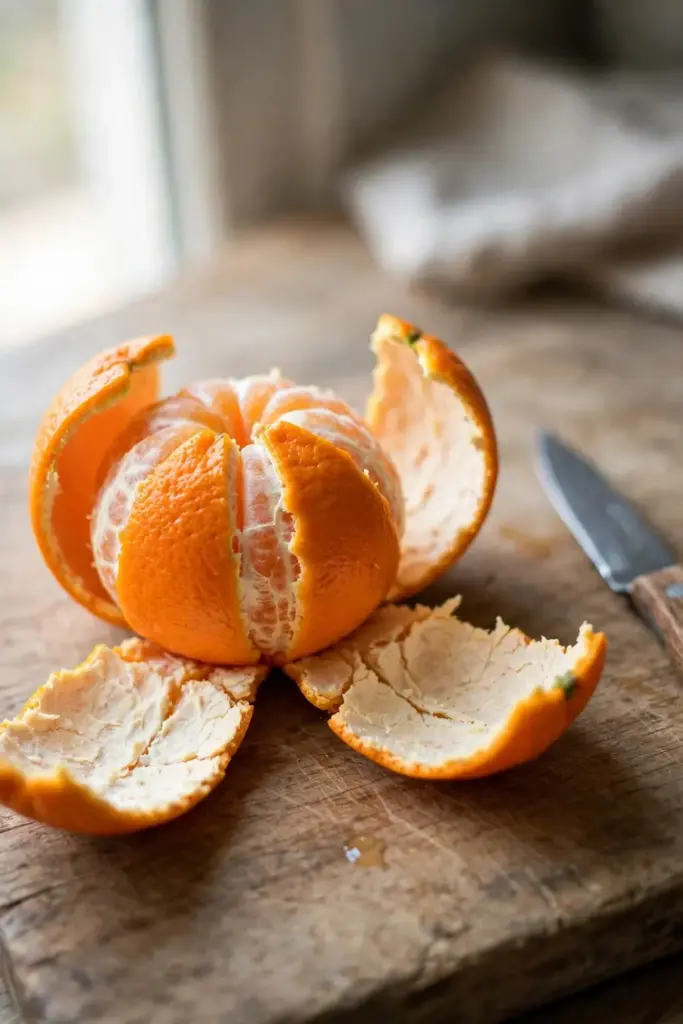
Peel each section back from the stem end like opening a banana, keeping the lobes connected at the base. Eat the fruit or juice it. The traditional Xinhui method keeps the peel in large connected pieces rather than shreds, which age more evenly and look right in the jar years later. Shredded peel dries faster but oxidizes unevenly, giving you a mix of over-aged edges and under-aged centers in the same jar. Three lobes is the classic count; four works for large fruit. The number matters less than keeping each piece broad and intact.
4. Scrape Off the White Pith
Turn each peel piece skin-side down and scrape away most of the white pith with a serrated knife or spoon edge. Leave a thin layer; removing every trace tears the colored rind. The pith holds the bitterness, and aged bitterness turns harsh rather than complex.
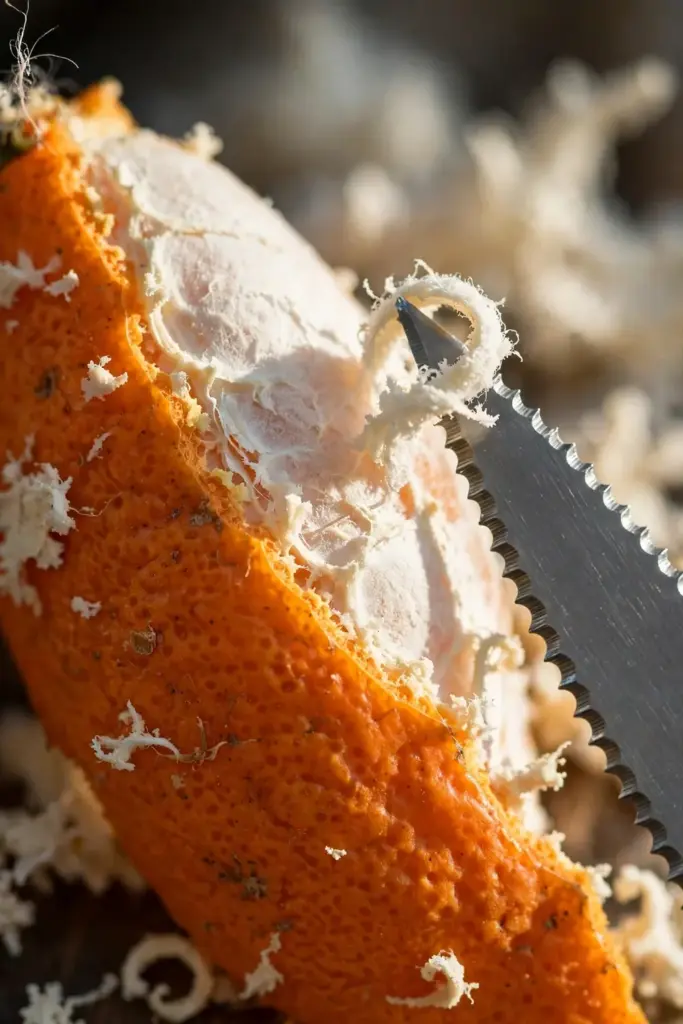
Work gently. Torn rind dries into ragged flakes that still work in cooking but lose the broad, leathery strips that make good chen pi. Thick pieces take an extra day of sun in step 5, so scrape evenly. If the pith clings stubbornly, let the peel sit for an hour after peeling; the pith firms slightly as surface moisture evaporates and scrapes off more cleanly.
5. Sun-Dry the Peel Until It Snaps
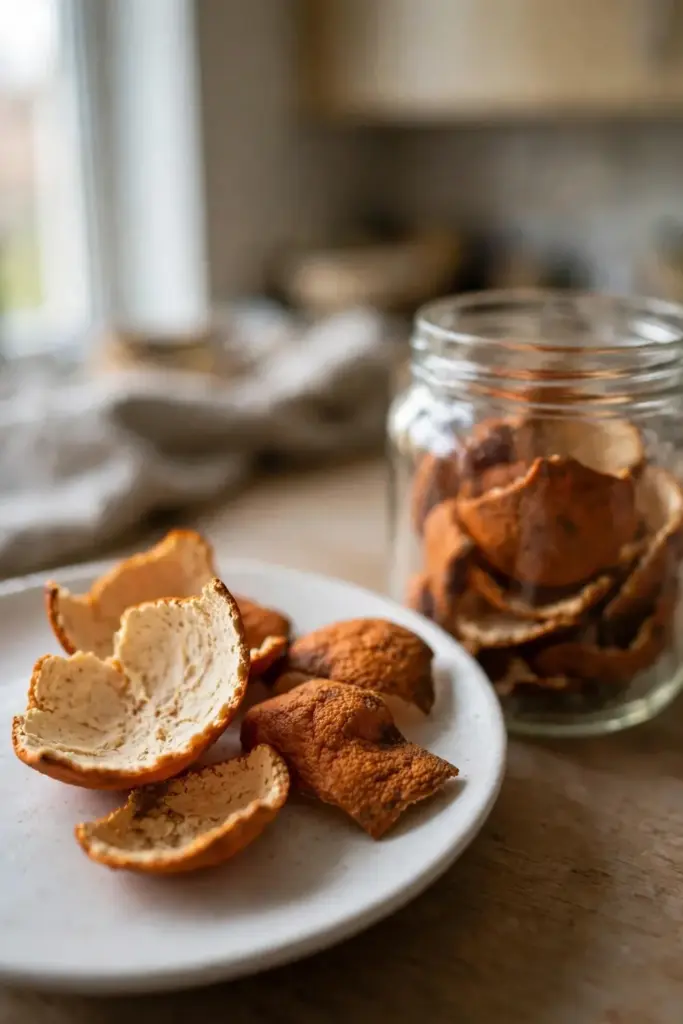
Lay the scraped peel skin-side up on a sheet pan, rack, or clean cloth in direct sun. Turn the pieces once a day. Five days of strong sun usually finishes the job, though humid weather stretches it to seven. A sunny windowsill works in dry climates; outdoors dries faster as long as nights stay dry. Bring the tray inside before dew falls.
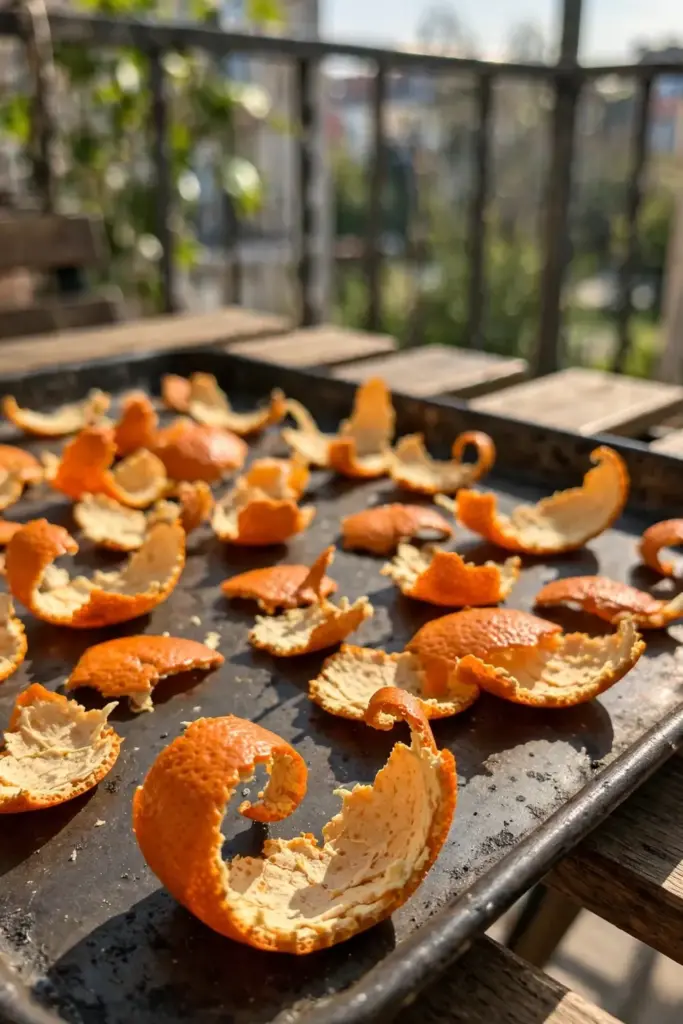
The peel is done when it snaps. Bend a cooled piece: properly dried peel cracks cleanly and feels hard, never leathery or pliable. The Woks of Life puts it bluntly: the dried peels must be hard and crispy, or they may spoil. Under-dried peel molds in the jar within weeks, and no amount of aging fixes that mistake. The National Center for Home Food Preservation gives the same rule for all home-dried produce: dry until brittle, cool before packing, and store airtight.
When the Air Is Too Humid for Sun-Drying
In tropical or monsoon climates, five days of sun may never arrive. Use a dehydrator at 50 to 60 °C until the peel snaps, usually 8 to 12 hours depending on thickness. A low oven with the door cracked does the same job; check hourly after the sixth hour. Dehydrator-dried peel ages exactly like sun-dried peel. The sun is traditional, not mandatory. What matters is the endpoint: hard, crisp, snapping peel.
6. Start the Three-Year Aging Clock
Pack the fully dried peel loosely into a clean glass jar or paper bag. For the first year, many makers prefer breathable storage: a paper bag or a jar with the lid cracked, kept in a cool, dark, dry cupboard. The peel continues to lose moisture slowly, and trapped humidity in year one is the main mold risk. After the first year, seal the jar properly and leave it alone. That is the quiet core of how to make chen pi at home: the active work ends here, and time takes over.
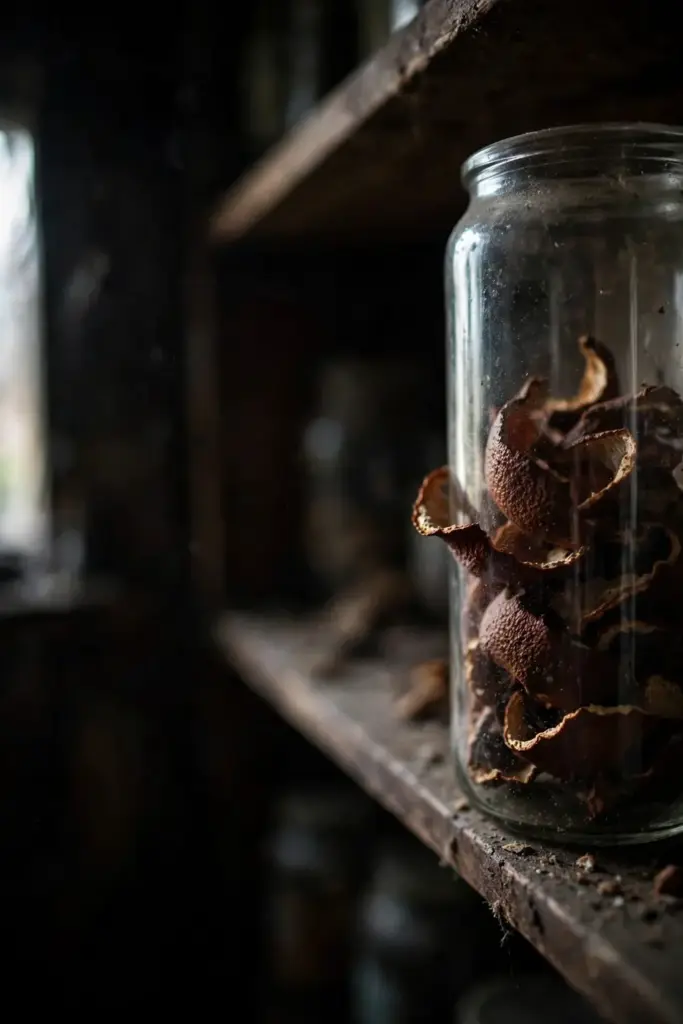
Here is the honest timeline. Peel under three years old is dried tangerine peel, useful and fragrant, but it is not chen pi. At three years the color deepens toward reddish brown, the sharp citrus bite rounds off, and the aroma turns warm and complex. That transformation is the entire point. Traditional makers in Xinhui re-sun their aging peel once a year, spreading it out on a dry winter day and repacking it; the annual sunning drives off accumulated moisture and is worth copying. Unglazed clay jars breathe slightly and suit long aging in dry climates, while glass jars with tight lids suit humid ones. Either works if the peel went in fully dry.
| Age | What to Call It | Character | Best Use |
|---|---|---|---|
| 0 to 1 year | Dried tangerine peel | Bright, sharp, one-note citrus | Everyday cooking, quick tea |
| 1 to 3 years | Aging peel | Darkening, mellowing | Soups and braises |
| 3 to 10 years | Chen pi | Deep reddish brown, warm, bittersweet, complex | Tea, red bean soup, gifting |
| 10 years and up | Aged chen pi | Near-black, mellow, prized | Special occasions, small doses |
Check the jar every few months in the first year. If the peel feels soft or smells musty, spread it in the sun for another day and repack. Write the start date on the lid. You will thank yourself in three years when you open a jar that smells like a Chinese medicine shop in the best possible way.
What to Do Each Year of the Wait
The aging needs minutes of attention per year, not hours. Year one: check the jar monthly, re-sun if the peel softens, and keep the lid cracked or use a paper bag. Year two: seal the jar properly, check twice, and re-sun once on a dry winter day. Year three: one check, one sunning, then start tasting. Year four onward: leave it alone except for the annual sunning. The whole ritual takes less time than brewing the tea the peel eventually makes.
How to Tell It Is Ready at Year Three
Judge with three senses. Color: the peel should run deep reddish brown, dark at the edges, with no pale green patches left. Aroma: crush a corner and breathe in; ready chen pi smells warm and resinous, like orange oil mixed with old wood, without any sharp raw-citrus sting. Taste: steep a strip and sip; the liquor should be smooth and bittersweet, never harsh. If any of the three falls short, seal the jar and check again in six months. Peel rarely fails at year three if it went in fully dry; it just sometimes needs a little longer.
7. Keep Mold Out of the Jar
Inspect stored peel for white, green, or black fuzz, musty smells, or soft spots. White crystalline specks are usually citrus oils surfacing during aging, not mold; mold looks fuzzy and smells wrong. When in doubt, throw it out.
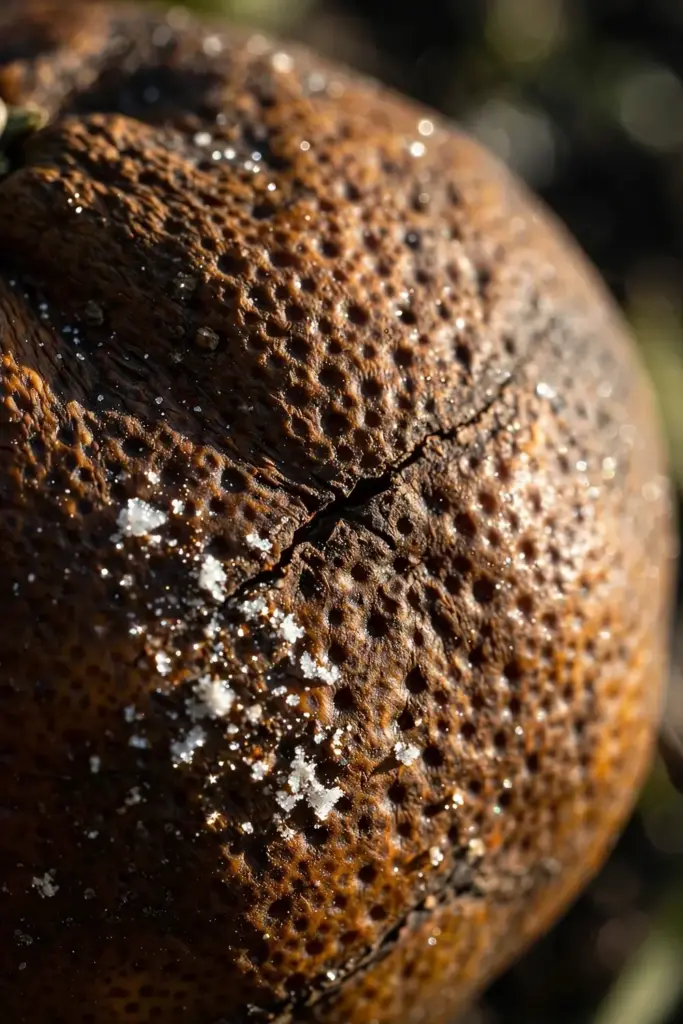
Discard any moldy peel completely. Do not scrape off the mold and use the rest. Molds on improperly dried or stored produce can produce mycotoxins such as aflatoxin, and no home method makes moldy peel safe again. Prevention is the whole strategy: dry until brittle, cool fully before packing, keep storage dry, and re-sun the batch at the first sign of softness. A jar that stays dry stays safe for decades. This is also why the annual re-sunning matters more in humid climates; a single damp week can undo a year of careful aging.
Fix the Five Failures Before They Ruin the Jar
Most chen pi failures announce themselves early. Learn the five, and no batch surprises you.
| Failure | What You See | Cause | Fix |
|---|---|---|---|
| Mold in week one | White or green fuzz on peel | Peel packed before it snapped | Spread in full sun until brittle, then repack |
| Musty jar smell | Sour, damp odor when opened | Humid storage or sealed-while-warm peel | Empty the jar, sun the peel a full day, use a drier cupboard |
| Bitter tea | Harsh, unpleasant brew | Too much white pith left on | Scrape thinner next batch; steep young peel shorter |
| Pale, weak aroma after a year | Little smell, flat color | Thick orange peel or weak variety | Switch to fragrant loose-skinned mandarins |
| Insects in the jar | Tiny beetles or webbing | Eggs present before drying | Freeze dried peel 72 hours before jarring; keep jars sealed |
Freezing deserves emphasis. Pantry moths love dried citrus as much as dried fruit. A 72-hour freeze at -18 °C before the peel goes into its aging jar kills eggs without harming flavor, and it costs nothing. Skip this step and you may open a two-year jar to find it inhabited.
8. Brew and Cook With Your Aged Peel
Rinse a piece of aged peel briefly, then simmer or steep it. For tea, use one 5 cm strip per cup: pour just-boiled water over it, steep 5 minutes, and re-steep the same strip twice. The liquor runs pale gold with a warm, bittersweet citrus depth that fresh peel never gives. Longer steeps turn bitter, so pour off the first infusion if you prefer it mellow.
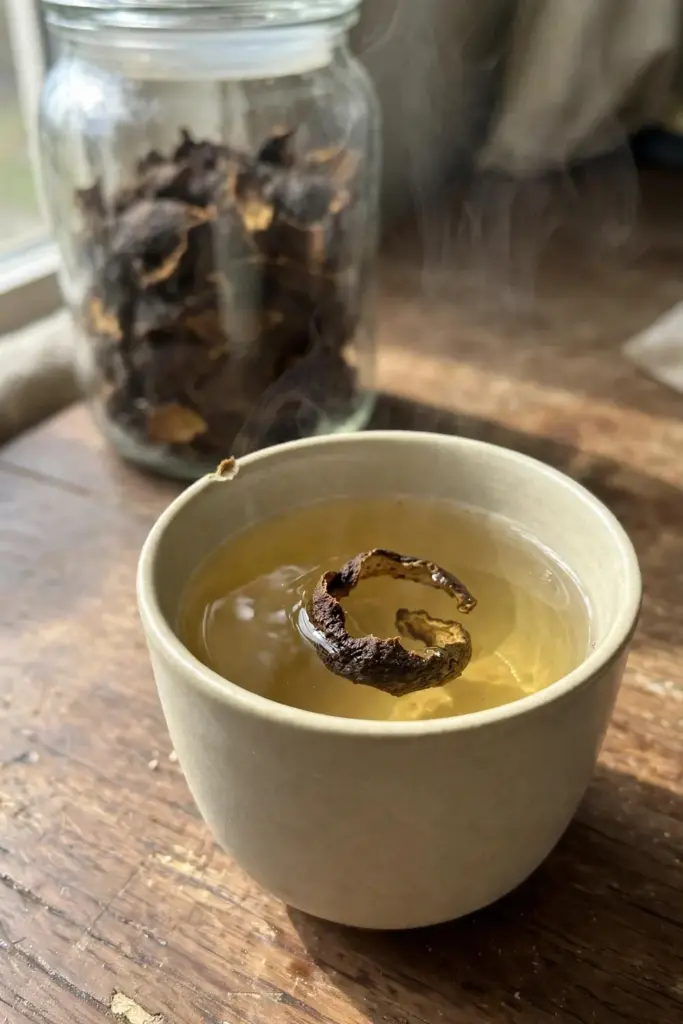
In cooking, chen pi seasons red bean soup, braised beef, duck, and porridge; a single strip flavors a whole pot. Add it early in braises so the flavor has time to unfold, and fish it out before serving like a bay leaf. Candied citrus peel is a related tradition worth knowing; the Buddha’s hand growing guide describes candying that fruit’s fragrant rind, and the same simmer-in-syrup method works on strips of young dried tangerine peel.
| Use | Amount per Batch | How |
|---|---|---|
| Daily tea | One 5 cm strip per cup | Steep 5 minutes, re-steep twice |
| Red bean soup | Two strips per pot | Simmer with the beans from the start |
| Braised beef or duck | One strip per kilogram of meat | Add with the aromatics, remove before serving |
| Porridge or congee | Half a strip, minced | Stir in for the last 20 minutes |
| Steamed fish | One thin strip | Lay over the fish before steaming |
Start with less than you think. Aged peel is concentrated, and its bitterness builds across a long simmer. You can always add a second strip; you cannot take the first one back. The chen pi overview on Wikipedia lists these classic uses and notes its long role in Chinese folk practice, where it is traditionally described as regulating qi and aiding digestion. Treat those as traditional descriptions, not medical claims. This page is about making the ingredient, not prescribing it. Anyone managing a health condition should talk to a clinician before using chen pi as anything beyond food.
Frequently Asked Questions About Homemade Chen Pi
You can, but the result disappoints. Thick-skinned sweet oranges dry slowly, stay bitter, and never develop the warm complexity of mandarin peel. Clementines, satsumas, and any loose-skinned mandarin work well. The closer the fruit is to a true mandarin (Citrus reticulata), the closer your peel comes to the real thing. If oranges are all you have, slice the peel thin and expect a simpler flavor.
Cool a piece to room temperature, then bend it. Fully dried peel snaps cleanly with a crisp crack. If it bends, flexes, or feels leathery, it needs more sun or more dehydrator time. Packing pliable peel is the most common beginner mistake, and it leads directly to mold within weeks. When uncertain, give it one more full day of drying; over-drying is nearly impossible, under-drying ruins jars.
Probably not. White crystalline specks that appear during aging are citrus oils migrating to the surface, and experienced makers consider them a good sign of active aging. True mold looks fuzzy or powdery, comes in white, green, or black patches, and smells musty. Oils smell like intense citrus. If the smell is wrong or the texture is fuzzy, discard the piece without debate.
Yes, with dry storage. Fully dried peel in a dry jar is inhospitable to microbes; the aging is slow oxidation, not fermentation. The risks come from moisture: under-dried peel, humid storage, or a jar sealed while the peel was still warm. Keep it dry, inspect it a few times in year one, re-sun annually, and the jar stays safe indefinitely.
Time. Dried tangerine peel is the same raw material at under three years of age: bright, sharp, perfectly usable in cooking. Chen pi is that peel after at least three years of aging, when the color, aroma, and flavor have deepened into something no fresh-dried peel matches. The line is conventional rather than chemical, but makers and buyers both respect it, and the price gap between young and aged peel proves the difference is real.
No honest shortcut exists. Warm storage slightly accelerates the mellowing, and the annual re-sunning keeps the process healthy, but nothing compresses three years into three months. Sellers who promise “aged flavor” in weeks are selling dried peel with a story. Start a jar every winter and you will never wait again; overlapping vintages are how traditional households keep chen pi on hand permanently.
Label the Jar and Wait Three Years
Write the date on the lid, put the jar somewhere dark, and get on with your life. Check it twice in the first year, re-sun it if it softens, and otherwise leave it alone. Start a fresh jar each citrus season so the vintages overlap. In three years you will open a jar of real chen pi that cost you the price of winter tangerines. Few pantry projects pay off like this one. Learning how to make chen pi at home is mostly learning to wait, and the wait is the recipe.