
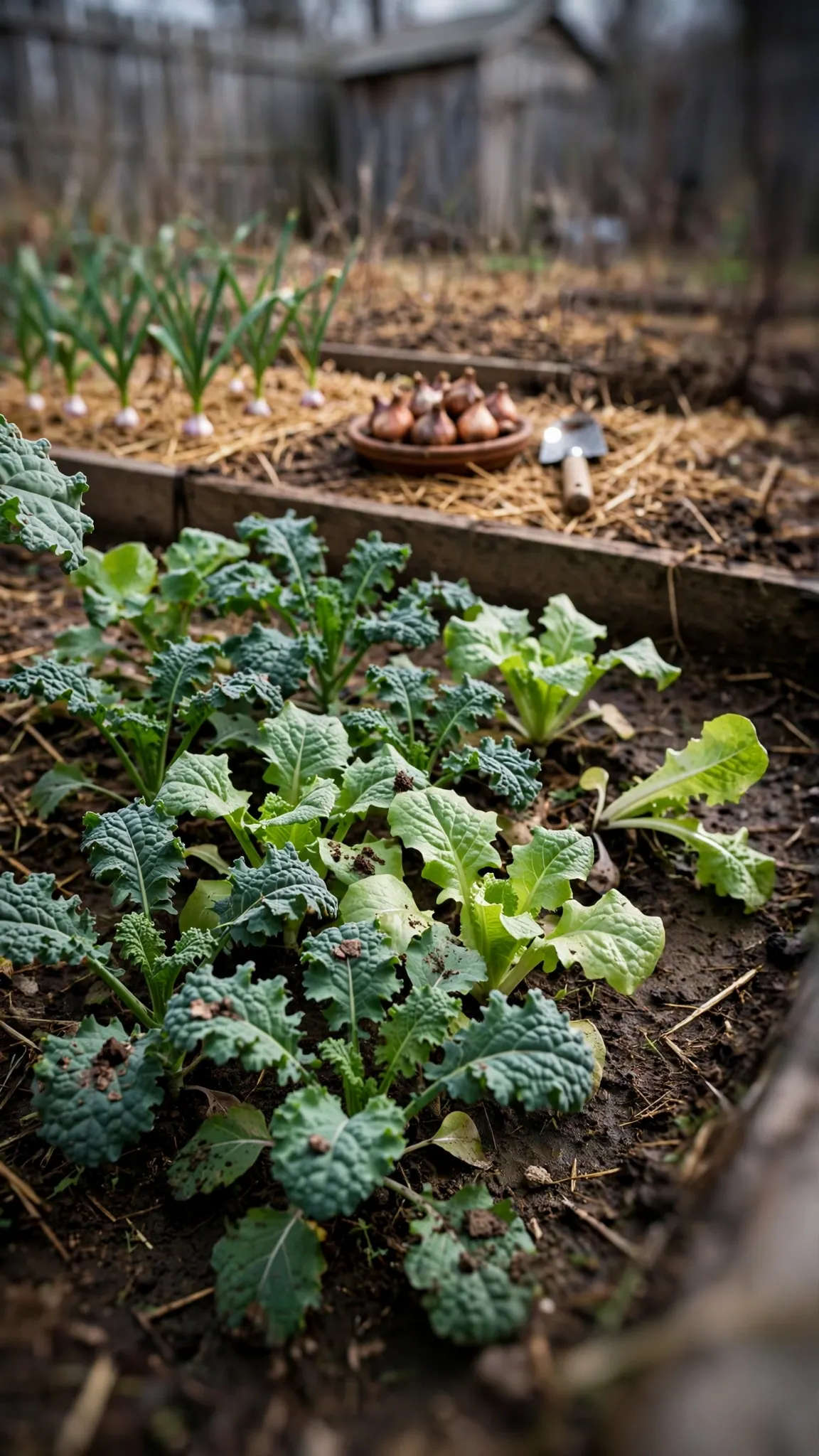

Spend one Saturday pulling spent summer plants and pushing garlic, lettuce, and tulip bulbs into the freed beds. That is a fall planting guide in action: what to plant, how deep to set it, and what to skip entirely. The rest of this page is 21 moves, from bed prep to the last mulch layer.
Work the beds in the morning. Plant in the afternoon. Water everything in before dark. Skip any week the ground is frozen.
The month-by-month calendar is a different job, and that cut lives on the site’s fall planting calendar. Timing math lives on when to start fall garden, and the week-by-week zone chart lives on fall garden planting schedule. This page stays on the guide: which plants earn a fall spot, how to put them in the ground, and which ones to skip. The pillar fall gardening tips holds the whole season together.
Plant This, Skip That
The fall garden rewards plants that like cold feet and punishes plants that needed summer heat. Read the table as a triage list. Everything in the left column earns its bed space before the first frost. Everything in the right column wastes it. When a plant sits on the fence, check its frost tolerance first and its days to maturity second. A plant that survives frost but needs 90 days still loses to a plant that needs 40 and merely tolerates it.
| Plant this | Skip that | Why |
|---|---|---|
| Leaf lettuce, spinach, kale | Tomatoes, peppers, basil | Frost-tolerant crops keep growing past 32°F (0°C); the tender ones die at the first light frost |
| Broccoli and cabbage transplants | Corn, squash, beans started from seed now | Transplants carry a root system into the cooling season; long warm-season crops run out of days |
| Carrots, radishes, beets | Sweet potatoes, okra, melons | Root crops germinate in cool soil and sweeten after light frost; heat lovers never size up in time |
| Garlic cloves, overwintering onions | Onions from seed started now in cold zones | Cloves and transplants root before winter; seed-started onions stall at two blades |
| Tulips, daffodils, crocuses | Dahlias, gladioli, cannas left in the ground | Spring bulbs need cold weeks to set buds; summer bulbs rot in wet winter soil |
| Pansies, violas, mums in pots | Marigolds, zinnias, impatiens | Pansies bloom through light frost; summer annuals blacken at 32°F (0°C) |
| Trees and shrubs, perennials | Bare-root broadleaf evergreens planted late | Roots keep growing in warm soil after the air cools; late evergreens desiccate in winter wind |
| Cover crops in empty beds | Bare soil left open all winter | A living cover feeds the soil and blocks weeds; bare beds erode and compact |
Prep the Bed Before Anything Goes In
Pull every spent summer plant out by the roots. Do not compost foliage that shows mildew, blight spots, or borer damage. Bag it and trash it. A clean bed denies next season’s pests their winter hotel.
Open the soil to a fork’s depth. Texas A&M AgriLife’s fall vegetable guide shovels fall beds 25.4 to 30.5 cm deep and works 2.5 to 5.1 cm of coarse sand plus 5.1 to 7.6 cm of organic matter into the surface. That ratio loosens heavy soil and gives fall roots air. Read more about feeding the ground under this season’s guide on the site’s soil health page.
Lay a straight edge or a taut string across the bed and rake it level. Small seeds vanish in lumpy soil. Water the bed an hour before planting so the soil is moist at root depth, not dusty on top. Dusty soil wicks moisture away from a seed and stalls germination for days.
Gather the tools before the seed packets: a fork, a rake, a hoe, a trowel, a watering can, and a reel of string. Fall planting fails most often from friction, not from weather. A missing trowel sends the gardener inside, and the seed waits a week. Set everything by the bed and plant in one pass.
Give the bed the sun it needs. The same Texas A&M notes put the minimum at 8 hours of direct sun a day for vegetable crops, the same as spring. Fall sun sits lower and weaker, so a bed that scraped by in June may fall short in October. Watch the shadows for a day before you commit the bed.
Start Here If September Already Started
Late is not too late. A gardener who starts in mid-September can still plant garlic, bulbs, pansies, trees, shrubs, perennials, cover crops, and overwintering onions. That is eight of the 21 moves on this page, and none of them needed August. Skip the slow vegetables and plant the sure things.
Pick three. Garlic plus bulbs plus one tree fills a weekend and pays back for years. The garlic feeds you in July, the bulbs flower in March, the tree shades the house in a decade. A small fall planting done well beats a big one done late.
Do not try to catch up on everything. The calendar sibling exists for gardeners who started in July. This guide exists for the planting itself. Start where the season still has room, and let the rest wait for spring.
Count the Cost in Weekends, Not Dollars
A full fall planting runs three weekends. Weekend one clears and preps the beds. Weekend two sows the vegetables and sets the transplants. Weekend three plants the bulbs, the garlic, the trees, and the cover crops. Each weekend is a Saturday morning, not a whole day. The work fits around the rest of life.
The bill is seed packets and a few bags of compost. Garlic and bulbs cost more per unit than seed, so buy those first and let the budget decide the rest. A gardener who spends the bulb money on more lettuce seed has the priorities backward. Lettuce seed is cheap; October is not.
Skip the gadgets. A dibber is a finger, and a bulb planter is a trowel with marketing. The one purchase worth making is a soil thermometer; timing starts with soil temperature, and guessing it wastes seed.
Save seed where it is easy. Let one lettuce plant bolt and dry, shake the seed into a paper bag, and sow it next August. Home-saved lettuce germinates better than packet seed in its second year because it grew in your soil. Garlic needs no saving; the cloves are the seed.
1. Sow Leaf Lettuce First
Leaf lettuce germinates in soil as cool as 4.4°C and cuts at 30 to 45 days, which makes it the fastest honest fall payoff. Minnesota Extension’s vegetable planting notes put lettuce, spinach, radish, and peas in the 4.4 to 10°C soil bracket, the first seeds that can go in while summer heat still lingers in the air. Sow a band 6 mm deep, thin seedlings to 10 cm, and plan the first loose-leaf cut in four weeks.
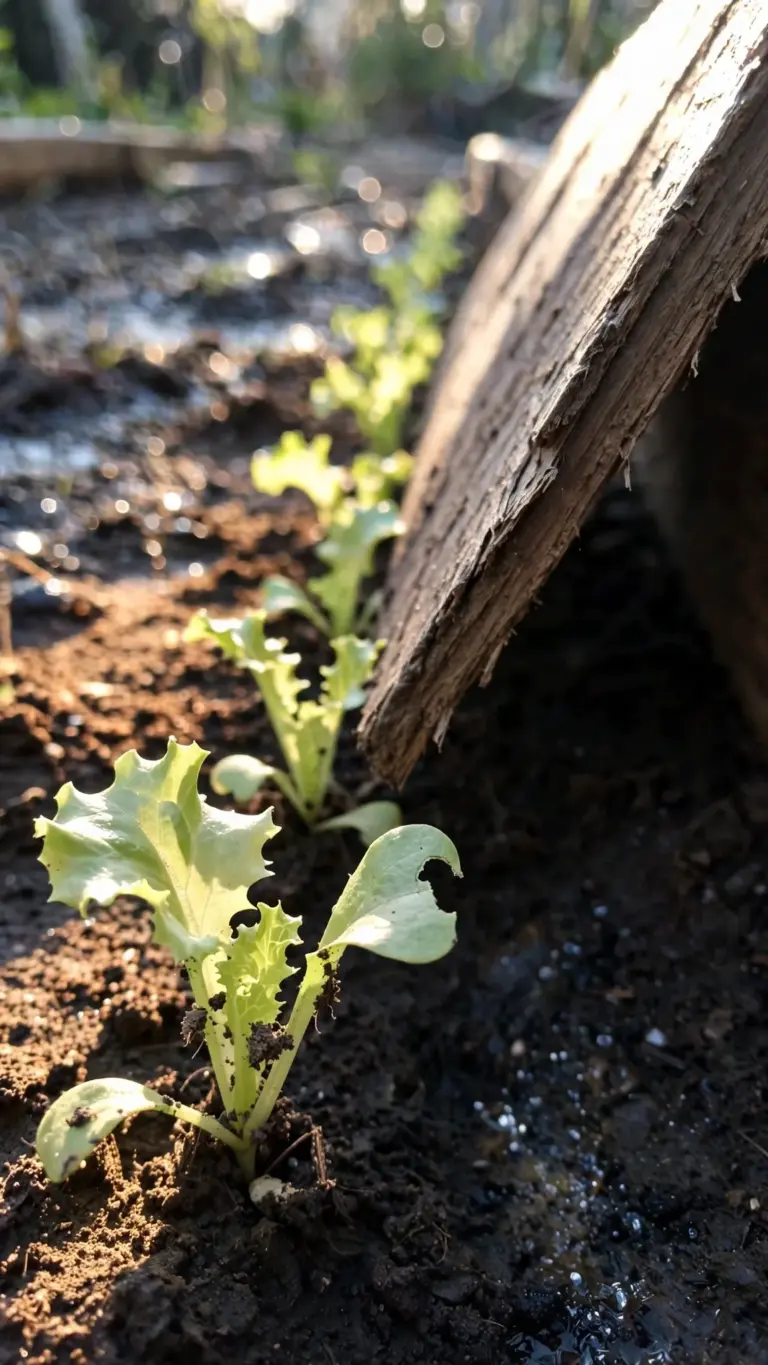
Heat is the only enemy. Soil above 26.7°C cooks lettuce seed into dormancy. Shade the row with a board for three days, or sow in the late-afternoon shadow of a tomato cage. Lift the board at the first green thread.
Sow a second band two weeks after the first. Fall lettuce comes in flushes, and a staggered sowing keeps the cutting bowl full instead of delivering one glut. Cut outer leaves and leave the center growing; a leaf-lettuce plant cut this way produces for six weeks.
2. Direct Sow Spinach With Patience
Spinach germinates slower than anything else in this list, seven to fourteen days, and it sulks in warm soil. Give it the coldest corner of the bed and sow at 1.3 cm. Do not fertilize at sowing. Rich nitrogen in warm soil pushes soft leaves that mildew before the first cut.
Once nights drop below 10°C, growth steadies. Thin to 8 cm so air moves between plants; a crowded spinach row rots from the center out in October rain. The survivors size up after the first frost. They taste sweeter than any spring sowing.
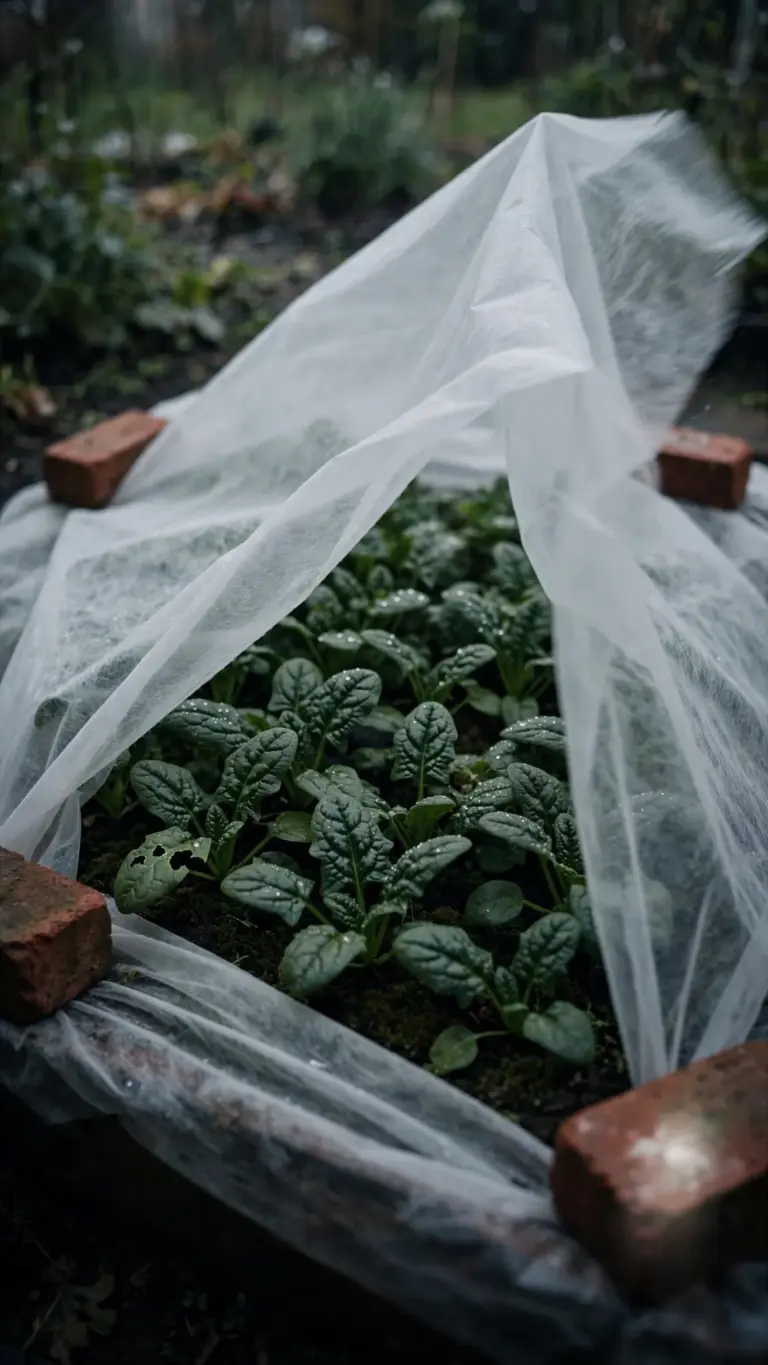
Float a row cover over the bed when nights threaten a hard freeze, and keep cutting into December in zone 6. Anchor the fabric with bricks. Buried edges tear.
3. Set Kale Transplants Now
Kale transplants skip the slow-seed problem entirely. Buy or start stocky plants with four to six true leaves and set them 30 to 45 cm apart. Water the hole before the plant goes in, not after. Wet soil settles around the roots and closes the air gaps that dry a root ball.
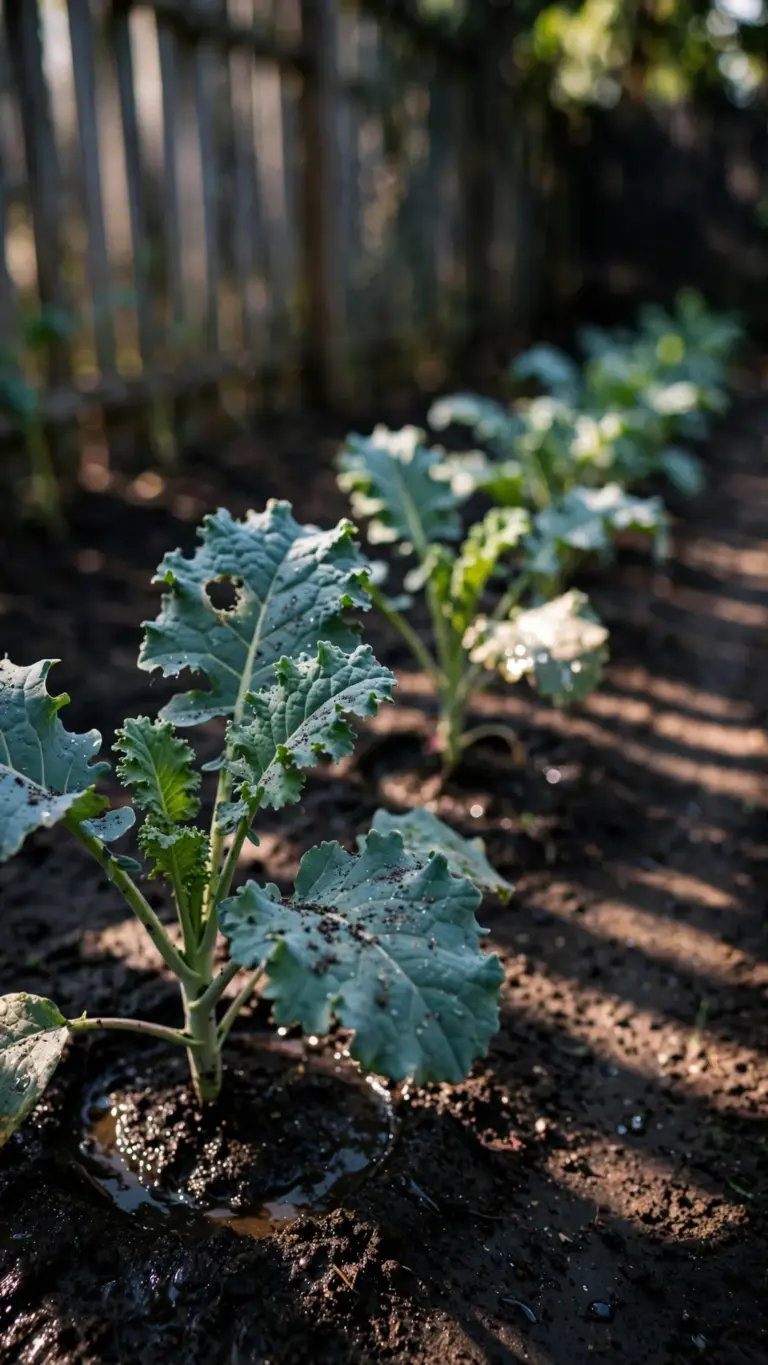
Kale shrugs at -12.2°C frosts and holds under snow. Plant enough for two cuts per plant, the lower leaves first, leaving the crown to push more. A kale row planted now feeds through December in zones 7 and warmer.
Check the undersides for cabbage worms in September. Fall plantings dodge the summer moth flights but catch the last generation. Pick the green loopers off by hand; one evening patrol a week is enough for a home row.
4. Transplant Broccoli Before the Window Closes
Broccoli needs its head formed before hard frost, so transplants beat seed for fall. Set stocky starts 45 cm apart with the root ball intact. Tease nothing. Fall soil is warm enough to grow roots fast, and a disturbed ball stalls a week you cannot spare.
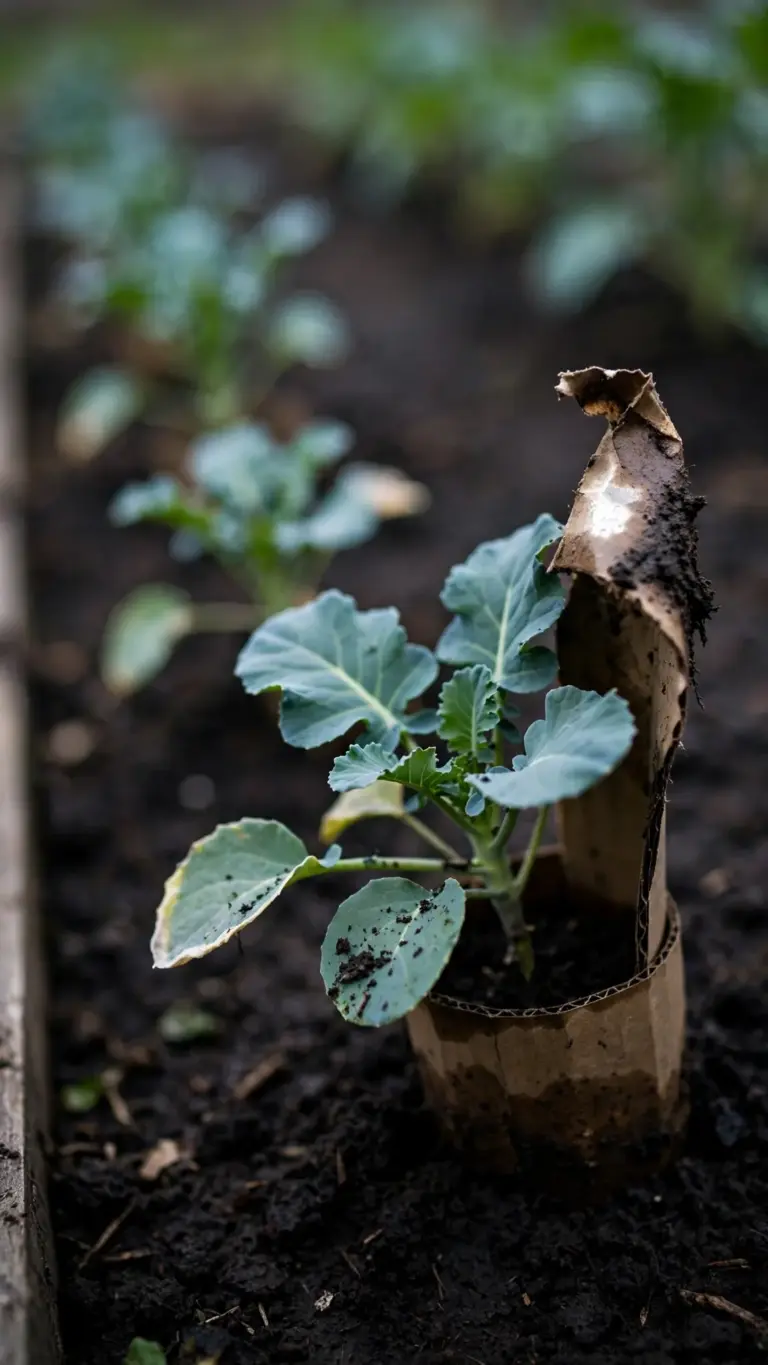
Broccoli is a heavy feeder. Side-dress with compost at transplanting and again when the head is golf-ball size. Cut the central head, leave the plant standing, and side shoots follow for another month.
Wrap each stem with a 5 cm cardboard collar at planting. Cutworms hunt at night and sever a transplant at the soil line in one feeding. A collar sunk 2.5 cm into the soil stops them. Remove it once the stem thickens past pencil width.
5. Sow Carrots Shallow and Keep Them Damp
Carrots punish dry seedbeds. Sow at 6 mm, press the row with the back of a rake, and lay a strip of burlap or cardboard over it. Check under the cover daily. Lift it at the first green thread and water the row every day until the true leaves show.
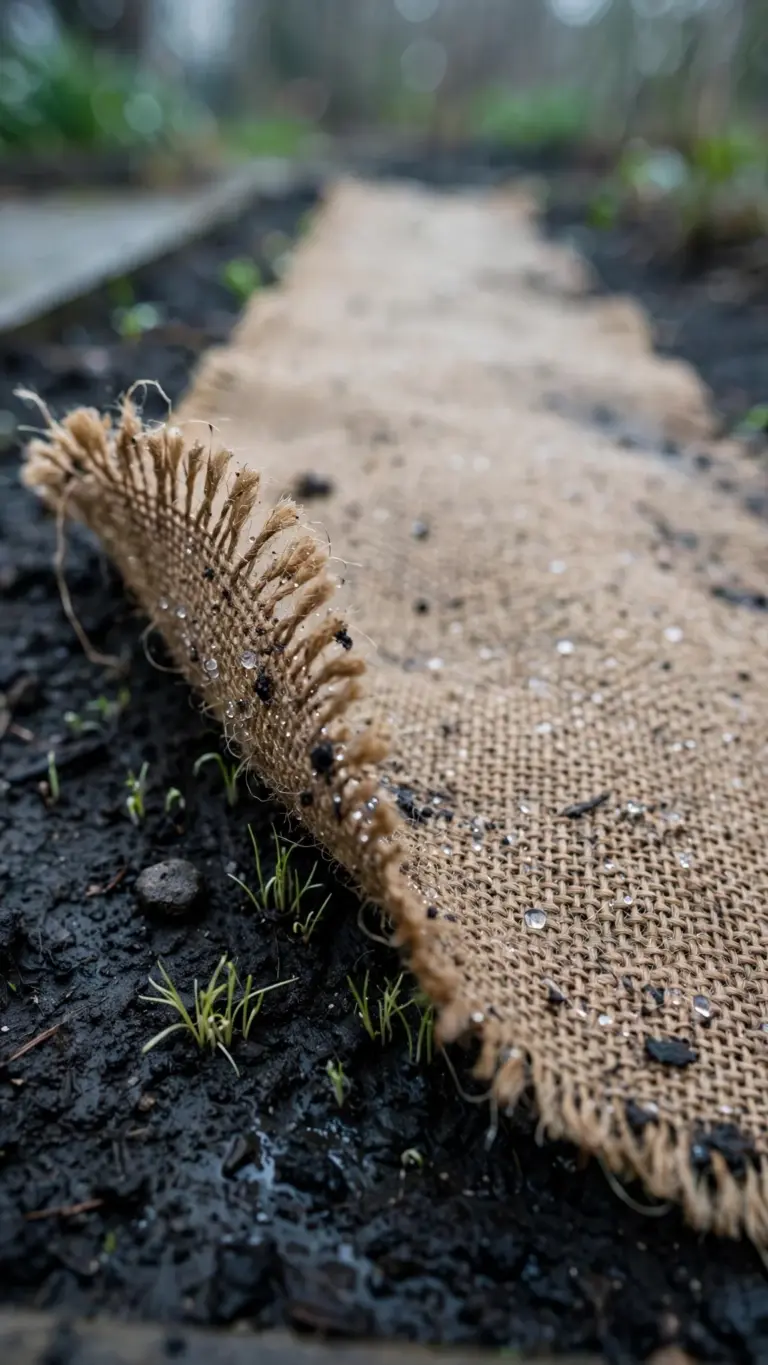
Sandy soil wants the seed a touch deeper than clay, a point the Minnesota planting notes make for all small-seeded crops. Carrots take 60 to 75 days, so this is a late-summer sowing, not an October one. Mulch the row with straw once the tops are 10 cm tall and dig sweet roots after the first frosts.
Thin twice. First to 2.5 cm when the seedlings show true leaves, then to 5 cm two weeks later. Unthinned carrots fork around each other and grow into knotted fists. The thinnings are edible; the forked roots are not worth the bed space.
6. Sow Radishes as Living Row Markers
Radishes germinate in three to five days, so sow a pinch at the end of every slow row. The red shoulders show where the carrots and spinach hide. Pull them at 25 days before they go pithy.
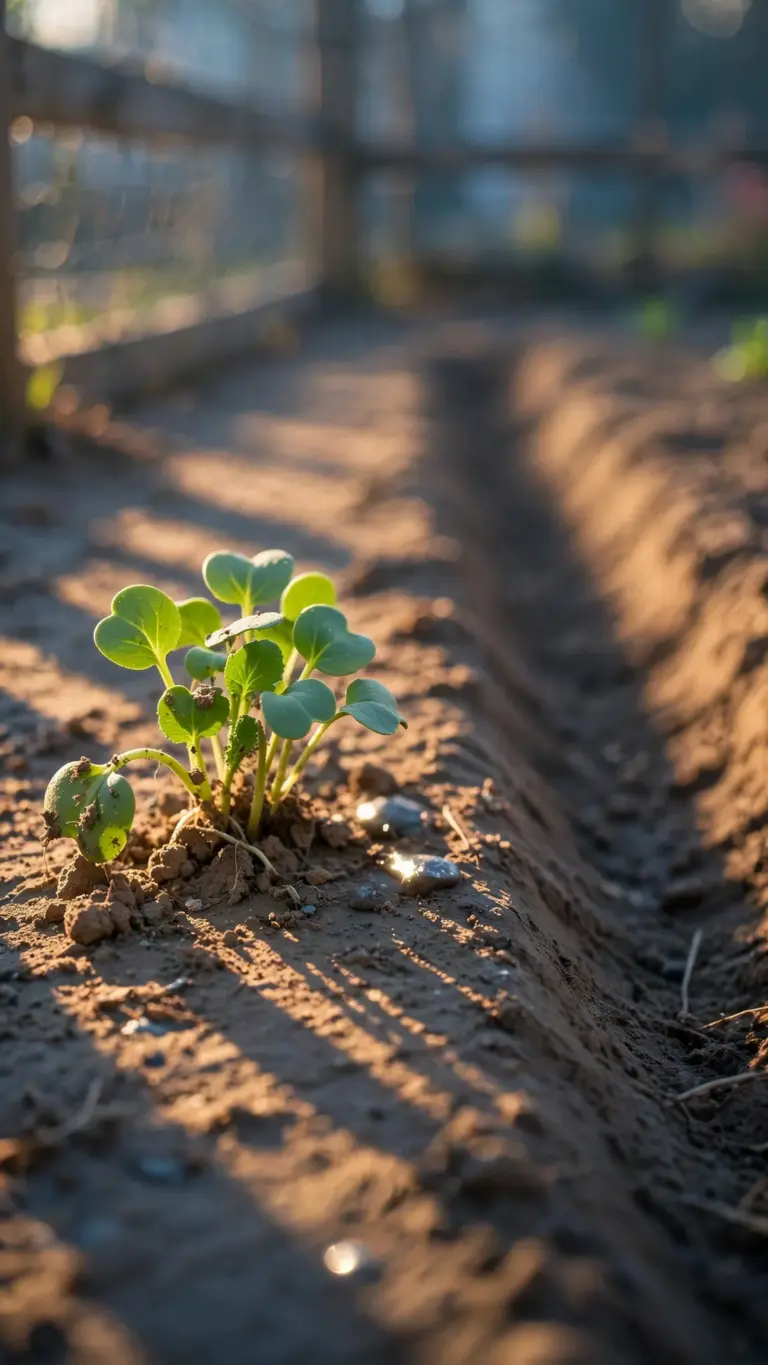
Use radishes to test the bed. If radishes stall, the soil is too cold or too compacted for anything slower. Do not waste spinach seed in a bed that fails the radish test.
Sow a fresh pinch every ten days until a month before frost. The last sowing may only make leaves, and that is fine; radish greens saute like mustard. Pull every root before it splits. A split radish left in the row is a slug hotel.
7. Push Garlic Cloves In Before the Ground Freezes
Separate the head into cloves the day you plant. Each clove goes pointy end up, 5.1 cm deep, 15 cm apart, four to six weeks before the ground locks. Roots grow through late fall while the shoot waits for spring.
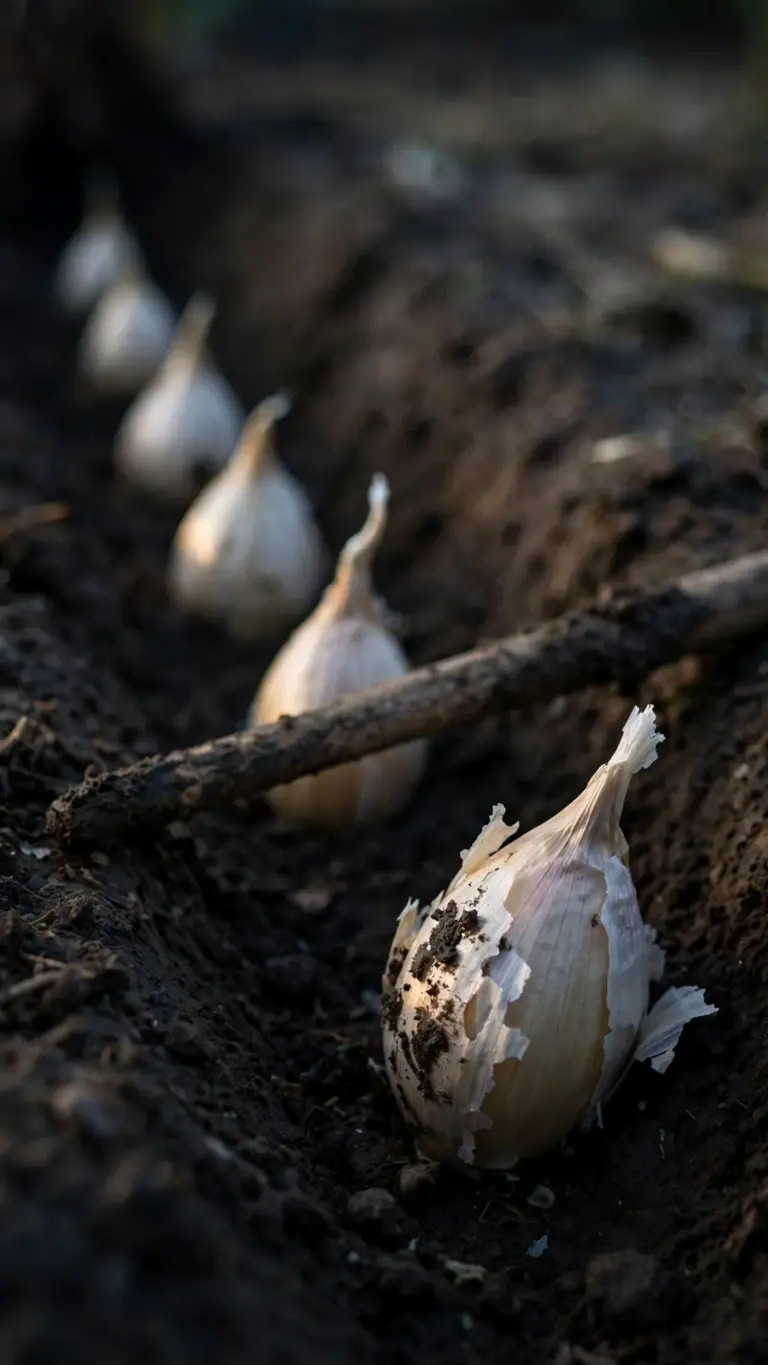
Mulch with 10 cm of straw after the first hard freeze, not before. Early mulch invites mice to nest in the warm straw. One head of seed garlic plants roughly one row meter, so save the biggest heads for eating and plant the second-biggest.
Buy hardneck varieties for cold zones and softneck for zones 8 and warmer. Hardnecks throw a scape in June; snap it off and the bulb swells. Softnecks braid for storage. Plant what your winter allows, not what the catalog photo promises.
8. Sow Garden Peas for a Late Flush
Peas want cool soil, the same 4.4 to 10°C bracket as spinach in the Minnesota notes. Sow 2.5 cm deep in a double row against a 60 cm trellis. Peas fix their own nitrogen, so skip the fertilizer entirely.
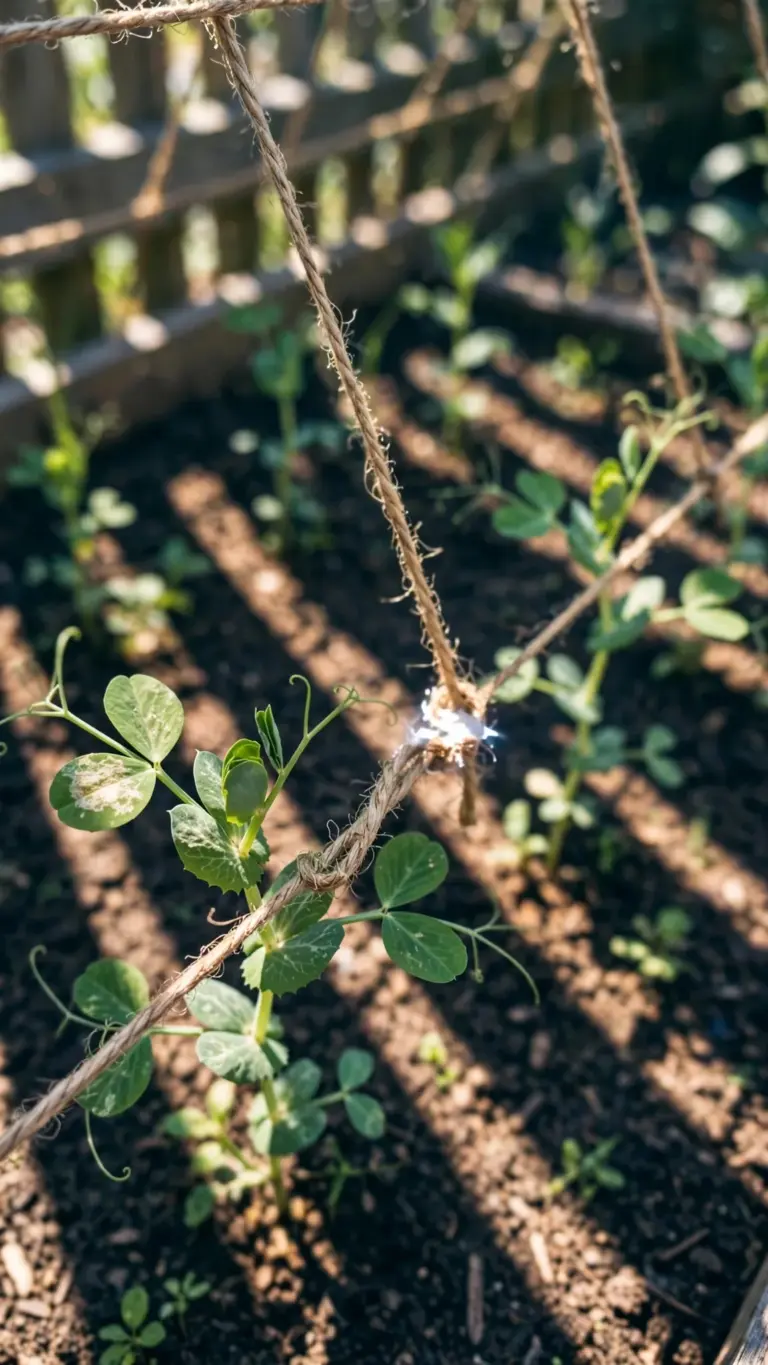
Fall peas rarely match spring yields. Expect a shorter picking window and smaller pods. Plant them for the novelty of October peas, not for the freezer. Pull the vines at the first hard freeze and lay them on the bed as mulch.
Dust the seed with pea inoculant if the bed has never grown legumes. The powder carries the rhizobia bacteria that fix nitrogen on the roots. No inoculant, no nodules, and the “nitrogen fixer” is just another hungry plant.
9. Sow Beets for Roots and Greens
A beet seed is a fruit cluster holding three or four true seeds, so expect a crowd at every station. Sow at 1.3 cm. Thin to 8 cm when the seedlings show two true leaves, and eat the thinnings.
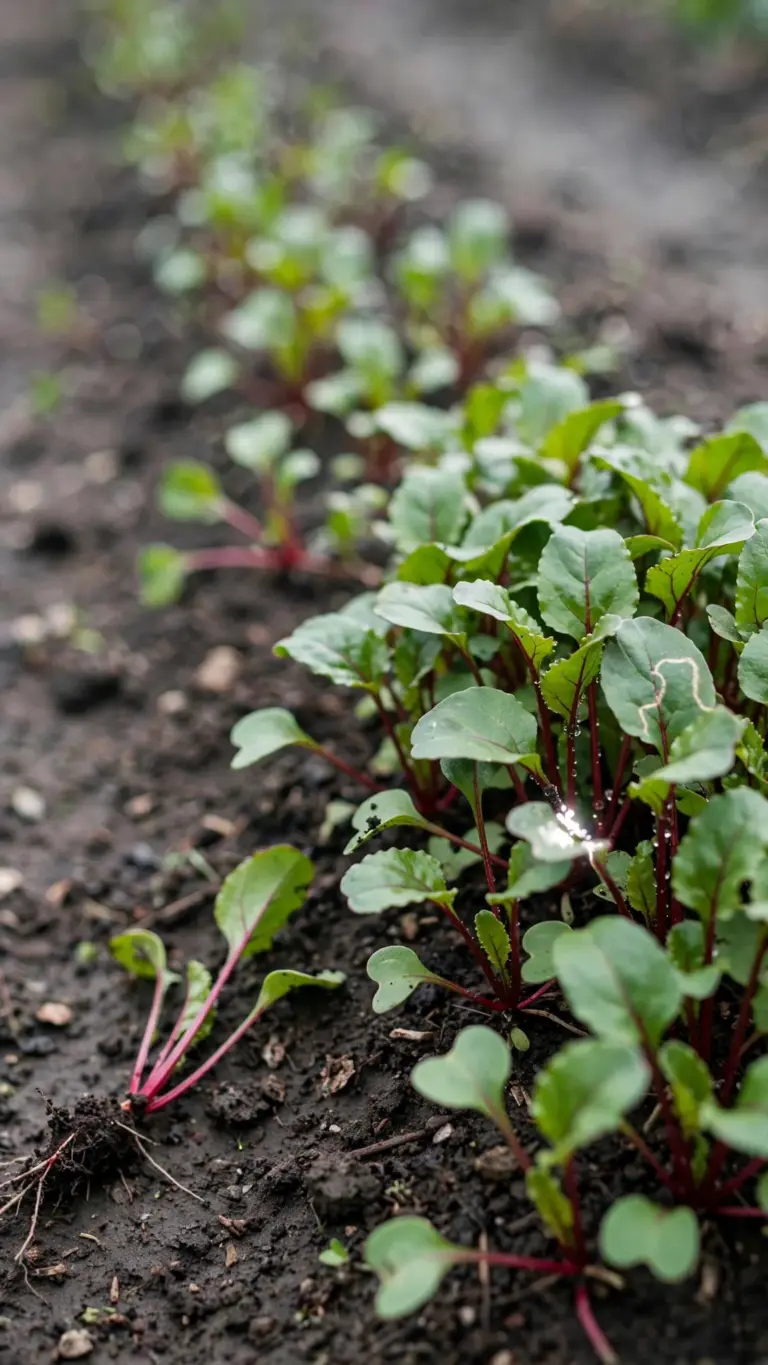
Beets tolerate light frost and store in the ground under mulch in mild zones. In cold zones, lift them before the ground freezes and store in damp sand. One sowing feeds twice: greens in six weeks, roots in eight to ten.
Watch for leaf miners. They tunnel pale trails through the leaves, and the maggot lives inside the leaf where sprays never reach it. Pinch the affected leaf off. Drop it in the trash, not the compost. Clean picking beats chemicals every time.
10. Plant Spring-Flowering Bulbs Nose Up
Tulips, daffodils, and crocuses need fall planting because cold weeks trigger their flower buds. Set each bulb at two and a half to three times its height deep, pointed end up, flat root plate down. Penn State Extension’s bulb guide works the example of a 5.1 cm tulip bulb going 12.7 to 15.2 cm deep. That depth anchors the bulb against frost heave and hides it from squirrels.
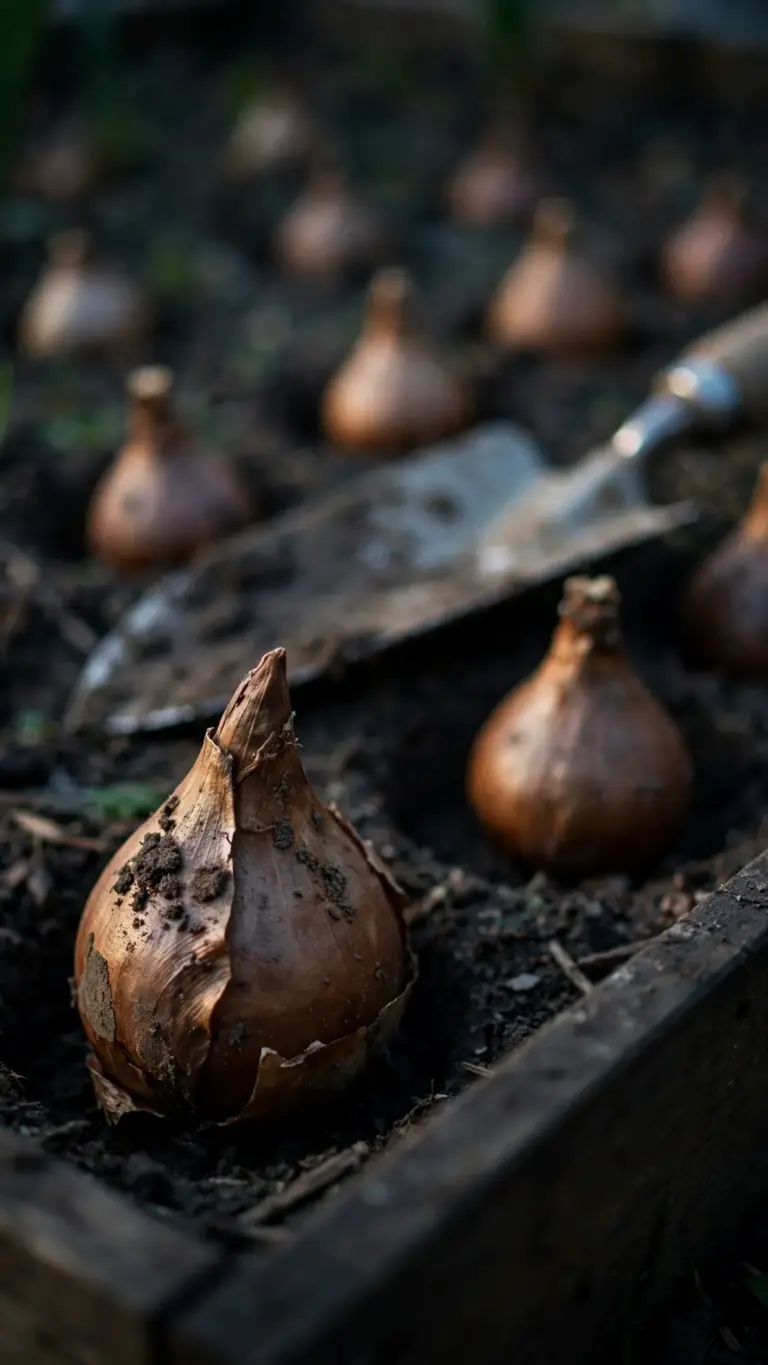
Cluster in groups of seven or more, never in single-file rows. A drift of twelve reads as a planting; a line of twelve reads as a fence. Cover with 5.1 to 7.6 cm of mulch after planting, per the same notes, to steady soil temperature through the winter.
Plant daffodils where deer patrol. Deer eat tulip buds like candy and leave daffodils alone. Mix the two in one drift and the daffodils act as bodyguards. Crocuses go closest to the door, where you will actually see their two-week show. The full bulbs to plant in fall list covers 21 picks, including the deer-resistant ones big sites skip.
11. Set Pansies for Fall Color
Pansies bloom at 4.4°C nights when every summer annual has quit. Buy six-packs in bud, not in full flower, and set them 15 cm apart in beds the summer annuals just vacated. Pinch the first buds off. The plant spends two weeks building roots instead of feeding flowers, then blooms twice as hard.
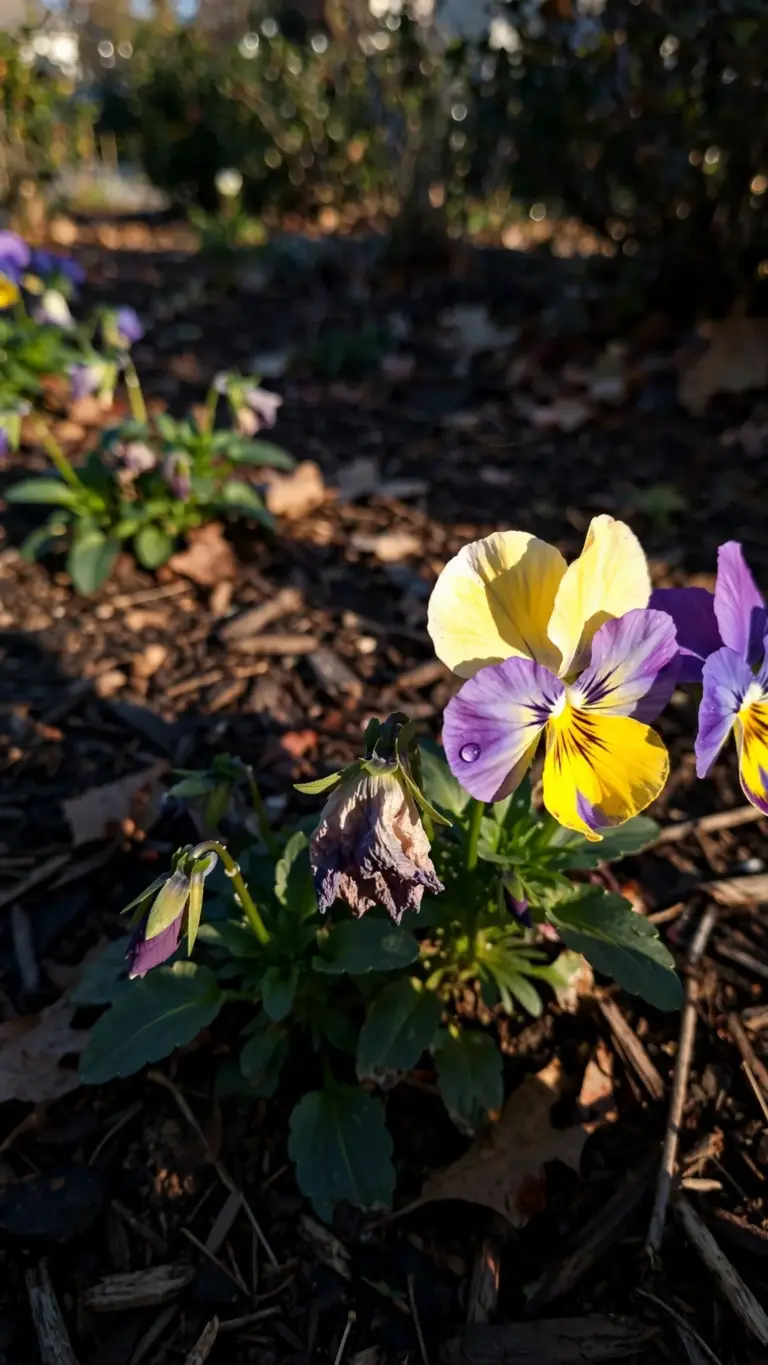
Pansies survive to about -6.1°C with mulch and bounce back after snow. Deadhead weekly or the plants go to seed and stop. One flat of pansies covers a 60 cm by 120 cm bed.
Feed lightly once, two weeks after planting, with a half-strength liquid feed. Pansies are hungry but fall soil is cool, and a full dose burns roots that cannot take it up. One light feeding carries them to the hard freeze.
12. Divide and Replant Perennials
Fall division works because roots grow while shoots rest. Lift the clump with a fork, split it into divisions with three to five fans each, and replant at the same depth it grew before. Water each division in with a full can. The crown sits at soil level, never buried.
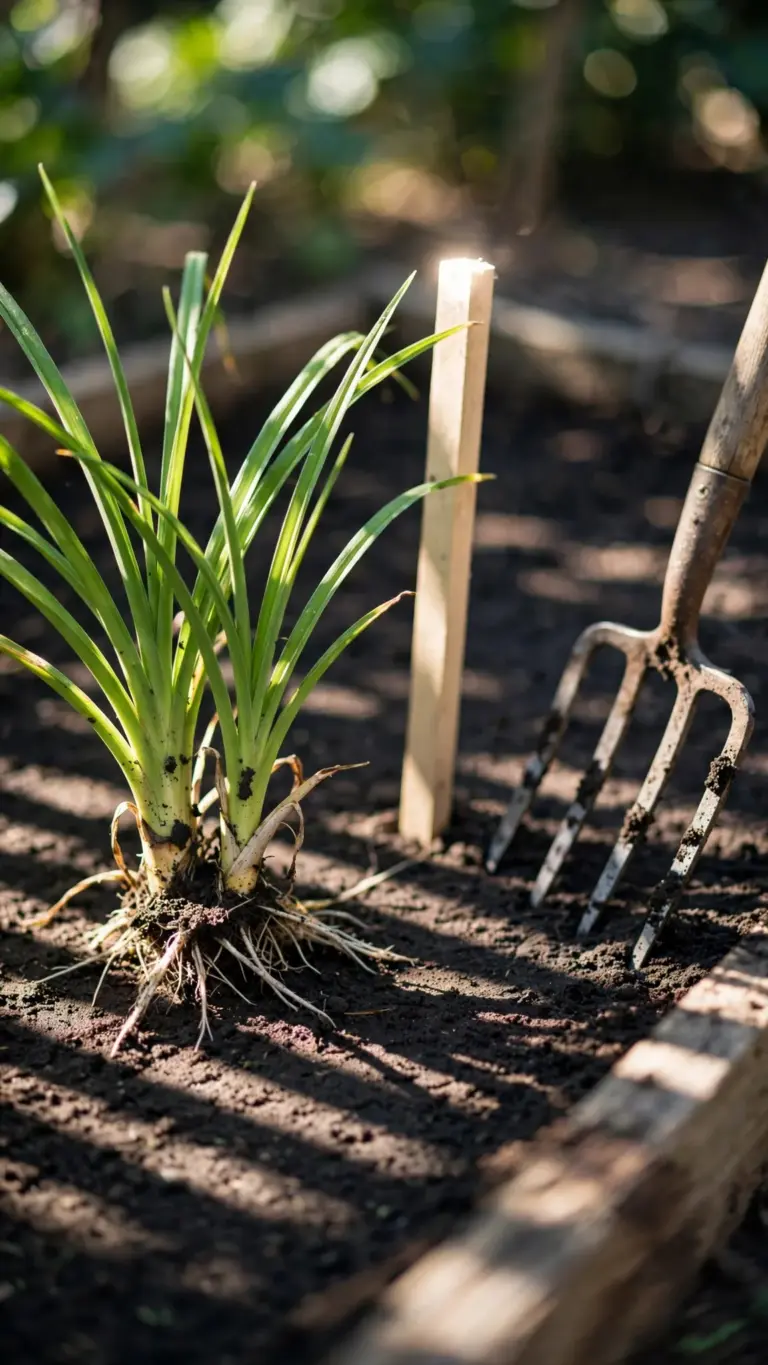
Skip this for plants that hate wet winter feet: lavender, Russian sage, and fall-blooming grasses divide better in spring. Daylilies, hostas, echinacea, and Siberian iris all divide happily in September. Replant the strongest divisions and compost the woody centers.
Treat each division like a new transplant for the first month, because it has half yesterday’s roots and the same leaf area. Wilting at noon? Throw a bucket over it for three days. Warm soil grows the roots back fast.
Label every division before you walk away. By October all bare-root divisions look identical, and the spring surprise of an iris where the daylily should be is avoidable. A wooden stake and a pencil cost less than the confusion.
13. Plant Trees and Shrubs While the Soil Is Warm
Fall is the best tree-planting season because roots grow in soil above 4.4°C long after the leaves drop. Dig the hole the same depth as the root ball and twice as wide. Set the tree so the trunk flare sits at grade, then backfill with the native soil you dug out. Amend nothing. Rich backfill teaches roots to circle inside the hole instead of reaching outward.
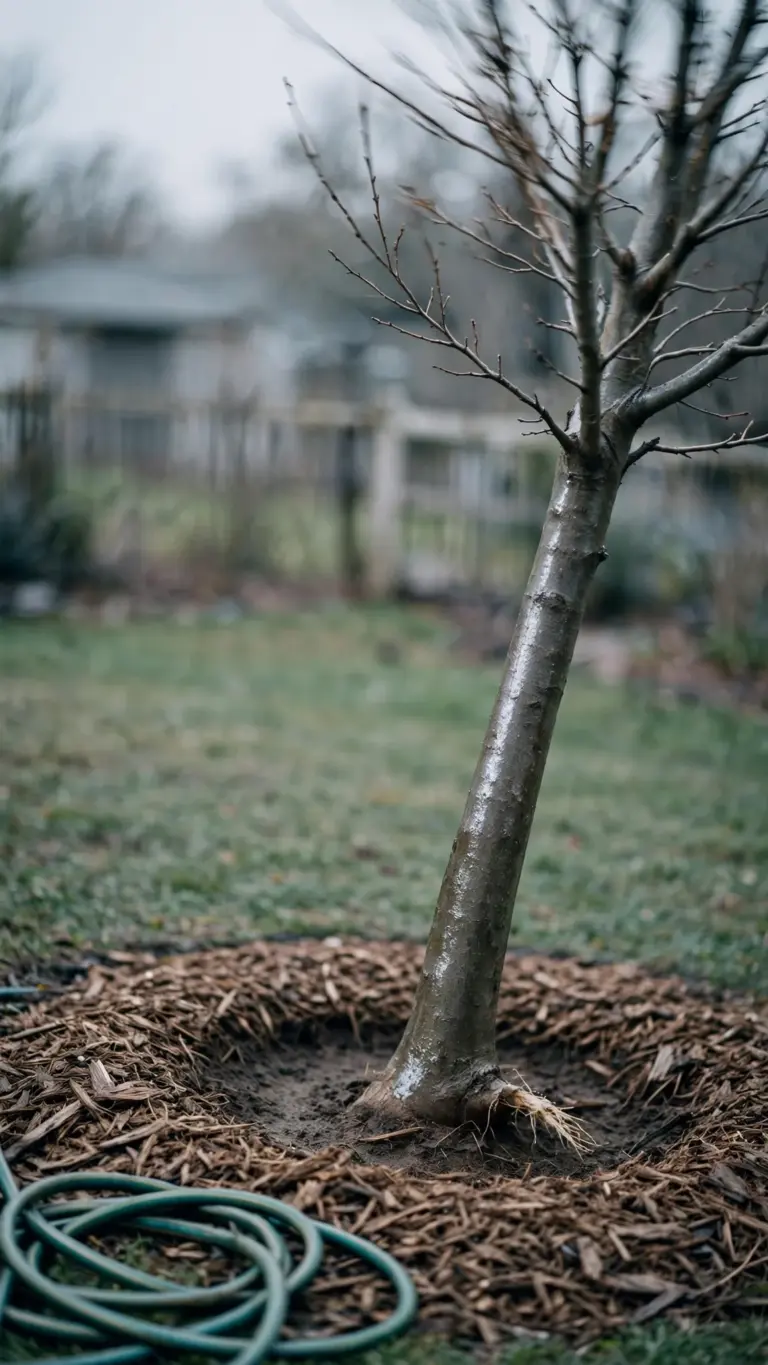
Water the planting deeply, then water again. New trees need weekly deep soaks until the ground freezes. Cut circling roots on container stock before planting; a girdling root strangles the trunk five years later. The site’s spring pruning techniques page covers the first structural cuts these trees will want in their second or third spring.
Stake only if the tree will not stand on its own in wind. Drive two stakes outside the root ball, tie with wide straps in a figure eight, and remove everything after one growing season. A tree that never sways grows a weak trunk. Movement builds wood.
14. Sow Cover Crops in Empty Beds
Every empty bed is a bed losing ground. Sow winter rye or crimson clover into every empty bed and rake the seed in. The cover holds soil through winter rain, smothers chickweed, and adds organic matter when you turn it under in spring.
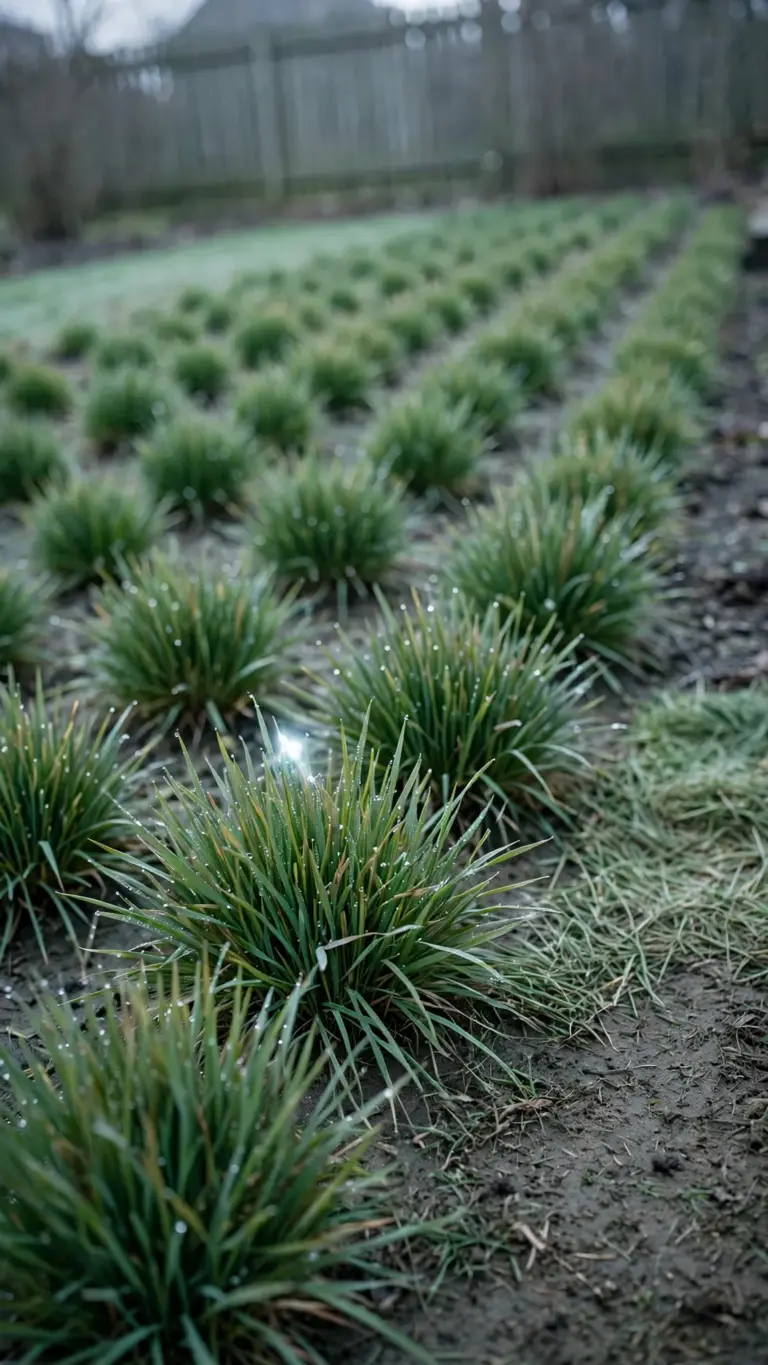
Mow rye in spring and let it lie as mulch for two weeks before turning it in. Freshly turned rye ties up nitrogen as it decomposes, so wait a few weeks before planting into that bed. Clover fixes nitrogen instead and needs no such wait.
Kill the cover before it sets seed. Rye cut after flowering drops seed that becomes next year’s weed. Mow at first flower, when the biomass peaks and the seed is still soft. Timing the kill is the whole skill of cover cropping.
15. Set Overwintering Onion Transplants
Onions from seed stall in fall, but pencil-thick transplants root before winter and bulb up in spring. Set short-day varieties in the South and intermediate types in zones 6 and 7, 10 cm apart. The tops freeze back; the roots do not.
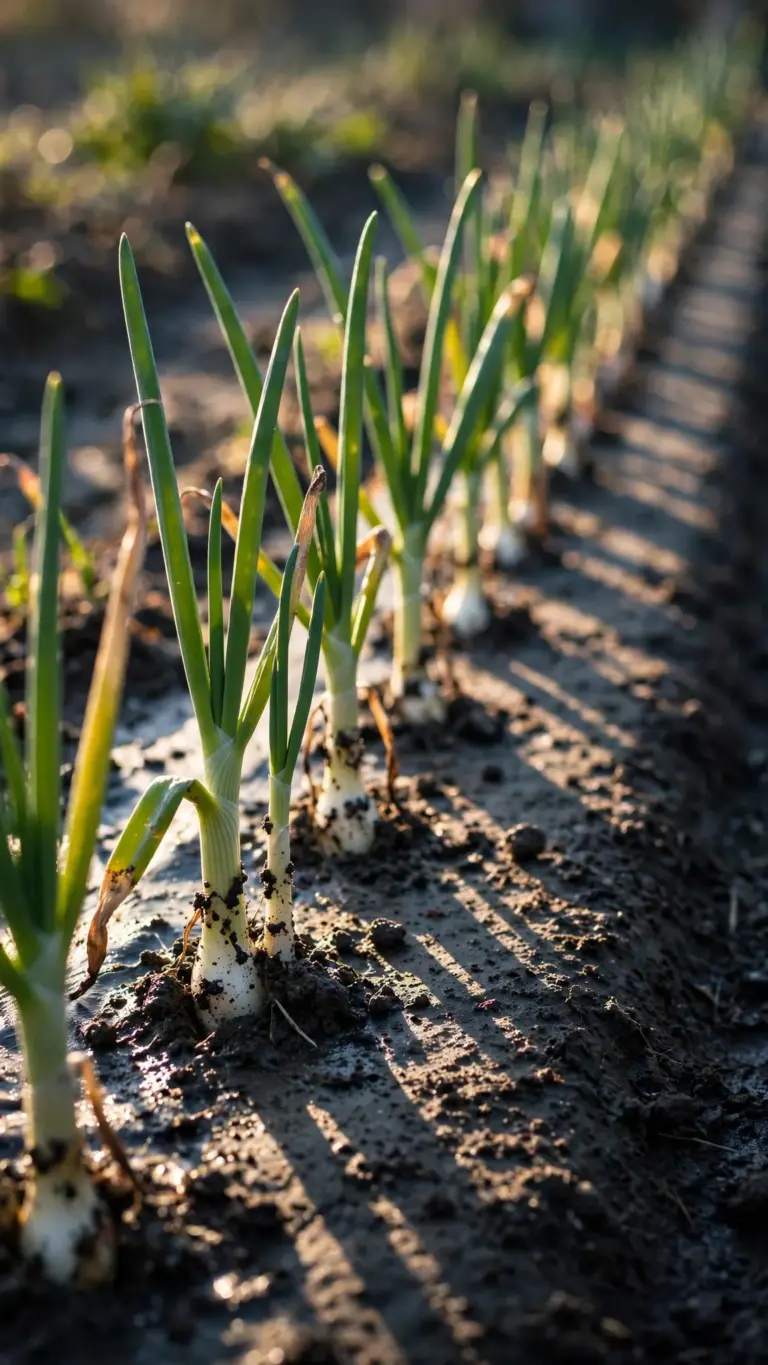
Mulch with 8 cm of straw after the soil cools. Pull the mulch back in March when growth resumes. One bundle of 50 transplants fills a 1.2 m by 3 m bed. Expect full bulbs six to eight weeks before spring-planted sets.
Order short-day varieties for the Deep South, intermediate for the middle zones, and long-day only if you garden north of zone 6. Day length triggers bulbing, and the wrong type makes scallions instead of bulbs. The catalog lists the type; read before you buy.
Do not cut the tops at planting. The green tops feed the roots through the first cold weeks. Trim them only if they flop over and rot against the soil. Tidy tops are for spring; fall tops are solar panels.
16. Scatter Herbs That Can Take the Cold
Parsley, cilantro, chervil, and dill all germinate in cool soil and grow through light frost. Sow parsley at 6 mm and do not give up on it; it takes up to 21 days to emerge. Soak the seed overnight to cut that wait in half.
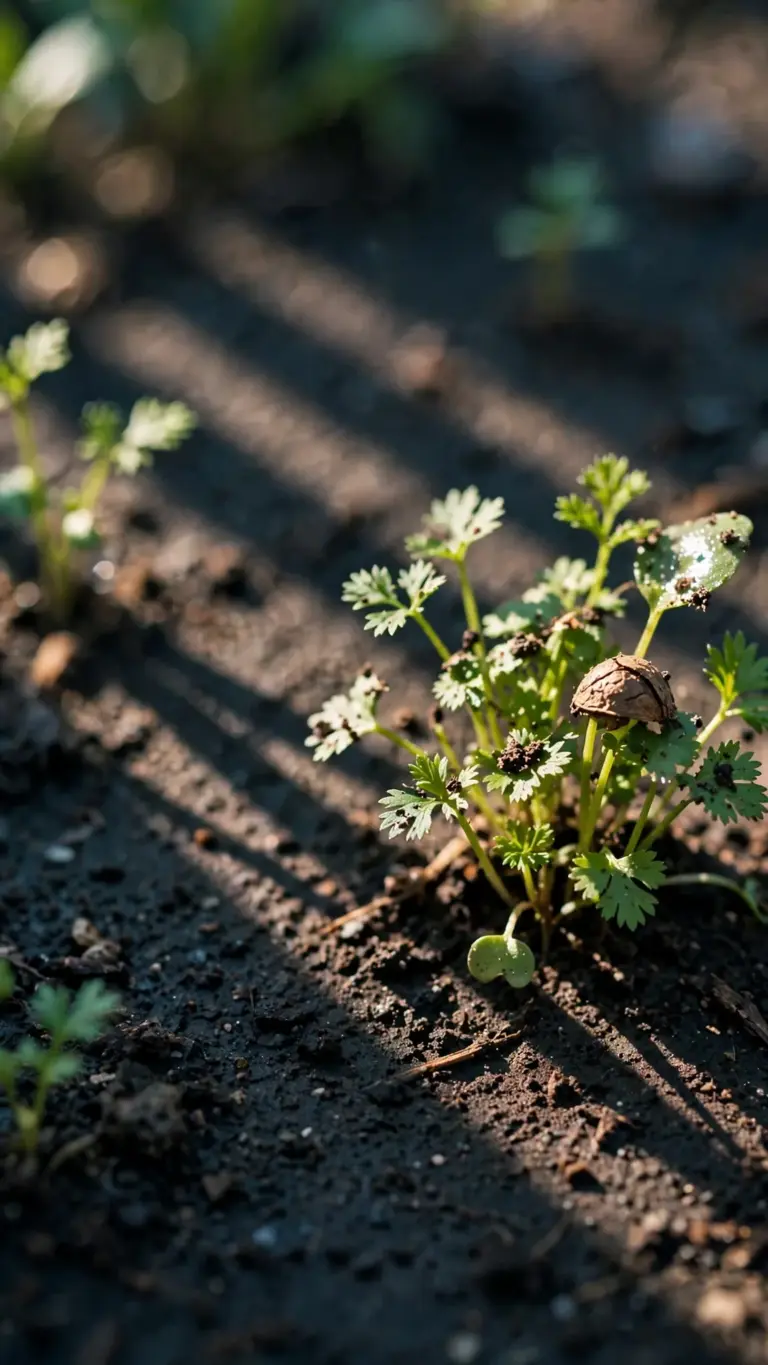
Plant perennial herbs at the bed’s edge where next spring’s digging will not disturb them. Thyme, sage, oregano, and chives all establish roots in fall and wake up stronger in spring. Keep basil and rosemary out of this list. Basil dies at the first frost and rosemary hates wet winter soil in cold zones.
Sow cilantro in two batches, three weeks apart. Fall cilantro bolts slower than spring cilantro, but it still bolts. The second batch carries the salsa season when the first goes to flower. Let one plant set seed; it self-sows exactly where it was happy.
17. Pot Mums in Containers, Not in the Bed
A garden-center mum in full bloom spent its root energy on flowers, so put it in a pot by the door for October and compost it after. In the ground it has no roots by freeze-up. January heaves it out like a cork.
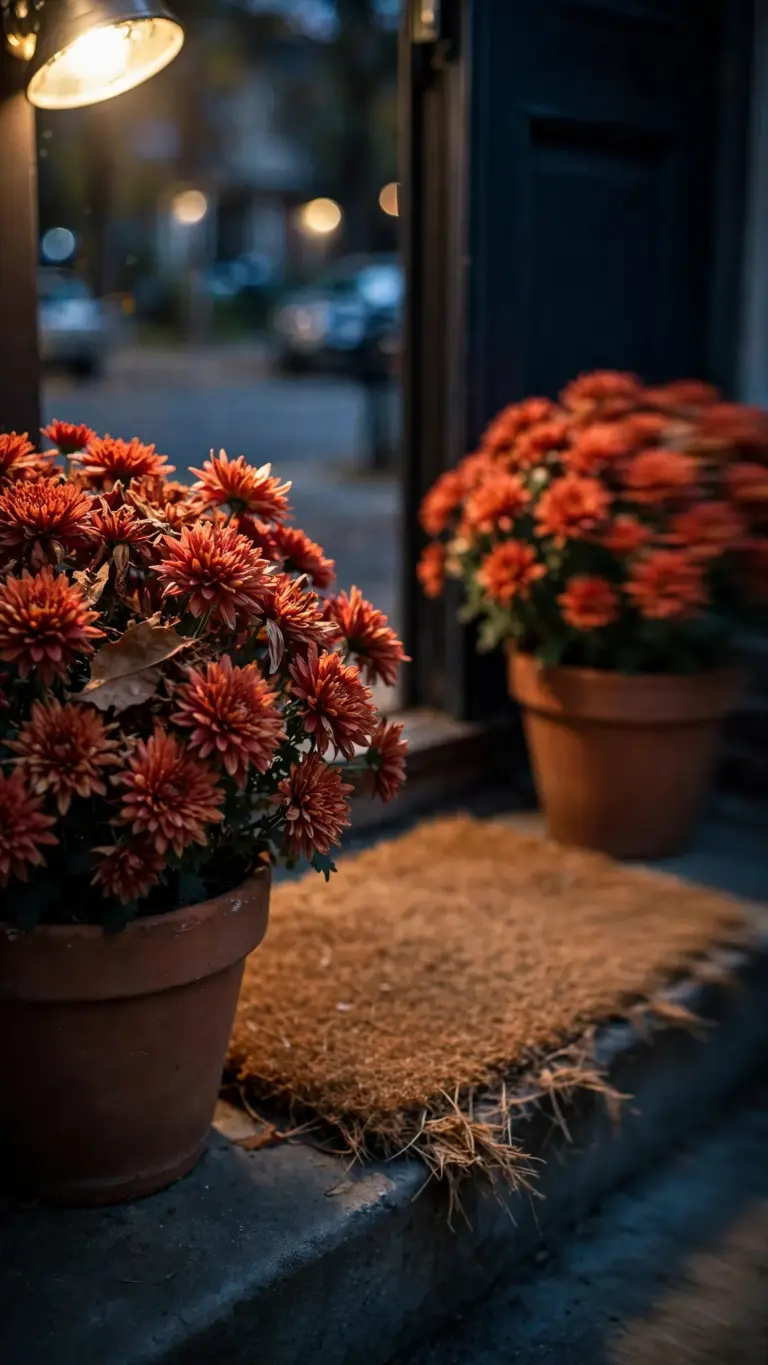
If you want perennial mums, plant small green nursery stock in September, pinch it hard, and mulch after freeze. For the full porch-pot treatment, the site’s thanksgiving planter ideas page builds 21 garden-sourced pots that carry the same pots into November.
Sink the whole pot into the ground if you want the plant to survive. A pot left above ground freezes solid and kills the roots; a pot sunk to its rim gets the earth’s insulation. Lift it in March, or leave it and let the roots escape through the drainage holes.
18. Skip Tender Warm-Season Crops
Tomatoes, peppers, eggplant, basil, cucumbers, and squash die at the first light frost. Starting them from seed in September wastes the seed and the bed space. The days-to-maturity on the packet assumes summer sun; October sun delivers half the light and none of the heat.
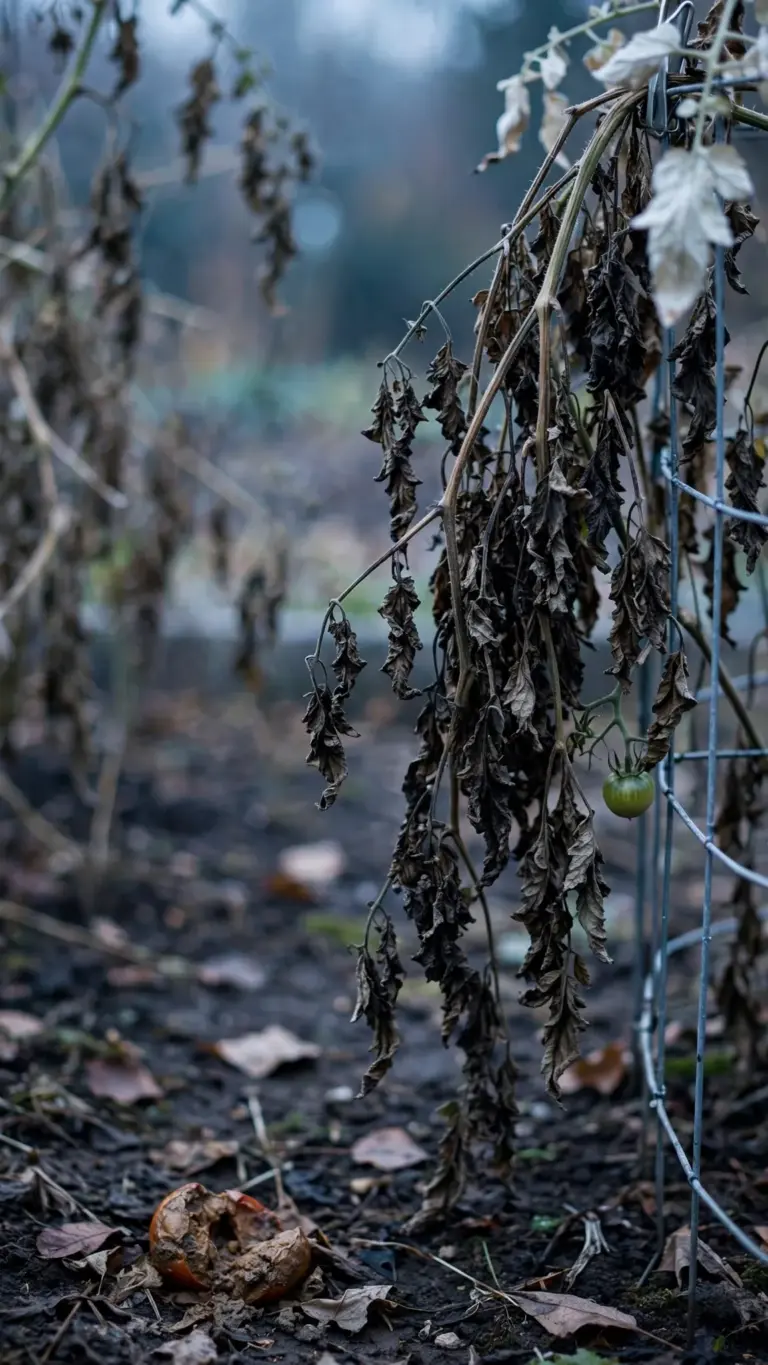
Pull the last summer stragglers out instead of nursing them. A tomato plant hanging on into October produces green fruit that never ripens and harbors blight spores. Compost only clean vines. Bag and trash anything spotted.
Fill the freed space the same day. An empty bed in September is an invitation to weeds and a waste of the year’s best planting weather. Sow the cover crop or set the transplants before the tools are put away.
19. Skip Late Bare-Root Evergreens
Broadleaf evergreens like rhododendron, holly, and boxwood planted late in fall face winter wind with unestablished roots. The leaves keep losing water all winter while the roots cannot replace it. That is winter burn: brown leaf margins by February.
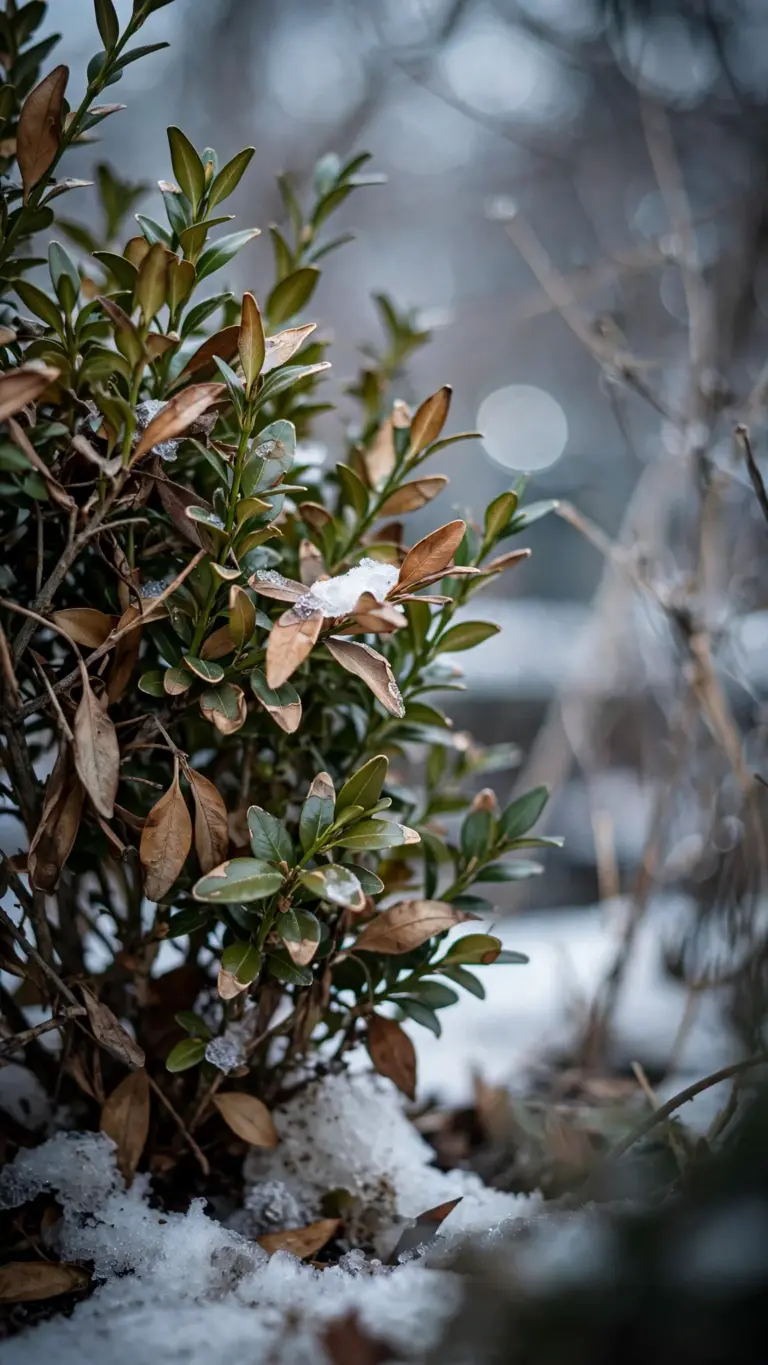
Plant broadleaf evergreens six to eight weeks before the first hard freeze, or wait for spring. Deciduous trees and shrubs have no such deadline; their bare branches lose almost no water. The evergreen rule is about leaves in winter, not about the calendar month.
Water late-planted evergreens deeply right before the ground freezes. A full root zone goes into winter hydrated, which is the only defense against desiccation the gardener controls. Then mulch and walk away. No fertilizer, no pruning, no fussing.
20. Water Every New Planting In Deep
Water is the difference between a planted thing and an established thing. Soak each transplant with 4 liters at planting, then soak the whole bed. Seeds want the opposite treatment: a gentle daily sprinkle until emergence, then a deep soak twice a week. Once transplants are in, let the top 2.5 cm dry between waterings so roots chase moisture downward.
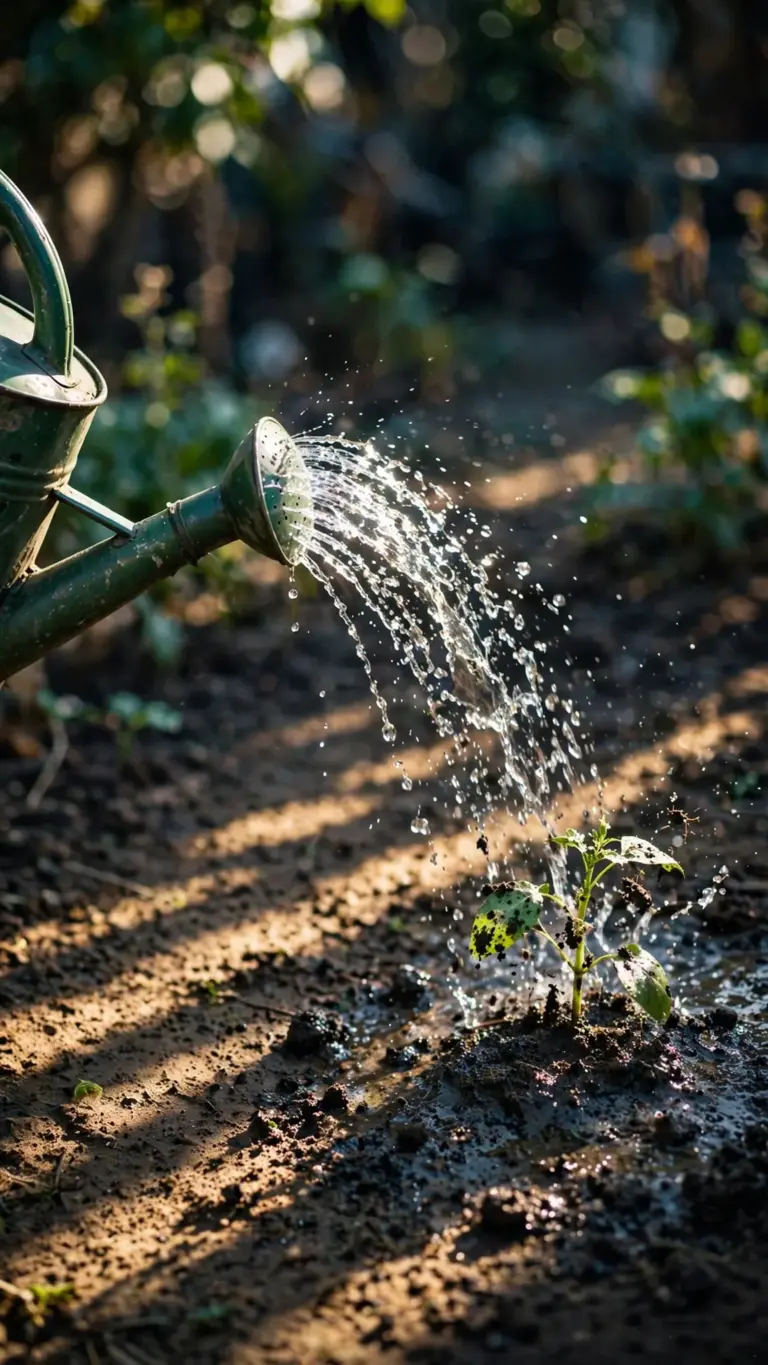
The same Texas A&M fall vegetable notes warn that transplants in cell packs need at least two weeks for their root systems to grow large enough to support the plant, and until then they may need water every day. Check soil with a finger, not with the calendar. Wet soil balls up; dry soil crumbles.
Set a rain gauge by the bed. Fall storms lie; a dramatic thunderstorm can drop 2.5 cm on the driveway and nothing under the eave where the new shrubs sit. The gauge tells the truth. Water what the sky missed.
21. Mulch New Plantings, Then Stop Feeding
Mulch every new planting after the soil cools. Straw over garlic, shredded bark around trees, 5.1 to 7.6 cm of leaves over bulb beds per the Penn State bulb notes. Mulch steadies soil temperature, holds moisture, and blocks the freeze-thaw heaving that pops shallow bulbs out of the ground.
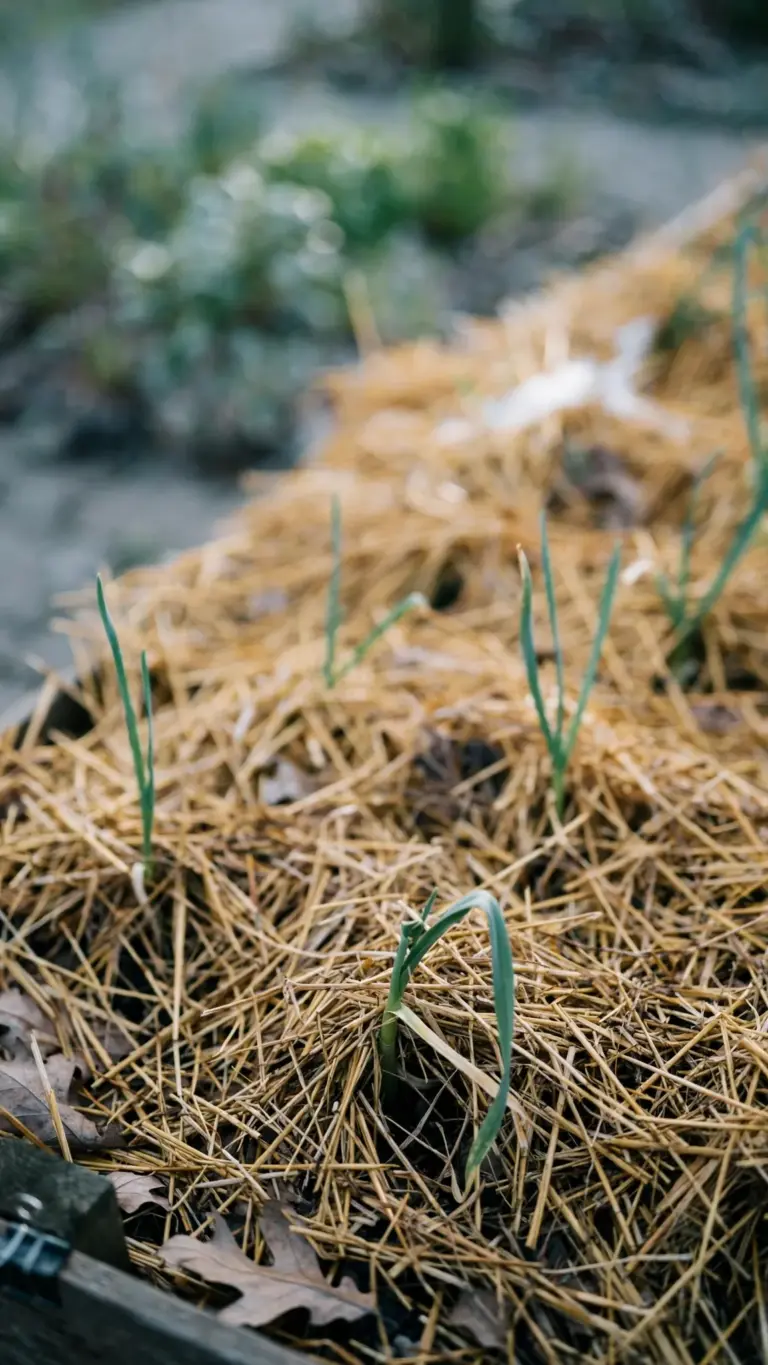
Stop fertilizing in fall. Nitrogen now pushes soft growth that winter kills. The feeding window opens again in March. A bed that goes into winter mulched and unfed wakes up with its soil biology intact and its plants hardened.
Shredded fall leaves are the free mulch. Run the mower over them once and pile the confetti 8 cm deep around every new planting. Whole leaves mat into a soggy tarp; shredded leaves breathe. The trees donate the mulch for the trees.
Zone Timing in Plain Words
Zones 3 to 5 plant the fall garden in July and August and spend September on bulbs, garlic, and trees. Zones 6 to 7 sow greens through September and plant bulbs into October. Zones 8 to 9 plant their main fall garden in September and October, and zones 10 and warmer treat October as a second spring.
In the North, the season compresses. A zone 4 gardener sows carrots in mid-July and treats August as the last call for everything except garlic and bulbs. Row cover is not optional there; it is the difference between a crop and a compost input. Buy the fabric in July, before the garden centers clear the shelves.
In the middle zones, September is the money month. Soil is still warm enough to germinate seed in days, nights are cool enough for lettuce, and the first frost usually waits until late October. This is the widest planting window in the country. Use all of it.
In the South, fall is the kind season. Tomatoes go in for a second round in July, greens sow from September into November, and garlic plants in December. The danger is not frost but heat: September soil can still cook small seed. Shade cloth and afternoon water solve it.
The direction never changes: cold zones plant earlier, warm zones plant later. Your first frost date sets the countdown; the plant’s days to maturity sets the distance. The week-by-week crop numbers live on the fall garden planting schedule sibling page, and the frost-date math behind them lives on the when to start a fall garden sibling page.
Five Ways New Fall Plantings Die
Planting summer crops in September. Every week a tomato occupies a fall bed is a week lettuce does not. Pull warm-season plants the day production drops. A gardener who waits for the last tomato loses the first lettuce. The bed owes you nothing after Labor Day.
Burying the crown. Perennials, strawberries, and trees planted too deep rot at the stem. The crown sits at soil level. The trunk flare sits at grade. When in doubt, plant high; soil settles, and a plant that starts proud ends level.
Mulching too early. Mulch applied while the soil is still warm invites voles and mice to nest. Mulch after the first hard freeze, when the soil has cooled and the rodents have settled elsewhere. Warm mulch is a blanket; cold mulch is a roof. Time it like one.
Watering on a schedule. Fall rain is erratic. A bed soaked by a storm needs nothing for a week; a bed under an eave needs a can every three days. Check the soil with a finger every time. The calendar does not know it rained on Tuesday.
Feeding in October. Nitrogen pushes tender growth that the first hard freeze kills back to the crown. The plant spends winter energy it needed for roots. Feed in March. A hungry fall plant is a hardy fall plant.
The Bed Goes to Sleep Fed by You
A fall planting guide is a promise made in September and kept in April. The garlic roots, the bulbs settle, the tree stakes come out in spring. Walk the beds once more before the ground freezes. Tug each transplant gently. Anything that lifts out was never planted; push it back in, water it, and mulch it like you mean it.
Write the planting dates on the stakes. Memory lies about when the garlic went in, and next year’s timing depends on this year’s notes. A pencil on a wooden stake outlasts every garden app.
Then stop. The garden does not need a manager in winter. It needs a gardener who planted on time, watered once more than felt necessary, and walked away. Spring pays that patience back with interest.
Frequently Asked Questions
What Is the Best Thing to Plant in the Fall?
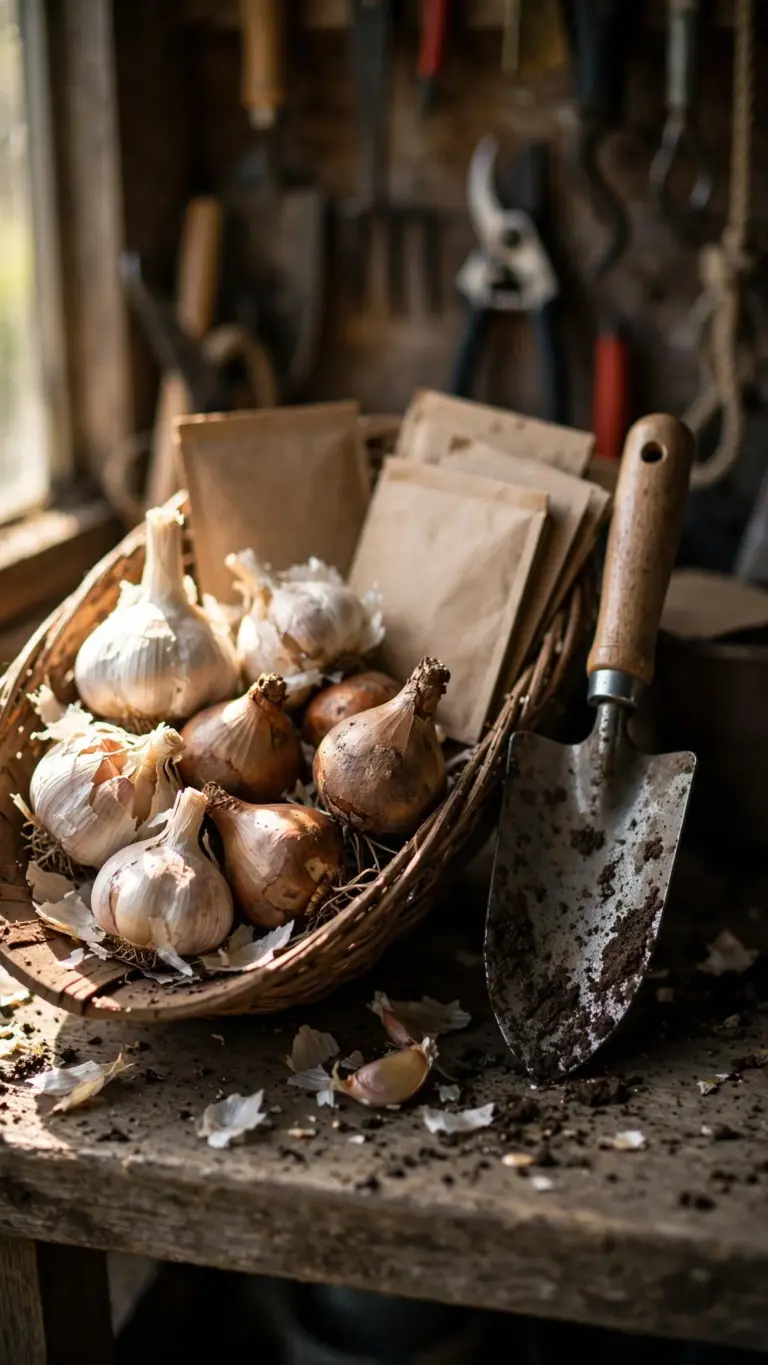
Leaf lettuce, spinach, and garlic give the most return for the least work. Lettuce cuts in 30 to 45 days, spinach sweetens after frost, and garlic needs nothing from you between November and April. Spring bulbs run second: one afternoon of planting pays back in March flowers. Start with these five and the season feels easy.
What Should You Not Plant in the Fall?
Skip tomatoes, peppers, basil, cucumbers, and squash, which die at the first light frost and never size up in short October days. Skip late-planted broadleaf evergreens, which desiccate in winter wind before their roots establish. Skip summer bulbs left in the ground, which rot in wet winter soil. Every one of these is a spring job wearing a fall costume.
When Should You Plant in the Fall?
Plant by your first frost date, not by the calendar month. Zones 3 to 5 sow fall crops in July and August; zones 6 to 7 sow through September; zones 8 to 9 plant the main fall garden in September and October. Count backward from frost using each crop’s days to maturity. The packet’s number plus two weeks of fall slowdown is the honest math.
Can You Plant Trees in the Fall?
Yes, fall is the best season for planting trees and shrubs. Roots keep growing in soil above 4.4°C long after leaves drop. Dig the hole the same depth as the root ball and twice as wide, set the trunk flare at grade, and water weekly until the ground freezes. Skip staking unless the tree cannot stand on its own. Cut any circling roots before backfilling.
When Do You Plant Fall Flowers?
Set pansies and violas in September for bloom through light frost. Pot garden-center mums in containers for October color rather than planting them in beds. Plant spring-flowering bulbs from September into October, pointy end up, at two and a half to three times the bulb’s height deep. Daffodils go where deer patrol; tulips go where you can guard them.








