
Fusarium root rot treatment begins with a fact most guides bury at the bottom of the page: there is no cure for an infected plant. Once Fusarium oxysporum colonizes a plant’s water pipes, no spray, drench, or home remedy removes it. The fungus makes chlamydospores, thick-walled resting structures that sleep in soil for 20 to 40 years and wake up the moment a susceptible root grows past them.
That sounds like a reason to close this tab, but it is the opposite. It is the reason this guide exists. Because Fusarium cannot be cured, the only real treatments are the ones that stop it before it starts, decide fast when a plant is already lost, and make the soil unwelcoming to the fungus that remains. Nine steps below do exactly that, ordered the way they should happen in your garden, with honest limits on each one.
Every number below comes from extension publications and published trials, and where the evidence is thin I say so. If your seed-starting trays are clean, your transplants are certified, and your watering is disciplined, you will likely never meet this fungus. Start with clean seed-starting technique, and keep reading for the rest of the playbook.
What Fusarium Root Rot Actually Is
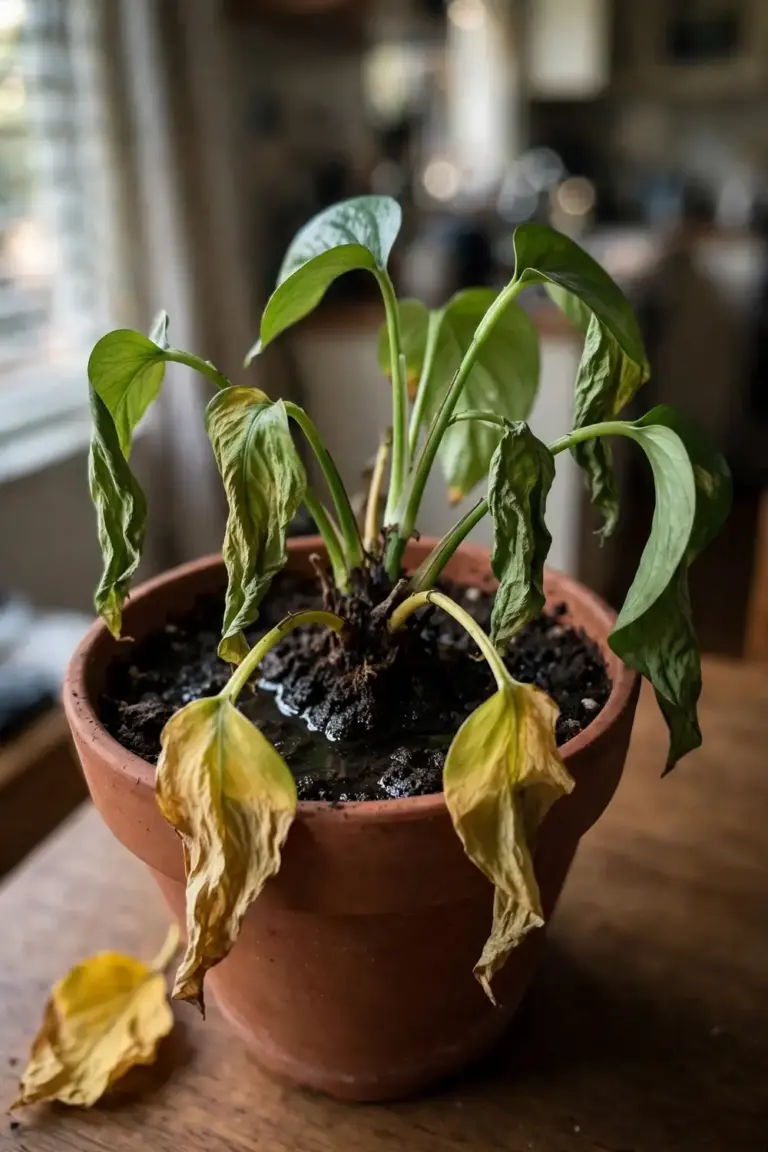
Fusarium root rot is a soilborne disease caused by Fusarium oxysporum, a true fungus (not an oomycete like Pythium) that lives in soil worldwide. It invades through root tips and wounds, then grows upward into the xylem, the plant’s water-conducting tissue. The plant clogs its own vessels trying to block the fungus, which is why a Fusarium-infected plant looks exactly like a plant that has not been watered.
The species Fusarium oxysporum is actually a complex of more than 150 host-specific strains called formae speciales. Each one attacks only certain plants: F. oxysporum f. sp. lycopersici kills tomatoes but ignores cucumbers, while f. sp. melonis does the reverse. This matters for two reasons. First, a lab or a resistant-variety catalog always names the strain, so “Fusarium” alone is not a diagnosis. Second, planting a different family of crops in the same bed really does dodge the disease, because the strain waiting in your soil is picky.
How to Identify Fusarium on Roots and Stems
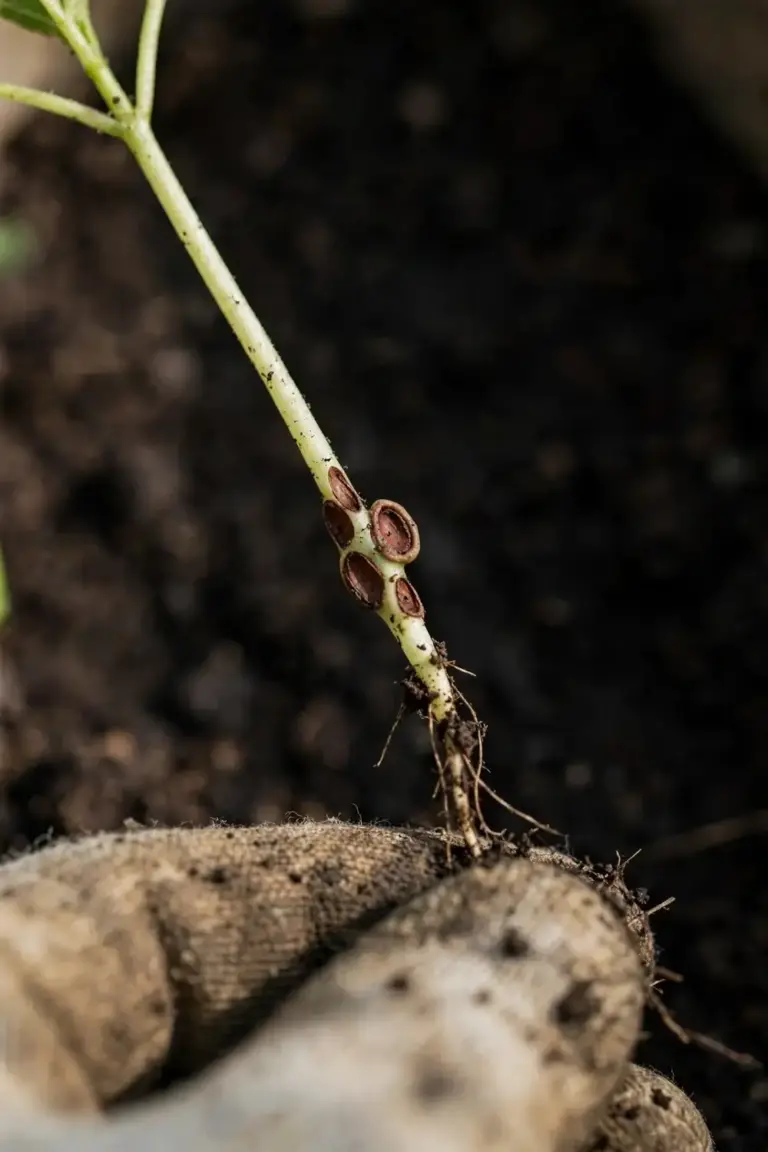
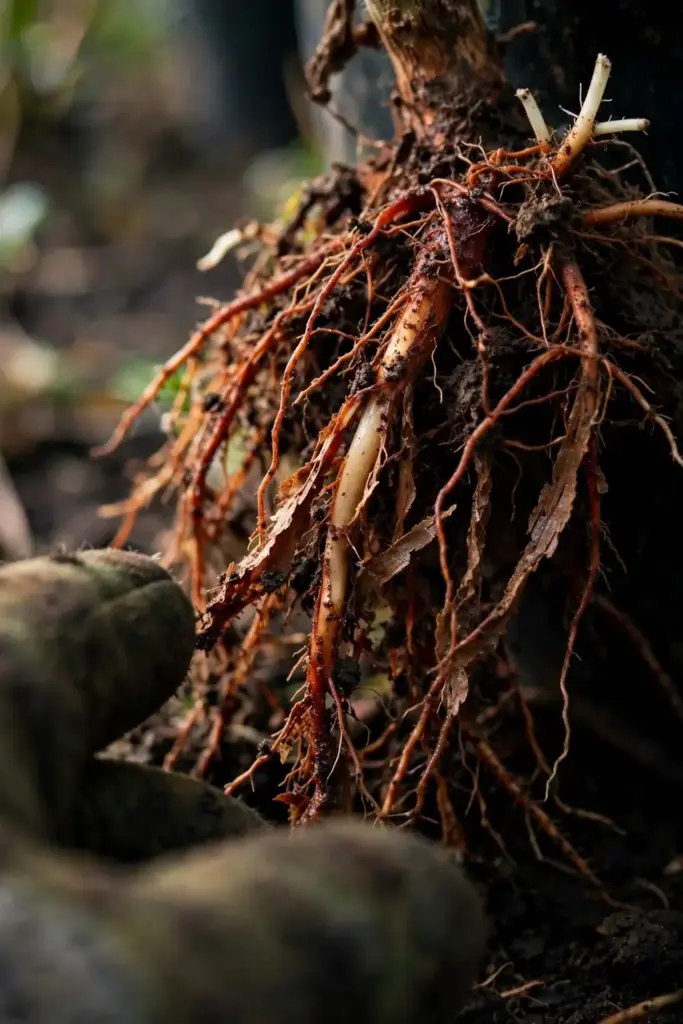
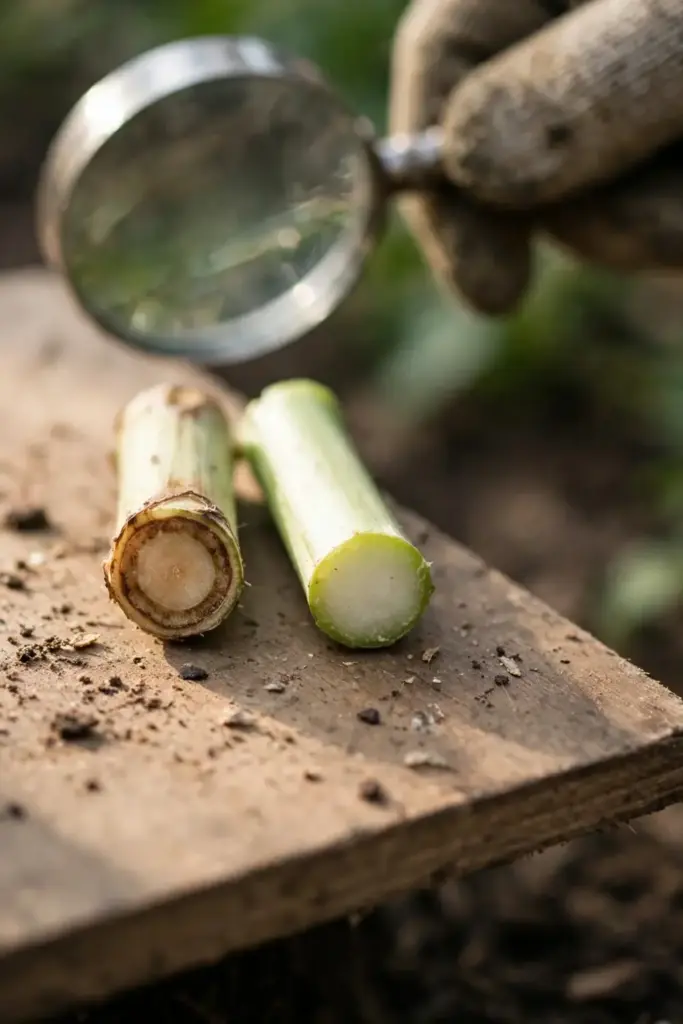
Dig up a suspect plant and wash the roots. Healthy roots are white or cream and firm. Fusarium-rotted roots turn reddish-brown to dark brown from the tips inward, feel mushy, and the outer layer may slough off the core when you tug gently. In advanced cases the stem base shows brown discoloration just under the bark.
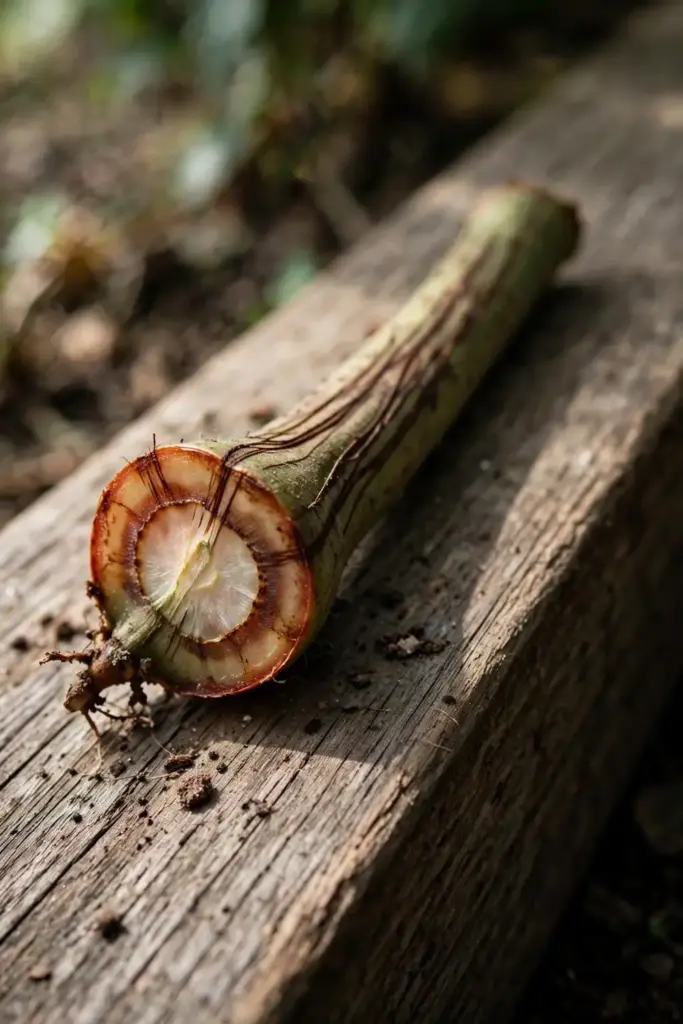
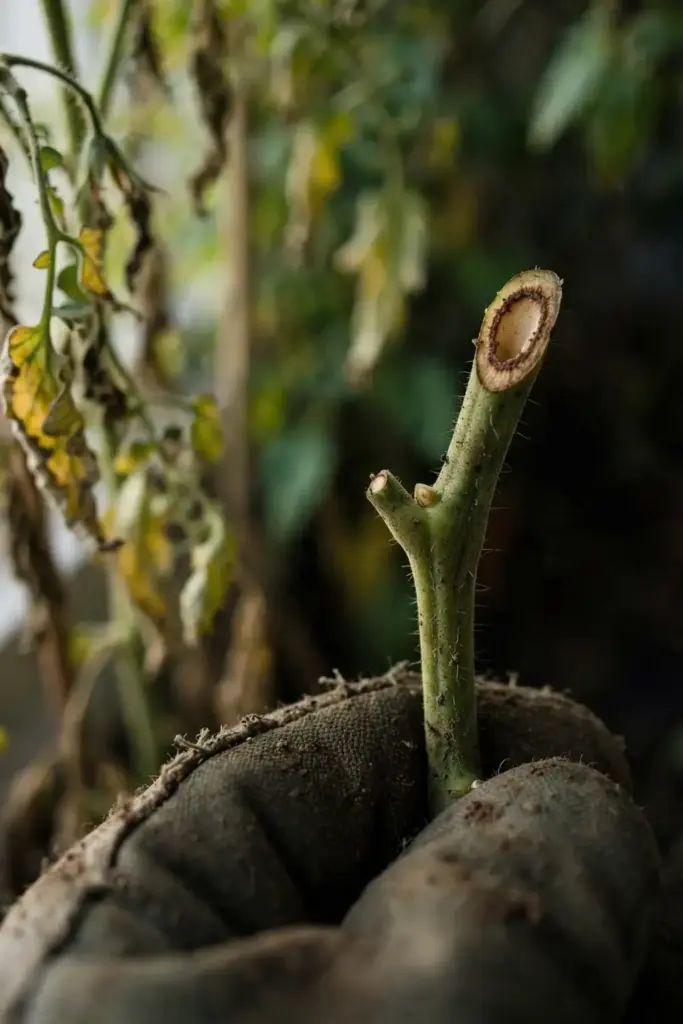
The signature test is the stem cross-section. Cut the stem across at the base with a clean knife. A Fusarium-infected stem shows a brown to dark-red ring of discolored vascular tissue just under the bark, with streaks running up and down the stem. The pith in the center stays intact, which helps separate Fusarium from bacterial wilts that rot the pith. If you see the ring, the plant is already systemically infected, and no treatment reverses it.
How to Identify Fusarium on Leaves and Fruit
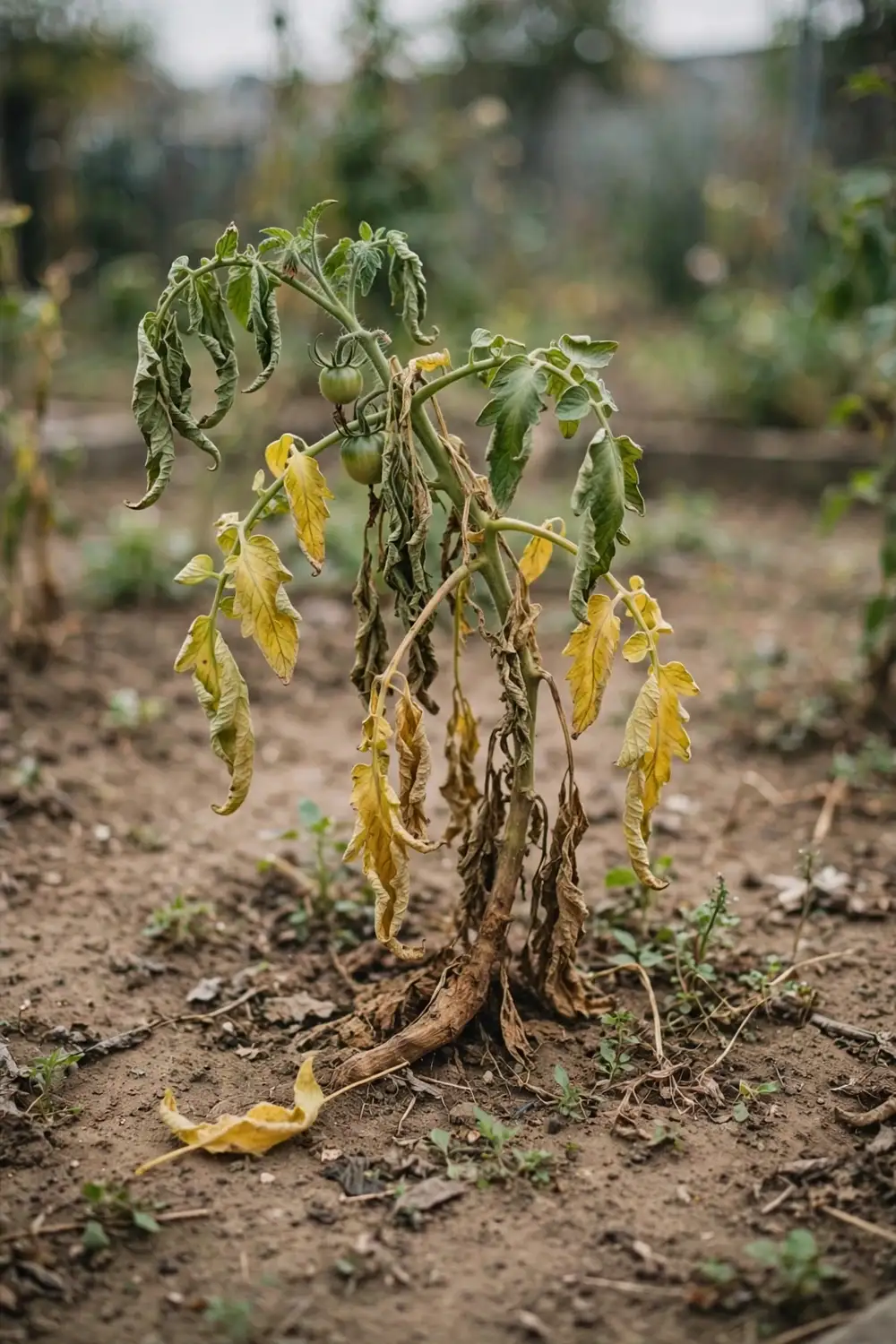
Above ground, Fusarium looks like drought. Older, lower leaves yellow first, then wilt during the heat of the day and may recover at night early on. A classic sign: only one side of a leaf midrib or one side of the plant wilts, because the fungus has blocked vessels on that side only. Later the whole plant wilts permanently, leaves turn brown, and growth stalls.
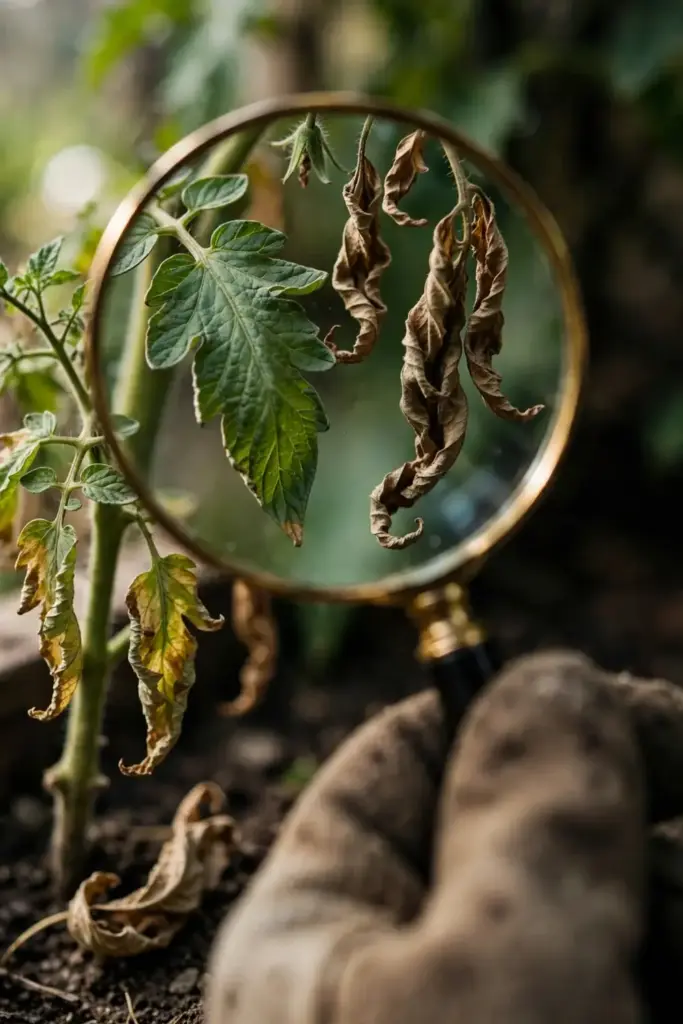
On tomatoes, fruit may ripen prematurely or stay small, and severe infections kill the plant before fruit finishes. Seedlings infected early collapse, which is why Fusarium is sometimes mislabeled as damping off. The one-sided wilt plus the brown vascular ring in the stem is the combination that separates Fusarium from plain underwatering, which recovers overnight and shows no stem discoloration.
Which Plants Get Hit Hardest by Fusarium
Tomatoes are the headline victim for home gardeners, attacked by F. oxysporum f. sp. lycopersici in three races. Race 1 is the most common in home gardens; races 2 and 3 exist regionally, and a variety resistant to race 1 can still collapse from race 3. Peppers, eggplant, basil, cucumbers, melons, watermelon, beans, peas, and strawberries each have their own Fusarium strain waiting. Bananas have the famous TR4 strain, though that is a commercial-crop problem, not a backyard one.
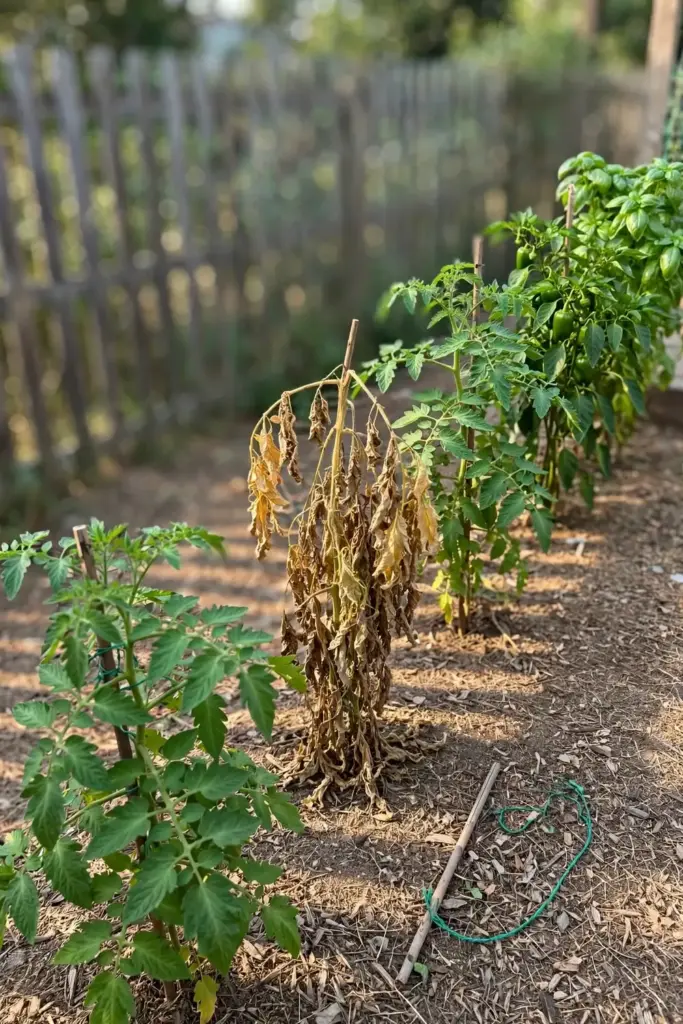
What the strains share: warm soil. Disease development peaks when soil sits near 80 degrees Fahrenheit (about 27 Celsius), and the fungus thrives in dry climates where soil moisture runs low. Research on F. oxysporum growth records the fastest growth between 25 and 28 Celsius, with growth stopping below 17 and above 33 Celsius, which explains why the disease explodes in summer beds and stalls in cool spring soil. Seedlings, stressed transplants, and plants in compacted soil get hit first, because wounds and weak roots are the doors the fungus walks through.
Peppers and eggplant suffer from their own Fusarium strains, and basil growers know Fusarium basil wilt as the reason a thriving plant collapses overnight in August. Strawberries get F. oxysporum f. sp. fragariae, which is why strawberry beds fail in the same spot year after year. If you grow any of these, the strain in your soil is specific to that crop, so a tomato strain will not touch your basil, but the management playbook is the same.
Fusarium vs Pythium vs Rhizoctonia vs Bacterial Wilt
Use the table to stop guessing. Four diseases cause wilting and root damage, and treating the wrong one wastes the season.
| Feature | Fusarium | Pythium | Rhizoctonia | Bacterial wilt |
|---|---|---|---|---|
| Pathogen type | True fungus | Oomycete (water mold) | True fungus | Bacteria |
| Roots | Brown from tips, mushy, outer layer sloughs | Brown-black, water-soaked, sloughs easily | Dry, corky lesions at soil line | Roots often look normal early |
| Stem cross-section | Brown vascular ring, pith intact | Pith water-soaked | Brown sunken canker at soil line | Pith rotted, bacterial ooze possible |
| Wilt pattern | One-sided early, midday wilt | Whole plant collapses fast | Damping off at soil line in seedlings | Whole plant, sudden, no recovery |
| Soil survival | Chlamydospores, 20-40 years | Oospores, years | Sclerotia, years | Months, not years |
| Curative treatment | None | None once advanced | None | None |
| Best defense | Resistant varieties | Drainage, sanitation | Sanitation, Trichoderma | Resistant varieties, clean stock |
The row that matters most is the last two: no wilt disease has a real cure, but Fusarium is the one that punishes you longest, because its chlamydospores outlive your gardening plans.
Why Chlamydospores Make Fusarium Nearly Impossible to Cure
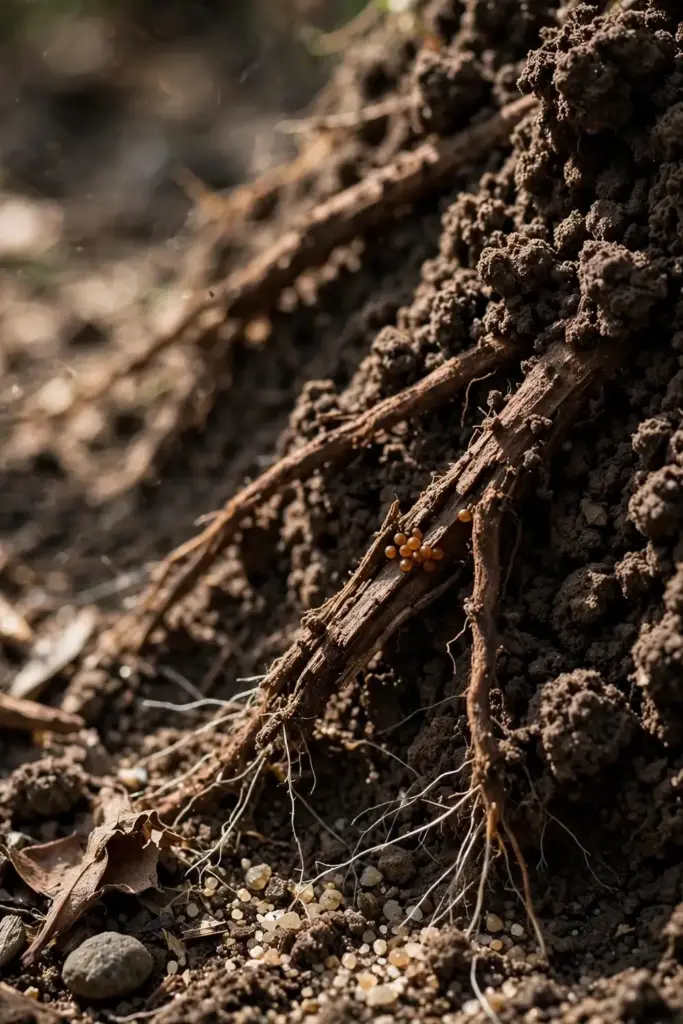
A chlamydospore is a thick-walled resting spore, and it is the whole reason Fusarium wins. When an infected plant dies and decays, chlamydospores release into the soil, where published research records them surviving 20 to 40 years. They do not need a host. They wait, dormant, until a susceptible root grows within reach and chemical signals from the root tell them to germinate.
This is why no fungicide cures Fusarium. The University of Minnesota Extension states it flatly: there are no chemical options available for Fusarium wilt in the home garden, because garden-labeled fungicides do not touch the fungus inside the xylem or the spores in the soil. Commercial soil fumigation knocks populations down but does not eradicate them, and it is not available to home gardeners anyway. Everything that works against Fusarium works by avoidance: resistant varieties, clean starts, and soil the fungus finds hostile.
One nuance from UC Davis research: soil populations of F. oxysporum decline substantially within 1 to 3 years without a host, but the fungus also colonizes crop residue and roots of most rotation crops, so it lingers far longer than the decline curve suggests. Rotation helps, but it does not reset the clock.
What Makes Fusarium Worse in a Home Garden
Warm, dry-ish soil is the trigger. Fusarium develops fastest when soil temperatures sit near 80 degrees Fahrenheit; cool spring soils suppress it, which is why early plantings often escape while summer plantings collapse. Wounds multiply infection: cultivation that nicks roots, transplant shock, nematode feeding, and even rough handling of seedlings all open doors.
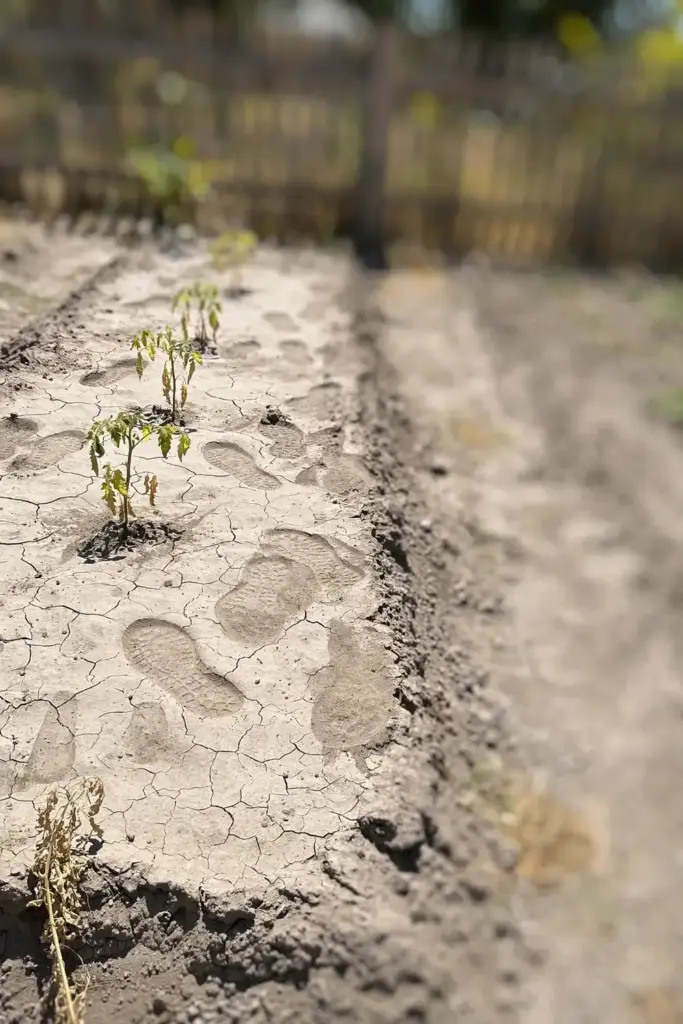
Excessive nitrogen makes disease worse, per University of Minnesota Extension guidance, because it pushes soft, succulent growth the fungus colonizes easily. Acidic soils favor it too; in acidic soils, raising pH toward 7 helps suppress disease. Contaminated tools, reused potting mix, and infected transplants from a bargain nursery are the three most common ways home gardeners import Fusarium into a clean bed, and the fungus then stays for decades.
Step 1: Decide Whether Fusarium Root Rot Treatment Is Worth It for This Plant
This is the step other guides skip, and it is the most valuable one. If the stem cross-section shows the brown vascular ring, the plant is systemically infected. It will not recover. No drench, no peroxide, no fungicide changes that. Pulling it now and spending your effort on the soil and the replacement plant is the correct treatment, and it is worth more than every product on the shelf combined.
The honest math: a tomato transplant costs a few dollars and six weeks of lead time. A season fighting a doomed plant costs the whole bed. The exception is a lightly infected seedling tray, where the healthy seedlings can still be saved by culling the sick ones and starting clean. Everything below assumes you are treating the garden, not resurrecting the plant.
Step 2: Rogue the Plant and Sanitize Everything Around It
Pull infected plants whole, roots and all, and bag them. Do not compost them, because home compost piles rarely reach the sustained high temperatures that kill chlamydospores, and you will spread the fungus with next year’s compost. Burn the material if local rules allow, or bag it for municipal waste.
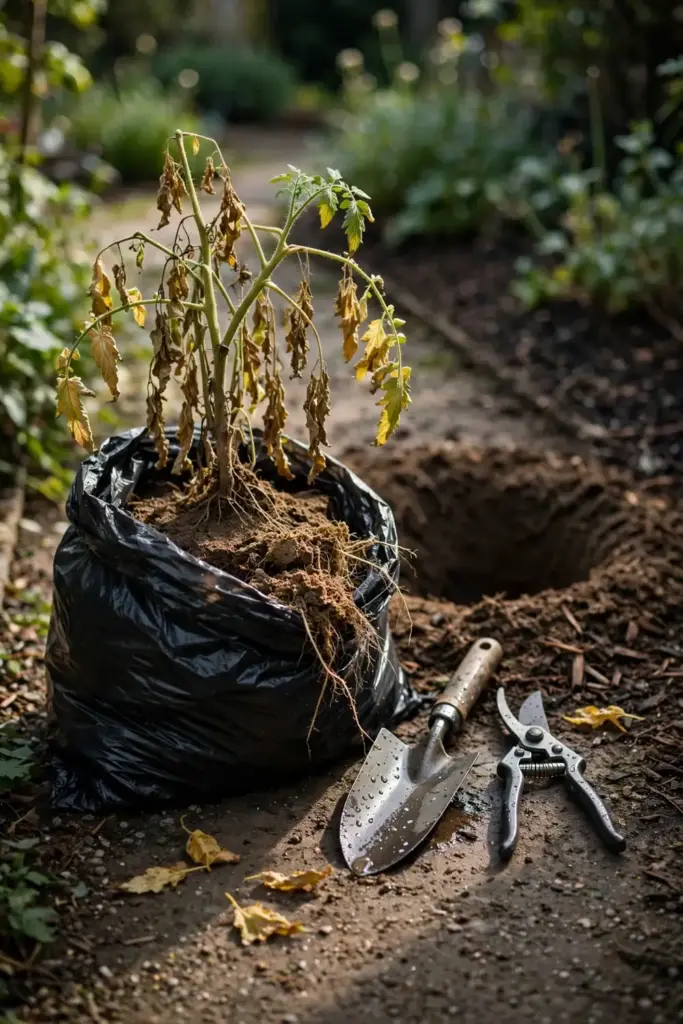
Then sanitize. Wash soil and debris off tools, stakes, pots, and boots, and disinfect with a 10 percent bleach solution (one part household bleach to nine parts water), rinsing afterward because bleach is corrosive. The University of Maryland Extension home-garden guide gives the same sanitation protocol and states the hard rule plainly: there is no cure for this disease, so infected plants must be removed and destroyed. Work infected areas last when moving through the garden, so you do not carry soil from a sick bed to a healthy one on your shoes. This step costs almost nothing and removes the freshest, most concentrated inoculum.
Step 3: Solarize the Soil With Honest Expectations
Soil solarization means covering moist soil with clear plastic for 4 to 6 weeks during the hottest part of summer, letting the sun heat the top few inches past the temperatures that kill fungal propagules. It reduces Fusarium populations in the upper soil layer, and it is one of the few heat treatments a home gardener can actually do.
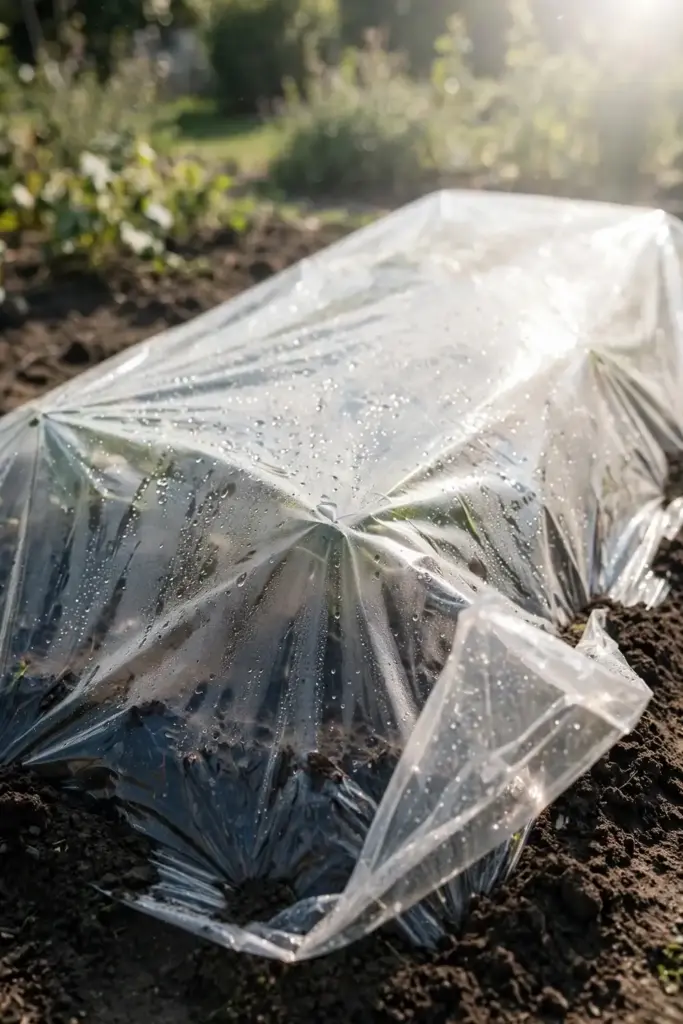
The honest limit: solarization heats only the top 2 to 6 inches effectively, while chlamydospores deeper down survive and recolonize. Think of it as knocking the population down, not sterilizing the bed. It works best combined with the other steps, and it is most useful in small beds you can cover completely and edge-seal so heat does not escape.
Step 4: Try Biofumigation With Mustard, Knowing Its Limits
Biofumigation means growing a mustard-family cover crop, chopping it, and incorporating it into the soil, where the breakdown releases compounds that suppress soil fungi. Research on commercial farms shows real suppression of several soilborne pathogens, and mustard cover crops fit naturally into a home garden rotation.
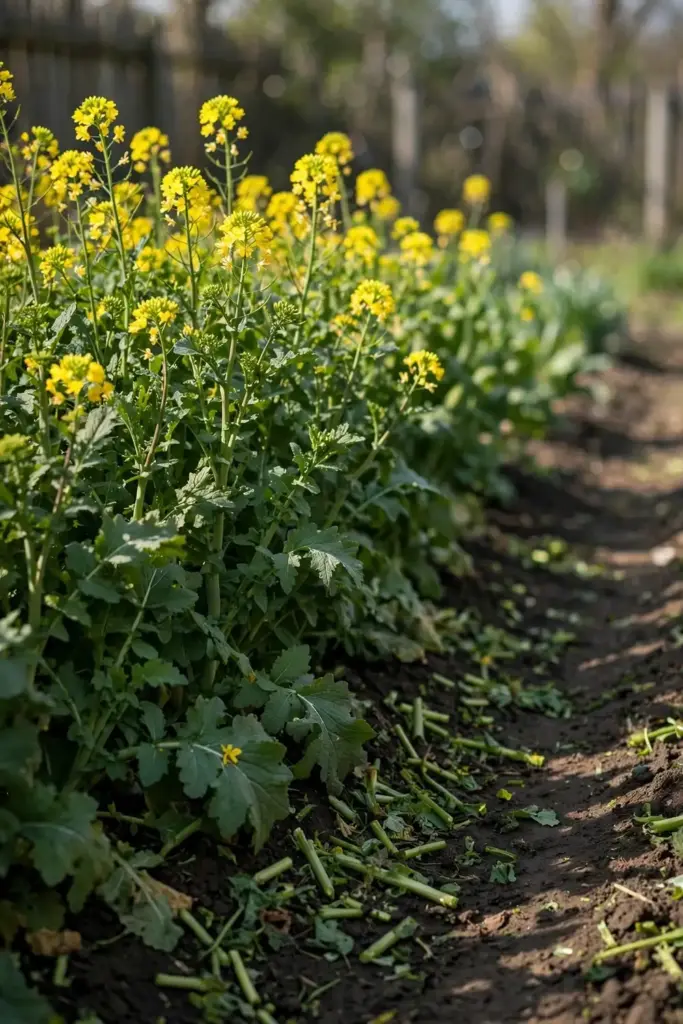
For a home gardener, the practical version: sow a fast mustard green in the off season, chop it fine at flowering, dig it in, water it, and cover the bed with plastic for two weeks to trap the gases. Expect a meaningful reduction, not elimination. It is a useful lever, not a silver bullet, and it belongs in the plan precisely because it costs a packet of seed and a weekend.
Step 5: Add Trichoderma and Compost Without Illusions
Trichoderma products are beneficial fungi that colonize roots and compete with pathogens. In published trials, wheat-bran cultures of Trichoderma protected radish seedlings from Rhizoctonia damping-off across five successive plantings (Phytopathology, 1978), and later work showed substantial reductions of soil pathogen populations in controlled conditions. For Fusarium specifically, evidence in home-garden conditions is thinner: suppression in pots and trials, inconsistent results in real beds.
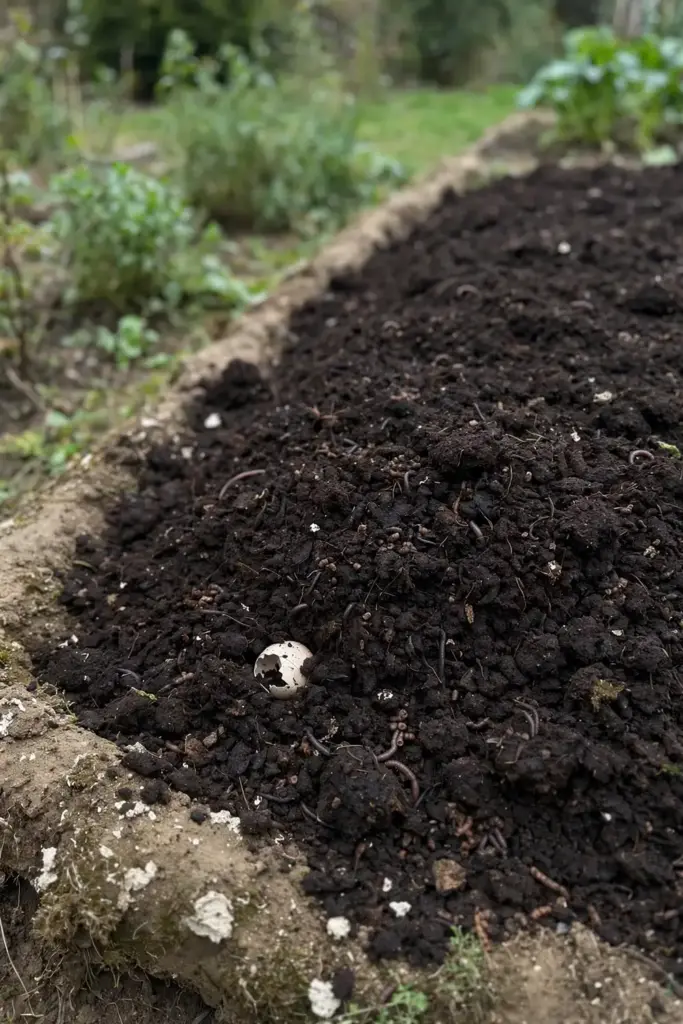
Use Trichoderma as a preventive at planting time, worked into the root zone, with the honest expectation that it lowers pressure rather than guaranteeing protection. Well-made compost helps in the same way, by feeding the microbial competition that keeps Fusarium in check. Neither one rescues an infected plant. Both make the next planting safer, which is the actual goal.
Step 6: Plant Resistant Varieties, the Actual Cure
If Fusarium is in your soil, resistant varieties are the closest thing to a cure that exists. Tomato seed catalogs list resistance codes: V for Verticillium, F for Fusarium (with race numbers, F1, F2, F3), N for nematodes. A “VFN” tomato resists Verticillium, Fusarium races 1 and 2, and nematodes. Real examples from extension trial lists: Jet Star VF1, Big Beef VF1F2NTA, Florida 91 VF1F2, and Crista VF1F2F3N. Match the code to your problem: resistance to race 1 does nothing against race 3, and the only way to know which race lives in your garden is a lab diagnosis.
The University of Minnesota Extension Fusarium page is the best single reference for home gardeners: it explains the three races of tomato Fusarium, notes that seed catalogs indicate which races each variety resists, and confirms there are no chemical options for home gardens. Two honest caveats from the extension literature. First, under severe disease pressure even resistant plants can show symptoms, because resistance is not immunity. Second, Minnesota notes the fungus can live in resistant plants without symptoms, so a resistant variety is not a rotation: do not follow resistant tomatoes with susceptible ones and assume the soil is clean. For heirlooms with no resistance, grafting onto a resistant rootstock is the professional workaround, and it works in home gardens too.
Step 7: Water to Deny Fusarium Its Warm Wet Window
Fusarium loves warm soil and stressed roots, so watering strategy is disease strategy. Water deeply and less often to push roots deep, where soil stays cooler, instead of frequent shallow watering that keeps the warm surface layer wet and encourages the shallow, easily wounded roots the fungus prefers. Water in the morning so foliage and the soil surface dry during the day.
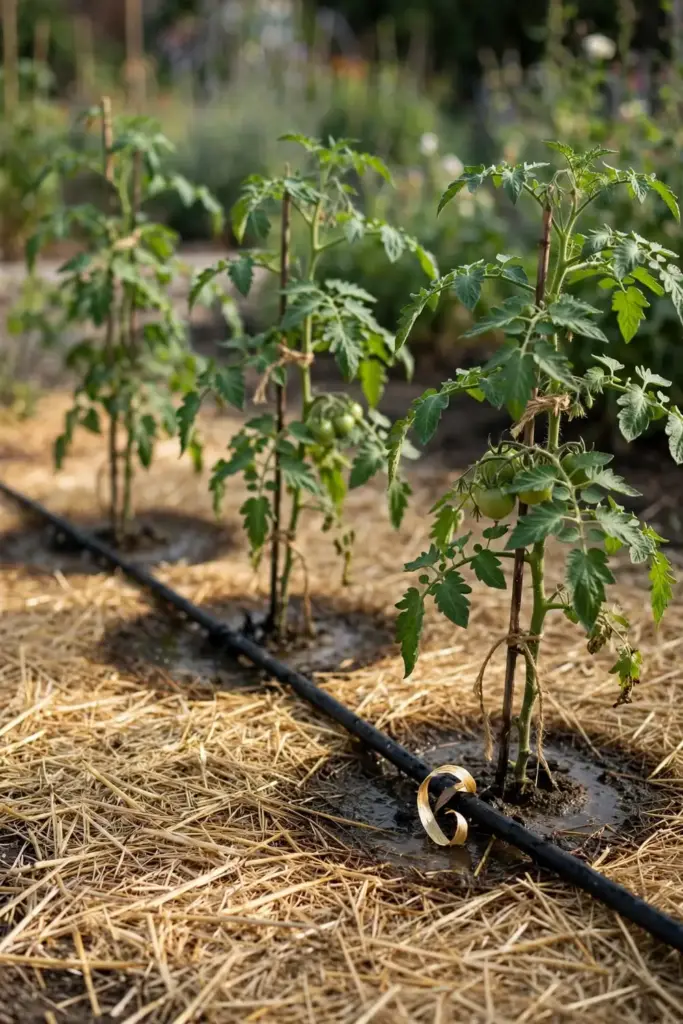
Drip irrigation or soaker hoses beat overhead watering, because they keep water at the root zone without splashing soil onto stems and lower leaves. Mulch with 2 to 3 inches of organic mulch to cool the soil surface and reduce splash. None of this kills Fusarium, but it closes the windows the fungus needs.
Step 8: Rotate Crops Knowing Rotation Barely Works
Standard advice says rotate crops for 3 to 5 years. For Fusarium, treat that number with respect but not faith. Because chlamydospores survive decades and the fungus colonizes the roots of many rotation crops, rotation reduces pressure without resetting the soil. The University of Minnesota suggests 3 to 5 years of rotation away from susceptible crops, with careful weed management during the fallow period, since weeds in the nightshade family can host the fungus silently.
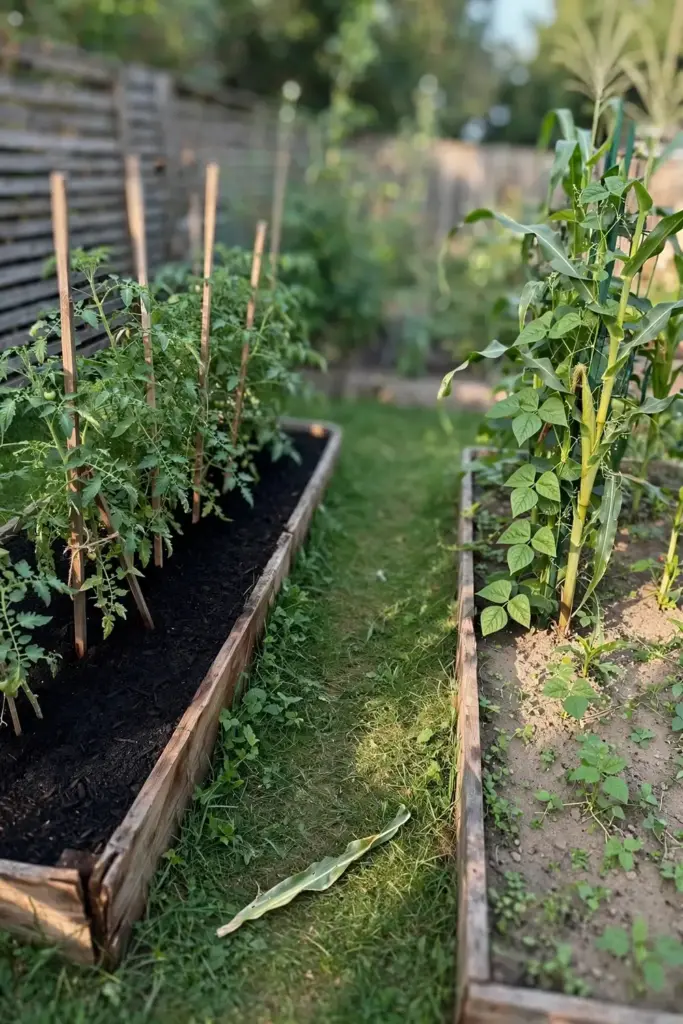
In a small home garden, the practical version: never follow tomatoes with peppers, eggplant, or potatoes in the same bed, since they share susceptibility patterns. Follow them with corn, beans from a different family, or a mustard biofumigation crop, and treat the rotation as one lever among many. Containers with fresh, sterile mix are the honest shortcut for a bed you cannot trust: no soil history, no fungus.
Step 9: Start Clean Next Season
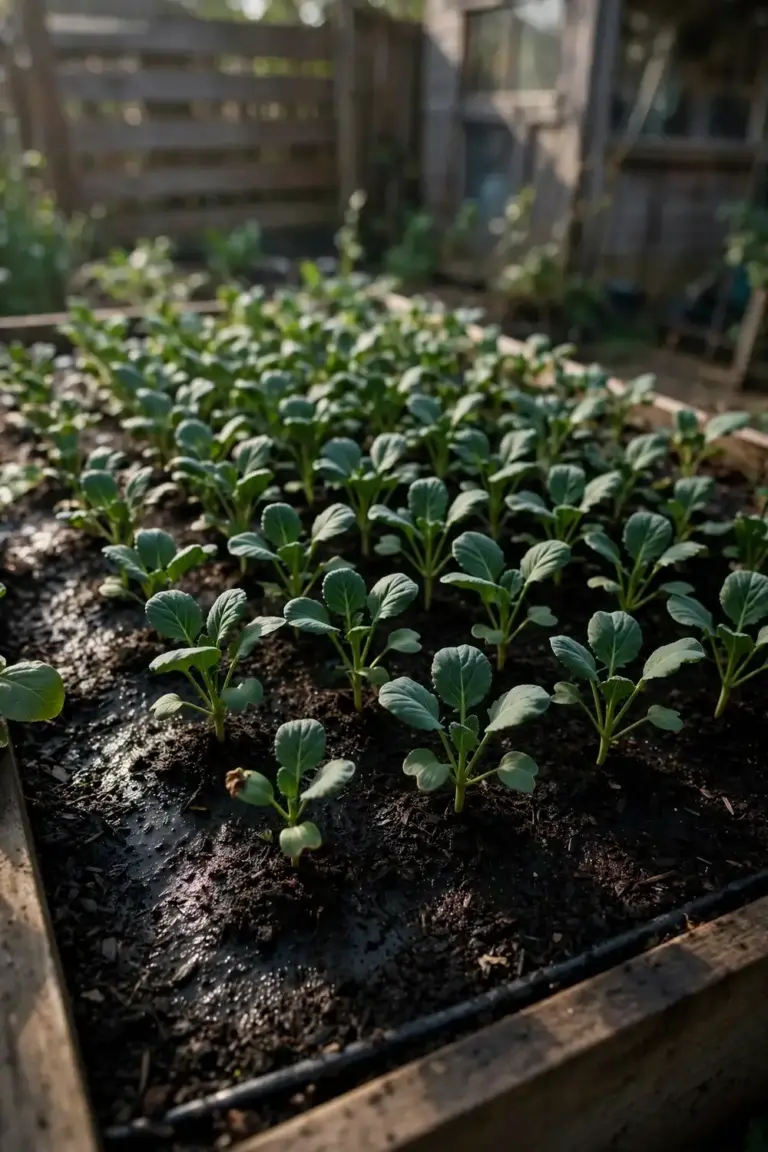
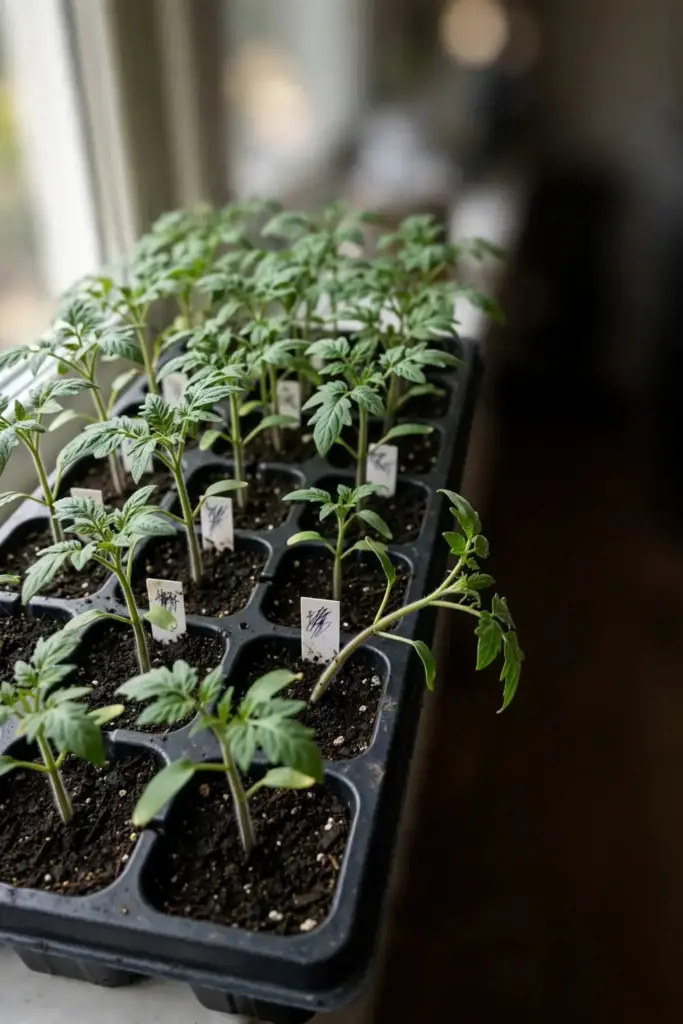
Every Fusarium problem in a home garden either arrived on a plant or woke up in old soil, so clean starts are prevention that actually works. Buy certified disease-free seed and transplants from reputable suppliers, and inspect transplants ruthlessly: any wilted, stunted, or off-color seedling stays at the store. If you start your own seed, use fresh sterile seed-starting mix, new or disinfected trays, and clean water.
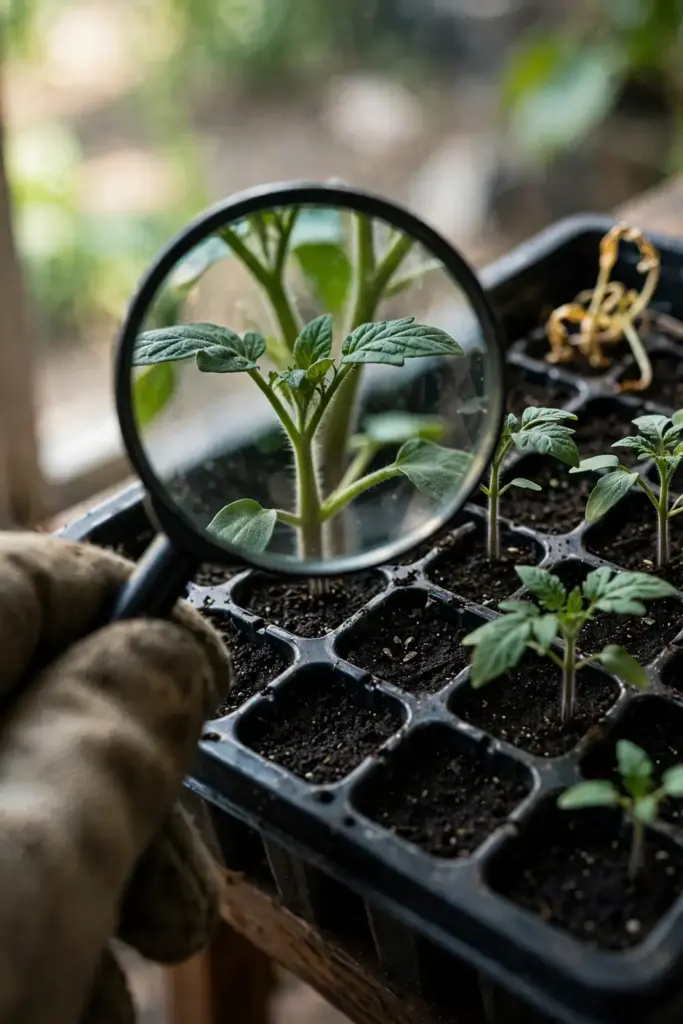
Save your own seed only from healthy plants, and know that Fusarium can be seed-borne, so seed from a bed with a history of wilt is a gamble. Label everything, keep records of which bed had the problem, and plant your resistant varieties there on purpose. A gardener who knows where the fungus lives beats the fungus.
Living With Fusarium in a Garden Bed You Already Own
If your soil has Fusarium, you do not have to abandon the bed. You have to manage it like a chronic condition. Plant resistant varieties as the default, keep up the sanitation and watering discipline, use containers for your most susceptible heirlooms, and solarize or biofumigate between seasons. Yields from a managed bed can be perfectly good, because resistant plants in cared-for soil outgrow the background pressure.
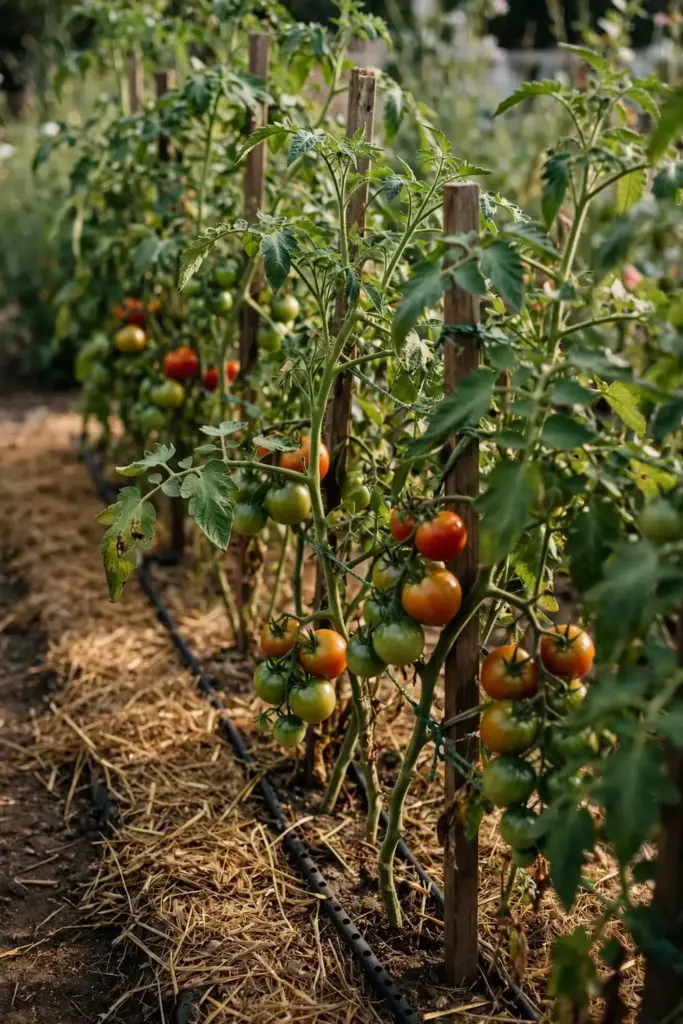
What you stop doing: planting susceptible varieties in that bed “just to see,” reusing its soil in seed trays, and composting its sick plants. What you keep doing: everything above, every season, because the chlamydospores are patient and you need to be more patient. Gardeners who accept this deal grow fine tomatoes for decades in Fusarium country.
One more lever for the long game: keep a simple bed map. Write down which bed had Fusarium, which strain you suspect, and which resistant varieties you planted there each year. Memory fades; the fungus does not. A notebook that tells you “bed 3, Fusarium race unknown, planted Big Beef VF1F2NTA in 2027” is worth more than any product, because it stops you from gambling a susceptible heirloom on a bed you forgot was infected.
Frequently Asked Questions
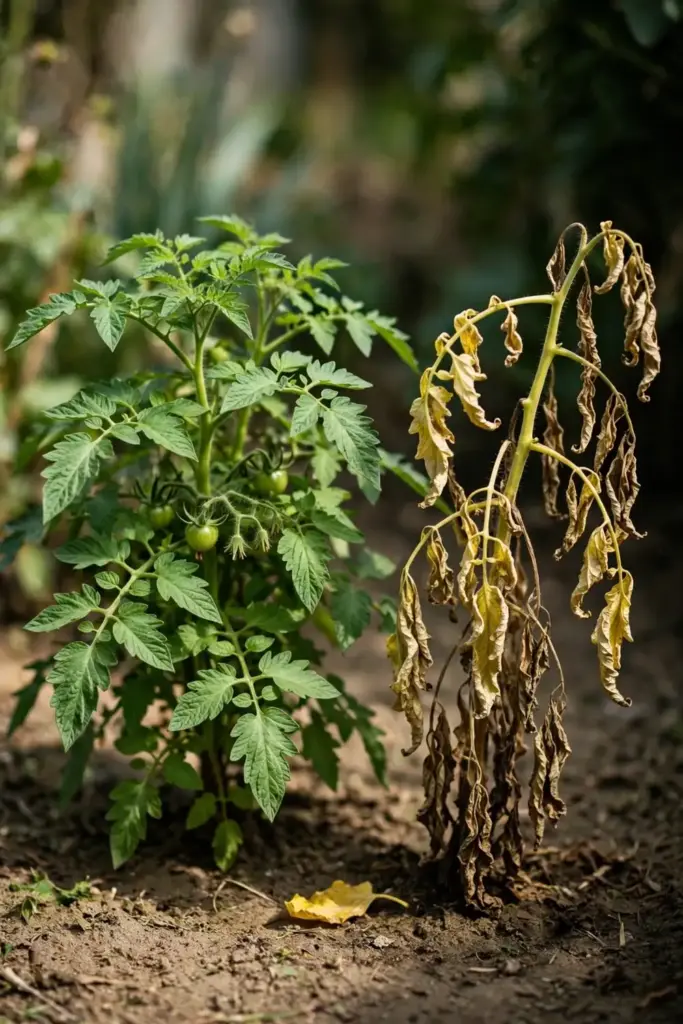
No. Unlike some foliar diseases that fade when weather changes, Fusarium lives inside the plant’s vascular system and as chlamydospores in the soil. An infected plant never recovers on its own, and the soil inoculum persists for decades. What can change is the pressure: resistant varieties, sanitation, and soil management let you garden successfully around the fungus, but the fungus itself does not leave.
Nothing available to a home gardener eradicates it completely. Soil solarization with clear plastic for 4 to 6 weeks reduces populations in the top inches. Mustard biofumigation suppresses it meaningfully. Trichoderma and good compost lower pressure through competition. Long rotation helps. Each lever is partial; stacked together, they make the bed workable, which is the realistic goal.
Hydrogen peroxide is a contact sanitizer, not a systemic cure. A diluted drench can knock back surface pathogens on tools, pots, and seed, and some gardeners use it on mildly affected seedlings. It breaks down within hours, has no residual activity, kills beneficial microbes too, and cannot reach fungus inside the xylem. Useful for sanitation; not a treatment for an infected plant.
Not for susceptible plants, and not in seed trays. The chlamydospores survive in that soil for decades. You can reuse it for non-host crops from unrelated families, or solarize it first and still plant resistant varieties. For containers and seed starting, always use fresh sterile mix instead. One bag of infected soil can seed Fusarium into every pot it touches.
Yes, they are the single most effective tool home gardeners have. Match the resistance code to the race in your soil: F1, F2, and F3 denote resistance to Fusarium races 1, 2, and 3. Under severe pressure even resistant plants can show symptoms, and resistant plants can harbor the fungus silently, so resistance is management, not eradication. For beloved heirlooms, grafting onto resistant rootstock gives you both.
Published research records chlamydospore survival of 20 to 40 years in soil. UC Davis work shows populations decline substantially within 1 to 3 years without a host, but the fungus also colonizes crop residue and rotation-crop roots, so the practical answer is decades. Plan as though it never leaves, and every other decision here gets easier.
Where to Go From Here
Fusarium root rot treatment is mostly prevention, fast triage, and honest expectations, in that order. Pull the infected plant today, sanitize your tools, and put your energy into the soil and the next planting instead of the lost one. Choose resistant varieties with the right F codes, water to keep roots deep and cool, and stack the partial levers: solarization, mustard biofumigation, Trichoderma, and clean starts.
Two companions on this site will help. The seed-starting guide covers the sterile technique that keeps Fusarium out of your transplants, and the soil health guide covers the microbial competition that keeps soilborne pressure low. If a different wilt is your problem, the blossom blight guide is the closest disease-identification companion on the site.