
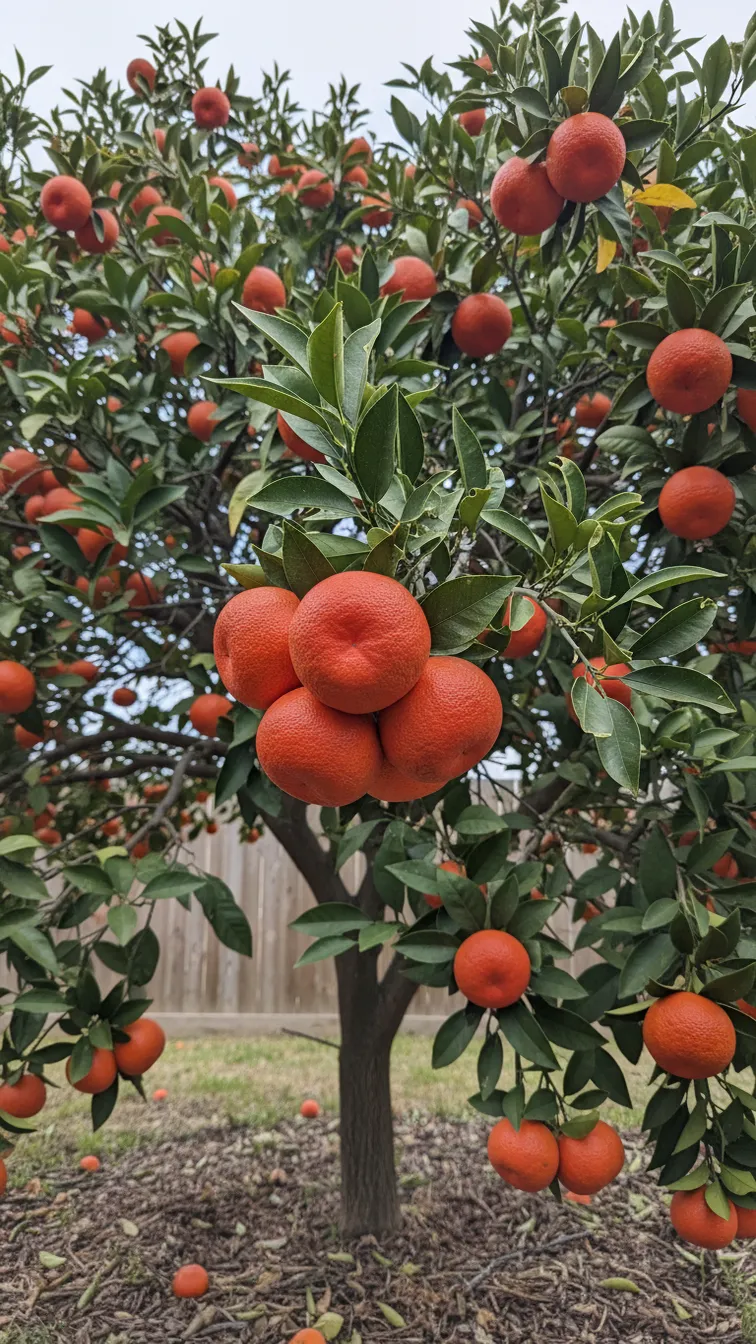

I planted my first tangerine because I wanted fruit I could peel with one hand. Two winters later I understood that the tree is the easy part and the calendar is the hard part. Getting sweet fruit off a tangerine before a hard freeze arrives, from branches that have not bent to the ground under their own crop, takes more planning than any other citrus in my garden.
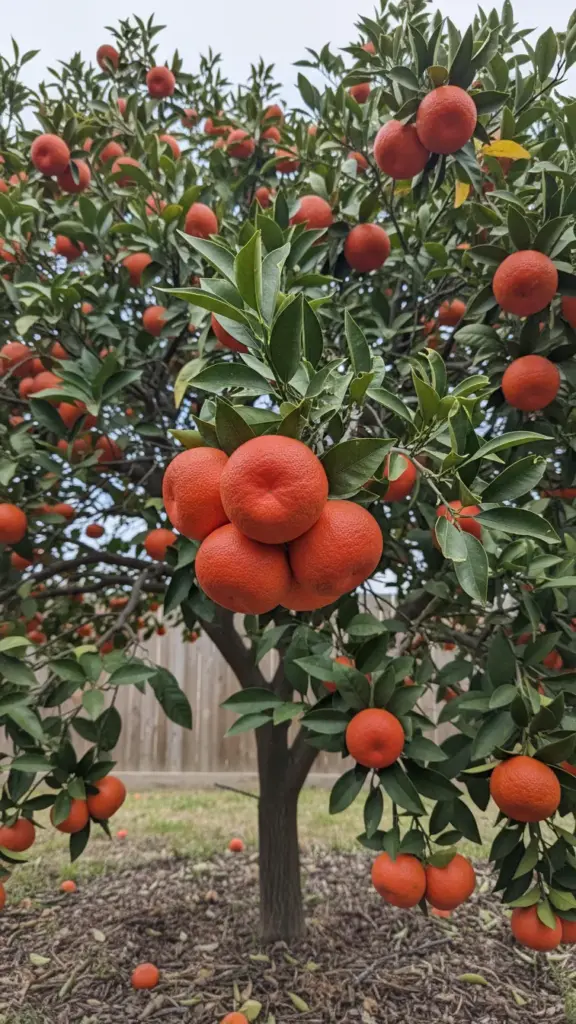
Here is the short version of how to grow tangerine fruit at home. Plant a grafted tree in the hottest, best drained spot you have. Water on a rhythm the roots can predict. Feed nitrogen in small doses from late winter into early summer, then stop. Thin the heaviest clusters once the fruit sizes up. Pick within a couple of weeks of ripeness, because a tangerine will not hold on the branch the way an orange does.
The rest of this guide covers the parts that catch people out, starting with the seed problem that has less to do with your variety than with your neighbour’s tree.
What Makes a Tangerine Different From the Rest of the Mandarins
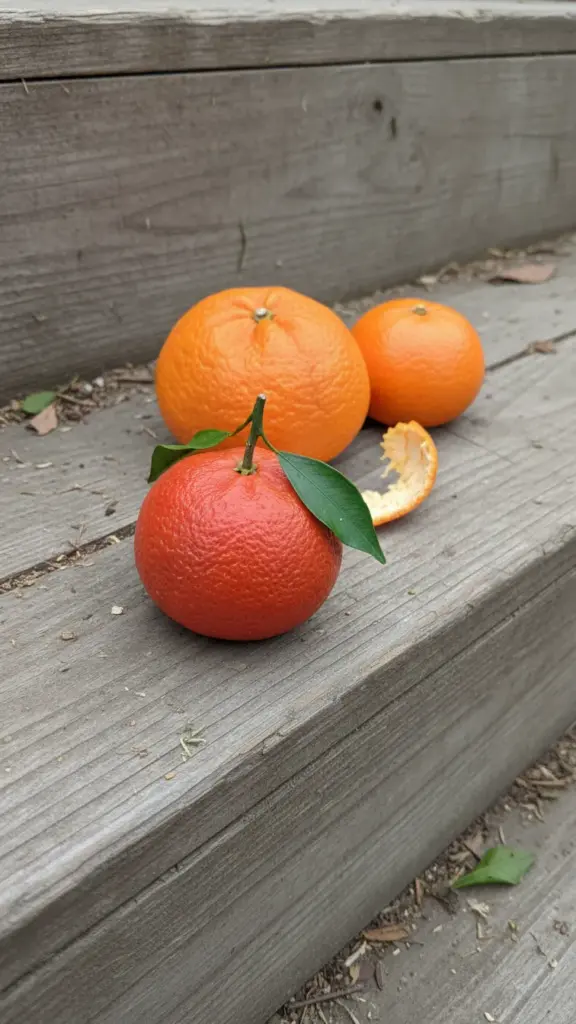
Every tangerine is a mandarin. The whole group sits inside Citrus reticulata, so the word describes a market category more than a species boundary. It attached itself to the deep orange, higher acid, thin skinned types that once shipped out of Tangier, and nurseries have used it loosely ever since.
The differences that matter in the garden are practical ones. Tangerine peel is thinner than satsuma peel and grips the segments a little more firmly, though ripe fruit still opens in one strip. Acid runs higher, so the flavour reads bright instead of syrupy. Colour goes deeper, close to red on the best selections. Tangerines also want more accumulated summer heat than a satsuma does. In a cool coastal summer a satsuma will sweeten and a Dancy will sit there sour.
Dancy is the fruit most people picture when they hear the word. It grew from a seed of Moragne tangerine in a Florida grove in 1867, averages 2¼ to 2½ inches across, and carries a thin, leathery rind that slips off cleanly once the fruit is mature. That same fact sheet is blunt about the production problems that pushed commercial growers toward hybrids, which is worth reading before you make a Dancy your only tree.
If your winters bring hard freezes most years, a tangerine will disappoint you sooner or later. The wood often survives. The crop still ripens in the middle of the risk window. A satsuma or a kumquat tree is the safer citrus in that climate.
Step 1: Choose a Variety That Ripens Before Your First Hard Freeze
Variety choice is a scheduling decision more than a flavour one. Work backwards from the average date of your first hard freeze, then plant something that finishes ahead of it. The late varieties taste better. They also lose more crops.
| Variety | Typical Harvest | Seeds | What To Know |
| Fallglo | Mid September to November | Many | Earliest of the group, large fruit, weak on cold hardiness |
| Sunburst | November to January | 1 to 20, depending on pollination | Deep red peel, heavy cropper, limbs need watching |
| Dancy | December to January | Usually seedy | Classic flavour, thin peel, swings hard between heavy and light years |
| Ponkan | December | Few | Big easy peel fruit, rind puffs if you leave it hanging |
| Honey, also sold as Murcott | January to March | Very seedy | Sweetest of the lot, latest, most exposure to freezes |
Two more filters before you pay. Buy grafted, because a seedling takes years longer to fruit and the rootstock does most of the quiet work on drainage tolerance and cold. And buy from a nursery that can tell you which rootstock is under the graft, since that one answer predicts how the tree will behave in heavy soil better than the variety name does.
Step 2: Decide How You Feel About Seeds Before You Buy the Tree
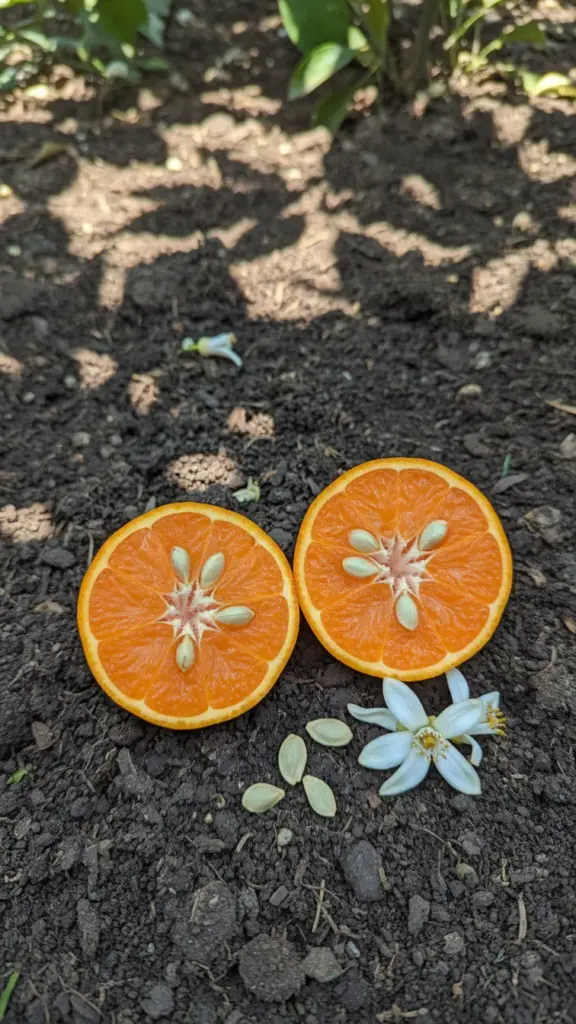
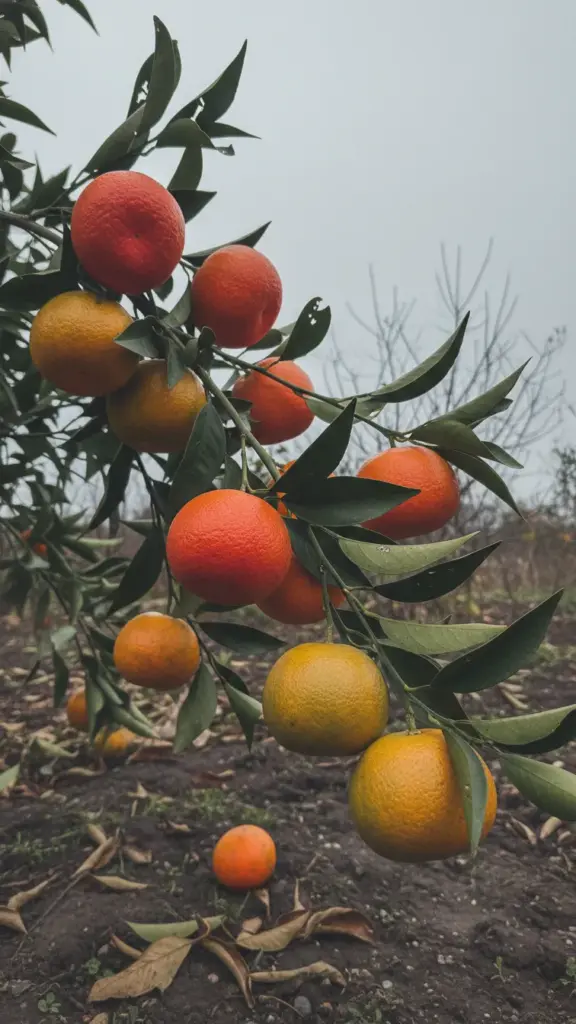
Seeds are a pollination outcome. They are not a fixed trait stamped into the variety. Bees move pollen between compatible citrus, and the fruit that results carries pips. The same variety can be nearly clean in an isolated garden and crowded with seeds on a street where everyone grows citrus.
Robinson makes the trade obvious. Standing alone it barely fruits at all. With compatible pollenizer trees nearby the same variety sets a real crop, sizes the fruit up, and can carry 20 or more seeds per fruit. You get the quantity and the seeds together, or you get very little of either.
So the decision runs roughly like this. One tree in a garden with no other citrus in bee range: choose a self fruitful variety such as Dancy or Ponkan and accept a moderate crop. Several citrus trees of your own, or neighbours who already grow them: assume seeds whatever the label on the pot promises. Newer selections sold as seedless hold that promise best in isolation, and I would not design a whole garden around the claim.
Step 3: Plant It High, in the Hottest Corner You Own
Tangerines earn their sugar from heat and light. Eight hours of direct sun is the floor. If you can plant near a south or west facing wall, the warmth that wall gives back at night is worth more to fruit quality than anything you will buy in a bag. Avoid the low corner of the garden where cold air settles on a still night, and avoid the spot that sits wet for two days after rain.
Drainage decides more than soil type does. Dig a hole twice as wide as the pot and no deeper, then set the root ball three to four inches above the surrounding grade so the soil slopes away from the trunk. Heavy clay calls for a wider mound rather than a deeper hole. Backfill with the soil you dug out. Leave fertiliser and compost out of the planting hole, since both encourage roots to circle inside a soft pocket instead of pushing into the native soil.
Keep the graft union clear of the soil line and clear of mulch. Buried unions rot, and a rotted union takes the variety with it, leaving you a rootstock that fruits like something nobody planted on purpose. Water the tree in slowly until the backfill settles, then mulch a wide ring and pull the mulch back a hand’s width from the trunk.
Space full sized trees twelve to fifteen feet apart. They will look absurdly far apart for three years, then they will fill it.
Step 4: Water on a Rhythm the Tree Can Predict
Citrus roots cope with drought better than they cope with surprises. A tree that swings from bone dry to saturated and back splits its fruit, drops it, and yellows off in the middle of a good season.
In the Ground
Water deeply and space the waterings out. Soak the whole root zone out to the edge of the canopy, then let the top few inches dry before the next round. On sand in hot weather that might be twice a week. On clay in mild weather it might be once every ten days. Check with a finger or a screwdriver pushed into the soil instead of trusting a timer. A newly planted tree needs water more often through its first summer, because the roots are still living inside the old root ball and that ball dries faster than the ground around it.
In a Container
Pots dry from the outside in and give almost no warning. Water until it runs freely from the drainage holes, tip out the saucer, and never let the mix sit wet at the base. A heavy pot is fine. A light pot needs water now. Winter watering drops sharply because the tree has nearly stopped growing, and that quiet season is where most container citrus die.
Step 5: Feed Nitrogen in Small Doses and Stop by Midsummer
Citrus is greedy for nitrogen and clumsy with a large single dose. I split the year’s feeding into three or four small applications, starting as the tree wakes in late winter, again after flowering, and once more as the fruit begins to size. Young trees get smaller amounts more often, because their root systems cannot use much at once and the rest washes past them.
The last nitrogen goes on by midsummer. Feeding later pushes a soft autumn flush that has no time to harden, and soft growth is the first thing a cold night takes. After that the tree gets water and nothing else while it builds sugar.
Use a citrus fertiliser that includes micronutrients. Yellow leaves with green veins usually mean iron or manganese rather than a nitrogen shortage, and in alkaline soil the fix is a foliar spray on the new spring flush rather than more granules on the ground. Scatter granular feed over the root zone out to the canopy edge, keep it off the trunk, and water it in the same day. Lawn fertiliser that contains weed killer has no place near a citrus tree, no matter how convenient the bag looks.
Step 6: Thin the Heaviest Clusters in Early Summer
Sunburst and Dancy both set more fruit than their wood can carry. Once the fruitlets pass marble size I go over the tree and pull out the tight bunches at the tips of long whippy branches, leaving fruit spaced along stronger interior wood. It costs a handful of fruit and saves whole limbs. Where a branch is already bending, a length of timber propped under it for the last month before harvest does more good than any pruning cut.
Step 7: Pick Promptly, Because the Tree Is Not a Refrigerator
Colour lies. Peel can turn full orange weeks before the flesh is worth eating, and in a warm autumn it can stay greenish over sweet segments. Taste settles it. Most citrus will then sit on the tree for weeks after they pass that test, holding quality while you work through them. Mandarins, and that includes every tangerine, are the exception. Leave them hanging too long and the rind puffs away from the segments, the juice thins out, and fruit that was perfect in December turns to cotton by February.
What I look for:
- Fruit that gives very slightly when I cup it, instead of feeling hard
- Peel beginning to loosen at the stem end
- The best coloured fruit on the sunny outside of the canopy, which always ripens first
- One fruit tasted every few days from the first hint of colour break
Use clippers rather than pulling. A yanked fruit tears the button out of the peel and that wound rots within days in the fruit bowl. Once the tree starts, work through the whole crop over two or three weeks and refrigerate whatever you cannot eat.
Puffy Rind, Split Fruit, and Other Late Season Problems
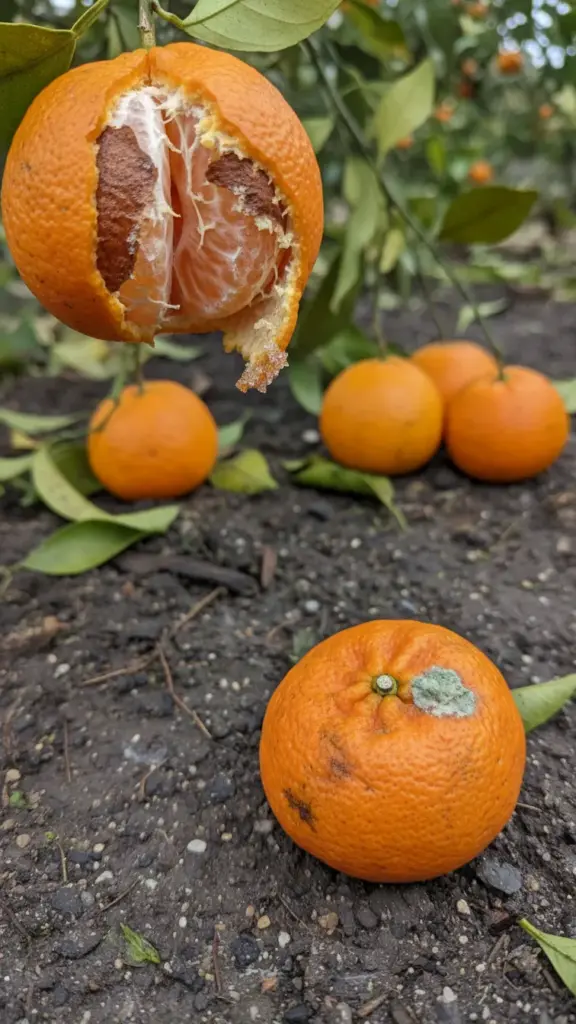
Puffiness is the classic tangerine complaint. The rind separates from the flesh, the fruit feels light and hollow, and the flavour goes flat. Overripe fruit left hanging does it. So does a wet spell after a dry one late in the season, which pushes the rind to grow while the segments have stopped.
Splitting shows up on the same trees for the same reason. Water arrives suddenly after the soil has gone dry, the flesh swells faster than the peel can stretch, and the fruit opens at the stylar end. There is no cure once it starts. Even watering from fruit set onward is the whole prevention.
Drying, sometimes called granulation, gives you juice sacs that have turned tough and pale. It happens on very old fruit, on over vigorous rootstocks, and on trees carrying almost no crop at all. Sunburnt fruit on the exposed south side of a young tree turns leathery and pale on one cheek, which is one more reason to let a young tree keep its low branches instead of pruning it into a lollipop.
The Tangerine Year at a Glance
| Season | What The Tree Is Doing | What I Do |
| Late winter | Roots waking, flower buds forming | First small feed, cut out dead wood only |
| Early spring | Bloom and first flush | Steady water, watch aphids on new growth |
| Late spring | Fruit set and natural drop | Second feed, keep the water even |
| Early summer | Fruit sizing | Thin heavy clusters, last nitrogen, renew mulch |
| Late summer | Sugar building | Water only, no feeding |
| Autumn | Colour break | Start taste testing, prop the heavy limbs |
| Winter | Harvest and cold risk | Pick promptly, cover before a hard freeze |
Pests I Actually See on My Own Trees
Aphids arrive with the spring flush and curl the newest leaves into tubes. On an established tree I leave them, because the flush hardens and predators turn up within a fortnight. On a young tree carrying its whole season’s growth in one flush, a hard spray of water every few days is usually enough.
Citrus leafminer draws silver squiggles inside young leaves and looks far worse than it is. Mature trees shrug it off. Spraying does almost nothing, since the larva sits inside the leaf tissue.
Scale insects and the sooty mould that follows them travel with ants, so ants running up and down the trunk are the signal to look closer. Dark, comma shaped nymphs packed on the undersides of leaves with heavy black mould above usually mean citrus blackfly rather than scale, and the two need different handling. Notched leaf margins that look like someone worked around the edge with a hole punch point to adult citrus root weevils, and the damage that matters from those is happening underground where the larvae are chewing roots.
Getting Winter Fruit Through a Cold Snap
Fruit is more tender than wood. A night that scorches the outer leaves can ruin a whole crop that would have been ready in three weeks, which is why the first move when a hard freeze is forecast is to pick anything close to ready.
For the tree itself, water the soil a day ahead. Moist soil holds daytime heat and releases it overnight far better than dry soil. Cover the canopy to the ground with fabric so the trapped ground heat stays under the cover, keep plastic off the foliage, and take the cover off during the day. Wrap the trunk and graft union of a young tree with insulation and leave it in place for the season. After damage, wait until spring growth shows you which wood is alive before you cut anything. Pruning too early removes branches that would have recovered.
Growing a Tangerine in a Container
A pot works if you accept that you are farming a root ball. Start with a tree on a dwarfing rootstock, move up gradually, and expect to finish somewhere between fifteen and twenty five gallons. Use a chunky free draining mix with plenty of bark rather than a fine potting compost, and skip the layer of gravel at the bottom, which raises the waterlogged zone instead of lowering it.
Container trees need feeding little and often through the growing season, because every watering carries nutrients out of the drainage holes. They also need turning a few times a year if they live against a wall, or they grow into a flat fan.
If the tree comes inside for winter, put it in the brightest window in the house and expect some leaf drop while it adjusts. Watch for scale and spider mites in dry indoor air. And if the space you have is genuinely small, a finger lime is a better citrus for a pot than a tangerine that wants to be a twelve foot tree.
Common Questions
How Long Before a Tangerine Tree Fruits?
A grafted nursery tree usually gives you a few fruit in its second or third year and a real crop in year four or five. Strip the fruit off in the first season after planting. It feels wasteful and it buys you a tree with the structure to carry heavy crops later.
Can I Grow a Tangerine From a Seed?
Yes, and citrus seeds germinate easily. Many of them even come true to the parent. The catch is juvenility: seedlings grow upright and thorny, take far longer to fruit, and give up the disease and soil tolerance that a rootstock provides. Treat it as a project rather than an orchard plan, the same way you would with growing a lime tree from a seed.
Why Is My Fruit Sour?
Usually not enough accumulated heat, or picking too early. Excess nitrogen late in the season and heavy shade both push the same way. If the tree is young, give it another two seasons before judging the variety, because early crops on a young tree are rarely the best it can do.
Why Did All the Small Fruit Drop in Early Summer?
Most of that is normal. Citrus sets far more fruit than it can carry and sheds the excess to match the crop to its leaf area. Heavy drop beyond that usually traces back to a heat spike right after fruit set, or soil that went dry at the wrong moment.
Do I Need Two Trees to Get Fruit?
Most tangerines set a crop alone. The hybrids are where it changes, and Robinson is the standout example of a variety that needs a pollenizer nearby to fruit properly. A second compatible tree raises yields on those varieties and raises seed counts across the garden at the same time.
Can I Grow One Indoors All Year Round?
You can keep one alive. Getting good fruit is another matter, because indoor light is a fraction of what the tree needs to build sugar. If indoors is the only option, use the brightest spot you have, hand pollinate the flowers with a soft brush, and treat any fruit as a bonus.
Where to Go From Here
The two decisions that shape everything else come first: a variety that finishes ahead of your freezes, and an honest answer about how many seeds you can live with. Get those right and the rest of the year is water, small feeds, one round of thinning, and a fortnight of picking.
My own next step each season is a note in the garden diary on the date of first colour break and the date the fruit actually tasted right. After three seasons that gap stops being a guess, and it turns the harvest from a surprise into a plan.








