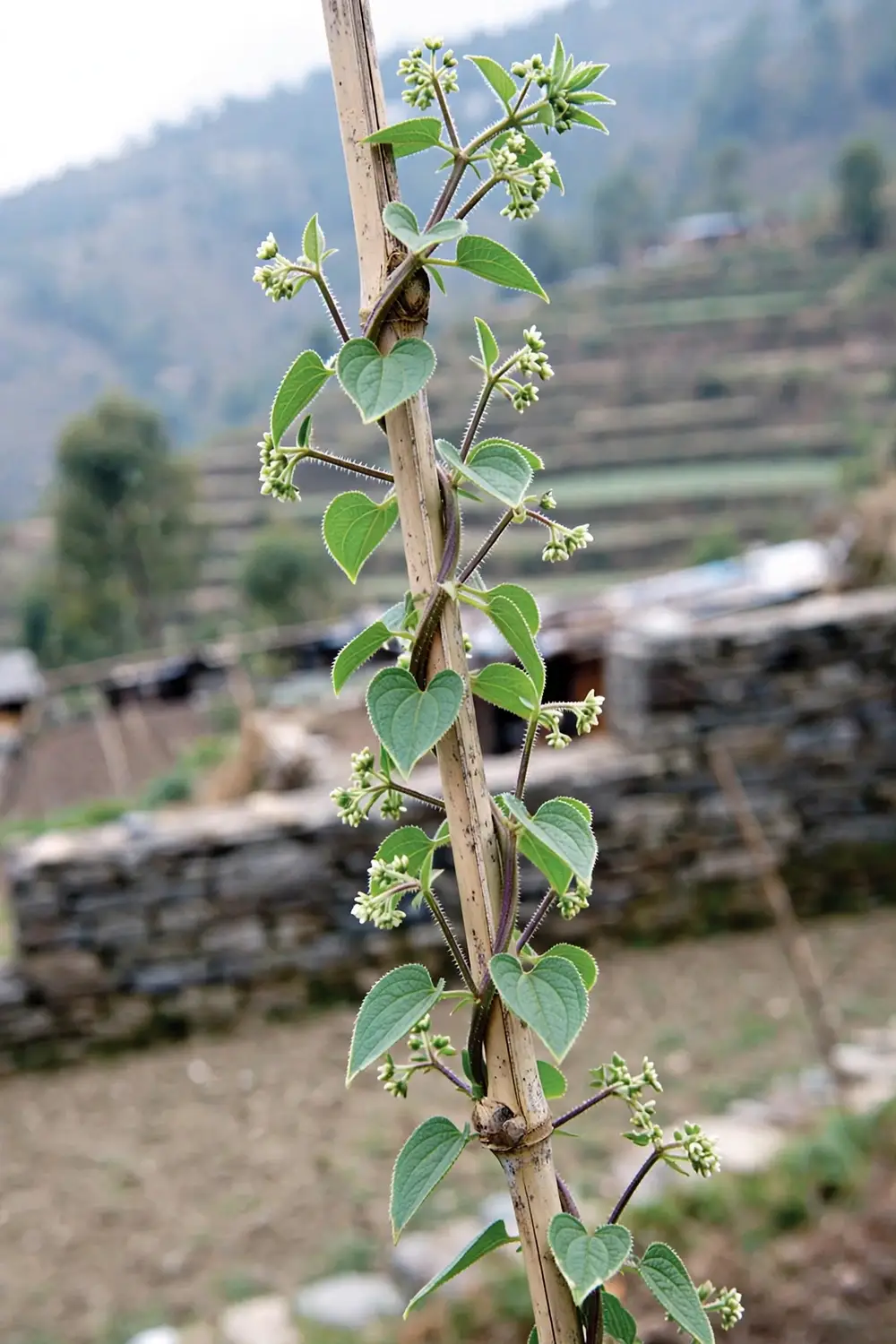

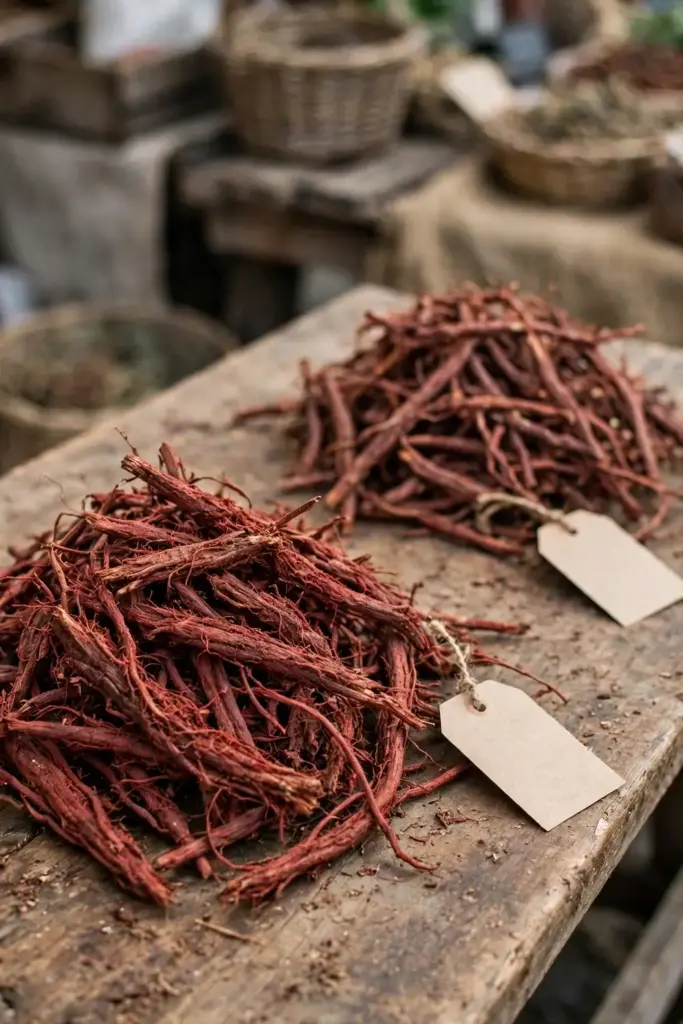
3 years. That is the honest opening number for how to grow manjistha from India, and everything here hangs on it. Manjistha (Rubia cordifolia), the Indian madder, is a scrambling perennial climber whose product is a thick red root harvested underground after three seasons. The leaves, the flowers, and the berries are decoration. The root is the crop.
This is the plant that dyed a fragment of cotton cloth at Mohenjo-daro in the third millennium BCE, that colored the coats of British infantry, and that Ayurveda lists as the classical blood purifier under the Sanskrit name Manjistha. It is also a heavily adulterated herb in the Indian market, and the adulteration story is genuinely dangerous, so a full section below is devoted to it.
The cultivation backbone of this guide comes from an agrotechnique study by CSIR’s Regional Research Laboratory at Itanagar, which documented the complete nursery-to-harvest package: January nursery from 350 g of seed per hectare of field, April to May transplanting at 60 by 75 cm, climbing support after 30 to 45 days, and a root harvest in the third year. If you are looking for a quick herb, close this page. If you can commit three years to a red root, keep reading. A short guide to starting seeds indoors covers the tray setup the nursery section assumes.
1. Climate & Location: The 300 to 2,000 m Rule
Start with the gate, because manjistha has a firm one. The CSIR agrotechnique study places Rubia cordifolia in hilly subtropical to sub-temperate India, at altitudes of 300 to 2,000 m, in loamy humus-rich soil with high rainfall. This is a foothill and mid-hill plant: the Himalayan foothills, the Western Ghats uplands, the Nilgiri slopes, and similar hill country.
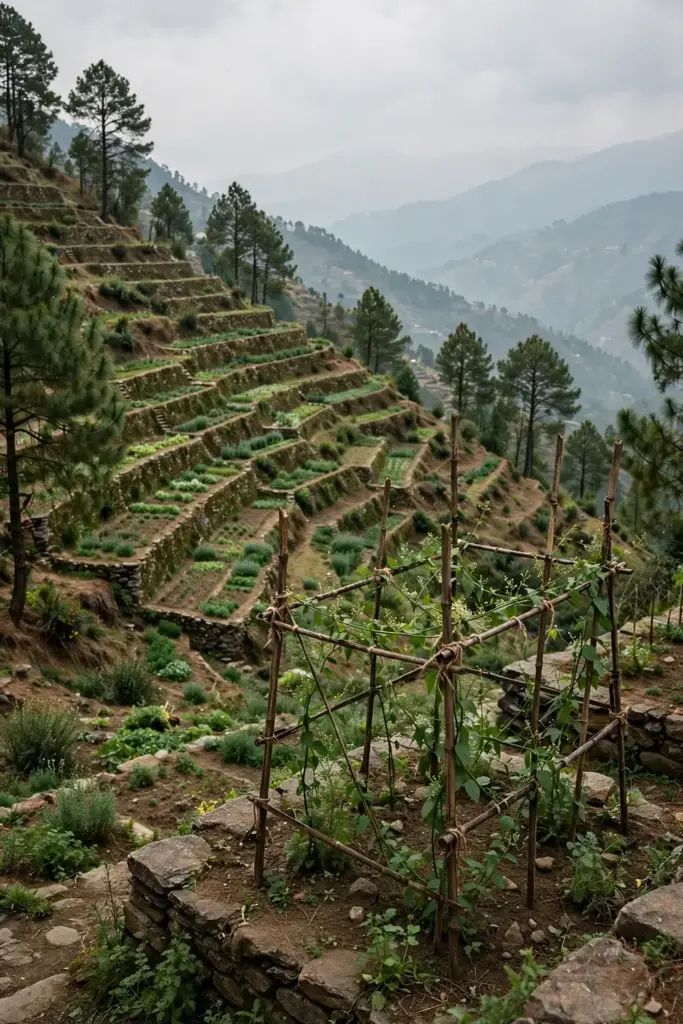
What does that mean for a grower in the hot lowland plains of Punjab, the Deccan summer, or coastal Chennai? It means manjistha is a poor bet outdoors in year-round heat. There is no published Indian field record of successful long-term cultivation on the hot plains, and the hill-altitude distribution is not decorative data. The plant is perennial and frost-tolerant in the hills, where winter dormancy is part of its rhythm.
Cool-climate gardeners in the plains can run the nursery stage as an exercise, and the containers section later covers the honest limits. But the full three-year root harvest belongs to hill country. Planting it on a hot flat terrace and hoping for the best is the single most common failure.
2. Root Is the Prize: The Manjistha Identity Check
Before buying seeds or cuttings, check the identity. The word “manjistha” is sometimes slapped on the wrong species in trade, and the market substitution with Rubia tinctorum (the European dyer’s madder, sold as “Irani Manjistha”) carries a genotoxic risk. The mandatorily clear picture is this table.
| Species | Common name | Status | Key chemistry | The verdict |
|---|---|---|---|---|
| Rubia cordifolia | Manjistha / Indian madder (desi) | API-official | Purpurin-dominant | The real manjistha |
| Rubia tinctorum | Irani Manjistha / dyer’s madder | Not official | Alizarin-dominant, contains lucidin | Adulterant; lucidin is genotoxic |
| Rubia argyi (syn. R. akane) | Akane (Japanese) | Different species | Alizarin-type | Not manjistha |
| Rubia cordifolia var. khasiana | Assam to Nepal form | Variety of the real thing | Richer in dye | Still manjistha |
A 2014 pharmacognostical study%20331-334.pdf) in the Indian Journal of Traditional Knowledge compared stems of the two species and found that R. tinctorum is morphologically similar enough to pass as Indian manjistha in the market, yet contains lucidin, a compound with severe genotoxic effects. The HPTLC fingerprint work%20331-334.pdf) published by researchers in 2021 developed a mobile phase that gives a clear spot for R. tinctorum at Rf 0.89 but not for R. cordifolia, so laboratories can now detect the substitution.
Practical takeaway: buy seeds or cuttings from a source that names Rubia cordifolia in Latin. A packet labeled only “manjistha seeds” from an unknown seller deserves skepticism. The root powder trade has the same problem, and the chemistry table below is the home grower’s own defense: growing your own from verified seed is the one way to know exactly what you have.
3. Seeds or Root Cuttings: Pick Your Path
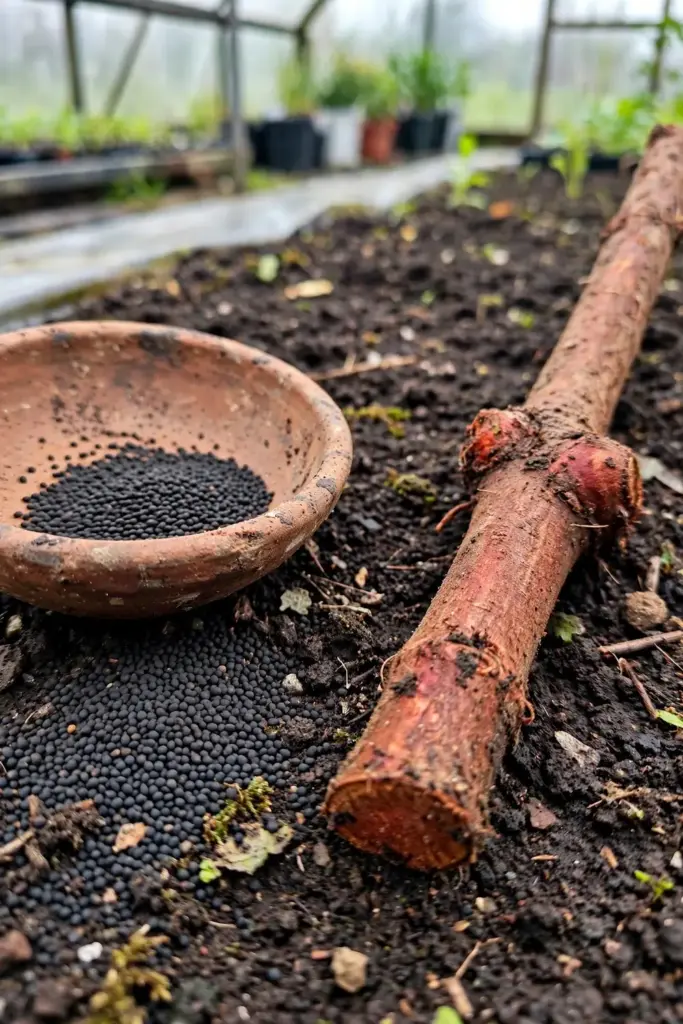
The CSIR study tested both. Seeds are preferred for scale because of cost and the strong germination the CSIR nursery trials recorded: 80 to 85 percent within 20 days. Two-node root cuttings are the faster true-to-type route, with 90 percent success when treated with IBA at 3000 ppm.
| Option | Time to harvest | Cost | Best for |
|---|---|---|---|
| Seeds (January nursery) | Three years | Low (350 g seeds serve a 1 ha nursery) | Scale, and the only sane option for a field |
| Two-node root cuttings + IBA 3000 ppm | Three years | Higher (needs mother plants + hormone) | True-to-type clones of a known plant |
Both paths converge at the same harvest date. The cutting shortcut does not shorten the three-year wait; it only guarantees the plant’s identity. For most home growers, seeds are the entry point. Direct broadcast sowing needs 1.5 to 2 kg of seed per hectare, which is far too much for a home plot; the nursery route uses 350 g for the same area, so the nursery method wins on every axis for small growers.
4. Collecting Seeds: December–January Ripe-Black Fruits
Seed comes from the berries. Rubia cordifolia flowers from June to November and sets small purplish-black fruits; the CSIR study directs collecting seeds from dried ripe black fruits in December and January. Pick only fully black, dried berries. Green or red ones are unripe and will drag the germination rate down.
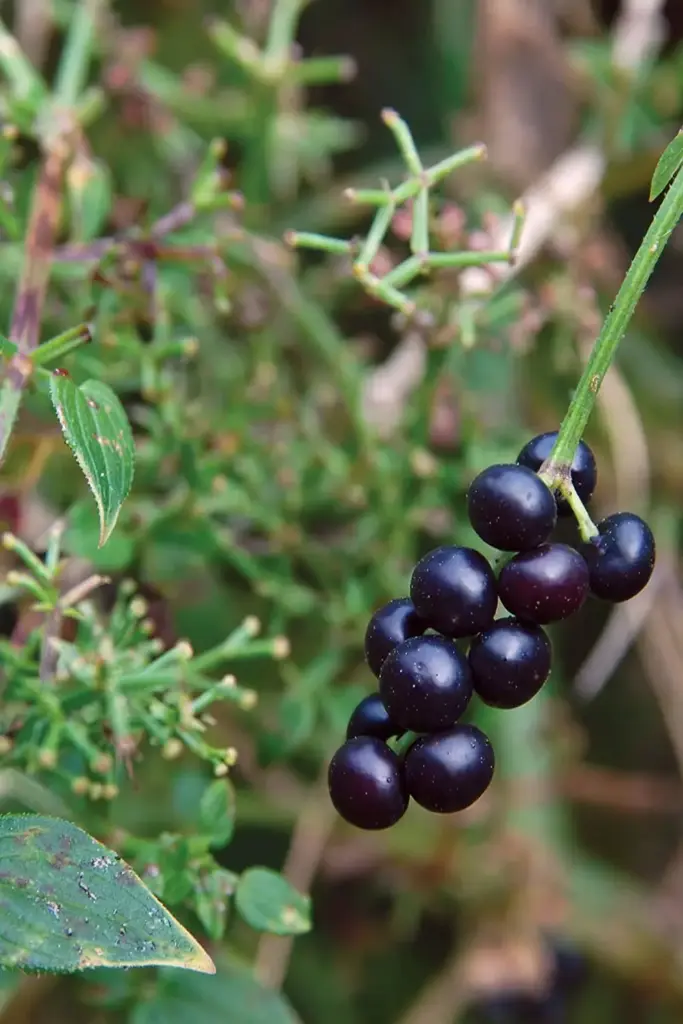
Dry the berries further in shade, then rub them to separate the seeds from the pulp. Store in a cool, dry place in a paper bag or cloth sack, never in sealed plastic while any moisture remains. Before sowing, the CSIR protocol treats seeds with 0.02 percent Bavistin 50 WP, a fungicide seed treatment against soil-borne damping-off. If you skip the chemical treatment, at least sow in a fresh, well-drained medium; the nursery bed guidance in the next section assumes clean soil.
One packet of bazaar seeds is the main quality risk in this whole project. Viable fresh seed germinates strongly within 20 days when collected from ripe-black fruits and stored dry. If your seed is older than a year or smells musty, order again rather than gambling a season.
5. The January Nursery, Step by Step
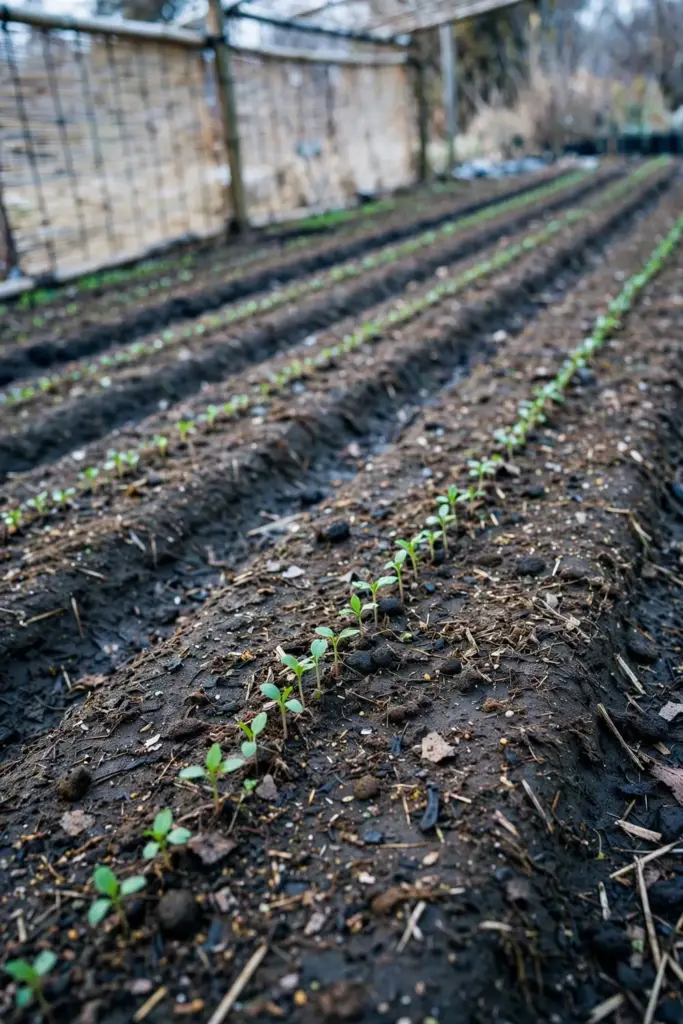
January is the nursery month in the CSIR package. Sow the treated seeds in nursery beds, cover with a thin layer of soil plus a manure layer, and water gently. Germination runs 80 to 85 percent within 20 days at cool-season temperatures.
| Step | Action | Time |
|---|---|---|
| 1 | Fill beds with loose, humus-rich nursery soil | January, first week |
| 2 | Sow Bavistin-treated seeds, thin soil + manure cover | January, same day |
| 3 | Water gently; keep the bed moist, never waterlogged | January, daily checks |
| 4 | Emergence check | January, day 20 |
| 5 | Thin to 2 to 3-leaf seedlings, prick into polybags | February, when true leaves show |
The polybag stage is where the seedlings build their first roots before facing the field. Keep them in partial shade, water in the morning, and do not let the bags sit in puddles. The climbing habit starts early; stems that touch each other will scramble, so space the bags a hand’s width apart.
6. Root Cuttings With IBA 3000 ppm
If you have access to a mother plant, root cuttings are the premium route. Take cuttings with two to three nodes from thick healthy roots, treat with IBA (indole-3-butyric acid) at 3000 ppm, and plant in the same January nursery window. The CSIR work reports 90 percent success for the IBA-treated cuttings.
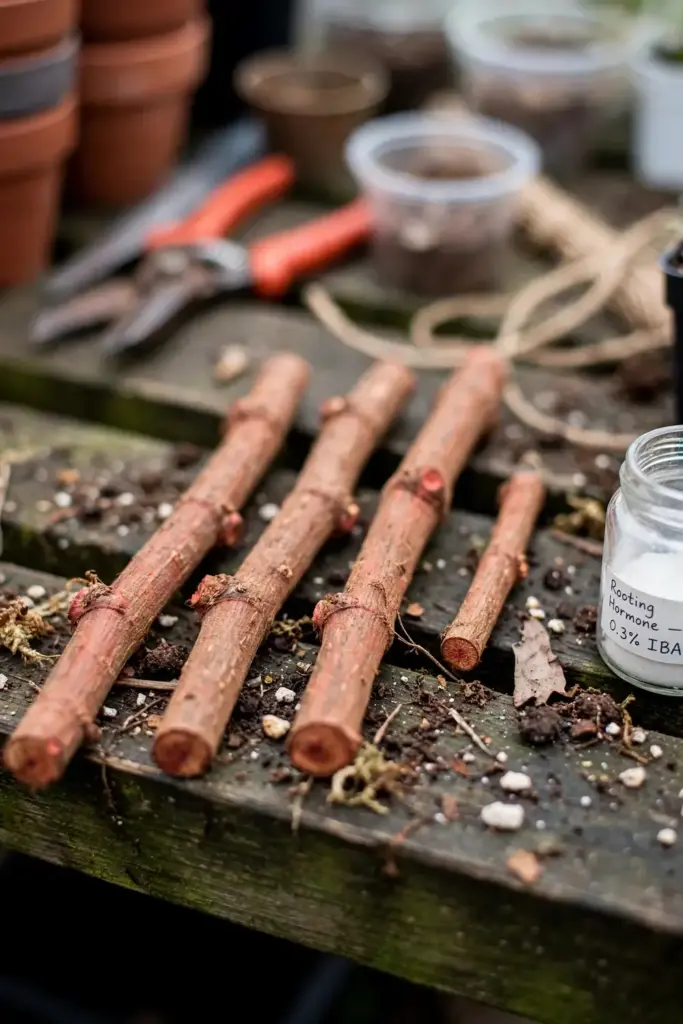
The IBA concentration matters. At 3000 ppm this is a serious rooting-hormone dose, not the weak home-garden powder, so follow the product label and wear basic protection while mixing. Plant the treated cuttings horizontally in moist nursery medium and keep them shaded until sprouting. The cutting route costs more and needs a known parent plant, but every plant is a genetic copy, which matters if you ever want to select for thicker roots.
7. Transplanting in April–May: 60 by 75 cm
Field planting happens in April and May, after the frost risk at hill altitudes passes. The CSIR spacing is 60 by 75 cm, which works out to roughly 22,000 plants per hectare. For a home plot, the same geometry applies at any scale: 60 cm between plants, 75 cm between rows.
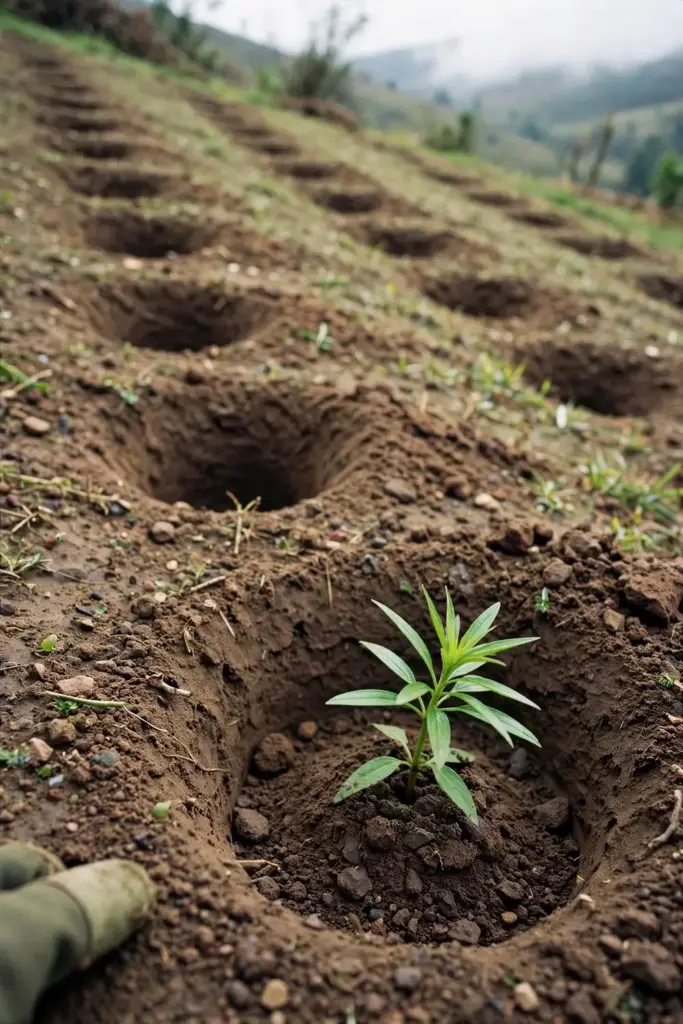
Dig pits, not shallow holes. Manjistha’s harvestable roots eventually run more than a meter deep and turn thick and fibrous, so give them depth from day one. Loosen the pit soil to at least 30 cm, mix in the basal fertilizer (covered in the feeding section), set the seedling at the same depth it grew in the polybag, firm the soil, and water in.
Water the transplants daily for the first two weeks, then taper to the weather. April and May in the hills are warming up; a mulch layer around each plant (not touching the stem) holds the moisture and cuts the weeding load.
8. The Support Question: Staking a Climber
Manjistha is a climber, and this is the detail most home growers miss. The CSIR study specifies support 30 to 45 days after transplanting: bamboo stakes, shrub staking, or intercropping with shrubby perennials that serve as living hosts. Without support the vines scramble across the ground, tangle, rot in the wet season, and produce thin weak roots.
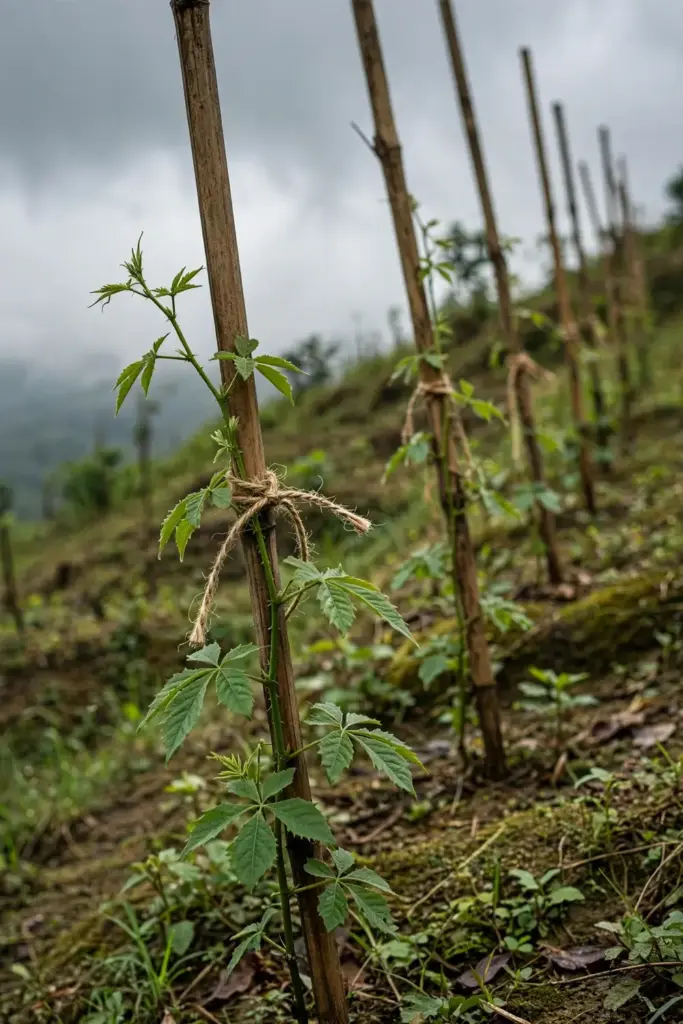
Set a bamboo stake per plant or run a simple trellis along each row. Tie the main stem loosely with twine, leaving room for thickening. As the season advances, guide the side shoots onto the support rather than letting them sprawl. This is also where the second function of intercropping appears: a shrubby companion gives the vine something to climb while filling the row space with a second crop.
In containers the support question returns in miniature form, covered later. On a terrace, a simple bamboo tripod per pot works.
9. Soil: Loamy, Humus-Rich, Well Drained
The CSIR profile calls for loamy, humus-rich soil, and the plant’s wild habitat confirms it: streamside spots and forest edges in the hills, moist but never stagnant. Heavy clay that holds water after rain is the one soil type to avoid, because a root crop in stagnant soil invites rot, and the three-year investment deserves better.
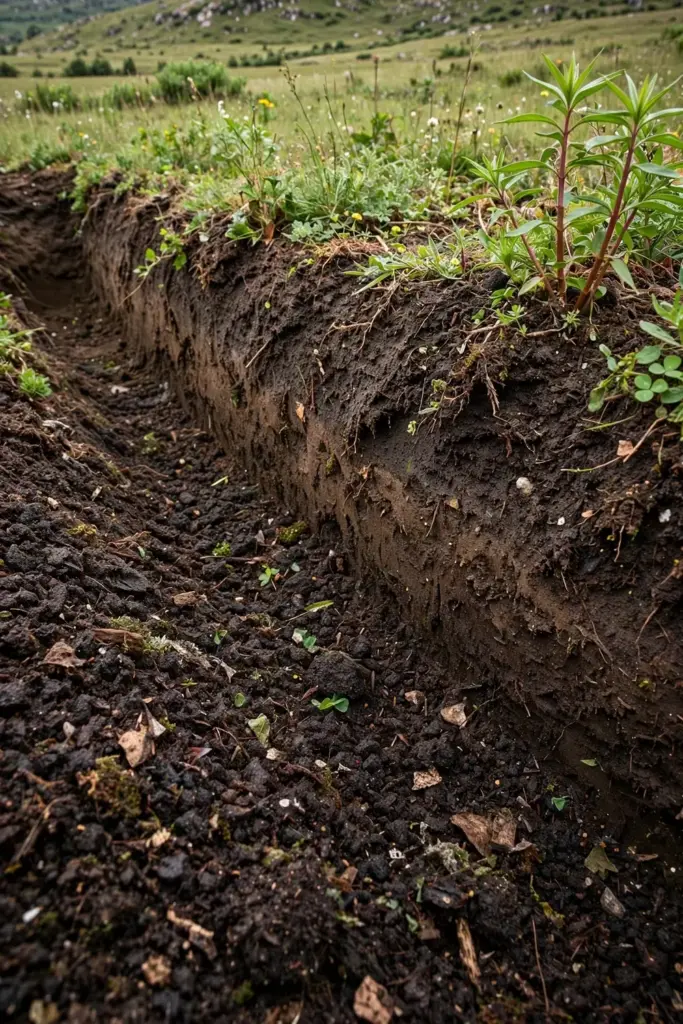
Test the drainage honestly before planting, and build the bed on the same soil-health foundation every root crop needs. Dig a 30 cm hole, fill it with water, and watch. If it is still standing after a few hours, fix the drainage first: raised beds, coarse organic matter, or a different spot. Most hill loams sit in a comfortable pH range for the plant. It is the nutrient level that demands attention, as the feeding section shows.
One finding worth knowing comes from a 2024 study of R. cordifolia root chemistry across Chinese growing regions: soil nutrients correlated negatively with the two marker metabolites, purpurin and mollugin, and sunshine duration inhibited purpurin synthesis. That study is China-domain work on daodi (geo-authentic) production, so treat it as a caution rather than a command: over-fertilizing may push biomass while diluting the very compounds that make the root valuable. The CSIR fertilizer rates below are the tested Indian package; do not exceed them hoping for thicker roots.
10. Watering: High Rainfall, Good Drainage
The hill habitat tells the story: manjistha likes high rainfall but lives on slopes where water runs off. Aim for consistently moist soil through the growing season, not a swamp. In the monsoon months at 300 to 2,000 m, rain usually handles the job; your task is drainage, not irrigation.
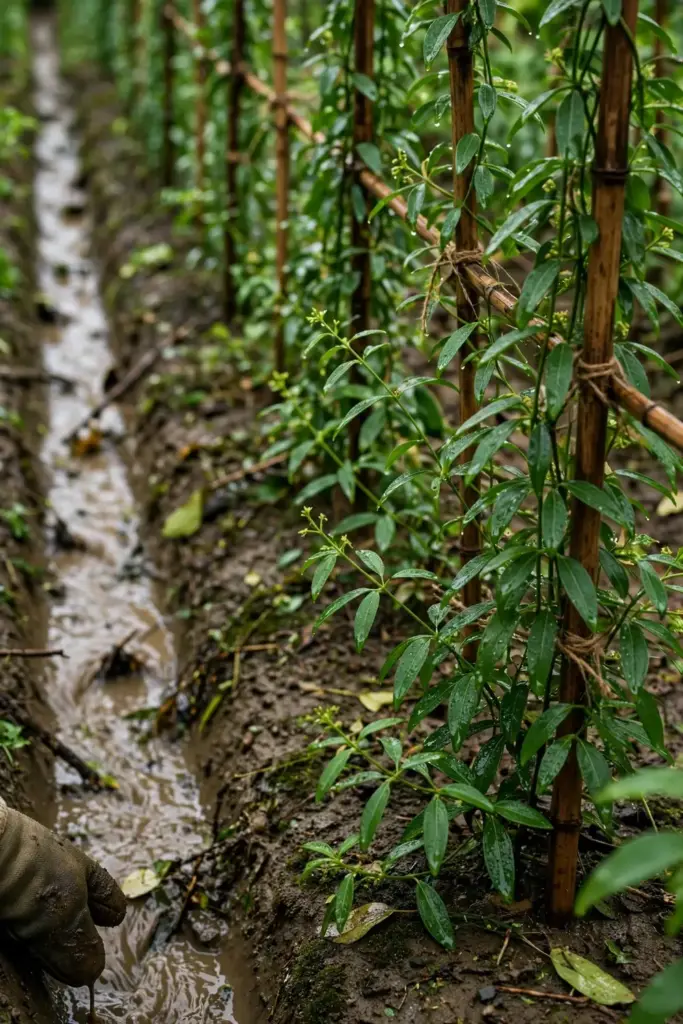
In the dry months, water deeply once the top 5 cm dries out. The deep-digging habit of the roots means the plant tolerates short dry spells once established, but year one is the vulnerable window. Seedlings in polybags and fresh transplants want steady moisture. The second-year and third-year plants are tougher, with roots reaching deep moisture.
The failure mode to avoid is standing water. The CSIR package puts weeding at 45 and 120 days after transplanting, and those visits double as drainage checks: if water is pooling in the pits after rain, open a channel or raise the bed. A root crop rotting in year two is the worst possible outcome, because the loss is invisible until harvest day.
11. Feeding: FYM 10 t/ha and NPK 30:40:20
The CSIR fertilizer package is specific and staged. At transplanting, apply basal farmyard manure at 10 tonnes per hectare with NPK at 30:40:20 kg per hectare. Top-dress with FYM at 5 tonnes per hectare or nitrogen at 20 kg per hectare at 120 to 130 days after transplanting. In years two and three, apply NPK at 20 kg each per hectare at the onset of the rains.
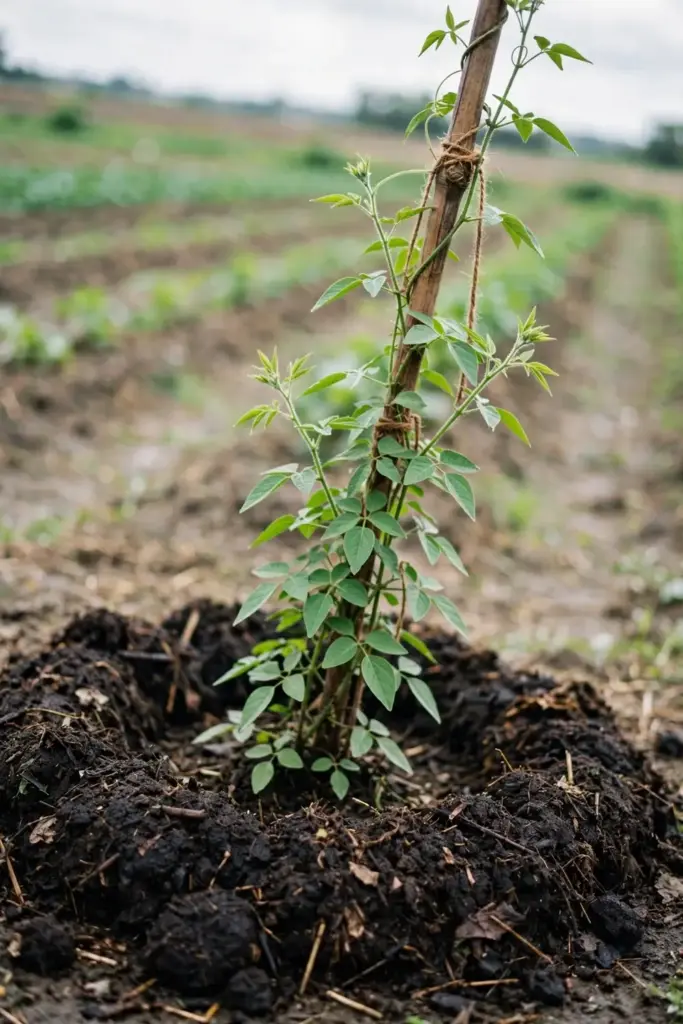
Translated to a home plot: work generous compost or well-rotted manure into each planting pit, add a balanced granular fertilizer at roughly the stated ratio, and repeat a lighter feeding at the four-month mark and at each monsoon onset. The 2024 Frontiers chemistry study adds the caution flag already noted: soil nutrients correlated negatively with purpurin and mollugin, so treat the CSIR rates as a ceiling, not a starting point. More fertilizer is not more medicine.
Keep the feeding off the stems. Broadcasting granules against the crown invites rot and wastes the dose. A shallow ring around the plant, lightly worked in and watered after, is the form.
12. Weeding at 45 and 120 Days
Two weedings are scheduled in the CSIR package: at 45 days and at 120 days after transplanting. This is not casual advice. Manjistha spends its first season building a climbing vine and a root system at the same time, and weeds compete directly for the light and nutrients the vine needs.
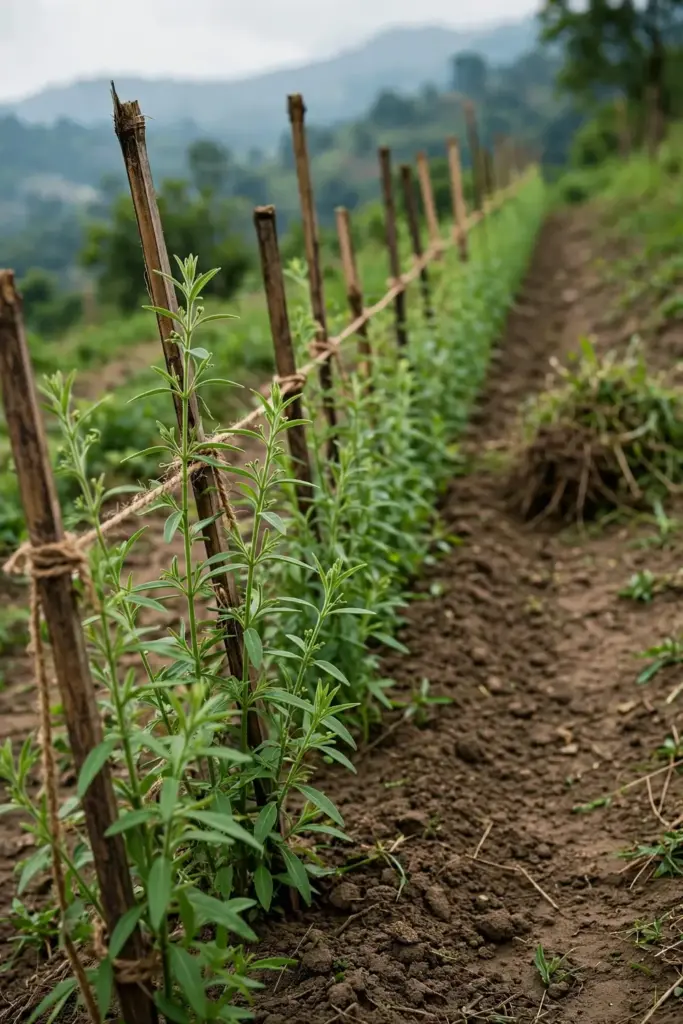
Weed by hand or with a shallow hoe, and keep the tools shallow. The crown sits near the surface, and a deep hoe cut in year one can wound the plant that carries your year-three harvest. Mulch applied at transplanting (section 7) cuts this work roughly in half; the 45-day weeding is still worth doing by hand because it is also the moment to check that each plant has found its support.
From year two onward, the vine canopy closes over the rows and shades out most weeds. The scheduled hand weedings belong to the establishment year. A clean field in year one is a thick root in year three.
13. Pests & Diseases: The Quiet Corner
Here is an honest statement: the published Indian literature on manjistha is thin on pest and disease specifics. The CSIR agrotechnique package focuses on propagation, spacing, nutrition, and harvest; it does not list a pest calendar, and the 2014 IJTK pharmacognosy paper treats the plant as a raw drug, not a field crop.
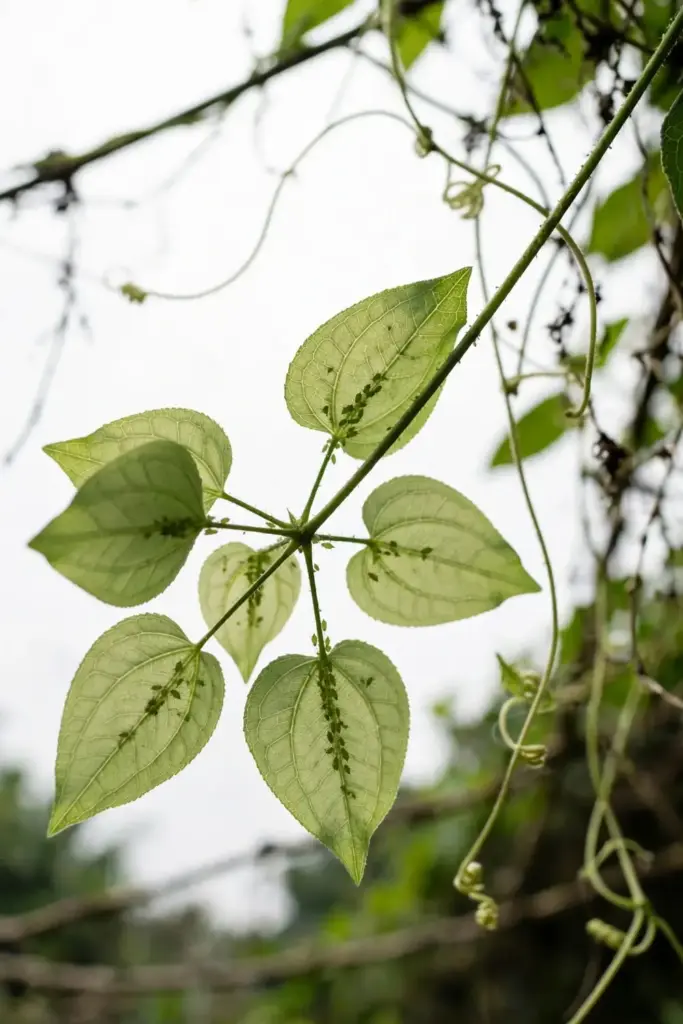
What the general agronomy says is this. Damping-off in the nursery is the documented risk, which is why the seed treatment with 0.02 percent Bavistin exists. In the field, the standard hill-crop enemies apply: cutworms at transplanting, leaf-chewing caterpillars in the monsoon, and root rot wherever drainage fails. Manage them the way any organic hill vegetable is managed: clean nursery soil, crop rotation (never plant manjistha where madder grew the previous cycle), good drainage, and neem-based sprays for chewing pests.
The encouraging part of the honesty: a crop with thin published pest literature is usually a crop that pests do not devastate. The discouraging part is that you are partly on your own. Walk the rows at the 45-day and 120-day weedings and look at the undersides of leaves. Early noticing beats every spray schedule.
14. The Three-Year Wait: What Happens Underground
Set the expectation plainly. In year one, manjistha builds a scrambling vine and a modest root system. In year two, the roots thicken and the vine runs hard up its support. In year three, the roots turn thick, fibrous, and more than a meter long, accumulating the purpurin and related anthraquinones that make the harvest valuable.
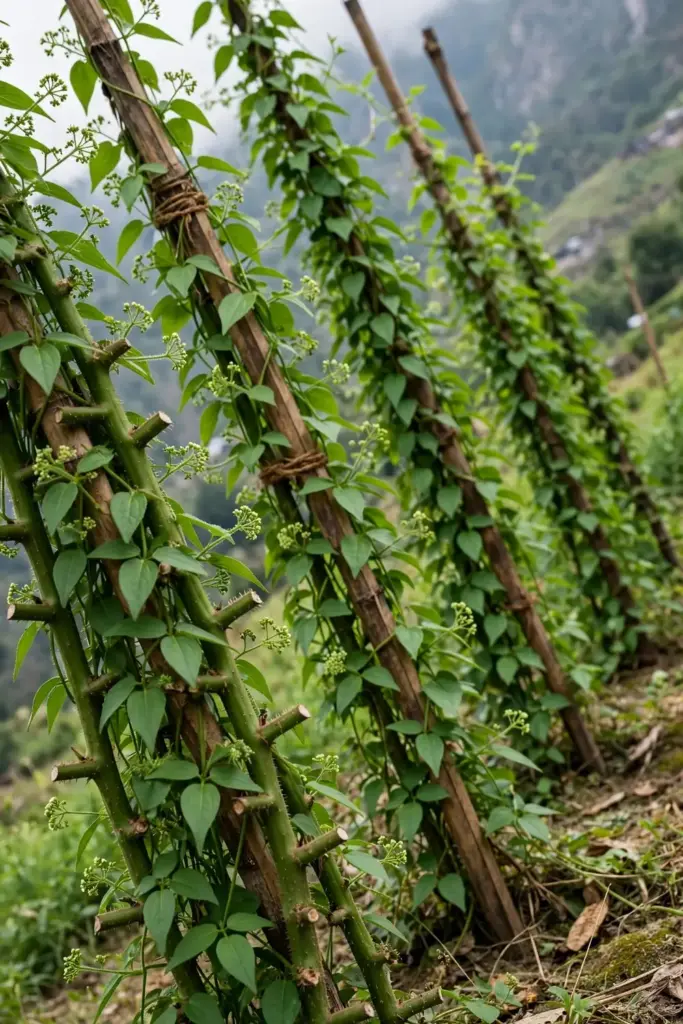
A 2025 Frontiers in Plant Science cultivation study of R. cordifolia found that three-year-old roots outperformed two-year-old roots on both biomass and the primary components purpurin and mollugin, and suggested late June to mid-October as a fair harvest window in that study’s region. The CSIR Indian package is blunter: harvest at about three years. Both agree on the direction. There is no shortcut harvest; digging in year one gives thin roots with thin chemistry.
This is where the how to grow manjistha from India question separates the curious from the committed. The plant asks for three years of weeding, staking, and feeding before it pays, so budget the space and the patience before the first seed goes into the January bed. Need a return this season? Plant something else and buy the root powder. Like other long-lived perennials, manjistha rewards the gardener who plans in years, not weeks.
15. Harvesting the Roots: Dig, Wash, Sun-Dry
Harvest in the third year, when the above-ground vine starts to yellow and die back. Cut the vine at the base first; it is a tangled climber and it will fight you, so a sharp sickle and gloves are the tools. Then dig.
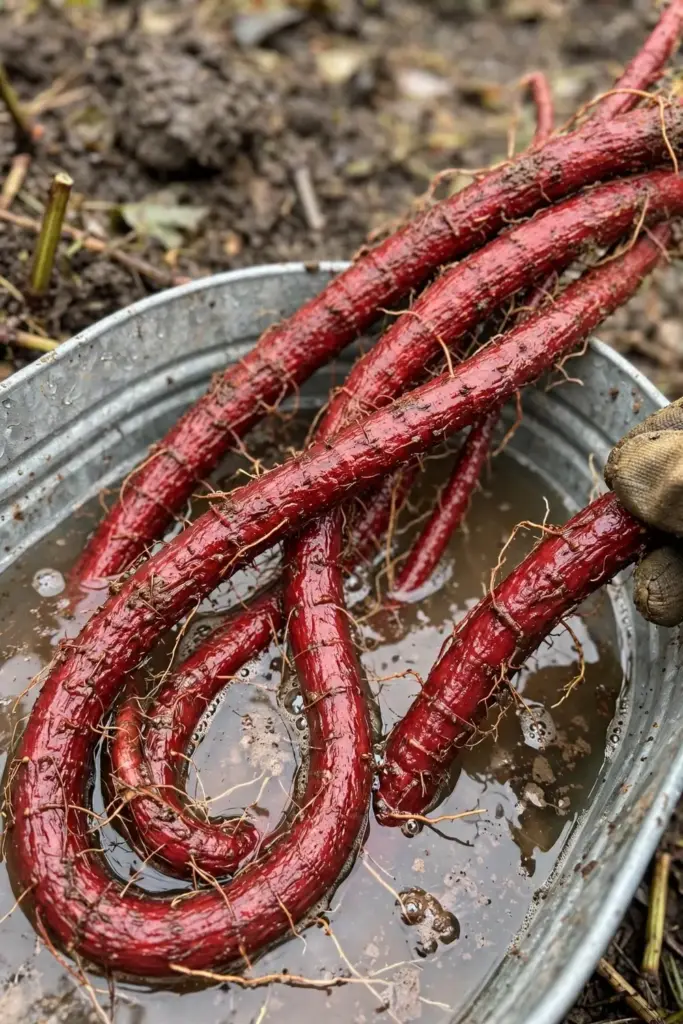
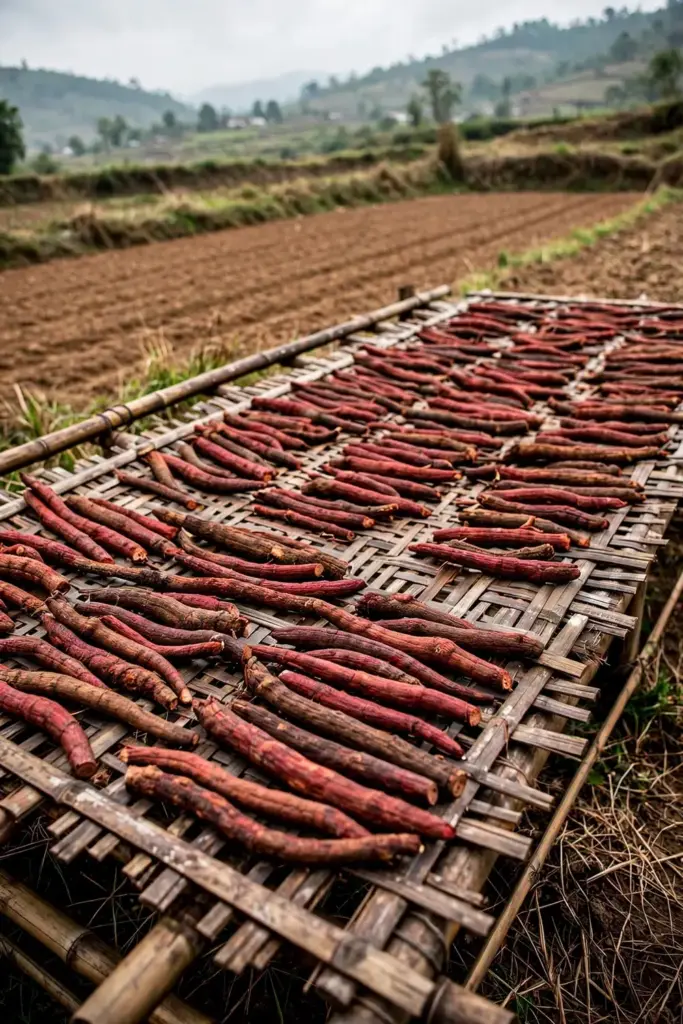
Digging a root that runs more than a meter deep is the hardest physical job here. Work outward in a wide circle first, and expect breakage no matter how careful you are. Broken pieces left behind will resprout; call that a bonus crop or a weed, depending on your plans. Shake off the soil, wash the roots clean in running water, and spread them in the sun to dry.
Drying matters as much as digging. The CSIR package specifies sun-drying, then grinding to powder for capsules, tablets, or liquor extract. Dry on a clean raised platform with airflow, turning daily, until the roots snap instead of bending. Store the dried roots whole in a dry, dark place and grind only what you need; whole dried root keeps its quality longer than powder. A moisture meter reading is ideal, but the snap test has served hill growers for generations.
16. Containers: The Nursery Holds, the Harvest Doesn’t
Honest container guidance for manjistha has two halves. The nursery half works beautifully: January sowing in trays or small pots, pricking into polybags, and growing the seedlings on a sunny balcony is exactly what the CSIR package does, and any home grower can replicate it. A container seedling is a real manjistha plant for its first year.
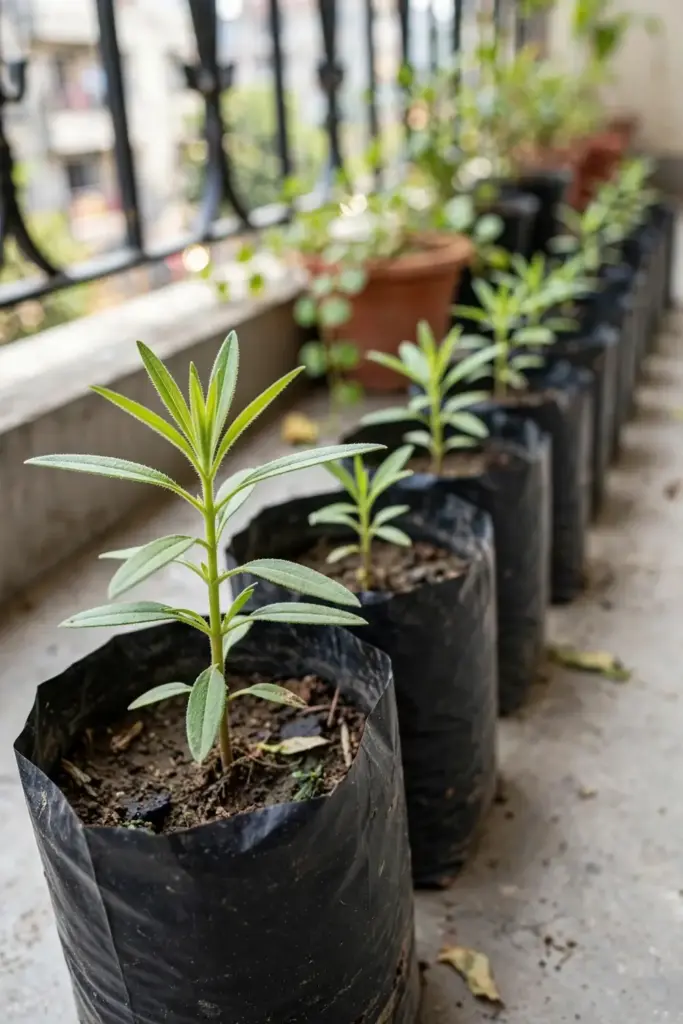
The harvest half does not fit in a pot. A root that runs more than a meter deep and needs three years cannot mature in a 12-inch container, and a climbing vine that wants a bamboo stake will outgrow a balcony railing in the second season. Growing manjistha in a container to harvest is a project that ends in disappointment, and this guide will not pretend otherwise.
The middle path: run the nursery in containers, then move the seedlings to a willing patch of hill ground, a community plot, or a relative’s field. That is how to grow manjistha from India when you live in a flat. The container is the launch pad, not the farm. The basic container-growing principles for herbs apply to the nursery stage: drainage first, light second, oversized pots never.
17. The Red-Dye Root: Purpurin Chemistry & Mohenjo-Daro
The roots of Rubia cordifolia contain an anthraquinone called purpurin (1,2,4-trihydroxyanthraquinone), which gives the red color in textile dyeing, along with munjistin, xanthopurpurin, pseudopurpurin, rubiadin, and related compounds. A review of madder dye chemistry notes that the primary colorants in the root are glycosides rather than free purpurin or alizarin, with cordifolia running purpurin-type and tinctorum running alizarin-type.
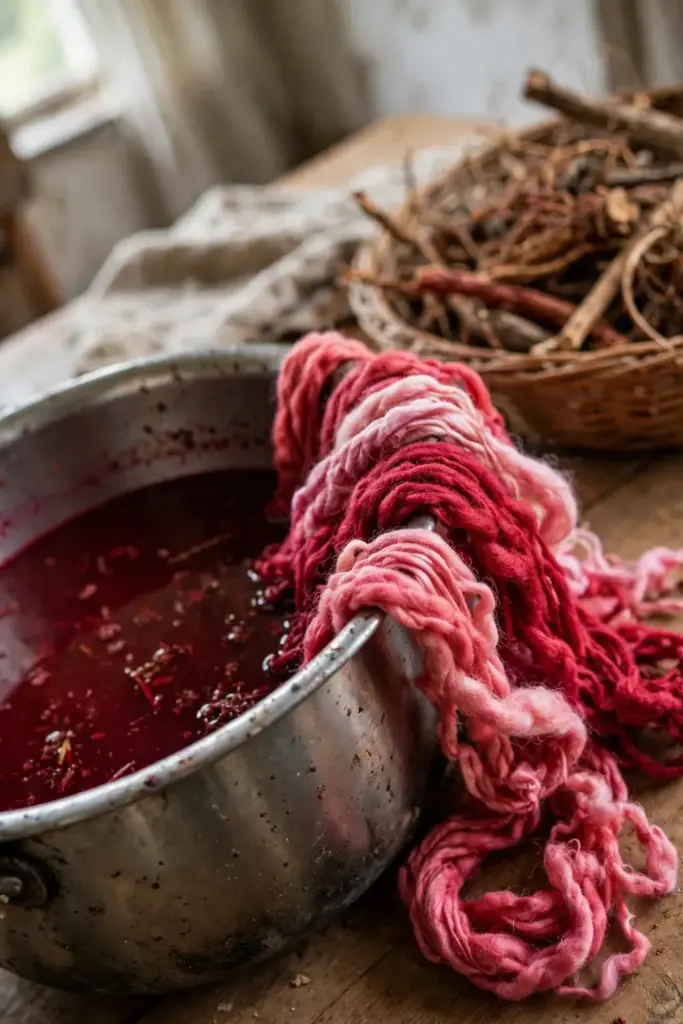
The dye history is one of the oldest in the world. Rubia cordifolia supplied an economically important red pigment across Asia from antiquity, including that third-millennium BCE cotton fragment at Mohenjo-daro. European dyers ran on R. tinctorum until 1869, when Graebe and Liebermann synthesized alizarin and collapsed the natural madder trade. The modern revival is craft-scale: natural dyers, and in Rajasthan, hair-dye crops around Sojat where the root gives pink to cherry-red tones depending on pH.
For the home grower, the dye lane is the payoff for the three-year wait. A home dye pot needs only dried root, water, and a mordant. Grow the root, dry it, and you hold the same colorant that dyed cloth five thousand years ago.
18. The Adulteration Warning: Irani Manjistha & Lucidin
This section is mandatory reading, not optional context. The stems of Rubia tinctorum, sold as “Irani Manjistha,” circulate in the Indian market as a substitute for the official Rubia cordifolia. The two are morphologically similar enough that the substitution passes visual inspection, and the 2014 IJTK study referenced in the identity section documents the problem in detail while establishing pharmacognostical parameters to tell them apart.
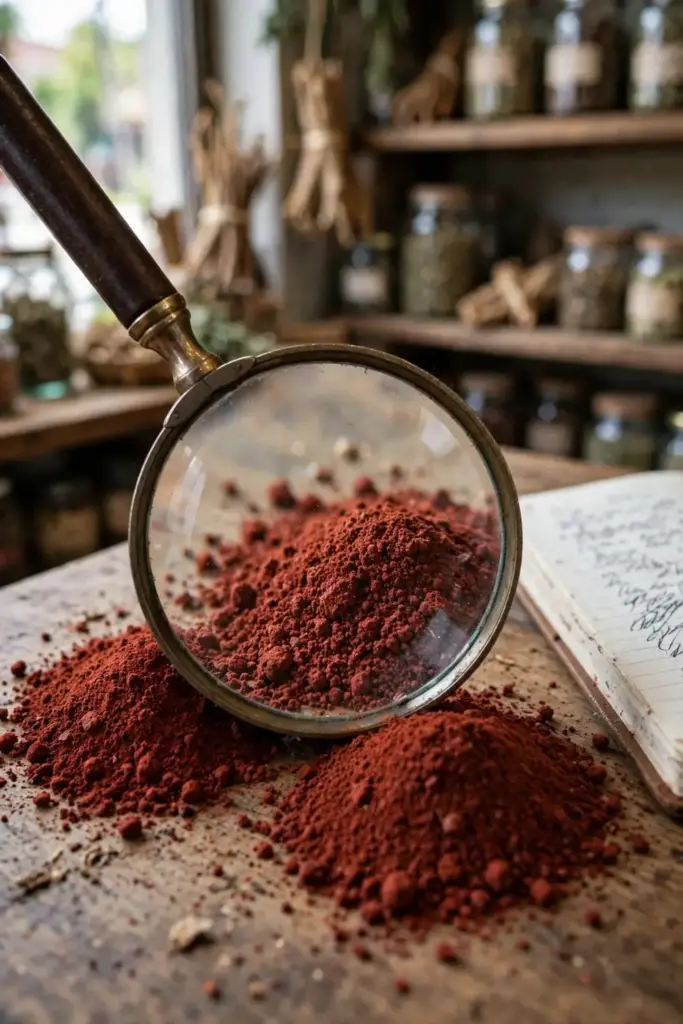
The danger is lucidin. R. tinctorum contains lucidin, a compound with severe genotoxic effects, and the species is not official in the Ayurvedic Pharmacopoeia of India. The comparative HPTLC and GC-MS work linked in the identity section gave the herbal industry a practical detection method, but the home buyer has no laboratory. Your defenses are three: buy from vendors who name the Latin species, prefer whole roots you can inspect over anonymous powder, and grow your own from verified seed, which is the entire point of this guide.
Note the related fence: some sellers market European dyer’s madder root powder for cosmetic use. One natural-cosmetics vendor explicitly warns that R. tinctorum is banned for cosmetic use while R. cordifolia is the safe species. If a product page cannot tell you which Rubia it sells, walk away.
19. The Red-Fluid Caution: Blood Purifier Means Red Urine
Ayurveda knows manjistha as the classical blood purifier, used traditionally for skin disorders, blood disorders, inflammation, and complexion, and it appears in formulations like Septilin and Rumalaya. The traditional record is long and the modern pharmacological literature lists antioxidant, antibacterial, anti-inflammatory, and related activities. This guide repeats the traditional uses because the scout report documents them, and it stops there. No dosing advice appears here; that belongs to a qualified practitioner.
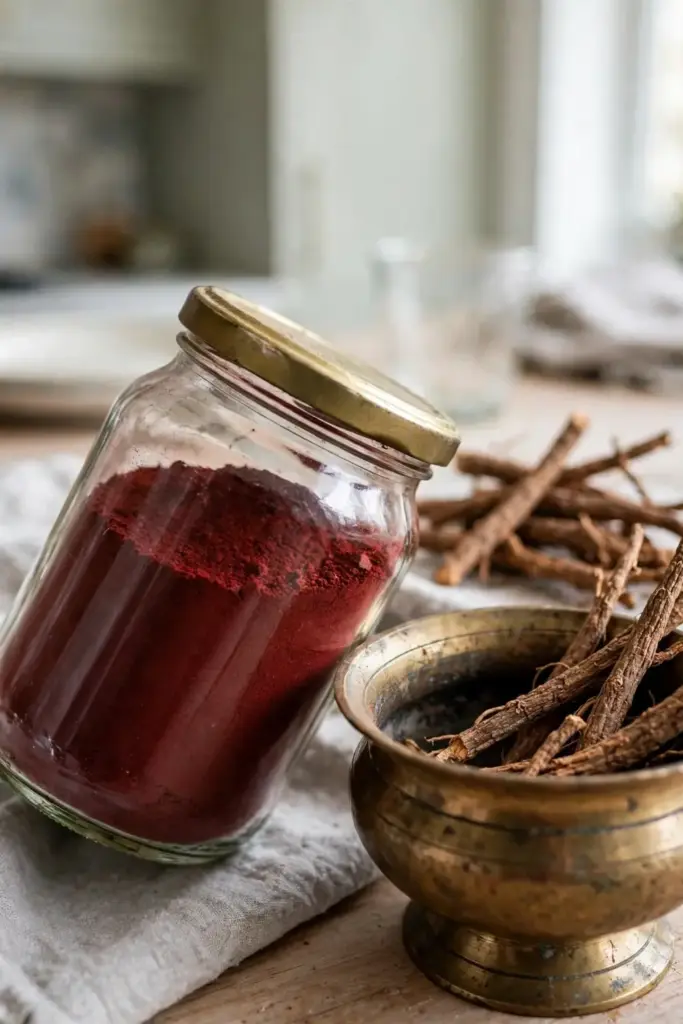
The user-facing caution is physical and memorable. Oral use of manjistha can color urine, perspiration, tears, and breast milk red. This is documented in clinical references, and it alarms first-time users who were never warned. It is the pigment passing through, not blood. Tell anyone trying the herb what to expect, and make sure internal use happens under qualified guidance, not self-experimentation. Treat the herb with the respect its chemistry earns: traditional use is not a safety certificate, and the lucidin story in the previous section is the proof that species identity is a safety issue.
20. Common Mistakes
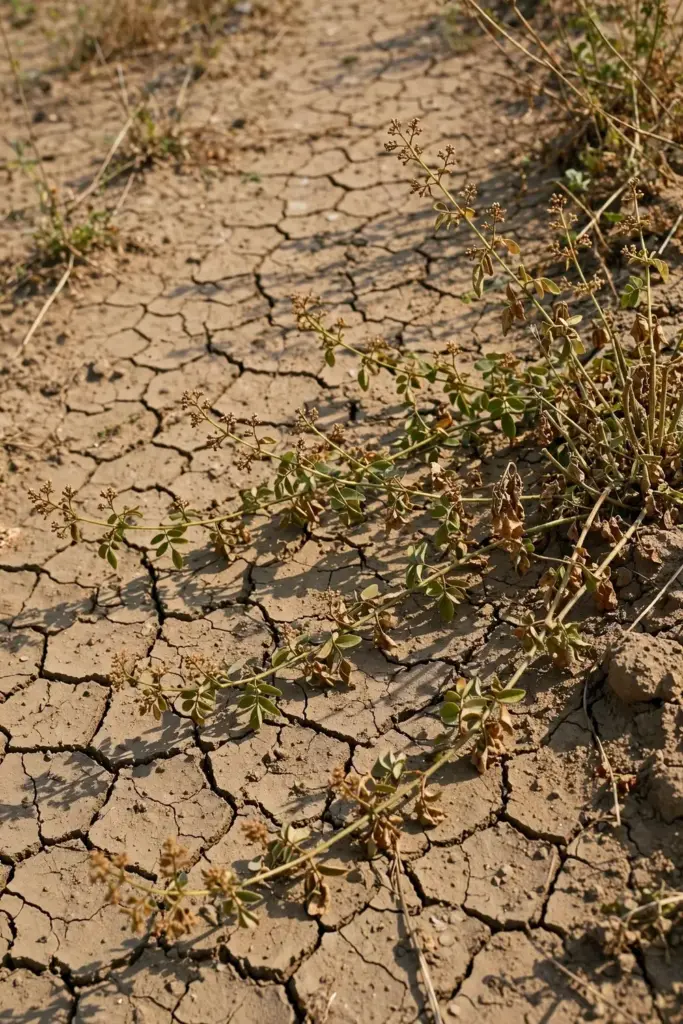
- Planting on the hot plains. The 300 to 2,000 m hill distribution is a requirement, not a suggestion. Hot lowland plantings fail slowly and expensively.
- Skipping the support. An unstaked vine scrambles, tangles, and rots in the monsoon. Stake at 30 to 45 days after transplanting.
- Sowing untreated seed in dirty soil. Damping-off kills the nursery before it starts. Use the 0.02 percent Bavistin treatment or genuinely fresh clean medium.
- Over-fertilizing for thicker roots. The 2024 chemistry study found soil nutrients negatively correlated with purpurin and mollugin. Follow the CSIR rates as a ceiling.
- Digging in year one or two. Thin roots, thin chemistry, wasted wait. The harvest is a third-year event.
- Buying “manjistha” without a Latin name. The Irani Manjistha substitution is real and carries lucidin. Verify Rubia cordifolia.
- Letting water stand in the pits. A root crop in stagnant soil rots, and the loss is invisible until year three.
- Drying roots in a damp heap. Moldy roots are worthless. Sun-dry on a raised platform with airflow until they snap.
21. Troubleshooting
Vine yellowing in year one. Usually overwatering or waterlogging. Check drainage first, ease off the watering, and confirm the pit is not holding a puddle after rain.
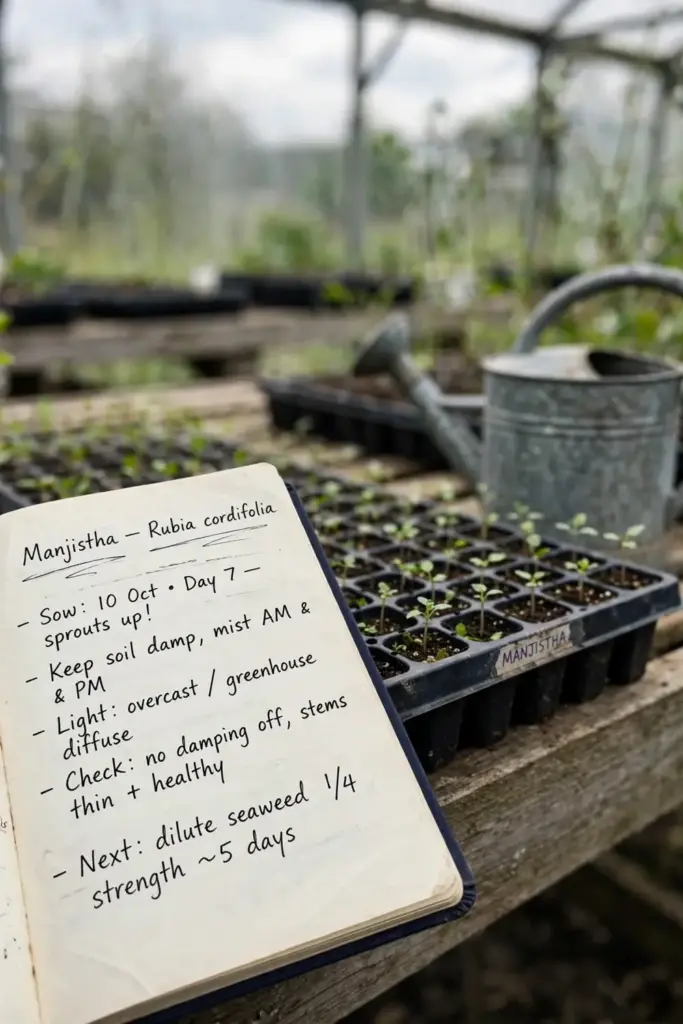
No germination at day 20. Old seed is the prime suspect; the CSIR 80 to 85 percent figure assumes fresh December to January collected seed. Re-sow with fresh stock, and check that the bed did not dry out or bake in direct sun.
Vine scrambles but never climbs. The support went in late or the ties are too tight. Stake at 30 to 45 days, tie loosely, and guide new shoots weekly during the monsoon flush.
Thin roots at year three. Usually a spacing or nutrition failure: crowded plants, missed top-dressing, or harvest dug too early. Keep the 60 by 75 cm geometry and the staged feeding, and confirm the vine has fully died back before digging.
Powder smells musty. Drying was incomplete. Redry whole roots in full sun with airflow, and store only snapped-dry material in airtight containers away from light.
Seedlings damp off in the nursery. Soil-borne fungi. Next round, treat seed with 0.02 percent Bavistin 50 WP and sow in fresh medium; never reuse nursery soil without sterilizing.
Frequently Asked Questions
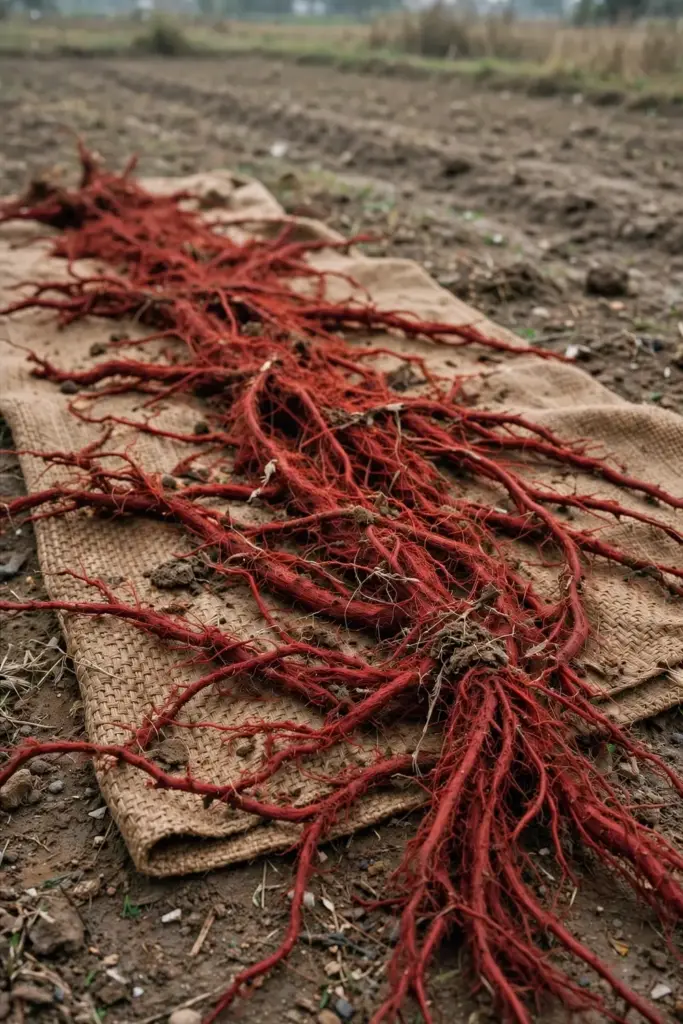
About three years from the January nursery to the root harvest. Seeds germinate in 20 days at 80 to 85 percent, seedlings transplant in April to May, and the roots need three full growing seasons to turn thick, fibrous, and more than a meter long. A 2025 cultivation study confirmed three-year-old roots beat two-year-old roots on biomass and purpurin content.
For the nursery stage, yes. Seedlings grow well in trays and polybags for their first months. For the harvest, no: the mature root runs more than a meter deep and the plant is a climbing vine needing support, so no household container can finish the three-year crop. Use pots as the launch pad and transplant to hill ground.
Desi manjistha is Rubia cordifolia, the API-official species with purpurin-dominant chemistry. Irani manjistha is Rubia tinctorum, the European dyer’s madder, which is not official and contains lucidin, a genotoxic compound. The two look similar enough that substitution happens in trade, so buy only from sources that name the Latin species.
The same anthraquinone pigments that dye cloth red pass through the body and color urine, perspiration, tears, and even breast milk. It is a documented effect of oral use. The red color alarms first-time users, so expect it and do not mistake it for something worse. Anyone using the herb internally should do so under qualified guidance and expect the color change.
The CSIR agrotechnique specifies 60 by 75 cm, about 22,000 plants per hectare. Keep the same geometry at home-garden scale. The spacing gives each climbing vine room for its support and each root system room to run deep without competing with its neighbors.
No. European dyer’s madder is Rubia tinctorum, alizarin-dominant, and the source of the synthetic-alizarin story of 1869. Indian manjistha is Rubia cordifolia, purpurin-dominant and API-official. They are cousins in the same genus with different chemistry, and only cordifolia is the Ayurvedic drug.
Your Three-Year Bet on a Red Root
Growing manjistha is a slow contract: January seeds, April transplants, bamboo stakes by June, three monsoons of weeding and feeding, and then a digging day in the third year that yields roots longer than your arm and red enough to dye wool. Few garden crops ask this much patience. Fewer still pay it back with a colorant that predates writing.
Start with verified Rubia cordifolia seed, respect the 300 to 2,000 m gate, stake the climber, feed to the CSIR ceiling, and let the third year do its work. The root is the prize, and the prize keeps.