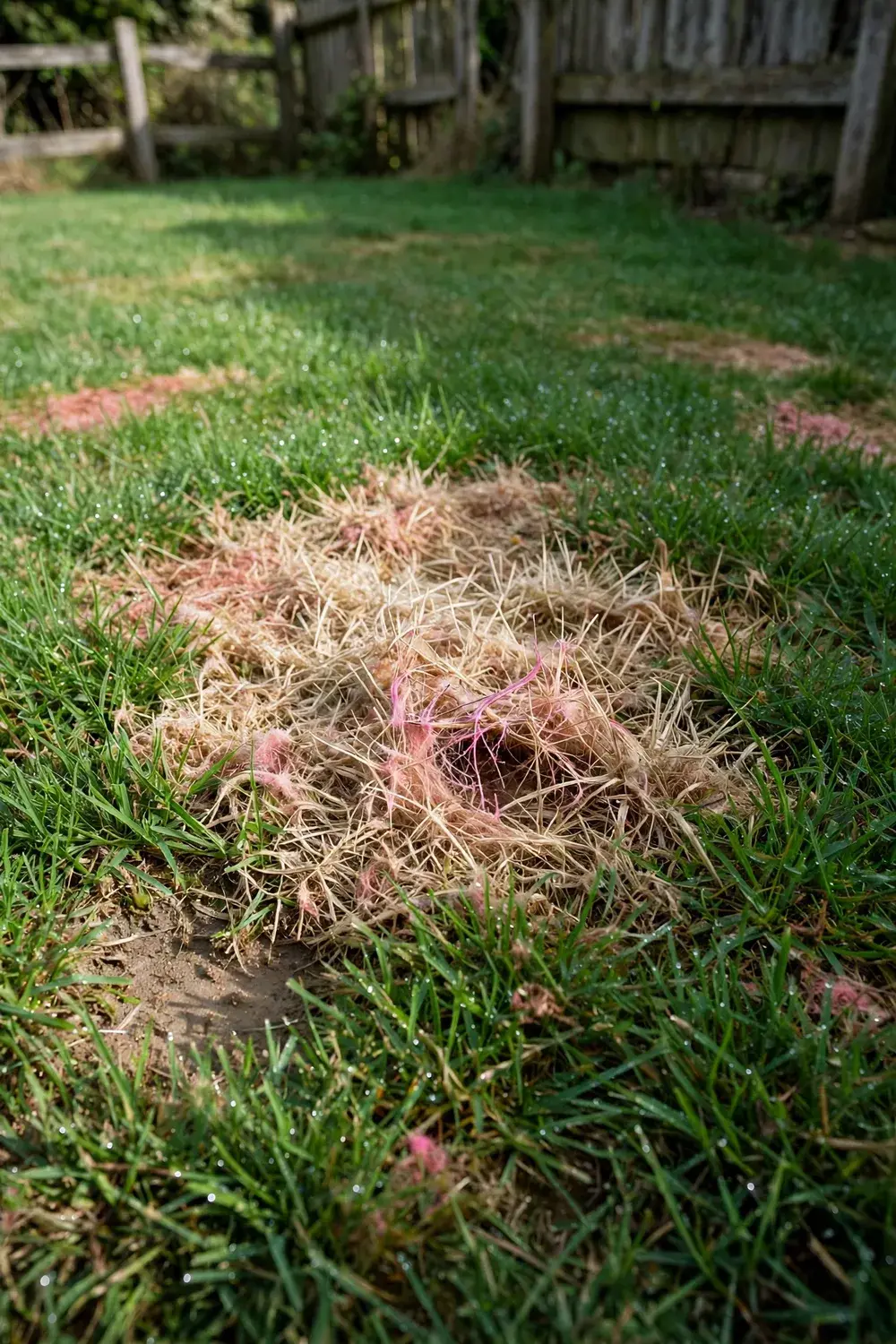

Spend 10 minutes on a wet morning, kneel on the lawn, and part the grass with your fingers. Those threads are the signature of red thread on lawns, and they settle the identification in seconds. The disease looks alarming. It is usually cosmetic, and feeding the lawn does more than spraying it ever will. I have learned to look for the threads before reaching for any product. The rest of this page is 9 strategies, from confirming the threads to overseeding with resistant grasses.
Red thread is a fungal disease of cool-season turfgrass. The fungus Laetisaria fuciformis causes red thread. Red thread attacks the leaves, leaf sheaths, and stems of grasses such as perennial ryegrass, fine fescue, Kentucky bluegrass, tall fescue, and bentgrass. It shows up most often in spring and fall, after cool wet weather, on lawns that are short of nitrogen.
Brown patch is a different job with its own signs, and it lives on the site’s brown patch guide. This page stays on red thread: what it is, how to tell it from dollar spot and pink patch, and the 9 moves that feed a lawn back to health.
1. What Red Thread Actually Is
Red thread is a leaf disease, and the fungus behind it is Laetisaria fuciformis. The disease was formerly known as Corticium red thread, and older lawn books may still use that name. One name belongs to one fungus here. Red thread is Laetisaria fuciformis, and pink patch is a separate disease caused by a separate fungus.
The disease is most common during rainy periods in late spring and early summer, and it favors lawns that do not get enough nitrogen fertilizer, according to the Penn State Extension red thread guide. That guide places red thread on lawns, parks, institutional grounds, athletic fields, and golf course roughs. Home lawns sit squarely inside its range. The same guide gives the temperature window as 65 to 75 degrees Fahrenheit, with prolonged rainy or humid weather driving outbreaks.
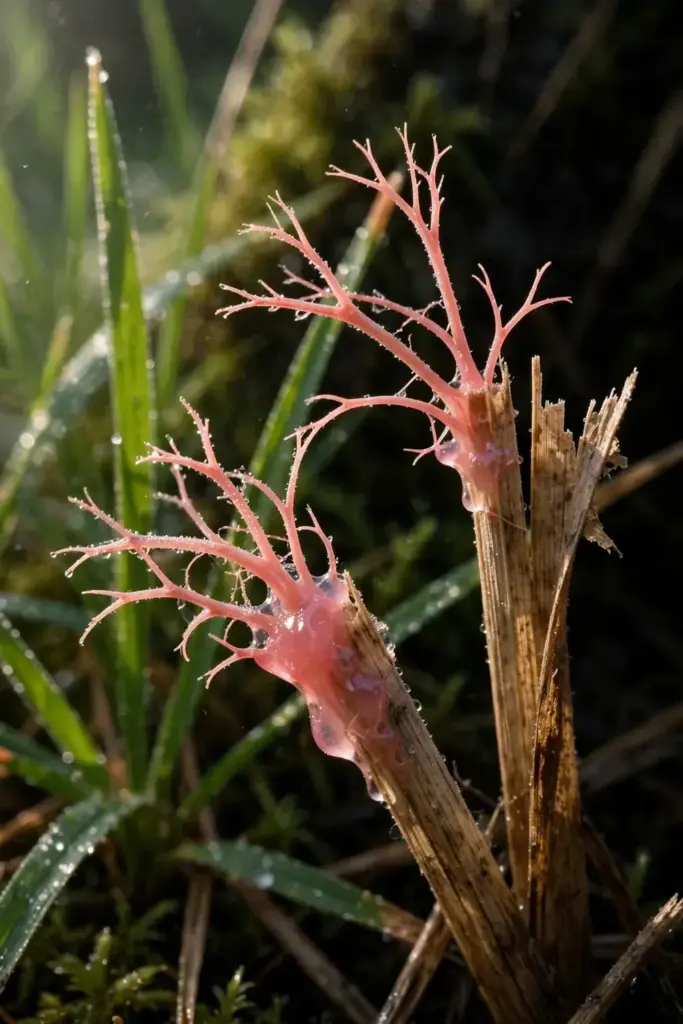
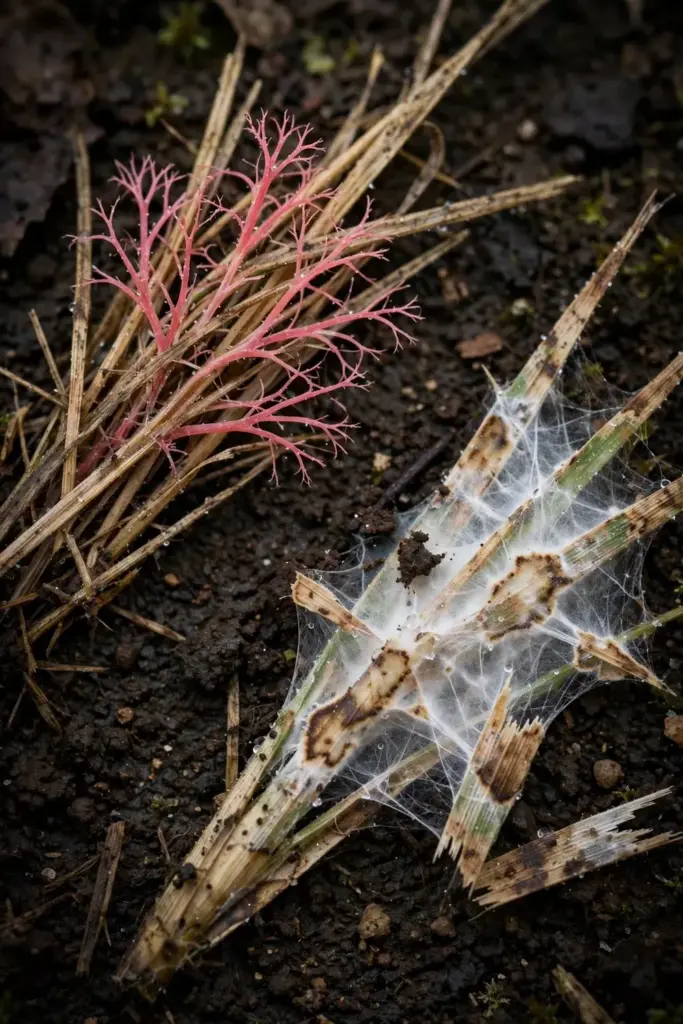
Symptoms start small. Blighted areas appear on leaves and enlarge fast enough to cover most of a leaf. In the advanced stage, leaves carry bright red threadlike strands of fungal mycelium, 1/16 to 1/4 inch long, at the tips of the affected leaves, per the same Penn State guide. Diseased plants dry out and fade to a bleached straw color. The disease usually stays on leaves, leaf sheaths, and stems. In severe cases it may kill the entire plant, so a bad attack on a susceptible cultivar deserves attention even though most outbreaks stay cosmetic.
The fungus overwinters as dormant mycelium on dead leaves and stems of previously infected plants. Growth resumes in spring when moisture and warmer temperatures return. The fungus enters grass leaves through natural openings and cut tips, then spreads through the rest of the leaf. Mowers and foot traffic break mycelium loose and carry it to other plants, which is why mowing a wet, patchy lawn spreads the problem.
2. How to Identify Red Thread on Grass Blades
Look at single blades first, because the blade test is the one that settles it. Red thread shows its sign on the blade tip. Wet blades carry a reddish gelatinous fungal growth. Dry blades carry hard, brittle strands that stick out past the leaf tip like tiny antlers.
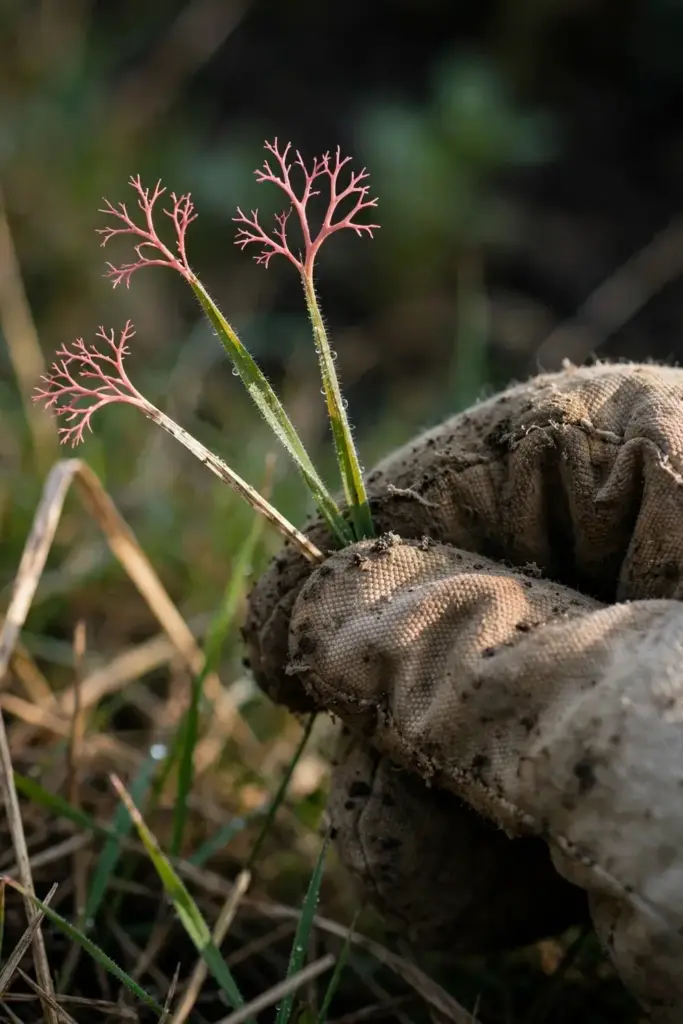
University of Maryland Extension describes the same two faces: a reddish gelatinous growth on leaf blades and sheaths in wet, cool weather, turning into paler pink or red strands that extend from the leaf tips as the leaves dry. The strands fall into the soil or thatch layer and wait there as resting structures for the next infection period. That waiting stage matters. It explains why the same lawn can break out again after a wet spell.
Blades die from the tip down. Dead leaves mix with healthy leaves, and the turf takes on a diffuse, scorched, ragged look that resembles drought stress. The resemblance fools people. Drought-stressed turf has no threads. Red thread has threads. Part the grass on a dewy morning and look at the tips before you decide anything.
A hand lens helps when the strands are short. Hold a few suspect blades against a dark background and look for the pink to red threads poking past the tip. Cottony pink flocks on the blade surface also point to red thread in wet weather. A blade with a clean tan lesion and no threads points somewhere else, and the differential section below sorts out where.
3. How to Identify Red Thread Across the Lawn
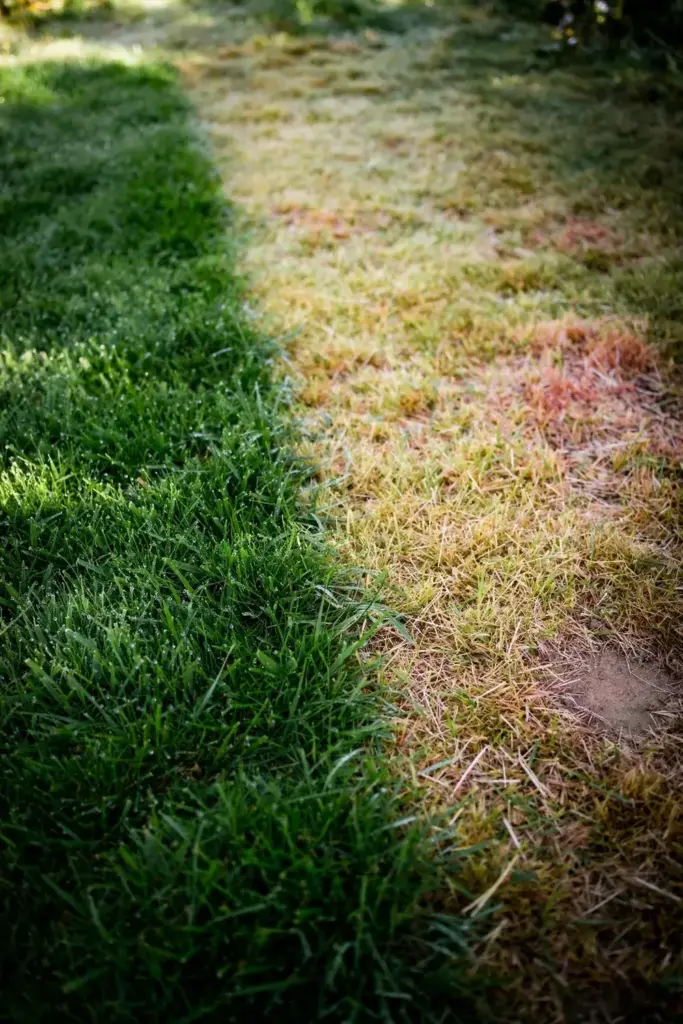
Step back after the blade test and read the whole lawn. Patches of red thread on lawns are circular or irregularly shaped, and they carry a red or pink cast that stands out against healthy green turf. Patches run 2 to 24 inches across in the Pacific Northwest handbooks, and larger patches form when neighboring patches merge. University of Maryland Extension puts the range wider, from 2 inches to 3 feet across, with a straw-brown or pinkish tan color.
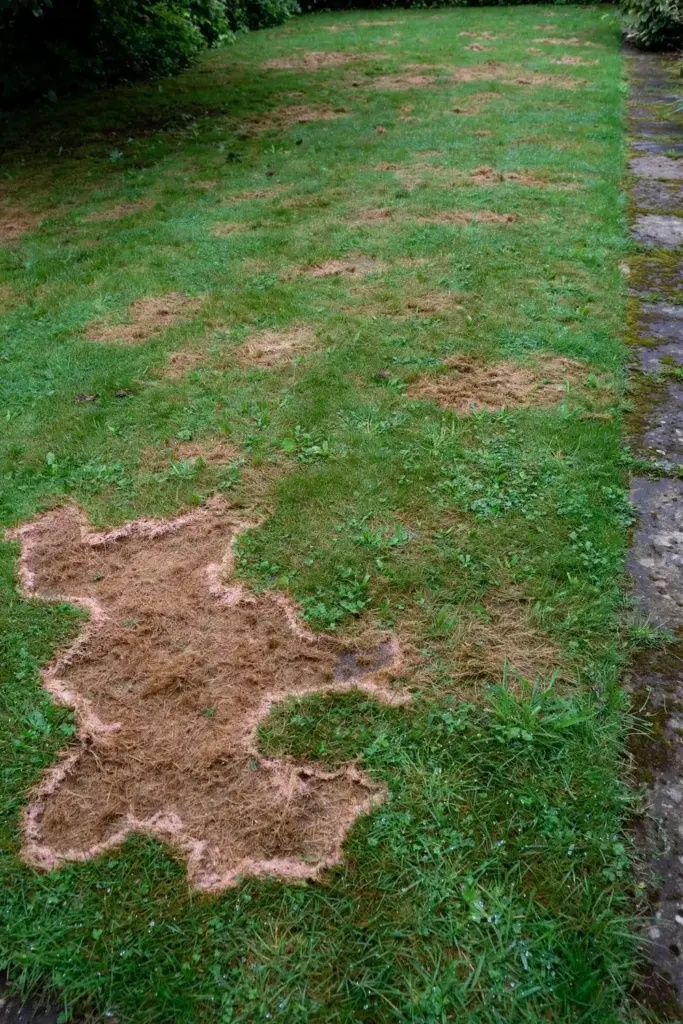
Patches dry out to a bleached straw color as the leaves die back. That straw stage is the one most people notice first, and it looks worse than it usually is. The roots stay alive in most outbreaks. New growth pushes up through the straw once the lawn gets food and the weather turns drier.
Check the pattern before you treat. Red thread scatters patches across the lawn instead of killing one solid area. The patches favor spots where growth is slow: thin turf, shaded corners, compacted paths, and areas that missed fertilizer. A lawn that went a full year without feeding is the classic case. Penn State turf notes put it plainly: infestations run hardest on underfertilized lawns, and lawns left unfertilized for a year or more develop problems far more often than lawns fed on a regular basis.
Morning is the best time to look. Dew keeps the fungal growth visible, and the pink color reads clearly in soft light. By midday on a dry day, the strands turn pale and brittle, and a quick glance can miss them. Walk the lawn before the dew dries if you want the honest picture.
4. Which Grasses Get Hit Hardest
Perennial ryegrass and the fine fescues take the worst of red thread. The Pacific Northwest handbooks rank perennial ryegrass first, with red fescue, Chewing fescue, and bentgrass close behind. Kentucky bluegrass and tall fescue also catch it. Hard fescue resists it, and that resistance matters at overseeding time.
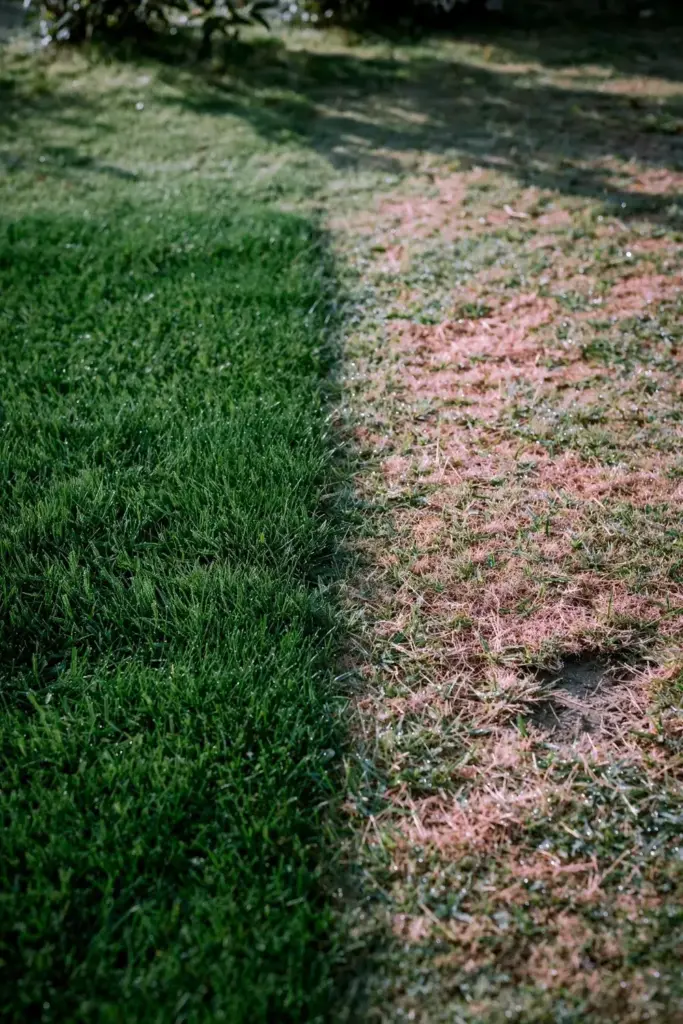
Bermudagrass can catch red thread too, but it stays a minor host. Cool-season grasses dominate the host list, and this article stays on cool-season lawns. Warm-season lawns with pink patches in summer need a different diagnosis, and the differential section below explains why.
Slow-growing turf invites the disease. Low fertility, lack of sunlight, drought, and other stress slow the grass down, and slow grass cannot outgrow the fungus. Cultivars matter as well. Lawns planted with older, genetically weaker turfgrass cultivars develop the most damaging cases. A lawn that grows vigorously through spring and fall usually shakes off an outbreak with feeding alone.
| Grass | Susceptibility | Notes |
|---|---|---|
| Perennial ryegrass | Highest | Worst damage in most outbreaks |
| Fine fescues (red, Chewing, creeping red) | High | Creeping red fescue is especially vulnerable |
| Bentgrass | Moderate to high | Catches it alongside ryegrass and fescue |
| Kentucky bluegrass | Moderate | Common types suffer more than improved cultivars |
| Tall fescue | Moderate | Catches it, usually with milder damage |
| Hard fescue | Resistant | The overseeding choice where red thread recurs |
| Bermudagrass | Minor | Listed as a host, rarely the main victim |
5. Red Thread vs Dollar Spot vs Pink Patch
One look at the threads answers the question most of the time. Threads present means red thread. Pink color with no threads means pink patch. White cobweb and tan lesions with reddish-brown borders mean dollar spot. The table below lays out the full comparison.
| Sign | Red Thread | Dollar Spot | Pink Patch |
|---|---|---|---|
| Pathogen | Laetisaria fuciformis | Clarireedia jacksonii | Limonomyces roseipellis |
| Patch shape and size | Circular or irregular, 2 to 24 inches, merging into larger areas | Round, 2 to 5 inches on home lawns mowed at 2 to 3 inches, merging into large dead areas | Roughly circular, 2 to 4 inches, slower to spread |
| Leaf sign | Pink to red antler-like threads at blade tips | Tan lesion with reddish-brown borders on the leaf blade | Pink gelatinous mycelium coating the leaf, no threads |
| Fungal growth | Pink gelatinous growth when wet, brittle strands when dry | White cobweb-like mycelium on dew-covered grass in early morning | Fluffy pink mycelium in advanced stages, no cottony flocks |
| Weather | Cool and wet, 65 to 75 degrees Fahrenheit, spring and fall | Warm and humid with wet leaves from rain, dew, or irrigation | Cool and wet, spring and fall, same conditions as red thread |
| Damage | Usually cosmetic, stays on blades | Kills turf in the spots, leaving straw-colored dead areas | Usually cosmetic, less severe than red thread |
Dollar spot earns its name from the size of its spots. On home lawns mowed at 2 to 3 inches, spots reach 2 to 5 inches across, and spots that merge produce large areas of dead turf, according to the Penn State Extension dollar spot guide. The same guide describes the leaf lesion as a tan-colored lesion with reddish-brown borders, with white mycelia visible on diseased leaves in early morning after rain or on dew-covered grass. That white cobweb is the key contrast. Red thread growth is pink or red. Dollar spot growth is white.
Pink patch is the close cousin that fools people. Pink patch and red thread often occur together, sometimes in the same patch, and they share hosts, weather, and control measures. The University of Massachusetts fact sheet draws the line clearly: pink patch spreads much more slowly than red thread, is less severe, and does not produce sclerotia or cottony flocks of mycelium, per the UMass red thread and pink patch fact sheet. The red thread fungus produces pink to pale red or orange threadlike sclerotia visible to the naked eye on infected leaves. Pink patch produces none. Threads present means red thread. Threads absent with a pink coating means pink patch.
Two cautions keep the diagnosis honest. First, red thread and pink patch can grow in the same lawn at the same time, so finding one does not rule out the other. Second, a lawn can carry threads on some blades and a pink coating on others. Treat the lawn for both by the same means. Feeding and culture control both diseases, so a mixed outbreak changes nothing about the plan.
6. Why Low Nitrogen Matters So Much
Red thread is a hunger signal before it is anything else. The fungus grows on leaves. Nitrogen grows new leaves. When the lawn grows faster than the fungus spreads, the disease fades. When the lawn stalls for lack of food, the fungus wins the race across the blade.
Rutgers Cooperative Extension frames the mechanism the same way: moderate nitrogen at 1/2 to 1 pound of actual nitrogen per 1,000 square feet often eases severe symptoms by pushing plant growth faster than the disease spreads. The same notes add that potassium applied with nitrogen works better than nitrogen alone. The point is growth, not poison. No spray in this plan kills the fungus on contact. The feed outgrows it.
That mechanism explains the pattern every lawn owner sees. Red thread hits the thin spots first, the shaded corners, the strip the spreader missed, the lawn that skipped a feeding. It skips the thick, well-fed areas. The fungus is present in both places. The difference is the growth rate of the grass.
The same mechanism sets the limit on feeding. Too much nitrogen pushes soft, fast growth that invites other diseases later in the season, including brown patch and Pythium blight, per Penn State notes. The dose in Step 2 sits inside the moderate band for that reason. Feed enough to restart growth. Do not flood the lawn.
The fungus waits out the good times. Red thread sclerotia stay viable in thatch and debris for up to two years, per the UMass fact sheet. A lawn that beat red thread last spring can break out again after a wet spell if feeding lapses. The long view matters more than any single application. Steady feeding across seasons keeps growth ahead of the fungus.
7. What Makes Red Thread Worse in a Home Lawn
Several conditions stack the odds toward an outbreak, and most of them sit inside the owner’s control. Low nitrogen tops the list. Prolonged leaf wetness comes next. Heavy dew, fog, and rainy spells keep blades wet for hours, and wet blades invite infection. Cool temperatures in the 65 to 75 degree range line up with spring and fall growth, which is why those seasons carry the outbreaks.
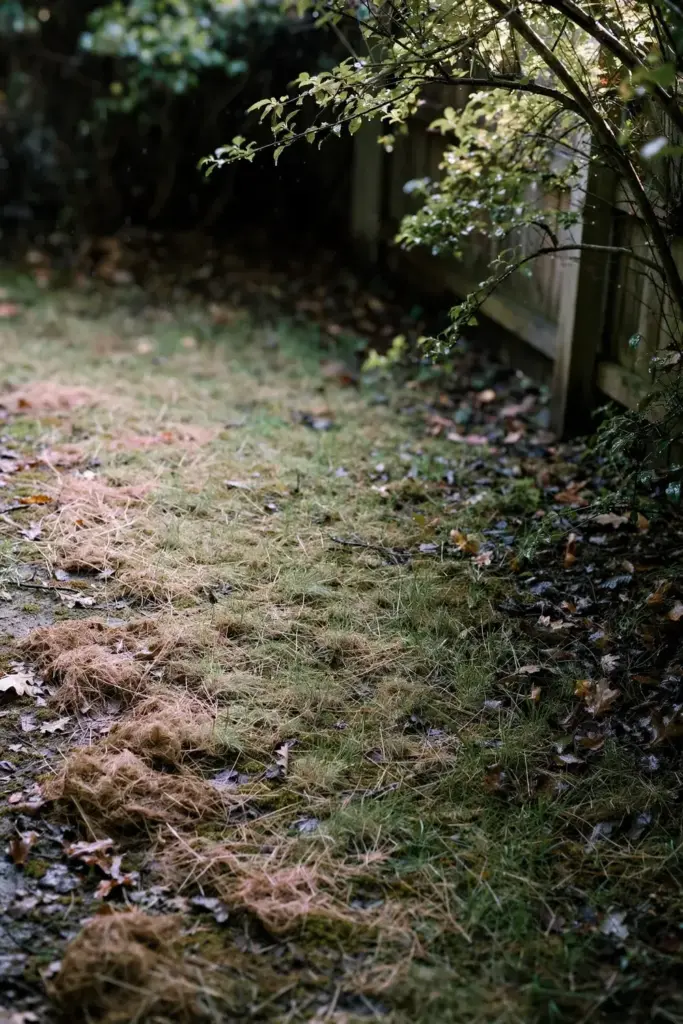
Thatch makes it worse. The thatch layer holds infected debris and sclerotia through winter and into the next wet spell. A thick, matted thatch layer also holds moisture against the blades. Dethatching breaks that cycle, and Step 6 covers it.
Compaction makes it worse too. Compacted soil drains slowly, roots grow shallow, and the surface stays wet longer after rain. Foot traffic across a wet lawn compacts the soil and breaks mycelium loose at the same time. Paths and play areas show patches first for both reasons.
Shade and poor airflow make it worse. Shrubs that arch over the lawn trap humidity and block sun. Fences and walls do the same in corners. Turf under heavy shade grows slowly, and slow turf cannot outgrow the fungus. Pruning for light and air pays off twice: it dries the blades faster and it speeds growth.
Mowing a wet lawn spreads the fungus. Mowers and foot traffic carry broken mycelium to healthy plants, per Penn State notes. Mowing on a dewy morning after an outbreak moves the problem across the whole lawn in one pass. Step 5 fixes the habit.
Drought stress also plays a part. Turf slowed by drought, low fertility, or other stress cannot outgrow an outbreak, per UMass notes. A lawn that is dry and hungry at the same time is the easiest target red thread finds.
8. Step 1: Confirm the Threads Before You Do Anything
Walk the lawn on a wet morning and look for threads. Part the grass in the worst patch, lift a few blades, and check the tips for pink to red strands. A case of red thread on lawns confirms itself this way, and no other step in this plan makes sense until the threads check out.
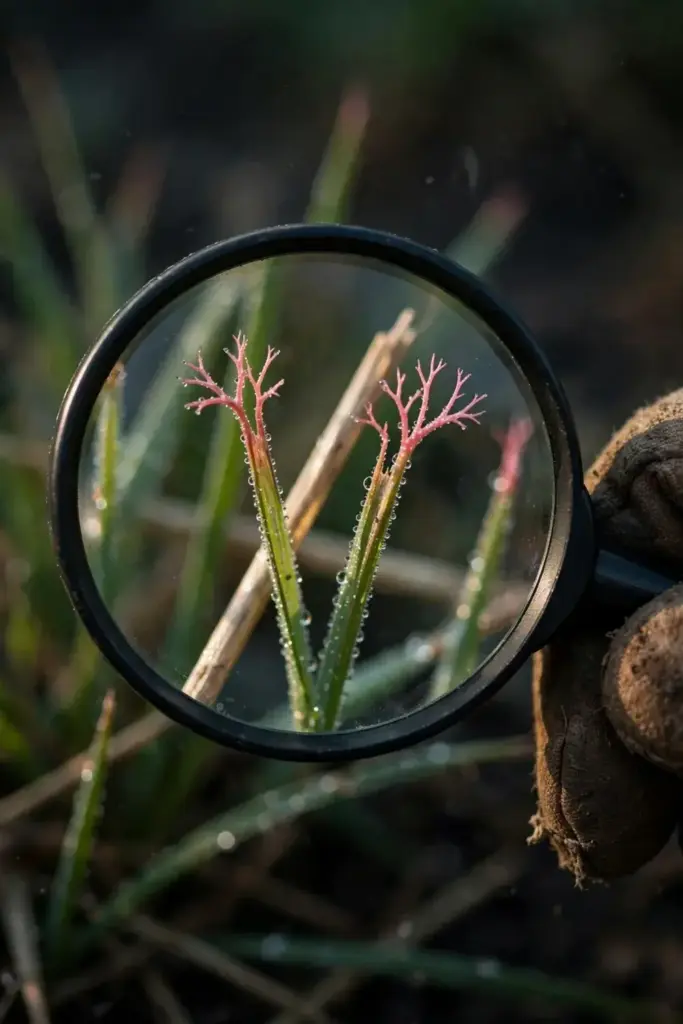
Run three checks. First, the thread check: strands at the blade tips mean red thread. No strands with a pink coating means pink patch. White cobweb with tan lesions means dollar spot. Second, the pattern check: scattered circular or irregular patches with a pink cast mean red thread. One solid dead area means something else. Third, the history check: a lawn that skipped feeding, a wet spring, and cool temperatures all point toward red thread.
A soil test helps when the lawn keeps breaking out. Rutgers Cooperative Extension puts a soil test first for repeat outbreaks, to pin down pH and nutrient levels before feeding again. The test costs little and it stops blind fertilizing. Test once, then feed to the result.
Do not guess from color alone. Straw-brown patches have a dozen causes, from drought to grubs to other fungi. The threads are the evidence. Without them, the diagnosis stays open, and the right move is a sample to the local extension office rather than a product from the shelf.
9. Step 2: Feed Nitrogen at the Rate That Outgrows the Fungus
Feed the lawn. Nitrogen is the decisive move against red thread, and the rate below is the one to use. The Pacific Northwest handbooks call for a quick-release nitrogen source at 0.5 to 1.0 pound of nitrogen per 1,000 square feet, per the PNW red thread handbook entry. Quick-release matters. Slow-release granules feed too slowly to restart growth ahead of the fungus.
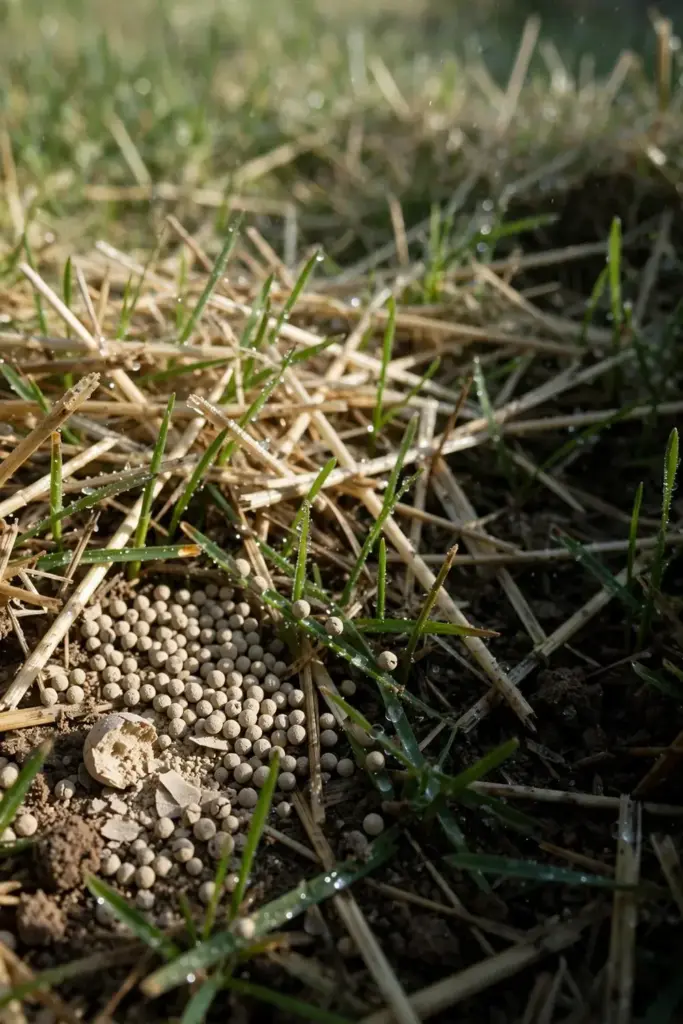
Read the bag label and work out the product rate from the nitrogen percentage printed on the bag. Spread evenly, water it in lightly, and keep the spreader off paths and beds. A striping pattern of green and yellow a week later means the spreader skipped a pass.
Time the feeding to active growth. Spring and fall feedings land when cool-season grass grows strongly, and the best time to fertilize a lawn in spring sets the seasonal frame. Avoid feeding dormant grass. Rutgers notes warn against nitrogen applications when the grass is dormant, and dormant grass cannot use the nitrogen anyway.
Expect visible recovery within a few weeks, per Penn State notes. New green growth pushes up through the straw-colored patches first, then fills them in. The threads fade as the infected blades get mowed off and replaced. Full prevention takes longer. Keep feeding on a steady seasonal schedule rather than chasing each outbreak with a heavy dose.
Stay inside the moderate band. Heavy late-season nitrogen pushes soft growth that invites brown patch and Pythium blight later in the season. The 0.5 to 1.0 pound rate restarts growth without flooding the lawn. When in doubt, use the low end of the range and repeat on schedule rather than doubling one application.
10. Step 3: Skip the Fungicide Spray
Leave the sprayer in the shed. Chemical control is not recommended for home lawns against red thread, per the Pacific Northwest handbooks. Cultural control alone handles this disease. That is the honest cost and benefit call, and it comes first in the plan because it saves money and spares the lawn a chemical it does not need.
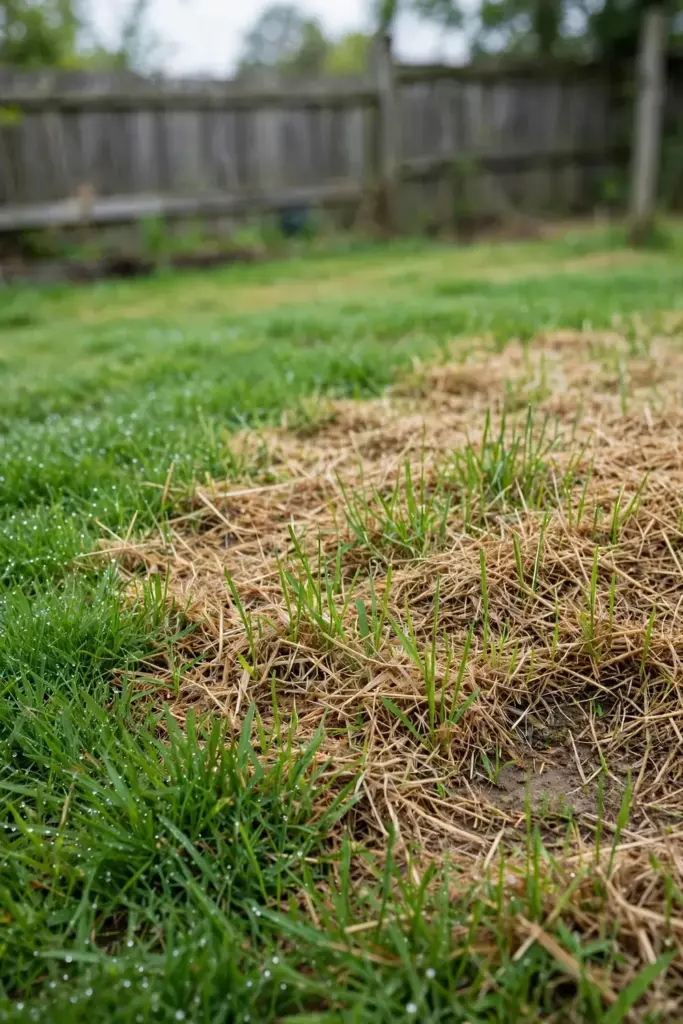
The math supports skipping the spray. Red thread is usually cosmetic. The lawn recovers within a few weeks once feeding restarts growth. A spray program costs money, needs repeat applications, and still leaves the underlying hunger in place. Feed the lawn and the disease fades. Spray the lawn and the hunger stays.
One warning matters more than the rest. Avoid fungicides containing Group 1 fungicides, such as Cleary’s 3336 or OHP 6672, on affected lawns. The Pacific Northwest handbooks state that Group 1 products can increase the severity of red thread. A wrong spray makes the disease worse. That is the strongest reason to skip spraying entirely unless a turf professional diagnoses a different problem.
Golf courses and high-value turf sometimes use fungicides against red thread, and trade lists rank products by efficacy. Home lawns are a different case. The dose, the timing, and the repeat schedule that make sense on a golf course do not transfer to a home lawn. Keep this article’s plan in the home-lawn lane: feed, water, mow, dethatch, aerate, overseed.
11. Step 4: Water in the Morning and Let Blades Dry
Water early in the day so the blades dry before evening. Morning watering gives the grass the water it needs and leaves the whole day for the leaf surface to dry. Dry blades at nightfall break the infection cycle, because the fungus needs prolonged leaf wetness to spread.
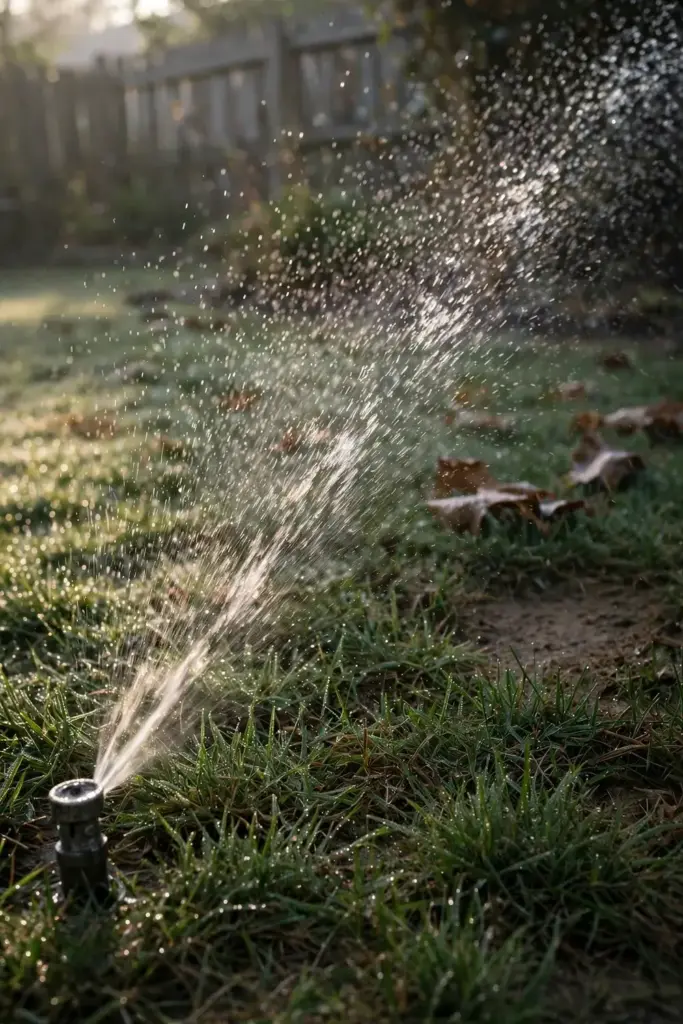
Water deeply and infrequently rather than sprinkling every day. Deep watering pushes roots down and lets the surface dry between sessions. Daily sprinkling keeps the surface wet around the clock, and that wet surface is exactly what the fungus wants. Let the top of the soil dry between waterings while the deeper soil stays moist.
Avoid evening overhead watering during an outbreak. Water sitting on blades overnight stretches leaf wetness to 10 hours or more, and long wet nights drive new infections. If the lawn needs water and morning already passed, water at the soil level or wait for the next morning. One skipped evening watering costs nothing. One wet night can seed a new patch.
Prevent drought stress at the same time. The Pacific Northwest handbooks list drought prevention as part of cultural control, and turf slowed by drought cannot outgrow the fungus. Deep morning watering covers both needs at once: enough water for growth, and a dry leaf surface by night.
12. Step 5: Mow When Dry and Stop Spreading the Fungus
Mow when the grass is dry. Mowers break mycelium loose and carry it to healthy plants, per Penn State notes, and a mower passing over wet, infected turf spreads the fungus across the whole lawn in minutes. Dry blades shed far less mycelium, and dry mowing keeps the problem inside the patches that already have it.
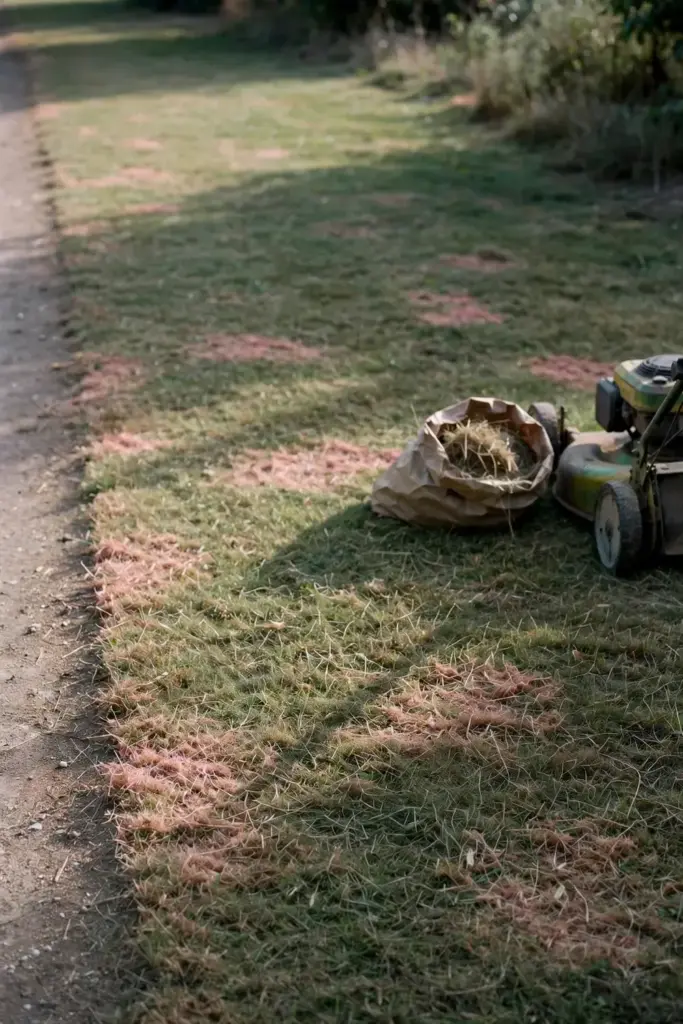
Mow the healthy turf first and the patchy areas last. That order keeps the mower clean through most of the lawn and confines the infected clippings to the end of the job. Clean the mower deck after mowing an outbreak, and bag the clippings during an outbreak instead of leaving them on the lawn. Bagged clippings go in the trash, not the compost pile, since the fungus survives in debris.
Keep the mower at the height your grass type needs, and never scalp the lawn. Scalping stresses the turf, opens the canopy to weeds, and slows the regrowth that the lawn needs to outgrow the fungus. A sharp blade matters too. A dull blade shreds leaf tips and opens wounds the fungus enters through cut tips. Sharpen the blade at the start of the season and again after heavy use.
Mow on schedule through the outbreak. The lawn needs steady mowing to remove infected blade tips and make room for new growth. Skipping mowing lets infected blades stand longer and leaves the straw-colored patches in place. Keep mowing, keep it dry, and let the new growth come through.
13. Step 6: Dethatch the Matted Layer
Thatch is the layer of dead stems and debris between the green blades and the soil. Red thread sclerotia wait in that layer for up to two years, per the UMass fact sheet, and a thick thatch layer holds moisture against the blades. Dethatching removes the waiting fungus and dries the surface at the same time.
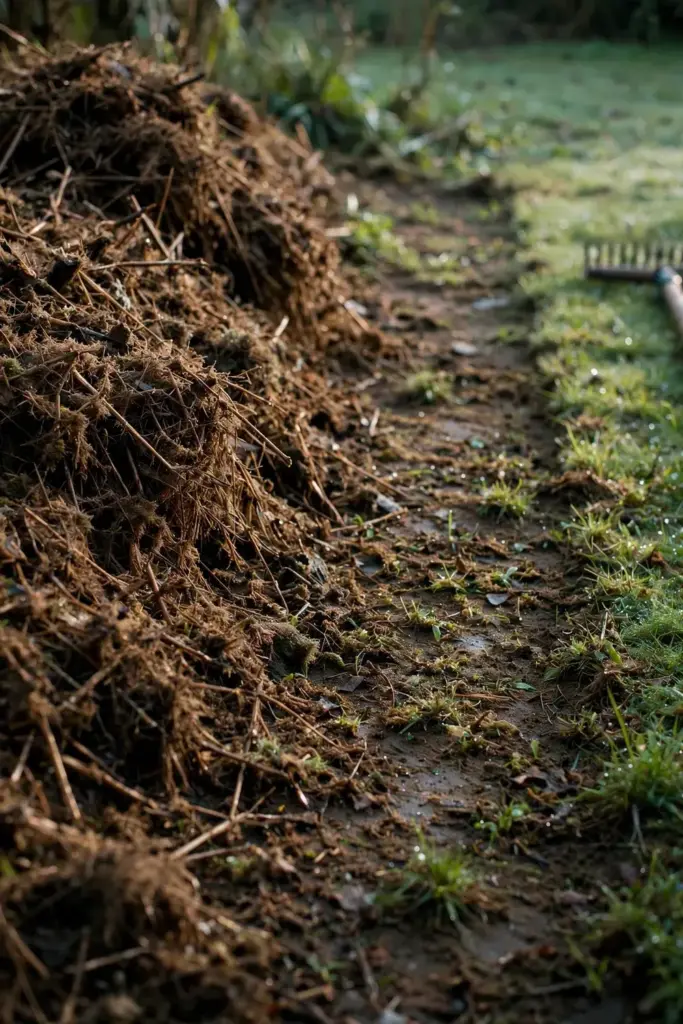
Check the thatch before you act. Pull a small plug of turf and look at the brown layer between the green tops and the soil. A thin layer is normal and healthy. A thick, matted, spongy layer that stays wet long after rain needs removal. The plug test takes two minutes and it beats guessing.
Scarify with a lawn rake or a rented dethatcher when the grass grows actively in spring or fall. Work in two directions to lift the mat, then rake up the debris and remove it from the lawn. Bag the debris during an outbreak. Keep it out of the compost pile, since the fungus survives in debris and the pile would carry it back to the beds.
Do not dethatch a stressed or dormant lawn. Dethatching tears turf, and torn turf on a dormant lawn recovers slowly. Wait for active growth, feed after dethatching, and water the lawn back into growth. The combination of dethatching plus feeding clears the waiting fungus and restarts the grass in the same week.
14. Step 7: Aerate Compacted Soil
Aerate soil that stays hard, drains slowly, or carries heavy foot traffic. Compaction squeezes the air out of the soil, roots grow shallow, and the surface stays wet after rain. All three effects slow the grass and help the fungus. Core aeration punches holes through the compacted layer and lets air, water, and roots move again.
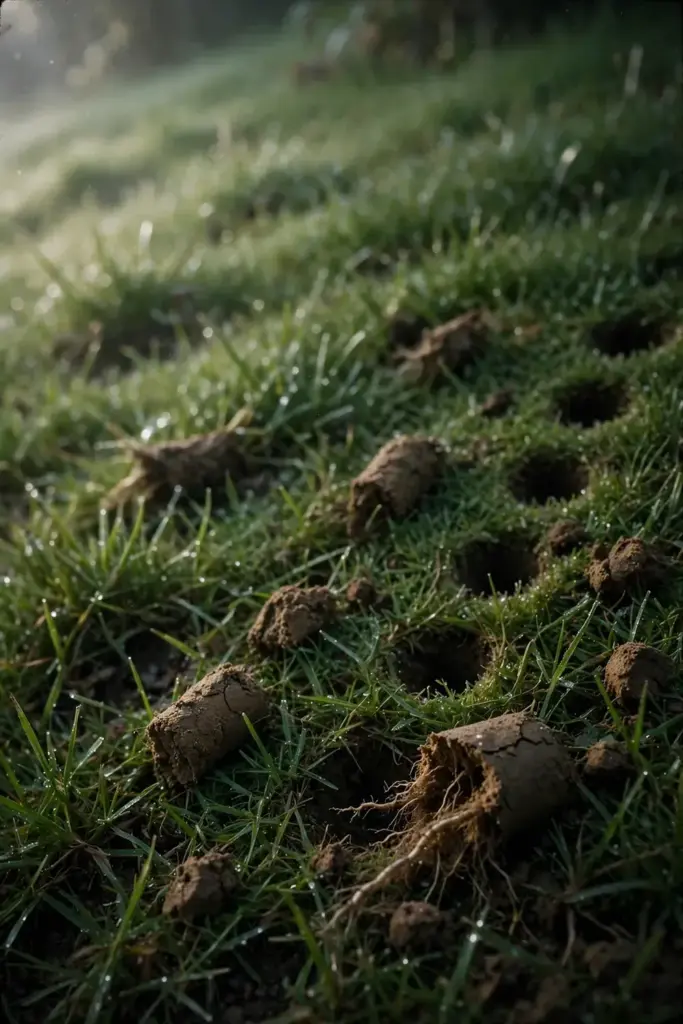
Use a core aerator, not a spike aerator. Core aerators pull plugs of soil out of the lawn, and the holes stay open. Spike aerators poke holes that close again within days. Rent a core aerator for a morning, run it over the compacted areas in two directions, and leave the plugs on the lawn to break down. The plugs look rough for a week. The lawn benefits for a season.
Aerate when the grass grows actively, in spring or fall for cool-season lawns. Aerating a dormant lawn tears turf that cannot heal. Aerating right before overseeding is the best timing of all, because the holes give seed direct soil contact. Step 9 builds on this step.
Paths, play areas, and the strip beside the driveway compact first. Those are the spots that show red thread first, and they are the spots that repay aeration first. Walk the lawn after rain and mark the places where water stands. Aerate those places.
15. Step 8: Open the Canopy to Light and Air
Prune the shrubs and low branches that arch over the lawn. Shade slows turf growth, and still air traps humidity against the blades. Both effects favor red thread. Opening the canopy dries the blades faster after rain and dew, and faster drying breaks the infection cycle.
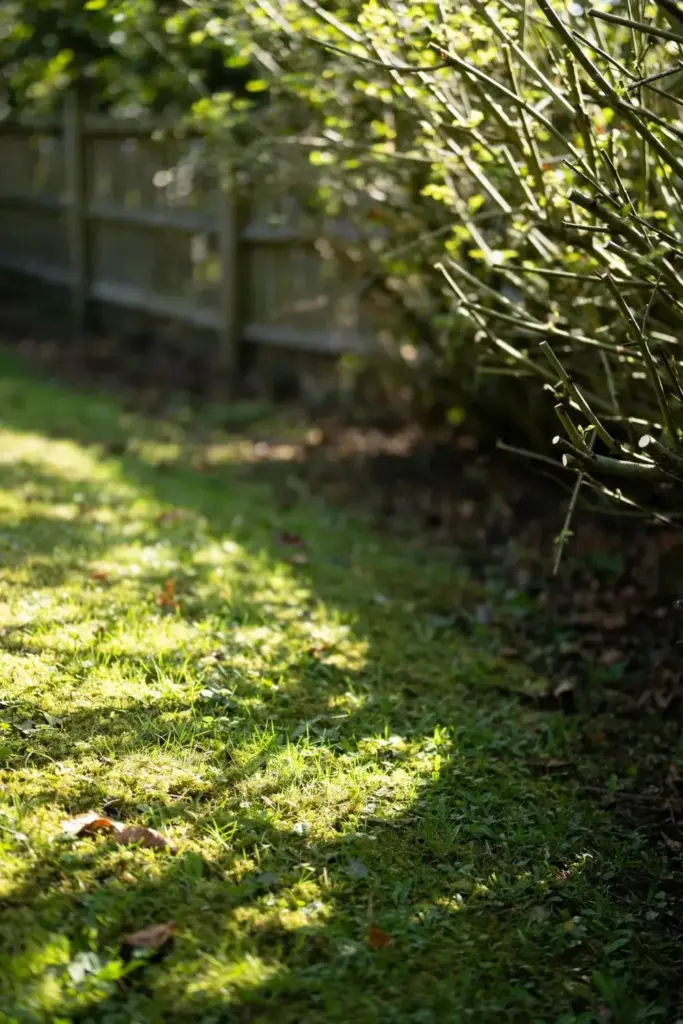
Start with the worst shade. Limbs that hang low over a patchy corner, shrubs that crowd a fence line, and hedges that block the morning sun all earn a cut. Raise the canopy enough for sun and air to reach the turf, and keep the cuts clean so the shrubs heal fast. The goal is dappled light and moving air, not a bare yard.
Improve airflow around fences and walls too. Corners where a fence meets a wall trap humid air and stay wet longest after rain. Thin the planting in those corners, or replace turf in the deepest shade with a shade-tolerant groundcover or mulch bed. Turf that never dries is turf that keeps breaking out.
Reduce shade gradually where the lawn matters to you. One hard pruning in a season changes the light pattern enough to notice. The lawn responds with faster growth, and faster growth outruns the fungus. This step costs nothing but an hour with the pruning shears, and it pays off across every lawn disease, red thread included.
16. Step 9: Overseed With Resistant Grasses
Overseed the thin spots with grasses that resist red thread. Hard fescue resists the disease, per the Pacific Northwest handbooks, and it belongs in the mix where red thread recurs. Choose cultivars rated resistant to red thread when you buy seed, and mix species so no single weakness dominates the lawn.
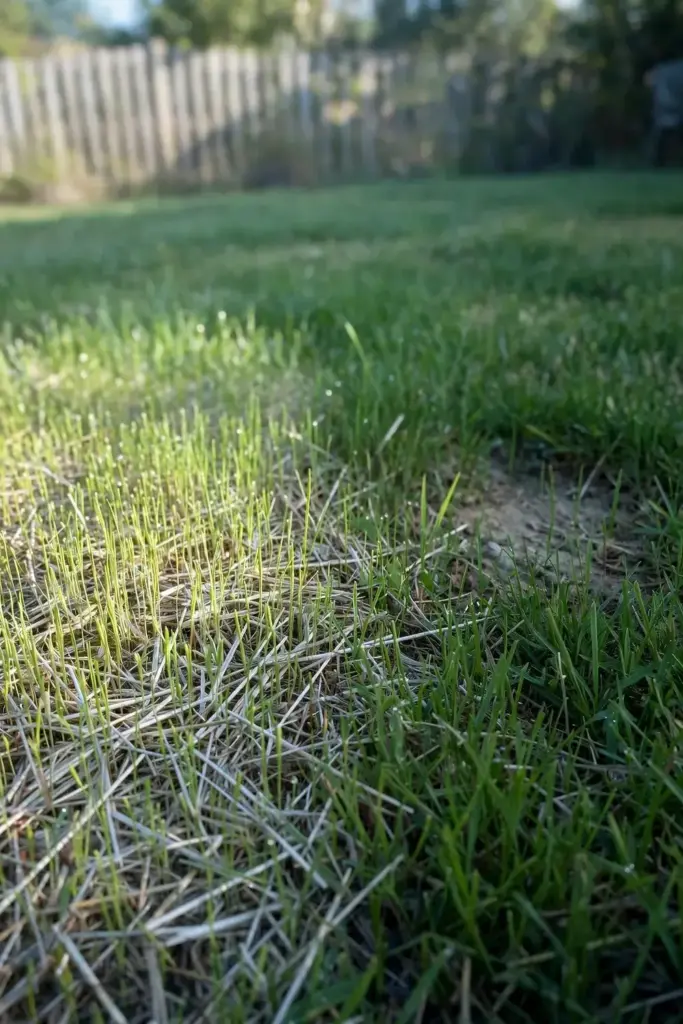
Overseed in fall when cool-season grass grows strongly. Aerate first, spread the seed evenly, and keep the seedbed moist until the seedlings establish. The aeration holes from Step 7 give the seed soil contact, and the fall timing gives the seedlings a full cool season to root before summer stress.
Mix hard fescue with perennial ryegrass and Kentucky bluegrass rather than seeding one species alone. A mixed lawn spreads the risk across species and cultivars, and a patch that hits one grass leaves the others standing. Single-species lawns put the whole lawn at the mercy of one disease.
Keep feeding the new seedlings on the same steady schedule as the rest of the lawn. New grass is hungry grass, and a seedling that stalls for lack of food catches red thread as fast as the old lawn did. The overseeding pays off in the second season, when the resistant grasses fill the thin spots and the patches stop returning.
17. Living With the Damage You Already Have
Straw-colored patches usually grow back. Red thread stays on the blades in most outbreaks, and the roots and crowns stay alive underneath. Keep feeding, keep watering in the morning, and keep mowing on schedule. New green growth pushes up through the straw within a few weeks, and the patches fill in as the season goes on.
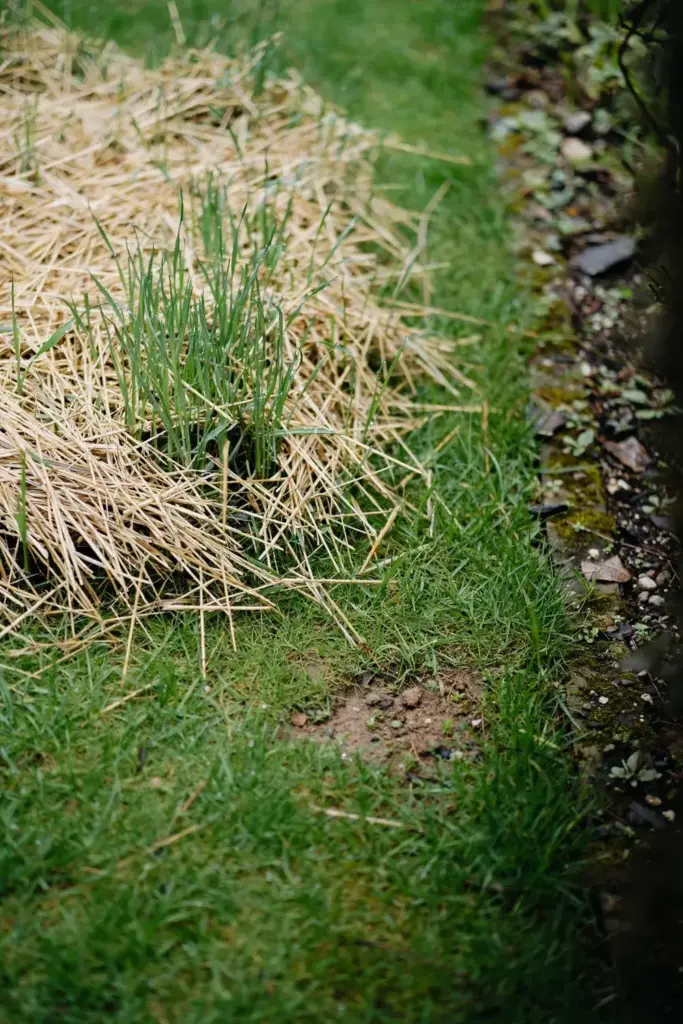
Do not dig up the patches. Digging removes the living crowns that would regrow, and it opens bare soil to weeds. Weed seeds move into thin turf fast, and a dug-up patch often comes back as a weed patch instead of a grass patch. Leave the crowns in place and let the feed do the work.
Overseed the spots that stay thin after a month. Thin spots that refuse to fill in have lost too many plants, and seed is the fix. Rake the spot lightly, spread seed, press it into the soil, and keep it moist until it sprouts. Fall overseeding works best for cool-season lawns.
Watch for crown-level damage that points elsewhere. If the turf pulls up easily and the crowns feel soft or rotted, that damage sits below the blade level and calls for a different diagnosis, such as bipolaris crown rot in lawns. Red thread does not rot crowns. A crown problem needs its own plan.
Severe attacks on susceptible cultivars can kill individual plants, per Penn State notes. Those spots need seed, not patience. Mark them, feed the lawn, and overseed them in fall. A lawn that loses a few plants to a severe outbreak still recovers fully with seed and steady feeding.
18. Frequently Asked Questions
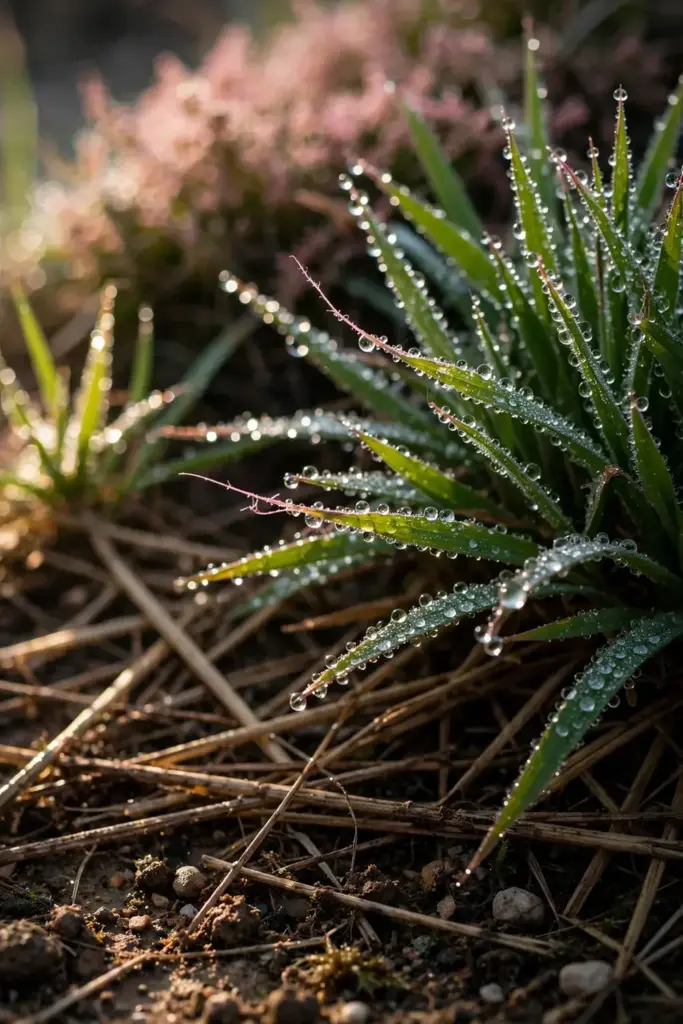
Red thread usually stays cosmetic. The fungus attacks leaves, leaf sheaths, and stems, and the roots and crowns survive most outbreaks. Turf recovers within a few weeks once feeding restarts growth, per Penn State notes. Severe attacks on susceptible cultivars can kill individual plants, and those thin spots need overseeding in fall.
New green growth shows within a few weeks of a nitrogen feeding, per Penn State notes. The threads fade as infected blades get mowed off. Patches fill in over the rest of the season, while full prevention takes longer, since sclerotia survive in thatch for up to two years. Steady seasonal feeding keeps the lawn ahead of the fungus.
Skip the spray. Chemical control is not recommended for home lawns against red thread, per the Pacific Northwest handbooks. Cultural control alone handles the disease. Group 1 fungicides can even increase its severity. Feeding, morning watering, and dethatching fix the cause. A spray would only mask it.
Red thread attacks turfgrass blades, and its host list covers cool-season grasses plus bermudagrass as a minor host. It does not attack trees, shrubs, or flower beds. Pink patches on ornamental plants come from other causes. Keep the diagnosis in the lawn, and look at the grass blades for threads before treating anything else.
It can, if feeding lapses. Sclerotia survive in thatch and debris for up to two years, per the UMass fact sheet, and a wet spring can wake them. A steady feeding schedule, dethatching, and overseeding with resistant grasses break the cycle. Lawns fed on a regular seasonal schedule develop red thread far less often than lawns left unfertilized.
19. Where to Go From Here
Walk the lawn tomorrow morning before the dew dries. Part the grass in the worst patch and look for the threads. A case of red thread on lawns confirms itself that way, and the rest of the plan follows from one look. Feed at 0.5 to 1.0 pound of nitrogen per 1,000 square feet with a quick-release source. Skip the spray. Water in the morning, mow dry, dethatch the mat, aerate the compacted spots, open the shade, and overseed with resistant grasses in fall.
For another turf disease that browns lawns, see Curvularia blight. It shows different signs and needs its own diagnosis, so check the blades before borrowing any treatment from this page. The habit that matters is the same across lawn diseases: look first, feed the lawn, and fix the conditions that let the fungus win.