
Potato Virus Y has no cure. The 9 strategies below protect the potatoes around an infection, starting with the triage call that tells you whether protection is worth the effort at all.
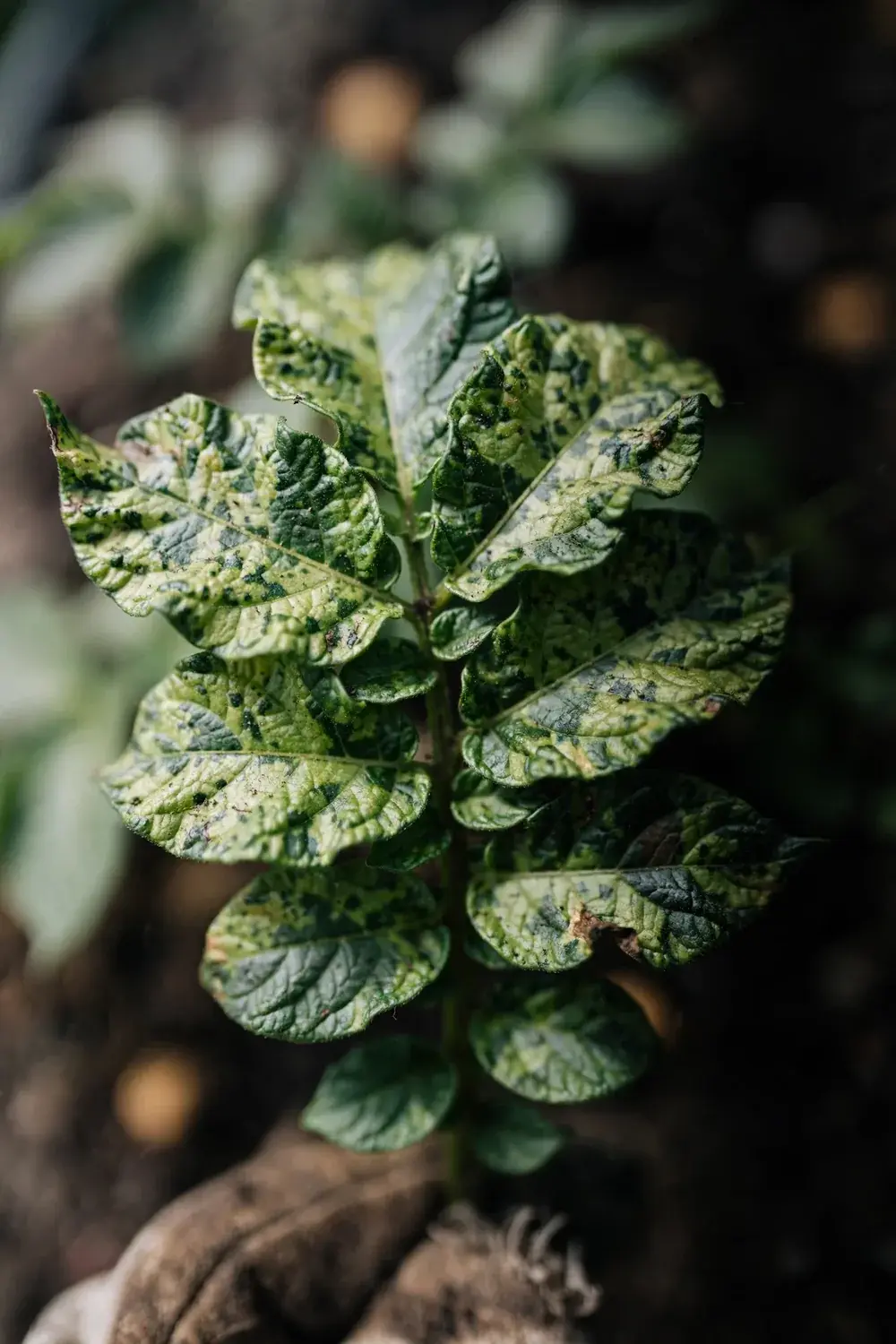
The signature is a mosaic of light and dark green across crinkled leaves, with stunting, dead spots, and tubers that come out ringed or necrotic inside. An infected plant stays infected for life, and its tubers carry the virus into next season. A bed that looked healthy in June can sit full of declining plants by midsummer.
The rest of this page runs the order a gardener should follow. Identify the virus first, then learn why aphid sprays cannot prevent it, then work the 9 steps from certified seed to next-season variety choice. I have learned that the cheapest season is the one that starts with certified seed, not with tubers saved from last year’s patch.
What Potato Virus Y Actually Is
Potato Virus Y is an aphid-borne virus of potatoes. The pathogen is Potato virus Y, a Potyvirus that lives inside plant cells and moves through the plant with its sap.
The Utah State University Extension notes on Potato Virus Y name the pathogen a Potyvirus spread by aphids and tuber seed pieces, and list three strains: PVYO, PVYN, and PVYNTN. The virus carries no cure. A chemical that killed the virus would kill the plant, so every control on this page keeps healthy plants from catching it.
Potato is the main host. The virus also infects tomato, pepper, and tobacco, and it waits out the winter in nightshade and groundcherry weeds. The name points at potato because potato shows the damage first and hardest in most home gardens, and the virus itself never stays inside one crop.
How to Identify Potato Virus Y on Leaves and Stems
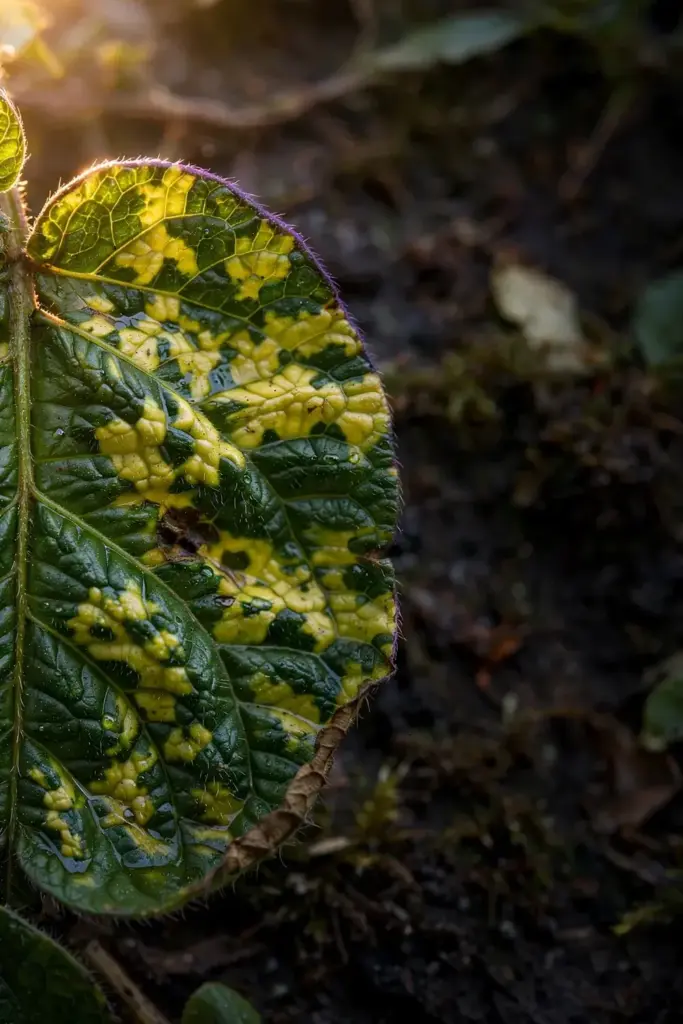
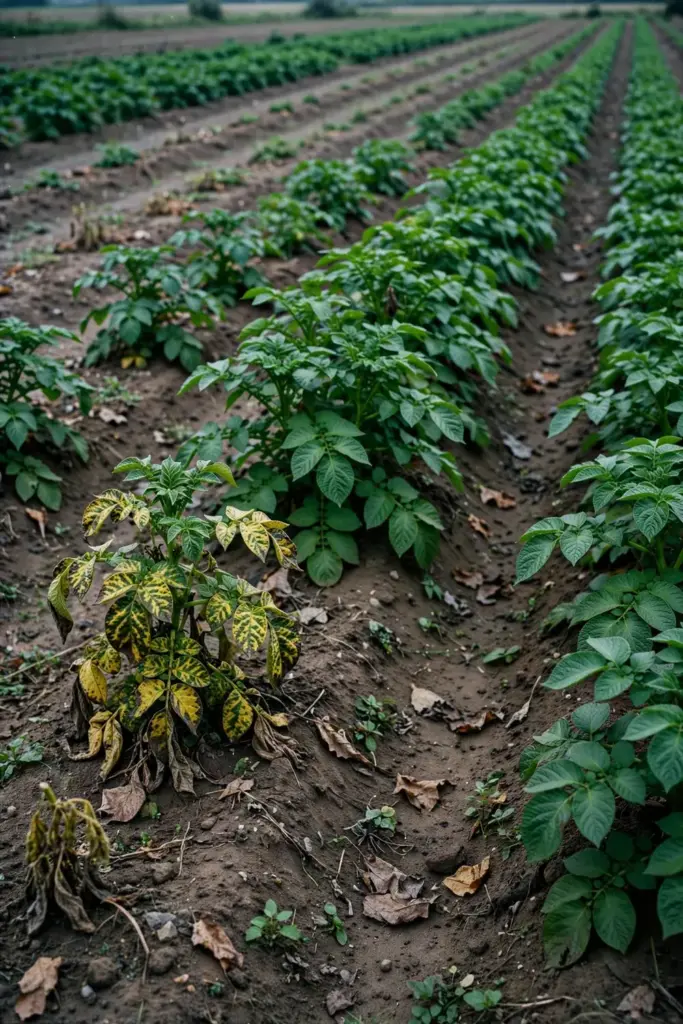
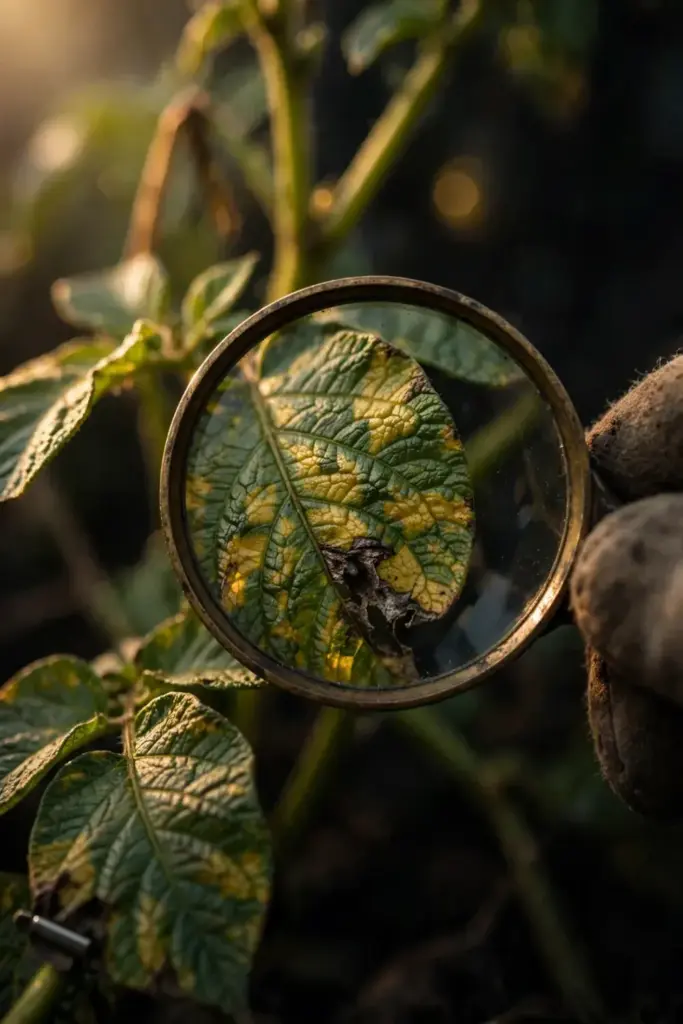
Look for mosaic first, then necrosis. A leaf with irregular light green or yellow patches alternating with dark green patches has Potato Virus Y until proven otherwise.
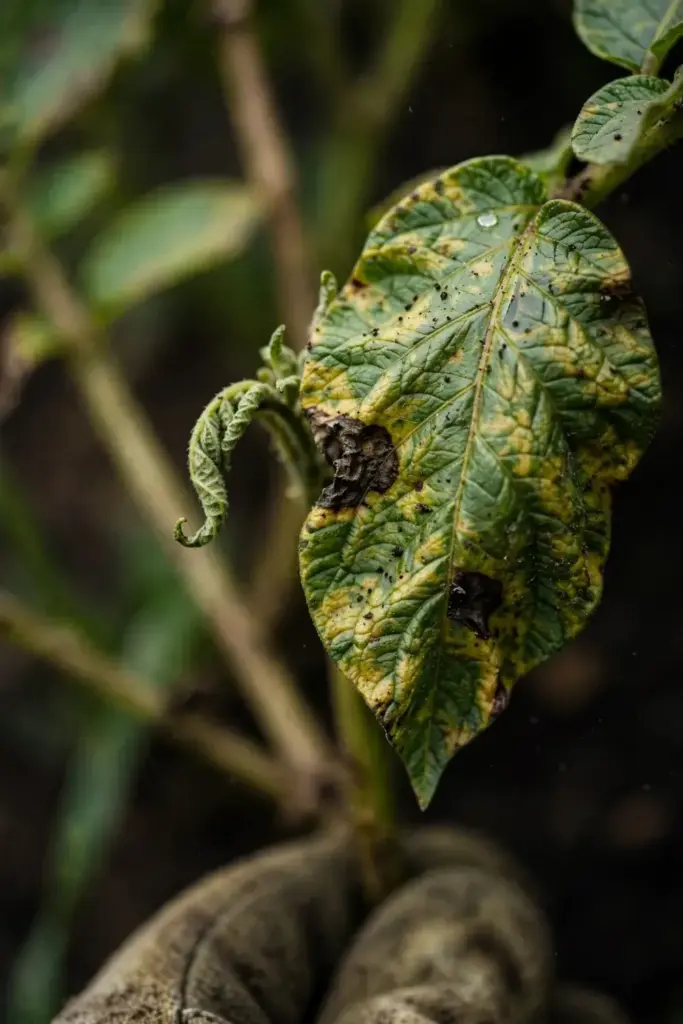
The same Utah notes tie the leaf pattern to the strain. PVYO causes mosaic symptoms on the leaves and no symptoms on the tubers. PVYN causes necrotic spots on leaves and tubers. PVYNTN causes necrotic lesions on leaves and necrotic ringspots on the tuber surface that extend into the flesh. Infected plants are typically stunted. Crinkling, roughness, and leaf drop belong to the same pattern, and severe strains can collapse a leaf entirely.
Check the newest leaves at the growing tip when scouting. Young growth shows what the virus is doing right now, while older leaves may carry a milder mosaic. Walk the patch once a week through the season and compare each plant with its healthy neighbors. Some infections show no foliar symptoms at all, so a clean-looking plant is never proof of a clean tuber.
How to Identify Potato Virus Y on Tubers
Cut a suspect tuber open. Necrotic ringspots on the skin that extend into the flesh point at Potato Virus Y, and internal brown arcs, lines, or rings confirm the pattern.
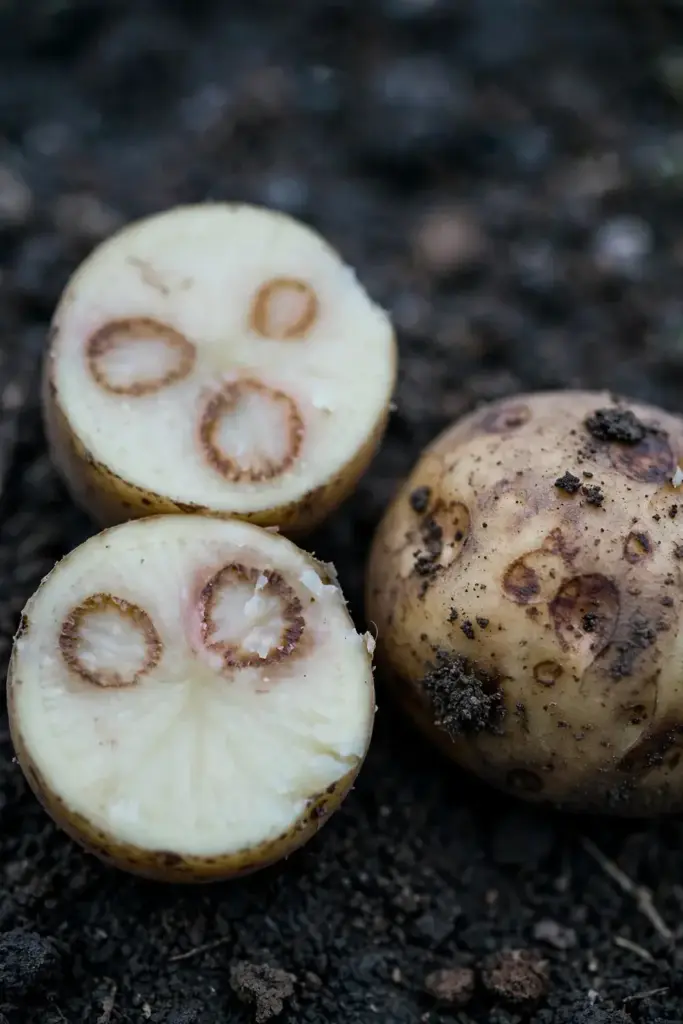
The University of Idaho bulletin on necrotic tuber symptoms caused by Potato virus Y strains names the syndrome potato tuber necrotic ringspot disease, or PTNRD. The same bulletin explains that newer recombinant strains, N-Wilga and NTN, now dominate seed potatoes in the Pacific Northwest, while the ordinary strain PVYO has nearly disappeared from regional seed. The rings start as small water-soaked lesions that expand into raised, swollen rings, then turn sunken and necrotic and push into the flesh directly under the skin. Early rings may carry a pinkish discoloration. Ruptures in the skin let secondary pathogens in, including the fungi behind Fusarium dry rot and bacterial soft rot.
Foliar symptoms do not predict tuber symptoms. The same Idaho bulletin states that the presence or absence of foliar symptoms does not predict whether tubers will develop symptoms, and that symptoms can keep developing over time in storage. The virus does not move from infected to healthy tubers in storage, so a sound tuber stored beside a ringed one stays sound. Slice a sample tuber lengthwise from any suspect lot and look for arcs and rings inside. Keep suspect lots separate from clean ones until the check is done.
Which Potatoes Get Hit Hardest by Potato Virus Y
Yukon Gold takes the worst tuber damage from Potato Virus Y. Most varieties can carry the virus, but tuber necrosis hits some much harder than others.
Utah State University Extension’s vegetable guide calls Yukon Gold very susceptible to tuber necrosis. The Idaho bulletin lists the varieties at higher risk of developing PTNRD as Ranger Russet, Yukon Gold, Yukon Gem, and Highland Russet. The same bulletin lists varieties that showed no necrotic tuber symptoms in trials, including Russet Burbank, Russet Norkotah, Clearwater Russet, Castle Russet, Payette Russet, and Teton Russet. A variety with clean tubers can still carry the virus in its foliage, so a clean harvest never proves a clean plant.
The guide to growing potatoes walks through spacing, hilling, and harvest for a clean crop, and a potato bed is where most home gardeners meet this virus first. The same virus infects tomato and pepper, so the guide to growing tomatoes and the guide to growing bell peppers both sit inside the host range. Keep solanaceous crops in mind when placing beds, since the virus crosses between them on aphid mouthparts.
Potato Virus Y vs Potato Leafroll Virus vs Potato Virus X
Check the leaf first. Mosaic paired with necrosis points at Potato Virus Y. Rolled, leathery leaves point at Potato Leafroll Virus. No symptoms at all can still be Potato Virus X.
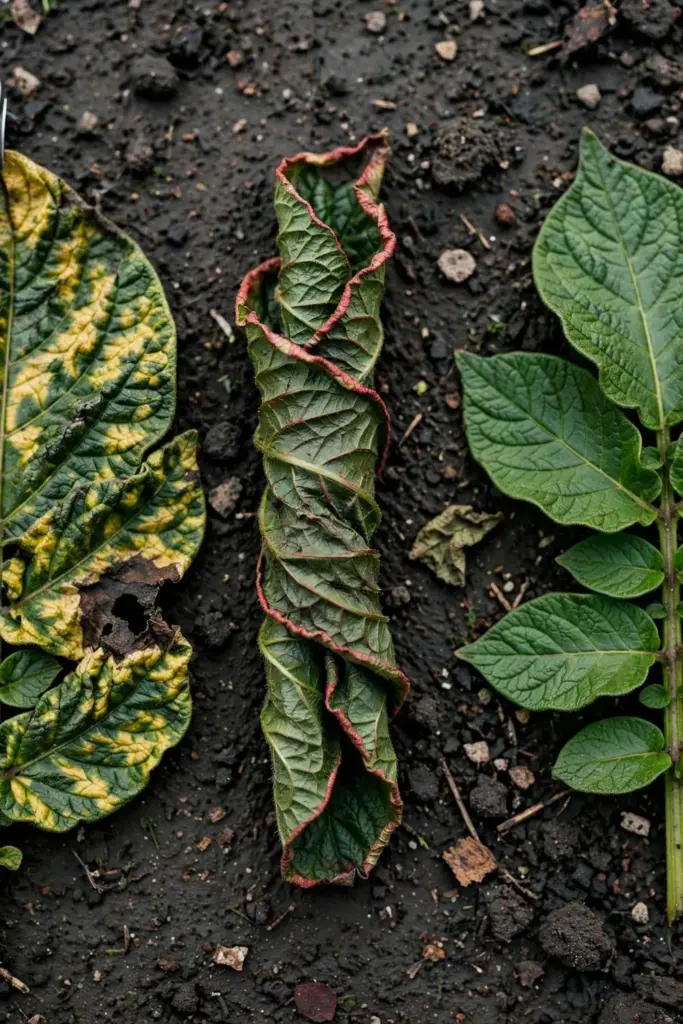
The table below lines up the three potato viruses that confuse home gardeners most. Read the leaf row first, then the tuber row, then the aphid row.
| Sign | Potato Virus Y | Potato Leafroll Virus | Potato Virus X |
|---|---|---|---|
| Pathogen | Potato virus Y, a Potyvirus | Potato leafroll virus, a Polerovirus | Potato virus X |
| Leaf signs | Mosaic, crinkling, necrosis, stunting, leaf drop | Primary infection: upper leaves pale, upright, rolled, reddening edges. Secondary infection: lower leaves severely rolled and leathery, stunted upright chlorotic plant | Often no symptoms at all. Mild mosaic in some varieties |
| Tuber signs | Necrotic ringspots on the skin extending into the flesh, internal arcs and rings | Internal net necrosis, a web of dark tissue inside the tuber | Usually none visible |
| How aphids move it | Non-persistent. An aphid picks it up and passes it on within seconds, then must feed on another infected plant to transmit again | Persistent. An aphid that picks it up keeps carrying it | Mechanical contact and infected seed tubers |
| Other routes | Infected seed tubers, mechanical transmission through tools and farm equipment | Infected seed tubers | Infected seed tubers, mechanical transmission through tools and contact |
| What to do | Certified seed, rogue infected plants, clear weed hosts, crop oils | Certified seed, aphid control helps here because transmission is slow | Certified seed, tool sanitation |
The Cornell fact sheet on virus and viroid diseases of potato carries the split that matters most. Potato Leafroll Virus moves in a persistent manner through several aphid species, with the green peach aphid the most important. Potato Virus Y moves in a non-persistent manner and also travels mechanically through human activity. The same Cornell notes state that the rugose mosaic symptom is most commonly ascribed to a mixture of Potato Virus Y and Potato Virus X, and that mixed infections cause heavier losses than either virus alone. Potato Virus X stays latent in some varieties, so its full damage goes unrecognized.
Field identification stays presumptive. The Idaho bulletin states that laboratory tests confidently distinguish among the causes of necrotic lesions due to viruses, and that molecular and serological tests are available from testing labs. A lab test settles what eyes cannot. Co-infection is common, and a plant can carry two viruses at once.
Why Non-Persistent Aphid Transmission Decides Everything
An aphid can pick up Potato Virus Y and pass it on within seconds. The aphid then must feed on another infected plant to transmit the virus again.
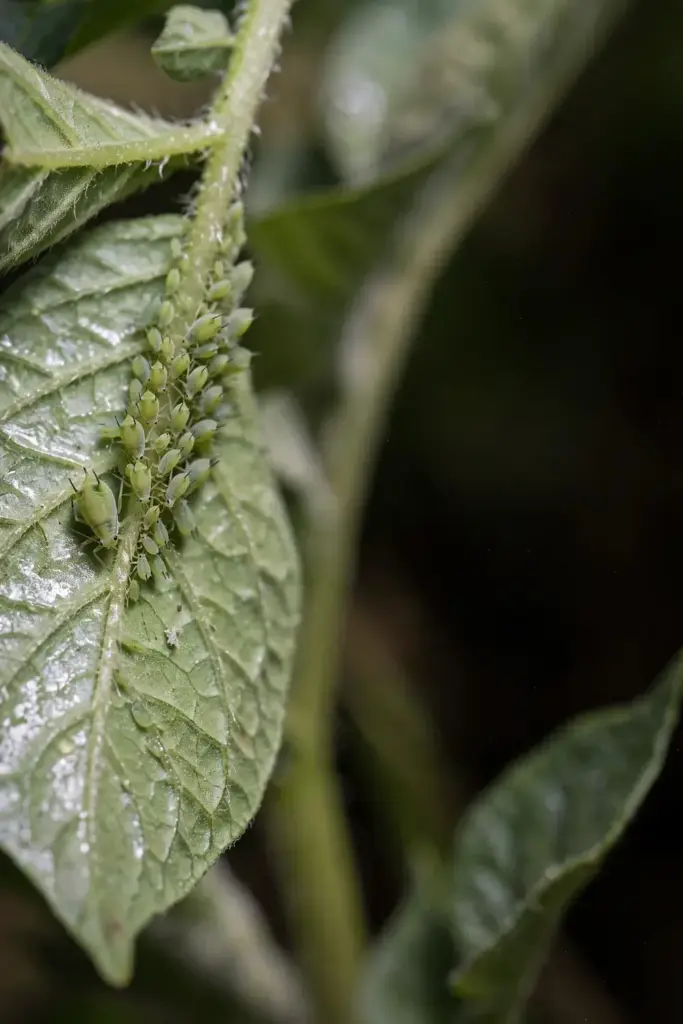
The virus rides on the aphid’s mouthparts. Brief probing is enough. The aphid does not need to settle, feed for hours, or colonize the plant. A winged aphid passing through the bed, probing one plant and moving to the next, transmits the virus as surely as a resident colony. The same Utah notes describe the sequence plainly. An aphid feeds on an infected plant, transmits the virus to a single healthy plant, and must feed on another infected plant to spread the disease again. This type of transmission is called non-persistent.
That speed defeats sprays. An insecticide cannot kill the aphid before the virus moves, because the virus moves first. The Washington bulletin states that aphids acquire and transmit Potato Virus Y in only a few seconds, and therefore have the potential to spread disease before they can be killed by a spray. The Idaho bulletin states that insecticides alone are ineffective for Potato Virus Y management and can make the problem worse. Alfalfa mosaic virus protection covers another aphid-borne virus that rides aphids into potato the same way, and the same speed rule applies.
What slows the virus is removing its sources and blocking its routes. Certified seed stops the tuberborne introduction. Rogueing removes infected plants that aphids would feed on. Crop oils interrupt transmission on the aphid’s mouthparts. Early planting and early vine kill shrink the window when aphids are active. Each of these acts before the aphid probes, because nothing acts fast enough after.
What Makes Potato Virus Y Worse in a Home Garden
Saved seed, nearby infected plants, weed reservoirs, and late harvest raise the risk. Each one gives the virus a living bridge into the next plant, and together they keep the infection circling the bed from one season to the next.
Saving your own tubers is the largest home-garden risk. The Washington bulletin states that the number of infected tubers increases from seed potato tuber generation to seed potato tuber generation, and that saving tubers for seed is a practice to avoid. Replanting last year’s harvest replants last year’s virus. Even tubers that looked clean can carry it.
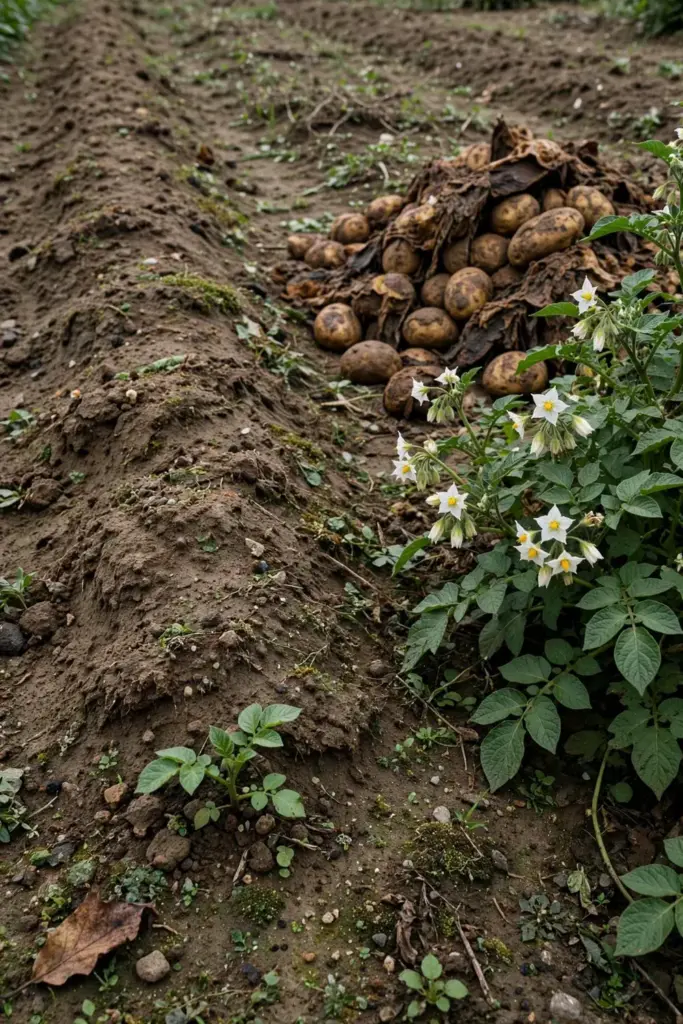
Volunteers and cull piles keep the virus alive between seasons. The same Washington bulletin calls eliminating volunteer potatoes and cull piles essential parts of any sanitation program, no matter the crop production system. Missed tubers sprout as volunteers. Discarded tubers sprout in the pile. Both feed aphids the following spring. Weed hosts add a third bridge. Nightshade and groundcherry carry the virus through winter, and aphids pick it up from weeds before the potato canopy even closes.
Late harvest stretches the exposure window. The same Washington bulletin states that aphids become increasingly active and present as temperatures warm throughout the season, and that planting early and vine-killing early can decrease aphid virus vector efficiency through avoidance. A patch left in warm soil after the vines die sits in the aphid window longer than a patch harvested on time.
Step 1: Decide Whether Your Patch Is Worth Saving
If most plants show mosaic or necrosis, pull the patch and start clean next season. If only one or two plants show it, rogue them and protect the rest.
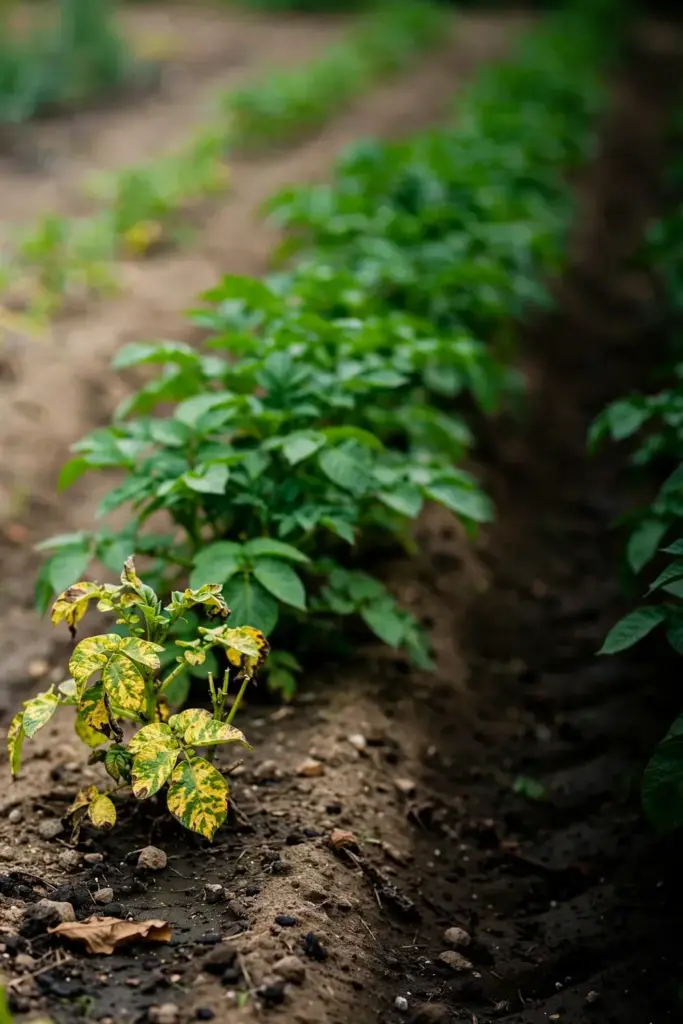
An infected plant never recovers. It serves as a virus source for every aphid that probes it, and its tubers carry the virus into next season. Keeping a heavily infected patch risks the rest of the bed this year and the seed stock next year. The honest cost and benefit run one way. A small patch with early infection is worth defending. A patch where half the plants already show mosaic is not.
Make the call by counting. Walk the bed and mark every plant with mosaic, necrosis, or stunting. One or two marked plants in a healthy bed means rogueing works. Many marked plants across the bed means the patch is a source, not a crop. Pull marked plants first, then decide on the rest. A kept infected plant feeds aphids all season.
Step 2: Buy Blue-Tag Certified Seed Potatoes
Buy blue-tag certified seed potatoes from a reputable supplier every season. Certified seed is the single move that keeps the virus out at the start.
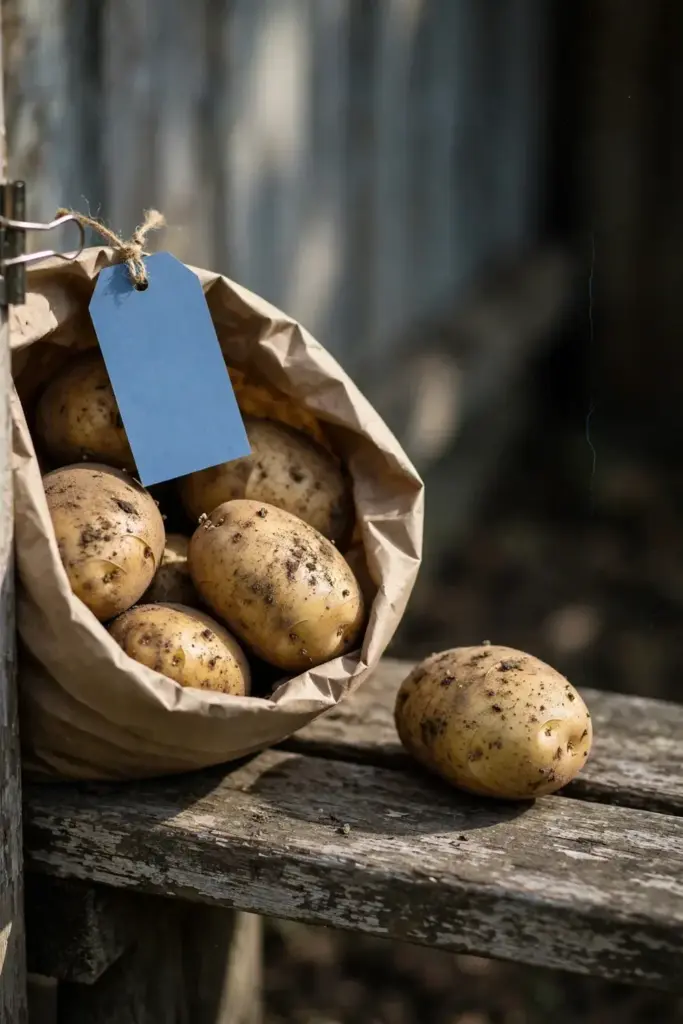
A Washington survey in the Washington State University Extension bulletin on Potato Virus Y and organic potatoes found 20 of 93 grow-out plants from garden-store seed potatoes positive for Potato Virus Y. The same bulletin states that home gardeners should purchase blue-tag certified seed whenever possible, and that the earlier the seed potato generation, the better. Blue-tag certification means a seed lot passed state standards for low disease levels. Discard seed tubers with cracks, especially shallow canoe-shaped cracks, because the bulletin links that cracking pattern to infected tubers.
Certified seed is not a guarantee of zero virus. The same Utah notes state that small amounts of virus may still slip through, which is why scouting and rogueing still matter after planting. Uncertified seed can look healthy and still carry the virus, and a bag of saved tubers carries last year’s infection forward.
Step 3: Never Save Your Own Tubers as Seed
Never replant tubers from your own harvest as seed. Eat the harvest and buy fresh certified seed next season.
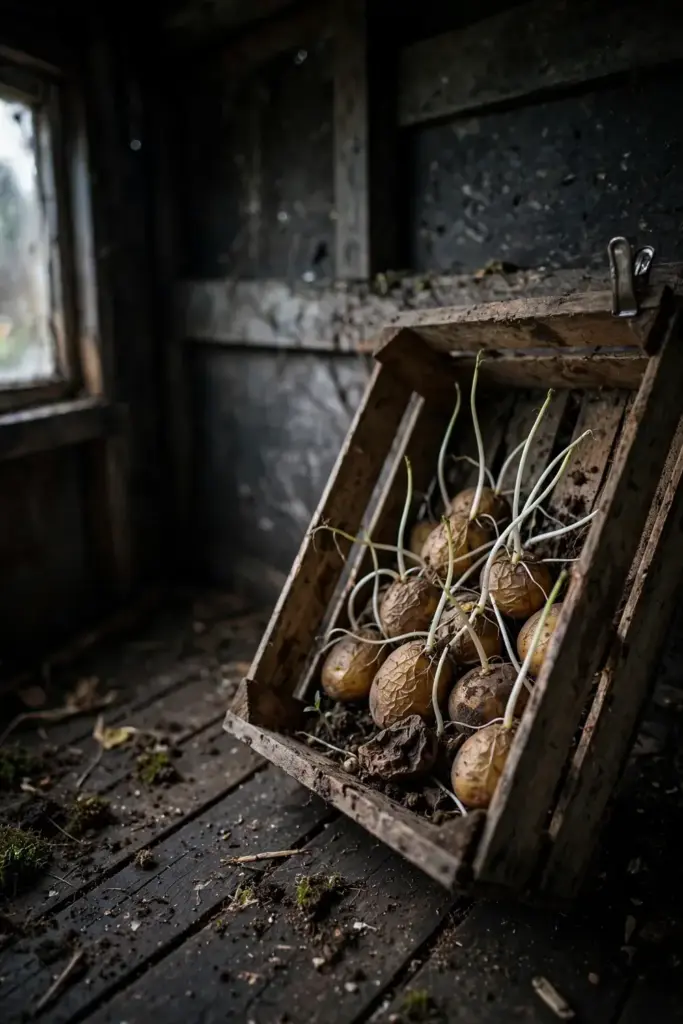
The Washington bulletin states that saving potato tubers and planting out the subsequent generations as seed, as is often done in home gardens, is a practice that should be avoided. Infection builds with each generation. A tuber from a plant that showed no symptoms can still carry the virus, because some infections stay symptomless in foliage while the tuber carries virus. The cleanest-looking tuber in the bin is not proof of a clean plant.
The rule holds even for a healthy-looking harvest. A bed with no visible mosaic can still hold infected tubers, and one saved lot can seed a whole bed with virus next spring. Buy fresh certified seed each year. The cost of a new bag is small beside the cost of a bed that starts infected. Saved tubers plant last year’s virus into this year’s bed.
Step 4: Rogue and Destroy Infected Plants on Sight
Pull infected plants at first sight, roots and all, and destroy them. Do not compost them.
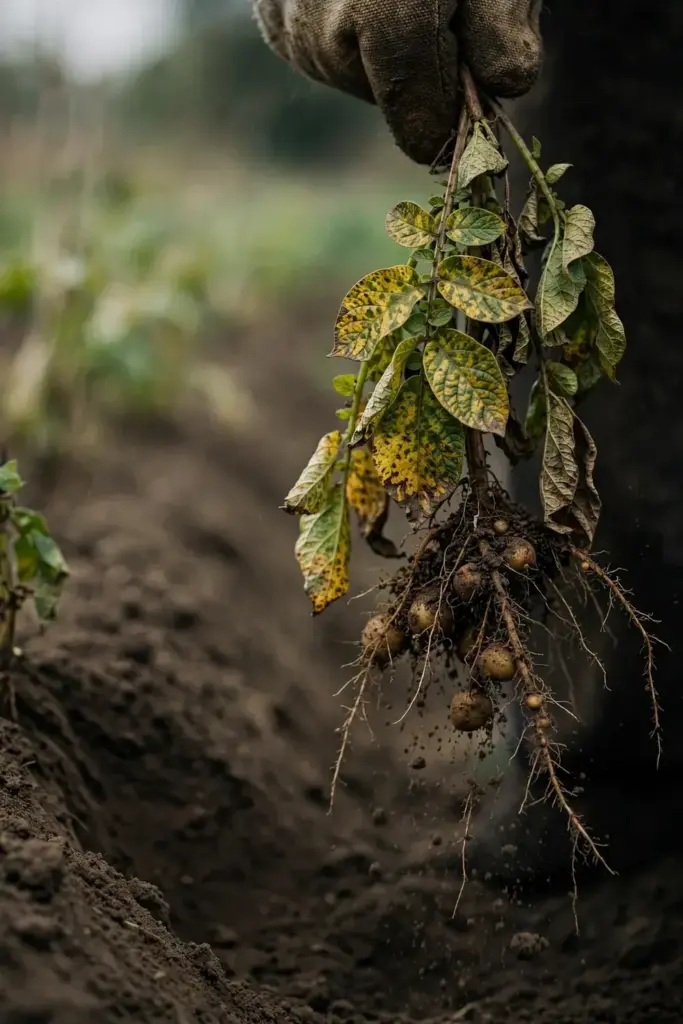
The Washington bulletin lists learning to recognize Potato Virus Y symptoms on foliage so infected plants can be removed from the field and destroyed, not composted. The same Utah notes list removing infected plants among the core management steps. Rogueing works only when it is fast. An infected plant left standing feeds every aphid that probes it, and each probe can start a new infection.
Bag the plant and carry it out of the bed. Pull the whole plant, including the roots and any small tubers near the surface. Wash your hands and tools after handling it. Check the bed once a week through the season and pull new suspects the day they appear. A rogued plant left on the path still feeds aphids.
Step 5: Clear Volunteers, Cull Piles, and Weed Hosts
Dig out volunteer potatoes, break up cull piles, and pull nightshade and groundcherry in and around the bed. Reservoirs are the virus waiting for spring.
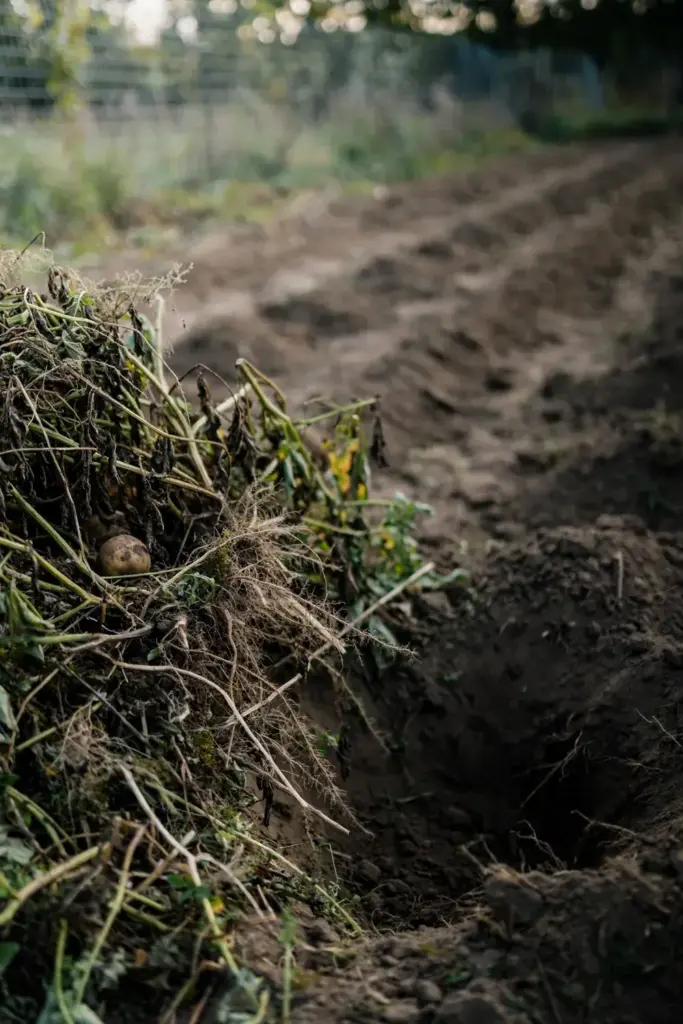
The Washington bulletin calls eliminating volunteer potatoes and cull piles essential sanitation. Volunteers sprout from tubers missed at harvest. Cull piles sprout from discarded tubers. Both give aphids infected plants to feed on before the new crop emerges. The same Utah notes list controlling weeds and alternative hosts among the core management steps, and the virus overwinters in solanaceous weeds such as nightshade and groundcherry.
Move potatoes to a fresh bed next season and clean the old bed of missed tubers. Crop rotation does not kill the virus in bare soil, because the virus does not survive in soil without a living host. Rotation works because it breaks the volunteer-and-weed bridge when paired with cleanup. Clear the old bed, then rotate. One missed volunteer can restart the whole cycle.
Step 6: Sanitize Knives and Tools Between Seed Lots
Disinfect knives and cutting tools between seed lots, and between infected and healthy plants. Sap on a blade carries the virus to the next cut.
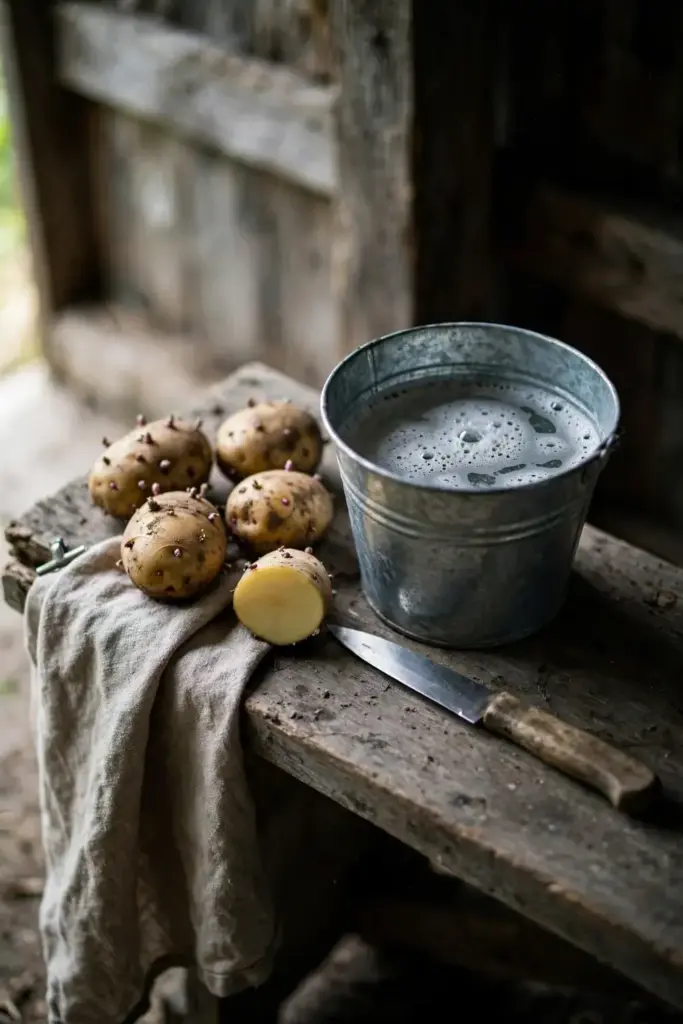
The Washington bulletin advises sanitizing knives regularly throughout any seed potato cutting operation, and states that hot soapy water and bleach can be used. Potato Virus Y travels mechanically through human activity, and farm equipment spreads it within a field, according to the same Utah notes and the same Cornell notes. A knife that cuts an infected tuber carries virus-laden sap to every tuber it cuts after.
Cut certified seed before handling suspect plants, never after. Wash the blade, dip it in the disinfectant, and dry it before the next cut. Wipe down bins, crates, and digging tools when the cutting is done. One dirty knife carries sap from a sick plant to every cut after it.
Step 7: Slow Aphids With Crop Oils, Not Insecticides
Spray a labeled crop oil or mineral oil to interfere with aphid transmission, and skip insecticides for Potato Virus Y control. Oils slow the virus. Insecticides do not stop it.
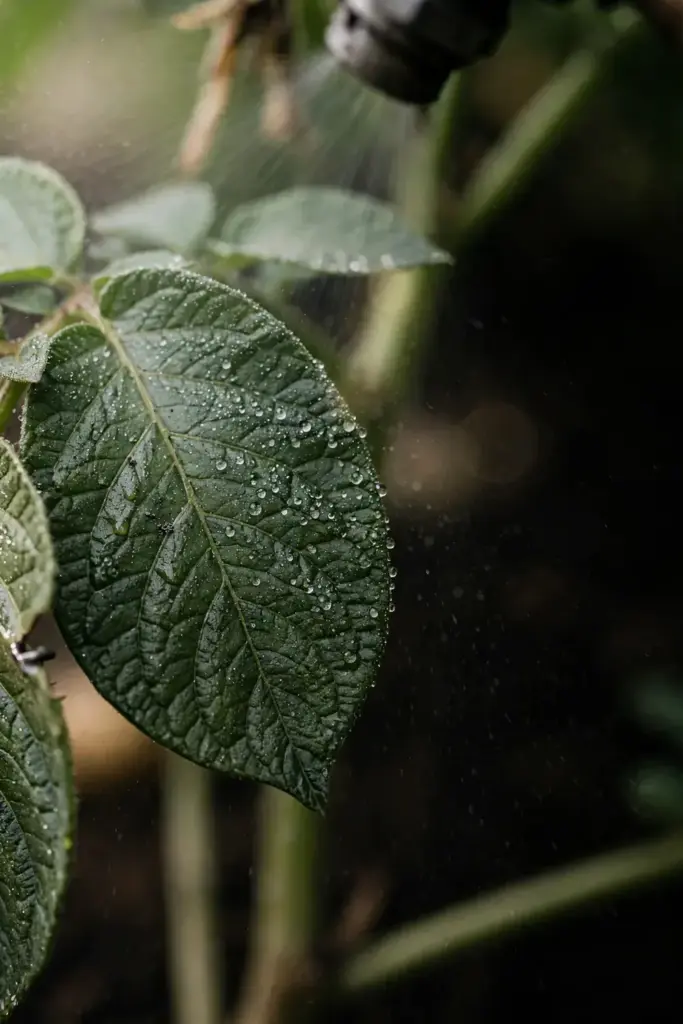
The same Cornell notes state that mineral oil sprays interfere with the aphid transmission process. The Washington bulletin states that some crop oils registered for organic potatoes interrupt transmission of Potato Virus Y on aphid stylets. Check the label before buying. Confirm the product is registered for potatoes and for home garden use, and follow the label rate and timing. Oils are a slowdown, not a shield, and they work best paired with rogueing and clean seed.
One Cornell fact sheet lists insecticides among Potato Virus Y controls. Utah State University Extension, the Idaho bulletin, and the Washington bulletin all reach the other conclusion for non-persistent transmission. The same Utah notes state plainly that insecticide applications to control aphids are ineffective. The Idaho bulletin states that insecticides alone are ineffective for Potato Virus Y management and can make the problem worse. This page follows the three-source consensus. Insecticides still help against Potato Leafroll Virus, where transmission is slow and persistent, and that difference is why the differential table matters.
Step 8: Harvest Early and Kill Vines Before Aphids Peak
Harvest promptly once vines die back, and kill vines early when aphid pressure is high. A short season in the ground means a short window for aphids.
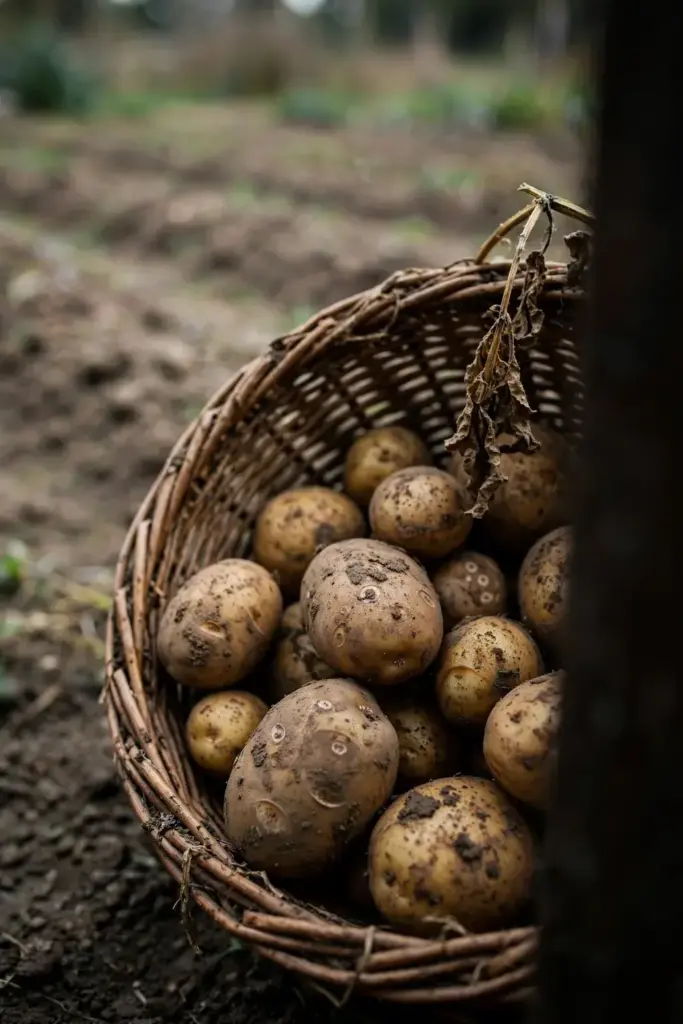
The Washington bulletin states that planting as early as possible and vine-killing as early as possible can decrease aphid virus vector efficiency through avoidance, because aphids become increasingly active as temperatures warm. Early vine kill cuts the bridge between the aphid population peak and the tubers still in the ground.
Translate that to a home bed directly. Do not leave tubers in the ground after the vines die. Harvest, cure, and store them. Clear the bed of volunteers and debris once the harvest is in. A clean, empty bed gives aphids nothing to feed on. Tubers left in warm soil sit in the aphid window longer.
Step 9: Choose Varieties With Eyes Open
Ask the supplier whether a variety carries Ry-gene resistance, and treat the word resistant on a catalog page as a question, not a promise.
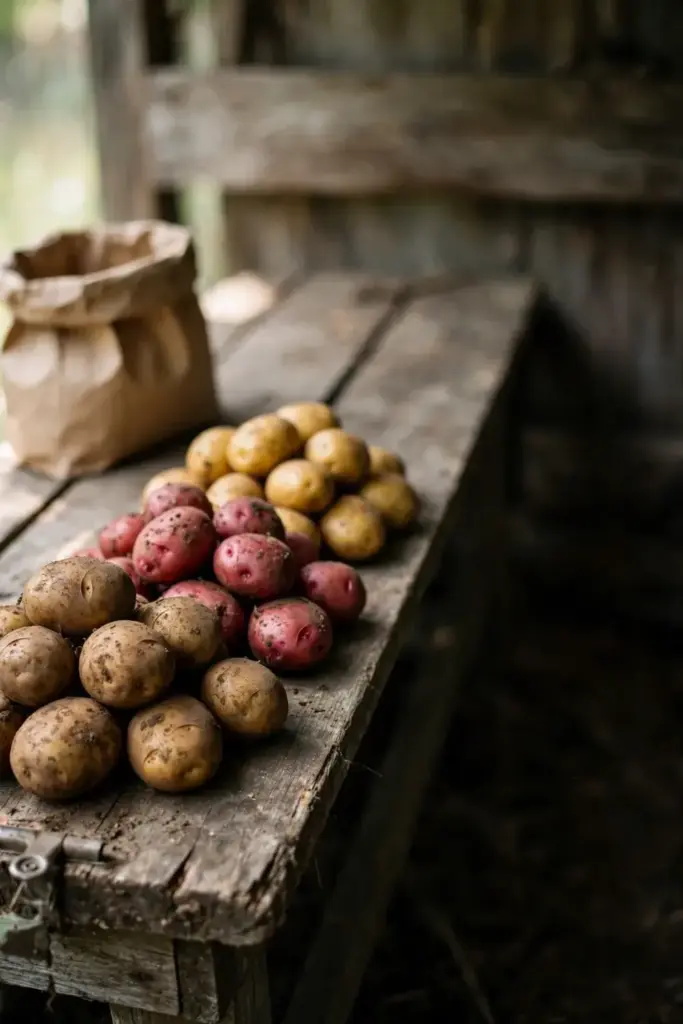
The Idaho bulletin states that extreme resistance to Potato Virus Y comes from a dominant resistance gene known as Ry, and that breeding programs are using potato lines with this trait to build resistance into new varieties. The same bulletin lists varieties that currently carry Ry-gene extreme resistance, including Payette Russet, Castle Russet, Eva, Mackinaw, Saginaw Chipper, Lady Liberty, AAC Alta Crisp, AAC Confederation, Upstate Abundance, and Ciklamen. Whether a given garden store stocks a Ry variety is data not available in Extension bulletins. Ask the supplier for the variety’s resistance record before buying.
Utah State University Extension’s vegetable guide states that no resistant potato varieties exist, while the newer Idaho bulletin lists Ry-gene varieties. The gap is availability. Ry varieties exist in breeding programs, and garden-store stock is a different question. Susceptibility still matters for the varieties you can buy. Yukon Gold is very susceptible to tuber necrosis, so a gardener who grows it should buy certified seed and scout hard. A resistant label never replaces certified seed.
Living With Potato Virus Y Damage You Cannot Undo
Harvest what grew. Trash ringed, cracked, or rotted tubers. Do not compost infected plants or tubers.
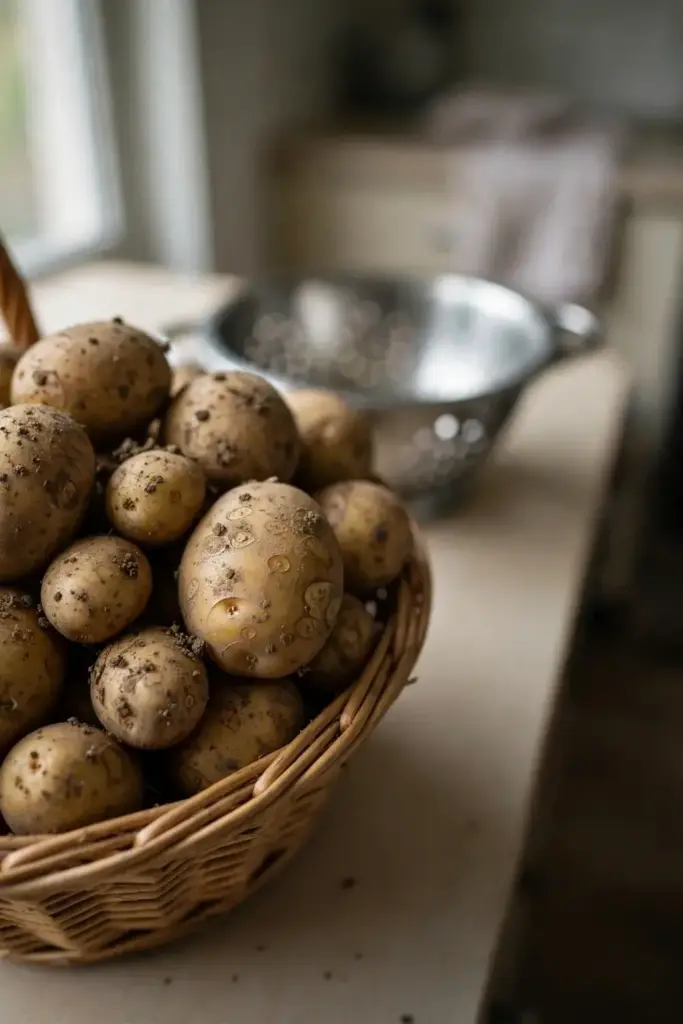
An infected plant never clears the virus, and no spray, feed, or pruning cut reverses the damage. The tubers that grew before infection may look sound. The tubers that grew after infection may carry ringspots or internal arcs. Sort the harvest at the table. Keep sound tubers for the kitchen. Send damaged tubers to the trash, not the compost pile, and never hold any tuber back for seed.
Plan the clean start now. Clear the bed of volunteers and debris. Rotate to a fresh bed next season. Order fresh certified seed early, before the best lots sell out. The season after an infection is the season that pays for the discipline. A clean start beats a salvage attempt every time.
Frequently Asked Questions
Potato Virus Y infects potato plants, not people. Sort the harvest and trash tubers with ringspots, cracks, or rot. Cook sound tubers as usual. Never replant tubers from an infected plant as seed, even clean-looking ones, because symptomless tubers can carry the virus. Buy fresh certified seed next season and start clean.
Yes. The virus infects tomato, pepper, and tobacco, and it waits in nightshade and groundcherry weeds. Keep solanaceous crops apart when bed space allows, and pull weed hosts around every bed. A tomato plant next to an infected potato patch sits in the same aphid flight path, so scout it with the same weekly walk.
No. Aphids acquire and transmit the virus within seconds, faster than any spray can kill them. Utah State University Extension calls insecticide applications ineffective against this virus, and the Idaho bulletin states that insecticides alone are ineffective and can make the problem worse. Rogue infected plants, clear reservoirs, use labeled crop oils, and start with certified seed.
No. Some infections show no foliar symptoms while the tuber carries virus, so a clean-looking plant proves nothing about its tubers. The Washington bulletin states that infection builds from generation to generation when gardeners save tubers as seed. Eat the harvest, trash damaged tubers, and buy fresh certified seed each year.
Look at the leaf first. Potato Virus Y gives mosaic, crinkling, and necrosis, with necrotic ringspots on tubers. Potato Leafroll Virus gives rolled, leathery leaves and internal net necrosis in tubers. Field identification stays presumptive, and co-infection happens. A laboratory test settles what eyes cannot, so send a sample when the call matters.
Where to Go From Here
Potato Virus Y has no cure, so prevention carries the whole crop. The 9 steps run in order: triage the patch, buy certified seed, never save tubers, rogue on sight, clear reservoirs, sanitize tools, use crop oils, harvest early, and choose varieties with eyes open.
Virus diseases share the same no-cure rule. Cymbidium mosaic virus shows the same pattern in orchids: no treatment after infection, clean stock and sanitation as the only defense. The crop changes and the rule holds.
Order certified seed early. Walk the bed once a week. Pull the first suspect plant the day it appears. The gardener who starts clean and scouts weekly beats the virus more often than any spray.