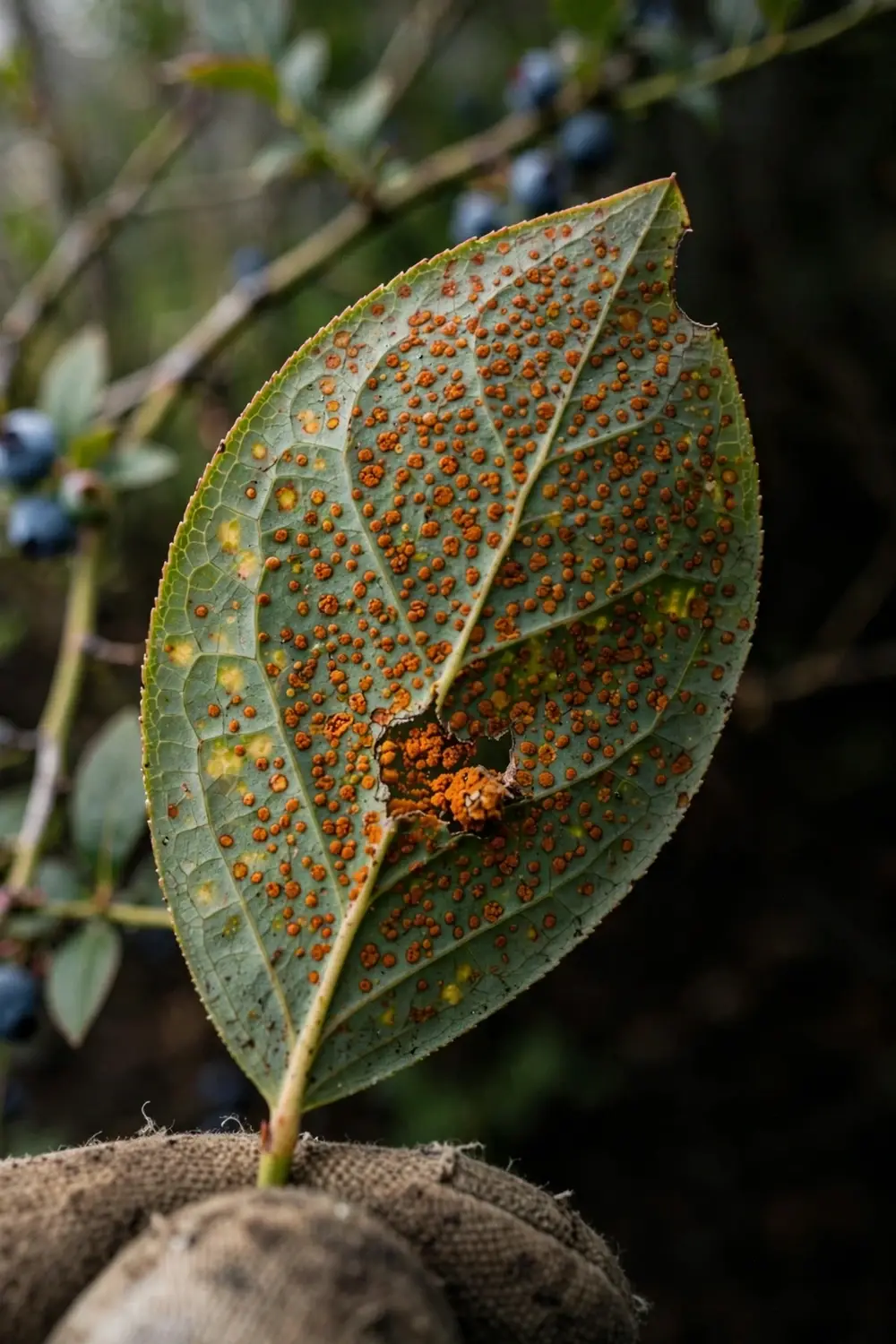

Blueberry leaf rust shows up as small yellow spots on the upper leaf surface in mid- to late summer. Flip the leaf and the underside carries orange pustules that burst and release spores. A light attack costs a bush a few leaves, a heavy attack strips the bush early, and 8 prevention steps keep the first from becoming the second.
I have learned to check leaf undersides first, because the top of the leaf tells the story late. The fungus behind blueberry leaf rust feeds on living leaf tissue and spreads on wind and water. No spray cures a leaf that already shows pustules. Prevention is the whole game: dry leaves, open air, clean fall cleanup, and resistant varieties where they fit your climate.
The rest of this page is 8 steps, from the decide-first call to the last sanitizing wipe. It starts with identification, then the two life cycles by region, then the risk factors that make a home garden worse.
This page covers blueberries only. Rusts on raspberries, daylilies, and pines are different fungi with different habits, and the advice here does not transfer to them.
What Blueberry Leaf Rust Actually Is
Blueberry leaf rust is a fungal disease of blueberries that attacks leaves first and fruit in bad years. It belongs to the rust fungi, a group that feeds only on living plant tissue and spreads by airborne spores.
Sources do not agree on one Latin name for the blueberry rust fungus. You will see Pucciniastrum vaccinii, Pucciniastrum minimum, Thekopsora minima, and Naohidemyces vacciniorum attached to blueberry rust in different publications. This page uses the common name blueberry leaf rust throughout and treats those names as one working label for the home gardener, not as settled taxonomy.
Rust fungi are host specialists. The rusts on wheat and corn belong to a different genus, Puccinia, and never jump to blueberries. The rusts on fuchsia, maple, and kiwifruit sit in Pucciniastrum but are different species from the blueberry rust, and they do not cross over in a home garden.
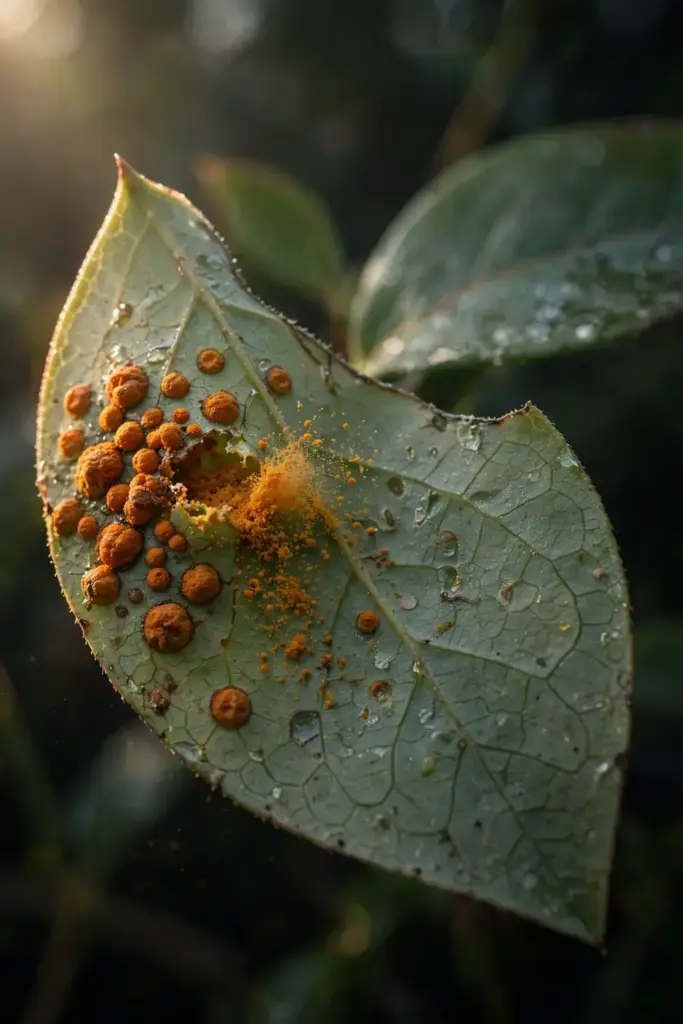
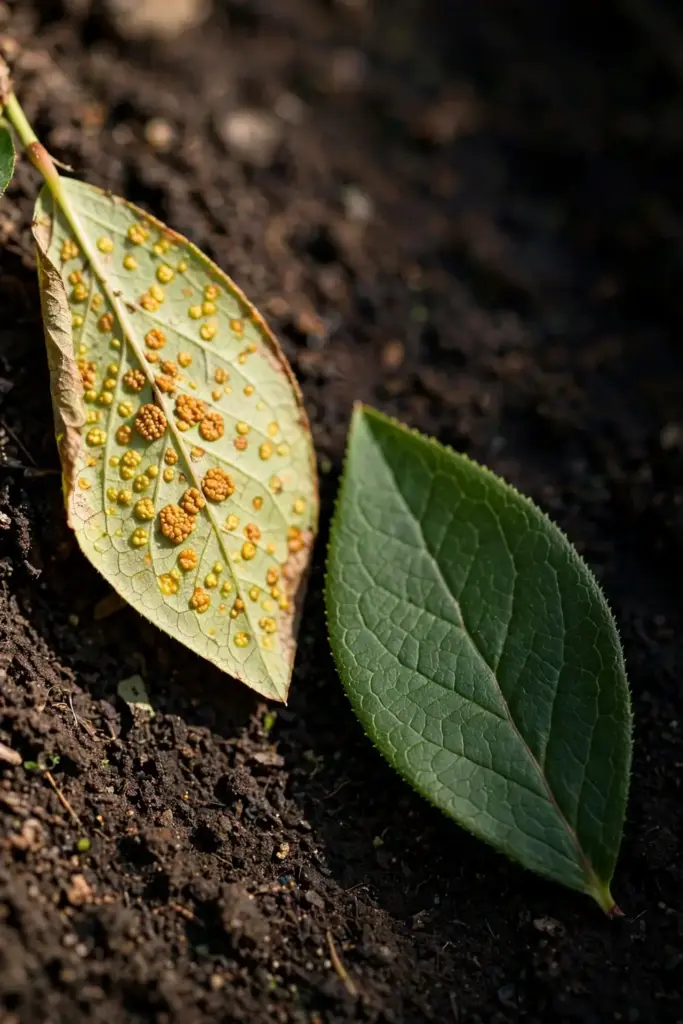
The orange pustules are uredinia, the repeating stage that releases spores all season. Each pustule sheds spores that land on nearby leaves and start new infections, so one missed pustule becomes a dozen spots within weeks. The black structures that appear late in the season are telia, the overwintering stage that carries the fungus into the next year.
The disease rarely kills an established bush outright. It weakens the bush by cutting photosynthesis, and repeated early defoliation drains the reserves that feed next year’s buds. That slow drain is the real cost, and it is the reason prevention beats cure.
How to Identify It on Leaves
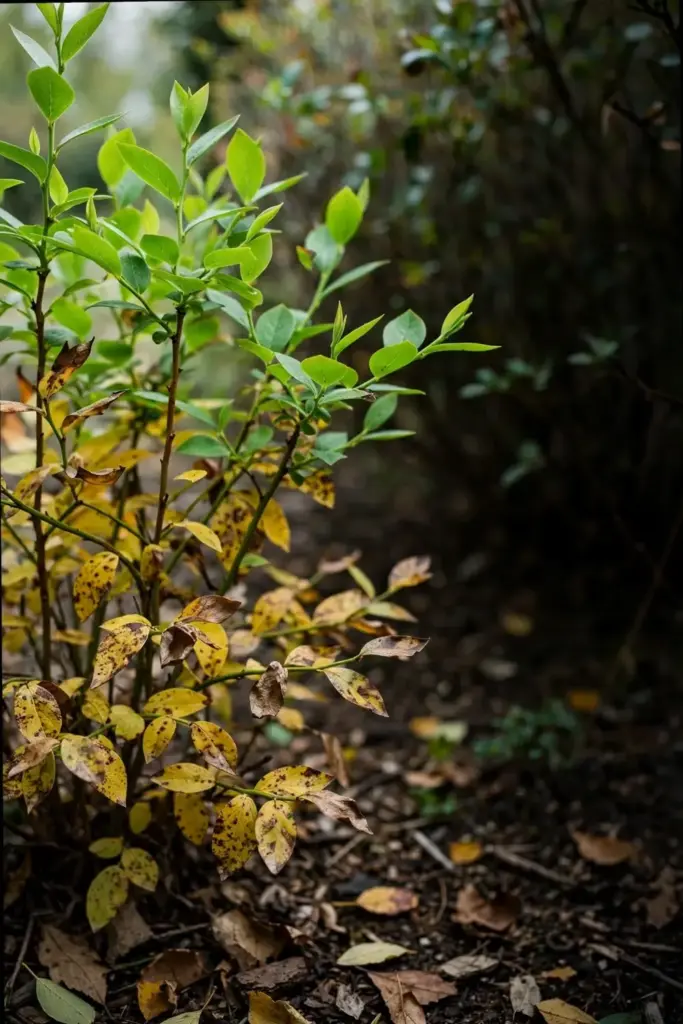
Look for small yellow spots on the upper leaf surface first. Those spots mark the infection sites, and the diagnostic sign sits on the underside.
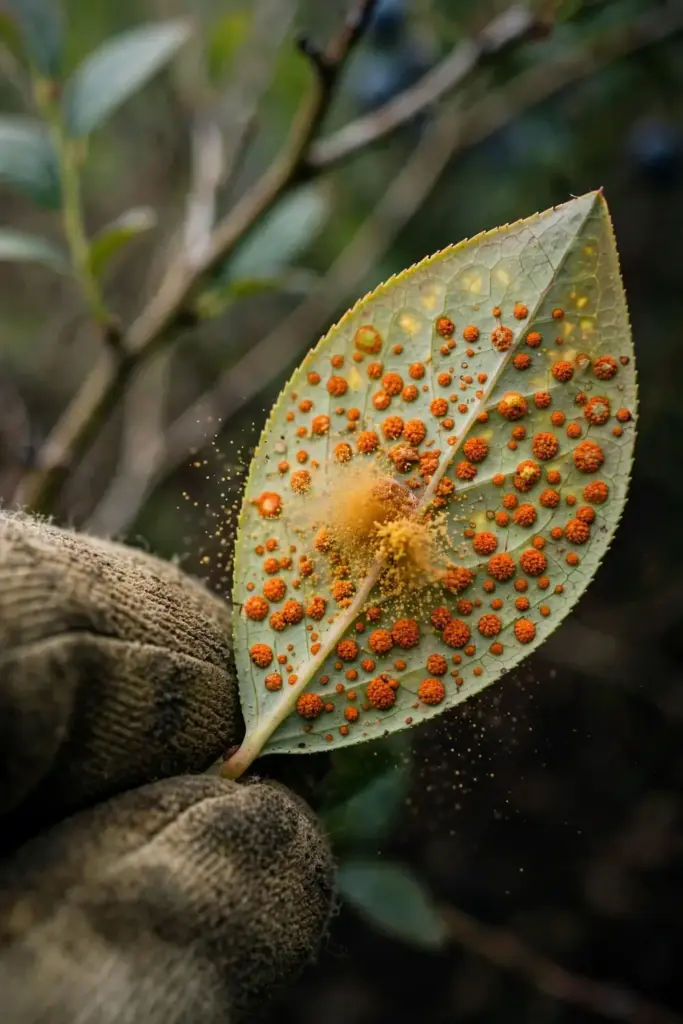
Mississippi State University Extension describes the leaf symptoms in three stages: yellow spots with reddish-brown centers, pustules on the underside that burst and release orangish-brown spores, and black structures in late fall and winter. In advanced infections, leaf edges turn brown and curl before the leaf drops. Defoliation may reduce yields the next season, which is the outcome the prevention steps aim to avoid.
The same Extension notes recommend picking and destroying infected leaves, fallen and still on the bush, when the infection stays local. Picking limits overwintering chances, and it is the one removal job that pays off even after spots appear.
Overall, infected leaves take on a light green, chlorotic, or reddish cast. The cast spreads across the bush in a bad year, and the bush looks tired weeks before leaf drop. A hand lens helps at the early stage. The pustules on the underside are the one sign that separates rust from plain leaf spots, which stay flat and dry.
Check the undersides weekly from mid-summer on. Early spots hide on the lowest inner leaves, where air moves least and dew lingers longest. A weekly flip-through of ten leaves per bush catches the first pustules while the infection is still a few leaves, not a canopy problem.
How to Identify It on Fruit and Canes
Fruit shows rust later than leaves, and canes rarely show it at all. Check the fruit only after leaf spots appear, and treat any fruit symptom as a late sign.
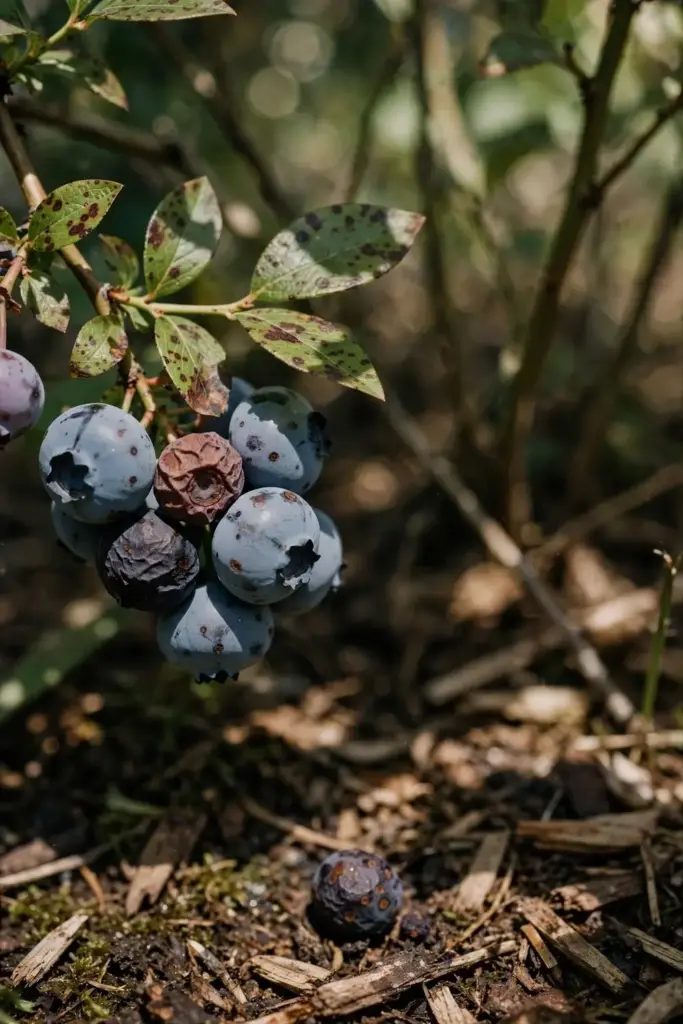
Young fruit is the vulnerable stage. Infected berries color unevenly, stay small, and drop early, while older fruit may carry spots that darken and sink. Pull any suspect berry off the bush and bin it, since it will not recover and it sheds spores onto nearby leaves.
Fruit takes the heaviest hit indirectly. Severe leaf rust causes defoliation in fall or early winter, which decreases floral bud differentiation, photosynthesis, and the next season’s fruit yield, according to University of Florida IFAS guidance on leaf rust of southern highbush blueberry. A bush that drops its leaves early feeds a smaller crop next year, even when this year’s berries look passable.
Rust does not produce cane pustules. A cane with sunken lesions or oozing points elsewhere, and it deserves a separate diagnosis. Keep the rust check on leaves and fruit, where the signs are reliable.
At harvest, sort berries on the bush before they reach the bucket. Pick the sound berries first, then pull the spotted or soft ones into a separate bag for the bin. Sorting on the bush keeps infected fruit out of the harvest and keeps your hands off the clean berries after handling the bad ones.
Which Blueberry Types Get Hit Hardest
Northern highbush varieties differ the most in susceptibility, and the Cornell list below is the practical buying guide. Rabbiteye and southern highbush varieties follow different susceptibility patterns, so the Northern list does not transfer to them.
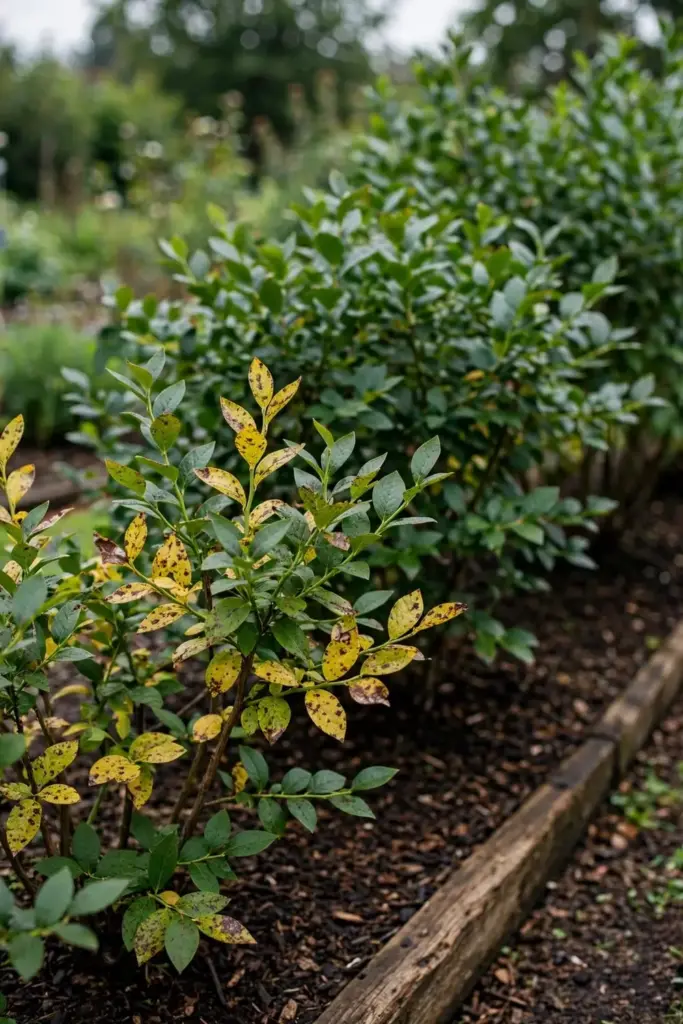
A Cornell University report lists Northern highbush varieties by resistance, as reported in grower coverage of blueberry rust:
| Resistance | Northern Highbush Varieties |
|---|---|
| Resistant | Bluecrop, Burlington, Collins, Dixie, Earliblue, Gem, Ivanhoe, Olympia, Stanley, Weymouth |
| Moderately susceptible | Berkeley, Blueray, Herbert, Jersey, Pacific |
| Susceptible | Atlantic, Coville, Pemberton, Washington |
Bluecrop appears on the resistant list and sits in nurseries everywhere, which makes it the default pick for a rust-prone garden. Check nursery availability before settling on a rarer resistant name. A resistant variety that you cannot buy helps nothing.
New varieties arrive yearly, and any published list ages. Ask the nursery whether a new name carries resistance before you plant it in a damp corner. A nursery that cannot answer that question is selling on flavor and size, not on disease behavior.
The same grower notes draw the line at fruit. A few leaf spots are not a problem. Infected fruit is a total loss. Resistance buys margin against that line, and it never grants immunity, so the cultural steps still apply to resistant bushes.
Why Leaf Wetness Drives Every Outbreak
Leaf wetness drives every outbreak. Spores germinate on wet leaf surfaces, and dry leaves break the chain.
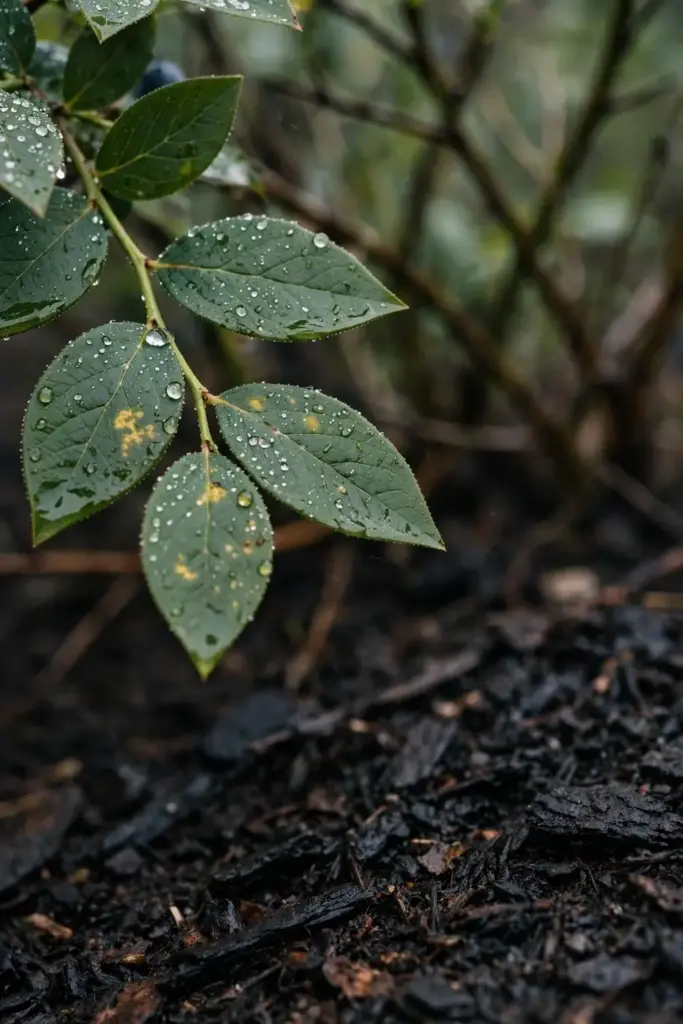
The same Florida guide ties new fall infections to high humidity and leaf wetness, and notes that spores persist at low numbers through summer on nearby wild Vaccinium species. A wet week in fall loads the bush with fresh infections, and those infections sporulate through the weeks that follow. The chain runs on water, and every prevention step below removes water from some part of it.
Dew alone can wet a leaf long enough for infection. A bush in a low spot or a shaded corner holds dew longer than a bush on open ground, and that extra wet time is often the whole difference between a clean bush and a spotted one. Rain splash carries spores upward from fallen leaves onto the lowest foliage, which is why the lowest inner leaves show the first spots.
The same grower notes describe two cycles by region. In the northern United States, the fungus overwinters in infected leaves and reinfects hemlock needles in early spring, and it needs both blueberry and hemlock to complete its life cycle in cold climates. In the southeastern United States, where hemlocks do not grow, the fungus overwinters in uredia on evergreen blueberry leaves.
Home gardeners should not cut down hemlock trees over this. Removing all hemlock trees within 0.5 miles of a blueberry field would break the rust life cycle, but Michigan State University Extension calls that move neither desirable nor practical, and hemlocks are a valued part of the landscape. The home version is simpler: know whether hemlocks stand nearby, and put the prevention effort into the bush itself.
What Makes Rust Worse in a Home Garden
Several conditions stack the odds toward rust. Each one is fixable, and each one answers to a prevention step.
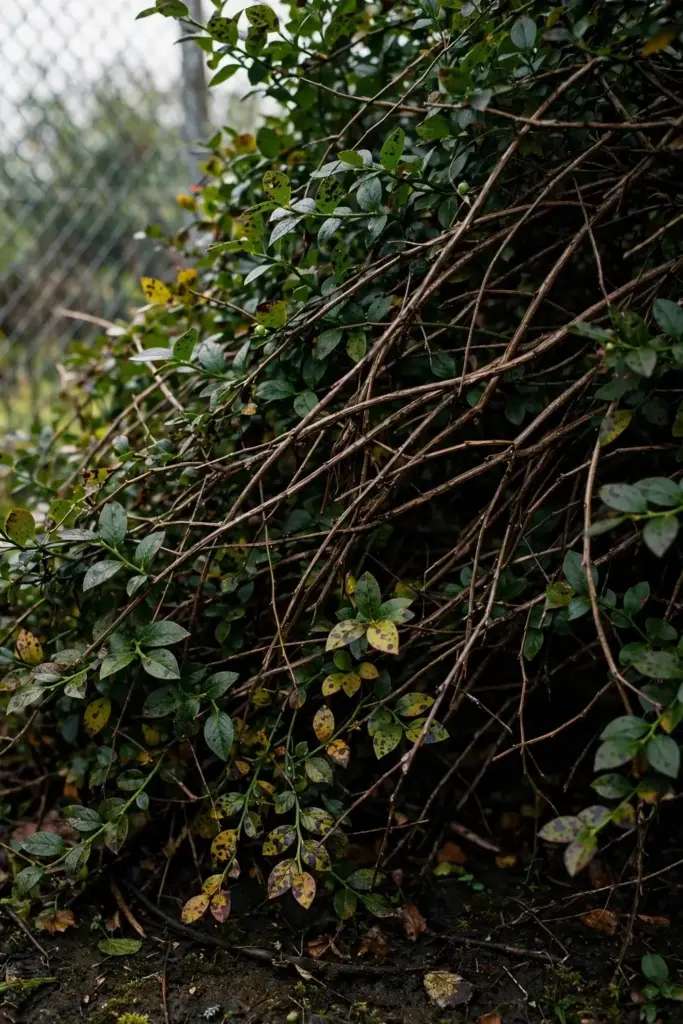
Overhead watering wets the leaves and holds them wet into the night. Dense canopies hold that moisture for hours after the sun comes out. A bush watered from above in a tight corner stays wet long after the bed around it dries.
Fallen infected leaves carry the fungus into next season. A susceptible variety in a damp corner gives the spores their easiest target. Potted bushes add one more risk: pots trap humidity around the canopy and hold wet leaves against each other.
Site matters as much as habit. A bush in a low pocket where cold air and fog settle stays wet longer than a bush on a slight rise. A fence or a dense hedge on the windward side slows airflow across the bed. A summer of steady rain beats any single mistake, and that is the year the full step list earns its keep. New bushes deserve the driest, most open spot in the bed, since the site choice lasts the life of the planting.
Step 1: Decide Whether Treatment Is Worth It
Start with the decision, not the spray. A few leaf spots cost a bush almost nothing, and no spray cures a leaf that already shows pustules.
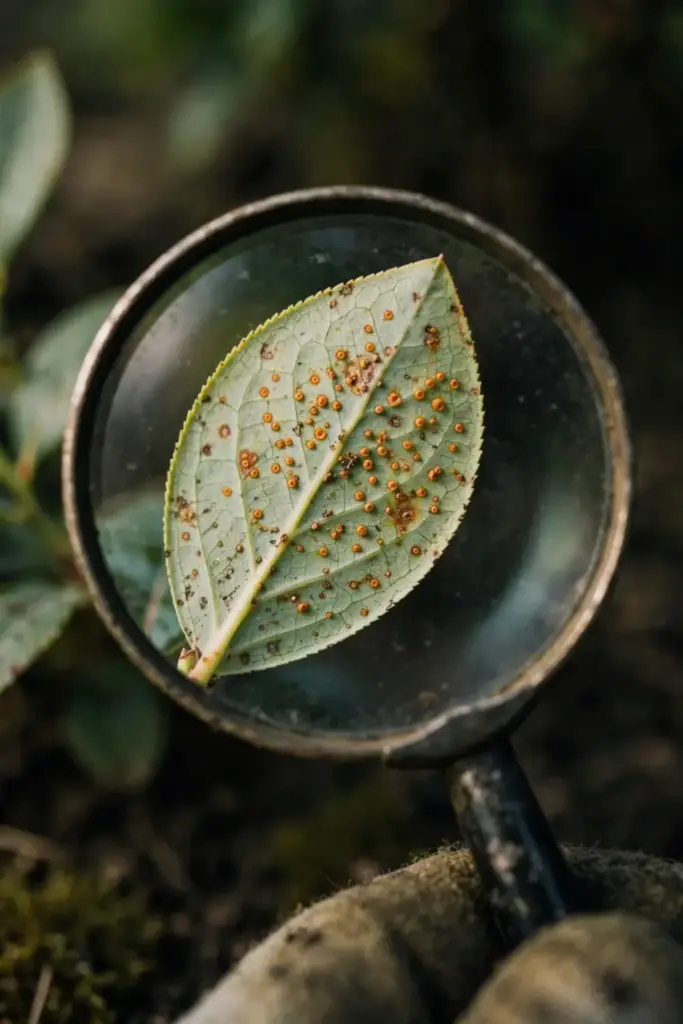
Scout from mid- to late summer, when orange pustules or small yellow spots begin. Tolerate a few spotted leaves. Act when pustules spread across the bush or defoliation starts early. The scout check takes five minutes and saves a season of spraying at shadows.
Fungicides protect new growth only. They do not cure established infections. Grower notes warn that fungicide sprays may cause phytotoxicity to blueberry leaves, so test any spray on a few leaves first and read the label before wider use. If the label does not list blueberries for home use, do not use the product.
The lower-impact spray option is Serenade, a biofungicide based on Bacillus subtilis, with a zero-day pre-harvest interval. The same Michigan notes rate its activity against blueberry rust as moderate to good. Dormant lime sulfur on fallen leaves may help reduce overwintering inoculum, but its efficacy has not been confirmed, so treat it as an experiment, not a program.
If the bush already lost most of its leaves, skip the spray and spend the effort on fall cleanup. The spray protects leaves that are already gone.
Note the date of the first spots each year. A notebook line with the date, the bush, and the severity turns a vague memory into a record, and the record shows whether the pressure is rising or falling. A bush that spots two weeks earlier than last year is telling you the inoculum survived the winter cleanup, and the fall steps need tightening.
Step 2: Plant Resistant Varieties First
Resistance is the cheapest prevention, and it starts at the nursery. A resistant variety shrugs off pressure that strips a susceptible neighbor.
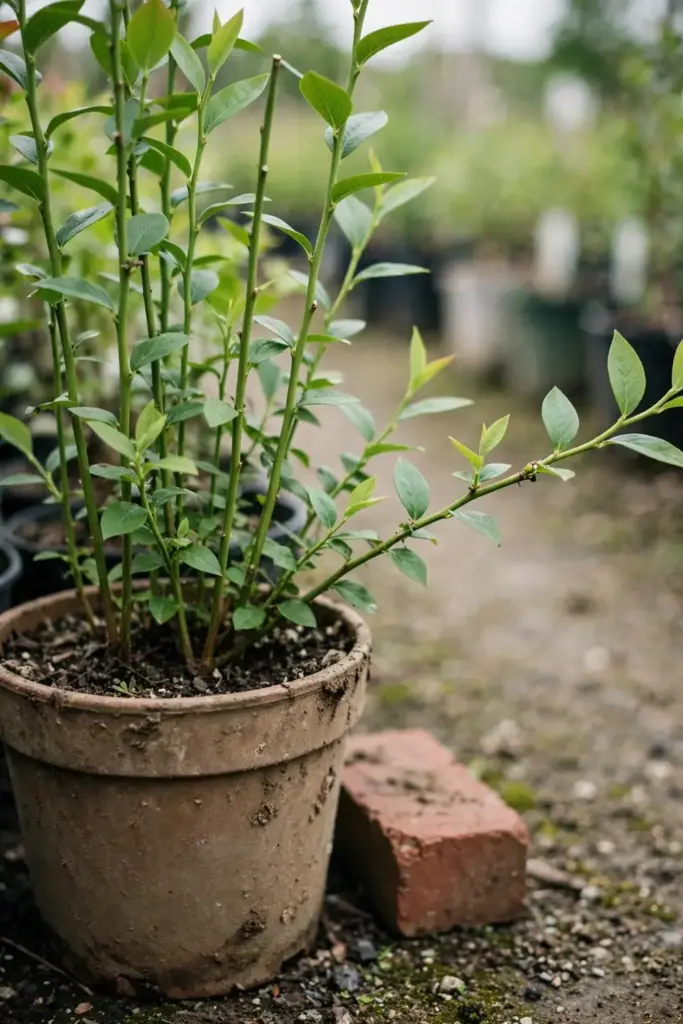
Use the Cornell list above when you buy. Match the list to Northern highbush types, and do not carry it onto rabbiteye or southern highbush bushes, whose susceptibility runs on different patterns.
If you already own susceptible bushes, do not rip them out. The other steps in this page carry them, and a susceptible bush with dry leaves and clean fall cleanup often out-produces a resistant bush in a wet corner.
Resistant stock still needs the other steps. Resistance slows the fungus. It does not remove the need for dry leaves and clean fall cleanup. A resistant bush in a wet, crowded corner still rusts.
Step 3: Prune in Late Winter to Open the Canopy
Prune during dormancy, before buds swell, to open the canopy. An open canopy dries fast after rain or dew, and dry leaves break the infection chain. Dormancy ends on different dates in different climates, so watch the buds, not the calendar: prune after the coldest weather passes and before the buds show green tips.
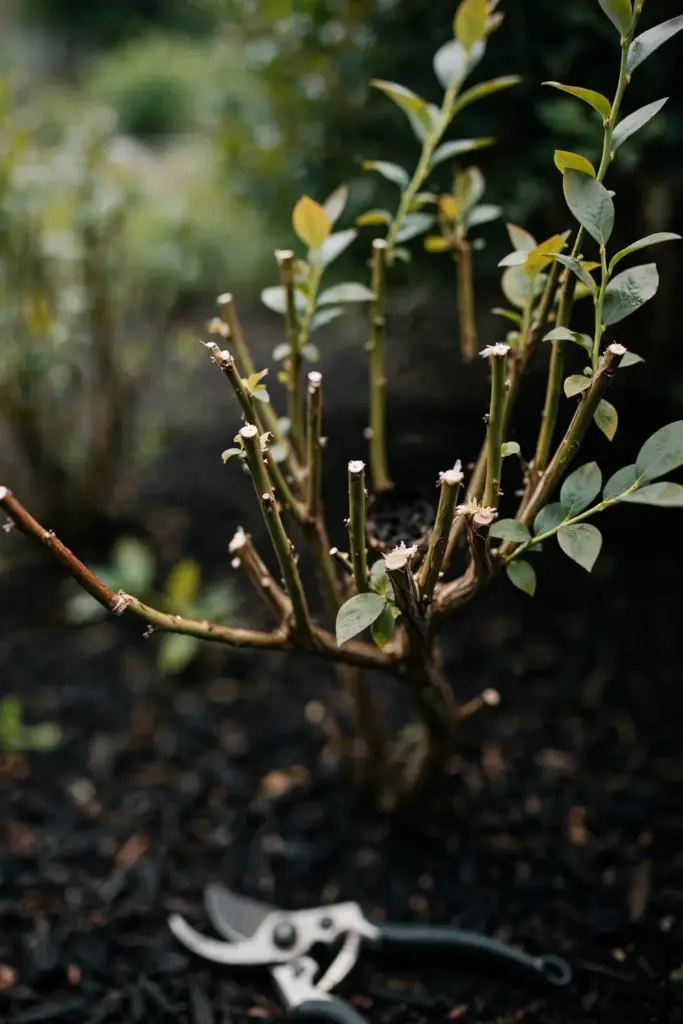
Cut out crossing canes, weak twiggy growth, and any dead wood. Keep the center open so air moves through the bush and sun reaches the inner leaves. Take the prunings off the bed.
Each dormant season, cut one or two of the oldest canes to the base. Old canes grow dense and twiggy, and their inner foliage never dries. Young canes grow upright and open, and their leaves dry fast. Renewal pruning keeps the bush young and the canopy open at the same time.
The full cutting technique lives on the site’s spring pruning techniques page. This step stays on the rust reason: airflow first, shape second.
Sanitize the shears between bushes if one bush shows rust. A quick wipe with alcohol or a diluted bleach rinse stops the tool from carrying spores to the next bush. Skip this wipe and the pruning round itself becomes the vector.
Step 4: Water at Soil Level and Keep Leaves Dry
Water the soil, not the leaves. Soil-level watering keeps the canopy dry and removes the wet window spores need.
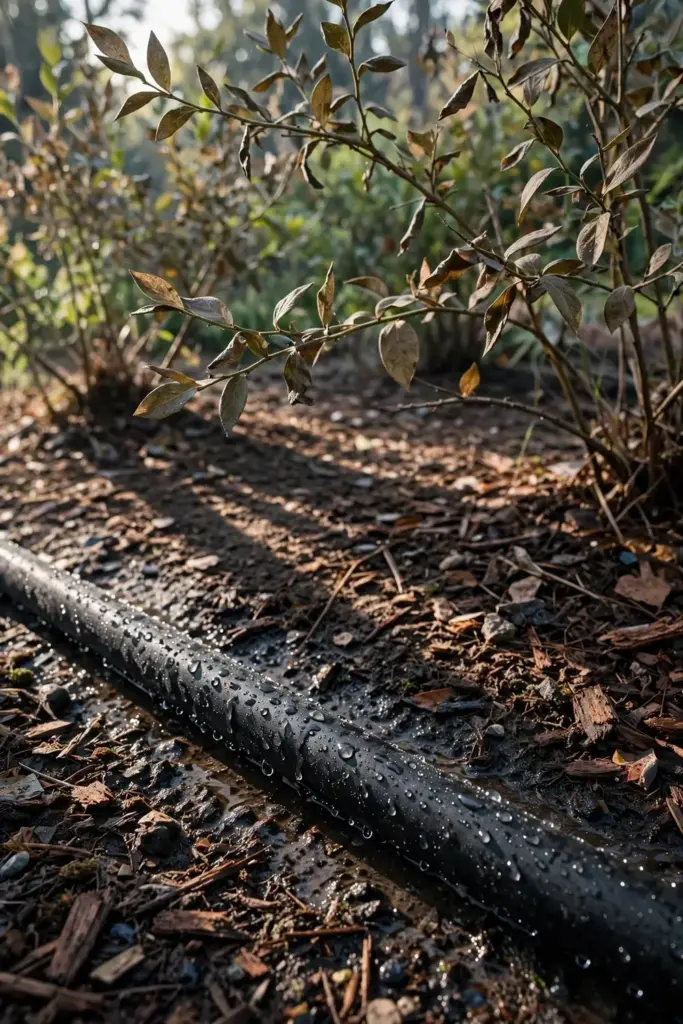
A soaker hose or drip line does this job with no daily effort. Soaker hoses lay water at the root zone and keep the foliage dry. Mulch under the bush holds soil moisture steady between waterings.
If overhead watering is the only option, water early in the morning so leaves dry under the sun. Never water late in the day. Leaves that stay wet overnight hand the fungus its germination window.
Potted bushes need the same rule. Water the pot mix, not the canopy, and empty the saucer after watering so the pot never sits in water. A saucer full of water keeps the base humid for days.
Water deep and less often. Skip the daily sprinkle. A daily sprinkle keeps the top wet and the canopy humid. The bush roots deeper on the deep schedule, and deeper roots carry the bush through dry weeks without stress.
Step 5: Space Bushes and Keep Row Middles Clear
Give each bush room for air to move. Tight spacing traps humidity inside the canopy and holds leaves wet for hours.
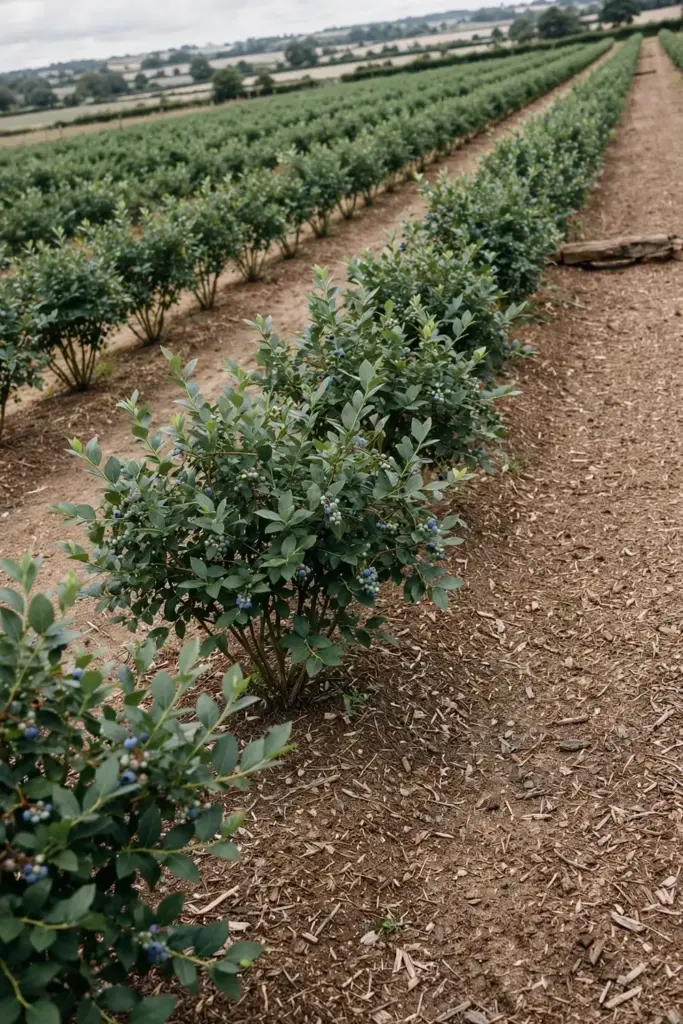
Plant at the spacing on the nursery tag for the variety. Keep row middles weed-free. Weeds block airflow at the base and hold dew against the lower leaves.
A mulch layer under the bush steadies soil moisture and cuts splash onto the lower leaves. That mulch work is part of building soil health, and it pays off beyond disease control.
Check the row after storms. Flattened weeds and fallen branches choke airflow, and a quick clear-out restores it. A row that stays clear dries faster after every rain.
Step 6: Rake Fallen Leaves Out in Fall
Rake or chop fallen blueberry leaves after leaf drop. Fall cleanup removes the overwintering inoculum that starts next year’s outbreak.
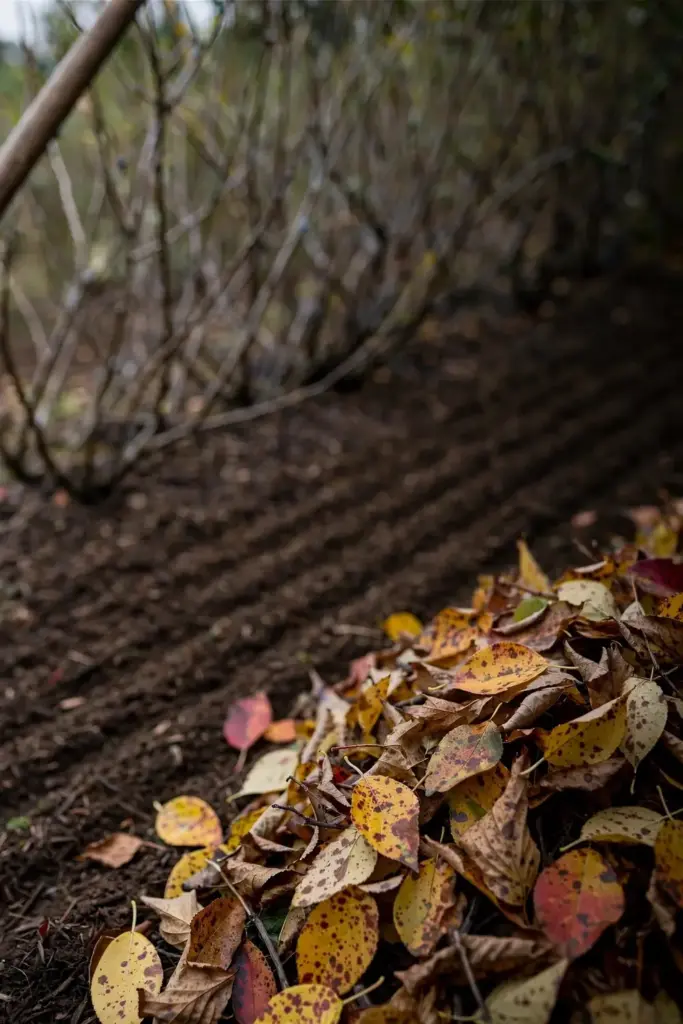
The same Michigan notes recommend raking or chopping blueberry leaves after leaf drop to reduce inoculum carry-over. Work after the bush drops its leaves, and get the litter off the bed before winter.
Do not compost infected material. Bag it and bin it. A home compost pile may not run hot enough to kill rust spores, and a composted pile returns the fungus to the bed.
A rake gathers the litter, and a mower with a bagging attachment chops and collects it in one pass on a flat bed. Either tool works. The point is removal, not neatness: every leaf left on the bed is a spore source for spring, and a half-cleaned bed keeps half the problem.
Fall cleanup fits the wider bed routine on the site’s fall garden bed prep page. That routine covers the whole bed. This step covers the rust reason: litter out, inoculum down.
Step 7: Shelter Potted Bushes and Raise Them Off the Ground
Potted blueberries catch rust faster than bed bushes. Pots cluster tight, trap humidity, and hold wet leaves against each other.
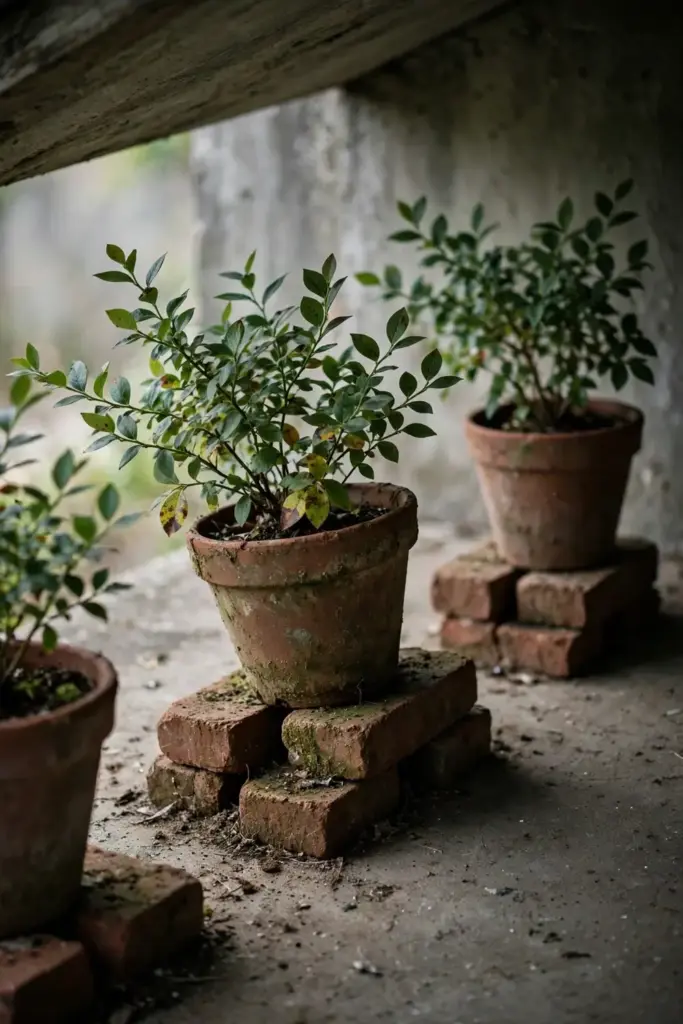
Move pots undercover during long wet spells. A roof overhang, a cold frame, or a covered porch keeps rain off the canopy without moving the bush indoors.
Raise pots on bricks or stands so air flows underneath. Airflow under the pot dries the base and stops the pot from sitting in a puddle after rain.
Space pots apart, not rim to rim. A hand-width gap between pots lets air move and keeps wet leaves from touching across pots. Pots jammed rim to rim share one humid pocket, and rust moves through that pocket fast.
In winter, move pots to a sheltered spot out of the worst wind, and keep them raised off the ground. Wet feet over winter weaken the bush, and a weak bush enters spring with less resistance to everything, rust included.
Step 8: Sanitize Tools and Hands After Touching Infected Plants
Sanitize tools and hands after touching infected plants, before touching clean ones. Hands and shears carry spores from bush to bush.
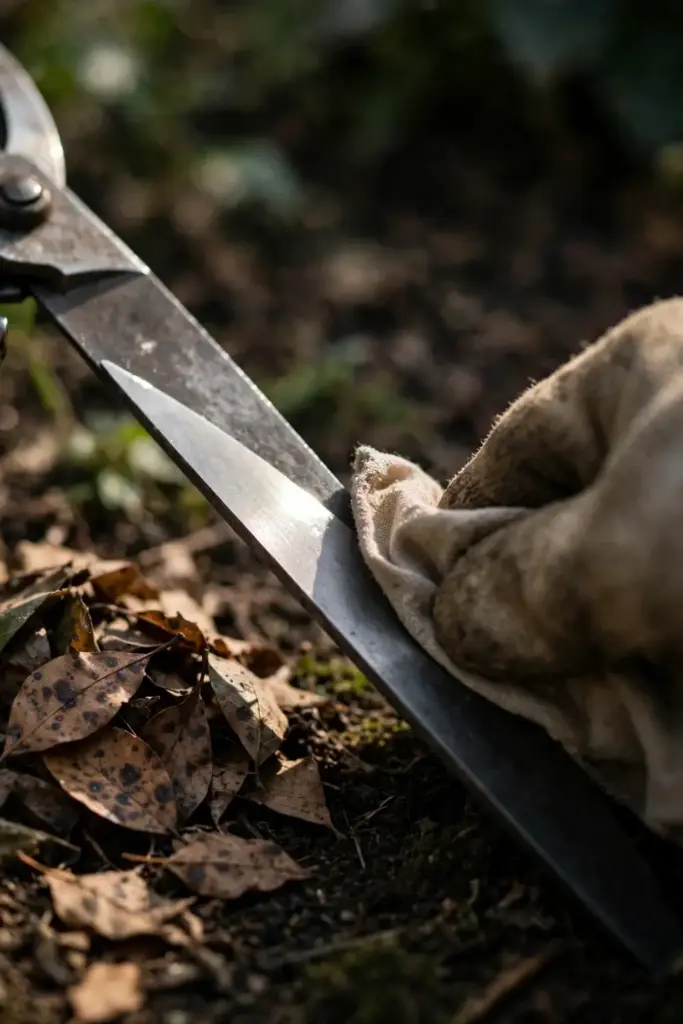
Wipe shears with alcohol or a diluted bleach rinse between bushes. Wash hands and gloves with soap and water before handling clean plants. Change gloves if they carry leaf debris.
Keep the habit for the whole season. One unwashed shear pass after pruning an infected bush can seed the next bush, and the infection shows weeks later when the trail is cold.
Launder harvest clothing that brushed infected canopies. Spores ride cloth the same way they ride gloves.
Never shake an infected branch over a clean bush to strip the spotted leaves. The shake rains spores onto the clean canopy and does in one second what a week of wind would do slowly.
Living With Rust Damage You Already Have
Rust damage that already happened cannot be reversed. The bush can still recover and crop next year with steady care.
| Part | Action |
|---|---|
| Spotted leaves still on the bush | Leave a few. Pick heavily spotted leaves and bin them. |
| Fallen leaves | Rake and bin. Never compost. |
| Infected fruit | Pick and bin. It will not recover. |
| Tools and gloves | Wash before the next bush. |
Feed and water the bush normally through the rest of the season. A defoliated bush needs leaves for photosynthesis, so protect the regrowth with the same prevention steps, starting with dry leaves.
Watch the bush into fall. If new growth stays clean through fall, the cleanup worked. If pustules return on new leaves, tighten the spacing and watering steps first, since those two drive most home-garden outbreaks.
When the signs stay unclear, send a sample to local Extension for diagnosis. Rust shares its early yellow spots with nutrient problems and other leaf spots, and a lab ID beats a guess when the bush keeps declining despite clean culture.
Expect the payoff in the second year, not the first. Fall cleanup cuts next spring’s starting inoculum, and the bush rebuilds reserves over a full clean season. A bush that looked ragged this year can carry a full crop next year when the leaf canopy holds through fall.
Frequently Asked Questions
Rust rarely kills an established bush outright. The damage runs through defoliation: early leaf loss cuts photosynthesis and drains the reserves that feed next year’s buds. Young or newly planted bushes carry higher risk, since they hold smaller reserves. Steady prevention and fall cleanup keep a bush productive for years.
Berries from a bush with leaf spots only are fine after a normal wash. Discard any berry that shows spots, softening, or early drop, since infected fruit will not recover. Leaf rust is a plant disease, not a human pathogen, so sound berries from an affected bush carry no human health risk.
No spray is required in most home gardens. Cultural steps carry the control: resistant varieties, open canopy, soil-level watering, spacing, fall cleanup, and sanitation. Sprays protect new growth only and never cure infected leaves. If you spray, test on a few leaves first and read the label.
No. Removing all hemlocks within 0.5 miles would break the northern rust cycle, but Michigan State University Extension calls that move neither desirable nor practical. Hemlocks are a valued part of the landscape. Home gardeners manage the blueberry side: dry leaves, open canopy, and clean fall cleanup.
Blueberry leaf rust stays on blueberries and wild Vaccinium species. It will not jump to raspberries, daylilies, pines, vegetables, or other garden plants. Raspberry late leaf rust is a different species with a different alternate host. Keep the prevention steps on the blueberry bed, where they belong.
Flip the leaf and look at the underside, where rust shows orange pustules that burst and release spores while most other leaf spots stay flat and dry. Black structures may appear in late fall and winter. When the underside shows no pustules, the problem is a different leaf spot. Local Extension diagnosis settles the call.
Where to Go From Here
Start with one walk around the bushes. Flip ten leaves and look at the undersides, one bush at a time. That single check tells you whether this is a watch year or a cleanup year.
Then run the steps in order. Buy resistant varieties when you add bushes. Prune in dormancy. Water at soil level. Rake in fall. Sanitize as you go.
Rust pressure drops when leaves stay dry and litter leaves the bed. The bush does the rest.