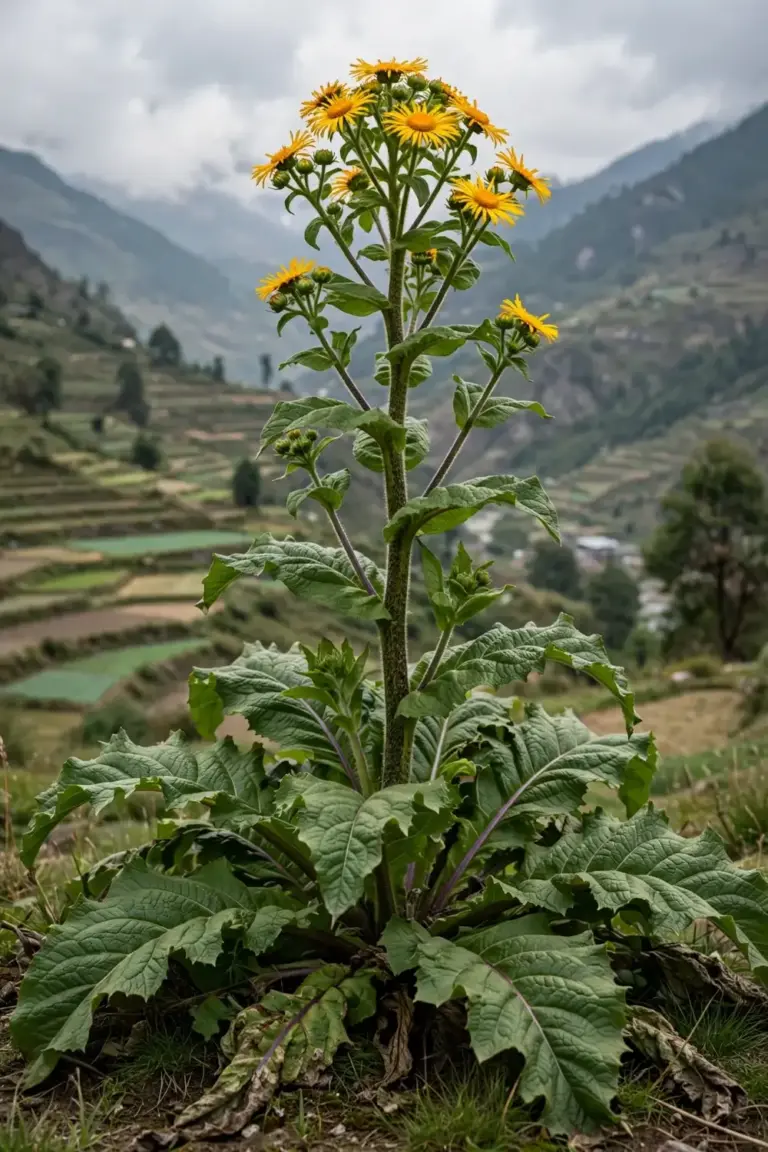

Tree turmeric is not turmeric. It is a spiny Himalayan shrub called daruharidra, Berberis aristata, which needs 3 to 5 years to reach its mature height of 3.5 meters. The name confusion is the single biggest reason most planting attempts fail before they start. If you want to know how to grow tree turmeric from India, start by forgetting the orange rhizome in your kitchen drawer. This plant grows a 3.5 meter shrub, bears small berries, and its value lives in yellow wood and bark, not a fleshy root. Grow it from seed (cuttings are nearly impossible), and give it a spot where thorns will never be a problem.
The reward is a plant with a deep Ayurvedic resume. Daruharidra is the source of berberine, a bitter yellow compound, and of rasanjana, a concentrated root-bark preparation used in classical formulations. The honest version of this guide states its limits: cultivation literature for Berberis aristata is thin, so this article combines botanical authority data with the identity and Ayurvedic lanes the scout data demands.
1. What You Are Actually Planting
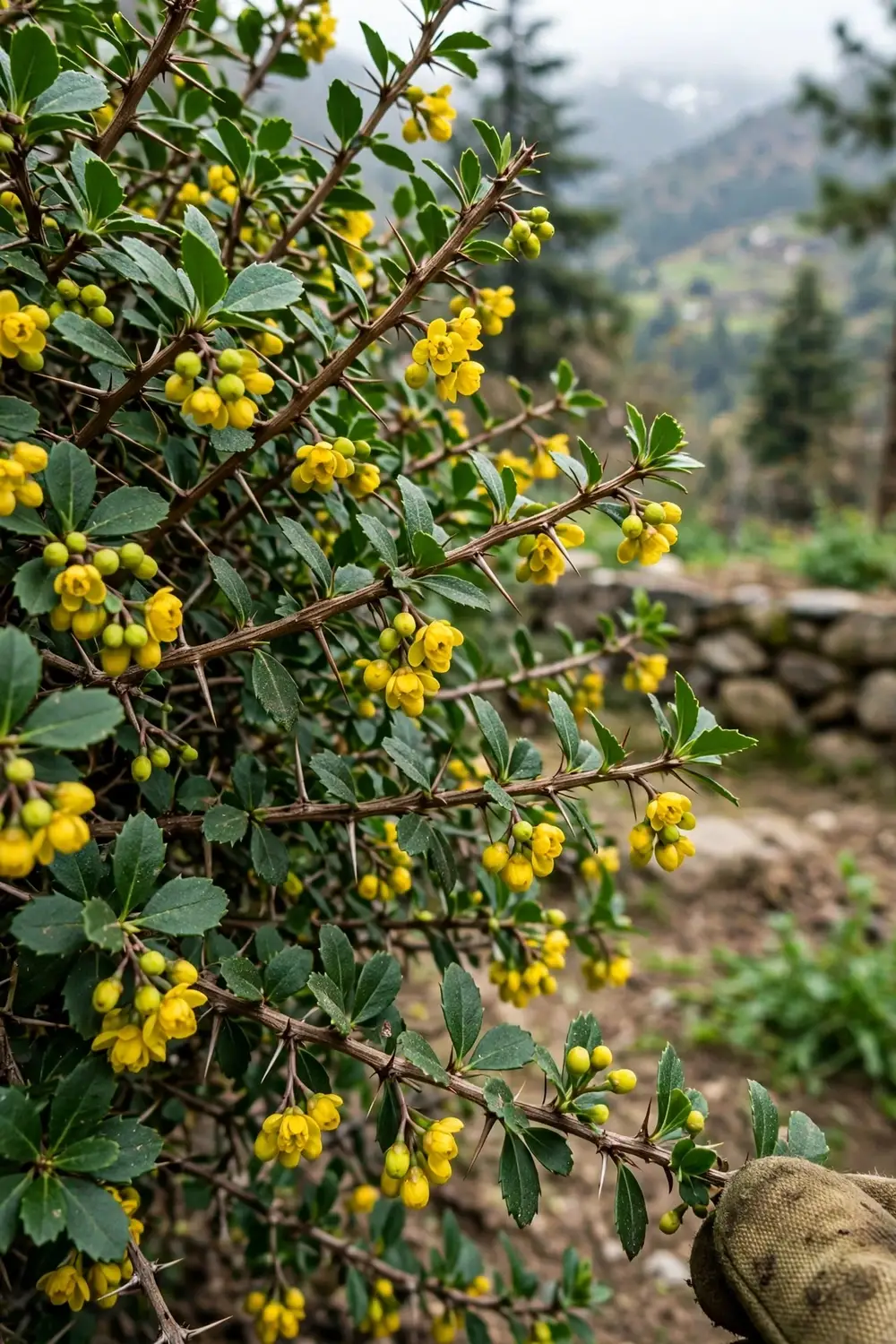
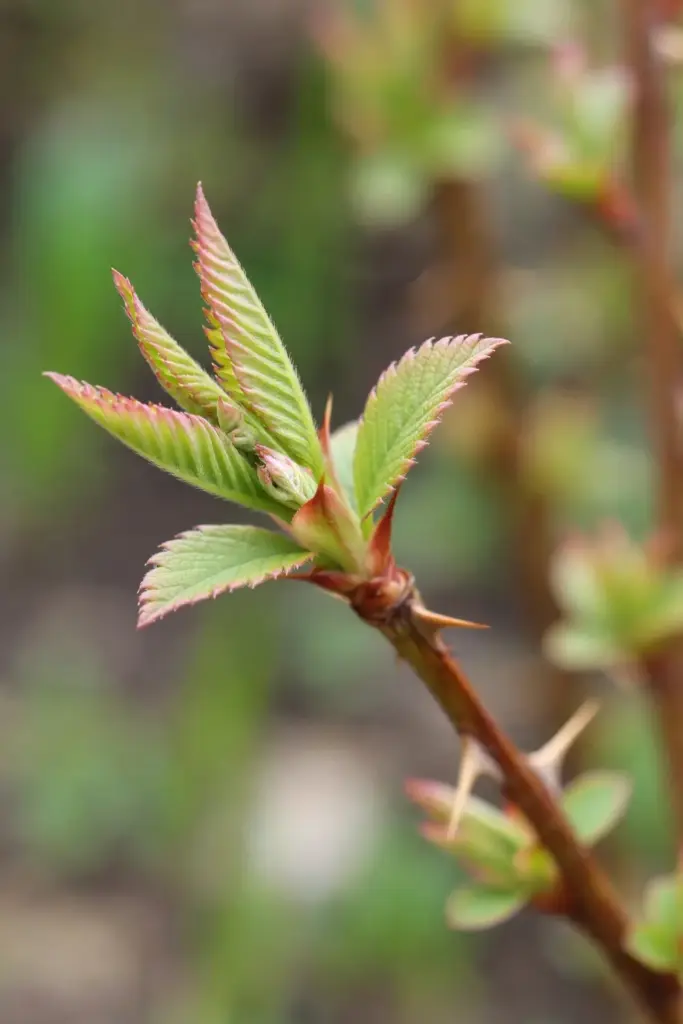
Berberis aristata is an evergreen shrub that grows to 3.5 meters, or about 11 feet 6 inches, at a medium rate. It carries leathery toothed leaves, three-branched thorns, yellow flowers in May, and berries roughly 7 by 4 millimeters that ripen in late summer to early autumn. It is hermaphrodite and self-fertile, pollinated by insects, so one shrub is enough to set fruit.
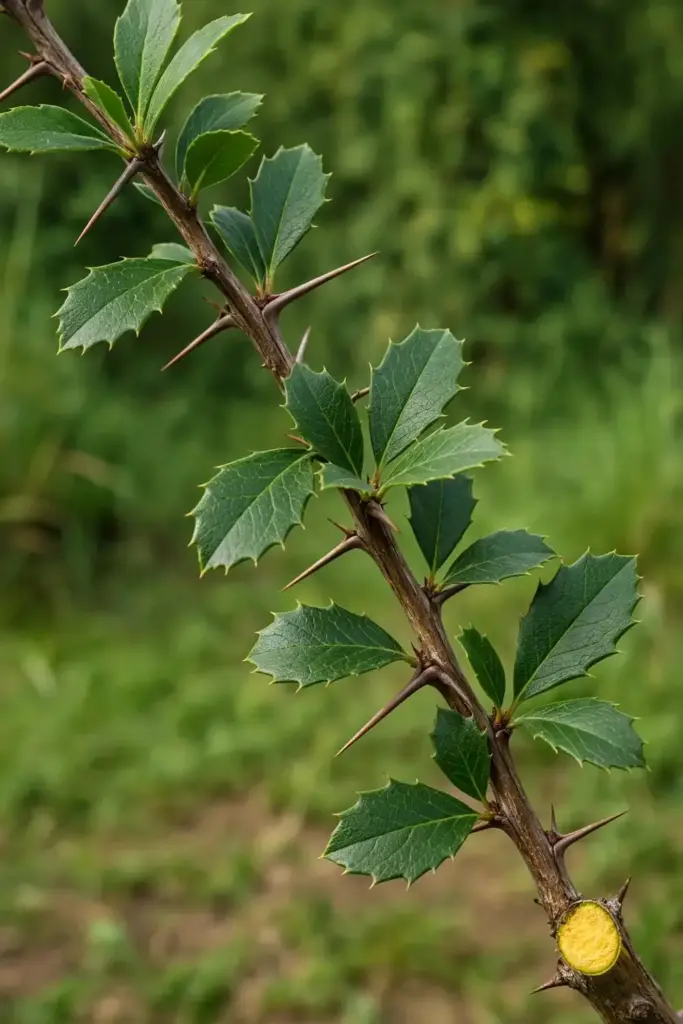
The name “tree turmeric” comes from the yellow color of its wood and roots. In Hindi it is daruharidra, and related vernaculars include darhaldi, daruhald, kashmal, and chitra. Traditional practice concentrates the root bark and wood into rasanjana, also spelled rashut. Keep this identity fixed in your head. Every other section of this guide assumes you are growing a thorny barberry shrub, not a ginger-family rhizome.
2. Tree Turmeric Versus Turmeric: The Comparison Table
Search engines mix these two plants constantly, and Pinterest search for “tree turmeric” returns almost nothing but ordinary turmeric pins. Put the confusion to rest with the comparison below.
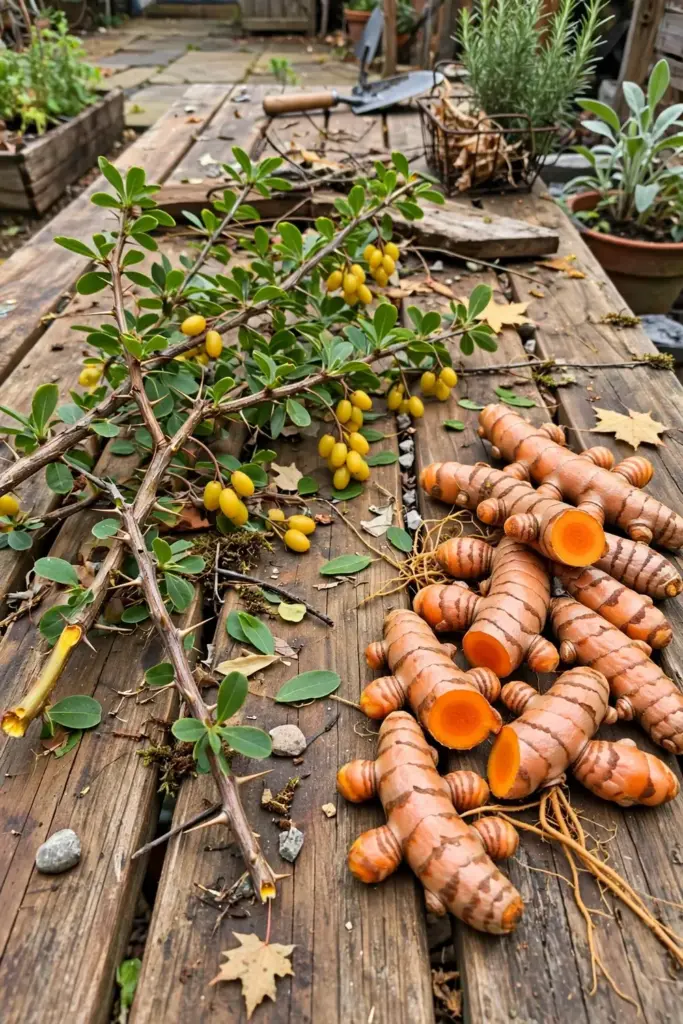
| Feature | Tree Turmeric (Daruharidra) | Turmeric (Haldi) |
|---|---|---|
| Latin name | Berberis aristata | Curcuma longa |
| Plant family | Barberry family (Berberidaceae) | Ginger family (Zingiberaceae) |
| Form | Spiny evergreen shrub to 3.5 m | Soft herb from a rhizome |
| Product used | Yellow wood, root bark, berries | Fleshy orange rhizome |
| Key compound | Berberine (bitter, yellow) | Curcumin (orange-yellow) |
| Propagation | Seed, fresh-ripe | Rhizome pieces |
| Native range | Himalayan foothills, 6,000 to 10,000 feet | Tropical South and Southeast Asia |
| Climate demand | Cool-tolerant, hardy to UK zone 6 | Warm, frost-free |
| Thorn risk | Three-branched thorns on every stem | None |
If you came here looking for the spice, the turmeric-growing guide in our library covers Curcuma longa; this article is about the barberry. One more fence: Daruharidra is not Darvi. Darvi is Cinchona officinalis, the quinine tree. The two are not interchangeable despite the similar short name.
3. Meet the Barberry Family: Aristata and Its Cousins
Berberis aristata is one of several hundred barberry species, and the market mixes them. Berberis vulgaris is the European barberry, whose berries are sold as zereshk in Persian cooking. Berberis asiatica, called kilmora in the Himalayan region, is an Ayurvedic substitute harvested between 600 and 2,700 meters. Then there is Berberis thunbergii, the Japanese ornamental of landscaping catalogs, bred for leaf color rather than medicine, and Mahonia aquifolium, the Oregon grape, which looks like a barberry cousin but belongs to a different genus entirely.
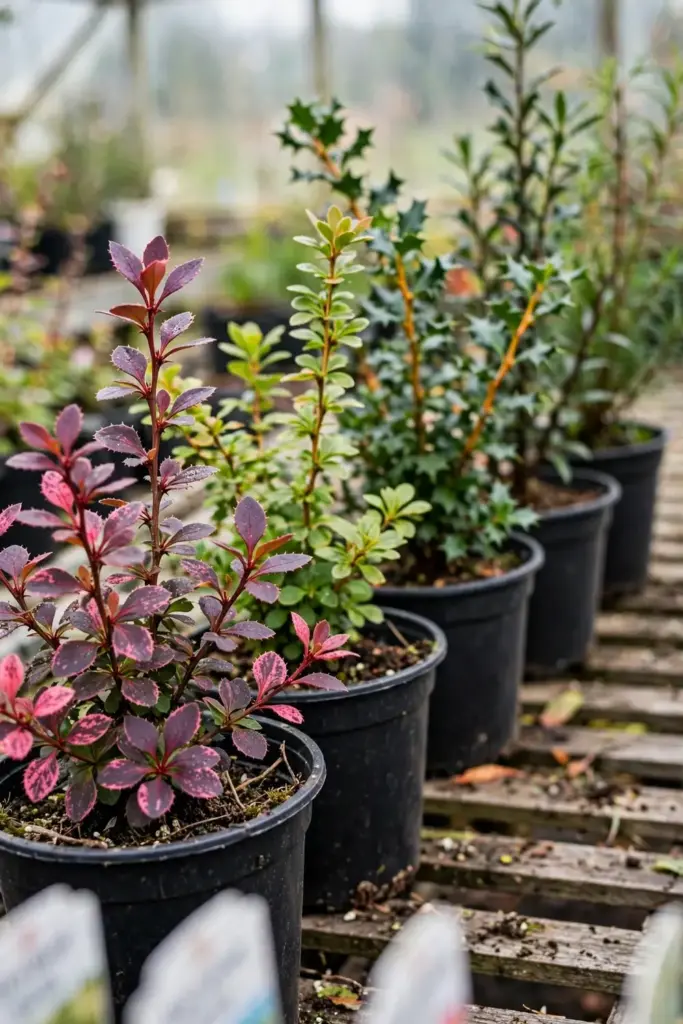
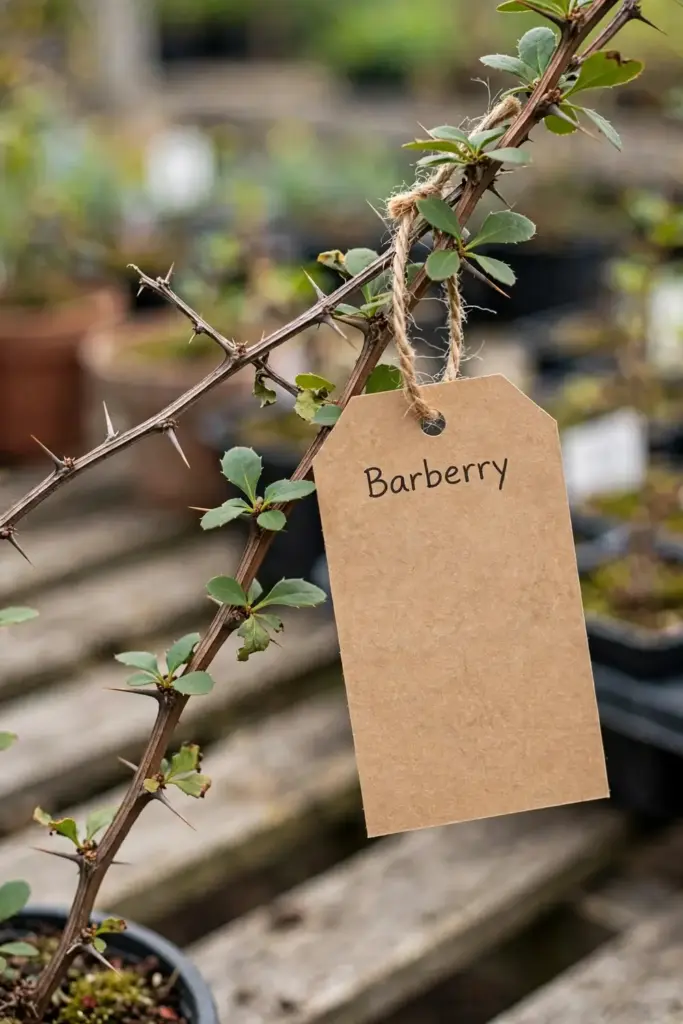
The practical consequence is simple. Ornamental barberry nursery stock will not serve if your goal is daruharidra. Ask for the Latin name on the tag before you buy, and expect the nursery trade to be confused.
| Species | Common Name | Origin | Main Use |
|---|---|---|---|
| Berberis aristata | Indian barberry, daruharidra | Himalayan foothills | Berberine, rasanjana, berries |
| Berberis vulgaris | European barberry | Europe, West Asia | Zereshk berries for cooking |
| Berberis asiatica | Kilmora | Himalayas, 600 to 2,700 m | Ayurvedic substitute |
| Berberis thunbergii | Japanese barberry | Japan | Ornamental landscaping |
| Mahonia aquifolium | Oregon grape | North America | Ornamental, different genus |
Most plants sold under the name turn out to be other species, so verify the source before you commit years to the wrong shrub.
4. Climate and Zone Reality: Himalayan Shrub, Honest Limits
Berberis aristata is native to the Himalayan foothills at 6,000 to 10,000 feet, where summers are warm and winters bring real cold. Plants For A Future records it as hardy to UK zone 6 and not frost tender, and the ornamental barberry literature cites USDA zones 4a through 8b, though that figure belongs to the garden species and should be treated as a guide rather than a guarantee for aristata.
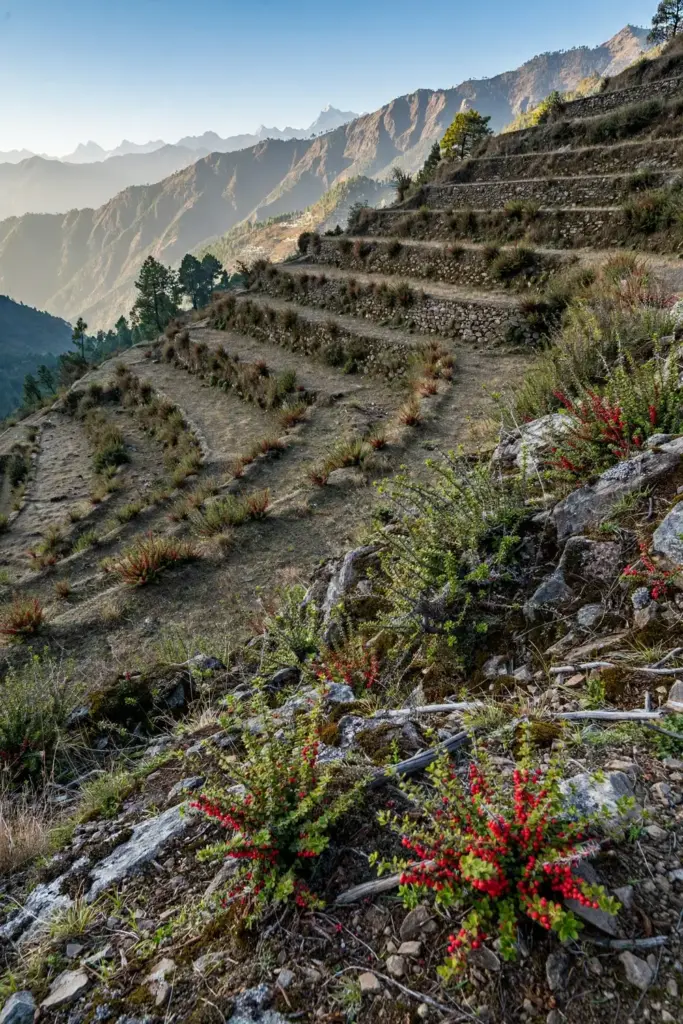
This hardiness profile cuts both ways. Cold is not the enemy. Heat is. Long stretches above the mid-30s Celsius stress the shrub, and the lowland plains of central and southern India are a poor fit. If you garden in the hills of Himachal Pradesh, Uttarakhand, the Northeast, or at elevation in the Western Ghats, conditions resemble the native range. In the hot plains, grow this plant as an experiment in partial shade, not as a confident crop.
5. Seed or Cuttings: The Honest Decision
Grow daruharidra from seed. The botanical propagation data is blunt: cuttings of half-ripe wood taken in July or August are “very difficult, if not impossible,” and cuttings of mature wood taken in October or November, even with a heel, carry the same verdict. Home growers should not budget time for the cutting route.
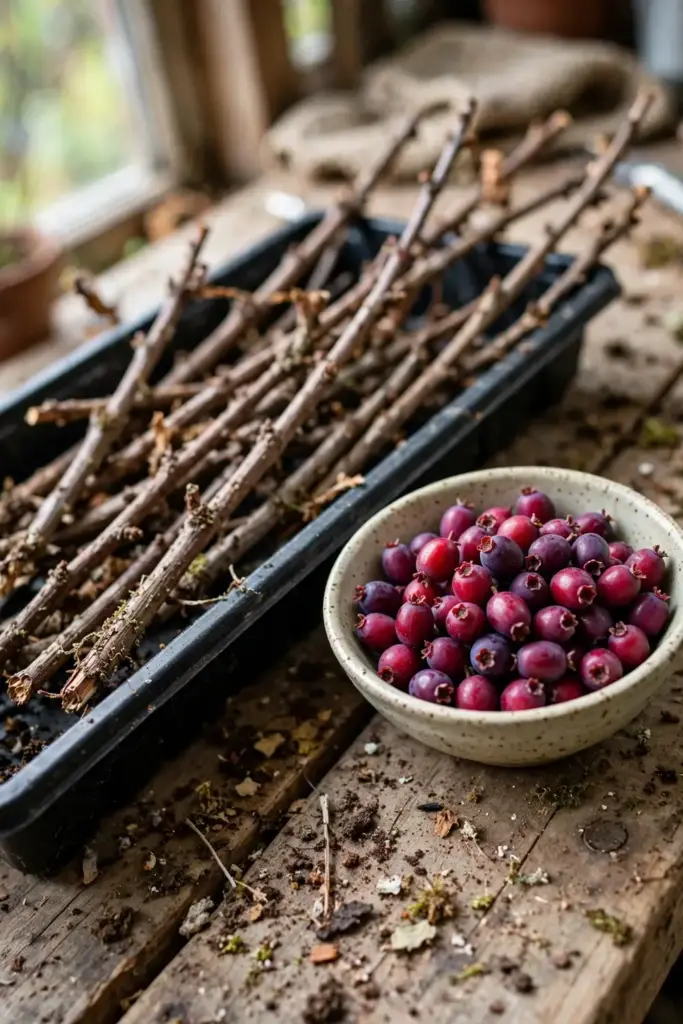
Seed is the proven path, with one rule that decides everything: sow fresh. Seed sown as soon as it is ripe germinates in late winter or early spring, while seed from over-ripe fruit takes longer, and stored seed may require cold stratification before it wakes. Source berries from a plant you can identify as Berberis aristata, or buy seed from a supplier who lists the Latin name rather than a common name alone.
6. Stratification and Sowing, Step by Step
Work from fresh berries in late summer or autumn, right after harvest. Extract the seed, wash off the pulp, and sow immediately for the simplest results. Stored seed from a packet needs the stratification step below.
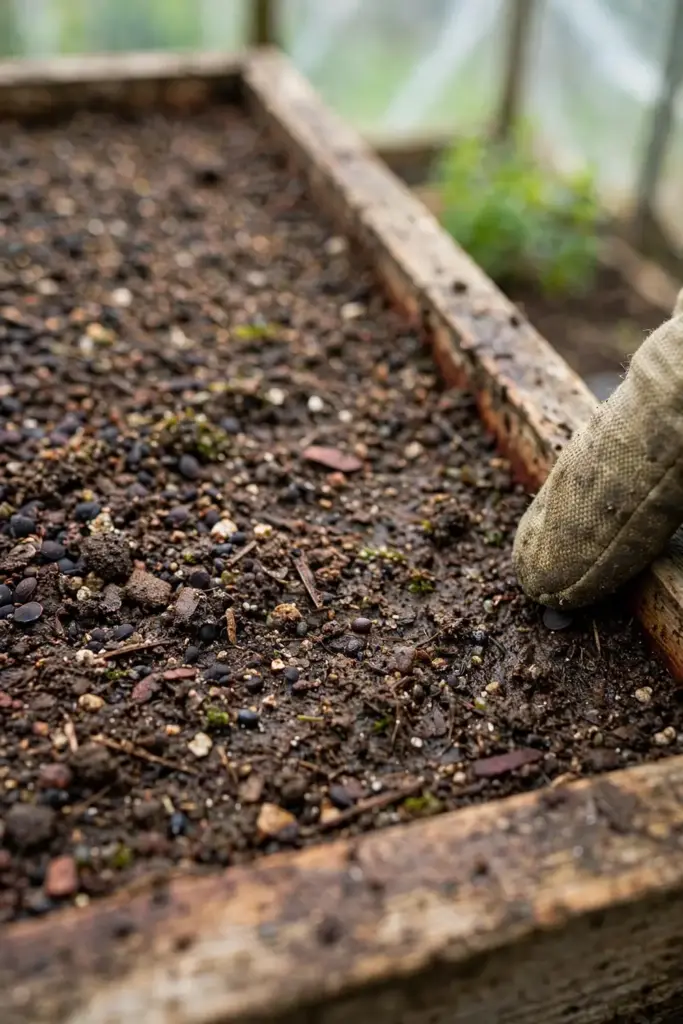
| Step | Action | Time |
|---|---|---|
| 1 | Extract seed from ripe berries, wash, sow fresh | Late summer or autumn |
| 2 | Sow in a cold frame in moist, free-draining mix | Same day, 1 cm deep |
| 3 | If using stored seed, cold stratify first | 4 to 6 weeks at 2 to 5 C |
| 4 | Keep the cold frame cool and ventilated | Germination in late winter or early spring |
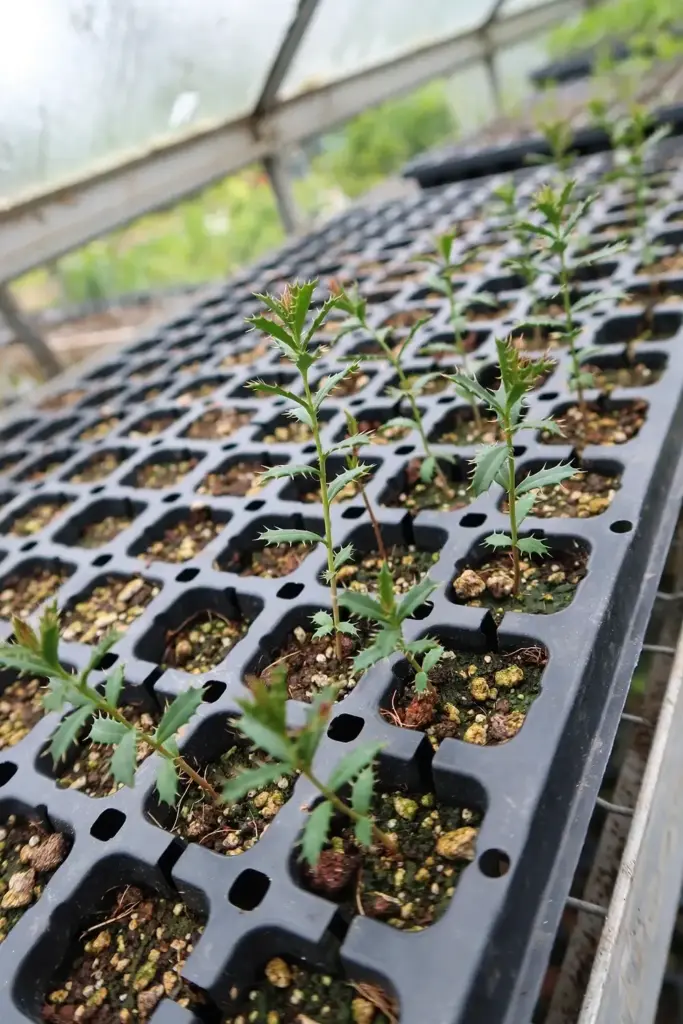
| 5 | Prick seedlings into individual pots when large enough | First true leaves |
| 6 | Grow on in pots through the first winter | One full cold season |
| 7 | Plant out at 20 cm tall, after the last frost | Late spring or early summer |
A seed-starting tray routine such as the one in our seed starting guide applies here, with one addition: cold frames matter for this species. The stratification cue and the germination timing both point to a plant that expects winter.
7. Seedling Care: The First Year Rules
Damping off is the named threat at this stage. The propagation data warns that seedlings are subject to it, so water from below or at the soil line, never overhead, and keep the cold frame or greenhouse well ventilated. Crowded, still, wet air kills more barberry seedlings than any pest.
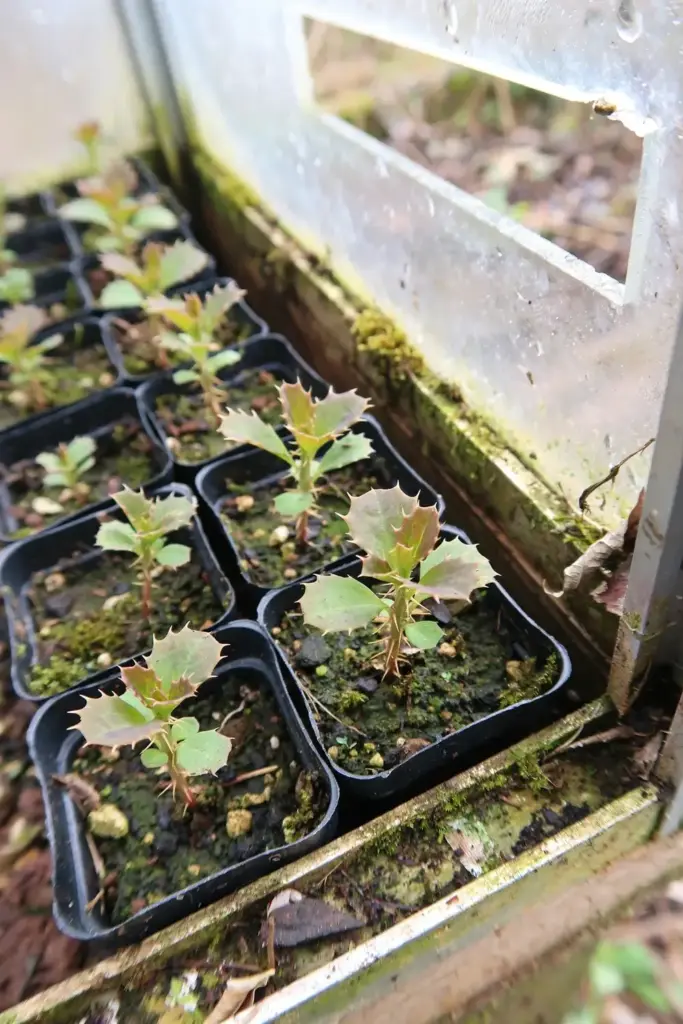
Feed lightly or not at all in the first year. A weak half-strength balanced fertilizer once the seedlings hold four true leaves is enough. Give them full light but avoid scorching midday sun in a hot climate. The goal for year one is a sturdy 15 to 20 cm plant with a fibrous root system, not fast top growth.
8. Transplanting: When and Where
Move seedlings to their permanent positions in late spring or early summer, once they are at least 20 cm tall and all frost risk has passed. Space bushes 1.5 meters apart. That figure comes from the barberry cultivation notes in the scout corpus, and it assumes the mature 3.5 meter spread of a shrub left to its own shape.
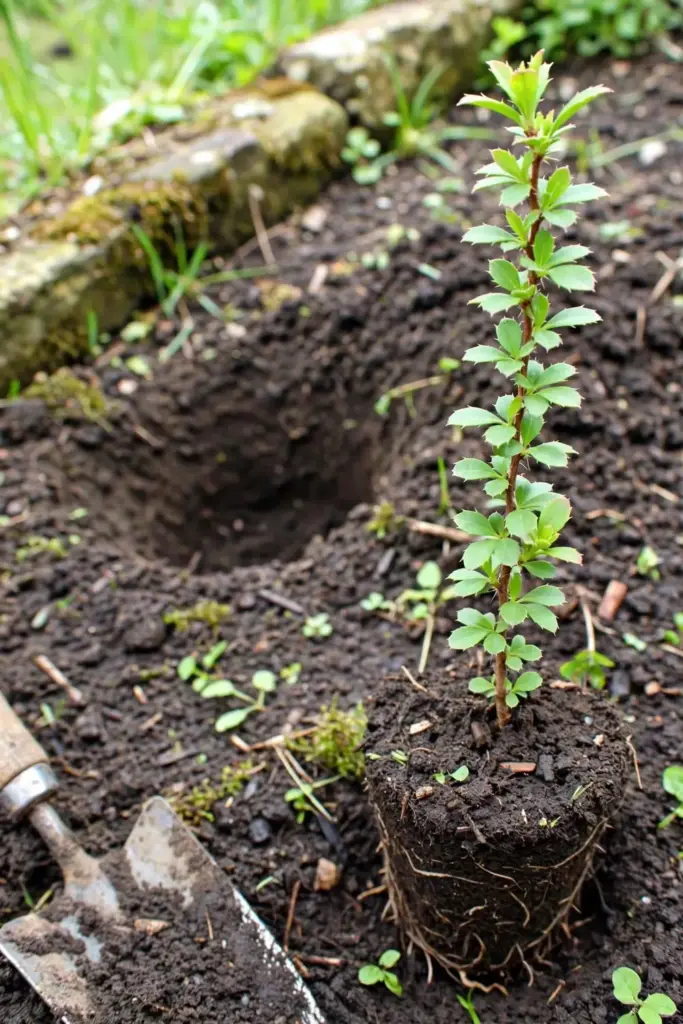
Choose the site with thorns in mind. Barberry makes an excellent hedge and living barrier, precisely because nothing walks through it casually. Plant along a boundary, behind a vegetable bed, or at the edge of an orchard where the spiny branches double as fencing, a use recorded in India for field boundaries. Never place it beside a path children use or where you will brush past it daily.
9. Container Growing: Possible but Not Ideal
A thorny shrub that wants to reach 3.5 meters strains against container life. A 40 to 50 liter pot still works for the first two or three years while seedlings mature. Use a container with drainage holes, filled with a loam-based mix that drains freely.
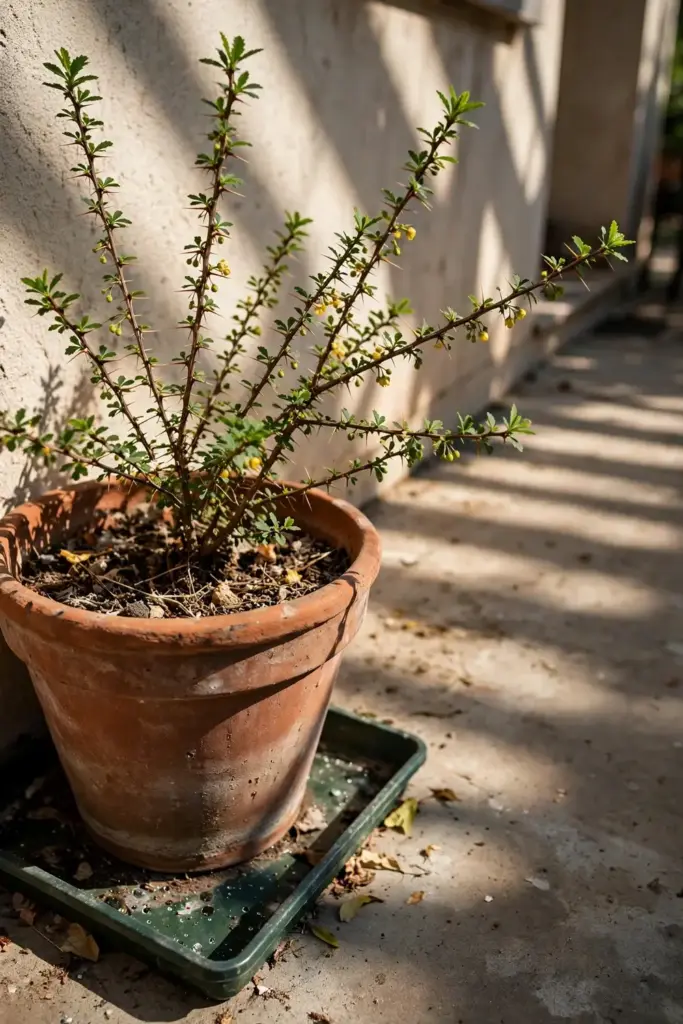
Treat the pot as a nursery stage, not a permanent home. For gardeners asking how to grow tree turmeric from India in a hot-plains climate, the pot is a holding strategy that lets you shift the plant to afternoon shade in peak heat. Root restriction slows a plant whose value lies in wood and root bark, so plan the move to open ground by year three.
10. Soil: What Daruharidra Tolerates
This is a forgiving plant underground. Plants For A Future lists light sandy, medium loamy, and heavy clay soils as suitable, with a preference for mildly acid to neutral to mildly alkaline pH, and it tolerates dry or moist soil and nutritionally poor ground. Warm moist loamy soil with light shade is the stated preference, but the shrub succeeds in thin, dry, and shallow soils too.
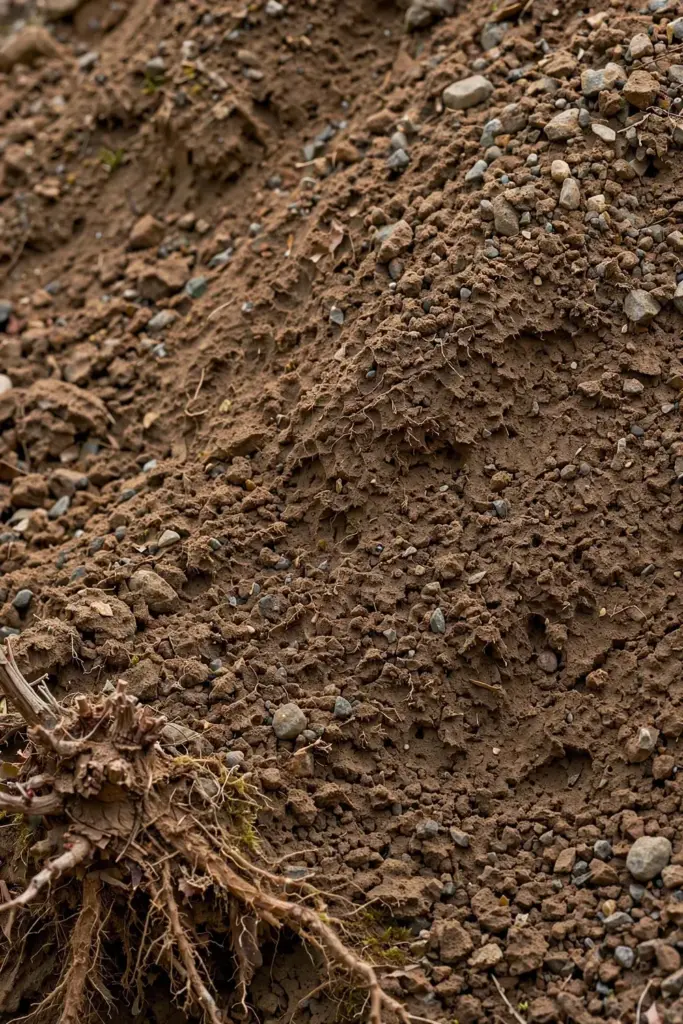
The one fatal condition is waterlogging. Roots sitting in stagnant water rot, and the scout data flags waterlogging as fatal for this species. If your soil holds water after rain, plant on a mound or a slope. For general soil-building principles that apply to any shrub planting, the soil health foundation guide covers structure, organic matter, and drainage in depth.
11. Watering: Drought-Tolerant but Not Waterlogged
Established barberry is drought tolerant. Water deeply at planting and through the first dry season, then back off. A deep soak every 10 to 14 days in dry weather is plenty for a shrub older than two years.
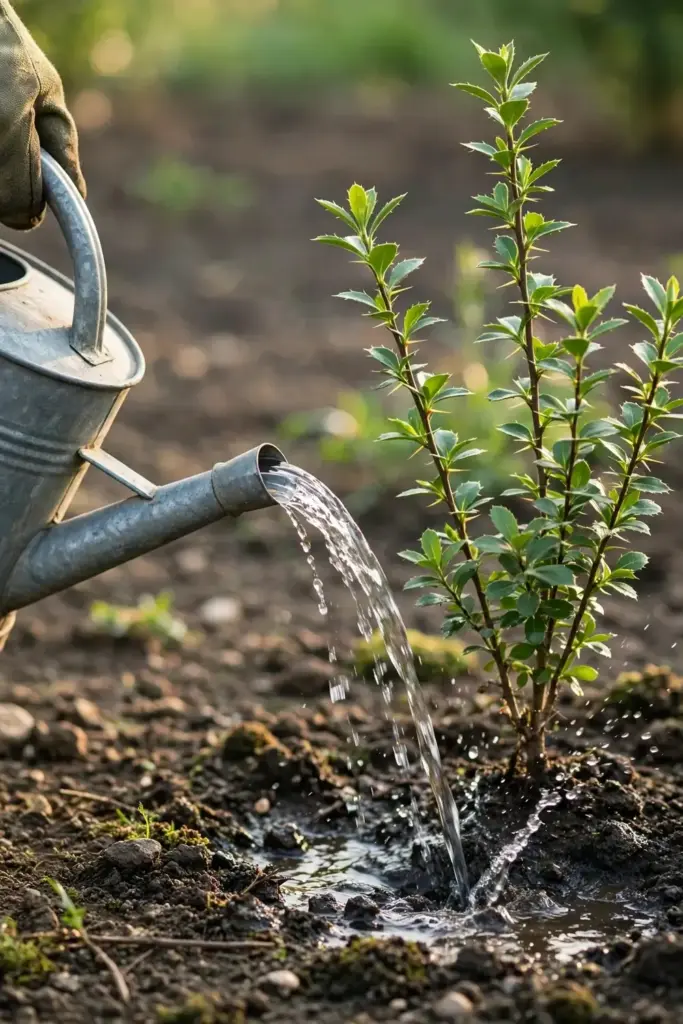
Overwatering causes more damage than underwatering here. Soggy soil invites root problems in a plant adapted to hillside drainage, so let the top 5 cm dry between waterings. Mulch with 5 to 8 cm of bark or leaf litter to hold moisture and suppress weeds, keeping the mulch clear of the stem base.
12. Feeding: From Year Two Onward
Skip fertilizer in year one. From the second year, the barberry cultivation notes recommend a spring nitrogen feed and an autumn application of potash plus superphosphate. A balanced granular fertilizer at the label rate, applied once in early spring, covers the same ground for home growers.
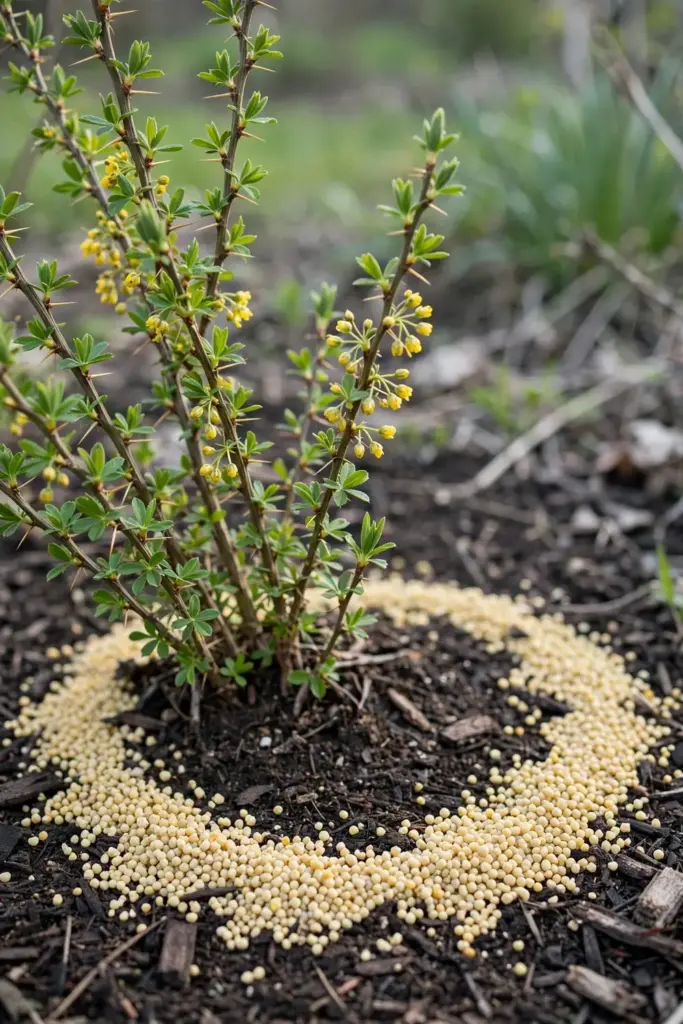
Watch the leaves for feedback. Pale new growth suggests nitrogen shortage; deep green, vigorous shoots mean the current program is fine. Barberry tolerates poor soil, so feeding is maintenance, not rescue.
13. Prune a Thorny Shrub Without Regret
Barberry tolerates hard pruning and resprouts well from the base, which makes this one of the more forgiving shrubs to shape. Wear thick gloves and long sleeves. Every stem carries three-branched thorns, and a careless reach draws blood.
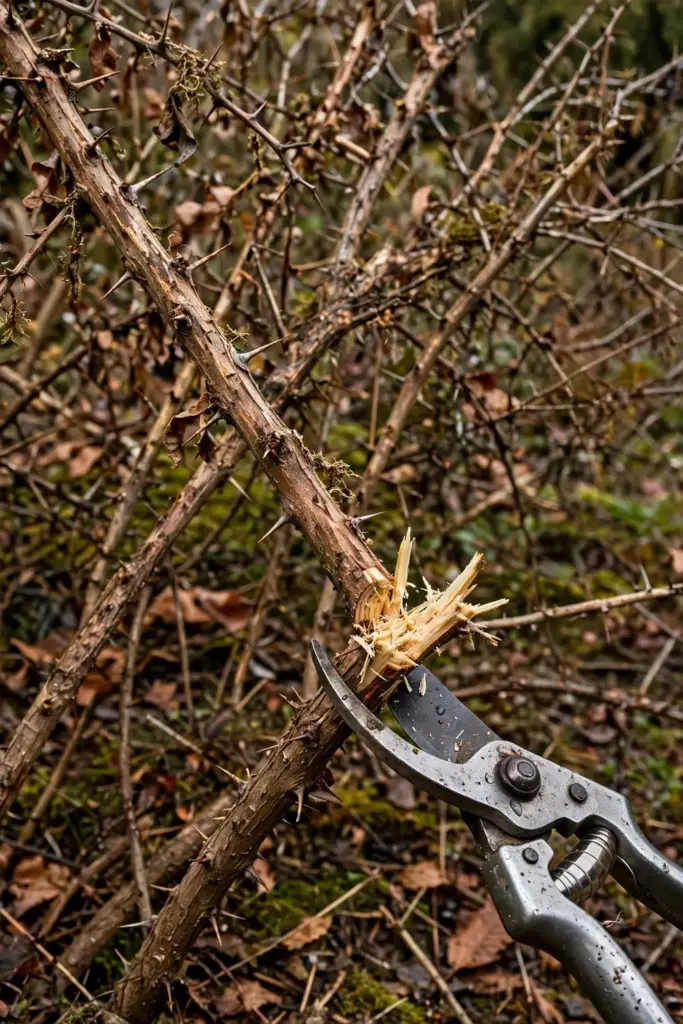
Prune in late winter or early spring, before the May flowering. Remove crossing branches, thin the oldest wood at the base to admit light, and cut back wayward stems to an outward bud. For hedge plantings, shear after flowering so you do not sacrifice the berry crop. Our spring pruning techniques cover the tool and cut fundamentals that apply to any woody shrub.
14. Overwintering and Cold Hardiness
Cold is the easy season. The species survived the severe British winters of 1986 to 1987 without problems in most areas, and UK zone 6 hardiness means sustained frost is not a threat. No wrapping, no greenhouse move, no special mulch is needed in the hills.
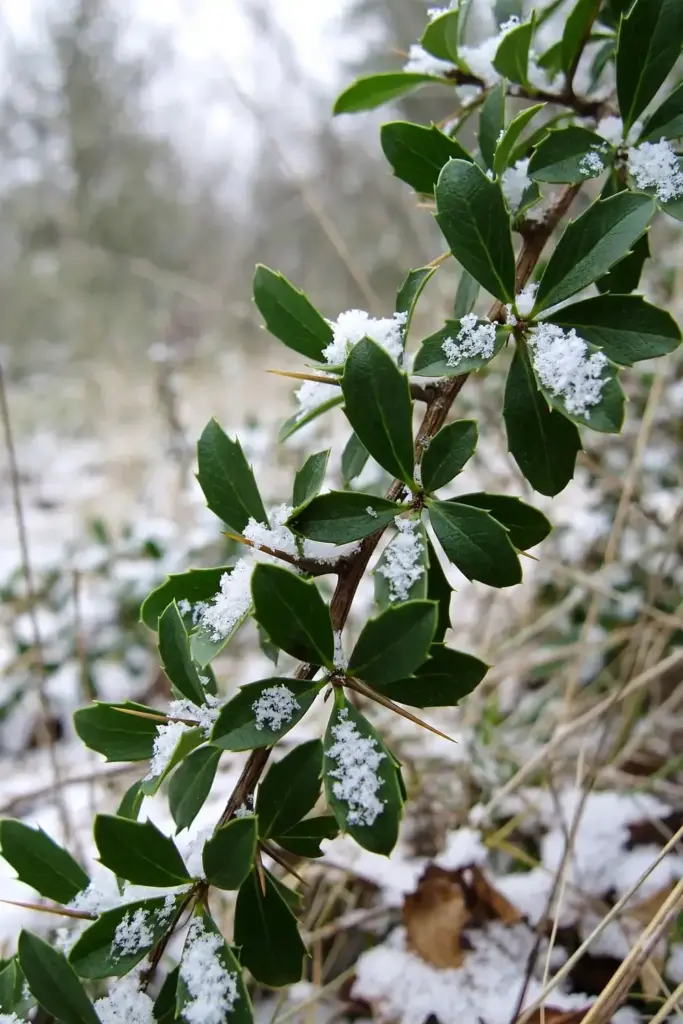
The risk runs the other direction. In the hot plains, the stress season is summer, not winter. Afternoon shade, deep mulch, and adequate water carry the shrub through heat waves. If your climate never drops near freezing, expect slower growth and lighter berry set than the Himalayan benchmarks.
15. Pests and Diseases
Barberry is notably trouble-free. The dense, spiny growth shelters wildlife rather than inviting pests, and no major disease complex follows this species in home gardens. Aphids may cluster on soft spring shoots; a strong jet of water or insecticidal soap handles them.
One caution belongs to the genus, not just this species. Barberries can serve as alternate hosts for stem rust of cereals, which is why some regions restrict planting near wheat country. If you farm grain, check local rules before planting any Berberis. For home gardeners, this is a non-issue in most of India.
16. Berry Harvest: Timing and Signs
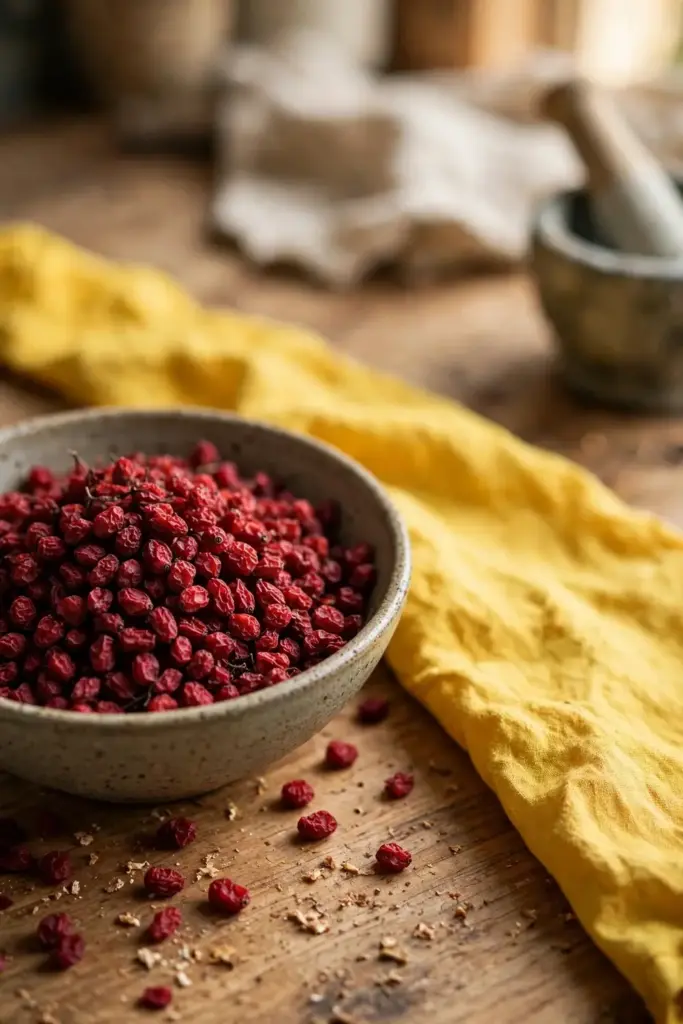
Berries ripen in late summer to early autumn. They turn a deep red-purple and soften slightly when ready. Wild plants yield 650 grams of fruit across four pickings, per the PFAF data, so expect modest harvests from a young shrub and plan multiple passes rather than one big pick.
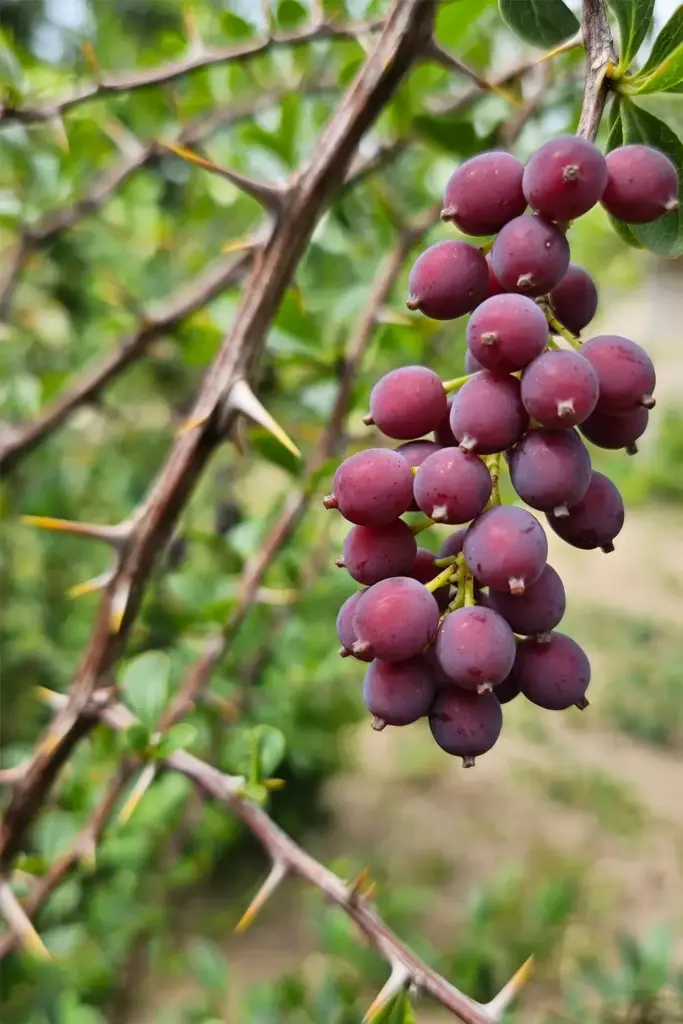
The fruit is eaten raw or cooked and dried like raisins in India. Composition data records 2.3 percent protein, 12 percent sugars, and 4.6 milligrams of vitamin C per 100 milliliters of juice, with a sweet-acid flavor and a slight bitterness from the seeds. Children reportedly like the fresh fruit. Harvest with gloves; the thorns do not take a day off.
17. Stem and Root Harvest: The Multi-Year Timeline
This is the honest section. The Ayurvedic products, rasanjana and the root-bark preparations, come from wood and roots, and a shrub needs several years before those tissues are worth harvesting. The cultivation data puts general maturity at 3 to 5 years for barberry, and root-bark harvest realistically starts later.
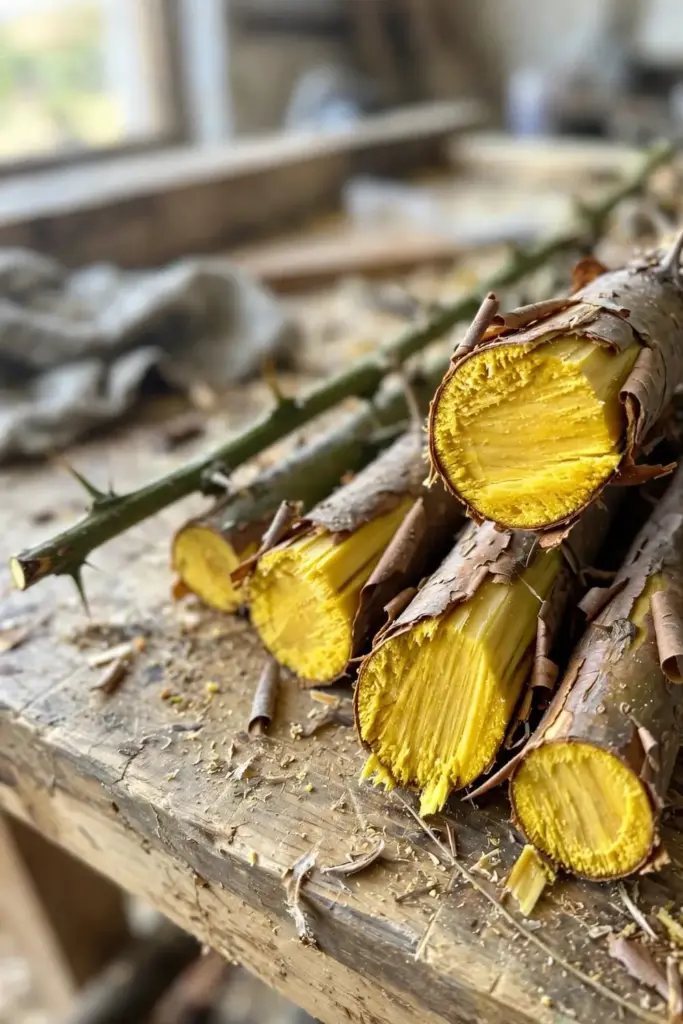
Take wood and root bark sustainably. Harvest from pruned branches rather than stripping the main stem, and never remove more than a third of the root system from a living shrub. The yellow dye obtained from root and stem is a traditional side product of the same harvest. This is a plant you manage for decades, not a seasonal crop you pull and replant.
18. Rasanjana and the Ayurvedic Formulation Lane
Rasanjana, also called rashut, is a concentrated extract of the root bark and wood, and it sits at the center of the classical daruharidra formulations. Traditional texts combine it into preparations such as Darvyadi kvatha, Darvyadi leha, Darvyadi taila, Dasanga lepa, Khadiradi Vati, Mahamanjisthadi Kashayam, and Mahayograj Guggulu.
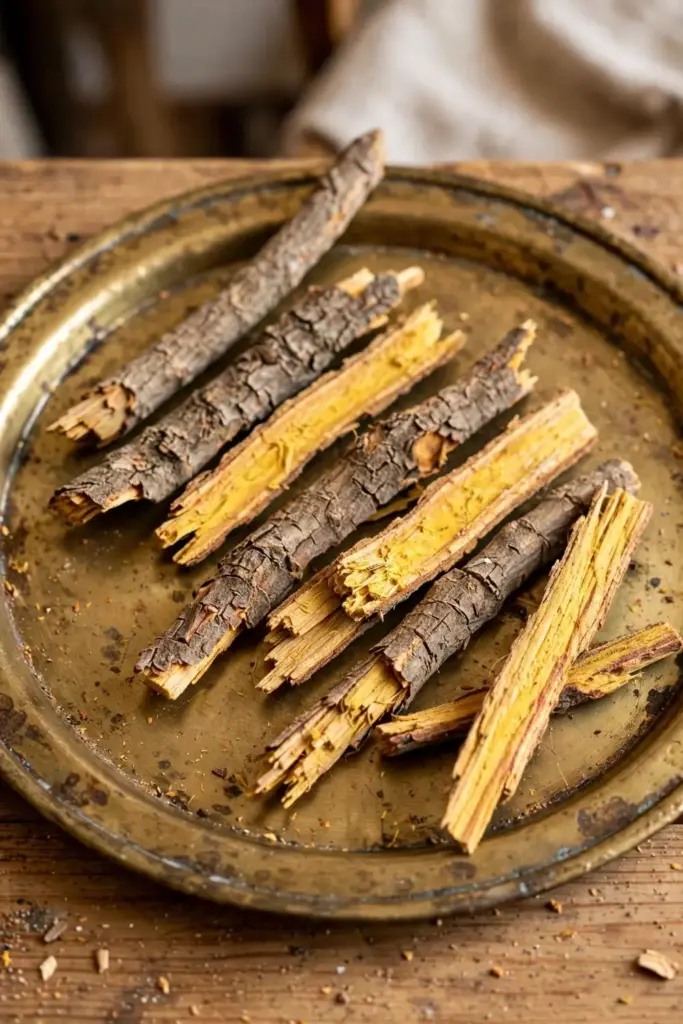
The classical Rasapanchaka profile describes the taste as pungent and bitter, the quality as heating and drying, and the post-digestive effect as pungent. Traditional actions attributed include support for eye complaints, skin conditions, liver and digestion, and wound care. This is traditional-use framing, not a prescription. Talk to a qualified Ayurvedic practitioner before using any of these preparations, and never substitute a home preparation for professional care.
19. Berberine: What Research Shows and What It Does Not
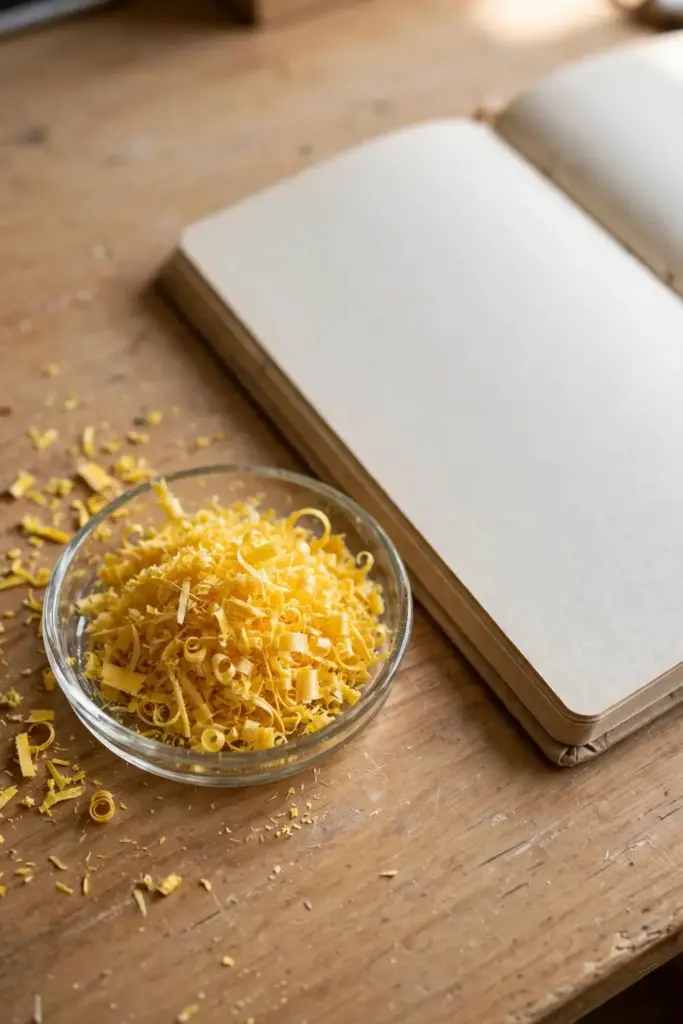
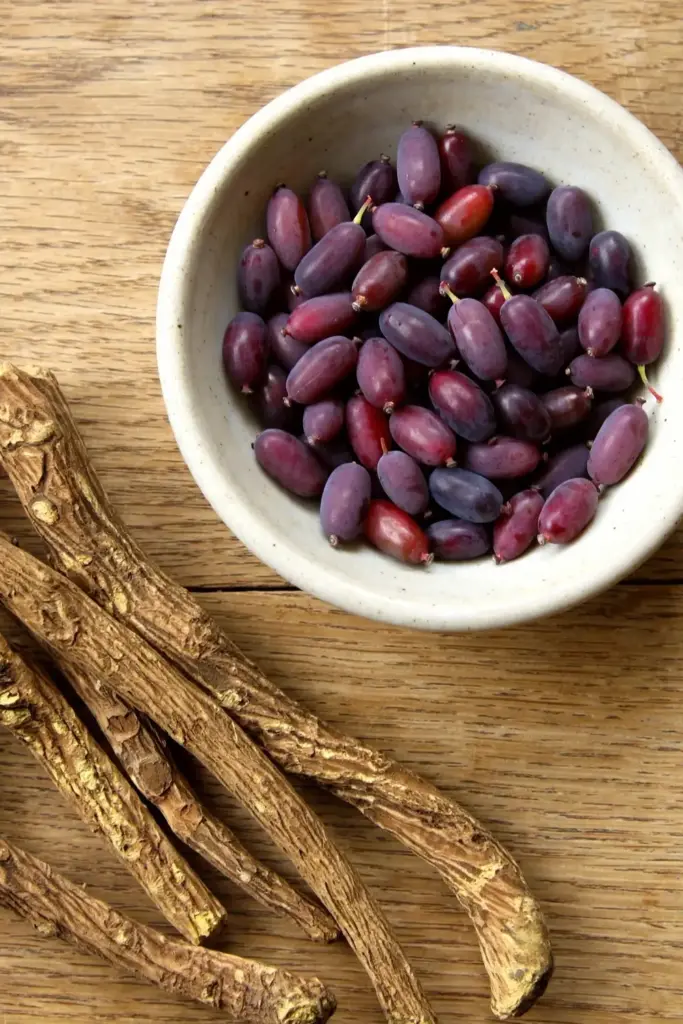
Berberine is the bitter yellow alkaloid present across Berberis rhizomes, with documented antibacterial effects in laboratory and traditional contexts. The botanical literature notes its use in enteric infections, particularly bacterial dysentery, and flags that it should not be combined with licorice species, which nullify its effects.
Clinical signals exist but stay modest. A trial of barberry fruit in type 2 diabetes reported fasting blood sugar falling from 161 to 136 mg per deciliter and HbA1c from 8.1 to 7.07 over eight weeks, as summarized by Science Insights. An ask-ayurveda summary of a Phytomedicine 2015 study reported roughly a 15 percent fasting glucose drop for Berberis aristata against placebo. These are research findings, not dosage guidance, and they do not make the home garden a pharmacy.
20. Safety: Pregnancy, Dose, and Drug Interactions
Therapeutic doses of daruharidra preparations are avoided in pregnancy without professional supervision, and high doses can cause loose stools and cramping. Interactions are possible with statins and blood thinners such as warfarin, because berberine affects the same metabolic pathways.
This section exists because the berberine lane attracts self-experimentation. Do not dose yourself from garden material. If you take prescription medication, are pregnant, or manage a chronic condition, discuss any berberine-containing product with a clinician first, as ask-ayurveda’s safety notes advise. The ornamental berries are food; the concentrated root-bark preparations are medicine, and the two are not the same thing.
21. Traditional Kitchen and Dye Uses
Beyond medicine, the berries are a genuine food crop. They are eaten fresh, cooked into sauces (the flower buds join sauces too), and dried for use like raisins. The yellow dye from root and stem remains one of the notable tannin dyes of India, and spiny branches serve as field fencing while the wood burns as fuel.
This multi-use profile is the real argument for growing the shrub. Even if you never make a preparation, you get an edible berry, a living fence, dye material, and a wildlife shelter from one planting.
22. Common Mistakes
Buying the wrong species. Ornamental barberry stock labeled only “barberry” is usually Berberis thunbergii or a hybrid. Insist on the Latin name Berberis aristata.
Expecting turmeric. The rhizome-spice lane belongs to Curcuma longa. Tree turmeric is a woody shrub with a multi-year timeline.
Trying cuttings first. The propagation data calls cuttings very difficult, if not impossible. Start with fresh seed.
Sowing stored seed without stratification. Old seed needs 4 to 6 weeks of cold before sowing, or germination drags.
Planting in a wet corner. Waterlogging is fatal. Choose drainage over fertility.
Placing it by a walkway. The thorns are serious. Site it where spines are an asset, as a hedge, not a liability.
Harvesting roots too early. Wood and root bark need a mature shrub. Patience is the input.
23. Troubleshooting
Seeds never germinated. Old seed without cold stratification is the usual cause. Stratify 4 to 6 weeks at 2 to 5 C and sow in a cold frame early in the year.
Seedlings collapsed at the soil line. Damping off. Improve ventilation, water at the soil line, and thin for airflow.
Slow growth in year two. Normal for a shrub on a 3 to 5 year maturity curve. Check drainage before blaming fertility.
No berries. The species is self-fertile, so look at light and age. Deep shade suppresses flowering, and young shrubs under three years rarely fruit well.
Leaf yellowing in summer. Heat stress in the plains, or waterlogged roots. Improve shade and drainage rather than adding fertilizer.
Leggy growth. Prune back hard in late winter. Barberry resprouts vigorously from the base.
Frequently Asked Questions
No. Tree turmeric is Berberis aristata, a thorny Himalayan shrub whose yellow wood and root bark supply berberine. Turmeric powder comes from Curcuma longa, a ginger-family herb grown from rhizomes. They share a color word and nothing else. The name “tree turmeric” refers to the yellow wood, which traditional sources call “wood turmeric.”
Expect 3 to 5 years to a mature shrub from seed, with meaningful wood and root-bark harvest later still. Seed germinates in late winter or early spring after autumn sowing, seedlings need a full first winter in pots, and planting out happens at 20 cm tall. This is a decades-long planting, not a seasonal crop, so site it where it can stay.
Effectively no. Botanical propagation data describes cuttings of both half-ripe and mature wood as very difficult, if not impossible. Grow from seed instead: sow fresh-ripe seed in a cold frame in autumn, or cold stratify stored seed for 4 to 6 weeks before early sowing. Accept the seedling timeline as the price of a true plant.
It is a Himalayan foothill native, hardy to UK zone 6, and comfortable with real winters. Long hot summers above the mid-30s Celsius are the limiting factor, so the Indian hills suit it far better than the hot plains. Give it full sun to light shade, free-draining soil, and protection from waterlogging rather than from cold.
Rasanjana, also spelled rashut, is a concentrated extract of the root bark and wood of Berberis aristata. Classical Ayurvedic texts use it in formulations for eye complaints, ulcers, skin conditions, and as a blood-purifying tonic. It is a traditional preparation, not a home project. Consult a qualified practitioner rather than attempting extraction yourself.
Therapeutic preparations of daruharidra are avoided in pregnancy without professional supervision, and berberine can interact with medications including statins and blood thinners. High doses may cause digestive upset. Anyone pregnant, nursing, or on prescription drugs should discuss berberine-containing products with a clinician before use.
Where This Shrub Earns Its Place
Learning how to grow tree turmeric from India is really learning to tell it apart from its famous namesake, then giving a Himalayan shrub the years it needs. Site it as a living fence, harvest berries for the kitchen, and let the wood mature for whatever traditional uses a practitioner guides. The plant rewards the long view, and it punishes only the gardener who mistakes it for something it is not.