
Notoginseng takes 3 to 4 years from seed to a harvestable root, needs real shade at 70 to 80 percent cover, and is not ginseng. That last fact matters more than anything else here. Growers searching how to grow notoginseng land on American ginseng guides, which describe the wrong plant. If you plant Panax notoginseng expecting Panax quinquefolius, you will follow the wrong timeline and misread the medicine warnings. Get the species right, build the shade first, and accept the long wait.
San qi (三七), also sold as tian qi and sometimes called pseudo ginseng, is a shade-loving woodland perennial from Yunnan and Guangxi provinces. Commercial growers raise it under shade structures, much like ginseng, and dig roots after roughly 3 to 4 years. The home version of that system is a deep-shade bed under a deciduous tree or beneath shade cloth, and it works. The part that does not work is treating your harvest as a medicine supply. Notoginseng has a documented record of antiplatelet and anticoagulant activity, which means anyone on blood thinners or facing surgery needs clinician guidance before touching it. Grow it as a plant. Source any medicinal use through professionals.
This guide covers the full cycle: choosing between seed and seedlings, stratifying seed for 3 to 6 months, building 70 to 80 percent shade, sowing at 2 cm deep and 10 cm apart, tending the plants for years, and digging roots in fall of year 3 or 4. The difficulty is patience plus shade discipline. The calendar window is wide: sow in autumn or early spring, then keep the bed shaded and moist for the next three growing seasons.
1. Meet the Panax That Is Not Ginseng
Notoginseng is Panax notoginseng (Burkill) F.H. Chen, a true member of the ginseng genus, but it is its own species. It is not Asian ginseng under another name and not a close stand-in for American ginseng. Same genus, different plant, different chemistry, different traditional uses. Growers in China call it san qi, “three-seven,” and the Latin name on seed packets is the one that matters.
The growing reality is closer to ginseng than to any common herb. You need deep shade, humus-rich soil, and years of patience. A root dug at 2 years is thin and poor; the standard commercial harvest lands at 3 to 4 years. Plan for that from day one. There is no shortcut, and anyone selling you one is selling the wrong seed.
The second reality is safety. Notoginseng’s traditional role is circulatory: stopping bleeding while moving blood stasis, in TCM terms. Modern research reports antiplatelet and anticoagulant signals, which is exactly why the safety section sits early. Read it before you sow. Growing the plant is simple. Misunderstanding what it does is not.
2. Notoginseng vs Asian Ginseng vs American Ginseng
This table is the most important block in the article. Google’s own results for the grow keyword run heavily toward American ginseng analogues, and most sellers blur the three species together. Keep them separate.
| Feature | Notoginseng (P. notoginseng) | Asian ginseng (P. ginseng) | American ginseng (P. quinquefolius) |
|---|---|---|---|
| Other names | San qi, tian qi, pseudo ginseng | Korean/Chinese ginseng | American ginseng |
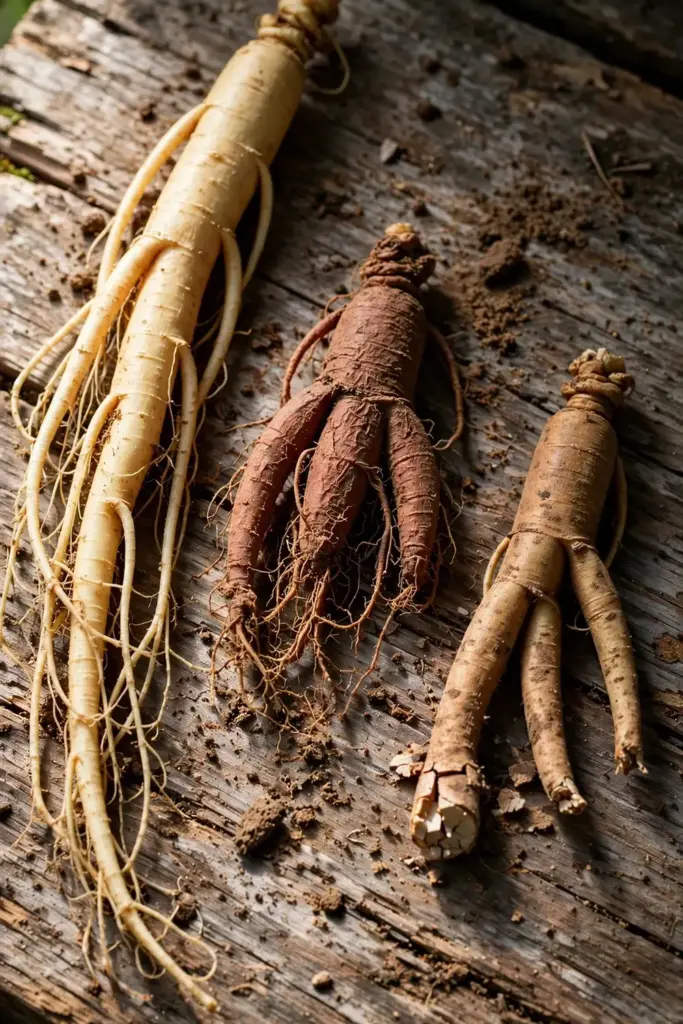
| Root shape | Small, dense, often three-lobed | Longer, man-shaped root | Short, forked, gnarled |
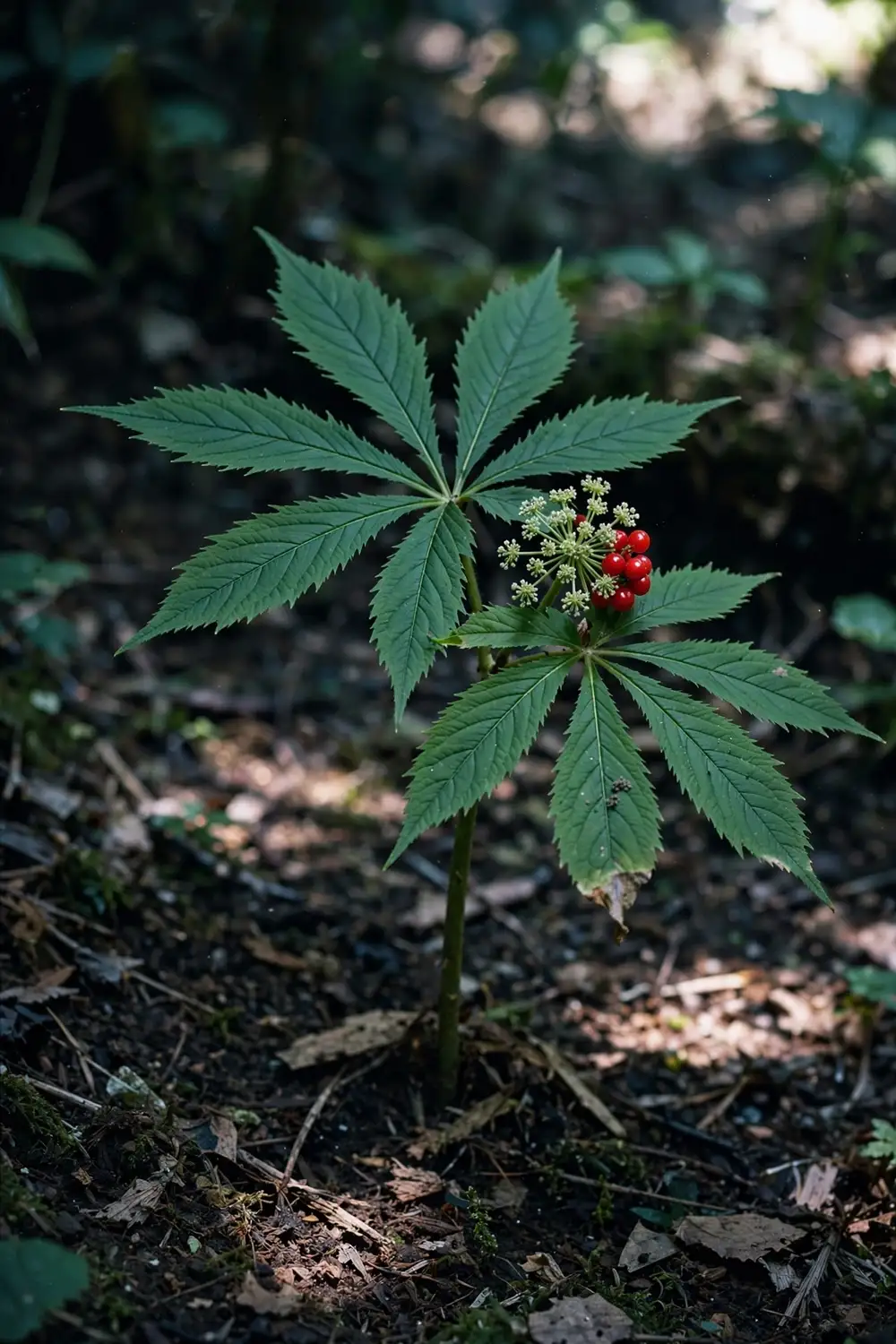
| Leaf | Palmate, finer leaflets | Palmate, broader leaflets | Palmate, oval leaflets |
| Chemistry note | More saponins and notoginsenosides, volatile oil; no oleanolic acid saponin found | More polysaccharides and amino acids | Contains pseudoginsenoside F11, absent in the other two |
| Traditional role | Circulatory: stops bleeding, reduces swelling, clears blood stasis | Adaptogen: tonifies Qi, vital energy | Cooling adaptogen, immune support |
| Home-garden timeline | 3 to 4 years to harvest | 4 to 6 years | 7 to 12 years wild-simulated |
| Shade need | 70 to 80 percent | 70 to 90 percent | 70 to 90 percent |
The chemistry column deserves a pause. A peer-reviewed chemical-diversity study across the three species found more than 60 dammarane saponins isolated from notoginseng, including a notoginsenoside series (A through J) unique to it, while oleanolic acid saponin, common in the two ginsengs, has not been found in notoginseng. A traditional-herb supplier puts the plain version this way: Tian Qi is in the same genus as the ginsengs, but a different species called Panax notoginseng, sometimes known as pseudo ginseng. When a packet just says “ginseng seed,” do not assume it is san qi.
The ginseng-analogue guides are still useful for method. If you want the Asian ginseng version of this same woodland system, the companion guide on how to grow Asian ginseng covers the 4 to 6 year timeline and wild-simulated method. This article stays on notoginseng.
3. Decide How to Start: Seed vs Seedlings
Seed is the honest default for this plant. It costs less, and the stratification protocol below is reliable. The catch is time: add the 3 to 6 month stratification to the 3 to 4 year growing cycle, and you are looking at nearly 4 full years before your first dig.
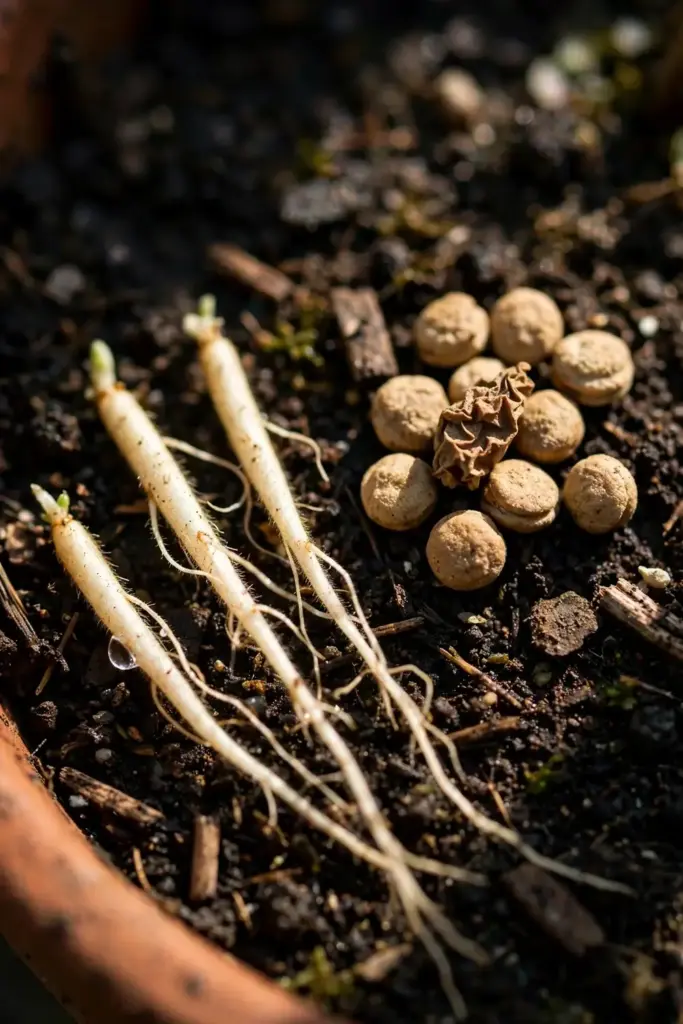
One-year-old seedlings (sometimes sold as rootlets) skip the first winter of uncertainty. You pay more, and you must verify the species on the label with the table above, because nurseries mislabel these plants constantly. A seedling also skips the most failure-prone phase: the long cold stratification where most home growers quit or rot the seed.
Skip the nursery transplant shortcut of buying “ginseng roots” at a market. Those are almost always American or Asian ginseng, and planting them teaches you nothing about notoginseng. Buy from a seed house that lists the full Latin name, Panax notoginseng, and gives a harvest year for the parent plants.
4. What You Need
Gather everything before the stratification clock starts. Woodland perennials punish improvisation.
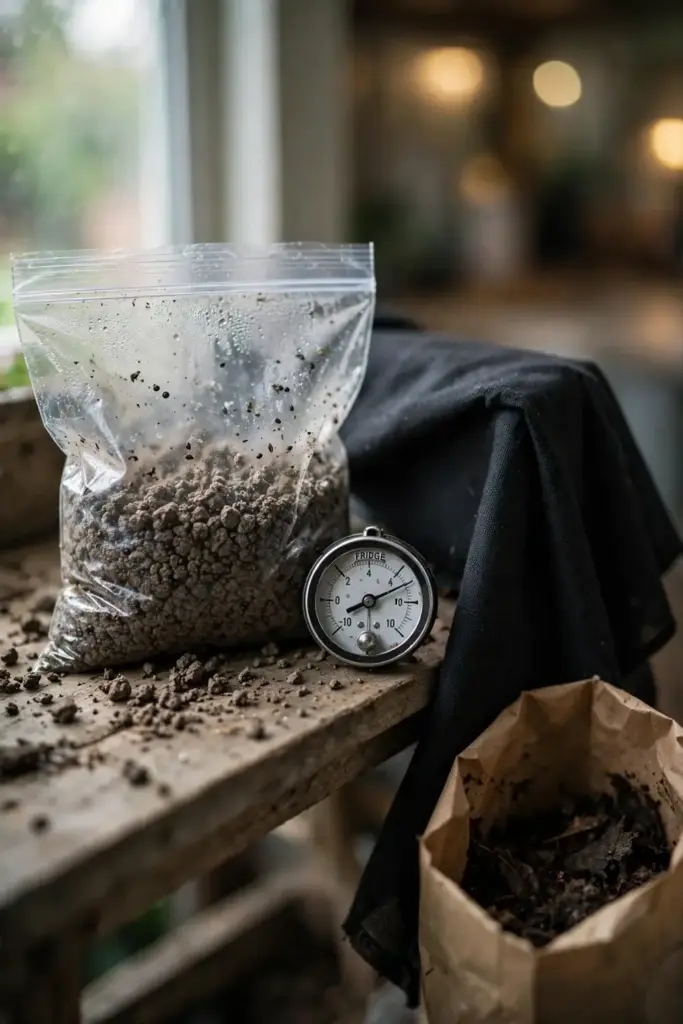
- Fresh notoginseng seed with the full Latin name on the packet
- Fine vermiculite or damp peat moss for stratification
- Sealable bags or small containers for the cold period
- A fridge dial gauge for the cold period (fridge dials lie)
- A site with deep shade, or shade cloth rated 70 to 80 percent
- Leaf mold or well-rotted compost, plus coarse sand for drainage
- A soil pH test kit (target 5.5 to 6.5)
- Mulch: shredded leaves or straw, 5 to 8 cm deep
- A garden fork for digging roots at harvest, never a shovel near the bed
- Labels and a notebook, because year 1 and year 3 look nothing alike
5. The Safety Record: Read This Before You Plant
Notoginseng is not basil. Its documented pharmacology includes antiplatelet and anticoagulant activity, which is the same mechanism that makes blood thinners work. That creates three non-negotiable rules for anyone growing or handling the root.
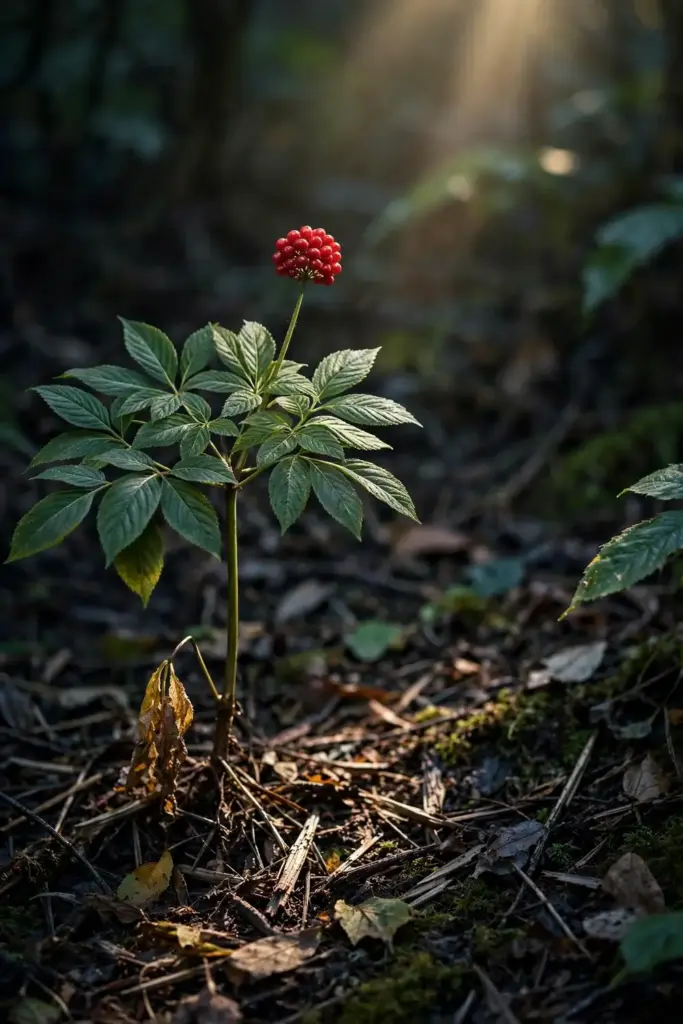
First, do not combine home-harvested notoginseng with prescription blood thinners, antiplatelet drugs, or NSAIDs without clinician guidance. The interaction literature is real and the direction of the effect is additive bleeding risk.
Second, stop any notoginseng preparation at least 2 weeks before scheduled surgery, and tell the surgical team about it. Surgeons ask about supplements for exactly this reason.
Third, pregnancy and breastfeeding are exclusion zones. Traditional circulatory herbs that “move blood” are contraindicated in pregnancy in the source tradition, and there is no safety data to override that.
None of this means the plant is dangerous to grow. It is a quiet woodland perennial. It means the harvest is not a home remedy kit. If you want notoginseng for health reasons, buy a standardized product and talk to a clinician or licensed herbalist. The garden bed is for learning and for the plant itself.
6. Stratify the Seed: 3 to 6 Months at 15 to 20 Degrees C
Notoginseng seed has a warm-cold dormancy cycle. Fresh seed sown in autumn handles this outdoors naturally, which is why autumn sowing is the traditional method. If you are starting seed in hand, you replicate the cycle indoors. The commonly cited protocol is 3 to 6 months of stratification at 15 to 20 C, followed by the cold of late winter, then germination as soils warm.
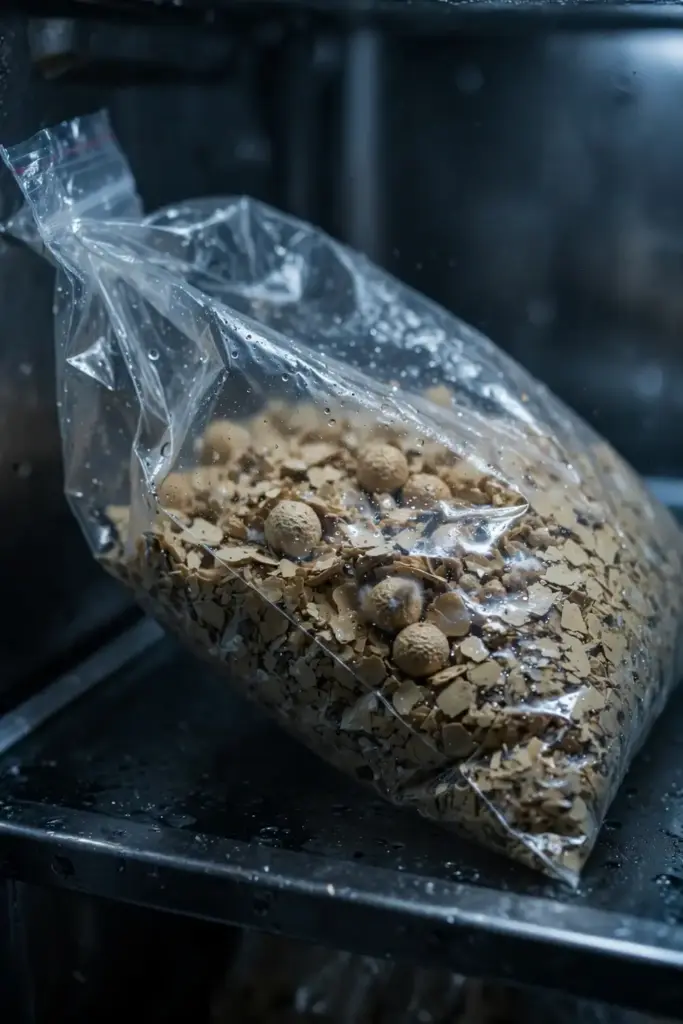
The table below is the indoor version, step by step.
| Step | Action | Time |
|---|---|---|
| 1 | Soak seed 24 hours in room-temperature water; discard floaters | 1 day |
| 2 | Mix seed with damp (not wet) vermiculite in a sealable bag | Day 1 |
| 3 | Hold at 15 to 20 C in the dark (a cool basement shelf, verified with a thermometer) | 90 to 180 days |
| 4 | Check monthly; re-dampen the medium if it dries, discard any moldy seed | Monthly |
| 5 | Move the bag to the refrigerator (2 to 4 C) for late winter | 60 to 90 days |
| 6 | Sow as soils warm in early spring, 2 cm deep | Spring |
Ohio State Extension’s ginseng series describes the same family logic for the American species: ginseng seed must pass through cold dormancy before it germinates, and the extension recommends buying already-stratified seed from a reputable source if the timeline intimidates you. That advice transfers directly. If 6 months of fridge management sounds like a lot, buy stratified seed and skip to sowing.
The failure mode here is rot. Soggy medium kills more seed than cold ever does. The vermiculite should feel like a wrung-out sponge. If water beads when you squeeze it, it is too wet.
7. Build Real Shade: 70 to 80 Percent Cover
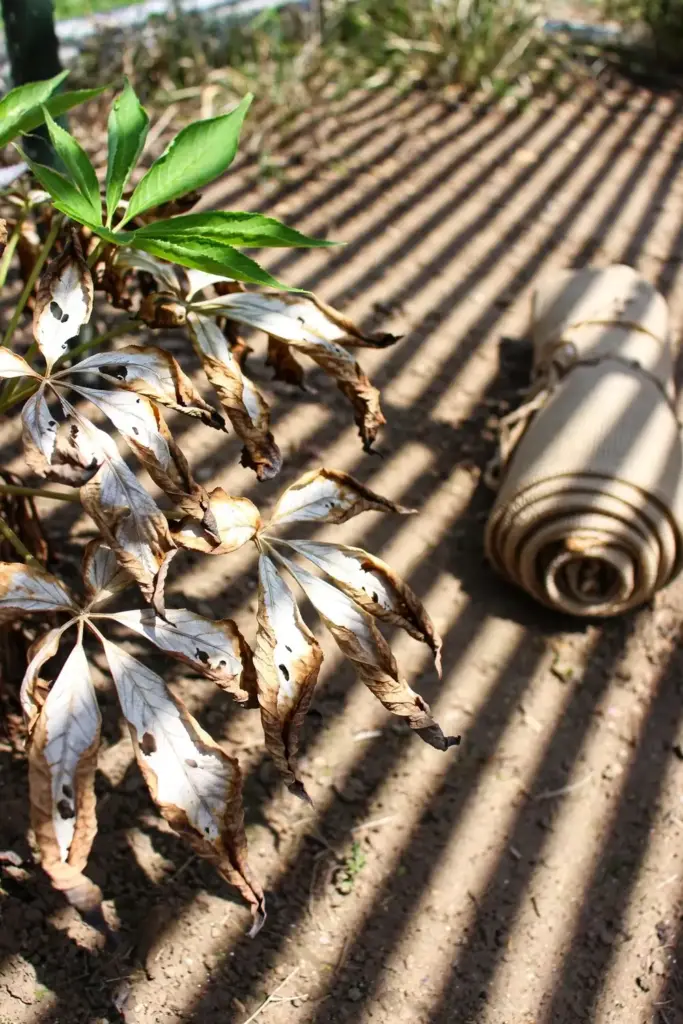
This is the section where most home attempts die. Notoginseng does not want “partial sun” or “afternoon shade.” It wants the gloom of a forest floor, at 70 to 80 percent cover, the level shade-grown Panax crops are raised under. Direct midsummer sun scorches the leaves, and scorched leaves in year 1 mean a weak root in year 4.
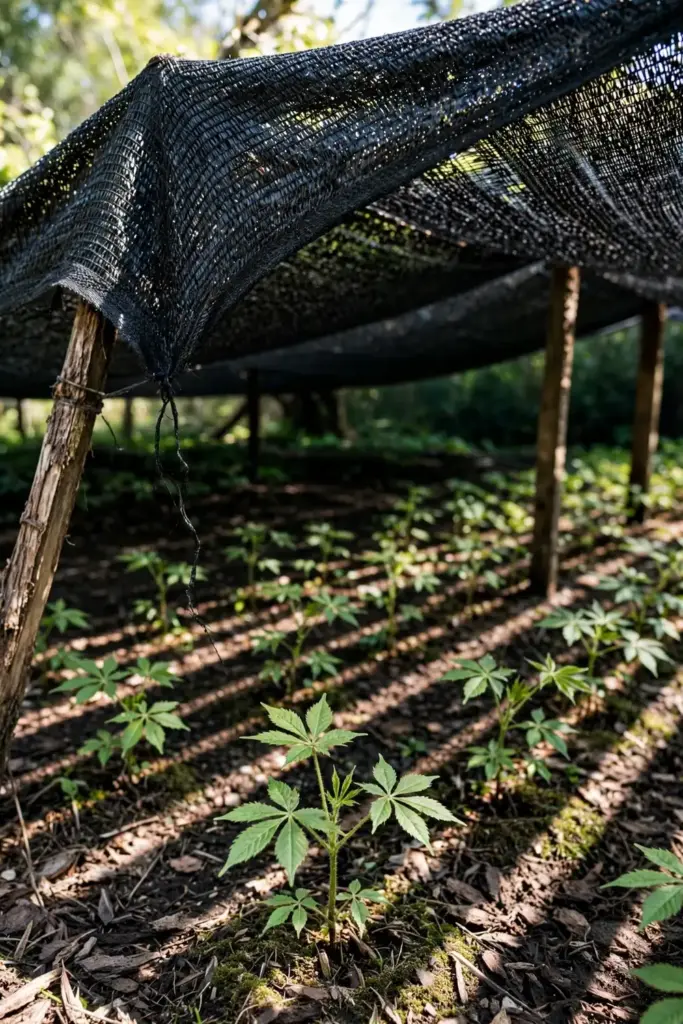
Two systems work. The first is a deciduous tree canopy: plant under a maple or oak on the north or east side, where the canopy leafs out before the notoginseng emerges and drops leaves after it dies back. The second is artificial: a shade structure with rated shade cloth at 70 to 80 percent, at least 1 m above the bed so air moves. Commercial notoginseng is grown exactly this way, under shade structures.
Test the shade before you sow. Stand in the bed at noon in July with a light meter app or just your eyes. You should be able to read comfortably but see dappled, not direct, sun on the soil. If you can see hard-edged shadows, add another layer of cloth or move the bed.
A specialty ginseng nursery notes that shade-grown Panax crops perform under roughly these cover levels with good air movement, and warns that still, humid air under too-tight cover invites the fungal problems covered later in the pests section. Shade plus airflow. Never shade without airflow.
8. Prepare the Soil: Rich, Loose, Slightly Acidic
Notoginseng wants what a forest floor provides: deep, loose, humus-rich soil that drains freely but never dries to dust. The target pH is 5.5 to 6.5, slightly acidic. Test before you amend. Guessing the pH and being wrong by a point costs you a year of weak growth you will not get back.
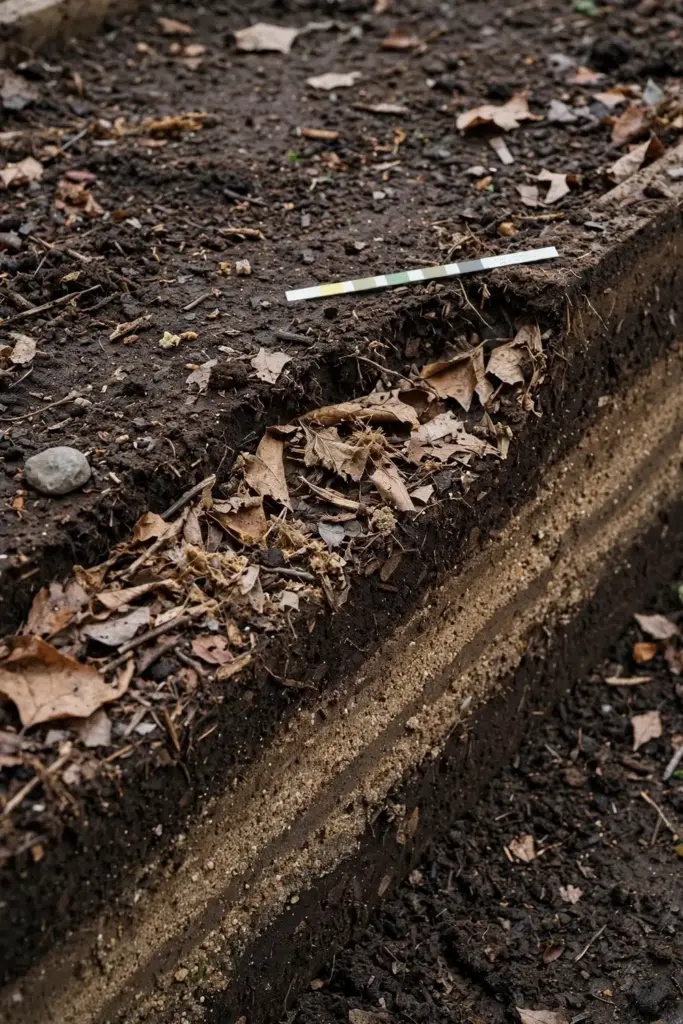
Work 10 to 15 cm of leaf mold or well-rotted compost into the top 25 cm of the bed, plus a few shovels of coarse sand if your soil is clay. The root is a storage organ; it forks and stunts in compacted ground. Raised beds 15 to 20 cm tall solve drainage problems on heavy soil and make the year-4 dig dramatically easier. This is the same foundation logic as any serious perennial bed, and the soil-health guide walks through building that organic-matter base if your native soil is thin.
Do not fertilize heavily at planting. A woodland plant fed like a tomato grows soft tops and invites disease. A light top-dressing of compost each autumn is the whole feeding program for years 1 and 2. Save any stronger feeding for year 3, when the root is bulking.
Mulch the bed with 5 to 8 cm of shredded leaves after sowing. The mulch holds moisture, feeds the soil food web as it breaks down, and mimics the leaf litter of the plant’s native habitat. Keep the mulch off the crowns once seedlings emerge.
9. Sow in Autumn or Early Spring: 2 Cm Deep, 10 Cm Apart
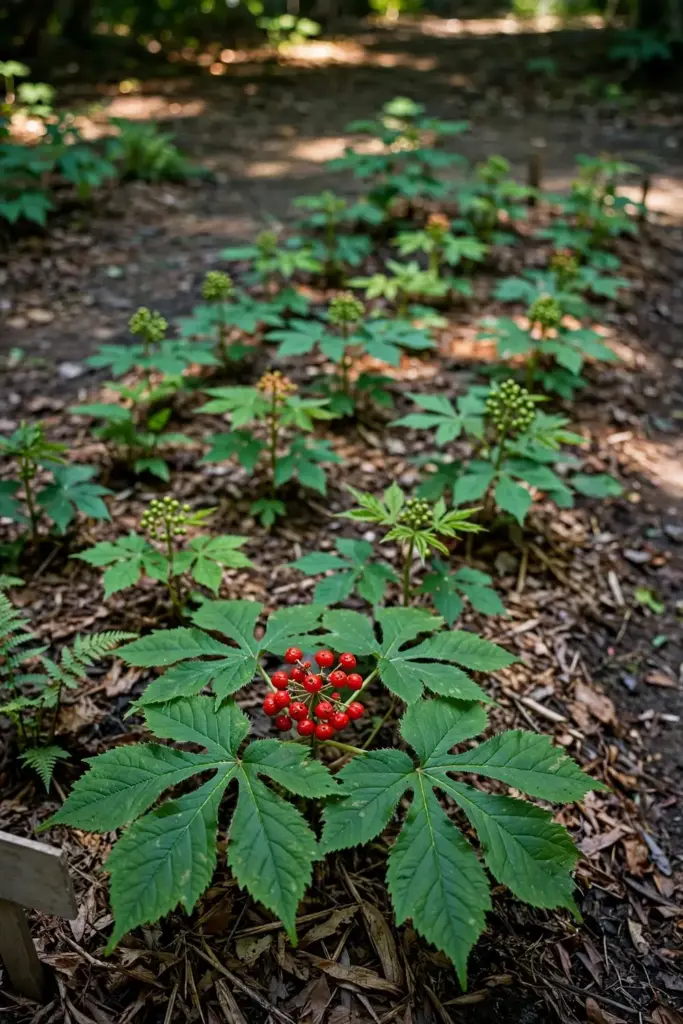
Autumn sowing is the traditional method and the simplest: the winter does your stratification. It is also the step where learning how to grow notoginseng from seed pays off most directly, because the geometry below is unforgiving. Sow stratified seed (or fresh seed) in autumn after leaf fall, or in early spring as soon as the soil can be worked. The commonly cited geometry is 2 cm deep and 10 cm apart in rows 15 to 20 cm apart. That spacing gives each root room to thicken without crowding, which matters because crowded Panax beds are disease beds.
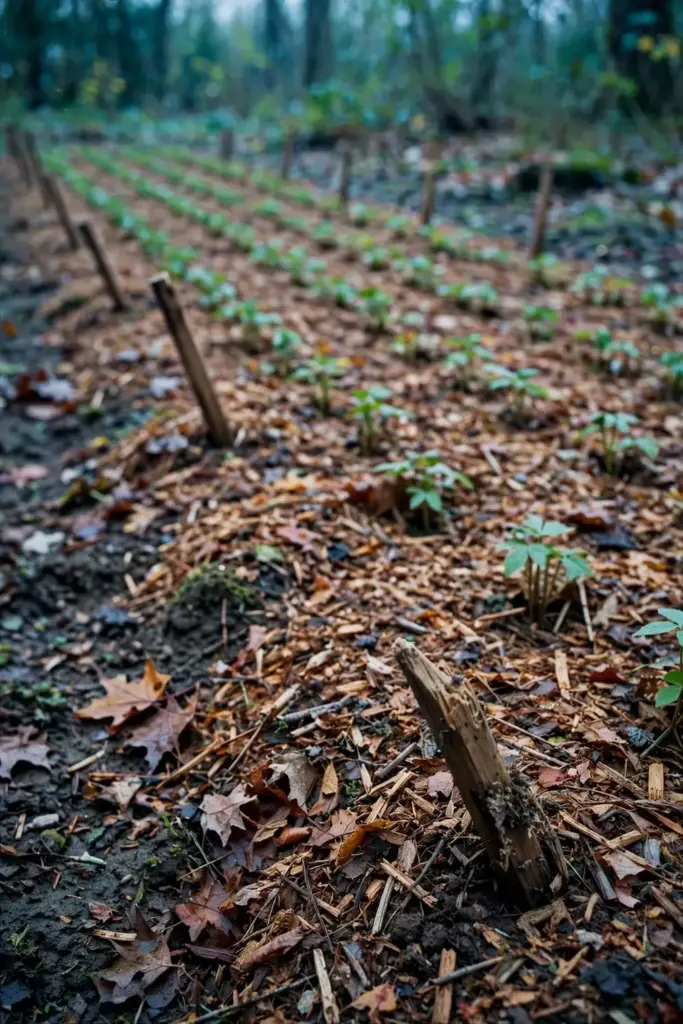
Press the seed into the soil rather than dropping it into a loose hole. Seed-to-soil contact is the difference between germination and a seed that sits. Cover with the shredded-leaf mulch, water gently, and label the bed with the sowing date and the seed source. You will not see much until spring, and by then you will have forgotten what you planted where.
Germination is slow and staggered. Expect the first hooks in 3 to 6 weeks after soils warm, with stragglers over the following month. Do not dig up “failed” seed at week 4. The standard indoor seed-starting routine applies to the mechanics of handling small seed, but note the inversion: most seedlings want light and warmth, while this one wants cool shade from the start.
Thin ruthlessly once seedlings have two true leaves. Ten cm spacing is the target. Every seedling you leave crowded is a root you will harvest small in year 4.
10. Water and Feed a Woodland Plant
Water like a forest, not like a vegetable garden. The bed should stay evenly moist through the growing season, never soggy and never bone dry. In a shaded bed under mulch, that usually means a deep watering once a week in dry spells and nothing at all in wet ones. Stick a finger 5 cm into the soil. Moist, not muddy, is the target.
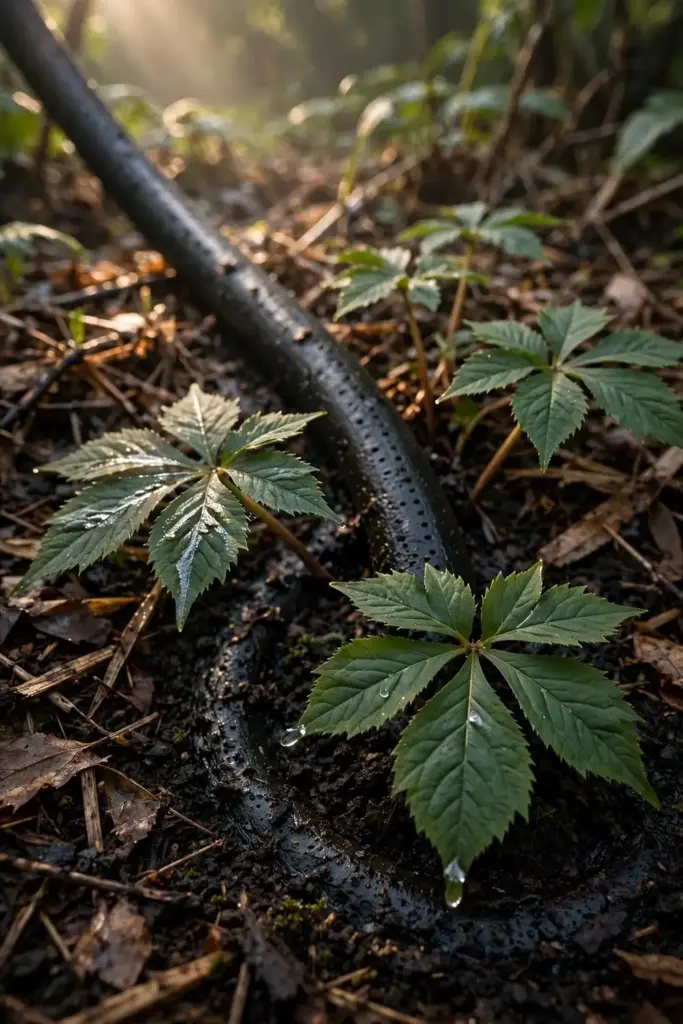
Overhead watering late in the day is the classic disease invitation. Water at the base in the morning so foliage dries by noon. Drip lines or soaker hoses under the mulch are ideal for a bed you will tend for 4 years.
Feed almost nothing. The compost top-dressing each autumn is the program. If a soil test in year 3 shows the bed is genuinely depleted, a light application of balanced organic fertilizer in early spring is acceptable, kept well away from the crowns. Heavy nitrogen grows leaves at the expense of roots and softens tissue for fungal attack. For a plant whose entire value is underground, restraint is the fertilizer strategy.
11. Year One: The Quiet Green Beginning
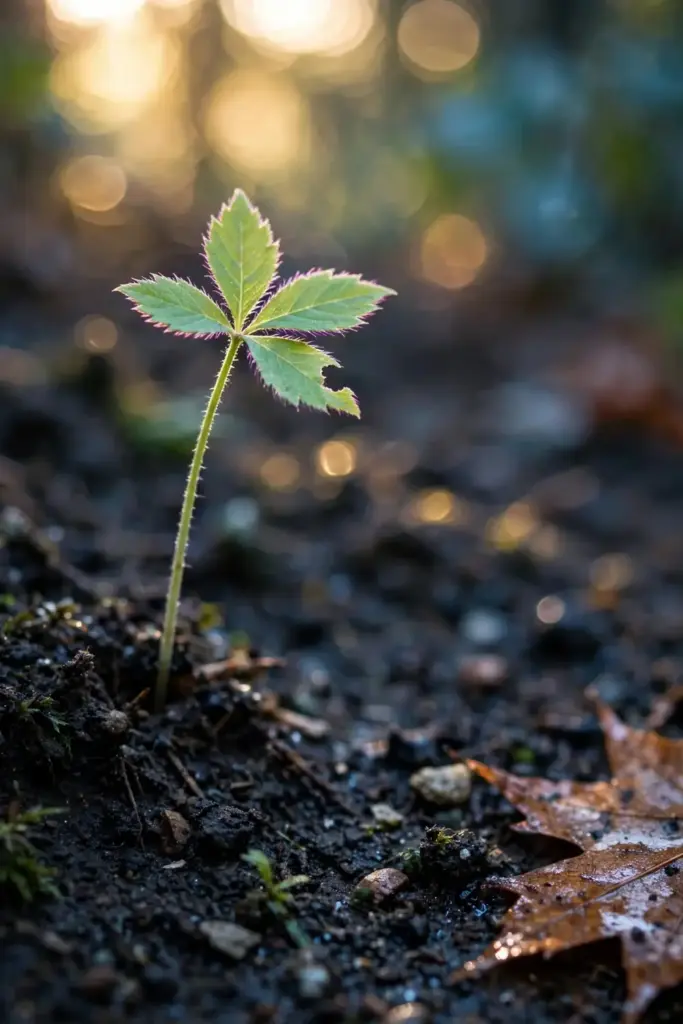
Year 1 is discouraging by design. The seedling makes a single stem with one whorl of three leaflets and a root the thickness of a matchstick. Nothing about it looks like the glossy catalog photos of mature plants. This is normal. The plant is building its perennial crown and its first storage root, and almost all of that work is invisible.
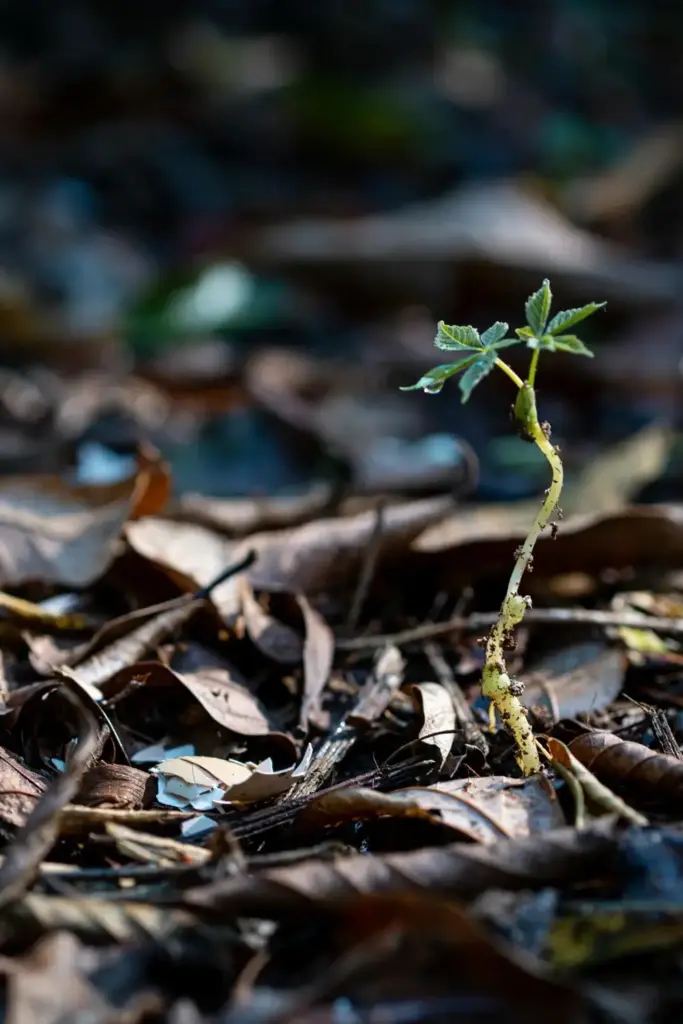
Your job in year 1 is maintenance, not intervention. Keep the shade at 70 to 80 percent. Keep the mulch topped up. Pull weeds by hand, because hoeing near the shallow roots damages them. Watch for slugs, which love the same cool damp conditions the plant does. A ring of diatomaceous earth or a few beer traps handles a normal slug year.
Do not dig to “check progress.” Every disturbance sets the root back. The plant will die back to the crown in autumn of year 1; mark the row ends with permanent labels before the tops vanish, because an unlabeled bed in March is a mystery you will solve by accident with a fork.
12. Pests and Diseases Under the Shade Cloth
Shade plus moisture is fungal heaven, and Panax species are famously disease-prone in cultivation. The honest framing: you will lose some plants. The goal is to lose few.
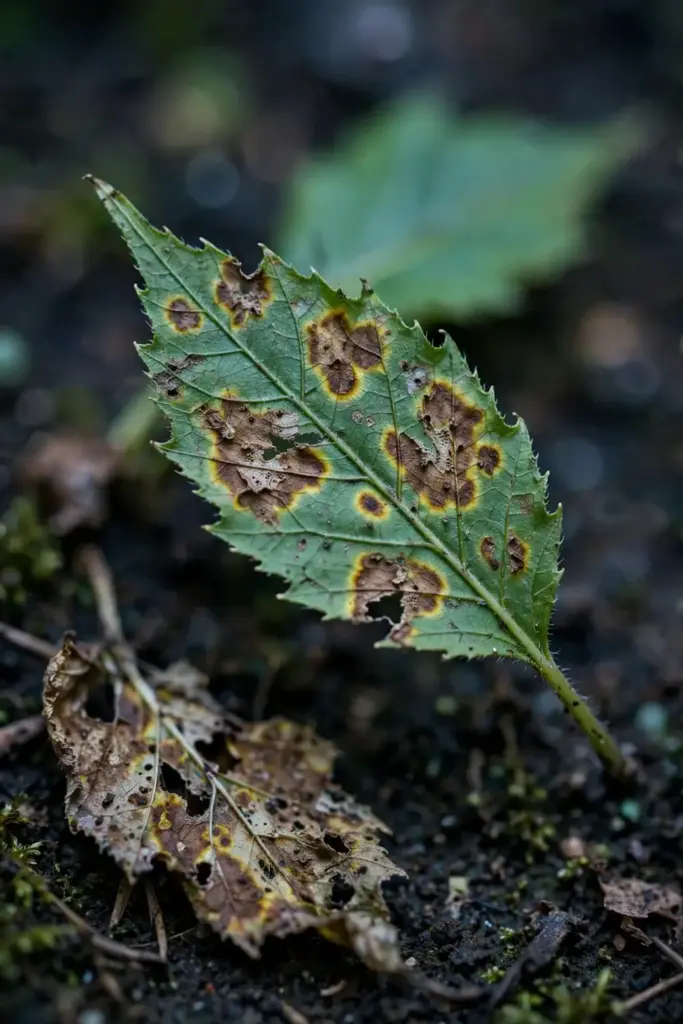
Damping-off hits seedlings in cold wet springs. Prevention is drainage, spacing, and morning watering. If a seedling collapses at the soil line, pull it and the soil around it immediately; it does not recover.
Root rot (various Phytophthora and Pythium species) is the bed-killer. It starts with wilting in wet weather and ends with a mushy crown. There is no cure for an infected plant. Prevention is the entire strategy: raised beds, no standing water, 10 cm spacing, and removing infected plants with a wide margin of soil.
Leaf spot fungi speckle the foliage in humid summers. Improve airflow, water at the base, and remove the worst leaves. A bed that gets morning sun through the shade cloth dries faster and spots less, which is one argument for the east-side-under-tree system over a fully enclosed shade house.
Deer and rodents eat the tops and dig the roots. A low fence handles deer; hardware cloth under a raised bed handles burrowing rodents. Slugs, as noted, are a hand-picking problem.
Never compost diseased plants. Bag them and bin them. The bed will be in the same soil for 4 years, and inoculum accumulates.
13. Harvest Roots in Years 3 to 4
Dig in autumn of year 3 or 4, after the tops have yellowed and died back. That die-back is the signal: the plant has pulled its energy into the root. Digging earlier gives you a thin root; digging later risks rot in wet autumns and gives rodents more time.
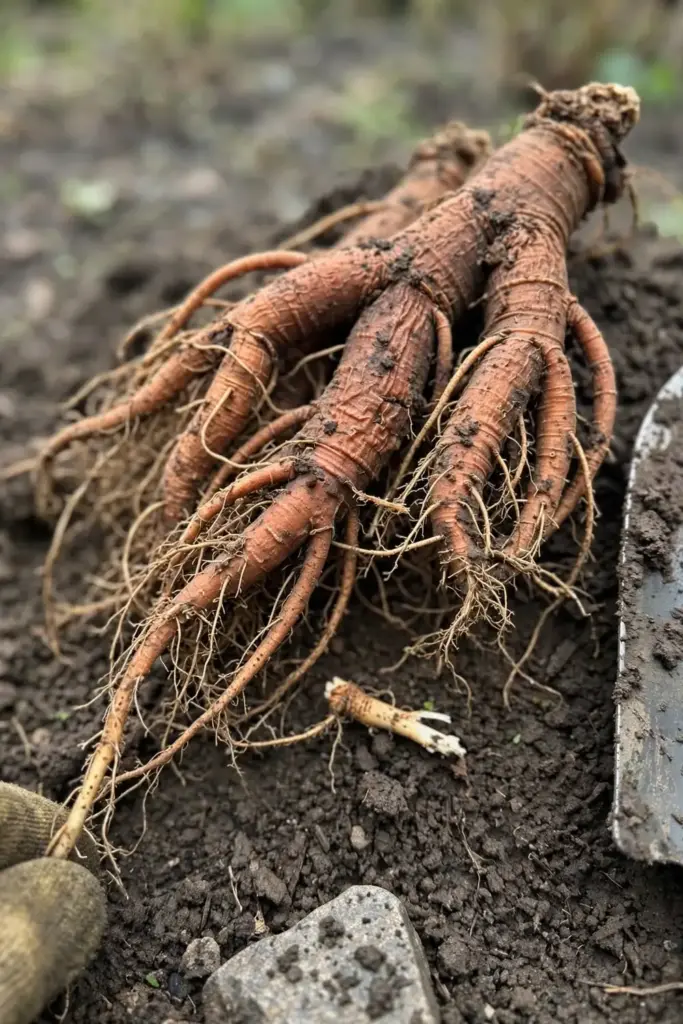
Use a garden fork, starting 20 cm from the crown and working inward. The root system is shallow but wide, with fibrous laterals that break easily. Lift the whole root ball, then tease the soil away by hand. Never yank the stem; the neck where stem meets root snaps, and a snapped neck is a wound that invites rot in storage.
Grade as you go. Thick, unblemished roots are the keepers. Thin or damaged roots go to a separate pile. Replant nothing; notoginseng is grown as a single-cycle crop in the home bed. If you want a continuous supply, sow a new bed every year starting in year 1, so the harvests stack from year 4 onward.
Wash the roots gently in cool water, without scrubbing. The skin carries the quality markers buyers look for, and scrubbing removes it.
14. Wash, Dry, and Store the Roots
Drying is where a good harvest becomes a usable one. Spread washed roots in a single layer on screens in a shaded, airy spot at 30 to 35 C with good airflow. A fan helps. Turn them daily. Drying takes 1 to 2 weeks depending on root size and humidity. The roots are done when they snap cleanly instead of bending.
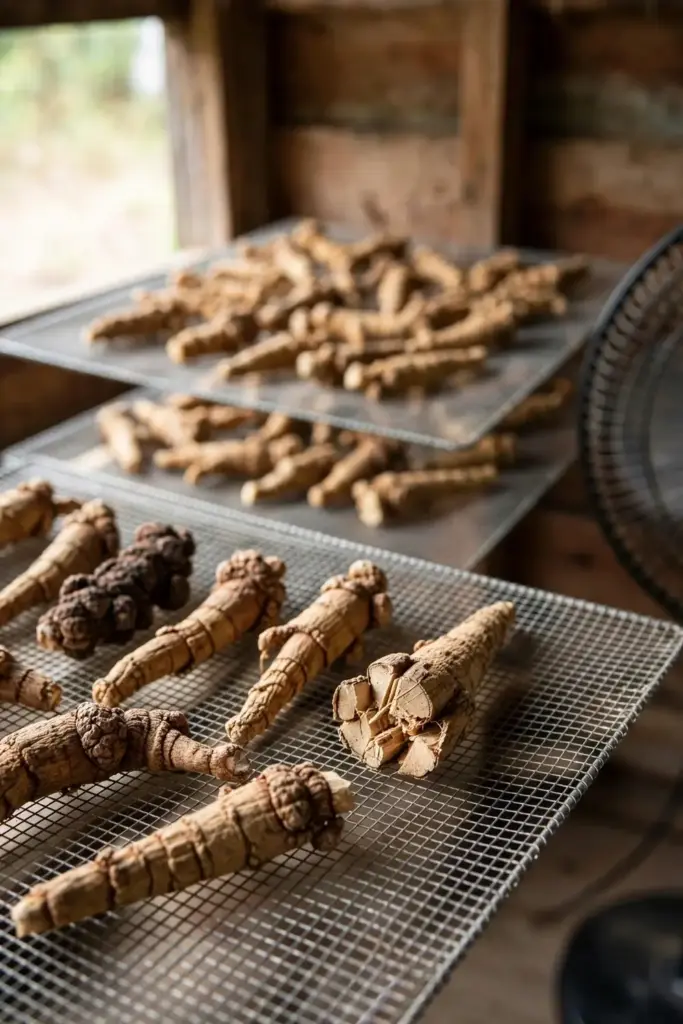
Never dry in direct sun or in an oven. Sun bleaches and cracks the skin; oven heat cooks the chemistry you waited 4 years to build. Slow, shaded, airy drying is the whole method.
Store fully dried roots in airtight glass jars in a cool dark place. Label with the harvest year. Properly dried roots keep for years, though the home harvest is small enough that storage is rarely the limiting factor.
And the safety framing from the safety section applies at the jar, not just the bed. A jar of dried notoginseng root is not a tea ingredient for casual experimentation. The bleeding-risk and drug-interaction rules travel with the root into storage. If the harvest tempts you toward home use, re-read the safety section and talk to a clinician first.
15. Containers: A Nursery Stage, Not a Permanent Home
Containers work for year 1, and only year 1. A deep pot (at least 25 cm) of humus-rich mix in full shade grows a fine seedling, and it lets you control the stratification-to-sowing handoff precisely. Some growers start every batch in pots and transplant the year-old seedlings to the shade bed.
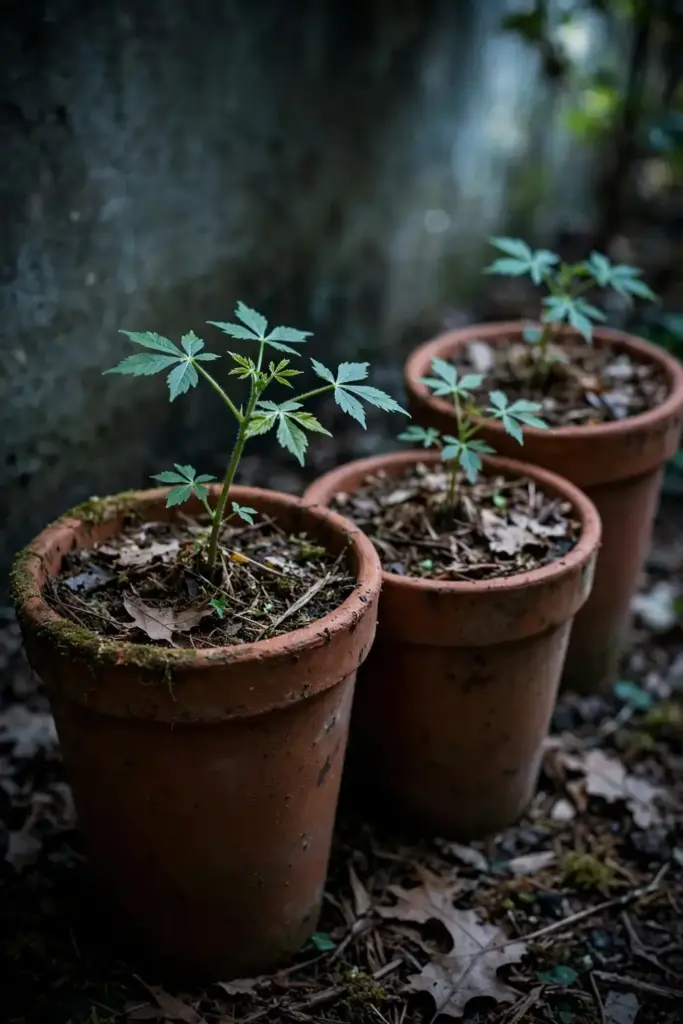
Beyond year 1, pots fail the plant. The root needs depth and lateral room that no reasonable container provides, and a potted Panax in summer heat cooks at the root zone. Transplant seedlings to the bed in autumn of year 1, disturbing the root ball as little as possible. Water the pot thoroughly an hour before, slide the whole plug out, and set it at the same depth.
If you have no ground at all, be honest with yourself: this is not your plant. A 4-year root crop in containers is an exercise in frustration. Grow the seedling year for the learning, then gift the plants to someone with a shade bed.
16. Common Mistakes
Planting in partial sun and calling it shade. Drop below 50 percent cover and scorched leaves by July are the usual result in hot summers, which is why the 70 to 80 percent figure above is a floor, not a suggestion. Measure the cover. If you can see hard shadows at noon, it is not enough shade.
Burying the seed too deep. Two cm is the depth, and at 5 cm the seedling exhausts itself before reaching light, so surface contact plus light mulch is the whole system.
Skipping stratification and sowing dry seed in spring gives you erratic germination or none at all, and the grower concludes the seed was bad. The seed was fine. The dormancy was not broken.
Feeding like a vegetable is another classic: heavy nitrogen on a woodland root crop grows disease-prone tops and thin roots, when compost top-dressing is the entire program.
Digging at year 2 out of curiosity. The root doubles in the third and fourth years. Every early dig is a harvest thrown away.
Assuming “ginseng seed” means notoginseng. It usually means American ginseng. Check the Latin name on every packet with the comparison table in the species section.
17. Troubleshooting
Seedlings emerge, then collapse at the soil line. That is damping-off. The bed was too wet and too crowded. Pull the dead seedlings, improve drainage, widen spacing on the re-sow, and water only in the morning.
Leaves yellow in midsummer despite moist soil. Usually too much sun. Check the shade percentage at noon. Add cloth or move the bed deeper under the canopy. If the shade is correct, check drainage; yellow plus wet means root stress.
Plants vanish after year 1. Rodents ate the crowns over winter, or the bed stayed waterlogged. Hardware cloth under raised beds stops the first; raised beds stop the second. Replant and protect.
No germination by late spring. The seed was unstratified, sown too deep, or dead. Dig up a few seeds gently. Firm and intact means wait another month. Mushy means the batch failed; source fresh seed and stratify properly.
Roots fork heavily at harvest. Compacted soil or stones in the bed. Next bed gets deeper loosening and stone removal to 30 cm. Forked roots still dry and store fine; they are just less handsome.
White mold on drying roots. Airflow was poor or the roots were not fully washed. Increase fan time, spread thinner, and discard any root with deep mold. Surface fuzz wiped off a fully dry root is usually cosmetic, but when in doubt, throw it out.
18. Frequently Asked Questions
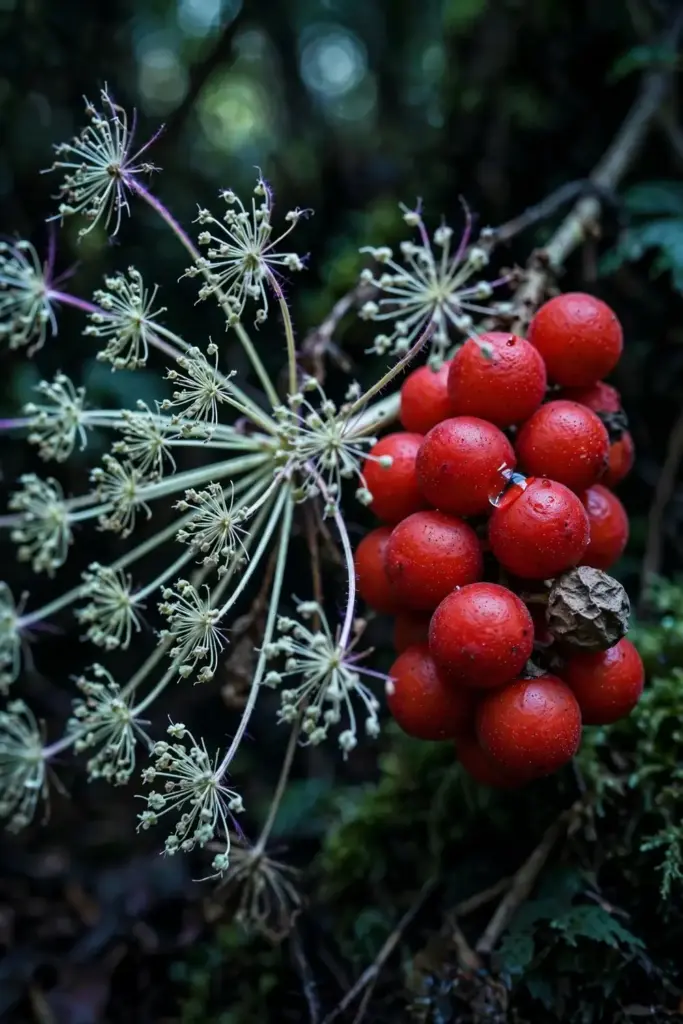
No. Notoginseng is Panax notoginseng, its own species in the ginseng genus. Asian ginseng is Panax ginseng and American ginseng is Panax quinquefolius. They share chemistry families but differ in saponin profiles, traditional uses, and growing timelines. Sellers who blur the names are the reason the disambiguation table exists. Always check the Latin name.
About 3 to 4 years to a harvestable root, plus 3 to 6 months of seed stratification before sowing. Year 1 makes a matchstick root, year 2 thickens it, and years 3 to 4 build the dense storage root worth digging. There is no legitimate shortcut. Anyone promising a 1-year notoginseng harvest is selling a different plant or a fantasy.
For year 1, yes, in a deep pot of humus-rich mix in full shade. Beyond that, no. The root needs depth and lateral room no reasonable container provides, and summer heat cooks potted roots. Treat containers as a nursery stage, then transplant year-old seedlings to a shaded bed in autumn. No ground at all means this is not your plant.
Seventy to 80 percent cover, all growing season, with good airflow. That is forest-floor gloom, not afternoon shade. A deciduous tree canopy on the north or east side works, as does rated shade cloth at least 1 m above the bed. If you see hard-edged shadows on the soil at noon in July, add cover. Scorched leaves in year 1 mean weak roots in year 4.
That is a clinician question, not a gardening question. The plant has documented antiplatelet and anticoagulant activity, which creates real bleeding risk alongside blood thinners, before surgery, and in pregnancy. Do not combine home-harvested root with those situations without professional guidance. Grow it as a plant. Source any medicinal use through a clinician or licensed herbalist.
From seed houses that print the full Latin name, Panax notoginseng, plus a parent-plant harvest year. Avoid packets labeled only “ginseng seed,” which are usually American ginseng. Stratified seed from a reputable source skips the 3 to 6 month home stratification described in the stratification section. Expect small quantities and honest timelines from good sellers; bulk bargain seed is a red flag.
19. Where to Go From Here
You now know how to grow notoginseng from seed to harvest: the species distinction that keeps you from growing the wrong plant, the stratification protocol, the shade system, the 3 to 4 year timeline, and the safety framing that travels with the harvest. The next move is small. Order seed from a seller who prints the Latin name, build the shade before the seed arrives, and sow in autumn.
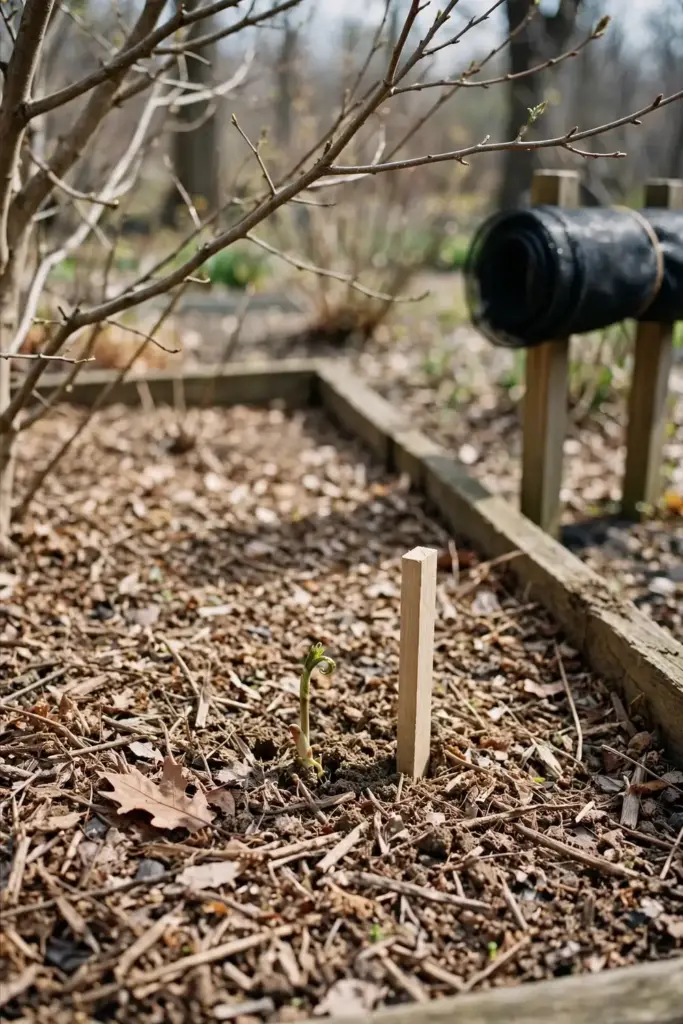
If the shade-garden bug bites, the fall herbs to plant roundup covers companions that share notoginseng’s cool-season calendar. And if you want the Asian ginseng version of this woodland system, the companion guide is one search away. Grow the plant patiently, respect what it does, and let the fourth autumn be the reward.