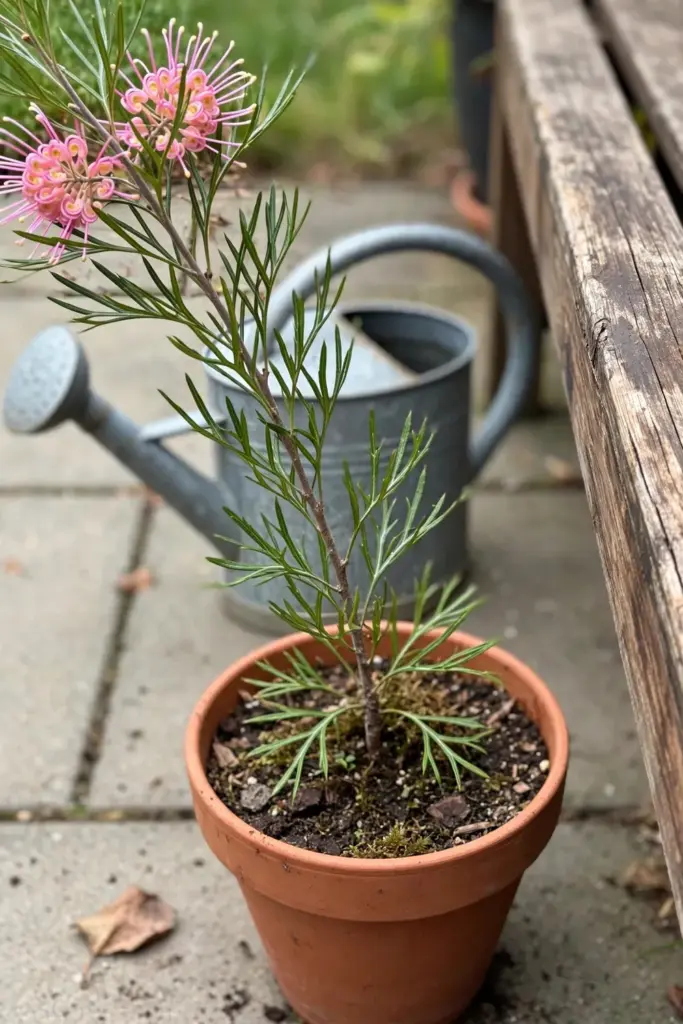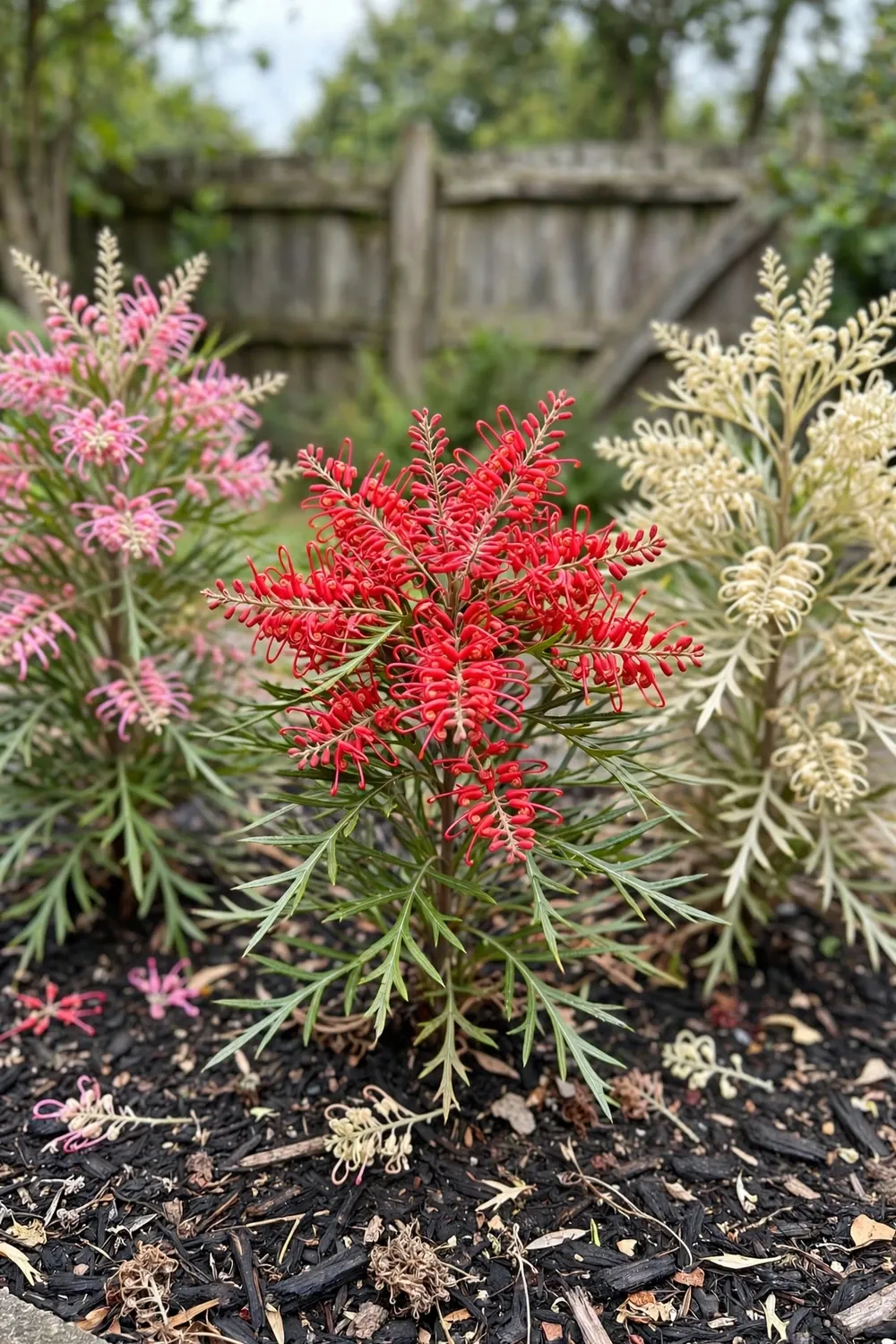

Pick by garden role first, then by flower color. 15 grevillea varieties cover every Australian garden job, from banks that need cover to pots that need a small shrub. The best grevillea varieties earn their place with size, flower color, flowering period, and climate fit.
I have learned that drainage decides a grevillea faster than fertilizer.
Grevillea is a genus of shrubs and trees in the Proteaceae family, and its flowers carry long styles that give the bloom a spidery or toothbrush shape. Grevillea flowers feed honeyeaters and insects through long flowering runs. Grevillea leaves range from fine needles to broad fern-like fronds, and the genus spans groundcovers under half a meter tall to trees over 20 meters tall. The rest of this page is 15 picks, from the workhorse Robyn Gordon to the tree-form Silky Oak.
Pick the Best Grevillea Varieties by Garden Role First
Match the plant to the job before you shop. A groundcover fails as a screen. A tree fails in a pot.
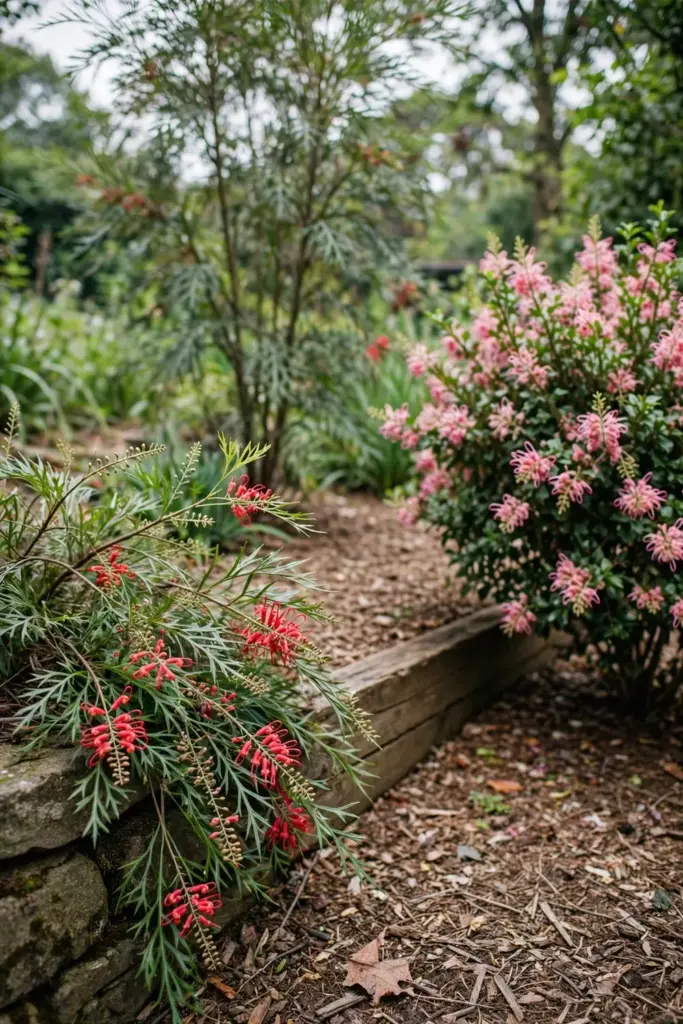
Start with the job list. A bank needs a groundcover that spreads wide and roots along the stems. A boundary needs a shrub that holds dense foliage from ground level to head height. A pot needs a compact shrub with a small root ball and a shape that stays neat with one light prune a year. A feature spot needs a plant with a clear shape and a long flowering run. A humid garden needs a cultivar that tolerates wet summers. A cold garden needs a cultivar that tolerates frost. Write the job on paper before you walk into the nursery. The label then answers a clear question.
Read the size numbers as mature sizes, not nursery-pot sizes. A tube plant that stands 20 cm tall in the shop can spread 6 meters wide at maturity. A shrub that looks neat at 1 meter can reach 4 meters in a decade. The table below gives mature height and spread for all 15 picks, so the choice rests on the garden the plant will fill. Measure the space first. Measure twice where a path, a fence, or a house wall sets a hard edge.
Feed all 15 picks the same way. Grevillea roots react badly to high phosphorus, so feed with a low-phosphorus native fertilizer in spring. Grevillea roots need air, so plant on free-draining soil and keep mulch clear of the stem. Grevillea flowers need sun, so give full sun or light shade. These three rules hold across the genus. The picks below differ in size, flower color, and climate fit, and the rules stay the same.
| Variety | Height | Spread | Flower | Best For |
|---|---|---|---|---|
| 1. Robyn Gordon | 1.5 m | 1.5 m | Red | All-round shrub |
| 2. Superb | 2 m | 2 m | Deep pink to coral | Screen and feature |
| 3. Moonlight | 3.6 m | 2.4 m | Cream | Tall screen and feature |
| 4. Honey Gem | 3 to 5 m | 2 to 3 m | Golden orange | Tall screen and birds |
| 5. Rosemary Grevillea | 1.5 m | 1.5 m | Pink and white | Hedge and small garden |
| 6. Royal Mantle | 0.5 m | 6 m | Red | Banks and slopes |
| 7. Bronze Rambler | 0.5 m | 5 m | Red purple | Tough groundcover |
| 8. Gin Gin Gem | 0.5 m | 3 m | Red and cream | Neat weed-suppressing cover |
| 9. Mt Tamboritha | 0.5 m | 1.5 m | Pink | Cold-ready low cover |
| 10. Billy Bonkers | 1 m | 3 m | Pink | Small garden and pots |
| 11. Cherry Ripe | 0.5 m | 0.5 m | Cherry red and white | Compact hedge |
| 12. Pink Midget | 0.4 m | 0.5 m | Pink | Smallest pots |
| 13. Rosy’s Baby | 1 m | 0.8 m | Pink and cream | Tubs and courtyards |
| 14. Silky Oak | 25 m | 15 m | Orange | Tree and shade |
| 15. Banks Grevillea | 8 m | 3 m | Red or pink | Humid subtropical gardens |
Soil shapes establishment, and building soil health covers the soil side of the job in full. This page picks the variety. The soil page covers the bed.
1. Plant Robyn Gordon for All-Year Red Flowers
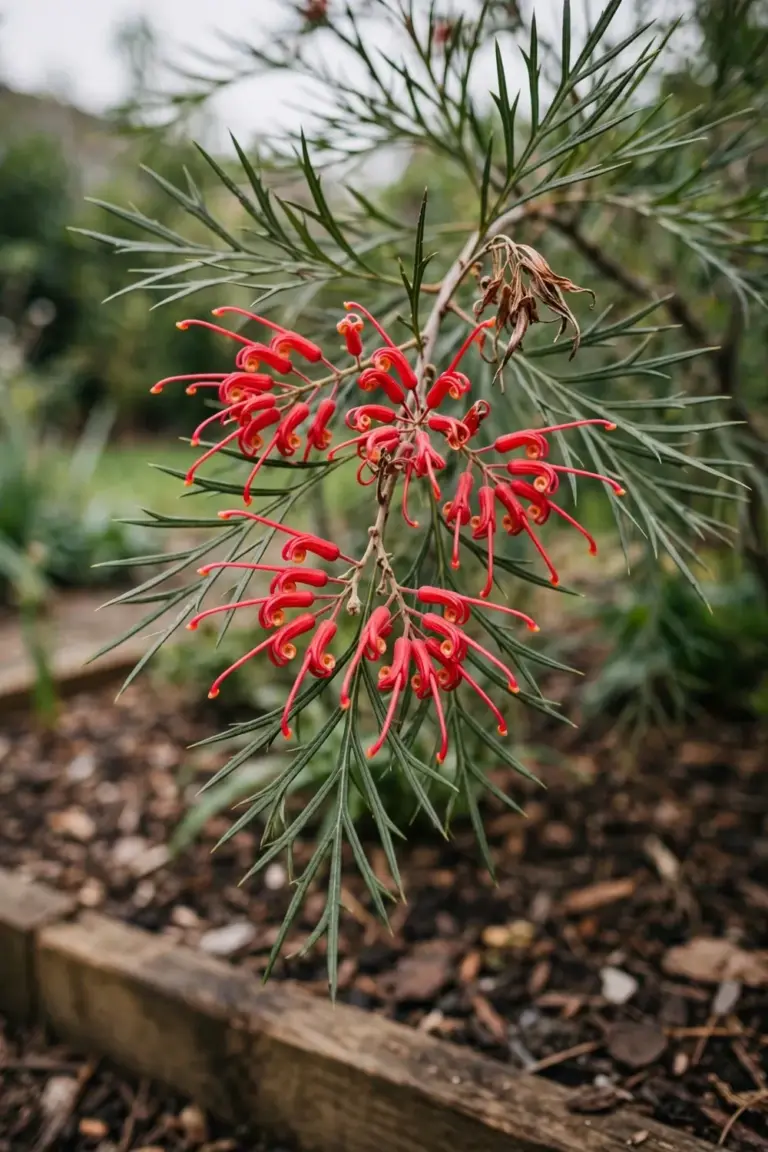
Grevillea Robyn Gordon flowers all year with red toothbrush blooms on a dense shrub that reaches 1.5 meters tall and 1.5 meters wide, according to the general grevillea growing guide.
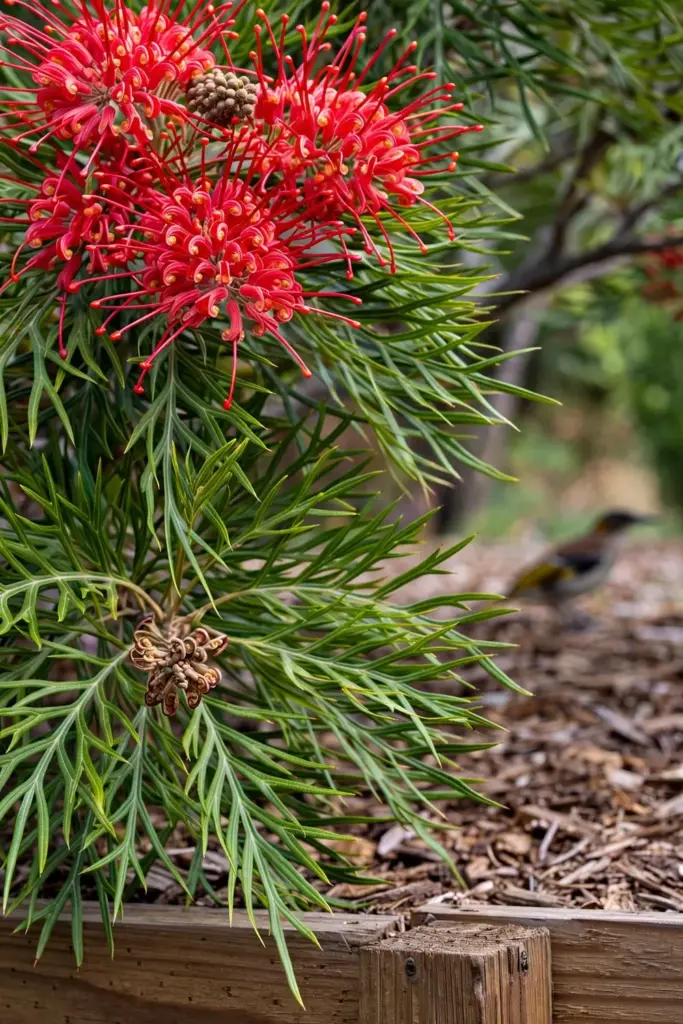
Robyn Gordon is the most planted grevillea in Australian gardens for one reason. It flowers through the seasons on a compact frame that fits a mixed border, a low hedge, or a feature spot near a path. Grevillea Robyn Gordon attracts honeyeaters. Honeyeaters visit the red blooms through the year. The foliage stays dense when the plant gets a light prune after each heavy flowering flush. The shrub tolerates light frost and a wide set of soils when drainage runs free.
Skip Robyn Gordon where the bed stays wet after rain. Wet feet rot grevillea roots fast. A raised mound or a pot solves a wet bed. Prune spent flower heads as they turn shabby. Pruning keeps the shrub dense and pushes the next flush. Feed with low-phosphorus native fertilizer in spring. A plant that gets sun, drainage, and one prune a year flowers for decades.
2. Plant Superb for Big Coral Blooms and Screens
Grevillea Superb carries large deep pink to coral blooms on a shrub that reaches about 2 meters tall and 2 meters wide, according to the general grevillea growing guide.
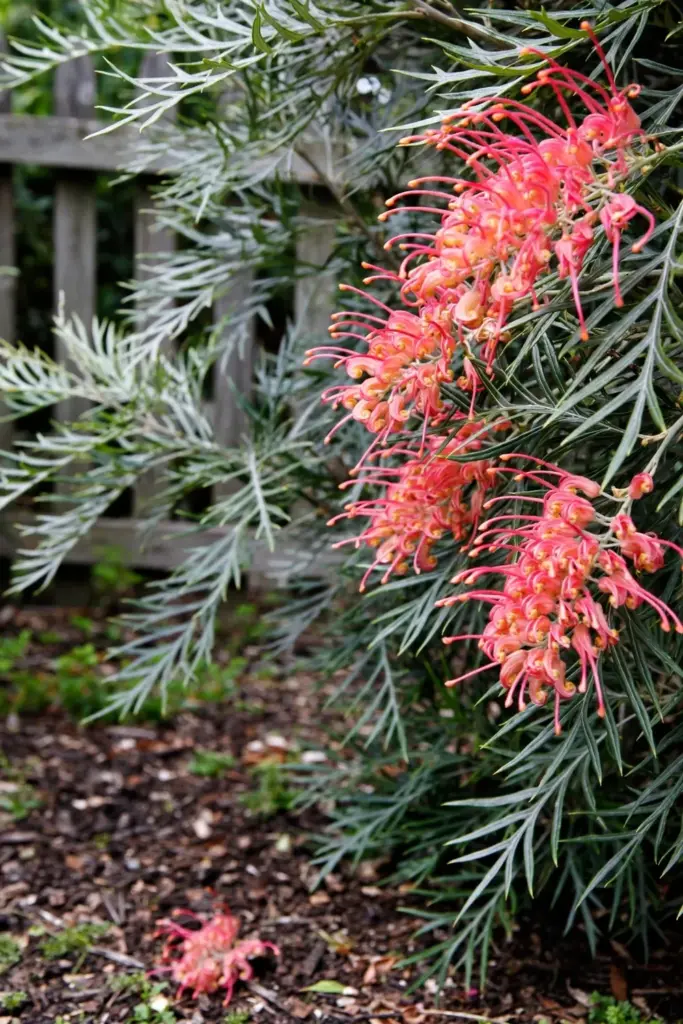
Superb earns its place as a screen plant with flowers. The blooms run large, and the shrub holds dense foliage from low down when pruned once or twice a year. Grevillea Superb attracts honeyeaters. Honeyeaters work the big flower clusters through the year. The shrub suits a boundary line where a plain green hedge would give no flower. Superb also suits a feature spot near a seating area, where the blooms sit at eye level.
Skip Superb where space runs under 2 meters wide. A cramped Superb loses air flow and thins at the base. Give the shrub room and prune lightly after flowering, because a plant that keeps its lower foliage screens a fence while one that loses it shows bare stems. Feed with low-phosphorus native fertilizer in spring. Water weekly through the first summer.
3. Plant Moonlight for Cream Flowers and Tall Screens
Grevillea Moonlight grows up to 3.6 meters tall and 2.4 meters wide with cream flowers, according to the general grevillea growing guide.
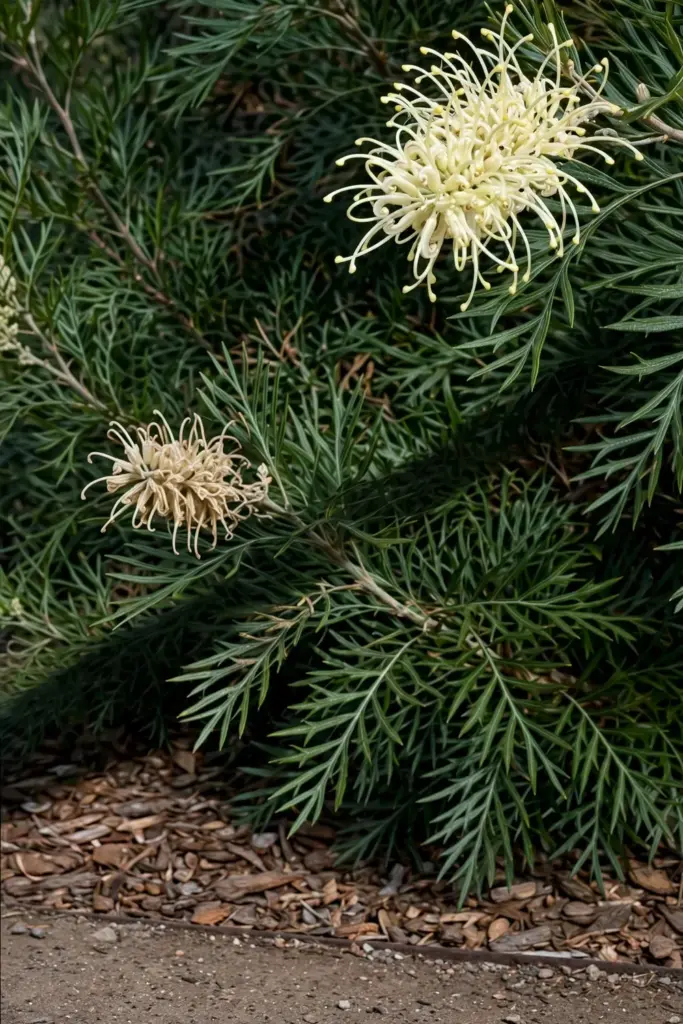
Moonlight suits gardens that need height without a tree. The cream blooms stand out against dark foliage and read well at dusk, when red flowers turn dull. Grevillea Moonlight flowers through the year in warm districts. Honeyeaters visit the cream clusters. The shrub trains as a small tree when the lower stems come off, and it holds a screen at 3 meters when left bushy. Moonlight tolerates light frost and a wide set of soils with free drainage.
Skip Moonlight where the bed measures under 2 meters wide. A tall shrub in a narrow bed shades its neighbors and drops leaf litter on paths. Give Moonlight a back-of-border slot with sun and air. Prune after flowering to hold the shape. A yearly prune keeps a tight crown. Neglect grows open and top heavy. Feed with low-phosphorus native fertilizer in spring.
4. Plant Honey Gem for Golden Flowers and Tall Cover
Grevillea Honey Gem grows 3 to 5 meters tall and 2 to 3 meters wide with golden orange flowers, according to the general grevillea growing guide.
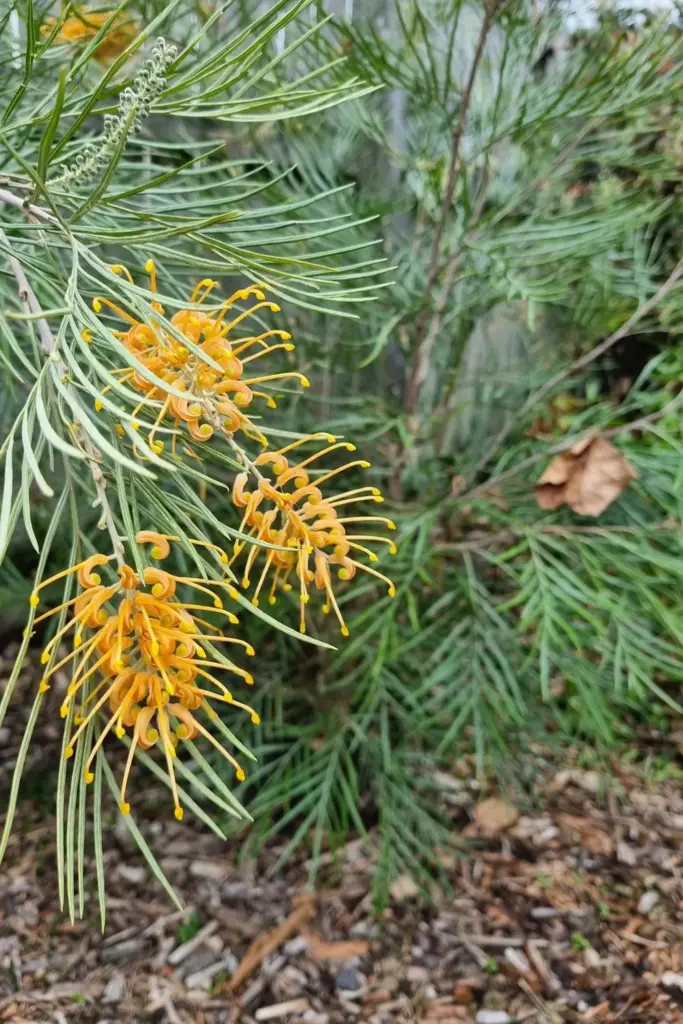
Honey Gem is the tallest screening grevillea on this page after the tree-form Silky Oak. The golden orange blooms run large and show from a distance, so the shrub works as a boundary screen or a background feature behind lower shrubs. Grevillea Honey Gem attracts honeyeaters. Honeyeaters visit the golden clusters through most of the year. The foliage runs fine and fern-like, and the shrub grows fast when sun and drainage run right.
Skip Honey Gem where frost runs hard. Honey Gem tolerates light frost only and grows best in warm districts. A cold garden suits Moonlight or Mt Tamboritha instead. Give Honey Gem a sheltered sunny slot with room for a 3-meter crown. Prune lightly after flowering to hold the shape. A yearly prune keeps the shrub dense. Neglect grows leggy and flowers at the tips only. Feed with low-phosphorus native fertilizer in spring.
5. Plant Rosemary Grevillea for Hedges and Small Gardens
Grevillea rosmarinifolia reaches up to 1.5 meters tall with pink and white flowers and rosemary-like foliage, according to the general grevillea growing guide.
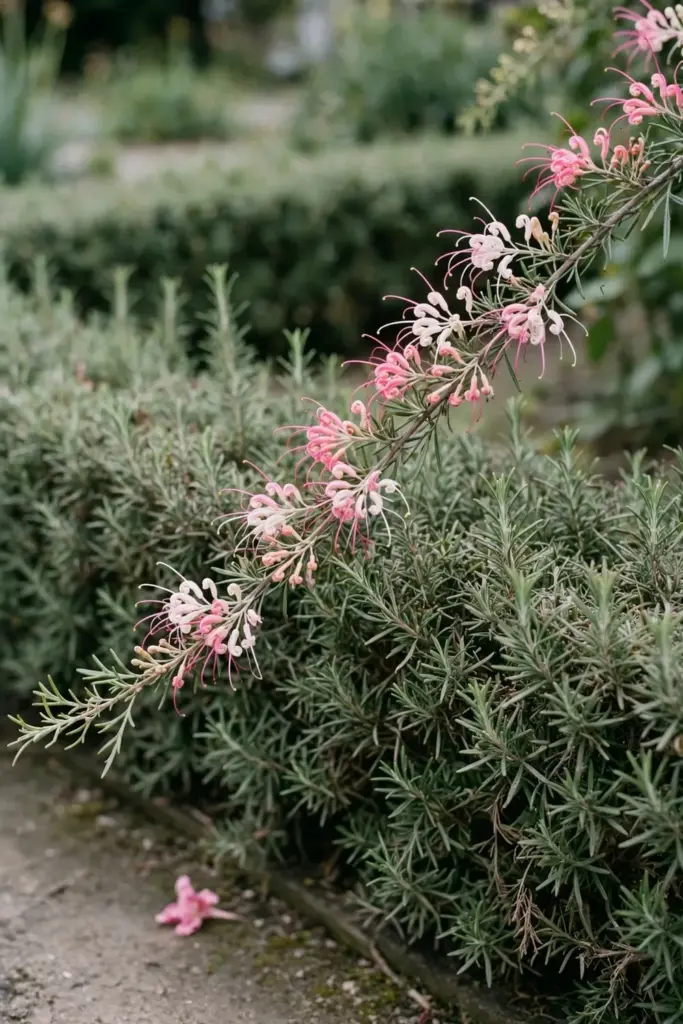
Rosemary Grevillea earns its place as a hedge plant. The needle foliage gives a fine texture that clips well, and the pink and white flowers show through winter and spring. Grevillea rosmarinifolia suits a low hedge along a path, a small garden border, or a pot on a sunny patio. The shrub tolerates light frost and dry spells once settled. The compact frame fits gardens where a large shrub would crowd the path.
Skip Rosemary Grevillea where the soil stays wet. Wet soil rots the roots. A raised bed or a pot with free-draining mix solves a wet site. Prune after flowering to hold the hedge line. A yearly prune keeps the hedge tight. Neglect opens the base. Feed with low-phosphorus native fertilizer in spring and water a new plant weekly through its first summer.
6. Plant Royal Mantle to Cover Banks and Slopes
Grevillea Royal Mantle spreads up to 6 meters wide while staying under 0.5 meters tall, with red flowers, according to the grevillea groundcover guide.
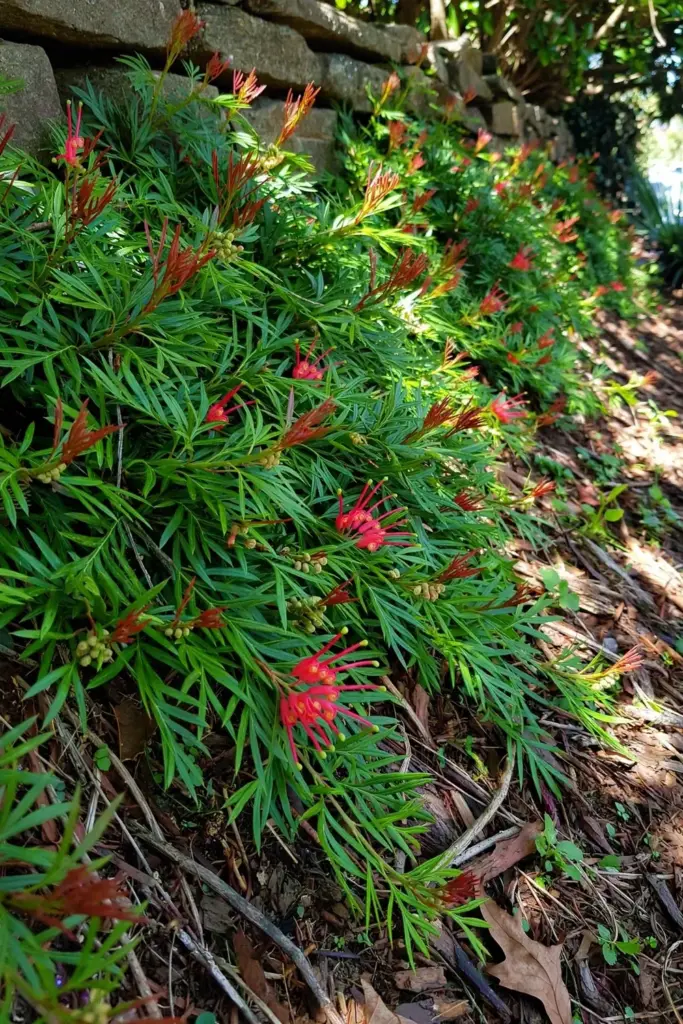
Royal Mantle is the strongest bank plant on this page. The stems root as they spread, so one plant covers a slope that would need many small shrubs. Grevillea Royal Mantle flowers in winter to late spring in abundance, with spot flowers through the year. Honeyeaters visit the red blooms. The bronze-red new growth turns green with age, so the bank shows two foliage tones through the seasons. Royal Mantle suits embankments, rockeries, and spill over low walls.
Skip Royal Mantle where foot traffic crosses the bed. The stems crush under feet and the plant thins along the path line. Give Royal Mantle a slope or a bank that feet never cross. Prepare the bed before planting, and fall garden bed prep covers bed tasks in full. Prune lightly after the main flowering flush to hold density, feed with low-phosphorus native fertilizer in spring, and water a new plant weekly through its first summer before tapering to rainfall.
7. Plant Bronze Rambler for Tough Groundcover
Grevillea Bronze Rambler stays 0.3 to 0.5 meters tall and spreads 3 to 5 meters wide with red purple toothbrush flowers, according to the grevillea groundcover guide.
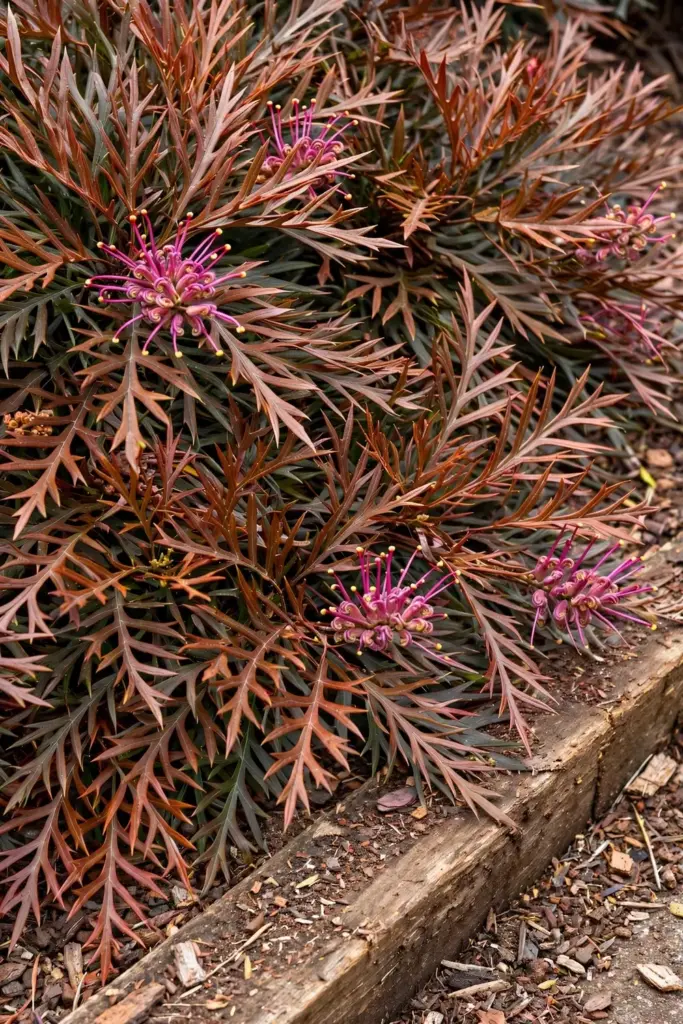
Bronze Rambler earns its place on difficult sites. The foliage runs bronze-red and deeply divided, so the plant gives color even when flowers rest. Grevillea Bronze Rambler flowers through the year. Honeyeaters and native bees visit the blooms. The dense mat suppresses weeds once it closes, and the plant tolerates drought and light frost once settled. Bronze Rambler suits large beds, banks, and mass planting where a tidy edge matters less than fast cover.
Skip Bronze Rambler where the bed needs a neat clipped edge. The plant spreads fast and needs room to run. Give Bronze Rambler a wide bed with a clear boundary. Prune lightly after flowering to hold density, since a mat that gets a yearly prune stays tight while one left alone grows open in the center. Feed with low-phosphorus native fertilizer in spring and water a new plant weekly through its first summer.
8. Plant Gin Gin Gem for Neat Weed-Suppressing Cover
Grevillea Gin Gin Gem stays 0.4 to 0.5 meters tall and spreads 1 to 3 meters wide with small red and cream spider flowers, according to the grevillea groundcover guide.
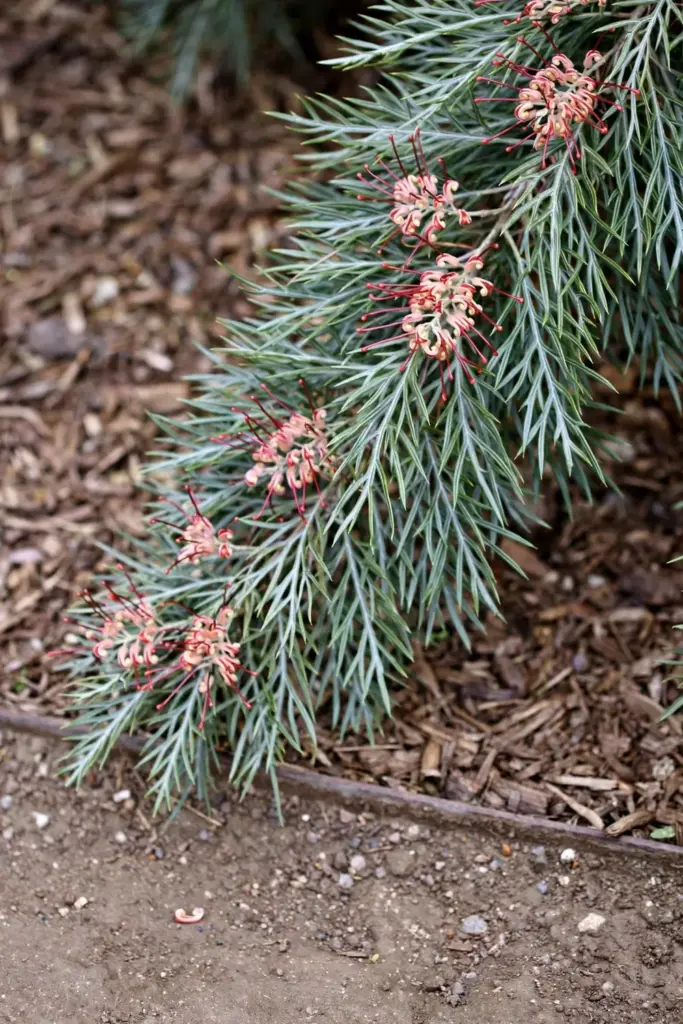
Gin Gin Gem is the neatest groundcover on this page. The dense growth habit suppresses weeds fast, and the small flowers show from winter to spring with spot flowers in autumn. Grevillea Gin Gin Gem attracts small birds and native bees. The flowers carry nectar in small spider clusters. Gin Gin Gem tolerates light frost and coastal sites, and it flowers best in sun while holding up in part shade. The plant suits bed edges, rockeries, and spill over terracing.
Skip Gin Gin Gem where the bed stays wet or shady all day. Wet soil rots the roots. Full shade cuts flowering to almost nothing. Give Gin Gin Gem sun and free drainage. Prune lightly after flowering for a denser habit. A yearly prune fills the center. Neglect grows rangy and open. Feed with low-phosphorus native fertilizer in spring.
9. Plant Mt Tamboritha for Cold-Ready Low Cover
Grevillea lanigera in its prostrate Mt Tamboritha form stays low and spreads as a dense mat with pink flowers, and the species grows as a shrub to 1.5 meters tall, according to the Australian National Botanic Gardens profile of Grevillea lanigera.
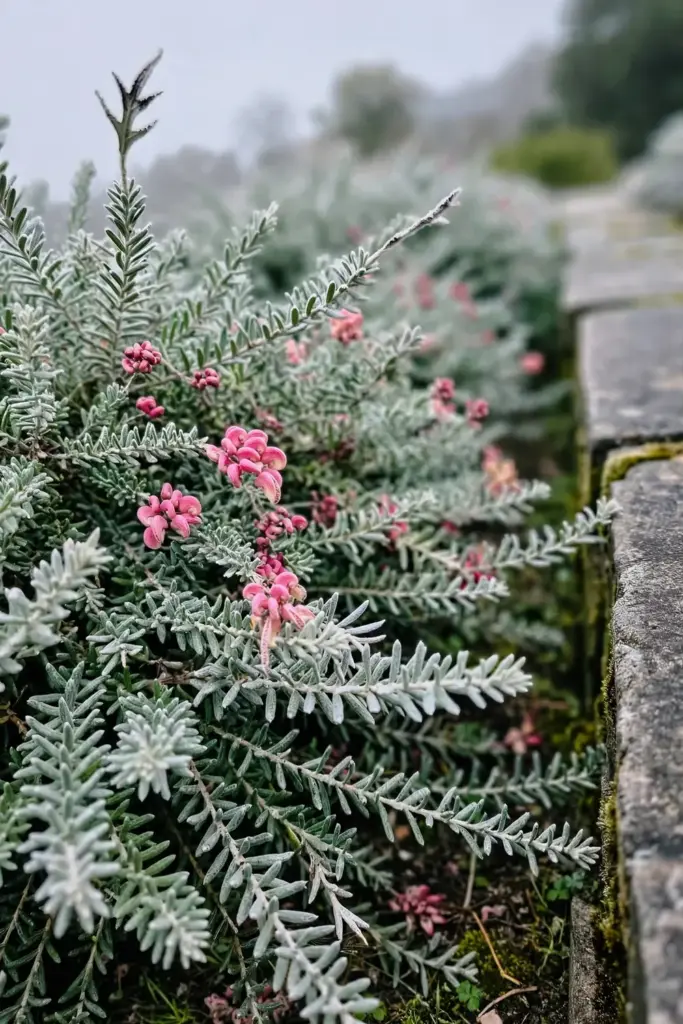
Mt Tamboritha is the cold pick on this page. The woolly foliage gives the plant its common name, and the low form hugs the ground through frost and dry spells. Grevillea lanigera flowers all year, mainly in winter and spring. Birds pollinate the pink blooms. The prostrate form suits bed edges, rockeries, and low banks in cool districts. Mt Tamboritha dislikes humid summers, so a coastal subtropical garden suits other picks better.
Skip Mt Tamboritha where summers run hot and humid. Humidity brings leaf trouble and thin growth. Give Mt Tamboritha sun or semi-shade with free drainage. Prune lightly after flowering to hold the mat tight. A yearly prune keeps the mat dense. Neglect turns the center woody. Feed with low-phosphorus native fertilizer in spring and water a new plant weekly through its first summer, then taper.
10. Plant Billy Bonkers for Pink Flowers in Small Spaces
Grevillea Billy Bonkers grows 0.8 to 1 meter tall and spreads 1.5 to 3 meters wide with large pink flowers that show all year.
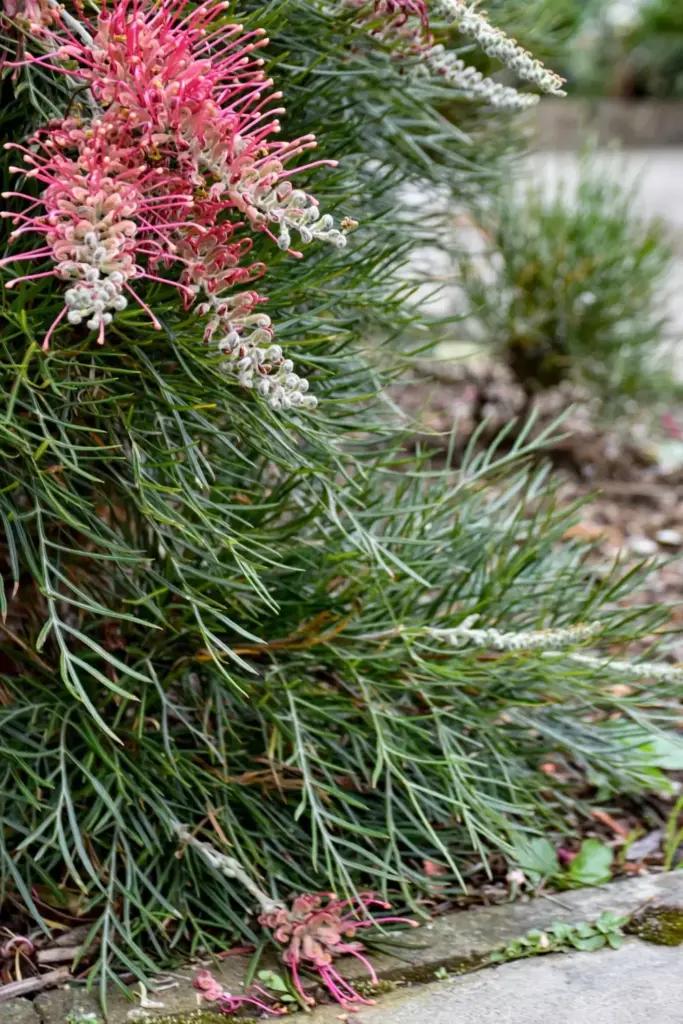
Billy Bonkers earns its place as a small-garden feature. The pink blooms run large for the plant size, and the dense ferny foliage holds shape with one light prune a year. Grevillea Billy Bonkers attracts honeyeaters. Honeyeaters visit the pink flowers through the year. The shrub tolerates frost and drought once settled. Billy Bonkers suits a small garden bed, a large pot, or a feature spot near a path where the flowers sit at knee height.
Skip Billy Bonkers where the bed measures under 1.5 meters wide. The plant spreads wide and needs room to show its shape. Give Billy Bonkers a wide bed or a large pot with free-draining mix. Prune lightly after flowering to hold density. A yearly prune keeps the shrub compact. Neglect grows wide and open. Feed with low-phosphorus native fertilizer in spring.
11. Plant Cherry Ripe for Compact Cherry-Red Color
Grevillea Cherry Ripe grows about 0.5 meters tall and 0.5 meters wide with cherry red and white flowers.
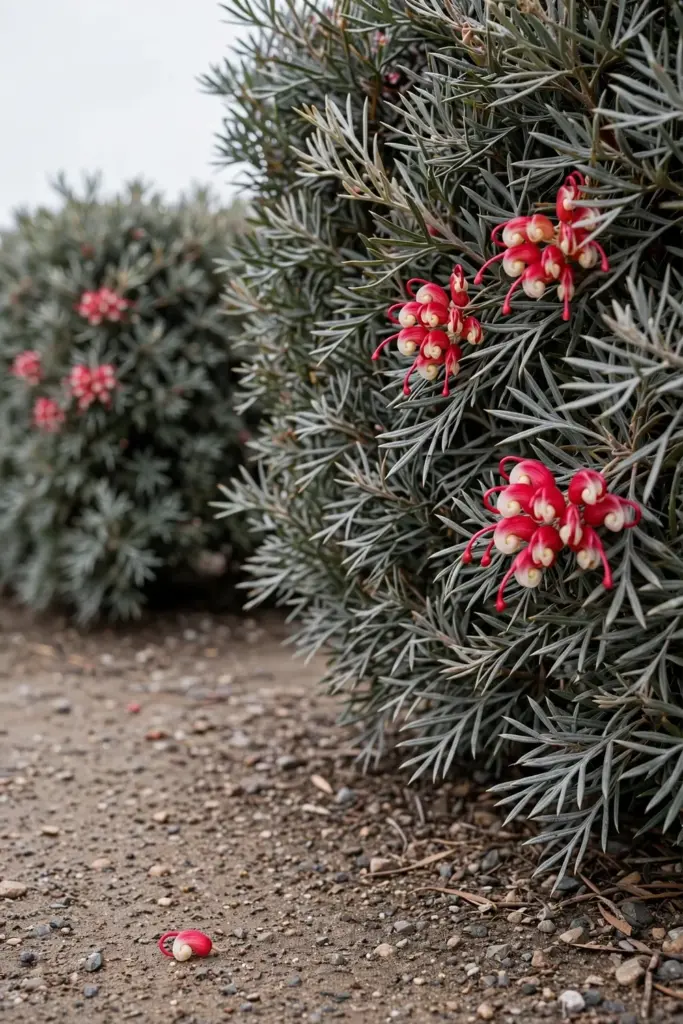
Cherry Ripe is the most compact hedge plant on this page. The dense gray-green shrub holds a tight shape with one prune a year, and the cherry red and white blooms show through the cooler months. Grevillea Cherry Ripe attracts nectar-feeding birds and bees. The flowers sit close to the foliage, so the color reads as a solid block from a path. Cherry Ripe suits a clipped low hedge, a showy specimen in a small bed, or a pot on a sunny patio.
Skip Cherry Ripe where the bed runs shady. Shade cuts flowering and loosens the shape. Give Cherry Ripe full sun and free drainage. Prune after flowering to hold the compact form and push the next flush. A yearly prune keeps the shrub dense. Neglect grows woody and flowers less. Feed with low-phosphorus native fertilizer in spring and water a new plant weekly through its first summer.
12. Plant Pink Midget for the Smallest Pots
Grevillea Pink Midget grows about 0.4 meters tall and 0.5 meters wide with pink spider flowers that show all year.
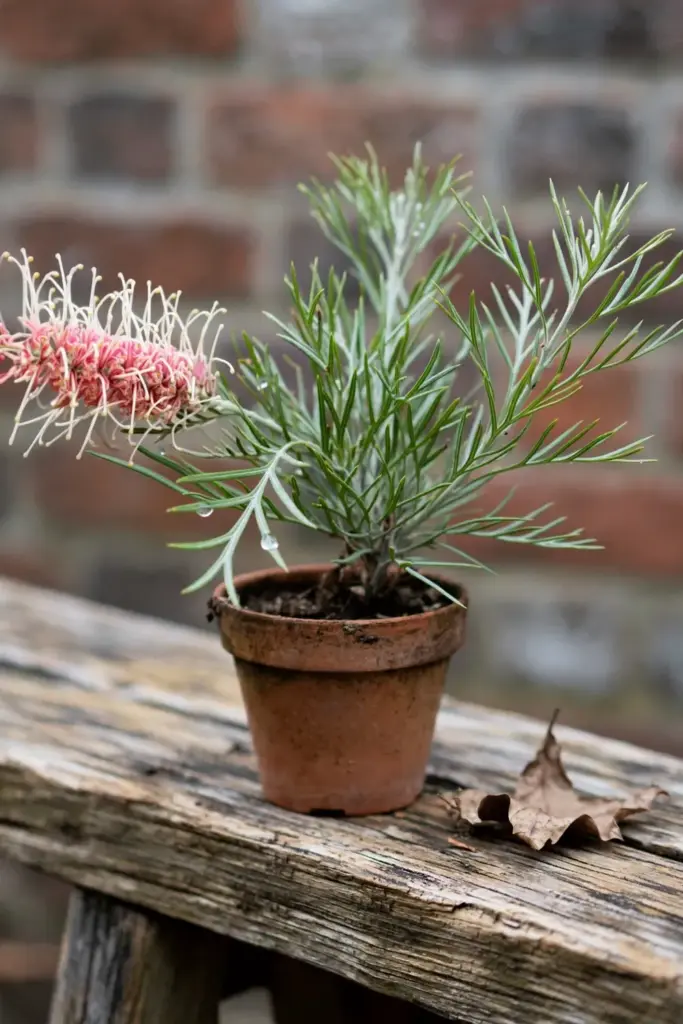
Pink Midget is the smallest plant on this page. The dwarf frame fits pots, troughs, and the front of a small border where a larger shrub would crowd its neighbors. Grevillea Pink Midget attracts bees and honeyeaters. The pink flowers sit close to the fine foliage, so the plant reads well at close range. Pink Midget suits a sunny courtyard, a balcony pot, or a small garden where every centimeter counts.
Skip Pink Midget where the pot lacks drainage holes. A pot that holds water rots the roots within weeks. Give Pink Midget a pot with holes and a free-draining native mix. Prune lightly after flowering to hold the mound shape. A yearly prune keeps the mound tight. Neglect opens the center. Feed with low-phosphorus native fertilizer in spring. For pot choices across native plants, Australian native plants for container gardens covers the container side of the job in full.
13. Plant Rosy’s Baby for Tubs and Courtyards
Grevillea ‘Rosy’s Baby’ grows 0.8 to 1 meter tall and 0.6 to 0.8 meters wide with pink and cream flowers from winter to early summer.
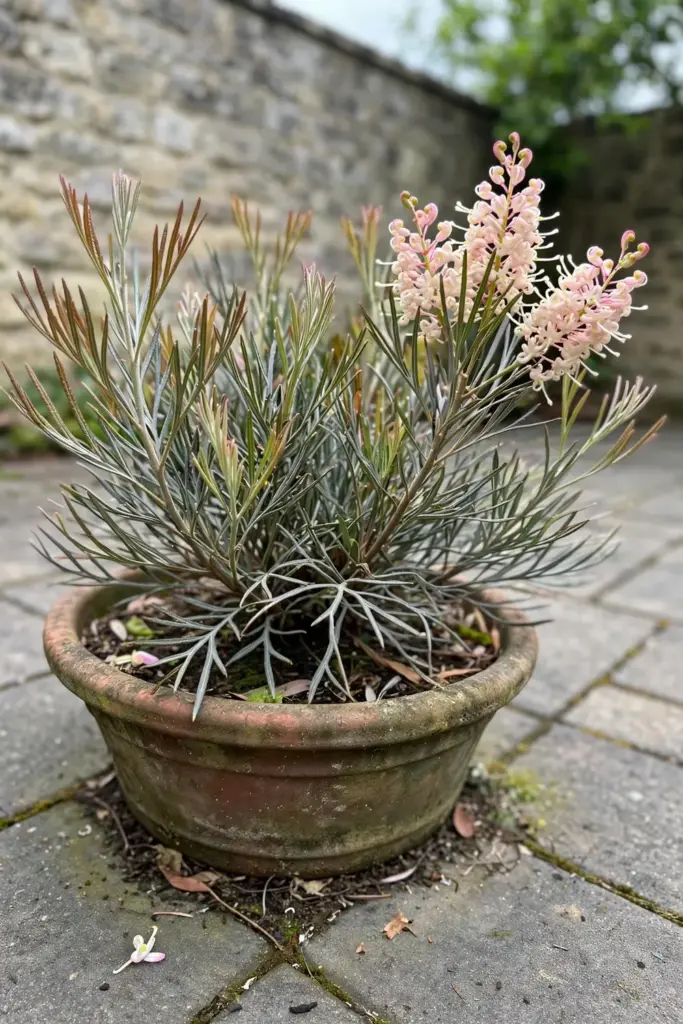
Rosy’s Baby earns its place as a tub plant. The upright compact frame fits a tub on a deck, a patio, or a courtyard, and the pink and cream flowers sit at a height where visiting honeyeaters show well. Grevillea ‘Rosy’s Baby’ tolerates medium frost and dry spells once settled. The soft gray-green leaves carry bronze new growth, so the plant gives foliage interest between flushes. Rosy’s Baby suits low informal hedging, borders, and containers.
Skip Rosy’s Baby where summers run very hot and humid. Heat and humidity thin the growth. Give Rosy’s Baby sun or part shade with free drainage. Prune lightly after flowering to push new growth. A yearly prune keeps the shrub compact. Neglect grows leggy. Feed with low-phosphorus native fertilizer in spring and water a new plant weekly through its first summer, then taper.
14. Plant Silky Oak When You Have Room for a Tree
Grevillea robusta grows to 25 meters tall with a 15-meter spread and bright orange flowers, according to the National Arboretum profile of Silky Oak.
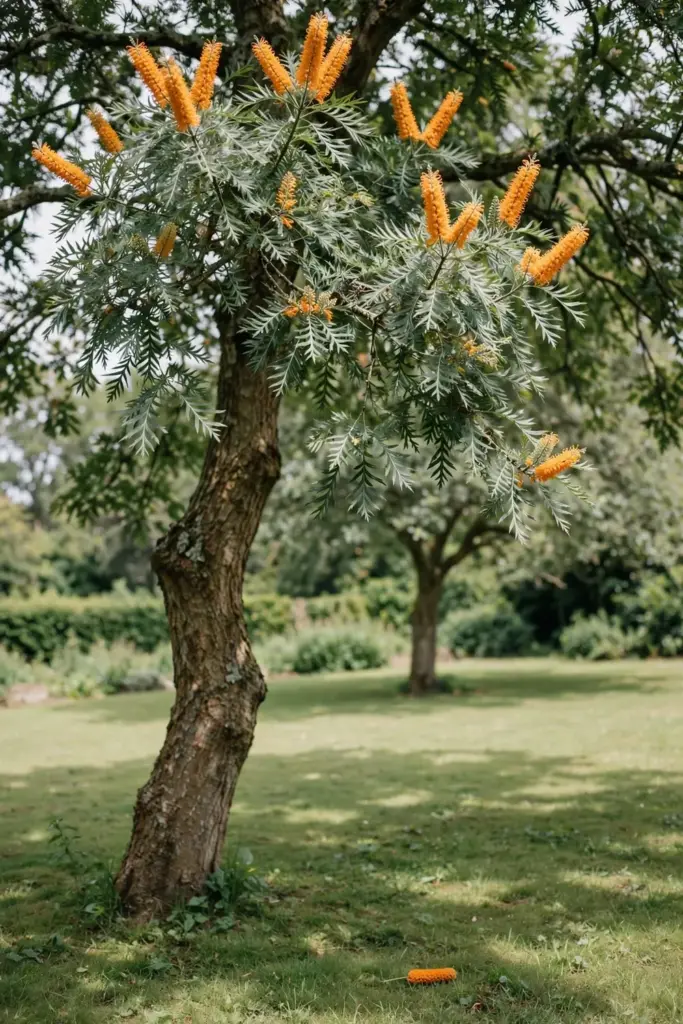
Silky Oak is the largest grevillea in cultivation, and it plays a different role from every other pick on this page. The fern-like leaves run over 30 cm long, and the orange flower spikes show along the upper branches. Grevillea robusta attracts birds, bees, and insects. The flowers produce plenty of nectar. The tree grows fast with a single stem and dark gray furrowed bark. Silky Oak suits a large block, a wide suburban yard, or an avenue where crowns can meet overhead.
Skip Silky Oak where the block measures under 15 meters wide. A tree this size drops leaf litter, shades beds, and needs clear width from the house. A small courtyard suits a shrub instead. Give Silky Oak full sun and free drainage with room for the crown. Prune young trees to one leader, because a tree that keeps one leader grows straight while one that forks low splits in wind. Feed with low-phosphorus native fertilizer in spring and water a new tree weekly through its first two summers.
15. Plant Banks Grevillea for Humid Subtropical Gardens
Grevillea banksii grows as a large shrub or small tree to about 8 meters tall and 3 meters wide with red or pink flowers, according to the general grevillea growing guide.
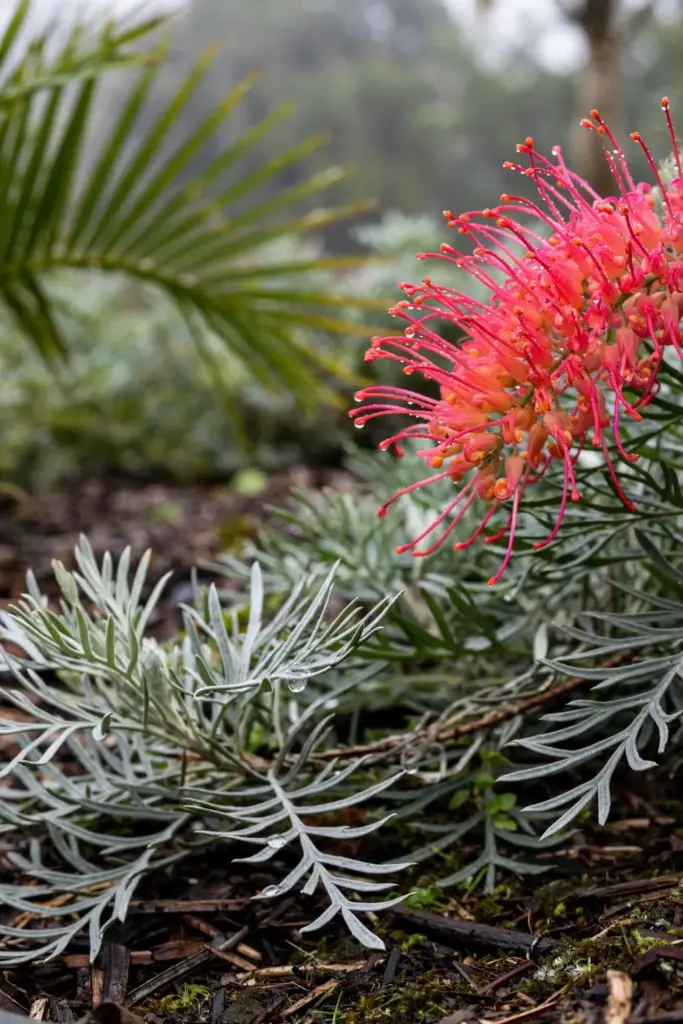
Banks Grevillea is the humid-climate pick on this page. The species comes from warm coastal districts, so it tolerates wet summers that thin out cold-climate picks. Grevillea banksii carries large showy flowers in red or pink. Honeyeaters visit the blooms. The leaves run green to silver, and the plant holds a large shrub form that suits a background screen or a feature spot in a subtropical garden. Banks Grevillea also serves as a parent of many hybrids on this page, including Robyn Gordon and Superb.
Skip Banks Grevillea where frost runs hard. Frost burns the soft new growth. Give Banks Grevillea sun and free drainage with shelter from cold wind. Prune lightly after flowering to hold the shape. A yearly prune keeps the shrub dense. Neglect grows tall and open. Feed with low-phosphorus native fertilizer in spring and water a new plant weekly through its first summer, then taper.
Frequently Asked Questions About Grevillea Varieties
Robyn Gordon, Superb, and Bronze Rambler flower through the year in warm districts with sun and drainage. Grevillea flowers last longest on plants that get a light prune after each flush. Pruning pushes new flowering wood. A plant left unpruned flowers less with each passing year. Feed with low-phosphorus native fertilizer in spring to support the next flush.
Pink Midget, Rosy’s Baby, and Rosemary Grevillea suit pots best. Pink Midget fits the smallest pots. Rosy’s Baby fits tubs on a deck. Rosemary Grevillea fits a patio pot or a low hedge. All three need a pot with drainage holes and a free-draining native mix. A pot without holes rots the roots within weeks. Water pots more often than garden beds in summer.
Mt Tamboritha and Billy Bonkers handle frost best among the picks on this page. Mt Tamboritha tolerates frost in cool districts. Billy Bonkers tolerates heavy frost once settled. Moonlight and Honey Gem tolerate light frost only. Banks Grevillea suffers in hard frost. Match the pick to the coldest night the garden sees, not to the average winter day.
Grevilleas need a low-phosphorus native fertilizer. Grevillea roots react badly to high phosphorus. A standard garden fertilizer with high phosphorus burns the roots and stalls growth. Feed once in spring with a slow-release native fertilizer. Water the fertilizer in well after feeding. A plant that gets the right fertilizer grows steady. A plant that gets the wrong one declines fast.
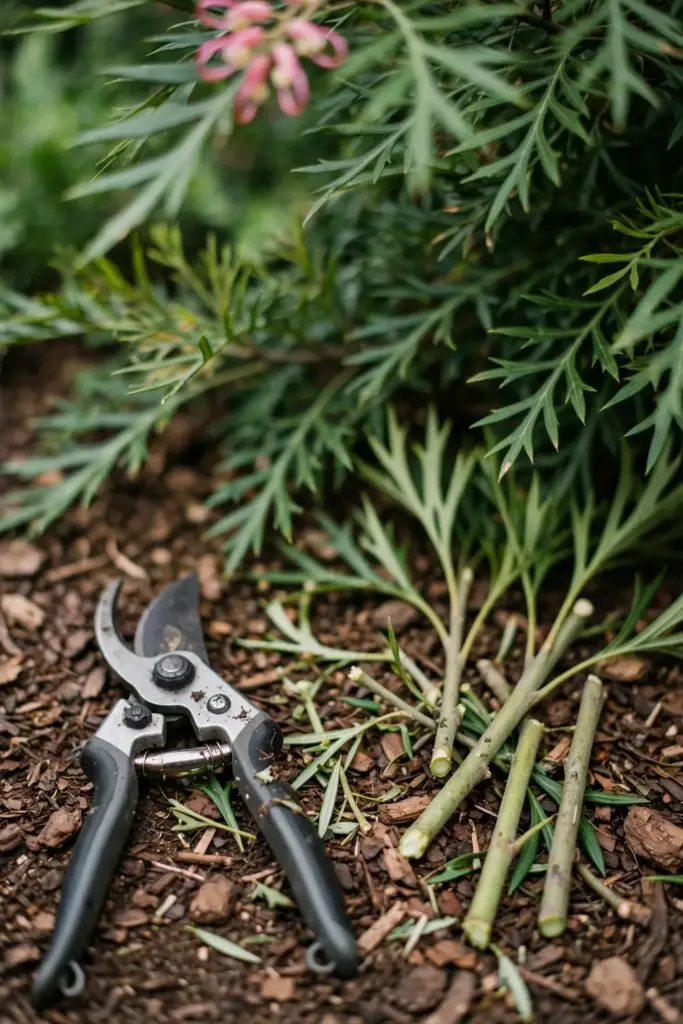
Prune lightly after flowering. Grevillea shrubs flower on new wood, so pruning after a flush pushes the next round of flowering stems. A yearly prune holds the shape and keeps foliage dense from ground level. A plant left unpruned grows open at the base and flowers at the tips only. Spring pruning techniques covers pruning cuts in full.
Start With One Grevillea This Weekend
Measure the space first. Pick the role that fits the space. Buy the variety that matches the role. A single grevillea in the right spot flowers for years with one prune a year and one feed in spring. A grevillea in the wrong spot fights from day one. The right pick beats the prettiest label every time.