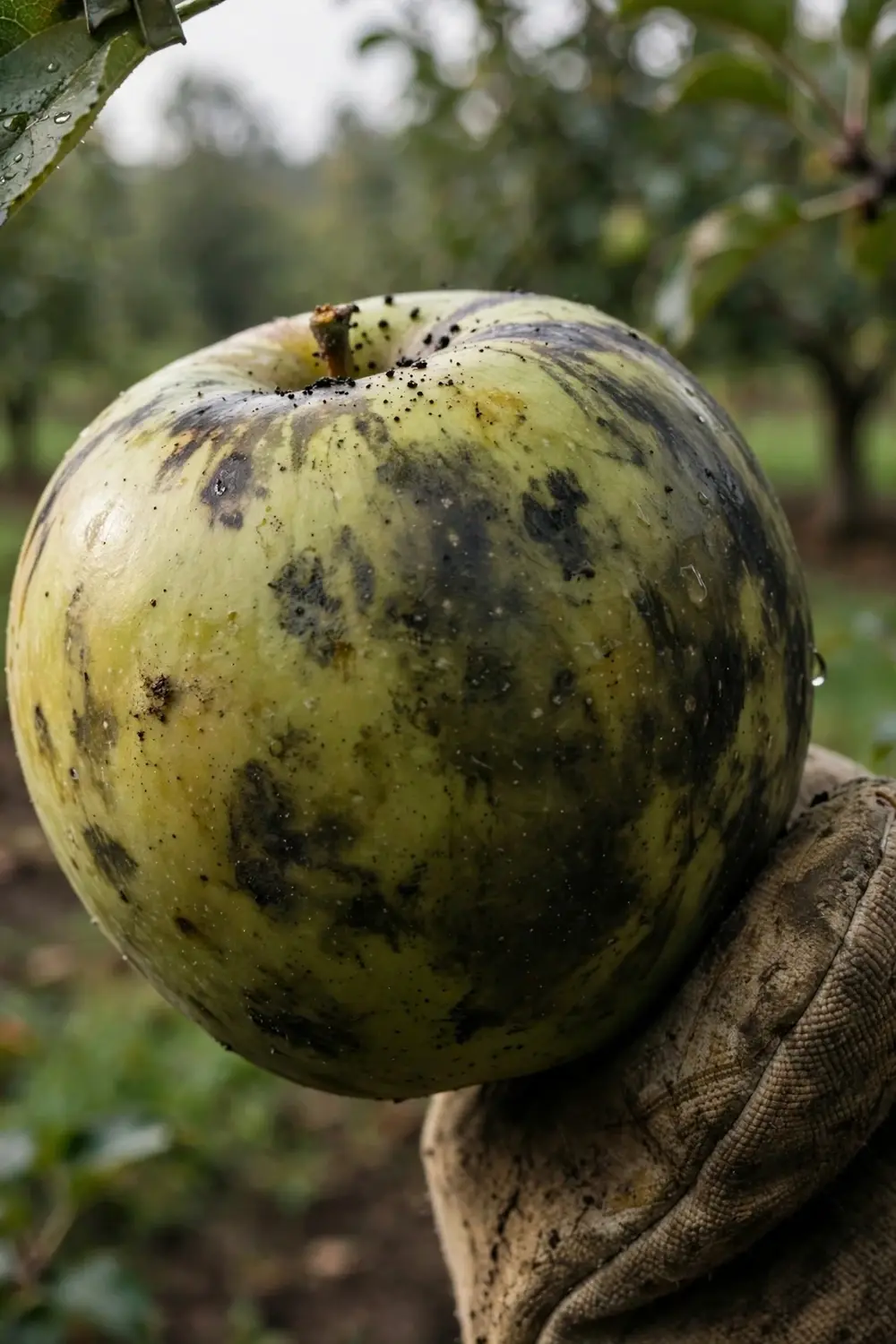

Sooty blotch and flyspeck leave black smudges and black dots on apples, and the fruit stays safe to eat. Both marks sit on the fruit surface and never rot the flesh. The 10 strategies below sort the two forms, then cut the wet, shady conditions that let them spread.
The marks look alarming at harvest. A hand rubbed across a sooty blotch smear can clear part of it, while flyspeck dots tend to stay put. I have learned that the wash bucket saves more apples than any spray bought after spots show. The rest of this page runs in the order a gardener should follow. Identify the two forms first, sort them from sooty mold, then work the 10 steps from the first triage call to next-season scouting.
What Sooty Blotch and Flyspeck Actually Are
Sooty blotch and flyspeck are two surface fungal blemishes that gardeners manage as one pair. The pair goes by the abbreviation SBFS. The fungi colonize the waxy layer on the fruit surface. The fungi never invade the living cells of the fruit.
Sooty blotch is a disease complex. Penn State Extension describes sooty blotch as a disease complex caused by several unrelated fungi. The classic name for sooty blotch is Gloeodes pomigena, and that name still appears in reference guides. Flyspeck carries a naming split between references. Penn State Extension names the flyspeck fungus Zygophiala jamaicensis. The Royal Horticultural Society lists Schizothyrium pomi as the flyspeck name. The two names describe the same flyspeck fungus under an older and a newer label. The practical point stays fixed across both references. Both fungi live on the surface, and both leave the flesh alone.
The pair favors temperate and humid apple regions. The University of Massachusetts Extension fact sheet on sooty blotch and flyspeck describes SBFS as a complex of several fungi that cause dark blemishes on the surface of apple fruit in one of two general forms. University of Delaware Extension adds the honesty note that SBFS is not technically a disease, since it does no real harm to apples beyond cosmetic damage. That framing sets the whole article. The goal is cleaner fruit, not a rescue of a dying tree.
How to Identify Sooty Blotch on Apple Fruit
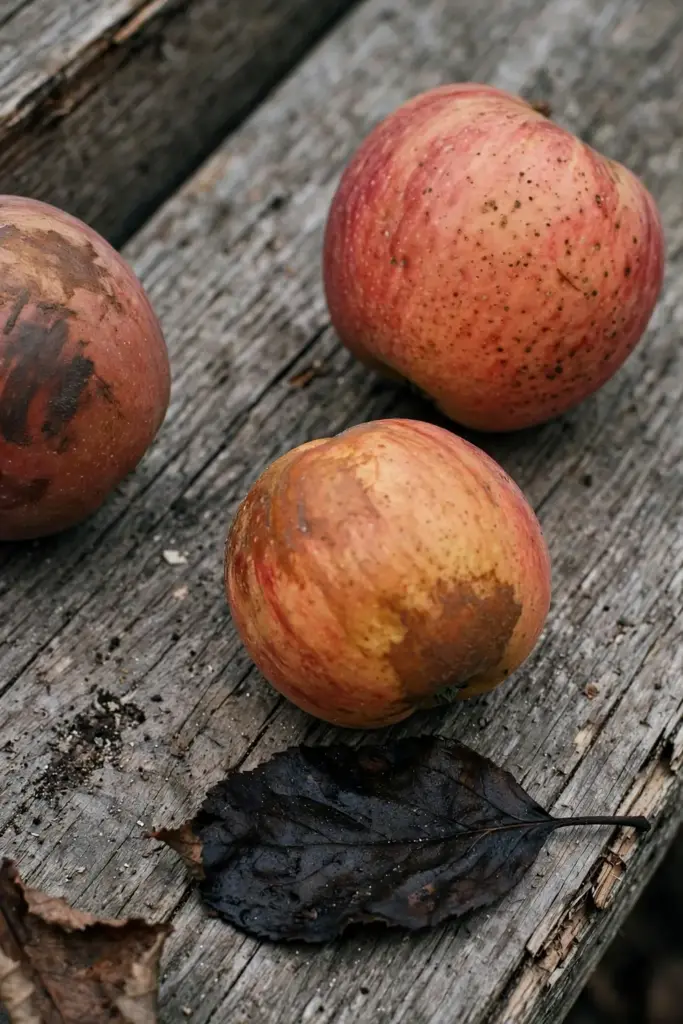
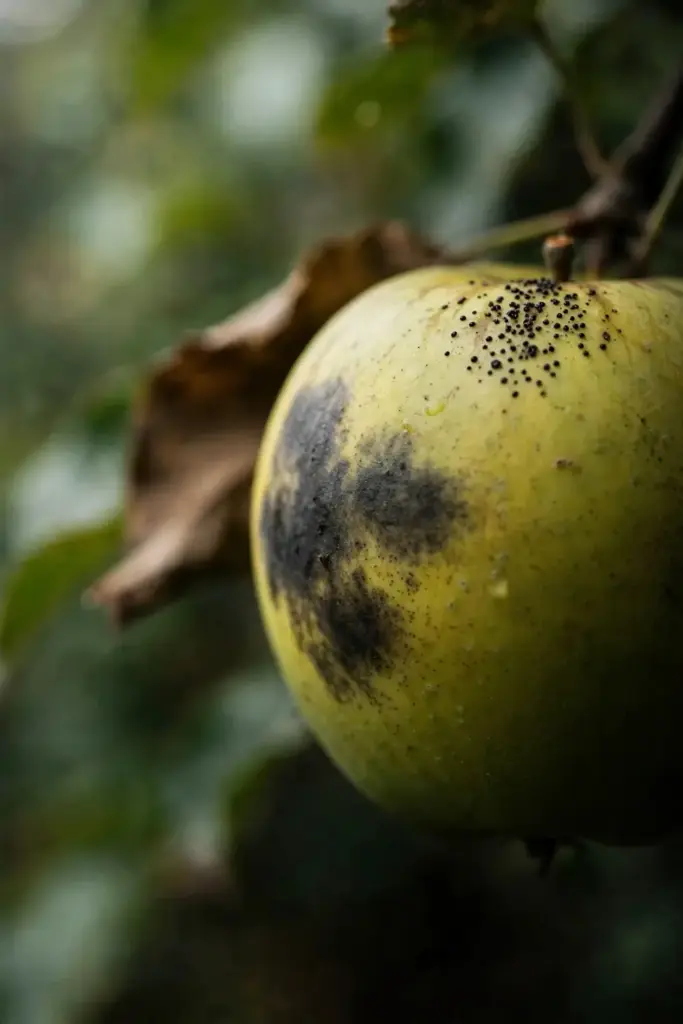
Sooty blotch shows as cloudy smudges with indefinite borders on the fruit surface. The smudges run olive green to black. The smudges sit on the cuticle and never sink into the flesh.
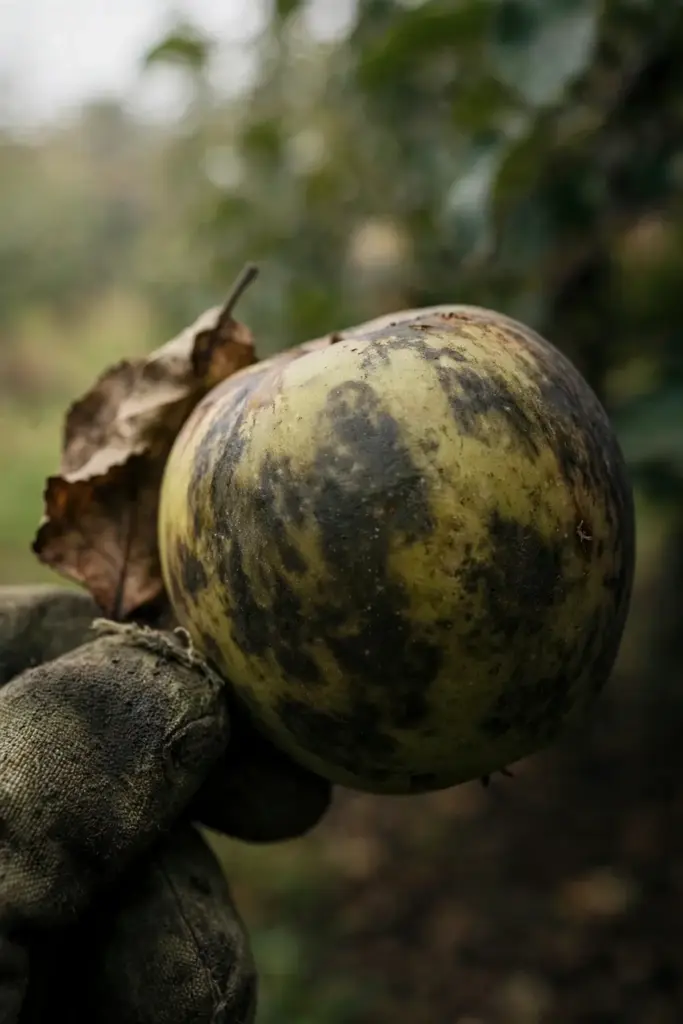
The patches measure 5 to 10 mm across in the Royal Horticultural Society description. The patches run circular to irregular in shape with a diffuse margin. The patches merge as the season advances and can cover a large percentage of the surface. The Illinois Extension report adds the microscopic picture. The smudge appearance comes from hundreds of minute dark pycnidia joined by loose interwoven dark hyphae. The blotches reach 6.4 mm across or larger and coalesce to cover much of the fruit. The fungus stays restricted to the outer surface of the cuticle in most cases. The hyphae rarely penetrate between the epidermal cell walls and the cuticle.
The rub test separates sooty blotch from most other marks, and vigorous rubbing can remove the smudges, according to Penn State Extension and its guide to sooty blotch and flyspeck in the home fruit planting. The Royal Horticultural Society adds that rubbing often leaves a brown discoloration on the fruit surface. Minnesota Extension reports that the smudges rub or wash off the fruit fairly easily. Sooty blotch keeps developing during storage, so a clean-looking apple can show fresh patches weeks after picking. Severe cases can reduce fruit size.
How to Identify Flyspeck on Apple Fruit
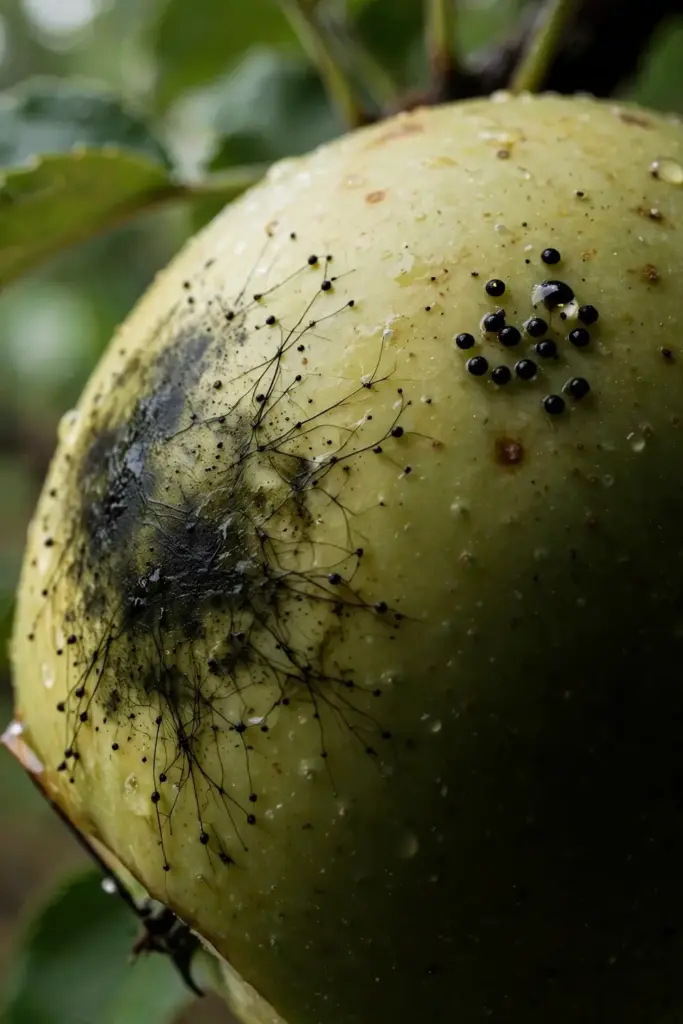
Flyspeck shows as clusters of sharply defined black shiny dots on the fruit surface. No mycelium stretches between the dots. That empty space between dots is the field mark that separates flyspeck from sooty blotch.
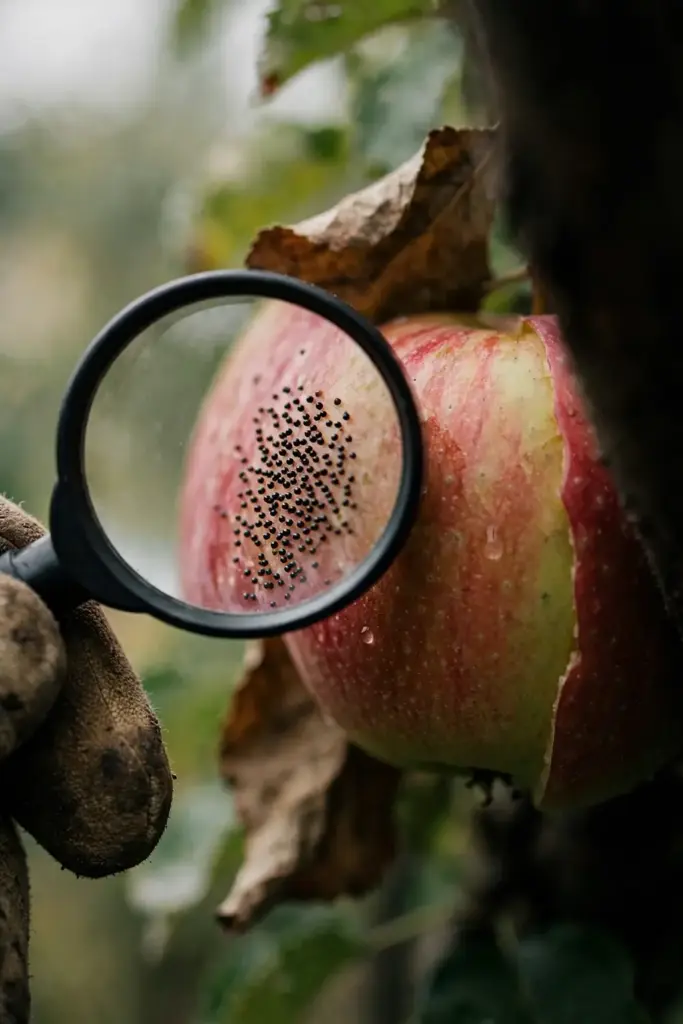
The clusters hold a few dots to 100 or more, according to Penn State Extension. The University of Massachusetts Extension gives a narrower typical range of clusters of 10 to 50 sharply defined black shiny specks. Iowa State University Extension describes clusters of 6 to 50 or more slightly raised black shiny round dots that resemble fly excrement. The dots are sexual fruiting structures called pseudothecia. The Illinois Extension report notes that the pseudothecia run much larger than the pycnidia in sooty blotch colonies. The dots sit on the surface. The dots never rot the flesh.
The cleaning test for flyspeck draws conflicting reports, and the conflict is worth stating plainly. The Illinois Extension report says flyspeck blemishes can be removed by vigorous rubbing or bleaching. Minnesota Extension and its guide to sooty blotch and flyspeck reports the opposite field result, that the dots cannot be cleaned off the fruit easily. Treat the rub test as a clue for sooty blotch, not as proof for flyspeck. A cluster of sharp black dots with clean skin between them reads as flyspeck whether rubbing moves it or not. Peeling removes the dots in every case, since the dots never enter the flesh.
Which Apple, Crabapple, and Pear Trees Get Hit Hardest
Every apple and pear variety can carry SBFS, and light-skinned fruit shows it worst. Penn State Extension lists apple, crabapple, and pear trees as hosts. The Royal Horticultural Society adds plum and citrus to the affected plant list. The home orchard evidence centers on apple, crabapple, and pear, so this page stays on those three hosts.
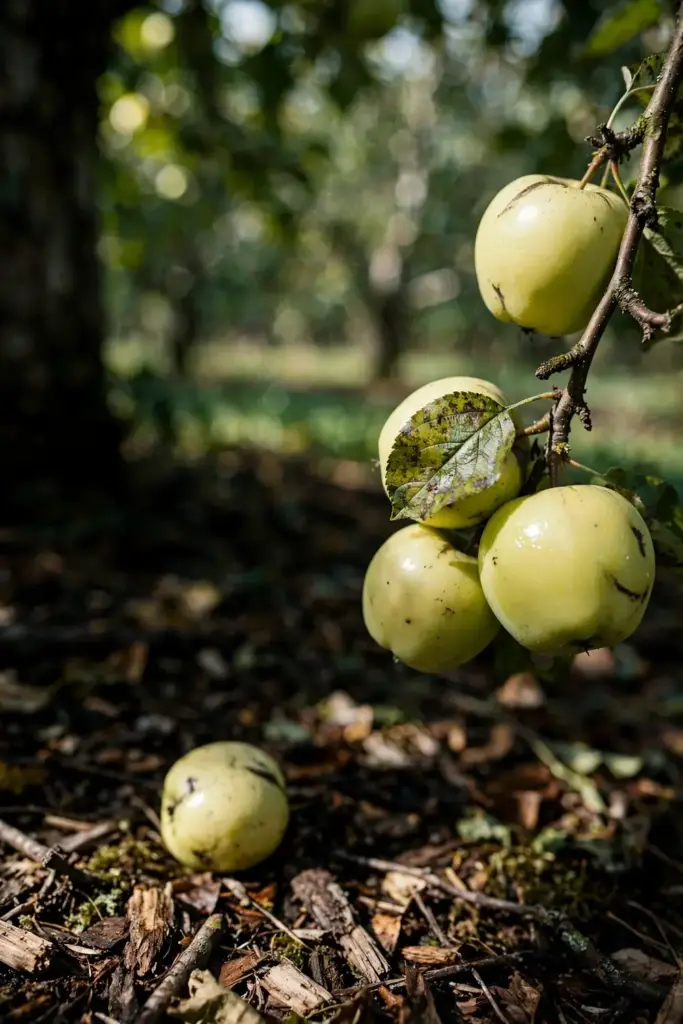
The University of Massachusetts Extension reports no significant differences among apple cultivars in susceptibility to these diseases. The same source adds the visibility rule. Symptoms show more on yellow, green, or light-colored fruit. Fruit of apple and pear with the thickest waxy cuticle appears more severely affected. The wax layer is the habitat. Thicker wax gives the fungi more surface to colonize. Light skin gives the dark marks more contrast. A red apple can carry the same load with less visible damage.
Late-hanging fruit carries more risk than early fruit. The fungi stay active from one to two weeks after petal fall through to harvest, according to the University of Massachusetts Extension fact sheet. A variety that hangs into late summer collects more wet hours than a variety picked in July. A shaded interior apple stays wet longer than an exposed apple on the same tree. The worst tree in a home orchard is often the unpruned tree in the damp corner, not a particular variety. Backyard growers who want the full planting picture can start with growing apple fruits with a simple guide.
Sooty Blotch vs Flyspeck vs Sooty Mold
The field check is simple. Look at the mark shape, look between the marks, then look beyond the fruit. The table below sorts the three conditions that gardeners confuse most often. Sooty blotch and flyspeck often appear together on the same fruit, so a single apple can carry both columns at once.
| Feature | Sooty Blotch | Flyspeck | Sooty Mold |
|---|---|---|---|
| Mark on fruit | Cloudy smudge, olive green to black | Clusters of sharp black shiny dots | Dark film or powdery coating |
| Growth between marks | Dark mycelium links the patches | No mycelium between dots | Film spreads across the surface |
| Borders | Indefinite and diffuse | Sharply defined dots | Diffuse, follows honeydew |
| Rub test | Rubs off with vigorous rubbing, often leaves a brown mark | Dots resist cleaning in Minnesota field reports | Washes off easily |
| Where else on the tree | Fruit only | Fruit only | Twigs and foliage as well as fruit |
| Cause | Complex of several surface fungi | Zygophiala jamaicensis, also listed as Schizothyrium pomi | Surface fungi that grow on insect honeydew |
| Control logic | Dry the canopy, thin fruit, remove reservoir hosts | Same canopy and thinning steps as sooty blotch | Control the sucking insects that produce honeydew |
Sooty mold is the odd one out. The Royal Horticultural Society guide to sooty blotch and flyspeck on apples states that sooty blotch comes from a different fungus than the fungi behind sooty mold. The Society names Alternaria and Cladosporium species as the main sooty mold fungi. Sooty mold grows on the aerial parts of plants affected by sucking insects. The New England Tree Fruit Management Guide adds the pear detail. On pear, sooty mold follows pear psylla honeydew, shows on twigs and foliage in addition to fruit, washes off easily, and does not respond to fungicides. SBFS affects fruit only. That single contrast settles most pear cases. Marks on leaves and twigs point toward sooty mold. Marks on fruit alone point toward SBFS.
Apple scab needs a brief fence here, since scab spots also mark apple fruit. Scab lesions feel scabby and corky, and scab attacks leaves as well as fruit. SBFS marks stay flat on the fruit surface with no leaf lesions. Gardeners sorting fruit spots can compare against apple scab control for the scab side of the comparison.
Why Surface Fungi That Never Invade the Fruit Still Ruin Storage
Surface fungi ruin storage because they damage the wax layer that seals water inside the fruit. The wax layer limits water loss from a healthy apple. Fungi that colonize that layer break the seal. Water vapor escapes through the damaged wax. The apple shrivels faster than a clean apple in the same crate.
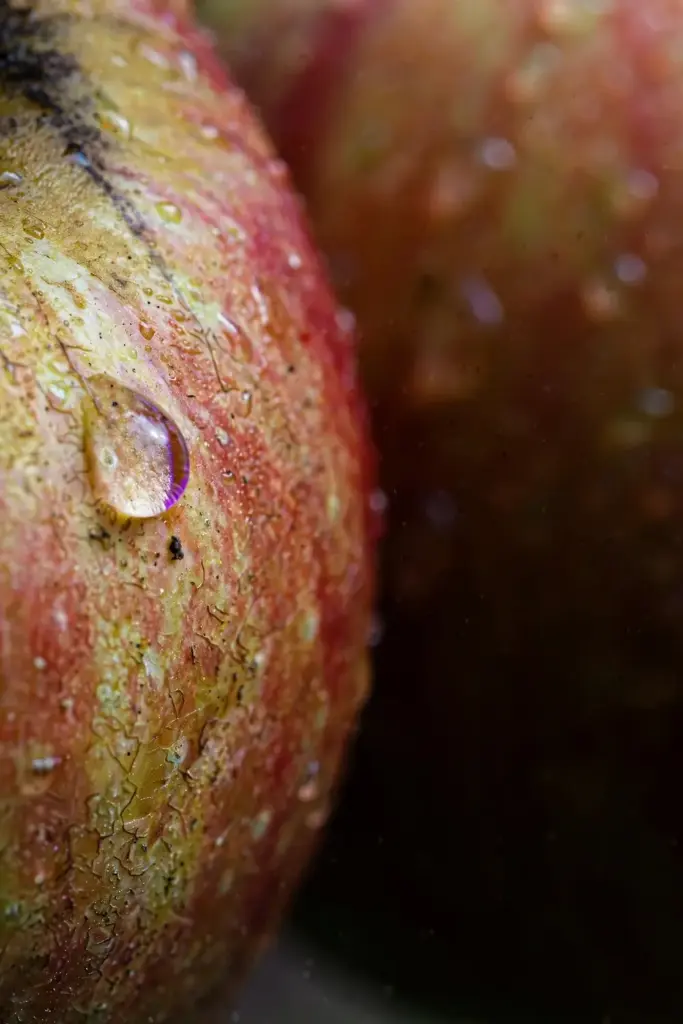
Penn State Extension states the storage result directly. Sooty blotch shortens fruit storage life because of increased water loss. The University of Massachusetts Extension adds the same mechanism in broader terms. SBFS can increase desiccation rates, and the higher desiccation decreases the storage life of the fruit. The University of Missouri Extension describes the wax damage in plain terms. The fungus dissolves some of the protective wax that naturally occurs on the apple and prevents dehydration. Affected apples may shrivel and keep poorly.
The flesh under the marks stays sound. Iowa State University Extension reports that the damage is mainly cosmetic, that the black discoloration can be removed by vigorous rubbing, and that the skins on the apples can be eaten. The fruit tastes the same under a washed or peeled skin. The loss is water, appearance, and market grade, not flavor or safety. That distinction drives every step below. Storage advice protects water content. Eating advice protects the harvest.
What Makes Sooty Blotch and Flyspeck Worse in a Home Garden
Long wet periods with warm humid air make SBFS worse. The fungi need moisture on the fruit surface for hours at a time. Dry fruit stops them. Wet fruit feeds them.
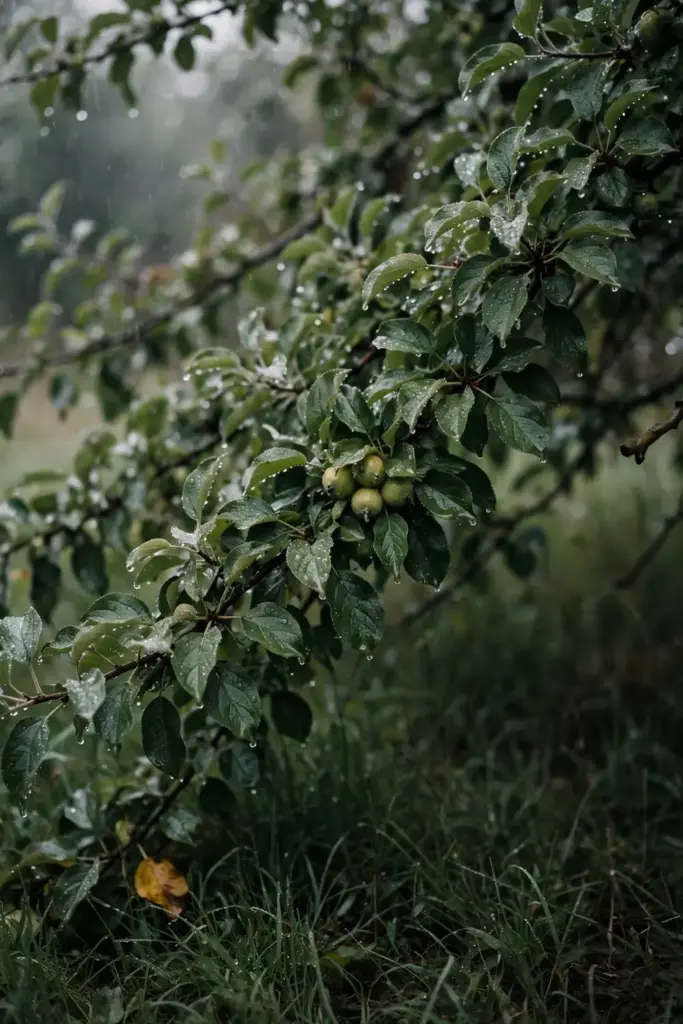
The University of Massachusetts Extension gives the optimal window. Temperatures between 15.6 and 21.1 degrees Celsius, or 60 to 70 degrees Fahrenheit, with relative humidity above 96 percent favor infection. Fruit infection can occur as early as 2 to 3 weeks after petal fall. Symptoms may not appear until 3 weeks or more after the initial infection. That lag matters. A gardener who waits for spots has already missed the infection window by weeks. Prevention runs on the calendar and the weather, not on visible symptoms.
Penn State Extension adds the season pattern. Disease outbreaks favor extended periods of above-normal summer temperatures combined with frequent rainfall and high humidity. The diseases usually appear on fruit late in the season and run most prevalent in mid-to-late summer. Minnesota Extension reports the same late-season timing. Sooty blotch and flyspeck usually appear in August or September and carry the nickname of summer diseases of apples. Warm humid weather encourages spore development and germination. Rain and wind spread the spores onto developing fruit.
Reservoir hosts keep the fungi near the orchard all year. The fungi overwinter on the twigs of many woody plants, as well as on apple and pear trees, according to Penn State Extension. The University of Massachusetts Extension names wild brambles and bittersweet as reservoir hosts. Minnesota Extension lists fruit, stems, leaves, and bark of many woody plants, including apples, pears, and raspberries. Spores blow from those hosts into the orchard through the season. A dense canopy holds spores in damp air, fruit clusters that touch trap moisture between apples, and tall ground cover raises humidity in the lower canopy, while shade slows drying after every rain.
Step 1: Decide Whether Treatment Is Worth It
Treatment pays only when the fruit must look clean for sale or must store for months. Home eating rarely justifies a spray program. The fruit stays edible with marks. Washing, rubbing, and peeling handle the marks at the sink.
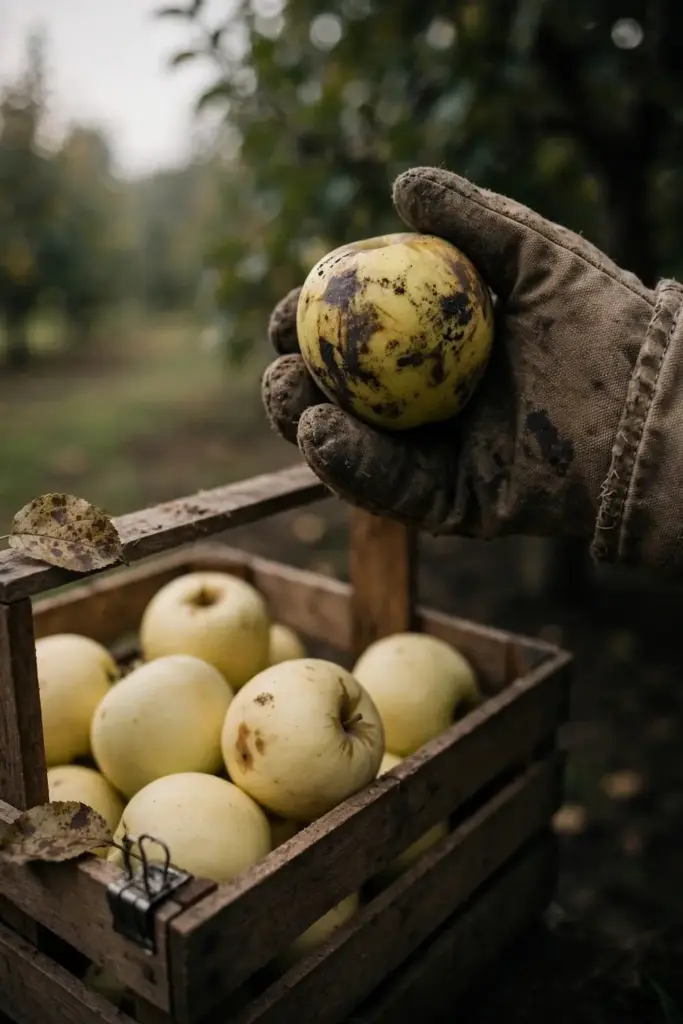
Start with the use of the crop. Fruit for fresh eating at home needs no spray. Fruit for a farm stand or a market box needs clean skin, since Penn State Extension notes that the blemishes lower fruit quality and market value. Fruit for long storage needs clean skin too, since damaged wax leaks water. A gardener who sells fruit or stores fruit past autumn has a reason to treat. A gardener who eats fruit from the tree has no reason to spray.
Wet seasons cap what sprays can deliver. The University of Massachusetts Extension reports that during wet growing seasons, losses of 25 percent or more can occur even in orchards treated with fungicides. That figure comes from commercial orchards, not home gardens. The lesson still holds for home gardens. Heavy rain overwhelms spray coverage. Cultural steps carry the real control in a home orchard. A spray program that needs perfect timing and repeated coverage buys little for a gardener with two trees. Decide the goal first. Then pick the steps that serve that goal.
Step 2: Prune Dormant Wood to Open the Canopy
Dormant pruning opens the canopy so air moves through the tree and fruit dries fast after rain. Penn State Extension lists dormant-season pruning as a cultural control that opens up the tree canopy and facilitates air movement and the drying of fruit after a rain period. Dry fruit is the whole game with SBFS.
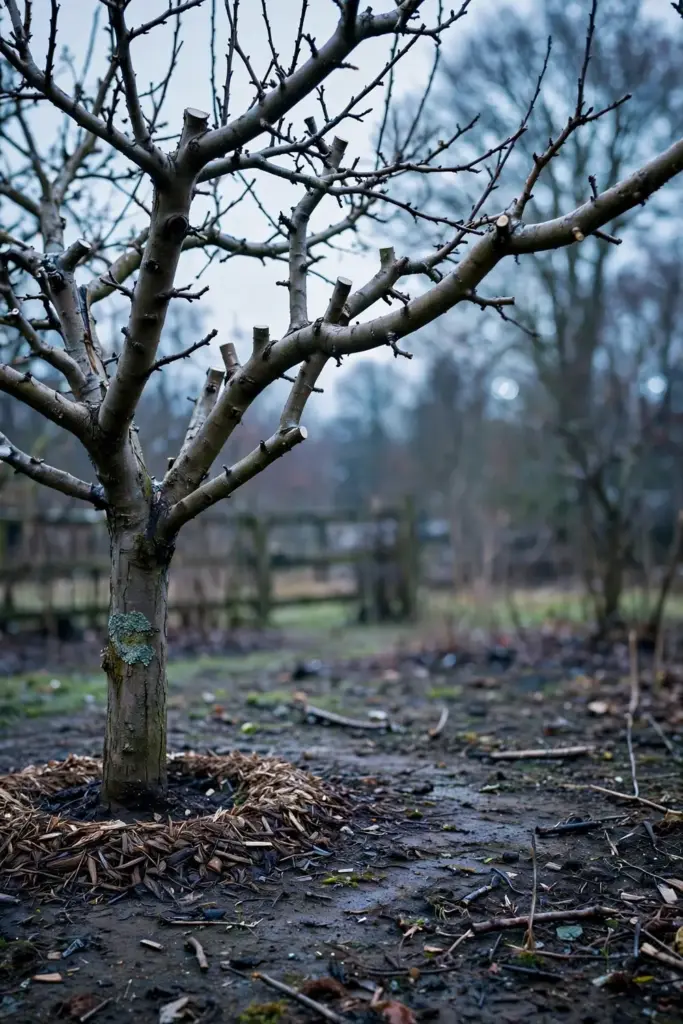
Cut for airflow, not for shape. Remove dead wood first. Remove crossing branches that rub and shade the center. Remove water sprouts that crowd the interior. Leave the center open enough that morning sun reaches the inner fruit. A tree that dries by midday after rain carries far less SBFS pressure than a tree that stays damp into the afternoon. The spring pruning techniques guide covers the cut types for home trees in more depth.
Work in the dormant season before bud break. Dormant wood shows structure clearly, and cuts heal as growth resumes. Keep cuts clean and modest. A hard topping cut triggers a flush of weak upright growth that shades the canopy again. The goal is a stable open frame that dries fast every summer, not a single dramatic haircut.
Step 3: Thin Fruit Clusters So Fruit Dries Fast
Thinning separates fruit clusters so each apple dries on all sides. Penn State Extension lists thinning to separate the fruit clusters as a control that helps prevent disease. Touching apples trap a film of water between them. Separated apples dry.
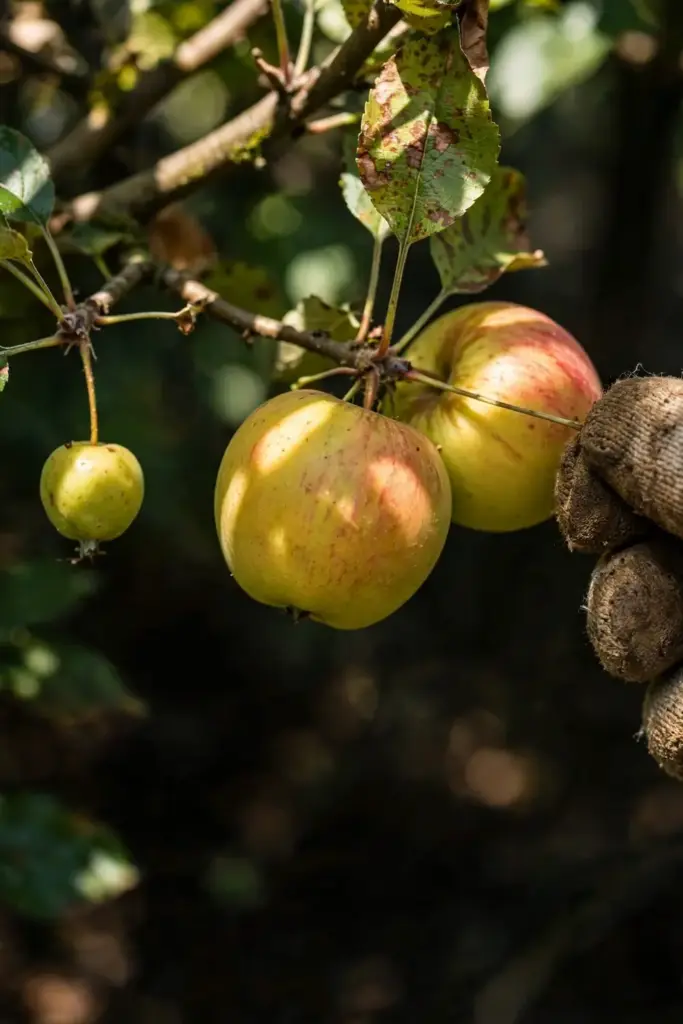
Thin after the natural fruit drop, leaving one fruit per cluster where clusters crowd. Leave space around each remaining apple so no two apples touch. The thinned apple also grows larger, since the tree feeds fewer fruit. The disease benefit is the drying, not the size. A cluster of three touching apples stays wet for hours after rain, while a single apple dries in the breeze.
Thin early enough to matter. The fungi start infecting fruit within weeks of petal fall, and symptoms lag infection by 3 weeks or more. Thinning in early summer changes the whole wet season. Thinning in August changes little, since infections already sit on the fruit. Put thinning on the early-summer list, next to the first mowing pass.
Step 4: Clear Brambles and Reservoir Hosts From the Orchard Edge
Clearing brambles cuts the spore supply at the orchard edge. Penn State Extension lists the removal of alternate hosts such as brambles from the orchard and surrounding hedgerows as a cultural control. The University of Massachusetts Extension names wild brambles and bittersweet as reservoir hosts that carry the fungi through winter.
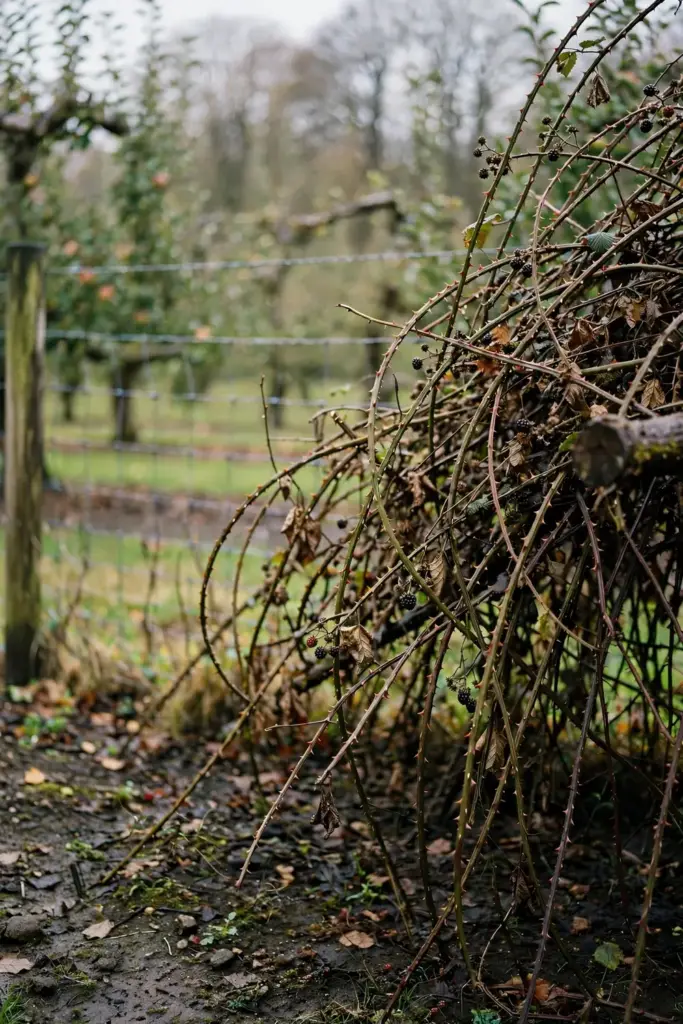
Walk the orchard border in the dormant season. Cut wild brambles back from the fence line. Clear bittersweet vines from trees near the orchard. Keep a mowed buffer between the orchard and the woodland edge where that is possible. The buffer does not need to look tidy. The buffer needs to stay short and open so spores have farther to travel and less damp shelter on the way.
Do not expect a sterile landscape. The fungi live on many woody plants, including the apple and pear trees themselves. Clearing brambles lowers the spore load. Clearing brambles never removes it. Pair this step with pruning and thinning. The three steps together change the canopy climate that the fungi need.
Step 5: Mow Ground Cover Short Through Summer
Short ground cover drops humidity in the lower canopy. The University of Massachusetts Extension fact sheet lists mowing alongside pruning and border cleanup as a cultural control that decreases SBFS risk. Tall grass and weeds trap damp air under the tree. Short cover lets air move and lets the soil surface dry.
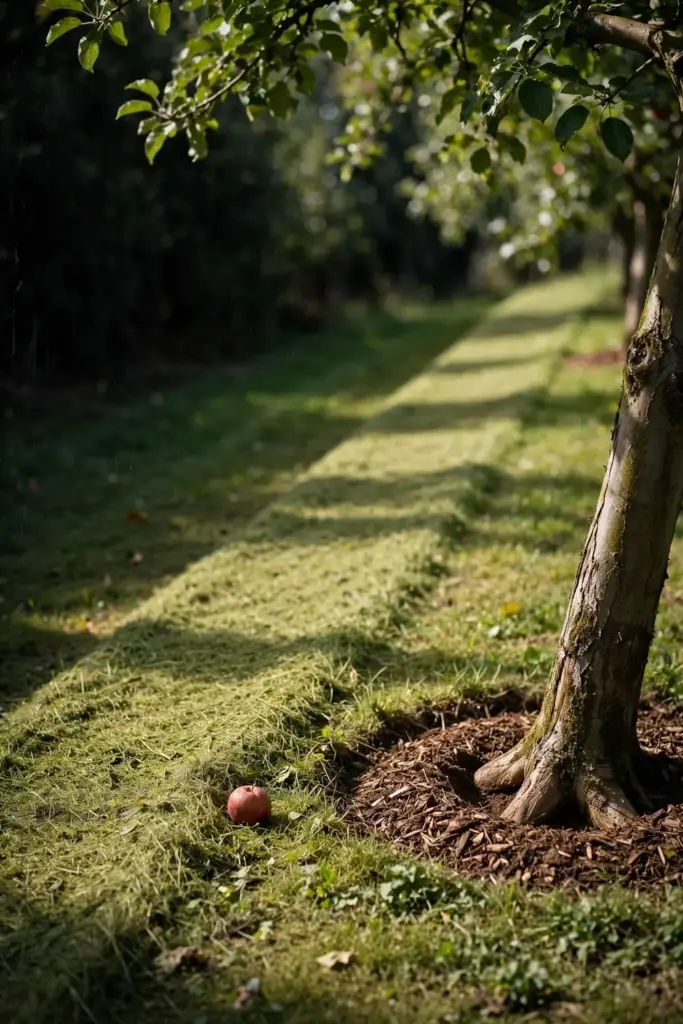
Mow on a steady rhythm through summer. The lower branches carry the fruit that stays wet longest, and that fruit shows SBFS first. A mowed strip under the trees dries faster after rain than a weedy strip. The effect is strongest in a small orchard with low branches. The effect is weakest in a windy open site where air already moves. Mow anyway. The cost is a pass with the mower, and the benefit stacks with every other drying step.
Keep mulch from piling against the trunk. A mulch ring holds soil moisture for the roots, and a mulch volcano holds moisture against the bark. Bark that stays wet invites its own problems. Keep the mulch layer flat and pulled back from the trunk flare. The trunk flare is the widening base where trunk meets roots, and it should stay visible.
Step 6: Summer Prune for Airflow After Fruit Set
Light summer pruning reopens a canopy that filled in after spring growth. Penn State Extension lists summer pruning alongside dormant pruning as a canopy control. Dormant pruning sets the frame. Summer pruning clears the flush that shades fruit in July and August.
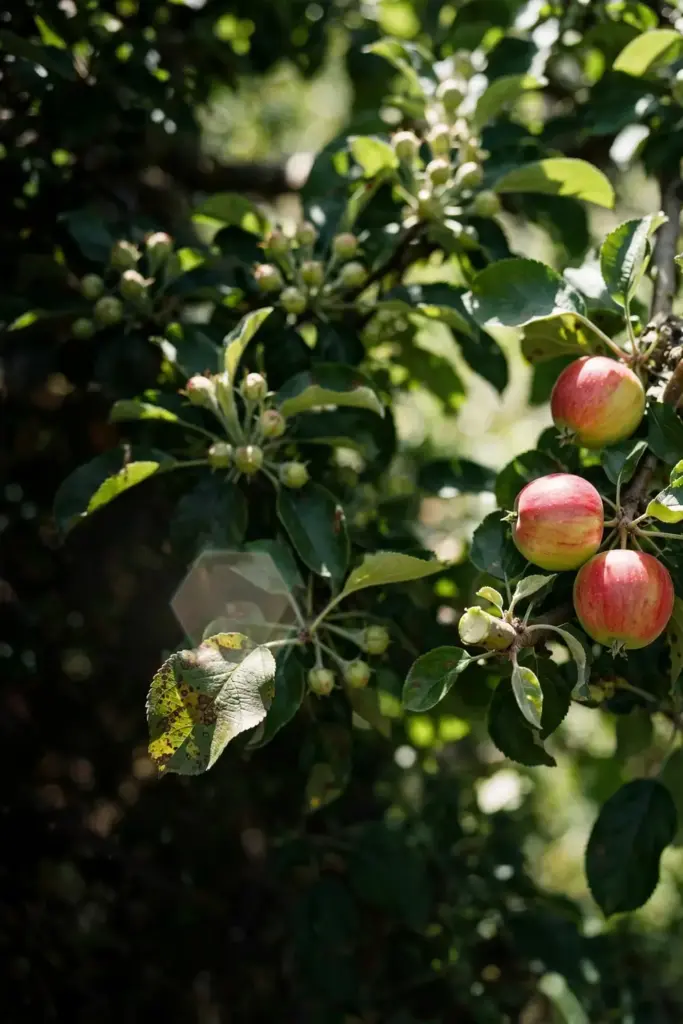
Cut light: remove vigorous upright shoots that shade fruit clusters, plus interior shoots that block the breeze. Stop before the canopy opens so far that fruit sunburns. Fruit that loses its leaf shade in a heat wave can scald. Aim for dappled light on the fruit, with leaves still shading most clusters, and a few cuts per tree usually suffice.
Time the work for a dry stretch. Pruning in wet weather spreads other fruit diseases on wet tools and wet wounds. A dry morning with a drying breeze is the right window. Pair summer pruning with the thinning check. A tree that is open, thinned, and mowed around dries fast after every summer storm.
Step 7: Time Any Spray by Wet Weather, Not by Calendar
A spray decision starts with the goal from Step 1. A home gardener who eats the fruit can skip sprays entirely. A gardener who sells fruit or stores fruit may weigh a spray program. Any spray program follows the label and the weather, not a fixed calendar date.
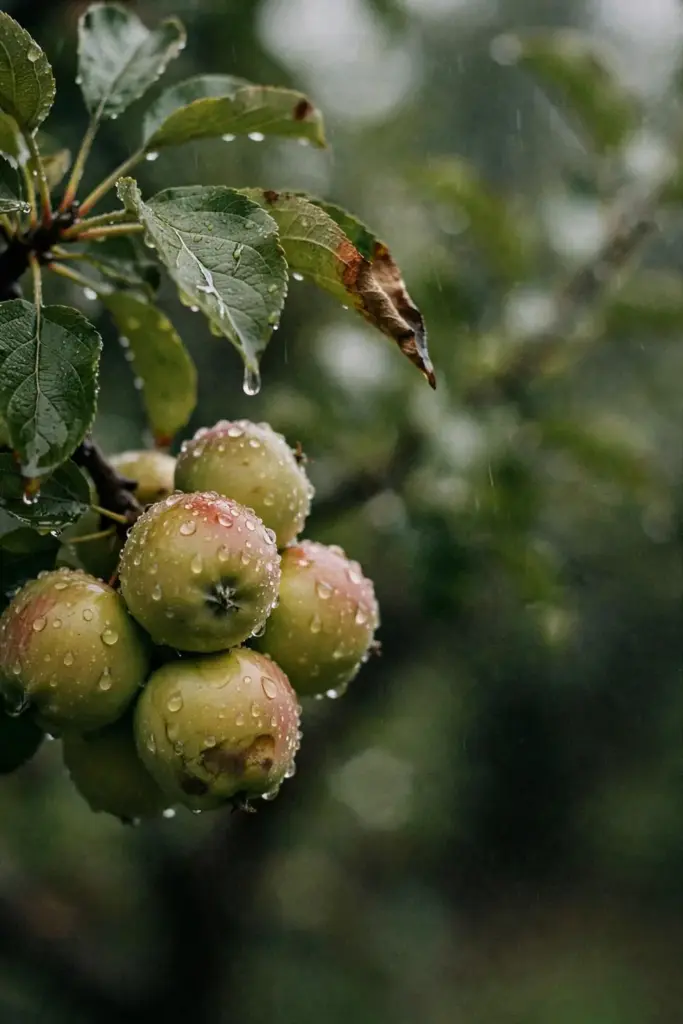
The University of Massachusetts Extension describes the commercial timing logic. Fungicides are the primary control for SBFS in commercial orchards. The initial fungicide application each season can be timed using accumulated leaf wetness hours from petal fall. Later applications follow the amount of rain or the time that has elapsed since the previous application. Home gardeners do not need a leaf-wetness model. The principle transfers without the model. Spray before long wet periods, not after spots appear. Spots mean infection happened weeks earlier.
Use only a product labeled for apples in your state, and follow the label exactly. The label sets the crop, the rate, the interval, and the pre-harvest waiting period. Rates vary by product and jurisdiction, so none appears here. A spray aimed at apple scab often reduces SBFS as a side effect, since the same wet-weather program covers both. Skip home chlorine dips. The chlorine dip figures in Extension reports describe a commercial grading line, not a kitchen sink. Water, rubbing, and peeling handle home fruit.
Step 8: Harvest on Time and Skip Long Storage for Marked Fruit
Harvest at ripe and sort marked fruit for first use. Marked fruit keeps poorly. Clean fruit keeps well. The sort at harvest decides which apples reach December and which apples reach the table this week.
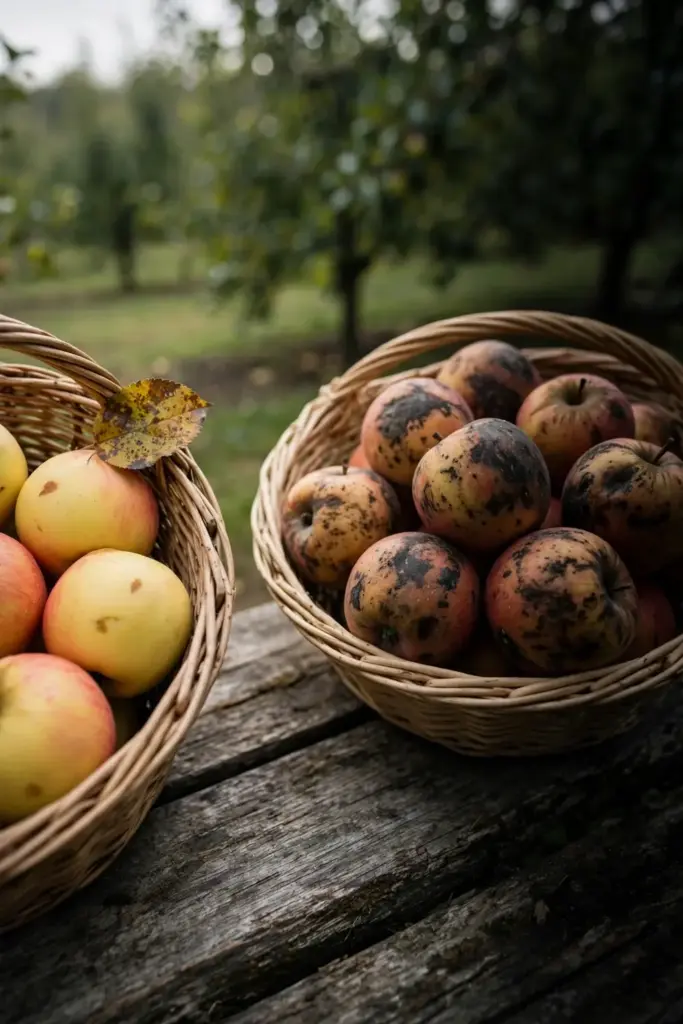
The Royal Horticultural Society reports that sooty blotch patches may continue to develop during storage. The Society advises against storing significantly affected fruit. Penn State Extension and the University of Massachusetts Extension both tie SBFS to shorter storage life through water loss. A marked apple in a storage crate leaks water all winter and shrivels. A clean apple in the same crate holds firm.
Sort into two crates at picking time: marked fruit in the eating crate, clean fruit in the storage crate. Store the clean crate cool and well ventilated. Check the storage crate on a steady rhythm and pull any apple that softens. One soft apple in a closed crate spoils its neighbors. The marked crate feeds the kitchen for weeks, and the clean crate carries the winter.
Step 9: Wash, Rub, and Peel Marked Fruit at the Sink
Washing, rubbing, and peeling turn marked fruit into clean eating fruit. The marks sit on the surface. Water and friction remove much of them. A peeler removes the rest.
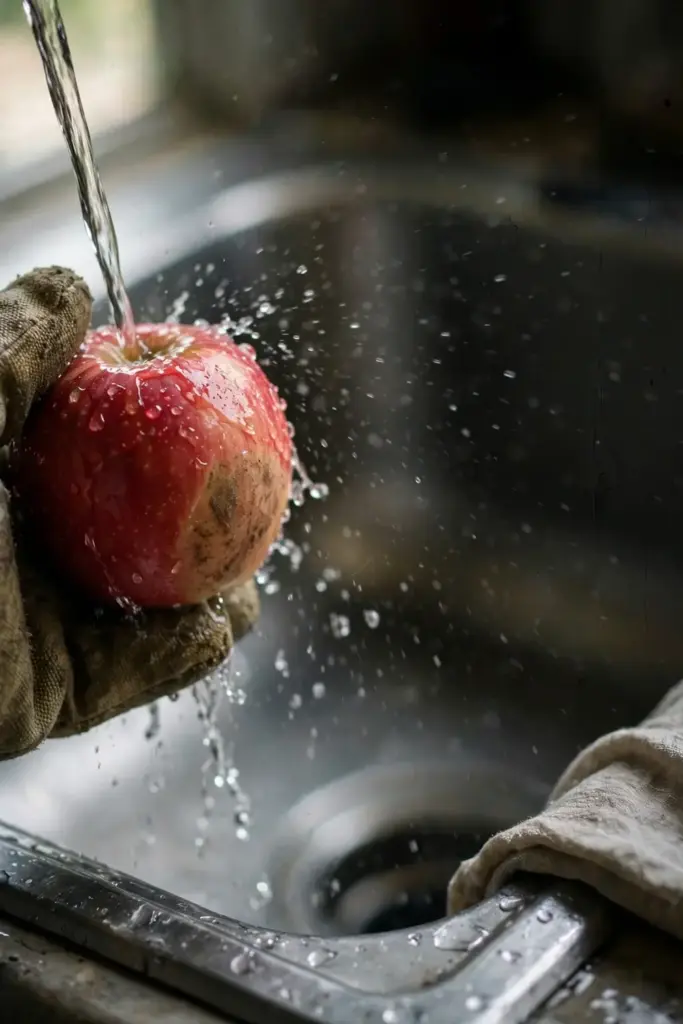
Start with sooty blotch. Minnesota Extension reports that sooty blotch smudges rub or wash off the fruit fairly easily. Rub the apple under running water with a soft cloth, and expect a brown mark to remain where the blotch sat heaviest. The mark is discoloration on the skin, not rot. Peel the apple if the mark bothers you. The flesh under the mark is sound.
Flyspeck needs the peeler more often. Minnesota Extension reports that flyspeck dots cannot be cleaned off the fruit easily. Rub first. Peel second. Cut out any soft or rotted spot as a separate problem, since SBFS never causes rot. A soft spot means a different disease or an insect wound reached the flesh, and that apple belongs in the discard pile. The rest of the crop stays edible. Iowa State University Extension confirms the eating rule. The skins on the apples can be eaten. The skins do not look appetizing with marks, and peeling fixes that.
Step 10: Keep a One-Line Record for Next Summer
One line per tree beats a full diary. Write the date spots first appeared, the weather pattern behind them, and what you did. The record turns this year into next year timing.
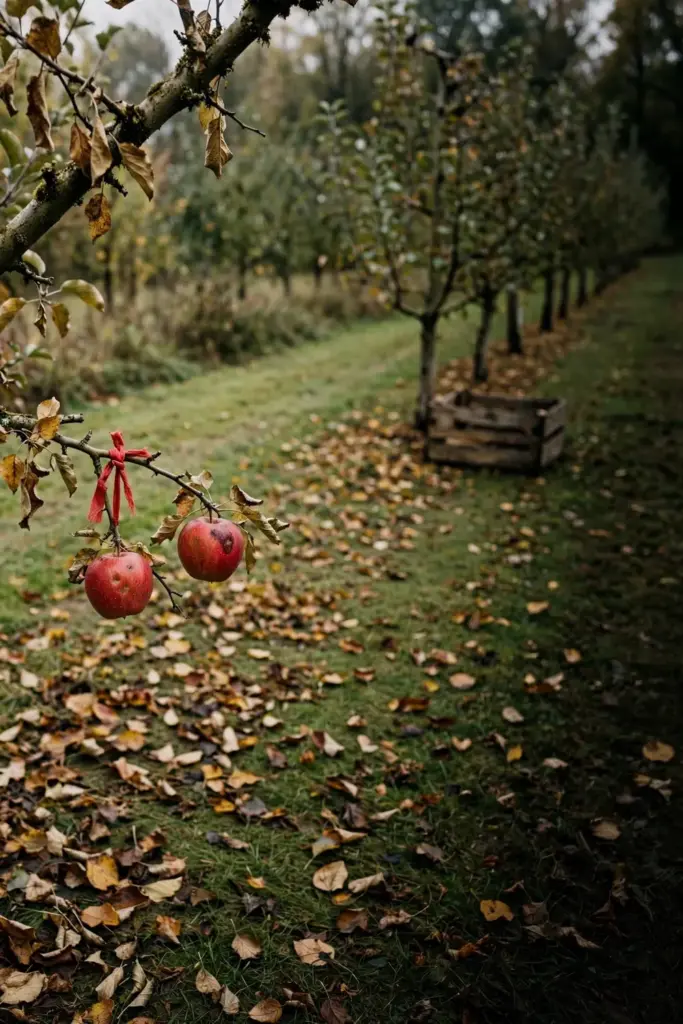
The lag drives the value of the record. Symptoms can trail infection by 3 weeks or more. A record of first spots in late August points to infection in late July. Next year, that record tells you to thin and prune before late July, not after spots show. A record of the worst tree tells you which canopy to open first in the dormant season. A record of a wet June tells you to mow early and keep the border cut.
Keep the format fixed so the record stays useful. Tree name, first-spot date, worst branch, steps taken. One line each. Review the lines at dormant pruning time. The review takes minutes. The review sets the order of work for the whole orchard. A gardener who records one line per tree never starts the next season guessing.
Living With Sooty Blotch Damage You Cannot Undo
Marks on this year fruit do not heal. The fungi leave surface marks that stay until washing or peeling removes them. No spray, wash, or feed erases a mark from a picked apple. The tree itself carries no lasting injury from SBFS. The damage is cosmetic and seasonal.
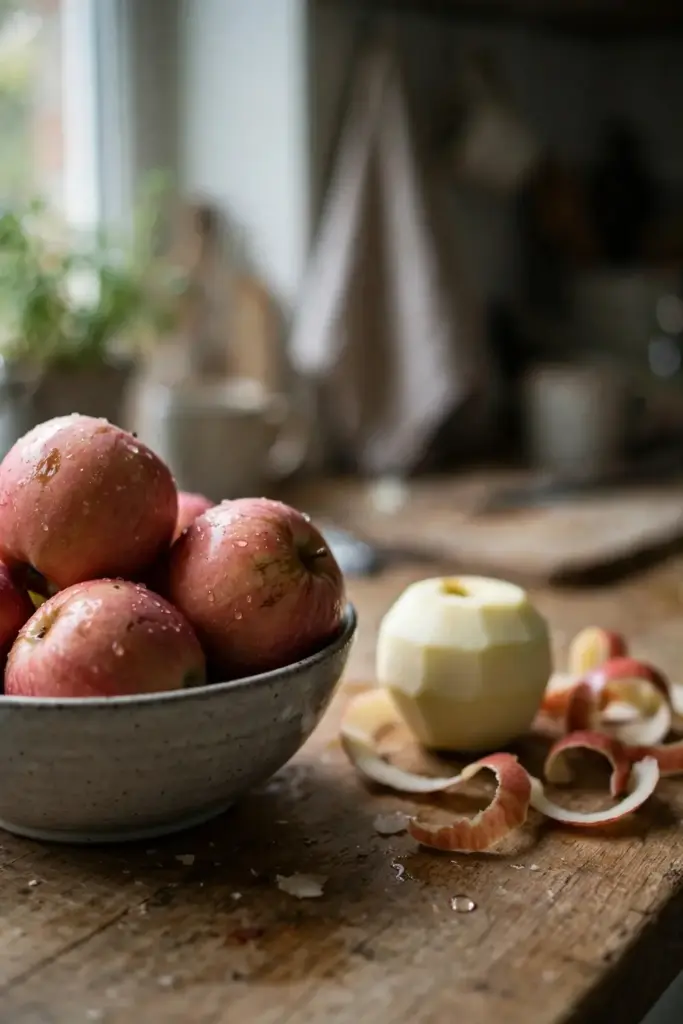
Use the marked crop: wash and peel marked apples for fresh eating, cook them for sauce and baking, or press them for cider where a press is available. The flesh cooks and presses the same as clean flesh. Do not throw the crop away over surface marks, since the harvest still feeds the kitchen.
Fix the canopy for next year. Dormant prune the worst tree first. Thin early. Mow the border. The steps that dry the canopy pay off next summer, not this one. A gardener who accepts this year marks and fixes next year canopy gets the full value of both seasons.
Frequently Asked Questions
Yes. Sooty blotch and flyspeck stay on the fruit surface and never rot the flesh. Wash the apple under running water and rub the smudges with a soft cloth. Peel the apple if flyspeck dots resist rubbing. The flesh under the marks tastes the same as clean flesh. Discard any apple with a soft or rotted spot, since rot signals a different problem.
Sooty blotch usually washes off with vigorous rubbing under running water. The Royal Horticultural Society notes that rubbing often leaves a brown discoloration on the skin. That mark is surface staining, not rot. Flyspeck dots resist washing more often than sooty blotch smudges. Peel the apple when dots stay put. Peeling removes both marks in every case.
Yes, if wet humid weather returns and reservoir hosts stand near the orchard. The fungi overwinter on twigs of many woody plants, including brambles and bittersweet. Spores blow into the orchard each season. Dormant pruning, early thinning, border cleanup, and short ground cover cut next year pressure. No step sterilizes the landscape, so expect some marks in wet years.
Yes. Penn State Extension lists apple, crabapple, and pear trees as hosts. The Royal Horticultural Society adds plum and citrus to the affected plant list. Pear fruit shows the same surface marks as apple fruit. Pear growers should also check for sooty mold, which follows insect honeydew and appears on leaves and twigs as well as fruit. Fruit-only marks point toward SBFS.
No, for most home gardens. Sooty blotch and flyspeck are cosmetic, and the fruit stays edible without any spray. Cultural steps carry the control: open pruning, thinning, border cleanup, and short ground cover. Gardeners who sell fruit or store fruit for months may weigh a labeled spray timed by wet weather. Follow the product label exactly, and skip home chlorine dips.
Sooty blotch stays flat on the fruit surface with indefinite smudge borders. Apple scab lesions feel scabby and corky, and scab attacks leaves as well as fruit. Sooty blotch rubs off with vigorous rubbing, often leaving a brown mark. Scab lesions do not rub off. SBFS never causes leaf lesions. Leaf spots plus fruit spots point toward scab, not SBFS.
Where to Go From Here
Walk the orchard this week and read the fruit. Rub one smudge to check whether it clears, then look for dot clusters with clean skin between the dots and for marks on leaves and twigs that would point toward sooty mold instead. The read takes minutes and sets the whole plan.
Pick the one step that fits the season. Dormant season means prune. Early summer means thin and mow. Harvest means sort and use marked fruit first. The single next action beats a full program started too late. Gardeners who want the next apple problem sorted can compare rust spots against cedar apple rust quick fixes for apple trees. That canopy work helps there too, since dry open trees carry less disease of every kind.