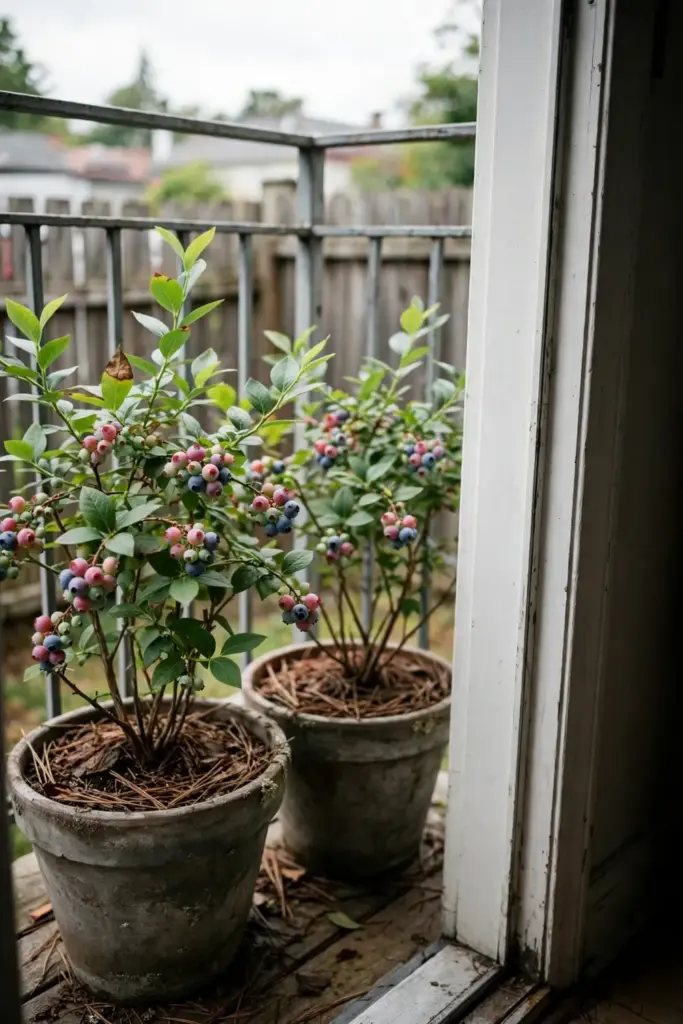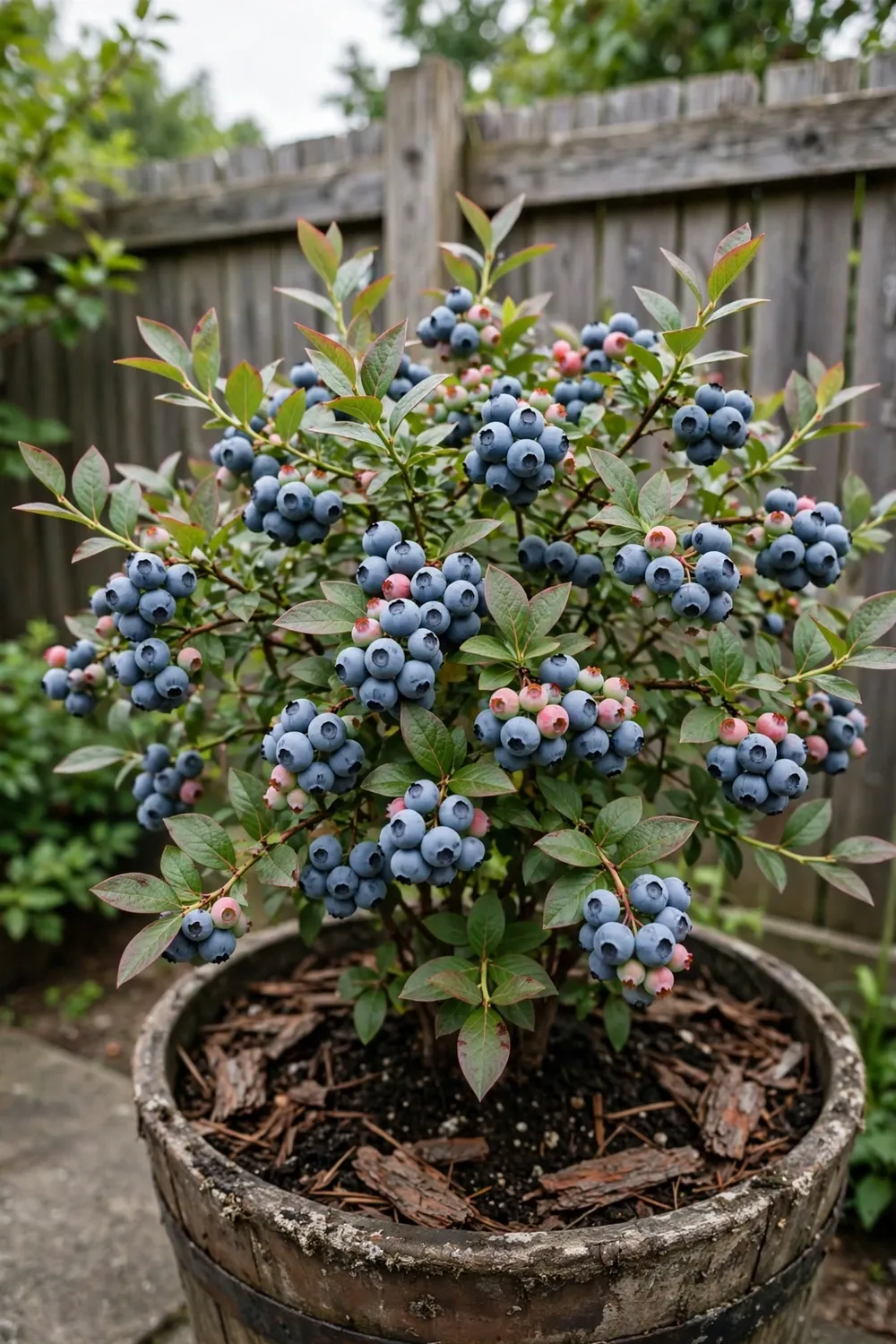

Growing blueberries in Australia comes down to 3 decisions: acid soil, the right variety for your climate, and 2 plants that flower together. Get those 3 right and a pair of potted bushes fruits from year 2. Miss the soil pH and no amount of feeding saves the crop.
I have learned that the pH meter decides a blueberry harvest before the first flower opens. The rest of this page runs from variety choice to harvest, pots first, then soil, feeding, pruning, netting, and pests.
Pots win for most Australian gardeners because most Australian soils sit above the pH blueberries need. A pot lets you build the acid mix from day one. The first berries arrive one to three years after planting, and a mature bush keeps fruiting for a decade or more with steady care.
Match the Variety to Your Climate First
Pick southern highbush for warm and subtropical gardens, rabbiteye for heat, and northern highbush only where winters run cold. Chill hours decide it.
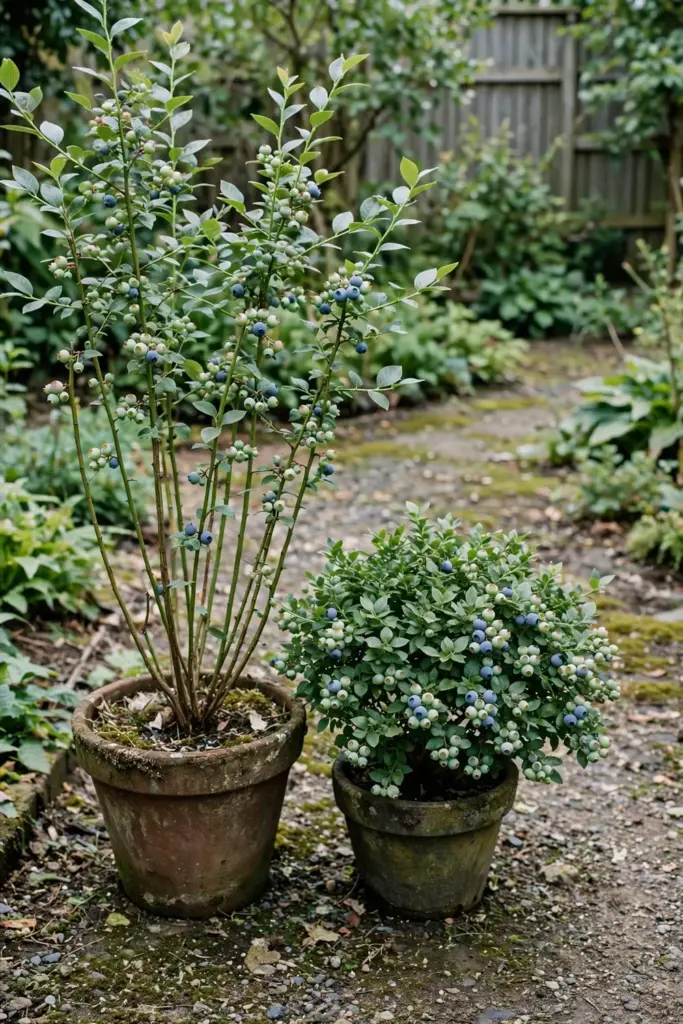
A chill unit counts one hour between 0 and 7 degrees Celsius while the bush rests in winter. Northern highbush needs 800 to 1000 chill units to break dormancy, southern highbush needs 200 to 600, and rabbiteye needs 300 to 600, according to the University of Georgia blueberry production circular. That gap explains why a variety that fruits well in Hobart sulks in Brisbane. Count your winter chill before you buy, not after.
The same circular puts northern highbush at 1.5 to 2.7 m tall, southern highbush at 1.8 to 2.4 m, and rabbiteye at 1.8 to 3 m. Pots keep all three smaller because the root run limits the top growth. Height matters less than chill. A small bush that meets its chill fruits. A large bush that misses its chill drops its flowers.
| Type | Chill Need | Where It Fruits in Australia | Picks to Ask For |
|---|---|---|---|
| Southern highbush | 200 to 600 chill units | Warm coastal, subtropical, Sydney to the tropics | Sunshine Blue, Biloxi, Misty, Sharpblue, Kisses, Burst |
| Rabbiteye | 300 to 600 chill units | Hot summers, humid coasts, warm inland | Brightwell, Powderblue, Tifblue |
| Northern highbush | 800 to 1000 chill units | Cold-winter south, highlands, Tasmania | Duke, Bluecrop, Elliot |
Queensland nursery lists name Biloxi, Misty, Sharpblue, Sunshine Blue, Kisses, and Burst for subtropical gardens. Sunshine Blue earns its place on that list. It grows as a dwarf, semi-evergreen bush, fruits without a cold winter, and tolerates a higher soil pH than other varieties, according to Queensland nursery guides. It is self-fertile, so one plant fruits alone. A second variety still lifts the harvest.
Northern highbush types such as Duke and Bluecrop suit cool southern gardens with real winters. Rabbiteye types such as Brightwell and Powderblue handle heat and ripen late. Ask the nursery for the chill rating on the label before you pay, because a variety sold without one is a guess, and guesses waste seasons.
Grow Blueberries in Pots Unless Your Soil Is Already Acid
Grow blueberries in pots unless a soil test shows your ground is already acid. Pots win. They give you full control of pH, drainage, and feeding from the first day, and that control is the whole game for a plant that wants acid soil.
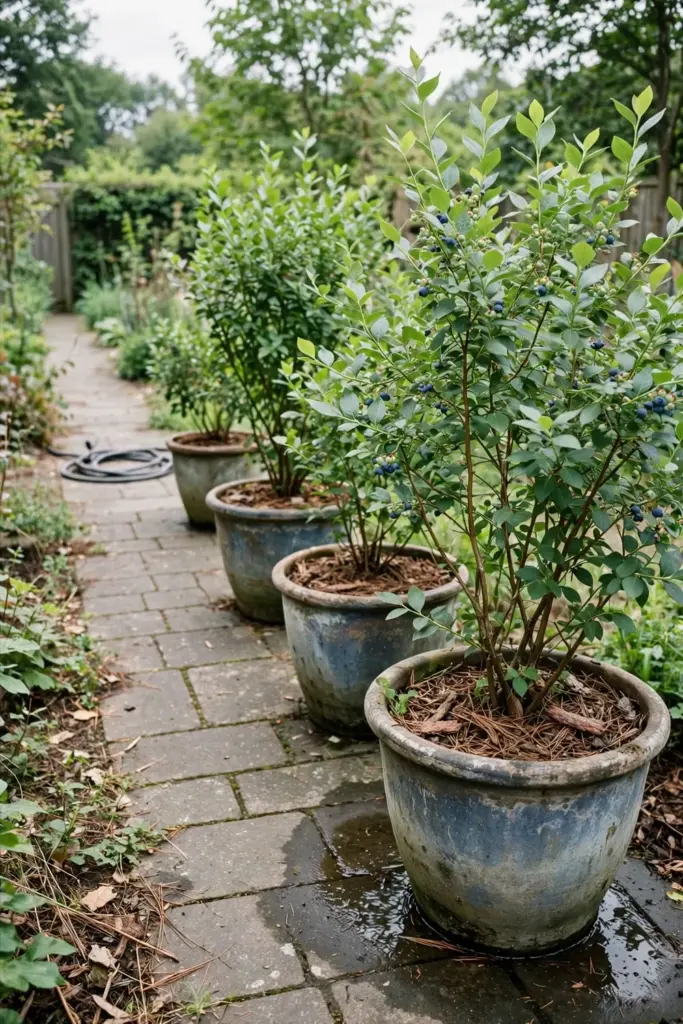
Start with a pot 40 to 50 cm wide and 30 to 40 cm deep, with drainage holes in the base, according to Australian pot-growing guides. Roots run shallow and wide. Width beats depth. A 30 cm pot works as a minimum for a young bush, but a bush in a small pot dries out fast in summer and needs repotting sooner, so buy the bigger pot first and skip the mid-season rescue.
Pine bark in the mix stretches pot life. Without it, a potted blueberry lasts about 2 years before the mix collapses. With it, the same bush lasts 6 to 8 years, according to an Australian nursery guide. Repot every 2 to 3 years anyway, into fresh acid mix, and check the drainage holes each spring. A blocked hole drowns the shallow roots in one wet week.
A raised bed works where ground soil is already acid, enriched with leaf mould, pine bark, or composted pine needles, with alkaline amendments kept out. Manures and mushroom compost push pH up. They do not belong near blueberries. One line covers raised beds because pots carry this article, and ground planting suits only gardens whose soil already tests acid.
Blueberries struggle in dry and arid regions, and no pot fixes a climate with months of desiccating heat and no humidity. Everywhere else in Australia, from the tropics to Tasmania, a matched variety fruits. Match the variety to the climate first, then choose the pot.
Companions stay acid-lovers only. Azaleas, camellias, and rhododendrons share the same soil. Thyme, strawberries, basil, cranberries, and borage sit happily beside a blueberry pot. Keep nightshades and brassicas away. Tomatoes, potatoes, peppers, cabbages, and broccoli want the neutral soil that starves a blueberry.
Build an Acid Soil Mix Blueberries Can Live In
Mix azalea or camellia potting mix with pine bark fines and perlite, then test the pH before planting. Aim for about pH 4.8.
North Carolina Extension treats anything above pH 5.0 for highbush or 5.3 for rabbiteye as too high, and aims for about pH 4.8, according to its home-garden blueberry guide. The same guide puts sulfur at 454 g per 9.3 square meters on sandy soil and double that on heavier soil to drop pH by one unit, and says to apply sulfur 3 to 4 months before planting and retest before the bush goes in. Soil pH moves slowly. Start months early, not on planting day.
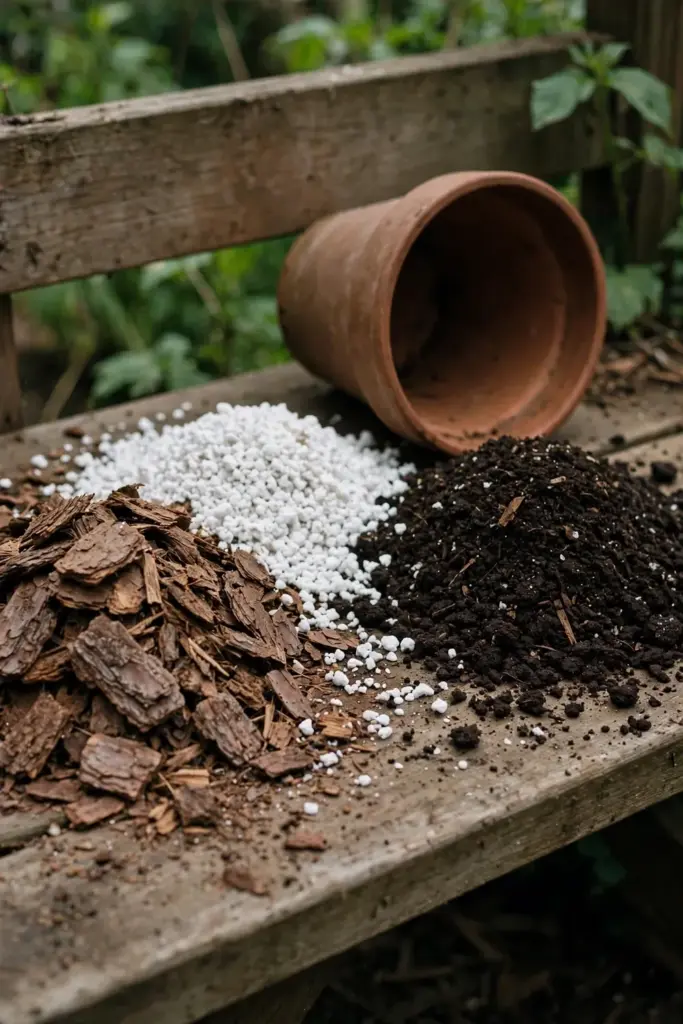
A pot mix that works in Australian nurseries blends azalea or camellia mix with pine bark fines and perlite, in the shares below, according to an Australian pot-growing guide.
| Component | Share by Volume |
|---|---|
| Azalea or camellia mix | 50 percent |
| Pine bark fines | 30 percent |
| Perlite | 20 percent |
Camellia and azalea mixes already sit in the acid range, so they give the bush a head start. Pine bark fines hold the structure open for years. Perlite keeps water moving through. Garden soil alone has no place in a blueberry pot. It compacts, it holds too much water, and its pH sits too high.
Pine bark carries its own acidity. The same North Carolina guide puts pine bark, chips, and sawdust at pH 3.5 to 4.5, below hardwood mulches that sit above pH 5.0. That acidity is why pine bark works as both mix ingredient and mulch. Hardwood mulch on the surface still works, but it does not pull pH down the way pine bark does.
Finished compost earns a small share of the mix, no more. It feeds soil life and holds moisture. Fresh manure, mushroom compost, and lime never go in. A small share of finished compost from your own bin adds biology without pushing pH up. Compost bin options for your garden show the bin styles that produce that finished compost. Keep the compost share small. The acid mix does the heavy lifting.
Coffee grounds help a little, adding mild acidity and organic matter to a mix that already tests acid. They do not fix a pH of 7, so treat them as a supplement, not a correction. The pH test kit decides. Buy one from a nursery, test before planting, and test again each year, because a bush that yellows between the veins is telling you the pH drifted up. Building soil health starts with knowing what is in the soil, and blueberries punish gardeners who skip that step.
Plant at Nursery Depth and Give Each Bush Room
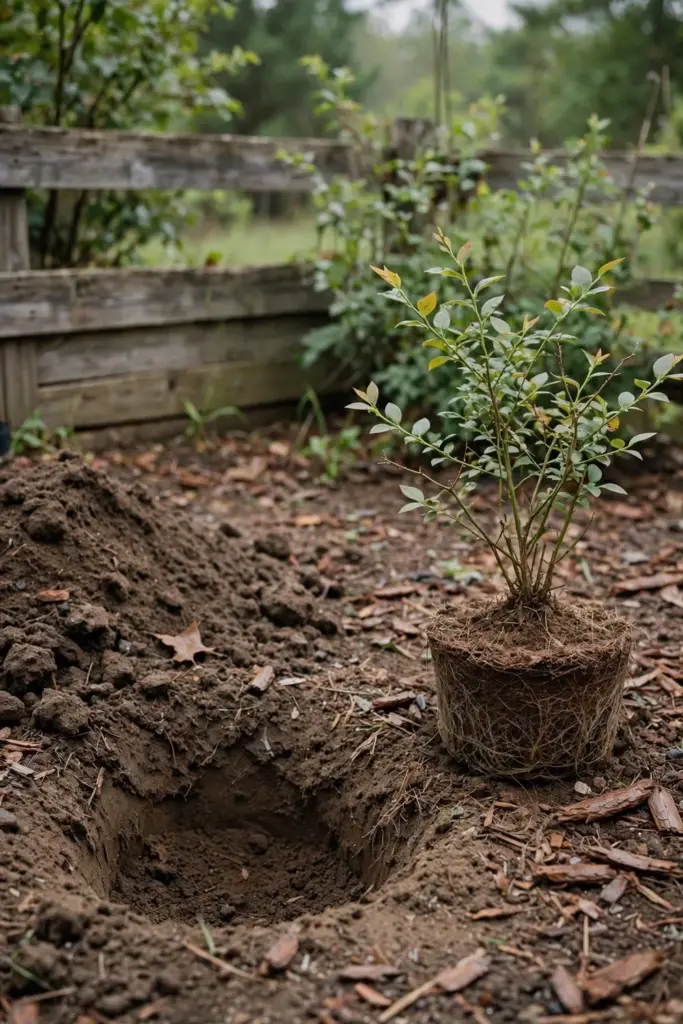
Plant 1 to 3-year-old nursery bushes in spring or autumn, at the same depth they grew in the pot, 1.2 to 1.5 m apart. Crown level, never buried.
Spring and autumn both work. Plant in mid-spring where autumn runs cold, and skip planting in summer heat until the bush settles, according to Australian growing guides. A nursery bush in a pot plants any time the weather stays mild. Bare-root bushes need the dormant window. Buy potted bushes unless you have a reason not to. They establish faster and forgive a late start.
Space bushes 1.2 to 1.5 m apart. That gap gives each bush air and light, and it leaves room to walk around with a picking bowl. Tighter spacing crowds the canes, shades the fruit, and invites mildew. A hedge of blueberries looks tidy in year one and chokes itself by year four. Give each bush its meter and a half.
Dig the hole wider than the root ball and no deeper. Loosen a pot-bound root ball with your fingers before it goes in. Set the bush so the crown sits level with the mix surface. Burying the crown rots it. Planting high dries the roots. Level is the only right answer. Firm the mix around the roots and water the bush in deeply.
Prune at planting. Cut the bush back by one-third to one-half and strip every flower bud in the first year, according to the University of Georgia home-garden guide. That cut feels brutal on a bush you paid for. It pays back in roots. A bush that fruits in year one spends its energy on berries and grows weak wood. A bush that spends year one on roots fruits for a decade.
Sun runs 6 or more hours a day. Morning sun with light afternoon shade suits hot summers. Shelter from strong wind stops the pot drying out in a day. A courtyard corner with morning sun and a wind break grows better blueberries than an exposed rooftop with all-day glare.
Water Steady and Mulch With Pine Bark
Keep the mix evenly moist and never waterlogged. Water when the top 2 to 3 cm feels dry to a finger.
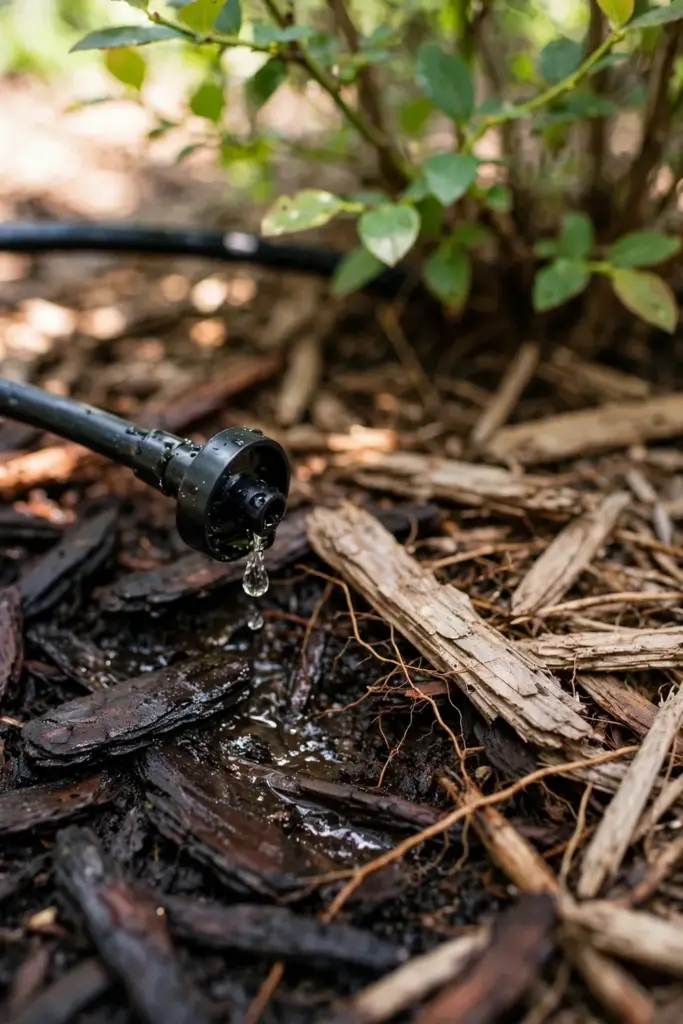
Blueberry roots run shallow and carry few root hairs, so they feel every dry spell, according to an Australian growing guide. A pot in summer heat dries in a day. Drip irrigation beats a hose because it wets the root zone without wetting the leaves. Mulch holds that moisture in. Check pots daily in summer and ground bushes every few days.
Mulch with 7.6 to 10.2 cm of pine bark or pine needles. That depth keeps moisture in, cools the roots, and holds acidity, according to Australian pot-growing guides. What mulching does for weed control, moisture retention, and soil covers the general case, and pine bark adds the acid edge blueberries need. Keep mulch off the crown itself. A mulch collar against the stem holds moisture where rot starts.
Top up the mulch each year as it breaks down. About 2.5 cm of fresh pine bark each year replaces what rotted away, according to North Carolina Extension. A mulch layer that thins to nothing lets the mix dry and the weeds in. A mulch layer that stays thick keeps the root zone cool through the hottest week.
Keep the bush moist through flowering and fruiting. A dry spell during fruit set drops berries before they size up. A dry spell during ripening shrivels them. Water wins over feeding here. A bush with water and no fertilizer fruits. A bush with fertilizer and no water drops its crop.
Feed Light With Ammonium Nitrogen
Feed little and often with an ammonium-based fertilizer for acid-lovers, because blueberries burn on heavy feeds, and one heavy dose can set a bush back a full season.
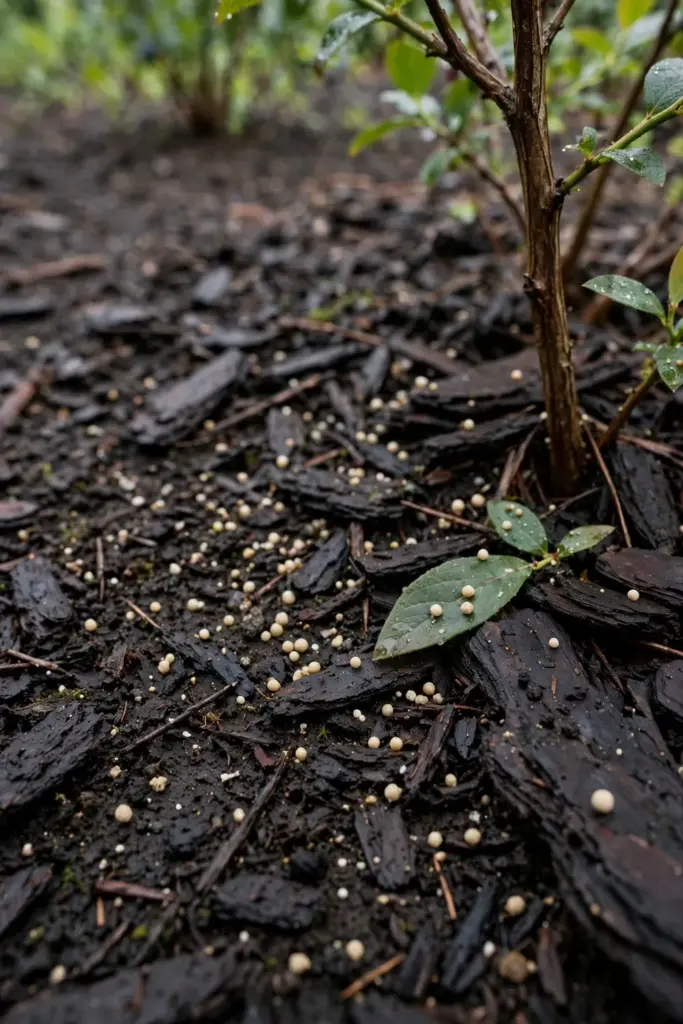
The University of Georgia home-garden guide sets the schedule, and the table below follows it: Home Garden Blueberries. Feed after leaves emerge and new growth starts, then repeat where rain or irrigation follows.
| Year | When | Rate per Bush |
|---|---|---|
| First | After leaves emerge, then May and July | 57 g azalea special, or 28 g 12-4-8 or 10-10-10 |
| Second | March and July | Same as first year |
| Third and later | Bud break and after harvest | 28 g per 30 cm of height, maximum 170 g |
Never heap fertilizer at the base. Spread it evenly in a circle under the bush, away from the crown, and water it in. A pile of granules against the stem burns the bark. A scattered feed dissolves into the root zone where the bush can use it.
Ammonium nitrogen suits blueberries because the ammonium form acidifies the soil over time. The University of Georgia production circular recommends ammonium sulfate for that reason. Nitrate forms push pH the wrong way. Read the label before you buy. A fertilizer marked for azaleas, camellias, or acid-lovers usually carries the ammonium form. A general garden fertilizer often does not.
Skip fertilizer at transplanting. The bush needs roots first, and salts in fresh mix burn tender root tips. Wait until leaves reach full size and new growth starts, then feed at the first-year rate. A bush fed on planting day sulks. A bush fed after it settles grows.
Heavy nitrogen grows leaves, not fruit. A bush fed double rates puts out soft leafy growth that mildew loves and berries that never size up. Light feeds at the schedule above grow fruit. If the bush already grows 30 cm or more of new wood a year, it has enough nitrogen. Back off, do not add more.
Prune in Winter to Renew the Canes
Prune in winter while bushes sleep. Remove old canes, open the center, and let light reach the fruiting wood.
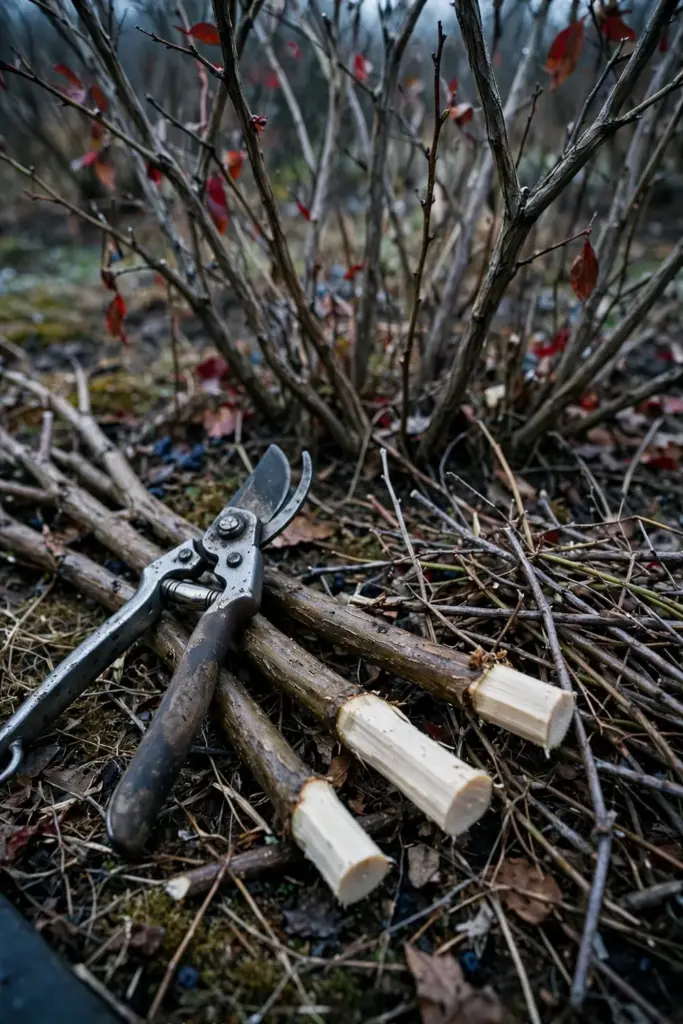
Renewal pruning keeps a blueberry young. The pattern below follows the University of Georgia home-garden guide.
| Type | Winter Renewal Rule |
|---|---|
| Rabbiteye | Remove 1 to 3 of the largest canes each winter, 20 percent of the canopy, cutting at ground level or up to 61 cm high |
| Highbush | Cut 2 old canes per year back to strong laterals or to within 30 cm of the ground |
Over five years the whole bush renews. New canes sprout below the cut and fruit within a season or two.
Australian pot-growing guides keep 6 to 8 healthy canes on a mature bush. That number gives a potted bush enough fruiting wood without crowding. Count canes before you cut. A bush with 12 canes loses the weakest four. A bush with 5 canes loses none. The number guides the cut, and the bush in front of you makes the call.
Take dead and weak wood first. Then take low, spreading branches that drag on the mix. Then thin twiggy growth carrying too many flower buds. A bush that carries more buds than it can ripen makes small, late berries. Thinning buds grows bigger fruit. Open the center so air moves through. Airflow dries the leaves after rain, and dry leaves resist mildew.
Spring pruning techniques cover the general cuts, and blueberry pruning follows the same clean-cut rules. Cut to an outward bud. Wipe blades between bushes. A clean cut heals. A torn cut invites disease. Prune on a dry day so cuts dry before rain carries spores onto them.
Skip summer pruning except for tipping an overly long shoot. Winter carries the real work. A bush pruned in winter wakes in spring with light, air, and a set of young canes ready to fruit.
Plant Two Varieties for a Bigger Harvest
Plant two compatible varieties that flower together. Self-fertile types still fruit heavier with a partner.
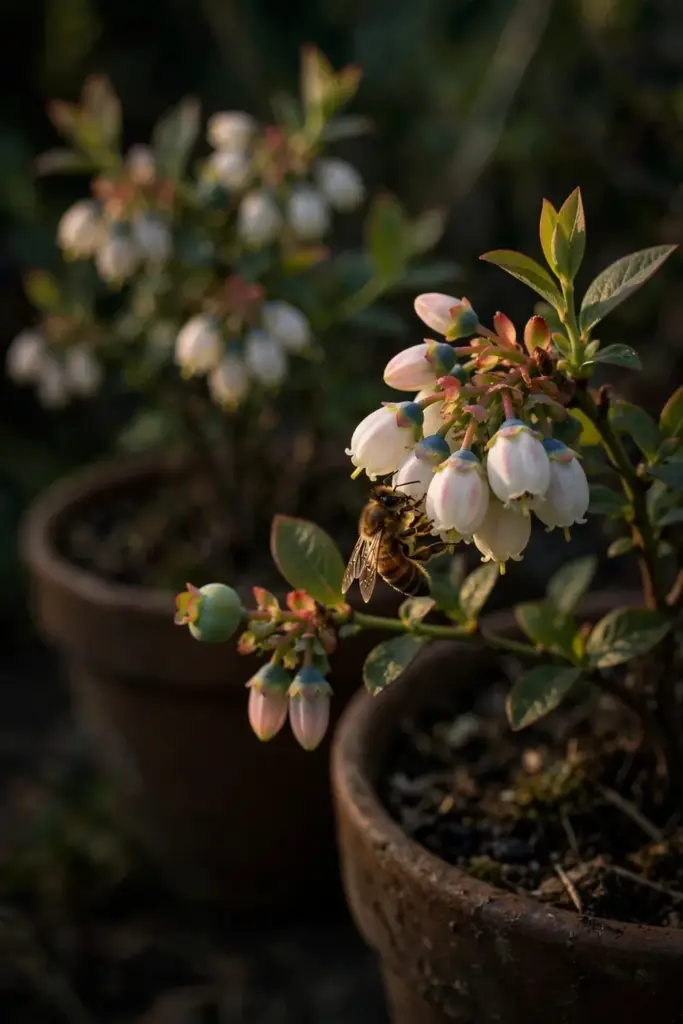
Rabbiteye blueberries need cross-pollination to set fruit, according to the University of Georgia production circular. Plant more than one rabbiteye variety with a matching flowering window, or the bush flowers and drops its crop. Southern highbush types are mostly self-fertile, yet planting several varieties still lifts fruit set. Northern highbush types are self-fertile too, and interplanting gives larger berries that ripen earlier.
Sunshine Blue fruits alone. It needs no partner. A second variety beside it still helps, because bees carry pollen between bushes and set more berries. One bush feeds a household. Two bushes feed it better.
Bees do the pollination, so timing matters. Net after berries develop so bees reach the flowers first. A net that goes on at flowering locks bees out and cuts the crop. Flowers first, net second. The next section covers the net itself.
Net With Wildlife-Safe Mesh After Fruit Sets
Net after fruit sets with knitted mesh under 5 mm. Bees finish pollination first, then the net goes on.
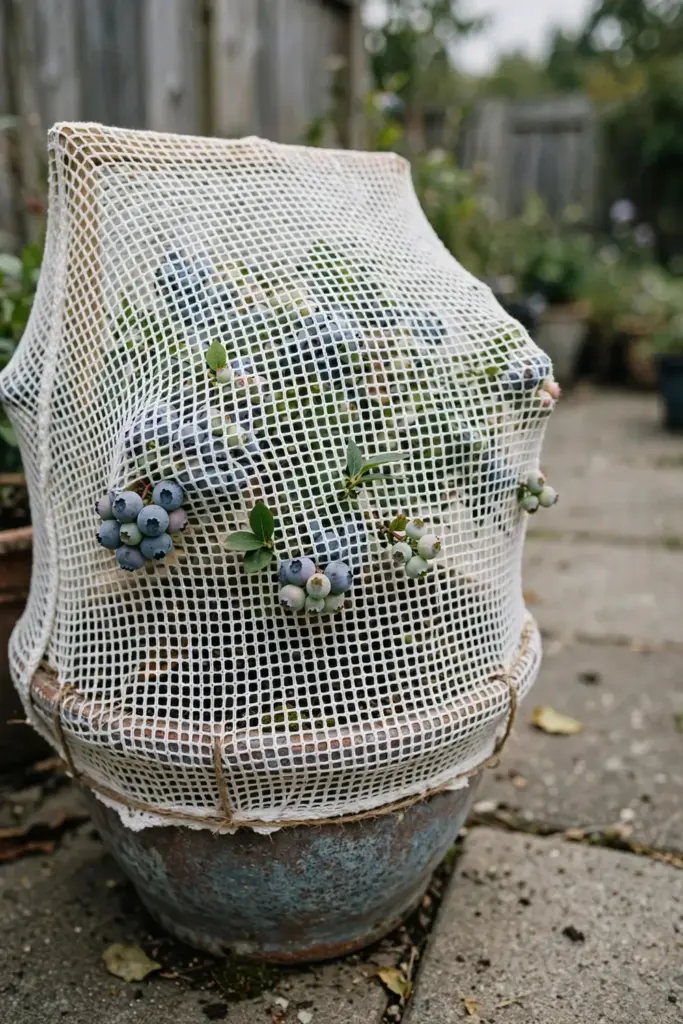
Queensland Government guidance sets the standard: use sturdy knitted netting with a mesh aperture under 5 mm by 5 mm when stretched, woven from strands at least 500 microns thick, according to its fruit-tree netting guide. White netting shows against foliage, so flying foxes see it and avoid it. The same guide bans thin monofilament nylon netting. It stretches out of shape under a climbing animal, tangles wings and feet, and cuts deep wounds. A net that traps wildlife kills the animals a garden should protect.
Close every gap. Drape the net over a frame or tie it tight around the pot, with no opening at the ground. Birds walk in through a gap at the base. Flying foxes find a gap at the top. A net with a gap protects nothing and traps everything. Check the net daily while fruit hangs. Free a tangled animal only by calling a licensed wildlife rescuer. Pulling a bird or bat free yourself tears wings and breaks bones.
The finger test works in the shop. If a finger pushes through the mesh, the mesh traps wildlife. Buy the mesh a finger cannot pass. White knitted mesh under 5 mm passes that test. Black monofilament bird netting fails it.
Birds can strip a small planting bare. North Carolina Extension warns that birds can take the complete crop from a small planting. A pot on a balcony loses its berries to one lorikeet in one morning. Net the bush the week fruit colors, not the week fruit ripens. Early netting saves the crop. Late netting saves nothing.
Keep Fruit Fly and Mildew From Taking the Crop
Pick up fallen fruit, seal infested fruit in a bag in the sun for 7 days, and keep the bush open. Hygiene beats spraying.

Queensland fruit fly loves blueberries. A female lays eggs in ripening fruit, and the maggots hollow the berry from inside. Pick up every fallen berry and check the crop daily. Seal infested fruit in a plastic bag and leave it in the sun for at least 7 days to kill eggs and larvae, according to a Mother Earth News growing guide. Never compost infested fruit. Composting lets the life cycle finish and the next generation emerge in the garden.
Mildew shows in warm, humid weather as a white powder on leaves. Airflow and spacing stop it better than any spray. Prune the center open, water at the base, and keep mulch off the leaves. A bush with air moving through it dries after rain. A bush with a crowded center stays damp and mildews.
Blueberries rarely need spraying in a home garden. Birds and fruit fly cause most losses, and both yield to nets and hygiene. If a bought product becomes necessary, follow the label exactly, keep pets and children away until sprays dry, and never spray open flowers. Bees work those flowers, and a sprayed flower kills the bee that visits it.
Pick Blue Berries and Wait Three Days for Flavor
Pick berries when fully blue and soft, then wait. Berries turn blue 3 to 4 days before peak flavor, according to an Australian growing guide. Patience tastes better than earliness.
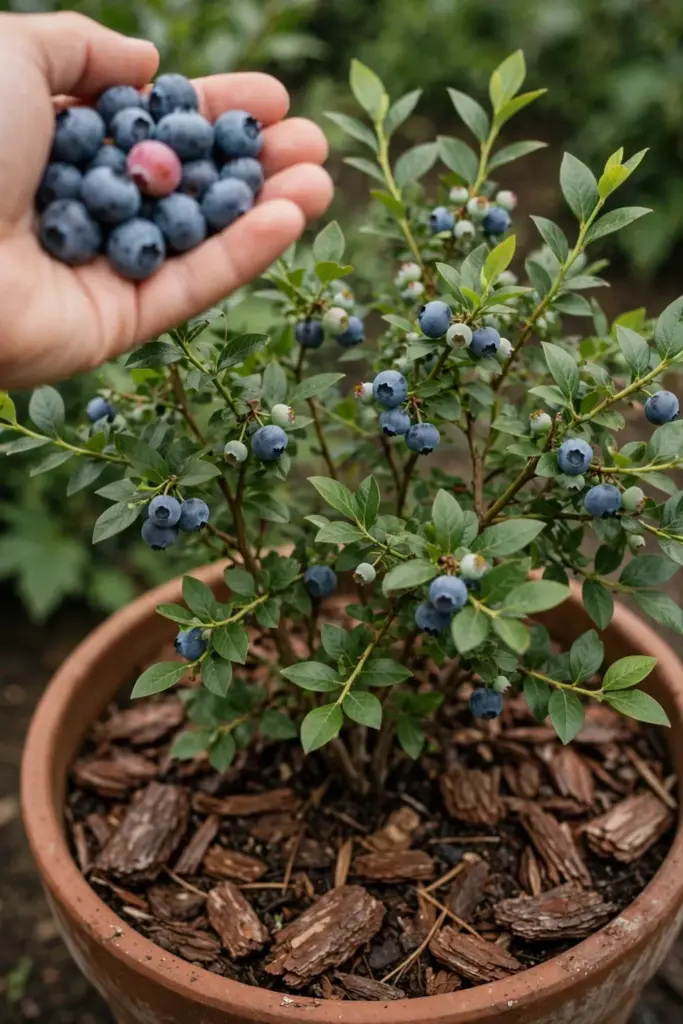
Highbush berries hold best quality when picked every 5 to 7 days, and rabbiteye flavor peaks when picked about every 10 days, according to North Carolina Extension. Walk the bushes daily in season and pick what is ripe. Berries ripen a few at a time, not all at once. A daily pick beats a weekly strip because overripe berries soften and drop.
The first harvest arrives one to three years after planting, and full production takes several seasons, according to an Australian growing guide. Reported yields vary because pots grow smaller canopies than fields.
| Source | Reported Yield per Mature Bush |
|---|---|
| Australian garden guides, potted home bushes | 4 to 7 kg |
| North Carolina Extension, field bushes | More than 4.5 kg |
Judge your bush against its own past seasons, not against a commercial field.
Store fresh berries in the fridge for about a week. Wash them before eating, not before storing. Wet berries mold in the fridge. For freezing, spread berries in a single layer on a tray, freeze them hard, then pack them dry in containers. Tray freezing keeps berries loose instead of frozen into one block.
Frequently Asked Questions About Growing Blueberries
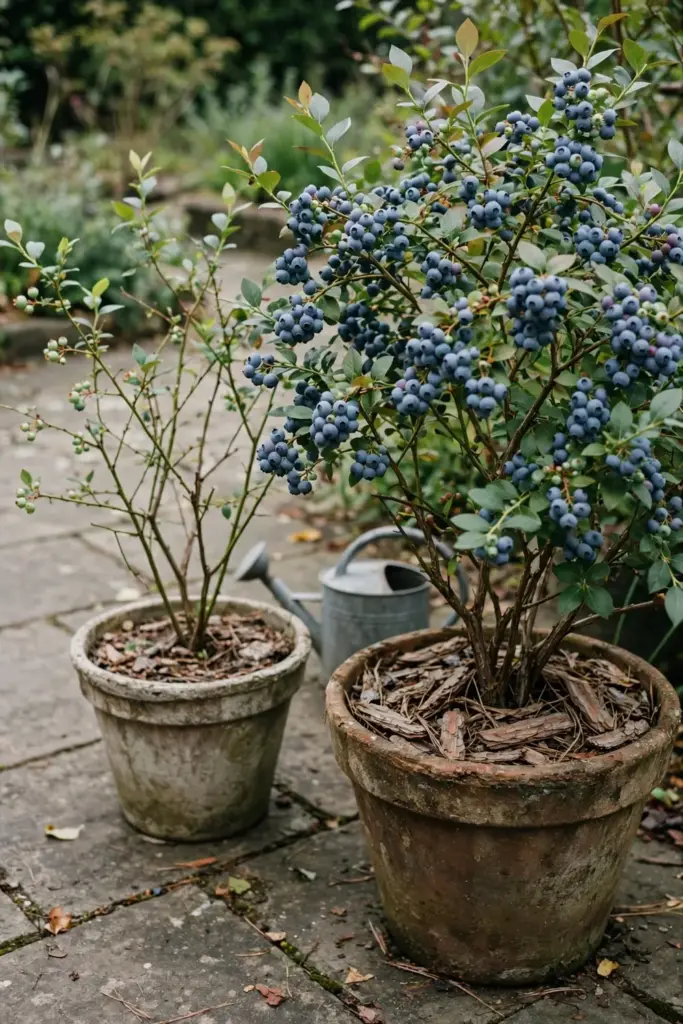
Yes, with the right variety. Sydney and Brisbane suit low-chill southern highbush and rabbiteye types that fruit on 200 to 600 chill units. Melbourne and the highlands suit northern highbush types that need 800 to 1000 chill units. Match the variety to your winter chill first. Pots let every city grow blueberries because the pot controls soil pH. A Brisbane gardener grows Sunshine Blue in a pot. A Hobart gardener grows Duke in a pot. Both fruit.
High pH tops the list. Blueberries in alkaline soil cannot take up iron, and iron shortage yellows leaves between green veins. Test the soil pH first. If it reads above 5.3, apply sulfur at the rate in the soil section and retest in a few months. Overwatering yellows leaves too, so check drainage before adding anything. Yellow leaves with wet mix mean too much water. Yellow leaves with dry mix and high pH mean the soil needs acid.
Two plants beat one for most types. Rabbiteye needs a second variety to set fruit at all. Southern and northern highbush fruit alone, but a partner lifts the set and grows larger berries. Plant two varieties that flower together, side by side, so bees cross-pollinate them. Sunshine Blue fruits alone, yet a second bush beside it still helps. One pot fruits. Two pots fruit better.
Yes, where the soil already tests acid or where you fill the bed with an acid mix. A raised bed suits ground with naturally acid soil. Fill it with azalea mix, pine bark, and perlite, and keep manures and mushroom compost out. Pots still win where native soil runs alkaline because a pot holds its pH. A raised bed in alkaline ground drifts up over seasons. Test pH yearly wherever the bush grows.
Expect a small harvest one to three years after planting, with full production several seasons later. Strip flower buds in the first year so the bush builds roots. Let a few berries set in year two if growth looks strong. A bush that fruits hard in year one grows weak wood and fruits poorly for years. Patience in year one buys a decade of harvests. A mature bush fruits every summer for 10 to 15 years or more.
Start With Two Pots This Weekend
Start with two pots, two varieties, and one pH test. Buy 1 to 3-year-old nursery bushes, mix azalea potting mix with pine bark fines and perlite, and set the crown level. Water steady, feed light, net after fruit sets, and prune in winter. The bush does the rest. A pair of pots on a sunny balcony out-fruits a neglected bed, because the pot holds the one thing blueberries demand: acid soil at the right pH, season after season.