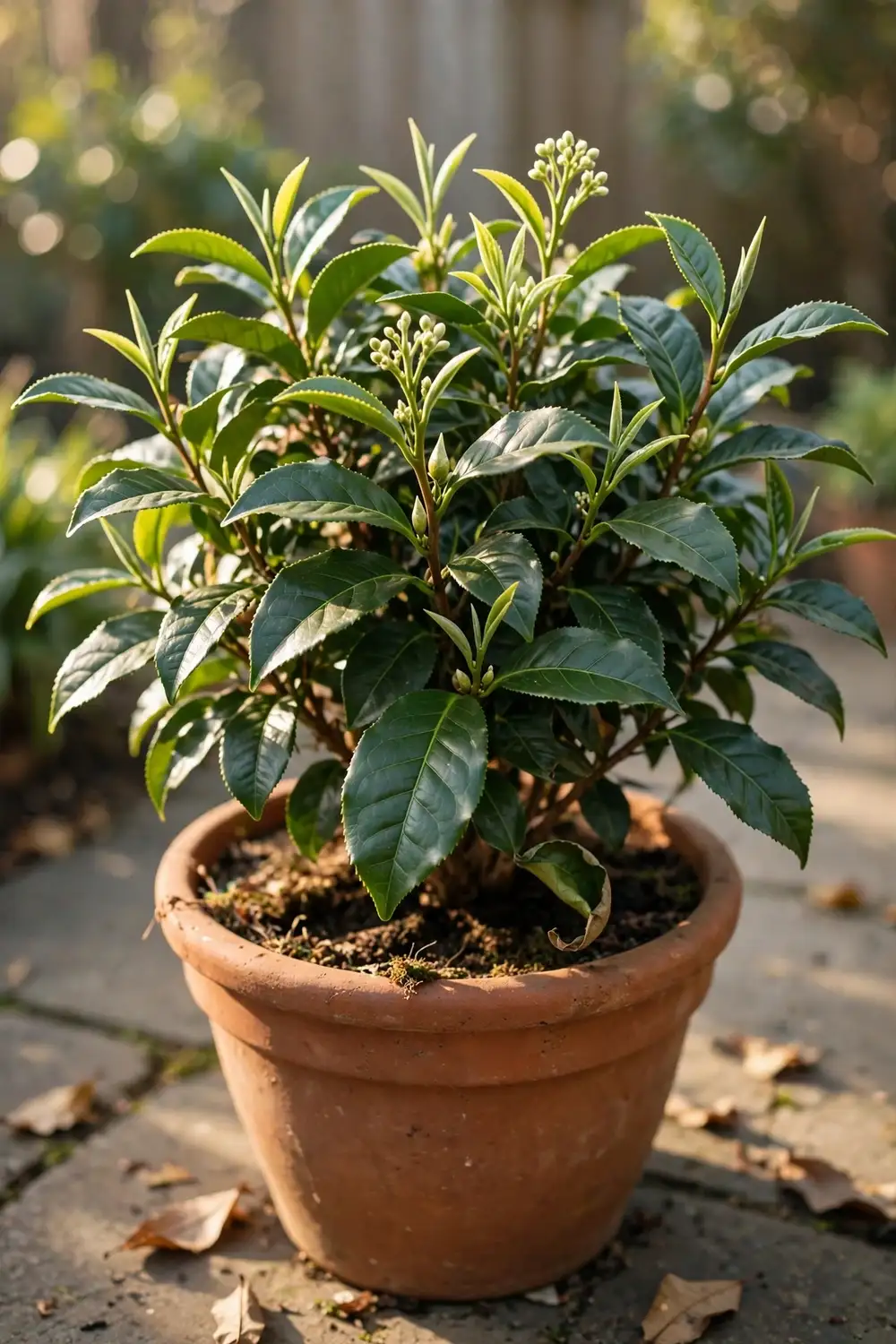

Grow a tea plant in a pot in a cold climate with 1 large container, an acidic mix, and a plan to bring it indoors before the first hard freeze. The plant is Camellia sinensis, the same species behind green and black tea. Pick the small-leaf Chinese variety, var. sinensis, which survives colder winters than its large-leaf cousin. Expect 2 to 3 years before the first real harvest, and keep expectations honest: one pot makes a hobby harvest, not a tea plantation.
A potted tea plant ranks among the most satisfying container projects a cold-climate gardener can try. The shrub is evergreen, glossy, and handsome even when it never produces a single cup. The trick is matching the plant to the method. In warm regions tea grows in the ground. In cold regions it grows in a pot that comes inside for winter. Everything below follows that one decision.
1. Buy a Live Plant, Not Tea Bags
Seeds from tea bags do not grow tea plants. That single fact saves more heartbreak than any tip that follows. Tea sold for drinking has been heated, dried, or both, and the seed embryo inside is long dead. Even if you bought fresh tea seed, germination takes 1 to 3 months and can be slow and variable, as this detailed growing guide documents.
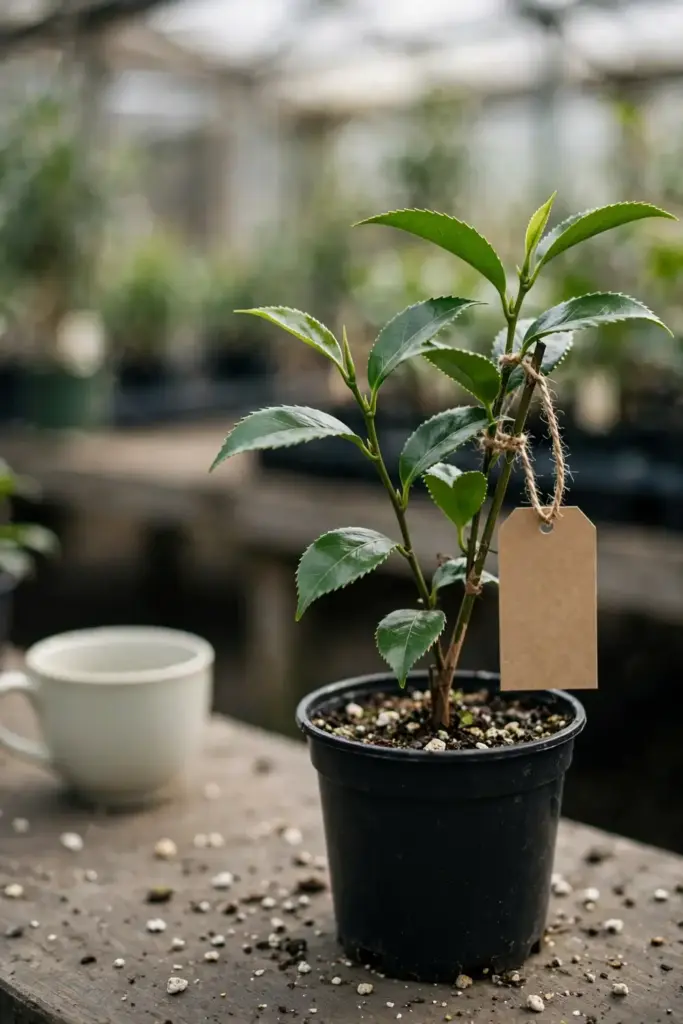
Start with a nursery-grown seedling, a rooted cutting, or a 1-gallon plant from a reputable nursery. Camellia Forest Tea Gardens in North Carolina sells cold-hardy selections grown from plants that have survived real winters, and that provenance matters more than any promise on a seed packet. Ask the seller which variety the plant is: you want var. sinensis, and the next section explains why that single word matters more than any other fact here.
2. Know Which Tea You Are Buying: Var. Sinensis vs Var. Assamica
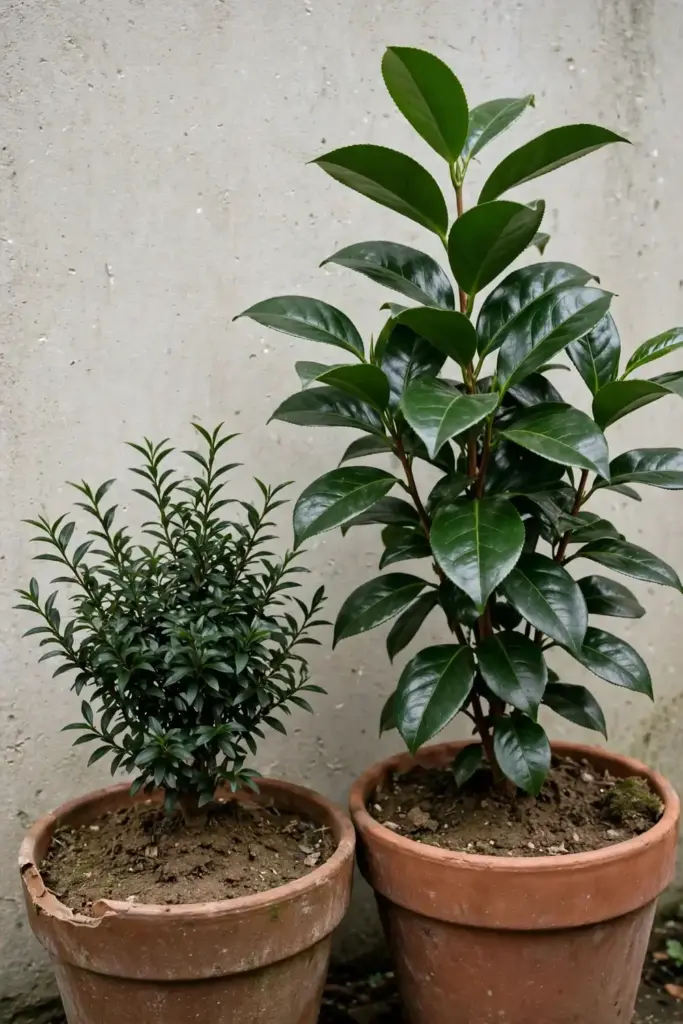
True tea is one species, Camellia sinensis, but it comes in two major varieties that behave like different plants in winter. No page-1 Google result owns this distinction, yet it decides whether your plant survives January.
| Feature | Var. sinensis (Chinese) | Var. assamica (Indian) |
|---|---|---|
| Leaf size | Small, narrow | Large, broad |
| Cold hardiness | USDA Zone 6, some cultivars colder | USDA Zone 7 and south |
| Growth habit | Compact, slow | Vigorous, tall |
| Best use at home | Containers and cold climates | Warm climates only |
| Typical tea style | Green and white teas | Black teas |
North Carolina State Extension confirms the split: var. sinensis is the Chinese variety with small leaves, more cold-tolerant and hardy into USDA Zone 6, while var. assamica comes from Assam in northern India with larger leaves and needs Zone 7 or warmer. GardenersPath’s growing guide carries the same warning: the assamica variety likes warm weather, while C. sinensis var. sinensis is more cold-hardy.
Buy the Chinese one. If a nursery cannot tell you which variety its plant is, buy from a nursery that can.
3. Climate and Hardiness: What a Potted Tea Plant Survives
Tea is an evergreen shrub that tolerates more cold than most people expect, but only within limits. Var. sinensis survives outdoors in USDA Zones 6 through 9. Below Zone 6 the container is not optional decoration; it is the entire winter strategy. Bing’s Copilot summary, citing cold-climate growers, names small-leaf var. sinensis or the cultivar ‘Sochi’ for USDA Zone 5 and below.
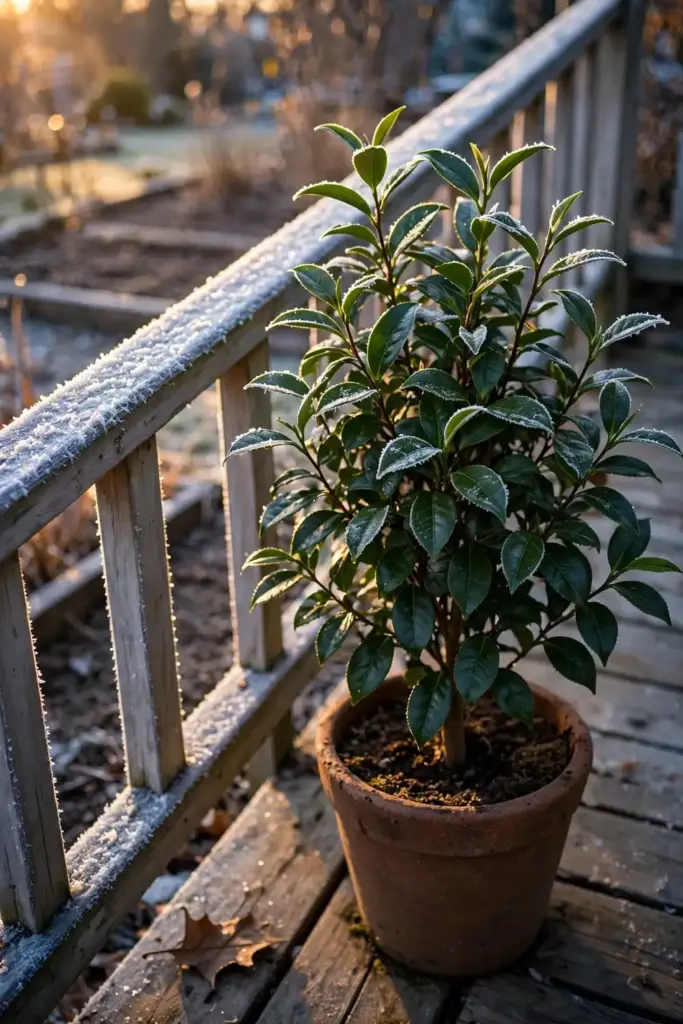
The critical threshold: move the pot indoors or into a greenhouse before temperatures drop below 20°F (-6°C). Repeated hard freezes damage roots first, because pot walls do not insulate the way the ground does. A root ball in a container can freeze solid while an in-ground plant at the same air temperature survives.
Two honest rules follow from this. First, choose cold hardiness over leaf size. Second, plan the indoor winter home before you buy the plant, not in November.
4. Choose a Container Big Enough for a Tea Shrub
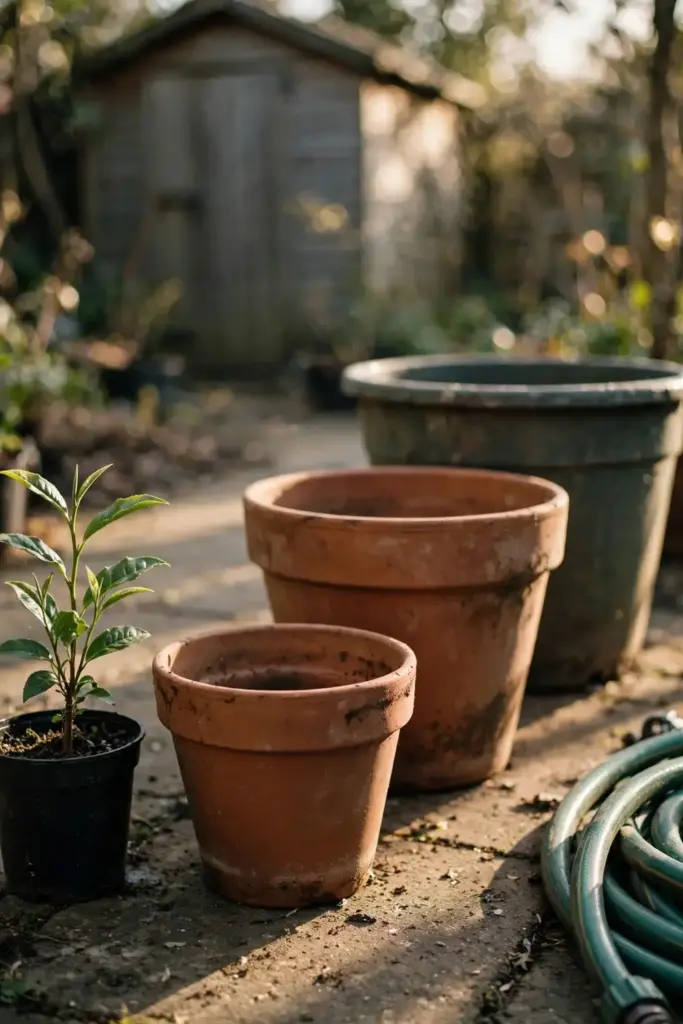
Tea makes a deep, vigorous root system, and a small pot strangles it. Sources disagree on the exact minimum, so here is the range honestly: Google’s AI Overview cites the commonly repeated 3 to 5 gallon recommendation, while Bing’s Copilot summary cites serious growers using 20-gallon containers, and Raintree Nursery recommends at least 25 gallons for long-term pot culture.
| Situation | Minimum container | Notes |
|---|---|---|
| First-year plant | 3 to 5 gallons | Fine for the nursery stage |
| Long-term pot culture | 15 to 20 gallons | The serious hobbyist size |
| Mature shrub, years 5+ | 20 to 25 gallons | Matches Raintree’s recommendation |
Choose a deep container over a wide shallow one. The plant develops a taproot, and GardenersPath recommends a deep container to accommodate it. The pot must have multiple drainage holes. Tea roots in standing water rot fast. Terracotta breathes and is heavy enough to stay upright in wind; plastic is lighter for the twice-yearly move indoors. Either works if drainage is good.
Plan to repot every 2 to 3 years, stepping up one or two sizes, with fresh acidic mix each time. When you are learning how to grow tea plant in a pot, the repotting rhythm matters more than the starting size: a plant stepped up on schedule always outgrows one left cramped for years.
5. Mix an Acidic Potting Medium
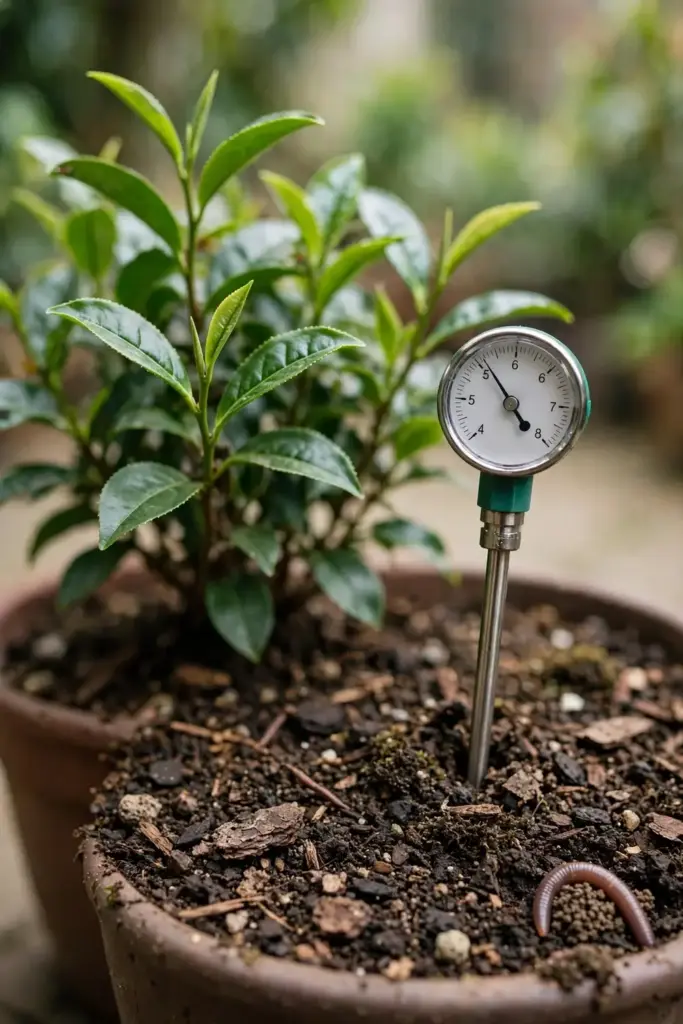
Tea wants acidic soil, the same neighborhood as blueberries and azaleas. Page-1 sources converge on pH 4.5 to 6.5, with the detailed growing guide at Deep Green Permaculture citing 4.5–6.5 and Google’s AI Overview landing at 5.5 to 6.5. If your tap water is alkaline, expect to test and amend yearly.
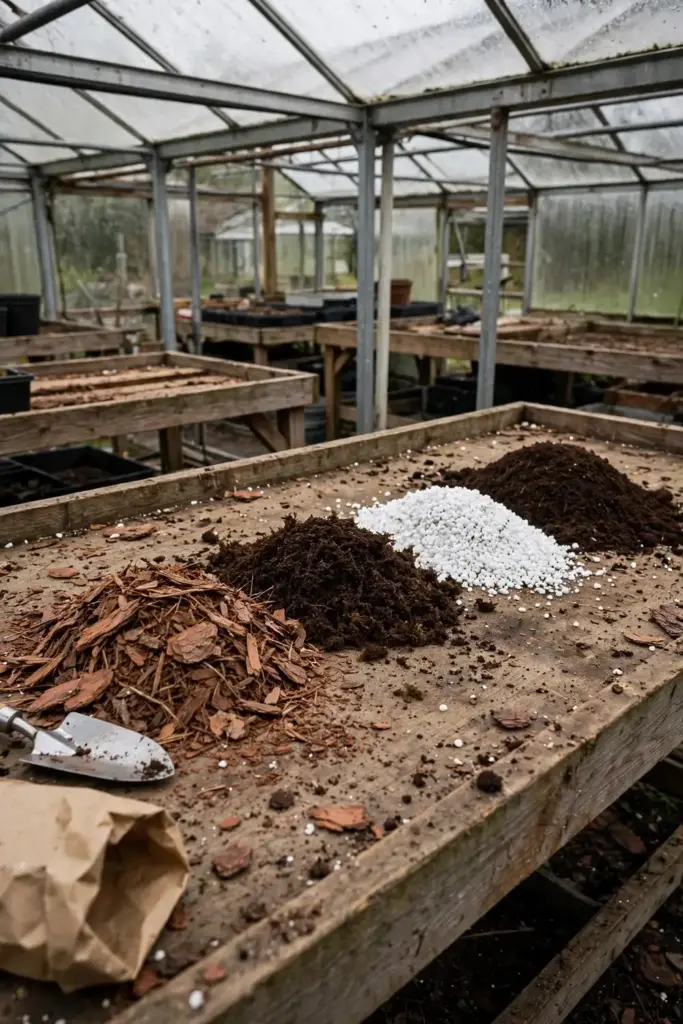
A reliable home mix follows the acidic-base-plus-drainage pattern that container camellia growers use:
- 40 percent pine bark fines or peat moss (the acid base)
- 30 percent good potting soil
- 20 percent perlite or coarse sand (drainage)
- 10 percent composted organic matter
Skip garden soil in pots. It compacts, and compacted mix is where root rot starts. A layer of pine bark mulch on top keeps moisture even and adds acidity as it breaks down.
Test the pH of your mix with a cheap probe or test kit before planting. Adjusting is easy on day one and hard once the shrub is established. For the longer game of keeping potting mixes biologically alive, the soil health guide covers the organic-matter habits that apply to any container shrub.
6. Plant Your Tea Shrub in the Pot
Plant in spring after the last frost, so the roots establish through summer. Set the plant at the same depth it sat in its nursery pot, never deeper. A buried crown invites rot. Fill around the root ball with the acidic mix, pressing gently to remove air pockets without compressing the medium.
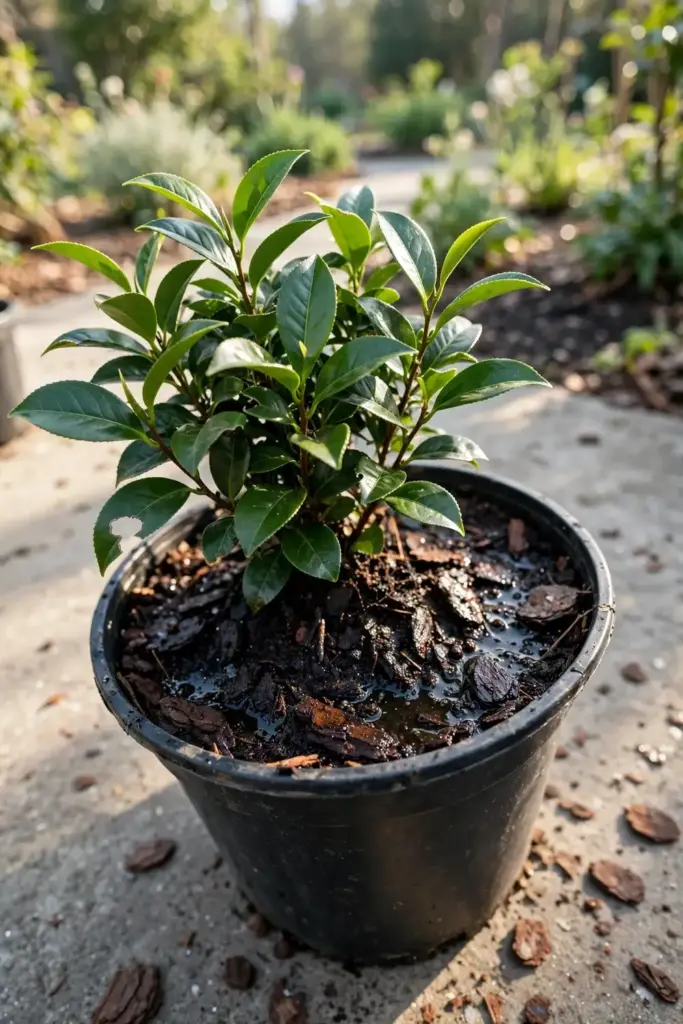
Water deeply right after planting until water runs from the drainage holes. Then leave it alone for a week before feeding. The plant needs to settle, and fertilizer on fresh roots burns.
Place the pot where it gets morning sun and afternoon shade in warm climates, or full sun in cool climates. Horticulture’s profile of the compact cultivar ‘Brew-Tea-Ful’ notes it is happiest in full sun with good drainage, regular moisture, and somewhat acidic soil. Set the pot on pot feet or bricks so drainage holes never sit in a puddle.
7. Give It Six Hours of Sun or More
Tea evolved as an understory shrub that also tolerates full sun, and the sweet spot for a potted plant is 6 or more hours of direct sun daily. In hot-summer regions, afternoon shade protects leaves from scorch. In cool northern regions, full sun all day is welcome and helps the wood harden before winter.
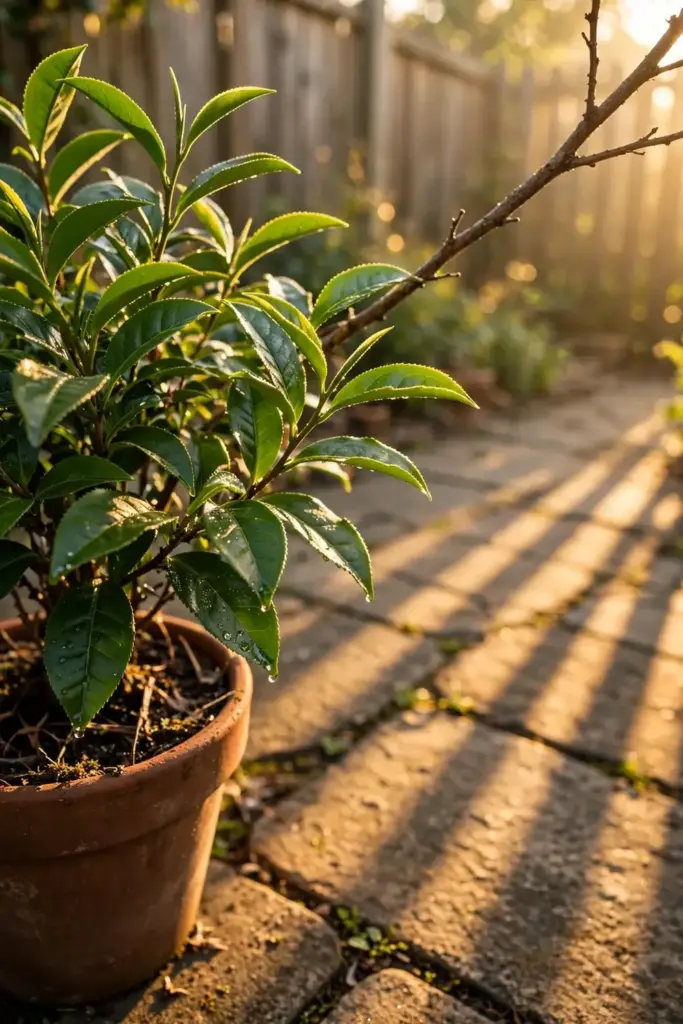
Indoors for winter, light is the limiting factor. Place the plant at the brightest south or west window you have, following the same bright-window rules that make indoor herb gardens work through winter. If natural light gives fewer than 6 hours, add a simple LED grow light on a timer for 12 to 14 hours. Pale new growth and leggy stems in February mean it wants more light, not more water.
8. Water for Even Moisture, Never Sogginess
Tea likes consistently moist soil and hates wet feet. Check the top inch of mix with a finger. Water when it feels dry, watering deeply until it drains. In summer heat a large pot may need water daily. In winter indoors, the plant uses far less, so cut back and always check before watering.
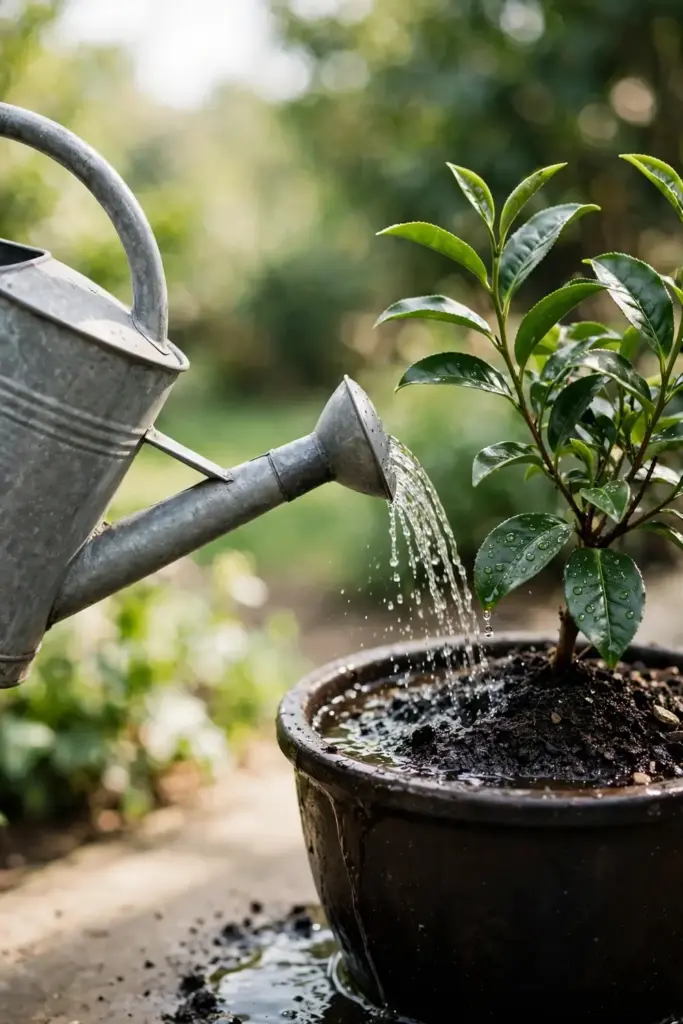
Rainwater or distilled water is ideal if your tap water is alkaline, because each watering nudges the pH upward over time. A monthly flush, watering heavily until lots of water runs through, washes out accumulated salts.
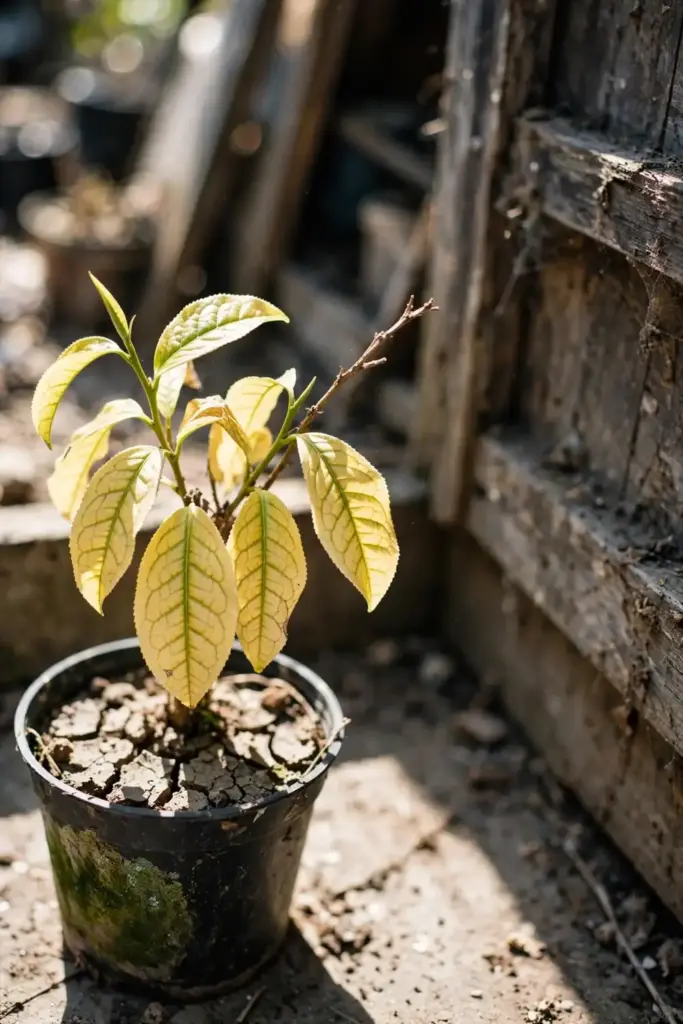
Yellowing leaves with green veins point to chlorosis from high pH or poor drainage. Fix the drainage and test the pH before reaching for fertilizer.
9. Feed an Acid-Loving Shrub
Feed during the growing season, spring through early fall, and stop as winter approaches so new growth is not soft when frost arrives. GardenersPath recommends feeding monthly in spring and summer with an acid-loving plant fertilizer, naming an NPK around 4-3-6 as a good product.
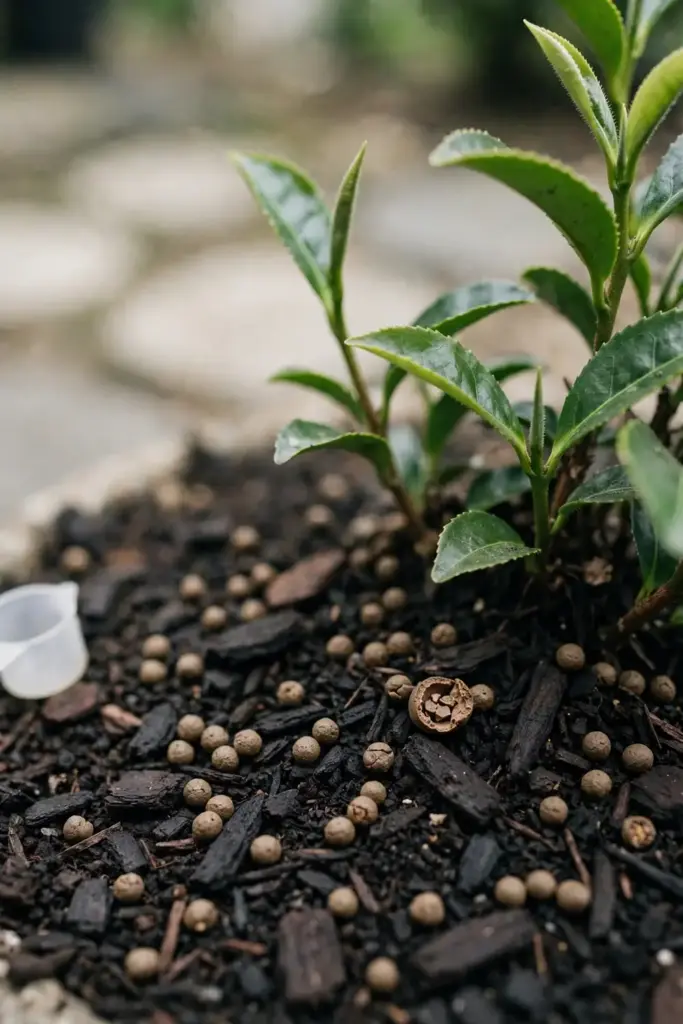
Slow-release granular fertilizer formulated for camellias, azaleas, or rhododendrons works for a full season. Organic options like cottonseed meal and fish emulsion also suit the plant’s acid preference. Skip high-nitrogen lawn fertilizer. It pushes soft growth that winter kills.
If leaves yellow despite feeding, the problem is usually pH locking out nutrients, not a lack of nutrients. Test the mix first.
10. Overwinter Indoors: The Cold-Climate Core Move
This section is the whole reason the article exists. In Zones 6 and colder, the pot comes inside before the first hard freeze, and it stays inside until nights are reliably above freezing in spring.
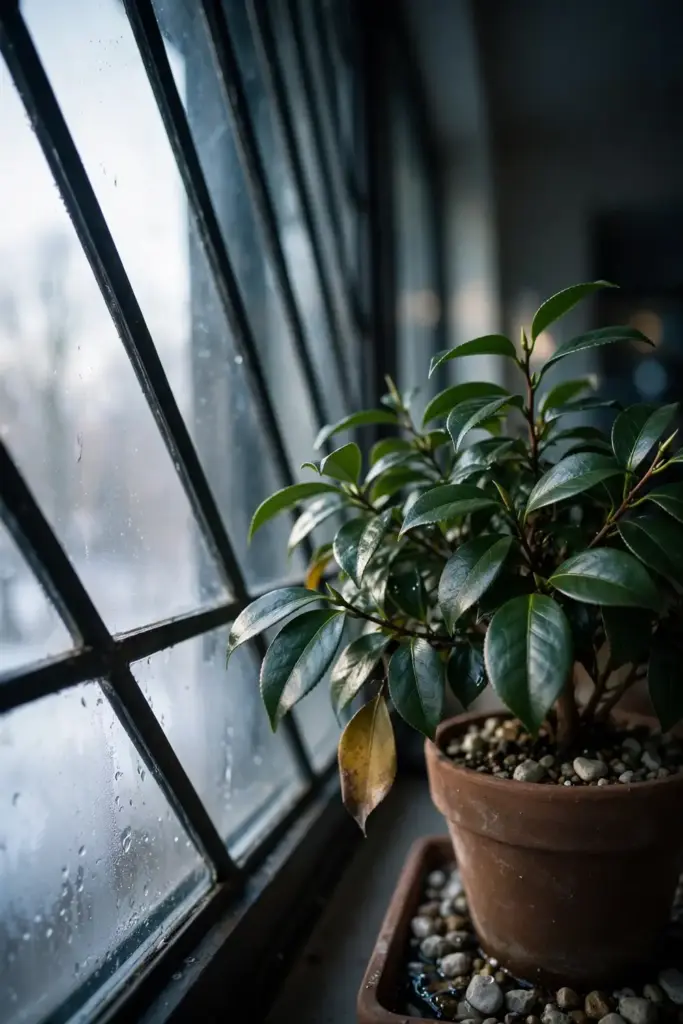
The indoor protocol, drawn from the growers Bing’s Copilot summary cites:
- Move indoors before temperatures drop below 20°F (-6°C).
- Keep the plant in a bright, cool space: 60 to 70°F with 50 to 70 percent humidity and 6 to 8 hours of light.
- Reduce watering sharply. The plant is semi-dormant.
- Stop feeding until spring growth resumes.
A cool garage with a grow light beats a hot living room. Heat plus low humidity invites spider mites, the classic indoor tea pest. Set the pot on a humidity tray of pebbles and water, and mist occasionally.
For marginal outdoor situations, wrap the pot in frost cloth or bubble wrap for insulation and move it against a south-facing wall. In truly cold regions that only delays the inevitable; bring it inside.
Transition gradually. Give the plant a week in a sheltered shady spot before moving it fully indoors, and reverse the process in spring. Sudden light and temperature swings cause leaf drop.
If you are figuring out how to grow tea plant through its first winter, keep a simple log: the date it came in, the indoor temperature range, and when watering was needed. That record makes the second winter almost automatic, because the plant’s rhythm in your house barely changes year to year.
11. Prune and Pluck: Two Leaves and a Bud
Tea is pruned to keep it a pluckable bush, not a tree. In spring, before new growth starts, cut the shrub back to about 4 to 5 feet if it is getting leggy. NC State Extension gives that exact height for optimal tea production, because low, dense growth produces more harvestable shoots.
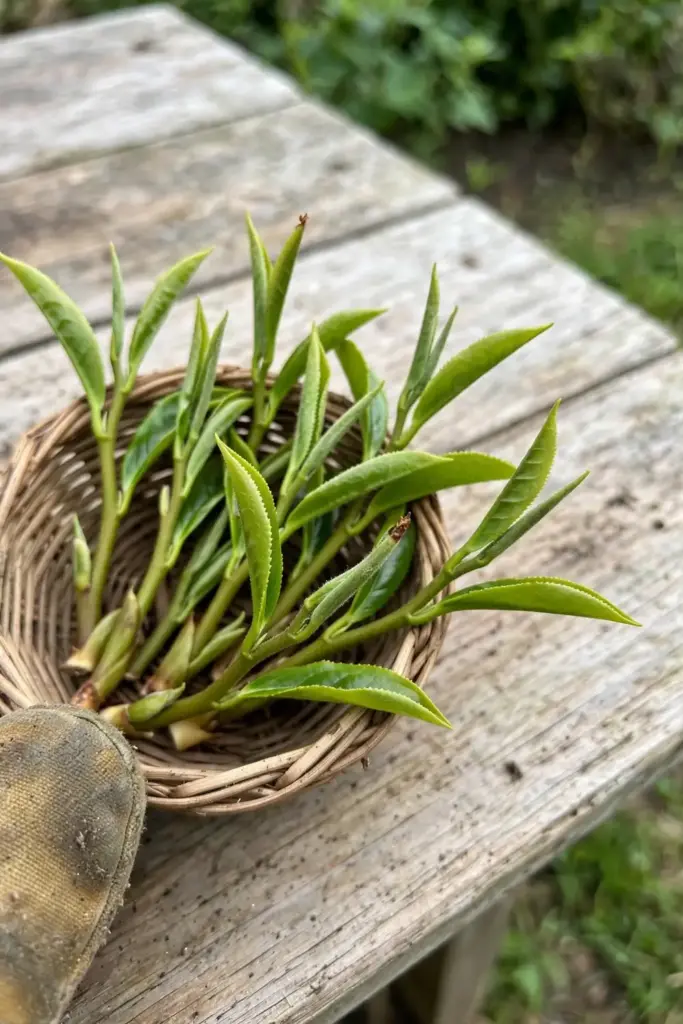
The standard plucking unit is “two leaves and a bud”: pinch the tender new shoot with two young leaves and the unopened bud at the tip. Pluck every 7 to 10 days in the growing season once the plant is old enough. Regular plucking keeps the plant bushy and delays flowering, which is exactly what you want.
For the first 2 years, pluck lightly or not at all. The plant is building its root system and framework. Patience here pays for decades.
12. Watch for Pests and Diseases
Indoor winters bring pests; outdoor summers bring a few. NC State lists the usual suspects: scales, aphids, planthoppers, and spider mites are especially problematic on stressed plants. Fungal issues include dieback, cankers, flower blight, and root rot.
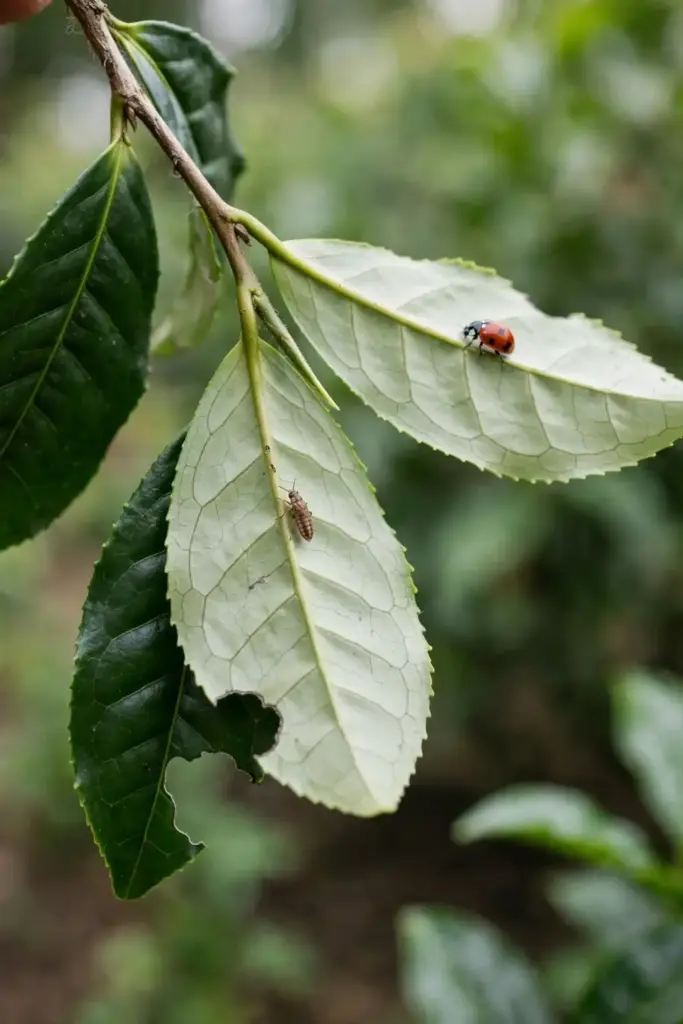
Prevention beats treatment:
- Inspect leaf undersides monthly, especially indoors in winter.
- Give the plant airflow. Crowded, still air invites mites and blight.
- Remove fallen flowers and leaves from the pot surface promptly.
- Water the mix, not the foliage, to reduce fungal pressure.
Treat scale and aphids with horticultural oil or insecticidal soap, following label temperatures. Root rot has no cure; if the mix smells sour and the plant wilts despite wet soil, the plant is likely lost. That is almost always a drainage failure, not bad luck.
13. The Honest Harvest Timeline
Here is the truth about homegrown tea. Harvest commonly begins after 2 to 3 years, and even then a single potted plant yields ounces, not pounds. Commercial tea comes from hedges of thousands of plants plucked daily. Your pot makes a hobby harvest, and that is a fine thing to be.
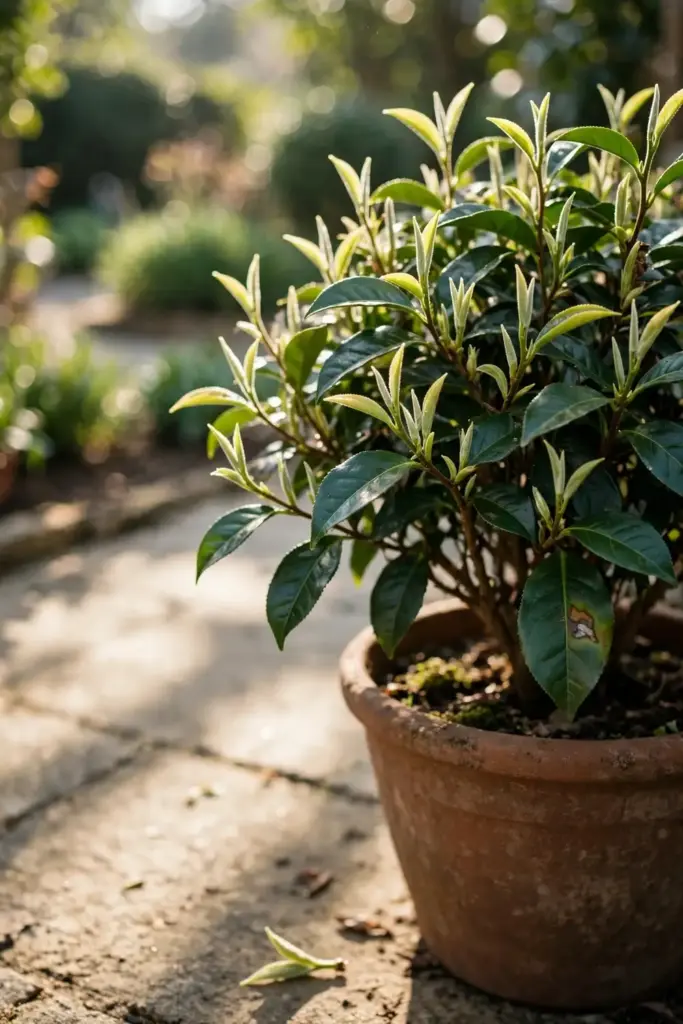
A realistic first-year-of-harvest goal: a few dozen cups of fresh tea across the season, from the spring flush through the last fall plucking. The value is the experience, the freshness, and the story, not the volume. Anyone promising a meaningful tea supply from one container plant is selling the plant.
That said, homegrown tea tastes noticeably fresher than store tea, because volatile aromatics fade within weeks of processing. Small batch, peak freshness: that is the honest pitch.
14. Green or Black: Processing Basics in Brief
Plucking is gardening. Processing is a separate craft, and this section is only the map. The same leaf becomes different teas through oxidation.
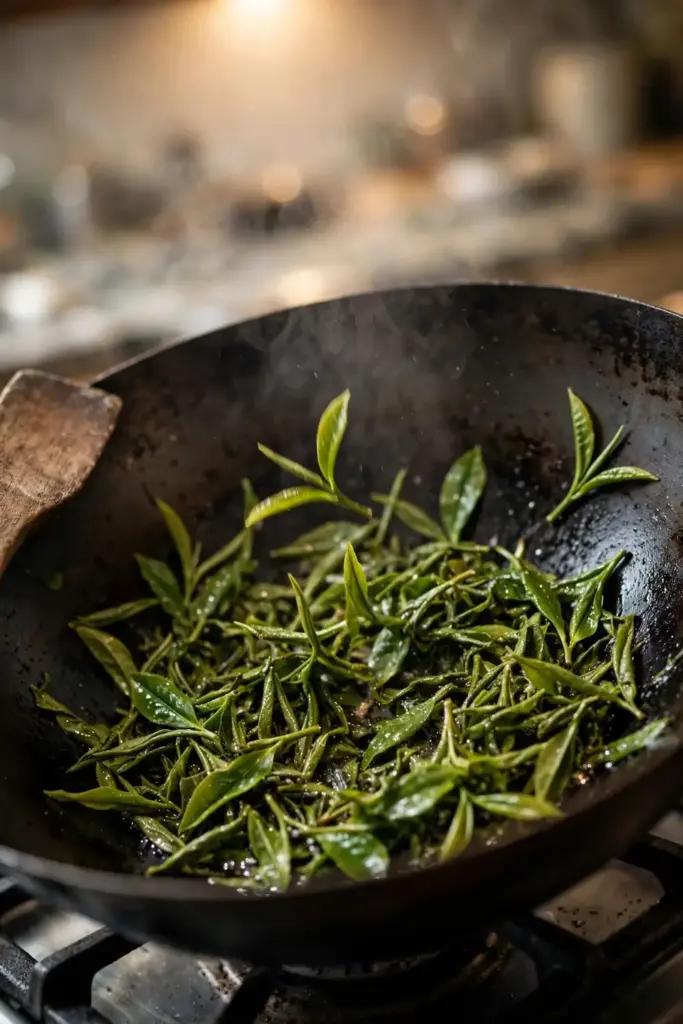
- Green tea: heat the fresh leaves quickly (pan-fry or steam) to stop oxidation, then roll and dry. Bright, grassy flavor.
- White tea: wither and dry the buds and youngest leaves. Delicate, subtle.
- Oolong: partially oxidize by withering and tossing, then heat to stop. Complex, floral.
- Black tea: fully oxidize by rolling and resting in warm air, then dry. Bold, malty.
For your first harvest, make green tea. It is the simplest process and the most forgiving of small batches. Dry the finished leaves completely and store them in an airtight tin away from light. Do not attempt commercial-style processing equipment; a wok, a clean towel, and patience are enough for a first batch.
15. In the Ground vs in a Pot
Zone decides this. In USDA Zones 8 and 9, tea can grow in the ground as an evergreen shrub, where it needs acidic, well-drained soil rich in organic matter and consistent moisture. In Zone 7, plant it against a warm south wall with winter mulch. In Zone 6 and below, the pot is the plant’s winter home, full stop.
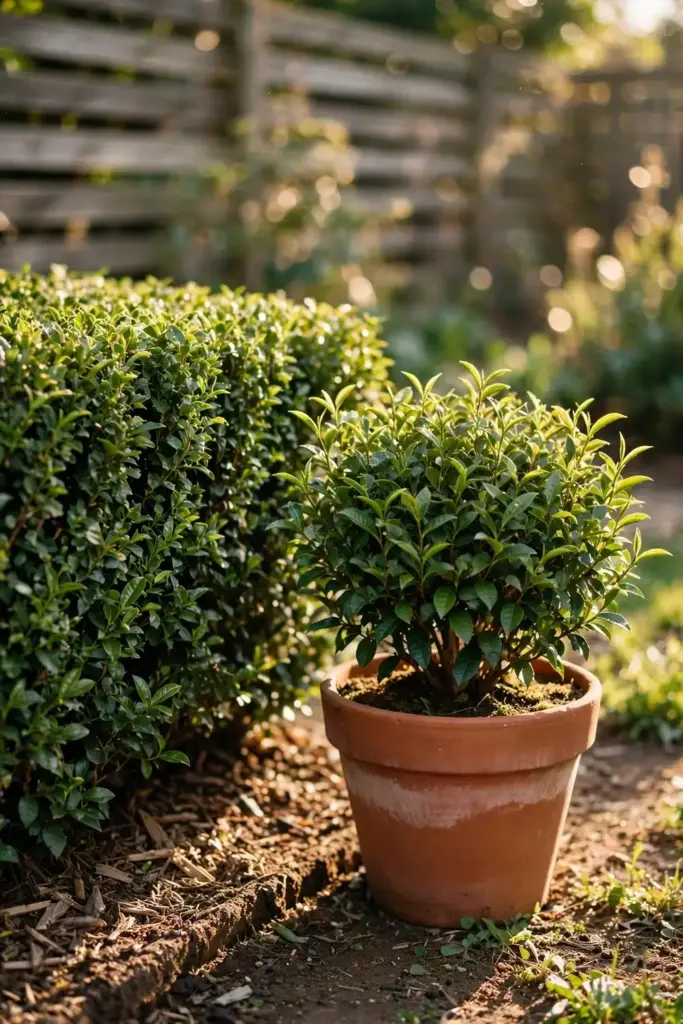
The pot tradeoffs are real. Containers dry faster, freeze faster, and limit root volume, which caps the plant’s size and harvest. But containers also let a Minnesota gardener grow tea at all, let you control the acidic pH exactly, and let you move the plant to perfect sun. For cold climates the pot is not the compromise. It is the method.
16. Cold-Hardy Cultivars Worth Knowing
Not all tea plants are equal in winter. Ask nurseries for these by name:
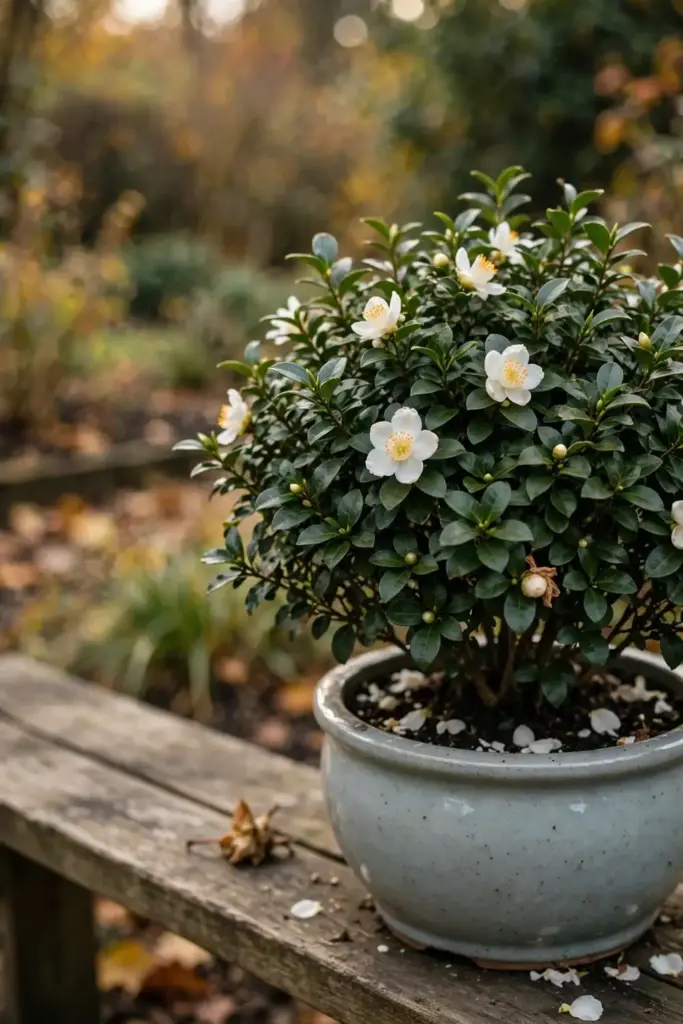
- ‘Sochi’: the cultivar Bing’s cold-climate sources name for USDA Zone 5 and below. A genuine cold-hardy selection.
- ‘Brew-Tea-Ful’: a compact cultivar bred in Australia, reaching only 12 to 15 inches tall and 10 to 12 inches wide, profiled by Horticulture magazine as a container-natural choice. Hardy in Zones 7 to 11.
- ‘Dave’s Fave’: a var. sinensis cultivar with a rounded shape, tolerating Zone 6b with a little protection during the coldest periods, per GardenersPath.
- ‘Fuiri’ and other var. sinensis seedlings: Camellia Forest and similar specialty nurseries sell seedlings from parent plants that survived real winters. Seedling hardiness varies, so buy from cold-proven stock.
If a seller cannot name the cultivar or variety, assume it is the least hardy option and plan accordingly.
17. Mistakes That Kill Potted Tea Plants
Buying var. assamica for a cold climate. The large-leaf variety dies where the small-leaf one thrives. Check the label before you pay.
Burying the crown. Planting too deep rots the stem base. Keep the crown at mix level.
A pot that is too small. A 1-gallon pot is a nursery stage, not a home. Size up to 3 to 5 gallons in year one and toward 15 to 20 gallons as the plant matures.
Alkaline mix or alkaline water. Chlorosis follows. Test pH yearly and use rainwater or acidifying fertilizer when needed.
Skipping the indoor move. One hard freeze on a saturated root ball can kill the plant. Set a calendar reminder for the 20°F threshold.
Overwatering indoors in winter. The plant is semi-dormant. Soggy winter mix rots roots while you are not looking.
Feeding in late fall. Soft new growth meets frost and dies. Stop feeding by early fall.
18. Troubleshooting Common Problems
Leaves yellowing with green veins: iron chlorosis from high pH. Test the mix pH and water source. Acidify with an ericaceous fertilizer or repot into fresh acidic mix.
Leaf drop after moving indoors: transplant shock from the light and humidity change. It is usually temporary. Keep conditions stable, do not overwater, and new growth will follow in a few weeks.
Brown leaf edges: low humidity, salt buildup, or inconsistent watering. Flush the pot thoroughly, raise humidity with a pebble tray, and water on a steadier schedule.
No new growth in spring: check for winter root damage. Scratch a stem: green under the bark means alive. If the roots froze solid for days, the plant may be lost. Next winter, move it in earlier.
Sticky leaves and tiny bumps: scale insects. Wipe with horticultural oil, improve airflow, and check neighboring houseplants.
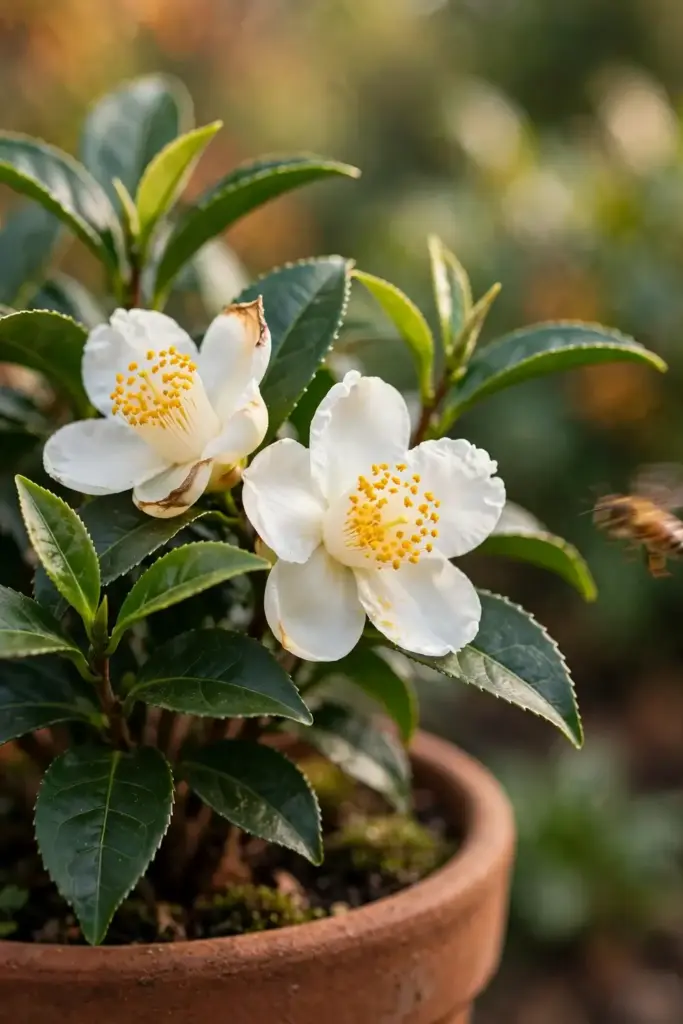
Flowers but no harvest: flowering is normal in fall and does not hurt the plant. The white blooms are pretty, and bees visit them. Pluck shoots through the season and let the plant bloom.
Frequently Asked Questions
Expect 2 to 3 years from a nursery plant before the first meaningful plucking. The plant spends its first seasons building roots and framework. Light plucking in year 2 is fine, but the real harvest starts when the shrub is established and bushy. A single potted plant then yields a hobby-scale harvest of fresh tea each season.
You can keep it alive, but it will not thrive. Tea needs 6 or more hours of strong light and a cool rest period to set up the next season’s growth. A bright cool winter indoors followed by full sun outdoors from spring to fall is the proven rhythm. Year-round indoor growing under lights is possible but demands serious light and humidity control.
Var. sinensis survives outdoors to USDA Zone 6, roughly 0°F in the ground with protection. In a pot, move it inside before temperatures drop below 20°F (-6°C), because container roots freeze faster than ground roots. The ‘Sochi’ cultivar and similar selections push the boundary colder with protection.
No. Tea is harvested for its leaves, not its fruit, so pollination is irrelevant to your harvest. A single plant produces leaves for decades. The white fall flowers are ornamental and attract pollinators, but they have nothing to do with tea production.
The most common cause is high pH locking out iron, showing as yellow leaves with green veins. Test your potting mix pH and your water. Other causes include overwatering, poor drainage, and nutrient deficiency. Fix drainage and pH first, since those cause most yellowing in potted tea.
Yes, and the same leaves make green, white, oolong, or black tea depending on processing. Black tea requires full oxidation: roll the fresh leaves to break cell walls, rest them in warm humid air until they darken, then dry completely. Start with green tea for your first batch, since it is the simplest process for small home harvests.
Where to Go From Here
A potted tea plant rewards the gardener who plans for winter in spring. Buy var. sinensis from a nursery that can name it. Give it a deep pot, an acidic mix, and 6 hours of sun. Bring it inside before the hard freeze, keep it bright and cool through winter, and move it back out in spring. In 2 to 3 years you will pluck your first two leaves and a bud, and the cup that follows will be the freshest tea you have ever tasted.
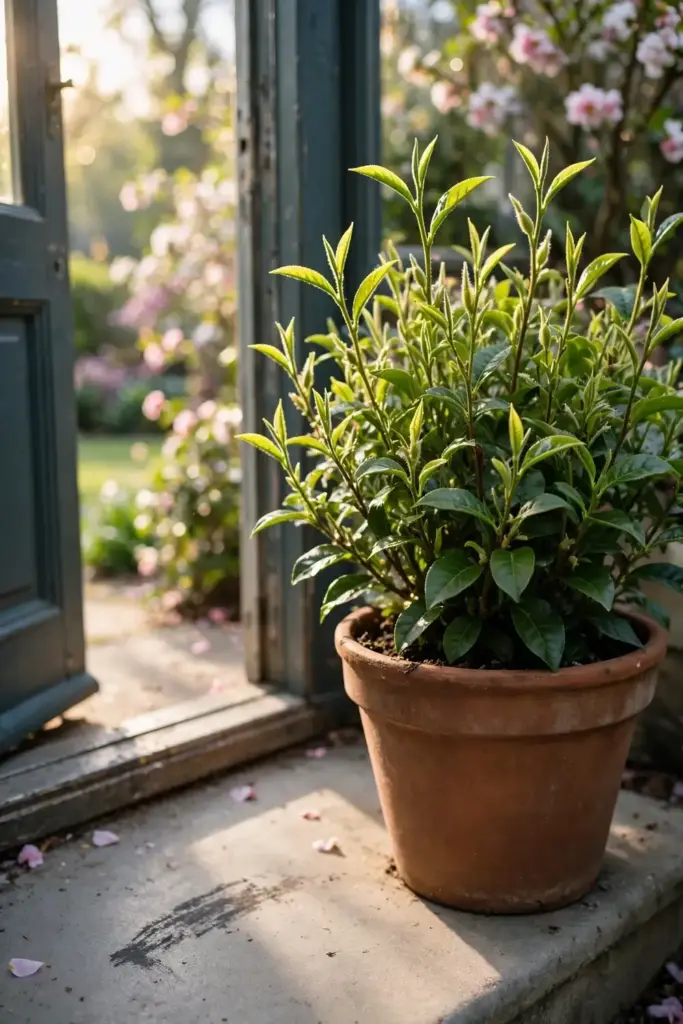
That is the whole method for how to grow tea plant in a cold climate: the right variety, a pot you can carry, and a winter plan made before November.
If the tea project has you thinking about the rest of the season, fall herbs to plant rounds out a container garden that keeps producing after summer ends.