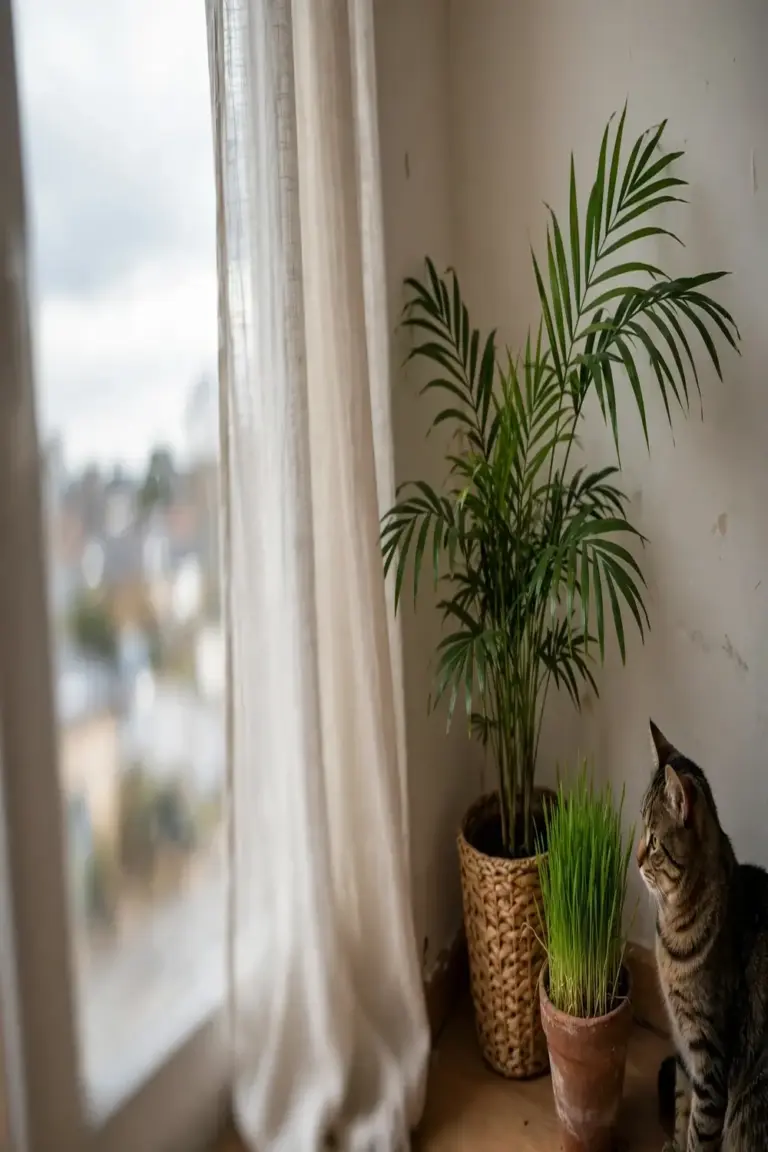

Move the plant, block the plant, or give the cat its own plants. Those 3 moves stop most chewing. The 9 ways on this page cover the rest, from hanging hooks to cat grass pots. Start with the toxic list first. One plant on it can kill a cat.
I have learned that the cat grass pot I keep beside the plant saves more leaves than any spray I own. This page shows how to protect indoor plants from cats with 9 proven ways.
Indoor plants in general live on the site’s guide to turning a home into a green oasis with indoor plants. This page stays on one job: keeping cats and plants apart.
1. Learn Why Your Cat Chews Plants Before You Fight It
Cats chew plants because leaves taste fresh, because the cat is bored, or because the cat needs fiber to move a hairball along. The fix depends on which reason drives your cat. A bored cat needs play. A cat with hairballs needs grass. A cat that loves texture needs a safe plant to chew.
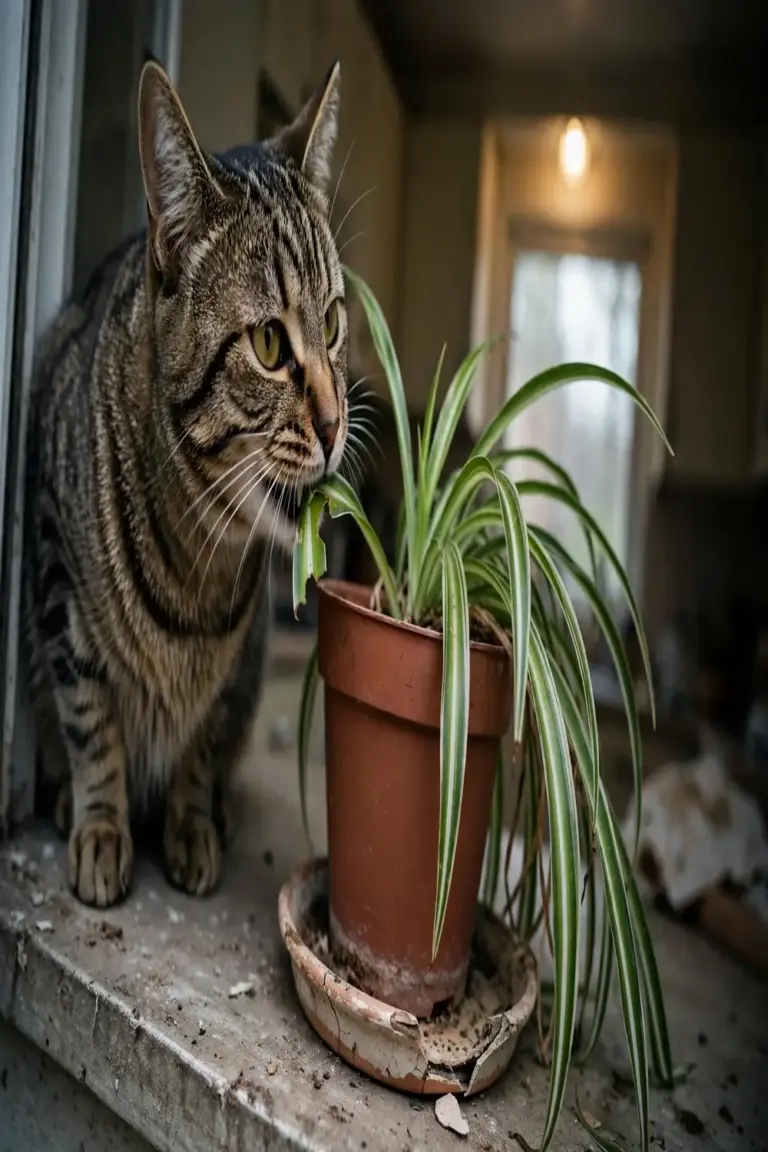
Watch the cat for one day before you buy anything. Note when the chewing happens. A cat that chews after meals may chase texture. A cat that chews when you leave the house may carry stress. A cat that chews one plant and ignores the rest may love that plant’s taste. A cat that chews every plant in sight may need more play. The pattern points at the fix. A diary of three or four notes beats a guess.
Cats lack the enzymes to digest grass, so they vomit it back up with the hair it gathered, according to Hill’s Pet guide to why cats eat grass. The grass works as rough fiber. It drags hair through the gut or brings it back up. That is why a cat that grooms for hours chews the nearest leaf. The leaf is not food. The leaf is a tool. A long-haired cat grooms more hair into its gut than a short-haired cat, so it chews more.
Bored indoor cats chew what sits in front of them. A cat with no toys, no climbing, and no grass chews the nearest leaf. Play with the cat twice a day. Use a wand toy that mimics prey. Rotate the toys each week so the cat does not tire of them. Set a scratching post near the plant. A cat that plays hard chews less. A window perch with birds outside gives the cat a show that is not your plant.
Anxious cats chew to soothe themselves. A cat that chews all day, hides, or pulls away from people may carry stress. A move, a new pet, a new baby, or a loud house can set it off. If chewing comes with hiding or appetite loss, ask a vet about stress. A deterrent spray does not fix anxiety. Calm does. A steady routine, a quiet hiding spot, and short play sessions help more than any spray.
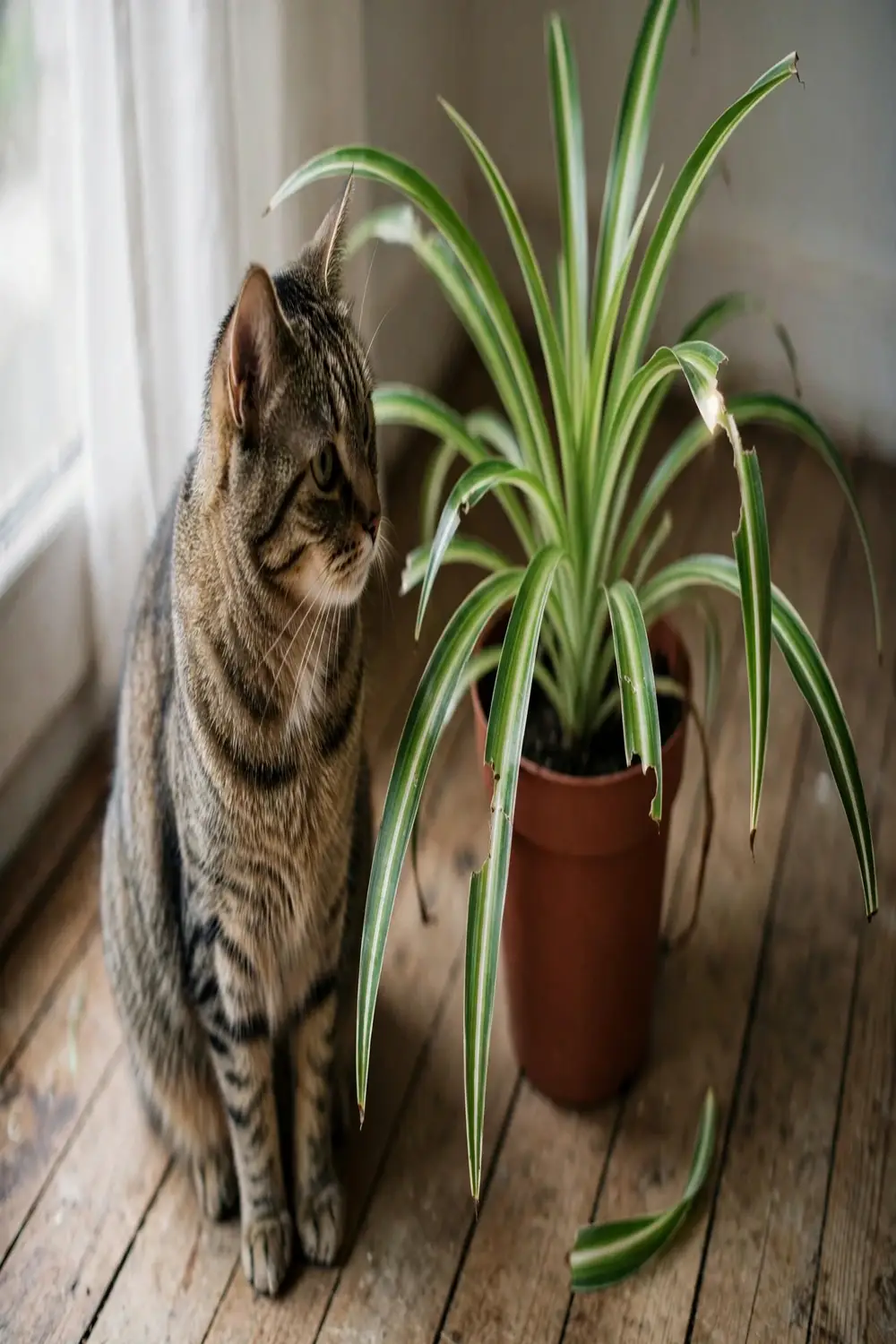
Some cats chew because leaves taste good and feel good to bite. Spider plants draw cats this way even though the plant is safe. The long leaves dangle and invite play. A cat that bats the leaves will chew them next. Hang that plant or give the cat a better target. Cats target leaves that move. Spider plants, ponytail palms, and parlor palms draw cats because the leaves dangle or sway. A plant with stiff upright leaves draws less play. If your cat chews one plant and ignores the rest, that plant is the target. Move it first.
Catch the cat in the act and redirect it. A cat that bats a leaf wants play, so toss a toy across the room when you see the bat. The cat chases the toy and forgets the leaf. A cat that chews quietly in a corner wants taste or fiber, so offer the cat grass pot in that corner. Timing matters. A toy thrown ten minutes later teaches nothing. A toy thrown at the moment of the bat teaches the cat that toys move and leaves do not. A pot of cat grass beside the spider plant gives the cat a leaf it may chew freely.
2. Move the Plant Out of Reach
Moving the plant works when the new spot is truly out of reach. A high shelf fails if the cat can jump from the couch to the shelf. A closed door works only when it latches. Test every new spot by watching the cat try to reach it. The cat is the judge, not the tape measure.
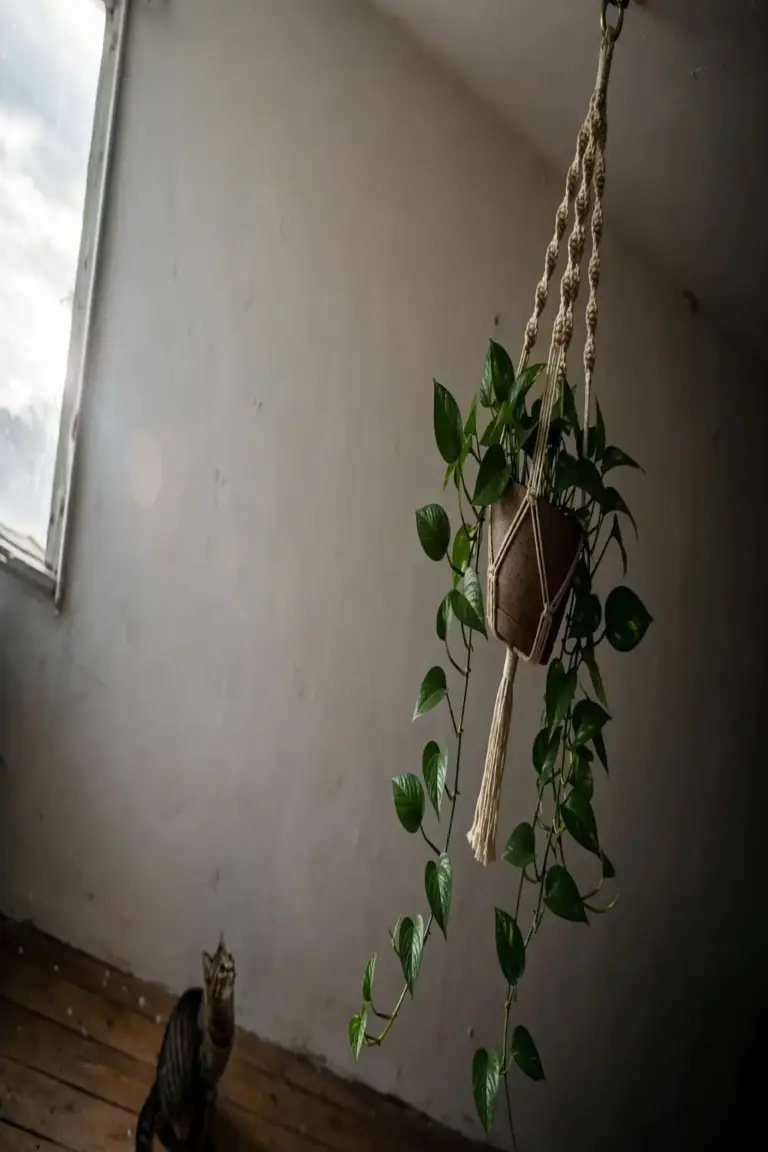
Way 1: Hang the plant. Hang the pot from a ceiling hook so the lowest leaf sits above the cat’s full stretch. Use a hook rated for the pot’s wet weight. A watered pot weighs far more than a dry one. Screw the hook into a ceiling joist, not into plaster alone. Plaster holds a light pot for a week and drops it after. Check the hook each month. A falling pot breaks the plant and can hurt the cat. Macrame hangers work well for trailing plants. The leaves hang down where the cat can see them but cannot grab them. Keep the hanger short. A long hanger swings into reach when the cat bats it.
Way 2: Move it to a high shelf. Pick a shelf with no launch pad beside it. Cats jump from the couch, the table, and the bookshelf. Measure the gap between the shelf and the nearest surface. If the cat can reach the shelf in one jump, the shelf is not high. Clear the shelf of clutter so the cat has no landing pad. A bare shelf with one pot holds less appeal than a shelf full of objects to knock over. Anchor the shelf to the wall. A cat that lands on a loose shelf rides it down. A shelf above a door works well because no furniture stands beside a door.
Way 3: Close the room. Keep the plant in a room with a door that latches. A door that drifts open invites the cat back in. This way suits one or two plants, not a whole collection. A spare bedroom or a home office works. Keep the door closed at all times, not only when you remember. A cat learns a routine fast and checks the door each time it passes. Fit a latch if the door has none. A door stop holds a door shut when the latch is weak. Check the room for a second entry, such as a connecting bathroom door, before you trust it.
Check the plant for damage after you move it. Chewed leaf tips invite mold, so trim them with clean scissors. Cut just past the brown edge. Check the soil for digging. A cat that dug in the pot may have buried waste in the mix. Scoop the top layer of mix out and replace it with fresh mix. Repot the plant if the cat knocked it over and cracked the pot. A cracked pot leaks water onto the shelf.
Give a moved plant a week to settle. Water it once after the move and leave it alone. Do not fertilize it right after moving. A plant that changes light, air, and shelf at once needs time to adjust. A leaf or two may yellow. That is normal. New growth in the following weeks shows the plant settled. A plant that drops many leaves at once needs a check. Look at the roots. A root ball that smells sour needs fresh mix and a clean pot.
When every spot is reachable, group the plants. Put the whole collection on one shelf in a closed room. One closed door guards ten plants at once. A plant stand with no landing platform helps too, since a tall narrow stand with a small top shelf gives the cat no place to land. The cat can look up at the plants and cannot climb to them. A stand against a bare wall beats a stand beside a couch.
3. Block Access With a Cover or Cage
A barrier works when the cat cannot reach through it and the plant still gets light and air. A sealed box kills the plant. A wire cage with wide gaps lets paws through. The right barrier stops paws and lets light in. Check the barrier each week. Cats test barriers daily.
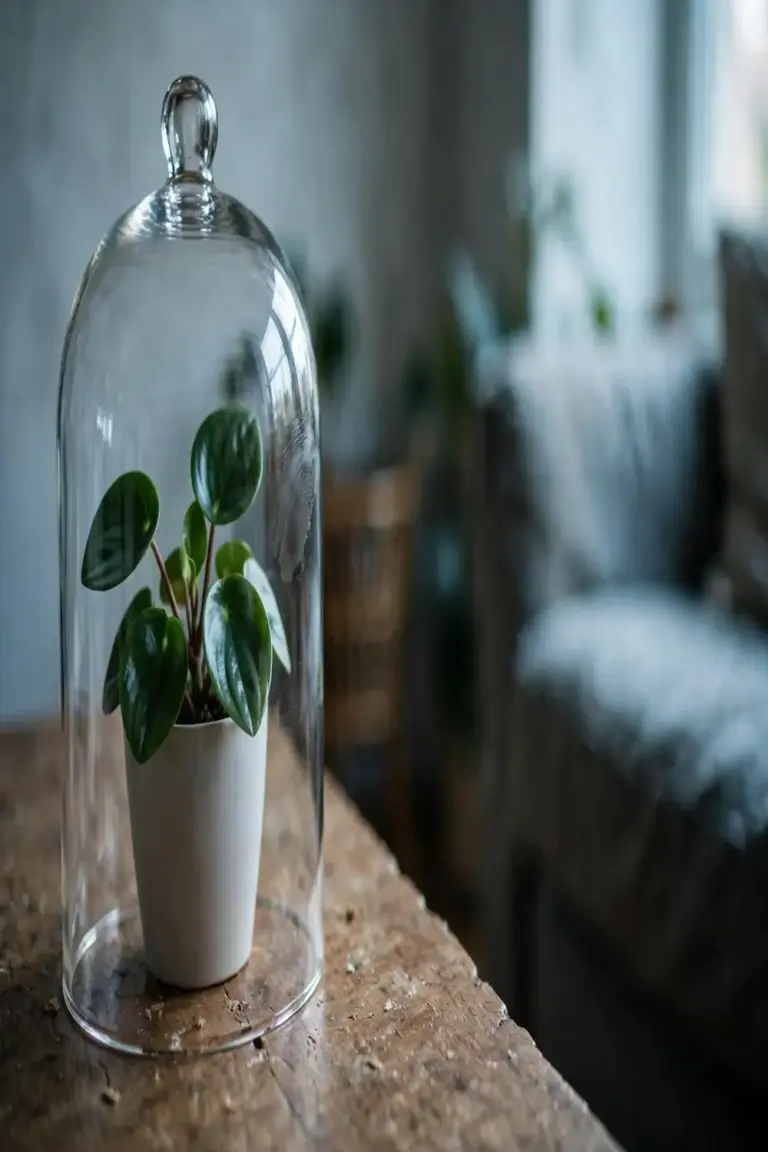
Way 4: Cover it with a cage or cloche. Set a wire cage or a glass cloche over the pot. Leave a gap for air. A cloche traps heat in direct sun, so keep it out of the window beam. A wire cage with mesh under 2.5 cm keeps paws out. Wipe the glass each week so light still reaches the leaves. Set the pot inside a heavy cachepot so the cat cannot tip the pot over while pawing at the cover. A cage works best on a single prized plant. Caging ten plants turns the room into a zoo.
Way 5: Grow it in a terrarium or glass cabinet. Grow small plants inside a closed terrarium or a glass cabinet with a latched door. The glass keeps paws out and holds humidity in. Open the door each day for fresh air. Wipe condensation off the glass so mold does not grow on the leaves. A cabinet with glass shelves turns the collection into a display. The cat watches the plants and cannot touch them. Fittonia, peperomia, and small ferns suit terrariums because they love humidity and stay small. Skip tall plants. A plant that presses against the glass rots where it touches. Airflow matters as much as the glass. A sealed terrarium with no fresh air grows mold on the soil within days. Open the lid each morning. A glass cabinet with a gap at the back moves air on its own. Wipe the shelves each week so dust does not block the light.
Size the cage to the plant. A cage must stand taller than the plant and leave room for new growth. A cage that presses on the leaves bends them and invites rot. A cage with a door beats a cage you must lift off. Lifting the cage each time you water disturbs the plant. Wipe a wire cage each month. Dust on the wires blocks light. A cage with a removable tray catches water and keeps the shelf dry. Check the cage latch each week. A latch the cat learns to open is no latch at all.
4. Make the Plant Unappealing to Chew
A deterrent is a substance or barrier that makes the plant unappealing. Deterrents work when the taste or feel turns the cat away without harming the plant or the cat. A deterrent that burns the leaves fails. A deterrent the cat ignores fails too. Watch the cat after you apply one. The cat’s behavior tells you whether the deterrent works.
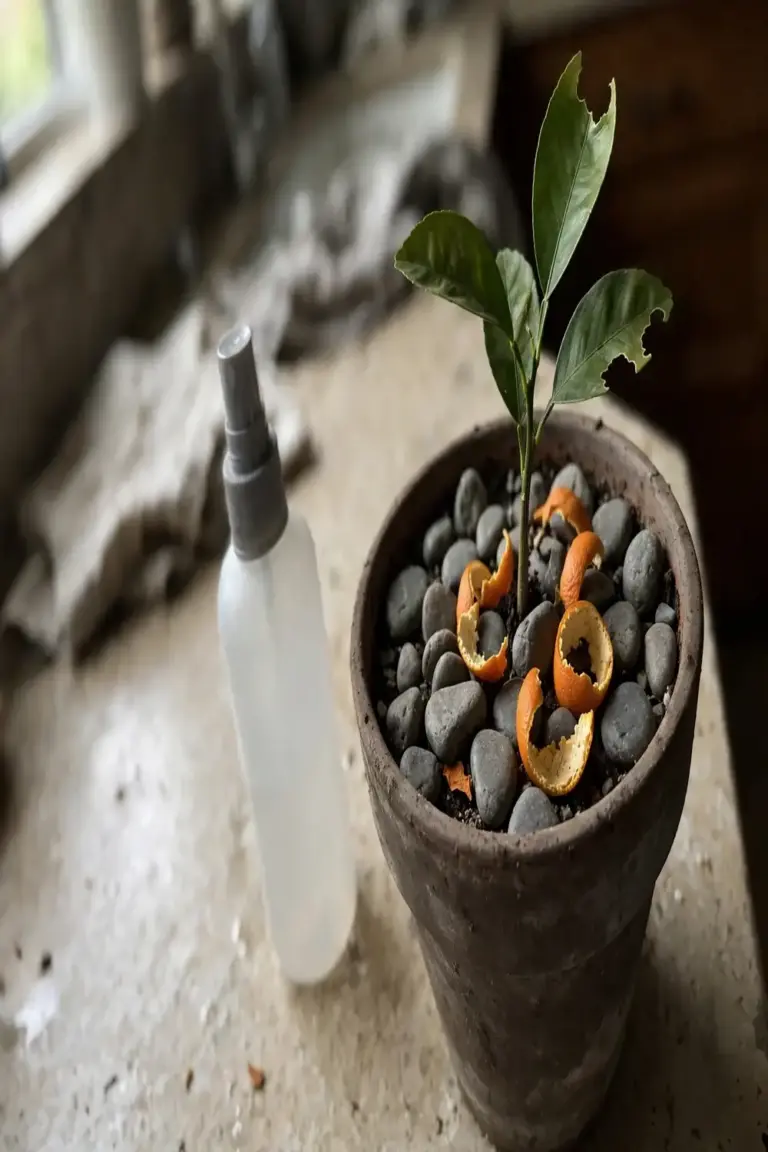
Way 6: Spray a bitter deterrent. Spray a bitter apple deterrent on the leaves. Reapply after you water or mist. Test one leaf first and wait a day. Some cats ignore bitter spray, so watch whether chewing stops. Spray the stems too, since cats often chew stems first. Never spray a plant you plan to eat, and wash any edible leaves before use. Keep the spray off flowers, since it can spot petals. If the plant shows brown edges after spraying, stop and rinse the leaves with plain water.
Way 7: Lay down citrus peels and rough texture. Lay citrus peels on the soil. Many cats dislike the smell. Replace the peels when they dry out. Cover the soil with smooth pebbles so the cat cannot dig. A pebble layer also stops the cat from using the pot as a litter box. Choose pebbles too large to swallow. Wrap a ring of double-sided tape around the pot rim. Cats dislike the sticky feel on their paws. Replace the tape when dust kills the stick. Skip homemade oil sprays. Oil coats leaves and blocks light. A leaf coated in oil burns in direct sun. Texture and smell beat oil every time.
Rotate deterrents when one stops working, because cats habituate fast. A cat that ignored citrus after two weeks may react to bitter spray again. Swap the deterrent every two weeks and keep a small rotation of bitter spray, citrus peels, and tape. When all three fail, stop adding deterrents and move to a barrier instead, since a cage beats a fourth spray. Deterrents help cats that chew lightly. A determined chewer needs a barrier.
Two more deterrents help in stubborn cases. Lay a sheet of aluminum foil on the soil, since cats dislike the feel and the sound under their paws. Remove the foil when you water and replace it after. A motion-activated air puff device works too. It blows a short puff of air when the cat comes near the plant. The cat links the plant with the puff and stays away. Place the device so it guards one plant, not the whole room. A device that fires at every passer-by teaches the cat nothing.
5. Give Your Cat Plants of Its Own
A cat with its own plants chews those plants first, so cat grass and catnip give the cat a safe target. Place the cat’s plants beside the plants you want to protect. The cat chooses the easy target. Refresh the cat’s plants on a schedule, because a dead pot of grass sends the cat back to your plants.
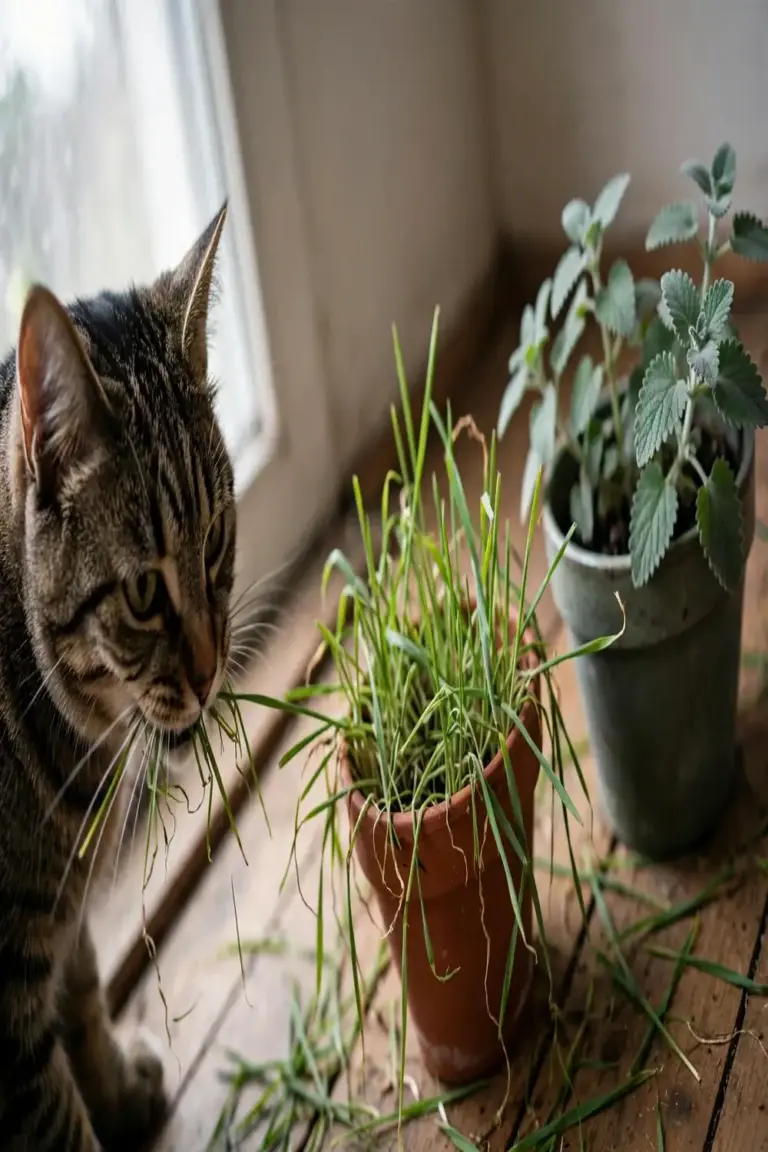
Way 8: Grow a pot of cat grass. Grow a pot of cat grass from wheat, oat, or barley seed. Sow the seed thickly on damp potting mix and cover it with a thin layer of mix. Water it lightly and set it in bright indirect light. The grass sprouts in days and stands tall within two weeks. Set the pot beside the plant the cat chews. Replace the pot when the grass goes yellow. Cat grass gives the cat fiber to chew and a target that is safe. Sow a fresh pot every two weeks so a green pot is always ready. A cat that chews cat grass daily leaves the houseplants alone. Keep two pots going and rotate them. One pot rests while the cat chews the other. Wheat grass grows fastest. Oat grass grows softer blades. Barley grass grows tougher blades that last longer. A mixed pot of all three gives the cat a choice. Skip lawn grass from outside. Lawn grass may carry pesticide or fertilizer from the yard.
Way 9: Grow catnip. Grow catnip (Nepeta cataria) in its own pot. About half of cats do not respond to catnip at all, according to a ScienceDaily report quoting a veterinarian at Cornell’s Feline Health Center. Sensitivity runs in families. Nepetalactone drives the response. Store dried catnip in the freezer to keep its strength. The catnip growing guide covers growing it from seed. A cat that rolls in catnip plays hard and sleeps after. Give catnip as a play reward, not as a constant, because a cat with catnip all day ignores it. A cat that gets it twice a week treats it as an event. Stuff a small sock with dried catnip and tie it shut for a toy. Replace the filling each month. A toy the cat can carry beats a loose pile of herb on the floor.
6. Check Every Plant Against the Toxic List
Check every plant against the ASPCA list before you bring it home. A toxic plant needs removal, not a deterrent. Toxic means harmful if eaten. A bitter spray does not make a toxic plant safe. A high shelf does not make a toxic plant safe. A cat that reaches it once can die. Check the plants you already own too. A plant bought before the cat arrived can sit on the toxic list.
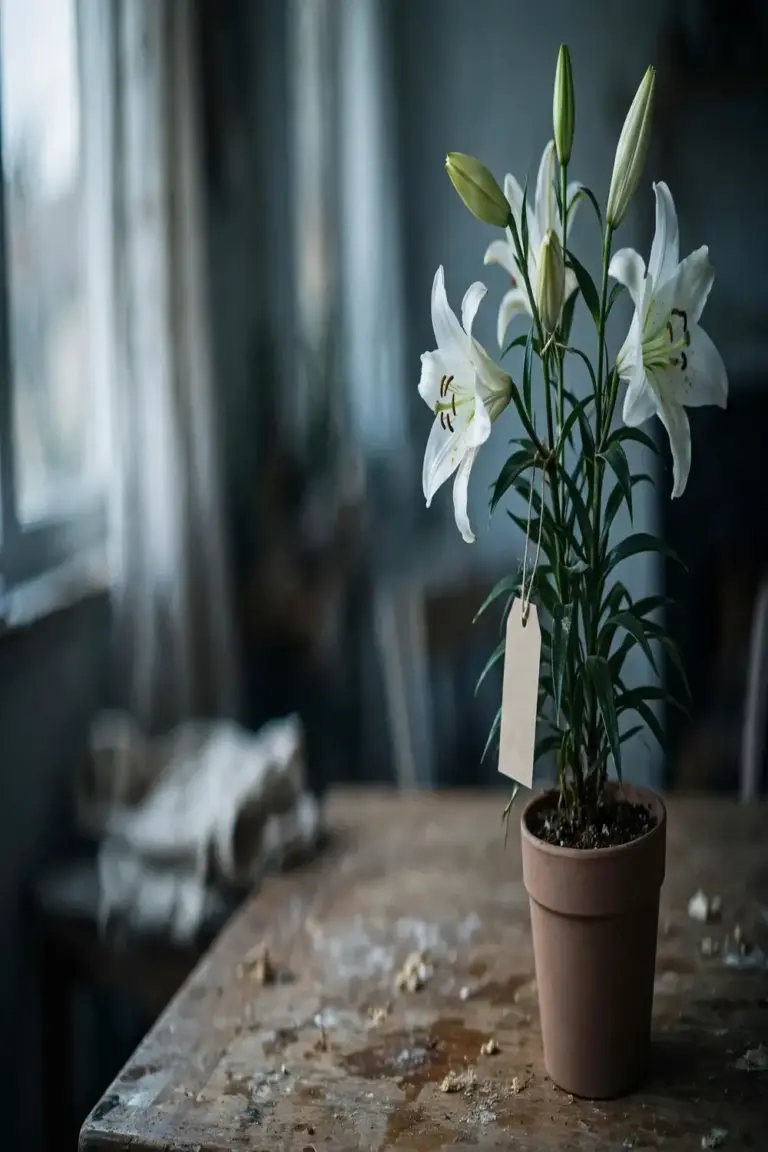
The ASPCA toxic and non-toxic plant list for cats covers hundreds of species. Search each plant by its botanical name before you buy. Common names mislead. Two different plants can share one common name. The botanical name settles the question. Label each pot with the botanical name on a small tag. A label stops a mix-up when you buy a second plant that looks alike.
Watch for gifts and bouquets too. A guest who brings flowers may bring lilies. Check every bouquet before it goes on the table. Move a lily bouquet outside or give it away. A florist who knows you have cats can build a bouquet without lilies. Tell the florist when you order. Check nursery labels at the shop. A plant sold as “lily” may be a true lily or a lookalike. Ask for the botanical name when the label shows only a common name.
Swap a toxic plant for a safe lookalike when you can. A spider plant gives the same trailing shape as pothos with no toxicity. A parlor palm gives the same upright green as a snake plant with no toxicity, and a Boston fern gives the same full fronds as a toxic fern with no toxicity. A prayer plant gives the same patterned leaves as many toxic tropicals with no toxicity. Swaps keep the look and remove the risk. A home full of safe plants needs no barriers for toxicity, only barriers for chewing.
| Plant | Toxic to Cats? | Action |
|---|---|---|
| Lily (Lilium spp., Hemerocallis spp.) | Yes, severe | Remove from the home |
| Sago palm (Cycas revoluta) | Yes, severe | Remove from the home |
| Pothos (Epipremnum aureum) | Yes, moderate | Move out of reach |
| Peace lily (Spathiphyllum spp.) | Yes, moderate | Move out of reach |
| Snake plant (Sansevieria trifasciata) | Yes, mild | Move out of reach |
| Aloe vera (Aloe vera) | Yes, mild to moderate | Move out of reach |
| Spider plant (Chlorophytum comosum) | No | Safe to keep, expect nibbles |
| Parlor palm (Chamaedorea elegans) | No | Safe to keep |
| Boston fern (Nephrolepis exaltata) | No | Safe to keep |
| Prayer plant (Maranta leuconeura) | No | Safe to keep |
Lilies kill cats. True lilies and daylilies cause fatal kidney failure in less than 3 days, according to Purdue University’s veterinary school. Every part of the plant is toxic, including pollen and vase water. Treatment delayed by 18 hours or more usually means irreversible kidney failure. Keep no lily in a home with cats. A bouquet on the table counts. A potted lily on the porch counts if the cat goes there. A single fallen petal on the floor counts if the cat licks it.
If your cat eats a plant on the toxic list, call your vet or the ASPCA Poison Control hotline at (888) 426-4435 at once. Bring the plant or a photo of it. Do not wait for symptoms. A cat that looks fine can carry kidney damage already. Fast treatment decides the outcome. Write the hotline number on the fridge. A number you must search for in a panic is a number you will find too late.
Frequently Asked Questions About Cats and Indoor Plants
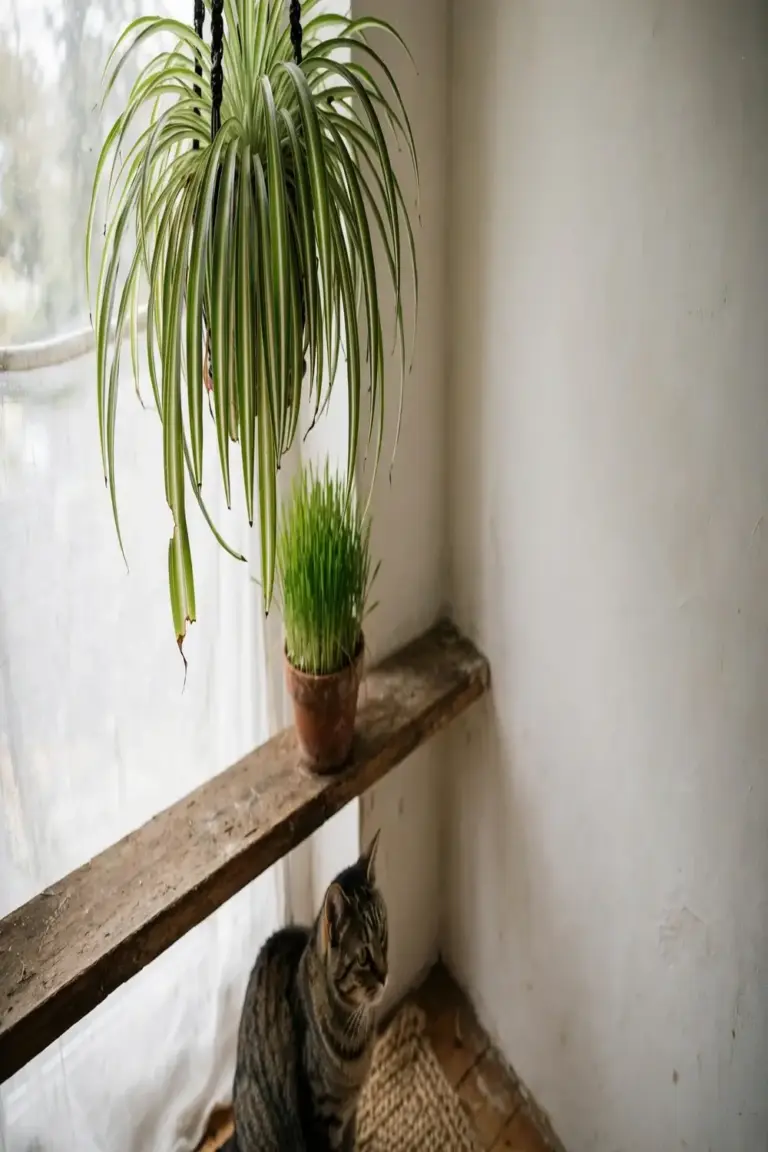
Yes. The ASPCA lists spider plants as non-toxic to cats. Cats love the long dangling leaves and chew them for play. Expect nibbled leaf tips. Hang the plant or set a pot of cat grass beside it. A nibble needs no vet visit. Watch for vomiting after heavy chewing and call a vet if it keeps up.
Bitter spray works on some cats and fails on others. Spray the leaves and stems, then reapply after watering or misting. Test one leaf first and wait a day. If chewing continues after a week, switch to a barrier. Never spray a plant you plan to eat, and wash edible leaves before use.
Many cats dislike the citrus smell, so peels help for a few days. Replace them when they dry out. Peels alone rarely stop a determined chewer. Pair peels with a barrier or a move. Citrus oil sprays can irritate cats, so stick to fresh peels on the soil.
Go to a vet at once. Do not wait for symptoms. Bring the plant or a photo of it. Call the ASPCA Poison Control hotline at (888) 426-4435 on the way. Treatment delayed by 18 hours or more usually means irreversible kidney failure. Speed decides whether the cat lives.
No. Punishment teaches the cat to chew when you leave the room. Redirect the cat to its own grass pot instead. Move the plant out of reach. Barriers and safe plants beat scolding every time, and a calm cat chews less than a scared one.
How to Protect Indoor Plants From Cats: Start With the Toxic List, Then Pick Two Barriers
Check the toxic list tonight. Move the worst plants out of the home. Pick two barriers from the nine ways and set them up this week. Give the cat its own grass pot at the same time. Watch the cat for a week and see which barrier holds, then swap a barrier that fails for one that works. Run a short weekly routine: check the barriers, refresh the peels, sow a fresh grass pot, and wipe the glass. The plants that stay earn their place. The 10 benefits of indoor plants list what they give back. A home with safe plants and a happy cat needs no trade-off.