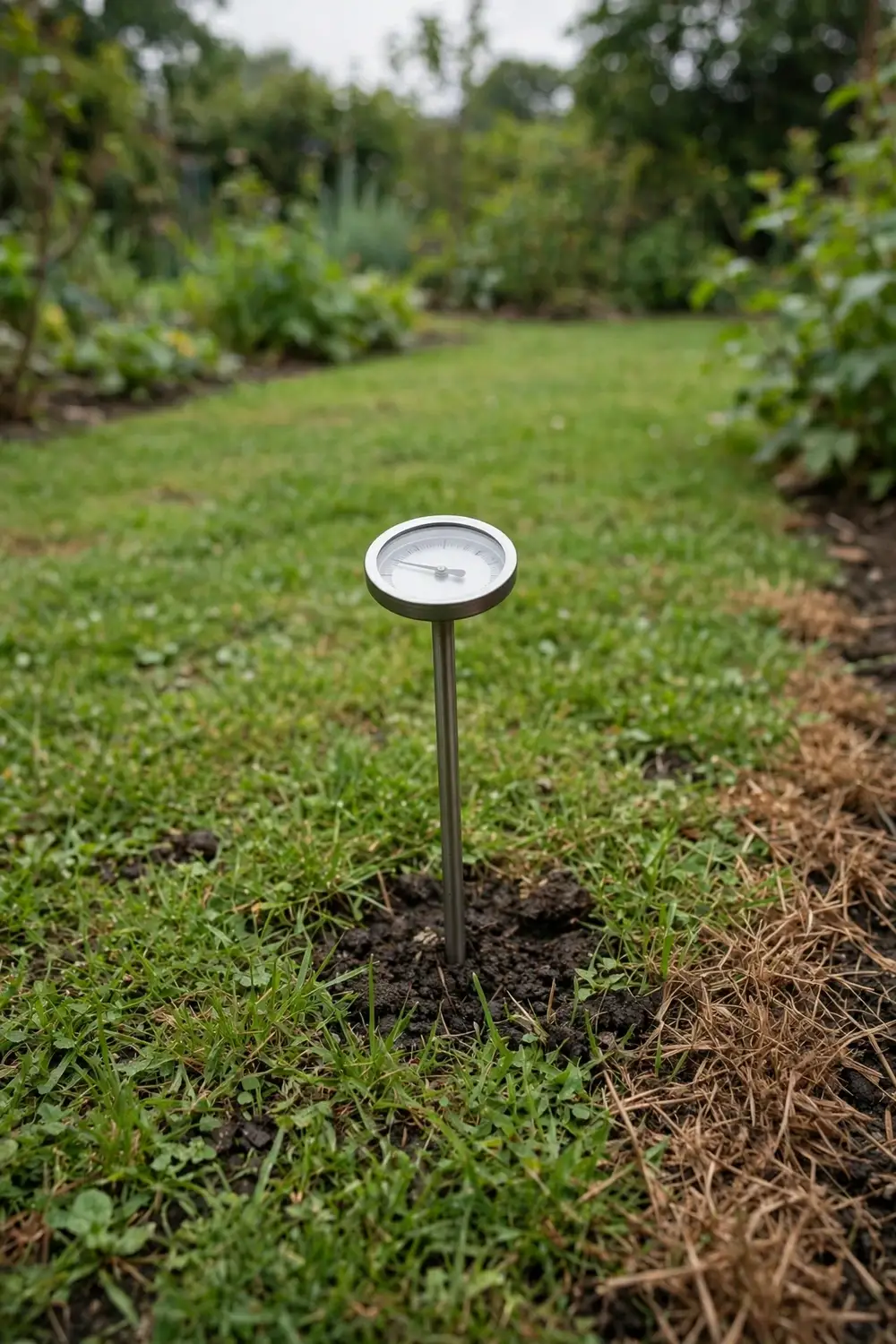

Scalp your lawn when the soil is consistently above 18°C at 5 cm deep and the lawn is actively growing and needing regular mowing. The calendar does not decide. A warm day in August means nothing if the soil is still cold.
I have learned that the thermometer reading settles the argument faster than any calendar date does. A scalp is a very low mow that removes dormant growth. Scarifying is a different job. Soil temperature is the temperature 5 cm below the surface.
The rest of this page is 7 moves, from the trigger to the recovery. Read the trigger first. The trigger governs every other move.
1. Scalp on the 18°C Soil Trigger, Not the Calendar
The question of when to scalp your lawn in Australia has one honest answer: the soil trigger. Scalp only when two conditions hold at the same time. Soil temperature sits consistently above 18°C at 5 cm deep. The lawn is actively growing and needing regular mowing. Turf & Surf’s spring lawn notes state both conditions as one rule. One condition alone is not enough.
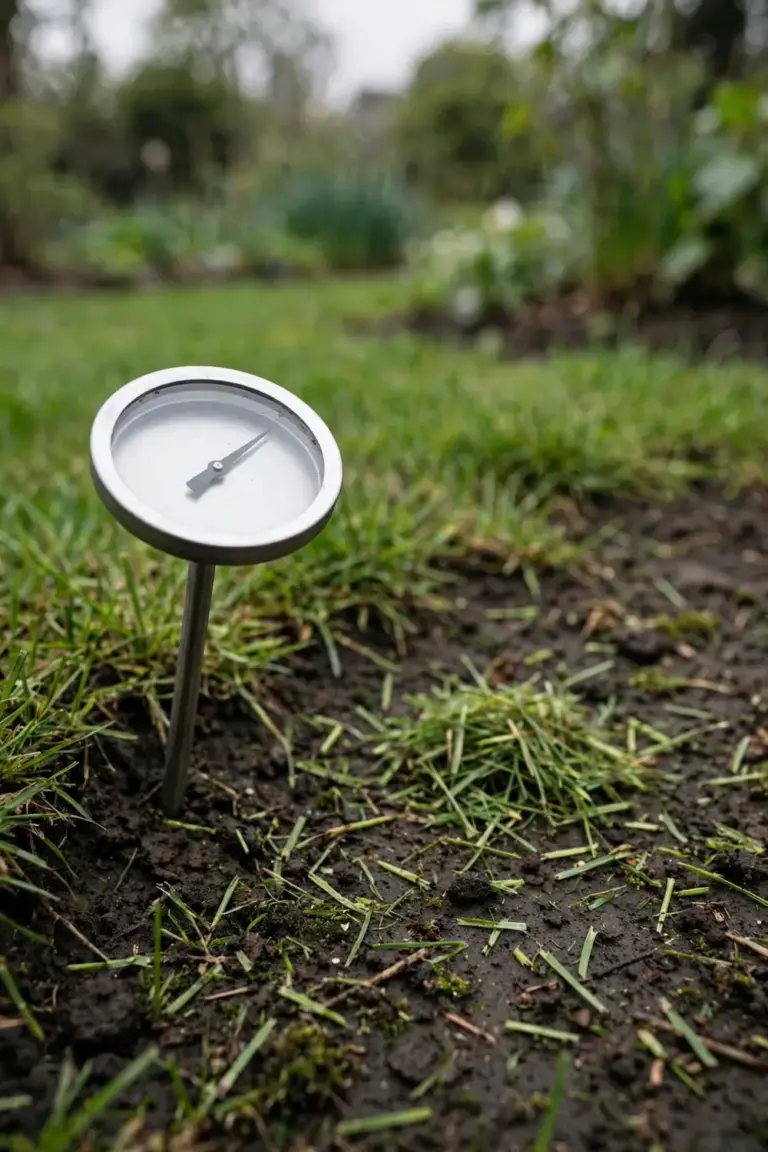
A warm week can fool you. Air temperature rises fast. Soil temperature rises slowly. A lawn cut hard while the soil is cold has no growth engine behind it. The cut removes the leaf the plant needs to photosynthesise. Recovery stalls. Weeds move into the bare soil while the turf waits for warmth.
The calendar answer fails in the same way. Early spring on a calendar page means nothing in a cold year. Late September to October is the typical window in many regions, according to the same notes. Typical is not a promise. A cold spring pushes the trigger later. A warm spring pulls it earlier. The thermometer decides.
Check the soil, not the month. Check growth, not the forecast. Scalp when both answers are yes. Wait when either answer is no.
Warm-season turf grows on soil warmth. Buffalo, couch, kikuyu, and zoysia all sit dormant while the soil stays cold. Their roots wake when the soil warms. Their crowns push new shoots when the soil warms. A scalp timed to that wake-up removes old leaf right as new leaf arrives to replace it. The lawn greens up in weeks because the plant is already moving.
A scalp timed to a calendar date does the opposite. The old leaf goes. The new leaf does not arrive. The crown sits bare in cold soil. Weeds seed into the gaps. The lawn spends the next month catching up instead of growing forward. The difference between the two outcomes is one thermometer reading.
The growth test is the second half of the trigger. A lawn that needs mowing every week is actively growing. A lawn that holds its height for three weeks is not. Combine the two tests. Soil above 18°C plus weekly mowing demand means the lawn is ready. Soil above 18°C with no growth means something else is wrong: compaction, drought, or disease. Fix that problem first. Scalp later.
Scalping too early costs a season. The lawn loses its leaf before the soil can grow new leaf. The crown sits exposed. Weeds seed into the gaps. The lawn that would have greened up on its own in three weeks now needs six weeks to recover from the cut. The calendar pushed the cut. The soil was not ready. Wait for the soil.
2. Measure Soil Temperature at 5 cm Before You Cut
Push a soil thermometer 5 cm into the soil. Take the reading in the morning. Repeat the reading on several mornings in a row. A single warm afternoon reading proves nothing.
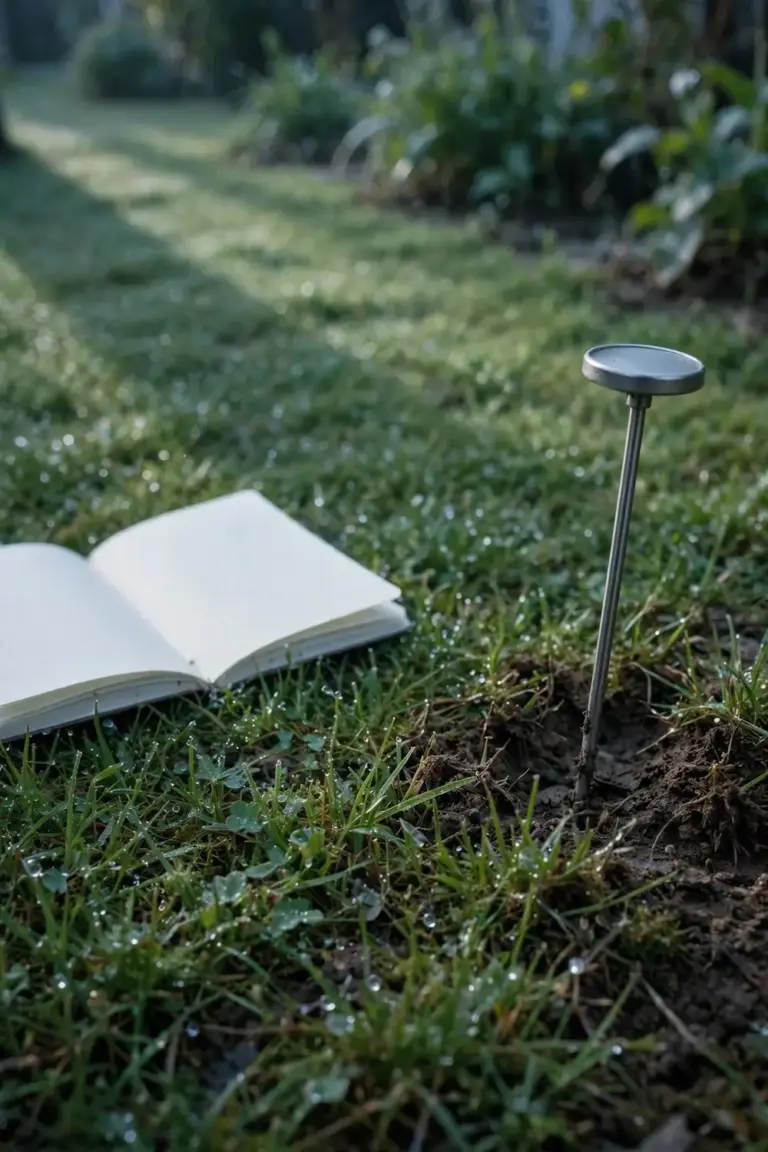
Morning readings run cooler than afternoon readings. Morning is the honest number. A soil that holds above 18°C through cool mornings holds it through the day. A soil that only clears 18°C at 3 pm on a sunny day drops back overnight. That lawn is not ready.
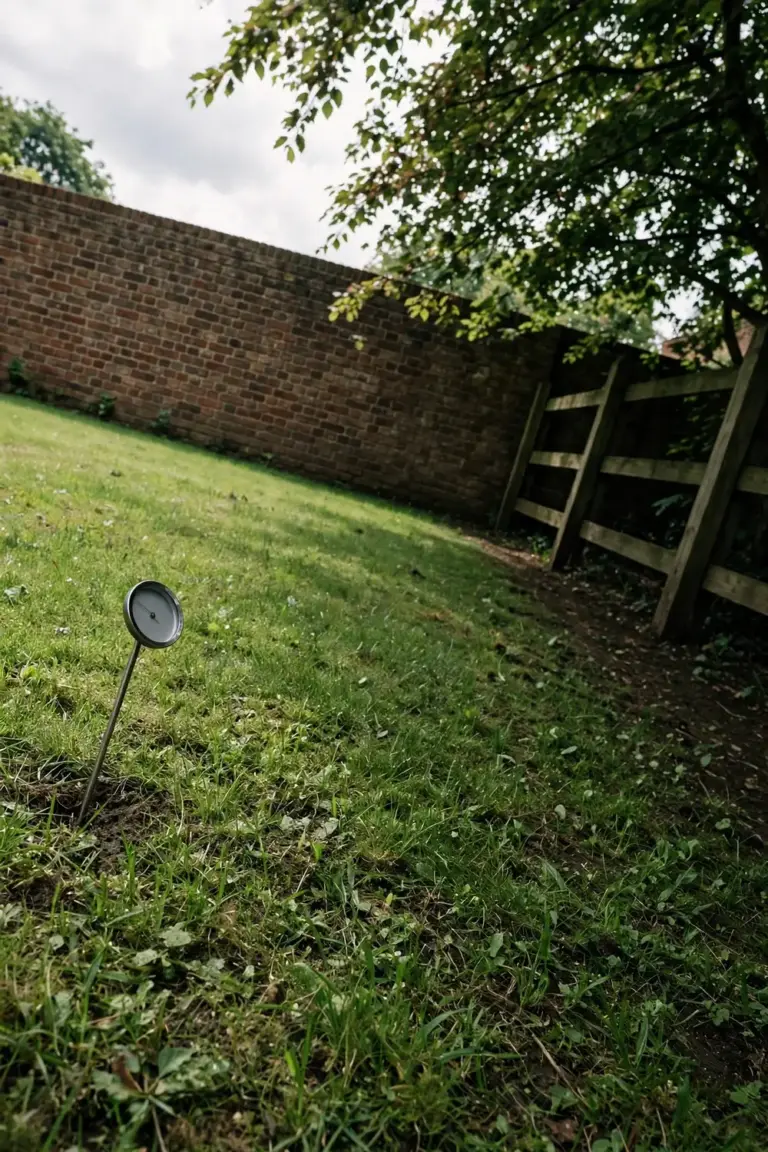
Measure in the patch you plan to scalp. Sun and shade split one yard into two soils, because a north-facing strip warms weeks before a shaded strip under a fence, and a reading from the warm strip does not clear the shaded strip. Take one reading per zone. Scalp each zone when its own reading clears the trigger.
Pair the reading with the growth test. A lawn that needs mowing every week is actively growing. A lawn you have not mowed for three weeks is not. The two tests together form the trigger. Soil above 18°C plus regular mowing demand means scalp. Either test failing means wait.
Any probe thermometer sold for soil or cooking works for the job, because the reading matters more than the tool. Push the probe to 5 cm. Wait for the reading to settle. Record the number and the date. Three mornings of readings above 18°C confirm the trigger better than one warm afternoon ever will.
A split result is normal. The sunny strip reads 19°C. The shaded strip reads 15°C. Scalp the sunny strip. Leave the shaded strip. The two zones run on different clocks. A lawn is not one soil. Treat each zone on its own reading. The shaded strip catches up in a week or two. Scalp it then.
Soil holds heat. Building soil health helps the soil hold moisture and warmth through the season. A compacted lawn warms unevenly, with hot patches beside cold patches. A lawn with good soil structure warms evenly. The thermometer shows the difference.
3. Match the Window to Your State, Then Let the Thermometer Decide
State windows are planning bands. The thermometer makes the call. Use the table to book the job in the right month. Use the thermometer to start the mower.
| State | Typical Window | What the Thermometer Must Show |
|---|---|---|
| NSW | September to November | Soil consistently above 18°C at 5 cm, lawn actively growing |
| VIC | October to December | Soil consistently above 18°C at 5 cm, lawn actively growing |
| QLD | September to October | Soil consistently above 18°C at 5 cm, lawn actively growing |
| SA | October to November | Soil consistently above 18°C at 5 cm, lawn actively growing |
| WA | September to October | Soil consistently above 18°C at 5 cm, lawn actively growing |
| TAS | November | Soil consistently above 18°C at 5 cm, lawn actively growing |
| NT | September | Soil consistently above 18°C at 5 cm, lawn actively growing |
| ACT | September to November | Soil consistently above 18°C at 5 cm, lawn actively growing |
Windows shift with the season. A cold spring pushes every window later. A warm spring pulls every window earlier. Coastal lawns warm sooner than inland lawns at the same latitude, because the sea holds summer heat into the cool months and releases it slowly. Inland lawns swing wider: hotter days, colder nights, slower soil warming. Altitude works the same way. A lawn on a hilltop runs cooler than a lawn in a valley floor a few streets away.
Queensland and the Northern Territory warm first. Tasmania warms last. Victoria sits late because cool nights hold soil temperatures down into October. New South Wales and the Australian Capital Territory sit in the middle. South Australia and Western Australia sit early to mid spring. None of that matters if your own soil reads 15°C. Wait.
Microclimate beats the state table every time. A lawn beside a brick wall warms early because the wall stores heat. A lawn under a big tree warms late because the canopy shades the soil. A lawn on a slope that faces north warms early. A lawn in a south-facing dip stays cold. Walk your own yard. Read your own soil. The state table books the month. Your thermometer books the day.
Check the week ahead before you cut. A scalp timed to a warm Monday fails if a cold snap arrives on Thursday. The forecast for the week after the cut matters more than the forecast for the day of the cut. Look for a mild stretch with no frost and no heatwave. Rain in the forecast helps, because the lawn recovers faster on wet soil than on dry soil.
Tasmania and the Northern Territory sit at the two ends of the table. Tasmania warms late and cools early. A Tasmanian lawn may not clear 18°C until November, and the window closes fast. Watch the thermometer, not the month. The Northern Territory warms early and stays warm. A Northern Territory lawn may clear 18°C in September and hold it for months. The risk there is not cold. The risk is heat and dry soil. Scalp early in the window, before the build-up heat arrives.
The method note matters here. The state windows are planning bands from scout evidence, not station-verified figures. Treat every band as a starting guess. The thermometer reading in your own lawn is the only number that decides.
4. Tell Scalping, Scarifying, and Dethatching Apart
Scalping cuts the leaf low. The mower does the work. The blade takes the lawn down to a short height in one or two passes. The goal is removal of dormant leaf and old growth so new growth gets light.
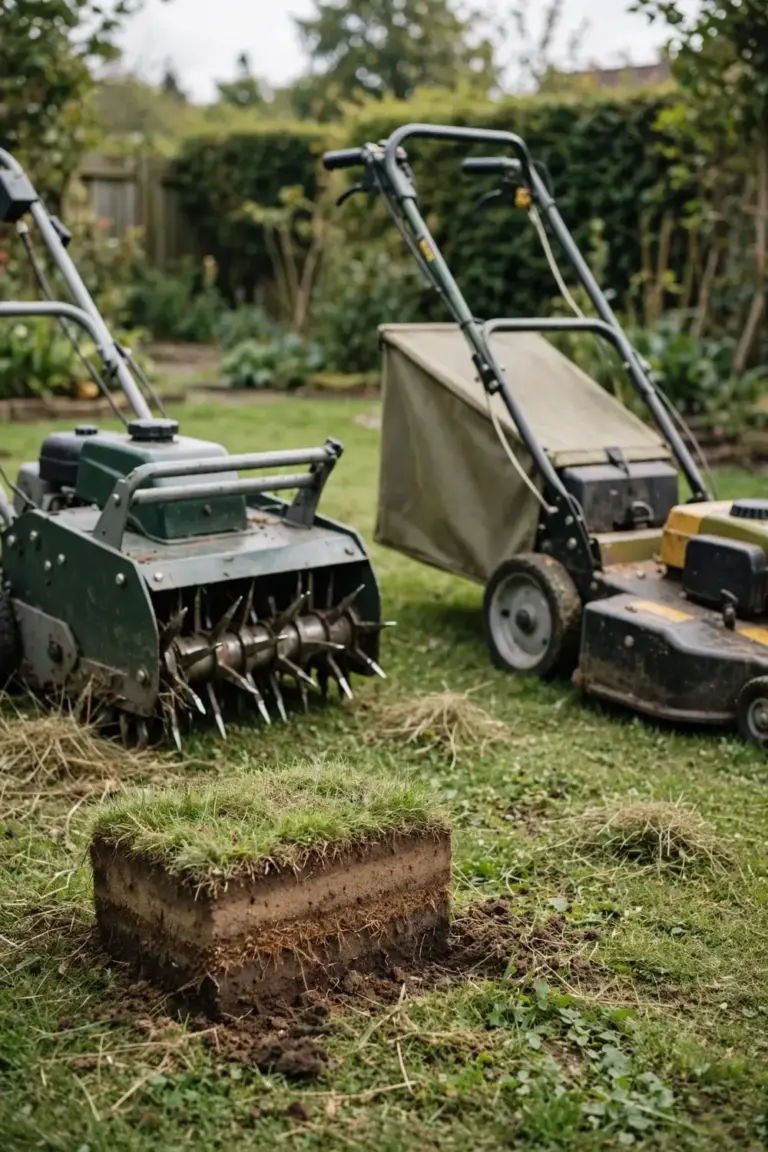
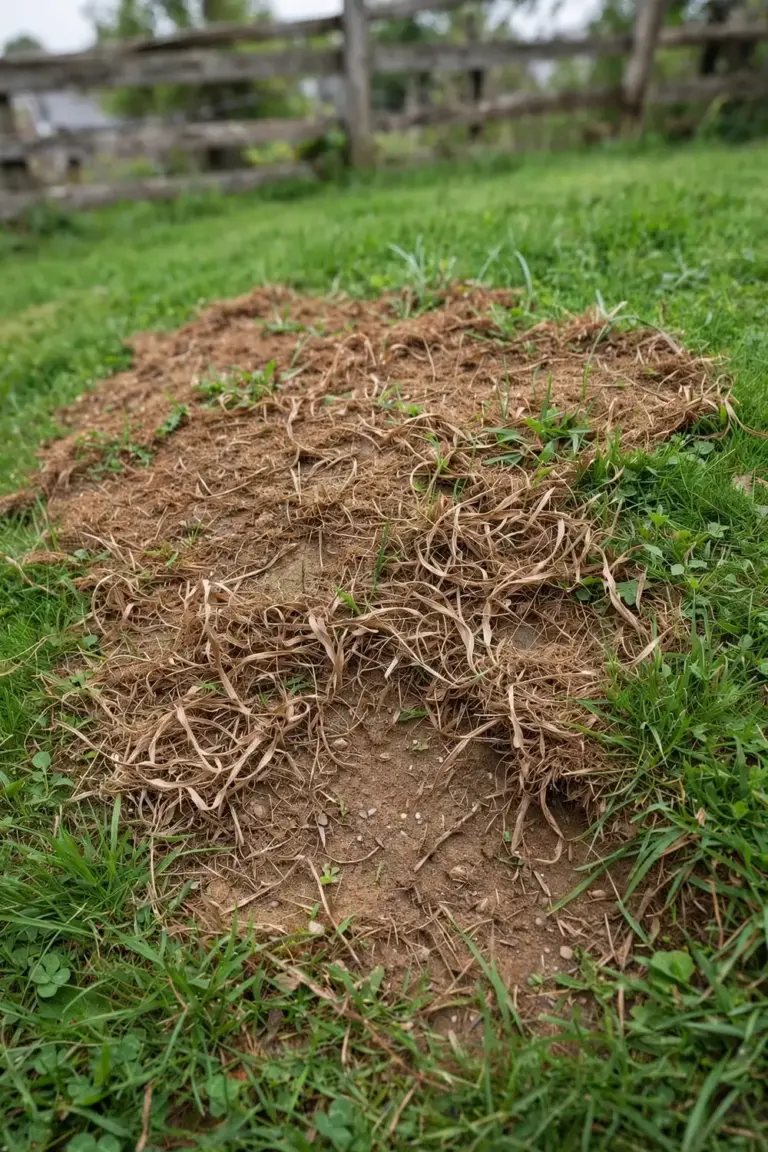
Scarifying cuts into the thatch layer. A scarifier uses blades or tines to slice into the matted layer of dead stems and roots at the soil surface. The goal is removal of thatch, not removal of leaf. Scarifying is a harder job than scalping. It tears more material out of the lawn.
Dethatching is the general name for removing thatch. A light dethatch with a rake removes surface thatch. A machine scarify removes deep thatch. Scalping does not remove thatch. It removes leaf. The three jobs overlap in the shed. They are not the same job in the lawn.
Confusing them costs lawns. A lawn that needs a scalp gets a scarifier and loses its stolons, which is the worst outcome for buffalo. A lawn that needs thatch removal gets a low mow and keeps its thatch, which is a wasted afternoon. Name the job before you pick the machine. Scalp for leaf. Scarify for thatch. Dethatch lightly for surface debris.
The order matters when a lawn needs two jobs. Scalp first. Rake up the clippings. Then scarify, if thatch still needs work. Then water. Doing the hard job first buries the leaf removal under a layer of torn thatch. Doing the scalp first clears the view, so you can see how much thatch is really there.
Set the mower up for the scalp. Sharpen the blade first. A blunt blade tears the grass instead of cutting it, and torn leaf dries out faster than clean-cut leaf. Fit the catcher. Scalping produces a large volume of clippings. Drop the height in steps, not in one move. Two passes at two heights give a cleaner result than one pass at the lowest setting, and they let you stop early if the lawn shows more green than you expected.
Hire a scarifier when thatch needs machine work. A hire scarifier costs a day rate and does the job in an afternoon. Buying one makes sense only if you scarify every year. Most home lawns need a machine scarify once, then never again. A rake handles the light work after that.
Buffalo shows the confusion at its worst. Buffalo grows from above-ground stolons. A scarifier tears those stolons out. A low mow leaves them in place. The turf-type rules in the next section carry this warning in full.
5. Apply Turf-Type Rules Before You Lower the Blade
Buffalo needs care. Buffalo grows from above-ground runners called stolons. Buffalo has no strong underground rhizome system to repair from, unlike couch and kikuyu. Lawn Solutions Australia’s buffalo care notes state that buffalo repairs from its above-ground runner system. A scarifier that strips those runners leaves nothing to regrow from. Scalp buffalo heavily if the lawn is healthy and the trigger holds. Skip the scarifier. Use a light dethatch or a groomer if thatch needs work. Leave stolons attached to the soil.
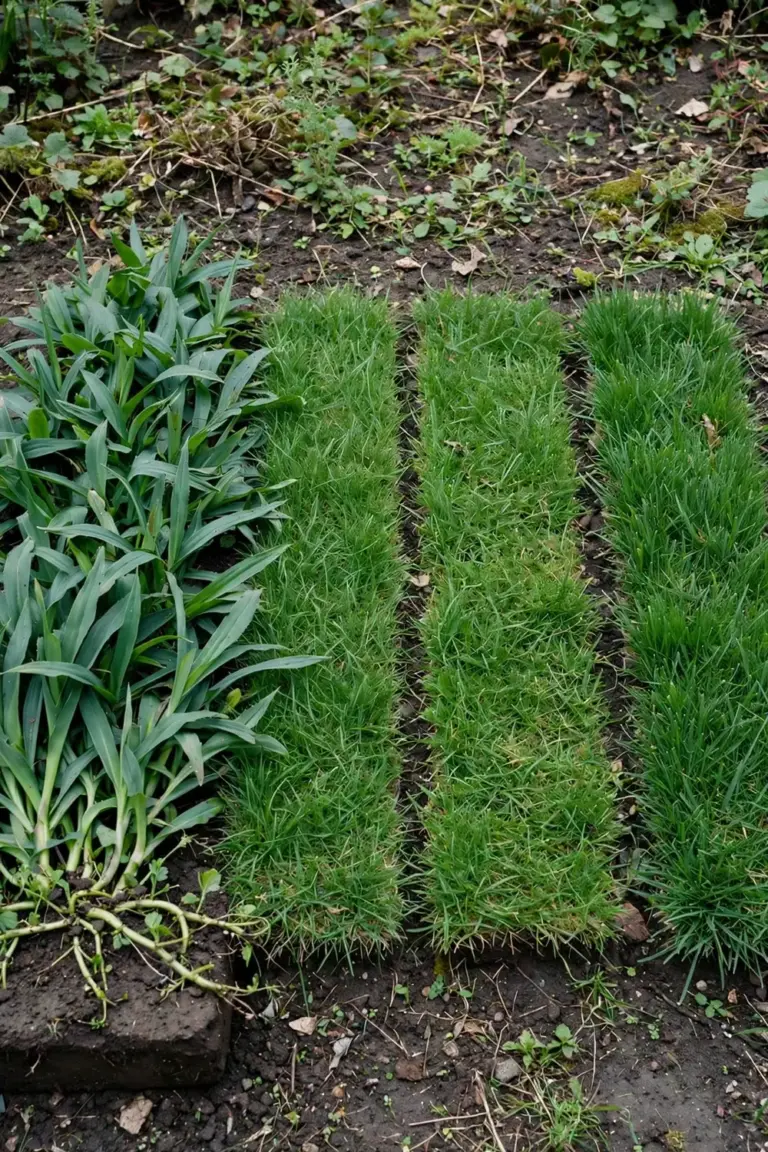
Couch tolerates a hard scalp. Couch spreads by both underground rhizomes and above-ground stolons. The underground system regrows after a hard cut, which is why couch is the classic scalping lawn. Cut it low when the trigger holds. It comes back fast, and it fills thin spots from below as well as from above.
Kikuyu tolerates a hard scalp. Kikuyu spreads by both rhizomes and stolons. Kikuyu grows fast once warmth arrives. Cut it low when the trigger holds. Kikuyu fills gaps faster than any other common lawn grass, and it punishes a timid cut by regrowing unevenly.
Zoysia tolerates a scalp, with one warning. Zoysia spreads by both rhizomes and stolons. Zoysia does not tolerate scalping as well as couch does. Cut zoysia low. Leave enough leaf to cover the node.
Cool-season lawns do not get scalped. Fescue and ryegrass grow through the cool months. They need their leaf to fuel growth. Cutting them short at the start of warm weather sets them back as heat and weeds arrive. Yates’ spring-care notes state that cool-season lawns generally do not require scalping. Maintain fescue and ryegrass at the recommended height. Mow them at normal height from the first cut of spring.
Identify the turf before you lower the blade. Buffalo leaves are broad, soft, and flat. Couch leaves are fine and pointed. Kikuyu leaves are broad and hairy on the underside. Zoysia leaves are stiff and rolled. If you cannot name the turf, do not scalp. A wrong guess on buffalo costs a season. Take a sample to a turf supplier or your state agriculture department for identification first.
6. Skip the Scalp on the Never-Scalp List
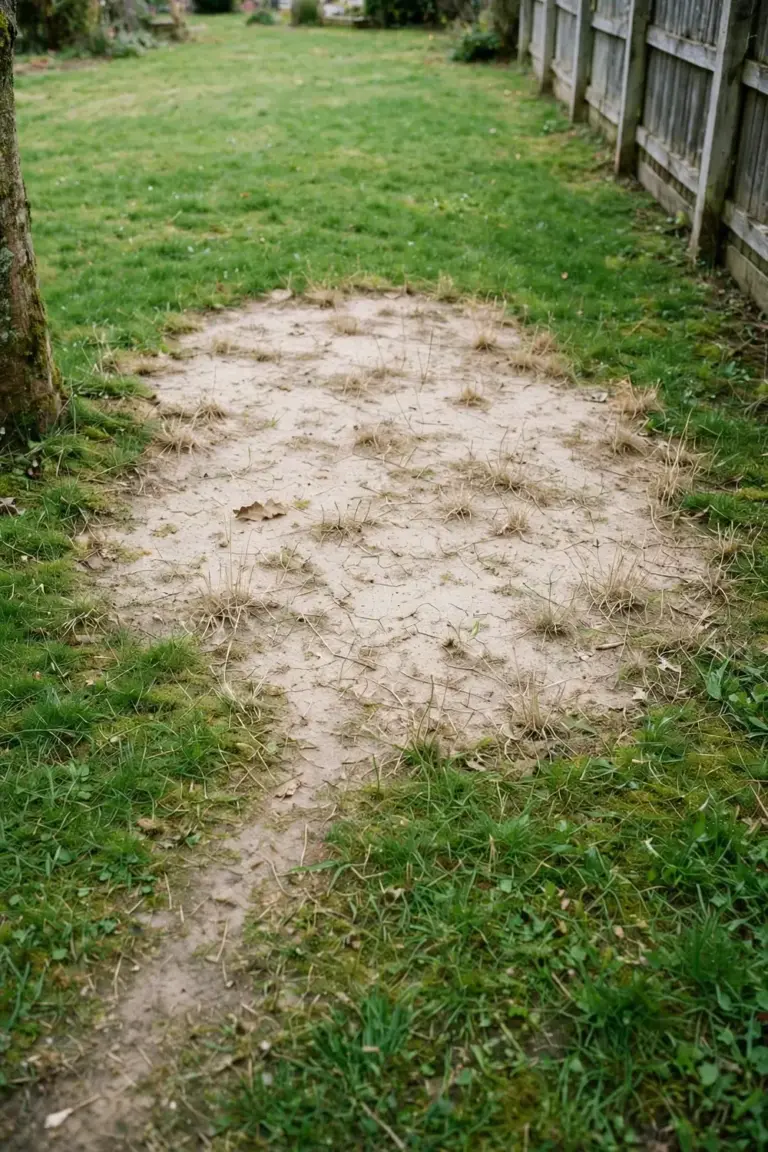
A dormant lawn never gets scalped. Dormant grass has no growth engine. A scalp removes the leaf that protects the crown. The lawn sits bare until warmth returns. Weeds move in first, because weed seed germinates in bare soil faster than dormant turf wakes.
A heatwave never gets a scalp. Heat stress plus a hard cut is two blows at once. The lawn loses leaf shade on the soil. The soil dries faster. Roots shut down. Wait for a mild stretch. A scalp on a 38°C day buys nothing and risks the crown.
A drought-stressed lawn never gets scalped. Dry soil plus a hard cut is the same two-blow problem. The lawn needs every leaf it has to shade its own soil. Water first. Grow first. Scalp later, if the season still allows it.
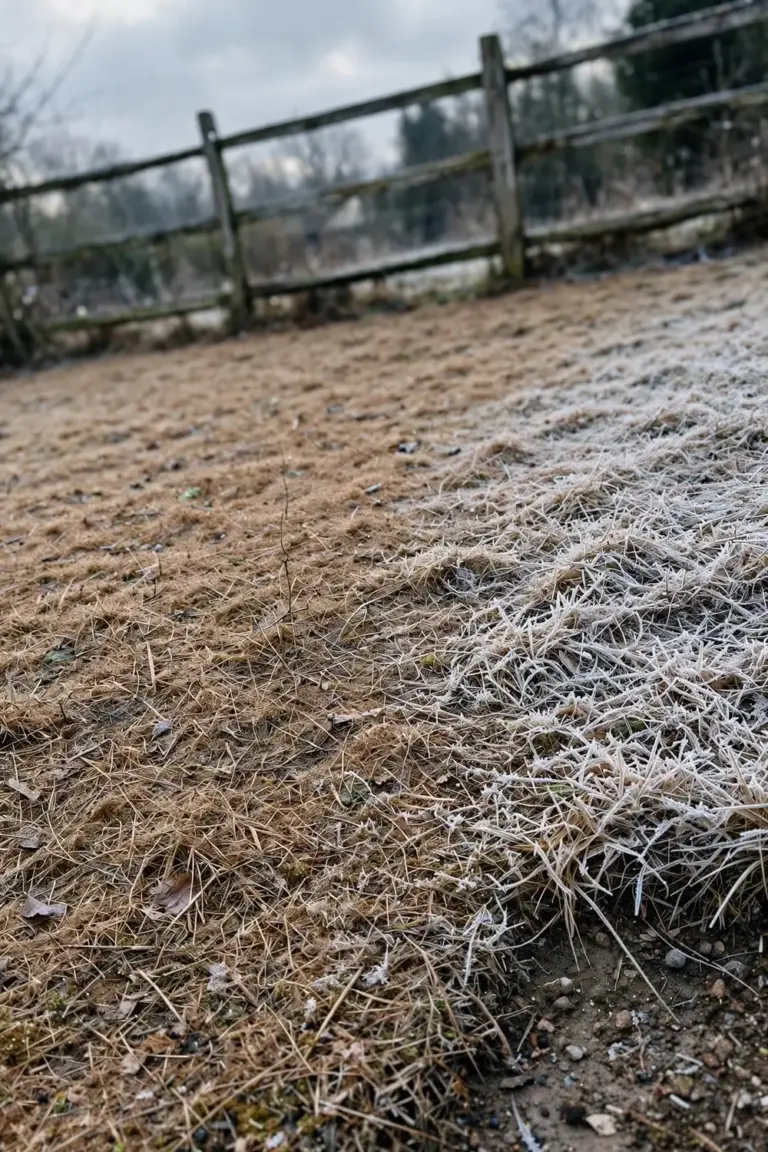
A frost-risk lawn never gets scalped. A late cold snap after a scalp burns the new shoots. The shoots have no dead leaf above them for cover. Scalp only after the frost risk has passed. Check the forecast for the week after the cut, not just the day of the cut.
A winter lawn never gets scalped. Warm-season turf sleeps in winter. A winter scalp removes the blanket and gains nothing. The lawn cannot regrow until spring. Leave it alone.
A stressed lawn never gets scalped. Disease, insect damage, and compaction are stress, and a scalp adds a fourth stress on top of the three already there. Fix the stress first. Scalp next season, when the lawn is healthy and the trigger holds.
Do the quiet work instead of the scalp. Water the lawn. Mow at normal height. Feed once the soil is warm. Pull weeds by hand while they are small. These moves keep the lawn alive through the wrong window. They cost nothing. They set up the scalp for the right window. A lawn that spent autumn fed and watered enters spring ready for a hard cut.
7. Tell Deliberate Scalping From Accidental Scalping, Then Recover
Deliberate scalping is a choice. You check the soil. You check growth. You lower the mower on purpose. You cut on a mild day with rain in the forecast. You feed and water after the cut.
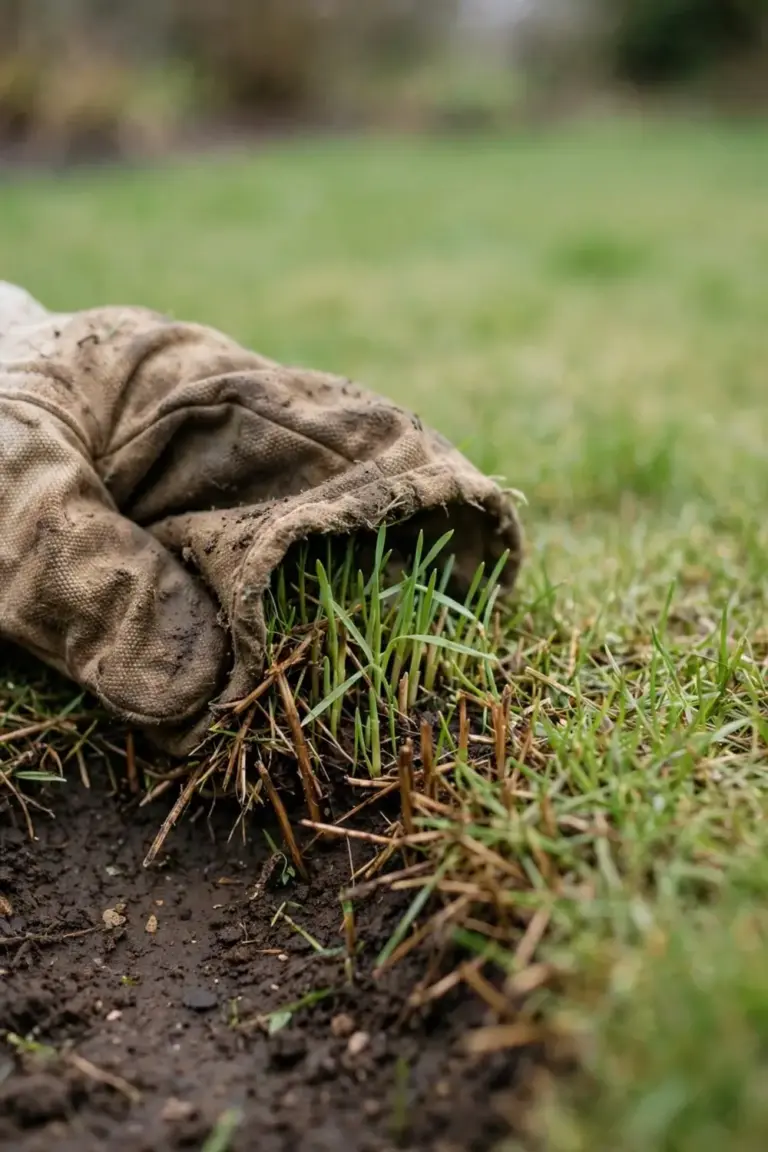
Accidental scalping is damage. The mower drops too low on a bump. The blade bites a high spot. A strip of lawn turns brown overnight. Jim’s Mowing’s scalping notes describe this other meaning: mowing too low by mistake, which is damage, not a technique. The lawn did not choose it. You did not plan it.
Recovery follows the same steps in both cases. Water the cut area. Feed the lawn once growth resumes. Wait. Do not cut again until the lawn has regrown leaf. Do not scalp twice in one season to fix a bad first scalp, because the second cut strips the recovery leaf the first cut already cost.
Diagnosis comes before recovery. A brown strip after a low mow is accidental scalping. A brown patch with no mowing change is something else: disease, grubs, or drought. Check the pattern. A straight strip along the mowing line points to the mower. A round patch with a sharp edge points to disease or insects. Treat the right cause. Watering a grub patch does not fix grubs.
The one-third rule governs the regrowth mowing. Never remove more than one-third of the leaf height at a single mowing. Oklahoma State University’s turf management notes state the one-third rule as the mowing ceiling. A lawn cut from 9 cm to 6 cm loses one-third. A lawn cut from 9 cm to 3 cm loses two-thirds. The second cut stresses the plant.
Feeding waits for warmth. The University of Georgia advises not fertilising warm-season grasses until the soil reaches 65 degrees Fahrenheit, about 18°C. Early feeding pushes growth before the soil can sustain it. A late cold snap then burns the soft growth. The trigger for feeding matches the trigger for scalping. Soil above 18°C means feed. Soil below 18°C means wait. Fertilising a lawn in spring follows the same warmth rule.
Recovery takes weeks, not days. A deliberate scalp on a healthy lawn greens up within weeks. An accidental scalp on a stressed lawn takes longer. Watch for new green shoots at the crown. New shoots mean recovery. Bare soil with no shoots after a month means the patch needs reseeding or returfing.
Keep traffic off the recovering lawn. Feet compact soft soil and snap new shoots. Rope off the worst patches. Mow around them until the leaf returns. A recovering lawn that gets walked on daily heals slower than one left alone.
Water deeply after the cut. A long soak reaches the roots. A light sprinkle wets the surface only. Water in the morning so the leaf dries before nightfall. Wet leaf overnight invites fungal problems. Feed once, when the soil is warm and growth has resumed. Do not feed a lawn that has not started growing yet. The fertilizer sits in cold soil and does nothing until warmth arrives.
Frequently Asked Questions About Scalping Your Lawn
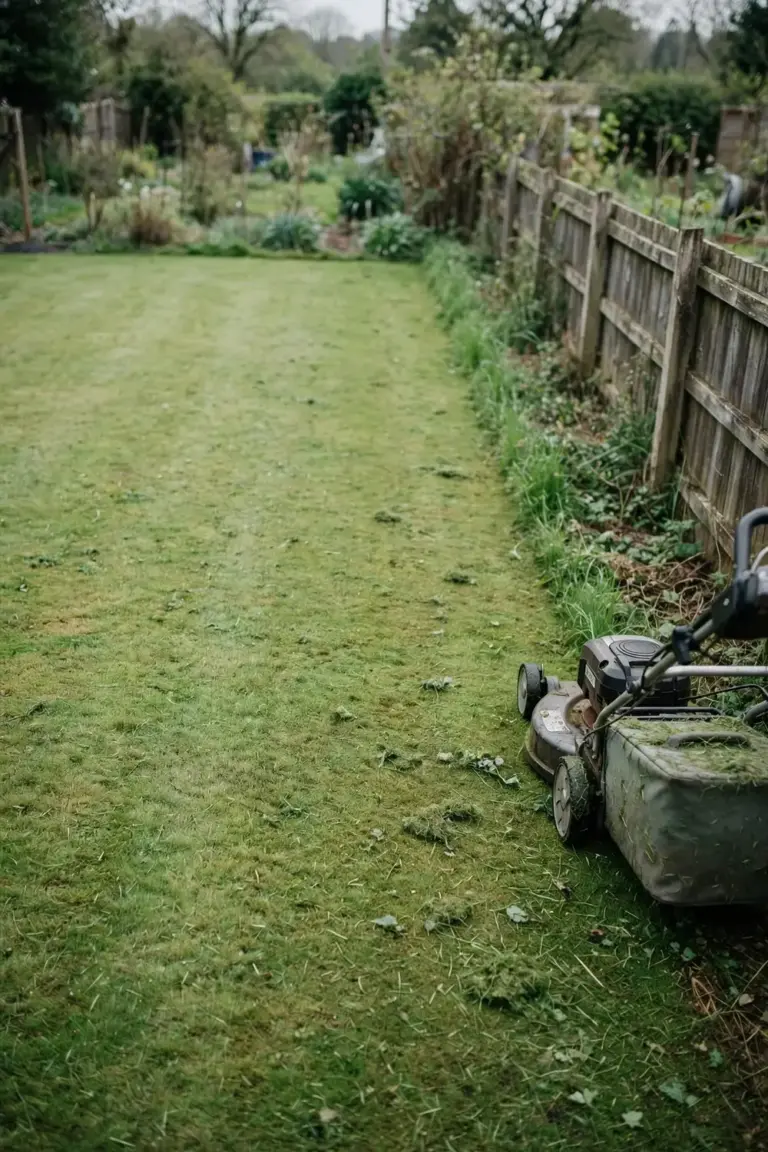
Yes, with care. Scalp buffalo heavily when the soil trigger holds and the lawn is healthy. Skip the scarifier. Buffalo grows from above-ground stolons with no strong underground rhizome system. A scarifier tears those stolons out. Use a light dethatch or a groomer for thatch. Leave stolons attached to the soil so the lawn can regrow.
Soil consistently above 18°C at 5 cm deep, plus active growth. Push a soil thermometer 5 cm into the soil. Take morning readings on several mornings in a row. Morning is the honest number. Pair the reading with the growth test. A lawn that needs mowing every week is actively growing. Both tests must pass before you scalp.
No, for warm-season turf. Scalping in early autumn leaves no recovery time before winter dormancy. The lawn enters winter bare and weak. Weeds move into the bare soil. Scalp in spring, when warmth and growth lie ahead. Autumn work is feeding, watering, and mowing at normal height, not scalping.
Low enough to remove dormant leaf and old growth, without taking the lawn to bare soil. Drop the mower height in steps. Check how much material comes off after each pass. Stop when green shoots show through. Zoysia needs extra care: never cut below the growing node. Buffalo needs its stolons left in place. Couch and kikuyu tolerate the hardest cuts.
Water the strip. Feed the lawn once growth resumes and the soil is warm. Wait. Do not cut again until the lawn has regrown leaf. Follow the one-third rule on the next mow: never remove more than one-third of the leaf height at one mowing. Watch for new green shoots at the crown. Bare soil with no shoots after a month means the patch needs reseeding or returfing.
When to Scalp Your Lawn in Australia: Check the Soil First
Scalp on the soil trigger, not the calendar. Soil consistently above 18°C at 5 cm plus active growth means scalp. Either test failing means wait. Spring lawn care follows the same rule: warmth first, work second.
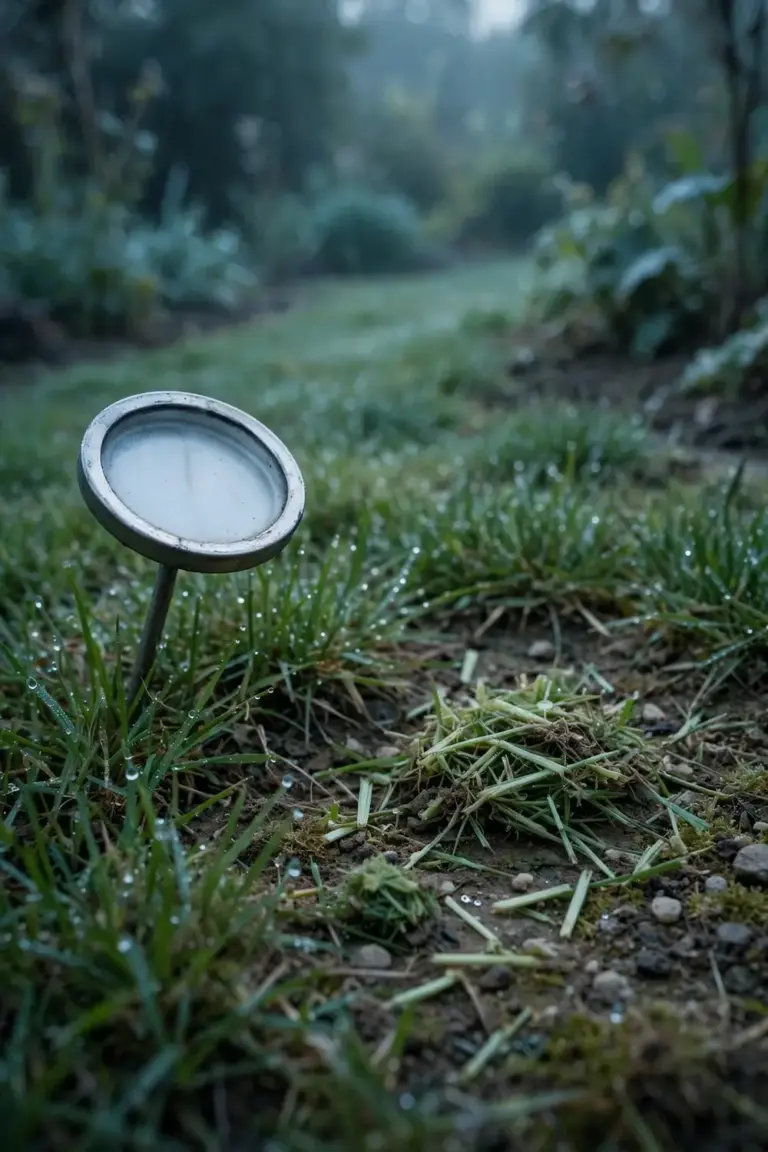
Run the sequence in order. Check the soil. Match the window to your state. Apply the turf-type rules. Skip the scalp on the never-scalp list. Tell deliberate scalping from accidental scalping. Recover with water, feed, and patience. The thermometer costs little. The lawn it saves costs far more.
The pre-cut checklist is short. Soil above 18°C at 5 cm on three mornings. Lawn needing weekly mowing. No frost in the week ahead. No heatwave in the week ahead. Turf type known. Blade sharp. Catcher fitted. All seven boxes ticked means cut. One box unticked means wait. The lawn rewards patience with fast recovery. Measure first. Cut second.