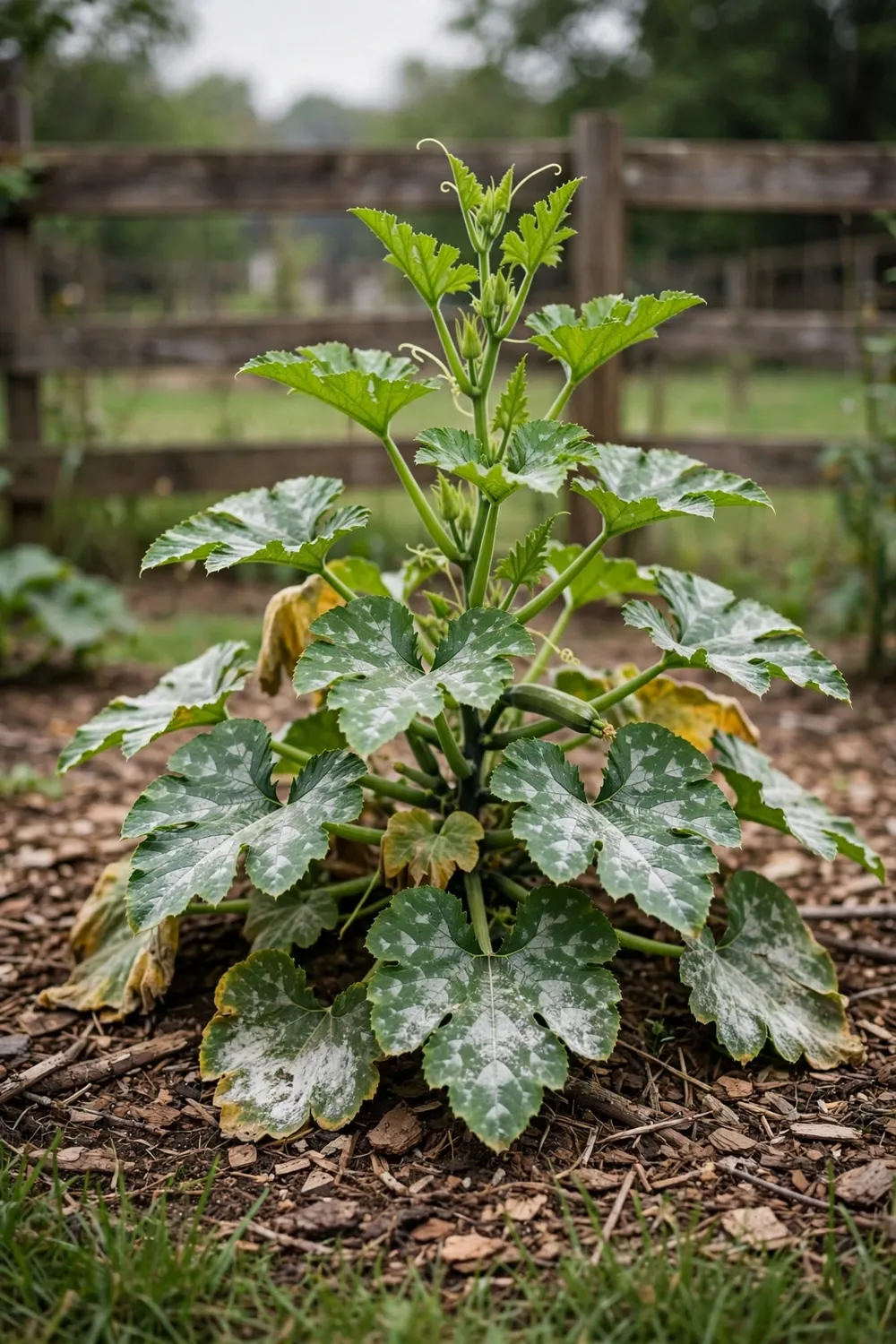

Rub one white patch with a fingertip before you reach for a spray bottle. Powdery mildew on zucchini starts as small white spots that lift off the leaf as powder, and that rub test tells you more in 5 seconds than a week of guessing. I have learned that the first white spot is the cheapest one to remove. The rest of this page is 11 moves, from the rub test to the weekly check.
Powdery mildew will not wait for a free weekend. It spreads on dry air, settles on leaves, and turns a healthy canopy yellow and papery if you ignore it. Early action keeps the plant picking. Late action leaves you with bare vines and sunburned fruit.
Confirm It Is Powdery Mildew Before You Spray Anything
White on a zucchini leaf is not always mildew. Run the rub test first. Press a fingertip to the patch and drag it sideways. Mildew powder lifts off and leaves a faint smear on your skin. A natural silver pattern sits inside the leaf and stays put no matter how hard you rub.
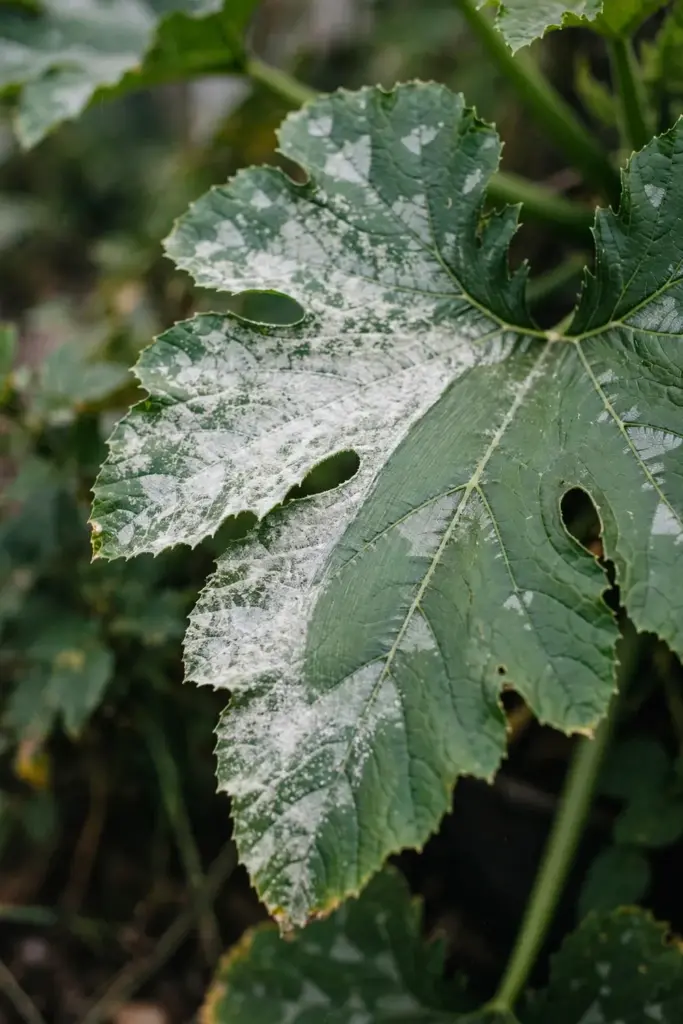
Powdery mildew opens as small white spots on older, lower leaves. The spots grow, merge, and dust both leaf surfaces. Downy mildew is a different disease with a different treatment. It shows angular yellow patches boxed in by the leaf veins, with gray fuzz on the underside. Mealybugs sit in cottony clumps in the leaf joints and do not dust the leaf surface. Spraying the wrong problem wastes a week.
| What You See | Rub Test | First Move |
|---|---|---|
| White powdery spots on leaf surfaces | Powder lifts off | Treat as powdery mildew |
| Angular yellow patches with gray fuzz underneath | No powder, fuzz stays | Suspect downy mildew, different treatment |
| Silvery pattern following the veins | Nothing lifts off | Healthy leaf, no treatment |
| Cottony white clumps in leaf joints | Clumps stay, insects inside | Suspect mealybugs, not mildew |
Check both sides of the leaf. Mildew often starts on the underside, where shade and still air protect it. Check the oldest leaves first. They sit closest to the soil, catch the least air, and show spots days before the top of the plant does.
What Powdery Mildew Does to a Zucchini Plant
Powdery mildew is a fungus. The zucchini strain is Podosphaera xanthi, and it lives on the leaf surface instead of inside the tissue. White powdery spots develop on leaves, usually on the underside first, before they cover both sides, according to the NSW DPI diseases of cucurbit vegetables guide. Leaves gradually turn yellow to a papery brown and eventually die.
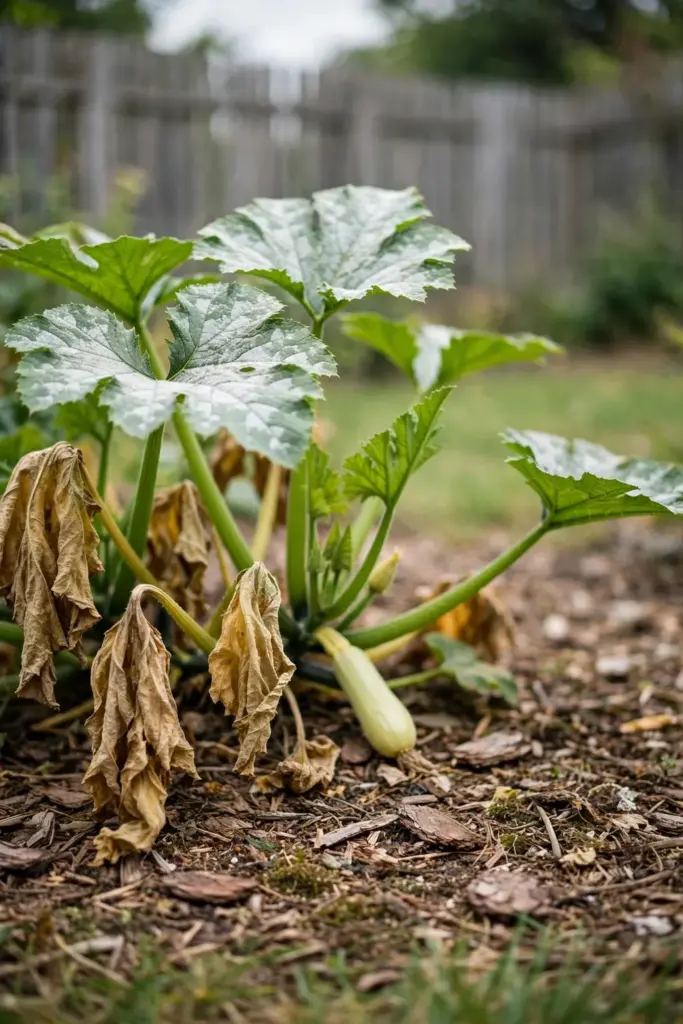
A mildewed leaf stops feeding the plant. The white coating blocks light, so photosynthesis drops on every coated leaf. The plant keeps its fruit alive by pulling energy from healthy leaves, and the crop slows. Fruit on a badly mildewed plant stays small because the leaves cannot make enough sugar to fill it.
Defoliation brings a second problem. Bare vines leave fruit exposed to direct sun, and exposed zucchini scald. A scorched patch turns pale, then leathery, and the fruit loses quality even though the fungus never touches it. Keeping leaves on the plant is the real harvest job.
Mildew rarely kills a zucchini outright. It weakens the plant, shortens the season, and cuts the crop. A plant that loses half its leaves in January will not outproduce a plant that kept its canopy clean. That is why early treatment pays: every leaf you save keeps picking fruit for another week.
The fungus travels light. Spores ride dry air from plant to plant, and a gust across a crowded bed seeds a dozen leaves at once. Warm days with humid nights favor the spread. The NSW DPI guide notes mildew is favored by warm, relatively dry conditions, and light dews provide sufficient moisture for infection. You do not need rain for mildew. You need a warm day, a still night, and a leaf that stays damp until morning. That combination arrives in most Australian summers without an invitation.
A mildewed plant also feeds pests indirectly. Aphids and whitefly settle on stressed plants faster than on vigorous ones, and a weak canopy gives them shelter. Treating mildew early keeps the plant strong enough to shrug off a light pest visit. Letting mildew run invites a second problem on top of the first.
Strip the Worst Leaves First
Before you reach for any spray bottle, cut the worst leaves off. A leaf that is more than half white is past saving, and it sheds spores onto every leaf below it while no spray on the shelf can restore it. Removing it cuts the spore load in one move. Cut now.
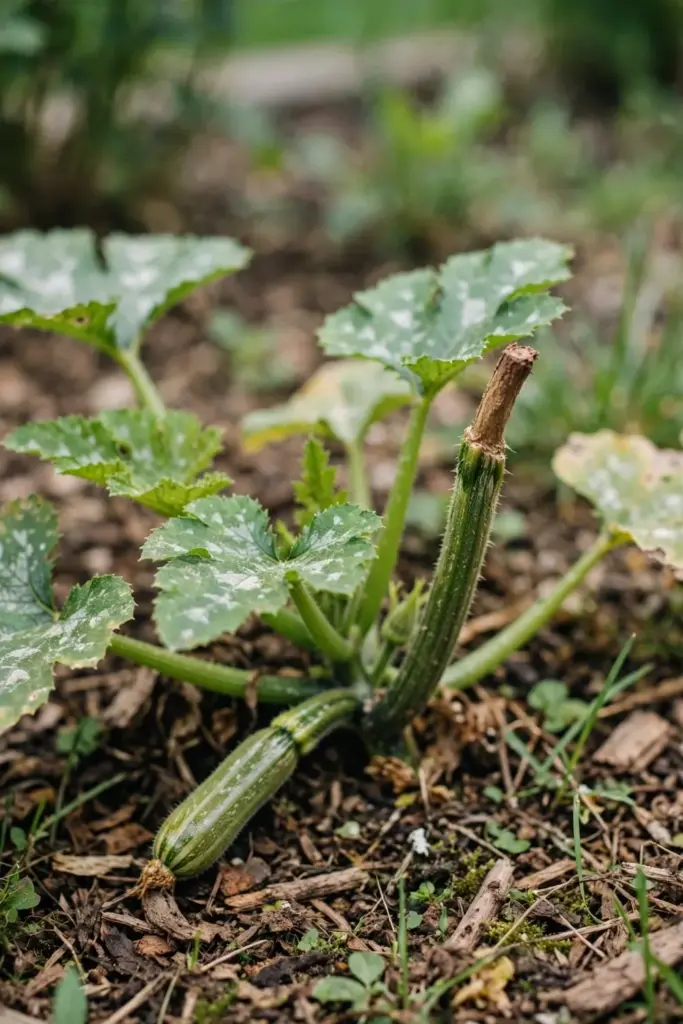
Work in dry weather. Cut at the petiole, close to the main stem, with clean secateurs. Drop each leaf straight into a bag or bucket. Do not shake it over the bed. A shaken leaf throws a cloud of spores across the healthy canopy you are trying to protect.
Bag the worst leaves and put them in the bin. Do not leave them on the bed, and do not drop them in the compost heap. Infected crop trash is the main source of new infection, and a cold compost heap will not kill the fungus. Clean up is treatment, not tidying.
Wash your secateurs and hands when you finish. Spores ride on tools, gloves, and sleeves from one plant to the next. A quick wipe with soapy water between plants keeps one bad vine from seeding the whole row. Then spray the leaves that remain, while the plant still has a canopy worth saving.
Strip little and often. A weekly pass that takes 5 leaves beats a monthly rescue that takes 30. Small cuts heal fast, and the plant keeps its shape. A big strip shocks the plant and opens the canopy so fast that sun hits fruit that never saw direct light. Gentle and regular wins.
Do not strip a healthy plant bare in fear. Leaves feed the fruit. The rule is simple: cut leaves that are more than half white, keep leaves that are mostly green, and spray the in-between leaves that carry a few spots. A plant with a thin canopy still outproduces a plant with no canopy at all.
Spray Milk or Baking Soda to Slow the Spread
Spray early on a sunny day so the leaves dry before night. A wet canopy overnight gives the fungus the damp, dark conditions it wants. Morning spraying lets the mix work. Then it evaporates. The leaf surface dries by evening.
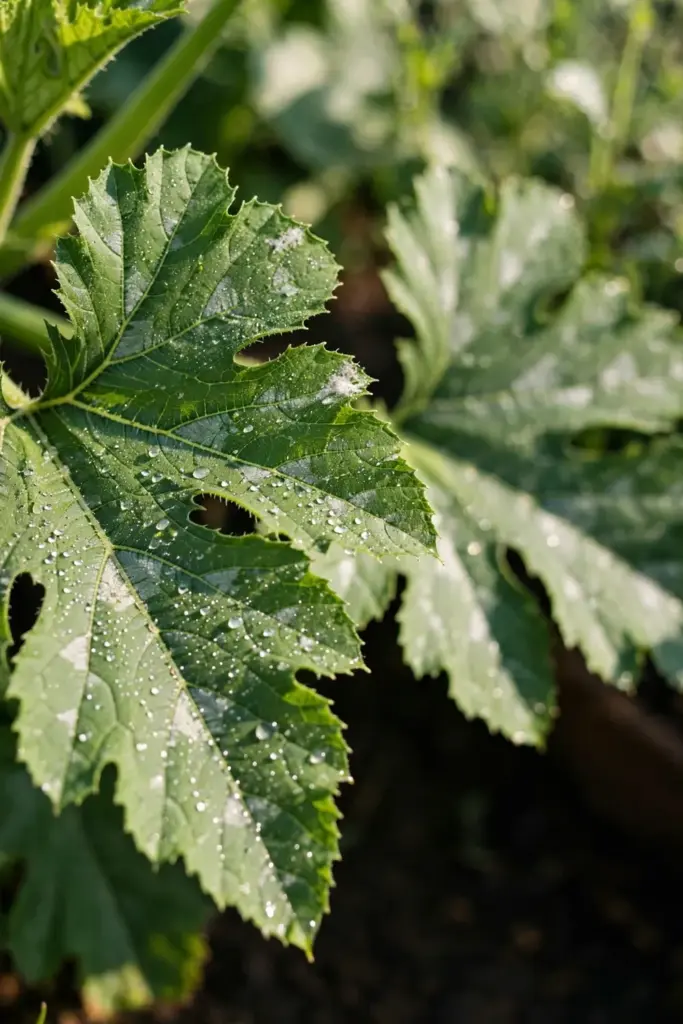
Milk spray is the gentlest option. Mix milk and water 50/50 and spray the whole plant, top and underside of every leaf, according to the Seed Collection powdery mildew guide. Milk contains amino acids that decay into antiseptic and antifungal compounds as the mix evaporates. The compounds dry the spores out, kill them, and leave them to blow harmlessly away.
Baking soda spray works by changing the leaf surface. Mix 1 tablespoon of ordinary baking soda into 4 liters of water. Stir in 1 tablespoon of liquid non-detergent soap, and add 1 tablespoon of vegetable oil if you want the mix to stick, as the same guide describes. Spray the entire affected plant liberally, along with its neighbors. The soap helps the mix spread, and the oil helps it stay.
A commercial potassium bicarbonate spray does the same job in a stronger form. It costs more than baking soda, and it suits a gardener who would rather buy the mix than make it. Whichever spray you choose, treat the plant early and repeat weekly. One spray slows mildew. Weekly sprays hold it.
Test any spray on a few leaves first. Wait a day and check for burn or curling before you coat the whole plant. A test patch costs a day. A full-plant burn costs a week of growth.
Use Sulfur or Horticultural Oil When Home Sprays Fall Short
Home sprays hold light infections. A heavy infection needs a stronger protectant. When home sprays fall short, sulfur is the standard choice for the home garden, and it works as a surface protectant rather than a cure. Sulfur products are the most effective of the home-garden options listed, and they work only on the leaf surface, according to Ohio State University guidance on managing mildews in home garden cucurbits. Full coverage is needed throughout the canopy, top and bottom of leaves and petioles, and a missed underside is a missed leaf.
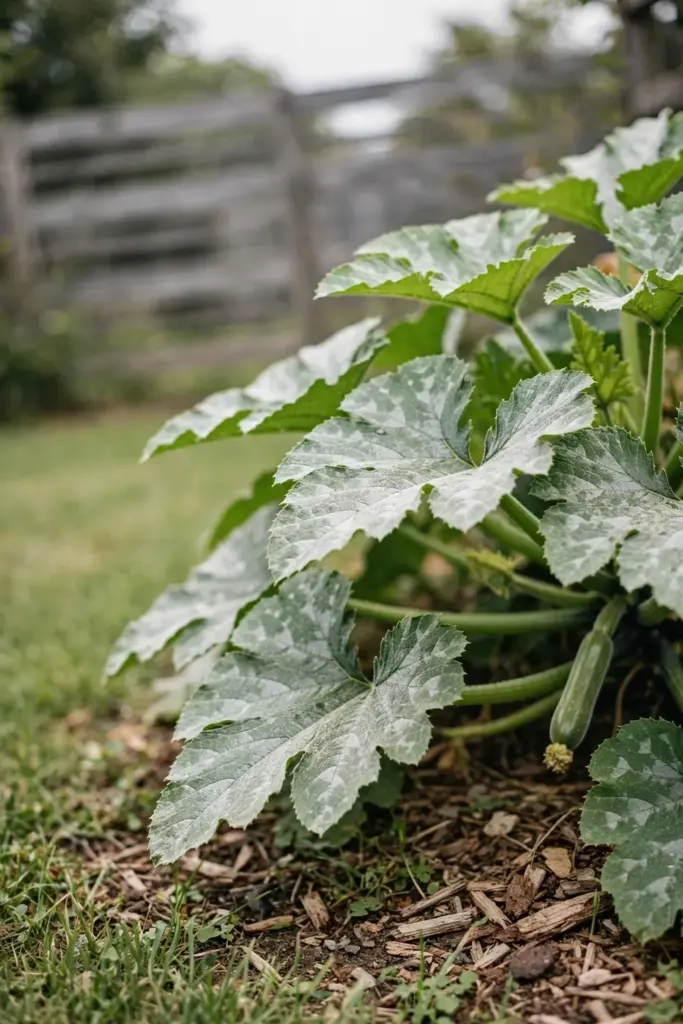
Sulfur is a protectant, not a cure. It coats the leaf and stops new spores from germinating. It does not repair leaves that are already white. Spray it on healthy new growth and on leaves with early spots, after you strip the worst foliage. Repeat after rain. Follow the label for the interval.
Horticultural oil smothers spores on contact. It suits a gardener who wants a non-sulfur option, and it works best on light infections with thorough coverage. Oil on a hot day burns leaves, so spray in the cool morning and skip oil when the temperature climbs past 30 degrees.
Use one protectant at a time. Never mix sulfur and oil in one spray, and follow the label for the gap between them. Never spray open flowers. Bees work the flowers all morning, and a sprayed flower drives them away or worse. Spray in the cool morning, aim at the leaves, and keep the nozzle off the blooms. Keep pets and children away from sprayed plants until the leaves dry.
Escalate to a bought fungicide only if home sprays and pruning fail. Read the label for the crop, the rate, the harvest interval, and the safety gear. Rotate modes of action across the season instead of using one product all year. A fungus that survives one product passes that tolerance to its offspring, and a whole season of the same product breeds a population that resists it outright. Rotation is the long game, and the label is the rulebook: follow the rate, the interval, and the harvest withholding period exactly as printed.
Give Each Plant Room and Air
Crowded zucchini grow their own mildew weather. Dense leaves trap humid air, shade the lower canopy, and hold spores in still air overnight. A plant with space dries faster, and a dry leaf grows less mildew.
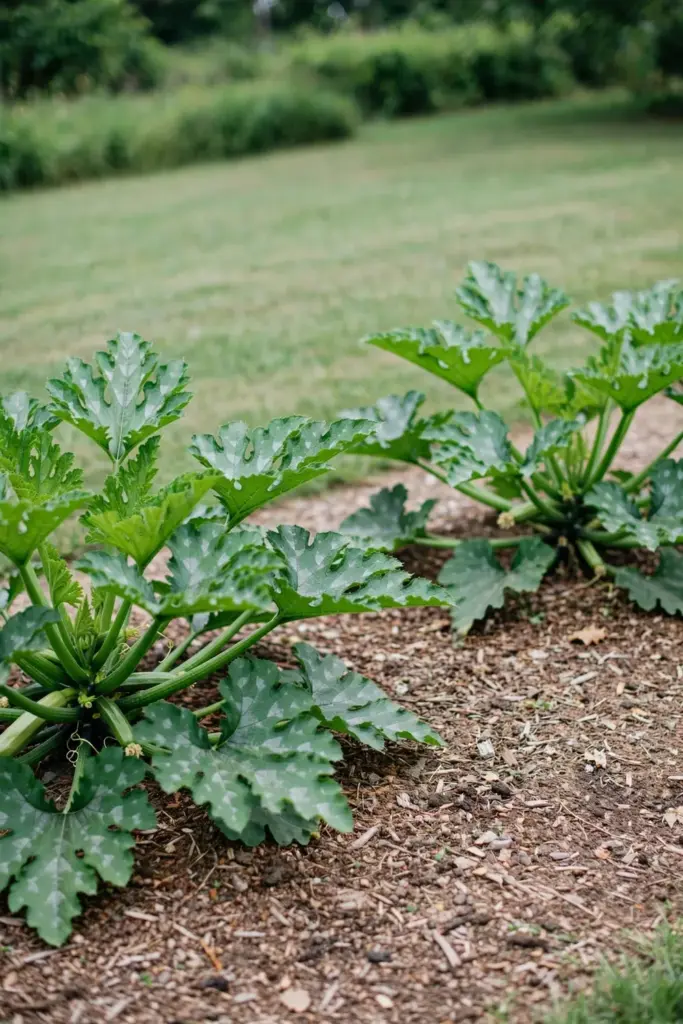
Infection is favored by humidity from 50 to 90 percent, and disease development is favored by vigorous plant growth and moderate temperatures, according to the UC IPM powdery mildew of cucurbits guide. Warm days with humid nights are the danger window. A crowded bed hits that window every night.
Thin the canopy instead of stripping it bare. Remove one or two of the oldest, most shaded leaves each week. The plant keeps enough leaf to feed the fruit, and air moves through the gap. A pruned plant dries by mid-morning. An unpruned plant stays damp until noon.
Trellis a vining type if space is tight. A zucchini trained up a trellis lifts its leaves off the soil, opens the canopy to wind, and lets you see both sides of every leaf. The fruit hangs clear of the soil, and spraying reaches the undersides without crawling under the plant.
Weeds do the same damage as close spacing. A weedy bed holds damp air at leaf level and blocks the breeze. Pull weeds around the zucchini, and keep the ground under the plant clear. Air at soil level is the first line of defense.
Walk the bed at midday and watch the shade. Leaves that never see direct sun stay damp longest, and damp leaves mildew first. If the center of the plant stays shaded at noon, thin one or two leaves from the middle. The goal is dappled light reaching the soil, not a bare stem. Light on the soil means air through the canopy, and air through the canopy means leaves that dry by morning.
A trellis earns its place twice. It lifts leaves off the soil, and it puts both leaf surfaces within reach of the sprayer. A flat plant hides its undersides. A trellised plant shows them. The grower who sees the undersides catches mildew a week earlier than the grower who only looks at the top of the canopy.
Water the Soil, Not the Leaves
Water at the base. A hose on the leaves wets the canopy, and a wet canopy feeds mildew. A soaker hose or a slow bucket at the stem keeps the root zone damp and the leaves dry. Morning watering gives any splash time to dry before night.
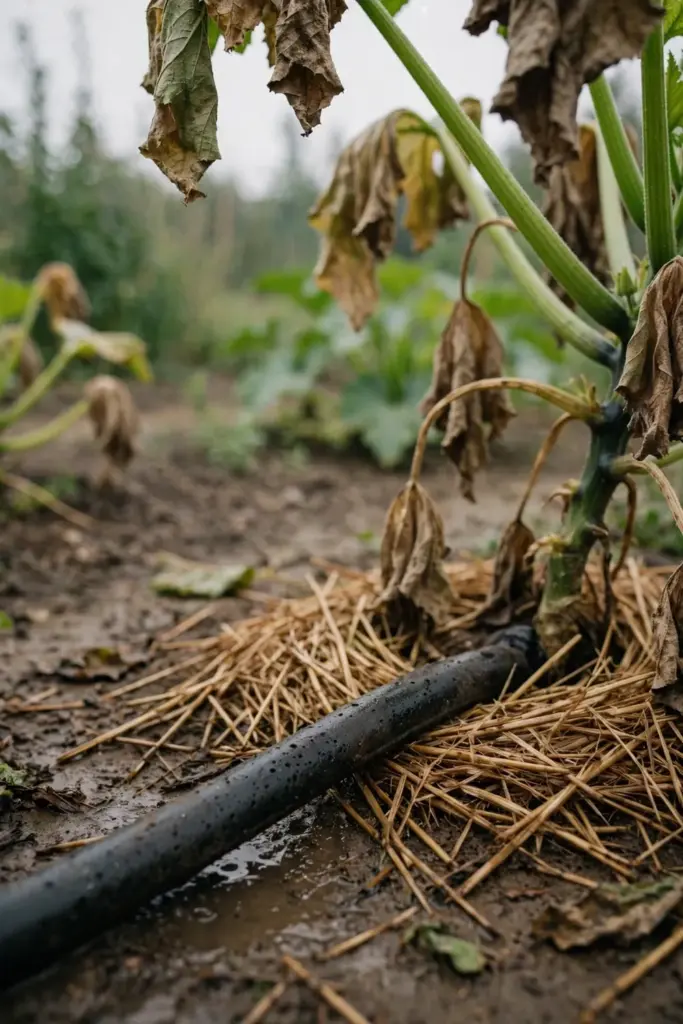
Mulch helps twice. A mulch layer stops soil splash from carrying spores onto the lower leaves, and it holds soil moisture so you water less often. Straw, sugar cane mulch, or shredded leaves all work. Keep the mulch a few centimeters clear of the stem so the crown stays dry. Mulching covers the materials and the depth for a vegetable bed.
Water deep and less often. A shallow daily sprinkle wets the top leaves and leaves the roots thirsty. A deep soak twice a week, adjusted for rain, pushes roots down and keeps the surface dry between waterings. Push a finger 5 cm into the soil. Dry at that depth means water. Damp means wait.
Overhead watering has one narrow exception. A hard jet of water knocks spores off the leaf surface, and some gardeners use it as a knockdown before spraying. It also wets the canopy, so use it only on a sunny morning when the leaves will dry fast. Do not overhead water at night. A wet canopy overnight is the one condition mildew loves most.
Feed for Steady Growth, Not Soft Growth
A zucchini fed for speed grows soft leaves. Soft leaves mildew first. A plant fed for steady growth builds thicker leaf tissue that resists infection longer. The difference shows in the canopy by midsummer.
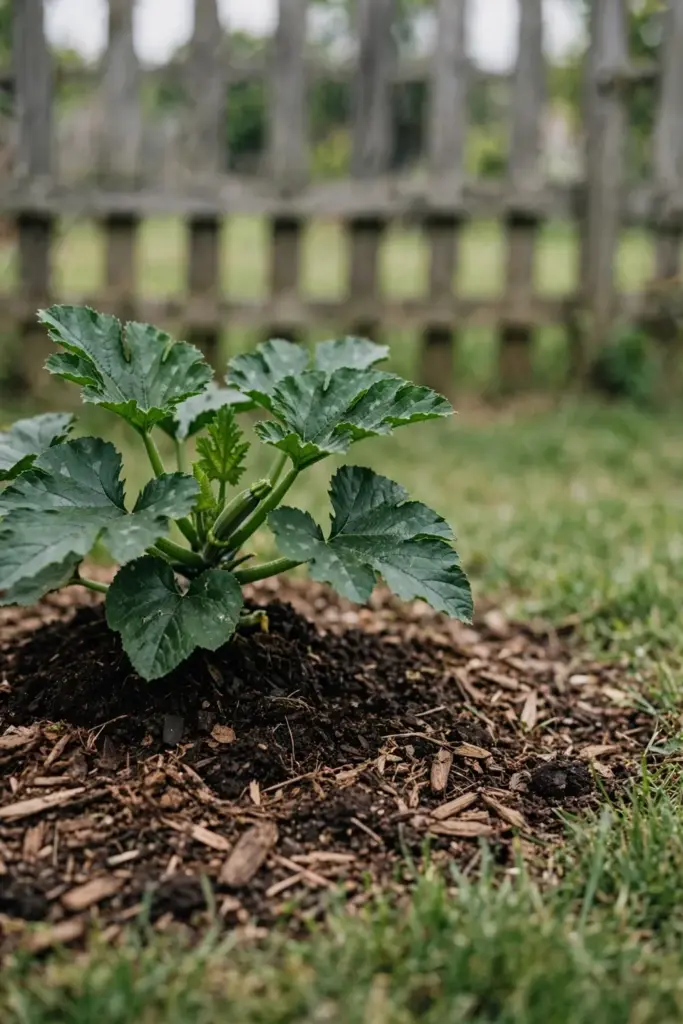
Nitrogen drives soft growth. A heavy dose of high-nitrogen fertilizer pushes a flush of tender leaves, and tender leaves are the first to show white spots. Feed modestly, and favor a balanced fertilizer over a nitrogen-heavy one. A plant that grows a little slower keeps its leaves longer.
Compost and aged manure feed soil life as well as the plant. Building soil health explains how organic matter, microbes, and structure work together to grow a tougher plant. A zucchini in rich, living soil outgrows a zucchini in bare dirt with a bag of fertilizer.
Watch the leaves for hunger, not the calendar. Pale older leaves mean the plant wants nitrogen. Yellow between the veins on young leaves points to iron. Feed the symptom, not the schedule, and keep the dose at the label rate. Overfeeding a mildewed plant grows fresh leaves that mildew faster than the old ones did.
Plant Resistant Zucchini Next Time
Resistance is the cheapest mildew control there is. A tolerant variety still gets mildew under heavy pressure, but it gets it later, lighter, and after the main crop is picked. A susceptible variety can go white in a fortnight.
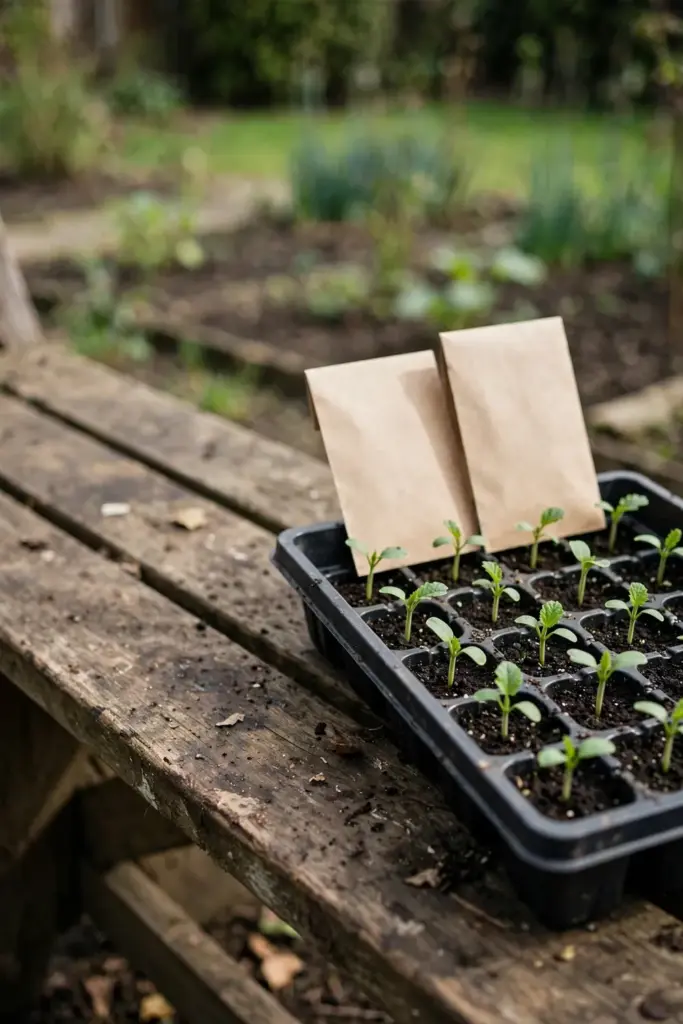
Buy seed that lists powdery mildew tolerance on the packet. Use tolerant varieties where available, as the NSW DPI guide advises. The packet is the promise. A variety with no resistance claim is a gamble in a garden that has seen mildew before.
Start clean each season. Save no seed from a mildewed plant, and buy fresh certified seed if the last crop went white early. Seed from a sick plant carries the season’s problems into the next bed. Fresh seed costs little and removes one source of infection.
Rotation matters as much as the variety. Do not replant zucchini in a site that had the disease, or use a long rotation, as the same NSW DPI guide advises. Mildew survives in infected crop trash and on nearby cucurbits, so a new bed in fresh ground starts the season with a lower spore load. Growing zucchini from seed covers the full sowing plan for a clean start.
Keep a simple season note. Write down the date the first spots appeared, the spray you used, and the week the plant recovered or failed. Next season, that note tells you when to start spraying before the first spot shows. A gardener with a note beats a gardener with a memory. The note is short. The memory fades by spring.
Buy seed from a supplier that names the resistance on the packet. A packet that says nothing about mildew tells you nothing. A packet that lists tolerance tells you the breeder tested it. The price gap is small, and the gap in midseason work is large.
Know When to Pull the Plant
A plant that is more white than green, with most leaves coated and fruit no longer sizing, is finished. It will not recover, and it will seed the whole bed while you wait. Pull it and bag it, then bin the bag. The bed space grows a fresh crop faster than the sick plant recovers. Keeping it helps nothing. Pulling it helps everything around it.
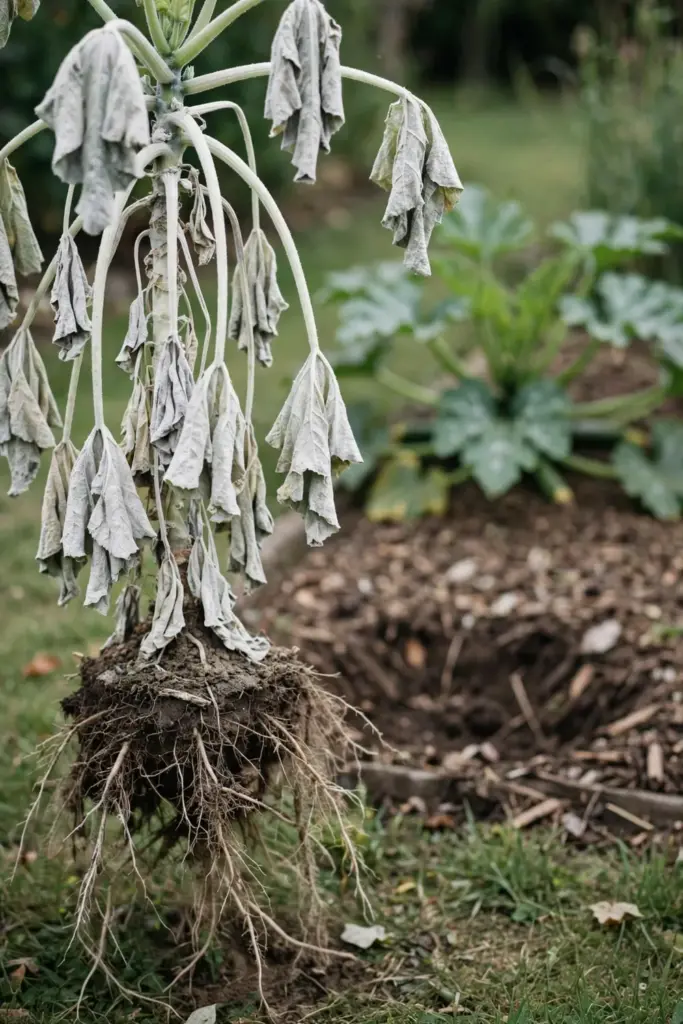
Pull the plant when three signs line up. Most leaves are coated and new growth comes out white within days, while fruit has stopped sizing. One sign alone is worth treating. Three together mean the plant is a spore factory. Pulling it protects the neighbors.
Pull in the cool morning, when the air is still. Wet the plant lightly first if the day is dry, so spores stay stuck to the leaves instead of drifting. Lift the whole plant, roots and all, and bag it on the spot. Do not drag it across healthy plants.
Replant the gap with a fast crop that is not a cucurbit. Beans or lettuce use the space and break the mildew cycle. A second zucchini in the same gap faces the same spore load that killed the first one. Organic pest control covers the wider garden hygiene that keeps the next crop clean.
Run the Weekly Mildew Check
Mildew beats the gardener who checks once a month. A weekly check catches the first spots while they are still cheap to remove. Put the check on the same day as the harvest, and it becomes habit.

Walk the bed with secateurs and a bag. Lift the oldest leaves and look at the undersides. Rub any white patch. Cut and bag any leaf that is more than half white. Spray the rest if spots are spreading.
Spray on a schedule, not on panic. Pick one spray, milk or baking soda, and apply it weekly from the first spots until the season ends. A missed week lets spores build. Two missed weeks hand the canopy back to the fungus.
End the season clean. Pull spent plants, bag the trash, and clear the bed. Do not dig mildewed leaves into the soil. Clean beds start the next season with fewer spores, and a clean start is half the prevention.
Keep the same check through autumn. Mildew slows in cool weather, but it does not vanish. A late flush of growth in a warm autumn week can go white in days. The weekly check runs until the plant is pulled, not until the calendar says the season is over. The last zucchini of the season deserves the same attention as the first.
Frequently Asked Questions About Powdery Mildew on Zucchini

Yes. Powdery mildew lives on the leaves, not inside the fruit. Wash the zucchini well before cooking, and pick fruit from plants that still hold healthy leaves. Fruit from a badly defoliated plant may be small or sunburned, so judge each fruit by its skin. Discard any fruit with soft, rotting, or badly scorched patches.
Milk spray slows powdery mildew on zucchini when you apply it early and repeat it weekly. Milk contains amino acids that decay into antiseptic and antifungal compounds as the mix evaporates. The compounds dry the spores out and kill them. Milk spray will not repair leaves that are already white, so strip the worst foliage first.
Powdery mildew rarely kills a zucchini outright, but it shortens the season and cuts the crop. Coated leaves stop feeding the plant, so fruit stays small, bare vines leave fruit exposed to sunburn, and the whole plant runs out of energy weeks before the season ends. A plant that loses most of its leaves will not recover in time to crop well. Pull a plant that is more white than green and replant the gap.
Spray weekly from the first spots until the season ends. Pick one spray, milk or baking soda, and stay with it. A missed week lets spores build, and two missed weeks hand the canopy back to the fungus. Spray in the morning on a sunny day so the leaves dry before night. Repeat after heavy rain, and always follow the label on a bought product.
Powdery mildew spreads to other cucurbits first: pumpkin, squash, cucumber, and melon all host the same fungus. It can also reach roses and grapes in the same garden, though the strains differ by host. Space cucurbits apart, clean tools between plants, and treat the first spots fast so spores do not drift across the bed.
Keep Picking While You Fight Mildew
Mildew is a management job, not a one-spray cure. The gardener who checks weekly, strips the worst leaves, sprays on schedule, and waters the soil keeps picking zucchini all season. The gardener who waits for a cure watches the canopy go white.
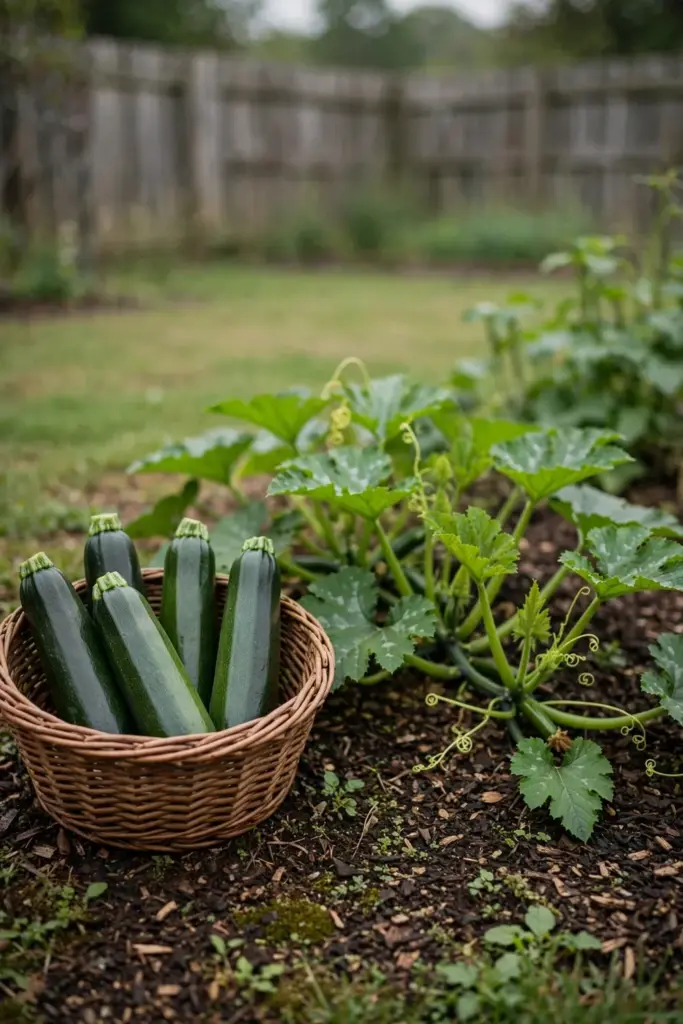
Start with the rub test. Strip the worst leaves. Spray milk or baking soda in the morning. Open the canopy and water the soil, then feed steady. Pull the plant that is more white than green. Plant a resistant variety next time, in fresh ground, and the next season starts cleaner than this one ended.