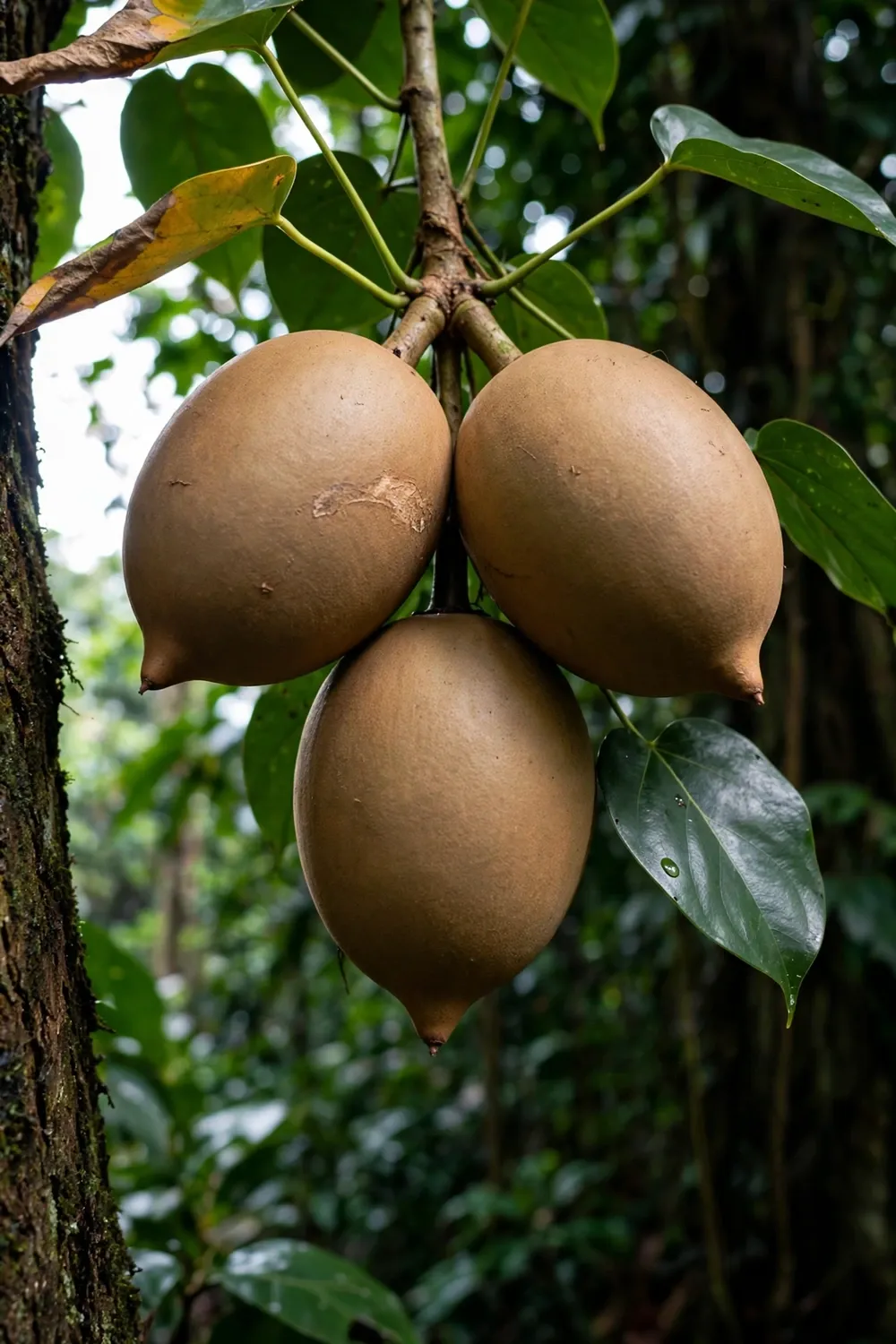

If you searched how to grow kluwak expecting a spice harvest in a few seasons, here is the honest answer first. Kluwak comes from Pangium edule, a tropical tree that reaches 18 metres (59 feet) and bears its first fruit only after more than 15 years, according to the Malay Wikipedia’s kepayang entry. You will not harvest your own rawon nuts in a temperate garden. What you can do is germinate the tree, raise a seedling, and understand the plant behind Indonesia’s famous black-nut spice. That is a botany project, not a harvest plan, and this guide treats it that way.
Most kluwak trees in Indonesia are never planted at all. Their seeds are harvested from wild trees because the tree takes so many years to mature that cultivation is not economically feasible, per the English Wikipedia’s Pangium article. Your seedling joins the same long game, much like mangosteen, which takes many years to bear. Germinating one is still worthwhile. You get a striking tropical tree with heart-shaped leaves, and you learn exactly why the spice in the market tastes the way it does.
One sentence before the steps, because it outranks every technique below. Raw kluwak seeds contain hydrogen cyanide and are deadly poisonous if consumed without prior preparation. Never taste a seed, never feed one to a pet, and never improvise the detox process at home. The rest of this guide explains what the traditional preparation is, why it exists, and why your role stops at growing the tree.
1. Accept the 15-Year Verdict Before You Sow a Single Seed
Kluwak trees fruit only after they pass 15 years of age, according to the Malay Wikipedia’s kepayang entry. That single number decides whether this project suits you. A seedling you sow this year will be a handsome young tree in a decade and a fruiting tree sometime after that, in a frost-free climate, if it is female and a male tree grows nearby. Everything else below follows from that timeline.
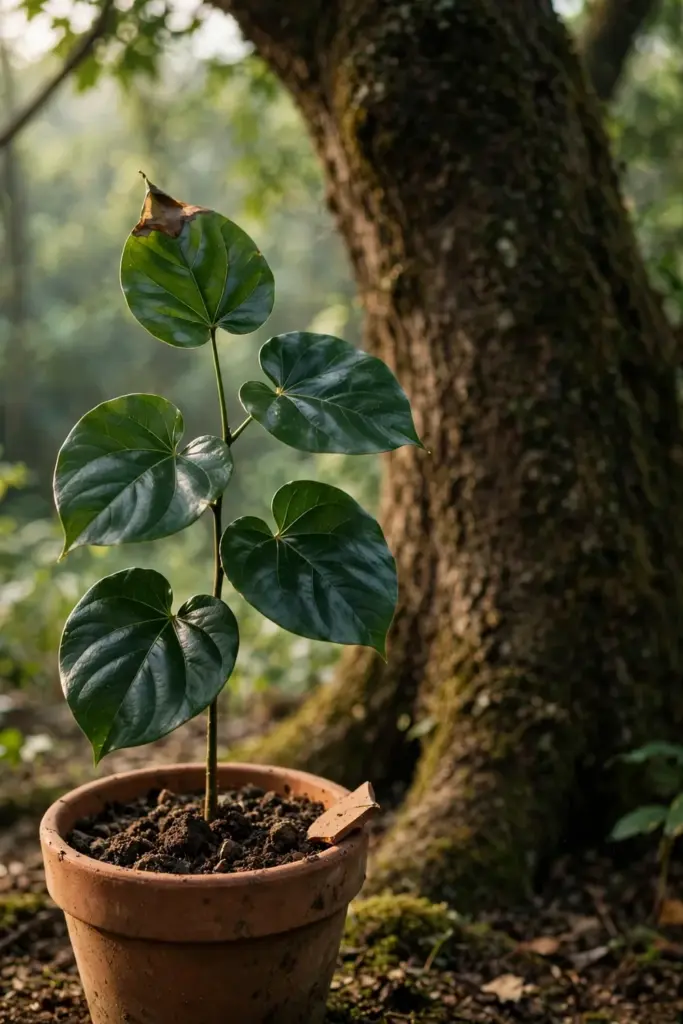
Temperate gardeners should read this as permission to treat the project as education. You are sprouting a rainforest giant to watch it grow, the way people sprout mango pits and avocado stones. The difference is that nobody will be eating from your tree. Seeds for the market come from wild trees, and the Pangium article on Wikipedia states plainly that cultivation is not economically feasible because the tree needs so many years to mature. Start with that expectation and every step below makes sense.
2. Learn the 3 Signs That Identify Pangium edule
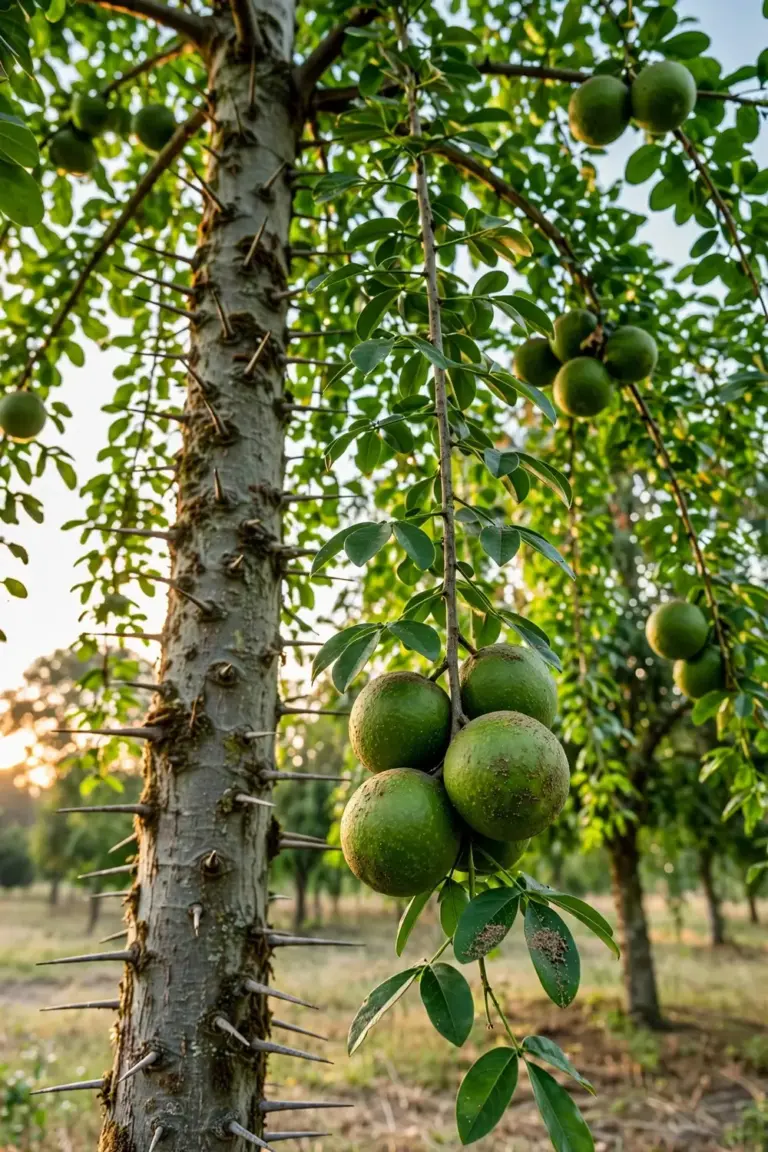
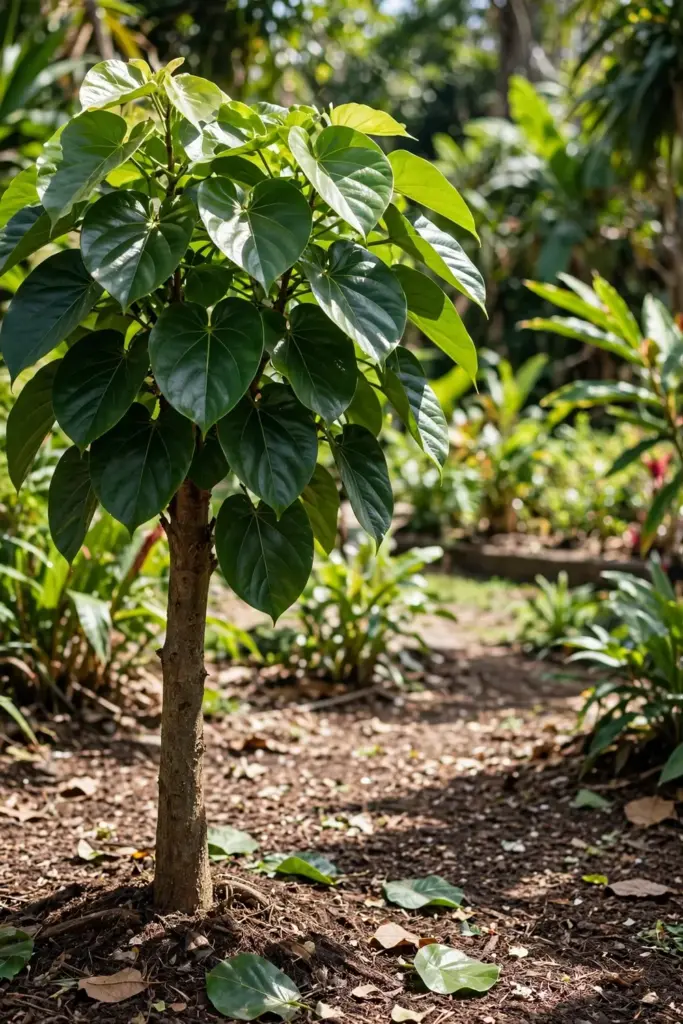
Pangium edule is a tall tree in the Achariaceae family that reaches 18 metres (59 feet), with heart-shaped leaves and brownish fruit that grows in clusters and is shaped like a pear, per the English Wikipedia’s Pangium article. Those three traits, size, leaf, and clustered fruit, separate it from every other tropical tree you might confuse it with.
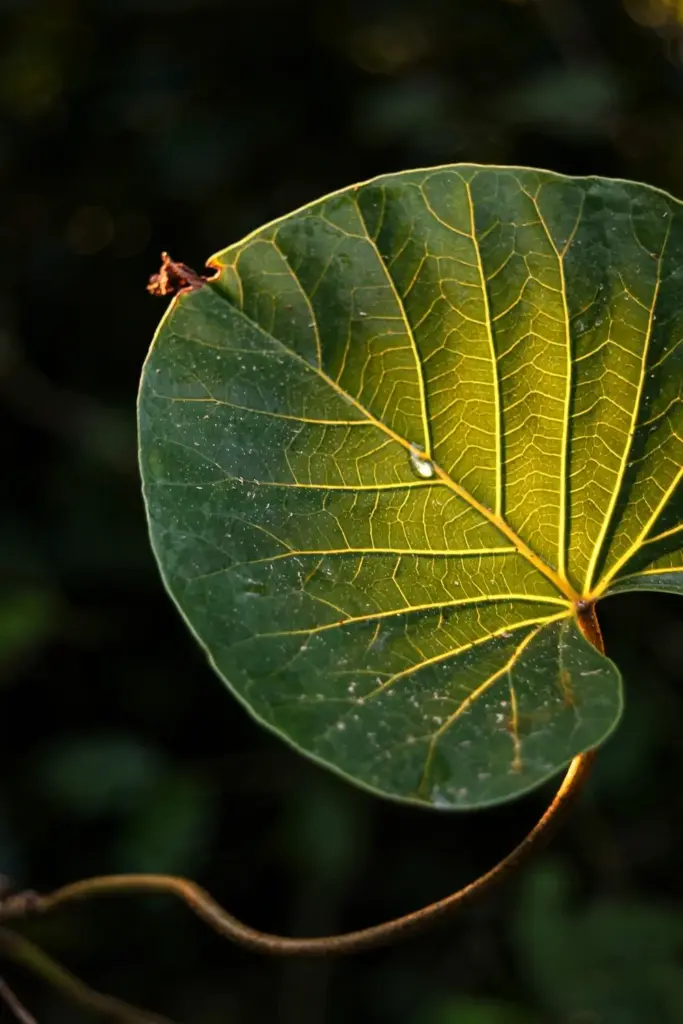
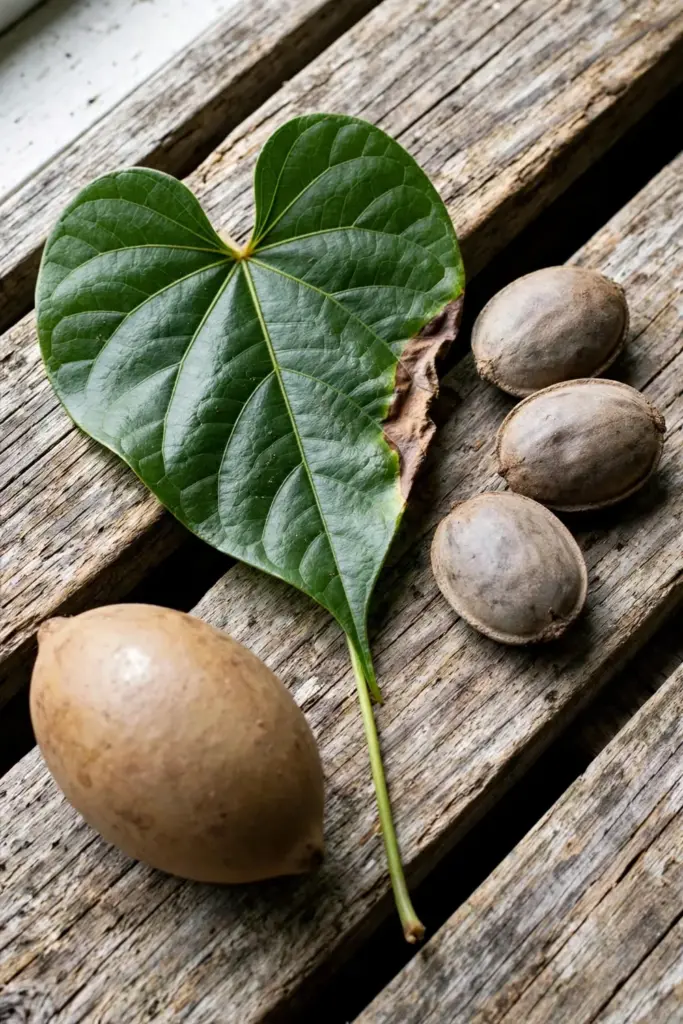
The leaves are the trait you will see first. They are large, heart-shaped, and glossy dark green above, carried on long stalks that gather at the branch tips. The fruit hangs in clusters on thick stalks, each one the size and shape of a small American football, with smooth matte tan-brown skin and a pointed tip. One fruit holds 20 to 30 triangular seeds packed in an oily pulp, according to the Malay Wikipedia’s kepayang entry. Cut one open and the inside looks like a different plant from the dull brown outside.
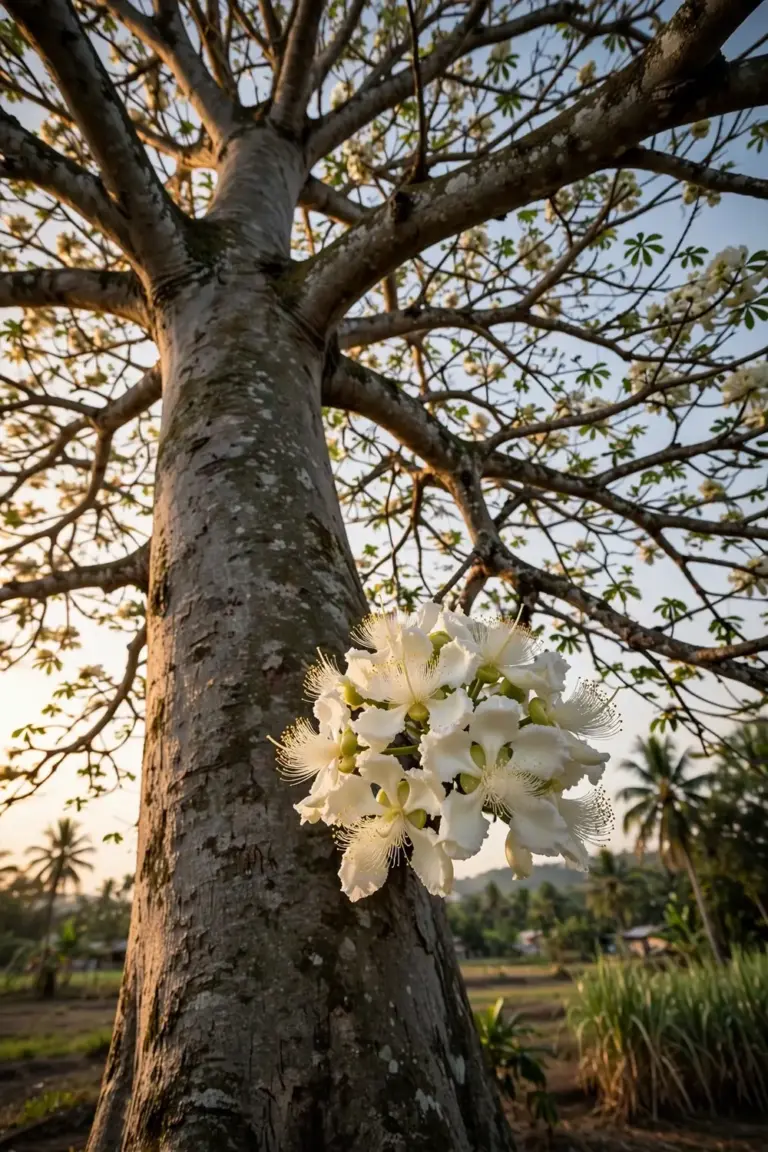
The third sign is invisible until flowering age. The tree is dioecious, which means male and female flowers grow on separate individuals, per the Pangium article. A lone seedling may never set fruit even after 15 years, because fruit needs a female tree and a male tree flowering in the same area. Step 14 returns to that fact.
3. Learn the 8 Names: Kluwak, Kepayang, Keluak, Pucung, Pangi, and Football Fruit
One tree, many names. Which name you meet depends on which island, market, or cookbook you are standing in. Learning the map now prevents confusion later, because nursery listings and recipes rarely use the botanical name.
| Name | Where you meet it |
|---|---|
| Kluwak / kluwek | Java; the standard Indonesian spice name |
| Kepayang | Malay; Malaysia and parts of Sumatra |
| Keluak / buah keluak | Peranakan cooking in Singapore and Malaysia |
| Pucung / puchung | West Java and Betawi cuisine, as in gabus pucung |
| Pangi | Sulawesi, Minahasa, and Halmahera |
| Football fruit | English nickname for the large oval fruit |
| Pammarrasan | Toraja name for the black spice powder |
| Pangium edule | The botanical name, the only one that never changes |
The botanical name is the anchor. Common names shift by region and sometimes attach to the spice, the tree, or the dish, while Pangium edule always means the same tall dioecious tree. When a seed seller or a recipe uses an unfamiliar name, check it against the Latin name before following any growing advice.
4. Treat Every Raw Seed as Poisonous: Respect the Hydrogen Cyanide Rule
The fresh fruit and seeds contain hydrogen cyanide and are deadly poisonous if consumed without prior preparation, according to the English Wikipedia’s Pangium article. This is not a mild stomachache warning. Hydrogen cyanide is a fast-acting poison, and the seeds concentrate enough of it to kill. Young seeds carry an even stronger dose than mature ones, per the Malay Wikipedia’s kepayang entry.
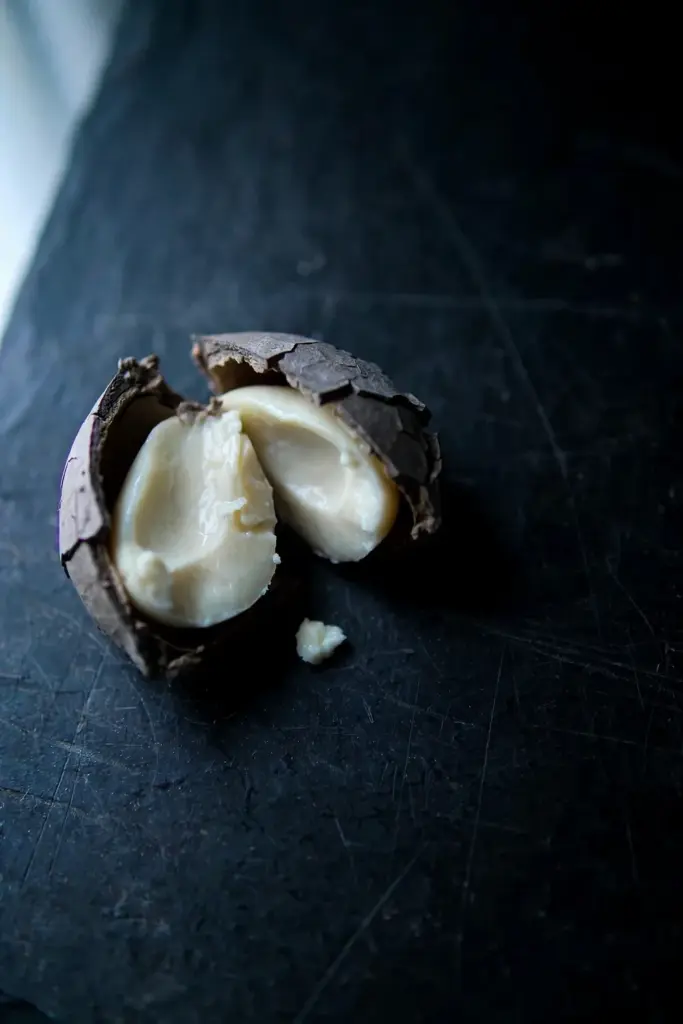
I have learned to treat every unfamiliar tropical seed like a new pesticide: label first, taste never. That one habit covers the whole risk. Handle seeds with dry hands, keep them away from children and pets, and never crack one open to sample the kernel out of curiosity. The white kernel inside a fresh seed looks harmless. It is not.
The traditional preparation exists precisely because of this poison, and step 12 explains how it works. Your job as a grower is simpler. The seed goes into soil, not into food. If anyone in your household is the curious type, say the rule out loud before the seed packet even opens.
5. Buy Fresh Seeds from Rare-Seed Nurseries, Never from the Spice Jar
Kluwak sold as a spice cannot grow. The market nuts have been boiled and then buried in ash, banana leaves, and earth for forty days, per the Pangium article. Boiling kills the embryo. No amount of soaking revives a cooked seed, so the spice jar is a dead end for germination.
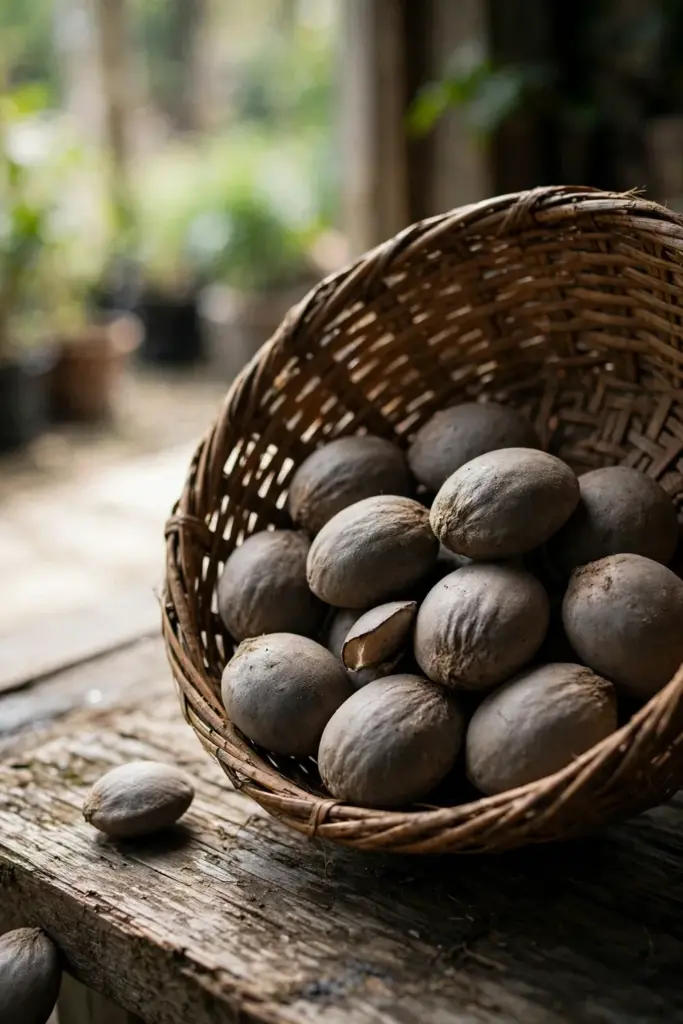
Buy fresh, unprocessed seeds from nurseries that sell rare tropical seeds. Fresh seeds are large, heavy, and still inside their hard shells, with the oily kernel intact. The shells look like smooth gray-brown stones, ovoid and slightly flattened, nothing like the black spice nuts in the market. Ask the seller whether the seeds are raw and unheated, because some sellers stock both culinary and planting stock. If the listing mentions boiling, fermenting, or ready-to-cook, those seeds are for the kitchen.
Sow fresh seeds promptly. Large oily seeds lose viability faster than dry orthodox seeds, and a seed that has sat in a warehouse for a year may already be dead. This is the article’s practical recommendation rather than a cited number: buy small quantities, buy fresh, and sow within weeks of arrival. Anyone new to the routine should read the seed starting steps first, because the hygiene and moisture discipline in that guide applies directly to a seed this large and this slow.
6. Nick the Hard Shell and Soak Overnight Before Sowing
Kluwak seeds wear a thick, hard shell that slows water entry, and hard-coated seeds germinate faster once the coat is breached. Nick each seed with a clean metal file or a sharp knife, cutting a shallow groove through the shell on one side without touching the kernel inside. One careful nick per seed is enough. Deep cuts invite rot.
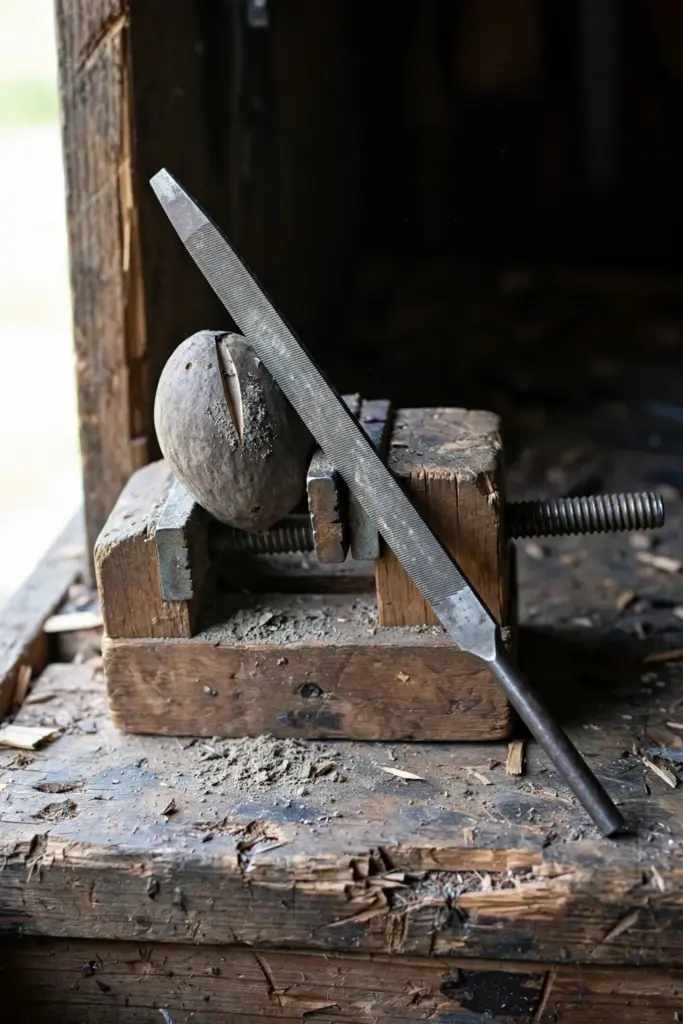
Soak the nicked seeds overnight in room-temperature water. The soak softens the shell further and wakes the embryo, so sowing starts from a hydrated seed instead of a dry one. Discard any seed that floats after several hours; floaters are usually empty or dead inside. This nick-and-soak routine is standard practice for large hard-coated tropical seeds and the article’s own recommendation for kluwak.
Work clean. Wash the file or knife before and after, and rinse the seeds once before sowing. The oily kernel inside a cracked seed can turn rancid in warm water, and rancid residue on the shell encourages mold in the propagation box. If the shell resists the file, switch to a small hacksaw blade and work slowly; patience here beats a slipped blade and a ruined seed.
7. Sow at Twice the Seed’s Width in a Warm, Humid Mix
Sow each nicked seed horizontally at a depth roughly twice the seed’s width, in a free-draining potting mix kept warm and humid until germination. A large kluwak seed sits about 2 to 3 cm deep, which buries it fully while keeping the emerging shoot’s climb short. Press the mix gently around the seed so no air pockets remain. Then water until the mix is evenly moist, not dripping.
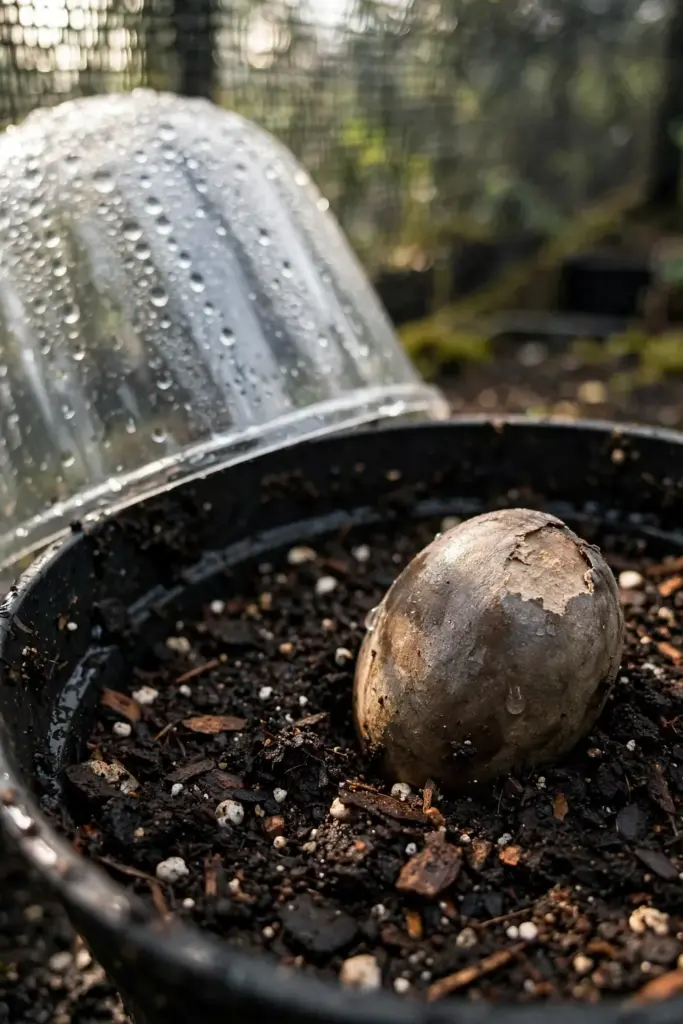
Warmth and humidity do the real work. A propagation box, a heated mat set low, or a bright warm room all qualify; the goal is steady tropical warmth, not a specific number on a thermometer. Cover the pot with a clear lid or a plastic bag with a few air holes to hold humidity, and lift the cover daily to exchange air. Stagnant wet air grows mold faster than it grows seedlings.
Expect waiting, not speed. Published germination times for Pangium edule are data not available from citable sources. What is documented is the biology behind the wait: Indonesian researchers tracked lipid and phenolic mobilization during Pangium edule seed germination, in the Journal of Agricultural and Food Chemistry, which means these are oil-rich seeds that mobilize stored fats before the shoot emerges. Oil-rich seeds take weeks, not days. Check weekly, keep the mix moist, and do not dig seeds up to inspect them.
8. Give Seedlings Full Sun to Semi-Shade and Regular Water
Young kluwak trees want full sun or bright indoor light, tolerate semi-shade, and need regular moderate watering, according to Top Tropicals’ Pangium edule encyclopedia entry. Give the seedling the brightest spot you have. A south-facing window, a greenhouse bench, or a sheltered patio in summer all work. Seedlings stretch and pale in dim corners, and a stretched seedling never fully recovers its form.
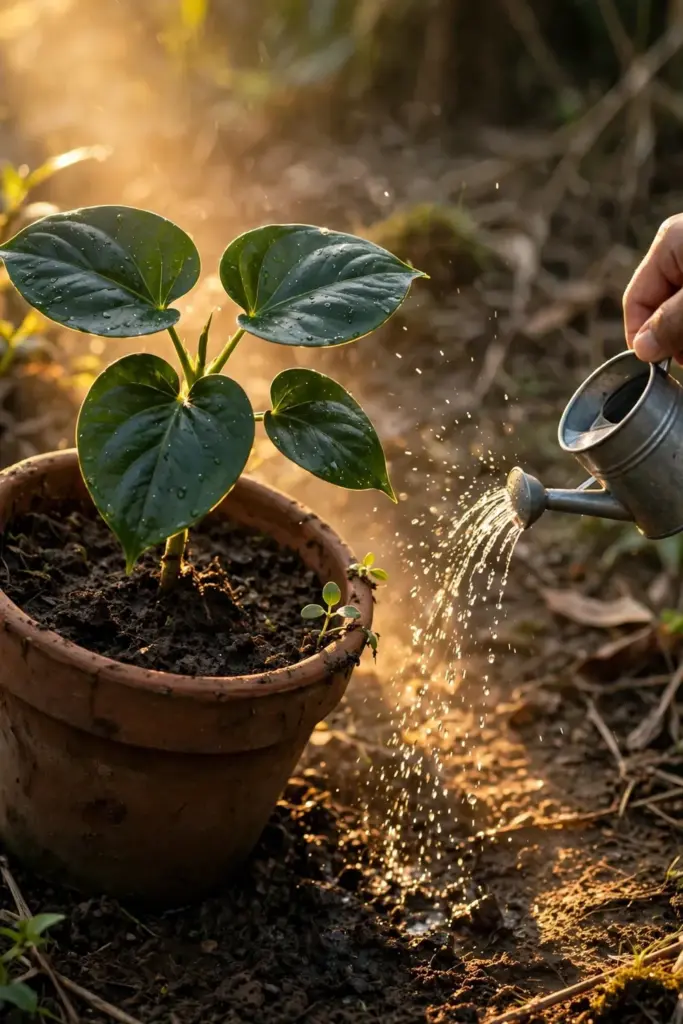
Water when the top of the mix dries, and water deeply enough that excess drains from the bottom. Regular and moderate is the rhythm: constantly soggy mix rots the large seed and young roots, while repeated drying stalls growth. Mulch the pot surface thinly with coarse bark to slow evaporation without trapping wetness against the stem.
Feed lightly once the seedling carries several true leaves. A diluted balanced liquid feed every few weeks through the growing season is plenty. Heavy feeding pushes soft growth that cold or pests damage first, and a slow tree does not need forcing.
9. Keep Every Seedling Frost-Free: USDA Zones 9 to 10 Outdoors Only
Kluwak is frost sensitive and must be protected from freezing, with outdoor culture limited to USDA Zones 9 to 10, per Top Tropicals’ Pangium edule entry. One hard freeze can kill a young tree outright. Anyone researching how to grow kluwak outside the tropics should plan for a greenhouse, a conservatory, or a bright indoor winter from the start.
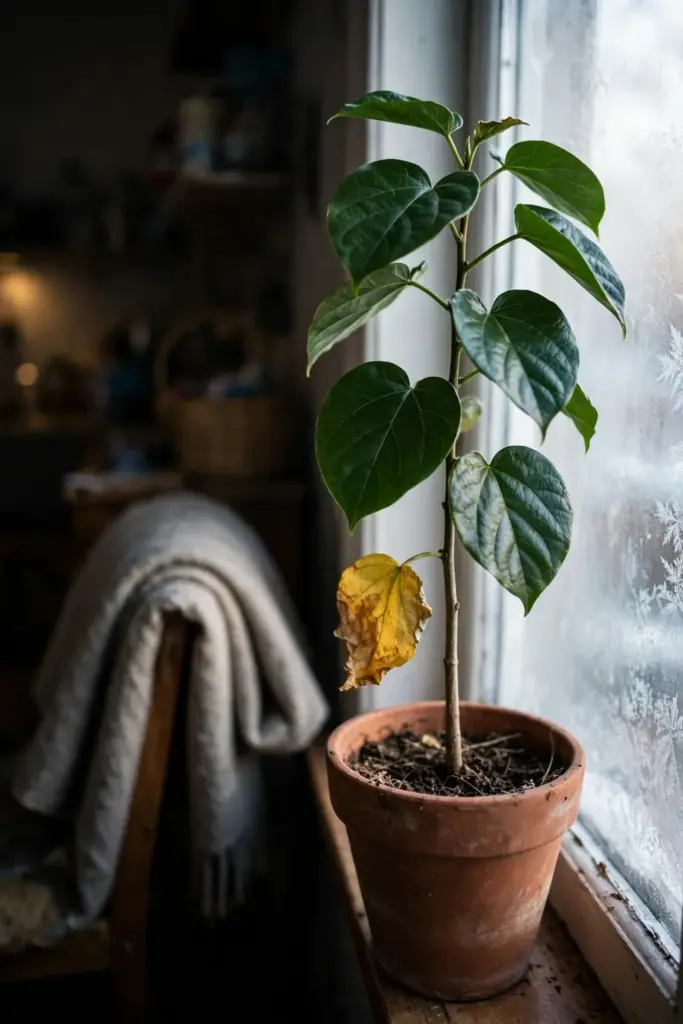
Move potted seedlings indoors before the first expected frost, the same discipline temperate gardeners use for citrus and other tropicals. Indoors, give the tree the brightest window available and ease off watering while growth slows. Cold drafts from doors and windows damage leaves faster than dry indoor air does, so keep the pot away from both.
Spring return is gradual. Wait until nights stay reliably warm, then harden the tree off over a week or two before it resumes its outdoor spot. A seedling that spent winter indoors sunburns easily, so a few days of morning sun before full exposure prevents scorched leaves.
10. Grow Seedlings in Pots, But Never Plan a Lifelong Pot Tree
Nursery listings sometimes describe kluwak as suitable for containers, and that is true only for young plants. A potted seedling is a nursery stage, not a permanent home, because the species grows into an 18-metre tree, per the Pangium article. No container holds that future.
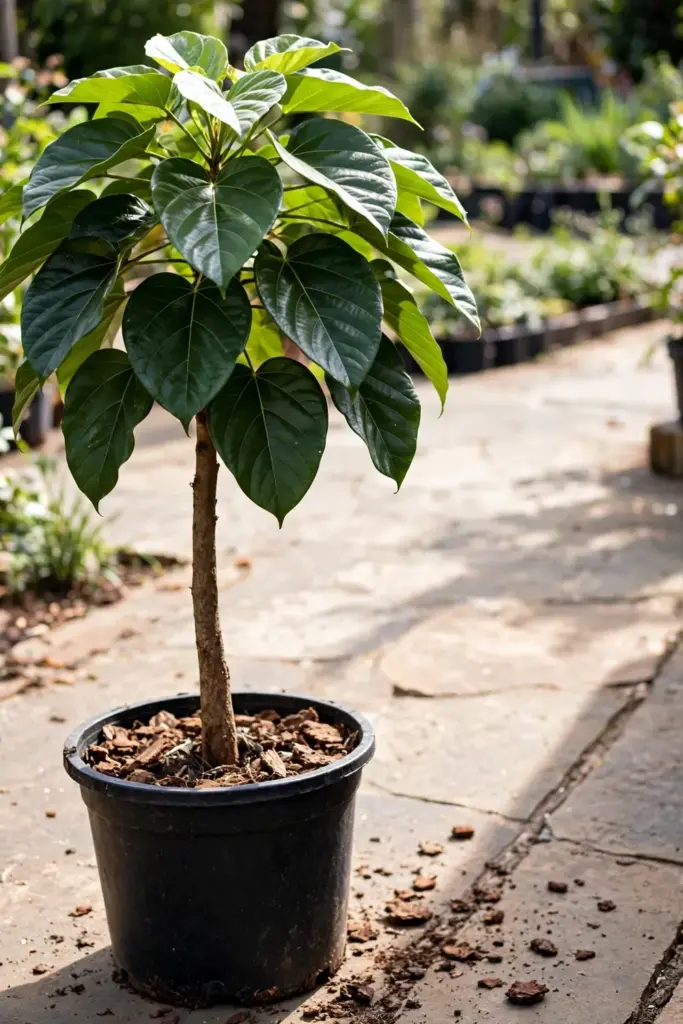
Pot up as the seedling grows. Move from the germination pot to a 1-gallon, then a 3-gallon, then larger, each time the roots fill the container. Use a free-draining tropical mix with coarse bark or perlite, and always choose pots with large drainage holes. A deep pot suits the strong taproot better than a wide shallow one.
For zone 9 to 10 gardeners with space, planting out is the honest endgame. Pick the warmest sheltered microclimate, plant at the same depth the tree grew in the pot, and mulch widely while keeping mulch off the trunk. For everyone else, the project ends as a large container specimen under glass, and that is a fine outcome as long as it was the plan from the start.
11. Expect Slow Wood: Wild Trees Outproduce Plantations
The tree requires many years to mature, and its seeds are most frequently harvested from wild trees because cultivation is not economically feasible, according to the Pangium article. Read that as the species telling you its pace. Kluwak does not hurry for anyone.
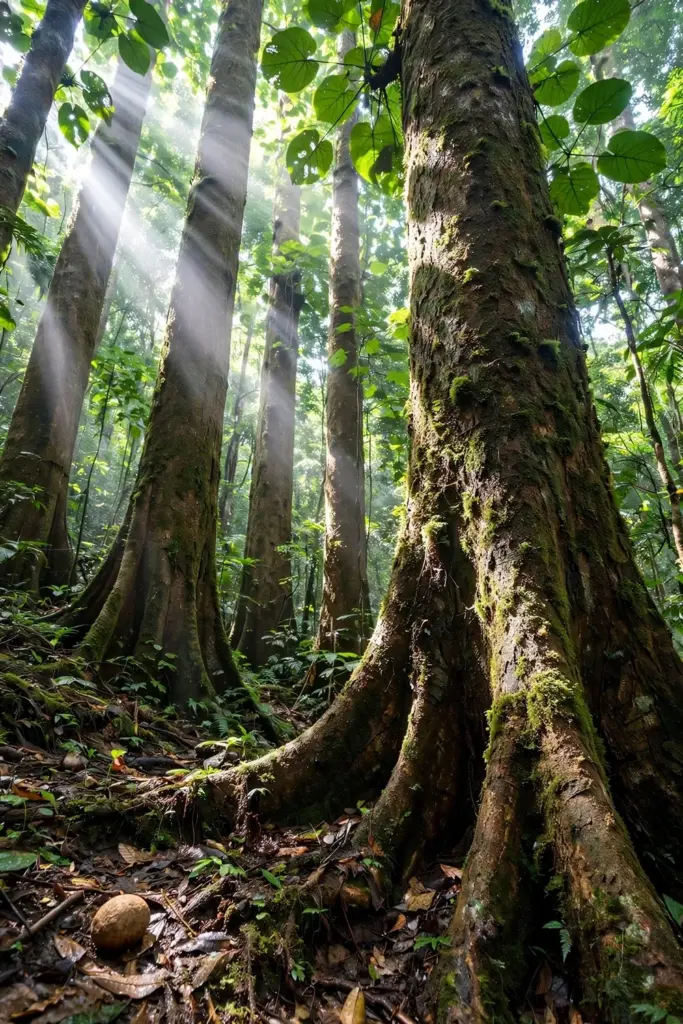
Growth is slowest in the first few years while the taproot establishes. Do not judge the project by first-year height. A seedling that looks unimpressive at 18 months may still be building the root system that later supports fast trunk growth. Patience here is not virtue; it is botany.
This also explains the market. Wild trees, already mature and already fruiting, supply the spice trade because planting an orchard means waiting 15-plus years for the first return. Contrast that with growing papaya from seed in under a year: kluwak plays an entirely different game, and the market prices the spice accordingly. Your seedling participates in the same arithmetic. Grow it for the tree it becomes, the leaves it shows now, and the story it carries, not for a yield.
12. Understand the 40-Day Fermentation That Makes Kluwak Edible
The detox process is specific and traditional. The seeds are first boiled and then buried in ash, banana leaves, and earth for forty days, during which they turn from creamy white to dark brown or black, per the Pangium article. The method works because the hydrogen cyanide released by the boiling and fermentation is water-soluble and washes out. Forty days of burial is not folklore; it is chemistry with a calendar.
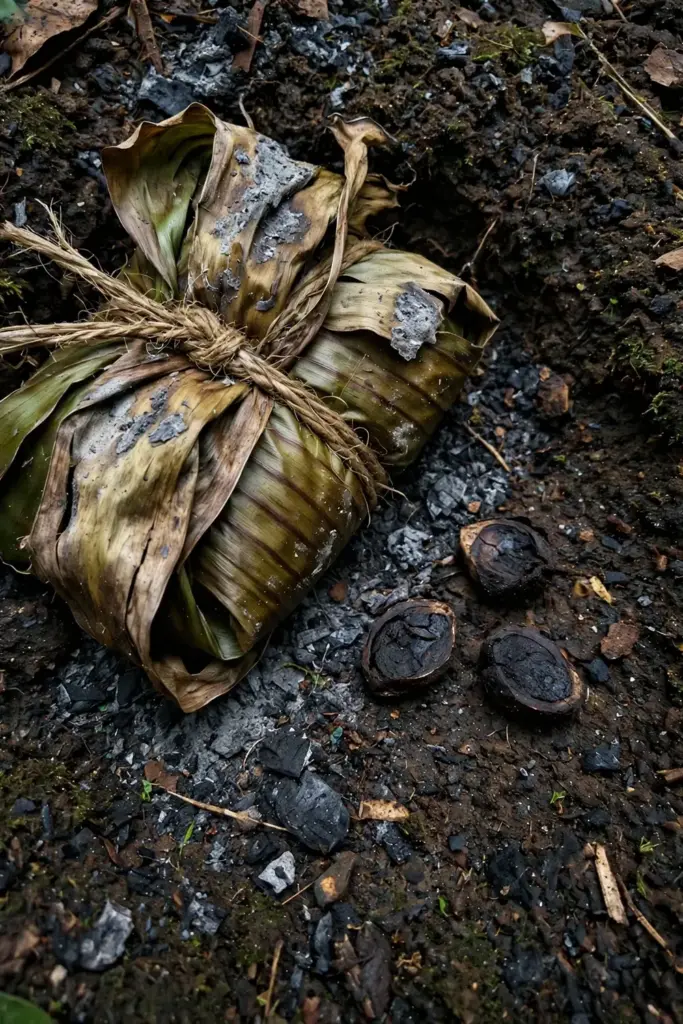
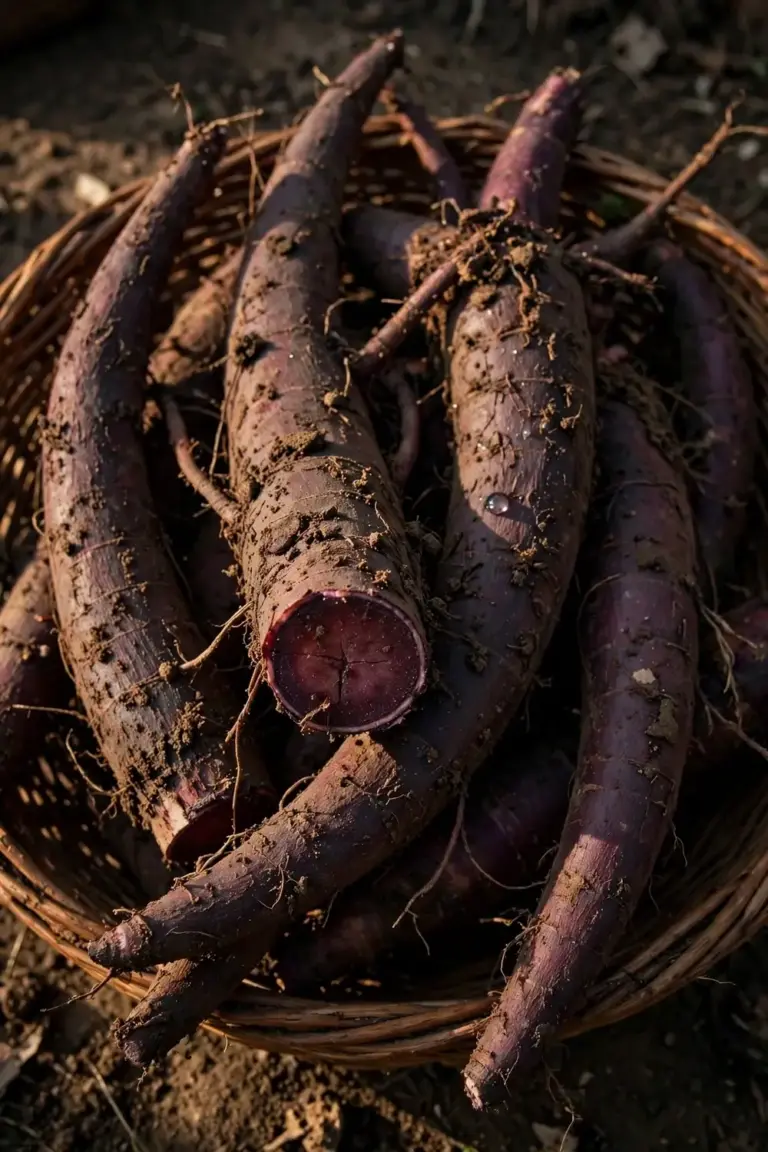
Young seeds need even more caution because they carry a stronger dose of the poison, per the Malay Wikipedia’s kepayang entry. Traditional processors sort and handle seeds by maturity for exactly this reason. The color change from white to black marks the transformation, and only fully processed black kernels enter the kitchen.
Do not attempt this at home. The process requires knowing when the cyanide has fully cleared, and a mistake is poisoning, not a bad meal. Commercial kluwak has passed through hands that know the signs. Yours have not. This guide describes the process so you understand the spice, not so you replicate it.
13. Cook Only with Store-Bought Kluwak, Never Your Own Seeds
Buy processed kluwak from Indonesian or Malaysian grocers and cook the classics: nasi rawon, the East and Central Javan beef stew in keluwek paste; sambal rawon; gabus pucung, the Betawi snakehead fish soup; and the Peranakan ayam or babi buah keluak of Singapore and Malaysia, all documented in the Pangium article. The black kernel grinds into the thick dark gravy that defines rawon. That flavor is the whole reason the tree matters to cooks.
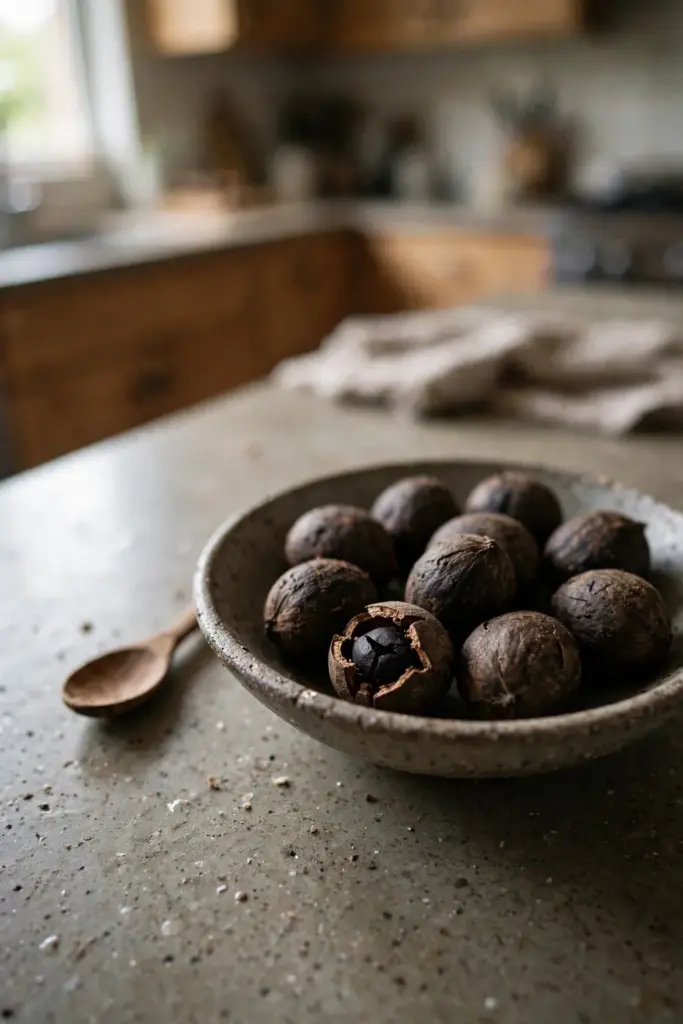
Choose nuts that are heavy for their size with intact shells and no rancid smell. Crack just before cooking and use the black kernel the same day; the oily flesh turns quickly once exposed to air. The classic technique grinds the kernel with the other spice paste ingredients, shallots, garlic, chilies, and turmeric, until the mixture turns the deep black-brown that gives rawon its signature color. A little goes a long way: two or three kernels flavor a full pot of stew. Store uncracked nuts cool and dry, where they keep for months.
Never substitute seeds from your own tree or from an unknown source. Even a mature home tree’s seeds need the full traditional preparation, and a home kitchen cannot verify when the poison has cleared. The honest harvest from your seedling is knowledge and a beautiful tree. The spice comes from the grocer. General information only; this is not medical advice.
14. Plant Two Trees If You Ever Want Fruit: the Dioecious Rule
Pangium edule is dioecious, with male and female flowers produced on separate individuals, per the Pangium article. One seedling, however healthy, cannot fruit alone. Fruit needs a female tree carrying female flowers and a male tree shedding pollen within reach of pollinators at the same time.
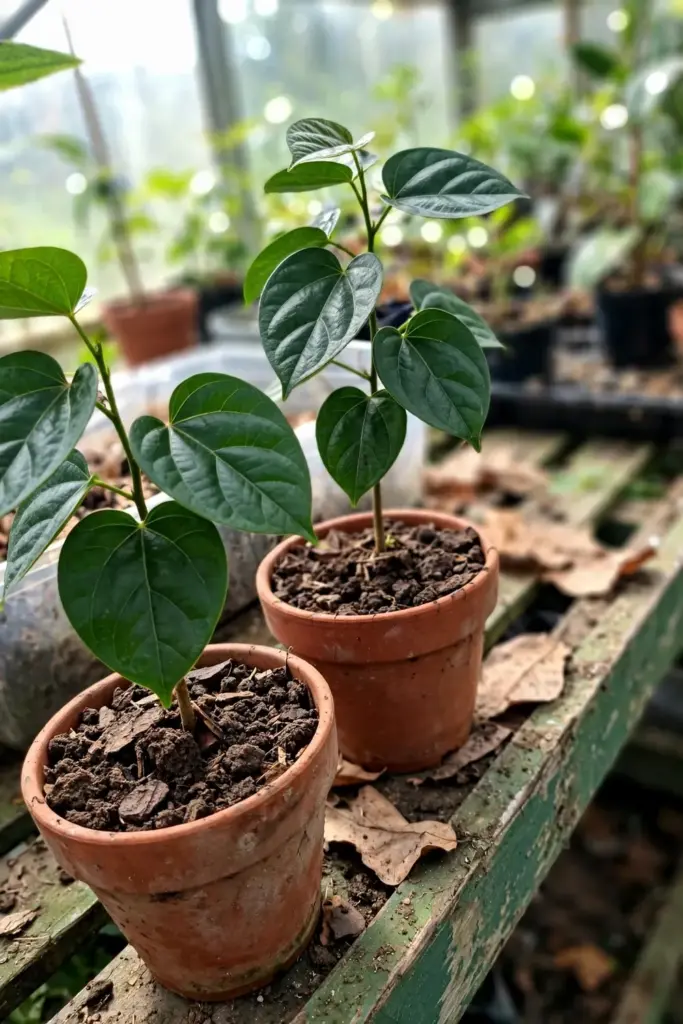
Since seedlings do not reveal their sex until they flower, a decade or more into the project, planting several seedlings is the only home-scale strategy. Sow five or six seeds, raise the strongest, and keep at least two or three trees if space allows. More seedlings mean better odds of holding both sexes when flowering finally begins.
This rule also explains wild harvest economics. Forest stands hold mixed populations with both sexes present, so pollination happens without anyone planning it. A lone backyard tree in a temperate greenhouse has no such luck. If fruit is the dream, numbers are the plan.
15. Skip the 7 Mistakes That Kill Kluwak Seedlings
- Tasting a raw seed. The hydrogen cyanide rule from step 4 has no exceptions and no safe sample size.
- Sowing spice-jar seeds. Boiled and fermented market nuts are dead; only fresh raw seeds germinate.
- Skipping the nick. An unscarified hard shell can sit in wet mix for months and never wake up.
- Letting the mix go cold or soggy. Cold stalls tropical seed; stagnant wet mix rots it. Warm and evenly moist is the band.
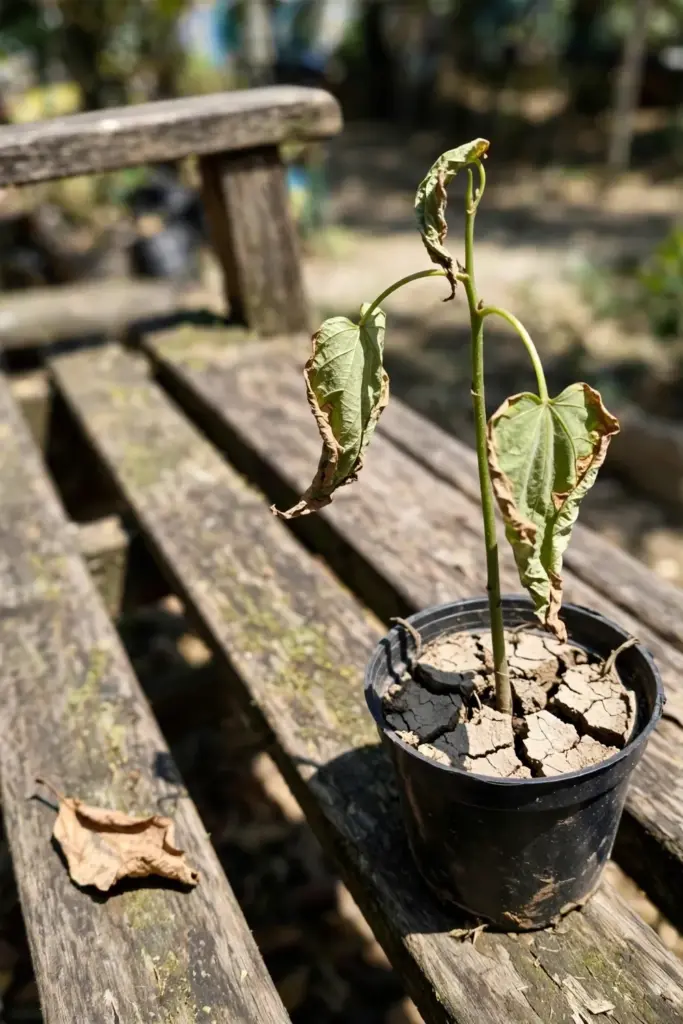
- Leaving the pot out in frost. Frost sensitivity kills young trees fast, and one freeze can end a two-year project overnight.
- Planting one tree and expecting fruit. Dioecious means two sexes; a solo tree is ornamental by destiny.
- Expecting a harvest on a human schedule. Fifteen years to first fruit is the species’ pace, not a challenge to beat. Grow the tree for the tree.
Every mistake on this list comes from treating kluwak like an ordinary vegetable seed. It is a rainforest tree with poison in its seeds and a decade-plus childhood. Respect both facts and the seedling does the rest.
Frequently Asked Questions
For the seedling stage, yes. A young kluwak grows well in a deep pot with free-draining mix while it is small, and temperate growers have no other option. But the species becomes an 18-metre tree, so a pot is nursery housing, not a permanent home. Plan on regular potting up, and accept that the long-term project needs a greenhouse, a conservatory, or a Zone 9 to 10 garden.
Yes. The fresh fruit and seeds contain hydrogen cyanide and are deadly poisonous if consumed without prior preparation. Young seeds carry an even stronger dose. The traditional remedy is boiling followed by forty days buried in ash, banana leaves, and earth, which washes the water-soluble poison out. Never eat raw seeds and never improvise the detox process at home.
More than 15 years from seed, and only on female trees with a male tree nearby for pollination. The species is dioecious, so male and female flowers grow on separate individuals. Commercial supply comes from wild trees because waiting 15-plus years makes orchard planting uneconomical. Treat any seedling you raise as a long-term botany project, not a future spice harvest.
Yes, mainly in the safety rules and the timeline. Most tropical nuts are safe to taste raw; kluwak seeds are poisonous until fermented. Most fruit trees bear within a few years; kluwak needs more than 15. And most home fruit trees are self-fertile, while kluwak needs male and female trees. The germination mechanics, nick, soak, warm humid mix, are familiar to anyone who has sprouted mango from seed or grafted stock.
From nurseries that sell rare tropical seeds, asking specifically for fresh, raw, unheated stock. Seeds sold as a cooking spice have been boiled and fermented and will never germinate. Buy small quantities, confirm the seeds are unprocessed, and sow within weeks of arrival, since large oily seeds lose viability in storage. Growing your own from a fresh seed beats any shortcut.