
Check 2 things before you open the fertilizer bag: the plant in front of you and the soil under it. Spring feeding helps most garden plants grow, flower, and fruit, but Australian natives are phosphorus-sensitive and many settled plants need nothing. That split answers why fertilize in spring with a decision, not a date.
That split is feed-by-need. Feed the plant that shows a need. Skip the plant that shows none. The rest of this page runs 7 checks, from the spring growth flush to the signs you fed too much.
1. Feed by Need, Not by Calendar
Feed-by-need beats feed-by-calendar. The calendar says spring. The plant says whether it wants food. A plant in active growth with pale leaves and slow shoots asks for food. A plant sitting still in cold soil asks for nothing.
Ask 3 questions before you feed. Is the plant growing right now? Is it a phosphorus-sensitive native? Does a soil test show a gap? Growth plus a test gap means feed, and that is the only combination that earns the bag. A native on the sensitive list means hold the bag, whatever the calendar says. A plant with no test gap means the soil already holds what it needs, so the bag stays shut.
The LSU AgCenter guide to fertilizer timing sets the baseline: an annual application of fertilizer in early spring is the rule of thumb, because spring is when plants come out of dormancy and push new growth. That rule covers most garden plants. It does not cover phosphorus-sensitive natives. It does not cover a bed that already tests high. The rule works when the plant and the soil agree with it.
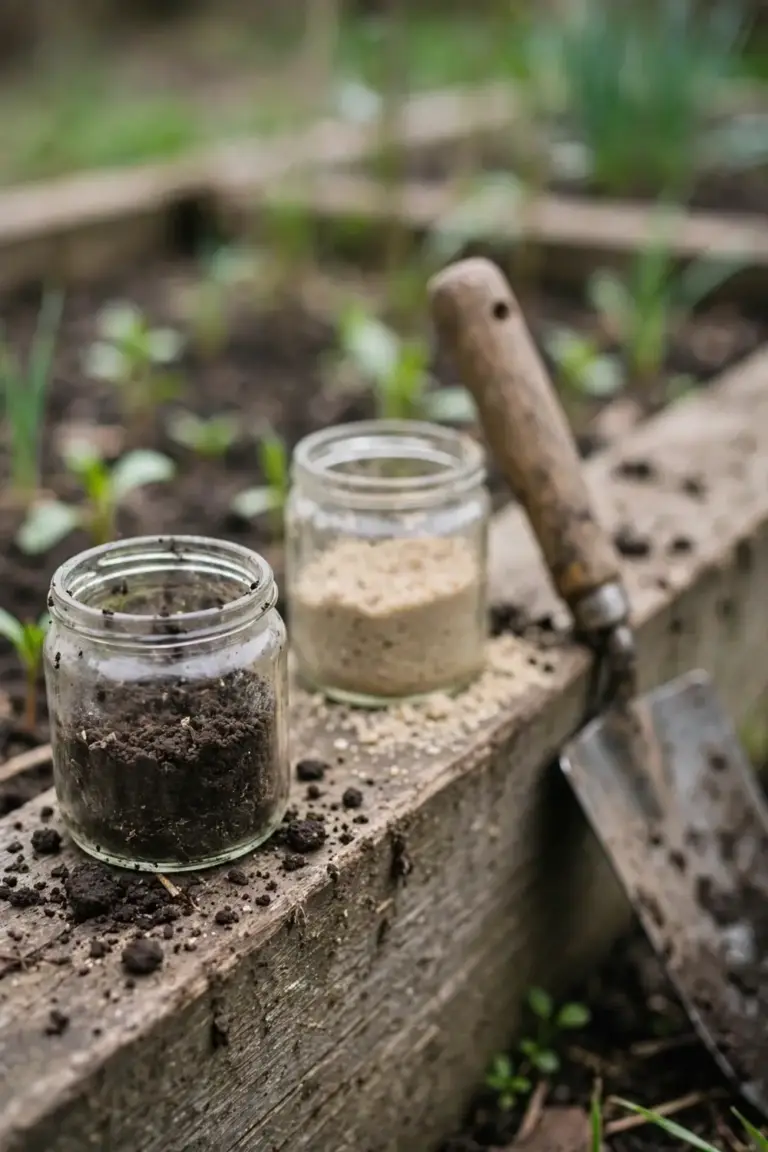
Soil tests settle the argument. The University of Georgia Extension soil testing guide advises sampling lawn and ornamental areas every 2 to 3 years and vegetable gardens every 1 to 2 years, with results back in 4 to 6 days from receipt. A test that shows adequate phosphorus ends the debate. No test result means you guess. Guessing feeds the wrong plant.
Walk the garden with those 3 questions and the answers sort themselves. A rose bed pushing new shoots with a test that shows low nitrogen earns a balanced feed. A grevillea already flowering in the same week earns nothing, because it sits on the sensitive list and shows no need. A vegetable bed that tests high in phosphorus earns nitrogen only, not a bag of complete fertilizer. The same spring morning produces 3 different answers. That is feed-by-need working as intended.
2. Why Spring Feeds Most Garden Plants
Spring feeds most garden plants because growth peaks then. New leaves, stems, roots, buds, and fruit all draw nutrients at once. A plant that slept through winter wakes hungry.
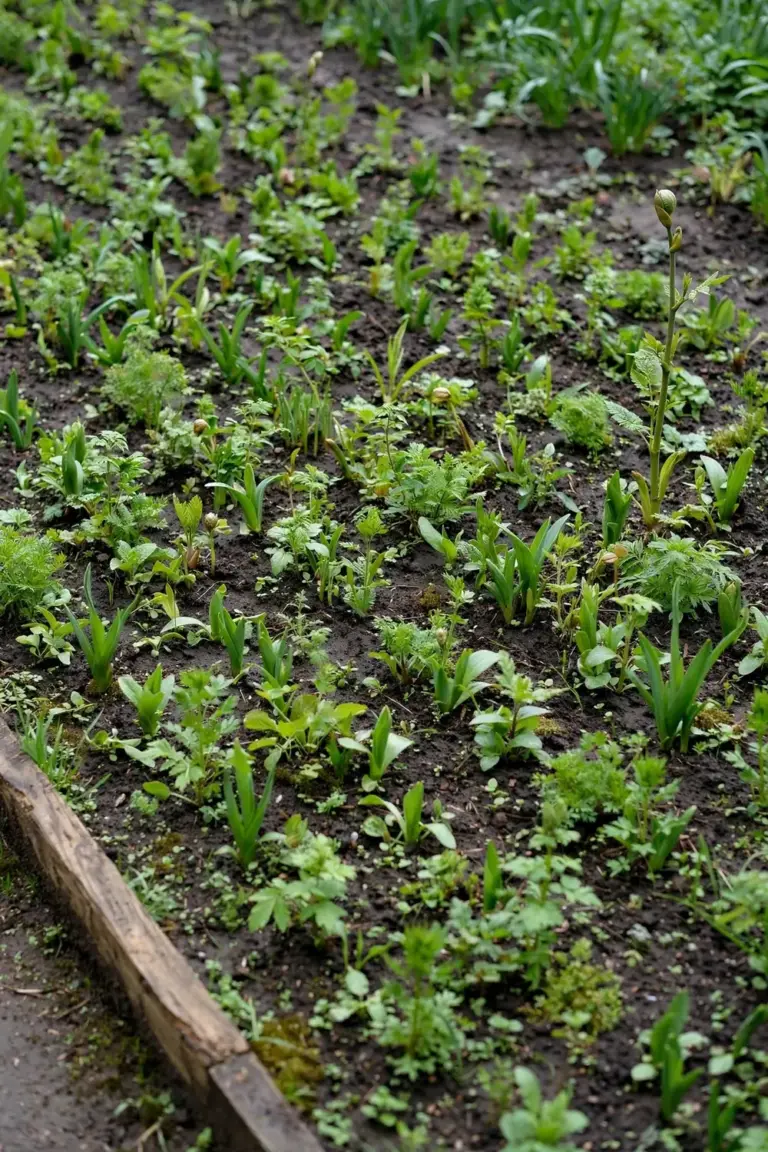
Spring runs September to November in Australia, per AU garden guides. That window is when deciduous plants leaf out, buds burst, stems lengthen, and new roots form. Nutrients aid all of that growth. The LSU AgCenter guide states the best time to fertilize is when many plants come out of dormancy in the springtime, for exactly that reason.
Timing still needs judgment. In zones that face a late freeze, the same guide advises waiting until mid-spring, because fertilizer pushes tender new growth that a late frost can kill. Fertilizer applied in the wrong season causes tender new growth that cold weather damages. Stop fertilizing during dormant seasons. A plant that stopped growing cannot use the food.
An early feed costs more than the bag. The plant spends stored energy on shoots. A frost kills those shoots. The plant then spends more energy replacing them, with less in reserve than it held before you fed it. One eager weekend in early spring can set a shrub back a full season. Patience is cheaper than a replacement plant, and it asks nothing of the soil.
Spring feeding also sets up flowering and fruiting. Fertilizers provide the nutrients plants use to grow, form flowers and healthy foliage, produce more fruit, build a strong root system, and fight disease and insect pressure, per the LSU AgCenter guide. Flowering plants need more phosphorus to stimulate stronger bud, fruit, and flower development. That phosphorus demand is real for roses, tomatoes, and fruit trees. It is the opposite of what phosphorus-sensitive natives want. The same nutrient helps one group and harms the other. That contrast drives every decision below.
3. Watch the Phosphorus Trap in Australian Natives
Many Australian natives die from phosphorus, not from hunger. Their roots evolved to mine phosphorus from poor soils, so a standard fertilizer overdoses them. A bag of general-purpose fertilizer can kill a grevillea that wanted nothing.
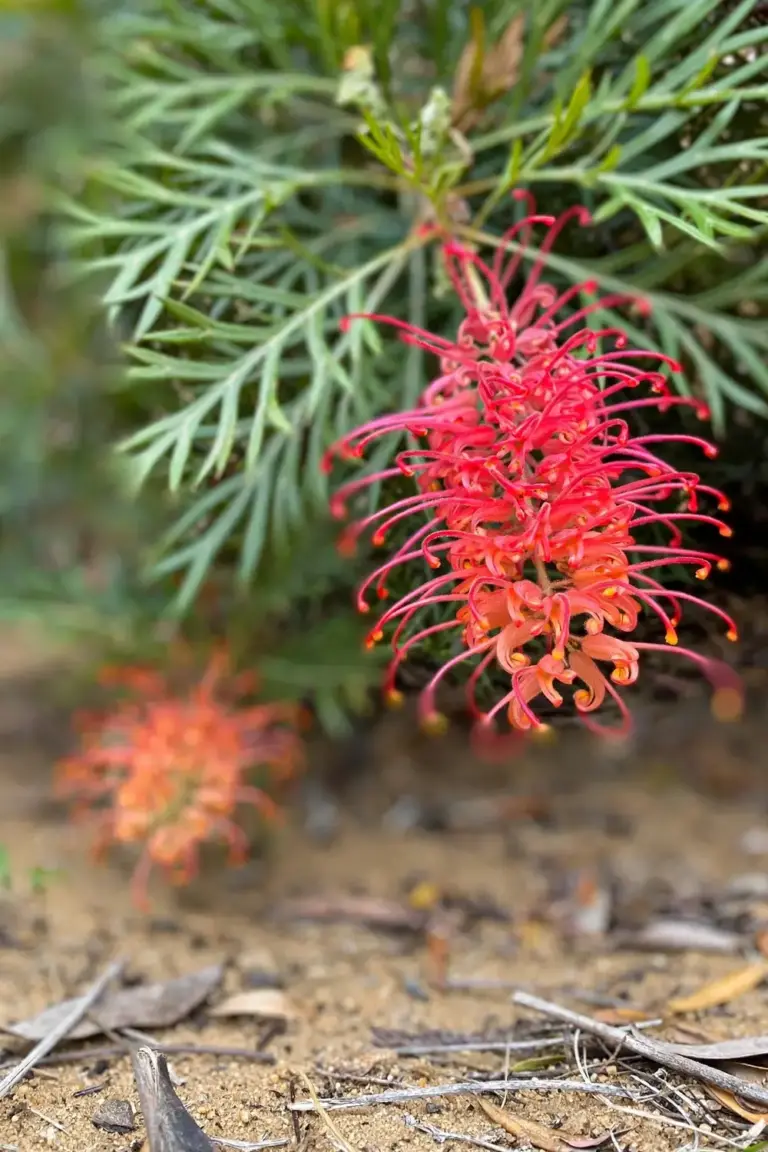
Phosphorus sensitivity runs through whole plant groups. The Australian Plants Society SA guide to fertilizers for native plants names the sensitive groups: Proteaceae (grevilleas, banksias, hakeas), many pea-flower shrubs (Daviesia, Hardenbergia, Kennedia), perhaps half of all acacias, and plants that evolved on soils naturally very low in phosphorus, such as the sands of southwest Western Australia, the sandstones of the Sydney area, and coastal heathlands everywhere. The same guide names the groups that generally tolerate phosphorus: Myrtaceae, chenopods, plants from calcareous soils, and plants from rainforests. A bottlebrush (Callistemon, now Melaleuca, in Myrtaceae) sits on the tolerant side. A banksia sits on the sensitive side. The family name decides the bag.
I have learned that the grevillea I leave unfed flowers harder than the one I feed on a schedule.
At planting, the guide advises nitrogen-only or nitrogen-plus-potassium fertilizer for natives, because you often will not know whether a given plant is phosphorus-sensitive. For nitrogen only, it gives urea or sulphate of ammonia at 5 g per planting hole, mixed into the soil and watered in. For nitrogen plus potassium, it gives a slow-release lawn product with the NPK analysis 32-0-8 at 10 g per planting hole, with nitrogen supply lasting 3 months. An alternative is urea or sulphate of ammonia plus potassium sulphate at 3 g per planting hole. Note the zero in 32-0-8. That zero is the point. No phosphorus enters the hole.
After establishment, the guide is blunt: generally, do not apply fertilizer. Apply more only if growth seems less than it should be, and even then check whether cold, shade, or low humidity explains the poor growth first. A native that grows slowly in a cold winter needs warmth, not food. A native that grows slowly in shade needs light, not food. Feeding either one wastes the bag and risks the plant.
Phosphorus toxicity shows as stunted growth, yellowing between the veins of the youngest leaves, red color starting in the oldest leaves, drop of the oldest leaves, and tip death in the worst cases, per Australian Plants Society research summaries. A plant that shows those signs after feeding was poisoned by the feed, not starved. Stop feeding it. Flush the soil with plain water. Wait.
The safe purchase is a fertilizer labelled for natives, with low phosphorus. Read the NPK numbers on the bag. The three numbers give the percentage by weight of nitrogen (N), phosphorus (P), and potassium (K), in that order. A bag marked 10-10-10 carries 10 percent of each nutrient by weight, per the LSU AgCenter guide. A native fertilizer should show a low middle number or a zero. If the middle number reads high, put the bag back.
4. Skip These Plants This Spring
Skip established natives. The Australian Plants Society SA guide says after establishment, generally do not fertilize natives. An established grevillea, banksia, or hakea that already flowers holds its own. Feeding it risks phosphorus toxicity for zero gain. Leave the bag shut.
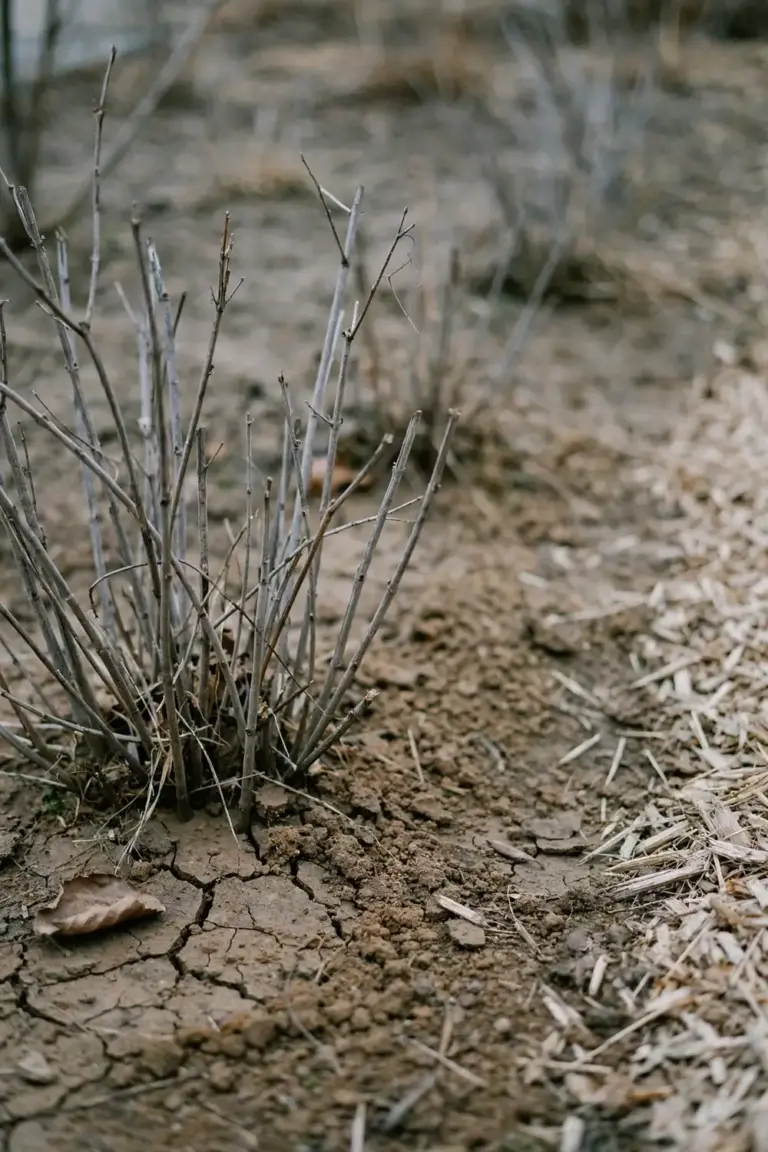
Skip dormant plants. A plant that has not started growing cannot use fertilizer. The LSU AgCenter guide advises stopping fertilization during dormant seasons and waiting until mid-spring where a late freeze threatens. Fertilizer pushes tender new growth. Tender new growth dies in a frost. A dormant plant fed in early spring spends energy on shoots the next cold night kills.
Skip new plants until they settle. The LSU AgCenter guide advises avoiding fertilizer for new plants until they are fully established, because fertilizer causes tender new growth that leaves the plant weak and leggy. A new plant needs roots first. Roots come from water, mulch, and time. Feed it after it shows steady new growth of its own.
Skip plants in dry soil. Fertilizer salts pull water out of roots and leaf tissue. Dry soil already starves the roots of water. Adding salts to dry soil burns the plant. The Washington State University Hortsense guide to fertilizer burn names quick-release products that are not watered in properly, or applied in hot weather, as a common cause of burn. Water the soil first. Water the fertilizer in after. Never feed a dry bed in a heatwave.
Feed after rain, not before a dry week. Wet soil dilutes salts and carries nutrients down to the roots, while dry soil concentrates salts at the surface, where they sit against stems and shallow roots. If the forecast shows a hot, dry week ahead, hold the bag until rain arrives or until you can water deeply yourself. The feed waits, and the plant waits with it.
Skip plants at frost risk. Tender growth from a spring feed dies in a late frost. Wait until the frost risk passes. In most of Australia that means feeding after the last cold nights of early spring, not at the first warm day.
Skip plants that already show fertilizer burn. Brown leaf tips and margins after a feed mean the plant holds too many salts already. More fertilizer adds more salts. Flush with plain water and wait. The plant recovers by growing new leaves, not by eating more.
5. Feed Each Plant Type by Its Need
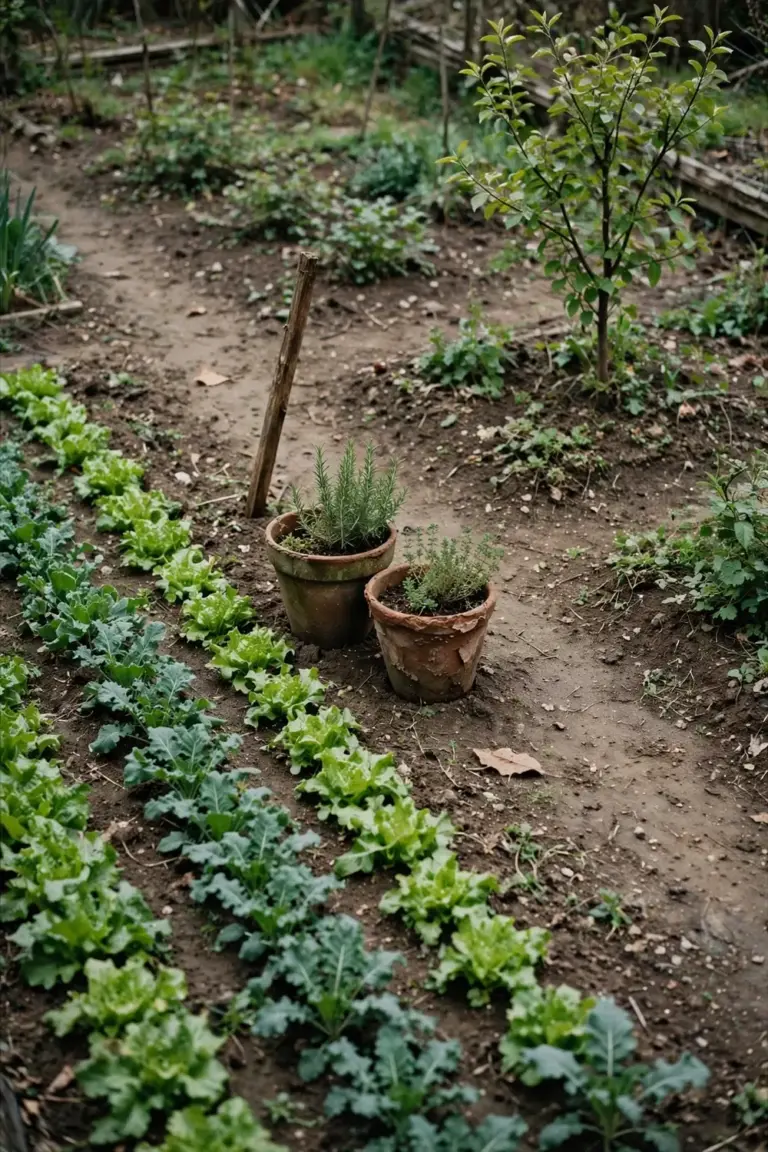
One bag does not fit the whole garden. Each plant type carries its own need, its own product, and its own timing. Use this table as the decision.
| Plant Type | Feed in Spring? | What to Use | Notes |
|---|---|---|---|
| Vegetables | Yes, heavy feeders | Slow-release at planting, plus side dress | Vegetable plants benefit from more frequent fertilizer through the season because they produce heavily, per the LSU AgCenter guide. Side dress with calcium nitrate at the first and third bloom set. Some growers use liquid fertilizer every other week. |
| Fruit trees | Yes | Balanced fertilizer at the woody-plant rate | Woody plants such as shrubs and trees benefit from 3 pounds of nitrogen per 1,000 square feet in spring, per the LSU AgCenter guide. That converts to about 14.6 g of nitrogen per square metre. Spread it under the canopy, not against the trunk. |
| Roses | Yes | Balanced or rose fertilizer | Flowering plants need more phosphorus for stronger bud, fruit, and flower development, per the LSU AgCenter guide. Roses are not phosphorus-sensitive natives, so the phosphorus in a rose fertilizer suits them. |
| Lawn | One line only | See the lawn guide | Spring lawn feeding is lawn lane, and it lives in the site’s Best Time to Fertilize Lawn in Spring. This guide covers garden plants. |
| Australian natives | No, or low-P native fertilizer only | Nitrogen-only at planting, or nothing after establishment | Follow the phosphorus trap rules in the natives section above. A general-purpose bag harms this group. |
| Pots and containers | Yes, monthly liquid | Liquid plant food | Indoor potted plants may be fed with a liquid plant food every month for most varieties, per the LSU AgCenter guide. Pots leach nutrients with every watering, so container plants run out faster than bed plants. Skip winter for plants that go dormant. |
Per-crop schedules belong elsewhere. CompleteGrow publishes per-crop AU seasonal schedules for grapes, limes, and other crops. This guide stays at the decision level: whether to feed, what class of product to use, and what to skip. Do not rebuild a per-crop calendar here.
Perennials sit between shrubs and vegetables. Perennials benefit from 1 pound of nitrogen per 100 square feet in spring, per the LSU AgCenter guide, which converts to about 4.9 g of nitrogen per square metre. That rate is one third of the woody-plant rate. A perennial bed fed at the shrub rate gets triple its need. Measure the bed. Measure the bag.
6. Choose Slow-Release and Organic Defaults
Slow-release granules and compost are the safe defaults. They feed over weeks, not in one salty hit. A quick-release powder dumps its salts at once. A slow-release granule meters them out, a little each watering, for weeks on end. The plant eats steadily through the flush instead of gorging on day one and starving by week three. The soil stays calm. The leaf tips stay green.
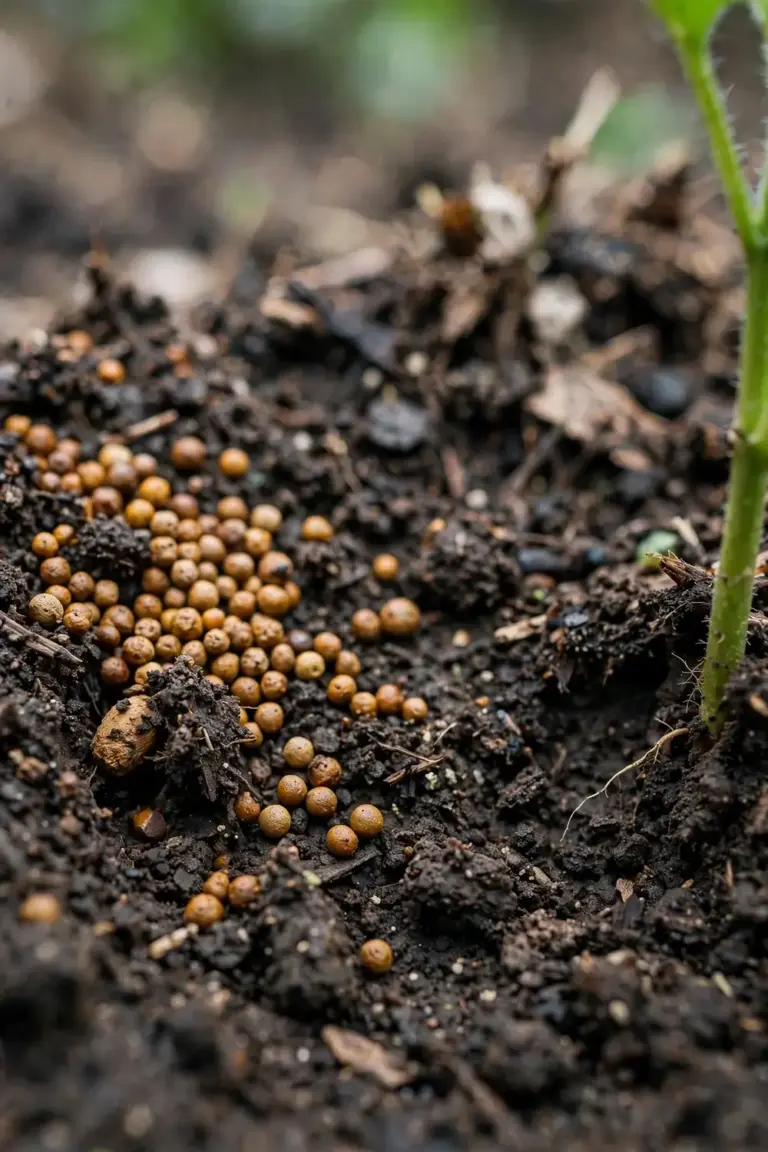
The LSU AgCenter guide lists the ways to fertilize: slow-release granular fertilizers, liquid feed applied to soil as a drench, foliar sprays, and fertilizer stakes. It adds natural fertilizers such as compost. Compost is decayed organic material from other plant materials and animal waste from livestock that eat mostly plants, including chickens, cows, and horses. Compost also comes from grass clippings, fallen leaves, kitchen scraps such as coffee grounds, eggshells, and fruit and vegetable peelings. Worm castings and mushroom composts add nutrients too.
Compost feeds gently and builds soil at the same time. Spread it 5 cm deep over the bed and let the worms pull it down. Mulch over the top to hold moisture. The site’s What Is Mulching guide covers mulch choice and depth. Mulch also keeps granules off leaves, where they scorch.
Compost suits every plant type named above, including natives, because it releases nutrients slowly and carries no concentrated phosphorus hit. A native bed dressed with compost gets organic matter, moisture retention, and a gentle nutrient trickle. A vegetable bed dressed with compost gets the same, plus a base that a side dress can build on. Compost never replaces a soil test. It replaces the urge to reach for a strong bag first.
Water every feed in well. The LSU AgCenter guide advises watering fertilizers in well to distribute nutrients through the soil profile and to prevent burning. Dry granules sitting on leaves burn them. Dry granules sitting on dry soil concentrate salts at the surface. A deep watering after feeding carries nutrients down to the roots and dilutes the salts.
Feed in the coolest part of the day. The LSU AgCenter guide advises fertilizing outdoor plants in the early morning or late evening, especially in hot summer weather. Heat plus salts equals burn. A cool morning feed, watered in, gives the plant a full day to take up nutrients before the heat returns.
Follow the label rates. The LSU AgCenter guide advises following the manufacturer’s recommended rates and application methods. The label rate already accounts for the product’s strength. Doubling the rate doubles the salts. Doubling the rate does not double the growth.
Foliar sprays and fertilizer stakes play smaller roles. A foliar spray feeds through the leaf and suits a fast correction when roots cannot take up nutrients, such as in waterlogged soil. A stake feeds one tree or shrub at a point, which suits a single specimen rather than a bed. Neither replaces a soil-applied feed for the whole garden. Use them as targeted tools for one plant with one problem, and keep the main feed in the soil where the roots live.
7. Spot Over-Feeding Before It Burns Leaves
Over-feeding shows at the leaf tips first. Brown tips and margins mean salts are pulling water out of the plant. Catch it at the tips and the plant recovers. Catch it at the roots and the plant struggles for months.
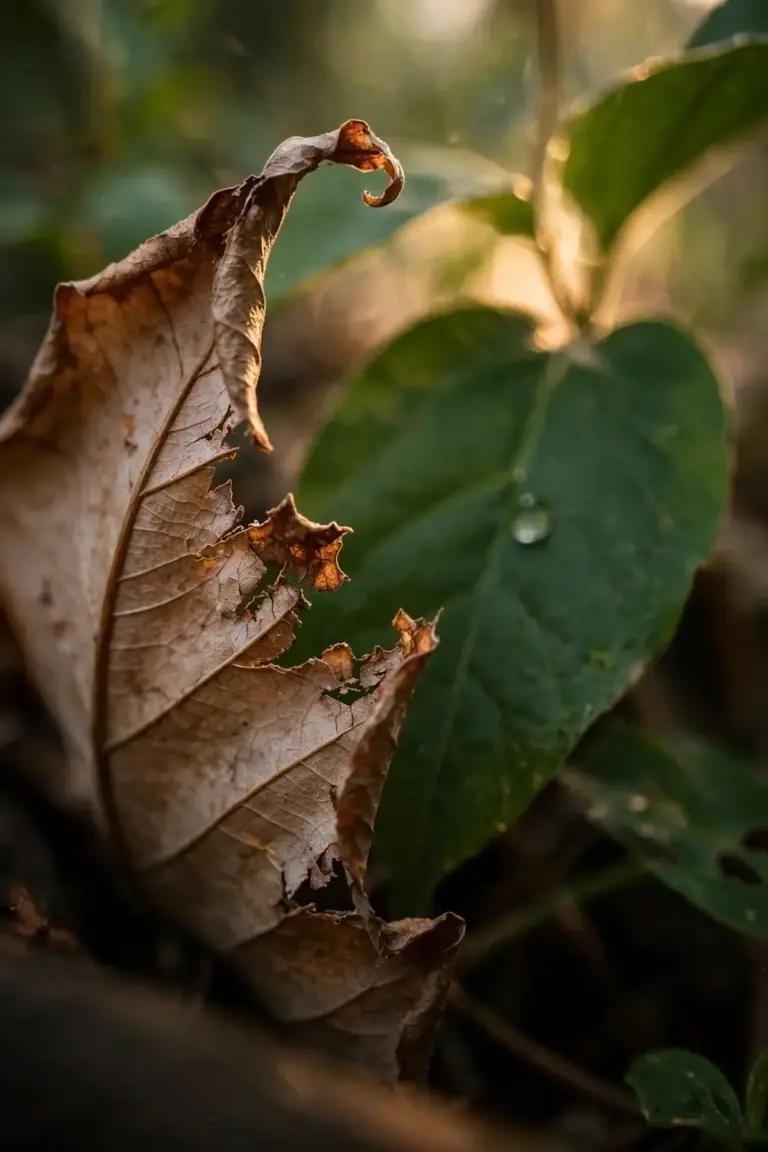
The WSU Hortsense guide describes the mechanism: high levels of salts in the soil damage plant roots, cutting water uptake. Salts also build up in leaf tissues, causing dieback or necrosis of leaf tips and margins. Symptoms of overfertilization in broadleaf plants may begin with wilting and slowed growth as the plant suffers from decreased water availability. Tips of young and old leaves turn brown, and tender shoots may die. Conifers show needle tip necrosis in a regular pattern through the canopy.
Containers show burn first. Container plants are particularly susceptible to fertilizer damage, per the WSU Hortsense guide. Watch for a brownish or whitish crust on the planting medium or along the inside rim of the container. That crust is dried salts. A pot with a salt crust holds too much fertilizer. Flush it with plain water until water runs freely from the drainage holes, then hold the next feed.
Lawns show burn in patterns. Lawns where fertilizer was misapplied may show stripes where spreader rows overlapped, or patches of browning dead turf where turns were made or spreaders stopped, per the WSU Hortsense guide. Stripes mean the spreader passed twice. Patches mean granules piled up. Both mean salts, not disease. Water the stripes deeply and wait.
Heavy feeding invites a pest chain into the bed. Aphids, mites, and other pests often thrive on the soft, tender growth that results from heavy fertilization, per the WSU Hortsense guide. A plant pushed hard with nitrogen grows soft leaves, and soft leaves feed aphids, which then draw ants, which then farm the aphids. The feed that was meant to help the plant ends up feeding its pests instead. Label-rate feeding grows firmer leaves that resist that chain.
The fix order is simple. Stop feeding. Flush the bed or pot with plain water. Wait for new growth. A burned leaf never heals, and no spray restores it. New leaves replace it, one shoot at a time, over the rest of the season. If the roots still hold, the plant grows back. If the roots died, the plant does not. That is why the first sign matters more than the last.
Recovery needs patience, not product. Do not reach for a tonic, a seaweed spray, or a second fertilizer to undo the first one. Each addition adds more salts to soil that already holds too many. Plain water is the only input a burned plant wants. Hold every feed until fresh growth shows clean, unburned tips.
8. Frequently Asked Questions
No, in most cases. Established natives generally need no fertilizer, per the Australian Plants Society SA guide. Proteaceae, many pea-flower shrubs, and perhaps half of all acacias are phosphorus-sensitive, so a general-purpose bag harms them. If a native grows poorly, check cold, shade, and water first. Feed only a low-phosphorus native fertilizer, or feed nothing.
Wait. Fertilizer pushes tender new growth, and tender new growth dies in a frost. The LSU AgCenter guide advises waiting until mid-spring in zones that face a late freeze, and stopping fertilization during dormant seasons. Feed after the last cold nights pass and the plant shows active growth. One patient week beats one dead flush of shoots.
Yes, as a gentle one. Compost is decayed organic material from plant matter and animal waste, per the LSU AgCenter guide. It adds nutrients while it builds soil structure. Compost feeds slowly, so it rarely burns plants. Spread it 5 cm deep over the bed and mulch over the top. Compost alone may not satisfy a heavy feeder such as tomatoes, which still wants a side dress.
Test lawn and ornamental areas every 2 to 3 years, and vegetable gardens every 1 to 2 years, per the University of Georgia Extension soil testing guide. Results arrive in 4 to 6 days from receipt. Test before you buy a bag, not after. A test that shows adequate phosphorus ends the debate. Lime needs 2 to 3 months mixed into the soil before planting, so test early.
The three numbers give the percentage by weight of nitrogen (N), phosphorus (P), and potassium (K), in that order. Nitrogen grows foliage and stems. Phosphorus drives roots, flowers, and fruit. Potassium supports overall health, drought tolerance, and structure. Read the middle number before feeding natives.
9. Start With a Soil Test This Weekend
Start with a soil test this weekend. A test costs less than a bag of fertilizer, and it answers the only question that matters: what does this soil lack? A bed that tests high in phosphorus needs nitrogen only, or nothing at all, while a bed that tests low needs a measured feed. Both beds look the same from the path, and only the test tells them apart.
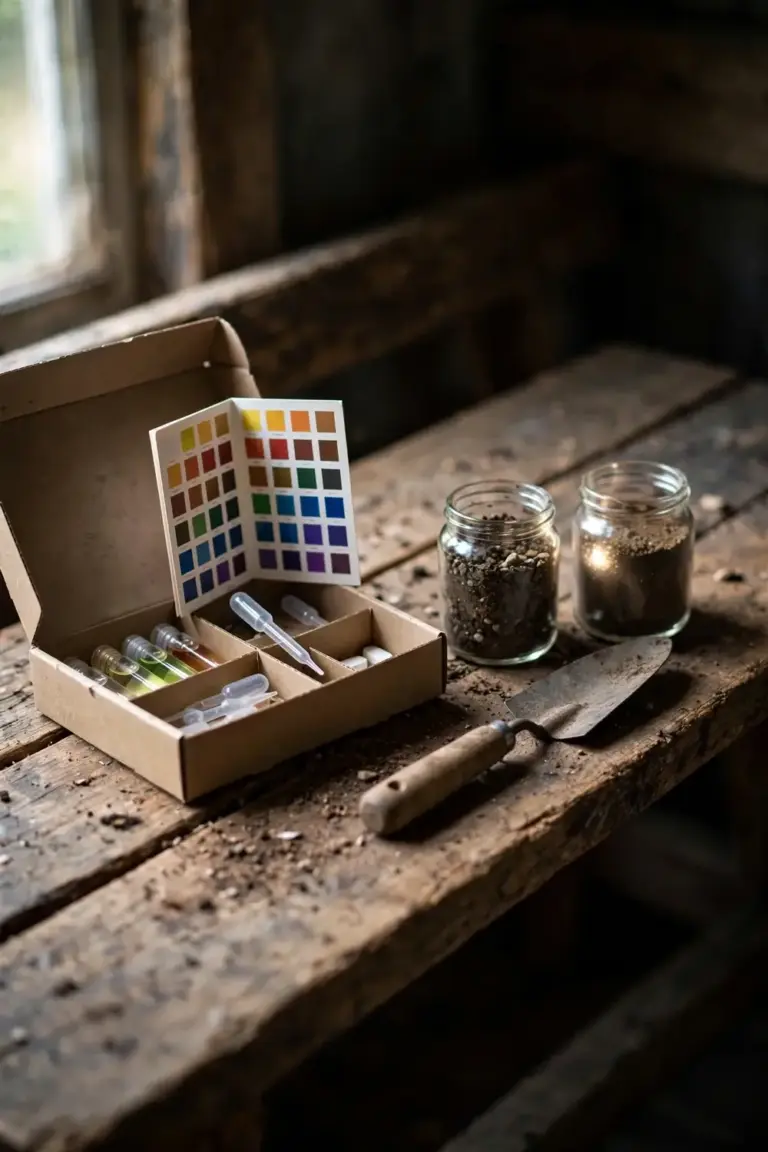
Order the test before you buy anything, because the University of Georgia Extension guide notes that lime should be mixed into the soil 2 to 3 months before planting, so an early test gives amendments time to work. A test taken in spring still guides the season ahead. A test taken in autumn guides the whole next year. Either way, the test comes before the bag.
Feed what the test shows and skip what it does not show. That rule is feed-by-need in one line. The garden rewards it with steady growth, clean leaves, and natives that flower instead of dying from kindness. Building soil health over seasons beats any single bag.
Keep a one-page feeding log. Write the date, the bed, the product, and the rate. Note what the soil test showed. Note what the plant did next. A log turns next spring into a repeat of what worked, not a fresh guess. It also catches the slow creep of over-feeding: two feeds logged in one month stand out on paper even when the garden still looks fine.