
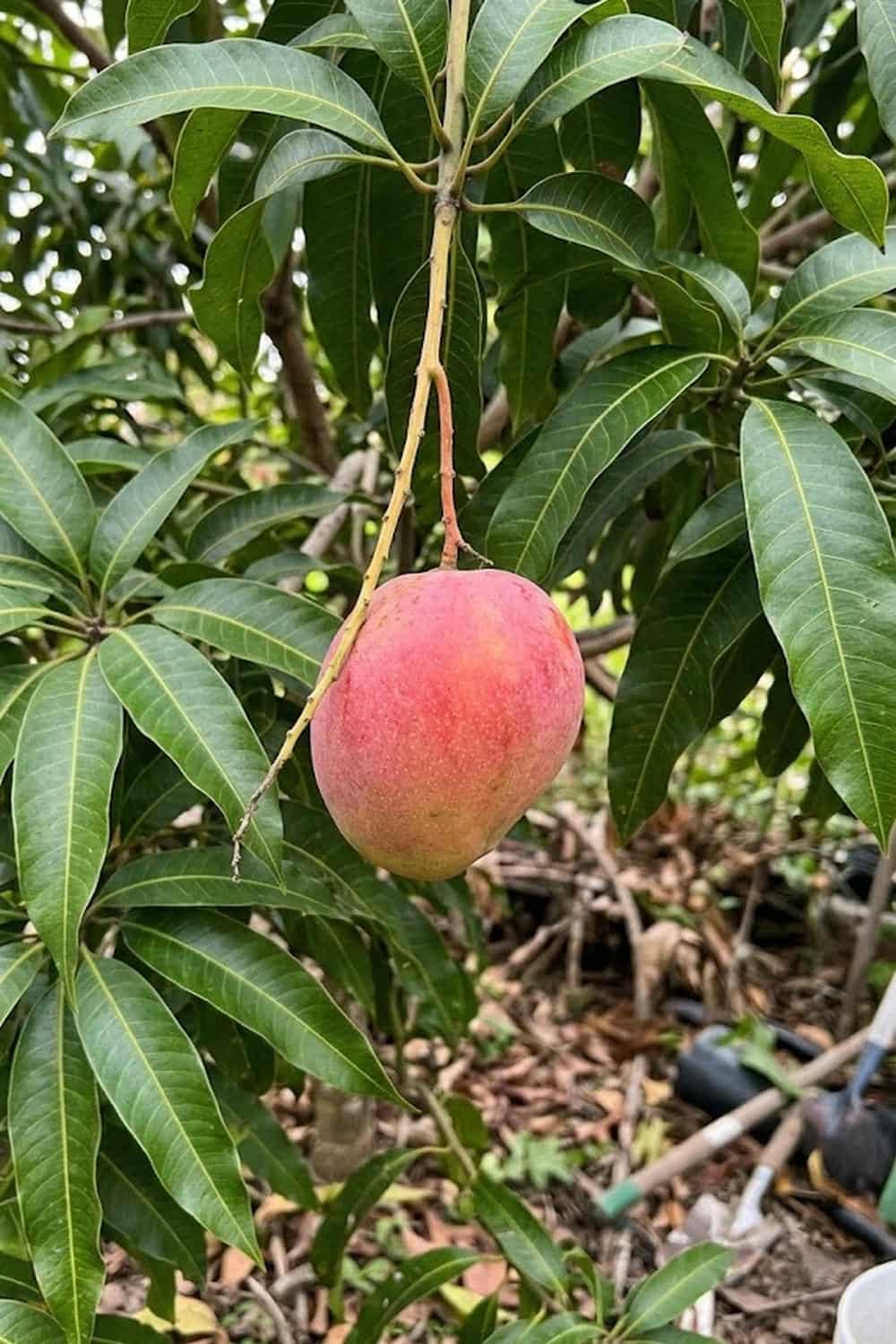

Do you crave the sweet, tropical taste of a perfectly ripe mango but find yourself frustrated by the flavorless, expensive options at the grocery store? It is disheartening to spend your hard-earned money on imported fruit that tastes like cardboard, especially when you have the passion and space to cultivate your own food. That dream of walking into your garden and picking a sun-warmed, juicy mango seems far-fetched, especially if you don’t live in a tropical rainforest. I understand that frustration completely; I used to rely on store-bought fruit until I discovered the secrets to success. Fortunately, you do not need to be a commercial farmer to succeed; with the right approach to soil mix, varietal selection, and protection, you can absolutely grow mango fruit right at home, even in limited spaces or marginal climates. This guide provides the exact roadmap I used to transition from a frustrated shopper to a proud harvester of tropical gold.
Choose the Right Mango Cultivar for Your Space
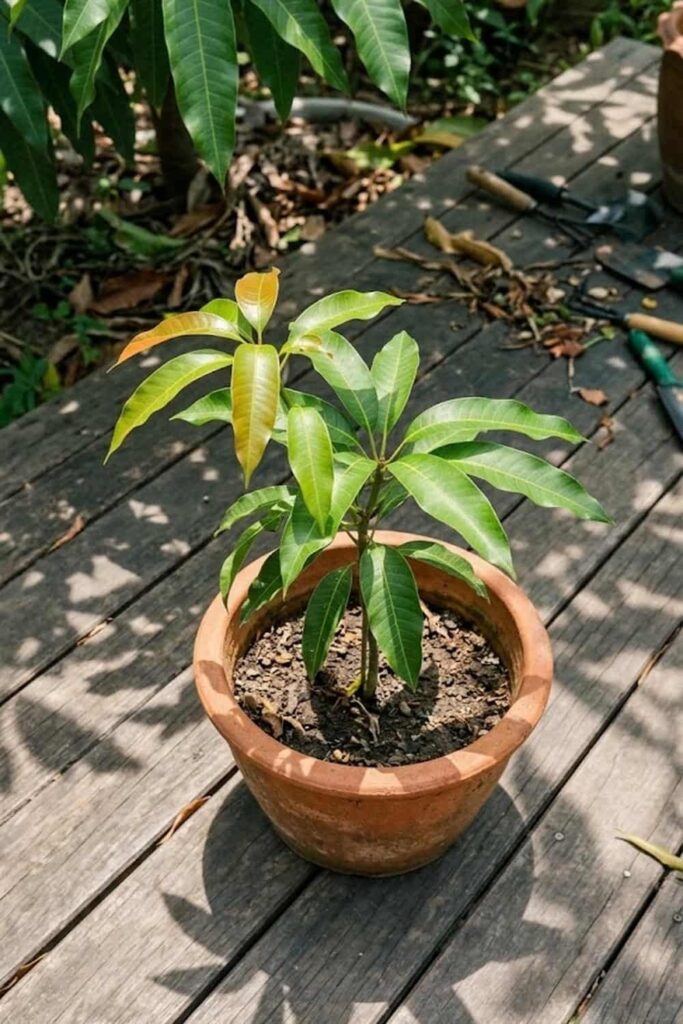
Selecting the appropriate tree is the single most important decision you will make in this process. Many beginners make the mistake of planting a seed from a grocery store mango, only to find out years later that the resulting tree is massive, disease-prone, or produces poor-quality fruit. I learned this the hard way with my first tree. For home gardeners, especially those of us balancing work and life, I highly recommend looking at grafted dwarf or semi-dwarf varieties. These trees are meticulously selected for their manageable size (often staying under 10–15 feet with pruning) and their ability to bear high-quality fruit within just two to three years. If you have a small suburban lot or are gardening in USDA Zone 9 or 10, a polyembryonic variety like ‘Nam Dok Mai’ is fantastic because it’s often more faithful to the parent tree. For truly limited spaces, “Condo Mangoes” like ‘Pickering’ or ‘Cogshall’ are game-changers; you can actually succeed with these in large containers.
Optimal Temperature and Climate Requirements
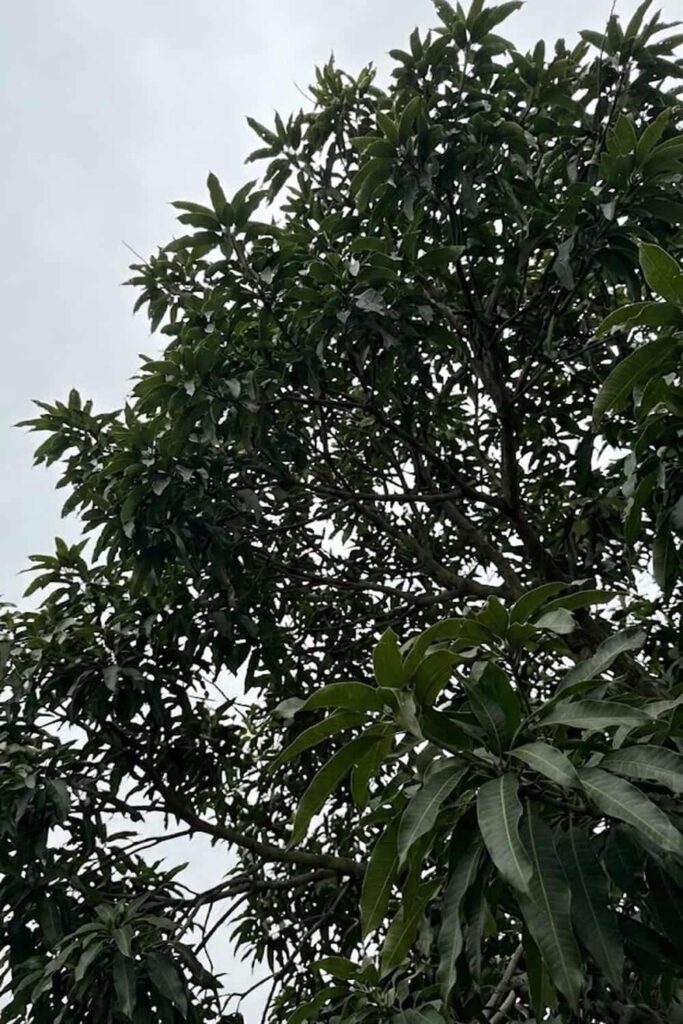
Understanding your local climate is crucial when you want to grow mango fruit successfully. Mangoes are tropical plants that thrive in heat; they are fundamentally not frost-tolerant. I cannot emphasize this enough: a single hard freeze can kill a young tree. They require temperatures that consistently remain between 70°F and 100°F (21°C to 38°C) for optimal growth. While they can survive short dips down to 30°F (-1°C) once established, you must be prepared to provide protection if you live in a region that sees winter chills. If your area experiences regular frost, you are not disqualified from mango gardening! Many enthusiasts (myself included) have successfully planted mango in containers that they move indoors or into a greenhouse during the cold months. Furthermore, they need a distinct dry season to trigger flowering, which makes watering management essential in more humid, rainy climates. Protecting against wind is also important, as strong gusts can damage the delicate flowers and fruit set.
Creating the Perfect Well-Draining Soil Mix
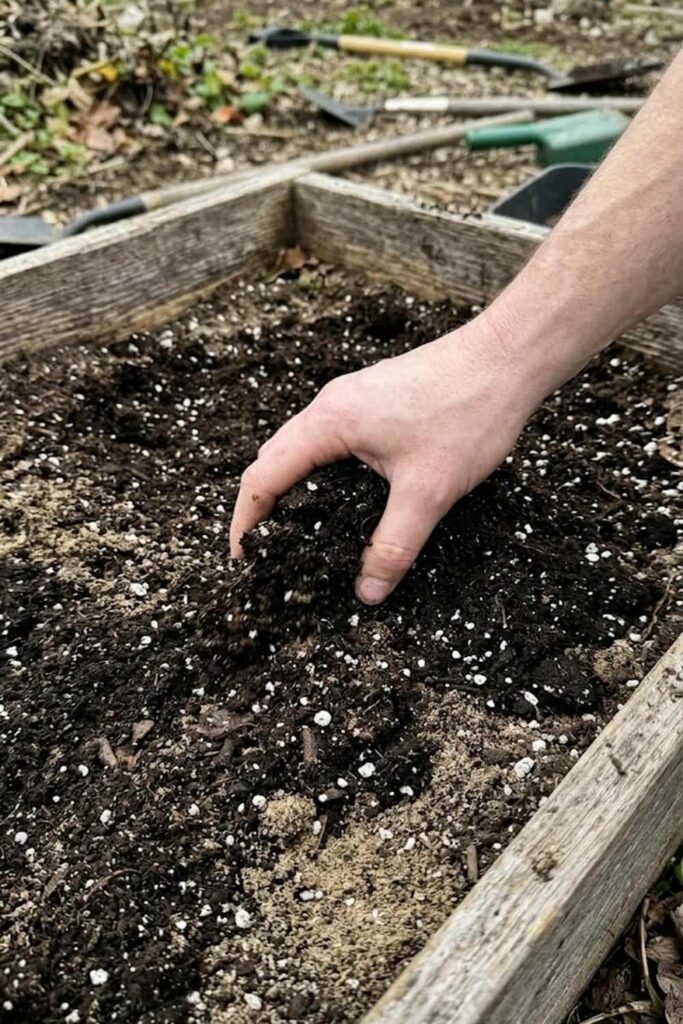
When you finally set out to plant mango trees, the ground you put them in matters more than almost anything else. You must understand that mangoes are incredibly susceptible to root rot; they absolutely hate having “wet feet.” In my years of growing, I have seen more mango trees die from poor drainage than from all other causes combined. To prevent this, I always prioritize creating or amending the soil to ensure it is very well-draining. The ideal soil mix is sandy loam, which provides an open structure for the extensive taproot to develop. If your native soil is heavy clay, I highly recommend planting in a raised bed or a large container rather than trying to amend the clay. You also want to monitor the soil pH, aiming for a slightly acidic to neutral range (5.5 to 7.5). Incorporating organic compost or aged manure is beneficial for nutrients, but ensure it doesn’t make the mix too heavy and water-retentive. The goal is a soil that water can pass through freely.
Sunlight and Light Exposure for Maximum Growth
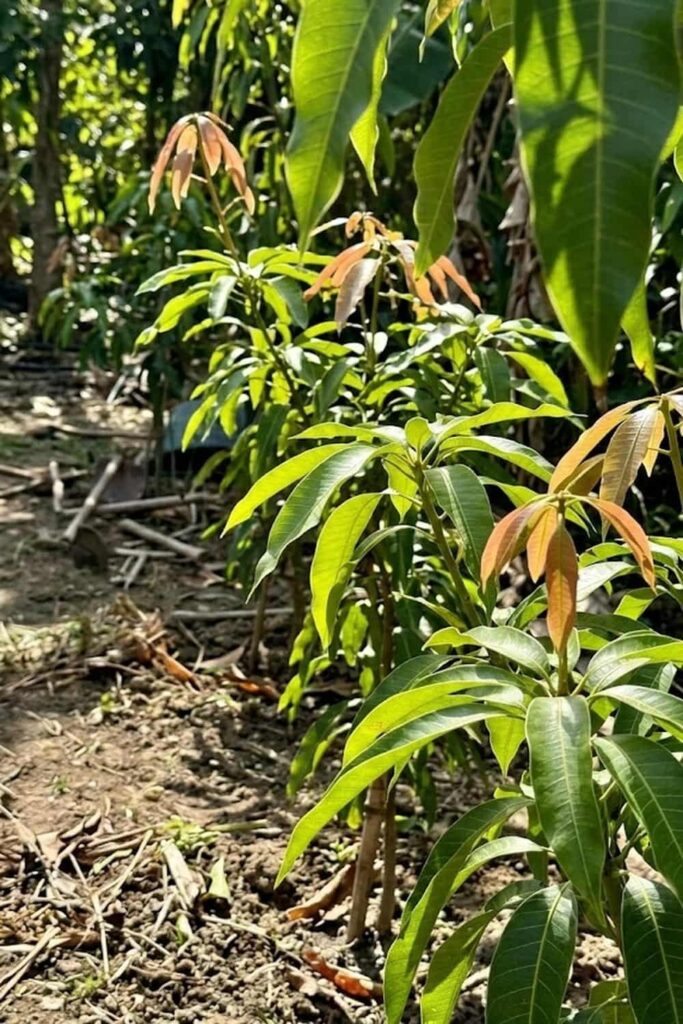
To successfully grow mango fruit that is sweet and properly developed, you must provide your tree with maximal sunlight. Sunlight is the primary energy source that fuels photosynthesis, which in turn fuels fruit production. I always tell new growers: “If you want the fruit, you need the sun.” These are obligate full-sun plants. This means your mango tree requires a minimum of eight to ten hours of direct, unfiltered light daily. Insufficient light exposure will lead to weak, leggy vegetative growth and, significantly, very few (if any) flowers and fruit. In my experience, even placing a tree where it gets afternoon shade can dramatically reduce your harvest. When you plant mango, you should carefully select the sunniest spot in your garden, ideally a south-facing location that is not obstructed by buildings or other large trees. For those in more marginal climates, maximizing light is non-negotiable; I often place container-grown trees against a south-facing wall to benefit from reflected heat and light.
Step-by-Step Seed Germination and Propagation
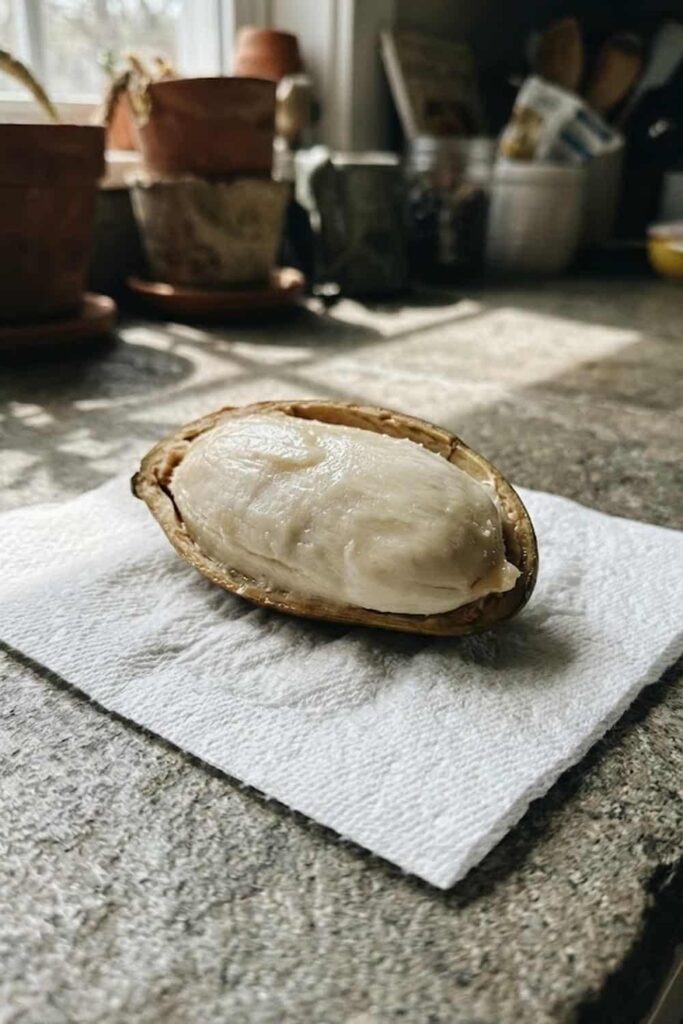
While I always recommend purchasing a grafted tree for fruit production, there is something incredibly rewarding about seed germination from your favorite mango. If you want to grow mango fruit as a fun, long-term project, this is how you start. First, you must select a polyembryonic mango (often the yellow, skinny kind like ‘Ataulfo’) because the resulting seedlings are clones of the parent and will eventually produce identical fruit. I begin by carefully cleaning all pulp from the woody husk after eating the fruit. I then use scissors to carefully snip the edge of the husk and pry it open to reveal the large, lima-bean-shaped embryo inside. I learned that you must handle this embryo very gently. Next, place the embryo between damp paper towels in a ziplock bag and store it in a warm, dark place (like above the refrigerator). Within a week or two, a taproot will emerge. Once this root is an inch long, you can plant the embryo, root-down, just below the surface in a small pot with the well-draining soil mix we discussed.
Planting Your Mango Tree the Right Way
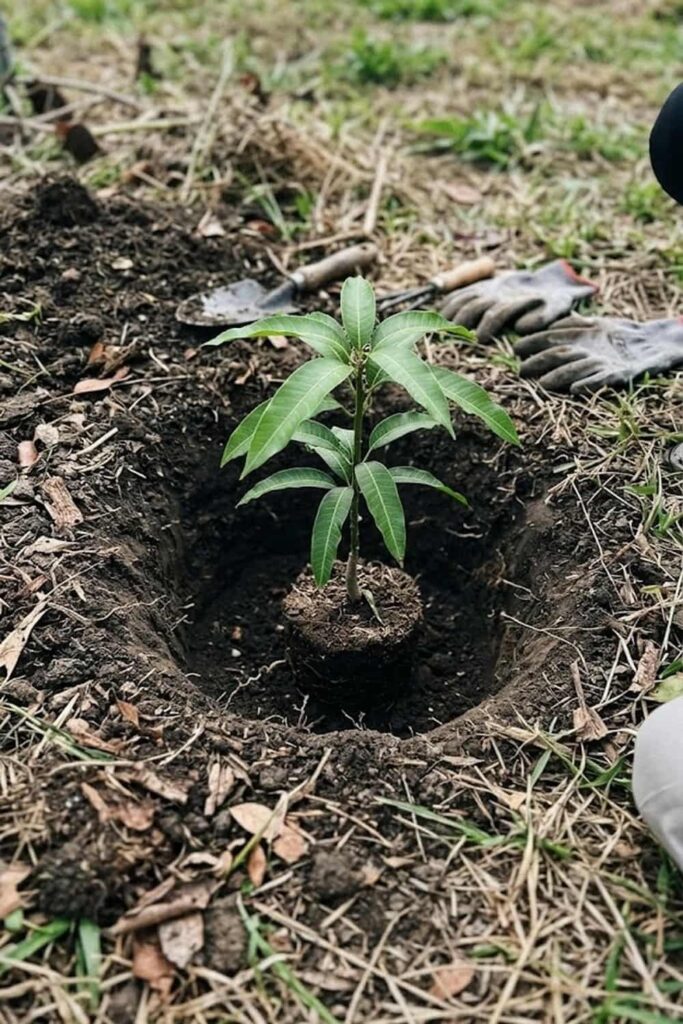
The moment you actually plant mango trees in the ground is pivotal, as mistakes made now can hinder the tree for years. When you have selected your sunniest spot with that perfect soil mix, dig a hole that is twice as wide as the root ball of your sapling, but no deeper. I cannot emphasize this enough: planting too deep is a death sentence for a mango. In my experience, the leading cause of transplant failure is buried trunks. Before placing the tree, I gently tease any circling roots outward. Position the sapling so that the root crown (where the roots meet the trunk) sits exactly at or slightly above the surrounding soil level. If it’s a grafted tree, ensure the graft union (the visible bump on the lower trunk) is several inches above the ground. Fill the hole with the native soil you removed, watering gently as you go to settle the earth and eliminate air pockets without compacting it.
Watering Schedules to Prevent Root Rot
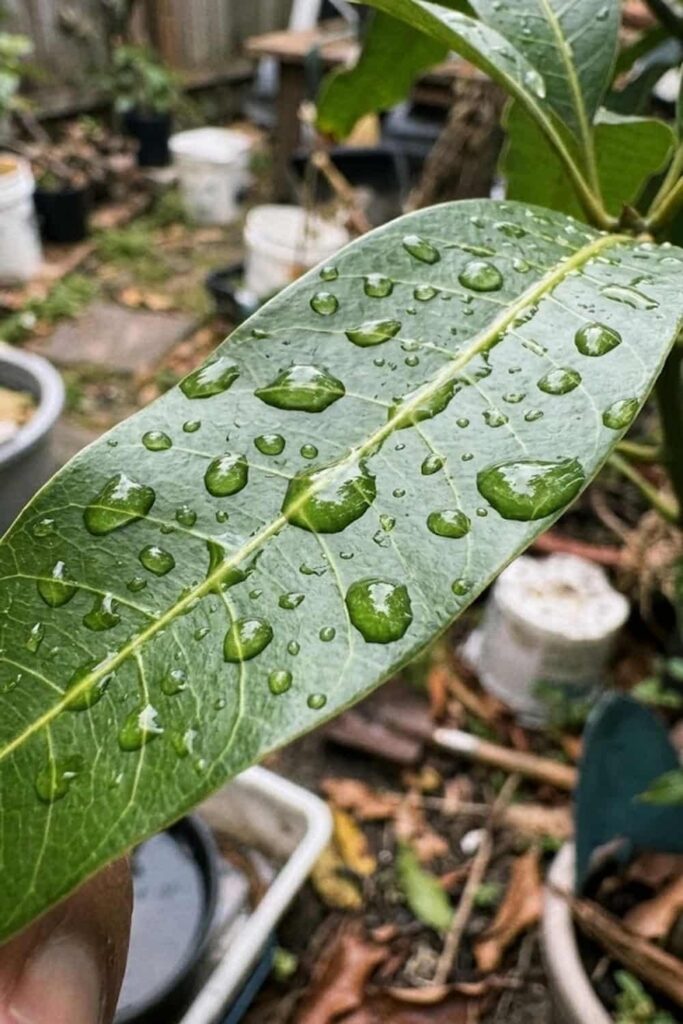
Managing your watering schedule is the most difficult skill to master when you grow mango fruit, because intent must shift with the tree’s age and the season. As I mentioned before, mangoes are incredibly sensitive to overwatering and the resulting root rot. For a newly planted tree, I water deeply every two to three days for the first few weeks to help it establish. Once established (after a few months), you must let the soil dry out significantly between waterings. I prefer to check by inserting my finger a few inches into the soil; if it’s dry that deep, it’s time to water. A mature, bearing mango tree has deep roots and is surprisingly drought-tolerant. In fact, to trigger flowering, you must reduce or stop watering entirely during the dry, cool winter months (or when you move it indoors). This stress signals the tree that it is time to reproduce. When fruit begins to set, resume regular, deep watering to ensure the mangoes develop full flavor and size, but always ensure the drainage is impeccable.
Fertilizing Strategies for Heavy Fruit Production
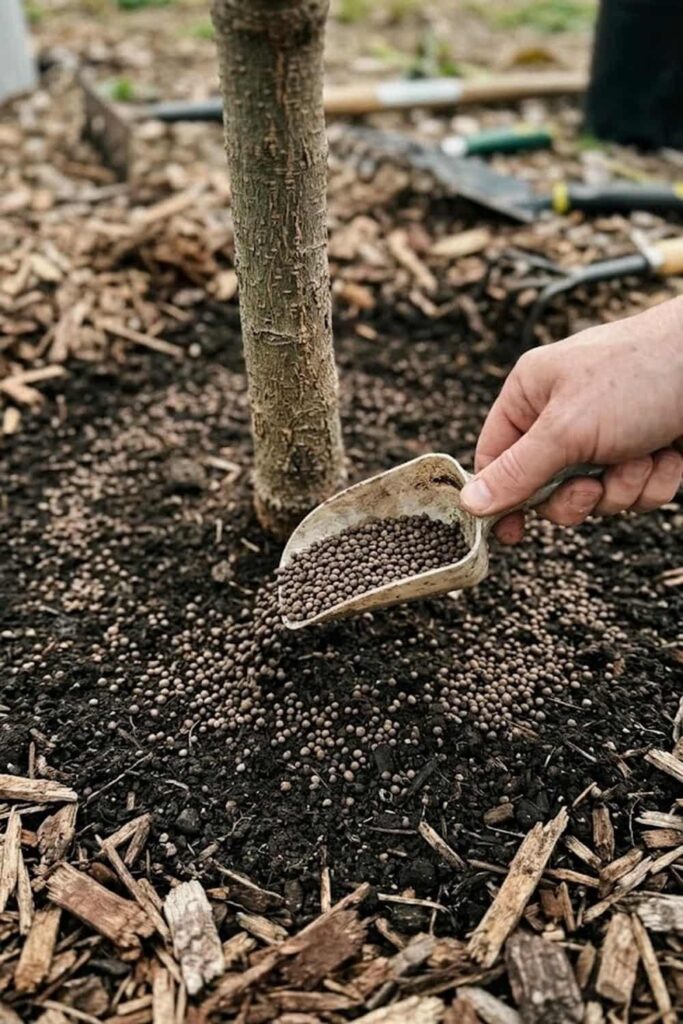
To grow mango fruit that is both abundant and delicious, your tree needs a specific, balanced fertilizing regimen. Mangoes are hungry plants, but giving them the wrong nutrients at the wrong time can ruin your harvest. Beginners often make the mistake of applying high-nitrogen fertilizer year-round. This results in lush, green leaves but very little fruit. I learned this vital lesson early on: you must shift the nutrient balance. During the vegetative growth phase (spring and summer), I apply a balanced organic fertilizer (like an 8-3-9 NPK with micronutrients). However, as winter approaches and the tree enters its dormant, pre-flowering phase, you must stop all nitrogen. Instead, I focus on feeding potassium and phosphorus to encourage bloom and fruit development. Additionally, for healthy mangoes, you should provide supplemental micronutrients, especially chelated iron and boron, which can be applied as a foliar spray to prevent deficiencies that lead to internal fruit breakdown.
- Spring/Summer (Vegetative Growth): Balanced NPK (e.g., 8-3-8) with micronutrients. Apply lightly every 6-8 weeks.
- Late Summer (Pre-Dormancy): Apply one final dose of balanced fertilizer, then stop all nitrogen.
- Fall/Winter (Dormancy/Flowering): No nitrogen. If anything, a light application of potash (potassium).
- Spring (Fruit Set): Resume light feeding with a focus on potassium and micronutrients once tiny fruit form.
Pruning for a Stronger Tree Canopy
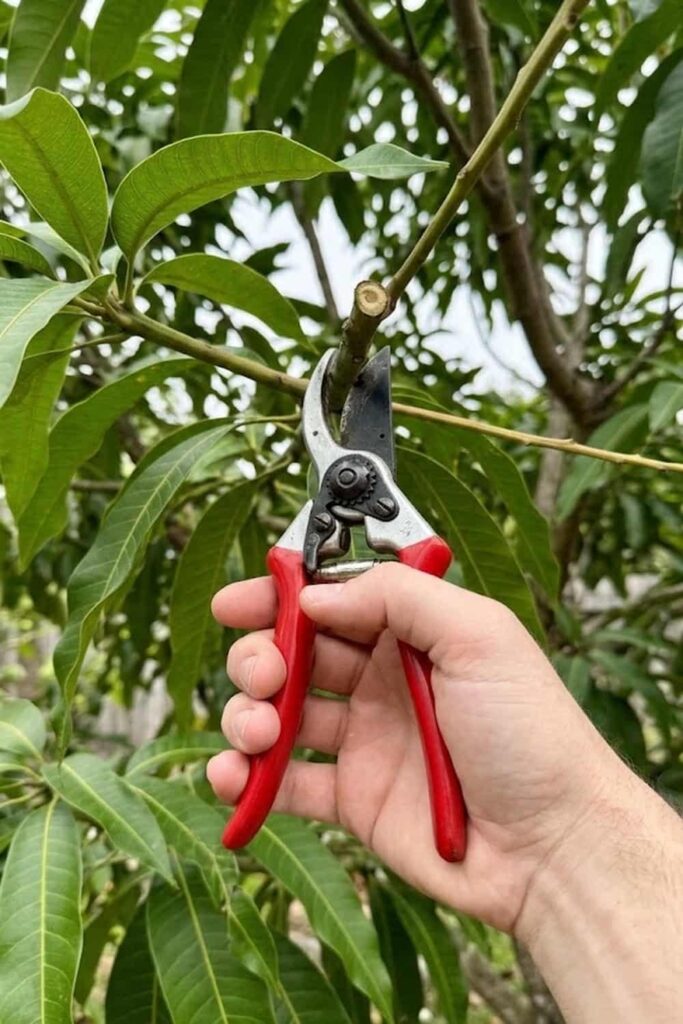
Pruning is often neglected by home growers, but it is an essential practice when you want to successfully grow mango fruit on a manageable, healthy tree. Mango trees are naturally vigorous, and without guidance, they can become massive, unmanageable, and unproductive. I pruning to achieve a few primary goals: control size, improve structure, and increase air circulation. For a young tree, I focus on tipping the main branches to encourage lateral growth, which creates a denser, more productive canopy. For an established tree, I prune annually, right after harvest. I remove any dead, diseased, or crossing branches (the “3 Ds”). Significantly, I open up the center of the tree to ensure light can penetrate the entire canopy; this “open vase” structure reduces the risk of fungal diseases like anthracnose. Furthermore, keeping the tree at a manageable height (e.g., 10-12 feet) makes both disease management and harvesting much easier.
Mulching to Maintain Soil Humidity and Health
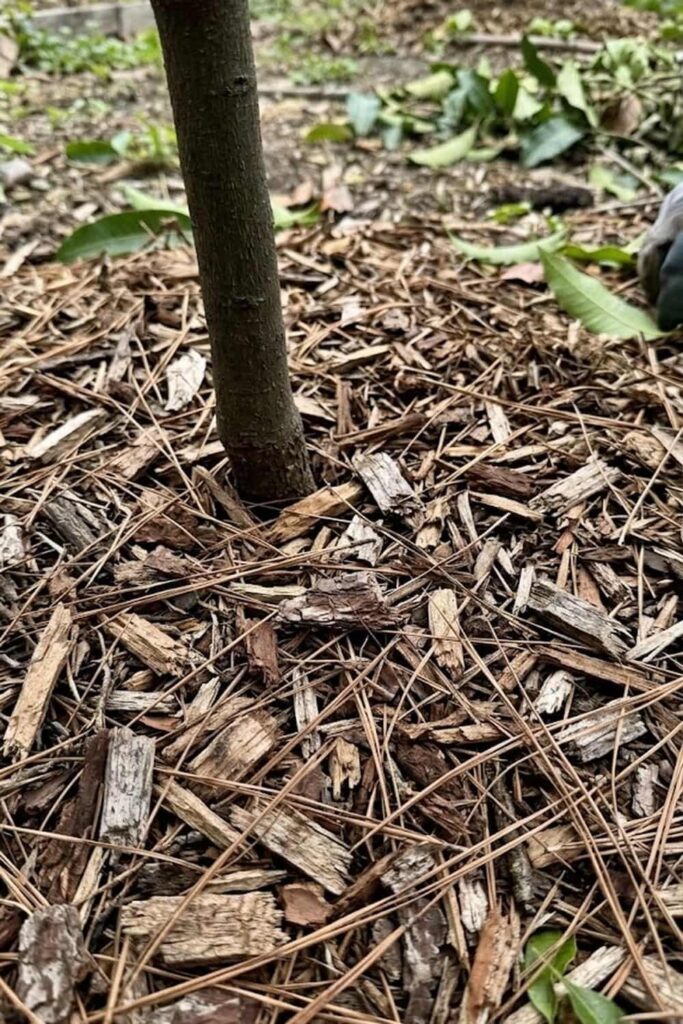
Mulching is a simple yet powerful technique that I encourage every gardener to adopt when they plant mango trees. In my years of experience, a good layer of mulch provides extensive benefits that directly translate to a healthier tree and a better harvest. First, a thick layer of organic mulch (such as wood chips, pine bark, or straw) helps to maintain vital soil humidity, which reduces the tree’s water stress, especially during hot summer days. This constant, even moisture is crucial for uniform fruit development. Second, as the mulch breaks down, it improves soil structure and feeds beneficial microorganisms, creating a richer environment for the mango’s root system. Third, it effectively suppresses competitive weeds. When applying mulch, you must maintain a “mulch-free zone” of about six inches around the base of the trunk. This protection is critical to prevent moisture from sitting against the bark, which can lead to fungal diseases and trunk rot.
- Maintains Moisture: Reduces evaporation and ensures stable soil humidity.
- Regulates Temperature: Keeps roots cooler in summer and warmer in winter.
- Suppresses Weeds: Blocks sunlight to competitive weed seeds.
- Improves Soil: Breaks down over time to add organic matter to the soil mix.
- Disease Prevention (If applied correctly): Keeps fungal spores in the soil from splashing onto the leaves.
Pest Control: Managing Aphids and Mealybugs
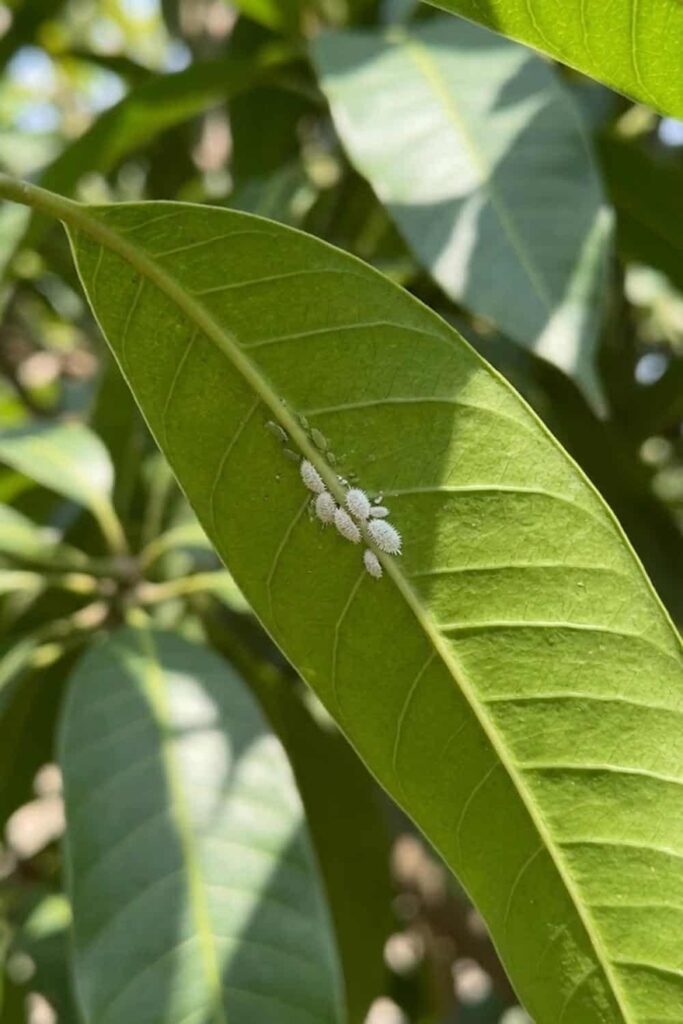
Protecting your mango tree from invasive insects is vital if you want to grow mango fruit that is healthy and blemish-free. In my garden, I have found that vigilance is the best defense. Aphids and mealybugs are the most common pests you will encounter. These sap-sucking insects cluster on new growth and the undersides of leaves, draining the tree’s energy and causing leaf curl. If you do not control them, they secrete a sticky substance called honeydew, which leads to a secondary infection known as sooty mold. I prefer an organic approach to pest control. When I spot these pests, I first try blasting them off with a strong stream of water from the hose. If the infestation persists, I use insecticidal soap or a 2% solution of neem oil, ensuring I coat both the tops and bottoms of the leaves. Consistency is key; you must reapply every 7–10 days until the pests are gone.
Disease Control and Prevention of Anthracnose
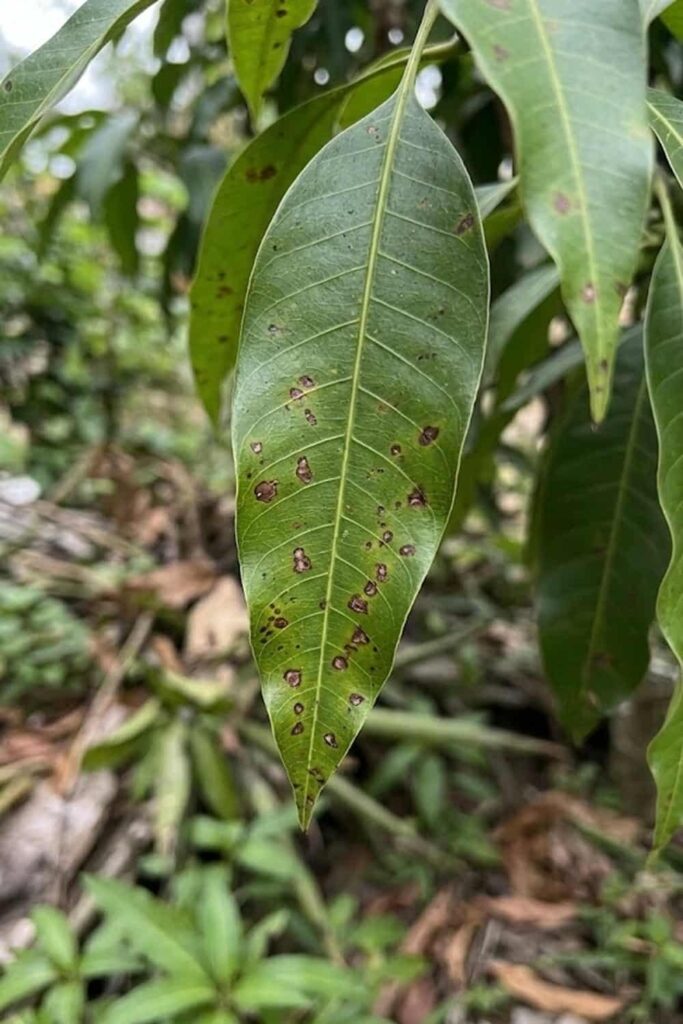
Anthracnose is the single most devastating disease you must face when you grow mango fruit, especially in humid environments. It is a fungal infection that attacks flowers, young fruits, and leaves. You will recognize it by the dark, sunken lesions it causes on expanding leaves and, heartbreakingly, on ripening fruit. To succeed, you must focus on prevention and control simultaneously. I found that pruning for maximum air circulation (opening the vase center) is the most effective cultural control. When my trees are flowering or setting fruit during rainy periods, I proactively apply copper-based fungicides to provide protection before the fungus takes hold. If you see infection on fruit, you must remove and destroy the infected material immediately; do not compost it. Managing anthracnose is the key difference between a failed season and a heavy harvest of flawless mangoes.
Handling the Flowering and Fruit Set Phase
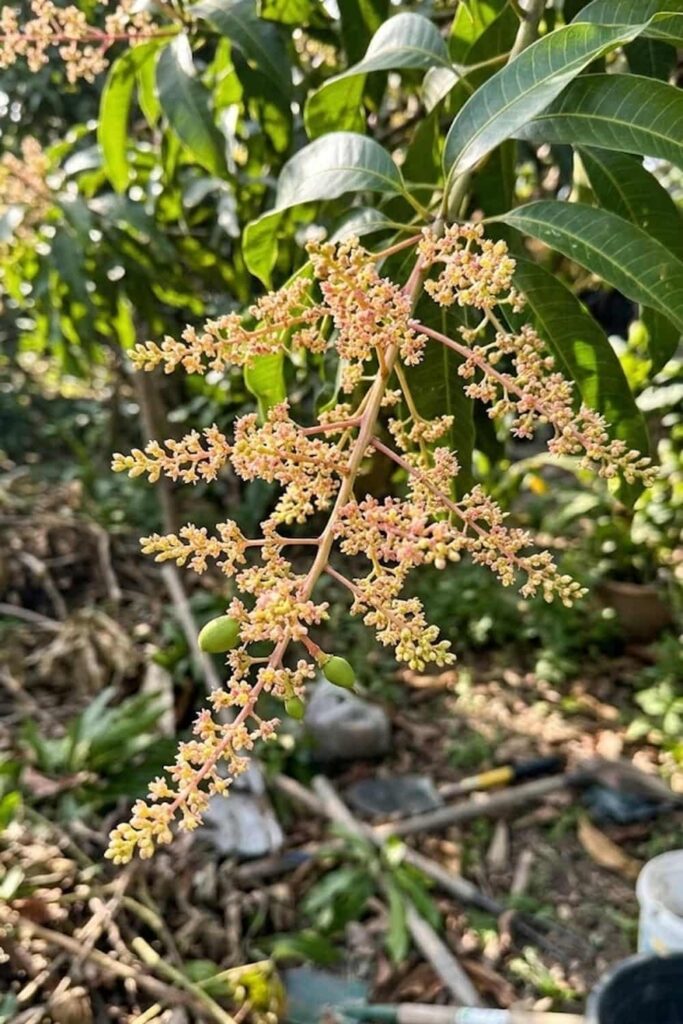
The flowering phase is one of the most exciting times in the garden, but it requires careful management to ensure the blossoms successfully plant mango fruit. Mango trees produce large, pyramid-shaped clusters of tiny pinkish-yellow flowers called panicles. In my experience, these panicles are very delicate. To ensure successful pollination, you need beneficial insects like flies and bees; I avoid spraying any insecticide (even neem oil) during the bloom period to protect these vital pollinators. Care during this stage focuses on protecting the panicles from fungal diseases like powdery mildew and anthracnose (by using copper fungicides proactively before flowers fully open). Furthermore, you must provide consistent watering—not allowing the soil mix to dry out—once tiny, pea-sized mangoes begin to form. This stable soil humidity prevents the tree from aborting the young fruit due to stress. Be aware that most flowers are “staminate” (male) and will naturally drop; only a small percentage of “perfect” flowers will set fruit.
Harvesting Techniques: When is a Mango Ripe?
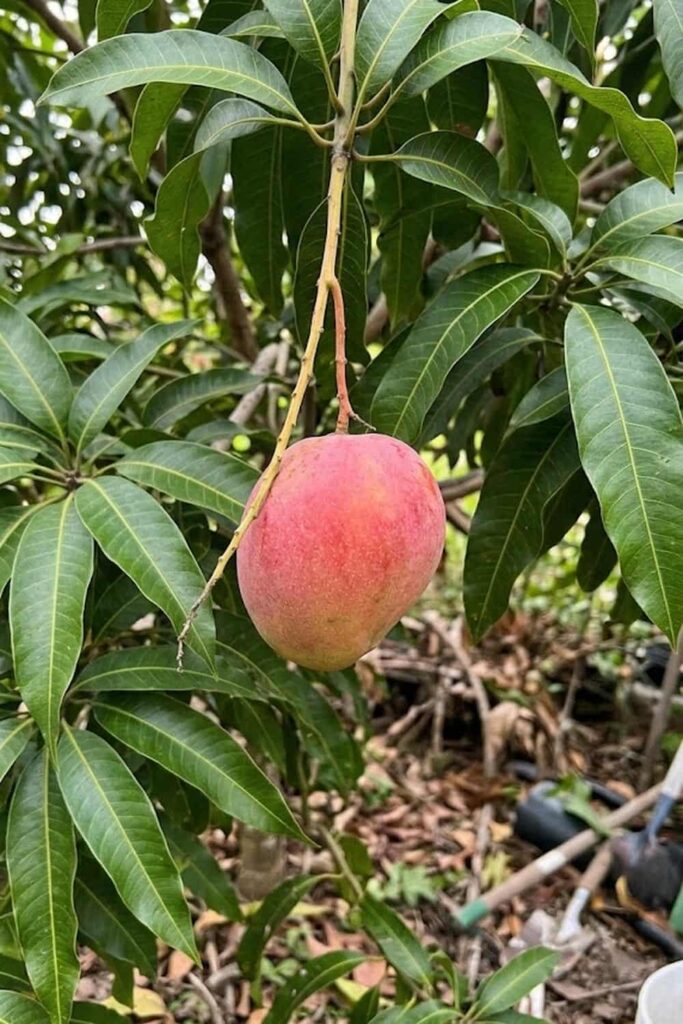
Determining exactly when is a mango ripe for harvesting is an art that I have refined over many years; picking too early results in a starchy, bland fruit. When you want to grow mango fruit that is exceptional, you must ignore the color (which is often just “blush” from the sun) and focus on other ripeness indicators. I first check the “shoulders” of the fruit; a ripe mango will have filled out and rounded at the stem end, lifting the stem rather than having a depression. Second, I look at the color change at the nose (the end opposite the stem). When the color shifts from dark green to a lighter yellow-green or yellow, ripeness is imminent. Third, the texture should give slightly when pressed gently. Finally, a ripe mango often has a faint, sweet aroma at the stem. To harvest, I use sharp shears and cut the stem 2–3 inches above the fruit to prevent “sap burn,” which ruins the skin.
Post-Harvest Storage and Ripening Tips
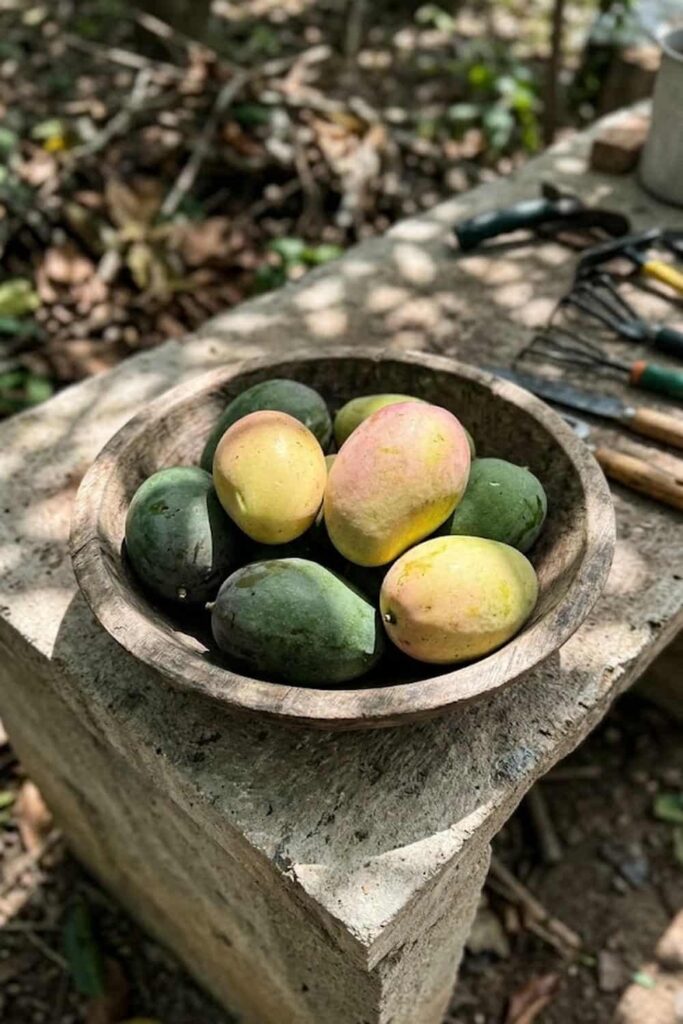
Proper post-harvest storage and handling are the final, critical steps that I emphasize for maximizing the quality of the fruit you have worked so hard to grow. Once you succeed in harvesting, you must handle the mangoes gently to avoid bruising, which quickly leads to rot. For unripe mangoes, storage at room temperature is best; I place them in a single layer in a cool, dark pantry or on a kitchen counter (away from direct light). To speed up the ripening process, you can place a few mangoes in a paper bag with a banana or apple, which releases ethylene gas. Check them daily. Once a mango is ripe (it yields gently to pressure and has a sweet aroma), you should move it to the refrigerator. Cold storage can extend the life of a ripe mango for up to five days. Never refrigerate an unripe mango, as this causes “chilling injury,” preventing it from ever ripening properly and destroying its flavor.
- Unripe Mangoes: Store at room temperature (70°F-75°F) in a dark place. Handle gently.
- Speeding Ripening: Place in a paper bag with an ethylene-producing fruit (banana/apple).
- Ripe Mangoes: Store in the refrigerator (40°F-45°F) for up to 5 days.
- Long-Term Storage: Slice and freeze ripe mango flesh; it will keep for 6 months.
Frequently Asked Questions About Growing Mangoes
Navigating the journey to grow mango fruit often brings up specific challenges. Here are the most common questions I encounter from fellow gardeners:
- How long does it take for a mango tree to bear fruit? Grafted trees typically begin producing within 2 to 4 years, whereas trees grown from seed can take 5 to 10 years or longer.
- Why are my mango flowers falling off? It is normal for many flowers to drop as most are male; however, heavy drop can be caused by pests or diseases like anthracnose.
- Can I grow a mango tree in a pot? Yes, “condo” or dwarf varieties are perfect for containers, provided they have excellent drainage and at least 6 to 8 hours of light.
- Do I need two trees for pollination? No, mango trees are self-fertile, meaning a single tree can produce fruit on its own.
- What is the best time of year to plant mango trees? I recommend planting in late spring or early summer when the soil is warm and the tree has a full growing season to establish.
Comparison: Seed-Grown vs. Grafted Mango Trees
Choosing how to plant mango trees significantly impacts your long-term success and harvest timeline.
| Feature | Seed-Grown Mango | Grafted Mango |
| Time to Fruit | 5–10+ years | 2–4 years |
| Tree Size | Can become very large (30+ feet) | Typically smaller and easier to prune |
| Fruit Quality | Variable; may not taste like the parent | Identical to the parent variety |
| Disease Resistance | Varies by individual seedling | Often grafted onto disease-resistant rootstock |
Final Summary for Success
To successfully grow mango fruit, you must balance patience with proactive care. From selecting the right soil mix and ensuring protection from frost to mastering watering and pest control, every step contributes to that final, sun-ripened harvesting moment. Whether you are managing a small home garden or a larger project like growit, the key is maintaining consistent soil humidity and high light levels. By following these strategies for fertilizing, pruning, and disease control, you’ll be well on your way to enjoying the unparalleled taste of homegrown mangoes.








