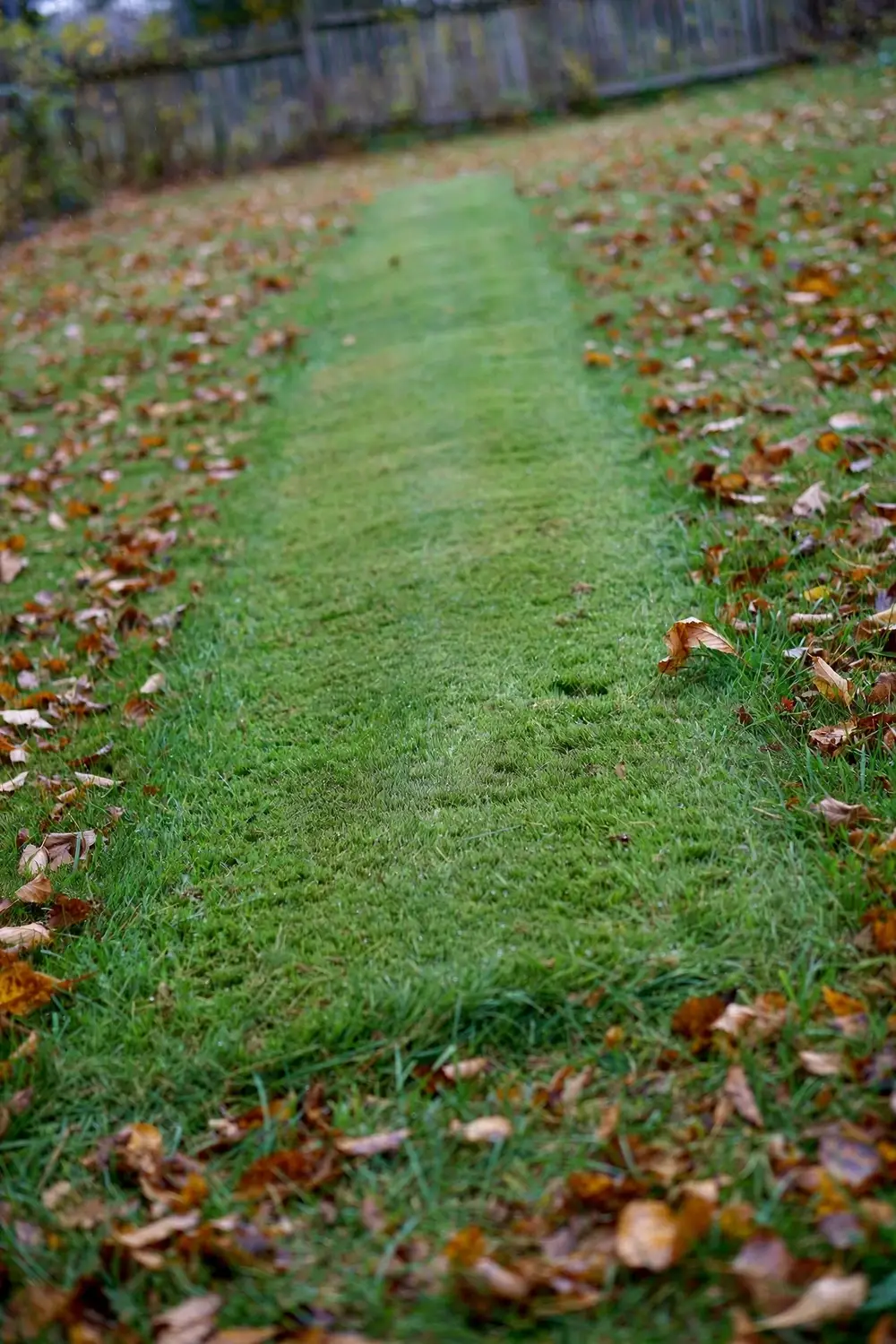

Autumn lawn care Australia means 7 jobs across March, April, and May: mow, feed once, water deep, mulch-mow leaves, pull weeds, aerate only if the soil needs it, and stop before winter. Autumn runs March to May in Australia. The work fits the season. Growth slows as days shorten, so the lawn needs less of everything except attention.
The extension calendars behind this guide were written for the northern hemisphere, where autumn falls in September, October, and November. Read September as March, October as April, and November as May. The biology matches. Growth slows as days shorten in both hemispheres. Most Australian lawns grow warm-season grasses: Buffalo, Kikuyu, Couch, and Zoysia. Those four slow down as soil cools. Cool-season ryegrass keeps growing longer into the cold.
1. Know What Autumn Asks of Your Lawn
Autumn asks your lawn to slow down, not to shut down. Warm-season grasses stop pushing top growth as soil cools and shift energy into crowns and roots instead. That stored energy carries the lawn through winter. It fuels the spring flush. Cool-season ryegrass is different. It keeps growing through autumn and into winter in most districts. The autumn jobs feed storage, not show.
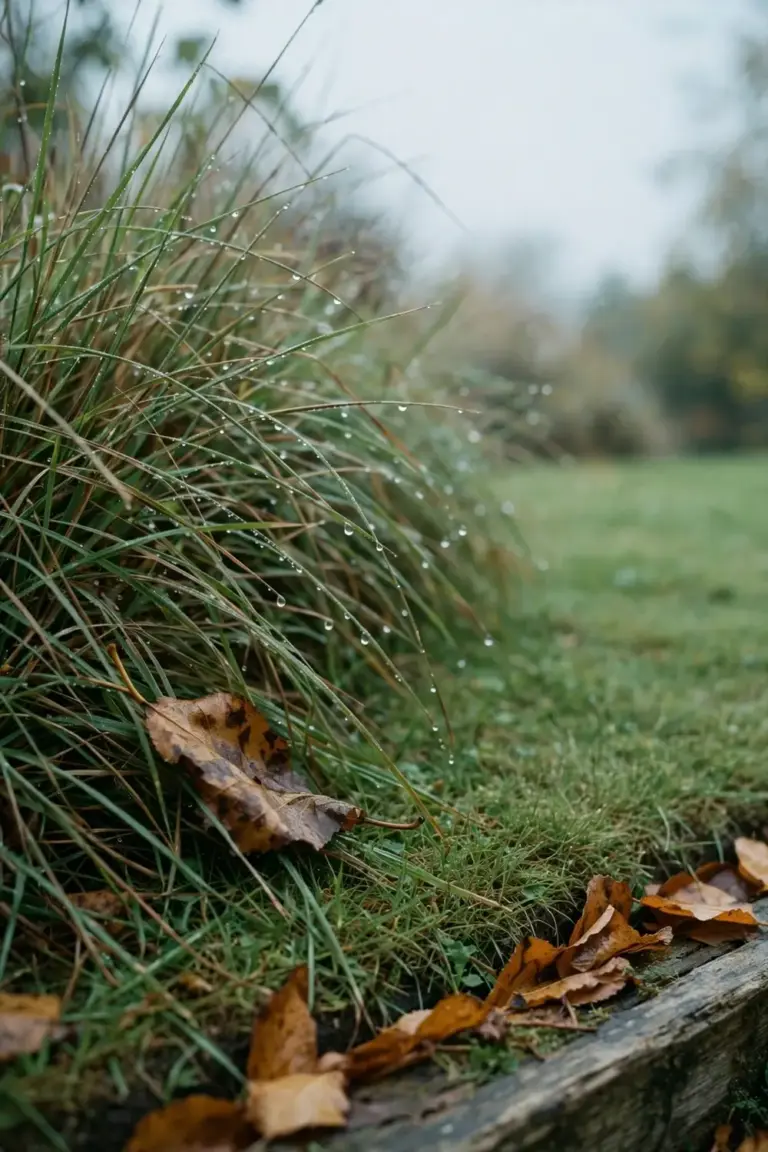
Soil temperature drives the slowdown, not the calendar date. Days shorten. Nights cool. Dew sits longer in the morning. The lawn feels these changes before you see them. Warm-season grasses respond by banking energy below ground. Their leaves may keep some color for weeks while the real work moves to crowns and roots. Cool-season grasses use the same cool weeks differently. They keep building leaf, because their peak growing season runs through the cool months. One season, two strategies. Autumn care respects both.
Two mistakes bracket the season. The first treats autumn like summer: the mower stays low, the fertilizer keeps flowing, and the lawn pushes soft growth into cold nights and pays for it. The second treats autumn like winter. Everything stops in March. Weeds move into the gaps, leaves mat over the turf, and the lawn enters winter thin and comes out of it thinner. Autumn sits between those two mistakes. Mow a little higher. Feed once. Water when the lawn shows thirst. Clear the leaves. Pull the weeds. Then stop.
Think of the season as storage and surface. Storage means crowns and roots banked with energy. Surface means a clean, upright leaf canopy that catches light and sheds water. Every autumn job serves one of those two aims. Mowing and leaf clearing serve the surface. Feeding and deep watering serve storage. Weed pulling protects both, because weeds steal light above ground and nutrients below it. A job that serves neither aim does not belong in autumn.
2. Run the 7-Task Autumn Checklist
The checklist below carries the whole season. Work it in order, one pass per week, and the lawn enters winter with stored energy and a clean surface.
| Task | When | Why |
|---|---|---|
| Mow | Weekly while growth continues, then fortnightly as growth slows | Keeps leaves upright and light reaching the crown |
| Feed once | Early autumn, March | Stocks crowns and roots for winter |
| Water deep | When the lawn shows thirst, then back off as rain returns | Trains roots down instead of at the surface |
| Mulch-mow leaves | Weekly while leaves fall | Returns organic matter without smothering turf |
| Pull weeds | After rain, while weeds are small | Stops winter weeds before they seed |
| Aerate only if compacted | Early autumn, March | Opens heavy or clay soil for air and water |
| Stop | After the autumn feed for warm-season lawns | No soft growth into cold nights |
One pass per week covers most of the list. Mow, check the leaves, pull the weeds you see, and look at the soil. The feed happens once. Aeration happens once or not at all. The checklist works because it is small. A lawn that gets seven small jobs done beats a lawn that gets one big autumn weekend and then nothing.
Run the list on the same day each week if you can. A fixed day turns autumn care into a habit instead of a project. Walk the lawn first. Look for bare patches, standing water, and weed seedlings. Then mow. Then deal with what the walk showed you. Short on time? Mow and clear the leaves. Those two jobs protect the lawn this week. The rest can wait seven days.
Aeration earns a decision, not a default. Push a screwdriver into the soil after rain. If it slides in easily to the handle, the soil breathes fine. If it stops an inch down, compaction is likely. Heavy foot traffic, clay soil, and lawns that puddle after rain are the usual candidates. A core aerator pulls plugs out of the ground and opens the soil for air and water, so leave the plugs on the lawn to break down and return to the soil. Skip aeration on a lawn that drains well and feels soft, because an unnecessary pass costs a weekend and gains nothing.
3. Mow for Shorter Days, Not for a Short Lawn
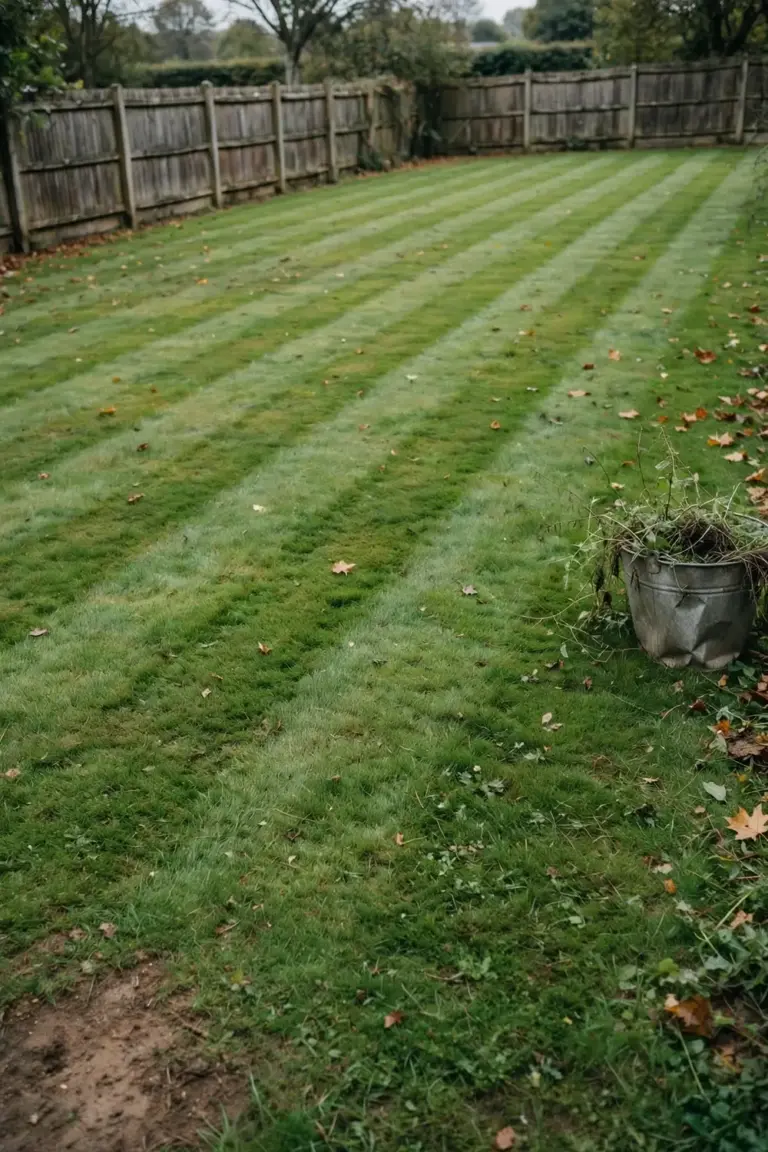
Autumn mowing keeps the lawn upright and lets light reach the crown. Cut at the high end of the range for your grass. Clemson University’s tall fescue calendar puts autumn mowing at 2.5 to 3.5 inches, which is 6.3 to 8.9 cm, from September through November, states the one-third rule that no more than one-third of the blade comes off at one cut, and notes that clippings left in place can supply up to 25 percent of the lawn’s fertilizer needs as they break down, according to Clemson University’s tall fescue maintenance calendar. North Carolina State Extension’s tall fescue calendar gives a slightly tighter band for the same season, 2.5 to 3 inches, which is 6.3 to 7.6 cm. The tall fescue lawn maintenance calendar carries that band.
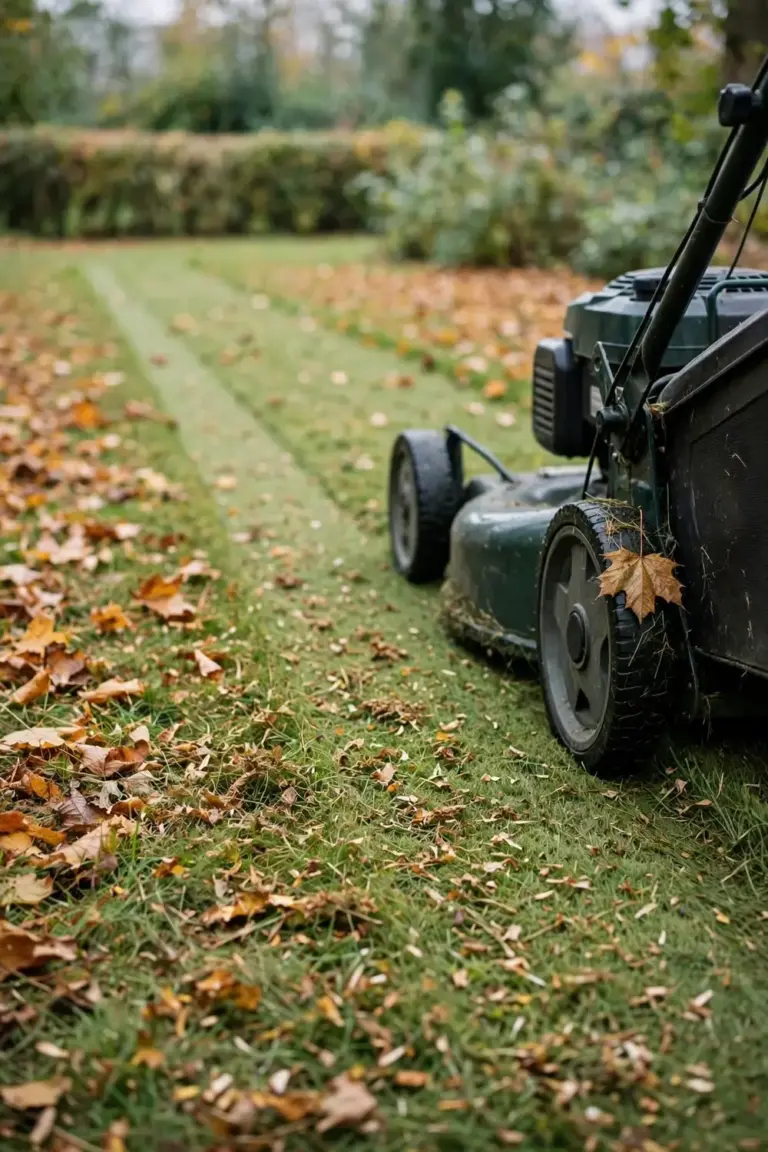
Warm-season lawns get one specific autumn move. North Carolina State Extension’s bermudagrass calendar tells growers to raise the mowing height by one-half inch, which is 1.3 cm, as growth slows in autumn. The bermudagrass lawn maintenance calendar carries that rule. The extra height shades the soil, shades out winter weeds, and leaves more leaf to feed the roots. Apply the same warm-season pattern to Buffalo, Kikuyu, Couch, and Zoysia. Keep the cut at the high end of what your grass tolerates. A lawn cut short in autumn has less leaf to photosynthesize and less shade to suppress weeds.
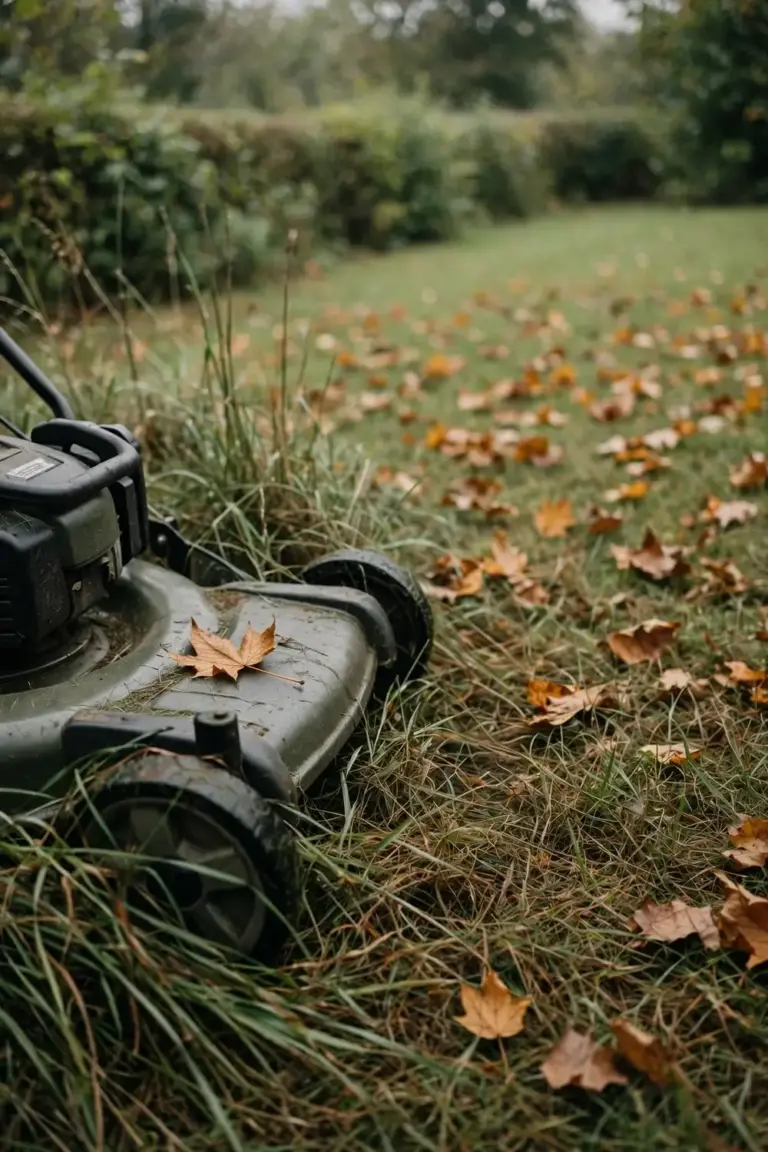
Mowing frequency follows growth, not the calendar. While the lawn still grows, mow weekly. As growth slows in April and May, stretch the gap to fortnightly. A lawn that stops growing needs no mowing at all. Judge by the grass, not the date. If the lawn grew less than a third of its height since the last cut, wait. If it grew more, mow. The one-third rule works as a trigger as well as a limit.
A sharp blade matters more in autumn than in summer. Dull blades tear and bruise leaves, and torn leaves heal slowly in cool weather. Check the blade before the season starts. A clean cut heals fast. A torn edge browns at the tip and gives the whole lawn a ragged look. Sharpen or swap the blade when the cut starts to look frayed. The mower itself needs the same once-over: clean the deck, check the oil, and clear the air filter. A mower that runs clean cuts clean.
Leaves join the mowing pass. Penn State Extension advises mulch-mowing fallen leaves as you mow in autumn, so the pieces break down and return organic matter to the soil. The leaves are treasure guide carries that advice, plus a depth limit: a shredded layer up to about one-half inch, which is 1.3 cm, benefits the lawn. The same guide reports Michigan State University research that found no negative effects from mulching leaf litter into turf, with fewer broadleaf weeds where leaves were mulched. Mow over dry leaves slowly. Cross over them a second time if the pieces still look coarse. Move the excess to garden beds when the layer would bury the grass. A mat of whole leaves blocks light and air. Shredded leaves feed the soil.
4. Feed Once, Then Stop Feeding Warm-Season Lawns
Autumn feeding stocks the lawn for winter. Feed once in early autumn, then stop feeding warm-season lawns. I have learned that the lawn I feed once in early autumn outlasts the one I keep feeding into winter. North Carolina State Extension’s tall fescue calendar puts the cool-season autumn rate at 1 pound of nitrogen per 1,000 square feet, which is 4.9 g per square meter, in mid-September and again in November, using a turf-grade fertilizer with a 3-1-2 or 4-1-2 ratio, according to the tall fescue lawn maintenance calendar. Read mid-September as mid-March and November as May. Its worked example uses 10-10-10: divide 100 by 10 to get 10 pounds of product per 1,000 square feet, which is 48.8 g per square meter, for 1 pound of nitrogen. The bag math works for any analysis. Divide 100 by the first number on the bag. The answer is the pounds of product per 1,000 square feet that deliver 1 pound of nitrogen.
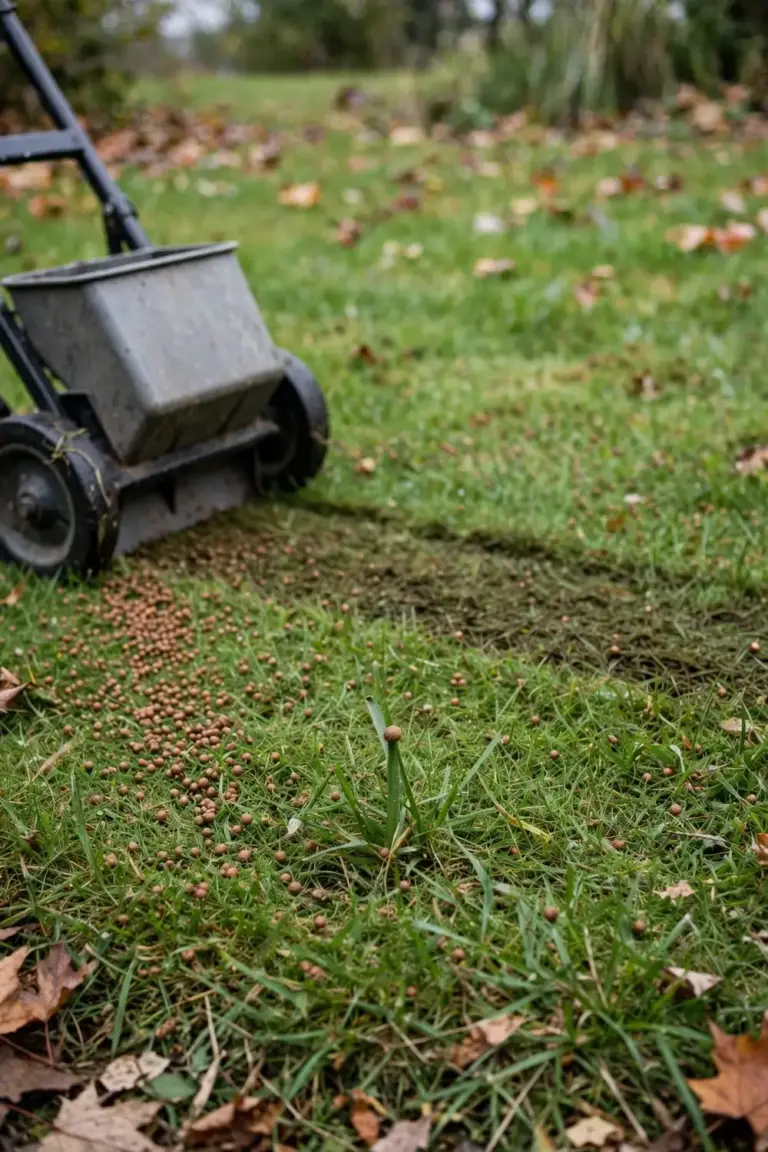
Warm-season lawns get a smaller feed and a hard stop. North Carolina State Extension’s bermudagrass calendar caps autumn nitrogen at no more than one-half pound of nitrogen per 1,000 square feet, which is 2.4 g per square meter, in September, or four weeks before the first expected frost. The calendar suggests a low-nitrogen, high-potassium fertilizer such as 5-10-30 for that final feed. The reason is cold damage. Nitrogen pushed late in the season grows soft leaf tissue that cold nights damage. A soil test settles the question before you spread anything. Building soil health starts with knowing what the soil already holds. If the test shows phosphorus or potassium shortfalls, feed to the test. If it shows plenty, the single autumn feed still stands, because the nitrogen is what the lawn spends first.
Skipping the autumn feed has a quiet cost. The lawn enters winter with thin reserves. It greens up late in spring. It thins where traffic and shade already stress it. One feed in March costs little and buys the lawn a full winter of stored energy. The reverse mistake costs more. A lawn fed through April and May pushes soft growth into the cold. That growth browns at the first frost, and the lawn spends spring repairing it instead of growing. Feed once. Then stop.
Spread the feed evenly. A spreader beats a hand toss for even coverage. Set the spreader to the bag rate, walk at a steady pace, and overlap each pass slightly so no strip gets missed. A double-dosed strip grows fast and dark. A missed strip stays pale and thin. Stripes show for weeks. Water the feed in lightly after spreading unless rain is coming within a day. A light watering moves granules off the leaf and onto the soil, where roots can reach them.
Spring feeding follows a different clock. Fertilizing a lawn in spring covers the spring window, when growth restarts and the lawn can use nitrogen for new leaf. Autumn feeding and spring feeding are two different jobs. Autumn builds storage. Spring builds leaf. Do not borrow the spring rate for autumn. Do not carry the autumn feed into winter. One feed in March, then stop, covers most Australian warm-season lawns.
5. Water Less Often, But Water Deep
Autumn watering follows the lawn’s signals, not the calendar. Clemson lists the thirst signs plainly, a dark bluish-gray color, footprinting where feet leave marks, and wilted, folded, or curled leaves, and puts the cool-season weekly rate at about 1 to 1.25 inches of water, which is 2.5 to 3.2 cm, enough to wet the soil to a depth of 4 to 6 inches, which is 10.2 to 15.2 cm, with sandy soils needing more frequent watering at about three-quarters of an inch, which is 1.9 cm, every three days, according to Clemson University’s tall fescue maintenance calendar. Water when those signs show. Skip the watering when they do not.
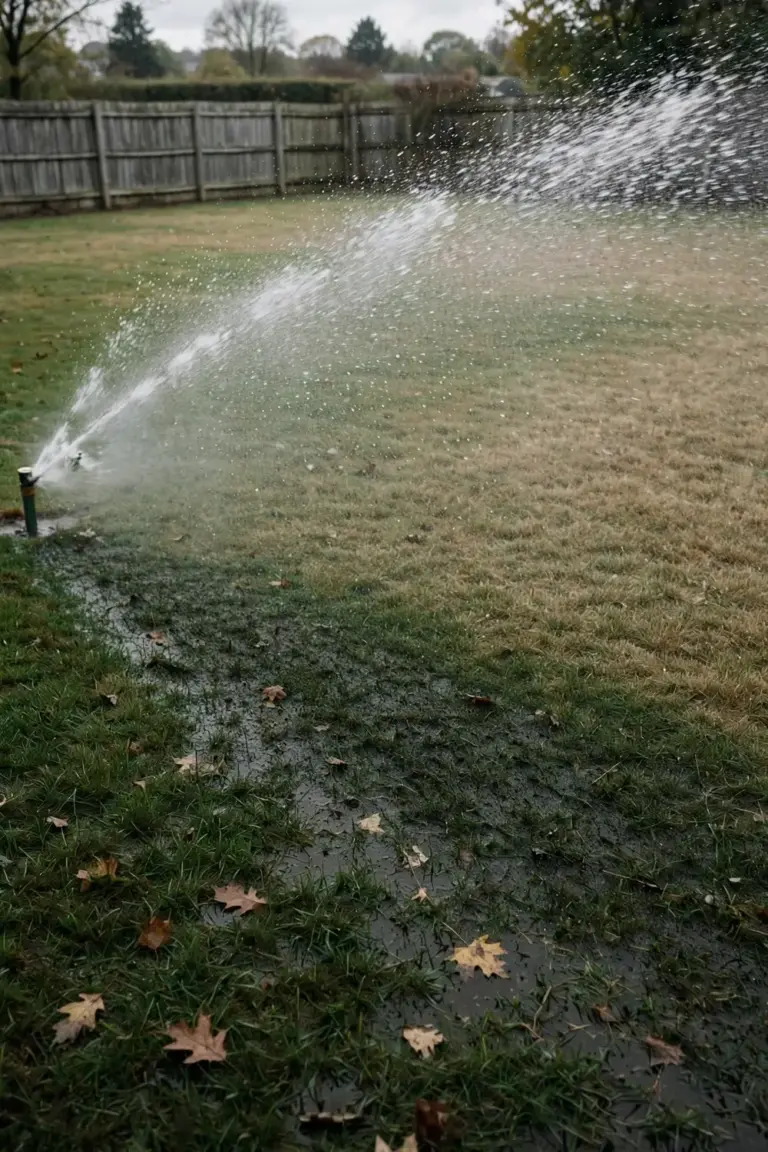
Autumn rain changes the equation. As rain returns, back off the irrigation and let rainfall carry the lawn. Water in the morning so leaves dry before night. A lawn that stays wet overnight in cool weather invites disease. Check the soil before you turn the tap on. Push a screwdriver into the ground. Dry soil to a finger’s depth after rain means the lawn still wants water. Damp soil means it does not. A rain gauge removes the guesswork. Empty it after each fall and note the weekly total against the 2.5 to 3.2 cm target.
Watch for pooling after heavy autumn rain. Water that sits on the surface for more than a day means the soil underneath is compacted or the grade traps water. Puddles starve roots of air. A fork pushed into the puddle area tells you how deep the problem runs. Shallow puddles after a storm drain on their own. Puddles that return after every rain point to compaction or grade, and those need a separate fix. Do not water a lawn that already puddles. Wait for the surface to drain, then check the soil before watering again.
Dormant lawns still need an occasional drink. North Carolina State Extension’s tall fescue calendar advises that dormant lawns be watered once every three weeks during a drought. That rule protects crowns and roots through a dry autumn. A lawn that goes fully dormant in a dry autumn without any water can lose crowns. One deep drink every three weeks keeps the crowns alive without waking the lawn into growth. If rain falls, skip the drink. The calendar rule covers drought weeks only.
6. Pull Autumn Weeds While They Are Small
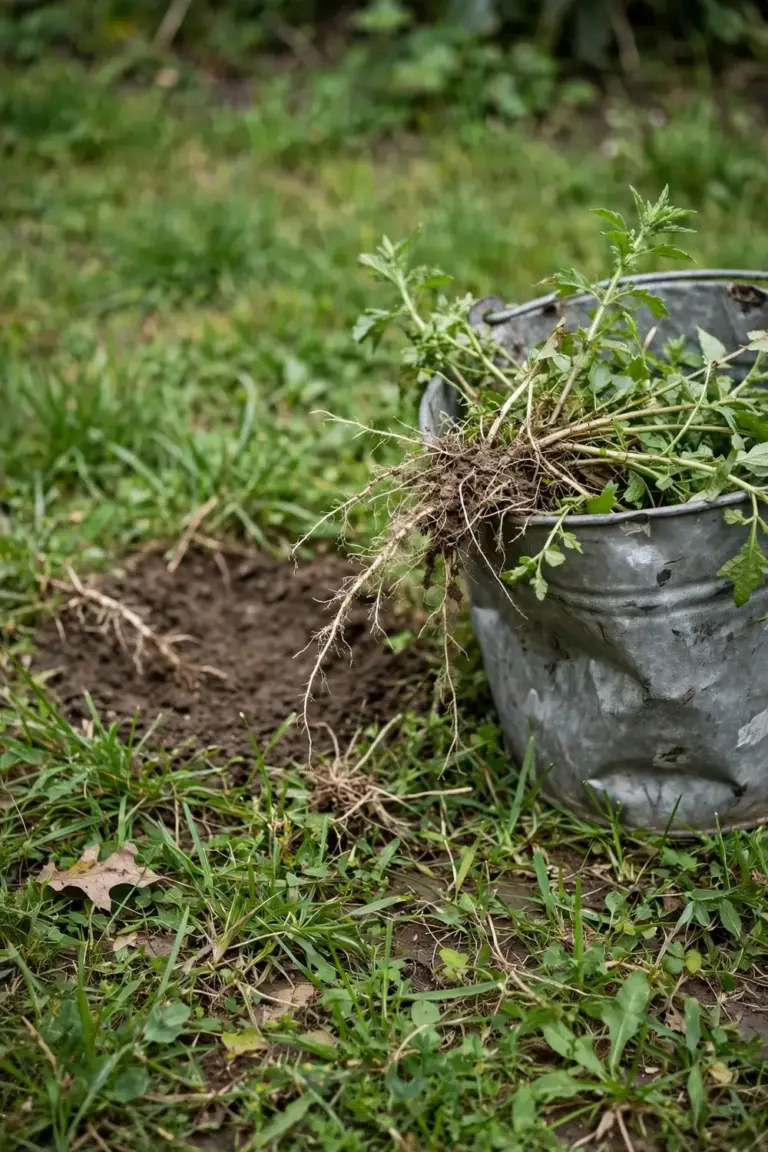
Autumn weeds establish now and seed later. Pull them while they are small. Rain softens the soil and loosens roots, so the day after rain is the best pulling day. Grip low, near the crown, and pull the whole root. A weed pulled with its root out does not regrow. A weed snapped at the stem does. Work the edges first: garden bed borders, fence lines, and bare patches are where weeds start. A bucket and a fork cover most of the job. Ten minutes after rain beats an hour on dry soil.
Spot-spraying is a pointer, not a program. Clemson notes that broadleaf herbicides can control dandelions, wild onions, cudweed, and other weeds in autumn if necessary, and warns that some herbicides may affect newly seeded turf. Read the label before you spray anything. The label names the weeds it controls, the grasses it is safe on, and the waiting period before mowing. Do not spray on a windy day. Do not spray a lawn you just seeded. Hand-pulling beats spraying for scattered weeds. Spraying earns its place when one weed type covers a whole patch. The label governs every spray decision.
Pulling technique decides whether the weed comes back. Wet the patch first if rain has not done it for you. Push the fork in beside the crown, lever gently, and lift the root whole. Shake the soil off the roots and drop the weed in the bucket. Tap the soil back down with your foot. A pulled weed left on the lawn can reroot after rain, and a seeded weed left on the pile can shed seed where you stand. The bucket keeps both problems out of the lawn.
Mowing does not control weeds. A mower cuts the top off a weed and leaves the root. Some weeds answer a mow by branching low and seeding below blade height. Others regrow from the crown. Mowing keeps weeds tidy without removing them. Pull the root or treat the weed, and do not count a mow as weed control.
Autumn rain brings a weed flush. The same rain that softens soil for pulling also wakes weed seed. Expect a fresh round of seedlings two weeks after the first good autumn rain. That flush is the one to catch. Seedlings pulled at two leaves never seed. Seedlings left through May flower in spring. Walk the lawn a fortnight after rain and pull what came up.
7. Skip These 4 Jobs This Autumn
Four jobs look like autumn work and are not. Skip them this season.
Renovation is a pointer, not an autumn task. A full renovation means testing the lawn, deciding what it needs, and doing only the steps it needs. Autumn is one window when renovation work can happen, but the job itself is a separate decision with its own tests. Do not scalp, dethatch, and reseed in one weekend because the calendar says autumn. Test first. Do only what the test calls for.
Top-dressing is a pointer, not an autumn task. Spreading a layer over the lawn can help level and feed it, but the mix depends on the soil and the job. A lawn that needs leveling gets a different treatment than a lawn that needs organic matter. Do not spread a mix on a guess. Test the soil, name the job, and then choose. A thin layer of compost on a lawn that needs organic matter is a different job from sand worked into hollows for leveling.
Scalping is a pointer, not an autumn task. Scalping strips the lawn down to stems in one pass, and autumn is the wrong season for that on a lawn heading into winter. The lawn needs leaf cover to photosynthesize through the cool months. Keep the height up. A scalp belongs to a different season and a different decision, and a lawn scalped in autumn enters winter with no leaf to feed its roots.
Overseeding warm-season lawns is a pointer, not an autumn task. Warm-season seed needs warm soil to germinate and establish. Soil cools through autumn. Seed sown into cooling soil germinates slowly and enters winter weak. Cool-season ryegrass is the exception: it germinates in cool soil and keeps growing. Sow ryegrass if you sow anything. Do not sow Buffalo, Kikuyu, Couch, or Zoysia seed in autumn and expect a lawn by winter.
Frequently Asked Questions
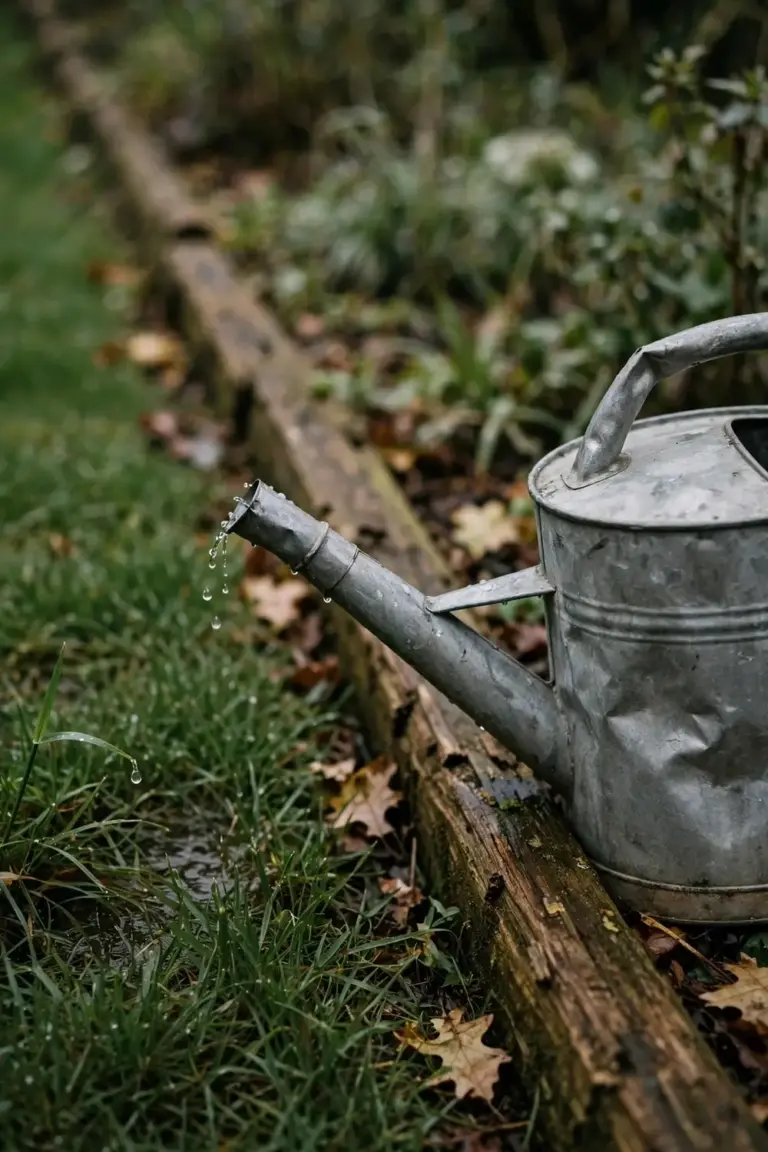
Autumn lawn care starts in March in Australia. March is the first autumn month, and soil still holds summer warmth while days shorten. Start the checklist in early March. Mow at the high end of your grass range. Feed once. Clear the first leaves. Pull the first weeds. Growth slows through April and May. The lawn needs less mowing and no more feeding after the single autumn feed. Finish the checklist before winter cold arrives.
Feed a Buffalo lawn once in early autumn, then stop nitrogen. Buffalo is a warm-season grass. It slows as soil cools. One early autumn feed stocks the crowns and roots for winter. A second feed pushes soft growth into cold nights, and cold nights damage soft growth. Use the warm-season rule: no more than one-half pound of nitrogen per 1,000 square feet, which is 2.4 g per square meter, for the autumn feed. A soil test beats a guess.
Mulch-mow a thin layer of leaves into the lawn. A shredded layer up to about one-half inch, which is 1.3 cm, benefits the turf. The pieces break down and return organic matter to the soil. Move whole leaves that form a mat. A mat blocks light and air and smothers the grass underneath. Rake thick leaf piles onto garden beds instead, where they work as mulch. Preparing garden beds for winter puts fallen leaves to work off the lawn.
Do not scalp your lawn in autumn. Scalping strips the lawn to stems in one pass. The lawn needs leaf cover to photosynthesize through the cool months and to shade out winter weeds. Keep the cut at the high end of your grass range. Raise the height by one-half inch, which is 1.3 cm, as growth slows. A scalp belongs to a different season and a different decision. Autumn asks for height, not for a reset.
Water less in autumn, but keep watching the lawn, because rain returns in most districts and carries much of the load. Water when the lawn shows thirst. Look for a dark bluish-gray color, footprints that linger, and wilted, folded, or curled leaves. Water deep enough to wet the soil to 4 to 6 inches, which is 10.2 to 15.2 cm. A dormant lawn in a dry autumn needs one deep drink every three weeks. Rain means skip the drink.
Start With One Mow This Weekend
Autumn lawn care is seven small jobs, not one big project. Mow at the high end of the range. Feed once in March, then stop nitrogen on warm-season lawns. Water when the lawn shows thirst. Mulch-mow the leaves. Pull the weeds while they are small. Aerate only if the soil is compacted. Skip the renovation, the top-dressing, the scalp, and the warm-season seed. Start with one mow this weekend. The lawn will enter winter with stored energy, a clean surface, and a head start on spring.
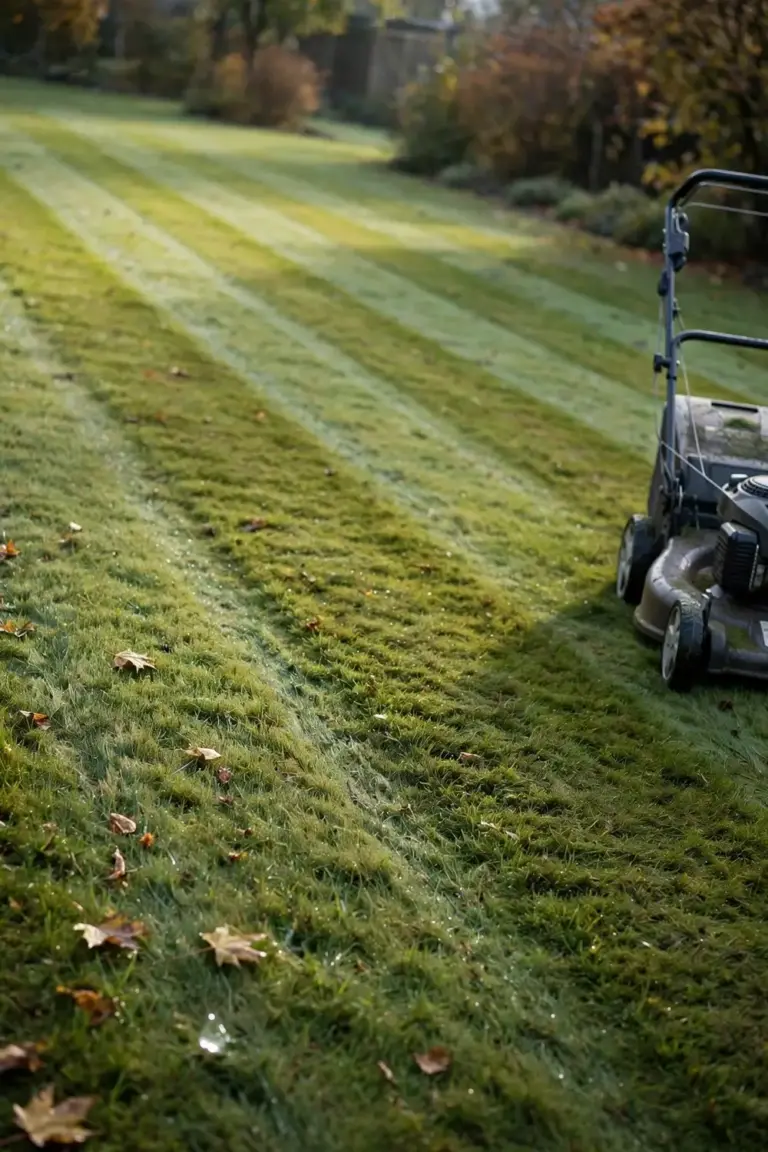
Keep the routine through May. The lawn will slow, the leaves will fall, and the weeds will try their luck. One pass per week holds the line. When winter arrives, the lawn rests with full crowns and a clean surface. Spring starts from strength, not from repair. Check the lawn once in midwinter, after storms, for branches and debris. Clear what fell. Leave the rest alone until spring.