
Plant a 15 to 20 gram rhizome piece in April, and lift the crop from the sixth month onward. That is how to grow mango turmeric in the hot humid tropics, and the whole guide follows from that one timing. The plant behind the name is temu mangga, a rhizome that smells like raw mango and belongs to the turmeric genus.
Temu mangga is Curcuma amada. Indonesian research papers still print the older name Curcuma mangga Valeton and van Zijp for the same plant, and Kew’s Plants of the World Online accepts Curcuma amada as the current name. The phrase “from Indonesia” here means the Indonesian name and the Indonesian use of temu mangga. It does not mean a separate Indonesian species. I have learned that the mango scent, not the label, is the honest identity test for this rhizome.
The sections below follow a working order. You will meet the name, the range, the scent test, the plant, and the market labels. Then come the kitchen uses, the Indonesian jamu record, the health-claim fence, and the Kerala growing method with its real numbers. No section invents a temperate protocol, because none exists in the evidence.
1. Start With the Right Name: Temu Mangga Is Curcuma Amada, Not a Mango
Temu mangga is Curcuma amada, a rhizome in the ginger family, Zingiberaceae. The Indonesian name is temu mangga. The botanical name is Curcuma amada. The Indian name is mango ginger. The market label is mango turmeric. One plant carries all four names, and the guide uses each name in exactly one sense from here on.
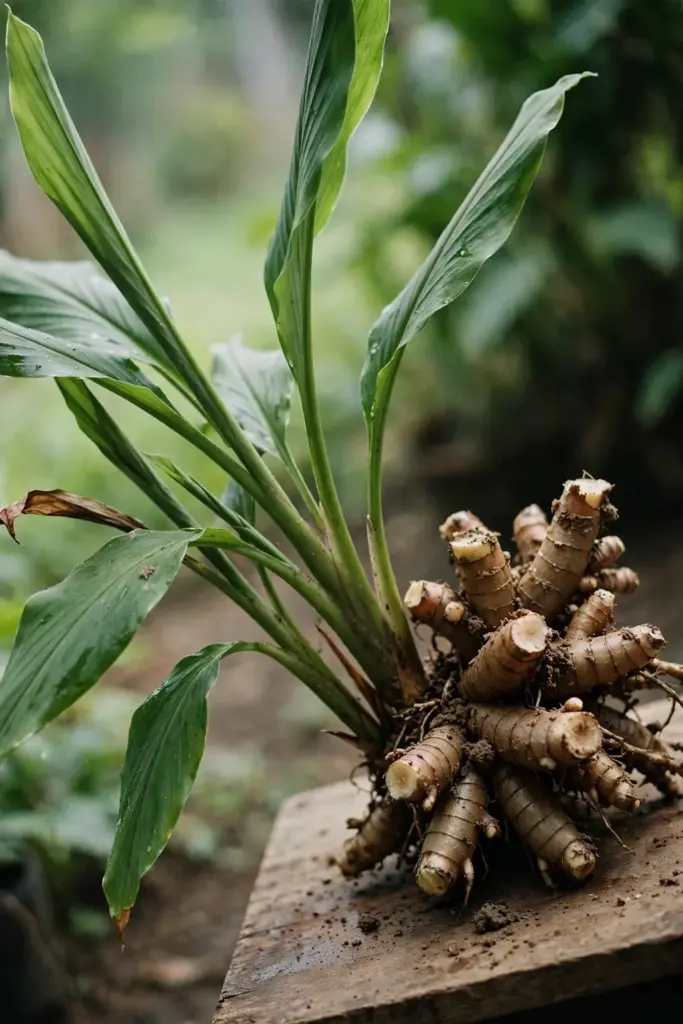
Kew’s Plants of the World Online accepts Curcuma amada Roxb. as the name for this plant, following the 2010 Taxon revision on Indian Curcuma names. Indonesian papers keep publishing the same plant as Curcuma mangga, so a reader who meets both names in two papers is reading about one rhizome. The botanical name settles the question every time a label or a listing leaves doubt.
The mango in every name is scent, not botany. No mango tree stands behind this rhizome, and no mango fruit grows on the plant. The rhizome smells like raw mango when cut, and that scent gave the plant its names in three languages. A gardener who expects mango fruit from this plant has been misled by a name, and the scent test in the next sections clears that up.
2. Read the Native Range Before You Call It Indonesian
Curcuma amada is native to Bangladesh, India, Myanmar, and Thailand, according to Kew’s Plants of the World Online. Indonesia is not on that native list. The plant grows in Indonesia as a cultivated and traded rhizome, studied by Indonesian universities and sold in Indonesian markets, and that is the whole meaning of “from Indonesia” here.
Useful Tropical Plants gives the same eastern Asian range as India, Bangladesh, Myanmar, and Thailand, and describes the plant as occasionally cultivated in tropical areas, especially India. Cultivation, not wild origin, carries the plant across Southeast Asia. A rhizome that travels by trade picks up local names at every stop, and temu mangga is the Indonesian stop on that route.
The range fact shapes the growing advice below. The documented cultivation method comes from Kerala in southern India, where the plant grows as a farm crop. The Indonesian record is a use record, not a separate growing method. A reader who wants the plant’s agronomy reads the Kerala method. A reader who wants the plant’s Indonesian story reads the jamu sections.
3. Smell the Rhizome: Raw Mango Scent Is the Identity Test
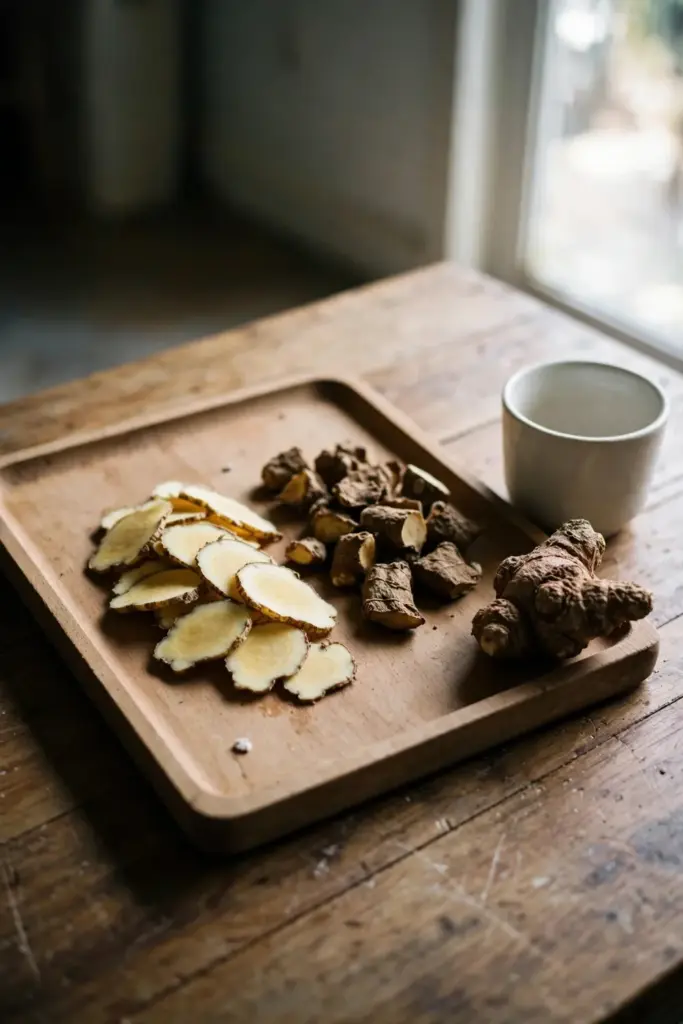
Cut a fresh rhizome and the scent decides the identity. Curcuma amada smells like raw mango. Two compounds, car-3-ene and cis-ocimene, contribute the characteristic mango odor of the rhizome, according to the Kerala Agricultural University station page on mango ginger. The scent is the trait that separates this rhizome from every other Curcuma on a market table.
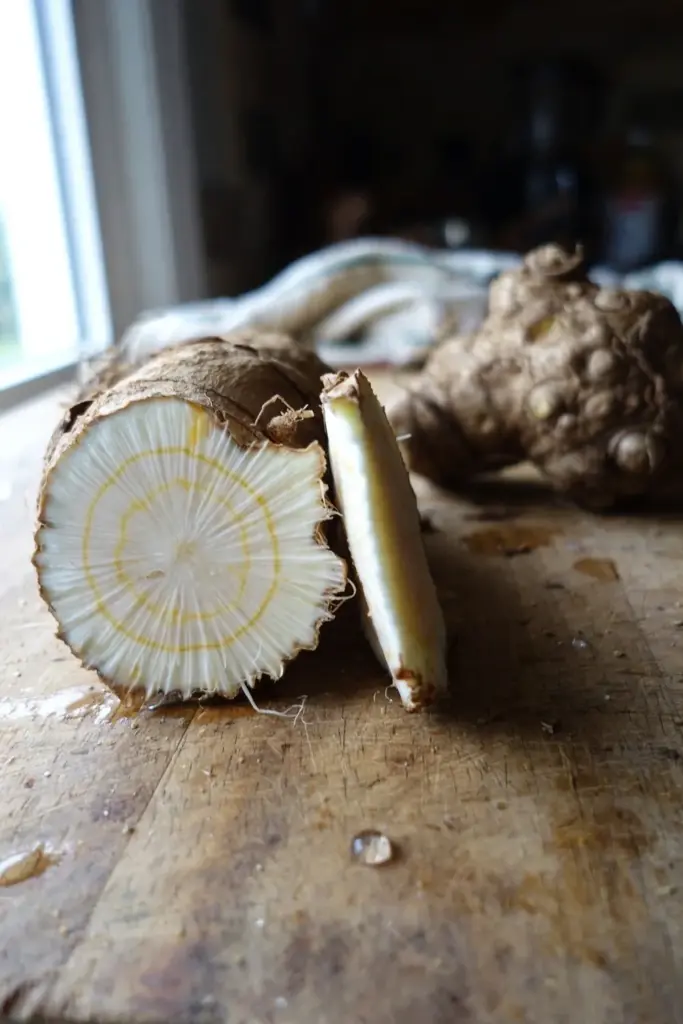
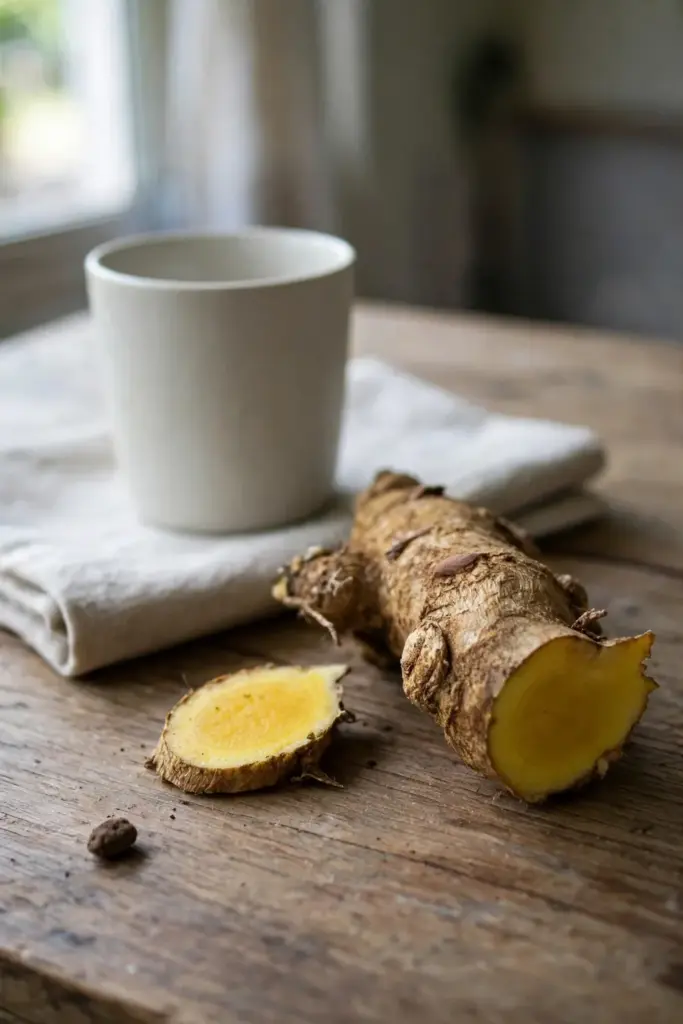
The scent test works because the look does not. The rhizome looks like ginger. The plant looks like turmeric. The cut surface shows a pale interior, and the leaves match a dozen ginger-family plants. A buyer who judges by looks alone buys the wrong rhizome often. A buyer who cuts a small piece and smells raw mango has the one test that counts.
Use the scent test before money changes hands. Ask the seller to cut a fresh piece and smell the cut surface at once. Raw mango scent means Curcuma amada. Pungent ginger heat means ginger, and earthy turmeric smell means turmeric. No scent at all means old stock. Old stock deserves no money.
4. Expect a Turmeric Cousin, Not a Ginger Clone
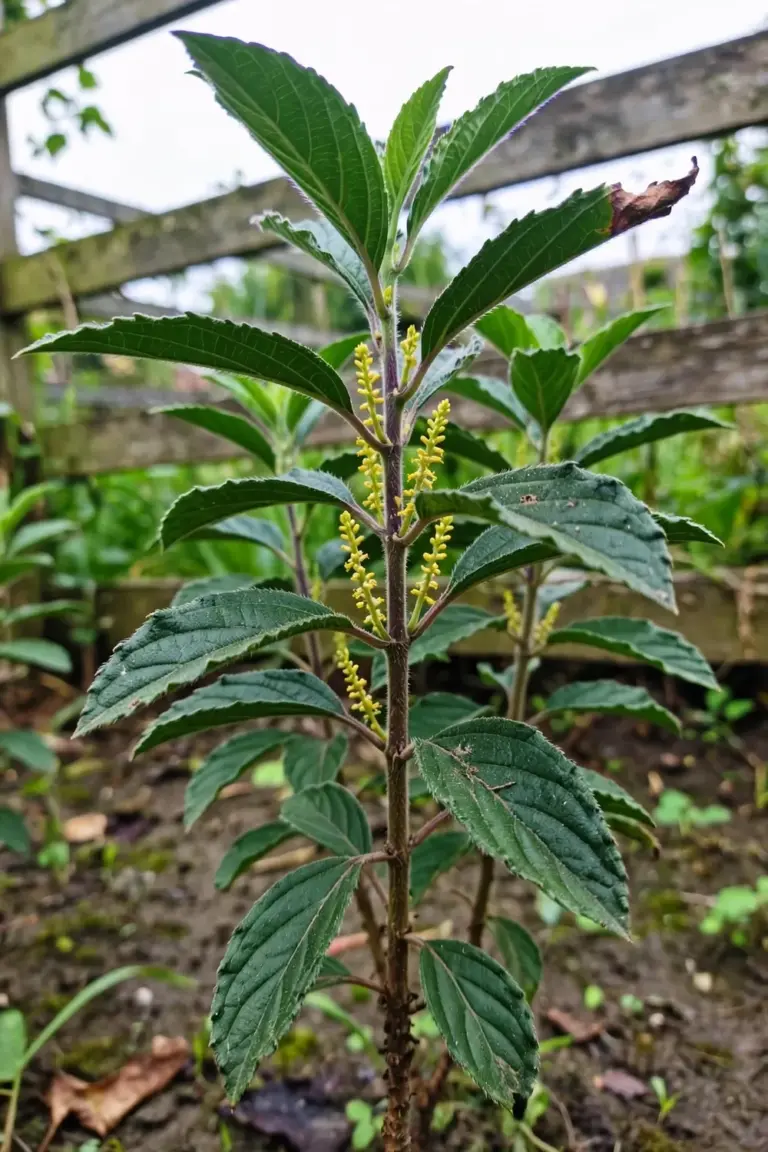
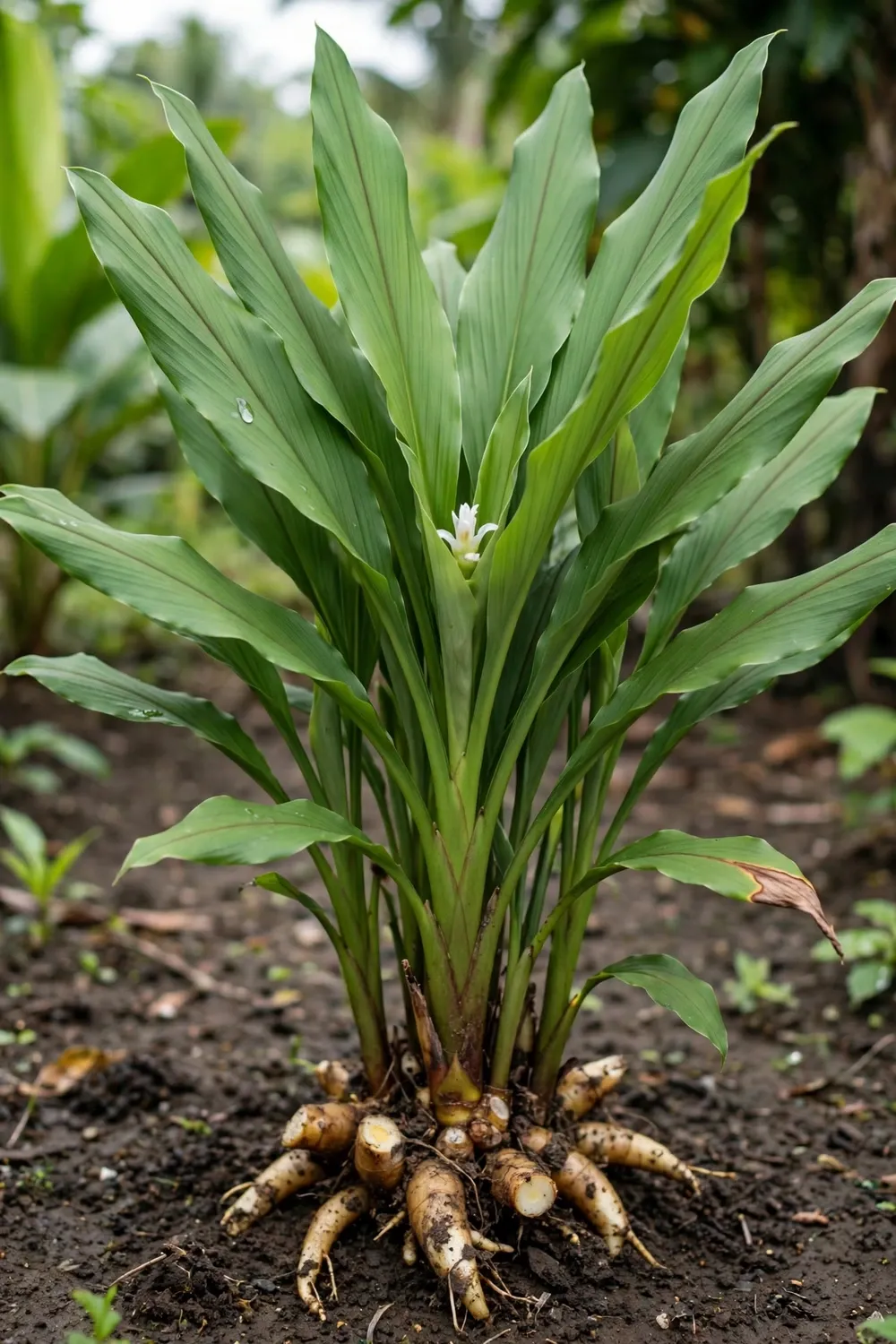
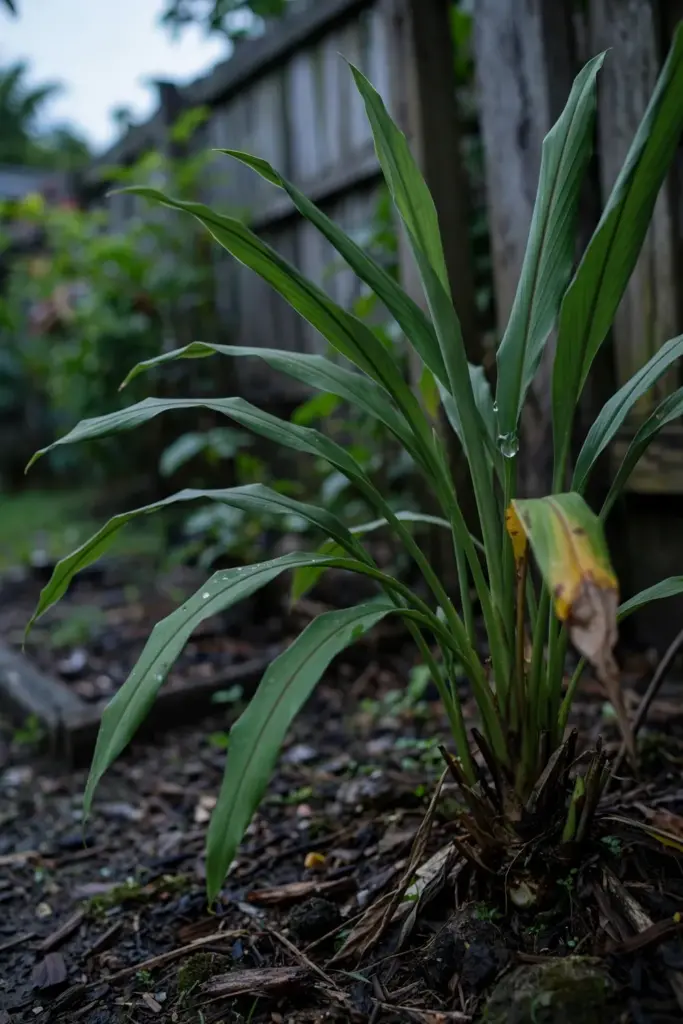
Curcuma amada grows as a rhizomatous aromatic herb with a leafy tuft 60 to 90 centimetres tall, per the Kerala Agricultural University station page. Useful Tropical Plants gives 80 centimetres as the height for the same plant, so the two sources agree on a knee-high plant. The plant reads as a turmeric cousin at first sight, because it is one.
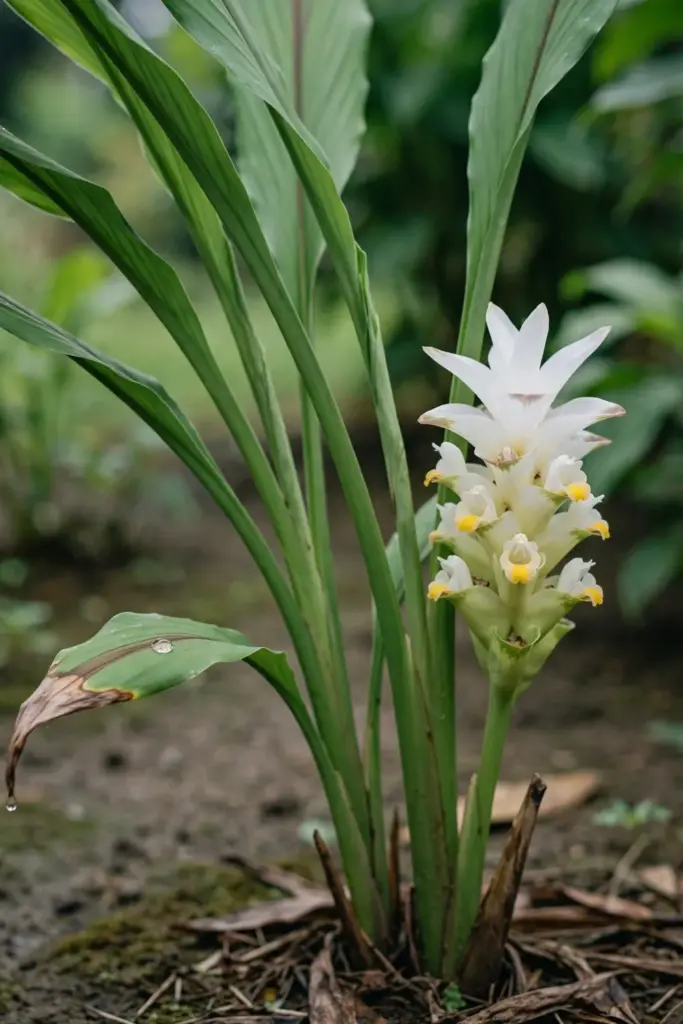
The leaves are long, petiolate, and oblong-lanceolate, tapering at both ends, glabrous and green on both sides, per the Kerala Agricultural University station page. A leafy tuft of such leaves rises from the rhizome, and the plant holds that tuft through the wet season. The flowers are white or pale yellow, arranged in spikes in the center of the tuft of leaves, with a semi-elliptic yellow lip. The flowers sit low in the tuft, and a gardener who expects a tall flower stalk will look in the wrong place.
The rhizome is the whole crop. The leaves and flowers carry no kitchen use in the documented record. The plant grows, stores flavor in the rhizome, and dies back to it. A gardener who tends the tuft all season and then lifts the rhizome has done the whole job.
5. Tell Mango Turmeric Apart From Market Labels With One Table
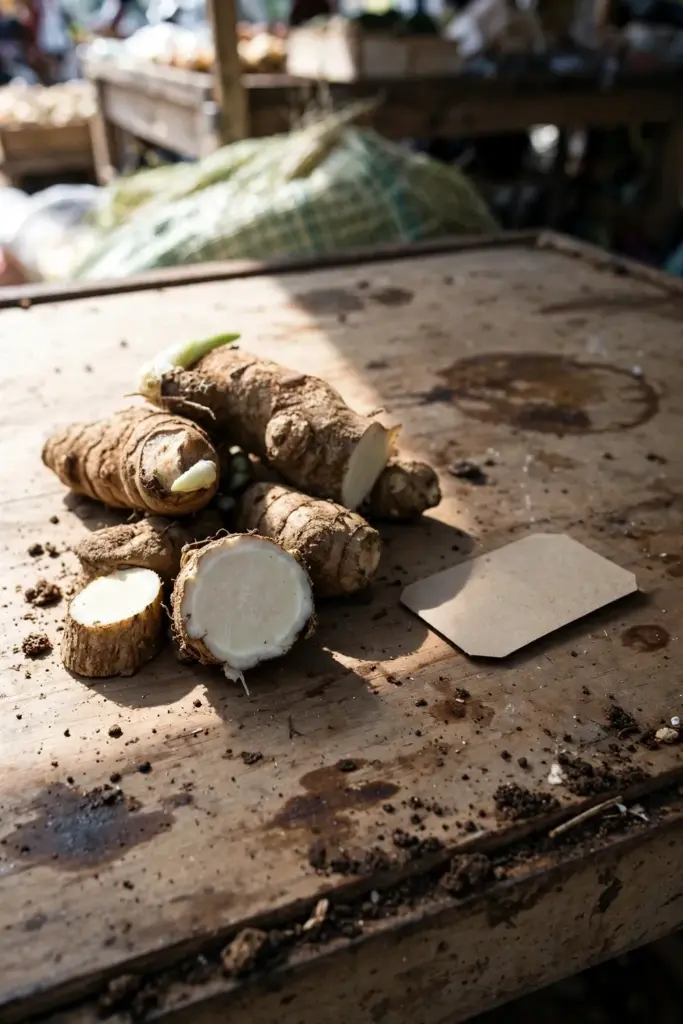
Market labels for this rhizome shift by stall and by country. Mango turmeric, mango ginger, and white turmeric all appear on listings for Curcuma amada. One name on a label proves nothing. The botanical name on the label proves the species. The table below turns label reading into a short routine.
| Name on the Label | What It Means | What to Check |
|---|---|---|
| Temu mangga | Indonesian name for Curcuma amada | Botanical name Curcuma amada on the label |
| Mango ginger | Indian name for the same rhizome | Botanical name, since ginger is a different genus |
| Mango turmeric | Market label for the same rhizome | Botanical name, since it is not a mango and not turmeric |
| White turmeric | Market label, not a species name | Botanical name, since a label alone gives no check |
| Curcuma amada | Botanical name for the plant | Authority Roxb. beside the name on careful labels |
A label that prints only a market name gives you no verification. A label that prints Curcuma amada gives you the species. A listing that prints Curcuma mangga describes the same plant under the older name, and the same check applies. Buy by the botanical name, and let the market names stay as flavor notes.
The confusion is not a search problem. It is a stall problem. Sellers print the name that moves stock, and buyers who trust a market name carry the risk. The botanical name is the only string on a label that answers to a flora, and a flora answers to evidence.
6. Use the Rhizome Raw: Salads, Chutney, and Pickles Carry the Flavor
Eat the rhizome raw first. Curcuma amada is a flavor rhizome, and raw use shows the flavor without heat or processing in the way. The Kerala Agricultural University station page lists the kitchen uses as pickles, chutney, preserve, candy, sauce, and salad, plus meat and other culinary preparations. Raw slices in a salad and grated rhizome in a chutney are the two uses that show the mango scent best.
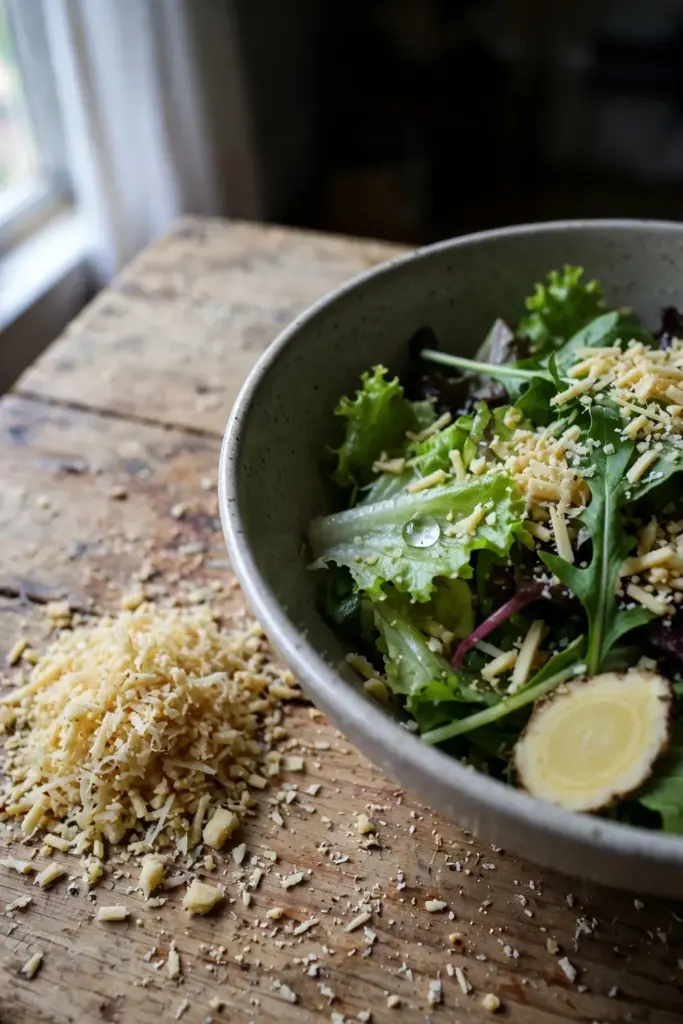
Grate the rhizome fine for salads. The fine grate spreads the scent through the bowl, and a small amount flavors a large salad. Slice it thin for a relish plate. The thin slice keeps the crunch, and the crunch is part of the appeal. Taste a thin slice plain before cooking with it, so the raw mango flavor sets the baseline for every cooked use that follows.
The rhizome brings bitter, sweet, and sour notes together with an aromatic, cooling character, per the Kerala Agricultural University station page. That mix explains why the rhizome works raw. Bitter alone would need cooking. Sweet and sour alone would read as fruit. The three notes together read as a condiment, and condiments belong on the table raw.
7. Pickle It the South Indian Way: Salt, Sour, and Mango Scent
Pickling is the classic use for this rhizome. Useful Tropical Plants records the root as a mild ginger-flavored spice used in pickles, and the Kerala Agricultural University station page lists pickles first among the kitchen uses. South Indian pickles carry mango ginger as a featured ingredient, and the rhizome keeps its crunch and scent in brine.
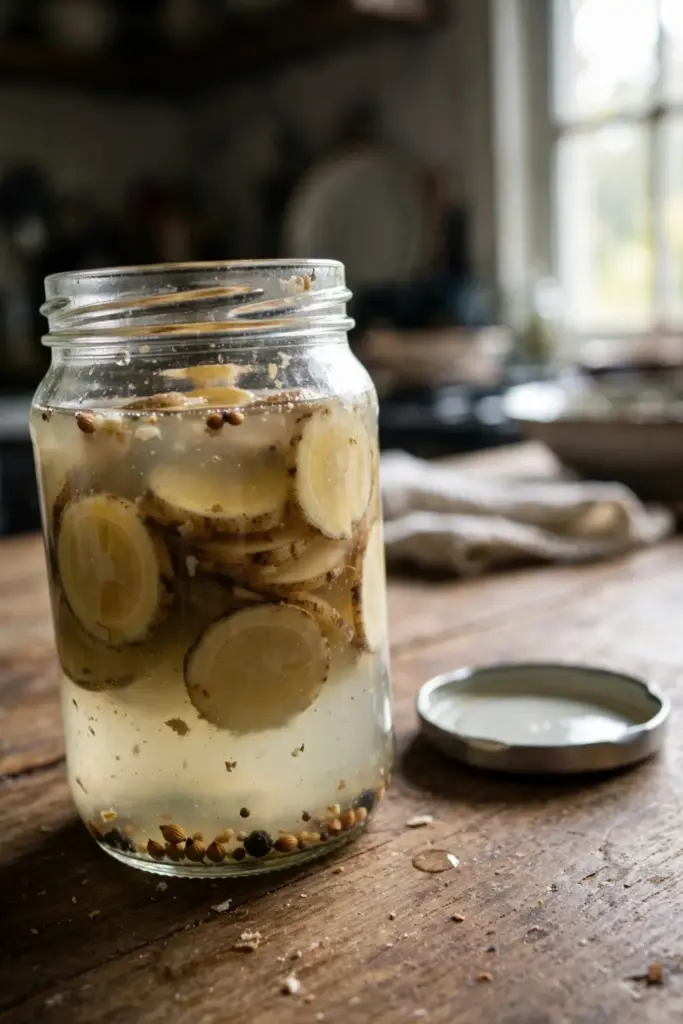
Start with fresh rhizomes. Wash them, peel lightly, and cut them into short fingers or thin coins. Salt the pieces and rest them until they shed water. Drain the water off. Cover the pieces with sour liquid, such as lemon juice or vinegar, plus the spices of your own pickle tradition. The sour liquid preserves the crunch, and the salt draws the flavor out of the rhizome.
The pickle keeps the mango scent longer than any cooked dish does. Heat drives volatile scent compounds off, and pickling uses no heat. A jar of mango ginger pickle opened weeks later still smells of raw mango. That staying power is why pickling became the signature use, and why a first batch should be a pickle before any cooked experiment.
8. Cook With It as a Mild Ginger, Not as a Turmeric Substitute
Cook with Curcuma amada as a mild ginger. Useful Tropical Plants calls the root a mild ginger-flavored spice, and that phrase sets the cooking rule. The rhizome flavors food without ginger heat, and it never stands in for turmeric. Turmeric colors and stains. Mango turmeric flavors and scents. The two jobs differ, and the cooking should respect the difference.
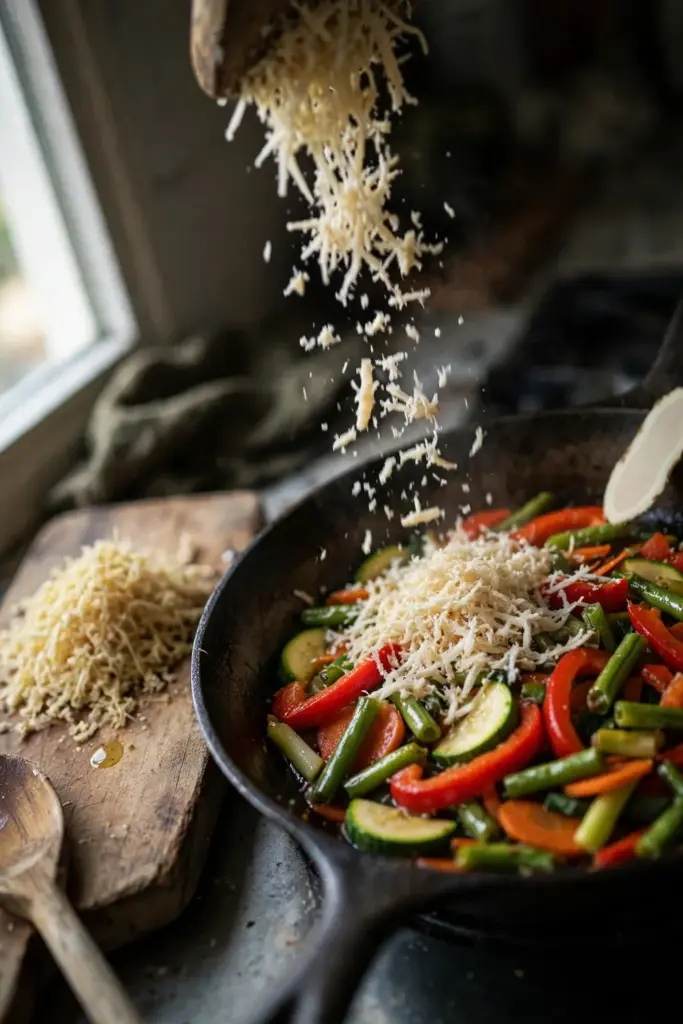
Add grated rhizome to stir fries, soups, and meat dishes near the end of cooking, because late addition keeps the mango scent alive. The scent is the point of the ingredient. Early addition in a long simmer cooks the scent off and leaves a mild root behind. Add it last.
The coloring matter in the rhizome is curcumin, per the Kerala Agricultural University station page. Curcumin gives the rhizome its color, and the same compound colors turmeric. The shared compound does not make the two rhizomes interchangeable. Turmeric brings strong color and earthy bitterness, while mango turmeric brings mango scent and a mild bite. A recipe that needs turmeric color still needs turmeric.
9. Read the Indonesian Jamu Record Without Turning It Into Advice
Indonesian jamu uses temu mangga as a traditional ingredient, and the record is easy to state. A 2020 study from Gadjah Mada University reports that temu mangga relieves gastric pain, diarrhea, menstrual pain, acne, and ulcers, and increases appetite. Those uses come from Indonesian traditional practice, and the study reports them as the plant’s reputation in that practice. The article reports the record and stops there.
The same Gadjah Mada study measured flavonoid content and antioxidant activity in methanolic extracts of temu mangga from several places. Total flavonoid content of the methanolic extract gave a moderate correlation to antioxidant activity, with r equal to negative 0.6085. Clustering by chemometric analysis sorted the samples into 4 groups. Those numbers describe laboratory extracts, not kitchen use, and no dose or preparation follows from them.
General information is the limit on every health topic that follows. The article describes what Indonesian tradition reports and what one laboratory study measured. It never recommends a preparation, a dose, or a course of treatment. A reader with a health question needs a clinician, and a reader who wants jamu needs a licensed product with its own labelling, not a rhizome bundle from an unlabelled stall.
10. Treat Every Health Claim as General Information, Not a Dose
Traditional records attach many uses to this rhizome, and the guide reports them as records, not as recommendations. Useful Tropical Plants records the root as strengthening the stomach and digestive system, carminative, and expectorant, used internally for wind, stomach pain, bad breath, loss of appetite, hiccups, indigestion, colic, and constipation, and for coughs and chest complaints such as bronchitis. The same source records mashed or grated root applied externally for ulcers, bruises, wounds, and sprains. The Kerala Agricultural University station page lists the rhizome as appetiser, carminative, digestive, and demulcent.
A long use record does not prove effectiveness. A laboratory correlation does not prove a kitchen effect. Both facts belong in the same paragraph, because a reader who sees only one side draws the wrong conclusion. The article takes no position on whether any traditional use works. It reports the record and the measurement side by side.
No dose appears anywhere in the sections below. No preparation method appears either. The Gadjah Mada study worked with methanolic extracts in a laboratory, and kitchen cooking is not that method. A seller who prescribes doses for a rhizome bundle is selling medicine without a licence. A reader who wants a remedy needs a clinician and a regulated product.
11. Grow Mango Turmeric From Rhizome Pieces the Kerala Way: 15 to 20 Grams, 25 by 30 Centimetres
Grow mango turmeric from rhizome pieces. The Kerala Agricultural University station page gives the whole planting protocol, and it is the only documented method this guide teaches. Whole or split mother rhizomes, or well developed, healthy, disease-free finger rhizomes weighing 15 to 20 grams, suit planting. Choose firm pieces with visible buds, and reject soft or moldy stock.
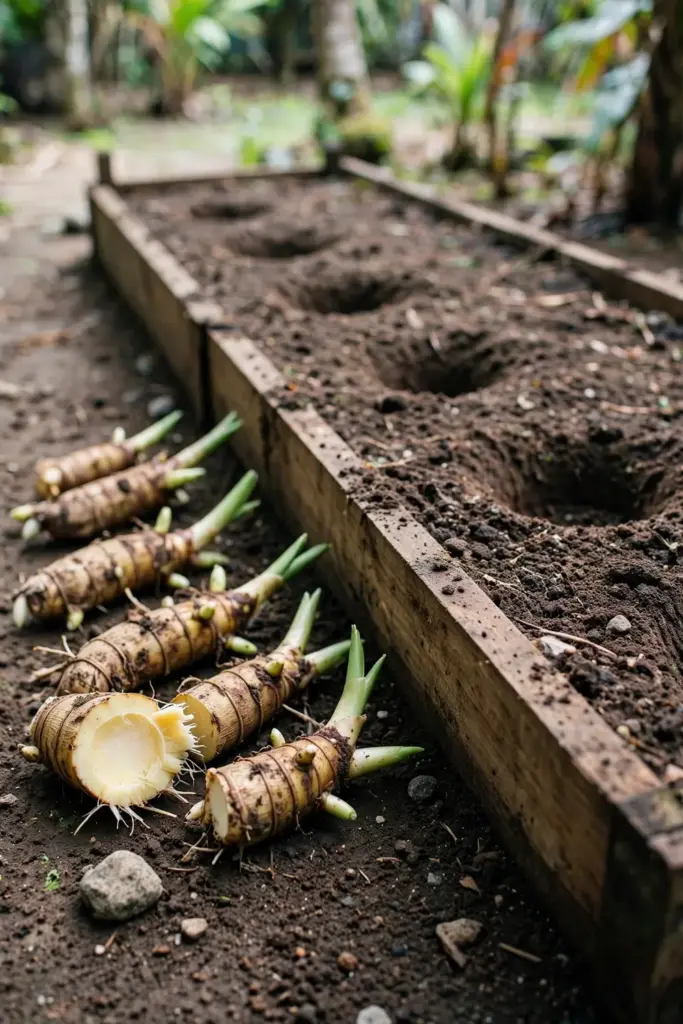
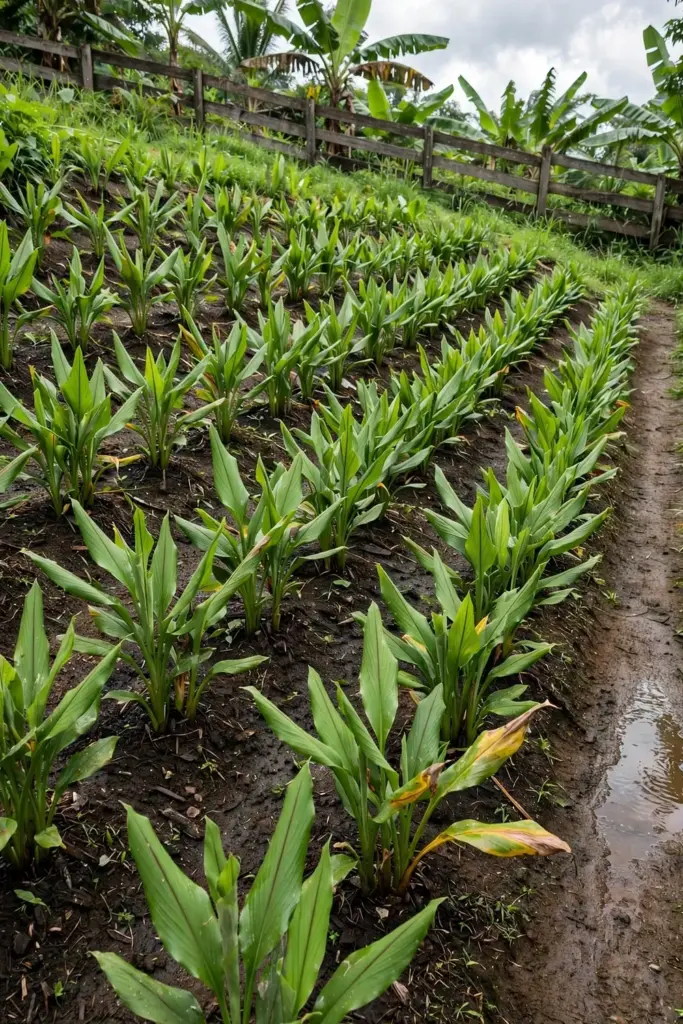
Prepare the land to a good tilth during February and March, subject to pre-monsoon showers. Prepare beds of convenient length, 1.2 metres wide, 25 centimetres high, with 40 centimetres spacing between beds. Plant during April with the commencement of pre-monsoon showers. Take small pits in the beds with spacing of 25 by 30 centimetres and at a depth of 4 to 5 centimetres. The seed rate is 1500 kilograms per hectare. Those six numbers are the entire planting protocol, and nothing is added to them here. Plant in April, lift from the sixth month, and the season is done. That is how to grow mango turmeric on a Kerala bed.
Seed propagation also exists in the record, and it stays a footnote. Useful Tropical Plants notes seed best sown as soon as it is ripe, germinating best at temperatures of 20 degrees Celsius, plus division of the rhizome when the plant is dormant. Seed of this plant rarely reaches gardeners, and rhizome pieces carry the crop. A reader with fresh seed can sow it promptly, and a reader without seed loses nothing. The seed starting guide covers the general method for gardeners who do hold fresh seed.
12. Feed and Mulch a Six-Month Crop: 30 to 40 Tonnes of Manure, 15 Tonnes of Mulch
Feed the crop at planting, then mulch it twice. The Kerala Agricultural University station page sets the basal dose at cattle manure or compost at 30 to 40 tonnes per hectare, spread over the beds and mixed well. Apply NPK fertilizer at 30:30:60 kilograms per hectare. Apply the full dose of P and half the dose of K 60 days after planting. Those three numbers carry the whole feeding program.
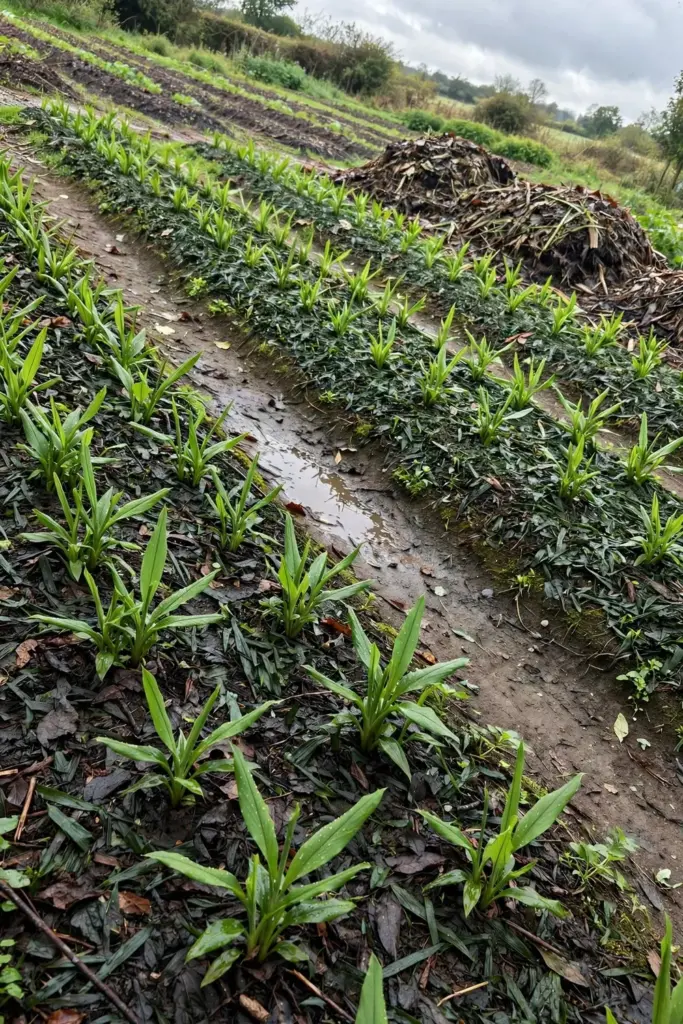
Mulch the crop immediately after planting with green leaves at 15 tonnes per hectare. Repeat mulching after 50 days with the same quantity of green leaves. The mulch holds moisture, cools the beds, and feeds the soil as it breaks down. A bed that dries out between rains loses rhizome growth fast, and the mulch is the cheapest guard against that loss.
Weed 45 days after planting, and repeat if needed. Earth up the crop after 60 days. The rhizomes germinate within 3 to 4 weeks, per the Kerala Agricultural University station page. A gardener who sees no sprouts by the fourth week should check the bed for rot or drought, and a gardener who sees sprouts on time can settle into the weeding and earthing schedule. Turmeric follows the same rhizome-crop rhythm in warm pots and beds, and its guide covers the shared habits.
13. Watch for Shoot Borer Dead Hearts and Pull Them Out
Shoot borer is the one pest the Kerala record names. Shoot borer, Dichocrocis punctiferalis, damages the crop, and the appearance of dead heart in the field is the main symptom, per the Kerala Agricultural University station page. A dead heart is a shoot whose growing point has died, and the shoot pulls out easily with a dead center. The symptom is visible from the path, and a weekly walk catches it early.
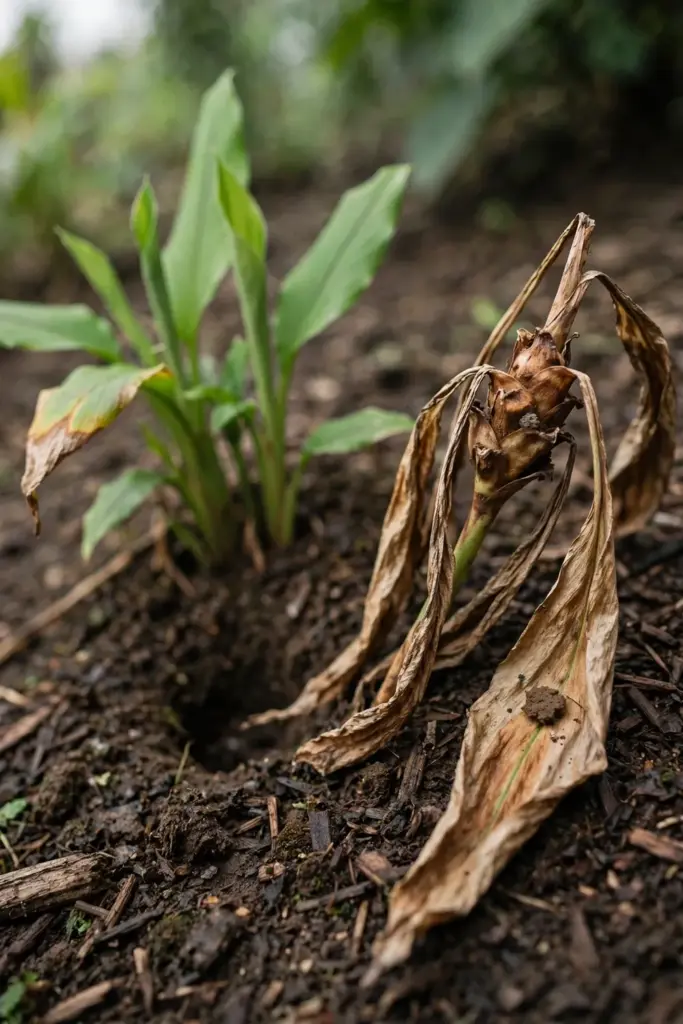
Pull out the dead hearts with the larvae inside and burn them. That single action is the whole control method in the Kerala record. The record adds a chemical option for severe infestation, and this guide does not repeat it. A home gardener with a small bed handles the pest by hand, and a bed with a few dead hearts needs no spray program.
Prevention starts with the planting stock. Healthy, disease-free rhizome pieces carry fewer problems than soft or damaged stock. Clean beds, prompt removal of dead hearts, and no overhead stress keep the crop standing. The plant needs hot humid tropical conditions with rainfall above 1500 millimetres, per the Kerala Agricultural University station page, and a bed that meets those conditions grows a crop strong enough to outgrow light borer pressure.
14. Harvest When the Leaves Dry, Then Shade-Dry the Rhizomes for One Day
Drying leaves mark the harvest. The Kerala Agricultural University station page sets the harvest rule plainly: drying of the leaves is the indication of harvesting time, and from the sixth month onward harvesting can proceed by lifting the entire plant with a spade and cutting away the top portion. Lift the whole plant, shake the soil off, and cut the leafy tuft away from the rhizome cluster.
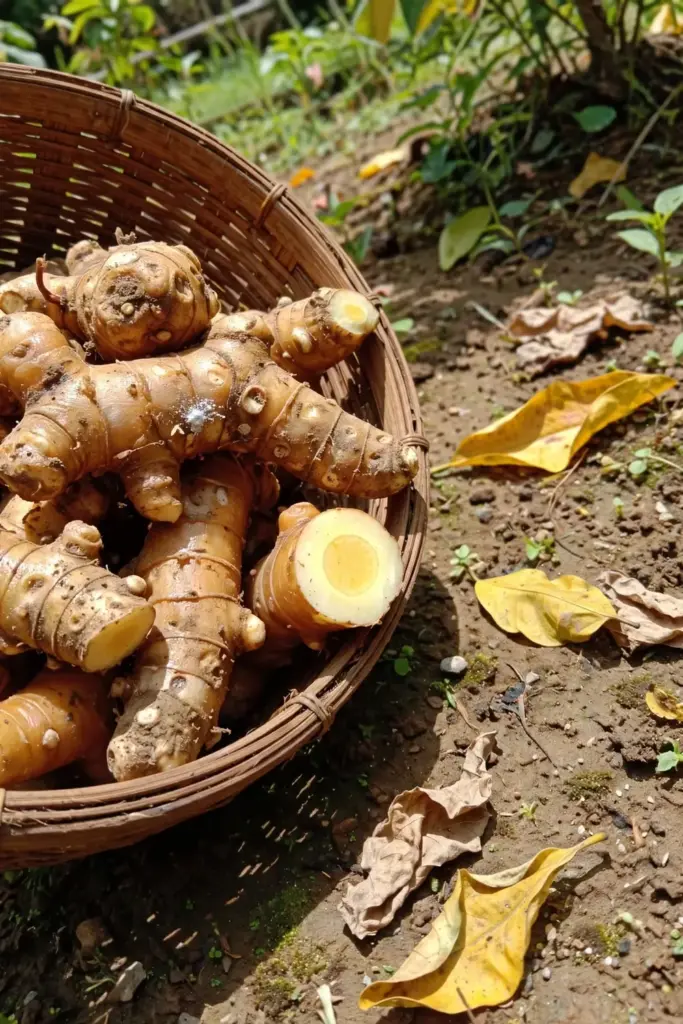
Clean the rhizomes before storage. Remove roots and soil particles from the rhizomes, and dry the rhizomes under shade for one day before storage or transport, per the Kerala Agricultural University station page. Shade drying matters. Sun drying hardens the outer skin and dulls the scent, and one day of shade drying firms the rhizome without cooking it. Store the dried rhizomes cool, dry, and ventilated.
Use the fresh rhizomes first. The mango scent is strongest in fresh rhizomes, and storage fades it. A cook who harvests in the morning and pickles in the afternoon gets the full scent. A gardener who stores rhizomes for months gets a milder rhizome, and the pickling and cooking sections above still work with it. Ginger follows the same lift-when-leaves-dry rule, and its guide covers the shared harvest timing.
15. Buy Rhizomes With Your Eyes Open: 6 Checks Before You Pay
Most readers will meet temu mangga as a rhizome to buy, not as a plant to grow, so the buying decision matters more than any growing step. These six checks separate an honest rhizome purchase from a gamble.
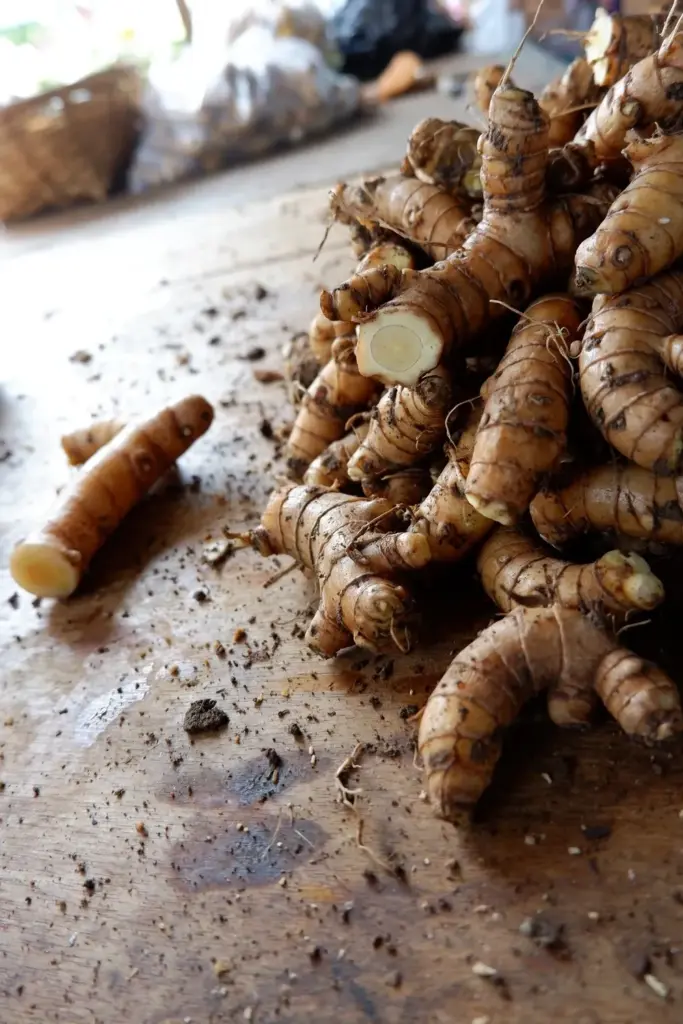
First, read the botanical name. The label should print Curcuma amada, or the older name Curcuma mangga. A label with only a market name gives you no verification. Second, smell the cut surface. Fresh Curcuma amada smells like raw mango. A rhizome with no scent is old, wrong, or spent. Third, feel the flesh. The piece should feel firm and heavy for its size. Soft or light pieces have dried out or rotted.
Fourth, ask about origin. The seller should name a country inside the documented range or the trade route, such as India or Indonesia. A seller with no origin story has given you useful information. Fifth, distrust dosage promises. A seller who prescribes doses for a rhizome bundle is selling medicine without a licence, and no dose appears below to compare against. Sixth, compare the price against ginger and turmeric, not against mango. The rhizome is a ginger-family flavor crop, and its price should sit near those crops.
Two companion plants cover the kitchen side of the tradition while temu mangga stays a rhizome to buy. Turmeric grows from rhizomes in warm pots, and ginger grows readily in pots. Both belong to the same kitchen tradition as temu mangga, and both give a temperate gardener a real growing project while temu mangga remains a rhizome to buy. Propagation guides cover the rhizome-division method that all three plants share.
Frequently Asked Questions
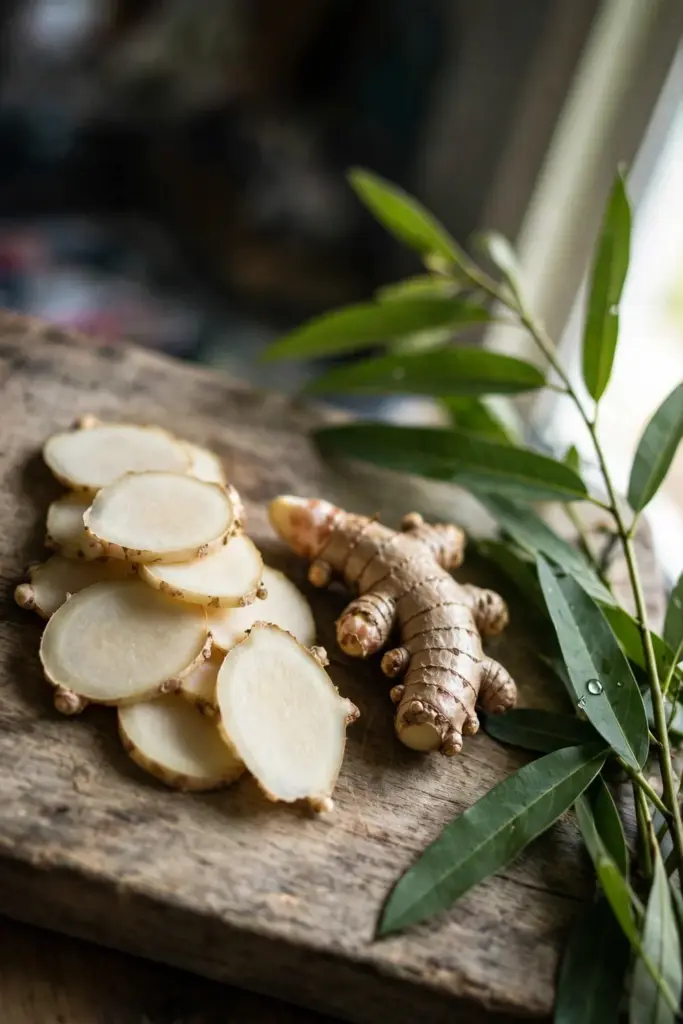
A supermarket rhizome with the botanical name Curcuma amada on its label can serve as planting stock if it feels firm and shows buds. A rhizome with only a market label gives you no species check, and a treated or irradiated rhizome may never sprout. Buy firm pieces, cut one to check the raw mango scent, and plant 15 to 20 gram pieces in warm soil. Sprouting takes 3 to 4 weeks under tropical conditions.
Yes. Temu mangga is the Indonesian name, and mango ginger is the Indian name for the same plant, Curcuma amada. Indonesian research papers print the older name Curcuma mangga for the same plant, and Kew’s Plants of the World Online accepts Curcuma amada as the current name. The rhizome, the mango scent, and the kitchen uses match across both names. Buy by the botanical name, and the two common names stop causing confusion.
No, in the sense that matters for buying. Mango turmeric is a market label for Curcuma amada, and white turmeric is a market label, not a species name. A label that prints only a market name gives you no way to check the contents. A label that prints Curcuma amada proves the species. Always buy by the botanical name, and treat every market label as a flavor note rather than an identity.
Data not available. No published trial grows Curcuma amada in a temperate climate, and the documented method assumes hot humid tropical conditions with rainfall above 1500 millimetres, per the Kerala Agricultural University station page. Seed germinates best at 20 degrees Celsius, and the crop needs a six-month warm season. A temperate reader with a warm greenhouse can try it as an experiment. A temperate reader without one has no honest path to a crop.
It smells like raw mango, and the flavor follows the scent without turning into fruit. The rhizome brings bitter, sweet, and sour notes with an aromatic, cooling character, and it flavors food as a mild ginger. No mango fruit grows on the plant, and no mango tree stands behind the name. Taste a thin raw slice before cooking with it, so the real flavor sets the baseline for every dish that follows.
The rhizome is a food ingredient with a long kitchen record, used in pickles, chutneys, salads, and meat dishes. Useful Tropical Plants lists no known hazards for Curcuma amada. That record covers food use, not medicine. No dose or preparation appears below, and a seller who prescribes doses is selling medicine without a licence. A reader with a health question needs a clinician, not a rhizome seller.
Keep the Name Honest and the Rhizome Useful
Temu mangga rewards the reader who accepts what it is. The plant is a knee-high Curcuma with a mango-scented rhizome, a South and Southeast Asian range, a deep place in Indonesian jamu and Indian kitchens, and a Kerala growing method with real numbers. How to grow mango turmeric has an honest answer, and the answer is a tropical rhizome crop with a six-month season. That answer disappoints a temperate gardener, and it is still the right one.
Buy rhizomes with the checks above, pickle the first batch, and grow the companion plants that actually thrive in your climate. Ginger and turmeric both belong to the same tradition, and both grow in warm pots. The rhizome trade will continue with or without your purchase, and your refusal of unlabelled market stock is a small vote for honest naming. Temu mangga stays a rhizome to respect by its scent, and that scent is the whole story.