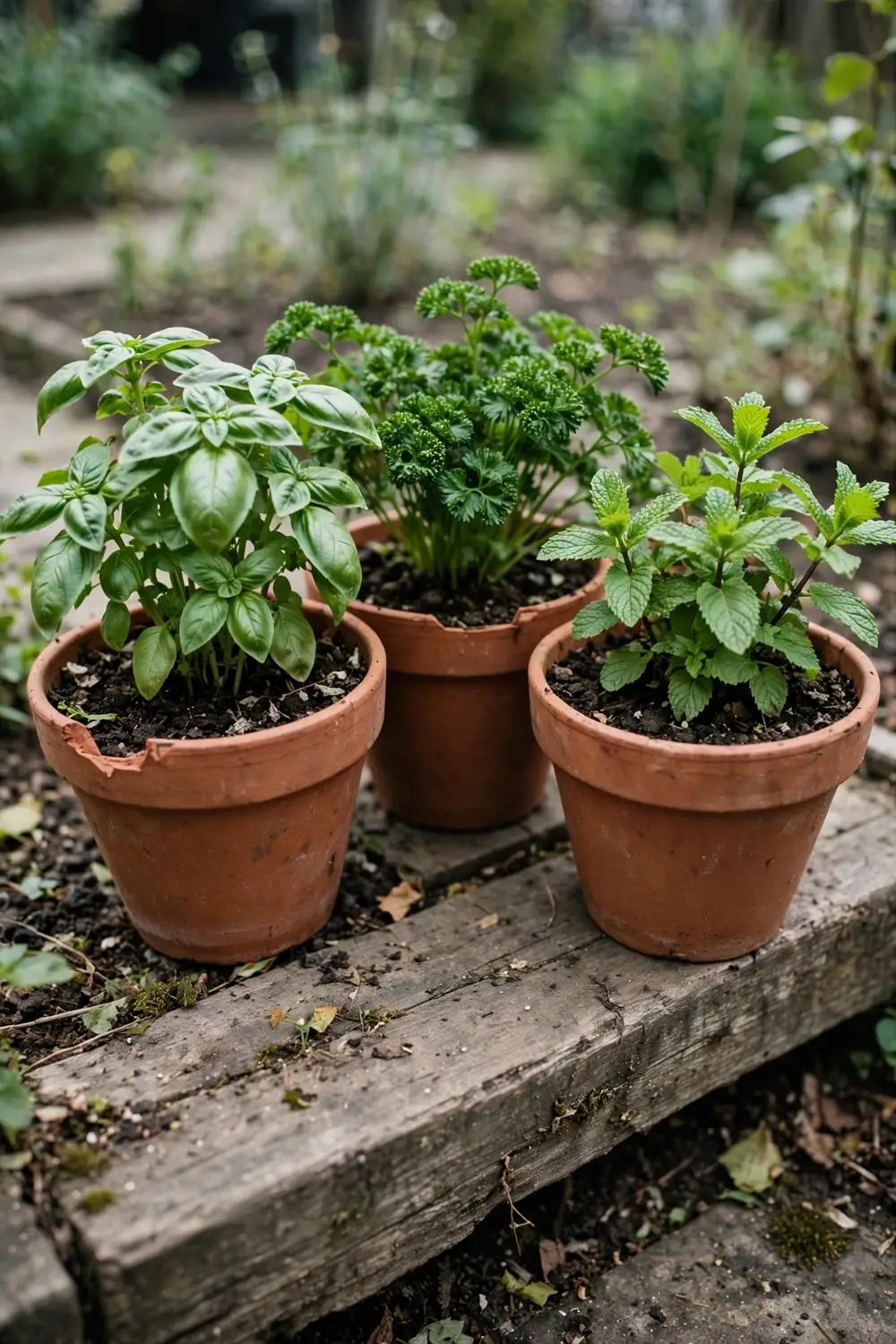

Start with 3 herbs and a sunny spot that gets at least 6 hours of sun a day. That is the whole secret behind the best herbs for beginners in Australia. The rest of this page names 9 easy picks, from basil to rosemary, and shows how to grow them in pots or in a bed.
Easy means a herb forgives beginner mistakes. It does not mean a herb needs no care. Every pick below still wants sun, drainage, and a harvest before it flowers. Beginner means a first herb garden. You do not need a big bed, a greenhouse, or a long tool list. Three pots on a sunny step carry the first trio.
Work from the top if the weekend is close. Pick one trio from the first section. Pot the trio. Snip from it while the other six wait on the list.
1. Start With the 3 Herbs You Actually Cook With
Start with the 3 herbs you reach for most in the kitchen. A herb you cook with gets picked, and a herb that gets picked grows bushier. A herb you never cook with sits in its pot and goes woody. The starter kit below groups the 9 picks into 3 trios by cuisine, so pick the trio that matches your cooking. The Italian trio is basil, oregano, and parsley, and it covers pasta, tomato sauce, salads, and grilled vegetables. The Mexican and Thai trio runs on coriander, mint, and chives. It covers salsa, stir-fry, curries, and salads. The roast trio is rosemary, thyme, and sage, for roast chicken, potatoes, stuffing, and winter stews.
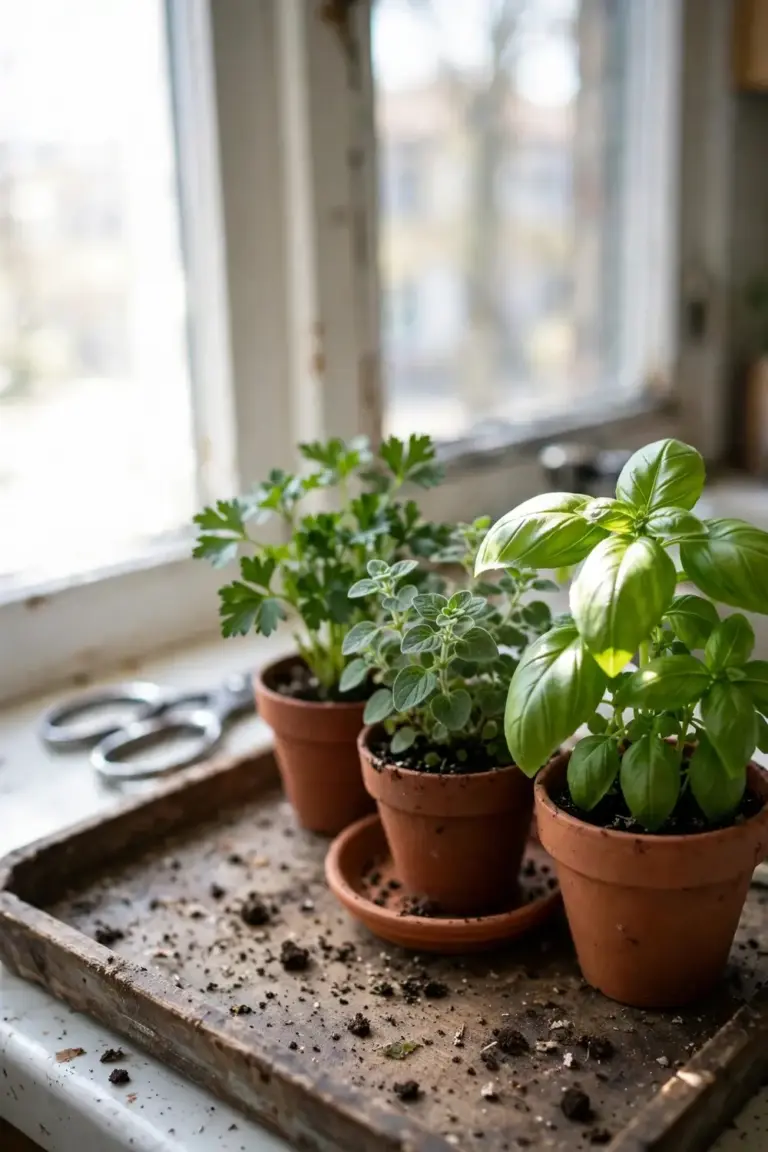
Give each herb its own pot. One pot per herb keeps the thirsty ones and the dry ones from fighting over water. Mint gets its own pot no matter which trio you pick. Mint spreads fast enough to take over a shared pot, and a solo pot stops that fight before it starts.
Buy seedlings for the first trio rather than seed. Seedlings skip the slowest weeks and put leaves in your hand sooner. Grow the other six from seed or seedlings later, once the first trio is feeding you.
Buy seedlings from a nursery rather than a supermarket shelf when you can. Nursery seedlings grow in proper pots with room for roots. Supermarket herb pots pack a dozen seedlings into one small pot, and the crowded plants fight for water and light. A supermarket pot still works if you split it. Tip the pot out, tease the seedlings apart gently, and pot each clump on its own. Water the divisions in and keep them shaded for a day while roots settle.
Group the pots by water need on one tray. The thirsty trio sits on one tray. The dry trio sits on another. One watering round then suits the whole tray, and you stop guessing pot by pot.
Skip the urge to buy all 9 on day one. Nine pots on day one mean nine watering schedules to learn at once. Three pots teach the rhythm. Three pots also show which spot on your step gets real sun and which spot only looks sunny. Watch the first trio for a month. Add the next trio once the first trio grows new leaves between harvests. Add the last trio once the second trio does the same. A herb garden built in three rounds lasts longer than a herb garden bought in one trip.
Check the sun before you buy the pots. Stand at the spot in the morning, at midday, and in the afternoon. A spot that stays sunny through all three checks gives the 6 hours herbs need. A spot shaded by noon suits parsley and mint only. A spot shaded by a fence all day suits no herb on this list. Move the pots, not the fence. Pots let you chase the sun through the seasons without digging a new bed.
2. The 9 Best Herbs for Beginners in Australia
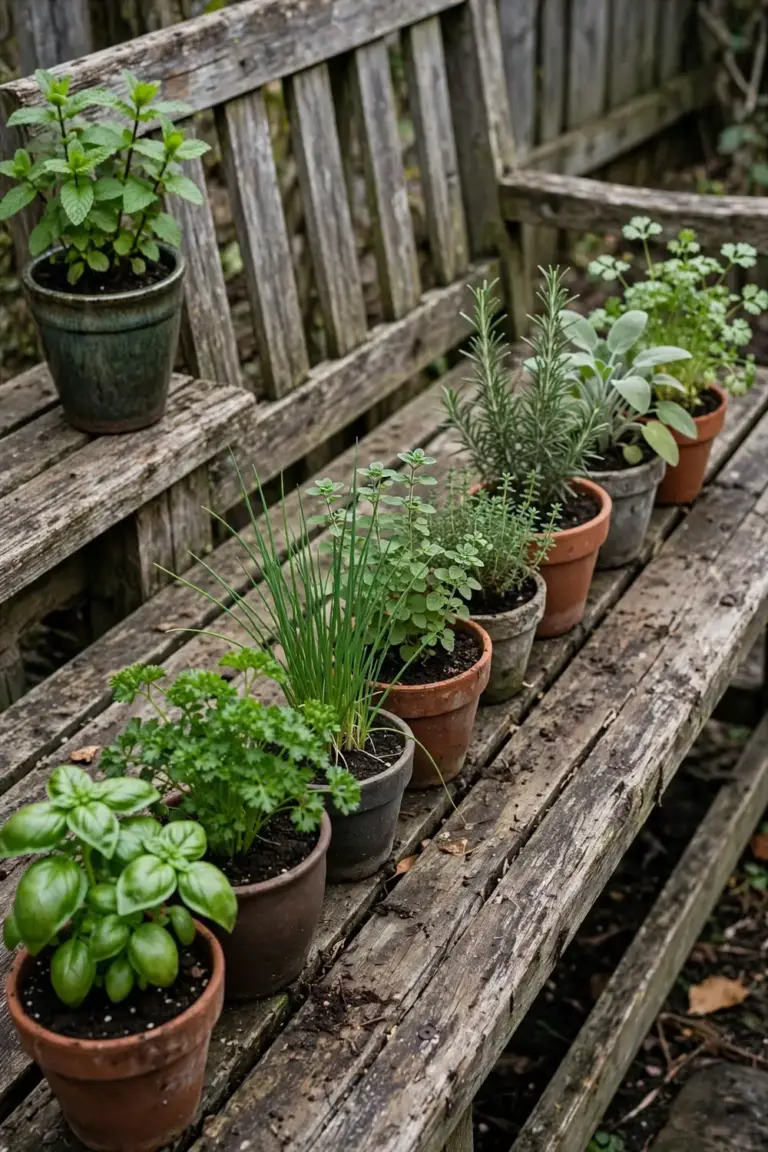
These 9 picks earn their place by surviving beginner mistakes. Each one forgives a missed watering, a late harvest, or a dull pair of scissors. Each one also pays back in the kitchen within its first season. The table gives the short version. The nine entries below give the detail.
| Herb | Cook Use | Grow Ease |
|---|---|---|
| Basil | Pesto, pasta, tomato dishes | Tender annual, pinch often |
| Parsley | Garnish, salads, soups, stews | Biennial, slow to start |
| Mint | Tea, salads, lamb, desserts | Vigorous, pot only |
| Chives | Eggs, potatoes, soups, salads | Perennial, cut and regrow |
| Rosemary | Roasts, bread, potatoes | Evergreen shrub, dry soil |
| Thyme | Stews, sauces, roasts | Low perennial, dry soil |
| Oregano | Pizza, pasta sauce, stews | Hardy perennial, dry soil |
| Sage | Stuffing, pork, butter sauces | Evergreen shrub, dry soil |
| Coriander | Salsa, curries, stir-fry | Annual, bolts in heat |
1. Basil (Ocimum basilicum). Basil is the fastest payoff in the whole list. Start seeds indoors 4 to 5 weeks before the last frost, and wait for nights that stay above 10 °C before moving plants outside, according to Iowa State University Extension’s basil guide. Basil germinates best near 24 °C. Plants reach about 61 cm tall in a season, and some types grow to 91 cm, Clemson Extension’s herb fact sheet notes. Harvest leaves before the flower buds open. Flowering drains flavor from the leaves. Pinch the stem tips in mid-spring to force branching. A pinched plant grows bushy. An unpinched plant grows tall, thin, and sparse.
2. Parsley (Petroselinum crispum). Parsley is the workhorse of the list. It flavors almost any dish and asks little back. Parsley is a biennial, which means it grows leaves in its first year and flowers in its second. Seed is slow to germinate, so seedlings save weeks of waiting for the first leaves. Grow parsley in light shade with rich, moist soil. Flat-leaf parsley carries stronger flavor than curled parsley. Curled parsley still works as a garnish. Cut outer stems first and leave the center growing, since the plant keeps pushing new leaves from the center all season.
3. Mint (Mentha species). Mint is the easiest herb to grow and the hardest to contain. Mint spreads by runners and turns a shared bed into a mint bed within one season. Grow mint in its own container, always. The University of Illinois Extension puts it in capitals: plant mint in containers, because it is an extremely aggressive plant that resists eradication once it escapes, as Illinois Extension’s popular herbs guide explains. Mint likes rich, moist soil and part shade. Spearmint suits tea and salads. Peppermint suits desserts. Harvest leaves often. Frequent cutting keeps growth tender and delays flowering. Divide a crowded mint pot in spring. Lift the root ball, pull it apart into two or three pieces, and repot each piece with fresh mix.
4. Chives (Allium schoenoprasum). Chives are the smallest members of the onion family, and the most forgiving. The grass-like leaves grow to 30.5 cm tall. Chives grow from seed or transplants in full sun. Cut leaves near the base and leave about 5 cm of growth. The plant regrows from the base within weeks. The lavender flowers are edible and work in salads. Snip flower stalks early if you want leaves rather than flowers. Chives come back year after year from the same clump, so divide the clump every few years when the center thins out and growth slows.
5. Rosemary (Salvia rosmarinus). Rosemary is an evergreen shrub with needlelike leaves and a strong, distinctive flavor. Rosemary grows best in dry, sunny areas in well-drained soil. Wet soil kills rosemary faster than any pest. Rosemary comes in forms from shrubs 1.2 m tall or more to low-growing groundcovers. Grow rosemary in a container if your soil stays wet after rain. Containers drain faster than beds. Keep rosemary on the dry side indoors in winter. Rosemary dries out quickly inside, and extra water does not fix that. Raising humidity around the plant helps more than extra water does. A pebble tray under the pot adds humidity without wetting the roots.
6. Thyme (Thymus species). Thyme is a low perennial that flavors stews, sauces, and roasts. Thyme plants range from flat groundcovers to just over 30 cm tall. Plant thyme in full sun in very well-drained soil that stays dry. Thyme forgives drought. Thyme does not forgive wet feet. The taller types with smooth leaves handle heat and humidity better than low or woolly types. Creeping thyme works as a groundcover between pavers and tolerates light foot traffic. Pick thyme by pinching soft tips. Avoid cutting old woody stems. Old wood rarely regrows, and a hard cut into it leaves a bare patch.
7. Oregano (Origanum vulgare). Oregano seasons pizza, pasta sauce, stews, and soups. Oregano is a hardy perennial that does well in containers. It grows to about 61 cm tall with small rounded leaves and pale pink flowers. Plant oregano in full sun and well-drained soil. Unlike most herbs, oregano leaves taste best dried. Hang small bundles upside down in a dry, shaded spot, then strip the leaves once they crumble. Greek oregano carries a sharper, stronger flavor than common oregano. Start oregano from division or cuttings rather than seed, since seed does not always come true and a cutting keeps the flavor you bought.
8. Sage (Salvia officinalis). Sage is a small evergreen shrub with broad oval, gray-green leaves. Sage flavors stuffing, pork, soups, and butter sauces. Fresh sage carries a much nicer flavor than dried sage. Sage needs excellent drainage and dry soil in full sun. Sage struggles in wet coastal soil. Sage can be hard to grow in humid coastal areas, so a pot with fast-draining mix often beats a bed in those spots. The cultivar ‘Berggarten’ handles heat better than the species. Prune lightly through the season. A light trim keeps the plant compact and pushes fresh leaves. Leave the woody base alone. Old wood rarely sprouts new growth.
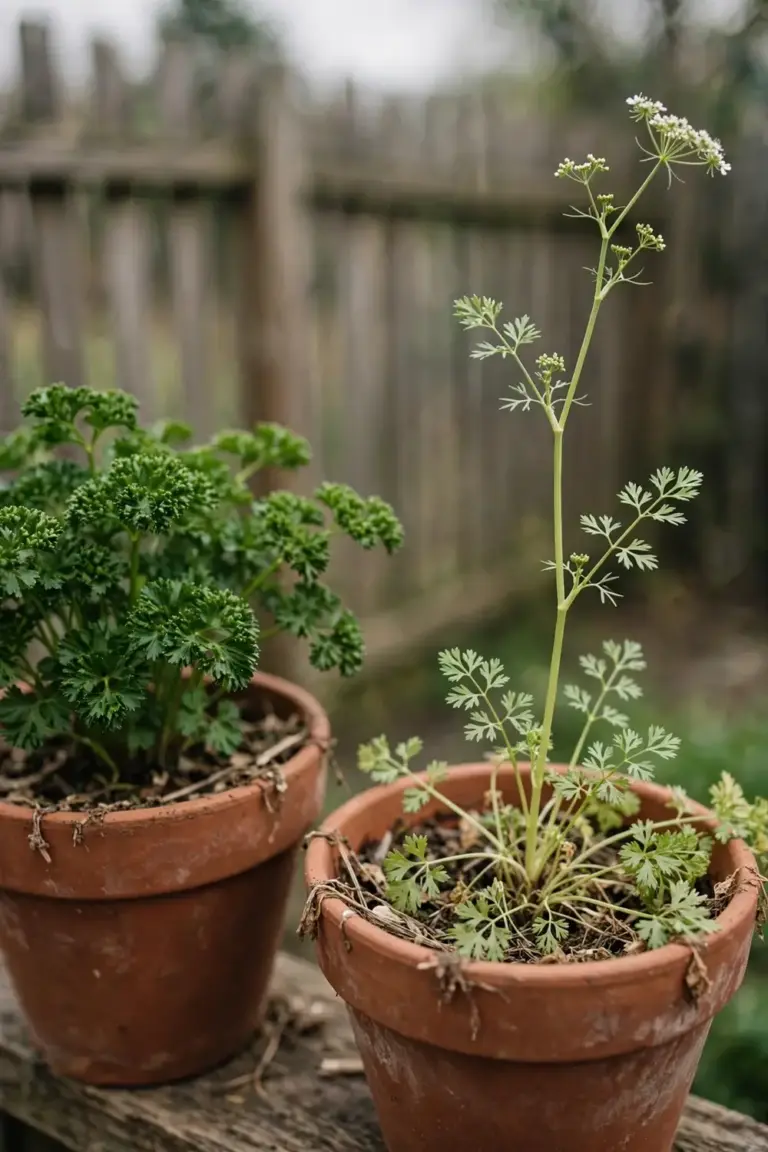
9. Coriander (Coriandrum sativum). Coriander is one herb with two crops. The leaves are coriander. The seeds are also called coriander. Cooks outside Australia often call the leaves cilantro. Coriander bolts fast in summer heat. Bolting means the plant shoots up a flower stalk and stops making tender leaves. Sow small runs of seed every 3 to 4 weeks for a steady supply of leaves. Grow coriander in full sun to part shade in rich, well-drained soil. Give coriander afternoon shade in hot districts. Shade slows bolting. Let one plant flower and set seed. The seeds season curries and pickles.
3. Grow Them in Pots or in a Bed
Pots suit beginners better than beds. Pots drain faster, move with the sun, and keep mint contained. Beds suit gardeners who already have good drainage and a sunny patch of soil. Either home works for all 9 picks if the soil drains and the sun reaches the leaves for at least 6 hours a day.
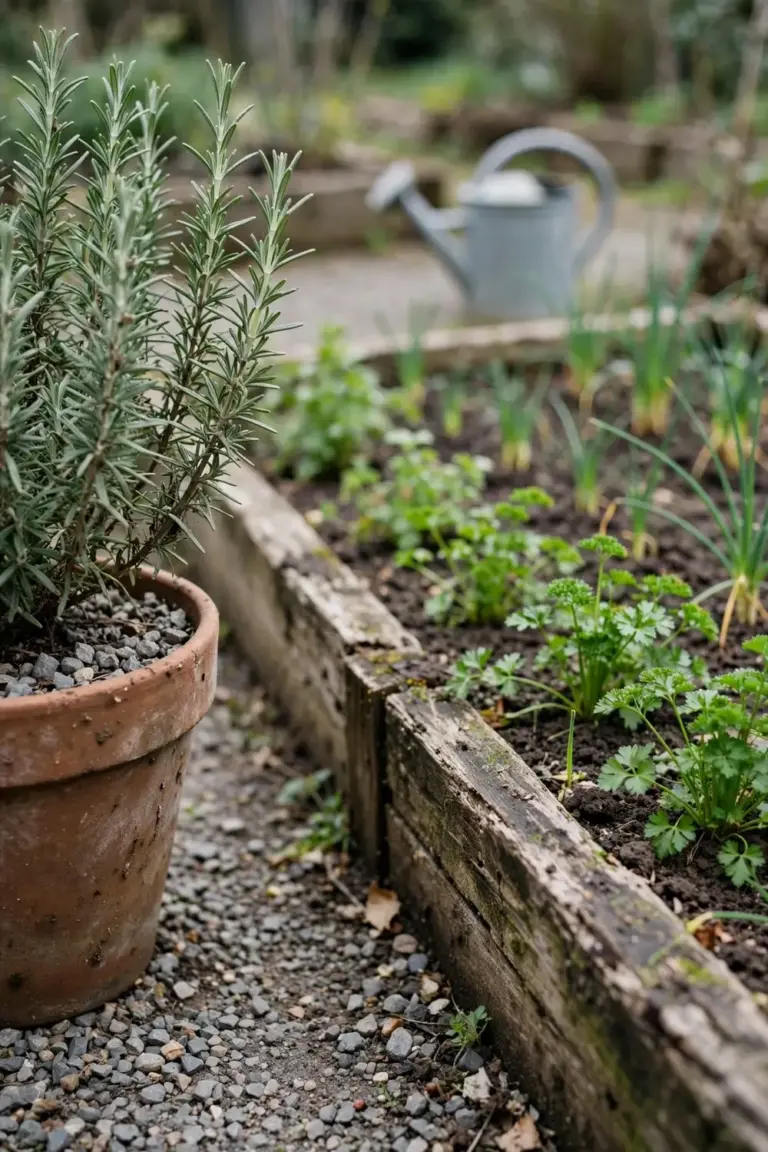
Plant in spring, from September to November, when soil warms and frost risk passes. Spring planting gives the perennials a full warm season to root before winter. In frost-free districts, autumn planting also works for the hardy perennials. Basil still waits for warm nights. Basil goes outside only after nights stay above 10 °C, even in a mild district. Coriander suits the cooler months best. Sow coriander in autumn and early spring, and expect fast bolting through high summer.
Pot size follows root depth. The table below gives the minimum soil depth for each herb, from the UC Master Gardener Program’s kitchen herb table. A pot shallower than these depths dries out fast and stunts the plant. A pot deeper than these depths holds water longer, so check the soil before watering.
| Herb | Minimum Soil Depth |
|---|---|
| Basil | 20 cm |
| Parsley | 20 cm |
| Mint | 15 to 20 cm |
| Chives | 15 cm |
| Rosemary | 20 cm |
| Thyme | 15 cm |
| Oregano | 20 cm |
| Sage | 20 cm |
| Coriander | 20 cm |
Use a pot with a drainage hole. A pot without a hole holds water at the base and rots roots. Fill the pot with a quality potting mix, not garden soil. Garden soil compacts in a pot and drains poorly. A good potting mix holds its structure: bark fines for air, coir or peat for moisture, and perlite for drainage. Read the bag and pick a mix that lists those three parts. Terracotta pots dry out faster than plastic pots, so terracotta suits the dry group while plastic suits the thirsty group. Empty the saucer after watering. A saucer left full keeps the base wet and undoes the drainage hole.
Beds need the same drainage. Dig the bed and work in 5.1 to 7.6 cm of fine pine bark, compost, or leaf mold to a depth of 20 to 30 cm. A raised bed drains faster than flat ground and suits the dry group in wet districts. Keep the soil pH between 6 and 7. A soil test settles the pH question before you plant. Seed starting covers the indoor seed step for the herbs you grow from seed.
Repot when roots circle the pot: tip the plant out and look at the root ball. White roots circling the base mean the pot is too small, so move the plant into a pot one size up with fresh mix. Tease the circling roots loose with a finger before replanting, since a root ball left circling keeps circling in the new pot. Water the plant in and keep it shaded for a day while roots settle into the fresh mix.
4. Water Them Like Two Groups, Not Nine Plants
Watering gets simple once you split the 9 picks into two groups. The thirsty group wants steady moisture. The dry group wants a drink and then a dry spell. One watering rule for all 9 picks drowns the dry group or starves the thirsty group.
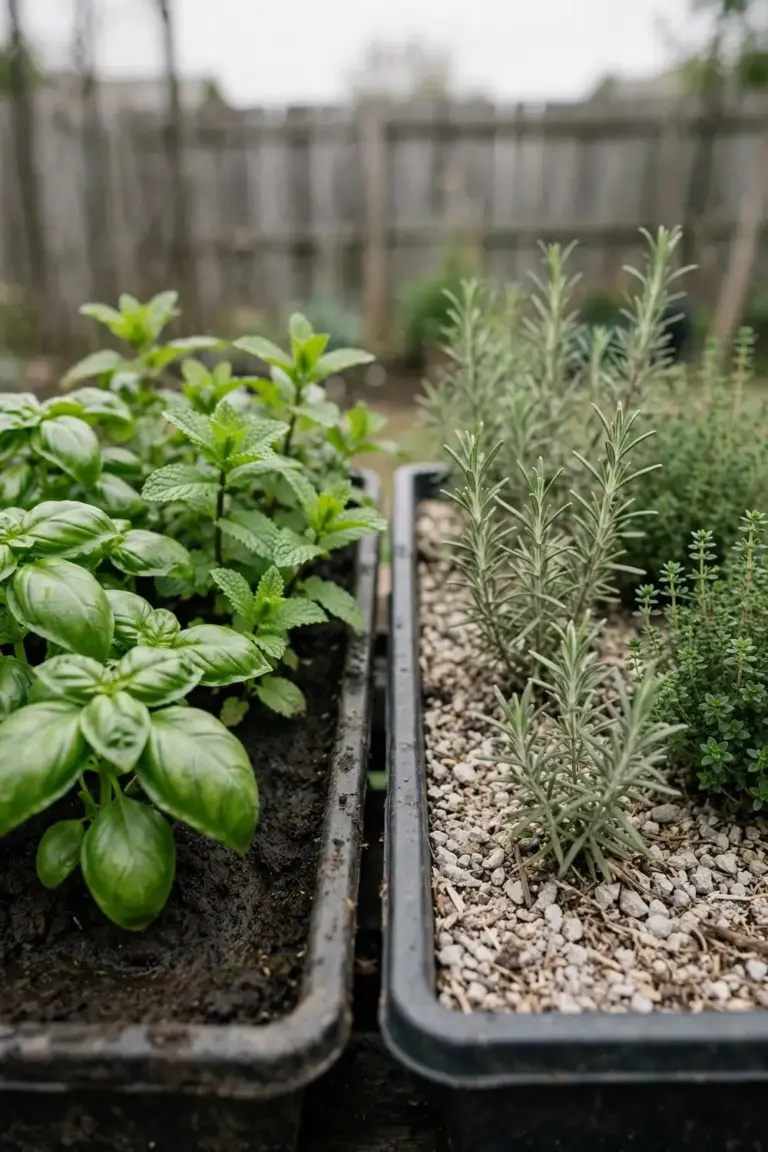
The thirsty group is basil, parsley, mint, chives, and coriander. These herbs want moist soil through the growing season. Annuals in this group need extra moisture for best growth. Water them thoroughly, then water again when the top few centimeters of soil dry out. Mulch with compost or bark to hold moisture. Check the soil with a finger before watering. A finger test beats a calendar.
The dry group is rosemary, thyme, oregano, and sage, all herbs from the Mediterranean region, where summers run dry. Water them thoroughly, then let the soil dry out somewhat before watering again. Water early enough in the day that leaves dry before nightfall, since wet leaves overnight invite disease. A 2.5 to 5.1 cm mulch of pea gravel suits the dry group, keeping the crown dry and stopping soil from splashing onto leaves.
Learn the two failure signs: yellow leaves on wet soil mean overwatering, and wilt on dry soil means underwatering. Overwatered herbs recover when the soil dries out. Underwatered herbs recover within hours of a drink. A herb that wilts on wet soil has root damage, not thirst, so tip it out, check the roots, and repot into dry mix if the roots smell sour.
Water less in the cool months. Growth slows in winter, and a plant that drinks little in July drowns on a summer schedule. Let the soil dry deeper between drinks from late autumn through winter. Resume normal watering when new growth appears in spring. Potted herbs in winter rain need no extra water at all in most districts.
Feed lightly or not at all. Herbs need little fertilizer. Rich soil grows big leaves with weak flavor. Base any fertilizer on a soil test. One light feed at planting covers most herbs for the season. Basil is the exception to heavy feeding in reverse. Heavy nitrogen hurts basil flavor, so skip the rich feeds for basil even when other plants get them.
Check light before you reach for fertilizer. Pale leaves on a herb in shade mean low light, not low feed. A herb in shade grows pale and leggy no matter how much you feed it. Move the pot into full sun first. Feed only after the plant gets 6 hours of sun and still looks pale. A soil test settles the question when sun and water both check out.
5. Harvest Before They Flower
Harvest herbs just before they bloom. Essential oils peak just before flowering, and oils carry the flavor. Herbs grown for leaves lose flavor once they flower. Harvest in the morning after the dew dries and before the heat of the day. Morning leaves hold more oil than afternoon leaves.
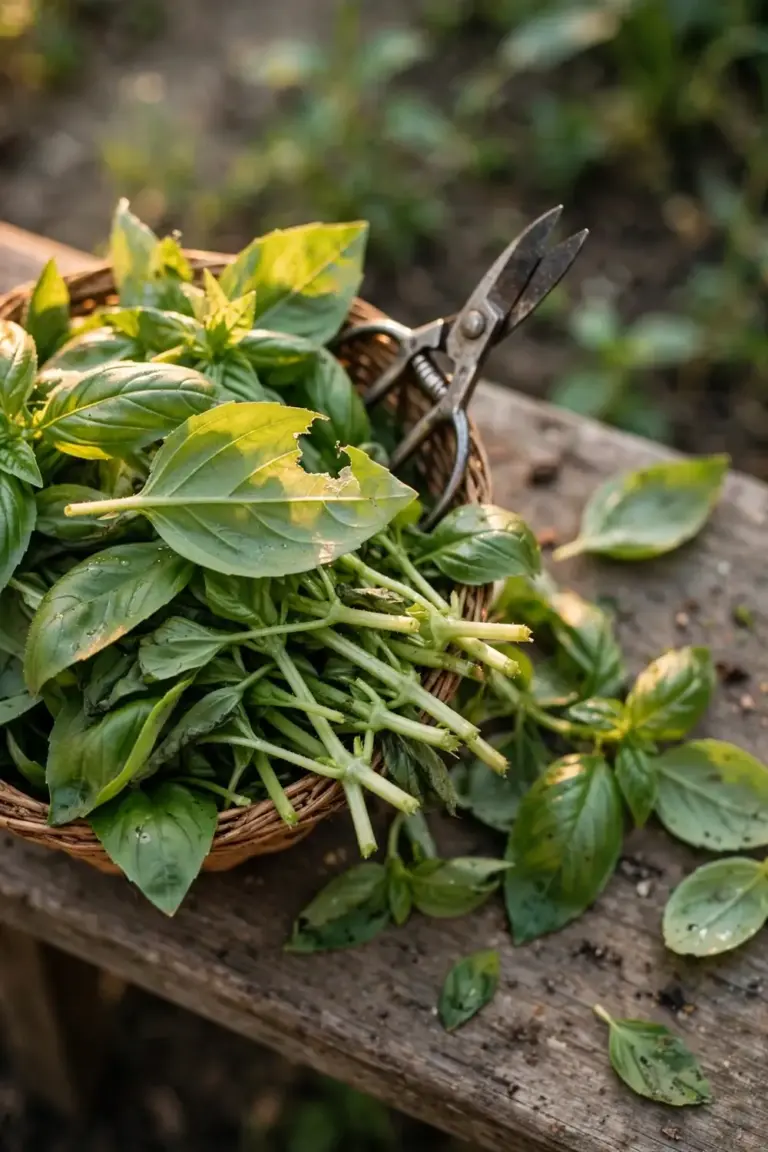
I have learned that the basil I pinch every week outproduces the basil I leave to flower.
Pinch stem tips to force branching, since a pinched plant grows bushy and gives more leaves while an unpinched plant grows tall and gives fewer. Cut outer stems of parsley first and cut chives near the base. Strip rosemary leaves from woody stems by hand. Snip thyme tips rather than shearing the whole plant, and leave the woody base of rosemary, thyme, and sage alone.
Harvest a little at a time through the season. Regular harvest keeps plants compact and pushes fresh growth. A plant that never gets harvested grows woody and stops producing tender leaves. A plant that gets stripped bare in one cut struggles to recover. Take a little at a time rather than stripping the plant bare in one cut. Leave enough leaves for the plant to keep growing.
Dry the surplus for winter. Drying is the traditional way to keep herbs past their season. Tie small bundles and hang them upside down in a dry, shaded spot with moving air. Oregano and thyme dry well. Basil loses flavor when dried, so freeze basil instead. Rinse basil leaves, chop them coarsely, and freeze them in water-filled ice cube trays. Drop a cube straight into a pan all winter.
Frequently Asked Questions
Start with the 3 herbs you cook with most. Basil, parsley, and mint cover the widest range of dishes for most cooks, from tomato pasta to tea and lamb. Parsley suits almost any savory dish. Pick your trio by cuisine if one trio matches your cooking better. One trio in 3 pots beats 9 herbs in one crowded bed.
No. Mint alone rules out a shared pot, since mint spreads fast and takes over. The water groups rule it out too, because thirsty herbs want steady moisture while dry herbs want a dry spell between drinks. One pot cannot give both groups what they want. Give each herb its own pot. Group pots by water need on the same tray so one watering round suits the whole tray.
Coriander bolts when summer heat arrives. Bolting means the plant shoots up a flower stalk and stops making tender leaves. Heat triggers the change, and no fertilizer stops it. Sow small runs of seed every 3 to 4 weeks so a fresh batch replaces each bolted batch. Give coriander afternoon shade in hot districts. Shade slows bolting by a few weeks. Let one plant set seed for cooking.
Basil turns black after cold damage. Basil is a tender annual, and frost kills it outright. Leaves show cold damage near 10 °C, so plant basil outside only after nights stay above 10 °C. Move potted basil under cover on cold nights. Basil grown indoors tastes milder than basil grown outside. A sunny window keeps a potted basil plant alive through winter in mild districts.
Herbs need little fertilizer. Rich soil grows big leaves with weak flavor, so base any fertilizer on a soil test rather than a guess. One light feed at planting covers most herbs for the season. Basil is the exception in reverse, since heavy nitrogen hurts basil flavor. Skip rich feeds for basil even when other plants get them. Compost worked into the bed at planting feeds most herbs without a separate fertilizer.
Start With Three Pots This Weekend
Buy 3 seedlings from the trio you cook with most. Pot each one in its own pot with drainage holes and quality potting mix. Set the pots in a spot that gets at least 6 hours of sun a day. Water them in, then check the soil with a finger before each next watering.
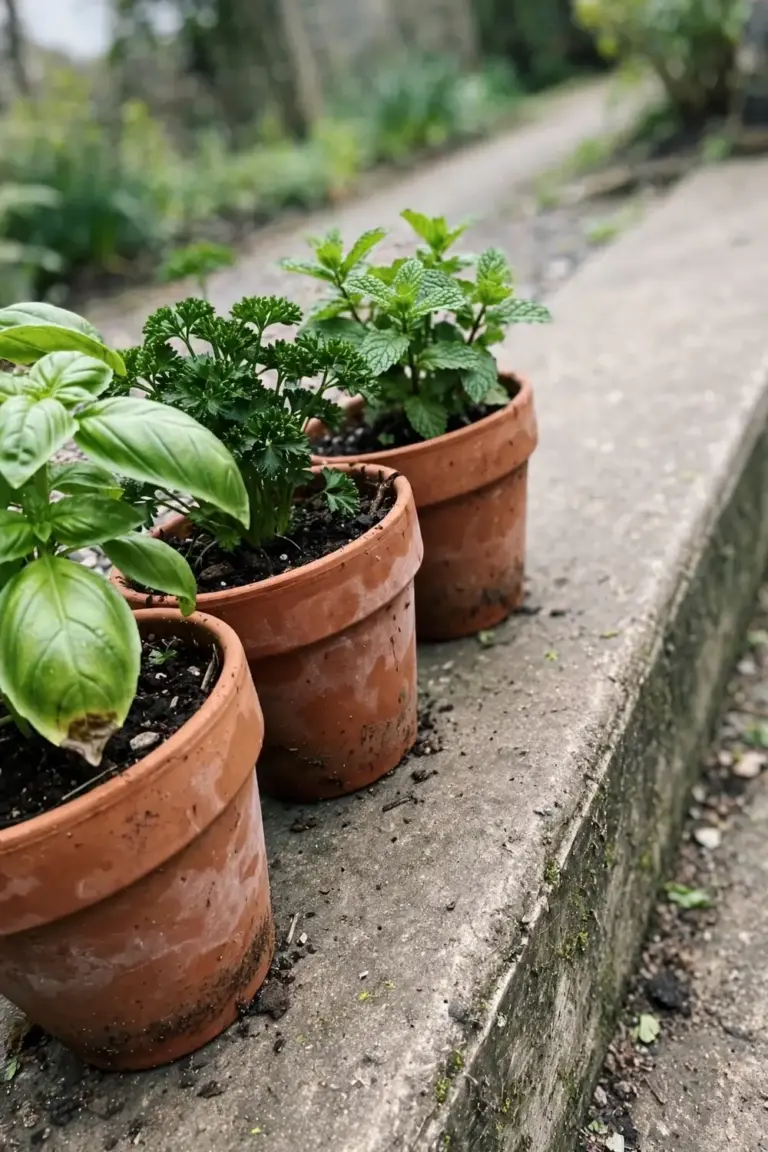
Snip a few leaves within the first weeks. Pinch the tips to force branching. Harvest before the plants flower. Add the other six picks one at a time, once the first trio is feeding you. A herb garden grows one pot at a time, and three pots already change weeknight cooking.
Expect one failure in the first season. A basil plant may blacken after a cold night. A coriander batch may bolt in a heat wave. A rosemary may drown in a wet week. Replace the failed plant and change the one condition that killed it. Move basil under cover. Sow coriander in shade. Repot rosemary into faster mix. Each failure teaches one condition, and the second plant of that herb grows better than the first. Fall herbs extend the same starter kit into the cooler months.