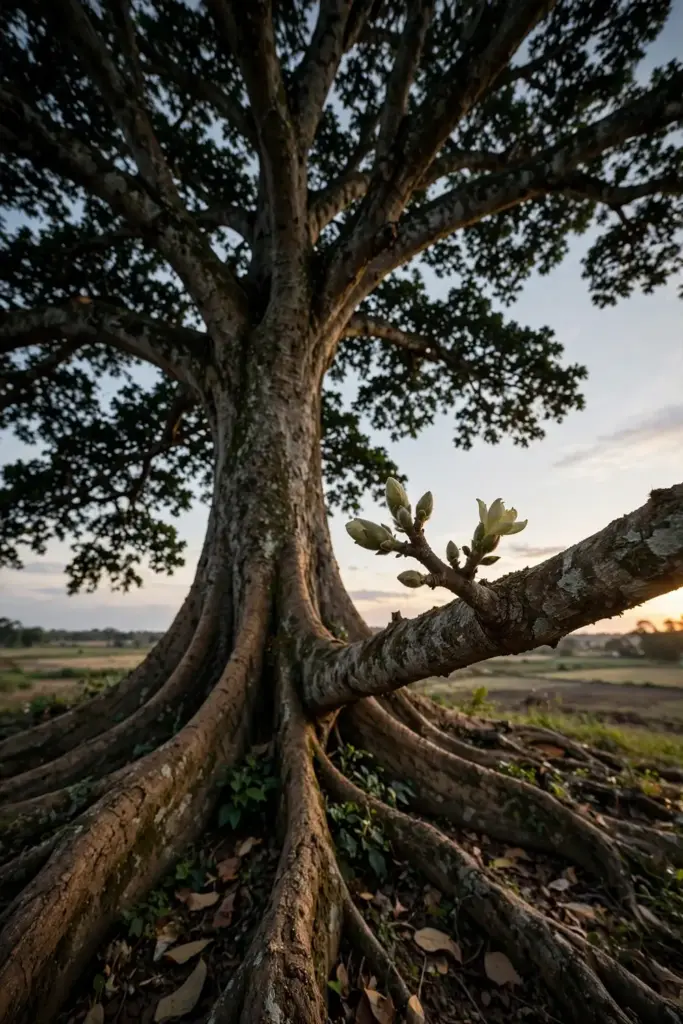

How to grow marathi moggu from India starts with a correction. This is a tree-planting guide with a spice at the end of it. Marathi moggu is the dried unopened floral bud of the kapok tree, Ceiba pentandra, a rainforest giant that can add 4 meters of height in a year and reach 50 meters at maturity. Balcony pots cannot hold it, and true capers come from a different plant entirely.
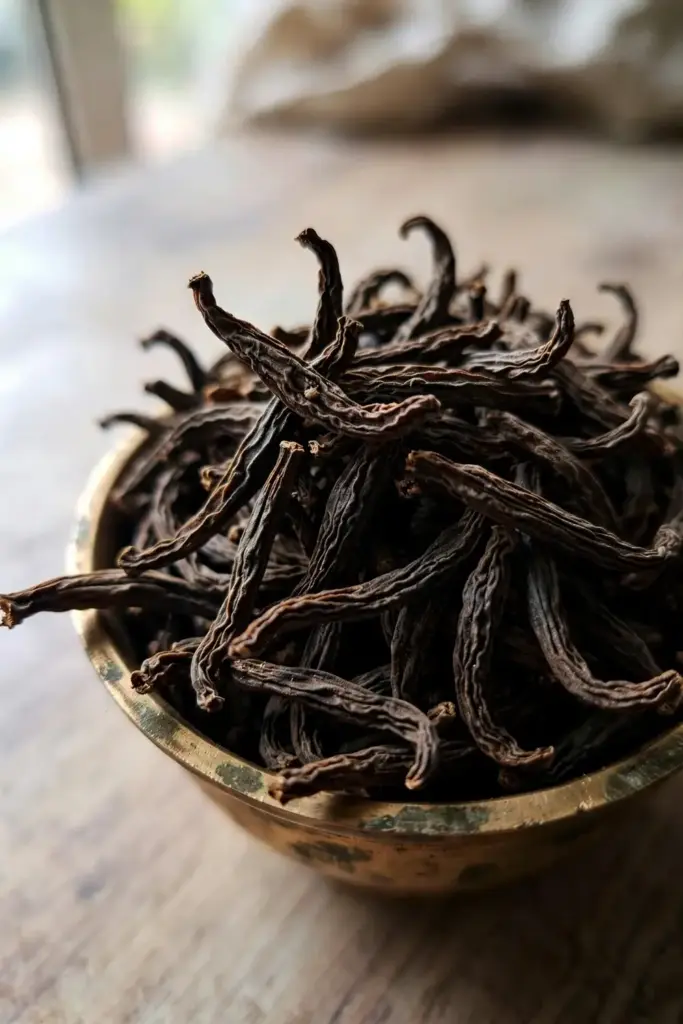
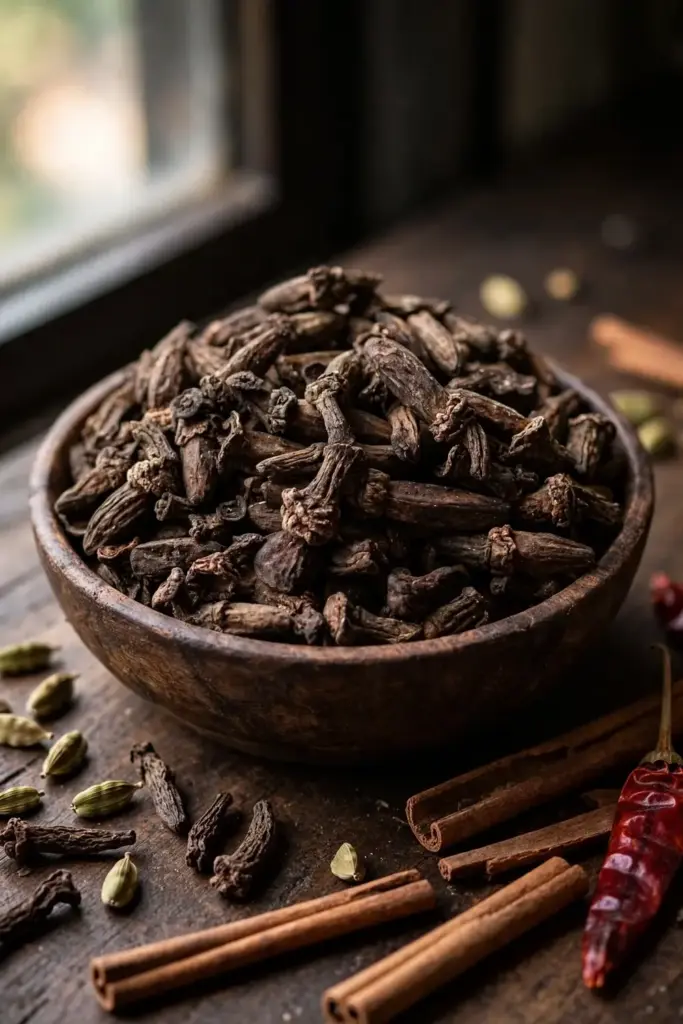
The spice itself is small and dark. Each bud measures 1 to 2 cm, dries to a dark brown, and tastes somewhere between mustard and black pepper. Karnataka cooks never eat the buds raw. They roast them, grind them with other spices, and bloom the mixture in hot oil or ghee. That tempering lands in Bisi Bele Bath, saagu, Chettinad masala, vangi bath, and rice powders.
This article takes the long view, because the tree demands it. You will learn how to grow marathi moggu from India the way the agroforestry literature describes it: fresh seed with a one-year viability window, a 7.3 by 7.3 meter planting plan, and a bud harvest that arrives years later. If you have never raised a tree from seed, read the seed-starting guide first, then come back with a nursery bed ready.
1. Marathi Moggu Is a Tree Crop, Not a Balcony Herb
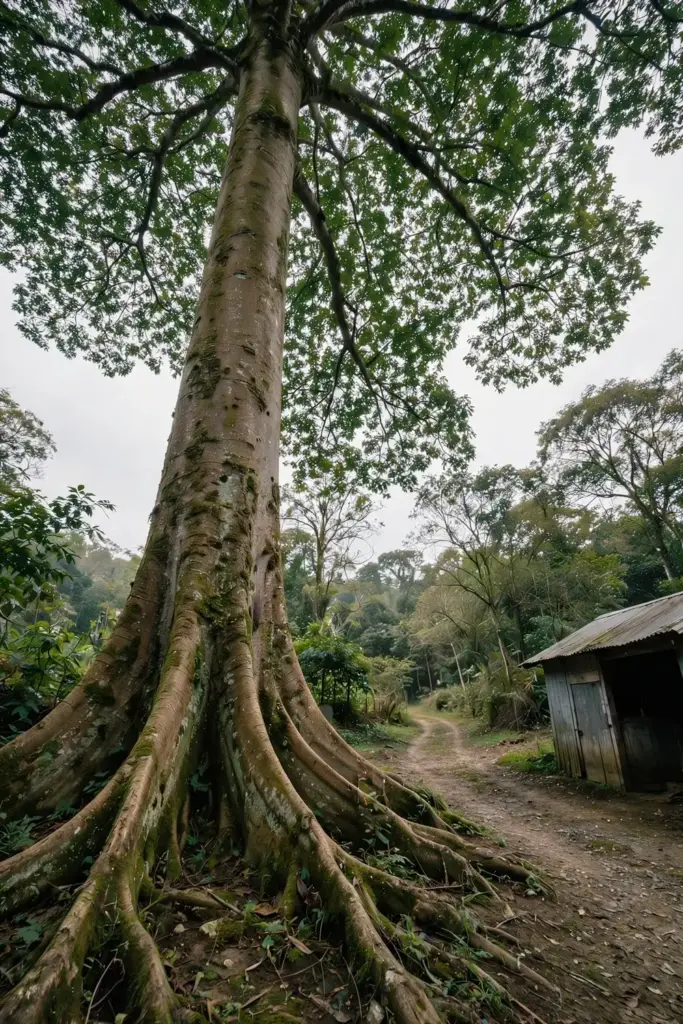
Set the expectation first. A kapok tree is one of the tallest trees in the tropics, with buttress roots and a spreading crown. No pot, terrace bag, or apartment balcony can hold it. Anyone selling you a “balcony marathi moggu kit” is selling a seedling, not a plan.
That does not make the crop unreachable. It makes it a land crop. The Indian kapok-bud trade centers on Malnad in Karnataka and Wayanad in Kerala, where growers work with agroforestry spacing and multi-year timelines. If you have land in a frost-free tropical zone, you can plant. If you have only a terrace, the honest move is to buy the dried buds and learn the spice, not to stunt a giant in a container.
The container stage exists, but it is a nursery stage. Seedlings spend months in polybags before transplanting. After that, the tree goes into the ground or the project ends.
2. What Marathi Moggu Actually Is: Dried Kapok Buds
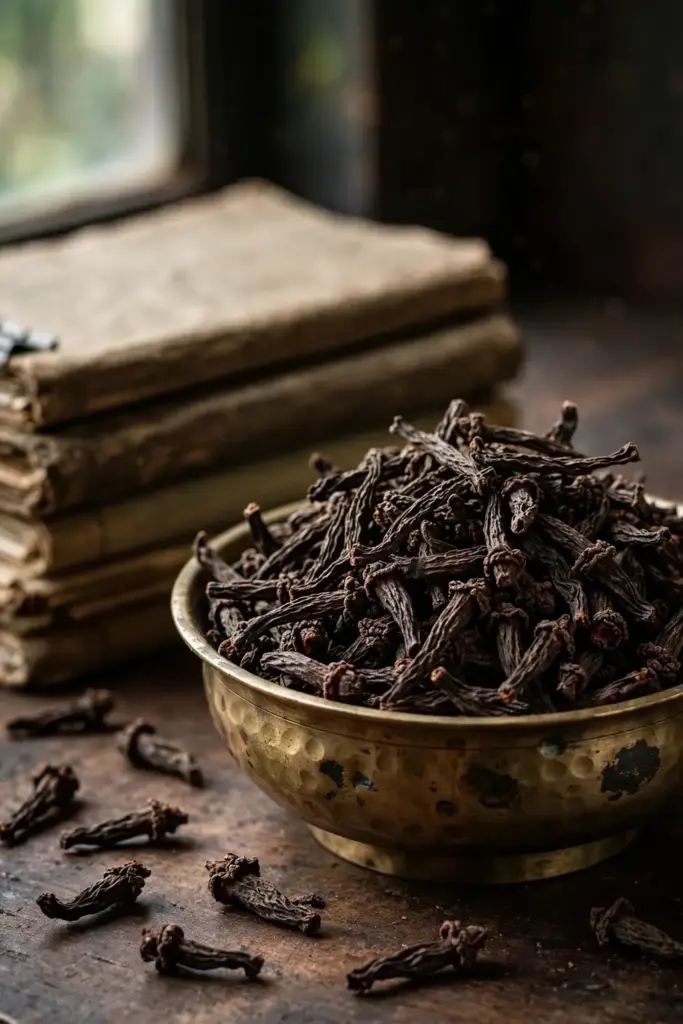
Marathi moggu is the unopened floral bud of the kapok tree, picked before the flower opens, then dried. The buds turn dark brown in the drying process and develop a twisted, thread-like look at 1 to 2 cm long. A 2022 paper in the International Journal of Ayurvedic and Herbal Medicine identifies the botanical source as Ceiba pentandra and the Ayurvedic identity as Koota shalmali, one of the shalmali varieties in the classical texts. The paper describes the market product directly: dried kapok buds, never eaten raw, always roasted and ground with other spices before they enter a dish. Read the full paper in the IJAHM 2022 marathi moggu study.
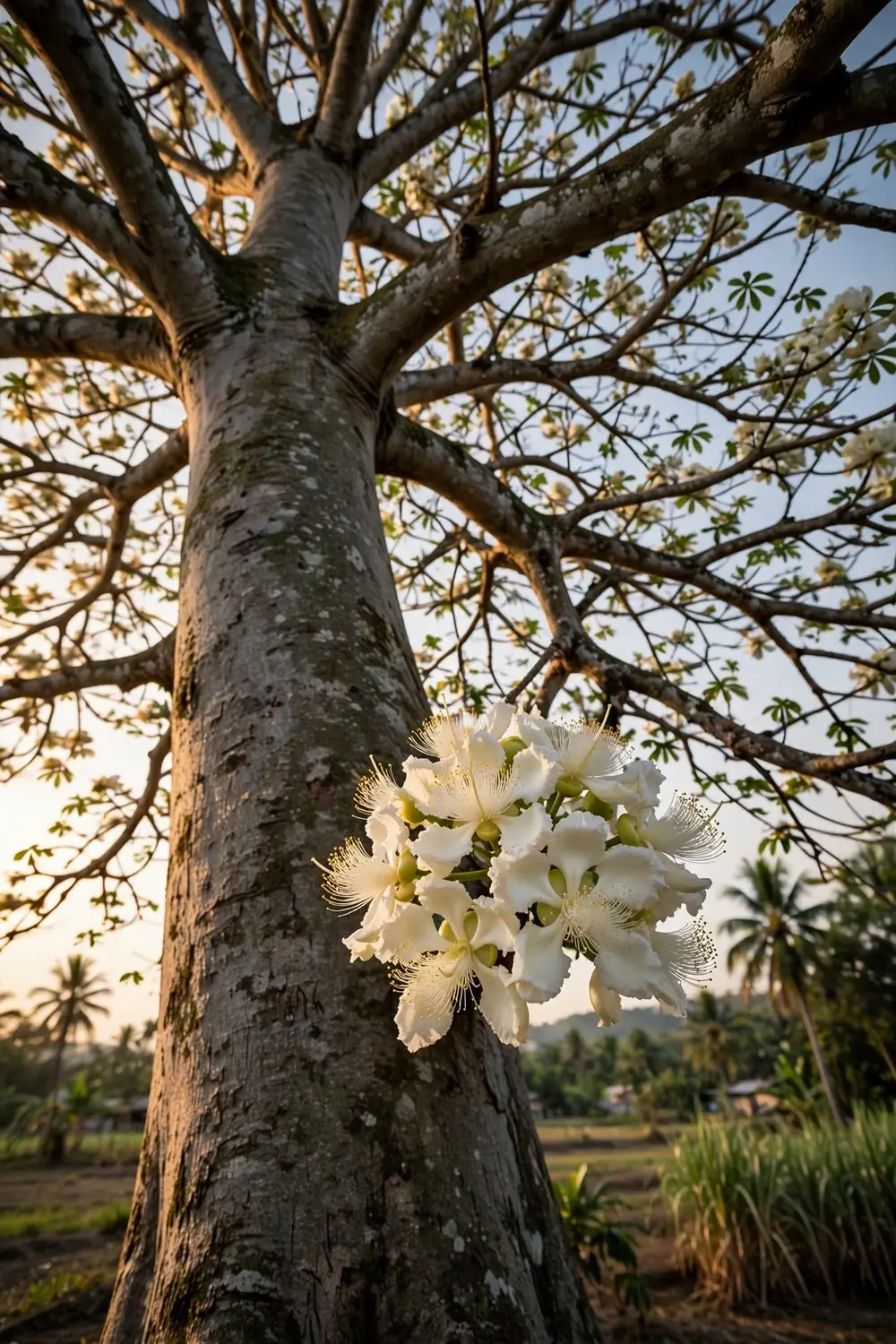
Kapok is deciduous. The tree drops its leaves, then flowers while bare. The blooms open at night and are visited by fruit bats, which do the pollinating. Buds must be picked in that leafless flowering window, before the night the flower opens. Miss the window and the bud becomes a flower, then a pod, and the spice is gone for another year.
3. The Marathi Misnomer: A Karnataka Spice
The name confuses everyone once. “Marathi” points at the Marathi language of Maharashtra. The spice points at Karnataka. The IJAHM paper is explicit: marathi moggu is a Karnataka and Andhra Pradesh spice, central to Karnataka dishes like Bisi Bele Bath and pulav, and used in Chettinad cuisine.
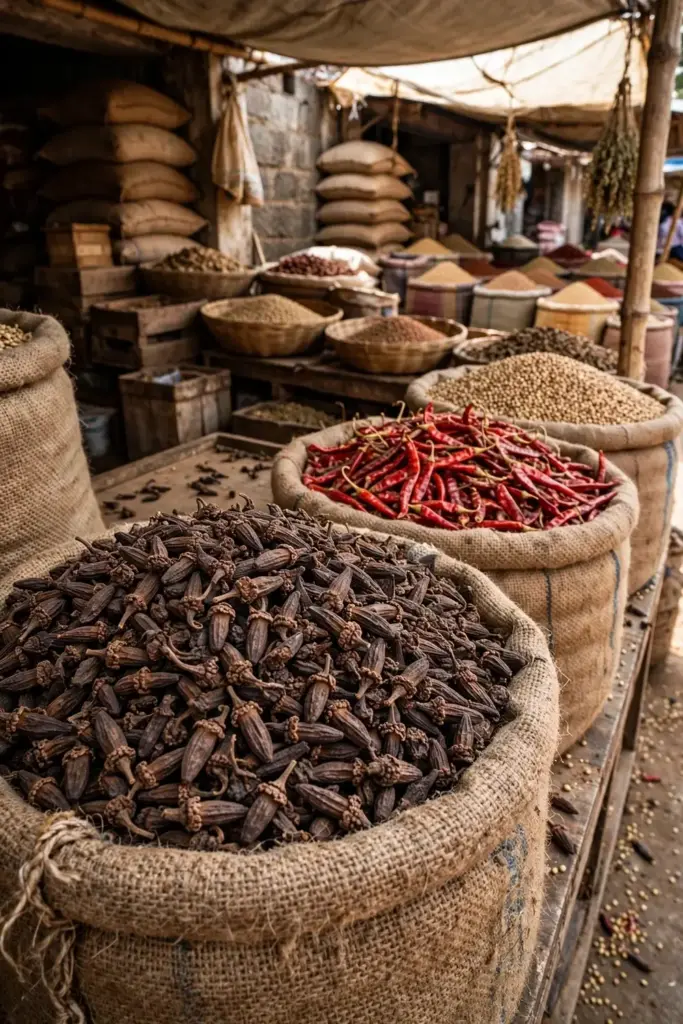
The word “moggu” does the explaining. In Kannada, moggu means bud. In Telugu, mogga means bud. The name describes the product in the languages of the region that grows it. In Andhra Pradesh, the same spice is sold as Andhra moggu.
The market adds more names. Traders list it as Sinhal Marathi moggu and as Indian caper. Both names are trade labels, not botanical statements. The “Indian caper” label is the one that causes the most trouble, and it gets its own fence below.
4. The Shalmali Question: Ceiba pentandra vs Bombax ceiba
Here is the honest botanical fence. The IJAHM paper identifies the source as Ceiba pentandra, the white silk cotton tree, known in Ayurveda as Koota shalmali. Some commercial sources attribute moggu buds to Bombax ceiba, the red silk cotton tree, known as Shalmali. Both are silk cotton trees in the mallow family, and regional trade may draw buds from either.
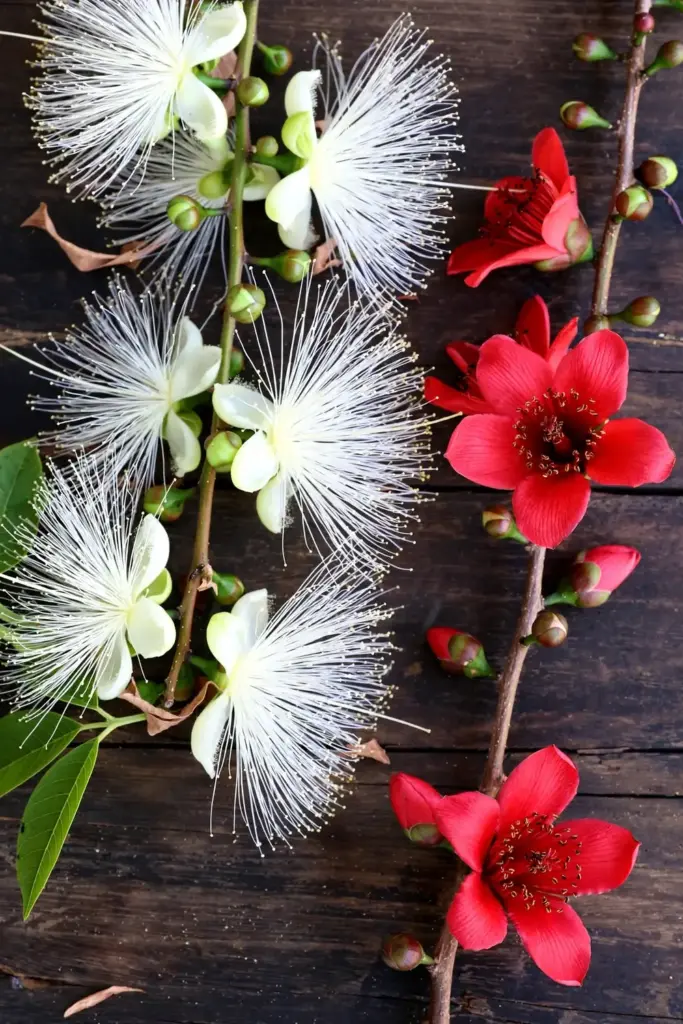
This article follows the published paper and treats Ceiba pentandra as the documented source. It does not pretend the trade confusion does not exist. If you buy planting material or dried buds, ask the seller which tree the stock came from. A seller who cannot answer is a seller to walk away from.
| Tree | Flowers | Ayurvedic Name | Trade Role |
|---|---|---|---|
| Ceiba pentandra | White to pink, night-opening | Koota shalmali | Documented source of marathi moggu (IJAHM 2022) |
| Bombax ceiba | Red, showy | Shalmali | Sometimes cited by commercial sources; fence, do not assume |
The javari moggu question stays open. Searches for “javari moggu” surface the term but no settled botanical identity. This article does not guess. Treat javari moggu as a separate market name until a source pins it down.
5. Not Capers, Not Kapok Fiber: What It Is Not
Marathi moggu is not capers. True capers are the pickled unopened flower buds of Capparis spinosa, a sprawling Mediterranean shrub, cured in salt and brine. Marathi moggu is the dried bud of a tropical tree, used roasted and ground in tempering. The flavor direction overlaps. The plant, the process, and the cuisine do not.
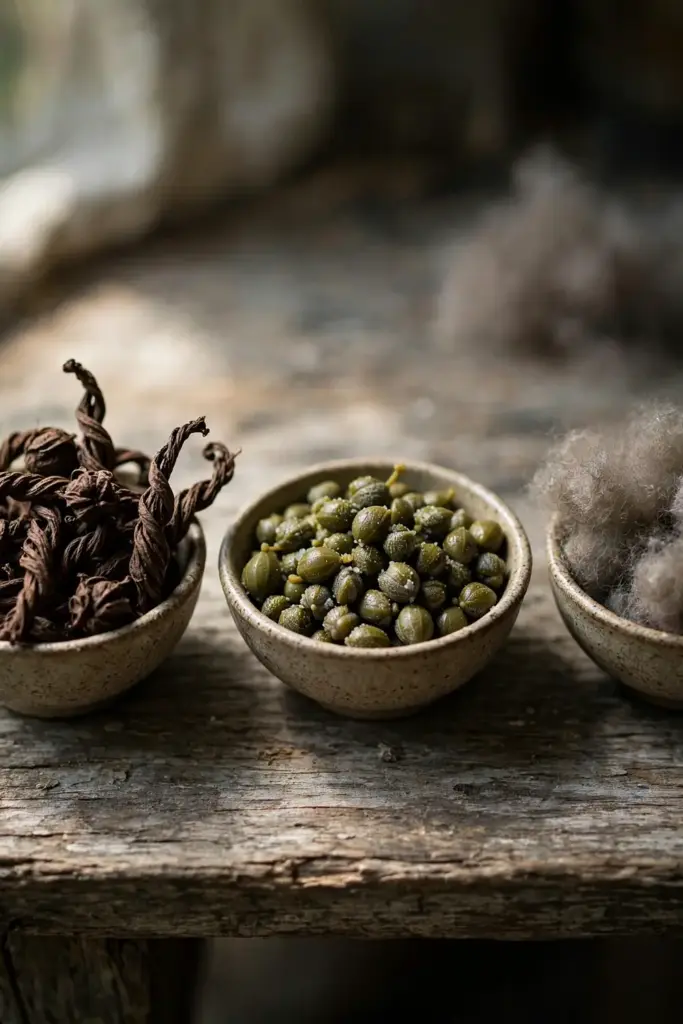
Marathi moggu is not kapok fiber either. Kapok fiber is the silky floss from inside the mature seed pods, the famous filling for pillows, cushions, and life jackets. The spice uses the flower bud. The fiber uses the pod. One tree gives both, at different times, for different markets. Do not buy “kapok” products expecting spice, and do not buy spice expecting fiber.
| Product | Plant Part | Processing | Use |
|---|---|---|---|
| Marathi moggu | Unopened floral bud | Dried, roasted, ground | Tempering spice |
| True capers | Unopened floral bud of Capparis spinosa | Salt/brine cured | Mediterranean condiment |
| Kapok fiber | Seed-hair floss from mature pods | Cleaned, baled | Pillows, life jackets, insulation |
6. The Climate Gate: Where Kapok Survives
Kapok is a tropical tree with a short list of non-negotiables. The World Agroforestry Centre’s species monograph sets the site envelope: 750 to 3,000 mm of annual rainfall, dry spells of no more than 4 months, altitude below 1,500 meters, and night temperatures above 17°C for pollen to germinate. Soils must be deep and permeable. Frost is the hard stop. See the full species data in the World Agroforestry Ceiba pentandra monograph.
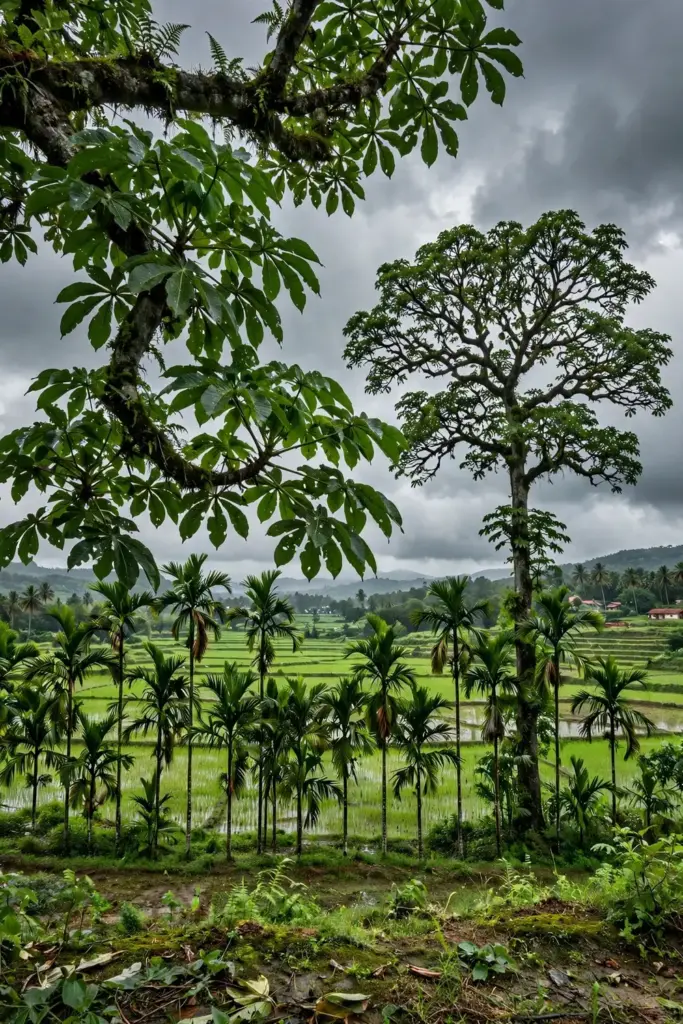
In India, that envelope points at the tropical south and the humid coasts: Karnataka, Kerala, Tamil Nadu, coastal Andhra Pradesh, and parts of Odisha and West Bengal. The cold north, the high Himalayas, and frost-prone interior plateaus are out. A single hard frost can kill a young tree outright, and even mature trees are frost-sensitive.
Rainfall timing matters as much as the total. The tree wants a wet growing season and a drier spell for flowering and fruiting. Regions with year-round waterlogging or with dry seasons stretching past 4 months push the tree outside its comfort zone. How to grow marathi moggu from India, then, starts with a map check. If your district sees frost, plant something else.
7. Seeds: The One-Year Viability Rule
Kapok seeds are generous and short-lived. A kilogram holds 10,000 to 45,000 seeds, so a small purchase goes a long way. But the viability window is about one year. The seed oils go rancid in storage, and old seed does not wake up.
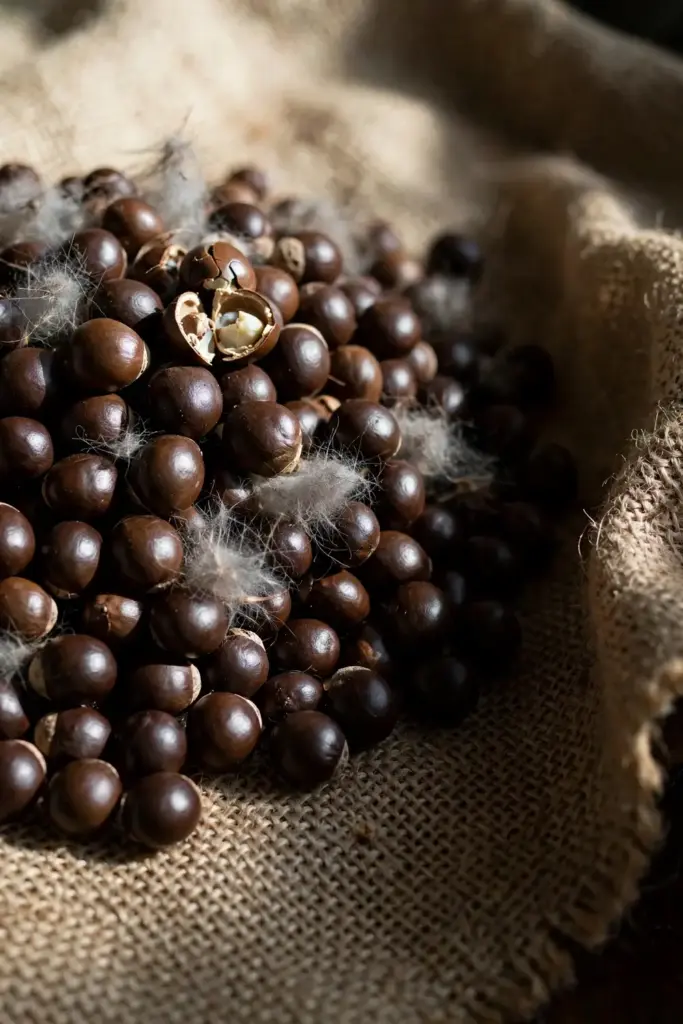
Buy fresh seed and ask for the harvest year. Seed collected in the most recent fruiting season, stored cool and dry, is the only seed worth sowing. Seed of unknown age from a market bin is a gamble with poor odds. If a seller cannot tell you when the seed was collected, find another seller.
Fresh seeds germinate readily. They need a 24-hour soak in warm water before sowing, then a warm, moist, well-drained medium. There is no stratification ritual and no dormancy to break. Freshness is the whole technique.
8. Sowing Kapok: Step by Step
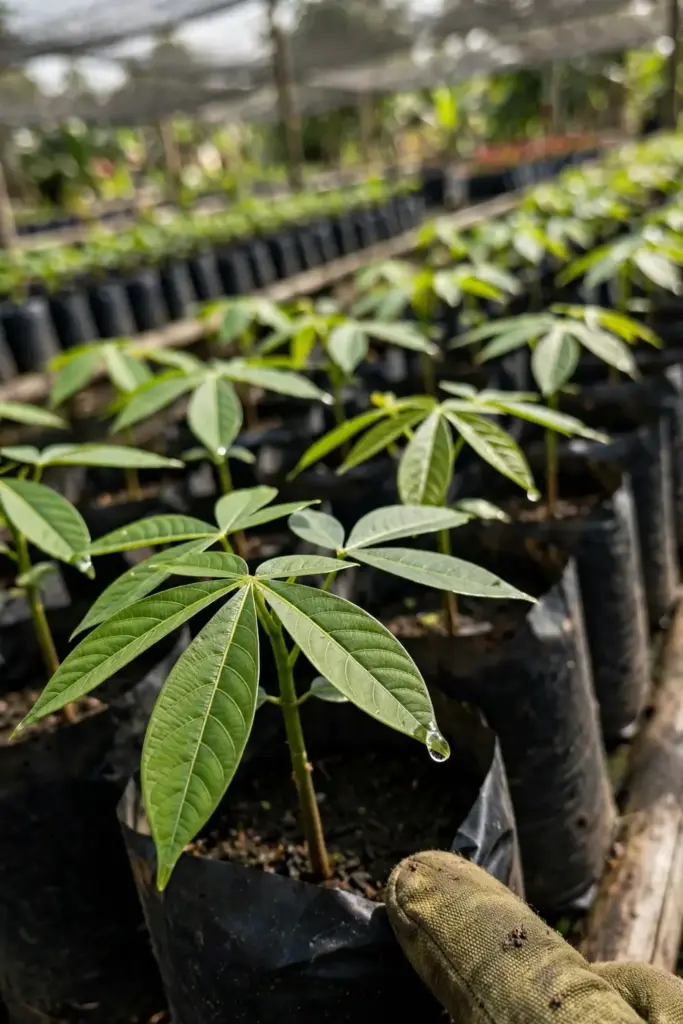
Raise kapok in a nursery first. Direct sowing into the field wastes seed and invites weeds to win. A simple shaded nursery bed or a row of polybags does the job.
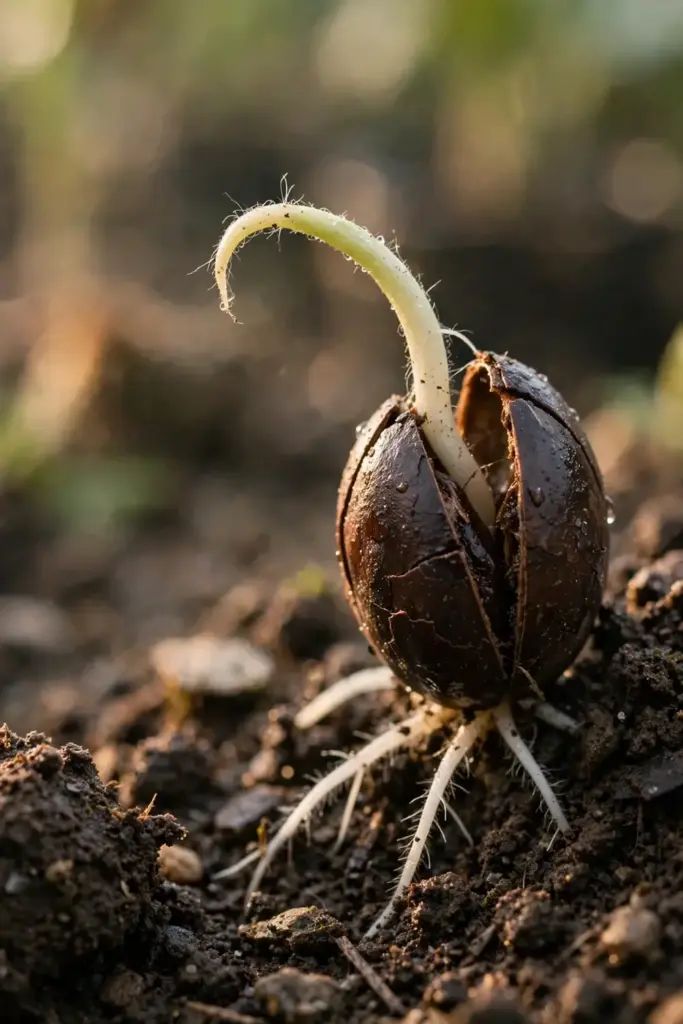
| Step | Action | Time |
|---|---|---|
| 1 | Soak fresh seeds in warm water | 24 hours |
| 2 | Sow 1 to 2 cm deep in a well-drained nursery medium | Day 1 |
| 3 | Keep the medium moist and shaded; expect emergence | 1 to 3 weeks |
| 4 | Thin to one strong seedling per bag or cell | When seedlings reach 10 cm |
| 5 | Harden off in increasing sun before field planting | 2 weeks before transplant |
Use a sandy loam mix with compost. Keep the bed moist but never soggy, because damping off kills more kapok seedlings than any pest. Transplant the seedlings to the field in the early rainy season, while they are still young.
9. Seeds vs Cuttings: Picking Your Method
Two propagation routes exist, and one is clearly better for most growers. Seeds are the standard method: cheap, fast to germinate when fresh, and true to the mother tree’s general character. Semi-hardwood cuttings taken in the rainy season, treated with rooting hormone, also work, but they establish more slowly and the method is far less common.
| Option | Time to Plantable Sapling | Cost | Notes |
|---|---|---|---|
| Fresh seeds | 3 to 6 months | Low | Standard method; needs seed under 1 year old |
| Semi-hardwood cuttings | 6 to 12 months | Medium | Rainy-season cuttings with hormone; slower establishment |
For a bud crop, seedling variation matters less than it does for a timber crop. You are growing for flowers and buds, not for straight boles. Seeds win on every count: cost, speed, and simplicity. Take cuttings only if you have access to a proven heavy-flowering mother tree and want to clone it.
10. Transplanting: Go Young or Go Home
Plant kapok in the early rainy season or in spring in tropical climates, when soil moisture can carry the young tree through establishment. Use container-grown or bare-root saplings. The rule from the cultivation literature is simple: transplant young, before the taproot grows extensive and resentful.
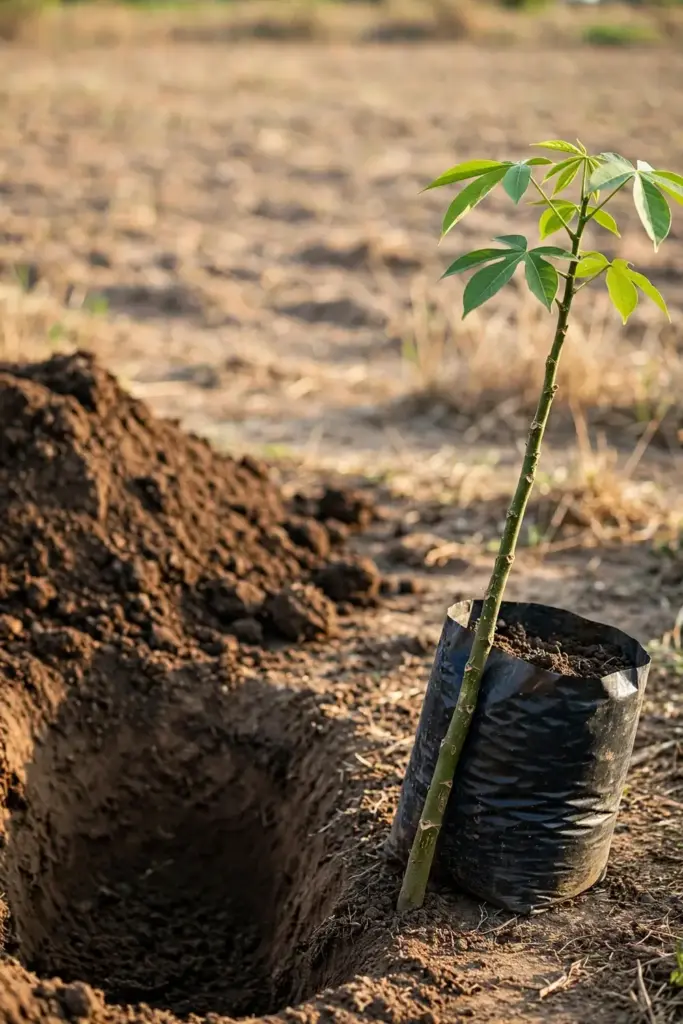
A seedling at 30 to 50 cm, with a firm root ball and hardened leaves, is the right size. Dig the pit wider than the root ball, set the tree at the same depth it grew in the bag, and water it in deeply. Stake only if wind is a real threat, and tie loosely. A tree that learns to stand on its own grows a stronger trunk.
Expect a long establishment friendship. Kapok grows fast once settled, but the first dry season after planting is the danger zone. Mulch the basin, water through dry spells, and keep grass and weeds away from the trunk for the first year. For growers comparing long timelines across tree crops, the mangosteen long-term guide shows the same patience-first mindset this tree needs.
11. Spacing: The 7.3 by 7.3 Meter Agroforestry Plan
This is the number that separates serious planting from wishful planting. The World Agroforestry monograph prescribes 7.3 by 7.3 meters for kapok, roughly 24 by 24 feet. At that spacing the trees need no thinning later. Plant closer and you will spend years fighting a canopy war you cannot win.
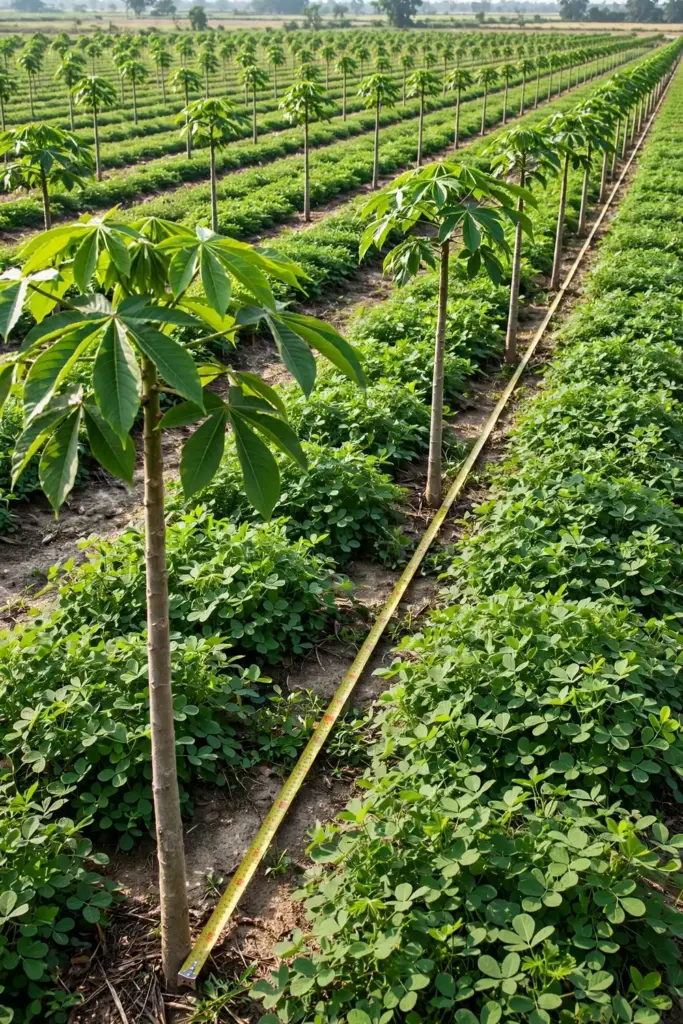
The same monograph describes the taungya system: intercrop the young plantation with food crops for the first 5 years, tend the trees in years 3 and 5, and let the canopy close on schedule. The intercrops pay for the land while the trees grow, and the weeding that the crops demand doubles as tree care. It is the oldest agroforestry trick in the tropics, and it fits kapok perfectly.
Mark your spacing before you dig a single pit. A kapok at maturity spreads a wide crown and throws out buttress roots that heave soil for meters around the trunk. Give each tree its full square. Future you, standing under a 30-meter canopy, will be grateful.
12. Soil: Deep, Permeable, pH 5.5 to 7.5
Kapok asks for depth and drainage. Deep permeable soils let the taproot and laterals run, and the tree tolerates loamy, sandy, and even rocky ground as long as water moves through it. The pH window runs 5.5 to 7.5. Waterlogged ground and highly saline soils stunt the tree, and both should rule a site out.
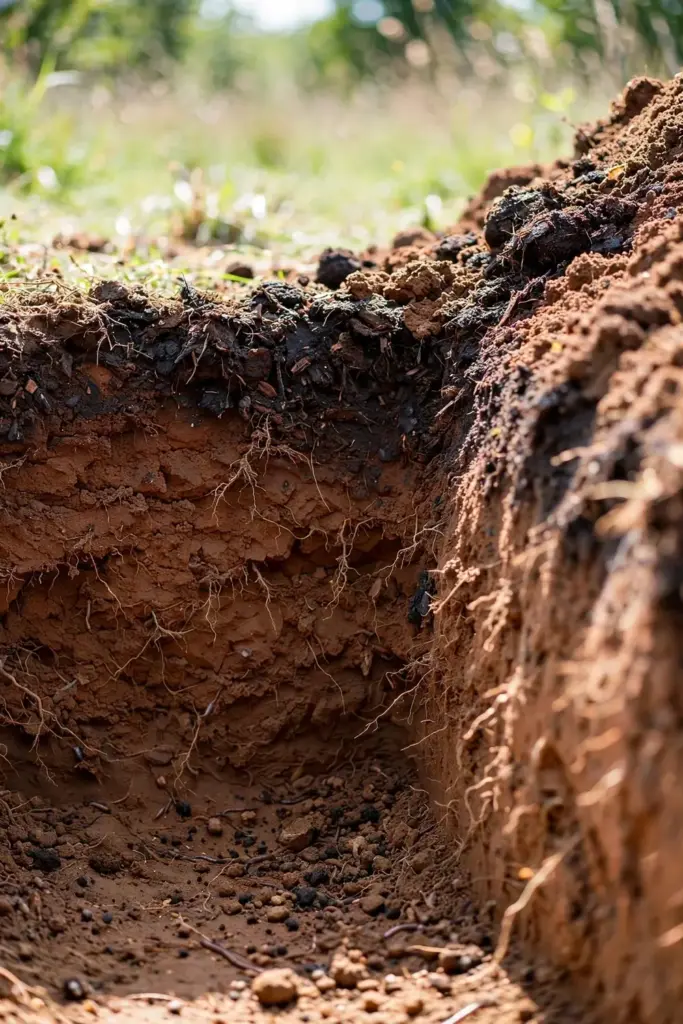
Before planting, walk the site after heavy rain. If water stands in the planting area for more than a day, find higher ground or install drainage. A simple percolation test, a pit filled with water and timed, tells you more than any lab report about whether kapok will be happy. For the broader soil-building routine that supports any tree planting, the soil health foundation guide covers organic matter and structure in detail.
Planting pits should be generous: 60 cm wide and 60 cm deep is a working standard for a tree of this vigor. Mix the excavated soil with well-rotted compost before backfilling, and leave a shallow watering basin around each tree.
13. Watering the First Three Years
Young kapok needs regular water for its first 2 to 3 years. The goal is a deep root system, and deep roots come from deep, infrequent watering that pulls moisture downward. Shallow daily sprinkles build shallow roots and a thirsty tree.
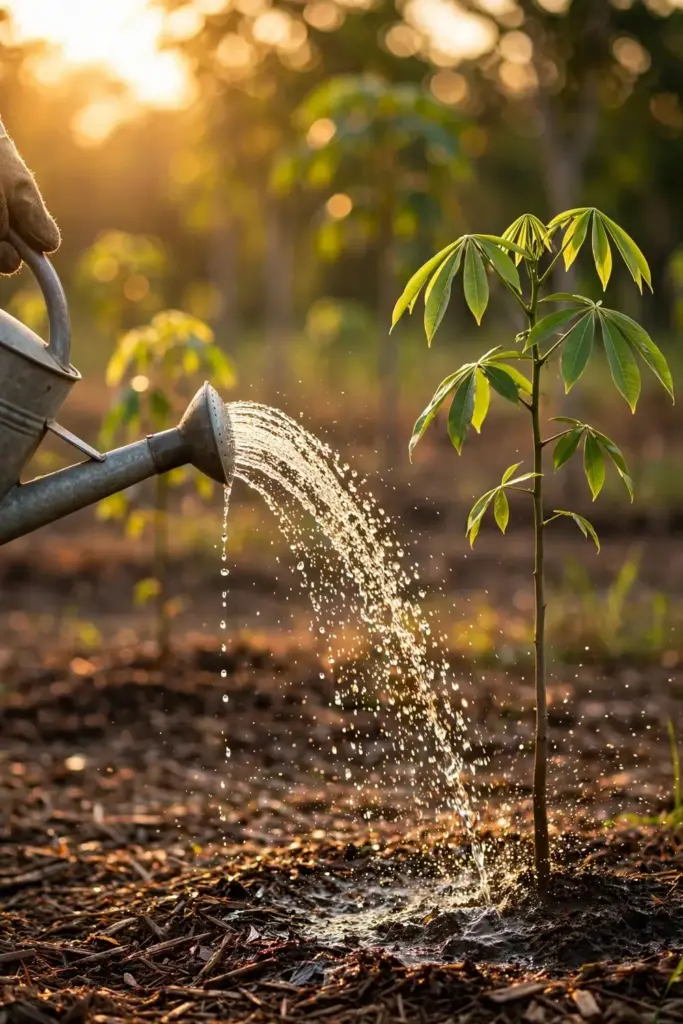
Water the basin deeply once or twice a week through dry spells in the establishment years. In the rainy season, let the sky do the work and check that the basin drains. Mature trees turn drought-tolerant and handle dry seasons on their own, though consistent moisture in well-drained soil supports the most vigorous growth and the heaviest flowering. More flowers mean more buds, so the watering you do in year three pays off in the harvest years.
14. Feeding: Light Hands, Taungya Thinking
Kapok is not a heavy feeder. In the taungya system, the intercrops receive the fertilizer and the tree takes its share from the improved soil, the leaf litter it drops, and the compost worked into the planting pit. A young tree benefits from a ring of compost or well-rotted farmyard manure each year, kept a hand’s width away from the trunk.
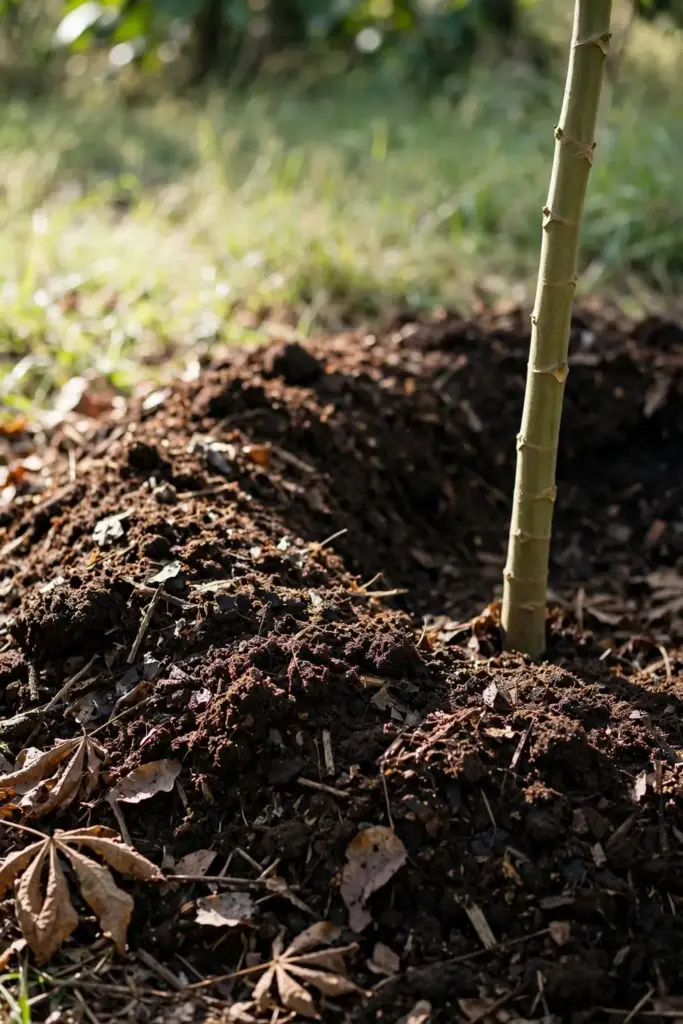
Skip heavy nitrogen doses. Forcing soft, sappy growth on a tree you want to flower invites pests and delays the reproductive maturity you are actually growing for. A mulch ring of dried leaves, renewed as it breaks down, feeds the soil biology that feeds the tree. That is the whole program.
15. Pruning and the Buttress Problem
Prune young kapok for form, not for size control. In the first two years, remove competing leaders so the tree develops one strong central trunk, and clear the lowest branches as the trunk thickens so the crown lifts. After that, stand back. You cannot prune a 40-meter tree, and you should not try.
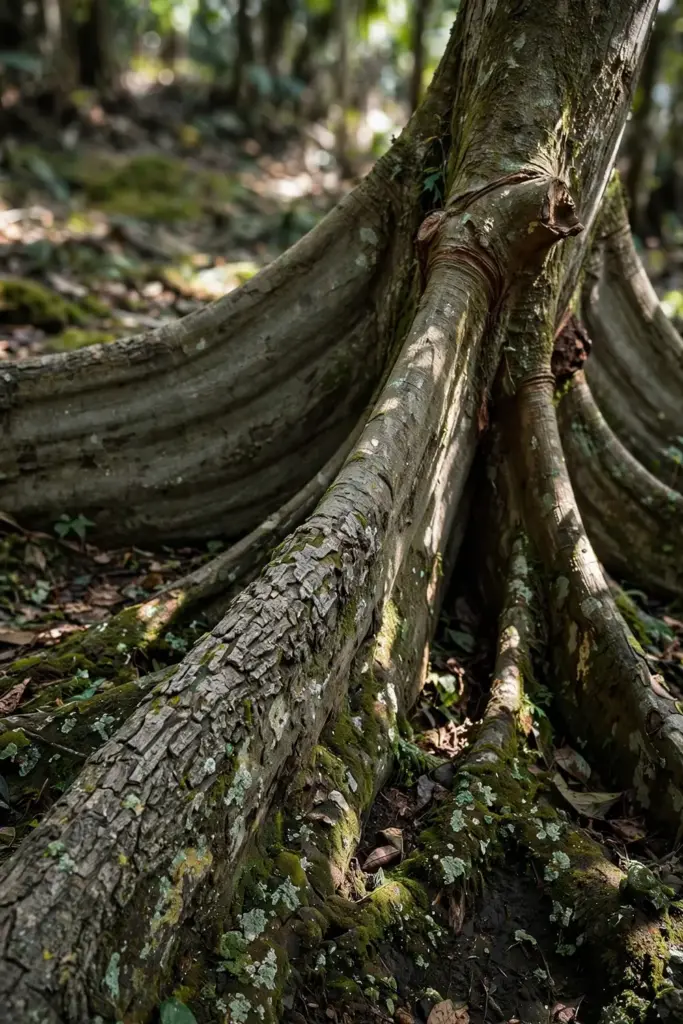
The buttress roots deserve their own warning. Mature kapok grows dramatic plank buttresses that radiate from the trunk base and heave soil, paths, and foundations. Never plant kapok near buildings, compound walls, drains, or roads. The 7.3-meter spacing handles tree-to-tree competition. Only distance handles tree-to-structure conflict. For the mechanics of clean cuts on young trees, the spring pruning techniques article covers tools and timing.
16. Flowering When Leafless: Night Blooms and Bat Pollination
The flowering show is the whole point of this crop, and it is strange and wonderful. Kapok drops its leaves, then covers its bare branches with clusters of large white to pinkish flowers that open after dark. The blooms pour out nectar, and fruit bats arrive to feed, carrying sticky pollen from tree to tree. Hawk moths and bees work the early-morning shift. The Ceiba pentandra species profile documents this night-pollination biology and the tree’s tropical range.
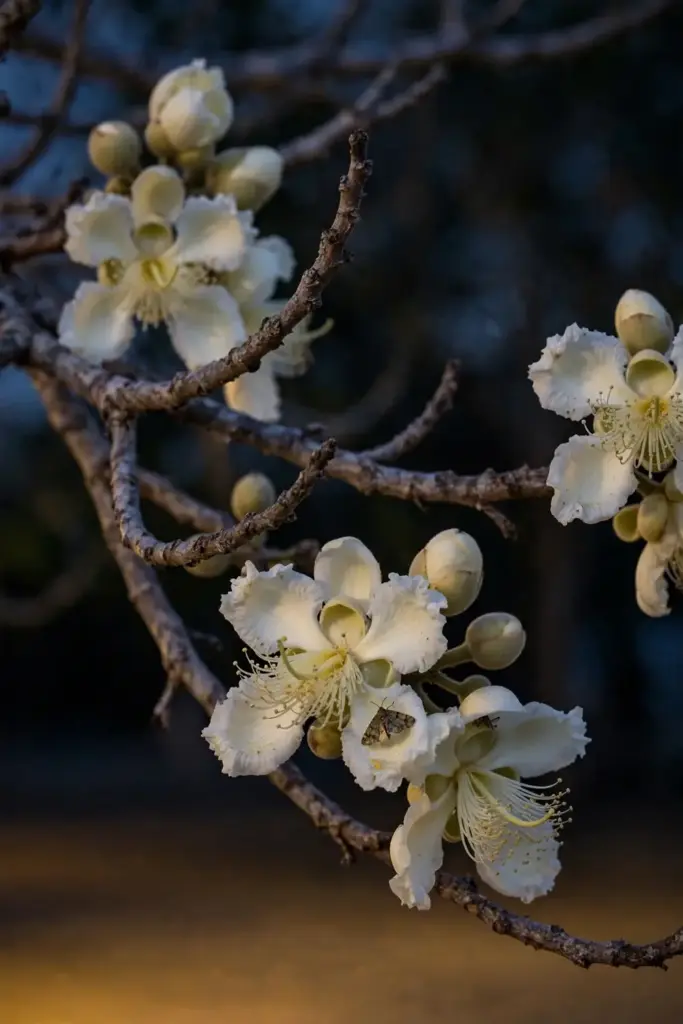
For the bud harvest, this biology sets the calendar. Buds must be picked while still closed, in the weeks of the leafless bloom. Each flower opens on its own night across a flowering season of a few weeks, so the harvest is a series of pickings, not a single day. Watch the tree daily once the first buds swell. Some individual trees skip flowering in a given year, so a quiet season is not a dead tree.
17. Harvesting the Buds: Timing the Pick
Pick the buds unopened. The target is a firm, closed floral bud, 1 to 2 cm long, harvested before the petals part. Work in the early morning when the tree is cool and the buds are turgid. Use a pole picker for high branches, and never climb a flowering kapok without proper equipment. The trunk carries stout prickles on young trees, and a fall from canopy height is not a gardening accident you walk away from.
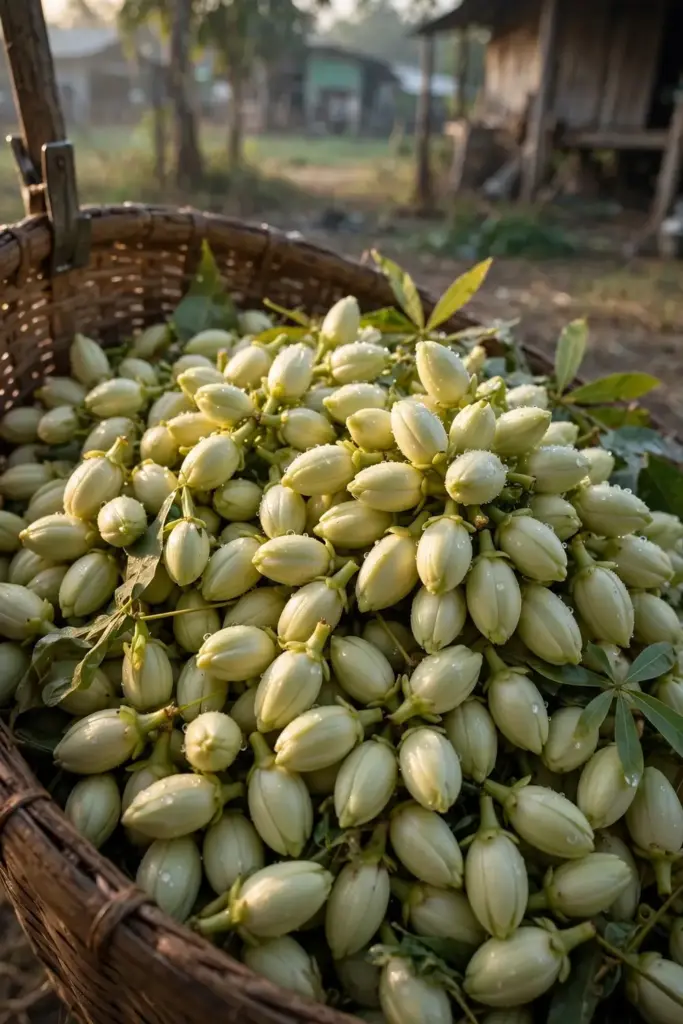
Pick selectively across the flowering season. Take the buds that are full-sized but still tight, and leave the small ones to size up for the next round. A mature tree carries its flowers in great lateral clusters near the branch tips, so a careful picker can work a branch systematically. Expect the harvest window to run a few weeks, with pickings every few days at the peak.
Handle the buds gently. Bruised buds discolor and lose aroma. Spread the day’s pick in a single layer in shade for the first few hours so surface moisture evaporates, then move to full sun drying.
18. Drying and Roasting: From Bud to Spice
Dry the buds in the sun until they are hard and dark brown. Turn them daily so they dry evenly and no mold takes hold in the centers. Properly dried buds snap rather than bend, and they keep their twisted, thread-like shape at 1 to 2 cm. Store them in airtight containers away from light. Like most dried spices, they hold their character for about a year.
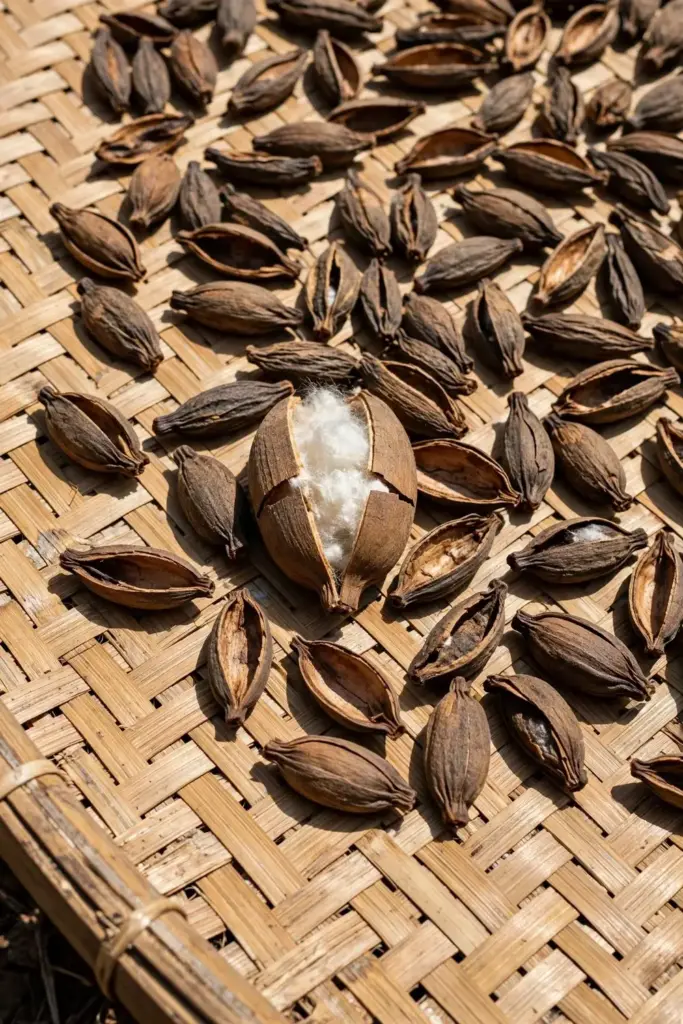
The critical kitchen rule comes straight from the IJAHM paper: marathi moggu is never eaten raw. The dried buds are always roasted and ground with other spices before they go into a dish. Dry-roast the buds in a hot pan until fragrant, cool them, and grind them into the masala or rice-powder blend. The heat wakes up the pungent, peppery character that defines the spice. Raw buds taste flat and woody by comparison.
19. Cooking With Marathi Moggu: The Tempering Rules
In the kitchen, marathi moggu behaves like a tempering spice. The ground blend goes into hot oil or ghee at the start of cooking, where the fat carries its flavor through the dish. Karnataka’s Bisi Bele Bath is the signature application, but the spice also seasons saagu, vangi bath, pulav, and the Chettinad masala blends of Tamil Nadu.
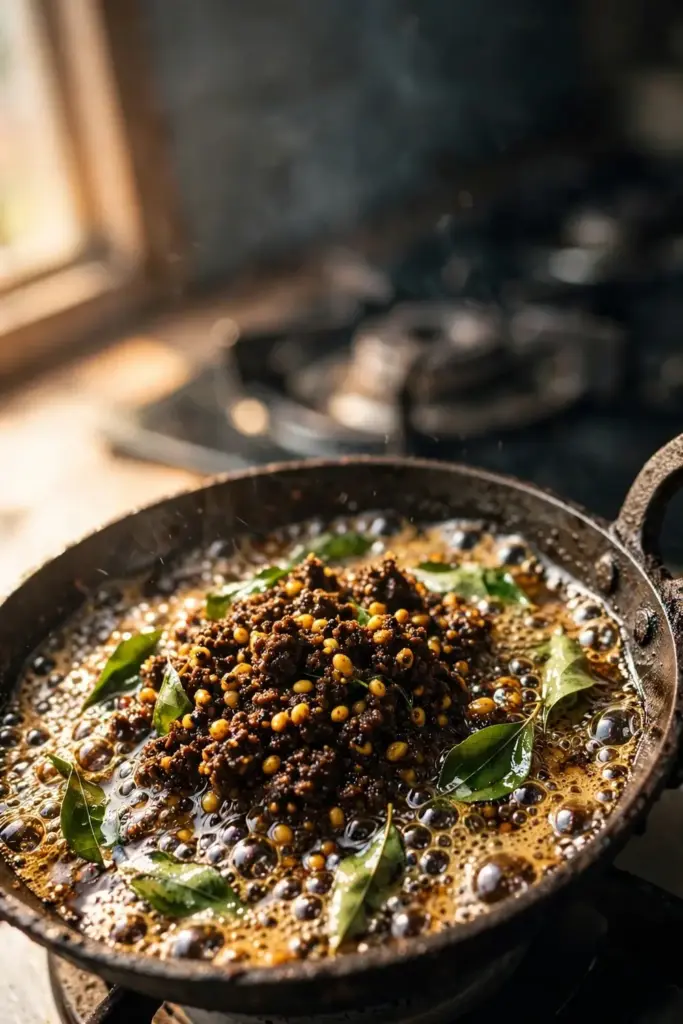
Use a light hand. The flavor sits between mustard and black pepper, pungent and warm, and a little goes a long way. The IJAHM paper notes the mild, aromatic character that gives these dishes their distinctive note, and traditional cooks treat moggu as a background voice in the masala, not the lead singer. Start with half a teaspoon of ground buds in a family-sized dish and adjust from there.
Pair it with the usual tempering company: mustard seeds, cumin, dried red chilies, curry leaves, and asafoetida. The buds dissolve into the blend and leave behind a deep, savory warmth that is hard to place and easy to miss once you know it.
20. Koota Shalmali: The Ayurvedic Lane, Kept Honest
The Ayurvedic identity of marathi moggu is Koota shalmali, one of the shalmali varieties in the classical texts. The IJAHM paper records the traditional properties: Katu rasa, which is pungent taste; Ushna veerya, which is hot potency; and a Kapha-Vata pacifying action. Its listed actions include Bhedana, a purgative effect, with traditional use in disorders of the liver and spleen, the digestive tract, blood, and fat metabolism.
Read that as tradition, not prescription. These are the properties attributed in Ayurvedic literature, reported by the paper’s authors. They are not dosage instructions and not a promise of outcomes. Anyone considering the buds for a health purpose should talk to a qualified Ayurvedic practitioner first. The kitchen dose in a tempered dish is a culinary matter. Anything beyond that is a clinical matter.
21. The Trade: Paniyas Livelihood and the ₹390 per Kg Market
Marathi moggu is a real commercial crop with a real supply chain. First-quality dried buds trade around ₹390 per kg on Indian wholesale platforms, while retail packs run from about ₹20 for 50 grams to ₹150 for premium packs. The spread between farm gate and retail shelf is the usual story of grading, packing, and middlemen.
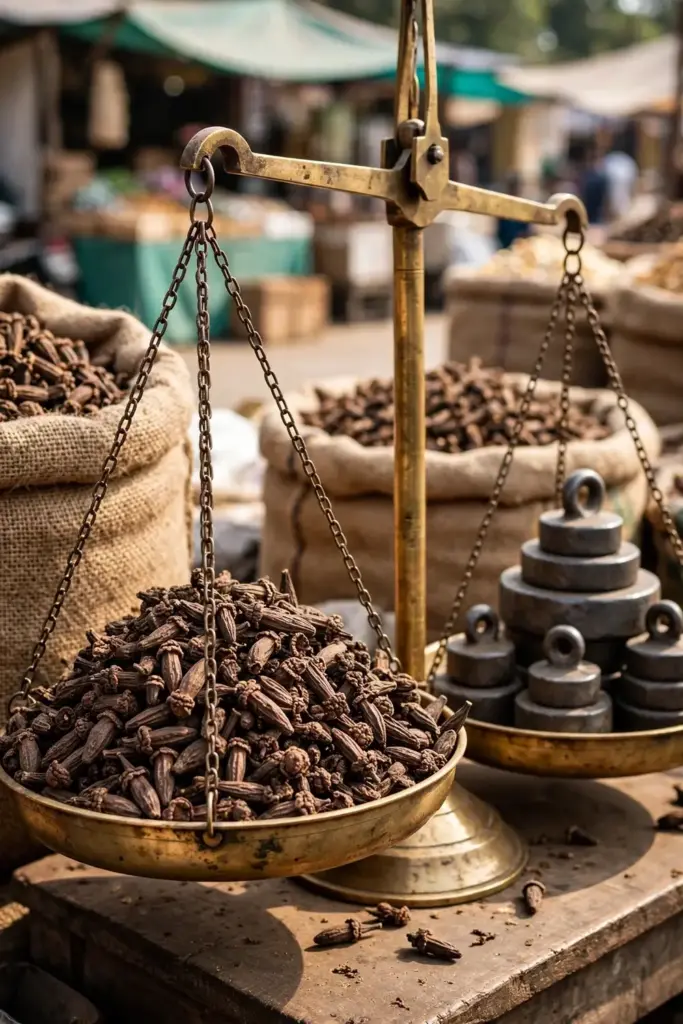
The human story sits in Wayanad, Kerala. There, Paniyas tribal families collect kapok buds and cultivate the trees on tribal land, and the trade income reduces their dependence on forest extraction. Buying from sources that name their growers keeps more of the retail price near the people who climbed the trees.
For a home grower, the economics are simple and slow. A tree or two will never compete with Malnad wholesalers, but a mature kapok in a farm landscape produces buds for the household and a surplus worth drying and selling locally. Price your surplus against the retail packs, not the wholesale rate, and be honest about the years it took to get there.
22. Pests, Diseases, and Parasitic Plants
Kapok’s pest list is manageable but real. The World Agroforestry monograph names defoliating insects, including bagworms and leaf-feeding caterpillars, and fungal problems including Armillaria root rot and Cercospora leaf spot. Good drainage and airflow are the first defense. Remove and destroy badly infected fallen leaves, and avoid wounding the trunk during weeding, since wounds invite decay fungi into the soft wood.
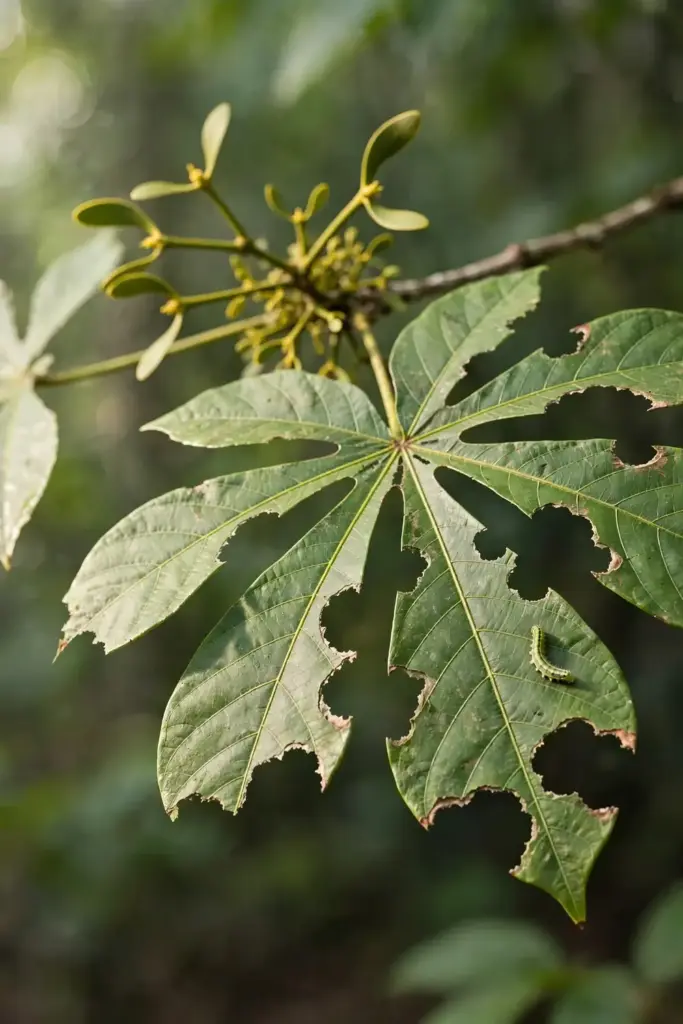
Watch for parasitic plants. Dendropthoe and Loranthus, the mistletoe relatives, colonize kapok branches and steal water and nutrients. Cut out infested branches well below the attachment point and burn the material. A yearly walk around each tree in the dry season catches new infections while they are small.
Young trees need protection from grazing animals. A simple thorn-branch guard or a wire cage around each sapling for the first two years costs little and saves trees. Once the trunk thickens and the prickles harden, most livestock lose interest.
23. Common Mistakes
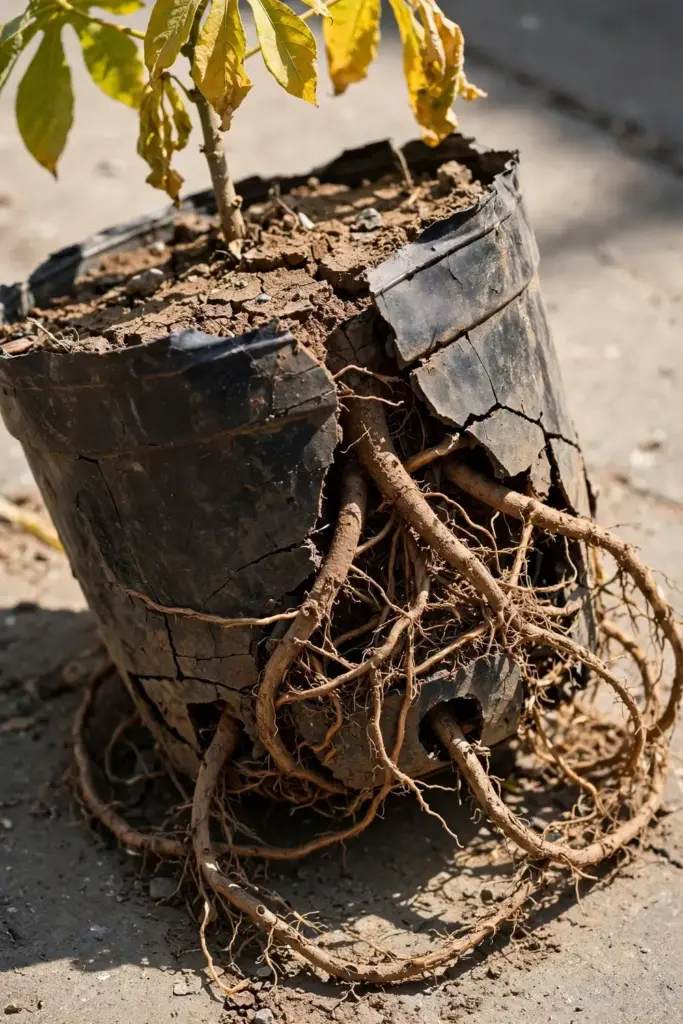
Planting it in a pot forever. A kapok seedling looks charming in a 12-inch pot for a year. Then it becomes a root-bound pole with nowhere to go. The fix is to decide before sowing: ground and space, or do not sow.
Sowing old seed. Seed older than a year germinates poorly or not at all, and the grower blames the method instead of the material. The fix is to ask every seller for the collection year and to sow within months of harvest.
Planting near the house. Buttress roots and a 50-meter canopy do not negotiate with foundations, walls, or power lines. The fix is the 7.3-meter grid on open land, far from every structure.
Expecting spice in year two. Kapok is a tree, not a chili plant. Flowering and bud harvest arrive on a tree’s schedule, measured in years. The fix is to plant, intercrop the alleys, and let time do its work.
Eating the buds raw. Raw dried buds taste flat and woody, and the whole point of the spice is the roasted, ground, tempered transformation. The fix is to roast before grinding, every time.
24. Troubleshooting
The tree grows leaves but never flowers. Young kapok can take many years to reach reproductive maturity, and some trees skip flowering seasons entirely. Check that the tree gets a distinct dry season, since flowering follows the leafless dry spell. If the tree is under five years old, patience is the treatment.
Buds open before you pick them. You are picking too late in the day or too late in the season. Shift picking to early morning and increase the frequency to every two days at peak bloom. Open flowers are not ruined, they just are not the spice.
Seedlings damp off in the nursery. The medium stays too wet and the stems collapse at the soil line. Sow in a coarser, sandier mix, water in the morning only, and give the bed full air circulation. Start over with fresh seed rather than nursing sick seedlings.
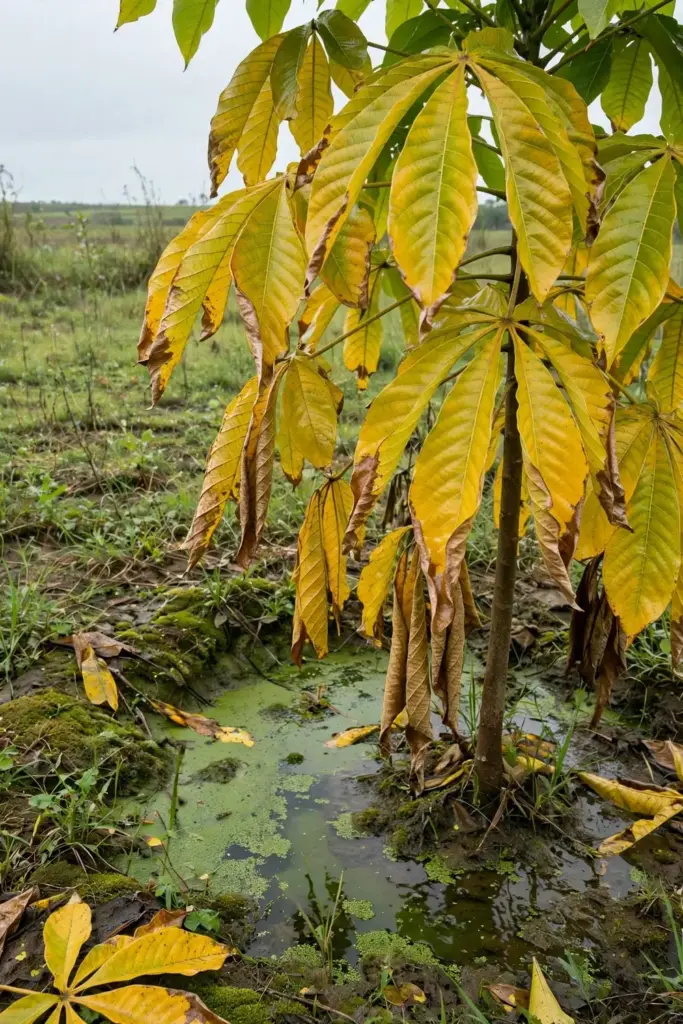
Leaves yellow and drop outside the dry season. Check drainage first. Waterlogged roots suffocate fast in this species. If the site holds water, move future plantings to higher ground and mound the planting pit.
Frost blackens the young tree. There is no rescue for a hard freeze on a frost-sensitive species. Cut back to living wood in spring and protect the regrowth next winter, but the real lesson is site selection. Kapok belongs where frost does not visit.
Frequently Asked Questions
No. True capers are the salt-cured buds of Capparis spinosa, a Mediterranean shrub. Marathi moggu is the dried bud of the kapok tree, Ceiba pentandra, roasted and ground for South Indian tempering. “Indian caper” is only a market nickname. The plants, the processing, and the cuisines are entirely different.
Years, not months. Kapok is a fast-growing tree but a slow-maturing one, and flowering arrives on a tree’s schedule. Some trees also skip flowering in a given year. Plant with a multi-year horizon, intercrop the alleys in the meantime, and treat the first bud harvest as a milestone rather than a deadline.
Only as a nursery stage. A seedling can spend months in a polybag, but a kapok tree grows toward 50 meters with buttress roots. No container holds that. If you have only a terrace, buy the dried buds and enjoy the spice. Plant the tree only if you have open, frost-free land.
Pungent and warm, somewhere between mustard and black pepper, with a mild aromatic quality. It is always used roasted and ground, bloomed in hot oil or ghee as part of a masala. In Bisi Bele Bath and rice powders it works as a background note that deepens the whole dish.
The “Marathi” part refers to the Marathi language, but the spice is native to Karnataka and Andhra Pradesh. “Moggu” means bud in Kannada, and “mogga” means bud in Telugu. The name describes the product in local languages. In Andhra Pradesh it is also sold as Andhra moggu.
Look in South Indian grocery stores, spice markets in Karnataka, and online spice retailers. First-quality dried buds trade around ₹390 per kg wholesale, with retail packs from about ₹20 for 50 grams. Choose whole, dark brown, intact buds from sellers who can name their source region.
The Long Game Is the Point
Marathi moggu rewards the grower who thinks in decades. Plant a kapok tree on open, frost-free land, give it 7.3 meters of room, water it through its first dry seasons, and let the taungya intercrops pay the rent. Years later, when the tree stands leafless and covered in night-opening blooms, you will climb into the short harvest window and pick the buds that become the spice. Few garden projects connect a backyard to a forest canopy, a tribal livelihood, and a pot of Bisi Bele Bath. Learning how to grow marathi moggu from India is one of them.