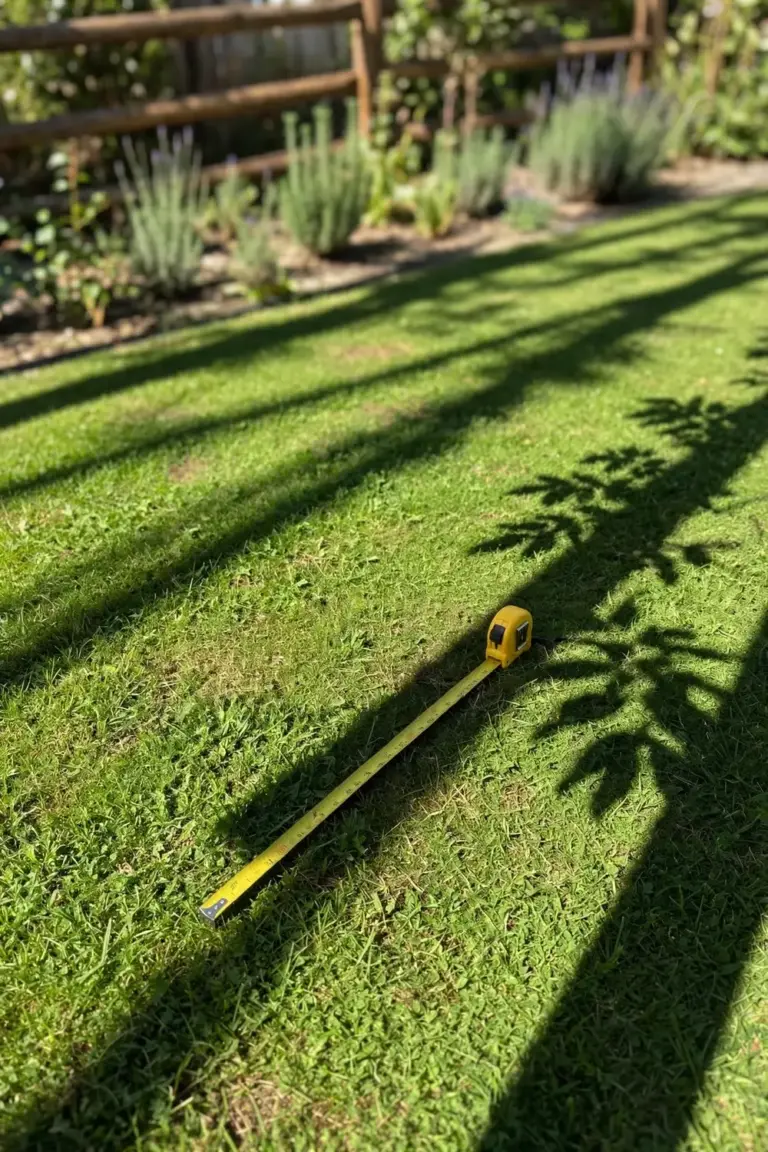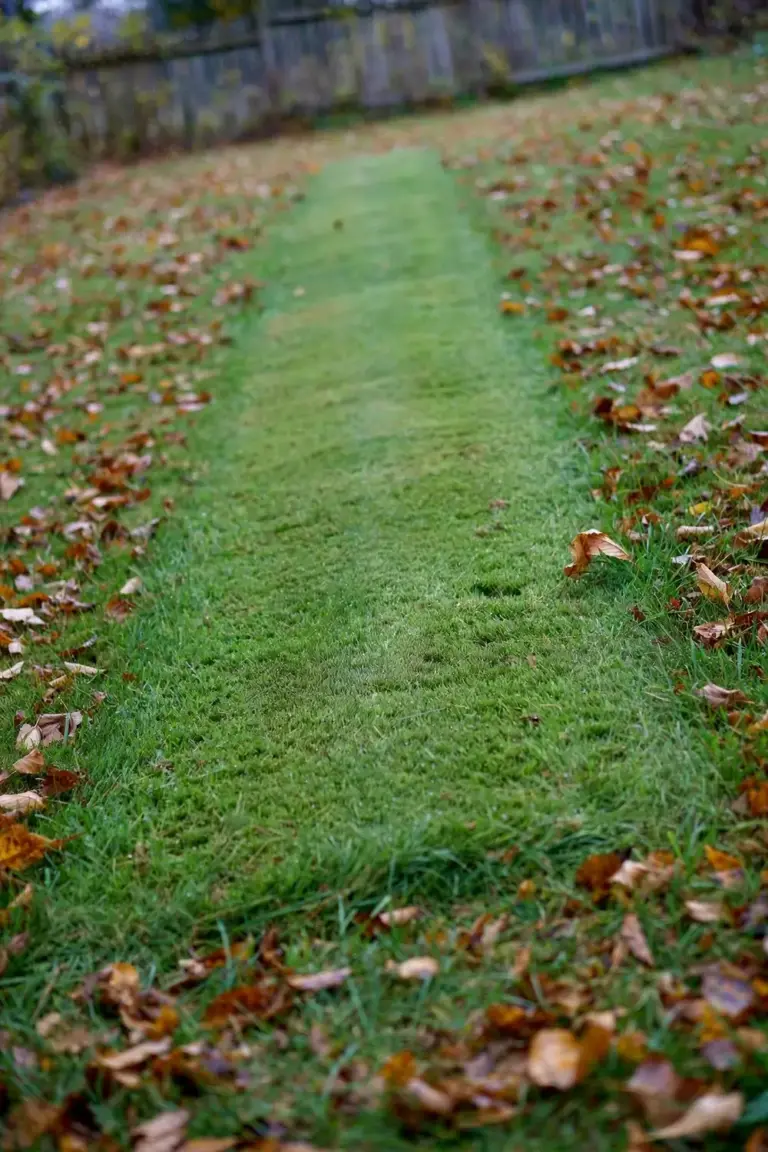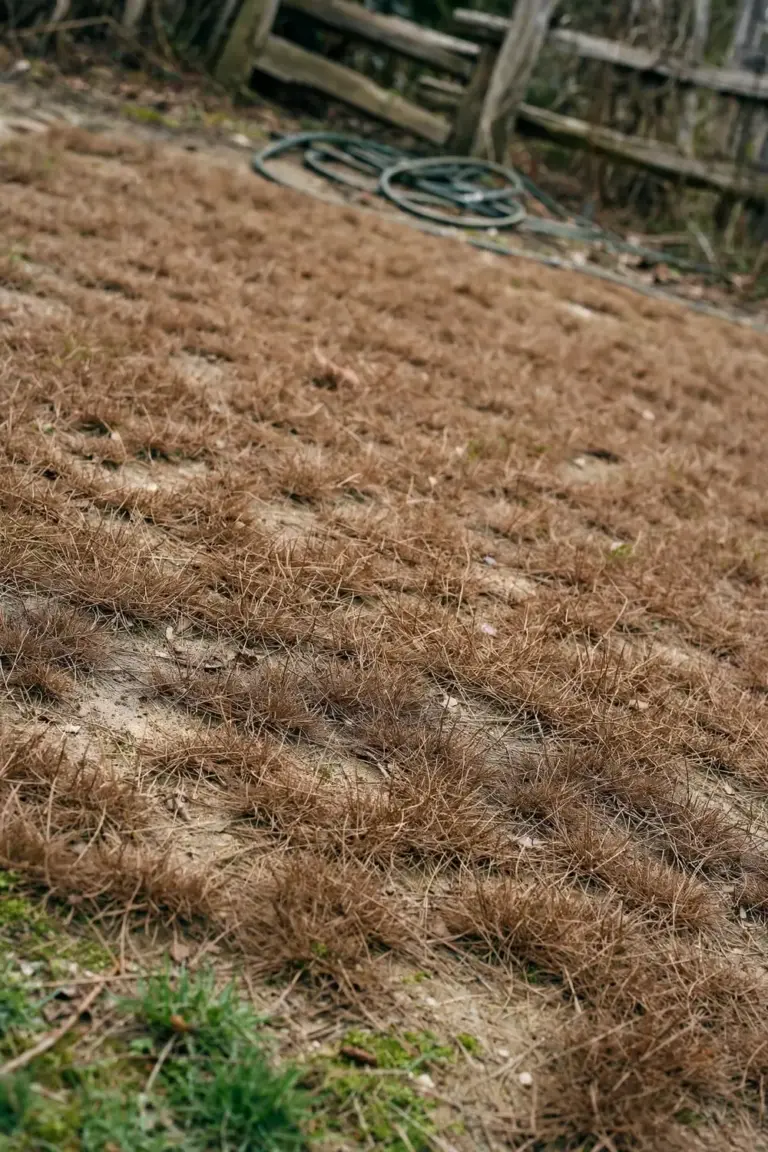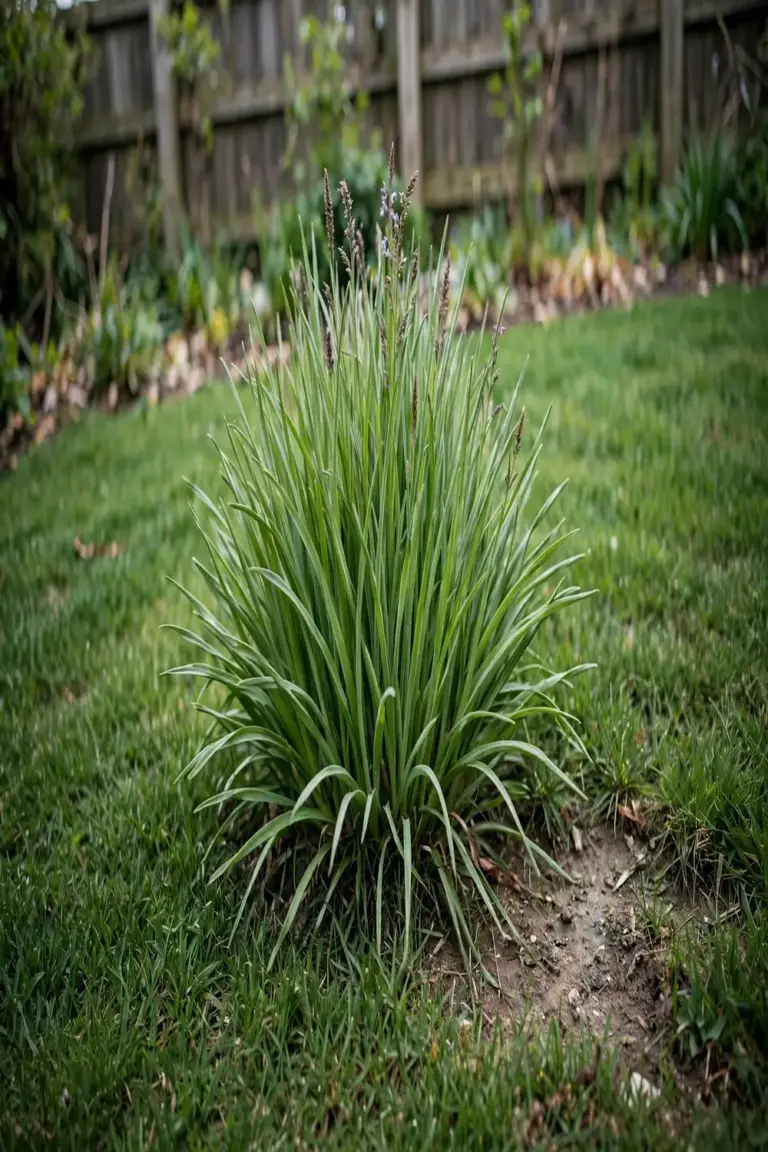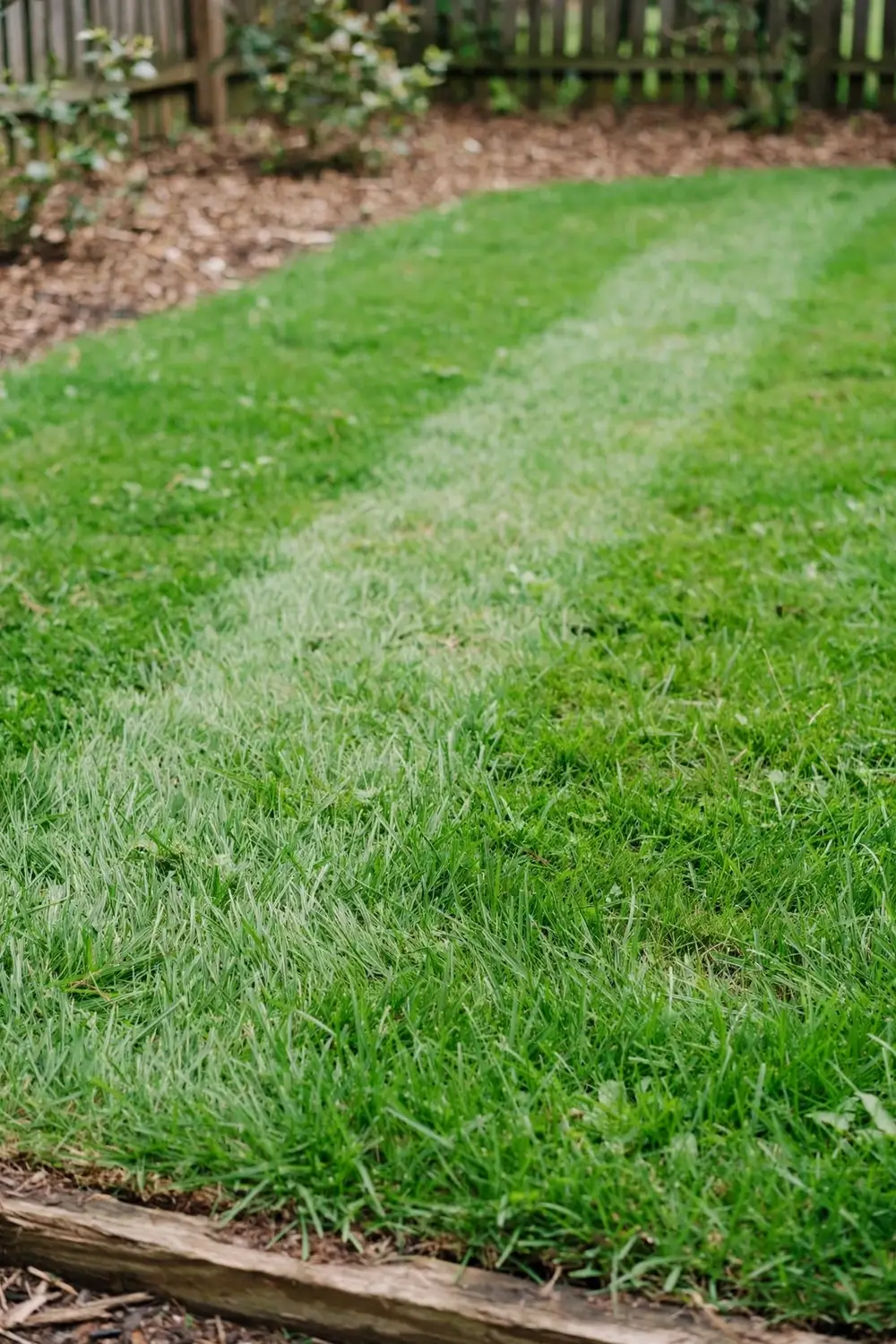

TifTuf Bermuda grass in Australia is a sterile hybrid couch cultivar that uses 38 percent less water than Tifway Bermuda grass while holding better turf quality, according to the University of Georgia. That is a TifTuf Bermuda grass lawn: one branded cultivar, not all couch, sold as sod only, built for sun, heat, and wear. The rest of this page is 9 steps, from the identity check to the winter slowdown.
TifTuf is a hybrid bermudagrass. Bermudagrass is couch grass in Australian naming. TifTuf is one cultivar, not the whole couch family. Buy the name on the certificate, not the word couch on the pallet.
I have learned that the TifTuf lawn I water deep once a week outlasts the one I sprinkle every day.
1. Know What TifTuf Is Before You Buy It
TifTuf is a sterile hybrid bermudagrass cultivar. It produces seed heads, and the seed heads are infertile. No seed packet of TifTuf exists. Every TifTuf lawn starts as sod, sprigs, or plugs.
The breeding story is long. Lawn Solutions Australia reports that TifTuf was selected from 27,700 experimental bermudagrass genotypes, tested under the experimental name DT-1, and put through 19 drought-stress trials, 2 sports-field wear trials, and 4 irrigated trials before release (Lawn Solutions Australia). The University of Georgia bred it. The trials ran across Georgia, Florida, North Carolina, Oklahoma, and Texas. The Tif in TifTuf points to Tifton, Georgia, home of the University of Georgia turfgrass breeding program that bred it.
TifTuf stays green under drought stress instead of going dormant. Other bermudagrasses survive drought by going dormant and greening up at the first rain. TifTuf keeps its color because it uses less water, and the University of Georgia measured that saving at 38 percent less water than Tifway Bermuda grass while maintaining better turf quality (University of Georgia).
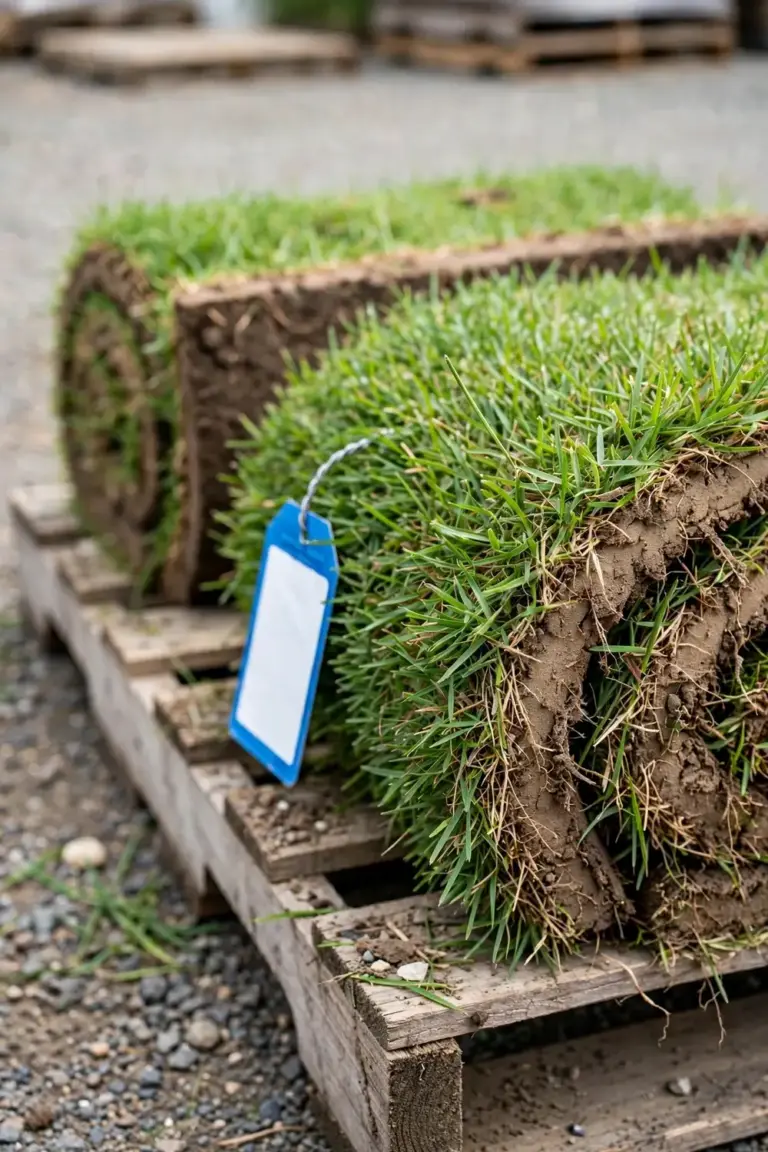
Purity matters because the cultivar is the product. Lawn Solutions Australia grows all TifTuf under a blue-tag certified cultivar program so it stays genetically pure. Every purchase comes with a Lawn Solutions Australia Product Warranty Certificate. The certificate proves the turf is genuine TifTuf. Ask for it before you pay. A pallet without one is not TifTuf, and no warranty backs it. Check the tag on delivery. The tag should name TifTuf, the grower, and the certification. A tag that names only couch, or Bermuda grass, is not enough.
2. Match TifTuf to Your Yard With 4 Checks
TifTuf fits sunny, hard-used yards. It fails in deep shade, in boggy soil, and where winter frost is severe. Run 4 checks before you order.
| Check | Pass Mark | Fail Means |
|---|---|---|
| Sun | 4 to 5 hours of direct sun a day, minimum | Pick a shade-tolerant grass instead |
| Climate | Warm-season climate with hot summers | TifTuf stalls in cool coastal winters |
| Traffic | Kids, dogs, sport, or a driveway edge | Low-traffic shade suits a different grass |
| Water | You can water deep once or twice a week | Daily sprinkling defeats the drought trait |
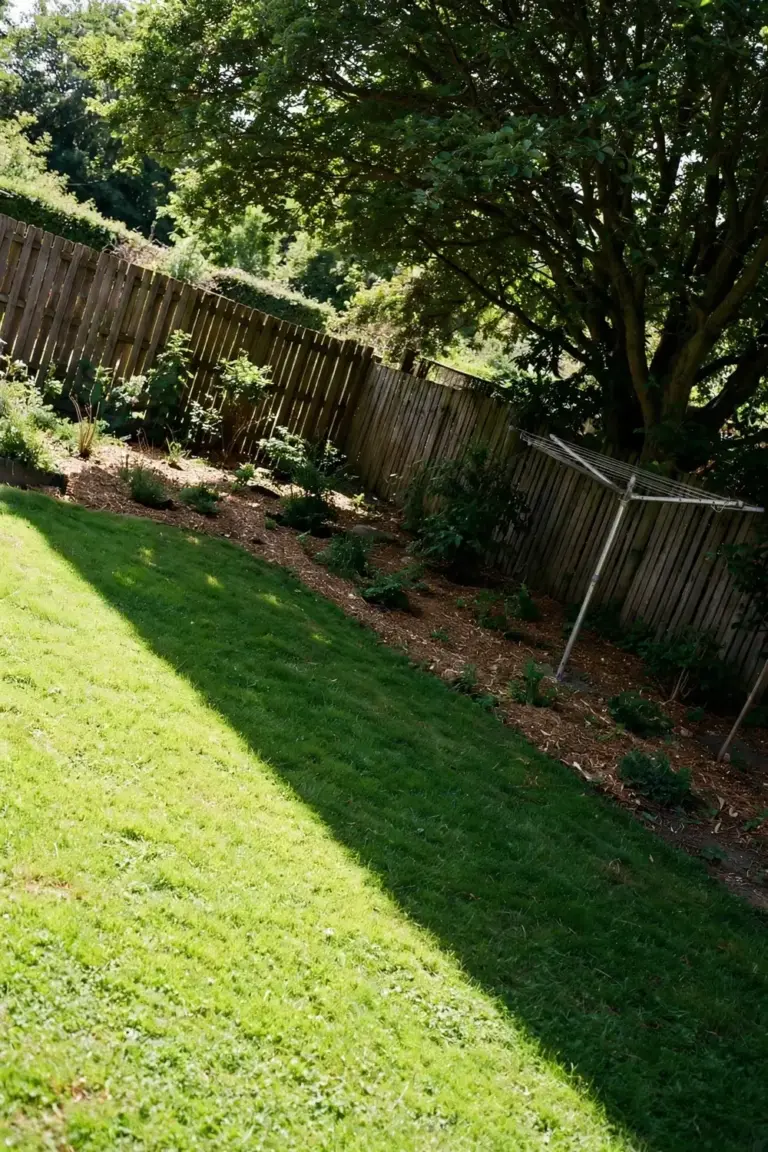
Sun is the first check. Sellers claim 50 percent shade tolerance, and one AU aftercare sheet sets the floor at 4 to 5 hours of direct sunlight a day (Buy Turf Online). Lawn Solutions Australia’s own sunlight guide puts TifTuf at 5 hours minimum. Plan for 5 hours. Treat 4 hours as marginal. Below 4 hours, TifTuf thins. A lawn that gets 3 hours of sun needs a shade grass, not TifTuf.
Water is the second check. TifTuf earned the Smart Approved WaterMark, and Buy Turf Online lists it as recognized in Queensland, New South Wales, Victoria, Tasmania, and South Australia, with Western Australia and the Northern Territory excluded. The same seller reports that TifTuf retained 95 percent more green leaf tissue than other grasses in rain-deprivation tests (Buy Turf Online). The WaterMark is a water-saving credential, not a no-water promise. TifTuf still needs water. It needs less of it. A WaterMark listing also helps in councils with watering restrictions, because a grass that uses less water fits the restriction better than a thirsty one.
A trial from Lawn Solutions Australia tested TifTuf under shade, drought, and wear at once (Lawn Solutions Australia). The trial measured color, quality, ground cover, and density across cultivars, and TifTuf pulled ahead as shade and drought increased. That trial result backs the shade claim with measurements, not marketing. It does not change the working minimum. A shaded lawn still needs 4 to 5 hours of direct sun.
TifTuf and buffalo do different jobs, and the table below is the whole comparison: buffalo tolerates more shade than TifTuf, while TifTuf beats buffalo on drought and wear. Pick the grass for the yard you have.
| Grass | Sun Need | Shade Tolerance |
|---|---|---|
| TifTuf | 4 to 5 hours a day quoted; LSA says 5 hours minimum | 50 percent claimed |
| Sir Walter buffalo | 3 to 4 hours a day | 50 to 70 percent |
Lawn Solutions Australia rates soft-leaf buffalo as the most shade-tolerant grass type. Its own sunlight guide puts TifTuf at 5 hours minimum. Other sellers quote 4 to 5 hours for TifTuf. Plan for 5 hours. Treat 4 hours as marginal, not safe.
3. Lay TifTuf Sod in 5 Steps
Lay TifTuf sod in the warm growing season. Soil temperature above 18 degrees Celsius gives the fastest rooting. Sod laid in winter still roots, but slowly, and a cold snap can stall it for weeks. Spring to early autumn is the safe window in Australia.
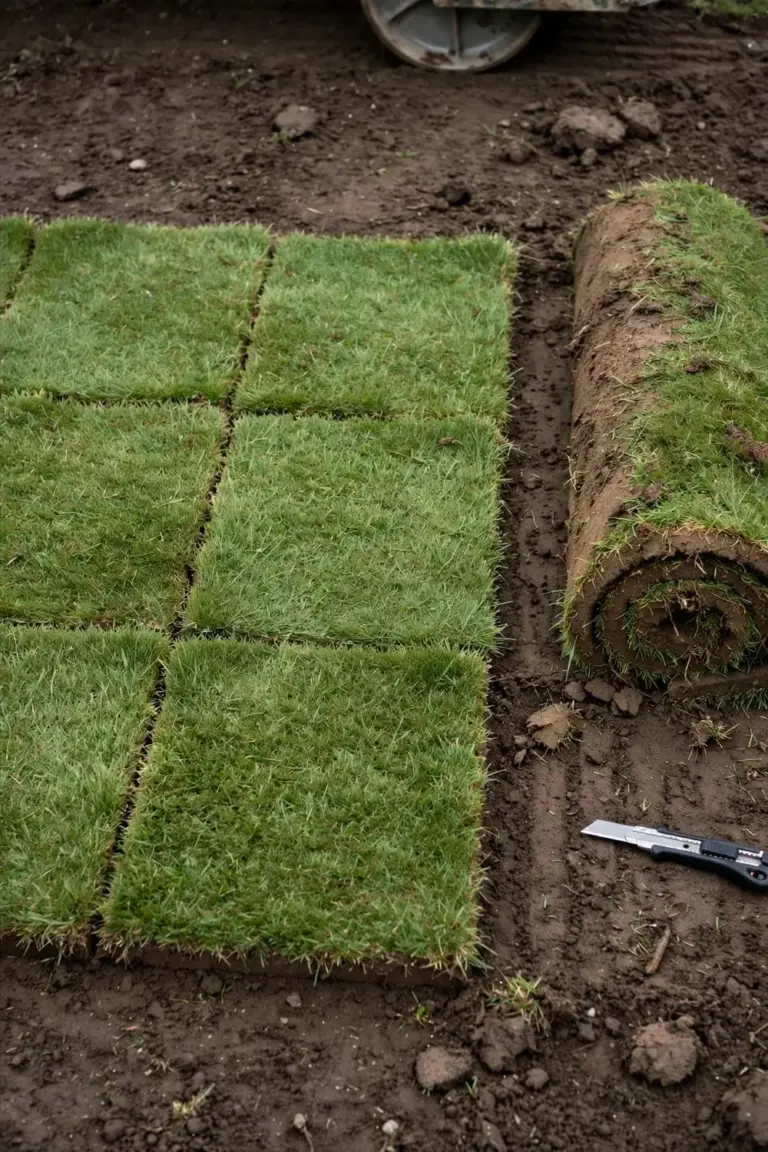
Step 1: clear the site. Remove old grass, weeds, roots, and debris. A clean base stops old couch from punching through the new sod. Kill perennial weeds before laying, not after. Glyphosate-free methods take longer, so start clearing 2 to 3 weeks before delivery day.
Step 2: test and fix the soil. Building soil health starts with a test, not a guess. TifTuf grows best in soil pH 5.8 to 7.0, per The Turfgrass Group. Add lime only if the test says the soil is acidic. Rake the surface level. Low spots pond water and kill sod. A 5 to 10 cm layer of topsoil fixes a rough base. Compacted soil needs a fork or a core aerator before the sod goes down.
Step 3: lay the sod tight. Butt each roll hard against the last, with no gaps and no overlaps, and stagger the joints like bricks. Cut curves with a sharp knife, and save the offcuts for small gaps at the edges.
Step 4: roll the sod with a light roller, one pass in one direction, to press roots against soil and squeeze out the air pockets that dry roots out.
Step 5: water at once. Soak the sod and the top 10 cm of soil underneath. The first watering is the most important one the lawn gets, so do it the same day the sod goes down, even if rain is forecast. Rain rarely soaks deep enough on day one. Order sod for morning delivery so the laying and the first watering both finish before the afternoon heat.
4. Water New TifTuf Sod Twice a Day for 2 Weeks
New sod needs steady moisture. Water at least twice a day until the sod takes root, weather permitting. Keep the soil damp, not flooded. Roots grow into damp soil. They die in dry soil and rot in waterlogged soil.
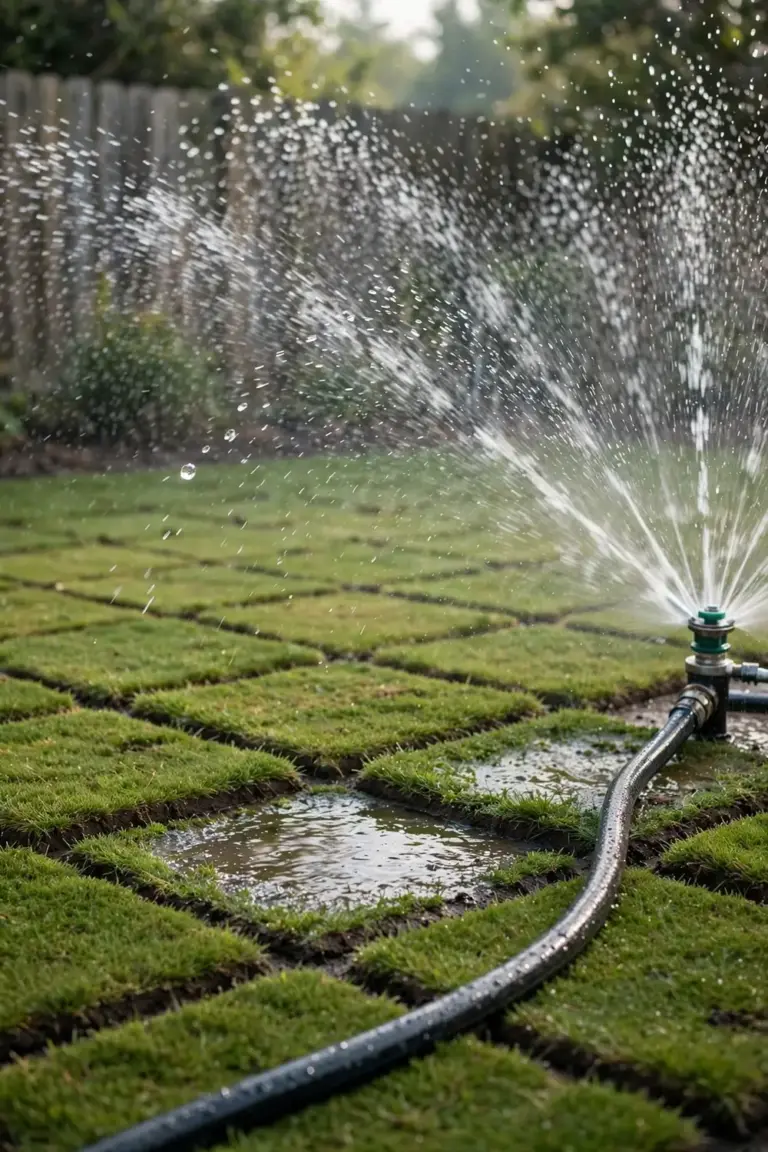
Drop the frequency as roots grip. After the first week, water once a day for a week. Then water every second day. Then ease into 1 to 2 waterings a week. The taper takes about 3 to 4 weeks. Sod roots start bonding with the soil in 2 to 3 weeks, and the lawn is well rooted by 4 to 6 weeks, per The Turfgrass Group.
Check rooting with a tug test. Lift one corner of a sod square gently. Roots that grip the soil resist the lift, while roots that have not gripped let the square lift cleanly. A square that lifts cleanly needs another week of steady watering, so keep the taper on hold. Do not judge rooting by color. A green square can still be unrooted.
Do not fertilize new sod. Wait 6 to 8 weeks after laying before applying a granular fertilizer, per an AU aftercare sheet from Akers of Lawn. New roots feed from the soil. Fertilizer on unrooted sod burns roots and feeds weeds.
Mow once the sod has taken root, even if you only clip the tips. Early mowing thickens the lawn. Keep foot traffic light until the sod resists a firm tug.
5. Water Established TifTuf Deep Once or Twice a Week
Established TifTuf needs deep, infrequent water. Water 1 to 2 times a week, or as needed for the weather. Deep watering grows deep roots. Deep roots carry the lawn through dry weeks. Daily sprinkling grows shallow roots. Shallow roots wilt at the first hot day.
The weekly target is 1 inch of water, or 2.5 cm, including rainfall. The University of Georgia gives that figure as the rule of thumb for most grass types, and adds that TifTuf in good soil needs no irrigation once roots are established except in extreme drought (University of Georgia). Australian summers are not Georgia summers. Treat 2.5 cm a week as the target, and watch the lawn, not the calendar. Rain counts toward the target. A week with 2.5 cm of rain needs no irrigation. A week with no rain needs one deep watering of 2.5 cm.
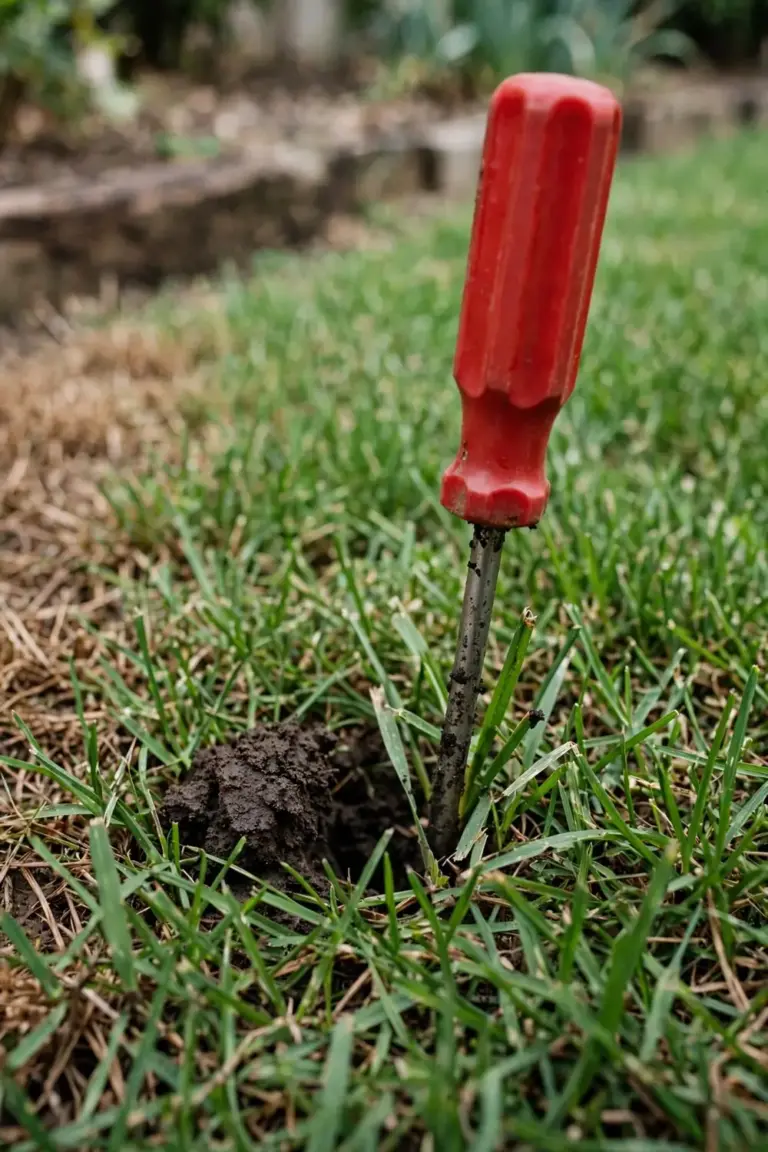
Read stress in the blades. Folded, grayish blades signal water stress. Water the same day. TifTuf recovers fast after watering. A lawn that stays folded for days is under-watered or has a root problem. Check the soil with a screwdriver. Wet soil to 10 to 15 cm means the watering worked. Dry soil at 5 cm means the water ran off or evaporated, and the next watering needs to run longer, not more often.
Overwatering harms TifTuf. Its drought-adapted roots rot in wet soil. If the lawn squelches underfoot, stop watering. Let the top 2 to 3 cm dry before the next watering. Sandy soils drain fast and may need water every third day. Clay soils hold water and may need only one watering a week. A sprinkler on a timer beats a hand-held hose for deep watering, because a timer delivers the same depth every time. Water in the early morning. Morning watering loses less water to evaporation than midday watering, and the blades dry before nightfall, which cuts disease pressure.
6. Mow TifTuf at 10 to 30 mm, 1 to 2 Times a Week
Mow TifTuf at 10 to 30 mm through the warm season. That is the TifTuf-specific range from an AU aftercare sheet. Lawnmower tips for a clean cut start with a sharp blade. A dull blade tears leaf tips. Torn tips turn brown and invite disease.
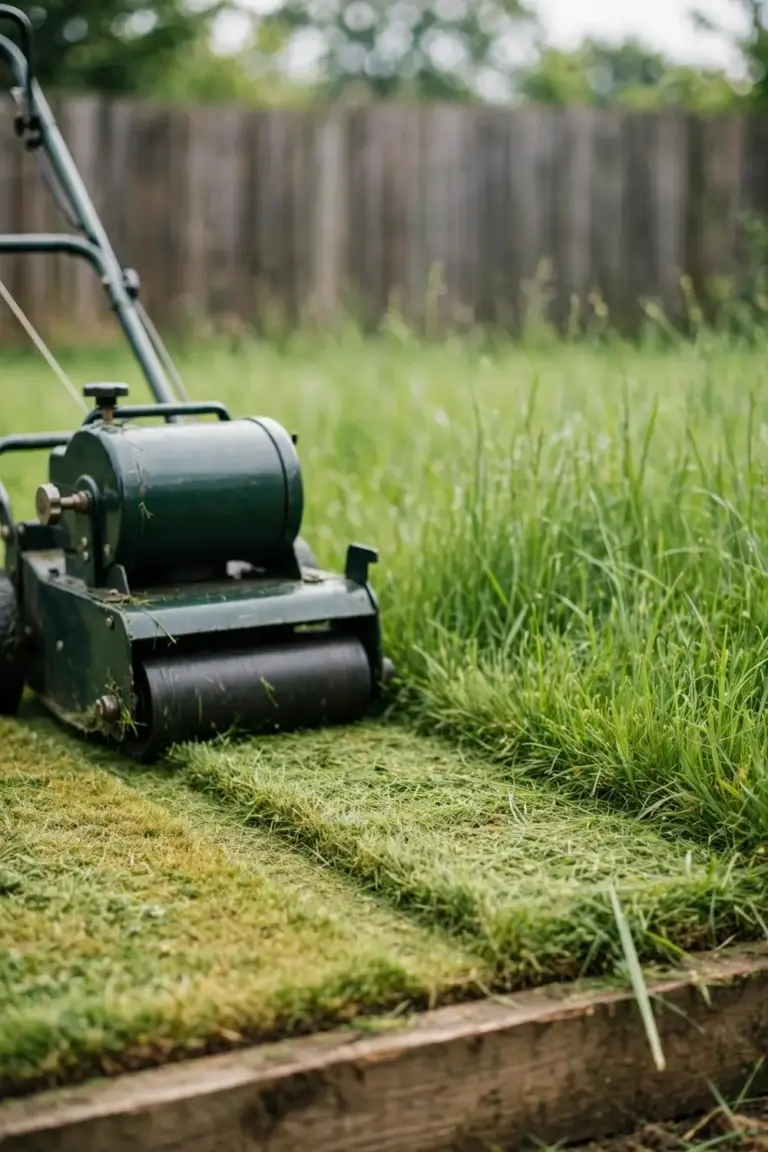
Mow 1 to 2 times a week in the warm season. In the cool season, mow every 14 to 21 days. Raise the mowing height by 10 mm in the cool season. Growth slows in cold weather, and a taller leaf feeds the roots through winter.
Follow the one-third rule. Never remove more than one-third of the leaf at one mowing. NC State Extension states the rule for bermudagrass and gives the generic mowing range of 5/8 to 2 1/2 inches, or 1.6 to 6.4 cm, with most lawns kept at 1 to 2 1/2 inches (NC State Extension). The TifTuf-specific 10 to 30 mm range sits at the low end of that generic range. A lawn that has grown to 45 mm needs two passes: cut to 30 mm, wait a day or two, then cut to the target height. One hard cut to the target height scalps the lawn and opens it to weeds.
A cylinder mower gives the cleanest cut on TifTuf. A rotary mower works too, if the blade is sharp and the height setting is low enough. Leave the clippings on the lawn. Clippings decompose fast and return nutrients. Collect them only when they mat or smother the turf. A scalped lawn recovers if the crown survives. Raise the height, water deep, and wait. New shoots push from the crown within 2 weeks in warm weather.
7. Feed TifTuf Lightly, 3 to 4 Times a Season
Feed TifTuf lightly. It is sensitive to nitrogen. An AU aftercare sheet advises granular fertilizer at one-quarter rate, with liquid fertilizer between granular applications, and warns against a straight organic granular fertilizer. Overfeeding grows soft, thatchy turf that disease loves.
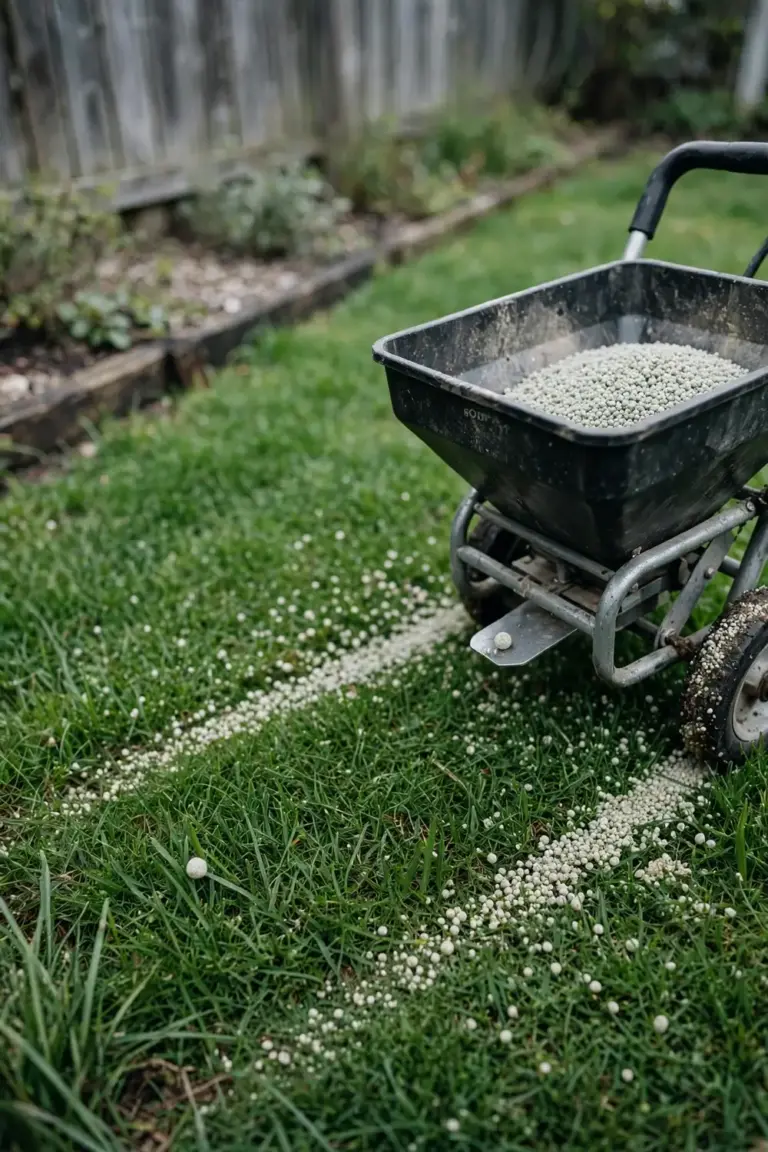
NC State Extension gives the bermudagrass rate: 1 pound of nitrogen per 1,000 square feet every 4 to 6 weeks, which converts to 4.9 g of nitrogen per square meter (NC State Extension). That is the generic bermudagrass rate. TifTuf needs less. Apply granular fertilizer once each in spring, summer, and autumn at one-quarter rate. Feed lightly every 6 to 8 weeks during the growing season if the lawn looks pale. Stop feeding when growth stops in winter.
Choose slow-release fertilizer over quick-release. Slow-release granules feed for weeks and rarely burn. Quick-release granules green the lawn in days and then fade, and a heavy dose can burn leaf tips in hot weather. Water after every granular application. Watering moves the granules off the blades and into the soil where roots can reach them. Read the bag before you buy. The first number on the bag is nitrogen, and the bag should state the nitrogen content per square meter so you can hit the one-quarter rate without guessing.
Timing fertilizer for spring matters more than the brand on the bag. Feed after the lawn has fully greened up in spring. Feeding a dormant lawn wastes fertilizer and feeds weeds. A soil test settles the question of what the lawn actually needs. Test every 2 to 3 years. Do not lime without a test.
8. Expect Winter Slowdown, Not Winter Death
TifTuf slows in cold weather. Growth stops, color fades, and the lawn may turn straw-colored in a cold winter. That is dormancy, not death. TifTuf is a warm-season grass, and dormancy is its winter strategy. A dormant lawn is alive underground. The crown and roots wait for warm soil.
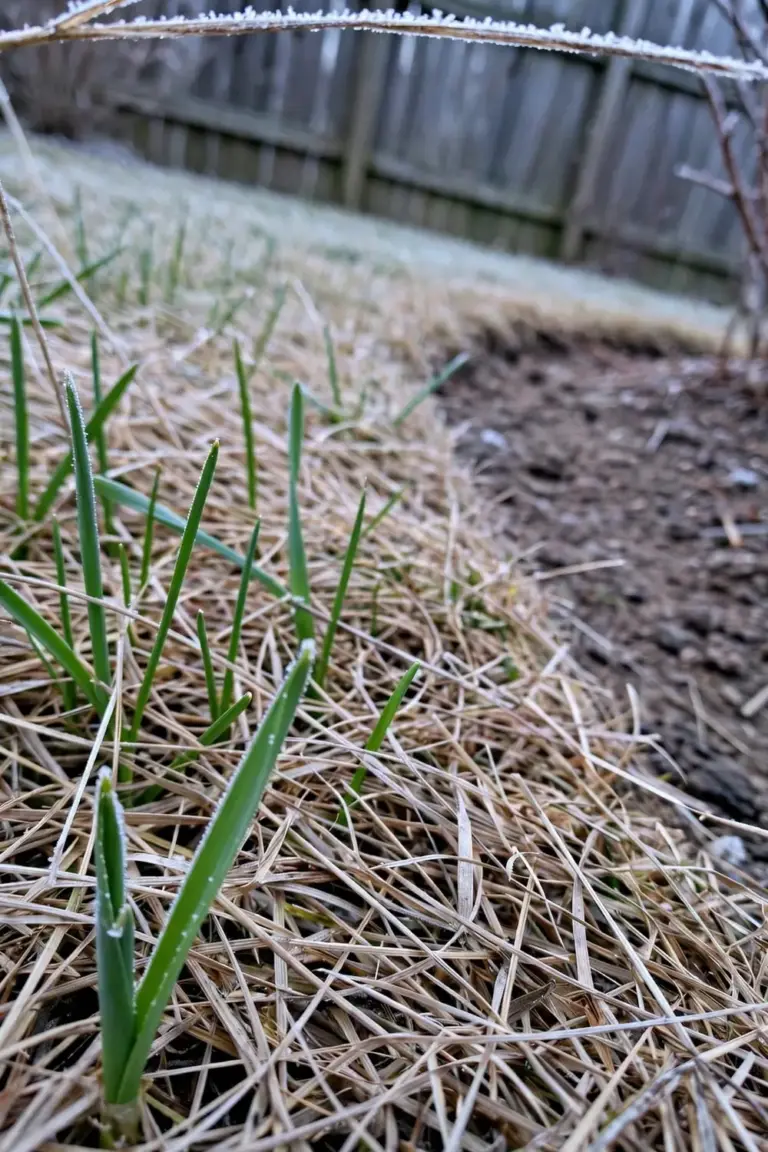
Winter color is better than most bermudagrasses. Sellers list fantastic winter color and spring green-up as TifTuf traits. Read that claim with care. TifTuf holds color longer into autumn and greens up earlier in spring than other couch cultivars. It still goes straw-colored in a cold winter. A lawn that stays green all winter in Canberra is not TifTuf. It is a different grass.
Dormancy length follows your climate. In Brisbane and the far north, dormancy is short and the lawn may stay green through most winters. In Sydney and Perth, expect a visible winter slowdown of some weeks. In Melbourne, Adelaide, and Canberra, expect a longer straw-colored period. The lawn recovers on its own spring schedule in every case, and feeding a dormant lawn does not shorten dormancy.
Do not fight dormancy. Stop feeding when growth stops. Raise the mowing height by 10 mm. Water only if the soil dries out for weeks. Spring lawn care starts when the lawn greens up again, and the first spring feed comes after full green-up. Mow at the low end of the range to clear dead leaf.
Frost burns leaf tips. A frosted lawn looks ragged for weeks. Do not mow frosted grass. Wait until the frost melts. Mowing frozen blades shatters them and opens the lawn to disease.
9. Stop Thatch, Weeds, and Spring Dead Spot Before They Spread
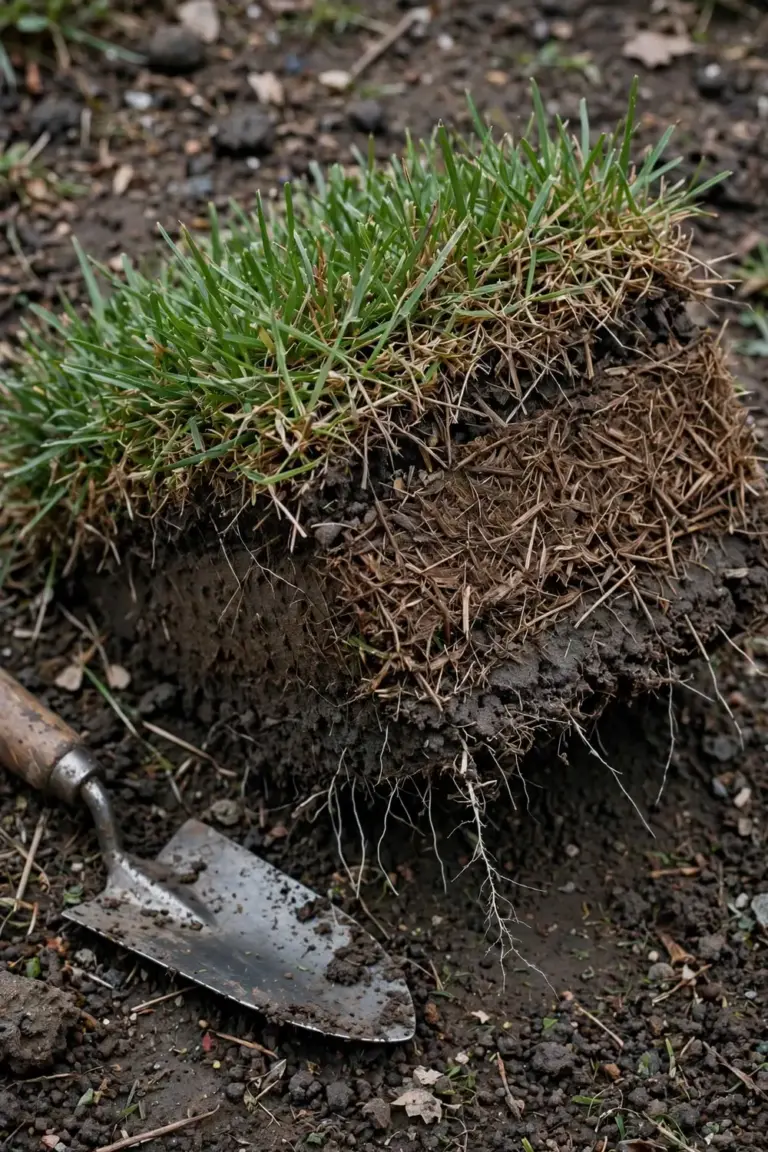
Thatch is the layer of undecomposed grass between the green blades and the soil. A thin layer is harmless. A thick layer blocks water and nutrients. Power rake when thatch is thicker than 1.3 cm, after the lawn has fully greened up in late spring. Power raking a dormant lawn slows recovery badly. Scarify every 2 to 3 years through the warm season, and core-aerate every 1 to 2 years, per the AU aftercare sheet. Core-aerate in late spring or early summer, when the lawn grows fastest and fills the holes within weeks.
Weeds enter through thin turf. Dense TifTuf crowds most weeds out. Thin spots invite them. Fix thin spots by feeding, watering, and mowing at the right height. Use a pre-emergent herbicide in early spring to block annual weeds, and a post-emergent herbicide on weeds that break through. Read the label for couch safety. Some herbicides damage couch. Spot-spray weeds instead of blanket-spraying the whole lawn when only a few weeds are present.
Watch for bindii in winter, crabgrass in summer, and clover where nitrogen runs low. Bindii seeds ripen in spring and prick bare feet through summer, so pull bindii before it seeds, or treat it while it is young. Crabgrass fills gaps in thin turf and dies at the first frost, leaving bare patches behind. Clover signals low nitrogen and fills in where the lawn thins. Each weed tells you what the lawn lacks. Fix the lawn, and the weed pressure drops.
Armyworms chew TifTuf in late summer and autumn. The caterpillars feed at night and hide in thatch by day, which makes daytime sprays miss them. A lawn that browns overnight in streaks, with green frass pellets on the blades, points at armyworms. Treat fast with a lawn-safe insecticide labeled for armyworms on couch. One treatment rarely finishes the job, so check again in 3 to 4 days.
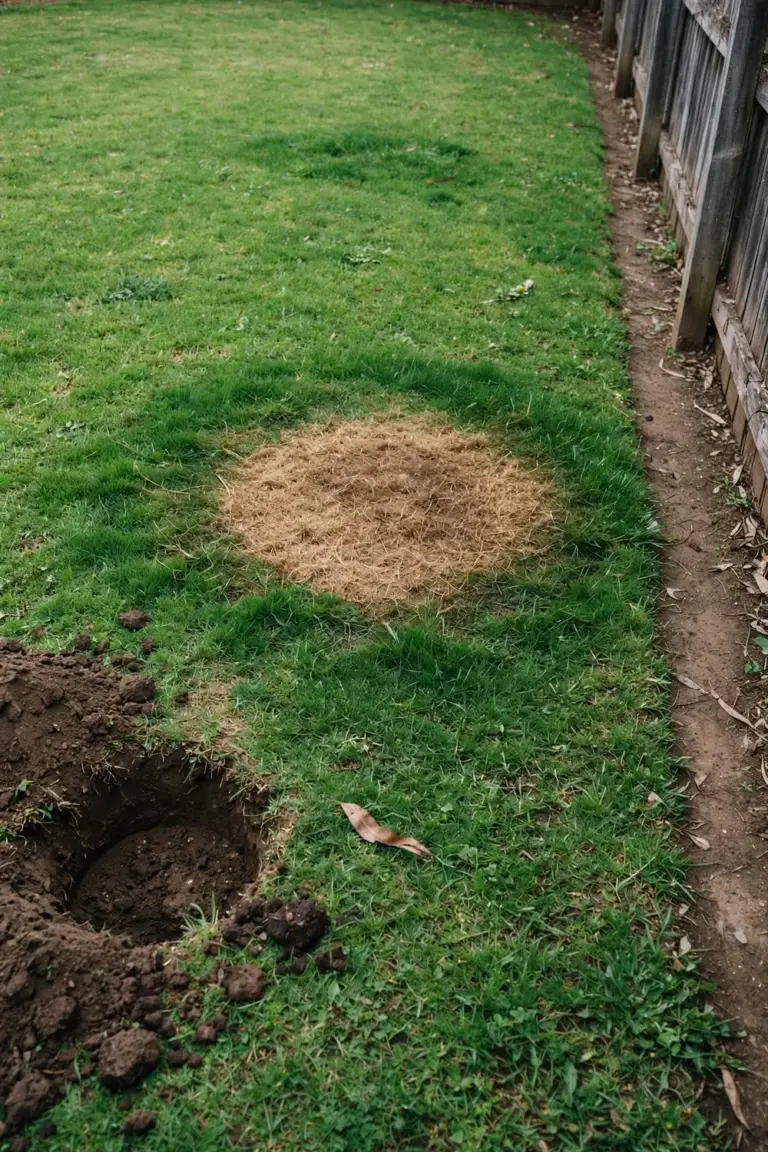
Spring dead spot is the main bermudagrass disease to watch. NC State Extension describes it as circular patches of tan or brown sunken turf, 5 cm to 1 m across, on turf 3 to 5 years old. Apply nitrogen monthly from mid-spring to mid-summer to promote recovery, and map affected areas for possible fungicide treatment in autumn. Core aeration and removing excess thatch help avoid future problems. Turf diseases stay in the Plant Care lane, so this article stops at identification and the recovery step.
A lawn that keeps failing in the same spot needs a soil test before another product. The test may show compaction, acidity, or a nutrient gap that no fertilizer fixes on its own. Dig a small inspection hole in the failing spot. Roots that stop at 5 cm point at compaction or a buried obstacle. Roots that run deep point at a feeding or watering problem instead.
Frequently Asked Questions
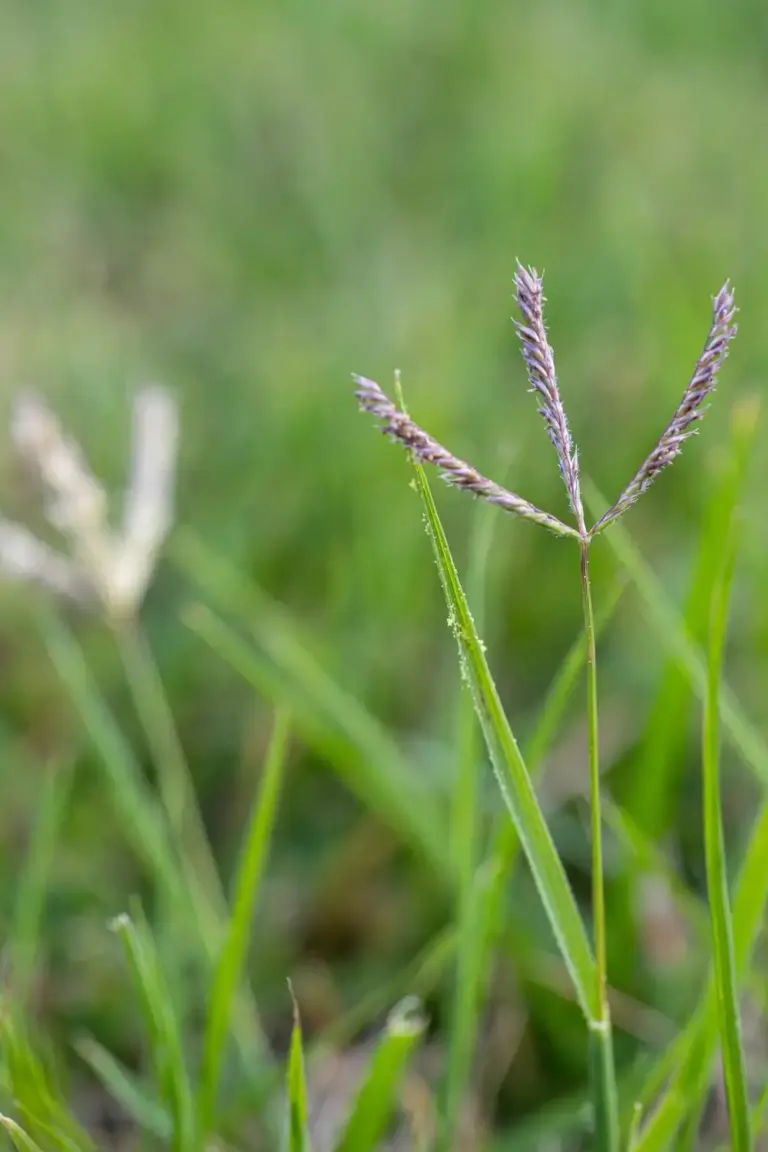
No. TifTuf is a sterile hybrid. Its seed heads are infertile, so no seed packet of TifTuf exists anywhere. Every TifTuf lawn starts as sod, sprigs, or plugs. A packet labeled TifTuf seed is mislabeled, and the grass inside it is something else. Buy sod from a Lawn Solutions Australia accredited grower and ask for the warranty certificate.
TifTuf needs 4 to 5 hours of direct sunlight a day at minimum, per AU seller and aftercare sheets, and Lawn Solutions Australia puts the minimum at 5 hours. Sellers claim 50 percent shade tolerance (Buy Turf Online). Treat that claim as a ceiling, not a target. TifTuf thins below 4 hours of sun. A lawn under a dense tree canopy needs a shade grass, not TifTuf. Measure the sun before you order.
TifTuf slows in cold weather and may turn straw-colored in a cold winter. That is dormancy, not death. TifTuf holds color longer into autumn and greens up earlier in spring than other couch cultivars. Do not feed a dormant lawn. Raise the mowing height by 10 mm. Water only if the soil dries out for weeks. The lawn recovers on its own spring schedule.
TifTuf and buffalo do different jobs, so the better grass is the one that fits your yard. TifTuf wins on sun, heat, drought, and wear, and it suits a sunny, hard-used yard. Buffalo tolerates more shade, down to 3 to 4 hours of direct sun a day, and suits a shaded yard. Pick the grass for the yard you have. A full head-to-head comparison is a separate decision, and this article does not run it.
Sod roots start bonding with the soil in 2 to 3 weeks, and the lawn is well rooted by 4 to 6 weeks, per The Turfgrass Group. Water at least twice a day until the sod takes root. Keep foot traffic light until a sod square resists a firm tug. Wait 6 to 8 weeks after laying before applying a granular fertilizer.
TifTuf grows best in soil pH 5.8 to 7.0, per The Turfgrass Group. Test the soil before laying sod. Add lime only if the test says the soil is acidic. Do not guess. A pH test costs less than a pallet of sod, and the wrong pH starves the lawn all season no matter how much fertilizer you spread.
Start With the Sun Check This Weekend
Measure the sun on your yard before you order a pallet. A phone light meter, a sun-tracking app, or 4 hours of watching shadows all work. Five hours of direct sun means TifTuf is on the table. Less than 4 hours means a shade grass wins. Between 4 and 5 hours, TifTuf is marginal, and the rest of the yard has to be right: good soil, deep watering, and no heavy shade from fences or trees. Order sod only after the sun check passes, and ask for the warranty certificate with the delivery. TifTuf Bermuda grass in Australia rewards the buyer who checks sun first and waters deep after, and it punishes the buyer who skips both.