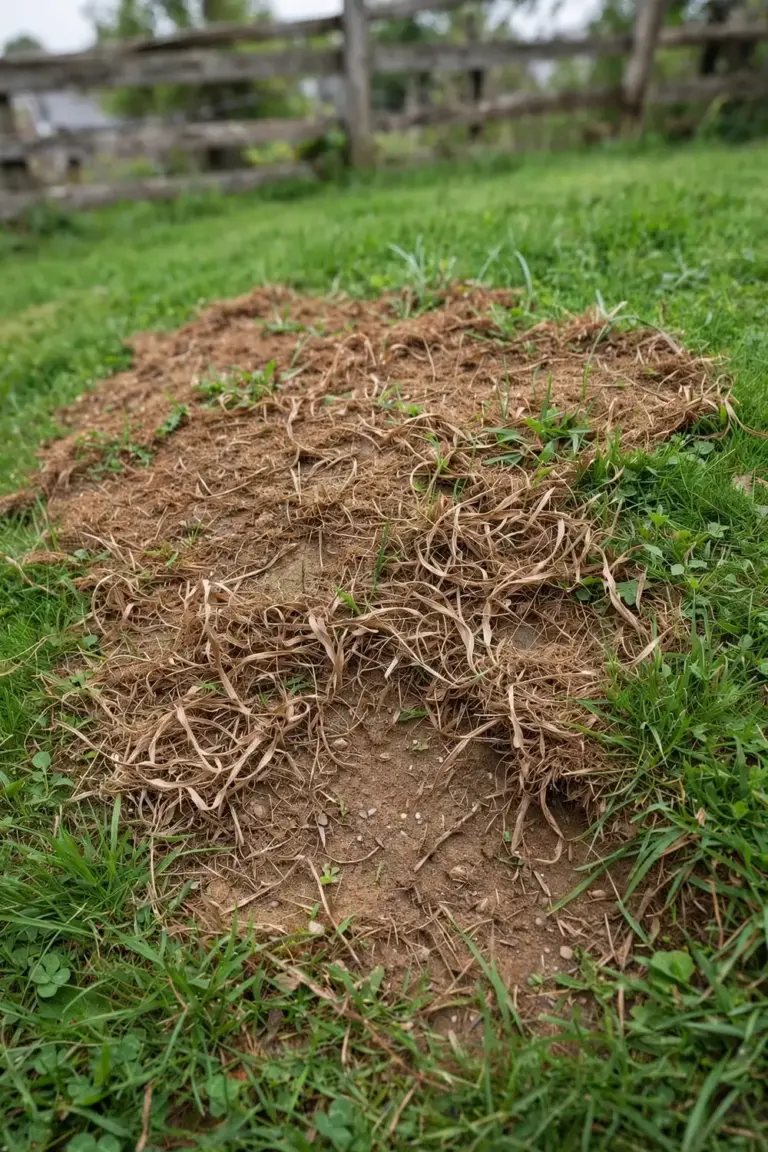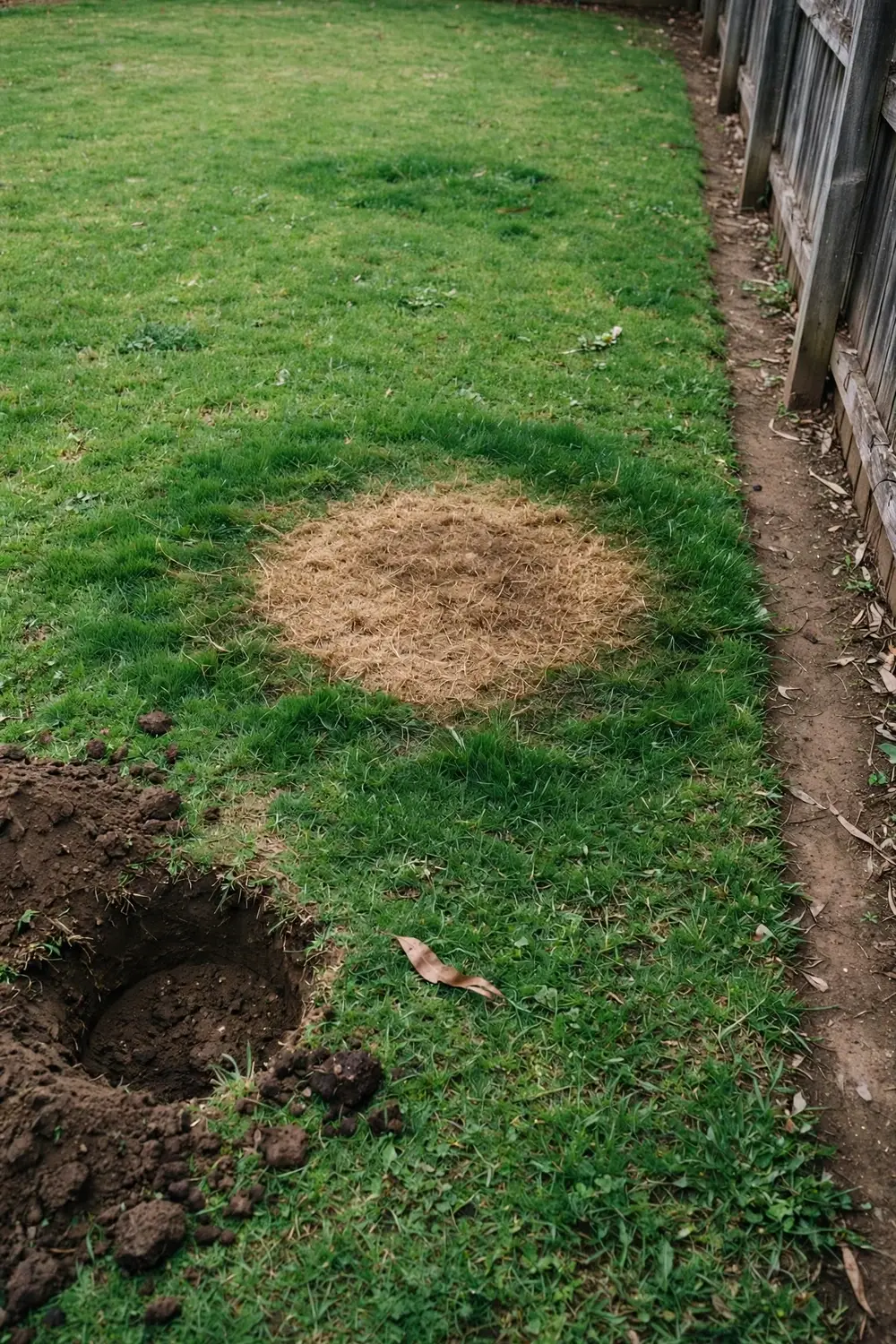

Flush every urine spot with water within 8 hours, fill dug holes with soil and plugs, and train the dog to one toilet area. That is how to fix dog-damaged lawn patches in Australia. The rest of this page names each damage type, then matches the repair to your turf.
Urine burn is concentrated urine salts scorching grass. Wear is grass worn away by repeated traffic. Digging is holes the dog opens with its paws. Faeces is a hygiene job. It leaves no burn beneath the pile. Four damage types cause nearly every dog-damaged patch, and each one needs its own repair.
I have learned that the bucket of water I carry on the morning walk saves more grass than any repair product I buy. Start with the patch in front of you. Match what you see to the next section, then fix that damage only.
1. Name the Damage Before You Fix It
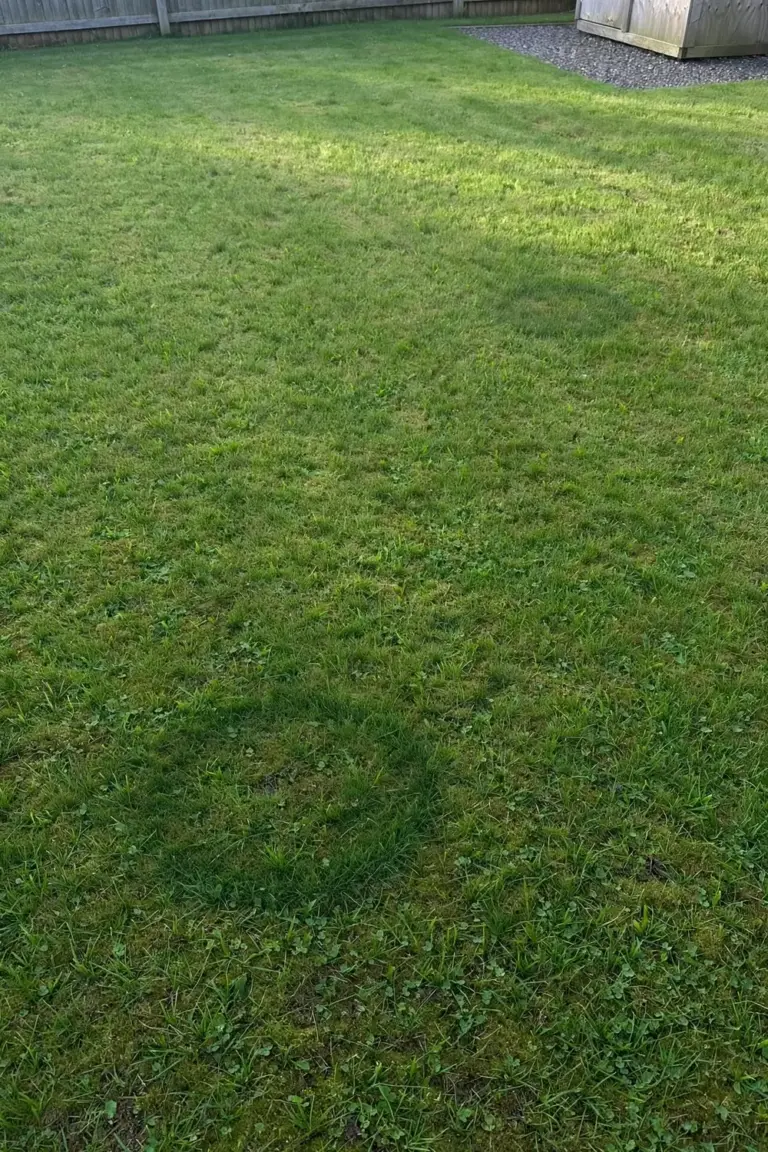
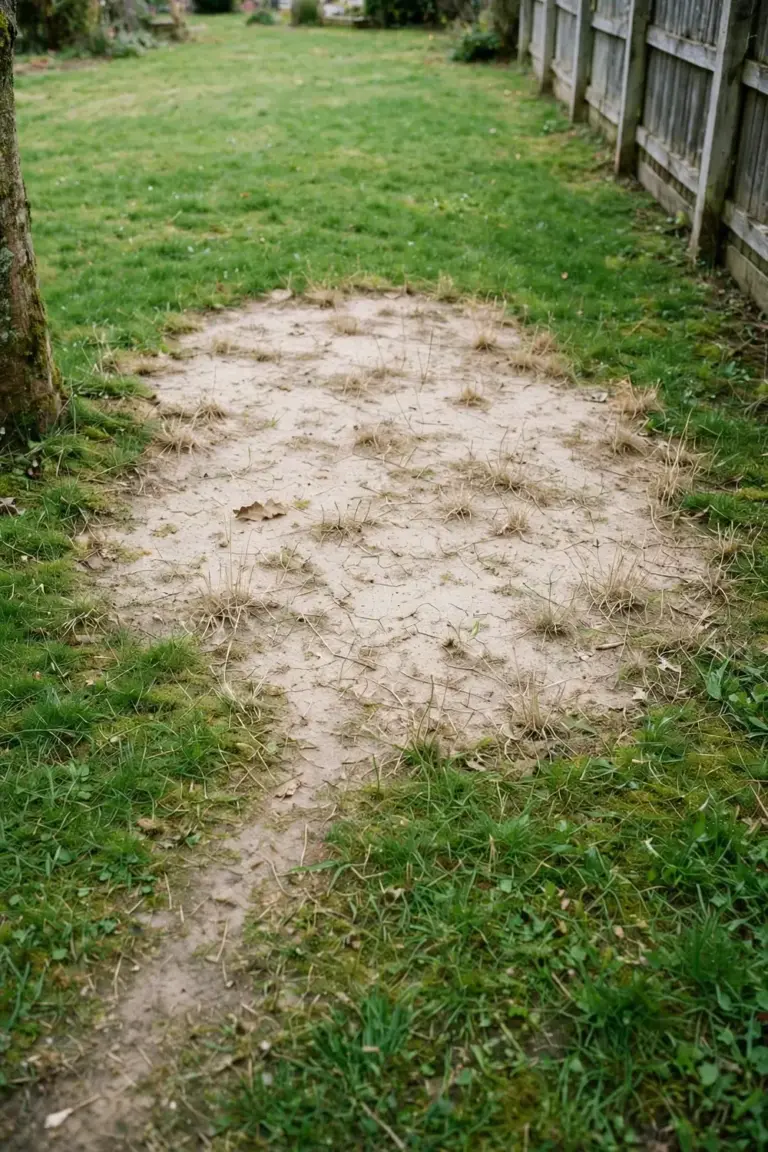
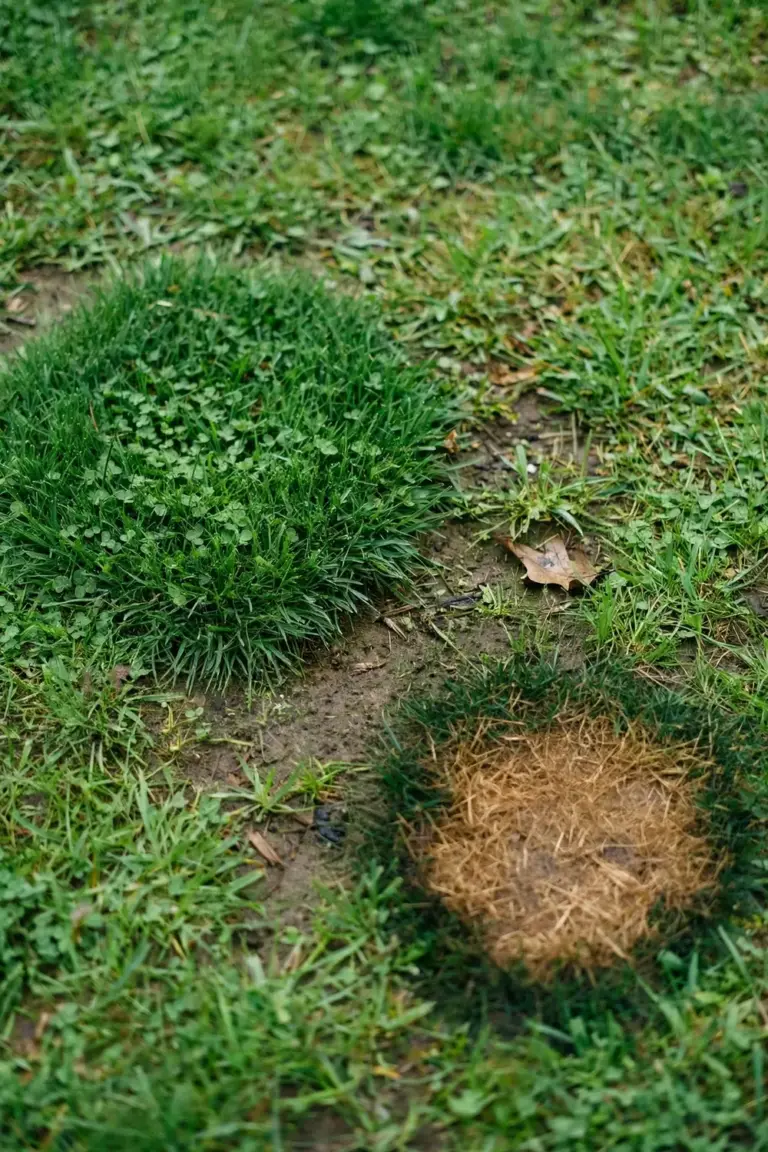
Name the damage first, because each type needs a different repair. A urine burn shows a dead straw-colored center ringed by darker green grass. A dug hole shows loose soil scattered around an open pit. A wear path shows bare soil along a line the dog walks every day, often beside the fence. Faeces shows a pile on top of living grass, with no burn beneath it.
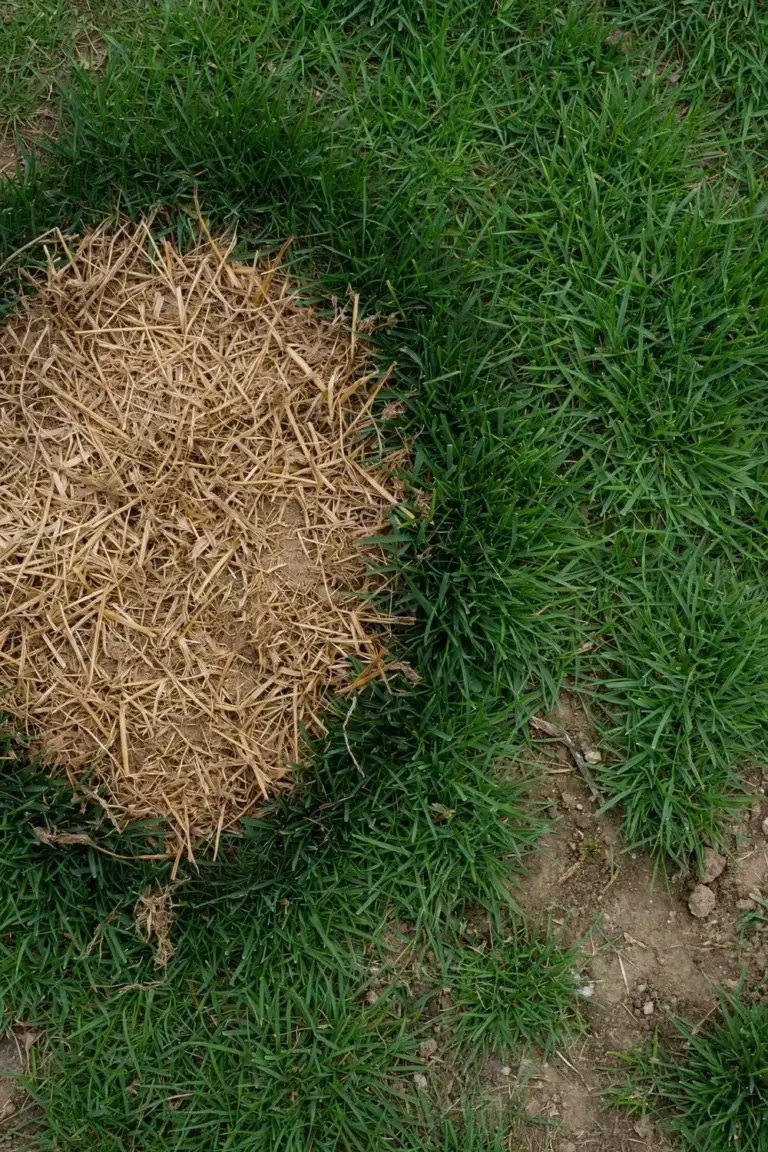
Urine spots run about 7.6 to 15.2 cm across, with dark green perimeters, according to NC State Extension’s guide to dogs and turfgrass interactions. The dark green ring is the tell. A disease spot looks different. Disease spots usually lack actively growing darker-green perimeters, and the blades in a disease spot look water-soaked and mat down. When the patch has no green ring and the blades look soaked, check Bipolaris leaf spot before you blame the dog.
A urine patch can also open the canopy and let weeds move in. NC State Extension notes that pet urine damage opens the turfgrass canopy, which encourages weeds, particularly crabgrass and annual bluegrass. Fix the patch soon after you name it. A bare patch left open becomes a weed patch by the next month.
Check whether the damage is fresh or set. A fresh urine spot still feels damp and smells of urine. A set spot is dry, straw-colored, and firm underfoot. A fresh dug hole has loose soil piled at the edge. An old one has settled and hardened. Fresh damage takes the lightest repair. Set damage takes raking and replanting. Walk the lawn once a week and name every new patch the day it appears. A patch caught in its first week costs a bucket of water. A patch ignored for a month costs plugs, seed, and a fence.
Photograph each patch when you find it. One photo from standing height shows the shape and the ring. A second photo after two weeks shows whether the patch is shrinking or spreading. A patch that shrinks after a flush was a urine burn. A patch that spreads after a flush needs a closer look for disease or grubs. The photos also stop repeat work. A patch you already flushed and photographed needs no second flush. A new patch beside it needs one.
2. Flush Urine Burn Spots Before They Set
Flush a urine spot with water within 8 hours. Research cited by University of Illinois Extension shows that watering the lawn within eight hours can prevent injury. Keep a watering can or a hose near the back door. Soak the spot the moment you see the dog finish. Sooner beats later, and a deep soak beats a sprinkle.
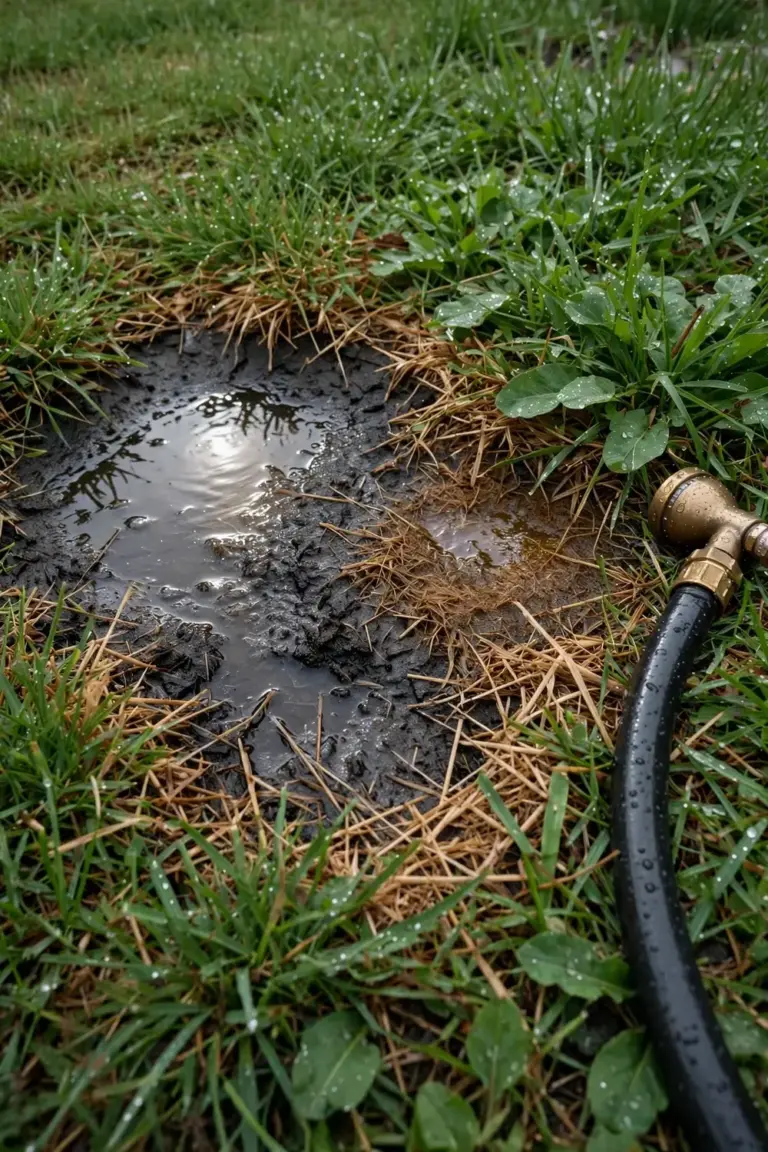
Urine burns grass with concentrated nitrogen and excess salts. NC State Extension attributes spotting and death of turfgrass to the concentrated nitrogen and excess salts in dog urine, and notes that the nitrogen will often cause a darker green turfgrass spot. The center gets the full dose and dies. The edge gets a diluted dose and grows darker green. That is why the ring forms. Dogs that squat deposit a large volume of urine in a small spot, so squatting dogs cause more severe damage than marking dogs that spread small amounts across many spots. The University of Maryland Extension adds lactic acid to the list of urine components that damage turf, alongside urea and salts.
Flush with enough water to soak the root zone. A splash on the blades does nothing. A watering can poured slowly over the spot pushes salts below the roots. A hose on a gentle setting does the same job. Soak until the soil under the spot feels damp at finger depth. On a hot day, flush twice, once right after the dog goes and once an hour later. The second soak catches salts the first one missed.
When you miss the window, the spot still deserves water. A late flush will not save grass that is already dead. It leaches salts out of the soil so the repair takes. Rake out the dead blades first. Then soak the patch. Then leave it a day before you replant. Soil that still holds salts kills fresh seed and fresh plugs. The flush comes first. The repair comes second.
| Damage | Cause | Fix |
|---|---|---|
| Fresh wet spot | Full-strength urine on grass | Soak with water at once |
| Set brown spot | Salts already scorched the crowns | Rake out dead grass, flush, then reseed or plug |
| Dark green halo | Diluted nitrogen feeding the edge | Leave it, mow as usual |
| Repeated spot in one place | Same toilet spot every day | Move the dog to a toilet area, then repair |
Do not change the dog’s diet to fix the lawn. Diet-change products and urine pH supplements promise a gentler urine, but the lawn is the wrong reason to change what a dog eats. PetMD’s guide to bladder stones in dogs notes that urinary therapeutic diets may help dissolve or prevent certain stones, and that these diets are available only with veterinarian approval. Shifting urine pH without veterinary guidance can favor a different type of stone. Any diet change needs a vet. The lawn never justifies it.
Dog Rocks is an Australian-mined product that some owners report helps, and the claimed mechanism is nitrate filtration from drinking water. Treat that claim as a claim, not proven fact. Dog Rocks cannot revive grass that is already dead, so a dead center still needs raking, flushing, and replanting, with or without the product. If you try Dog Rocks, judge it by new spots, not old ones: fewer fresh burns over a month would support the claim, while the same number would refute it. The flush and the toilet area do the work either way.
Do not buy a “grass saver” biscuit or powder to fix the lawn either. These products promise to change urine chemistry from the inside. The same rule applies. A product that changes what the dog eats or drinks needs veterinary advice first. The lawn never justifies it. Water, training, and plugs fix the lawn without touching the dog’s body.
3. Fill Dug Holes and Break the Digging Habit
Fill the hole, firm the soil, and give the dog a digging outlet. Digging comes from boredom, from burying toys or bones, and from seeking cool soil on a hot day. The repair is the same whatever the reason. Scoop the loose soil back into the hole. Add topsoil until the surface sits level with the surrounding lawn. Firm it with your foot. Water it in. Then cover the bare soil with plugs or seed that match your turf.
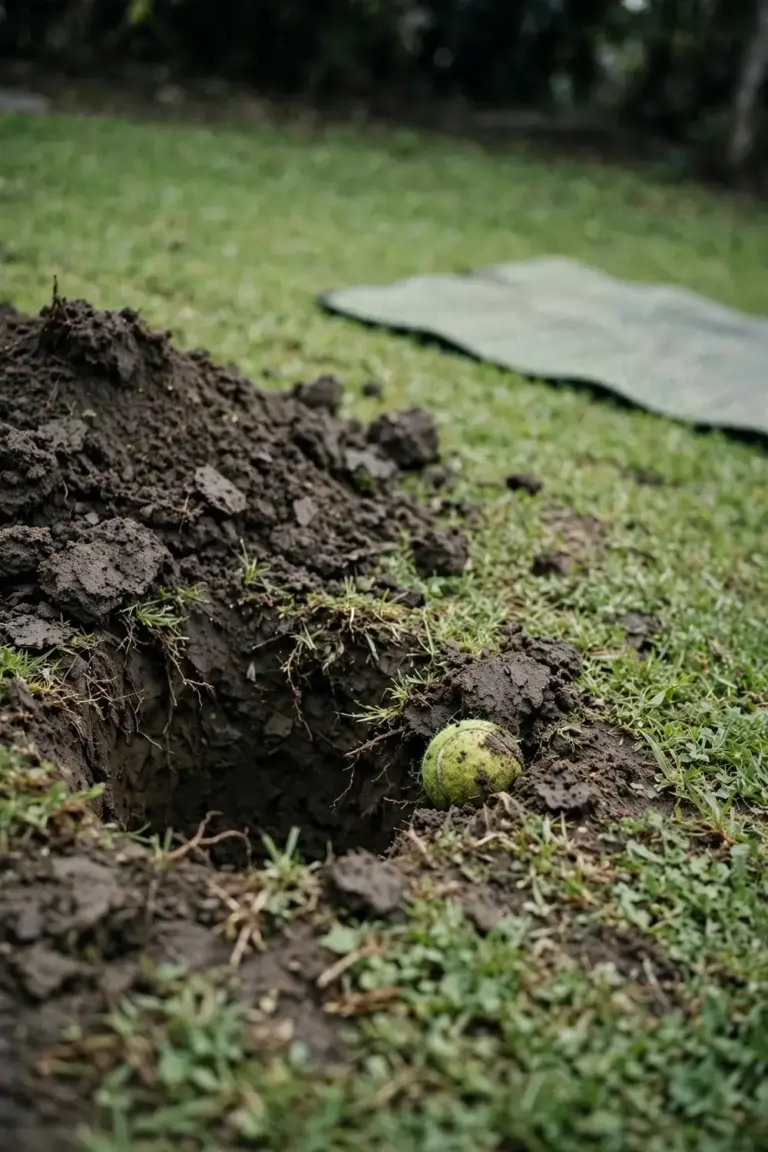
Digging also breaks soil structure. A dug patch holds loose soil that dries fast and washes away in the next storm. Building soil health keeps the repaired patch alive after the hole is filled. Firm soil holds moisture longer. Firm soil holds plugs in place. Firm soil resists the next round of paws.
Prevention beats repair for digging. Walk the dog before lawn time so boredom drops. Offer shade and a cool resting spot away from the lawn. A dog that digs for cool soil stops digging when it has a shaded mat or a cool tile to lie on. Give the dog one legal digging pit, a patch of loose sand in a corner, and bury a toy there. Reward digging in the pit. Redirect digging on the lawn the moment it starts. A dog with a pit and a walk digs less lawn.
Check the hole for a reason before you fill it. A hole under a fence means the dog wants out, and filling it without fixing the fence wastes the work. A hole in one favorite spot means the dog buried something there, and it will dig the same spot again until the toy or bone comes out. A row of shallow holes across the lawn means boredom, and the cure is exercise, not soil. Name the reason. Fix the reason. Then fill the hole.
4. Reroute the Wear Paths Dogs Walk Every Day
Give the path a surface that is not grass. Dogs wear a track along fences with a view of the street, and NC State Extension documents this exact pattern. The dog runs the same line every day. The soil compacts. The grass thins. The path turns bare. Grass cannot outgrow daily traffic on one narrow line.
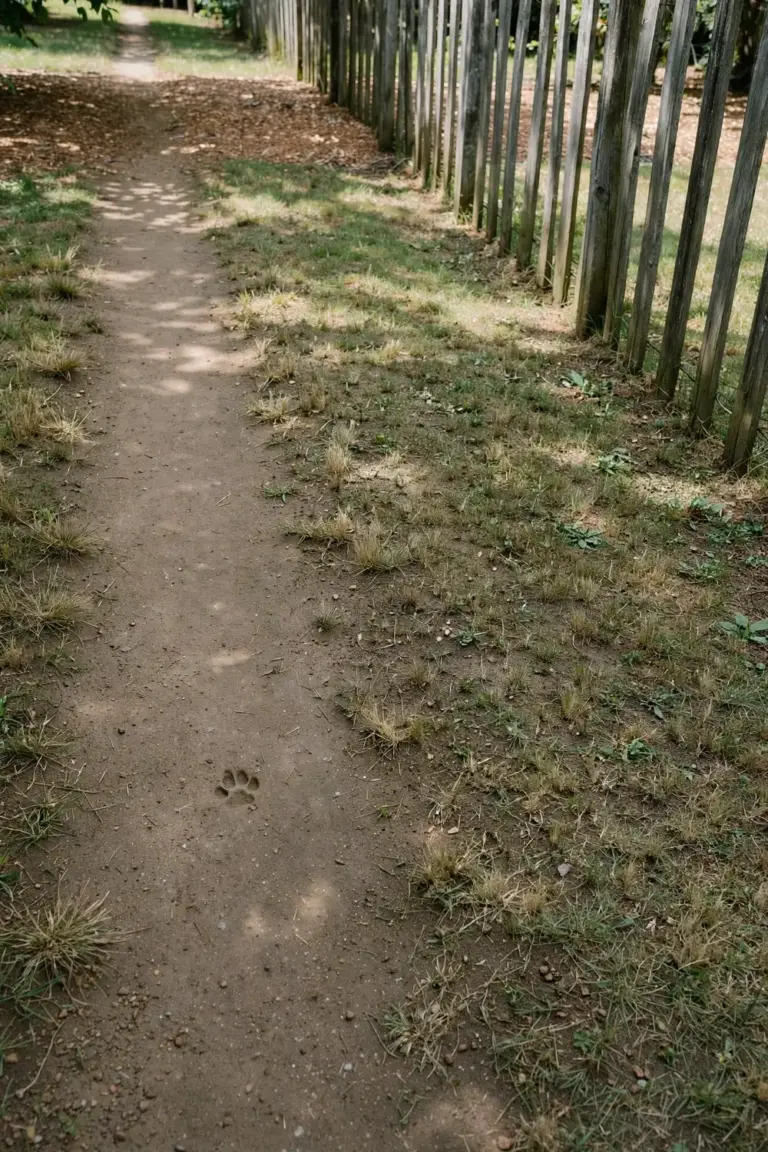
Lay a mulch path along the fence line. Gravel works too. Pavers work where the path turns a corner. The surface takes the traffic, and the lawn beside it recovers. Keep the mulch layer thick enough to cover soil, and top it up when it thins. Edge the path so mulch stays off the lawn.
Rest the worn turf while the new path settles. Fence the worn strip off with a temporary barrier. Loosen the compacted soil with a garden fork. Push the fork in 10 cm deep, rock it back, and pull it out. Repeat every 10 cm along the strip. Water the strip deeply. Let the surrounding runners creep back in, or plug the strip if the turf is buffalo. Open the strip again only when the grass holds under a firm tug. A path that reopens too soon wears bare again in a week.
Watch the gate and the back door too. Dogs wear a second path where they wait to go in and out. A mat or a paver at the door takes that traffic. A worn ring around a favorite tree takes mulch. Every path the dog walks daily needs a surface or a rest, or it turns bare and stays bare.
5. Repair Each Patch by Turf Type
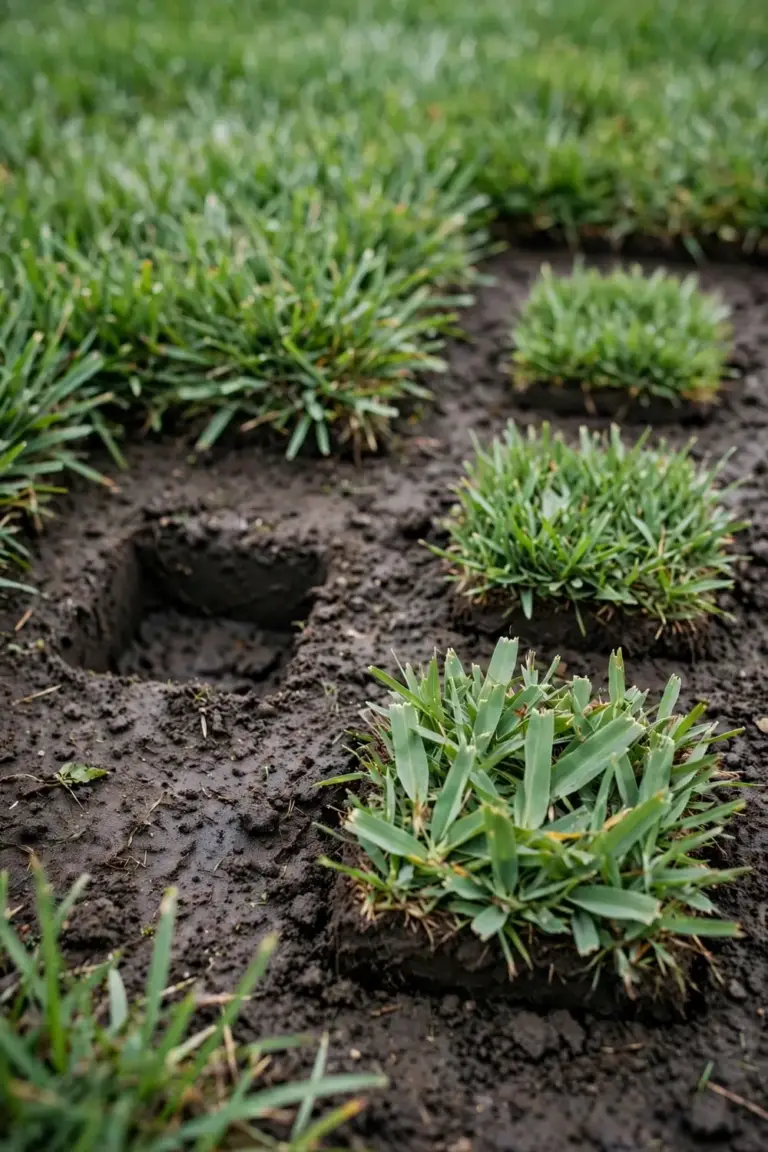
Match the repair to the turf, because runner grasses fill small gaps on their own while buffalo needs plugs or turf and cool-season grasses need seed. The wrong repair wastes a weekend. Seed scattered on buffalo grows the wrong grass, and plugs pressed into fescue leave gaps the fescue never fills.
| Turf | Repair | Timing |
|---|---|---|
| Couch | Feed and water, let runners fill gaps under 15 cm | Growing season, spring to summer |
| Kikuyu | Feed and water, let runners fill gaps under 15 cm | Growing season, spring to summer |
| Buffalo | Plugs, runners, or new turf, never seed | Growing season, spring to summer |
| Zoysia | Plugs or turf for large gaps, runners for small ones | Growing season, spring to summer |
| Fescue or ryegrass | Seed into loosened soil, keep moist | Autumn, or spring in cool districts |
Buffalo has no seed. Bunnings Australia’s bare-patch guide states plainly that there is no buffalo lawn seed, and that buffalo can only be repaired by using plugs or purchasing new rolls of turf. Cut plugs from a healthy corner of the same lawn. Press each plug into loosened soil in the bare patch. Water the plugs until they grip. Cool-season grasses like perennial rye and tall fescue do not have runners, so they will not spread into bare patches, and the same guide says you will need to sow lawn seed to thicken those areas.
Warm-season grasses heal faster than cool-season grasses. The University of Illinois Extension notes that warm-season grasses spread with rhizomes or stolons, and are generally more aggressive, allowing them to heal quickly from injury. The same source notes that tall fescue has been found to be more urine tolerant than other cool-season grasses. That tolerance helps fescue lawns in cool districts, but a dead fescue patch still needs seed.
Flush salts before you repair. Water the patch deeply to leach leftover salts out of the soil. Rake out dead grass so seed or plugs touch soil. Loosen the top soil with a rake. Lay seed or plugs. Keep the patch moist until new growth holds. Keep the dog off the patch until the repair grips. Fertilising a lawn in spring feeds the repair once new growth shows, and a fed lawn fills gaps faster than a hungry one.
Plant plugs one at a time. Cut each plug 10 cm across from a healthy corner of the same lawn. Set the plug into loosened soil at the same depth it grew. Firm the edges with your fingers so no air gap sits under the plug. Water at once. Space plugs 15 cm apart in a large patch, closer in a small one. The runners meet in the middle within weeks in the growing season.
Sow seed the same way every time. Scatter seed evenly over loosened soil, then rake lightly to cover the seed with a thin layer of soil. Press the surface down with the back of the rake. Water with a fine mist so the seed stays put. Keep the soil moist until seedlings stand. A seedbed that dries out once loses the whole sowing, so water lightly and often until the seedlings grip, then water deeper and less often.
Repair in the growing season. Warm-season turf repairs best in spring and summer, when runners grow fast. Cool-season turf repairs best in autumn, when the soil stays moist and the heat backs off. A repair planted in the dormant season sits still and the dog reopens it. Wait for growth, then repair.
Check whether the patch is dead or dormant before you replant. Tug a few blades at the edge of the patch: blades that resist and show white roots at the base are alive, while blades that pull out clean with no roots are dead. A dormant patch in winter greens up on its own in spring. A dead patch stays bare, so replant the dead patch and leave the dormant one alone. Raking a dormant patch out by mistake turns a patch that would have recovered into a patch that needs plugs.
6. Train One Toilet Area the Dog Uses Every Time
Train the dog to one toilet area, and the rest of the lawn stops taking damage. Pick a corner the house does not look at. Cover it with gravel or mulch. Gravel drains. Mulch smells like soil. Both beat grass for a toilet surface. A low-visibility turf corner works too, if gravel or mulch does not suit the yard.
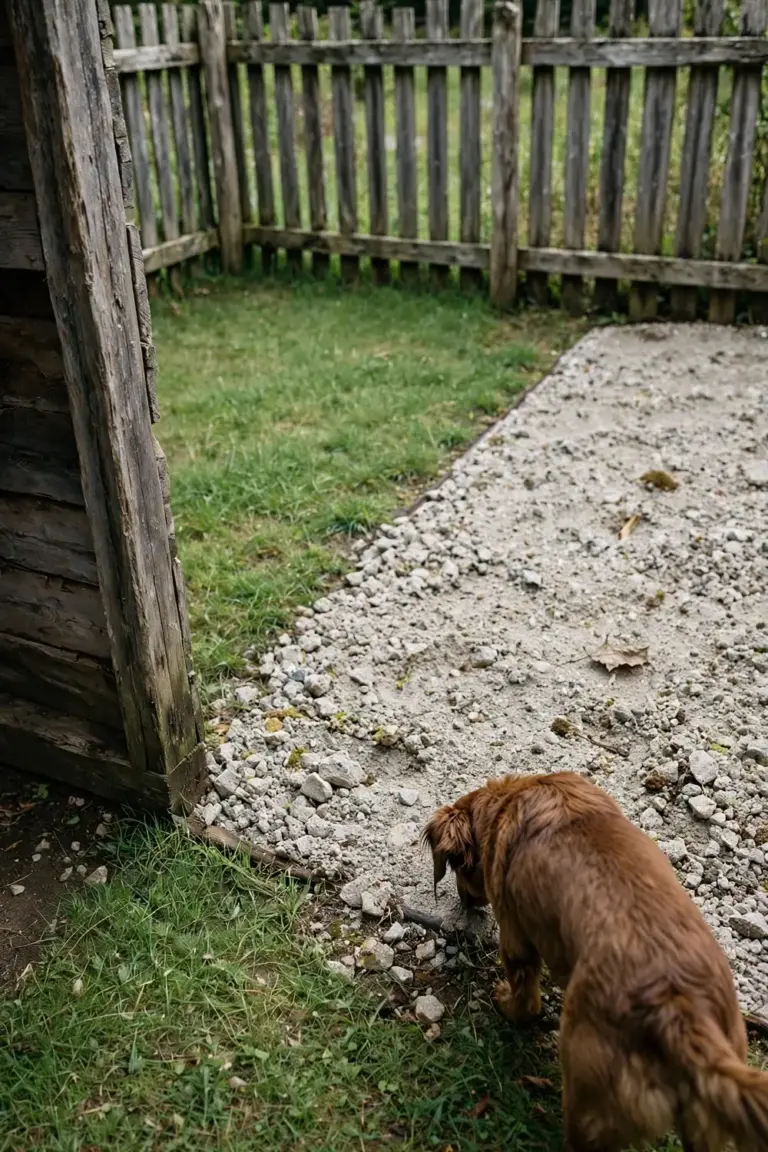
Leash the dog to the spot at high-probability times. Morning comes first. After meals comes next. After naps comes after that. Wait. Reward the moment the dog goes. Repeat every day until the dog walks there on its own. NC State Extension calls training the dog to use one designated low-visibility area the best way to stop urine damage. The training takes patience up front. The payoff runs for years.
Handle accidents without drama. A dog that goes on the lawn during training has not failed. Lead it to the toilet area at once, and reward it if it finishes there. Never punish a dog for going in the wrong place. Punishment teaches the dog to hide its toilet habits, not to pick the right spot. Patience builds the habit. Punishment breaks trust and the habit with it.
Size the toilet area to the dog. One dog needs about 1 square metre of gravel or mulch. Two dogs need double. A toilet area too small turns muddy and the dog stops using it. A toilet area too big wastes lawn. Rake the gravel level once a month. Replace mulch when it thins. A toilet area that stays clean stays used.
Scoop faeces promptly. Faeces does not kill grass the way urine does. It is a hygiene job that belongs in the bin, not on the lawn. Hose the toilet area down after scooping. A clean toilet area keeps the dog willing to use it. A filthy one sends the dog back to the lawn.
7. Walk the Dog First, Then Open the Lawn
Walk the dog before lawn time, and most urine lands off the lawn. A dog that has just emptied its bladder on a walk has less to deposit on the grass. Walk first thing in the morning. Walk after meals. Walk before long stretches of lawn time. The walk-first routine is the cheapest prevention in this whole page, and it needs no product at all.
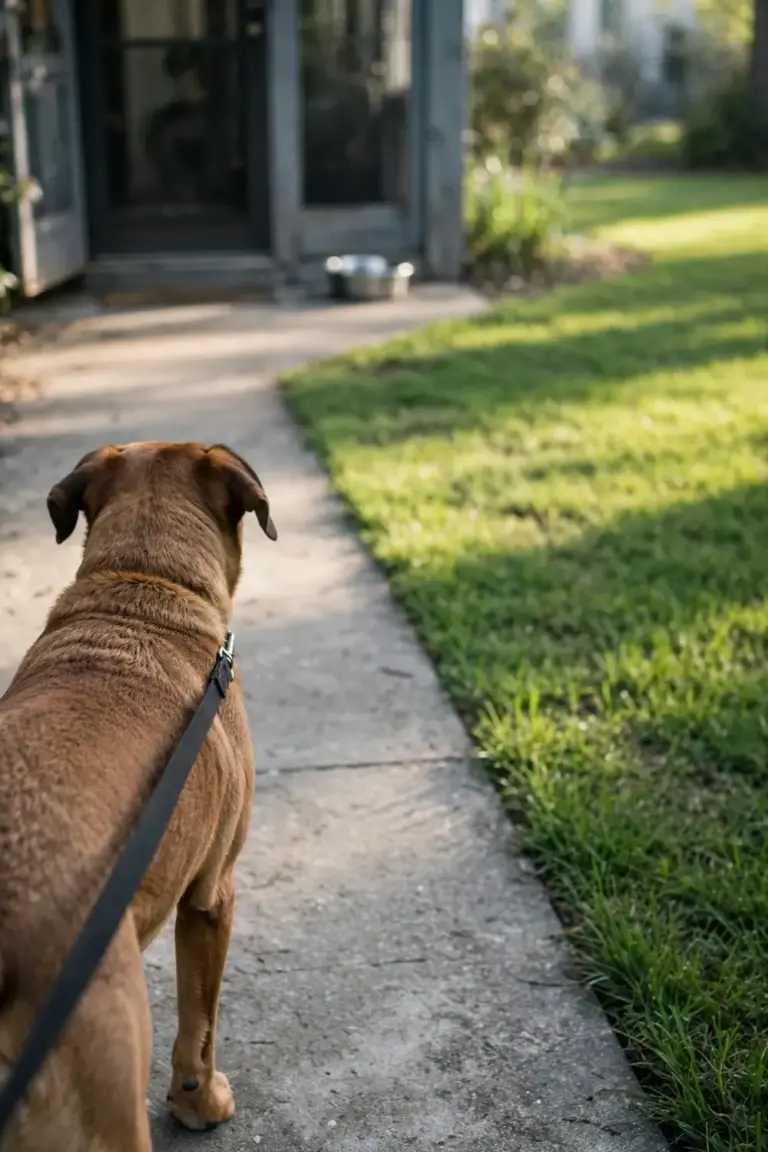
Give the dog fresh water all day. Dilute urine harms grass less than concentrated urine. Extension advice for dog-damaged soil recommends making the dog consume more water so that the salts and nitrogen in the urine are more diluted, and keeping the water bowl always full. Do not add supplements to the dog’s food or water to change urine without veterinary advice. Plain water does the job.
Place the water bowl where the dog passes it often, because a bowl by the back door gets used while a bowl in a far corner gets ignored. Rinse the bowl daily and refill it with fresh water. A second bowl near the toilet area helps on hot days. A dog that drinks more urinates more dilute urine, and dilute urine burns less grass.
Keep the lawn watered through dry spells. Urine damage hits harder on dry soil, on turf that is not actively growing, and in hot weather. A watered lawn dilutes each deposit on its own. A dry lawn takes the full dose. Water the lawn deeply and infrequently, and keep the soil moist through summer.
Run the routine at the same times every day. Dogs learn schedules fast. A morning walk, a toilet-area visit after each meal, and an evening walk cover most deposits. The lawn gets the hours between visits to recover. The dog gets the exercise that cuts digging and wear. The routine does three jobs at once, and it costs nothing but time.
End the day with a last toilet-area visit before bed. A dog that empties its bladder late at night leaves fewer deposits for the morning. Walk the dog to the toilet area on a leash, reward it, and bring it inside. The lawn rests overnight with nothing new on it. Morning starts with a walk, not with a fresh burn.
Frequently Asked Questions About Dog-Damaged Lawn Patches
No. A single deposit on a watered, actively growing lawn often leaves only a dark green spot. Damage turns deadly when concentrated urine sits on dry, stressed turf in hot weather. Flush the spot with water right away. A flushed spot usually recovers. An unflushed spot on dry grass often dies at the center. Heat, drought, and repeat visits decide the outcome more than any single deposit.
No. Dog Rocks is an Australian-mined product with a claimed mechanism of nitrate filtration from drinking water. Some owners report it helps. The claim is unproven, and the product cannot revive grass that is already dead. A dead center still needs raking, flushing, and replanting. Treat Dog Rocks as an experiment if you try it, not as a repair. The repair steps in this page do the actual work.
No. Changing a dog’s diet to fix the lawn trades the dog’s health for grass. Urinary therapeutic diets exist, but they need veterinary approval and they target stones, not lawns. Shifting urine pH without guidance can favor a different type of stone. Feed the dog what the vet recommends. Fix the lawn with water, plugs, seed, and training. The lawn never justifies a diet change.
A urine patch can detract from the lawn’s appearance for weeks to months. Small spots on runner grasses fill in from the surrounding turf once the salts leach out. Dead centers need raking and replanting. Buffalo patches need plugs. Fescue patches need seed. Keep the dog off the repair until new growth grips. A patch that reopens too soon burns again and the clock restarts.
Kikuyu recovers fastest from wear, and TifTuf couch tolerates urine better than most turf types. Zoysia sits in the middle, tough and slow to fill gaps. Buffalo self-repairs through runners but tolerates urine less well than kikuyu or TifTuf. No grass is dog-proof. The best grass for a dog yard is the one that recovers fastest, paired with a toilet area and a walk-first routine. Grass choice helps. Training decides the outcome.
Start With the Flush, Then Fix the Patch
Start with the flush. Water the urine spot today, fill the dug hole tomorrow, and train the toilet area this week. Match every repair to the turf in front of you. Keep the dog off each repair until it grips. The lawn recovers one patch at a time. The routine that stops the next patch costs less than any product on the shelf.