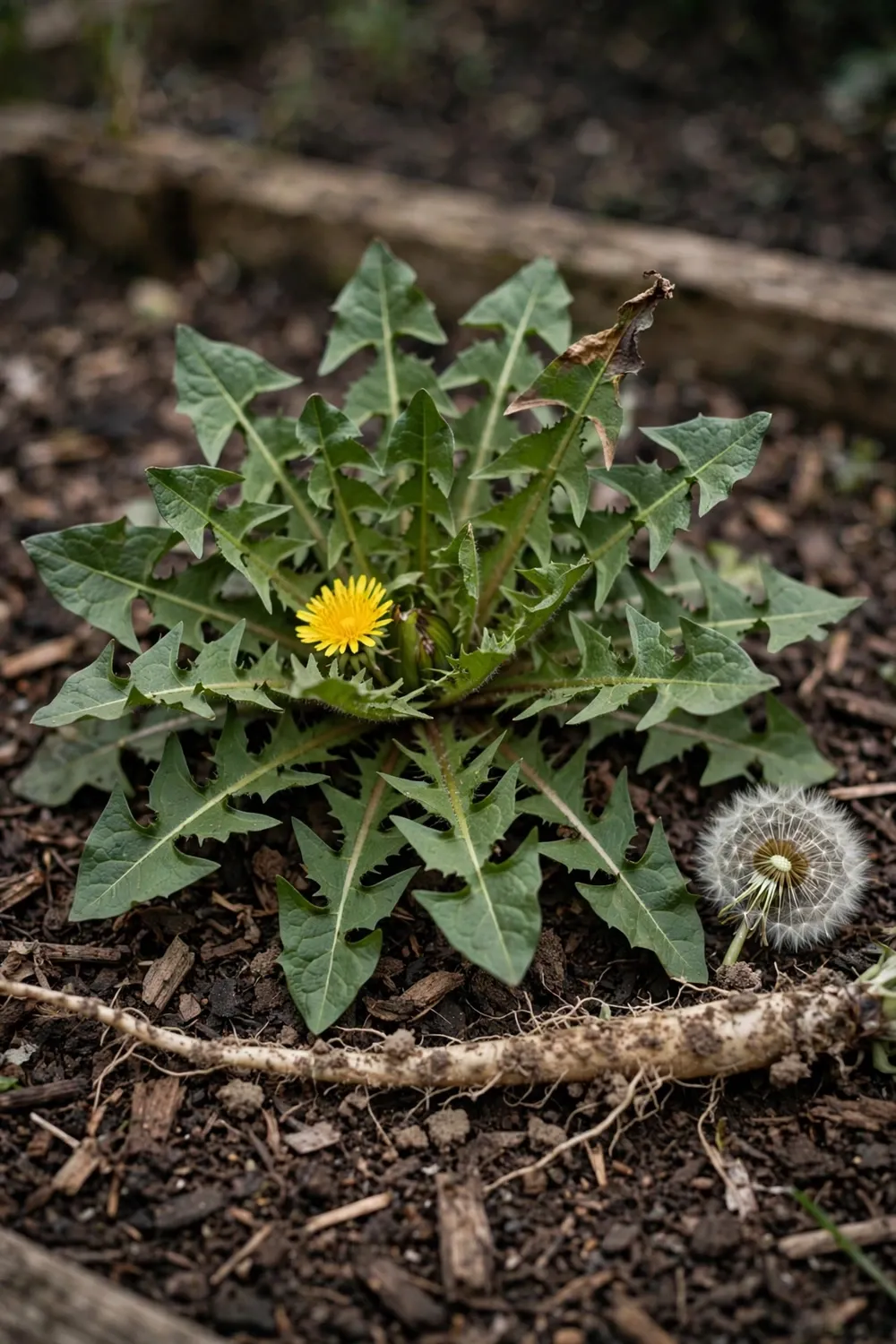

Pull the whole root, bag the seed heads, and mulch the gap so the next flush finds no bare soil. That is Australian weed identification for the 21 common weeds on this page. The rest of this page is 21 weeds, from the first dandelion to the final boxthorn.
I have learned that a weed pulled without its root returns within weeks.
Australian weed identification names a weed from leaf, stem, flower, and root. A weed is a plant growing where you do not want it, and the three-group test sorts every weed before you pull it.
Sort Every Weed Into Broadleaf, Grassy, or Sedge First
Broadleaf weeds carry wide leaves with net veins and often showy flowers. Grassy weeds carry narrow blades with parallel veins. Sedges carry solid stems with a triangular cross-section. Roll the stem between your fingers: a sedge stem feels three-sided, while a grass stem feels round and often hollow.
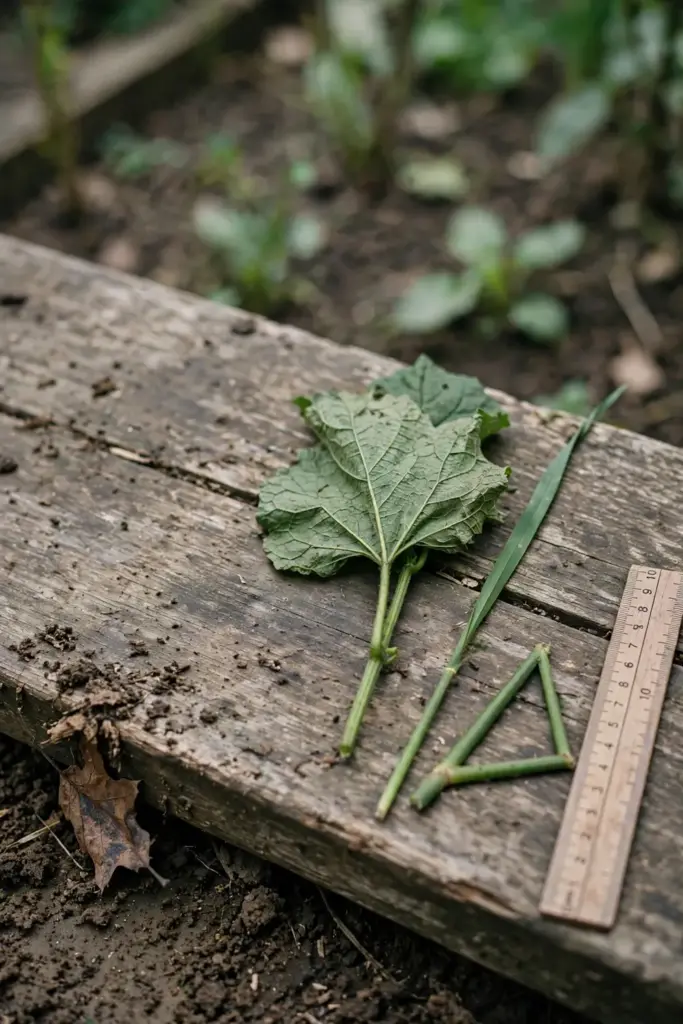
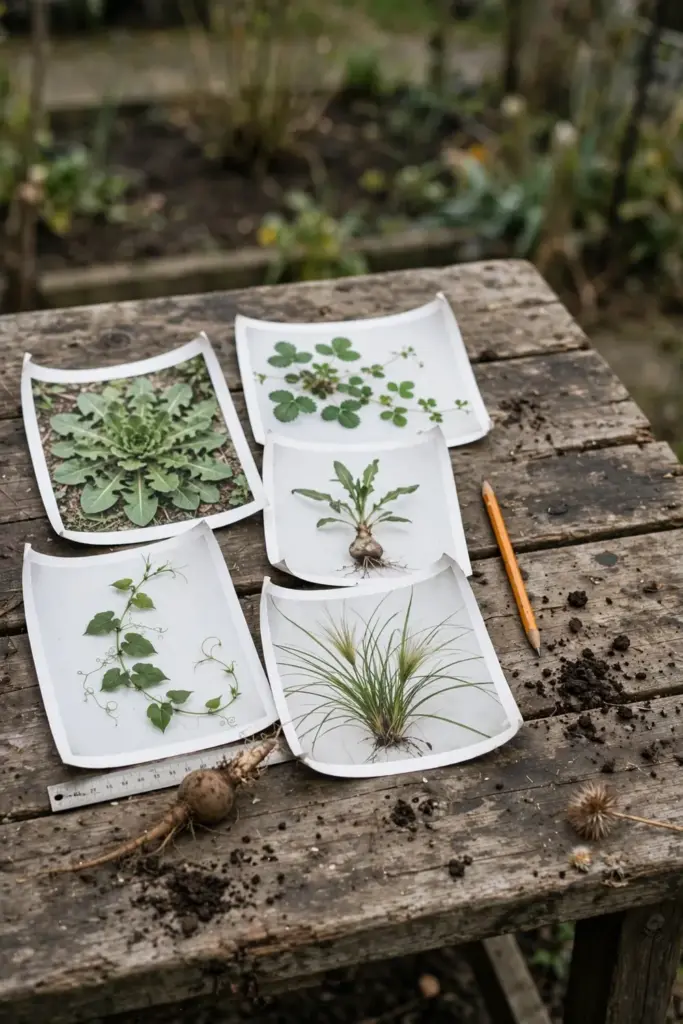
Sort the plant before you pull it, because the group decides the removal: taproot weeds need the whole root out, runner weeds need every runner out, bulb weeds need the bulbs out, and sedge weeds with underground nuts need a different plan again.
Triage the plant against what you planted. A weed grows where nothing was sown. A seedling grows in a row or a pot where seed went in. A native lookalike grows in bush or in a self-sown patch with local undergrowth. Check leaf arrangement, stem shape, and root type before you act. A photo set of leaf, flower, and whole plant plus one state flora authority settles the name. The New South Wales FloraOnline carries NSW species records, the Victorian VicFlora carries Victorian species records, and the Western Australian FloraBase carries Western Australian species records.
Dispose of every weed with seed heads, bulbs, or runners in the bin. Seed heads ripen in the bin bag. Bulbs and runners survive a compost heap and sprout again. Bag the seed heads first, then dig the roots. Organic weed control covers hand removal, smothering, and mulching without sprays.
Match Each Weed to Its Group in One Table
Use this table as a quick check after the photo set, once you have the plant in hand and the stem rolled between your fingers. Group plus removal settles the plan.
| Weed | Group | Key ID Clue | Removal | Dispose |
|---|---|---|---|---|
| Dandelion | Broadleaf | Toothed leaves, taproot | Fork out whole taproot | Bin the flower heads |
| Capeweed | Broadleaf | Yellow daisy, woolly rosette | Pull rosette before seed | Bin the flower heads |
| Chickweed | Broadleaf | Star flowers, one line of stem hairs | Pull shallow roots | Bin before seed drops |
| White Clover | Broadleaf | Trefoil leaves, creeping stems | Pull runners | Bin the runners |
| Creeping Oxalis | Broadleaf | Heart leaflets, stems root at nodes | Pull every rooted node | Bag all stem pieces |
| Lawn Bindii | Broadleaf | Prickly seed, flat rosette | Pull before seed set | Bin the seed burrs |
| Cat’s Ear | Broadleaf | Forked hairs, wiry branched stems | Fork out taproot | Bin the flower heads |
| Sowthistle | Broadleaf | Hollow stem, milky sap | Pull before seed | Bin the flower heads |
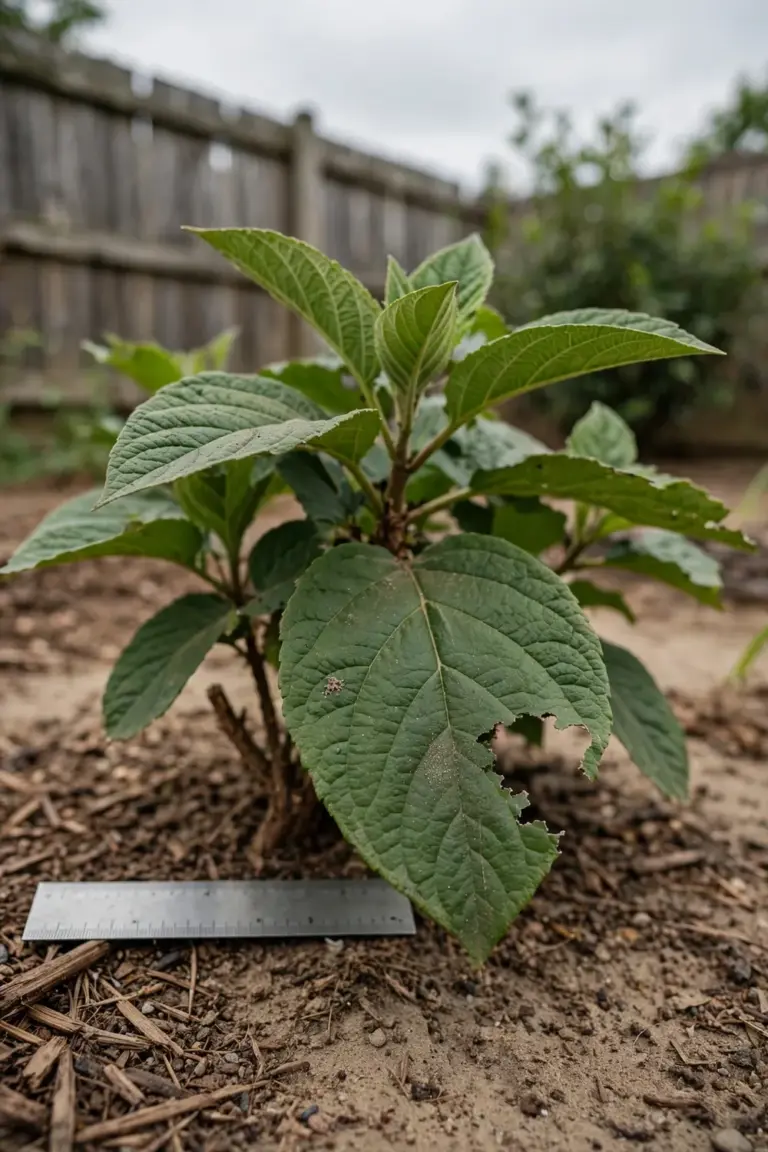
| Mallow | Broadleaf | Round leaves, cheese-wheel seeds | Pull taproot | Bin the seed discs |
| Fleabane | Broadleaf | Tall stems, fluffy seed heads | Pull before seed | Bag the seed heads |
| Winter Grass | Grassy | Pale tufts, boat-shaped leaf tips | Pull tufts before seed | Bin the seed heads |
| Crowsfoot Grass | Grassy | Radiating stems, finger seed heads | Pull before seed | Bin the seed heads |
| Couch | Grassy | Runners above and below ground | Dig out every runner | Bag all runner pieces |
| Kikuyu | Grassy | Thick runners, blunt leaf tips | Dig out every runner | Bag all runner pieces |
| Nutgrass | Sedge | Triangular stem, underground nuts | Smother or selective herbicide | Do not hand-pull |
| Onion Weed | Bulb | Onion smell, white star flowers | Dig the bulbs | Bag every bulb |
| Soursob | Bulb | Yellow flowers, bulbs below ground | Dig the bulbs | Bag every bulb |
| Wandering Trad | Vine | Jointed stems root at every node | Pull every rooted node | Bag all stem pieces |
| Morning Glory | Vine | Heart leaves, smothering vines | Unwind and dig roots | Bag vines and roots |
| Lantana | Declared | Cluster flowers, prickly stems | Cut and dig roots | Bag berries and roots |
| African Boxthorn | Declared | Thorns, orange berries | Dig roots with gloves | Bag berries and roots |
1. Name Dandelion by the Taproot and Toothed Leaves
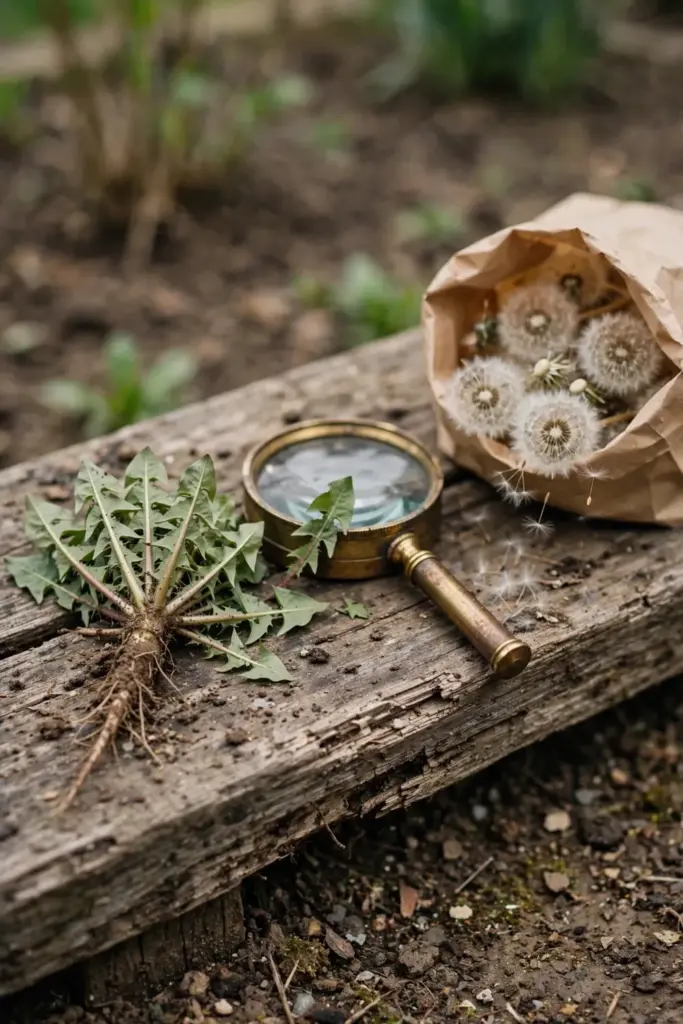
Dandelion is the rosette weed with deeply toothed leaves, a yellow flower on a hollow stalk, and a long taproot. Dandelion is Taraxacum officinale. The leaves sit in a flat rosette and point back toward the base. The flower opens yellow and closes into a white parachute seed head. The taproot runs deep and snaps when pulled fast. A snapped taproot reshoots.
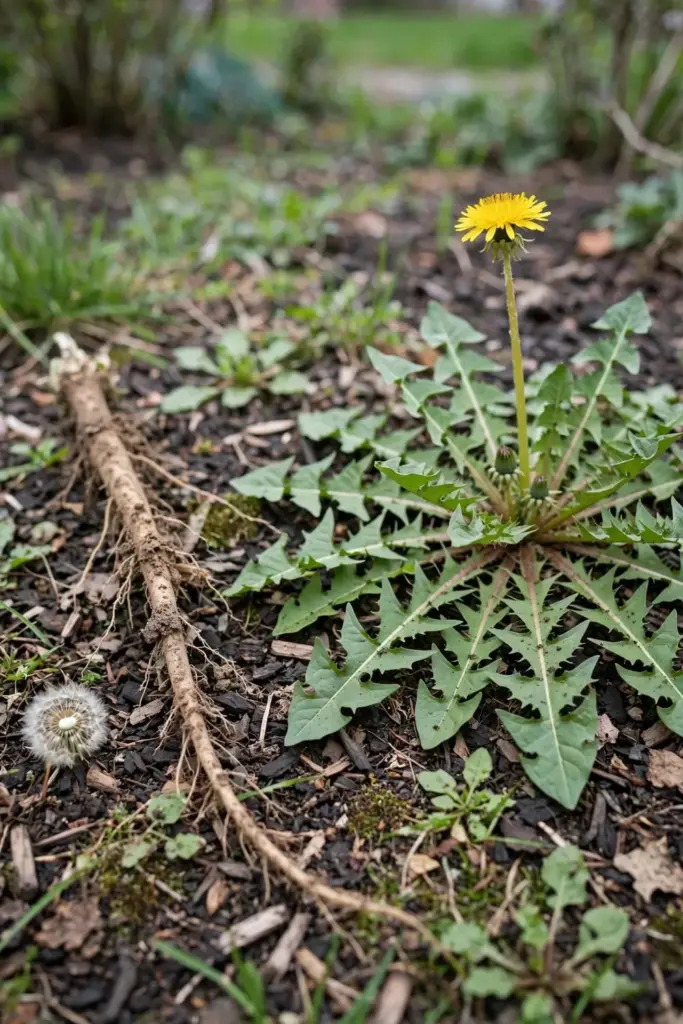
Separate dandelion from cat’s ear by stem and leaf hairs. Dandelion leaves carry no hairs and each flower sits on one unbranched hollow stalk. Cat’s ear leaves carry forked hairs and its flowers sit on wiry branched stems. A leaf close view plus a stem photo settles the pair. Fork the taproot out whole after rain when the soil gives. Bag the flower heads. A dandelion pulled without its root returns within weeks.
2. Name Capeweed by the Yellow Daisy and Woolly Rosette
Capeweed is the rosette weed with a yellow daisy flower, lobed leaves, and a woolly underside. Capeweed is Arctotheca calendula. The leaves sit in a flat rosette with lobed edges and a pale woolly coat below. The flower runs yellow with a dark center. The plant grows in lawns, paths, and beds through the cool months. Capeweed seeds drop fast once the flower fades.
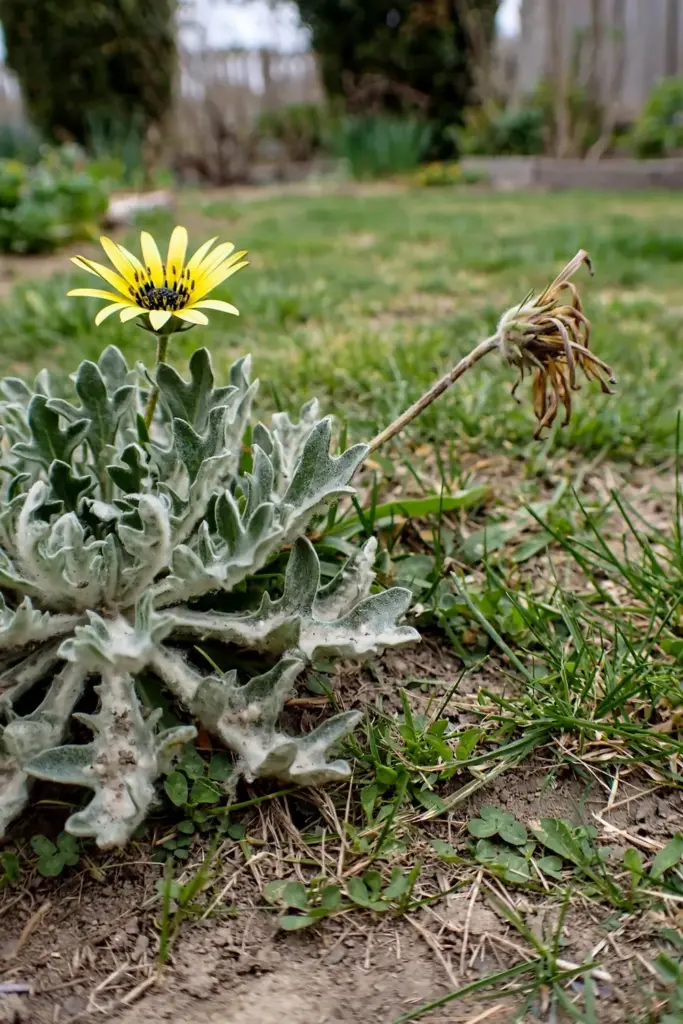
Separate capeweed from dandelion by leaf and stem: capeweed leaves carry a woolly underside and sit lobed, while dandelion leaves carry no hairs and sit deeply toothed. Capeweed flowers sit on leafy stems. Dandelion flowers sit on bare hollow stalks. A leaf underside photo settles the pair. Pull the rosette whole before seed set. Mulch the gap so the next flush finds no bare soil.
3. Name Chickweed by Star Flowers and One Line of Hairs
Chickweed is the sprawling weed with tiny white star flowers and one line of hairs along the stem. Chickweed is Stellaria media. The stems sprawl low and root where nodes touch damp soil. The flowers open as five petals split so deep they read as ten points. The stem carries one single line of fine hairs down one side. Chickweed grows as a winter annual in damp beds and paths.
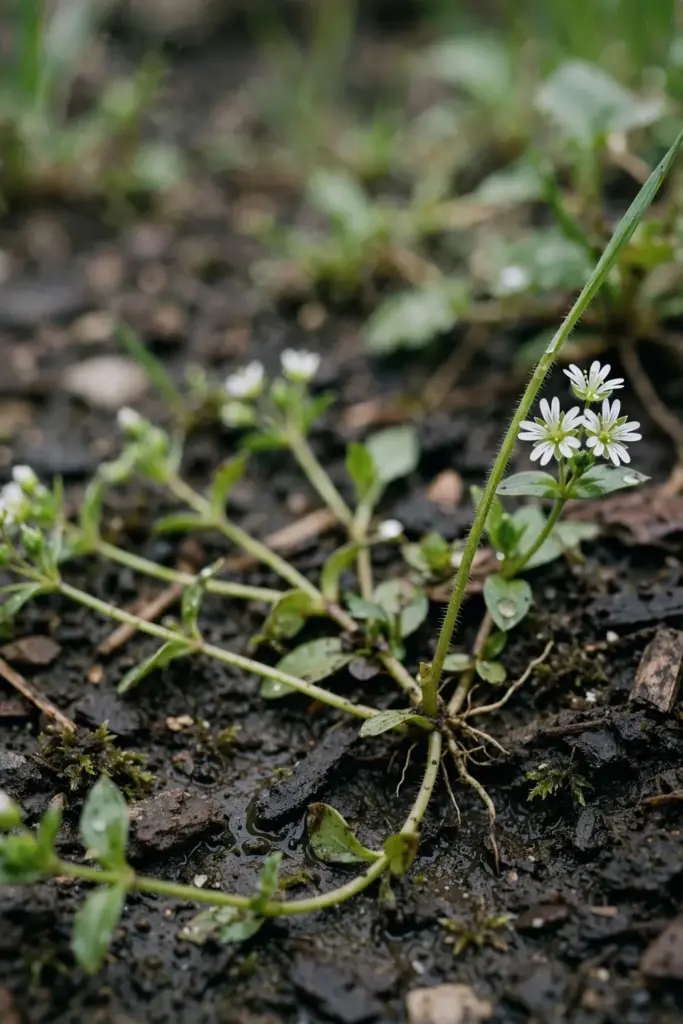
Separate chickweed from mouse-ear chickweed by hairs. Chickweed carries one line of hairs on an otherwise smooth stem. Mouse-ear chickweed carries hairs all over stem and leaves. A stem close view settles the pair. Pull the shallow roots before seed drops. Chickweed seeds fall fast, so a plant left one week too long seeds the bed. Mulch the gap after pulling.
4. Name White Clover by Trefoil Leaves and Creeping Stems
White clover is the creeping weed with trefoil leaves, a pale crescent on each leaflet, and white ball flowers. White clover is Trifolium repens. The stems creep along the ground and root at the nodes. The flowers form round white heads. The plant grows in lawns and beds where the cover stays thin. White clover spreads by seed and by creeping stems at once.
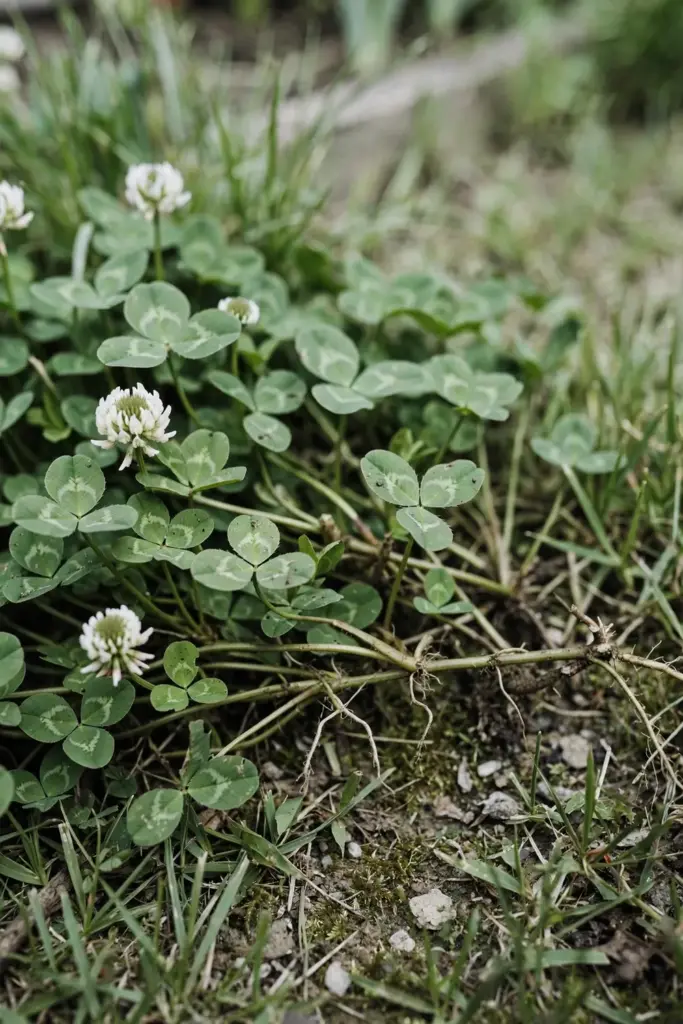
Separate white clover from creeping oxalis by leaflet shape: white clover leaflets sit rounded with a pale crescent mark, while creeping oxalis leaflets sit heart shaped with no crescent. White clover flowers form round white heads. Creeping oxalis flowers run yellow and small. A leaflet photo settles the pair. Pull the creeping stems and lift every rooted node. Fill the gap with dense planting so the next clover finds no room.
5. Name Creeping Oxalis by Clover Leaves and Re-Rooting Stems
Creeping oxalis is the mat weed with heart-shaped leaflets, small yellow flowers, and stems that root where they touch the ground. Creeping oxalis is Oxalis corniculata. The leaflets fold at night and open by day, and the stems creep low and root at every node that touches soil. A single stem left on bare soil starts a new mat. The plant grows in beds, pots, and paths through the warm months.
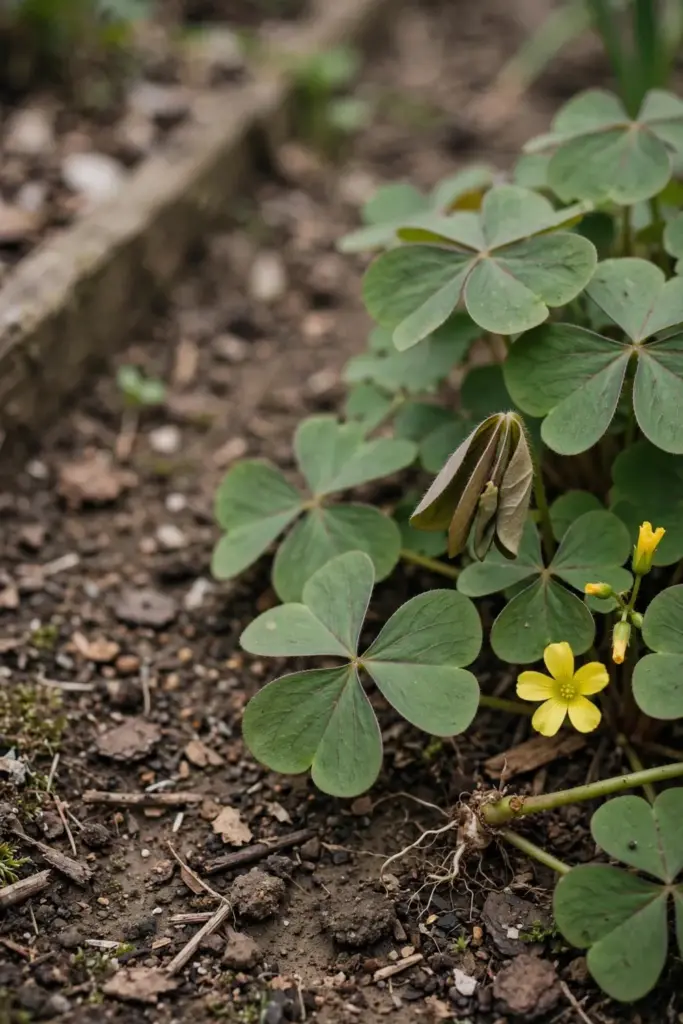
Separate creeping oxalis from white clover by leaflet and root. Creeping oxalis leaflets sit heart shaped and its stems root at the nodes, while white clover leaflets sit rounded with a pale crescent. Creeping oxalis carries no bulbs, and soursob carries bulbs below ground. A leaflet photo plus a root check settles the pair. Pull every rooted node and bag all stem pieces. A stem piece dropped on soil roots again.
6. Name Lawn Bindii by Prickly Seed and Flat Rosette
Lawn bindii is the flat rosette weed with feathery leaves and prickly seed burrs that catch bare feet. Lawn bindii is Soliva sessilis. The rosette hugs the ground in lawns and paths. The leaves sit feathery and divided. The seed burrs form at the leaf bases and harden into prickles. Bindii seed sets in the cool months, so treatment lands in winter and early autumn before seed set.
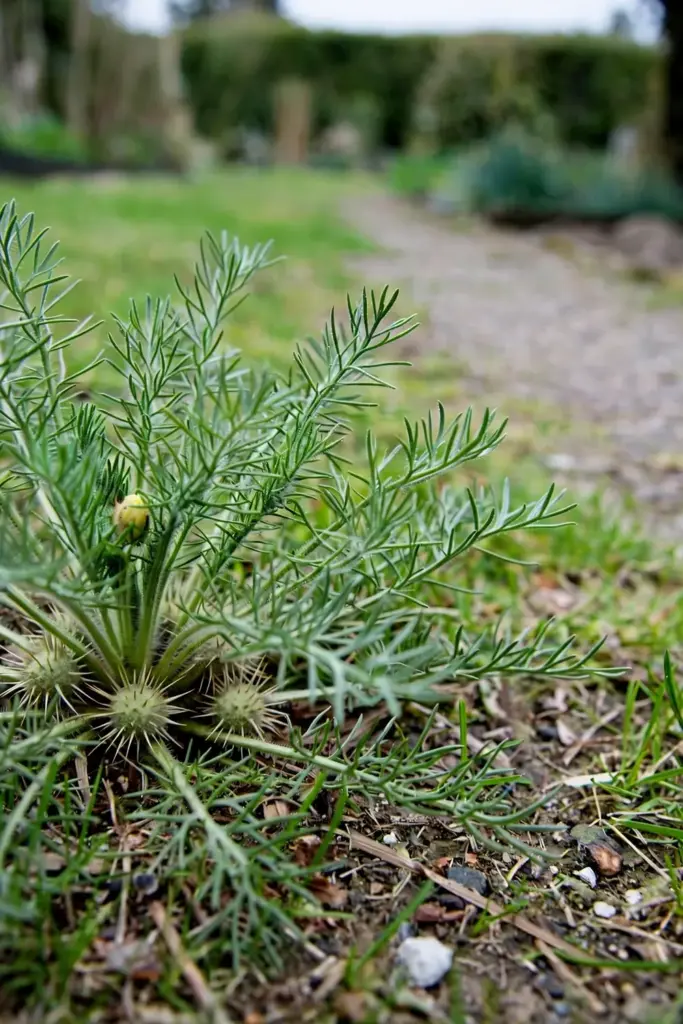
Separate lawn bindii from caltrop as a plain plant fact. Lawn bindii is Soliva sessilis, a low rosette with prickly seed burrs. Caltrop is Tribulus terrestris, a separate plant with yellow flowers, prostrate stems, and hard spiny burrs. Nurseries and gardeners mix the two names. The plants differ in flower, stem, and burr shape. A flower photo settles the pair. Pull the rosettes before seed set and bag the burrs. Bare feet find every burr a missed plant leaves behind.
7. Name Cat’s Ear by Forked Hairs and Wiry Stems
Cat’s ear is the rosette weed with forked hairs on the leaves and yellow flowers on wiry branched stems. Cat’s ear is Hypochaeris radicata. The leaves sit in a rosette with blunt lobes and forked hairs that catch the light. The flower stems branch and feel wiry. The flowers read as dandelion yellow. The taproot runs deep and snaps when pulled fast.
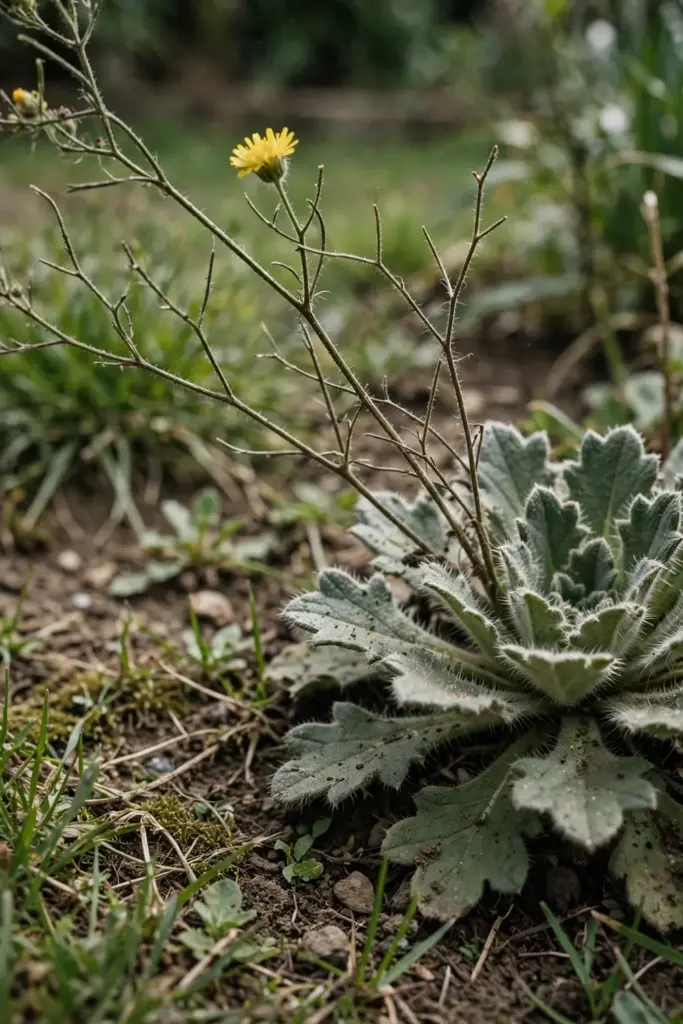
Separate cat’s ear from dandelion by stem and hairs. Cat’s ear flowers sit on branched wiry stems and its leaves carry forked hairs. Dandelion flowers sit on single unbranched hollow stalks and its leaves carry no hairs. A stem photo plus a leaf close view settles the pair. Fork the taproot out whole after rain. Bag the flower heads before the parachute seeds lift.
8. Name Sowthistle by Hollow Stems and Milky Sap
Sowthistle is the tall weed with hollow stems, milky sap, prickly-toothed leaves, and yellow flowers. Sowthistle is Sonchus oleraceus. The stem runs hollow and snaps clean, and the sap runs white and milky from any cut. The leaves clasp the stem with ear-like lobes. The flowers open yellow and close into parachute seed heads. Sowthistle grows in beds, paths, and waste ground through the year.
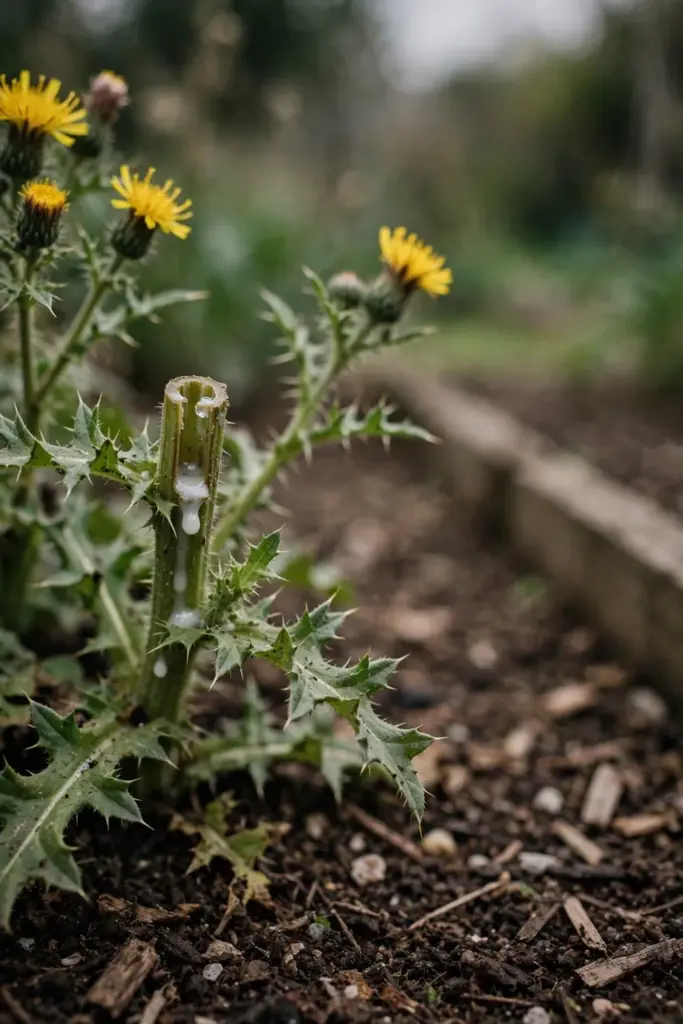
Separate sowthistle from prickly lettuce by leaf base and sap: sowthistle leaves clasp the stem with ear-like lobes and its sap runs milky, while prickly lettuce leaves carry a spiny midrib below and sit without the clasping ears. A leaf base photo settles the pair. Pull sowthistle before seed set and bag the flower heads. A tall plant left to seed fills the bed within weeks.
9. Name Mallow by Round Leaves and Cheese Wheels
Mallow is the weed with round kidney-shaped leaves, small pink flowers, and flat seed discs shaped like cheese wheels. Mallow is Malva parviflora. The leaves sit round with a crinkled edge. The flowers run small and pink in the leaf axils. The seed discs ripen into the cheese-wheel shape that gives the plant its common name. Mallow grows in beds, paths, and waste ground through the cool months.
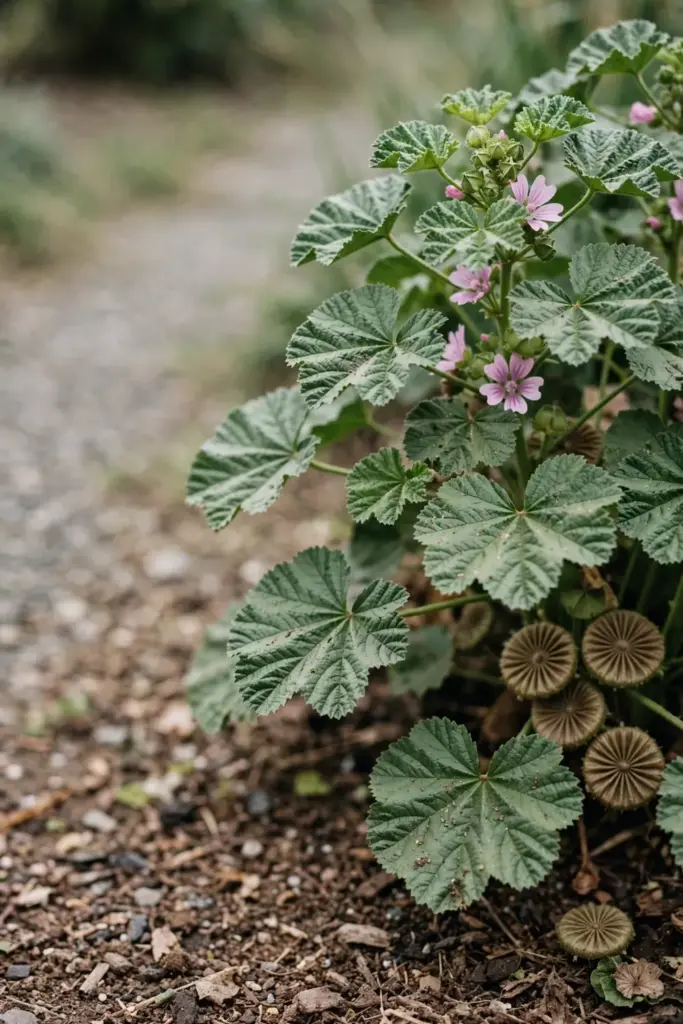
Separate mallow from nasturtium by leaf attachment. Mallow leaves attach at the leaf edge on a stalk. Nasturtium leaves attach at the center of the leaf like a shield. Mallow seed discs sit flat and ribbed. Nasturtium seeds sit round and ridged. A leaf photo settles the pair. Pull the taproot whole before the seed discs ripen. Bag the seed discs. A mallow left to seed drops discs that wait in the soil.
10. Name Fleabane by Tall Stems and Fluffy Seed Heads
Fleabane is the tall weed with hairy stems, small daisy flowers, and fluffy wind-blown seed heads. Fleabane is Conyza bonariensis, also listed as Erigeron bonariensis. The stems run tall and hairy with narrow leaves, and the flowers open as small daisies with many narrow petals. The seed heads turn fluffy and ride the wind. Fleabane grows in paths, beds, and waste ground through the warm months.
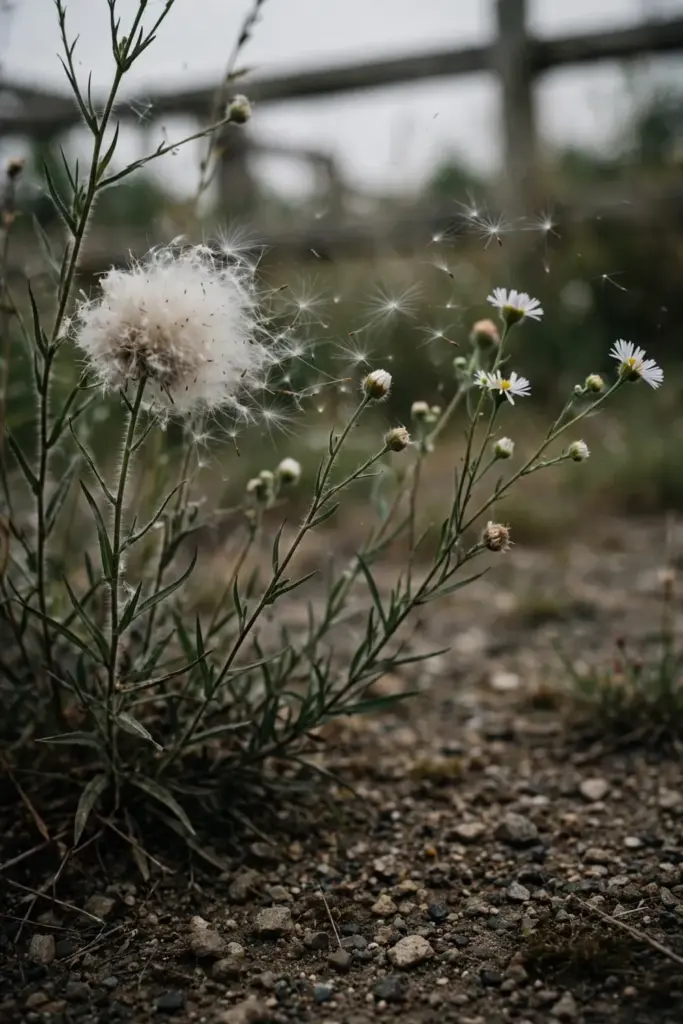
Separate fleabane from sowthistle by sap. Fleabane carries no milky sap, while sowthistle bleeds white sap from any cut. Fleabane stems run hairy and tall. Sowthistle stems run hollow and smooth. A stem cut test settles the pair. Pull fleabane before the seed heads fluff out. Bag the seed heads. A fleabane left to seed sends seed across the whole garden on one breeze.
11. Name Winter Grass by Pale Tufts and Boat Tips
Winter grass is the tufted weed with pale green leaves, boat-shaped leaf tips, and seed heads through the cool months. Winter grass is Poa annua. The tufts sit low and pale against darker lawn grass. The leaf tips fold into a boat shape at the end. The seed heads appear even on short plants. Winter grass germinates in autumn and dies in summer heat.
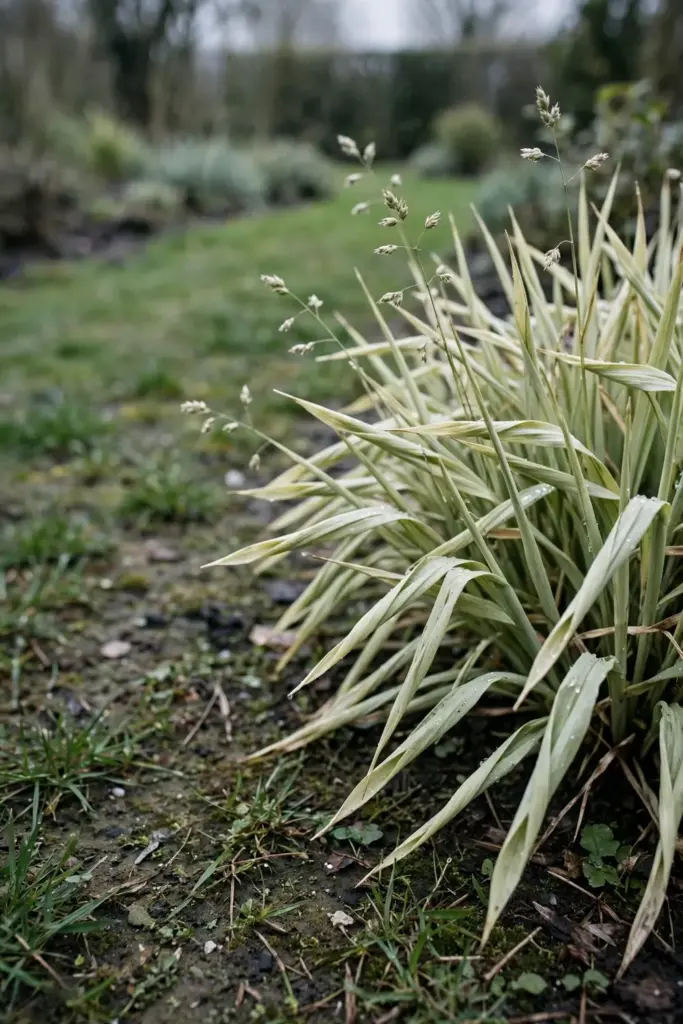
Separate winter grass from lawn grass seedlings by color and tip: winter grass tufts run pale and its leaf tips fold into boats, while lawn grass seedlings run darker and their leaf tips taper flat. A leaf tip close view settles the pair. Pull the tufts before seed set and mulch the bare patches. Bare soil in autumn grows winter grass first.
12. Name Crowsfoot Grass by Radiating Stems and Finger Seed Heads
Crowsfoot grass is the summer weed with stems radiating flat along the ground and finger-like seed spikes. Crowsfoot grass is Eleusine indica. The stems spread outward from one crown and hug the ground. The seed heads split into several stout fingers at the stem tip. The plant grows as a summer annual in paths, beds, and thin lawns.
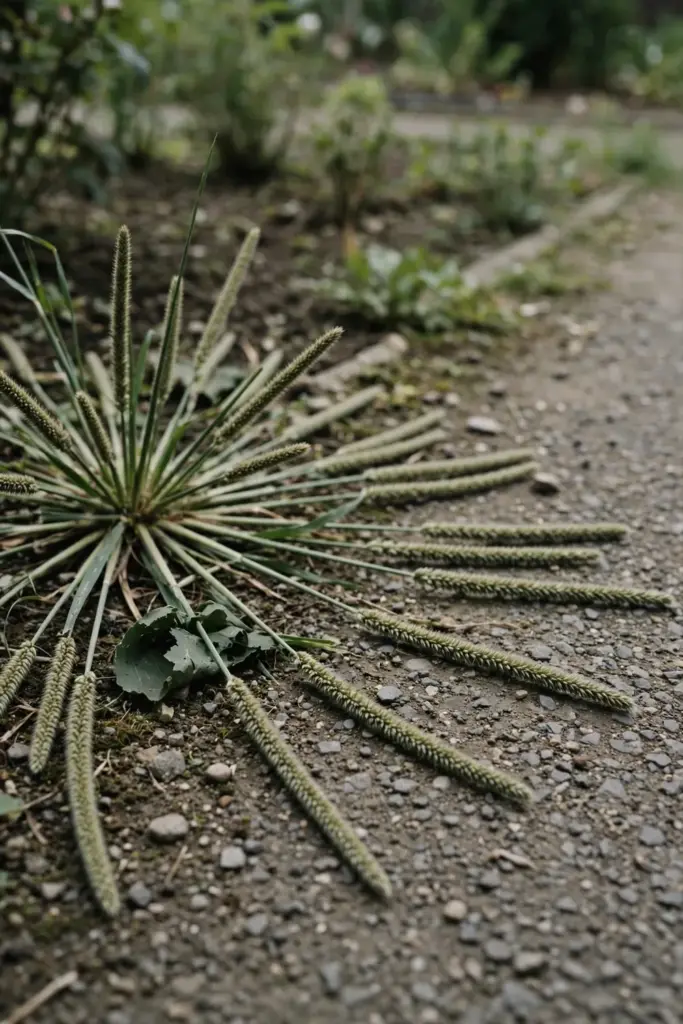
Separate crowsfoot grass from crabgrass by seed head and stem: crowsfoot seed spikes run stout and finger-like on flat radiating stems, while crabgrass seed spikes run finer on stems that root at the nodes. A seed head photo settles the pair. Pull crowsfoot before seed set and bag the seed heads. Mulch the gap so the next summer flush finds no bare soil.
13. Name Couch by Runners Invading the Bed
Couch is the runner weed with fine leaves and wiry runners above and below ground that invade beds from the lawn. Couch is Cynodon dactylon. The runners creep across the soil surface and dive below it. The leaves run fine and pointed. Couch enters beds from lawn edges and from soil moved with runners inside. A bed edge without a barrier invites couch in.
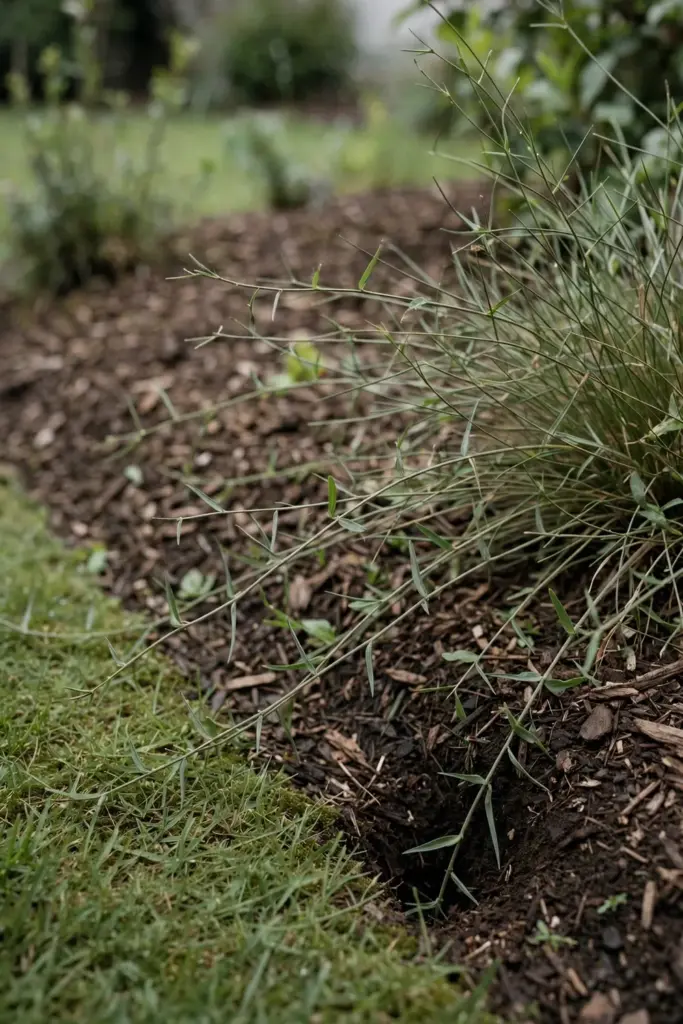
Separate couch from kikuyu by runner and leaf. Couch runners run wiry and its leaves run fine. Kikuyu runners run thick and fleshy and its leaves run coarse with blunt tips. A runner photo settles the pair. Dig out every runner and bag all runner pieces. A runner piece dropped on soil starts again. Edge the bed and smother the gap.
14. Name Kikuyu by Thick Runners and Blunt Leaves
Kikuyu is the runner weed with thick fleshy runners, coarse leaves, and blunt leaf tips that invade beds from the lawn. Kikuyu is Cenchrus clandestinus. The runners run thick and root at the nodes. The leaves feel coarse and end in blunt tips. Kikuyu spreads fast in warm months and enters beds from lawn edges. A bed beside a kikuyu lawn needs a hard edge.
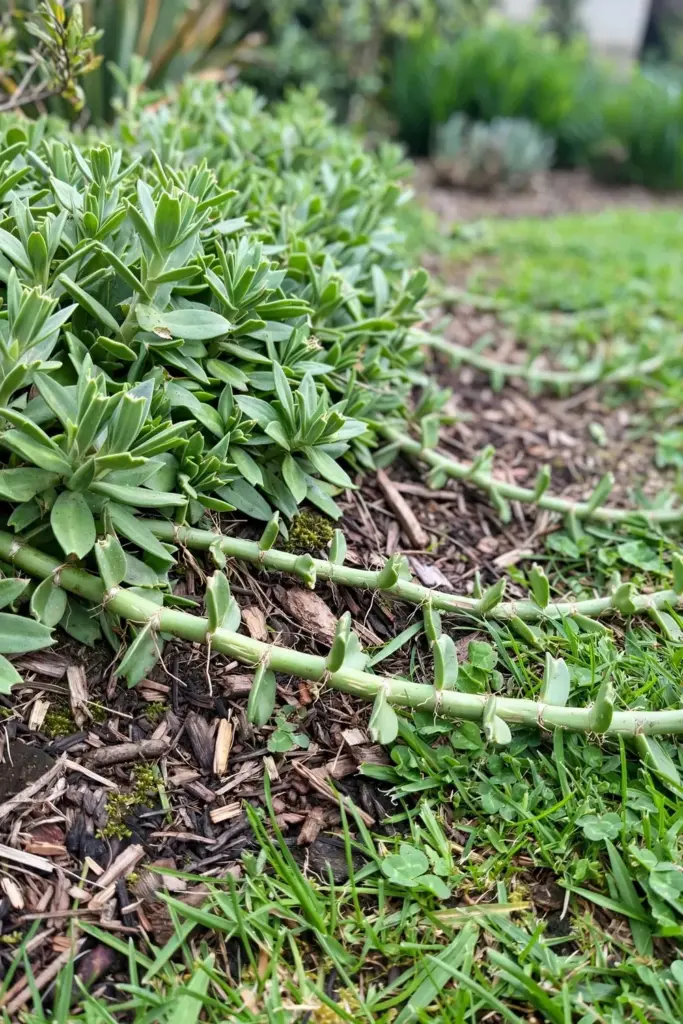
Separate kikuyu from couch by runner and leaf: kikuyu runners run thick and fleshy and its leaves run coarse, while couch runners run wiry and its leaves run fine. A runner photo settles the pair. Dig out every runner and bag all runner pieces. Smother the cleared patch and edge the bed. A runner piece left in the soil starts again.
15. Name Nutgrass by Triangular Stems and Underground Nuts
Nutgrass is the sedge with triangular stems, glossy leaves, and underground nuts that spread the plant. Nutgrass is Cyperus rotundus. Nutgrass is a sedge, not a grass. The stem feels three-sided when rolled between fingers. The leaves run glossy and narrow from the base, and the nuts sit below ground on thin rhizomes. Each nut grows a new shoot.
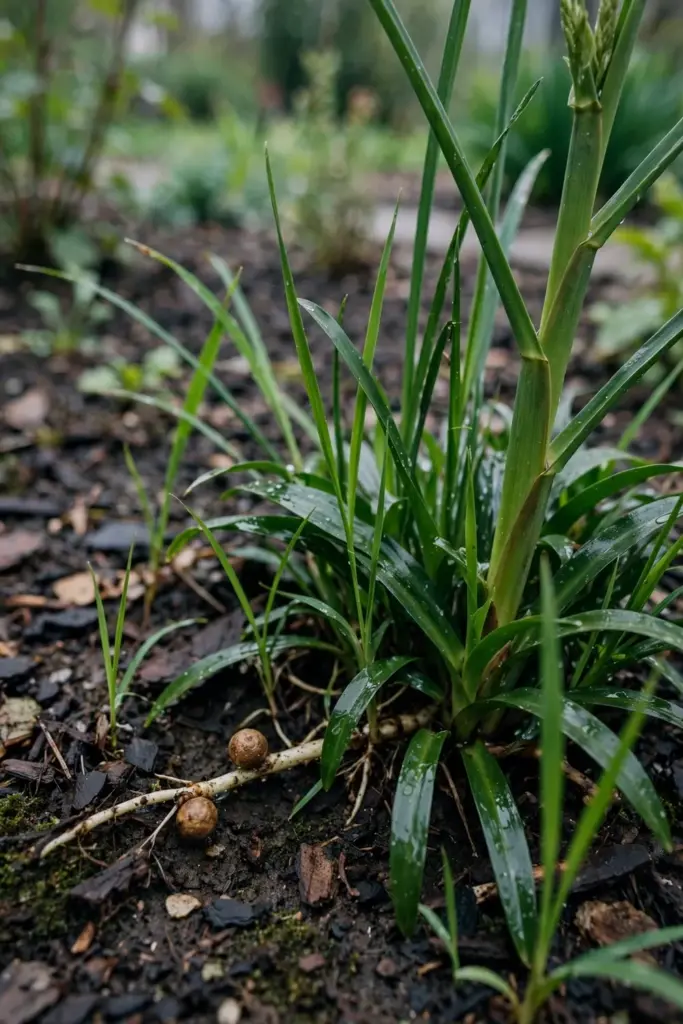
Separate nutgrass from grass by stem: nutgrass stems run solid and triangular, while grass stems run round and often hollow. A stem roll test settles the pair at once. Do not hand-pull nutgrass. Pulling snaps the shoot and leaves the nuts behind, and each nut grows back. Smother the patch or use a selective herbicide labelled for nutgrass and follow the label. Patience beats pulling with this weed.
16. Name Onion Weed by Onion Smell and White Star Flowers
Onion weed is the bulb weed with strap leaves, an onion smell when crushed, and white star flowers. Onion weed is Nothoscordum inodorum. The leaves rise as narrow straps from bulbs below ground. Crushing a leaf releases a clear onion smell. The flowers open as white stars on thin stalks. Onion weed grows in lawns, beds, and paths through the cool months.
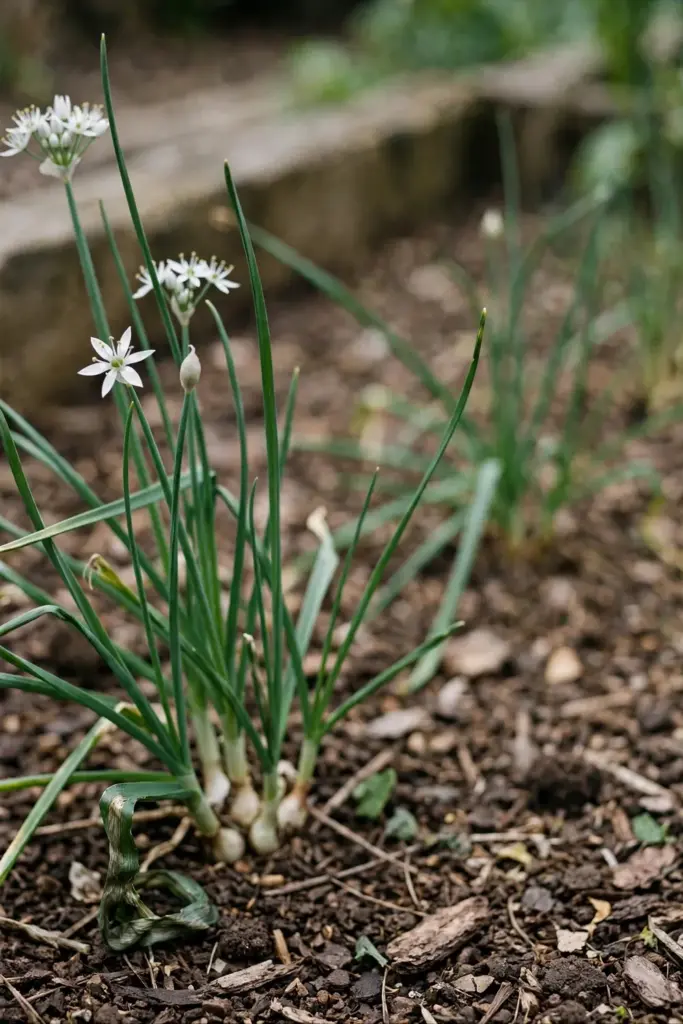
Separate onion weed from native lilies by smell: onion weed leaves smell of onion when crushed, while native lily leaves carry no onion smell. Onion weed bulbs sit small and clustered. A crushed leaf test settles the pair. Dig the bulbs and bag every bulb, because pulling the tops leaves the bulbs behind. Never compost the bulbs. A bulb dropped on soil grows again.
17. Name Soursob by Yellow Flowers and Bulbs Below Ground
Soursob is the bulb weed with yellow flowers, trefoil leaves, and bulbs below ground that spread the plant. Soursob is Oxalis pes-caprae. The flowers open bright yellow in the cool months. The leaves sit trefoil on thin stalks. The bulbs sit below ground and multiply each season. Soursob grows in beds, lawns, and paths where the soil stays moist.
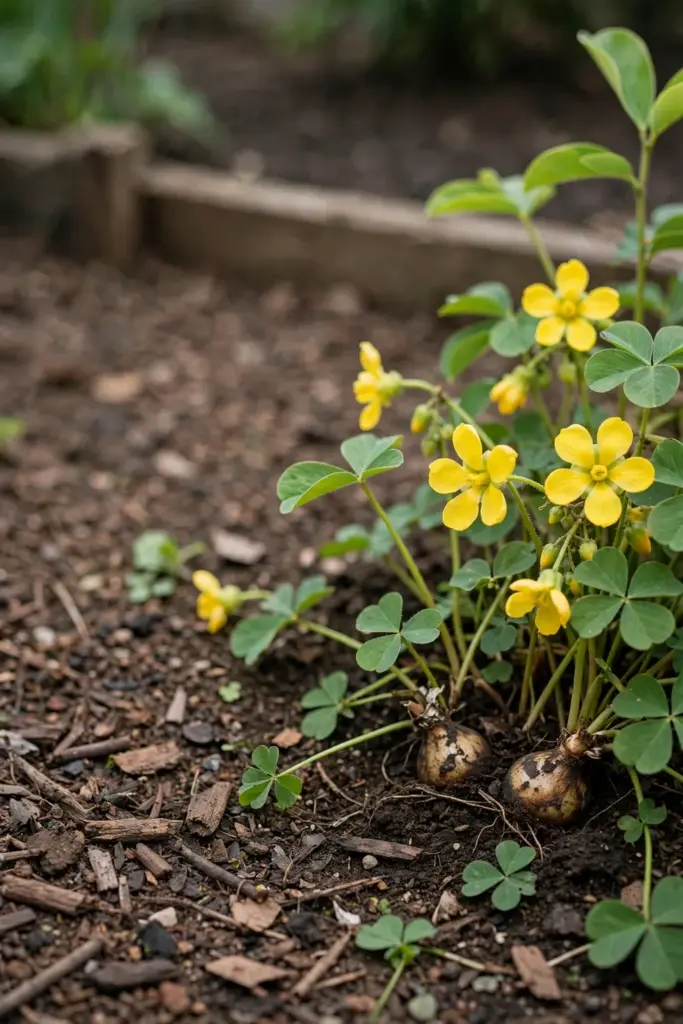
Separate soursob from creeping oxalis by root: soursob carries bulbs below ground, while creeping oxalis carries fibrous roots and stems that root at the nodes. Soursob leaves sit larger and fleshier. A root check settles the pair. Dig the bulbs and bag every bulb, because pulling the tops leaves the bulbs behind and a bulb left in the soil grows back next season.
18. Name Wandering Trad by Jointed Stems That Root at Every Node
Wandering trad is the groundcover weed with jointed stems, glossy leaves, and white flowers that root at every node. Wandering trad is Tradescantia fluminensis. The stems creep along damp ground and root where each joint touches soil. The leaves sit glossy and oval. The flowers open small and white. Wandering trad grows in shade, damp beds, and creek edges.
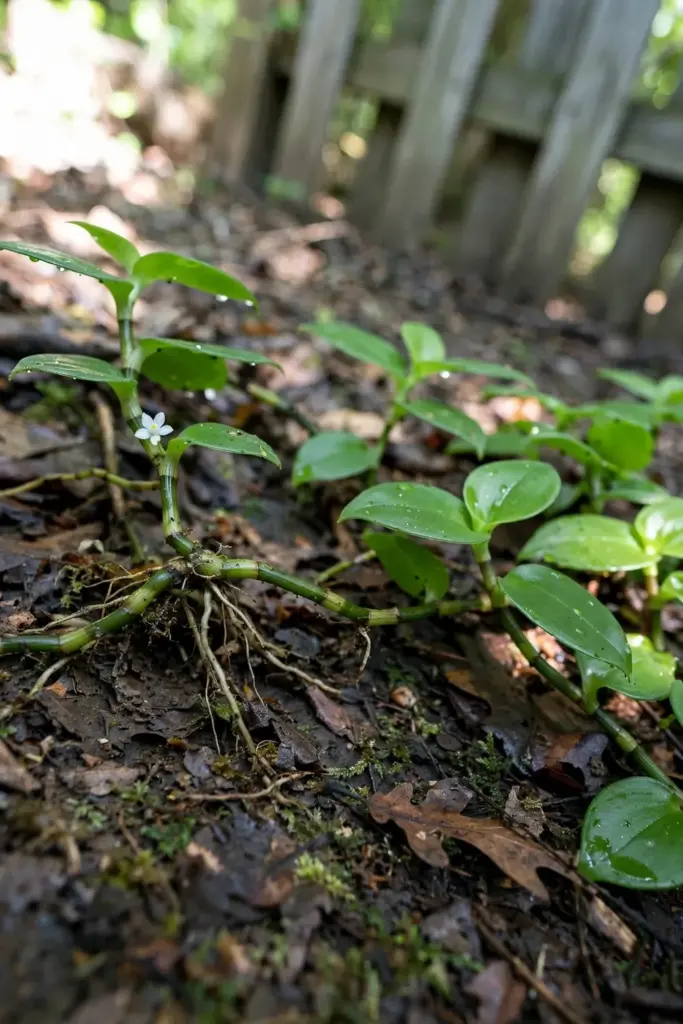
Separate wandering trad from native Commelina by flower color: wandering trad flowers run white, while native Commelina flowers run blue. Wandering trad stems root at every node. A flower photo settles the pair. Pull every rooted node and bag all stem pieces, since a stem piece dropped on damp soil roots again. Work in the cool hours and check the patch again after rain.
19. Name Morning Glory by Heart Leaves and Smothering Vines
Morning glory is the vine with heart-shaped leaves, trumpet flowers, and twining stems that smother shrubs. Morning glory is Ipomoea indica. The vines twine around stems and climb over shrubs. The leaves sit heart shaped on long stalks. The flowers open as purple trumpets. Morning glory grows in fences, beds, and bush edges through the warm months.
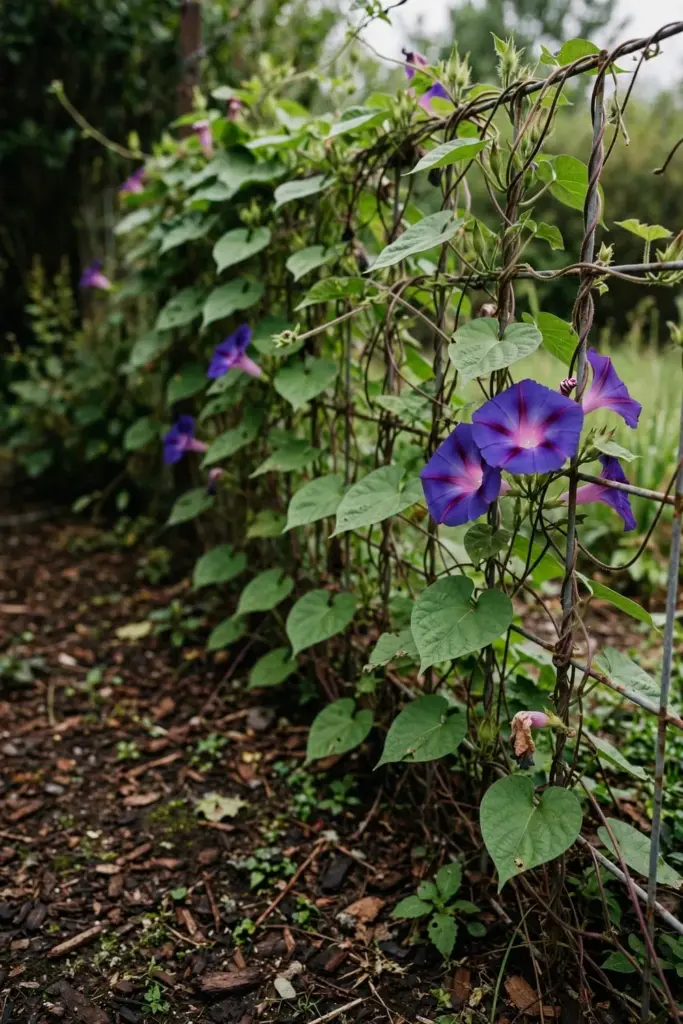
Separate morning glory from native morning glory by leaf shape: morning glory leaves sit heart shaped and undivided, while native morning glory leaves sit palmate with finger-like lobes. A leaf photo settles the pair. Unwind the vines, dig the roots, and bag vines and roots. Vines left on the ground root again. Check the patch after rain for reshoots.
20. Name Lantana by Cluster Flowers and Toxic Leaves
Lantana is the shrub weed with clusters of small flowers in mixed colors, prickly stems, and leaves and unripe fruit that poison stock and pets. Lantana is Lantana camara. The flower clusters mix yellow, orange, pink, and red on one head. The stems carry prickles. The berries ripen dark. Lantana grows in gardens, bush edges, and waste ground in warm districts. Lantana is a declared weed in parts of Australia.
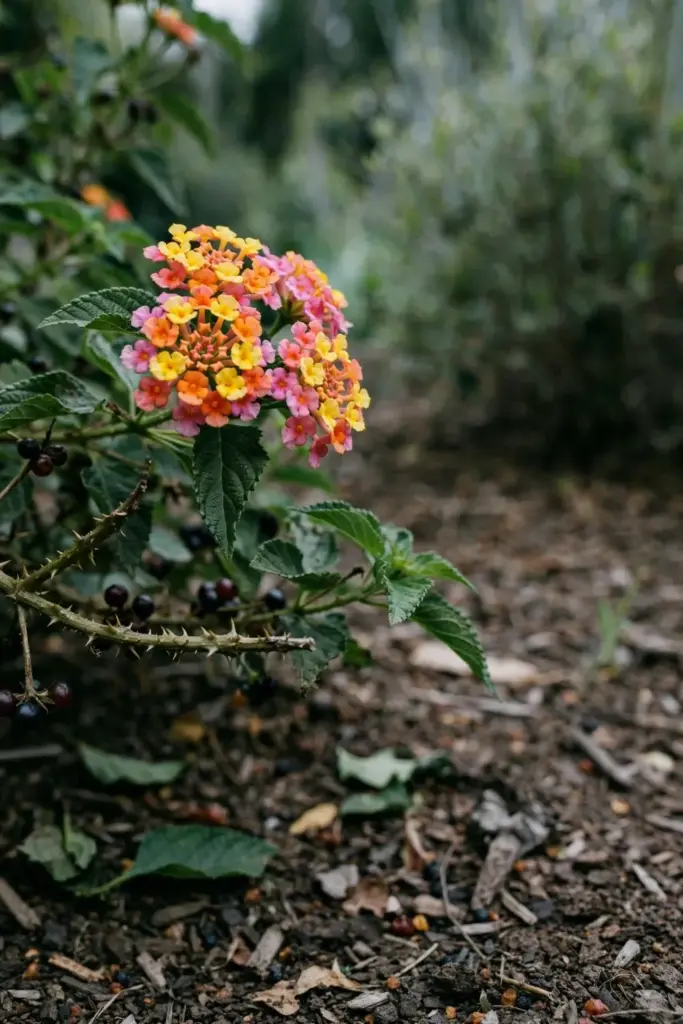
Separate lantana from verbena by stem and growth: lantana grows woody with prickly stems and forms a shrub, while verbena grows soft stemmed and stays low. Lantana berries ripen dark and clustered. A stem photo settles the pair. Cut the shrub and dig the roots, then bag the berries and roots. Do not eat any part. Check the declared status for your state before you dump the material.
21. Name African Boxthorn by Thorns and Orange Berries
African boxthorn is the thorny shrub weed with small leaves, white to lilac flowers, and orange berries. African boxthorn is Lycium ferocissimum. The thorns run long and sharp along the stems. The leaves sit small and oval. The berries ripen orange red. African boxthorn grows in gardens, paddocks, and coastal scrub. African boxthorn is a declared weed in parts of Australia.
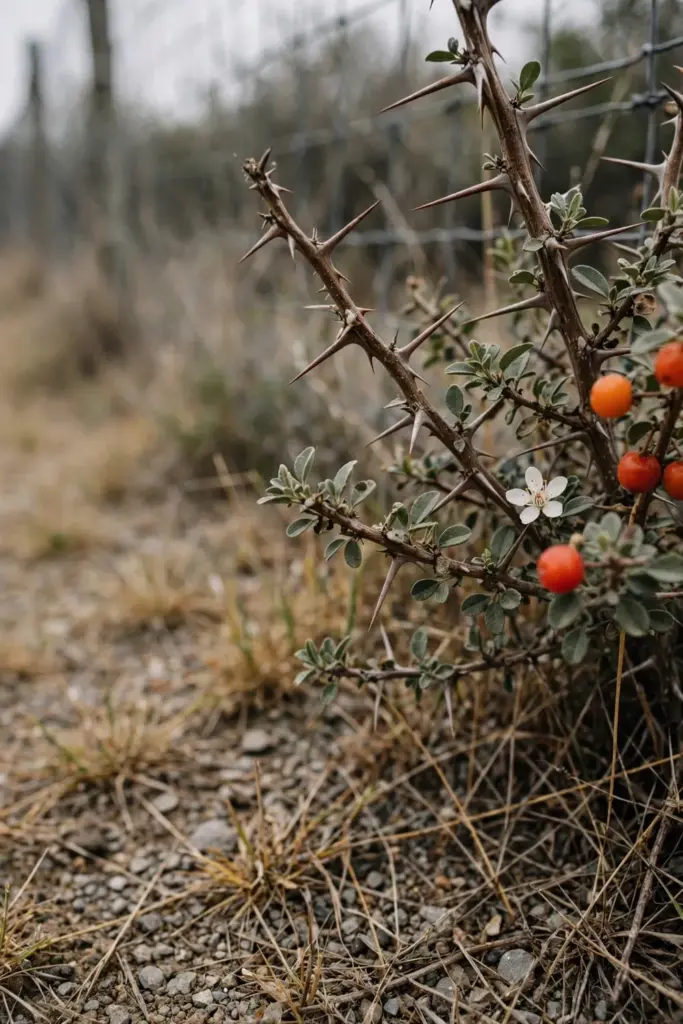
Separate African boxthorn from hawthorn by leaf and thorn: African boxthorn leaves sit small and entire with long sharp thorns, while hawthorn leaves sit lobed with shorter thorns and red pomes. A leaf photo settles the pair. Dig the roots with gloves and bag the berries and roots. Thorns puncture skin and gloves wear thin fast. Check the declared status for your state before you dump the material.
Frequently Asked Questions About Australian Weed Identification
A weed grows where nothing was sown. A seedling grows in a row or a pot where seed went in. Check the leaf shape against the packet or the plant label. Check the stem and root type. A weed with a taproot pulls hard. A seedling lifts with a small fibrous root ball. When the plant stays unknown, photograph leaf, flower, and whole plant, then confirm the name in one state flora record before you pull it.
A weed returns when the root stays behind. Taproot weeds reshoot from a snapped root, runner weeds regrow from a dropped runner piece, bulb weeds regrow from a bulb left in the soil, and sedge weeds regrow from nuts below ground. Pull after rain when the soil gives. Fork the whole root out. Bag every runner piece and bulb. Mulch the gap so the next flush finds no bare soil.
Do not hand-pull nutgrass. Pulling snaps the shoot and leaves the nuts behind. Each nut grows a new shoot, so pulling makes the patch worse. Smother the patch with cardboard and mulch for a season. A selective herbicide labelled for nutgrass also works, and the label carries the method. Check the patch after rain. A nutgrass patch beaten once needs a second pass before it stays beaten.
Compost weeds without seed heads, bulbs, or runners only. Seed heads ripen in the heap and spread, while bulbs and runners survive a cool heap and sprout again. Bag seed heads, bulbs, and runner pieces and bin them. Hot compost kills seed, and cold compost does not. Composting safety tips covers what stays out of the heap. When in doubt, bin the weed.
Declared status varies by state, so check your state weed authority first. Do not dump declared weeds in green waste or on vacant ground. Bag berries, seed, and roots and bin them, then dig the roots out and check the patch after rain. A declared weed left to seed becomes a neighborhood problem. Report a large infestation to your local council. A small patch pulled early stays a small job.
Pull the Root, Bag the Seed, and Mulch the Gap
Three moves clear most weeds. Pull the whole root after rain. Bag the seed, bulbs, and runners. Mulch the gap so the next flush finds no bare soil. Building soil health grows dense planting that crowds weeds out. Mulching for weed control keeps the soil covered and moist. A covered bed grows fewer weeds than a bare one.
Check the declared list for your state before you dump thorny or berry-heavy weeds. NSW gardeners start with NSW WeedWise. Other states run their own weed lists. A weed identified beats a weed guessed. A weed pulled with its root stays pulled.