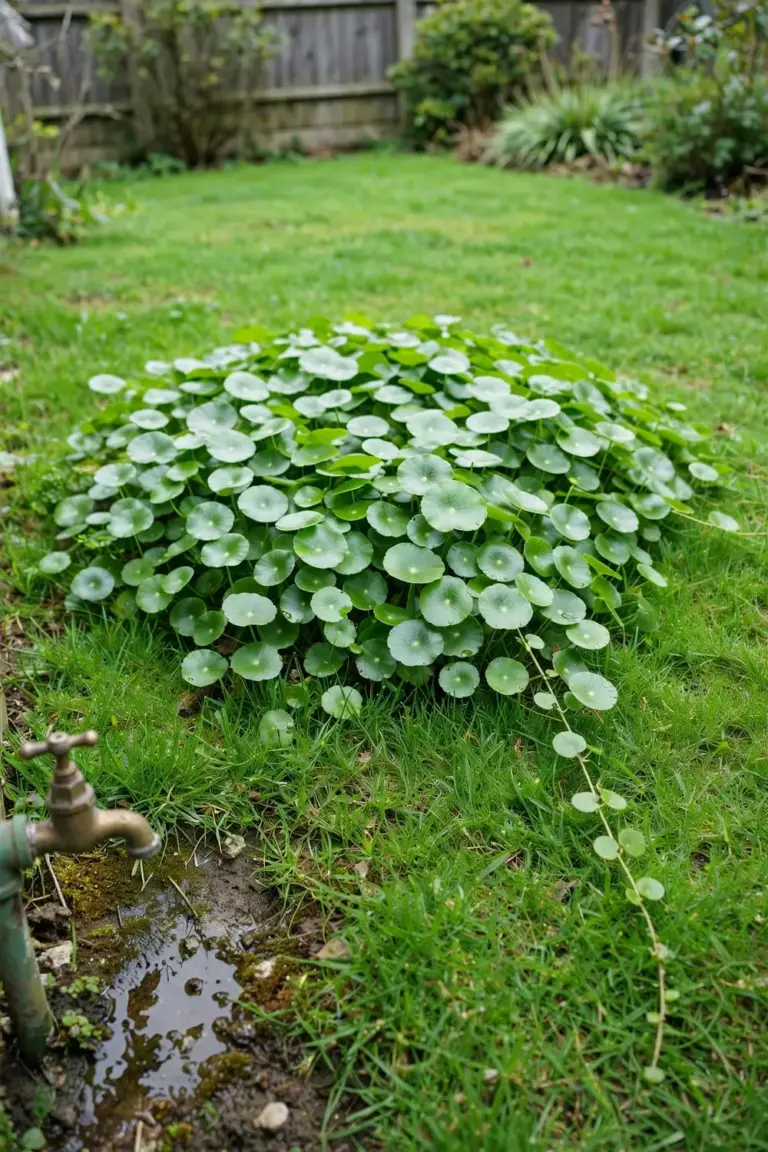

You cannot drought-proof a lawn. No grass stays green through a long dry summer without water, and no product changes that fact. What you can do is learn how to drought-proof your lawn in Australia with deep watering, high mowing, and a planned rest in dormancy, and a dormant lawn needs only one small drink every 3 to 4 weeks to keep its crowns alive. The rest of this page is 8 moves, from the honest answer to the seasonal survival plan.
I have learned that the lawn I let go brown in summer comes back greener than the one I kept half-watering through the dry weeks.
1. Accept the Honest Answer: No Lawn Is Drought-Proof
No lawn is drought-proof. The word promises a lawn that never needs water, and no grass keeps that promise. Drought-proof means a lawn that survives drought, and survival is the real goal. A lawn that goes brown and comes back after rain did its job. A lawn that stays green through a drought on heavy watering did not beat the drought. It drank through it.
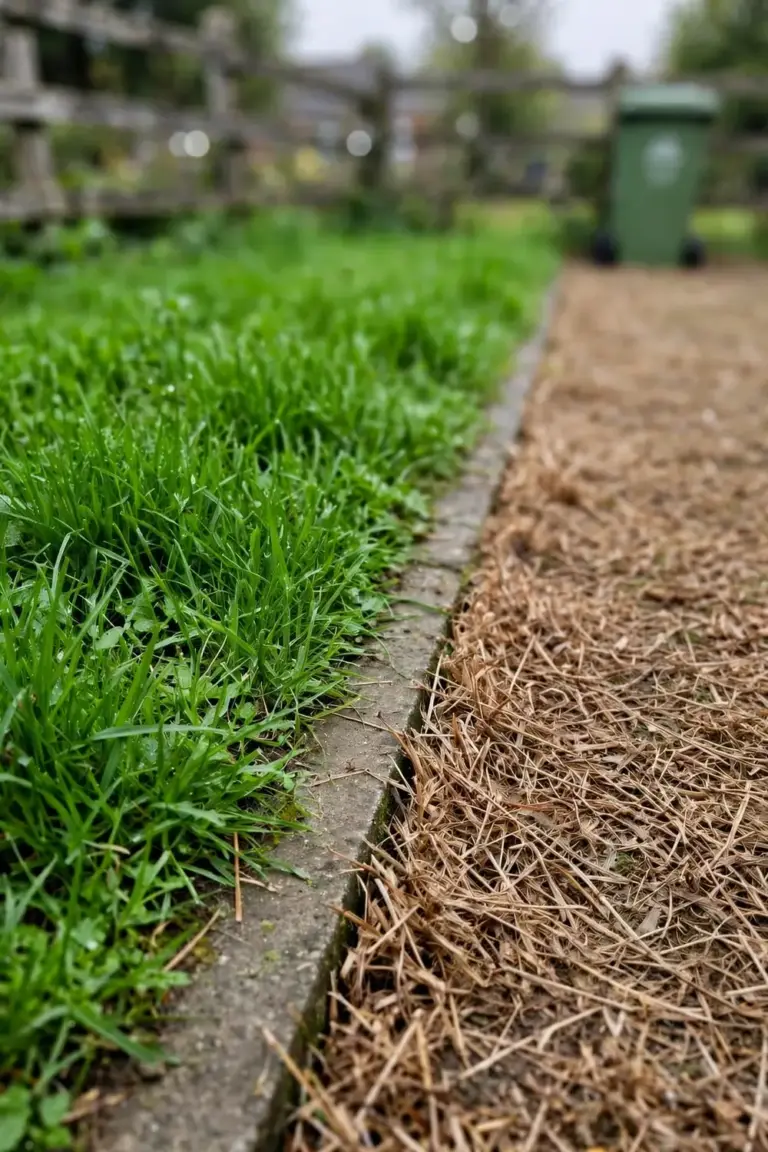
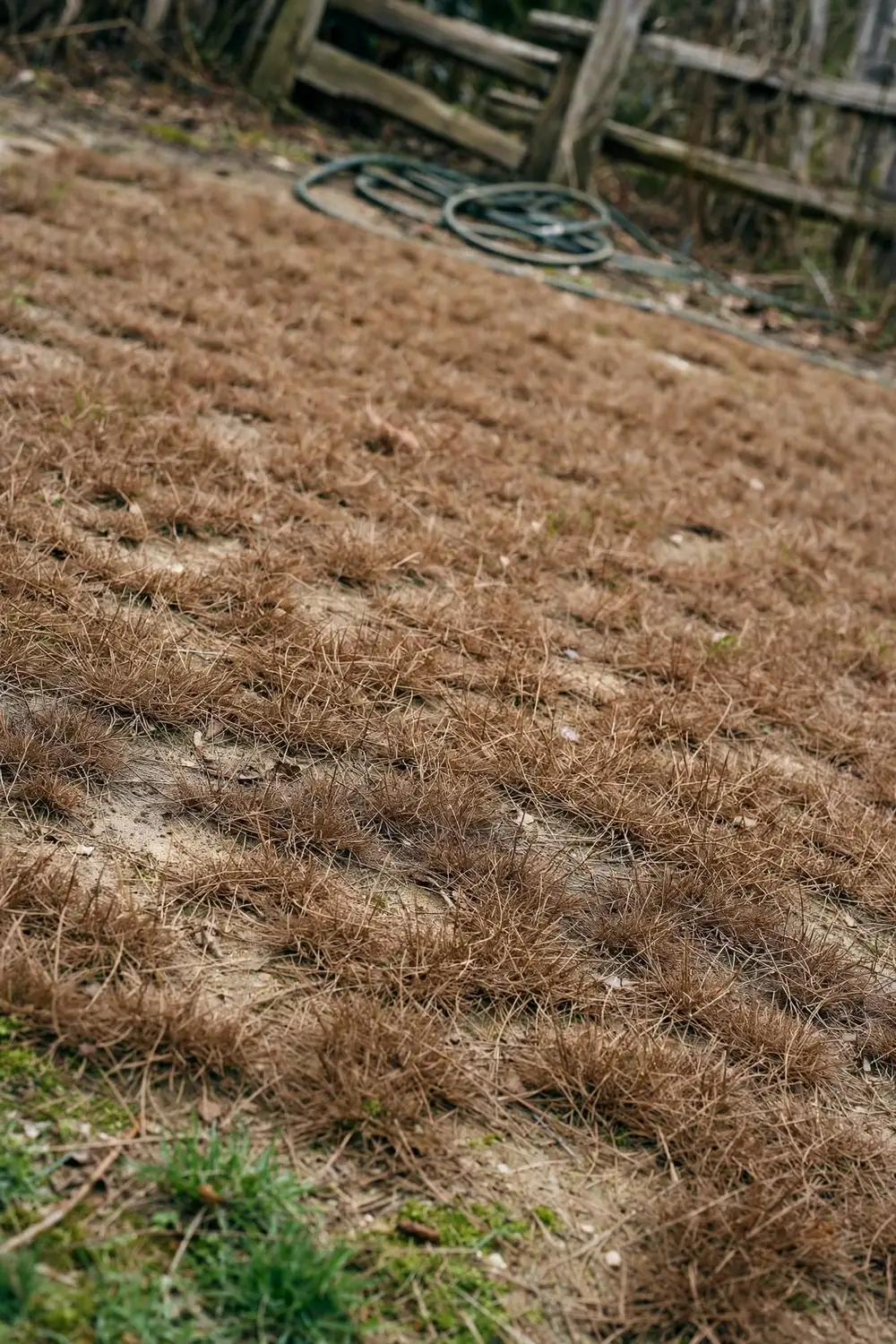
Dormancy is the lawn’s survival tool. Dormancy means the grass stops growing and browns, and the roots stay alive. The crown is the growing point at the base of each plant, and the crown stays alive while the leaves rest. Water the crown and the lawn returns. Dry the crown out and the lawn dies. Every move here protects the crown.
Pick one lane before summer starts, and hold it all season. Lane one keeps the lawn green with full watering, week after week, no matter how hot it gets. Lane two lets the lawn go dormant and gives it small drinks to keep the crowns alive. The worst choice is the middle lane: a little water every few days pulls the lawn out of dormancy, then the next dry week punishes the fresh growth. Commit to green or commit to brown. A lawn that rests stays alive. A lawn that keeps waking up and drying out burns its reserves.
Drought hits grass in a fixed order. Leaves lose water first and fold to cut evaporation. Growth stops next, because the plant spends its energy on survival instead of new blades. Roots shrink after that, because a plant that cannot feed its roots lets the deepest ones die back. The crown sits last in line, and the crown decides whether the lawn returns. Every move here protects the crown by slowing the losses above it: shade the soil, deepen the roots, open the soil, and rest the plant.
2. Tell Dormancy From Death With the Tug Test
A brown lawn is usually dormant. Brown leaves are the normal sign of dormancy, and brown alone never means the lawn is dead. Dormant grass looks dead and feels dry, and the roots hold firm. Dead grass pulls up with no resistance and the crown crumbles. Learn the difference before you spend money on rescue products.
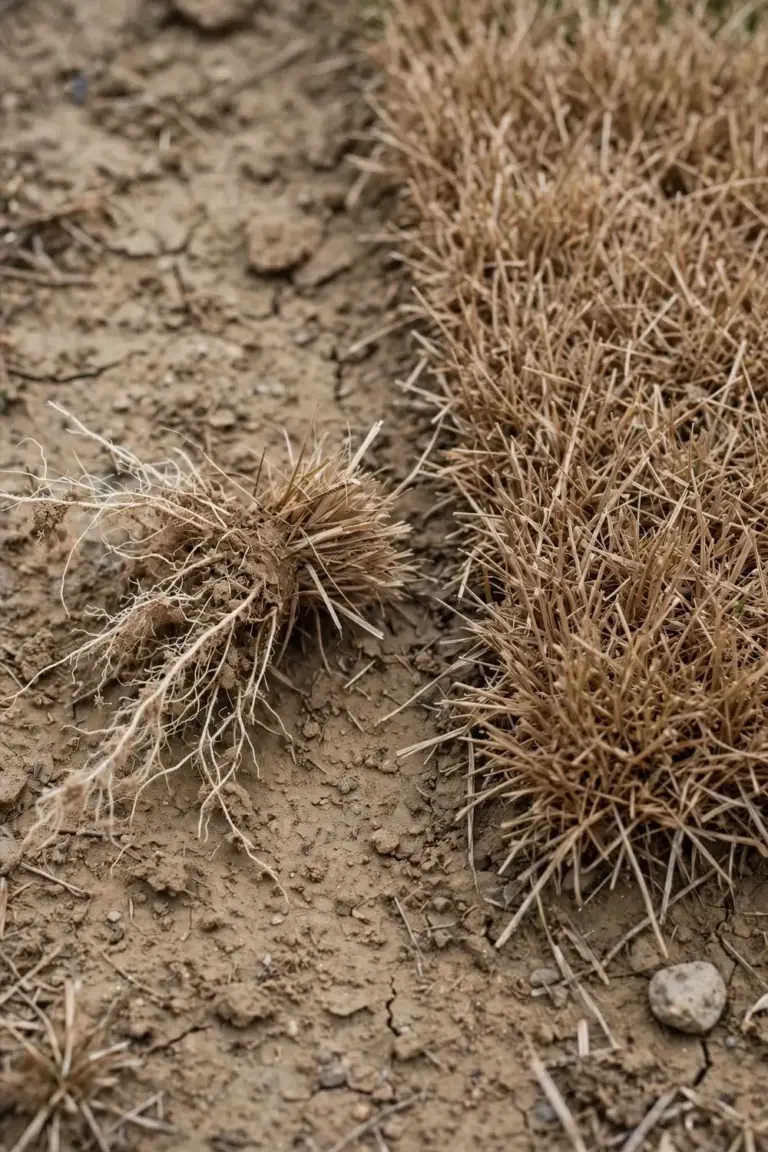
| Sign | Dormant | Dead |
|---|---|---|
| Leaf color | Straw brown, even across the patch | Patchy gray brown with bare soil showing |
| Tug test | Roots grip the soil and resist a firm tug | Plants lift out with no root resistance |
| Crown | Crown at the base feels firm and moist | Crown feels dry and crumbles when pinched |
| Soil | Soil holds some moisture below the surface | Soil is powder dry all the way down |
| Recovery | Green returns from the crown after rain | No green returns after rain |
Run the tug test on three spots: one green edge, one brown middle, one worst patch. Grip a small handful of blades close to the soil and pull with steady force. Dormant grass resists. Dead grass comes away in your hand. The test takes two minutes and beats any guess from a photo.
Walk the lawn in the heat of the day and read the footprints. Healthy grass springs back after foot traffic. Stressed grass holds the footprint, and the blades stay flattened for minutes after you pass. University of Nebraska Extension describes this footprint test as an early drought signal, along with a grayish-blue cast on the blades before browning starts. Footprints plus a blue-gray cast mean the lawn wants water soon. Footprints plus straw-brown leaves mean the lawn already rests.
North Carolina State Extension researchers found that tall fescue recovered after 40 days without any water, and most cultivars survived 48 days without water. The grasses grew back from the crown when watering resumed. That finding sets the frame for this whole guide: brown is a rest, and the crown is the part that matters.
3. Water Deep and Infrequent to Train Deep Roots
Deep watering trains deep roots. Shallow watering trains shallow roots. A lawn that gets a light sprinkle every day grows roots in the top few centimeters of soil, and those roots dry out first. A lawn that gets a deep soak once a week grows roots that chase water down, and those roots reach moisture that surface watering never touches.
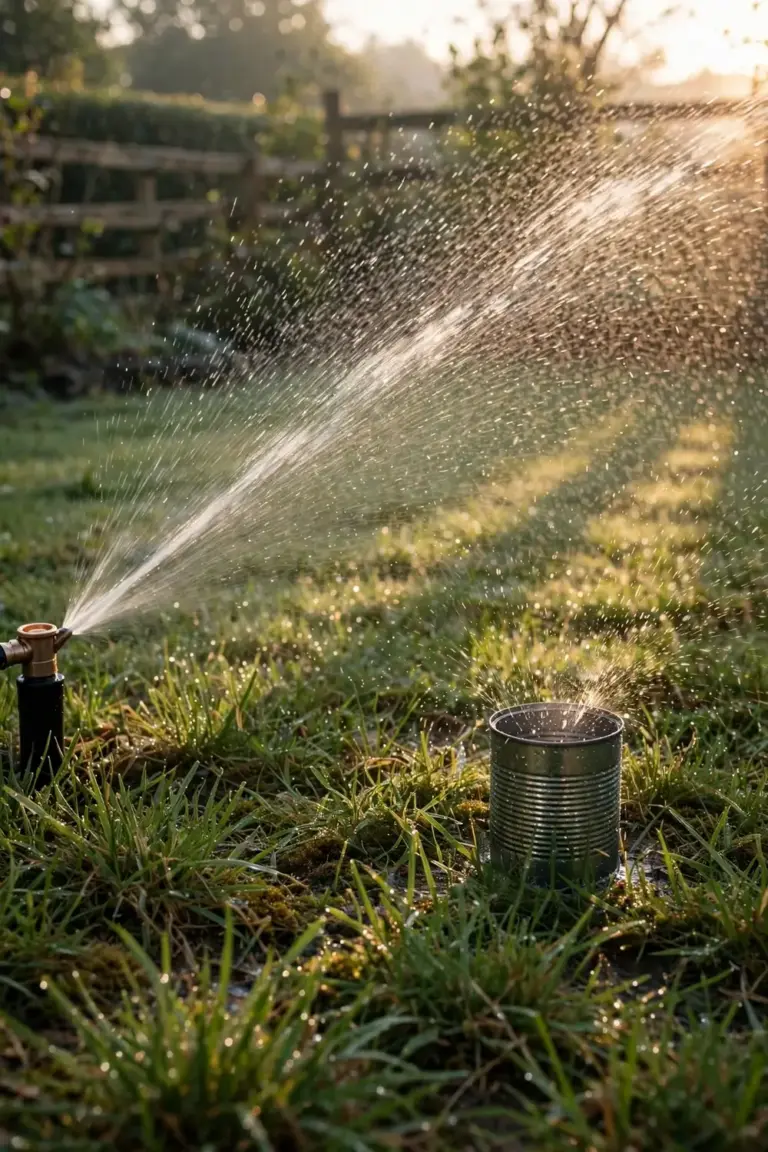
Water early in the morning. Early watering loses the least water to evaporation and gives the leaves the day to dry. Evening watering leaves the leaves wet all night, and wet leaves invite disease. Move the sprinkler before puddles form. Water running down the path means the soil stopped absorbing, and the rest of that session is waste.
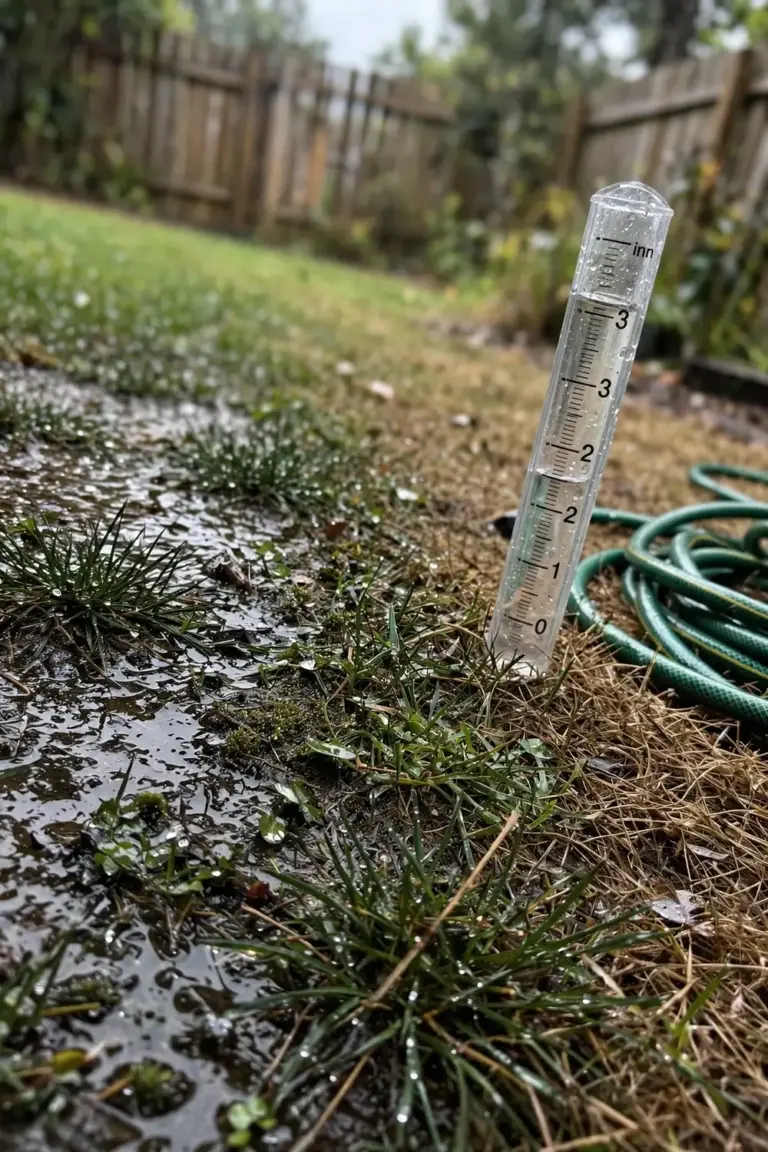
Measure what you apply. Set out a few straight-sided cans and run the sprinkler until the cans hold the depth you want. A rain gauge does the same job across the season and tells you what the sky gave between sessions. Count rainfall toward your weekly total, because a storm that drops a deep soak replaces an irrigation session. Utah State University Extension states that most turfgrass performs better when irrigation is applied less frequently and more deeply, and that avoiding frequent shallow irrigation matters most during drought because shallow watering increases water loss and weakens the turf over time. That rule is the backbone of drought watering: fewer sessions, deeper each time, and no daily sprinkle.
Clay soil needs cycle-and-soak. Clay accepts water slowly, and a long session runs off before the soil absorbs it. Water until runoff is about to start, then stop. Wait half an hour for the water to soak in. Then water again until the cans hold the depth you want. Two short cycles beat one long session on clay, and the same method works on slopes. Sandy soil takes water fast and loses it fast, so sandy lawns need the full depth in one session and dry out sooner between sessions.
Check your local water rules before you set any schedule. Council restrictions override every number here.
4. Mow High and Leave the Clippings
Mow high through a drought. Tall blades shade the soil, and shaded soil loses less water to evaporation. Tall blades also feed deeper roots, because the plant balances leaf area against root depth. A scalped lawn has shallow roots and bare soil, and bare soil bakes. Raise the mower to its highest setting when the dry weeks start, and leave it there until the rain returns.
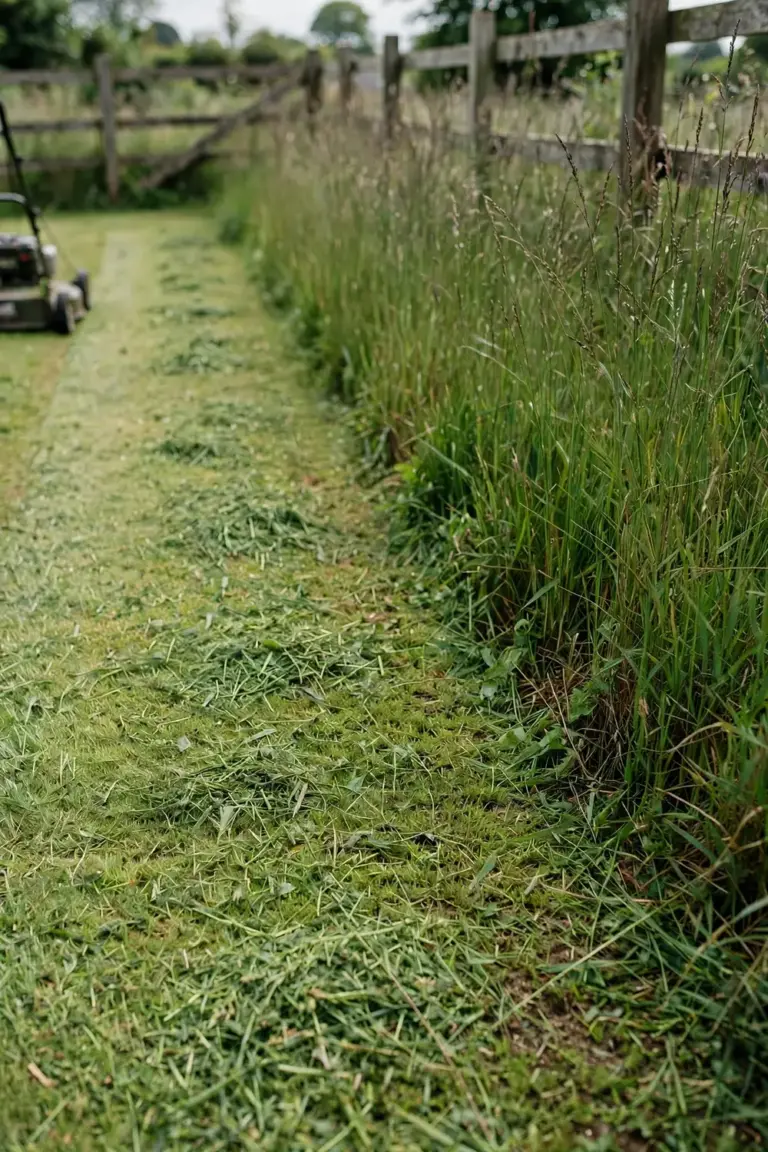
Follow the one-third rule. Never remove more than one-third of the blade in a single mow. Cutting a tall lawn down to stubs in one pass shocks the plant and opens the soil to sun. If the grass grew long during a wet week, take it down in two passes a few days apart. A sharp blade matters more in drought than in any other season, because a torn blade loses more water than a clean cut.
Leave the clippings on the lawn. Clippings return moisture and nutrients to the soil and shade the surface between mows. Bagging clippings in a drought throws away free mulch. Skip the bag and let the clippings fall. Mow less often in a drought, and skip mowing entirely once the lawn goes dormant. A mower on dormant turf crushes crowns that are already stressed. When the lawn rests, the mower rests too.
Hold the fertilizer. Do not push nitrogen into a drought-stressed lawn. Nitrogen forces soft new growth that needs water the lawn does not have, and that growth burns first. The spring fertilizer timing guide sets the feeding calendar for the growing season; summer drought is not a feeding window. Feed in the growing season, never in the dry weeks.
Warm-season grasses carry the Australian summer better than cool-season grasses. Buffalo, Kikuyu, Couch, and Zoysia all grow through heat that shuts cool-season grasses down. Buffalo holds its color longest under shade and moderate drought. Kikuyu grows hard and recovers fast when water returns, and it invades garden beds if you let it. Couch goes dormant fast and comes back fast, and it handles traffic better than the others. Zoysia grows slowly and needs less mowing, and it fills in slowly after damage. Know which grass you own before you judge its drought behavior, because each one browns and recovers on its own schedule.
5. Fix Hydrophobic Soil With a Wetting Agent
Water sometimes refuses to enter the soil. The surface beads, puddles, and runs off, and the lawn stays dry underneath. That soil is hydrophobic. Hydrophobic means the soil particles carry a waxy coating that repels water, and the coating builds up from decomposing organic matter and long dry spells. Sandy soils show it first, and any lawn can develop it after weeks without rain.
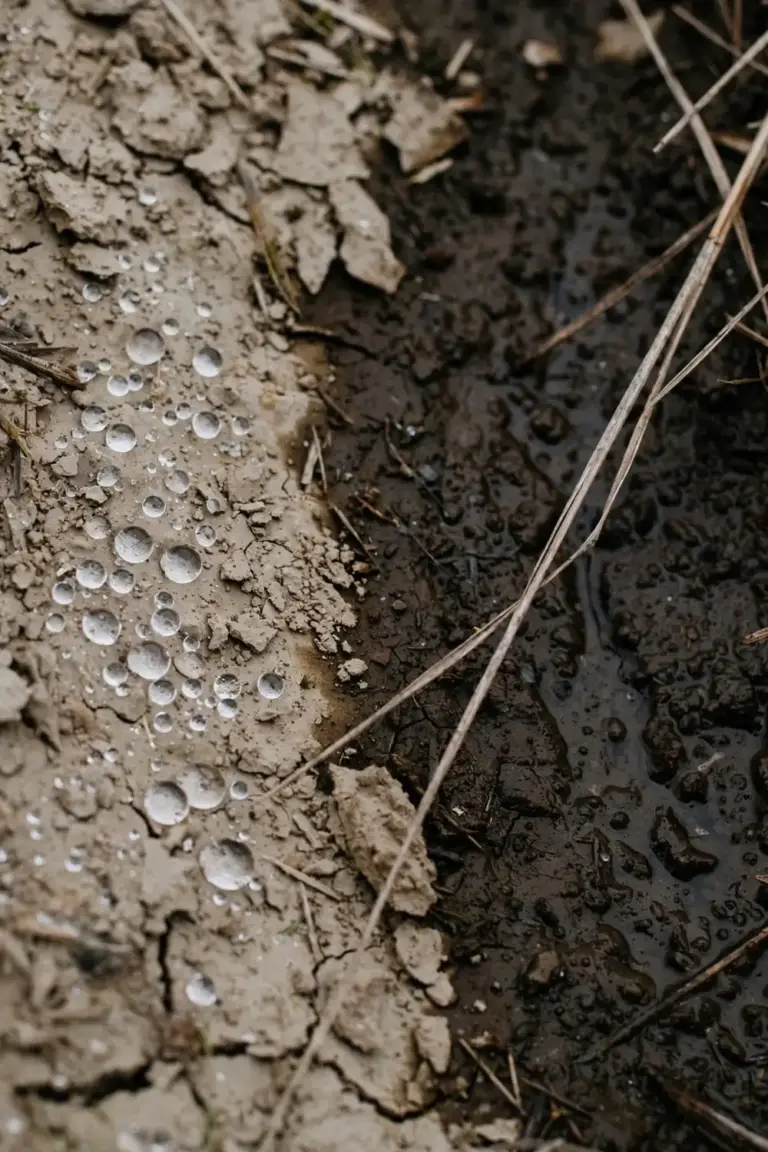
Test for it with a cup of water. Pour a cup slowly onto a dry patch and watch. Water that soaks in within a minute means the soil still wets. Water that beads and runs off means the patch is hydrophobic. A test patch that repels water tells you the rest of the lawn faces the same problem, because repellency builds evenly across soil that shares the same history.
A wetting agent fixes the repellency. A wetting agent is a surfactant, and a surfactant lowers the surface tension between water and soil. One end of the surfactant molecule grips the waxy coating on the soil particle, and the other end draws water close. Water then enters the soil instead of running off. The surface layer carries the worst repellency, so treat the whole patch, not just the dry center. Apply the wetting agent to dry soil, then water it in with a deep soak so the surfactant reaches the root zone.
A wetting agent is a helper, not a rescue. It makes the water you apply reach the roots, and it does nothing on its own. A hydrophobic lawn that gets a wetting agent and no water stays dry. A lawn that gets water without a wetting agent wastes half the session to runoff. Pair the two. Apply the wetting agent first, then water deep, and repeat on the label schedule through the dry weeks.
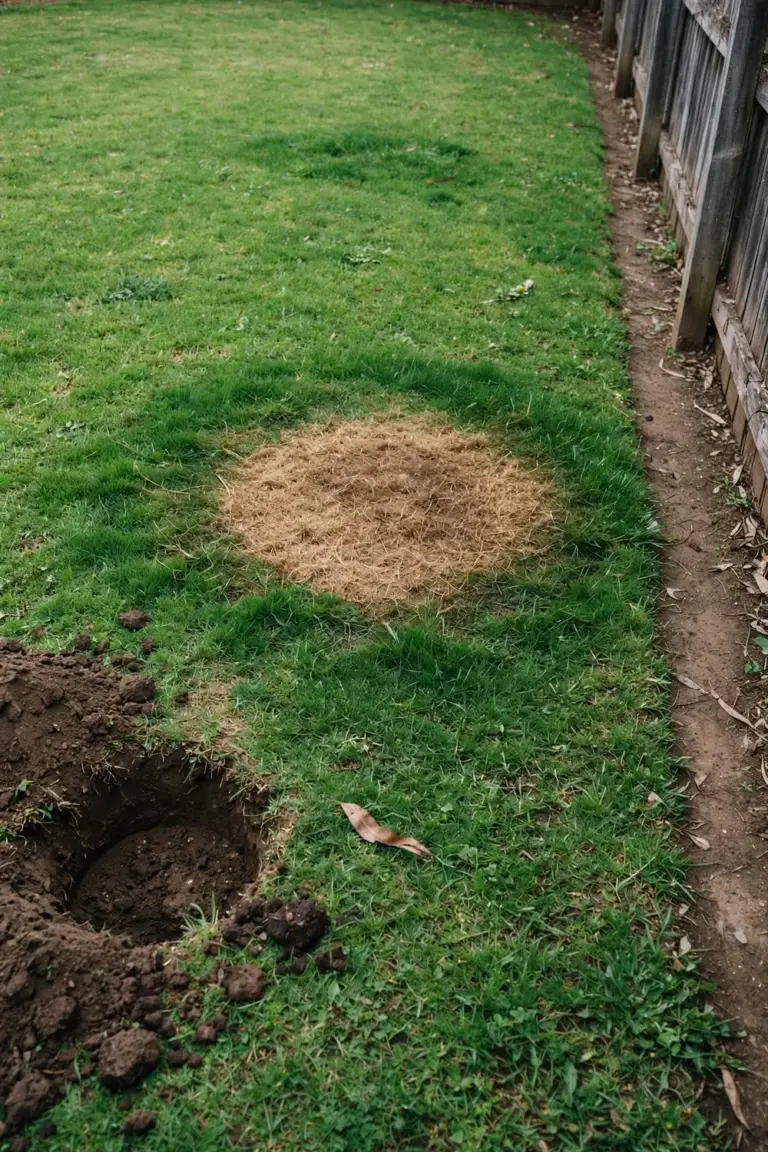
Watch for localised dry spot. Localised dry spot means patches of turf wilt and discolor while the rest of the lawn stays green, because hydrophobic soil forms in patches instead of evenly. The pattern is the clue: round patches that ignore normal watering, while the surrounding grass responds. A wetting agent applied to the patch plus a deep soak fixes most cases. A patch that stays brown after wetting and watering needs the tug test from section 2, because the cause may be grubs, disease, or a dead crown rather than dry soil.
6. Aerate Compacted Soil Before Summer
Compacted soil starves roots of air and water. Foot traffic, mowing, and clay soil press the soil particles together until air and water cannot move through. Roots in compacted soil stay near the surface, and shallow roots feel every dry week first. Aeration opens the soil so water reaches the roots and roots grow deeper.
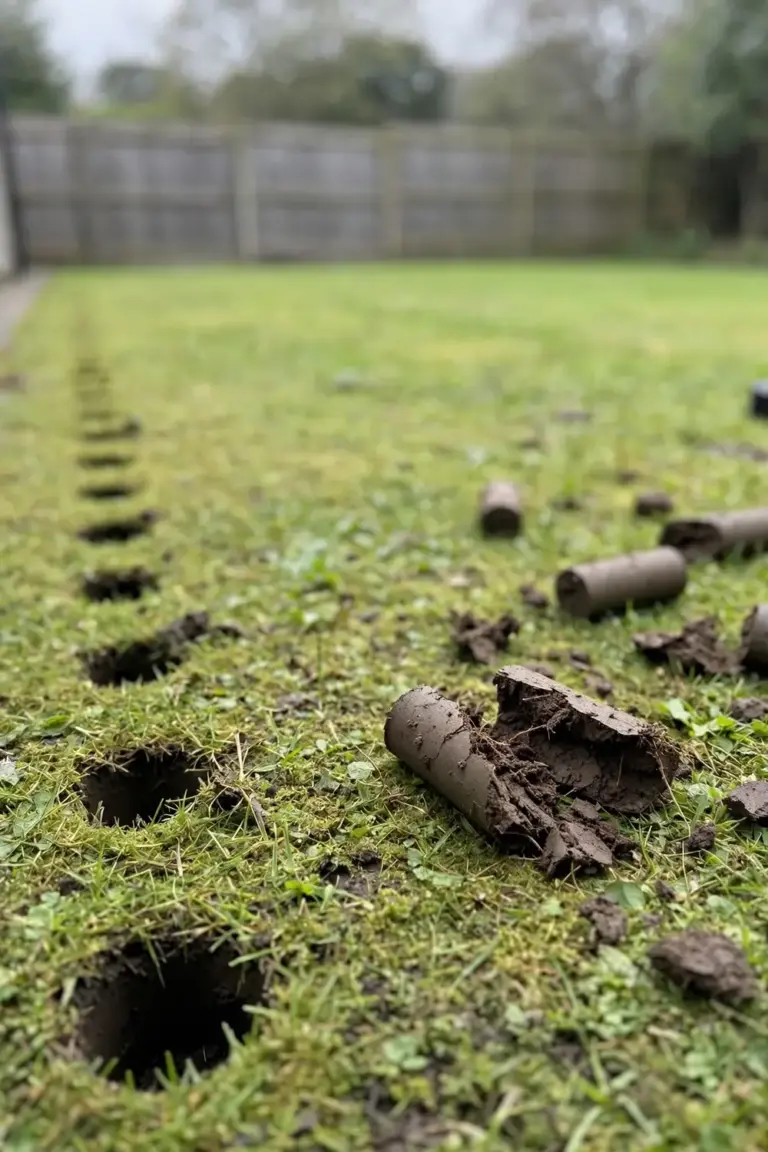
Core aeration pulls small plugs of soil out of the lawn and leaves holes that fill with air and water. Clemson Extension states that core aeration increases the lawn’s drought tolerance due to enhanced root growth, and that it reduces water runoff while it increases water infiltration and percolation. The holes let a deep soak reach the root zone instead of running off the surface. The grass then fills the holes with new roots, and the lawn grows denser.
Aerate when the grass grows actively, before the dry weeks arrive. Spring growth suits Buffalo, Kikuyu, Couch, and Zoysia. Aerate into moist soil so the tines reach full depth, and leave the plugs on the lawn. The plugs break down in a few days and act as a light topdressing. Building soil health carries the long work of soil structure, and aeration is the fastest single step in that work. One aeration before summer beats any rescue product applied after the lawn browns.
Skip aeration once the lawn goes dormant. Tines through dormant turf tear crowns that are already stressed, and the holes dry the soil further. Aeration is a preparation move, not a drought move. Do it in the growing season, then let the lawn rest.
Mark what sits under the lawn before you aerate. Sprinkler heads, irrigation lines, and shallow cables all sit in the path of the tines. A tine through a sprinkler head costs more than the aeration saves. Flag every head with a small stake, and keep the machine a hand span clear of each one. Water the lawn deeply two days before aerating if the soil is dry, because tines punch deeper and cleaner into moist soil than into baked clay.
7. Treat Seaweed as a Tonic, Not a Rescue
Seaweed extract is sold as a stress tonic for lawns. The claim is that seaweed helps grass handle heat and drought. The published extension guidance does not quantify a drought benefit for seaweed on home lawns, and no number here rests on seaweed. Data not available for a dose that changes drought survival. Treat seaweed as an optional tonic, never as a substitute for water.
Use it only inside a watering program that already works. A seaweed spray on a lawn that gets deep soaks and high mowing adds a small possible benefit at a small cost. A seaweed spray on a lawn that gets no water adds nothing. The water does the work. The tonic rides along.
Watch for products that promise drought-proof results from a bottle. No bottle drought-proofs a lawn. A product that claims to end watering is selling the promise this page rejects in section 1. Spend the money on a rain gauge and a wetting agent instead. The gauge tells you what the sky gave. The wetting agent makes your water count.
Read the label before you buy any tonic. The label names the active ingredients, the dilution, and the application interval. A tonic with no named actives and no interval is a guess in a bottle. A tonic that names kelp extract and a dilution gives you something testable. Apply at the label dilution, never stronger, because a double dose does not double any benefit and it can burn stressed leaves. Keep the receipt and the label, and judge the product by the lawn next month, not by the promise on the front.
8. Run the Seasonal Survival Plan
A drought plan runs on seasons, not on panic. Prepare in spring, protect in summer, and recover in autumn. The lawn that enters summer with deep roots, open soil, and a full crown survives the dry weeks. The lawn that enters summer scalped, compacted, and fed with nitrogen struggles from the first hot week.
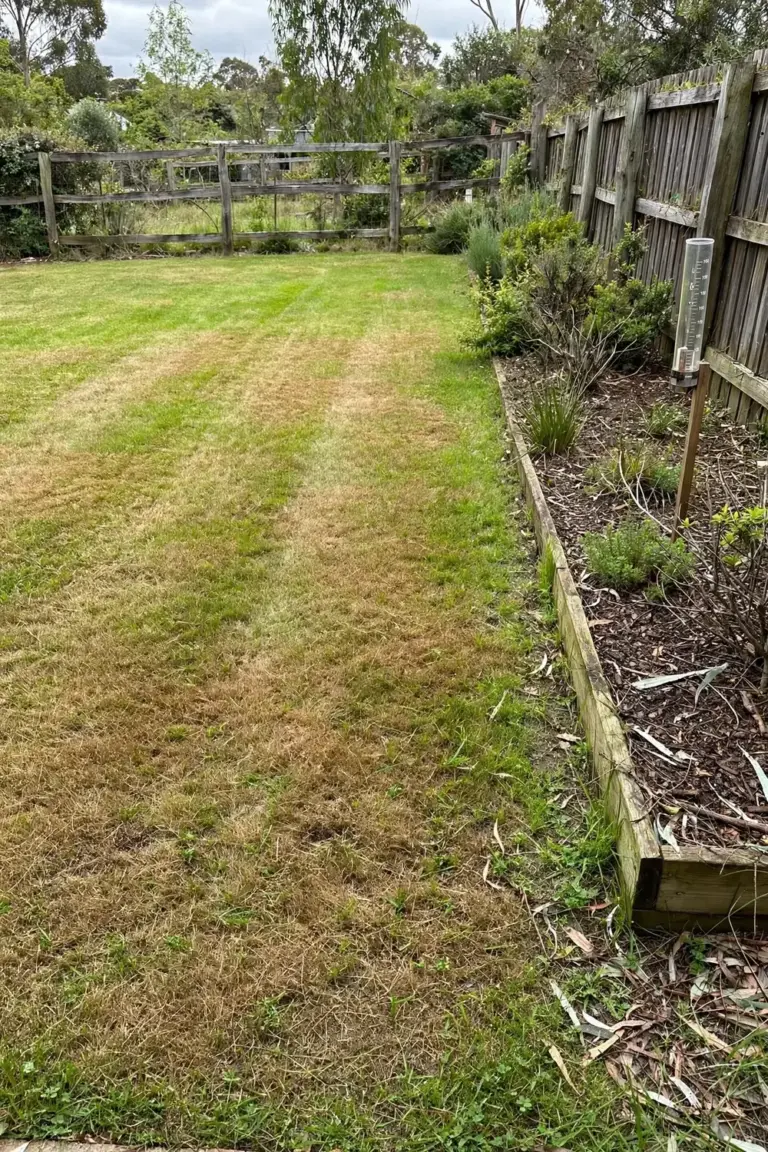
Spring preparation sets the whole season. Aerate compacted soil. Raise the mowing height. Fix hydrophobic patches with a wetting agent. Water deep and infrequent so roots grow down before the heat arrives. Hold nitrogen once the dry weeks start. Check the thatch layer while you work: a thatch layer thicker than a finger joint sheds water and starves roots, and a core aeration pass breaks it up.
Summer protection follows one rule: keep the crowns alive. A green lawn gets a deep soak once a week, early in the morning, measured with cans. A dormant lawn gets a small drink on a schedule. Iowa State University Extension advises watering a dormant lawn if dry weather has held for 4 to 6 weeks, applying 2.5 to 3.8 cm of water in a single application, then repeating about every 4 weeks. That drink will not turn the lawn green, and it is not meant to. It keeps the crowns and roots alive until the rain returns. If restrictions ban irrigation, the dormant lane is your only lane, and the small crown drinks above still fit inside most restriction rules because they use far less water than a green-lawn program. Check the council rules at the start of summer and again after any change, because restriction stages move with dam levels and the fine for breaking them outweighs any lawn.
Extension guides differ slightly on the dormant drink. North Carolina State Extension advises about 1.3 cm every 3 to 4 weeks for dormant lawns. Iowa State advises 2.5 to 3.8 cm about every 4 weeks. The shared rule matters more than the gap: a small drink, weeks apart, that keeps crowns alive without greening the lawn. Pick one schedule and hold it. Switching between schedules wakes the lawn and wastes the water.
Autumn recovery starts when rain returns and nights cool. Water the lawn back to green with deep soaks. Resume mowing at the high setting. Feed only when the grass grows actively again, and give the lawn two full weeks of steady growth before you judge the recovery. Bare patches that stay bare after two weeks of water need seed or turf, while patches that green from the crown need only time. Overseed bare patches only after the lawn wakes fully, because seed on dormant turf wastes seed. The lawn that rested through summer returns from the crown. Give it water, time, and a sharp mower, and it fills back in.
Frequently Asked Questions
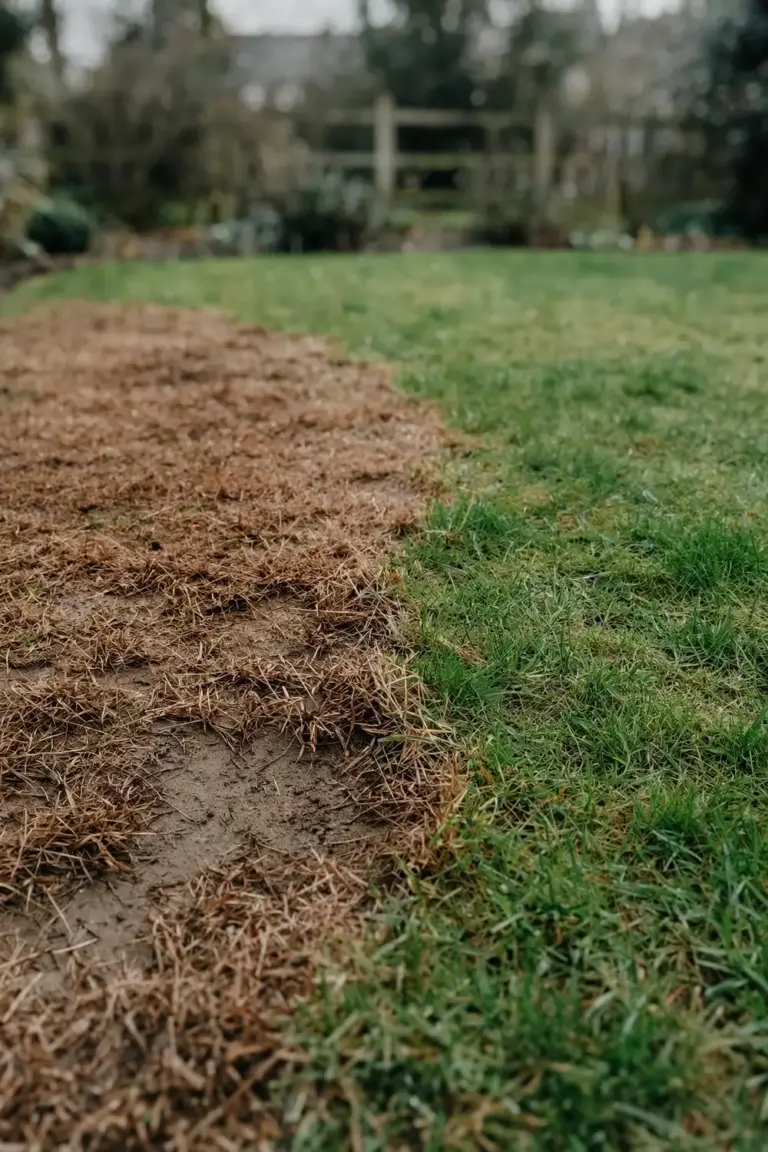
Most established lawns survive a summer dry spell by going dormant, and the crown stays alive while the leaves rest. North Carolina State Extension researchers found tall fescue recovered after 40 days without water, and most cultivars survived 48 days. A dormant lawn still needs a small drink every 3 to 4 weeks to keep crowns alive. A lawn that gets no water at all for months risks crown death, and dead crowns never green up.
Yes, give a dormant lawn a small drink on a schedule. The drink keeps the crowns and roots alive without waking the lawn. Iowa State Extension advises 2.5 to 3.8 cm in a single application after 4 to 6 weeks of dormancy, then about every 4 weeks. North Carolina State Extension advises about 1.3 cm every 3 to 4 weeks. Pick one schedule and hold it. Light watering every few days wakes the lawn and burns its reserves.
Yes. Tall blades shade the soil surface, and shaded soil loses less water to evaporation. Tall blades also feed deeper roots, because the plant balances leaf area against root depth. Utah State University Extension states that a higher mowing height helps shade the soil surface, reduce evaporation, and support deeper rooting. Raise the mower to its highest setting when dry weeks start, follow the one-third rule, and skip mowing once the lawn goes dormant.
No, a wetting agent alone saves nothing. A wetting agent is a surfactant that lowers the surface tension between water and soil, so water enters hydrophobic soil instead of running off. It makes the water you apply reach the roots. A lawn that gets a wetting agent and no water stays dry. Pair the wetting agent with a deep soak, apply on the label schedule, and repeat through the dry weeks. Test hydrophobic patches with a cup of water first.
Gray water rules sit with your local council, so check before you divert any bucket. Gray water means household water from showers, baths, and laundry, and councils set which sources count and how the water must reach the lawn. Never use kitchen water or water that carries bleach, disinfectants, or strong detergents, because those chemicals burn leaves and soil life. Apply gray water to the soil, not the blades, and rotate it with fresh water so salts never build up.
A brown lawn is dead when the crown fails the tug test. Grip a handful of blades close to the soil and pull with steady force. Dormant grass resists because the roots still grip the soil. Dead grass lifts out with no resistance, and the crown crumbles when pinched. Check three spots: one green edge, one brown middle, one worst patch. Brown leaves alone never mean death. Dormancy is a rest, and the lawn returns from the crown after rain.
Start With One Deep Soak This Weekend
Walk the lawn with a cup of water and a firm tug. Test one dry patch for hydrophobicity. Test three spots for dormancy. Then water deep once, early in the morning, and measure the depth with a can. One deep soak, one high mow, and one decision about the lane: green or dormant. Write the lane on the calendar so the next dry week does not reopen the question. The lawn that rests through summer comes back from the crown. Give it water, time, and a sharp mower, and it fills back in.