
Pick one orchid that fits your climate, pot it in bark, water it when the pot feels light, and repot it every 2 years. That is growing orchids in Australia in one sentence. I have learned that the orchid I water when the pot feels light outlives the orchid I water on a schedule. The rest of this page is 10 moves, from matching the type to your climate to cutting the spent spike.
Start with the type. Buy one plant. Learn its rhythm before you buy five more. Orchids reward patience and punish fussing. A single healthy plant teaches watering, light, and feeding faster than a shelf of struggling ones ever will.
1. Match the Orchid to Your Australian Climate
Match the type to your climate band, and the orchid grows with your weather instead of against it. Australia holds four orchid climates: tropical north, subtropical coast, temperate south, and arid interior. Most garden orchids fit the first three. The arid interior suits almost none outdoors.
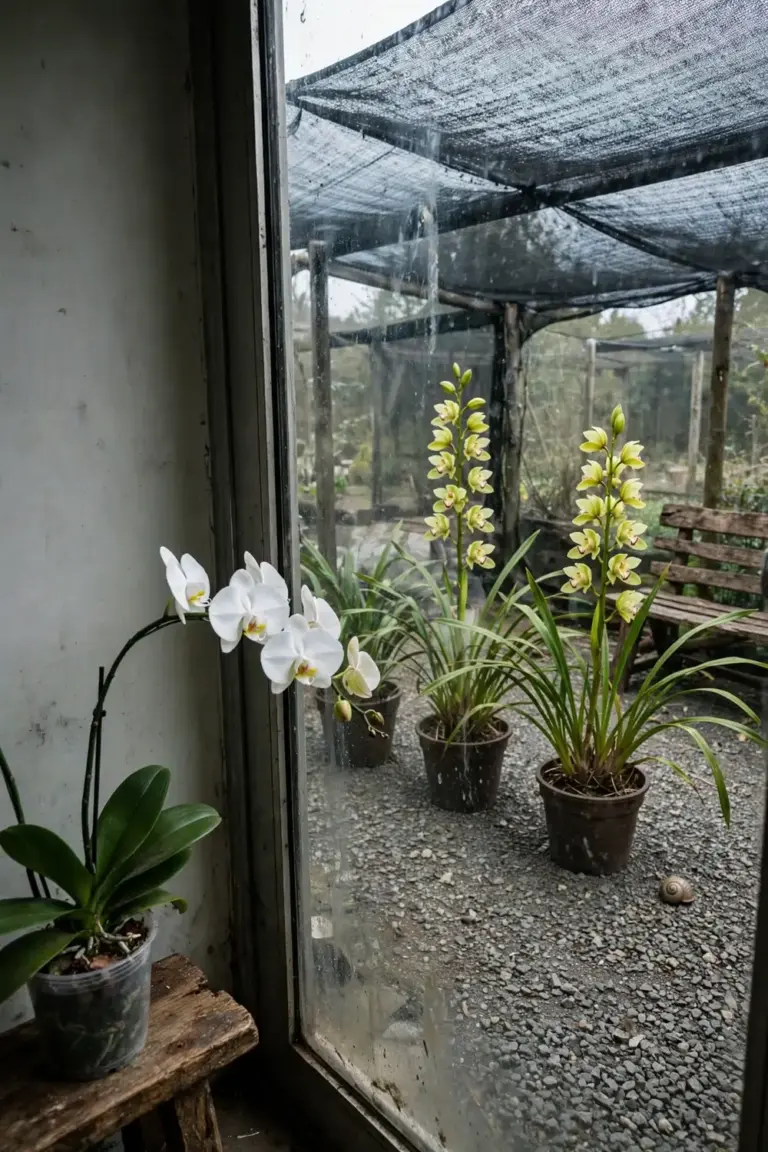
The orchid family, Orchidaceae, holds 800 genera and 20,000 species, according to Kew’s Plants of the World Online. Most orchids in cultivation are epiphytes, growing on trees rather than in soil, and their roots carry a spongy outer layer called velamen that absorbs water and nutrients from rain and air. Orchid seeds carry no stored food, so germination depends on symbiotic mycorrhizal fungi, which is why home growers buy plants and never seed.
Pick from the table below. One row is enough for your first plant.
| Type | Best Australian Setting | One Key Need |
|---|---|---|
| Phalaenopsis (moth orchid) | Indoors everywhere | Steady warmth and bright indirect light |
| Cymbidium | Pots outdoors, Sydney south | Cool autumn nights to set spikes |
| Dendrobium | Warm zones, shadehouse or bright indoors | Bright light and warm days |
| Oncidium | Bright indoors or shadehouse | Bright light and steady moisture |
| Cattleya | Bright shadehouse or indoors | Strong light and drying between waterings |
| Native terrestrial orchids | Garden beds in suitable zones | Nursery-grown plants suited to your district |
Cymbidium is the outdoor orchid for the temperate south. Cymbidiums are the most common orchids grown in Victoria, according to the Orchid Society Council of Victoria. Phalaenopsis is the indoor orchid for every state, flowering on a windowsill in Hobart and in Darwin alike because the house holds its warmth. Brisbane and Perth suit shadehouse growing for most types, with summer shade and winter sun. Canberra and the highlands need frost protection for every outdoor orchid, since one frosty night blackens buds.
Outdoor cymbidiums in garden beds sit in a mound of orchid mix, not in garden soil. A bark mulch layer over the mound holds moisture and keeps the mix cool. Read what mulching does for moisture retention before you mulch the mound, because a thick wet layer against the pseudobulbs rots them.
Australia also grows native terrestrial orchids. These grow in soil, not on trees, and they follow local seasons. Buy nursery-grown natives suited to your district. Never dig a wild orchid. Wild plants carry fungi and legal protections that a garden plant never should, and a dug plant usually dies. A nursery plant arrives with roots that already suit a pot.
2. Give Epiphytes Bark, Not Soil
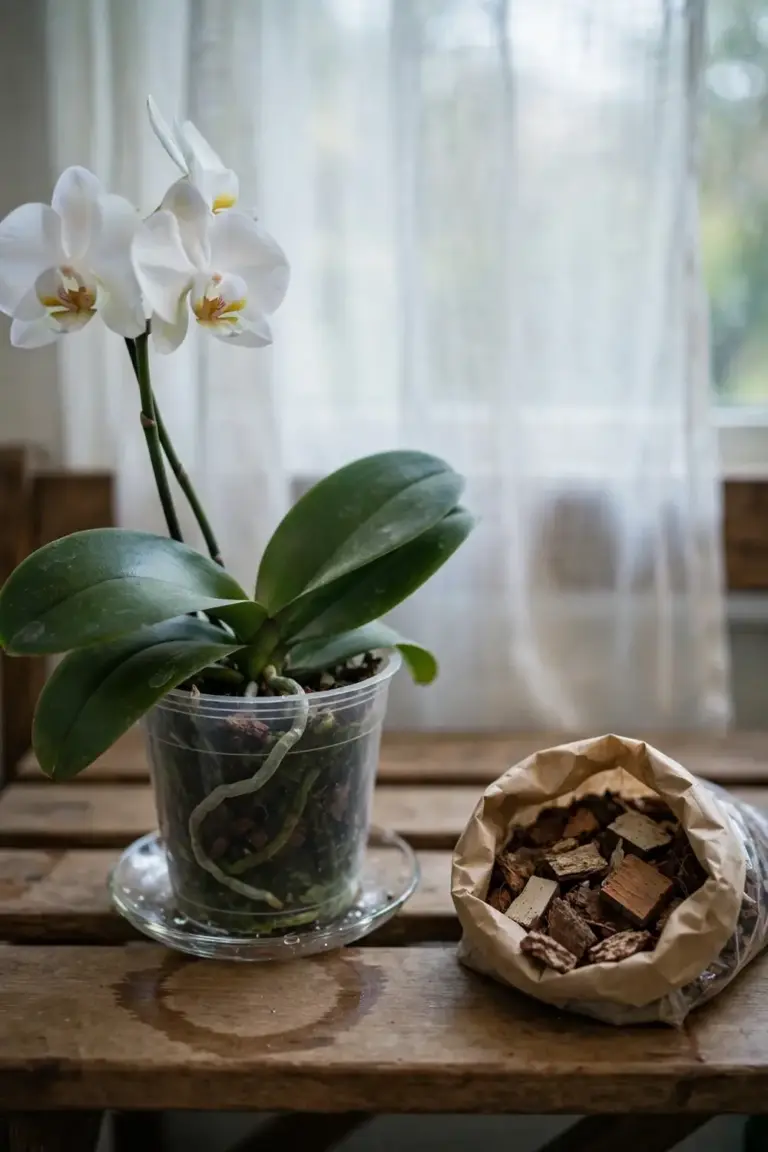
Pot epiphytic orchids in bark, not soil. Soil holds too much water and too little air. Epiphyte roots need air around every root. Bark gives them air and drains fast.
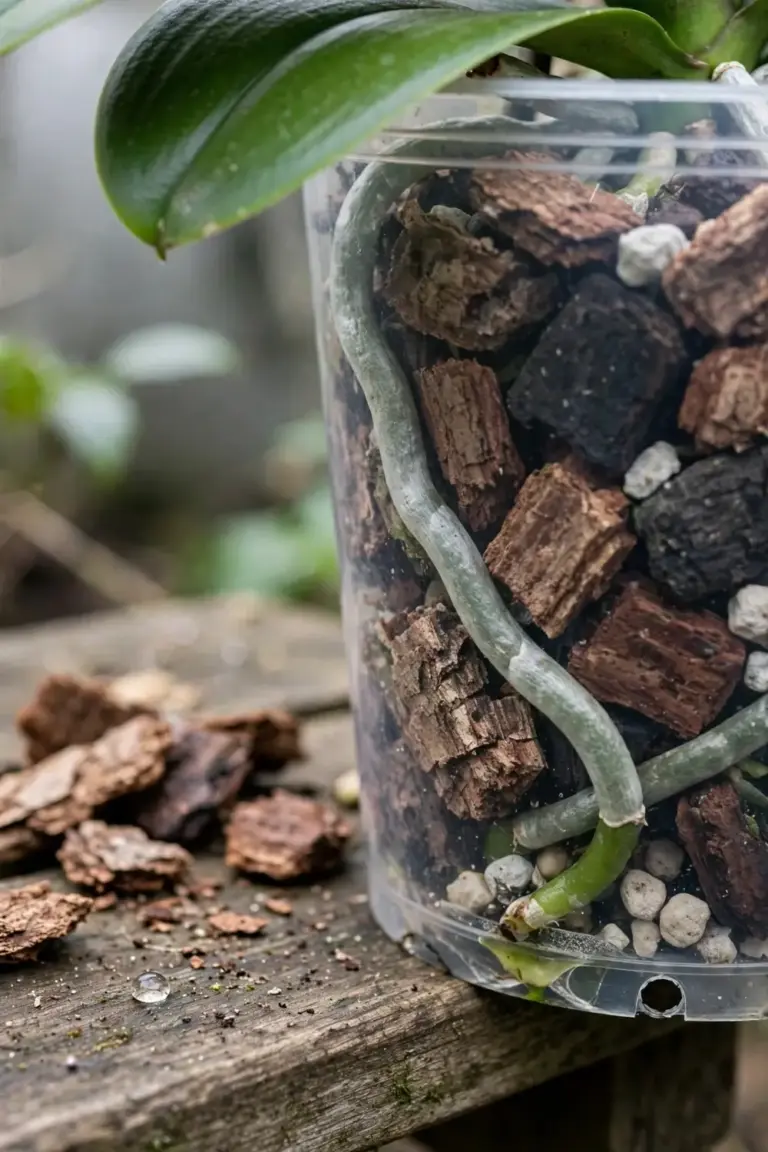
Most orchids are epiphytes, grown in fir or redwood bark, crumbled charcoal, pebbles, or on cork plaques, according to Ohio State University’s orchid guide. Terrestrial orchids take a regular mix, and saprophytes need a high-organic mix. Whatever the type, the pot must drain freely and the mix must hold air, because a pot with one small hole and a saucer that stays full kills the roots.
The bark mix is not soil, and the rules of building soil health do not apply inside an orchid pot. Soil health builds living soil for garden beds. An orchid pot holds a support material, not a living soil. Keep the two jobs apart.
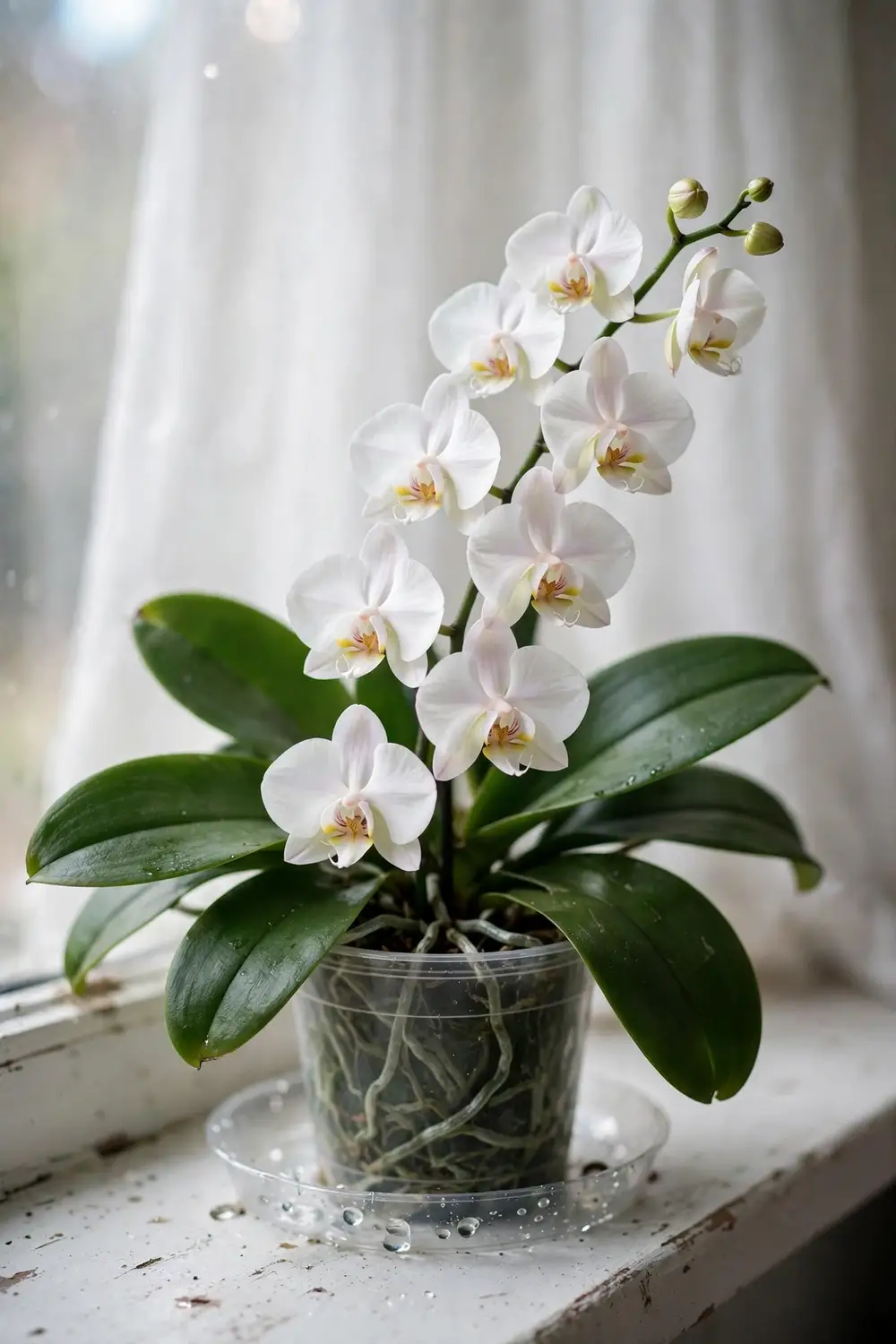
Choose a clear plastic pot for your first Phalaenopsis. Clear plastic shows the roots. Silver roots mean dry. Green roots mean moist. Clay pots breathe better and dry faster. Both work. Drainage holes matter more than pot material.
3. Water When the Pot Feels Light
Water when the pot feels light and the mix nears dryness. More orchids die from overwatering than from underwatering. Overwatering leads to root rot and many other diseases and pests, according to Ohio State University’s orchid guide. Wet roots rot. Rotted roots cannot drink. The plant then wilts in a wet pot, which fools growers into watering again.
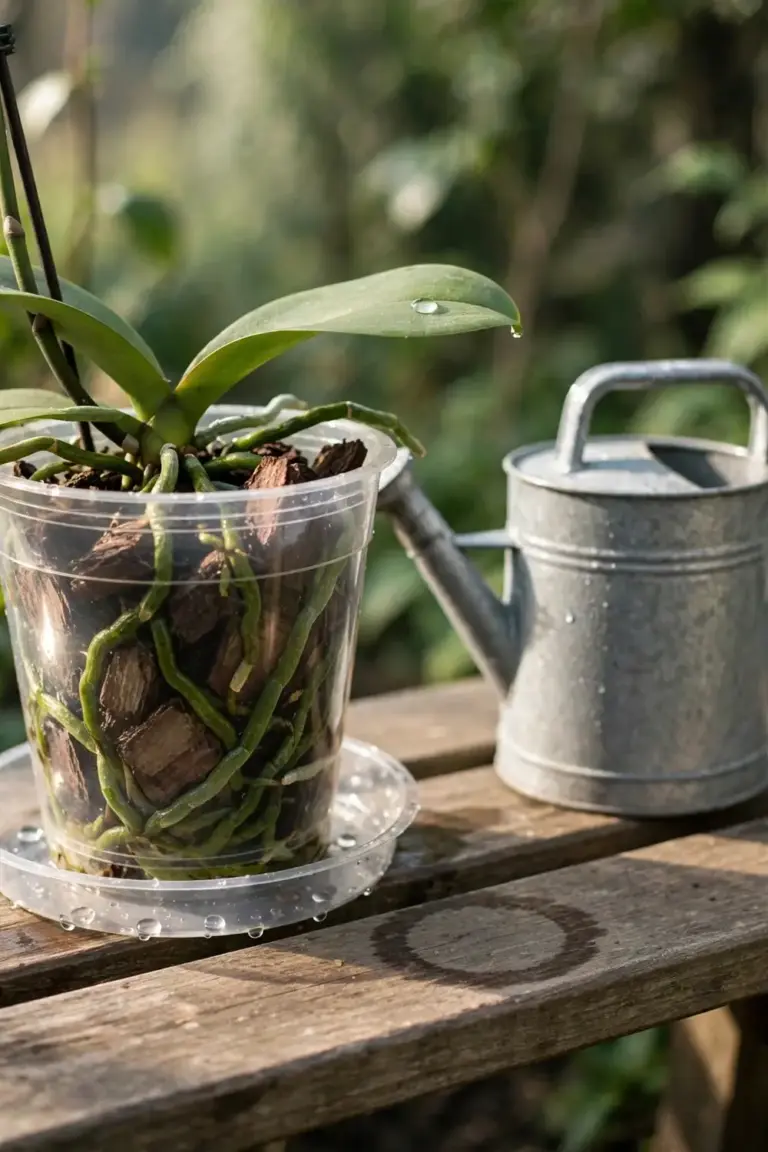
Water as the mix approaches dryness, preferably in the mornings on sunny days. Morning watering lets the leaves dry before night. Wet leaves overnight invite rot. Clean water with a pH around 7 is best. Most orchids tolerate a pH between 5 and 8.5. Water with a lower or higher pH or with high levels of dissolved minerals can prevent nutrient uptake.
Lift the pot to decide. Lifting the plant is one of the best ways to determine the moisture inside a pot, according to the American Orchid Society. A light pot needs water. A heavy pot waits. Fully grown Phalaenopsis in 20 cm pots may need weekly watering even under warm and bright conditions. Seedlings in 5 to 8 cm pots may need repeated waterings during any one week. Small pots dry faster than large pots.
Water until it runs freely from the drainage holes. Empty the saucer. Never leave the pot standing in water. Rainwater suits orchids where your tap water runs hard or salty. If you use chlorinated tap water, let it stand in an open jug overnight before watering. Room-temperature water beats cold water straight from the tap, and a morning watering beats an evening one because the leaves dry before night.
4. Feed Weakly, Weekly in the Growing Season
Feed weakly and weekly while the orchid grows. Orchids are light feeders. A weak solution at every watering feeds steadily without burning roots. A strong dose once a month burns root tips.
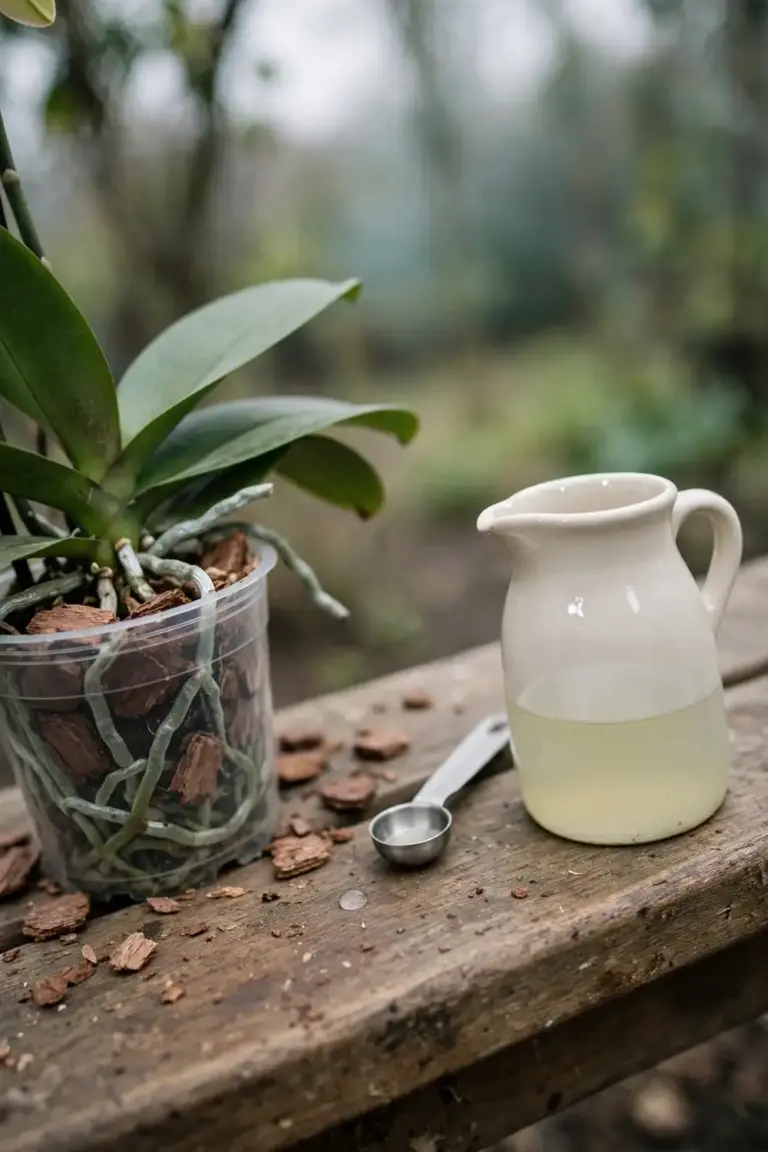
Most species are light feeders, according to Ohio State University’s orchid guide. Give 50 to 100 parts per million nitrogen three times weekly. Give Phalaenopsis 200 parts per million nitrogen. Flush with pure water every fourth watering to prevent salt accumulation. Use high-phosphorus and high-potassium fertilizers before and during flowering.
The American Orchid Society recommends fertilizer every one to two weeks in summer and every three weeks to monthly during winter, according to its Phalaenopsis guide. Use a dilute solution of half a teaspoon of fertilizer per gallon of water. Fertilize only when the potting mix is moist. Dry roots burn at the tips when they meet fertilizer salts. Growers call the routine weakly, weekly: one quarter of the label strength at every watering, with a plain-water flush once a month, per orchid-society culture sheets.
Match the feed to the season. Feed hardest in spring and summer, when new growth appears. Ease off in winter, when growth slows. A plant that is not growing needs little food. Extra fertilizer never forces a resting plant to grow. It only salts the mix.
Watch for salt buildup. White crust on the mix surface or brown root tips mean salts are accumulating. Flush the pot with plain water until it runs clear from the drainage holes. Skip the next feed. A monthly plain-water flush prevents the problem. Bark holds little fertilizer after watering, so light and frequent feeding beats rare and strong feeding.
5. Give Bright Light Without Direct Sun
Give bright light without direct sun. Most orchids prefer indirect or filtered light. The rule of thumb is to provide as much light as the leaves can take without burning, usually 50 percent shading, according to Ohio State University’s orchid guide. Bright light drives flowering. Direct midday sun scorches leaves.
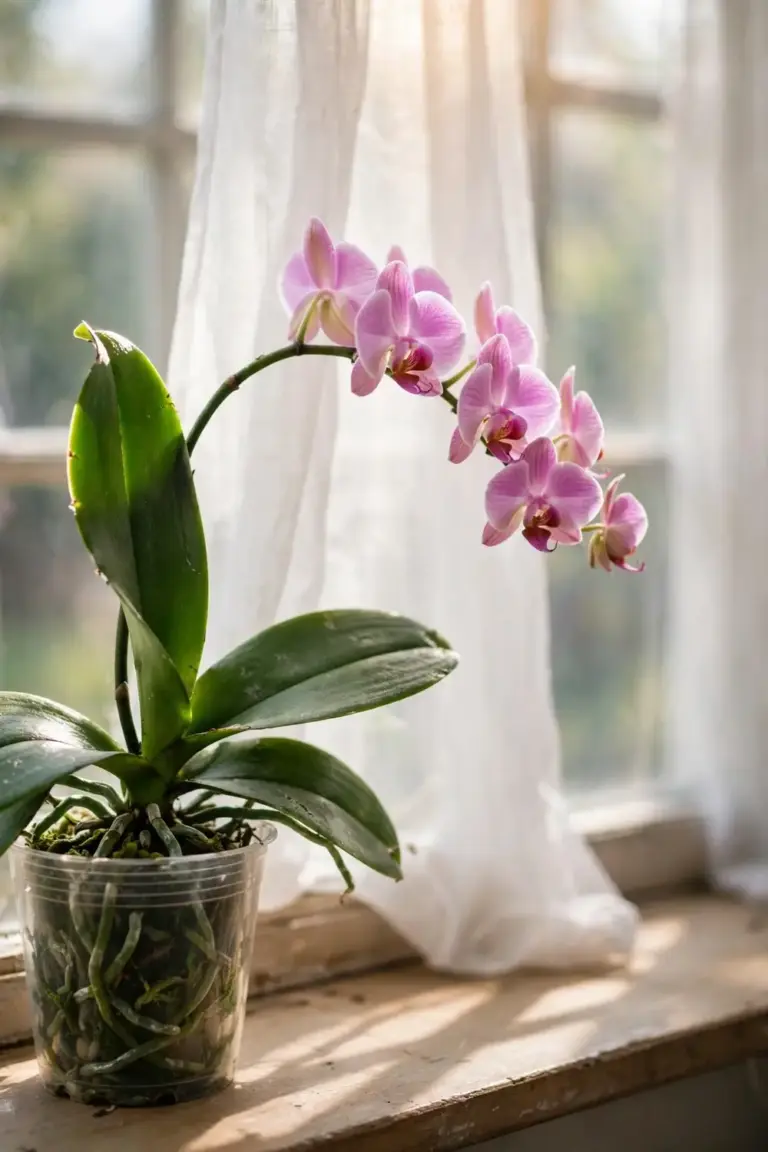
Read the leaves. Plants with enough light have short, plump stems with bright green leathery leaves. Plants with too much sun turn yellowish, stunted, and scorched. Plants under too much shade grow darker green, soft and succulent leaves with thin, spindly stems. Leaf color is your light meter. Golden green means enough light for a Cymbidium. Dark green means too much shade.
An east-facing window suits Phalaenopsis indoors, since morning sun is gentle and a shaded south window works too. A west window needs a sheer curtain in summer, and a north window in Australia faces the sun, so it needs shading in summer as well. If natural light runs short in winter, a grow light fills the gap. Read how to choose grow lights for indoor gardens before you buy one, because the wrong spectrum grows leaves without flowers.
Move outdoor plants with the seasons. Shadehouse plants need more shade in summer and more light in autumn. Cymbidiums need high light to flower. A shadehouse covered with 50 percent shadecloth suits them, according to the Orchid Society Council of Victoria. Plants under heavier shade grow almost as well but flower poorly. In summer, add a second layer of shadecloth over the roof when the sun turns harsh, and remove it again as autumn light softens.
6. Drop Night Temperatures to Trigger Flowering
Drop night temperatures to trigger flowering. Most orchids need a lower night temperature for strong growth and often to initiate bloom. Warm days alone grow leaves. Cool nights switch the plant to flowering.
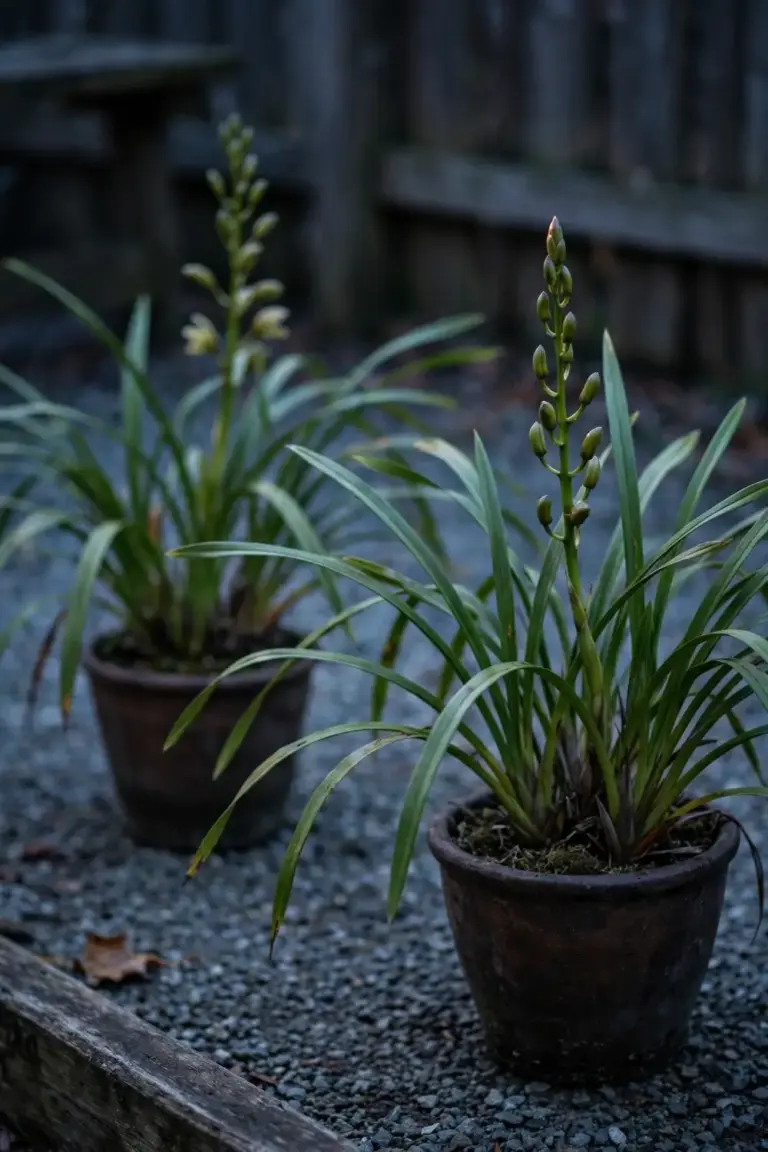
Orchids fall into three temperature bands, according to Ohio State University’s orchid guide. Warm species prefer days up to 32 degrees Celsius and nights of at least 18 degrees. Intermediate species prefer 27-degree days and 16-degree nights. Cool species prefer 24-degree days and 13-degree nights. Know your plant’s band before you chase flowers.
Cymbidium is the clearest case. Night temperatures in late summer to autumn must sit between 10 and 15 degrees Celsius to initiate flower spikes, per Highlands Orchid Society culture notes. Winter nights of 7 to 12 degrees and days of 18 to 24 degrees suit the plants. When plants carry buds, hold temperatures as steady as possible between 12 and 24 degrees. A Sydney autumn delivers those nights outdoors. A heated living room does not.
Phalaenopsis needs a milder drop. Move it to a cooler room at night in autumn, aiming for a gap of 5 to 8 degrees between day and night to wake the spike. Keep the plant away from heaters and cold drafts. Steady warmth with no night drop grows leaves year after year and never a spike. If your house holds one temperature all year, a cool laundry or a sheltered veranda at night does the job for a few autumn weeks.
7. Cut the Spent Spike the Right Way
Cut the spent spike after the last flower falls. A clean cut redirects the plant from seed-making to new growth. A ragged cut invites rot.
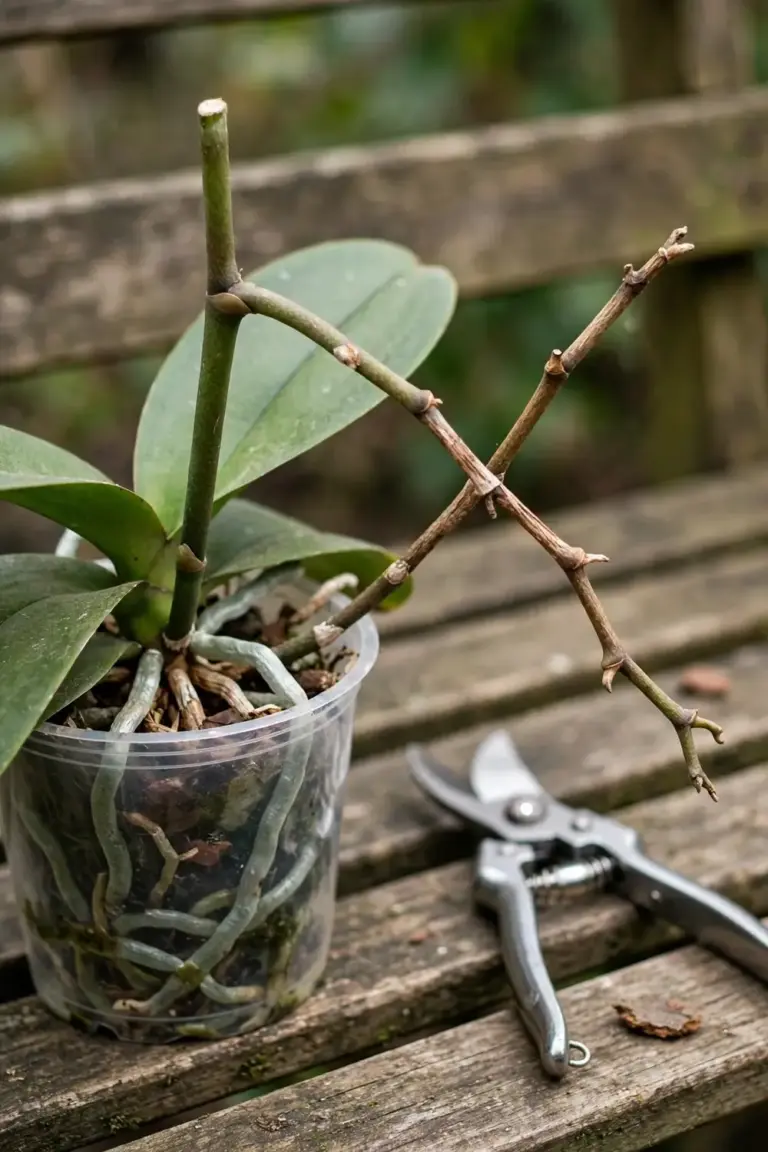
Phalaenopsis offers two cuts. Cut the spike to the base when the plant looks tired. The plant then rests and grows a stronger spike next season. Cut above the second node when the plant looks strong. One of those nodes often pushes a new branch and flowers again within 8 to 12 weeks, per the American Orchid Society novice guide as adapted by The Orchid Patio. A branch bloom is smaller than a fresh spike bloom. Both cuts work. The base cut suits a plant with yellowing leaves. The node cut suits a plant with firm green leaves.
Sterilize the blade before you cut. Wipe scissors or secateurs with rubbing alcohol, cut cleanly, and let the wound dry in air. Dab nothing on the wound. Never tear the spike off by hand, because a torn wound rots faster than a clean cut.
Cymbidium spikes get the base cut. Cut the finished spike at the pseudobulb. Leave no stub. A stub rots and draws pests. Divide the plant after flowering if the pot is full, and repot the divisions in fresh mix. Each division needs at least three healthy pseudobulbs to flower well next season. A single backbulb division may grow, but it takes years to reach flowering size, so keep divisions generous.
8. Keep Pests and Rot Off Your Orchids
Keep pests and rot off with dry leaves, moving air, and a weekly look. Prevention beats cure on orchids. Most orchid pests arrive on new plants or in still, wet air.
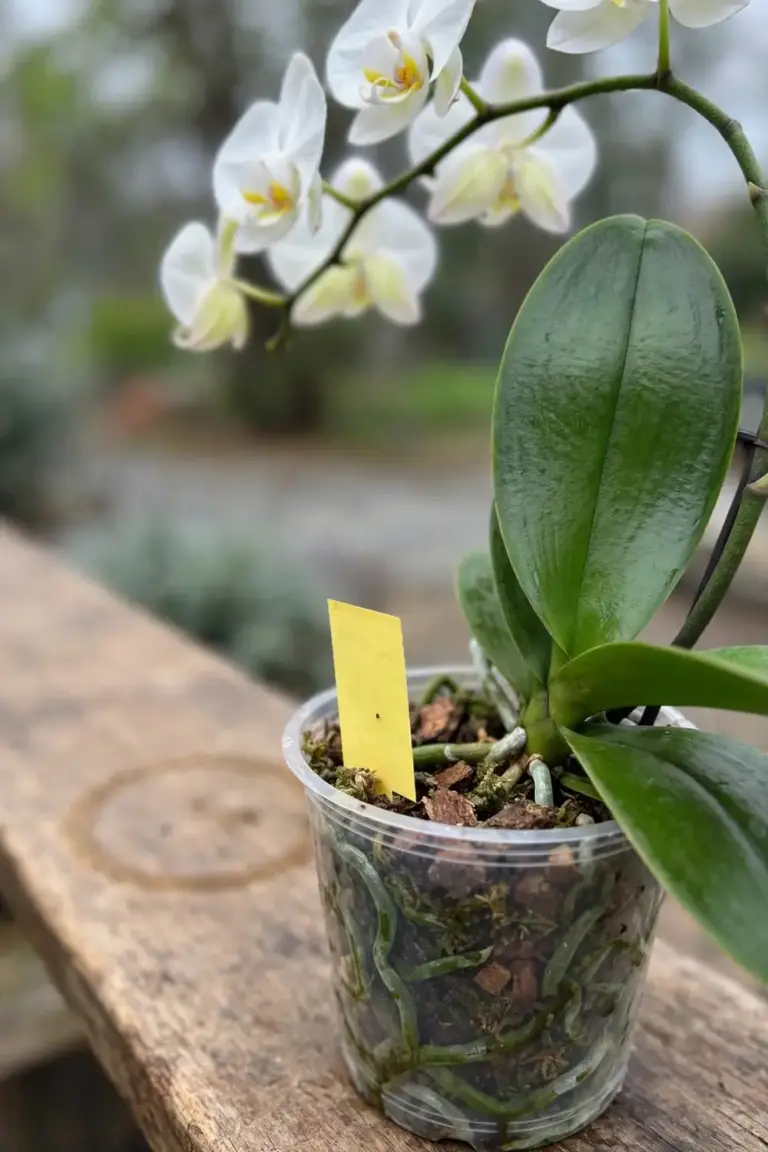
Root rot is the first enemy, and overwatering causes it. Soggy mix suffocates roots until they turn brown and mushy. The plant then wilts in a wet pot. Repot into fresh bark, trim the dead roots with a sterile blade, and water less. A plant with no live roots rarely recovers, so start again with a healthy plant.
Botrytis spots flowers in saturated air. Relative humidity near 100 percent lets moisture sit on plants and flowers, according to the American Orchid Society. Those conditions suit Botrytis cinerea, which spots and ruins countless Phalaenopsis flowers. Keep humidity in the 50 to 60 percent band. Move air with a fan. Never mist flowers at night.
Snails and slugs eat Cymbidium buds. They hide under the rim of the pot and come out at night, according to the Orchid Society Council of Victoria. Check under rims after rain. Pick them off by hand. Snail bait around the pots helps where hand-picking fails.
Fungus gnats hover over wet mix. Monitor with yellow sticky cards. If more than a few appear on the cards, Bt or predatory mites control them, according to Ohio State University’s orchid guide. Dry the top of the mix between waterings. Gnats breed in wet surfaces.
Viruses have no cure. Cymbidium mosaic virus spreads through sap on shared tools. Read how cymbidium mosaic virus spreads in orchids before you share secateurs between plants. Sterilize tools between plants. Discard a virus-infected plant. No spray cures a virus.
Mealybugs and scale hide where leaves meet stems. Look for white cottony clusters and small brown bumps on the joints. Dab each insect with a cotton swab dipped in rubbing alcohol, then repeat weekly until none remain. Isolate a heavily infested plant from the collection while you treat it.
9. Repot Every 2 Years Before the Bark Rots
Repot every 2 years, before the bark rots. Bark decays. Decayed bark holds too much water and too little air. Roots suffocate in old mix. Repotting on schedule prevents the rot that kills more orchids than any pest.
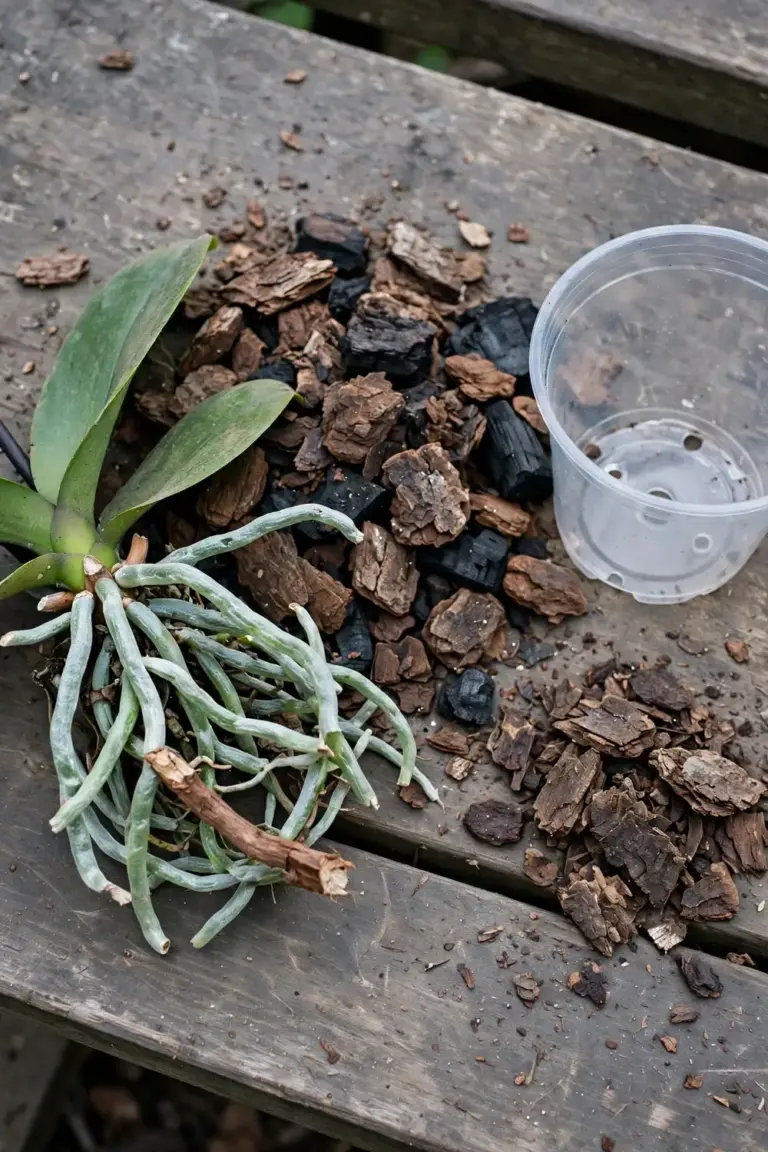
Fir bark goes through rapid drying at first, then seasons within a month, according to the American Orchid Society. Decay then sets in. Within about two years the bark breaks down to fine humus that holds too much water. Repot before that point. Spring, after flowering, is the repotting season.
Watch for the signs. Roots that refuse to enter the mix and crawl over the rim signal stale mix. A sour smell from the pot signals decay. A plant that dries slowly after watering sits in broken-down mix. Repot at the first sign, not the third.
Repot in five moves. Slide the plant from the pot and shake off the old mix. Trim dead roots with a sterile blade. Set the plant at the same depth in fresh mix, water lightly, and wait a week before feeding. Pick a pot only slightly larger than the old one. A pot far too large stays wet and rots the roots.
Match the pot to the plant. Clear plastic suits beginners because the roots stay visible. Clay suits growers who water heavily, because clay dries faster. Slotted orchid pots suit shadehouse growers because air reaches the roots from every side. The pot is a tool, not a decoration. Drainage and air matter more than looks.
10. Fix the 5 Failures That Kill Orchids
Fix the failure, not the symptom. Each failure below has one usual cause and one fix. Work the table top to bottom.
| Symptom | Likely Cause | Fix |
|---|---|---|
| No flowers | Too little light, or no night drop | Move to brighter indirect light and give cooler nights |
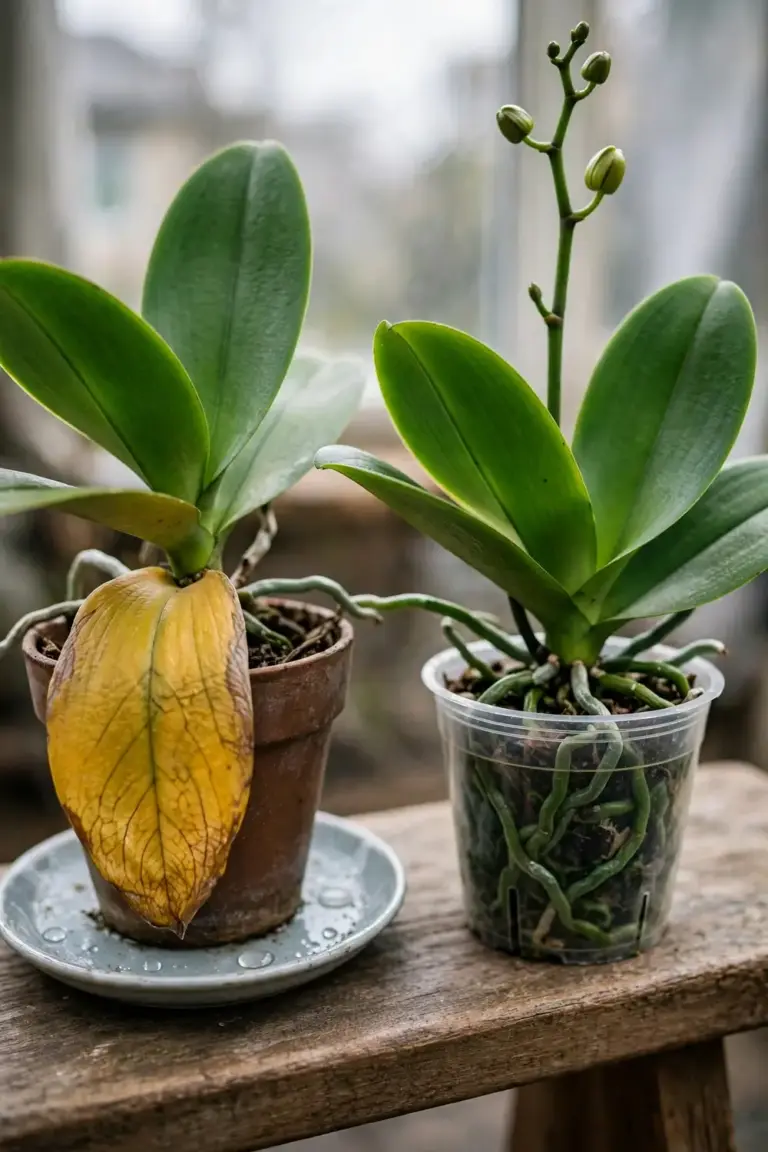
| Yellow leaves | Overwatering | Let the mix dry, check roots, repot into fresh bark |
| Wrinkled leaves | Dead roots or long dryness | Soak once, then water on the lift test |
| Bud drop | Dry air, drafts, or a sudden temperature swing | Hold humidity in the 50 to 60 percent band and keep the plant still |
| Mushy brown roots | Rotted mix | Trim dead roots, repot, and water less |
No flowers is the most common complaint. Light is the usual cause. Dark green floppy leaves confirm it. Move the plant to brighter indirect light. Add the night drop from H2 6. A plant that grows leaves but never spikes almost always lacks light, cool nights, or both.
Yellow leaves follow overwatering. One yellow lower leaf on an old plant is natural. Many yellow leaves mean wet roots. Unpot the plant. Cut the mushy roots. Repot in fresh bark. Water on the lift test from now on.
Bud drop hurts most. Buds fall when dry air, a heater blast, or a cold draft hits them. Plants in dry air drop their buds, according to the American Orchid Society. Keep the plant away from heaters and doors, and hold humidity in the 50 to 60 percent band recommended by the American Orchid Society. Never move a plant in bud to a new room.
11. Buy a Healthy Plant, Not a Rescue
Buy a healthy plant, not a rescue, because a strong plant forgives beginner mistakes while a weak plant punishes them. The nursery shelf is where most orchid failures start, weeks before the first watering.
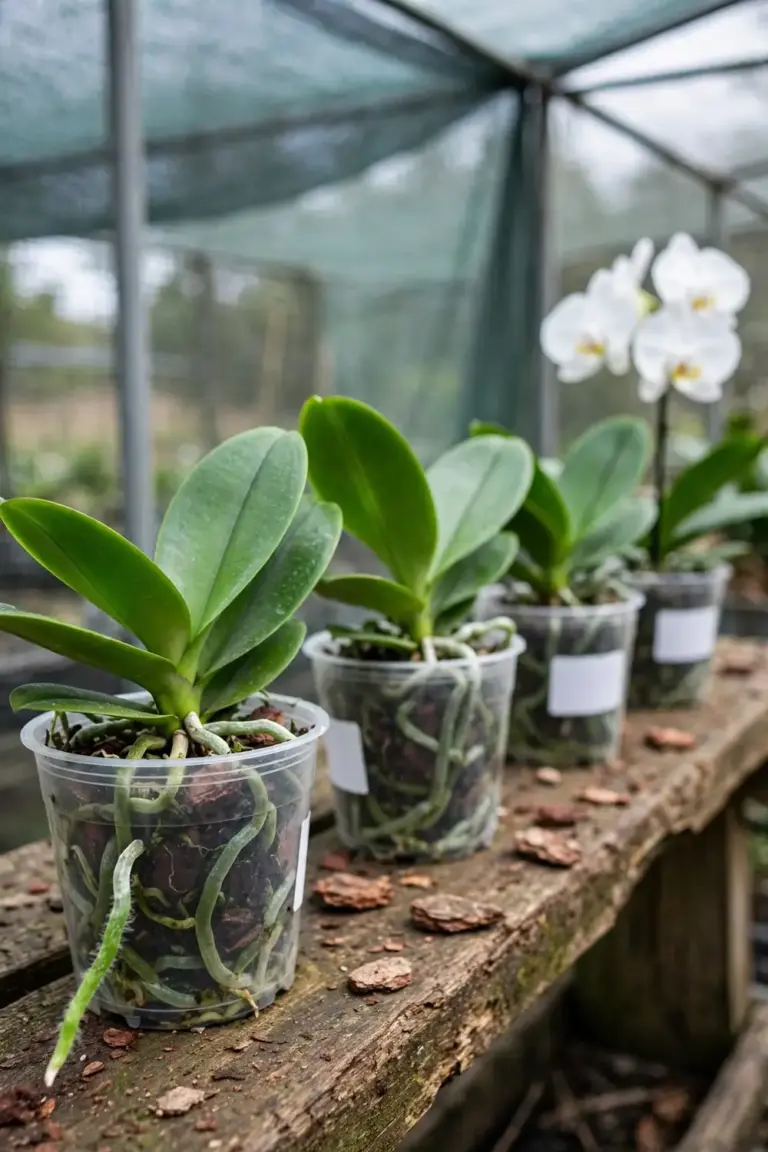
Check four things before you pay. Leaves should feel firm and look bright green. Roots visible through a clear pot should look green or silver, never brown and mushy. The mix should smell like bark, not sour. The plant should carry at least four firm leaves, since healthy Phalaenopsis hold four or five firm leaves at any one time, according to the American Orchid Society. A plant with two flaccid leaves is already struggling.
Skip the bargain shelf. A marked-down orchid with wilted leaves and a rotting crown costs more in lost months than a full-price plant costs in dollars. Rescue orchids suit growers who already know the rhythm. Beginners learn faster on a plant that starts strong.
Buy from a nursery or an orchid society show. Society shows sell plants grown for Australian conditions, and the sellers answer questions. A supermarket orchid in a sealed sleeve can still be healthy. Check it the same way. Open the sleeve, look at the roots, and walk away from mush.
Quarantine the new plant for two weeks. Keep it away from your other orchids. Check the leaves and the mix every few days. A new plant can carry mealybugs, scale, or fungus gnats into a clean collection. Two weeks of watching beats two months of treating every plant you own.
Frequently Asked Questions
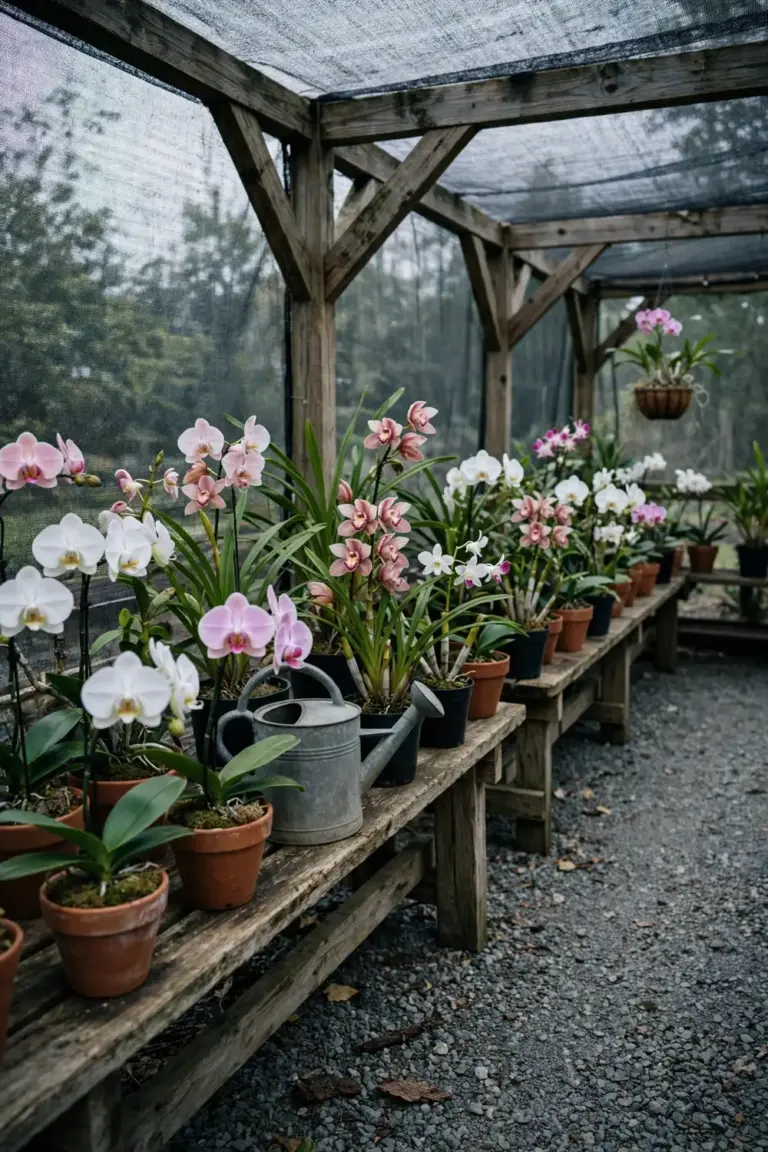
Yes, where the climate fits the type. Cymbidiums grow outdoors in pots across the temperate south, from Sydney to Melbourne. Tropical types need a shadehouse or a sheltered courtyard in the north. Phalaenopsis stays indoors in most districts. Frost kills buds, so move budding plants under cover before a cold night.
Low light and warm nights are the usual causes. The plant needs bright indirect light and a mild night drop to set a spike. Check the leaves. Dark green floppy leaves mean too little light. Move the plant to a brighter spot. Give cooler nights in autumn. A healthy plant spikes within months of the fix.
Water when the pot feels light and the mix nears dryness. A large Phalaenopsis in a 20 cm pot may need water weekly in warm bright weather. A seedling in a small pot may need water several times a week. No calendar fits every plant. Lift the pot. Light means water. Heavy means wait. In winter, watering drops with growth, so check the pot before every watering rather than following a summer schedule.
No, regular potting soil holds too much water and too little air for epiphyte roots. Epiphytic orchids grow on trees, not in soil, so pot them in bark, charcoal, or pebbles. Terrestrial orchids take a regular mix. Check the type before you pot, because the wrong mix rots the roots within weeks.
Overwatering is the most common cause. Wet roots rot and stop feeding the leaves. Unpot the plant and check the roots. Cut the mushy brown roots with a sterile blade. Repot into fresh bark. One yellow lower leaf on an old plant is natural shedding. Many yellow leaves mean wet roots and need action now.
Start Growing Orchids in Australia This Weekend
Start with one orchid this weekend. Pick the type that fits your climate from the climate table above. Buy a healthy plant with firm leaves and fat roots. Pot it in bark. Water it when the pot feels light. The first spike will teach you more than any guide. The second orchid comes after the first one reblooms. Keep a simple log of watering days and feeding days for the first season. The log shows your rhythm faster than memory does, and it turns the second plant into an easy decision instead of a guess.