You look out at your yard in early spring, and it is a depressing, patchy shade of brown. The neighbor’s lawn, however, is already showing hints of vibrant green, making you feel the pressure to act immediately. You are worried that if you don’t do something soon, your yard will be a weed-infested mess by June. But rushing out too early with a bag of fertilizer is a common mistake that can actually damage dormant roots and waste your hard-earned money on runoff. The solution isn’t found on a calendar page; it’s about understanding biological triggers. Finding the best time to fertilize lawn in spring is about precision, protection, and patience, ensuring your grass receives the nutrients it needs only when it is actually ready to use them.
1. Watch the Thermometer: The 55-Degree Soil Rule
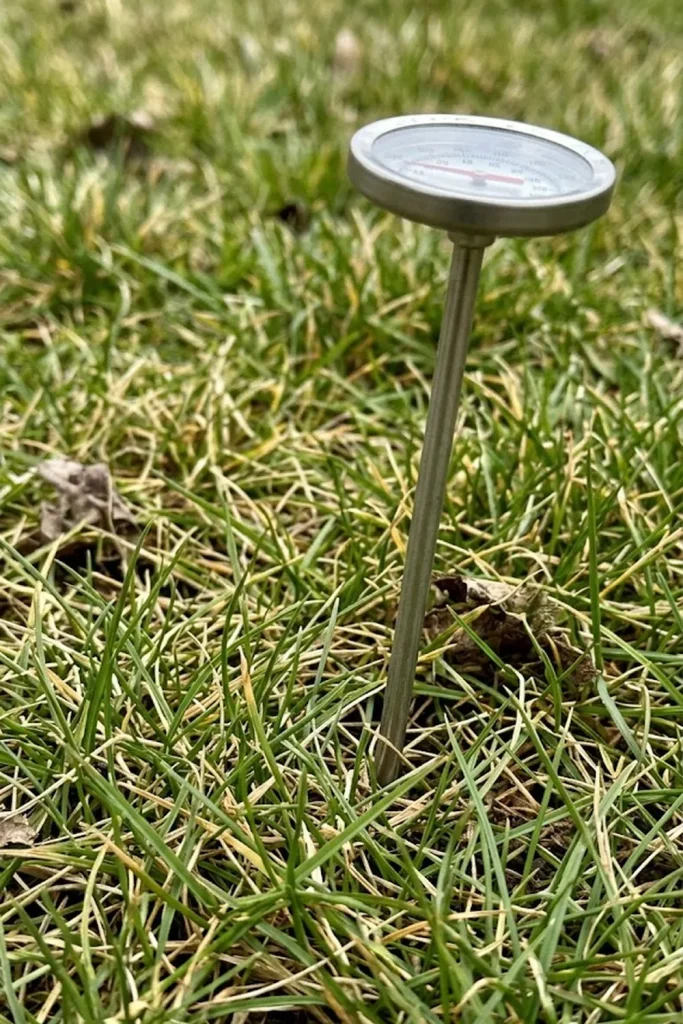
I have learned through years of eager mistakes that your calendar lies to you in the spring, but the soil never does. You might have a warm Saturday in March that feels like summer, but six inches down, the ground is still waking up from winter dormancy. Rushing to apply nutrients now is a waste. Grass roots simply cannot absorb fertilizer effectively until the soil temperature reaches a consistent range. If you feed too early, you aren’t helping your lawn; you are likely just feeding the early-season weeds or watching your investment wash away with the next heavy spring rain. This is where patience becomes a vital part of your lawn management strategy.
Through tracking my own yard’s wake-up cycle, I’ve found that the absolute best metric to follow is the “55-degree rule.” You are looking for the soil temperature to hit 55F 13C for roughly five consecutive days. At this specific temperature, soil microbial activity begins to flourish, and the roots of cool-season grasses, like Kentucky Bluegrass and Fescues, actively exit dormancy and begin seeking nutrients for shoot growth. You don’t need a degree in botany to track this; a simple, inexpensive soil thermometer is one of the best investments you can make for your garden life. It removes the guesswork and ensures your timing is biologically perfect.
| Grass Type Category | Ideal Soil Temp for First Spring Feeding | Typical Calendar Window (Varies by Zone) |
| Cool-Season Grasses (Fescue, Bluegrass) | 55F to 60F | Mid-March to Early May |
| Warm-Season Grasses (Bermuda, Zoysia) | 65F to 70F | Mid-April to Late May |
2. Look for Forsythia: Using Nature’s Alarm Clock
While I highly recommend using a thermometer, you can also use nature’s own signaling system. This is called phenology, the study of cyclic and seasonal natural phenomena, especially in relation to climate and plant and animal life. I love this approach because it connects you directly to the rhythm of your local ecosystem. Nature provides the most accurate indicators of biological activity, often outperforming the best digital forecasts. Before we had readily available soil data, generations of gardeners relied on these visual cues to manage their crops and lawns effectively.
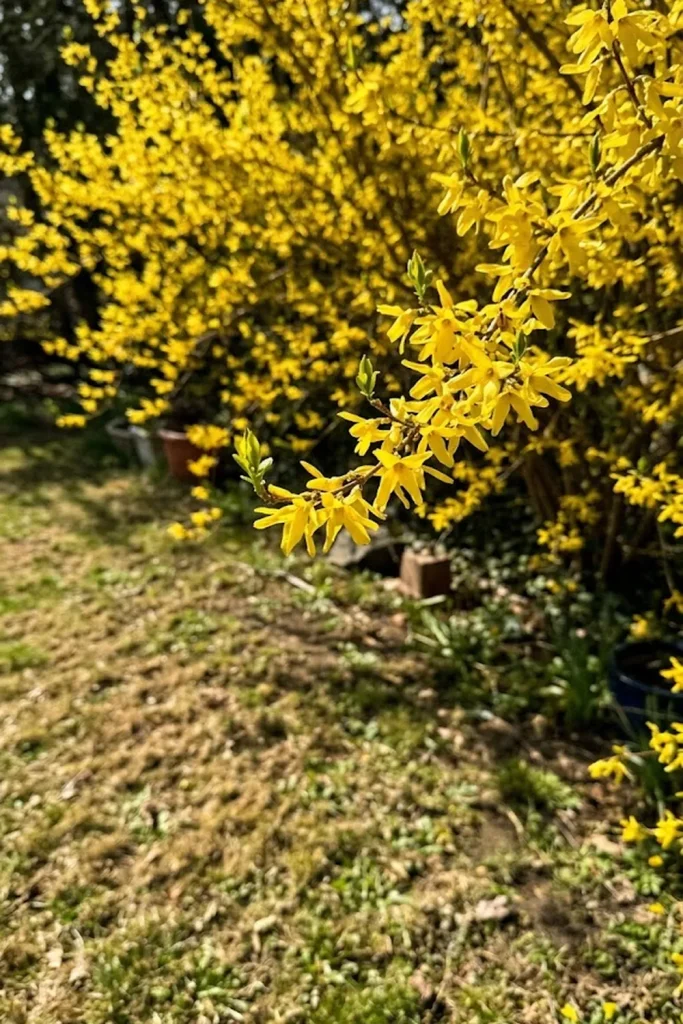
You don’t need a degree to use this system; you just need to keep your eyes open. The most famous indicator plant for gardeners in many zones is the Forsythia bush. I’ve observed that the vibrant yellow blooms of the Forsythia are perfectly synchronized with the ground hitting that critical 55F mark. This botanical alarm clock is telling you that the soil is warm enough for pre-emergent crabgrass control and that your grass roots are active. Using these natural cues helps you synchronize your lawn maintenance with the environment, ensuring optimal care.
Key Natural Spring Indicators:
- Forsythia Blooming: Soil has reached 55F. Time for pre-emergent and, shortly after, the initial spring fertilizer application.
- Lilacs Blooming (Common): This often signals the best time to fertilize lawn in spring with its full initial feeding, as the soil is now reliably warm.
- Dandelions Flowering: While often seen as a nuisance, their full bloom indicates that the soil is fully active, and warm-season grasses are likely starting to wake up too.
3. Time Your Application with the Clouds
Once your thermometer or Forsythia confirms the ground is ready, you need to synchronize your fertilization with the local weather forecast. This is where tactical management meets environmental care. I’ve made the mistake of fertilizing on a beautiful, sunny dry day, only to have a surprise torrential downpour arrive 12 hours later. The result was not a green lawn; it was massive nutrient runoff into the street, wasting my weekend effort and potentially harming local waterways. The clouds are your allies, but you must read them correctly.
The ideal scenario is applying your fertilizer immediately before a light, steady rain. That gentle rain acts as nature’s irrigation system, perfectly “watering in” the fertilizer. It moves the granules off the grass blades and down into the soil, dissolving them so the active roots can feast. I aim for a forecast of roughly 1/4 to 1/2 inch of rain. This is the sweet spot. You must absolutely avoid fertilizing before a forecast for a heavy thunderstorm or prolonged downpour. This level of rain will cause the fertilizer to wash away over the surface before it can penetrate the soil, a process known as leaching, resulting in both environmental control issues and a complete loss of your investment.
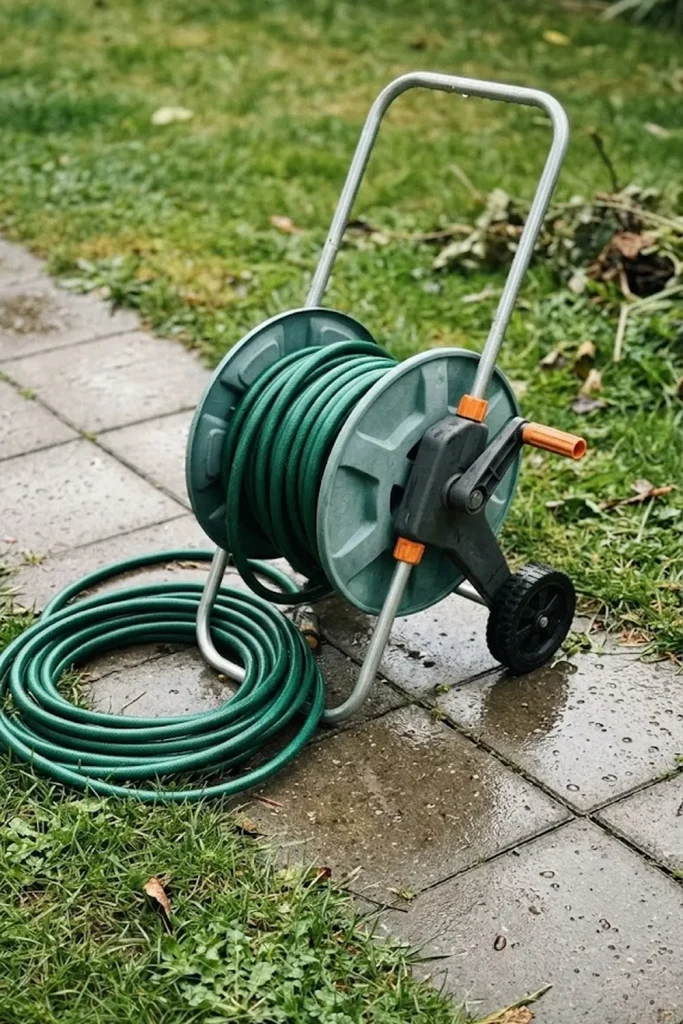
If nature doesn’t cooperate with the perfect shower, you must take over. This means applying the fertilizer and then manually watering the lawn for about 20 minutes per zone. This intentional care is non-negotiable for preventing particle movement and fertilizer burn, where concentrated nitrogen dries on the leaf blade, damaging the very turf you are trying to protect. Proper watering ensures the nutrients strengthen the roots, rather than becoming an environmental pollutant.
4. Select a Slow-Release Fertilizer for Sustained Care
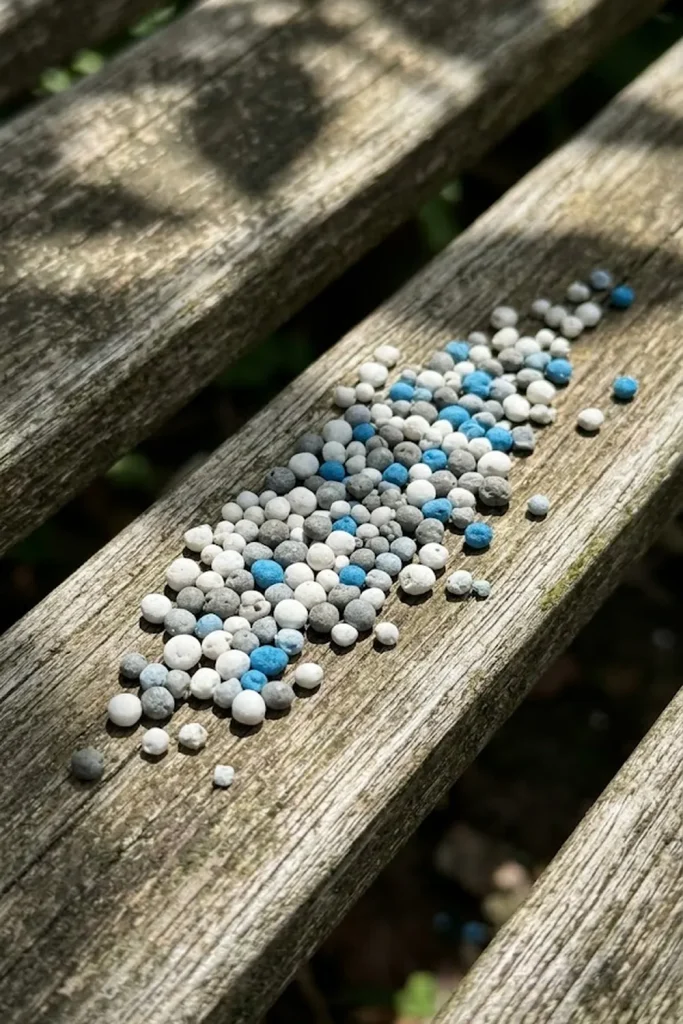
I’ve found that many people, especially busy professionals, just grab the first bag of “Spring Green-Up” they see at the big-box store. This is often a mistake. Many cheaper fertilizers contain high amounts of “fast-release” nitrogen (often listed as urea). This provides a massive, sudden spike in growth and an almost instant deep green color. While that looks great for two weeks, it forces the plant to focus all its energy on top growth at the expense of its root system. This leaves your lawn vulnerable to disease, drought, and heat stress later in the season. You end up on a treadmill of mowing constantly and needing more fertilizer to maintain that artificial green.
A much smarter strategy is to select a high-quality, slow-release nitrogen fertilizer for that first spring feed. These fertilizers are specifically engineered to release nutrients gradually over 8 to 12 weeks, often using technologies like sulfur-coating or polymer-coating on the urea granules. The protection this offers your turf cannot be overstated. By providing a steady, gentle stream of nutrients, you are supporting a sustainable growth cycle. This strengthens the vital carbohydrate reserves in the roots, leading to a much thicker, healthier, and resilient lawn that can naturally ward off stress without requiring constant interventions.
| Fertilizer Type | Primary Use Case | Nutrient Release Rate | Risk of Leaf Burn |
| Slow-Release Granular (e.g., MESA, SCU) | Main Spring/Summer Feeding | 8–12 Weeks | Low |
| Fast-Release Granular (e.g., Urea) | Quick Green-Up (Use with Caution) | 2–4 Weeks | High |
| Liquid Fertilizer (Folier Feed) | Instant Touch-Up/Supplement | Immediate (1–7 Days) | Very High |
5. Complete Your Pre-Feeding Prep Work
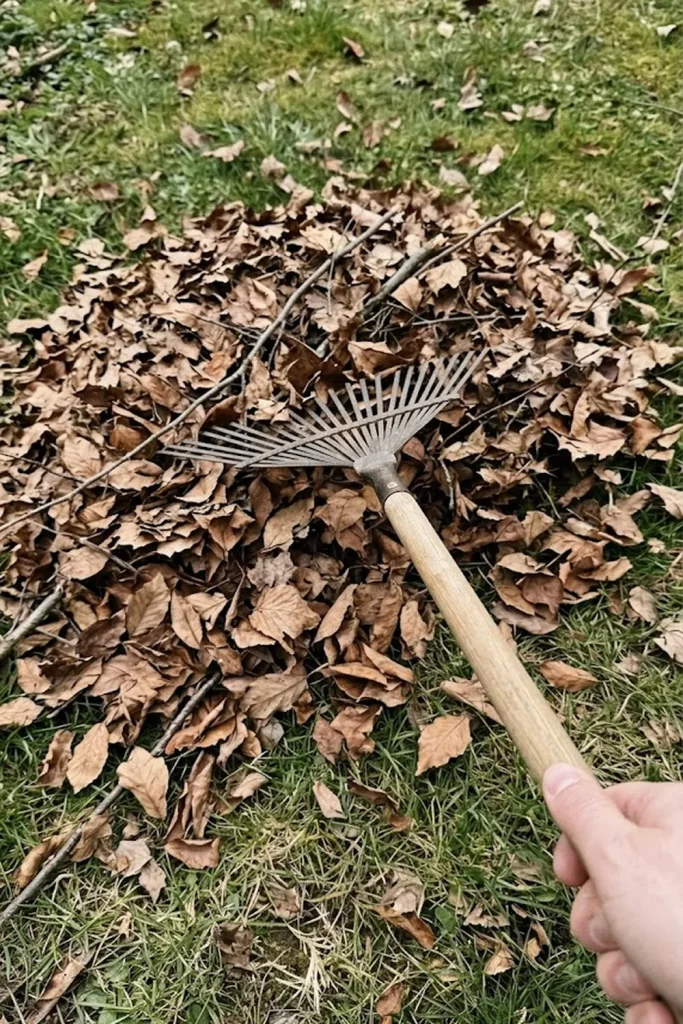
Through managing my own garden, I’ve learned that the best time to fertilize lawn in spring only really works if you’ve cleared the canvas first. You can’t just throw granules down over the detritus of winter and expect pro-level results. In reality, that layer of debris acts as a barrier, preventing your fertilizer from reaching its destination: the soil surface. This crucial step is too often overlooked, and skipping it is effectively planning to waste a significant portion of your time and money.
Before you even think about loading the spreader, you must walk your lawn and complete the necessary cleanup. I call this the “pre-feeding prep” phase. You are looking to gently remove all fallen twigs, branches, and, most importantly, any matted “snow mold” leaves that have sat heavy since the final thaw. Management of this layer ensures that as soon as the granules are applied and watered in, they make immediate, direct soil contact. I suggest using a flexible lawn rake for this, not a heavy garden rake. Your goal is a gentle cleaning, not aggressive dethatching, which is a stressful process that should be reserved for early autumn unless the thatch layer is actively choking the lawn. This thorough preparation is essential care that dictates the entire season’s success.
- Prep Task 1: Walk the yard; remove sticks, large rocks, and pet waste.
- Prep Task 2: Gently rake any areas where wet, matted leaves are still compressing the grass.
- Prep Task 3: Identify and lightly rake any pink or gray snow mold patches to improve air circulation.
6. Coordinate with Your First Mow of the Year
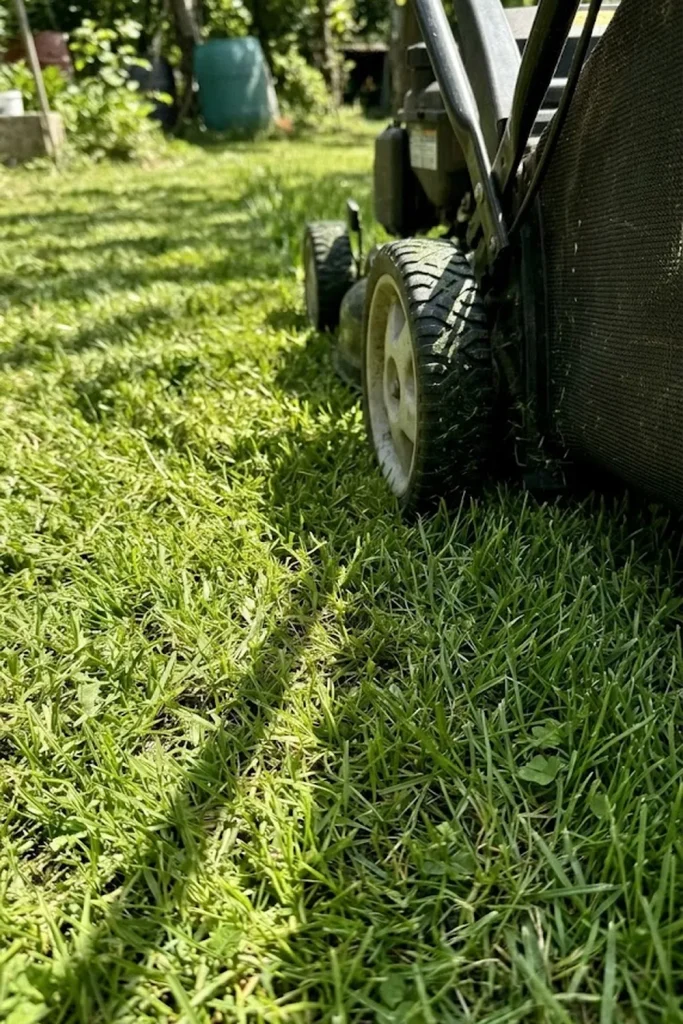
I frequently hear gardeners debate whether they should mow before or after they apply their spring fertilizer. Through testing both methods in my own garden life, I have found that a strategic mow before you application is almost always the superior approach. When you think about it, your lawn after winter is often ragged, with uneven growth and dead blades “shading” the soil. This barrier prevents the fertilizer granules from making the direct soil contact they need to activate. A preliminary trim solves this problem efficiently.
The timing of this first mow of the season is critical. You are waiting for the grass to actively exit winter dormancy and show consistent green top growth. Once your specific grass species reaches about 3 to 4 inches in height, it is time for that initial cut. For optimal care, set your mower deck high; you never want to remove more than one-third of the grass blade at once, especially during this sensitive wake-up phase. Mowing first effectively opens up the turf canopy. This action creates a clear pathway, allowing the subsequent fertilizer application to settle directly onto the soil surface rather than getting hung up on dead grass, ensuring proper protection for the emerging shoots.
This coordinated effort directly influences how effectively the best time to fertilize lawn in spring translates into a healthy, dense lawn. It is a management technique that maximizes your nutrient uptake. By trimming the lawn first, you are also encouraging the plant to begin horizontal tillering, which helps thicken the turf naturally. This simple sequence—mow first, then fertilize, then water—sets your lawn up for sustainable health throughout the spring and into the stressful summer months.
7. Post-Application Watering and Safety
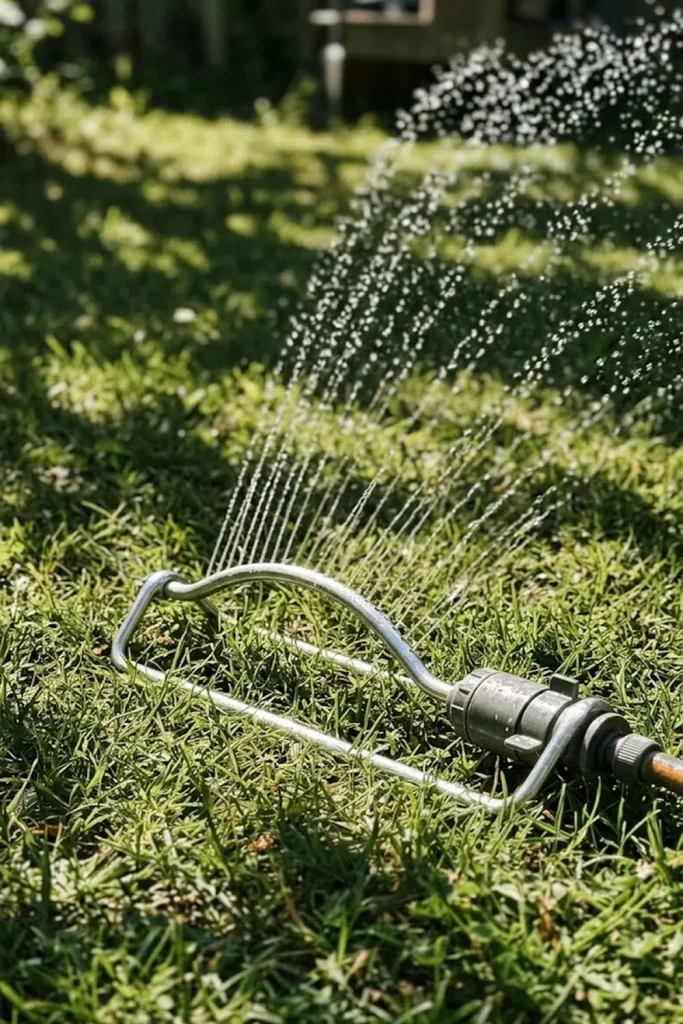
I have seen too many gardeners work hard to time their fertilization perfectly, only to fail at the final, critical step: proper post-application management. The moment your spreader is back in the garage, your lawn is in a vulnerable state. Those concentrated fertilizer granules are resting directly on the sensitive grass blades. If left dry, especially if the sun comes out, they can quickly cause “fertilizer burn,” yellowing and damaging the very turf you are trying to strengthen. The job isn’t finished until the nutrients are safely moved from the blade to the root zone.
The non-negotiable final step is “watering in” your application. Unless you have timed it perfectly with a gentle rain, you must apply roughly 1/4 inch of water to the entire lawn immediately after fertilizing. This intentional care serves three critical functions:
- Prevents Burn: It washes the concentrated nutrients off the foliage.
- Activates Nutrients: It dissolves the granules, allowing the nitrogen to penetrate the soil where active roots can absorb it.
- Enhances Safety: It moves the chemical components off the surface, reducing risk.
Safety is paramount, especially for active families. I always advise keeping children and pets off the treated lawn until it has completely dried following this crucial watering-in phase. Most granular fertilizers are safe once watered and dry, but you must read your specific product label for confirmation. Proper protection of your family is just as important as the protection of your turf. This diligent approach ensures your spring feeding results in a lush, healthy yard that is safe for everyone to enjoy.
FAQ: Master Your Spring Lawn Schedule
When you are managing a busy full-time career alongside your passion for a great yard, you need straightforward answers to these common, time-sensitive questions. I have navigated these exact dilemmas in my own garden life, balancing the urge for a perfect lawn with the constraints of a limited weekend schedule. Through trial, error, and meticulous observation of soil temperature and grass behavior, I’ve compiled this expert advice to help you cut through the confusion. These answers are designed to provide the specific care and management strategies your turf needs right now.
- Is it too early to fertilize my lawn?
If the ground is still frozen, or if you are still waking up to frost regularly, yes, it is absolutely too early. Rushing a feeding now will not help your lawn green up faster; it will only feed early-season weeds and risk nutrient leaching. Wait until your soil temperature is consistently $50^{\circ}F$ ($10^{\circ}C$) at a minimum before you even load the spreader. Patience is your best friend in early spring. - What soil temperature to fertilize lawn in spring?
The “magic number” that I always target for cool-season grasses (like Fescue, Bluegrass, and Ryegrass) is a consistent 55F 13C. This temperature needs to hold for roughly five days straight. At this precise mark, soil microbial activity begins to flourish, and the root system is actively searching for carbohydrates to fuel shoot growth. This is the ultimate scientific trigger for the best time to fertilize lawn in spring, ensuring you apply nutrients exactly when the plant is ready to feast. - Should I fertilize before or after first mow?
I strongly advise you to mow first. Completing that initial trim removes the ragged, dead top growth from winter that acts as a shield over the soil. This crucial bit of prep work ensures your fertilizer granules fall directly onto the dirt rather than getting caught in the turf canopy. Always mow first, then apply your fertilizer, and then immediately water it all in. This specific sequence provides the necessary care and protection for optimal results. - How long to wait to fertilize lawn after frost?
The final frost date in your specific zone is a useful marker. Once you are past that date, I typically recommend waiting roughly two full weeks before you schedule your initial spring feeding. This buffer period allows the turf to fully exit its dormancy phase. It gives the roots time to begin active growth so they can efficiently process the nutrients you are about to provide, giving you the dense, sustainable green-up that we are all striving to achieve.
Final Tip for a Lush Season
Gardening, I’ve found, is always more of a marathon than a sprint. While we all want that instant “best yard on the block” gratification, real, sustainable health takes patience and consistent observation. If you find that you’ve missed your “perfect” weather window by a few days due to your busy work schedule, please don’t panic or rush the application. In the grand scheme of your turf’s life, that slight delay means nothing. What truly matters is that you continue to provide intentional, informed management rather than reactive treatments.
By shifting your focus to tracking environmental cues like soil temperature and local indicator plants, you are now practicing the highest level of lawn care. You are no longer guessing; you are making data-driven decisions that save you time, money, and protect our shared environment. This thoughtful, reflective approach is what separates a frustrating struggle from a rewarding garden life. Keep observing, keep watering-in your products correctly, and I know your lawn will reward your diligence. Enjoy the process, and I’ll see you at the next application