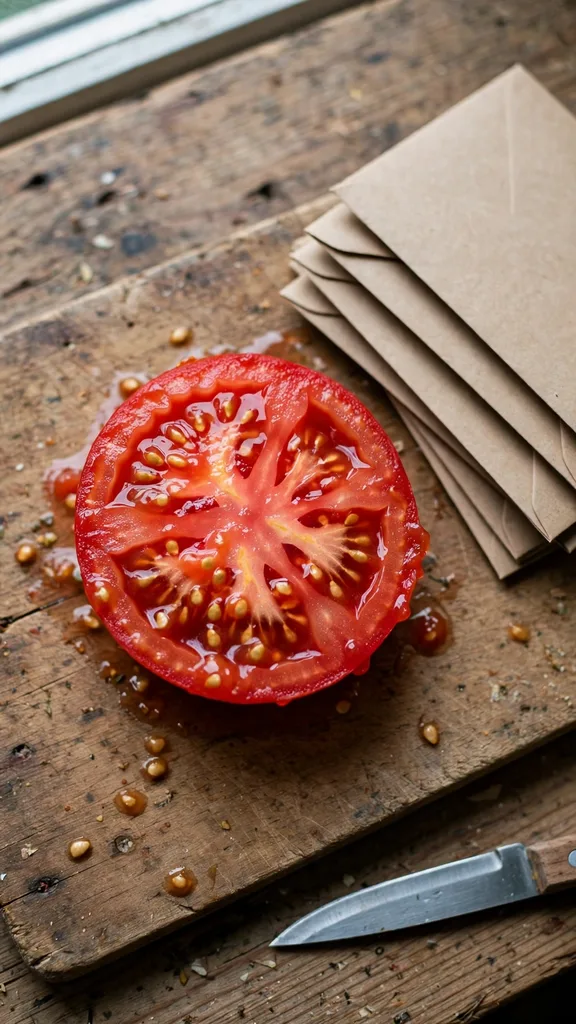
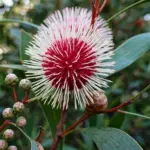
Save seed from 1 tomato and grow the same tomato next year. An heirloom is an open-pollinated variety passed down for 50 years or more that breeds true from saved seed.
An heirloom is a seed with a history. Somebody grew it, saved it, and handed it on, season after season, because the flavor or the color earned its place. The plant you grow from that seed looks and tastes like the plant your grandmother grew, because the genetics stayed stable. A hybrid cannot promise that. Its seed scrambles the parents’ traits and grows into something new.
| What you need to know | The short version |
|---|---|
| Definition | Open-pollinated variety, 50 years or older |
| Seed saving | Saved seed grows true to type |
| Flavor | Selected for taste, not shipping |
| Weakness | Often less disease resistance than hybrids |
| Best first heirlooms | Tomato, bean, pea, lettuce |
What Is Heirloom?
An heirloom is an open-pollinated plant variety with a documented history of at least 50 years in cultivation. The age line is the definition. Washington State University Extension puts it plainly: open-pollinated varieties that are at least 50 years old are considered heirlooms, and both open-pollinated and heirloom seed produce plants with the same characteristics as the parent. A variety bred in 1980 qualifies. A variety bred in 2010 does not, however good it tastes.
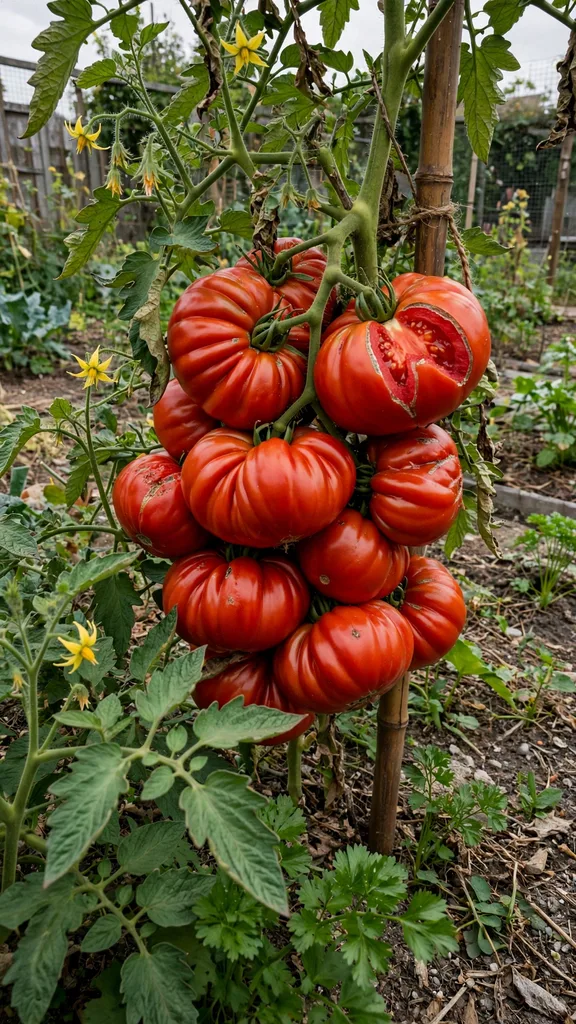
Heirlooms are always open-pollinated. Pollination happens by wind, insects, or the flower itself, with no controlled crossing by a breeder. The University of Arizona explains that heirloom seeds produce varieties that have been around for 50 years or more, even centuries, are open-pollinated, and reliably reproduce similar plants the following year. Save the seed, keep other varieties of the same crop away, and next year’s plants match this year’s.
The 50-year line is a convention, not a law of nature. Some growers use 1951, the year the first hybrid vegetable varieties reached the market, as the cut-off. Others count a variety as an heirloom when it carries a family or regional story, whatever the date. The seed packet rarely settles the argument, so check the variety name against a seed catalogue with a history note before you pay heirloom prices.
Flavor is the reason heirlooms survive. Breeders of modern hybrids select for yield, uniform size, tough skin, and disease resistance, because those traits pay on a farm. Heirloom keepers selected for taste at the table, and for color, shape, and a story worth repeating. A Brandywine tomato bruises in the basket and splits after rain, and growers still plant it because no hybrid matches its flavor.
How Heirloom Seed Saving Works
Open pollination is the engine. A tomato flower pollinates itself before it opens. A bean flower does the same. A squash flower needs a bee to carry pollen from a male flower to a female flower on the same plant or a neighbor. In each case the pollen comes from the same variety, so the seed carries the same traits forward.
Isolation keeps the line clean. Cross-pollinating crops such as squash, corn, and brassicas swap pollen with any other variety of the same species growing nearby, and the saved seed grows into a mix. Grow one variety of squash per season, or separate varieties by a wide gap, or bag the female flowers and hand-pollinate them. Self-pollinating crops such as tomato, bean, pea, and lettuce need only a few meters of separation, and often none at all.
Selection is the gardener’s half of the job. Save seed only from the healthiest plants with the truest fruit. Mark the best 2 or 3 plants with ribbon at fruit set and leave their fruit to ripen fully on the vine. A tomato left until it is soft and fully colored gives seed with the strongest germination. Seed from a sick plant carries the sickness forward in the line.
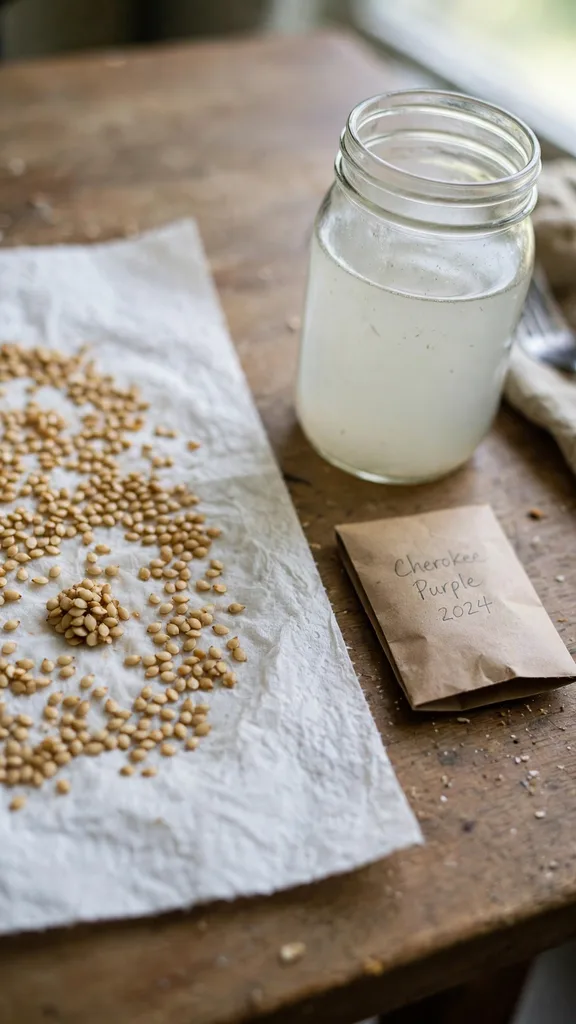
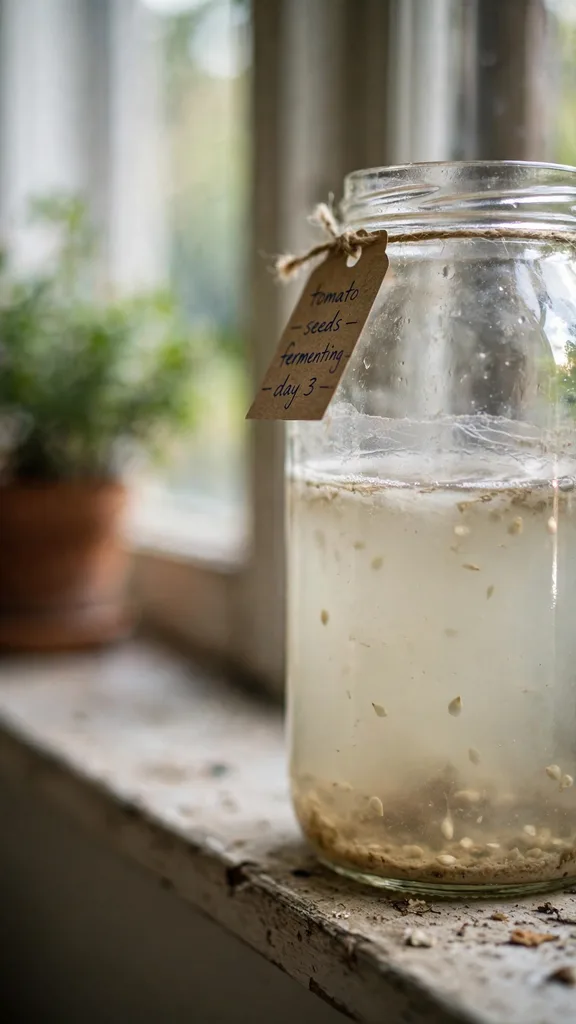
Drying and storage decide whether the seed lives. Ferment tomato seed in its own juice for 2 or 3 days until a moldy skin forms, rinse it clean, and dry it on a plate until it snaps. Dry bean and pea seed in the pod until the pod rattles. Store all seed dry, cool, and dark in a labeled jar, and most vegetable seed stays viable for 3 to 5 years.
Heirloom vs Hybrid
| Trait | Heirloom | Hybrid (F1) |
|---|---|---|
| Age | 50 years or older | Any age, often new |
| Pollination | Open, by wind or insects | Controlled cross of 2 parents |
| Saved seed | Grows true to type | Scrambles, grows mixed offspring |
| Uniformity | Variable fruit size and shape | Very uniform fruit |
| Disease resistance | Often lower | Often bred in |
| Flavor | Selected for taste | Selected for yield and shipping |
| Seed cost | Buy once, save after | Buy new seed every year |
| Packet label | Variety name, sometimes a story | F1 after the name |
The table makes the trade visible. An heirloom gives you seed independence and flavor, and asks you to accept uneven fruit and a weaker defense against disease. A hybrid gives you uniform fruit and bred-in resistance, and asks you to buy fresh seed every spring. Neither is the right answer for every bed. Many gardeners grow hybrids for the main crop and heirlooms for the table.
The F1 tag is the tell. A packet marked F1 is a first-generation cross of 2 parent lines, and its seed will not repeat the parents. A packet with no F1 mark and a variety name older than your parents is usually open-pollinated, and an heirloom if the history checks out. If the packet does not say, ask the seed company. A company that cannot answer is selling a story, not a line.
How to Recognize a True Heirloom
Check the variety name first. Brandywine, Cherokee Purple, Mortgage Lifter, Kentucky Wonder, and Scarlet Nantes are names with traceable histories and seed catalogues behind them. A variety with a name and no history is a claim, not a fact. Search the name plus the word heirloom and read the oldest catalogue entry you can find.
Read the packet for the F1 mark. An F1 mark means hybrid, whatever the description says about old-fashioned flavor. A packet that says open-pollinated and names no F1 cross is the right shape. A packet that says heirloom but hides the pollination type is selling the word, and the seed inside may be a recent open-pollinated release that has not earned the age line yet.
Taste the fruit before you commit the bed. Heirlooms vary more than hybrids, and one plant in ten can throw an off-type fruit. Grow 2 or 3 plants of a new heirloom before you give it a full row. The best plant earns its seed-saving ribbon, and the rest feed the kitchen.
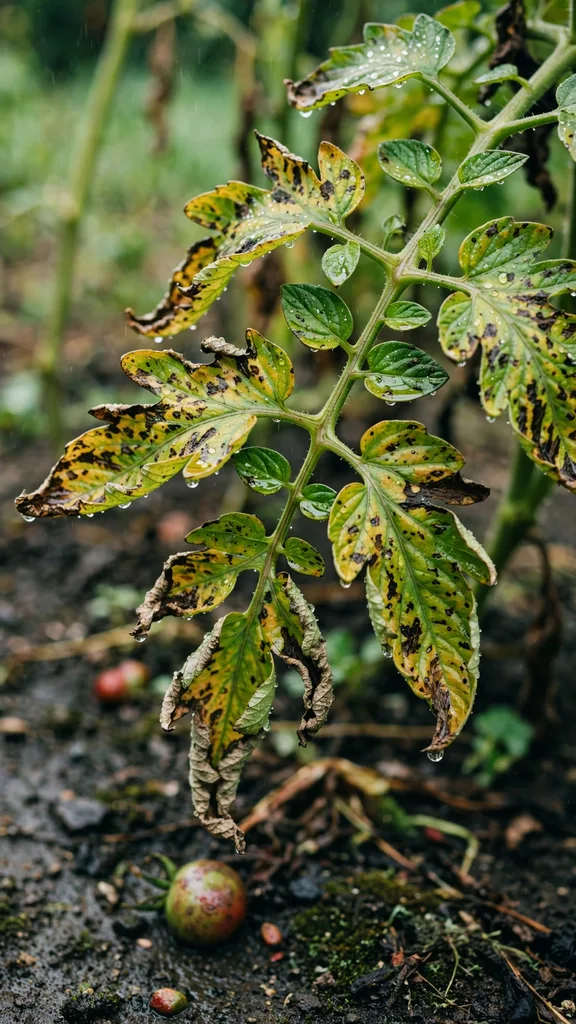
Watch disease pressure in your own soil. Heirlooms often lack resistance to soil-borne wilts such as Verticillium and Fusarium, and a wet summer can take a whole row. Rotate the bed, mulch the soil, and water at the base. A hybrid in the next row is not a betrayal. It is insurance while the heirloom earns its place.
Common Mistakes With Heirloom
Saving seed from a hybrid tops the list. A gardener saves seed from a fine F1 tomato, sows it next spring, and grows a row of mixed plants with small fruit and weak stems. The packet said hybrid in small print. Check for F1 before you save a single seed, and save only from open-pollinated plants.
Growing 2 squash varieties side by side ruins both lines. Squash crosses freely, and the seed from either variety grows into a squash that is neither. Grow one variety per season if you save seed, or hand-pollinate and bag the flowers you want to keep pure. The bees do not respect variety names.
Saving seed from the weakest plant keeps the weakest line. Gardeners save seed from whatever fruit is left at the end of the season, and that fruit is usually the late, small, or sick one. Choose your seed plants at fruit set, mark them, and let their fruit ripen fully. The line improves only when the best plants are the parents.
Storing damp seed kills the whole jar. Seed that feels dry on the outside can hold moisture inside, and a sealed jar turns that moisture into mold. Dry seed until it snaps between your teeth, add a silica packet to the jar, and store it cool. A jar opened in spring should smell of nothing at all.
When Heirloom Matters in Your Garden
Heirlooms matter most when flavor is the crop. A tomato for sandwiches, a bean for the pot, a melon for August evenings: these are the jobs where an heirloom earns its bed. A tomato for sauce in bulk belongs to a hybrid with uniform fruit and heavy yield. The two jobs sit side by side, and the gardener who confuses them gets sauce tomatoes with no flavor and sandwich tomatoes with no yield.
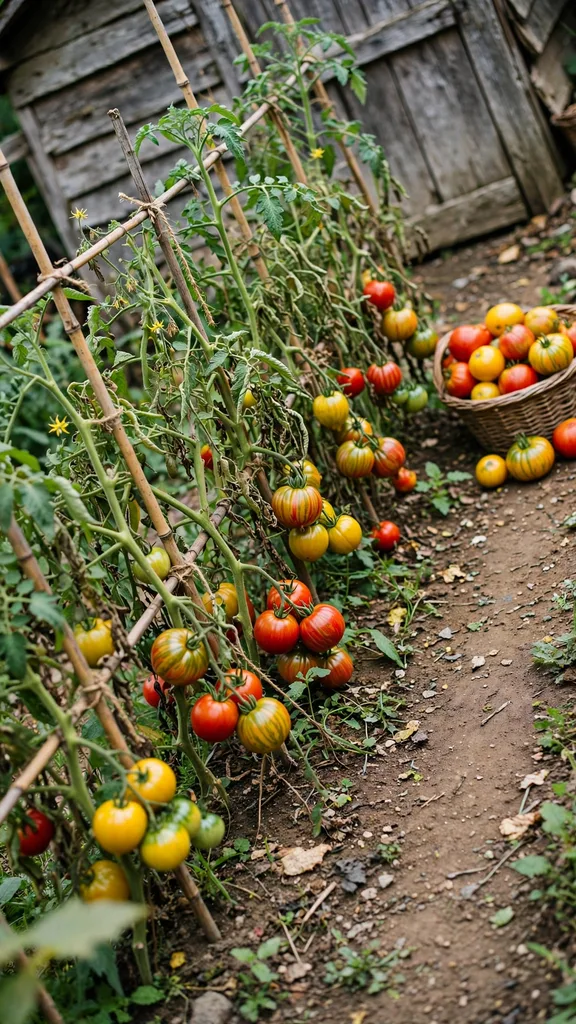
Seed independence is the second reason. A gardener who saves heirloom seed buys seed once and grows from the jar for years. That independence matters when a favorite variety leaves the catalogues, and it matters more when the gardener wants a line shaped to one patch of soil. Five years of saving from the best plants in your own bed gives you a variety no catalogue sells.
Heirlooms also matter as a record. A variety carried for a century holds the taste of a place and a time, and growing it keeps that record alive. The gardening glossary sets the terms: a hybrid is the controlled cross, and an open-pollinated variety is the seed-saving base. The heirloom is the open-pollinated variety old enough to carry a story.
FAQ
At least 50 years in cultivation is the standard line. Some growers use 1951, the year the first hybrid vegetable varieties reached the market, as the cut-off instead. Either way the variety must be open-pollinated and stable, so saved seed grows true to type. A new open-pollinated release is not an heirloom yet, however good it tastes.
Yes, provided the plant is truly open-pollinated and kept away from other varieties of the same crop while it flowers. Self-pollinating crops such as tomato, bean, pea, and lettuce are the easiest, since their flowers rarely cross. Cross-pollinating crops such as squash and corn need isolation or hand pollination, or the saved seed grows into a mix.
Usually, for fresh eating. Heirloom keepers selected for flavor at the table over many generations, while hybrid breeders select for yield, uniform size, tough skin, and disease resistance. The gap is widest in tomatoes and melons, and narrowest in beans and peas. Grow both side by side for one season and let your own table decide.
Many heirlooms were selected before modern disease resistance was bred into vegetables, so they lack the resistance genes common in hybrids. Soil-borne wilts and blights hit them harder, especially in wet summers. Rotate the bed each year, mulch the soil, water at the base, and grow a resistant hybrid beside the heirloom as insurance.
No. Heirloom describes the variety and its history. Organic describes how the seed was grown, without synthetic chemicals. An heirloom seed can be grown conventionally, and a hybrid seed can be grown organically. Check the packet for both claims separately, since one does not imply the other.