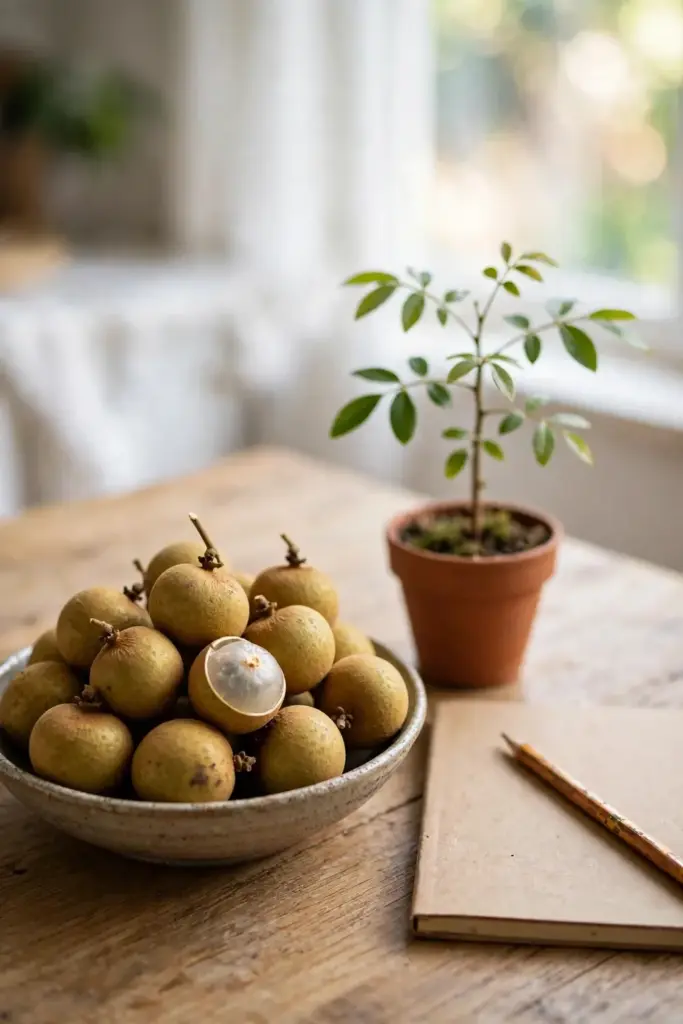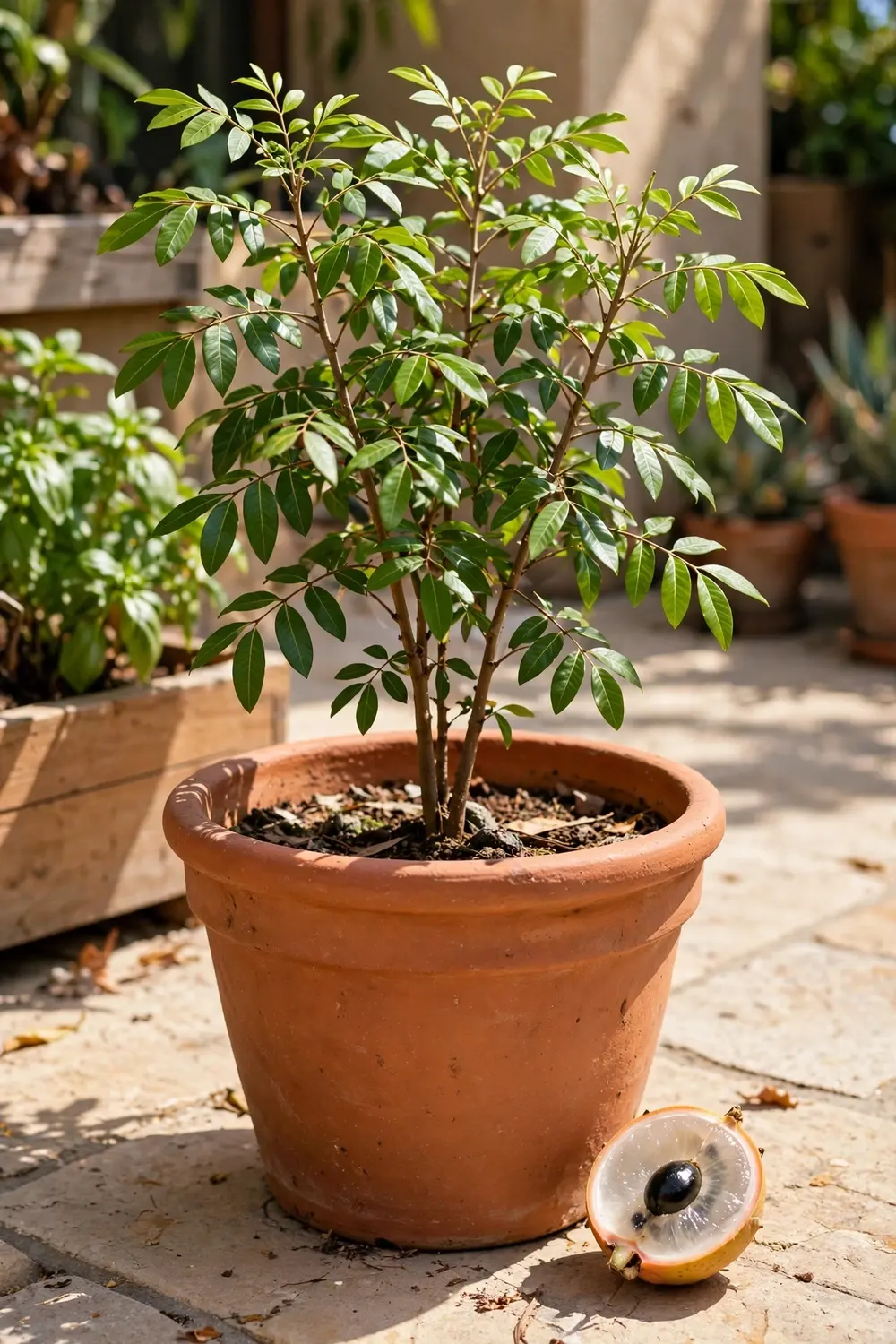

You can sprout a longan seed in 1 to 3 weeks, if the seed went from fruit to soil within about a week of harvest. Wait a month, and most seeds refuse. That is the first truth of growing longan from seed: the seed has a short fuse. The second truth is harder. A seedling does not clone its parent. Named cultivars such as Kohala and Biew Kiew do not come true from seed, seedling fruit is often smaller or less sweet than the parent, and the wait to first fruit can run 6 years or more, compared with 2 to 3 years for an air-layered tree, according to the UF/IFAS longan guide.
If those two facts do not scare you off, good. You are the right reader for a real how to grow longan from seed walkthrough, the honest kind, not the sprout-it-and-pray kind. You want the full journey, seed to tree, with the honest timeline and the cold-climate pot option that keeps the experiment alive where winters bite. The companion guide to this one covers the fruiting years of an established tree: how to grow longan fruit handles variety choice, zones, pruning, and the harvest game. This article owns the seed bench and the pot strategy.
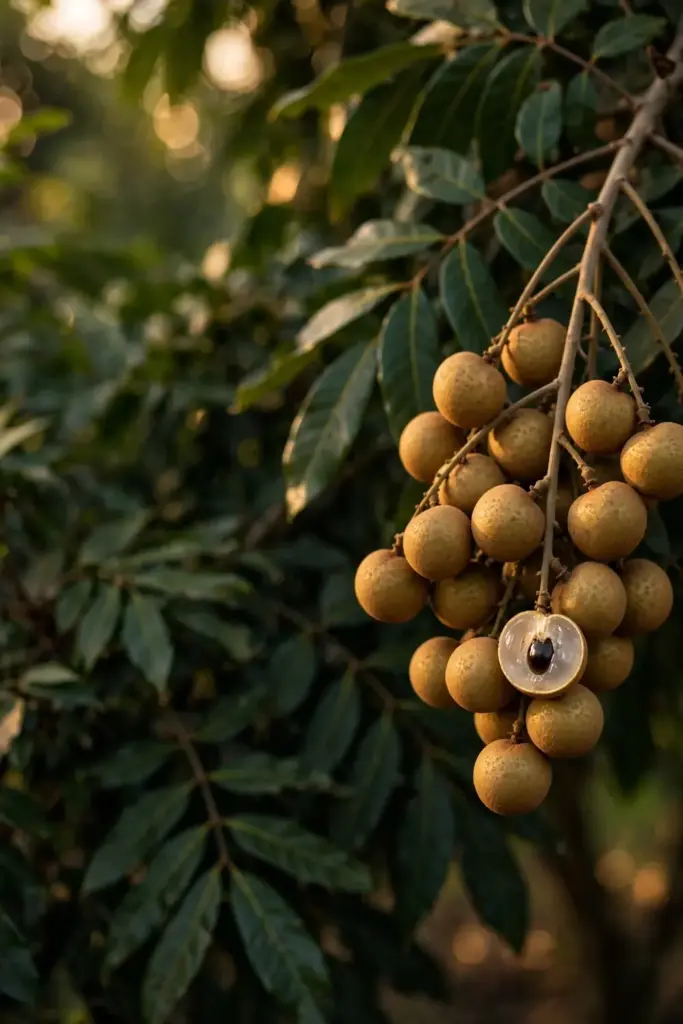
Longan (Dimocarpus longan) is the dragon eye of southern China, Myanmar, and Southeast Asia, a subtropical evergreen in the same family as lychee and rambutan. Here is the fastest honest map of this article: 19 sections. Crack and clean fresh seed within 48 hours, sow shallow in warm mix, give 80 to 90 degree warmth, pot it when winters freeze, and plan the multi-year game with open eyes.
1. The Two Truths Every Seed Grower Must Accept First
Longan seed germinates easily. That is why so many growers online say it is simple. It is simple to sprout. It is slow to fruit. Accept both truths now, and the years ahead feel like a plan instead of a disappointment.
| Truth | What It Means | Source of the Fact |
|---|---|---|
| Fresh seed only | Viability collapses within days of leaving the fruit. Sow within a week of harvest for the best odds. | Widely reported by growers; AI overviews cite “within a week” |
| Not true to type | Named cultivars do not come true from seed. Fruit quality is a gamble. | UF/IFAS |
| Seedling takes years | Seedlings may take up to 6 years to bear. Air-layered trees fruit in 2 to 3 years. | UF/IFAS |
| Seed is a project, not a shortcut | Use seedlings for rootstocks, new selections, or the joy of the grow. For reliable fruit, buy a grafted or air-layered tree. | UF/IFAS |
Why grow from seed at all, then? Three good reasons. First, it is the cheapest way to make rootstocks for grafting later. Second, it is genuinely fun: few kitchen projects reward you with an evergreen tree. Third, if you want to select something new, seedlings are where new cultivars begin.
2. Know the Quick Facts Before You Sow
Longan is a large subtropical tree in the ground, a manageable pot plant for years with pruning and root control. These numbers anchor every decision below.

| Fact | Detail |
|---|---|
| Botanical name | Dimocarpus longan |
| Origin | Southern China, Myanmar, northern Southeast Asia |
| Mature size in ground | 30 to 40 ft in Florida; larger in the tropics |
| Pot size | 15 to 25 gallons for a multi-year tree |
| Germination time | 1 to 3 weeks from fresh seed |
| Soil temperature to sprout | 80 to 90 degrees F |
| Cold tolerance | Young trees damaged at 29 to 31 F, killed at 26 to 28 F (UF/IFAS) |
| Seedling to first fruit | Up to 6 years or more |
| Light | Full sun for best growth |
3. Crack, Clean, and Sow Fresh Seed Within 48 Hours
Freshness is the entire game. Eat the fruit, keep the seed, and move. Rinse the seed clean of all pulp, because clinging flesh invites mold and ants. Do not let cleaned seed dry out on the counter for days; drying kills it. If you must wait a day, keep the seed in a damp (not wet) paper towel inside a bag in the refrigerator, and sow the next day.
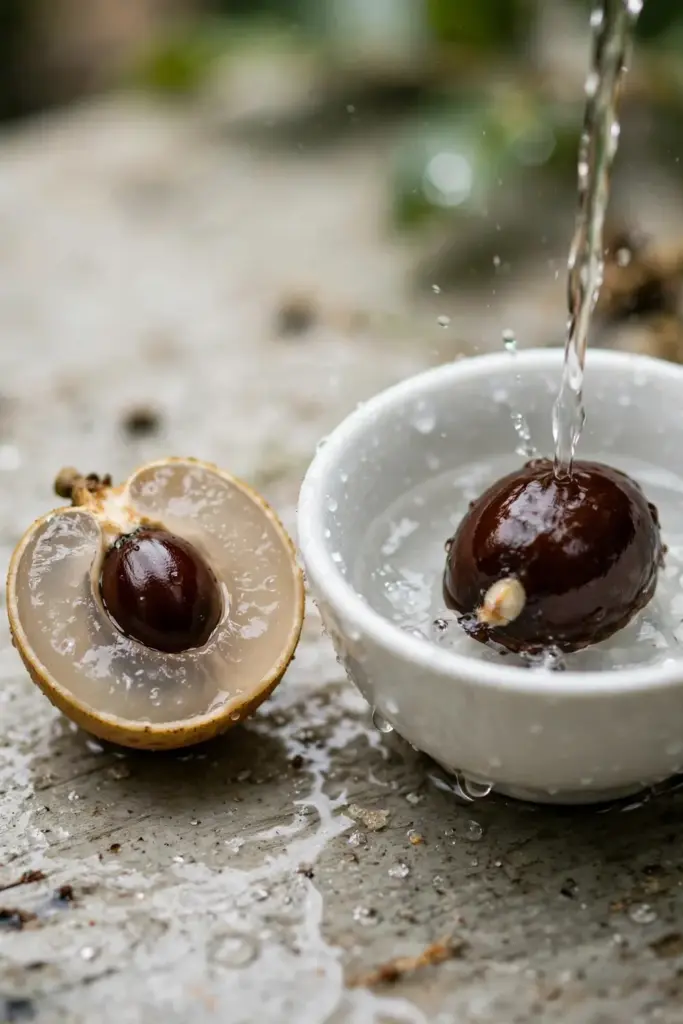
Crack the hard brown coat carefully or nick it with a nail file at the rounded end. The seed coat is tough, and nicking speeds water entry. Do not carve deep enough to reach the inner kernel. A nick, not a wound, is the goal.
Plant the seed within days of eating the fruit. Seeds sown within a week of harvest sprout at the highest rates. Seeds stored at room temperature for a month or more are a coin flip at best. That single practice, sow fresh, outperforms every trick that follows.
4. Sow Shallow in Loose, Warm, Fast-Draining Mix
Fill a 6 inch pot with a loose seed-starting mix, or one part perlite to two parts potting soil. Longan hates wet feet, and a soggy pot rots the big seed before it can push a root. The mix should feel like a wrung-out sponge, damp through and through.
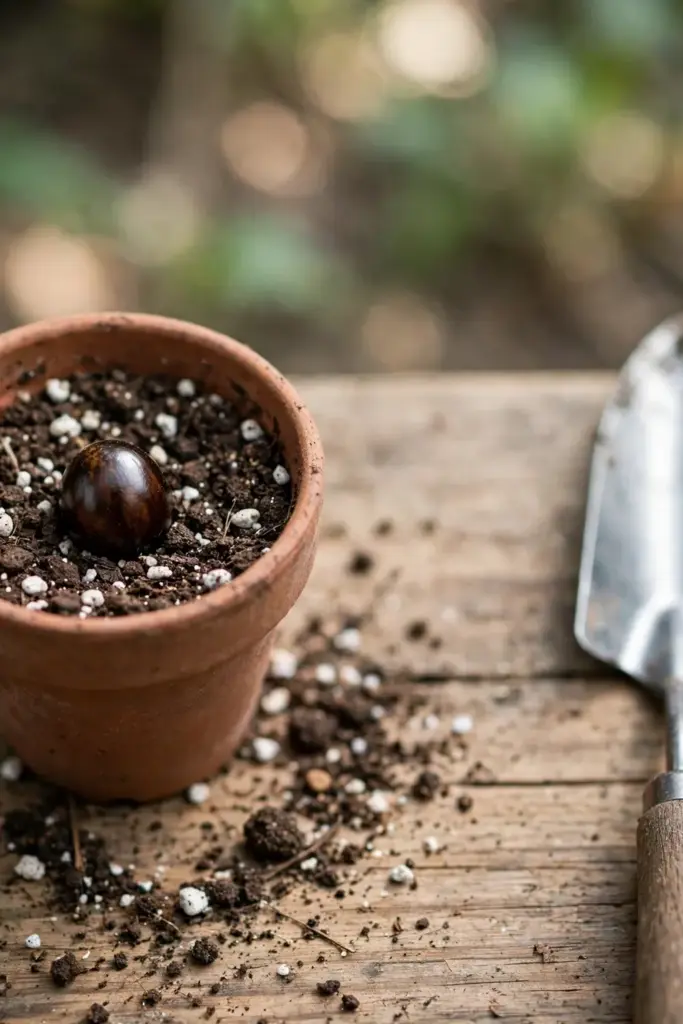
Push the seed about 1 inch deep, pointy end down if you can tell which end is which. The hilum, the pale spot where the seed attached to the fruit, sits at the base. Cover lightly, water once, and set the pot where it stays warm. One seed per 6 inch pot is the cleanest setup; two is acceptable if you plan to separate them early.
The routine for getting any seedling off to a strong start is worth reading in full in the seed starting guide before you sow. The habits in that guide, moisture control and first light, decide more than the seed itself does.
5. Give Seeds 80 to 90 Degree Warmth
Warmth is the switch. Longan seed sprouts fastest at 80 to 90 degrees F. In warm climates that is a shaded patio in summer. Indoors, a heat mat under the pot does the job in any month. Cover the pot with a clear dome or bag to hold humidity, then ventilate daily so condensation does not become a mold farm.
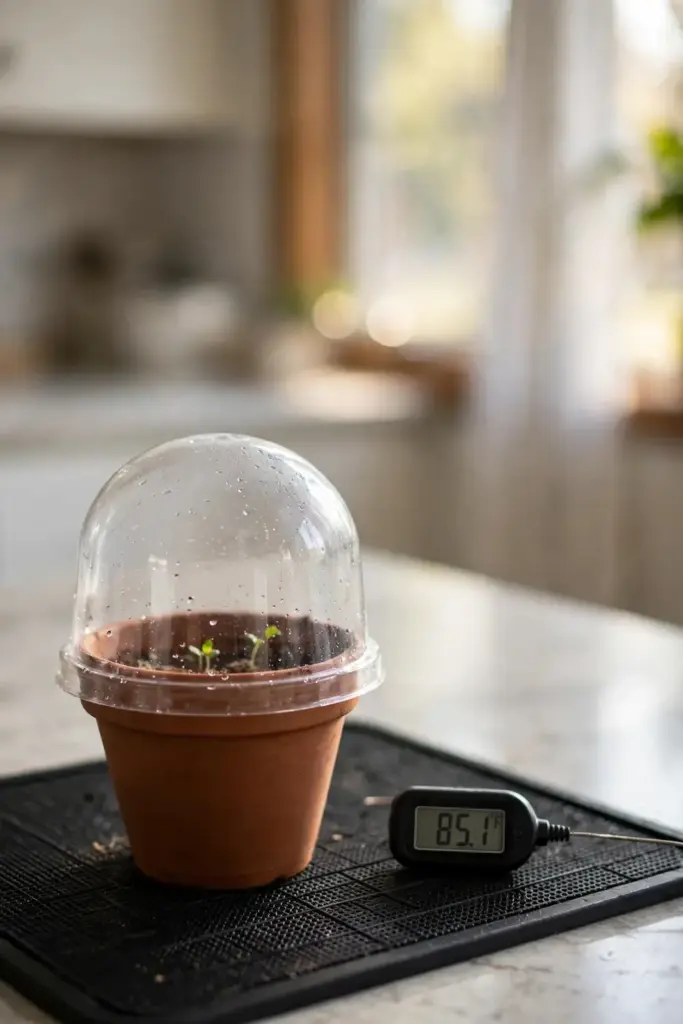
Expect the first root within 7 days and a shoot within 2 to 3 weeks at good warmth. At 70 degrees the same seed may take 4 to 5 weeks or stall entirely. If nothing moves after 6 weeks at proper warmth, the seed was likely dead on arrival. Sow another, fresher seed.
6. Transplant Once, Gently, at the Two-Leaf Stage
One question comes up constantly: is it really worth learning how to grow longan from seed when grafted trees fruit years sooner? If the tree itself is the prize, or if you want rootstocks for grafting practice, yes. If a reliable harvest is the prize, buy the grafted tree and keep the seedling as a companion. That honest split is the backbone of this article, and it keeps you from resenting your own tree in year four.
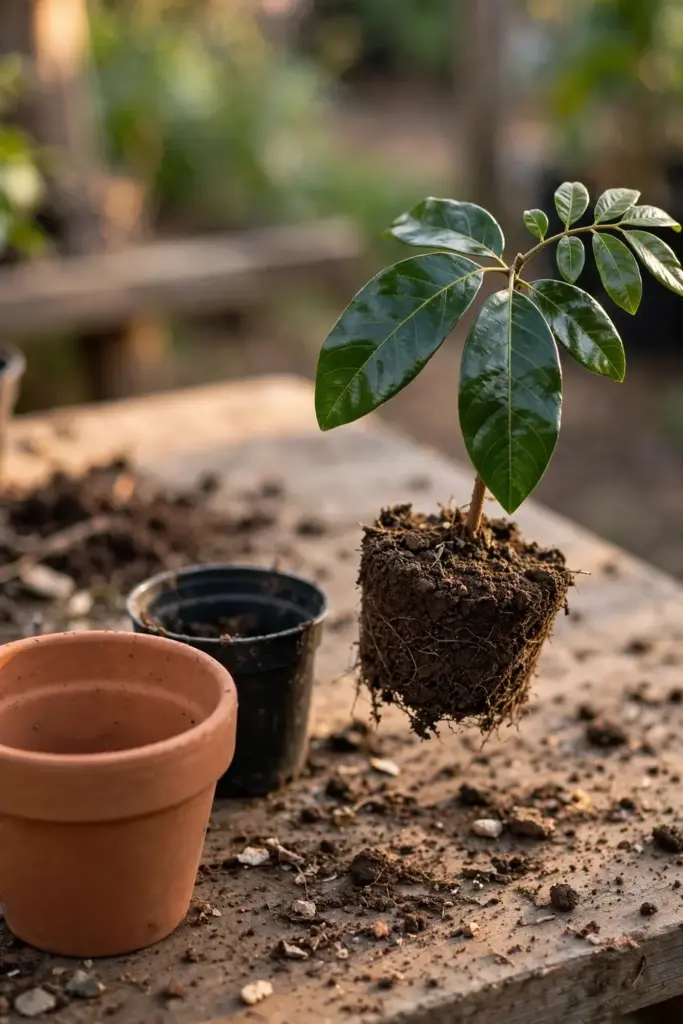
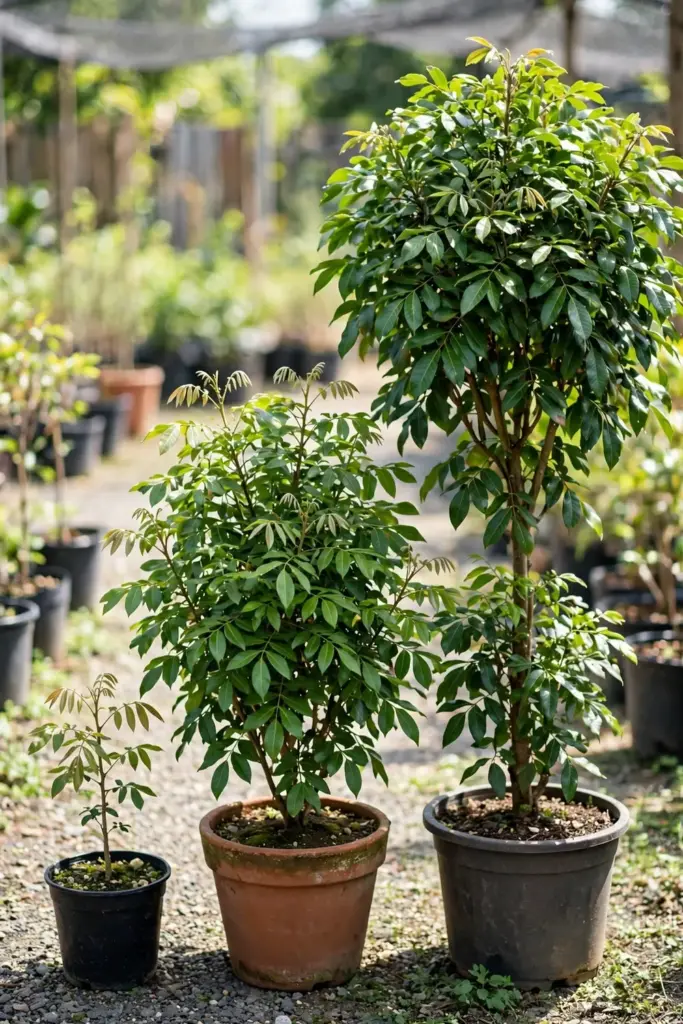
Longan seedlings grow a taproot early, and they resent disturbance. Let the seedling grow until it carries two true leaves, then move it to its final pot before the taproot circles. For cold-climate growers, that final pot is the 15 to 25 gallon container the tree will live in for years.
Handle the root ball like an egg. Slip the seedling out with its soil intact, set it at the same depth it was growing, and water it in. Transplant on a calm evening, not at noon, so the roots settle without a heat shock. One clean move beats two rough ones.
7. Grow It in a Pot If Winters Freeze
This is the cold-climate lane, and it is the whole reason many readers choose seed. A potted longan moves. In-ground longan dies where winter drops below about 26 F. In a pot, you roll the tree to shelter and it lives another year.
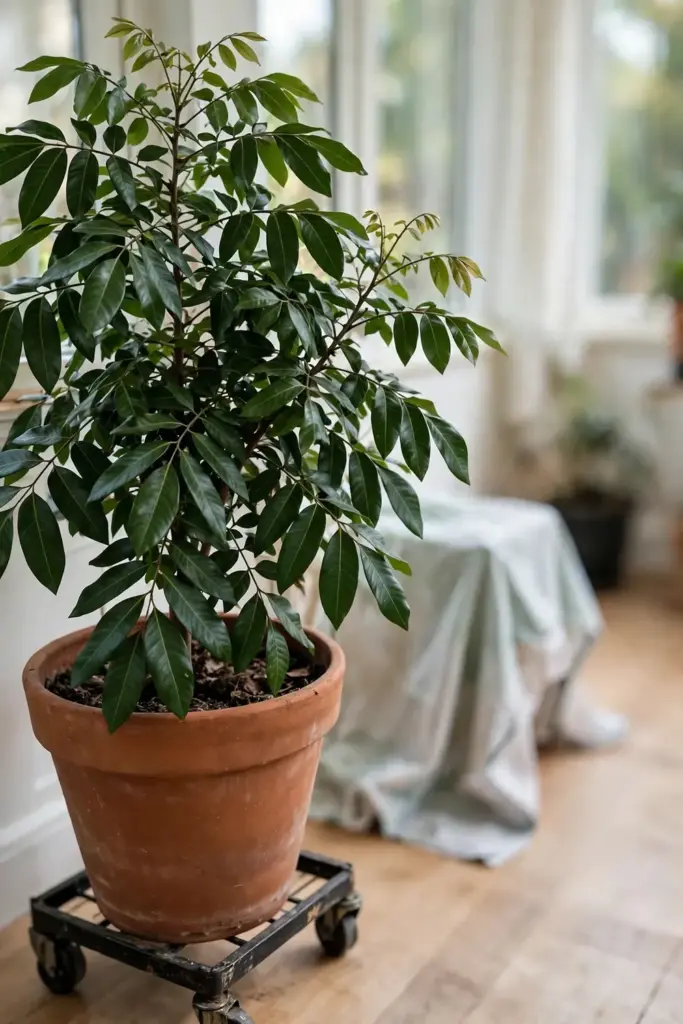
Start the tree in its big pot from the beginning if you know it will overwinter indoors: 15 gallons minimum, 25 gallons better, with drainage holes you could drive a pencil through. Use the same sandy-loam, free-draining mix as the ground plan. Set the pot on pot feet or a rolling plant caddy, because a 25 gallon pot full of wet soil is not something you want to discover is immovable in December.
When nights threaten to drop near freezing, move the tree into an unheated garage, greenhouse, or bright sunroom. Keep it above about 32 F, water sparingly through winter, and return it outdoors after the last frost. The UF/IFAS container fruit overview covers the same move-indoors logic for potted tropicals. Expect little growth in winter; the tree is resting, not dying. Fall planter ideas include heavy rolling planters that make this seasonal move practical.
8. Know Where the Ground Plan Works and Where It Does Not
Longan belongs in the ground in warm, frost-free climates: USDA zones 9b to 11 reliably, with zone 9b growers keeping frost protection ready. UF/IFAS reports young trees suffer severe damage at 29 to 31 F and may be killed at 26 to 28 F, while established trees tolerate brief dips a few degrees lower. Warmth cues flowering; a cool, dry fall and winter encourages bloom, while warm, wet winters push leaves instead of flowers.
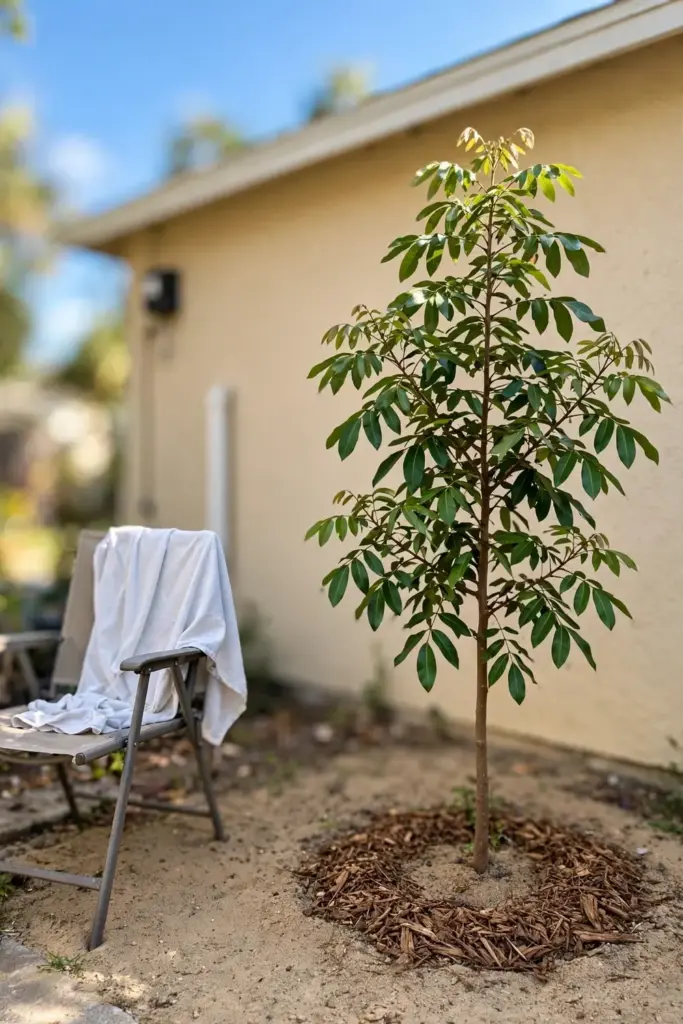
If your winters regularly fall below 28 F, do not plant in the ground. The pot plan is your plan. In marginal zones, plant against a south-facing wall, keep frost cloth ready, and accept that some winters will still win. Honest climate math at planting time saves years of rescue work later.
For the marginal in-ground tree, frost protection is a ritual, not a hope. Drape frost cloth over the whole canopy before sunset on freeze nights, weight the edges to the ground, and remove it after the morning warms. String old-style incandescent Christmas lights through the branches for a few extra degrees; LED strings do not give off useful heat. Water the soil deeply before a freeze, because moist soil holds more warmth than dry soil. None of this saves a tree in a 20 F hard freeze. It buys you survival in the 28 to 32 F nights that kill unprotected trees.
9. Feed and Water the Young Tree Without Drowning It
Water deeply, then let the top 2 inches dry. Longan is not tolerant of flooded soil; UF/IFAS notes young trees can decline and die after as little as 5 to 10 days of waterlogged soil in hot weather. A pot in a saucer that never drains is a slow funeral. Empty the saucer after watering.
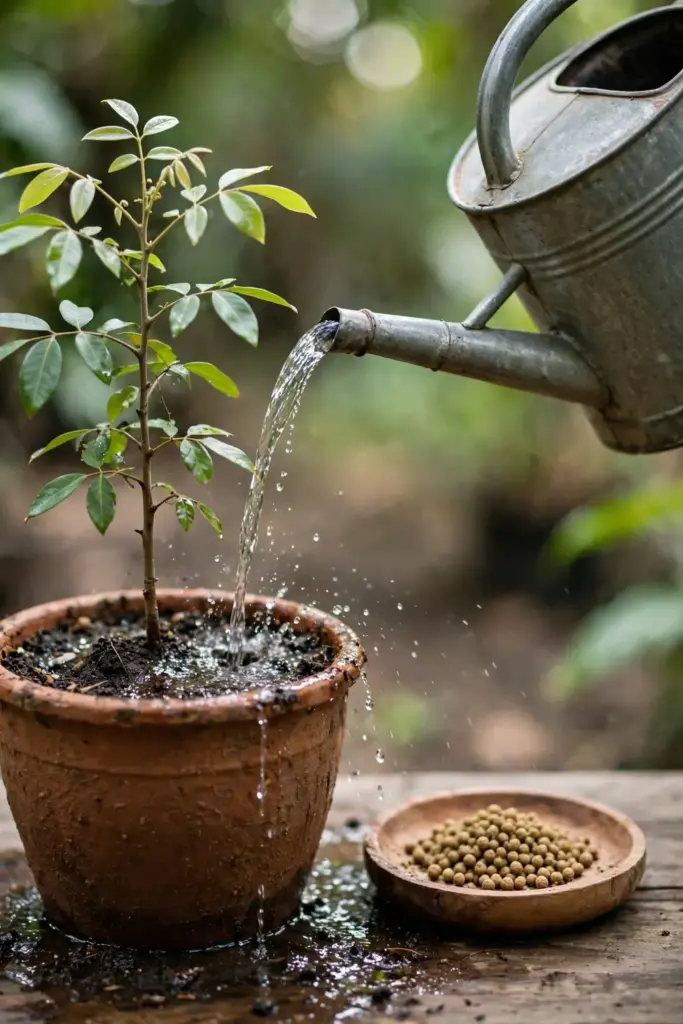
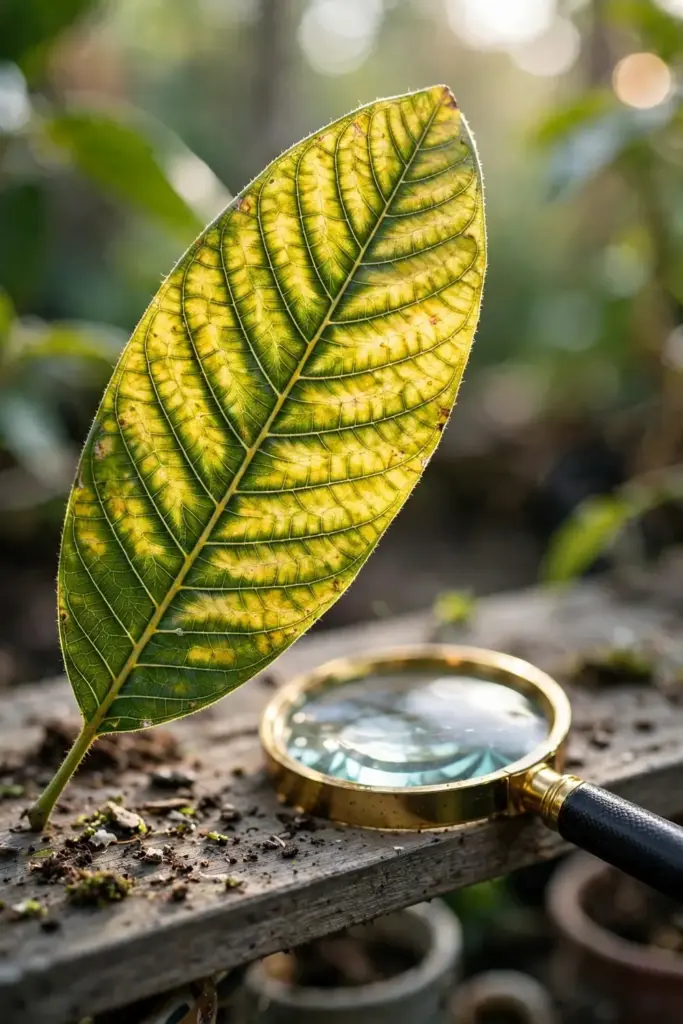
Feed lightly and often rather than heavily and rarely. For the first year, a balanced slow-release fertilizer every 6 to 8 weeks through the growing season is plenty; UF/IFAS starts nursery trees at a quarter pound of 6-6-6 and steps up as the tree grows. Micronutrients matter for this family: iron, manganese, and zinc deficiencies show as yellowing leaves, so choose a formula with minor elements. Skip winter feeding entirely while the tree rests.
| Time | Action |
|---|---|
| Month 1 after transplant | Quarter pound of 6-6-6 with minor elements |
| Every 6 to 8 weeks, growing season | Repeat the light feeding, stepping up gradually |
| Winter | Nothing. The tree is resting. |
| Year 2 onward | Increase toward half to 1 pound per application, split across the season |
10. Keep Lychee Webworm and Scale Off New Growth
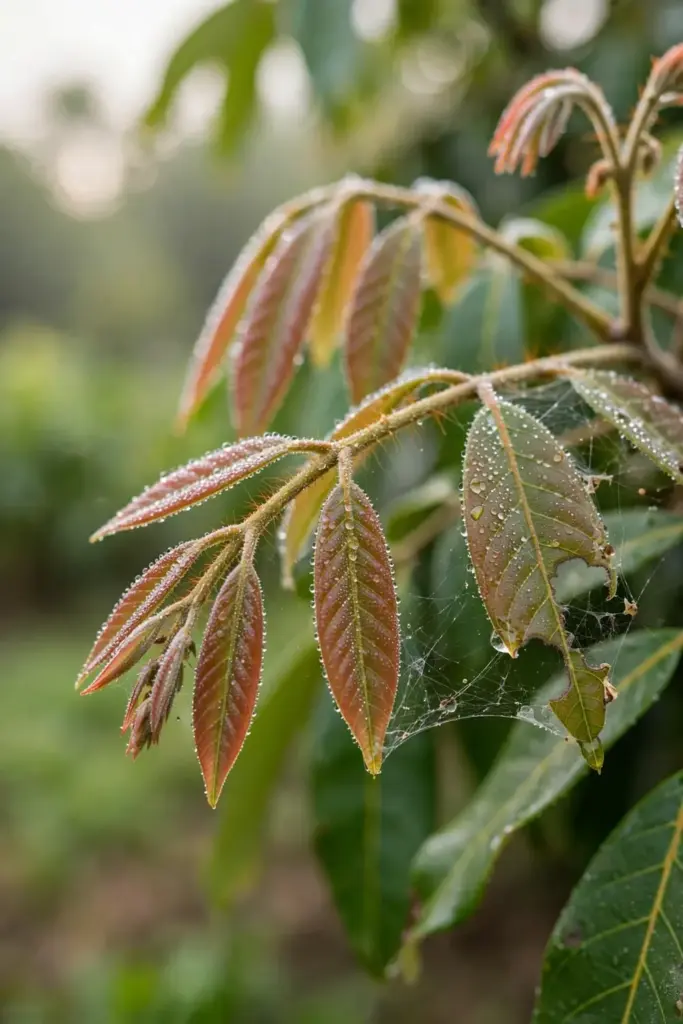
The same pests that bother lychee bother longan. The lychee webworm attacks tender new flushes, flower panicles, and young fruit, webbing them into a mess. Scale insects park on stems and leaf undersides and suck the vigor out. Inspect every new flush of growth, because early is when these pests are cheapest to beat.
For a young potted tree, hand removal works: prune out webbed shoots and destroy them, and wipe scale off with a cloth or treat with horticultural oil. Spray oils in the cool of the evening, never at midday, to avoid burning the leaves. For heavy scale, prune out the worst stems and destroy them rather than fighting a losing battle branch by branch. Healthy growth outruns minor pressure; stressed, overwatered trees invite the worst of it. Feed correctly, drain the pot, and give full sun, and most pest problems stay small enough to handle by hand.
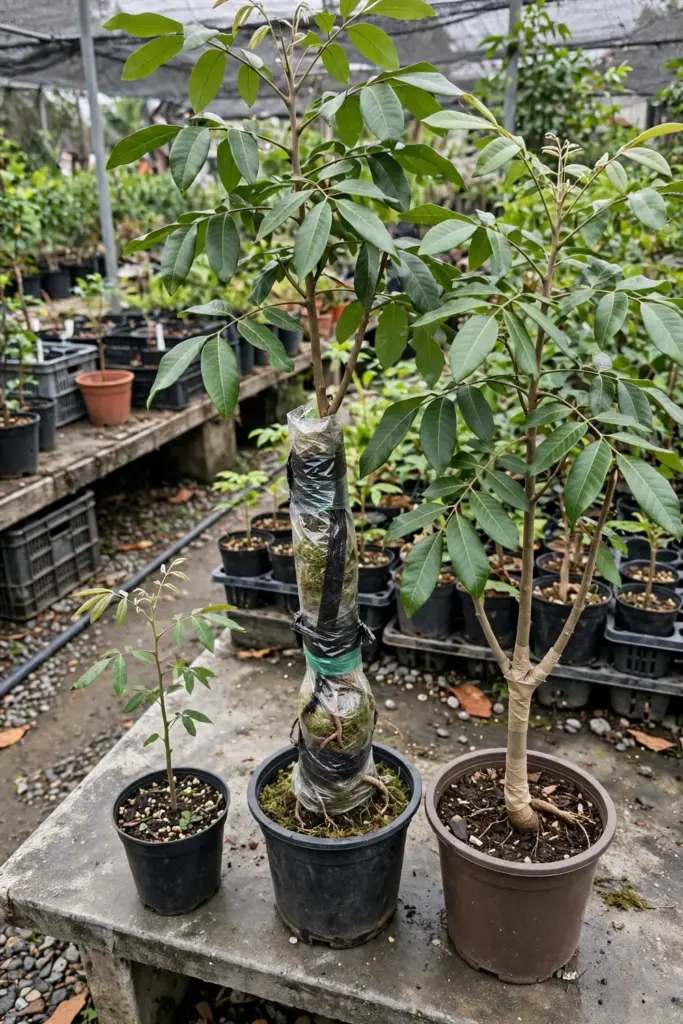
11. Seedling vs Air-Layered vs Grafted: Choose Your Lane
Seeds start the story, but they are not the only way to own a longan. Know the three lanes before you invest years.
| Lane | Fruit Timeline | Fruit Quality | Best For |
|---|---|---|---|
| Seedling | Up to 6+ years | Gamble; often smaller, less sweet | Rootstocks, experiments, fun projects |
| Air-layered | 2 to 3 years | Clones the parent cultivar | Home fruit production |
| Grafted | 2 to 3 years | Clones the parent cultivar | Home fruit production, chosen variety |
There is no shame in growing a seedling for the joy of it and buying a grafted Kohala later for the fruit. Many growers do exactly that. The seedling also makes excellent practice wood for learning grafting, which is a skill worth having on any tropical fruit bench.
12. Seven Common Mistakes That Kill Longan Seedlings
- Sowing old seed. The top killer. If the seed sat in a drawer for two months, it is compost.
- Letting cleaned seed dry out. Drying kills the embryo. Keep it damp until it is in soil.
- Planting too deep. More than 2 inches buries the energy the seed needs to emerge. One inch is right.
- Soggy potting mix. Longan seed rots in standing water. Drainage first, always.
- Too little warmth. A cool windowsill in March is not enough. Heat mat or summer timing.
- Transplanting late. Waiting until roots circle the pot guarantees a sulking tree.
- Leaving the pot out in a freeze. One hard freeze can end a two-year project. Watch the forecast.
13. Troubleshooting: What the Seedling Is Telling You
Seed never sprouts. The seed was old, dried out, or kept too cool. Start over with seed from fruit eaten this week.
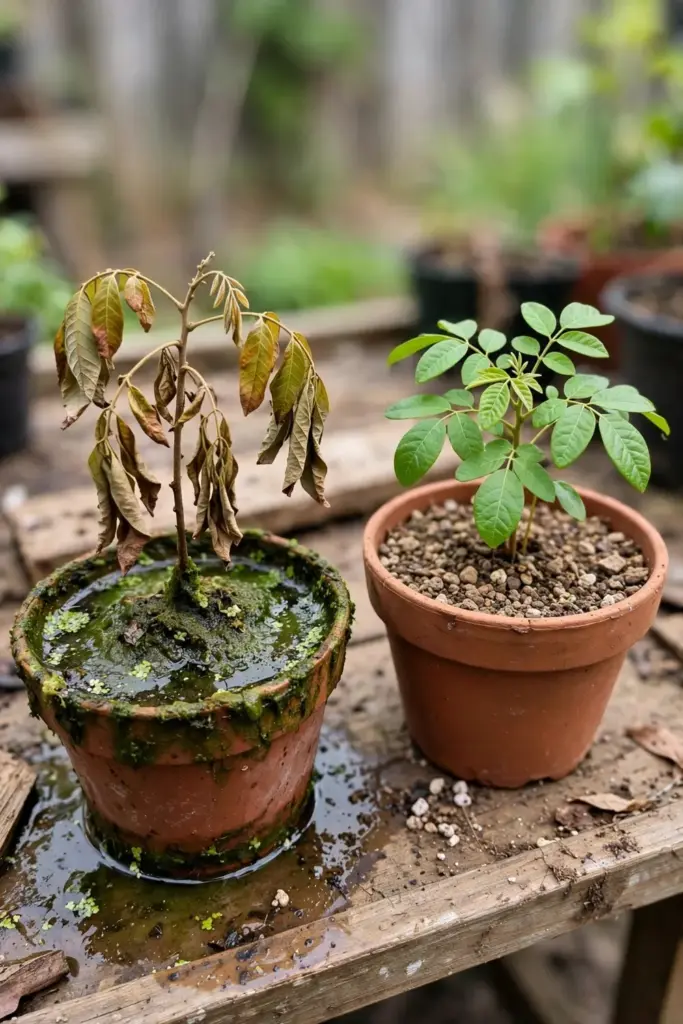
Sprout emerges, then collapses. Damping off from wet, airless mix. Toss the seedling, sterilize the pot, sow fresh in drier mix with better air flow.
Leaves yellow between the veins. Likely iron or micronutrient deficiency, or chronically wet roots. Check drainage first, then feed with a formula carrying minor elements.
Growth stalls in winter. Normal. Keep the tree above freezing, water lightly, and wait for spring.
Leaf tips brown and curl. Salt buildup or drought stress. Flush the pot with clean water, then water more evenly. Longan is not salt tolerant.
Tree drops leaves after moving indoors. Light shock. Move it gradually over a week, brightest spot you have, and hold steady. It will push new leaves when light returns.
The Year-by-Year Game Plan
Seed to tree is a long game, so a year-by-year map keeps the plan honest.
Year 1: Germination and the first flushes of growth. Your seedling reaches 1 to 2 feet in a warm, bright spot. This is the year to perfect watering and keep it frost-free.
Year 2: The tree fills out, pushing multiple flushes in the warm season. Up-pot if roots circle. Light feeding keeps it moving. A cold snap this year can set it back a full season, so protect it.
Years 3 to 4: The tree starts looking like a real tree, 4 to 6 feet in a pot, taller in the ground. This is when many growers graft a known cultivar onto the seedling, using pencil-thick stems as the grafting point.
Years 5 to 6: The earliest fruiting window opens for vigorous seedlings, though many take longer. Fruit quality is the reveal. If the fruit disappoints, top-work the tree by grafting a proven cultivar onto it, a standard rescue in the tropics.
Year 7 and beyond: The tree is established. In the ground it can reach 20 feet plus if you let it; in a pot, annual pruning holds it at a manageable size. Whatever it becomes, you grew it from a seed you ate, which is a story few trees can tell.
Turn Your Seedling Into a Rootstock
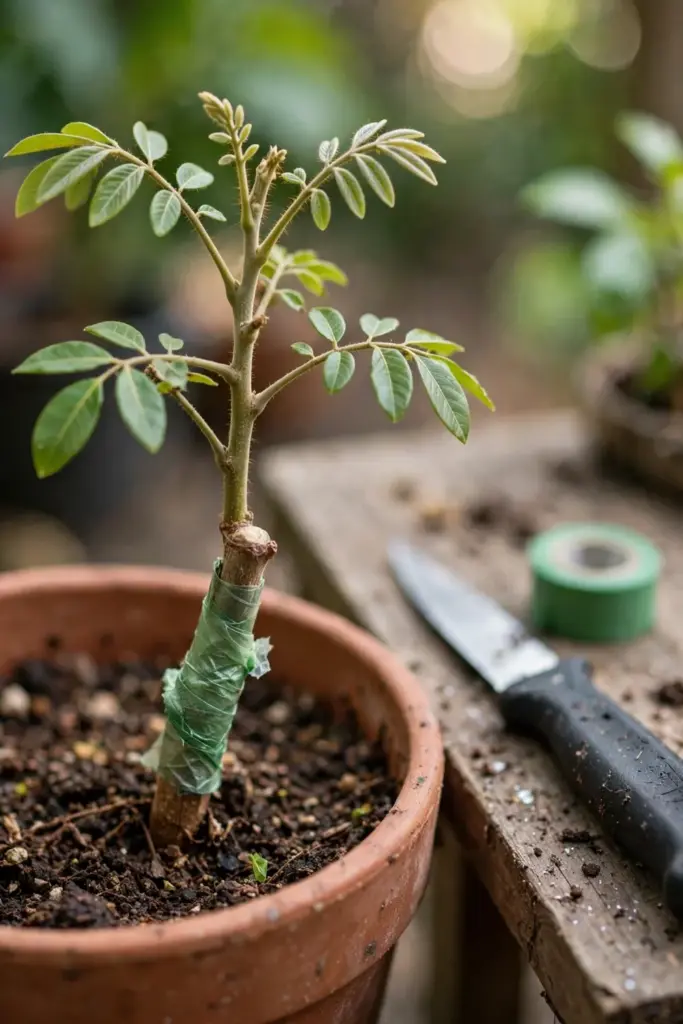
Here is the move that turns patience into profit. A seedling makes an excellent rootstock for grafting, and UF/IFAS notes seedlings are commonly grafted once stems reach pencil size, about 3/8 inch thick. Buy or trade scion wood of a proven cultivar such as Kohala, learn one grafting method (side veneer is the standard), and you get a tree that fruits in 2 to 3 years on a root system you grew yourself.
Why does this matter? Grafted nursery trees cost real money, and grafting your own costs nearly nothing once you have the seedling. It also teaches the skill that every serious tropical fruit grower eventually needs. Even if you never graft, understanding that the seedling is graft-ready keeps every option open.
What Harvest Looks Like, Years From Now
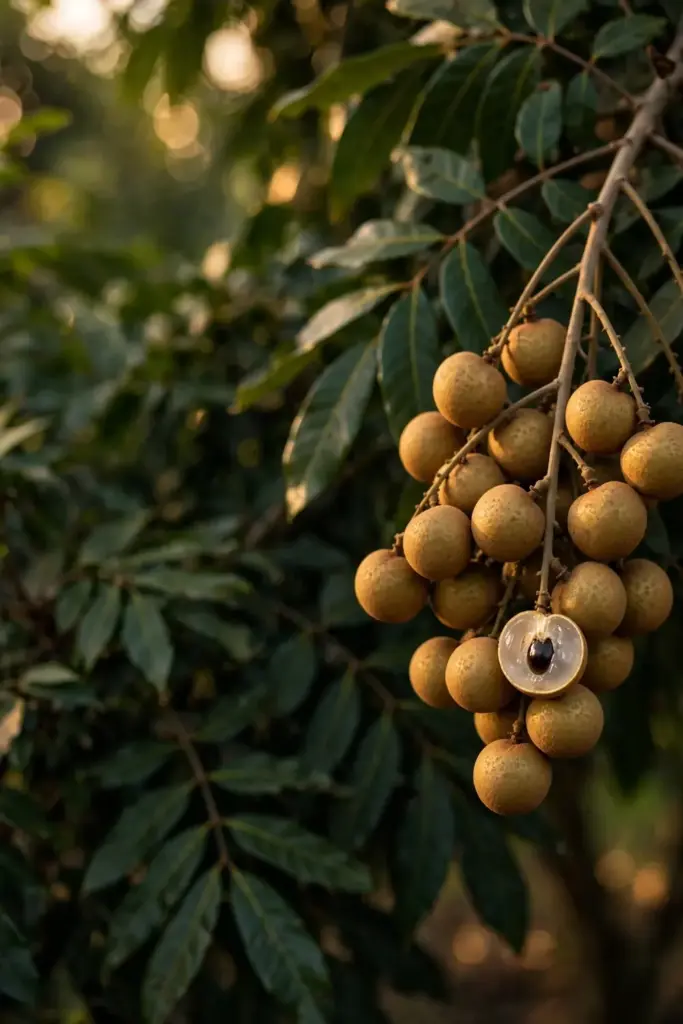
Someday, if the tree cooperates, you will pick fruit. Longan fruit ripens roughly 140 to 190 days after flowering, per UF/IFAS, which puts the main harvest in summer for most warm climates. Harvest the whole panicle when the fruit turns from green to tan and tastes sweet; fruit left too long on the tree loses quality fast.
Eat them fresh out of hand, or dry them for the classic dried longan used in teas and soups across Asia. Fresh fruit keeps about a week refrigerated. Dried longan keeps for months in a sealed jar. The tree you grew from a seed you ate will feed you in a form you have never bought in a store, and that closes the loop this whole project started.
Frequently Asked Questions
Yes, if the fruit was fresh. Supermarket longan fruit often carries viable seed, and the same 48-hour rule applies: eat, clean, sow. The variety is unknown, so treat the tree as a seedling project with a 6-plus-year timeline. Buy the fruit, enjoy it, and sow the same day. That is the best possible seed source most readers will ever have.
Plan for 6 years or more, and accept that some seedlings take longer or fruit lightly. UF/IFAS puts air-layered trees at 2 to 3 years by comparison, which is the honest benchmark to measure your seedling against. If fruit in under 3 years is the goal, buy an air-layered or grafted tree and keep the seedling as a companion project.
Probably not. Named cultivars do not come true from seed, so the fruit is a genetic surprise. It may be decent, or it may be small, seedy, and bland. This is why commercial orchards propagate by air layering and grafting. Grow the seedling for the tree; buy the cultivar for the fruit.
In the ground, no, not where winters freeze hard. In a pot, yes, with a plan. Keep the tree in 15 to 25 gallons, move it to shelter when nights approach freezing, and hold it above about 32 F through winter. Many cold-climate growers keep longans as handsome container trees for years, harvesting fruit only in the warmest runs.
In the ground in the tropics, 30 to 40 feet or more. In a pot, you control the size: prune the top annually, root-prune every few years, and the tree stays a manageable 6 to 10 feet. A potted longan is a long-term roommate, not a set-and-forget shrub. Plan the pot size and the pruning before the tree forces the decision.
No, but they are close cousins in the soapberry family, and the fruits look similar at a glance. Longan flesh is milder and less acidic than lychee, and the trees differ in cold tolerance and fruiting habits. The seed, leaf, and care details here are longan-specific. If lychee is your goal, grow lychee; the two are not interchangeable in the pot plan.
Where to Go From Here
You now know how to grow longan from seed the honest way: fresh seed sown fast, true-to-type expectations set low, and a pot plan for cold winters. Start with one fruit, one pot, and a heat mat, and watch the root emerge. When your seedling is a sturdy young tree, the longan fruit guide picks up the story: pruning for structure, feeding for fruit, and the harvest years ahead. The seed gets you the tree. The next guide gets you the dragon eyes.