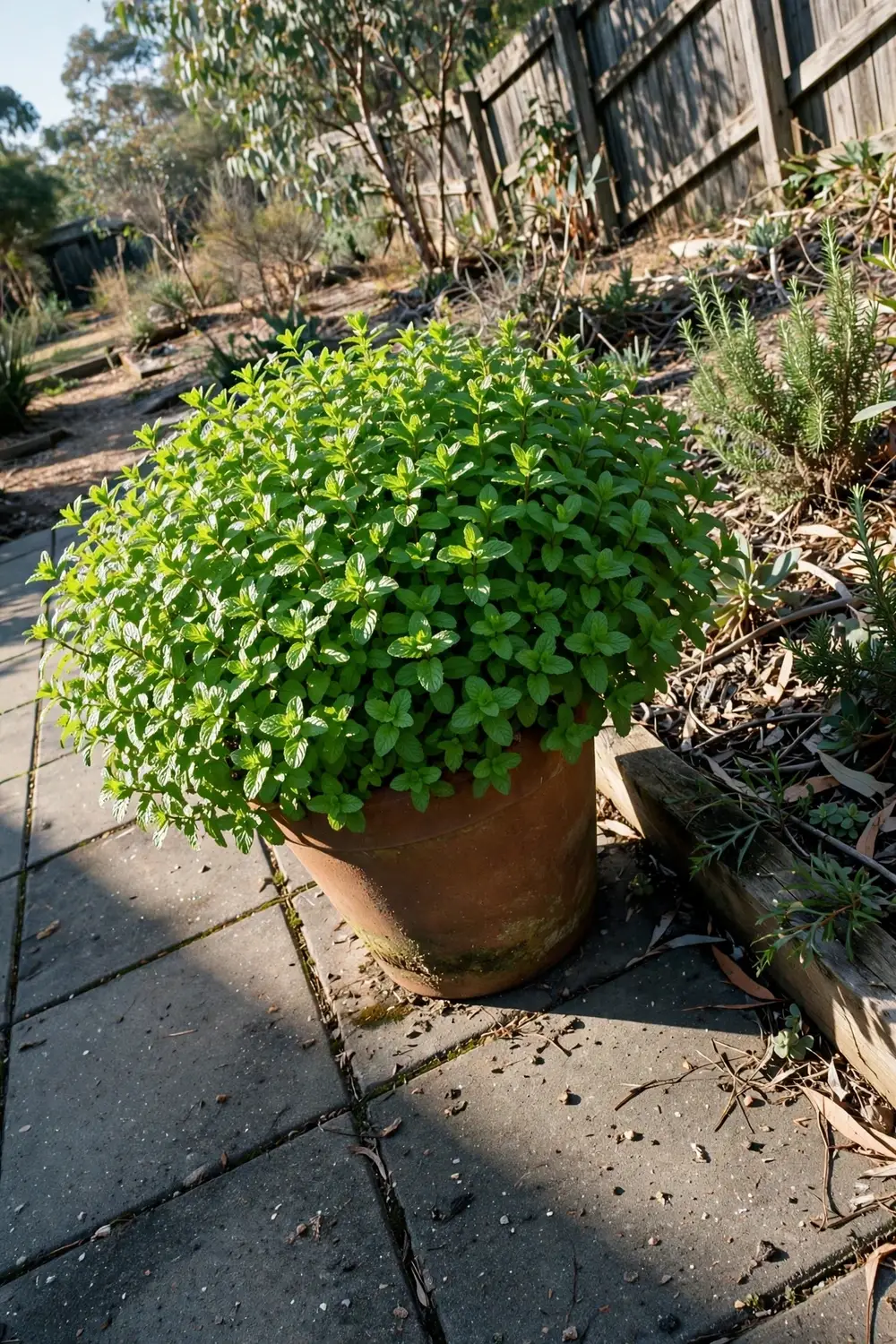

Plant one mint in a pot this weekend and you get fresh leaves for tea, salads, and cooking all season. That is growing mint in Australia: sun, steady moisture, and a wall the runners cannot cross. The rest of this page is 11 moves, from picking the mint to stopping the runners.
I have learned that the mint I keep in its own pot outproduces the mint I plant in an open bed.
Work from the top. Pick the mint, set the pot, then water and pinch on a weekly rhythm. Harvest leaves as you cook. Mint wants soil that drains but holds moisture. Good soil health keeps that balance without waterlogging the pot.
Mint suits beginners because it forgives most mistakes except two: dry soil and an open bed. Dry soil stalls it. An open bed lets runners take over. This guide fixes both from the start. Every step below works in a pot on a balcony, a courtyard, or a garden bed with a buried pot.
1. Pick the Mint That Fits Your Cooking
Spearmint fits most cooking. Peppermint fits tea and sweets. Pick one, then grow it well.
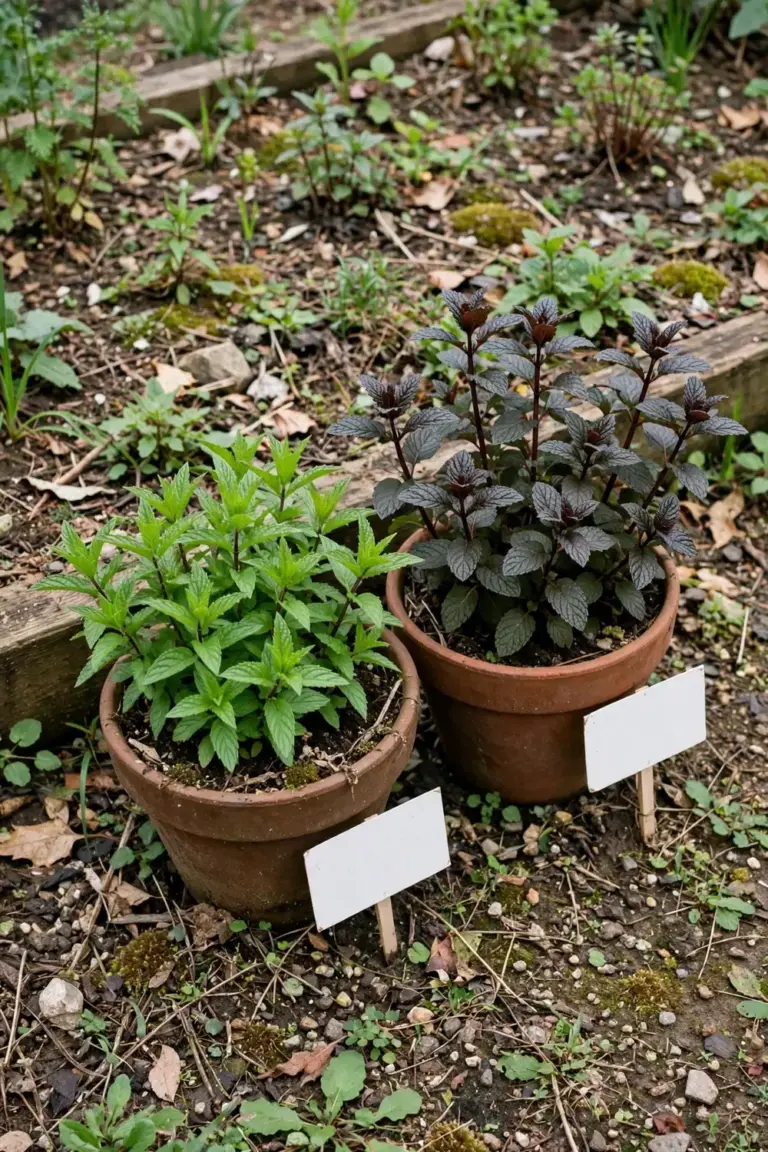
Mint means the genus Mentha. The table below picks by job, not by alphabet.
| Type | Botanical Name | Flavor and Use | Best For |
|---|---|---|---|
| Spearmint | Mentha spicata | Mild, sweet, classic mint flavor | Cooking, salads, drinks |
| Peppermint | Mentha × piperita | Strong, cool menthol bite | Tea, sweets, desserts |
| Apple mint | Mentha suaveolens | Soft, fruity, woolly leaves | Fruit salads, garnish |
| Chocolate mint | Mentha × piperita f. citrata ‘Chocolate’ | Mint with a cocoa note | Desserts, drinks |
| Native river mint | Mentha australis | Bush mint, native to Australia | Native gardens, bush cooking |
Peppermint is a cross between watermint (M. aquatica) and spearmint (M. spicata). It prefers neutral soil at pH 6.0 to 7.0 and at least 3 hours of sun a day, according to North Carolina Extension’s peppermint profile. Spearmint grows 30.5 to 61 cm high and wide in full sun and moist soil, and its square stems root wherever they touch the ground, according to North Carolina Extension’s spearmint profile.
Buy a potted plant, not a seed packet, for your first mint. A potted plant shows you the leaf shape, the scent, and the growth habit before you commit a pot to it. Crush one leaf between your fingers and sniff. Spearmint smells mild and sweet, while peppermint smells sharp and cool, and that scent test settles the choice faster than any label. Check the botanical name on the tag too. Common names blur together at nurseries, and a plant sold only as “mint” may be any Mentha.
Inspect the plant before you buy it. Flip a few leaves and look for rust spots, pale stippling, or webbing under the leaves. Skip plants with spotted or curling leaves. A healthy mint plant stands upright, smells strong when you brush it, and shows fresh growth at the tips. One mint in one pot is the right start. A second pot can wait until you know how fast the first one grows.
Vietnamese mint is Persicaria odorata. It is not a true mint, and it belongs to a different family. Buy it under its own name. Native river mint is a true Mentha, and it suits native gardens and bush cooking. Keep the two apart at the nursery, because the names look similar on a crowded bench.
2. Match Mint to Your Australian Climate
Mint grows in every Australian climate band. Plant in spring after frost danger passes, when the soil warms.
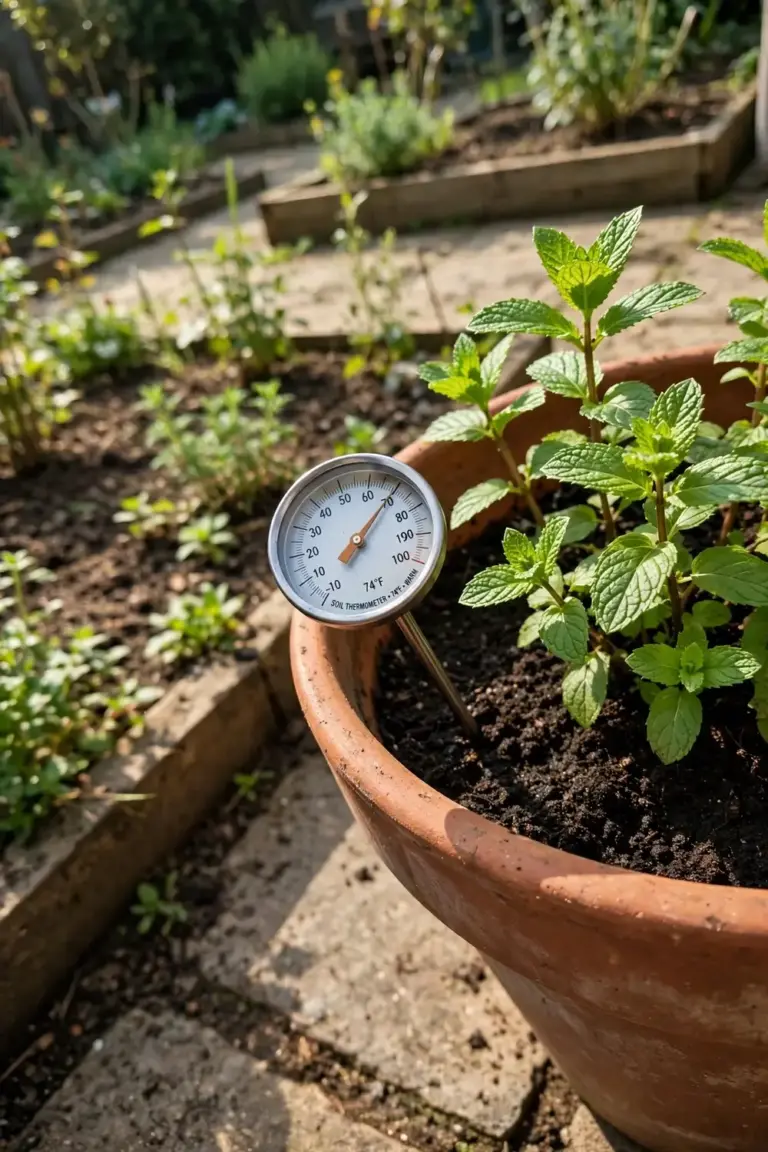
Gardenate’s Australian mint calendar sets sowing soil at 21 to 24°C, spacing at 30 cm, and first harvest at 8 to 12 weeks in warm zones and 2 to 3 months in cool zones, with cuttings as the faster and more reliable start. The same calendar notes mint dies down in winter and sends up new shoots in spring.
| Climate Band | Plant in Spring | Notes |
|---|---|---|
| Temperate | After the last frost | Dies back in winter, regrows in spring |
| Subtropical | Spring, growth all year | Shade in the hottest afternoons |
| Tropical | Start of the wet season | Afternoon shade, water often |
| Arid | Spring, water often | Afternoon shade, mulch to hold moisture |
| Cool or mountain | After the last frost | Dies back in winter, mulch before frost |
In frost-free zones mint stays green through winter. In cold zones it dies back and returns from the roots in spring. The pot moves with the seasons. Shift it into afternoon shade in a heatwave and back into full sun when the heat breaks.
Spring is the planting window across all five bands. Soil warmth matters more than the calendar date. Growing mint in Australia starts with that soil warmth, not with the calendar. A soil thermometer settles it. In cool and mountain zones, wait until the last frost passes, then plant. In subtropical and tropical zones, plant at the start of the warm season and keep water up through the first dry weeks. In arid zones, plant in spring and shade the pot in the afternoon until the plant roots in.
Microclimate shifts the picture on a small block. A courtyard wall holds heat overnight and lets mint start two weeks earlier than an open lawn. A shaded southern wall holds frost longer and delays planting. Watch your own yard for a week before you plant. Note where the sun lands at midday and where the wind funnels through. Put the pot in the sunniest still spot.
3. Plant Mint in a Pot First, Not a Bed
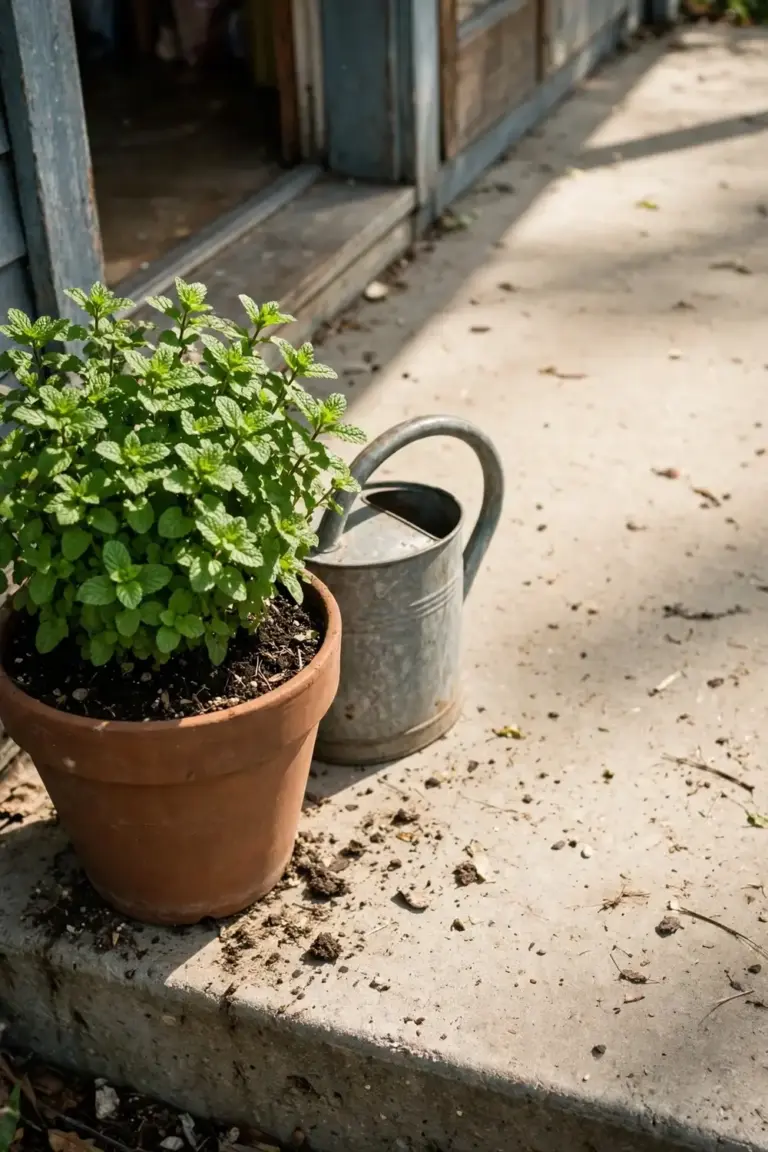
Plant mint in a pot. A pot is the containment. A bed is an invitation for runners.
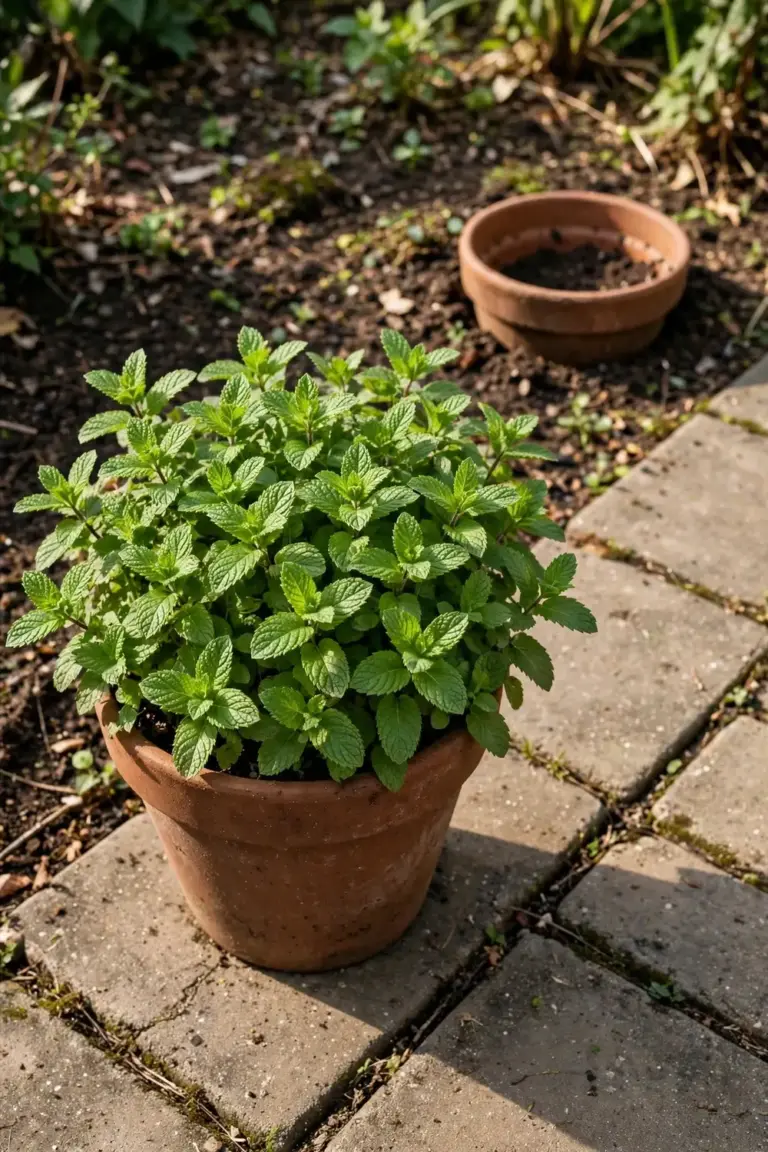
A 30.5 to 40.6 cm pot fits one peppermint plant and holds its runners for a season, and plants set in the ground sit 45.7 cm apart, according to North Carolina Extension’s peppermint profile. Use a pot with drainage holes. Fill it with a free-draining potting mix, not garden soil. Garden soil compacts in a pot and holds too much water after rain.
Set the pot on a hard surface, not on soil. Runners escape through drainage holes and root in the bed below, and a pot left on soil for a month can anchor itself through the holes. A pot on pavers or a tray stops that path. If you want mint in a bed, sink the pot into the soil with the rim 2 to 3 cm above the surface. The rim is the wall. Check it every week for stems crossing over.
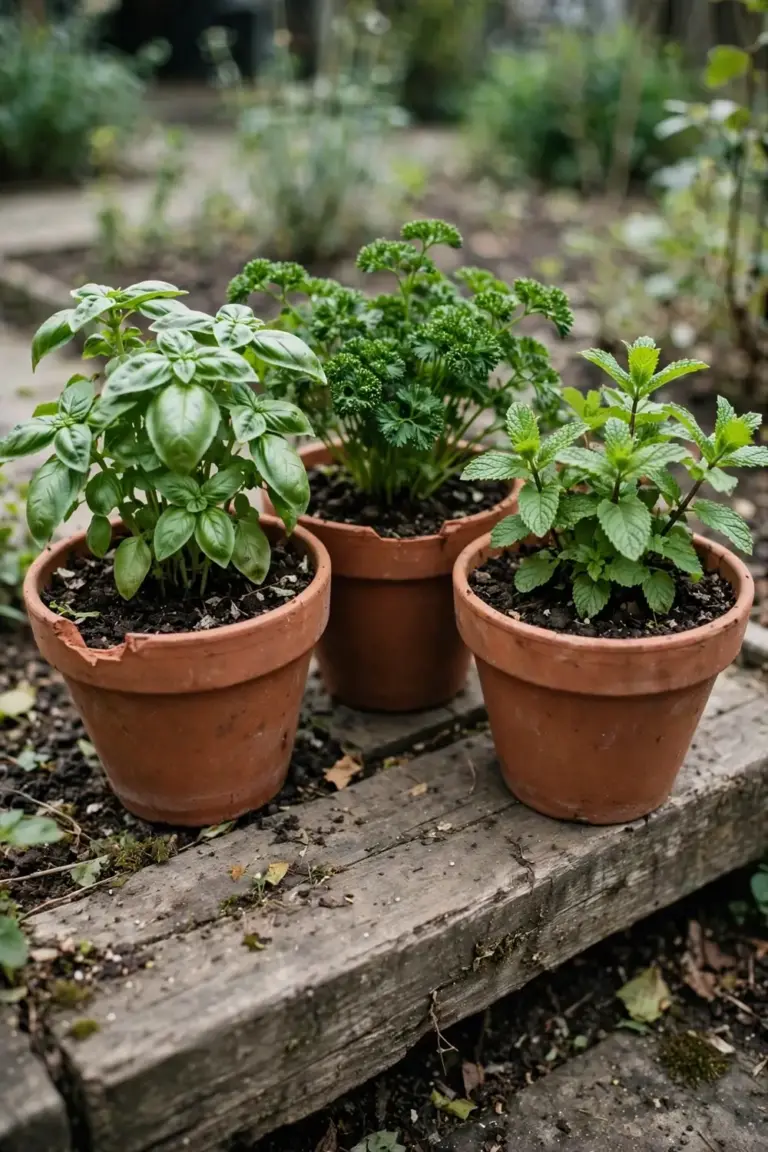
Plastic pots hold moisture longer than terracotta. Terracotta dries faster and suits gardeners who water often. Either works. Size matters more than material. A pot under 25 cm dries too fast in summer and needs daily water. A pot of 30.5 to 40.6 cm holds moisture through a hot day and gives roots room for a season. Repot each spring. Tip the plant out, split the root ball, and return one piece to fresh mix.
Potting mix sets the season. Use a coir or peat-based mix with perlite for drainage. Add a handful of compost for slow feeding. Skip the drainage layer of gravel at the base. Gravel lifts the wet zone into the root ball and slows drainage. One mix, one pot, one plant. Water the mix before planting, set the plant at the same depth it sat in the nursery pot, and firm gently around the stem.
4. Give Mint Full Sun and Steady Moisture
Mint wants full sun and soil that stays moist. Six hours of direct sun grows the strongest leaves.
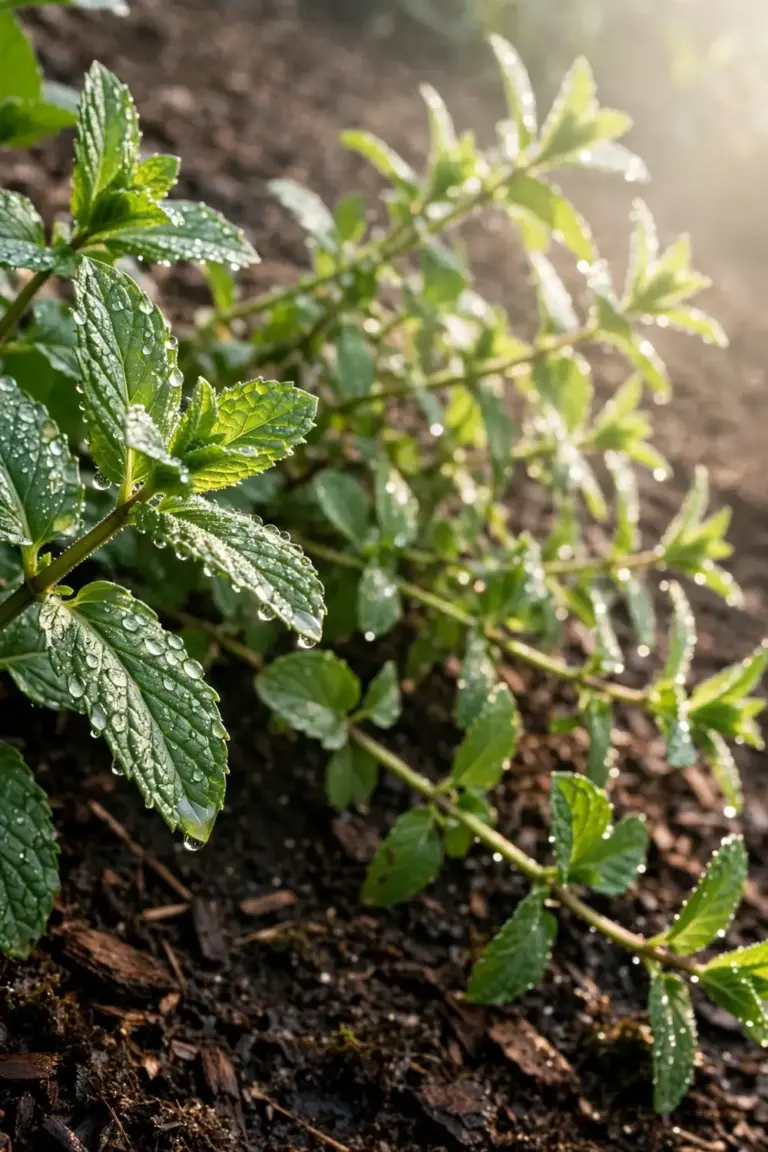
Most herbs need at least 6 hours of direct sunlight daily, and full sun produces the best growth, according to University of Minnesota Extension’s herb guide. Water regularly and do not allow plants to wilt. Spearmint does not do well in dry soils, according to North Carolina Extension’s spearmint profile.
Water deeply once a week and soak the soil to 20.3 cm, according to University of Minnesota Extension’s herb guide. Pots dry faster than beds, so check a pot daily in hot weather. A finger test beats a calendar. Push a finger 2 to 3 cm into the mix. Water when it feels dry at that depth.
Mulch perennial herbs with 5.1 to 12.7 cm of straw, compost, leaves, or marsh hay to hold moisture and steady soil temperature, according to University of Minnesota Extension’s herb guide. Keep mulch off the stems. Mulch piled against stems holds wetness and invites rot.
Thirst shows first in the leaves. Wilting leaves in the afternoon heat mean the pot dried out. Water at once, and the plant recovers by evening. Leaves that stay yellow after watering point to a different fault: waterlogged mix, or a pot with no drainage. Check the drainage holes. Empty the saucer after watering. A pot that sits in water rots from the roots up, and no amount of sun fixes that.
Heatwaves need a different rhythm. On days over 35°C, move the pot into afternoon shade and water in the early morning. A saucer of water under the pot helps for one day, but empty it by evening. Two waterings a day beat one deep soak when the wind dries the mix by noon. Watch the leaves at dusk. Flat, upright leaves mean the plant coped. Drooping leaves mean it wants water now.
5. Feed Mint Lightly or Skip Feeding
Mint needs little fertilizer. Rich soil grows soft leaves with weak flavor.
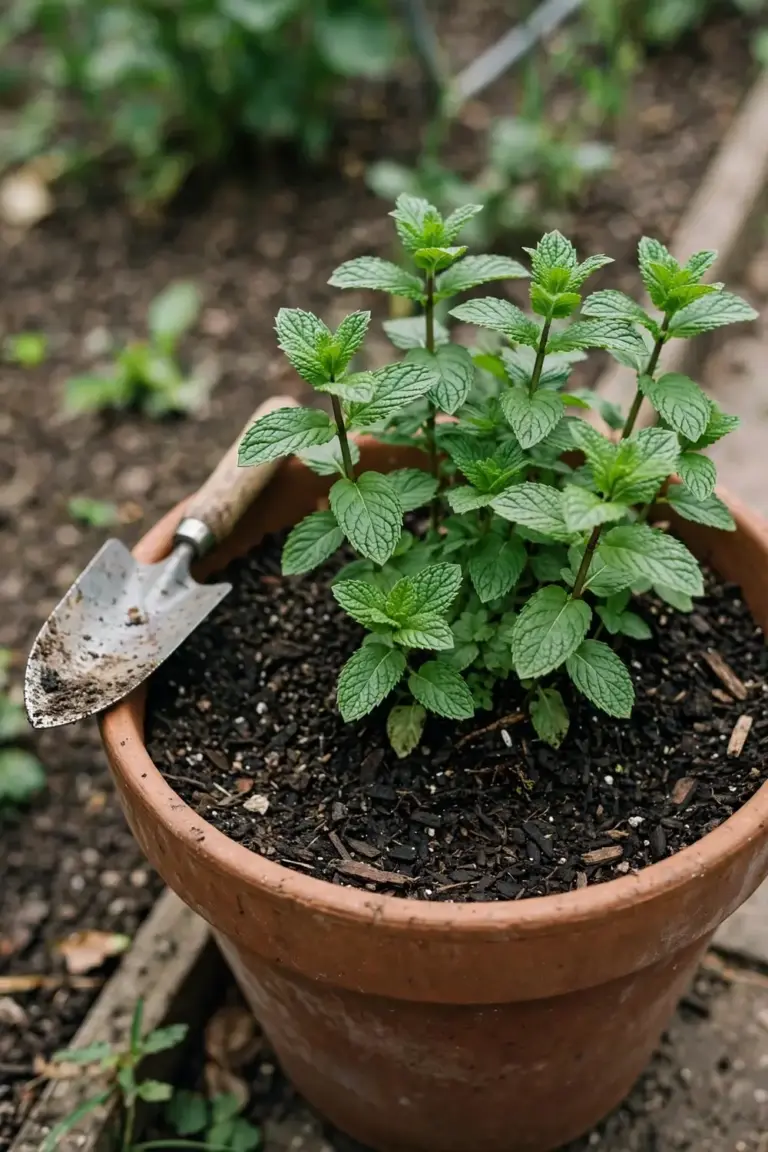
Feed garden herbs a 5-10-5 fertilizer once per season at 85 g per 3 m of row, according to University of Minnesota Extension’s herb guide. For container herbs, use a half-strength liquid fertilizer every 3 to 4 weeks outdoors and every 6 weeks indoors. Rich soils promote fast, soft growth but reduce essential oil production, which lowers flavor and aroma.
Most herbs grow best in well-drained soil with a pH between 6.0 and 7.5, according to University of Minnesota Extension’s herb guide. Peppermint prefers the middle of that band, at pH 6.0 to 7.0, according to North Carolina Extension’s peppermint profile. A soil test settles the question. Skip fertilizer when leaves smell strong and growth looks steady.
Compost feeds mint without the soft-growth risk of strong fertilizer. Work a 2 to 3 cm layer of compost into the top of the pot each spring. That one feed carries most plants through the season. Watch the leaves. Pale leaves with slow growth mean the plant wants a half-strength liquid feed. Dark leaves with long, soft stems mean you fed too much. Flush the pot with plain water and skip the next feed.
Seaweed tonic and worm castings suit mint too, because both feed gently and rarely push soft growth. Apply at the label rate, never stronger. A half-strength feed given twice beats a full-strength feed given once. The plant takes up small doses without a growth surge. Stop feeding in late autumn, because a plant fed into winter grows soft shoots that frost burns off.
6. Pinch Mint Tips Every Week to Keep It Bushy
Pinch the top 2 to 3 cm off every stem, every week. Pinching grows side shoots and keeps the plant bushy.
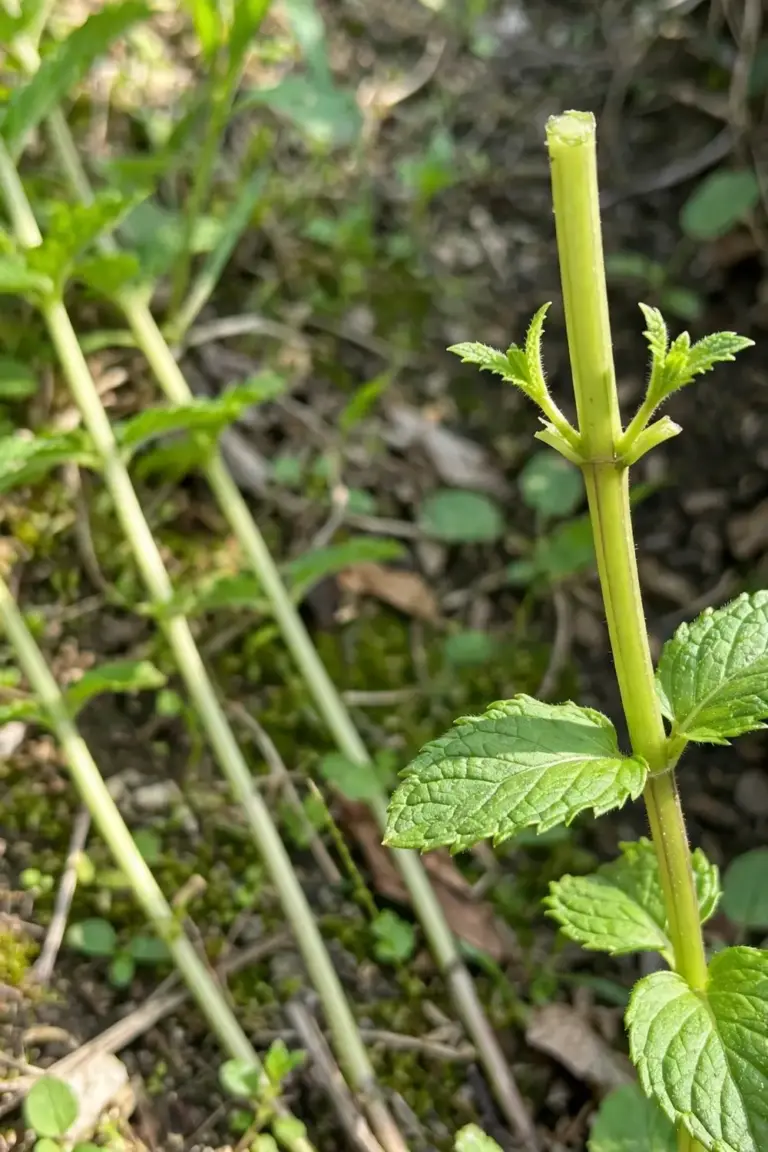
Regularly pinching off the branch tips promotes bushier, leafier growth, and that increases the available harvest, according to North Carolina Extension’s peppermint profile. Pinch with fingers or snips. Take the soft tip, not the woody stem. The plant answers with two shoots below the cut.
Harvest as you cook. Snip leaves and stems as needed through the season. Morning harvest holds the strongest scent. The leaves dry well, and dried leaves keep up to one year in an airtight container away from heat and light, according to University of Minnesota Extension’s herb guide.
A weekly pinch beats a monthly harvest. Pinching every week keeps stems short and leaves dense. A plant pinched once a month grows tall, woody, and sparse at the base. If your mint already looks leggy, cut it back by one third and start the weekly rhythm on the new growth. The plant recovers fast. Mint is hard to kill with scissors.
Freeze surplus mint for winter cooking. Chop leaves and freeze them in ice cube trays with water. Use frozen herbs within one year. The frozen cubes drop straight into a pot or a jug. Drying suits tea better than freezing, because dried leaves keep their scent in a jar on the shelf. Either method beats a leggy plant left to flower.
7. Cut Mint Back Hard After Flowering
Shear mint after it flowers. Cutting back grows fresh leaves and stops seeding.
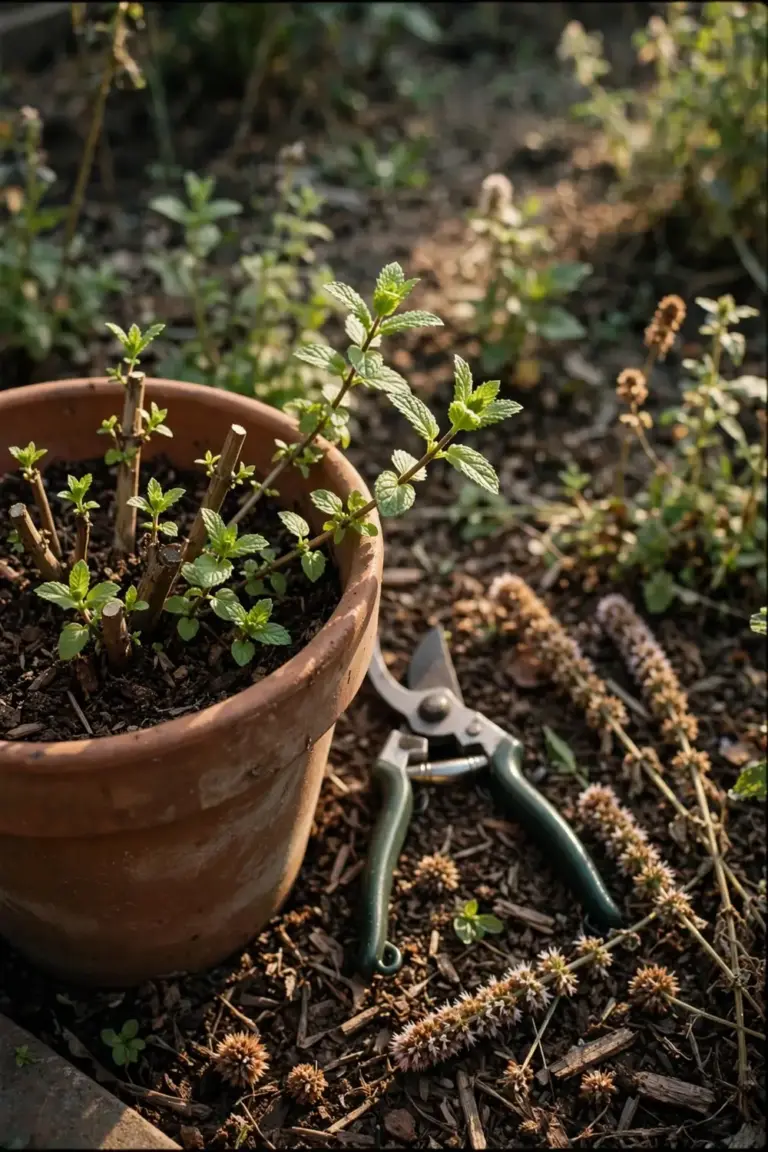
Spearmint flowers in terminal spikes in late summer, and shearing after bloom removes the flower spikes and stimulates new vegetative growth, according to North Carolina Extension’s spearmint profile. Cut the whole plant back by one third after flowering, leaving low leaf pairs on each stem, and new growth starts from those pairs within days. Use clean shears and cut to a low leaf pair. Spring pruning techniques covers shear care and cutting angles in full. In late winter, cut back dead stems to the base before new shoots appear, because a hard cut then resets the plant for spring.
Flowering is not a failure. It is the plant finishing its season. Leaves taste weaker once flowers open, so harvest hard before the spikes form. After the cut, water deeply and wait. The second flush of leaves smells stronger than the first. Some gardeners cut mint back twice a year: once after spring flowering, once in late summer. Two cuts keep the plant leafy from spring to autumn.
Leave one flower spike for the bees before you cut. Mint flowers feed pollinators in late summer, when little else blooms. Cut the rest. One spike feeds the bees, and the rest of the plant grows leaves for your kitchen.
8. Propagate Mint From Runners, Division, and Cuttings
Divide a mint clump in spring. A runner with roots is a new plant.
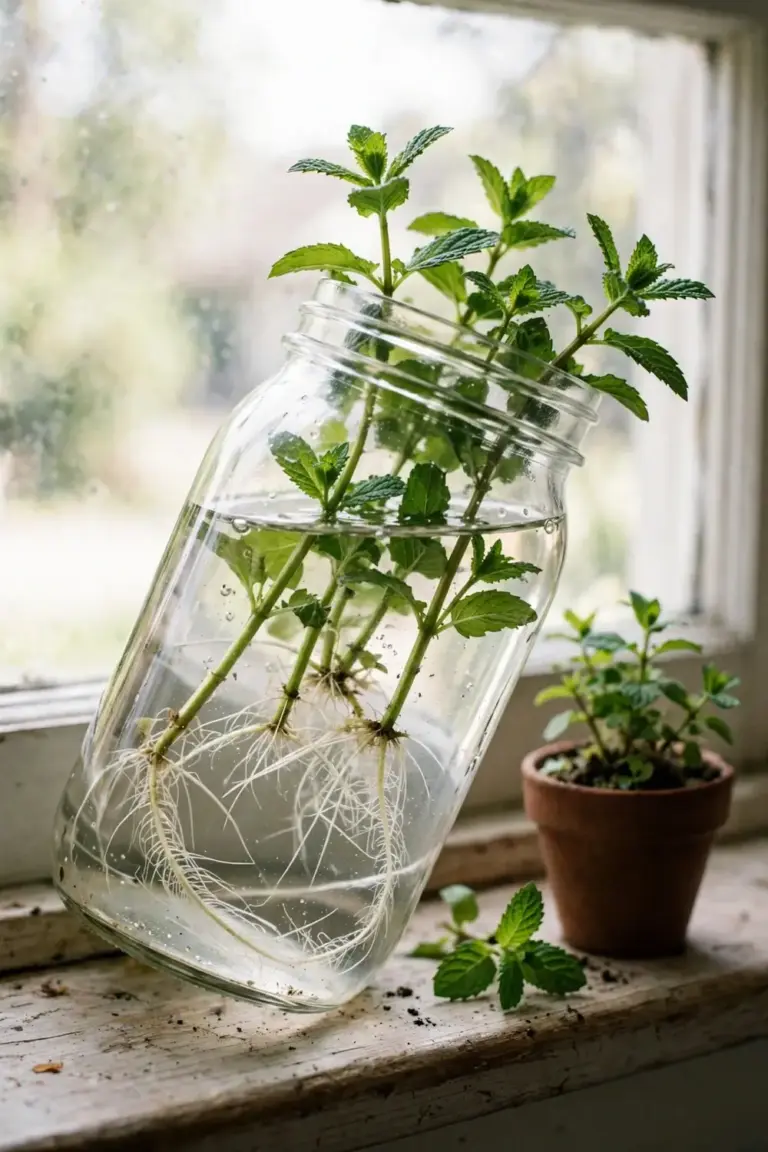
North Carolina Extension lists division and stem cutting as the recommended propagation for peppermint. Division suits spring, when new shoots appear. Lift the clump, pull it apart by hand, and replant each piece with roots attached. Each piece grows into a full plant.
Cuttings beat seed for mint. Gardenate’s Australian mint notes call cuttings a faster and more reliable option than seed, and cuttings plant directly once frost danger passes. Take a 10 cm stem tip, strip the lower leaves, and set it in moist potting mix. Roots form in 2 to 3 weeks. Runners root where stems touch soil, so a stem laid on mix roots at every node.
Seed works, but it runs slow and some types never come true from seed. Seed starting guide covers trays and light for seeds you do start indoors. Peppermint rarely sets seed, so division or cuttings carry that plant forward.
Division is the fastest way to a second pot: one clump in spring splits into three or four pieces. Pot each piece in its own container. Water well and shade for two days while roots settle. Gift the extras. A mint cutting in a jar of water roots in a week and makes a good kitchen windowsill plant while it waits for a pot.
Autumn division works in frost-free zones. In cold zones, divide in spring only, because autumn divisions root slowly and frost can kill them before they settle. Spring divisions grow all season and fill a pot by summer. Label each new pot. Mint types look alike as seedlings, and a label saves a season of guessing.
9. Stop Mint Runners Before They Escape the Pot
Check the pot rim every week. Runners cross the rim and root in the bed.
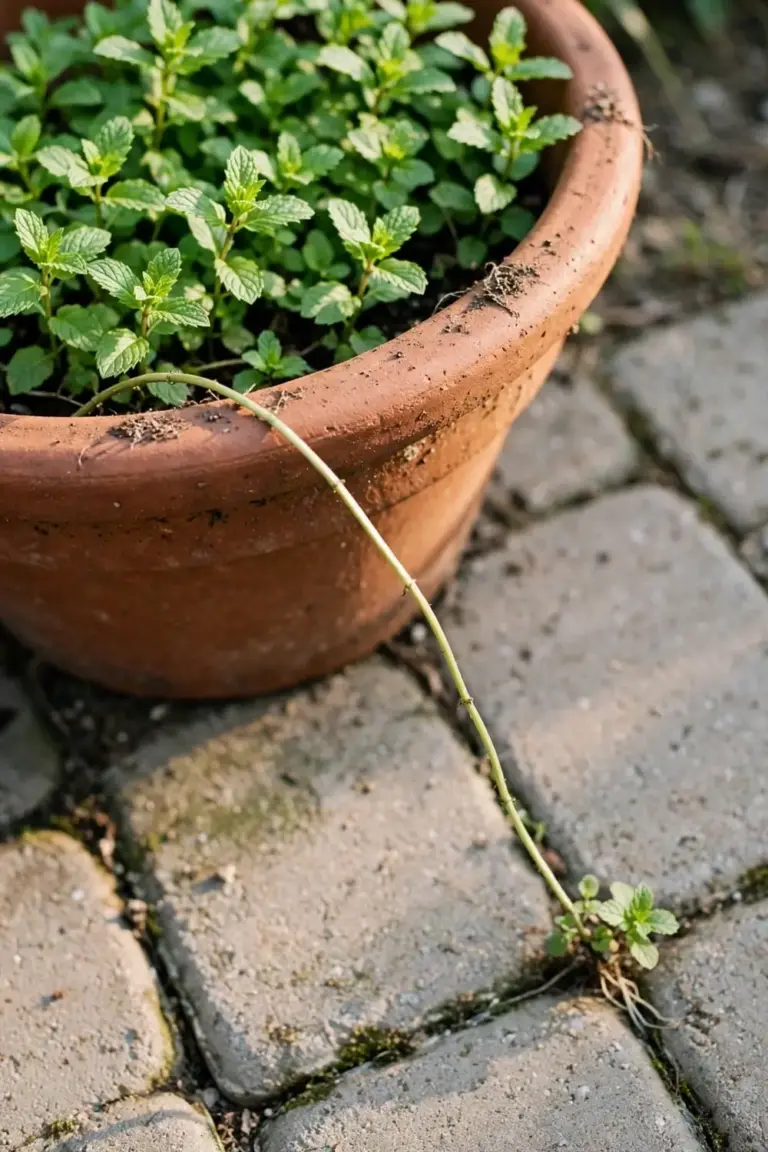
Soil barriers restrain rhizomatous spread when mint grows in borders, according to North Carolina Extension’s spearmint profile. A buried pot is one barrier. A bottomless bucket pushed into the ground is another. Gardenate’s Australian mint notes give the same bucket method: the bucket blocks sideways roots and slows the spread.
Sink the pot so the rim sits 2 to 3 cm above the soil. Walk the rim weekly. Cut any stem that crosses it. Pull escapees with their roots. A runner left for a month becomes a patch. A runner cut at the rim stays one plant.
Escapees happen. A runner slips past the rim, roots in the bed, and sends up a shoot a hand span away. Pull it at once, roots and all. If the patch already spread, dig the whole area. Sift the soil for white runner pieces. Any piece left behind regrows. A bed that held mint needs a full season of checks before you call it clean.
Check the drainage holes too. Runners creep out the base of a pot on soil and root beneath it. Lift the pot once a month and snip any roots hanging from the holes. A pot on pavers avoids this fault entirely. If you sink a pot in a bed, lift it each spring, trim the root ball, and reset it with fresh mix.
10. Handle Mint Rust and Leaf Spot
Rust and leaf spot hit mint first. Strip spotted leaves and open the airflow.
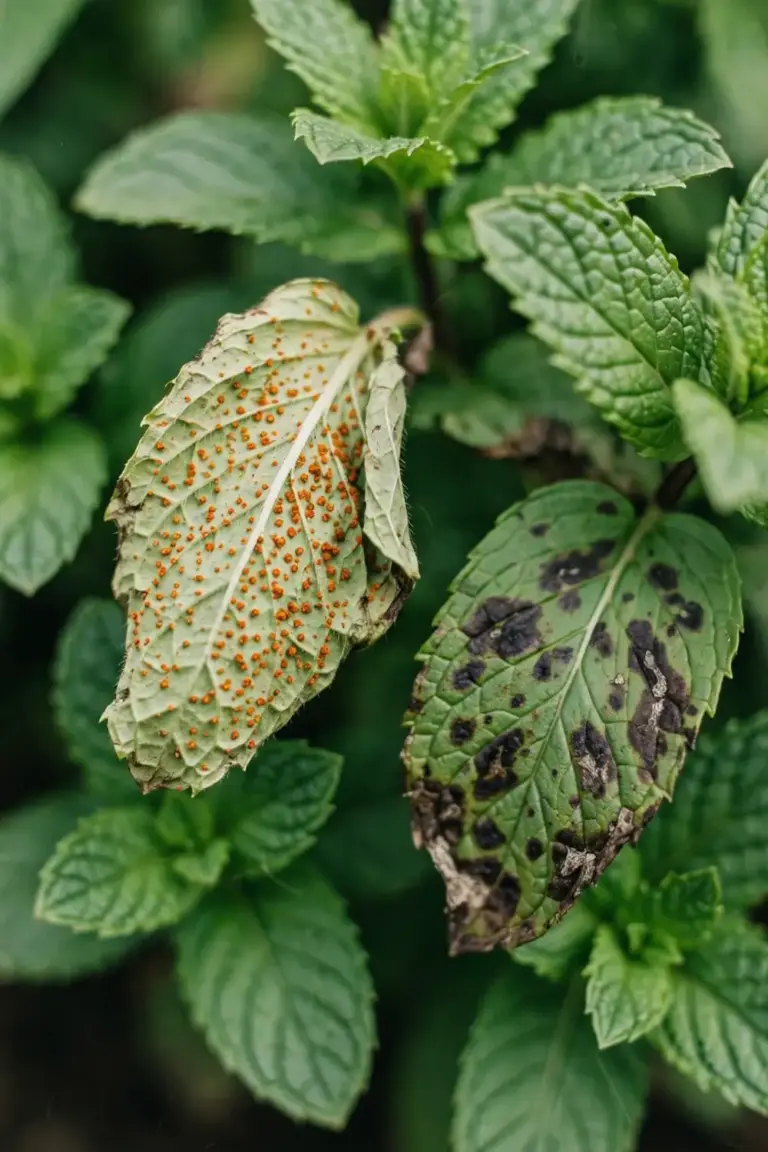
Fungal diseases are common in spearmint, and the two main diseases are rust and leaf spot, according to North Carolina Extension’s spearmint profile. Rust shows as orange pustules under leaves. Leaf spot shows as dark blotches on leaves. Both spread in wet, still air.
Start with sanitation: strip spotted leaves and bin them, and never compost diseased leaves. Space plants for airflow. Water at the base, not over the leaves. Morning watering dries leaves faster than evening watering. A mint plant that dries by midday stays cleaner than one that sits wet overnight.
Check the undersides weekly. Rust starts there, where air moves least. A plant with a few spotted leaves recovers after stripping and spacing. A plant that loses most leaves to rust needs a harder answer. Cut it back to the base, bin the cuttings, and let fresh growth start clean. Replace the plant when rust returns three seasons in a row. A fresh plant in fresh mix breaks the cycle.
Rust spreads fastest in crowded pots. Thin a crowded pot to five or six stems. The remaining stems get air and light, and the leaves dry fast after watering. A thin plant with clean leaves outproduces a thick plant with spotted ones. Bin the thinnings. Do not drop them on the bed, because rust spores ride on fallen leaves.
11. Grow Mint on a Balcony or in a Small Space
Mint suits small spaces. One pot on a balcony feeds a household.
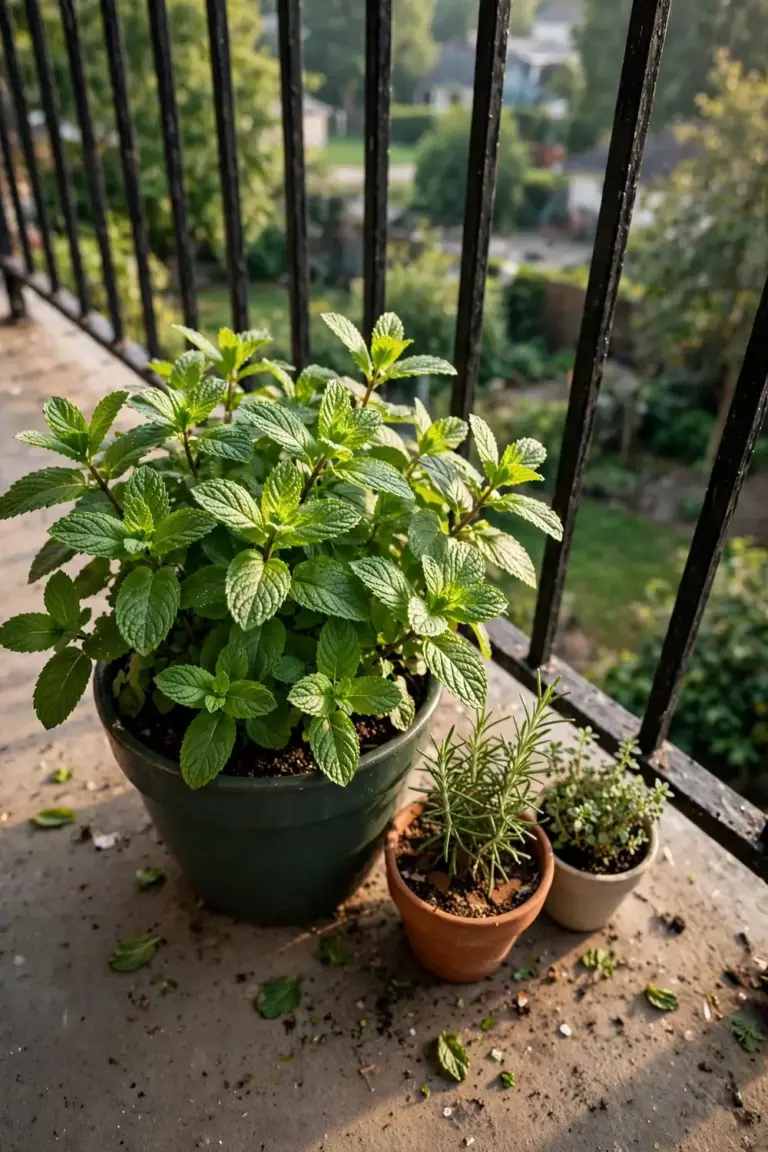
A balcony pot needs three things: sun, water, and a wall the runners cannot cross. Morning sun suits a balcony best, because afternoon sun on a concrete wall can scorch leaves in summer. A pot on a balcony dries faster than a pot on soil, so check the mix daily in hot weather. A saucer holds water for a day, but empty it by evening so roots never sit wet overnight.
Wind dries mint fast on a high balcony. A windbreak helps. Set the pot behind a railing planter or beside a wall that blocks the prevailing wind. Group pots together. Pots grouped together shade each other and hold humidity around the leaves. A single pot alone on a windy balcony dries twice as fast as three pots grouped together.
Indoors, a kitchen windowsill grows mint through winter. Give the pot the brightest window you have, and add a grow light when the plant stretches toward the glass. Indoor mint wants the same weekly pinch and the same pot discipline as outdoor mint. Keep it in its own pot, away from other herbs, because runners cross into neighboring pots on a shared tray.
Frequently Asked Questions
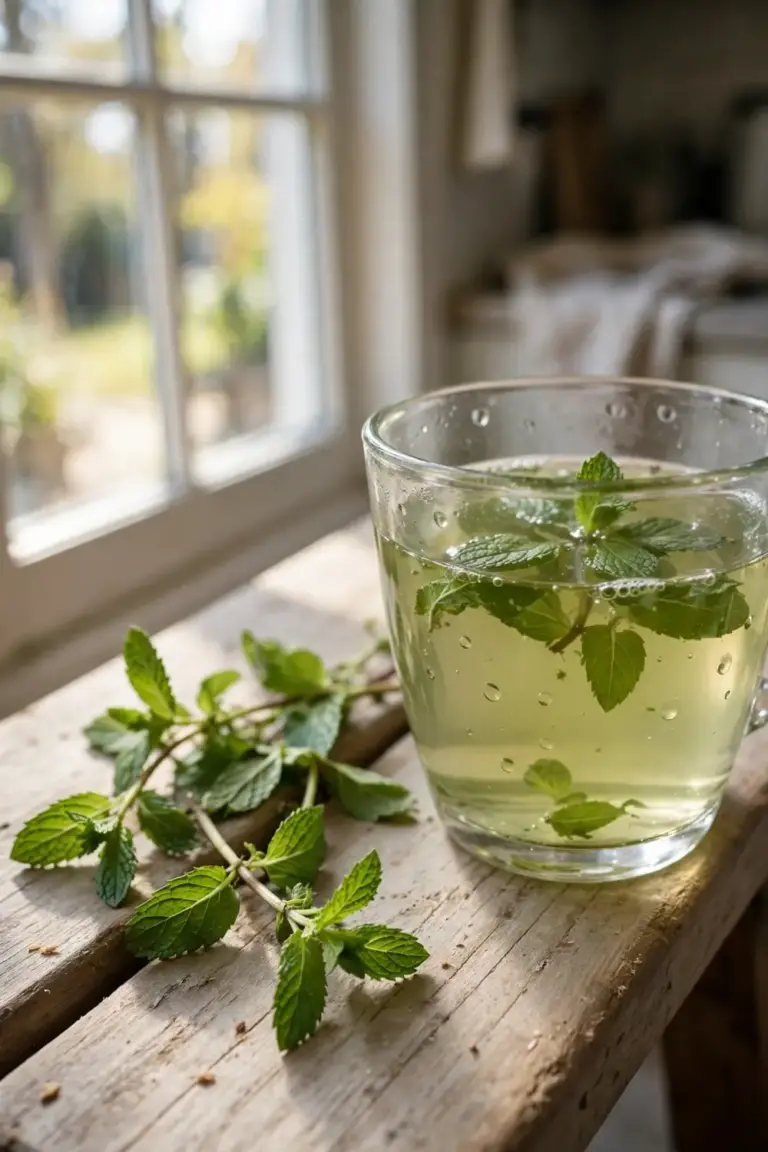
Yes, in most zones. Mint dies down in winter and sends up new shoots in spring, and in frost-free zones it stays green all year. Mulch perennial herbs with 5.1 to 12.7 cm of straw, compost, or leaves to steady soil temperature and reduce winter injury. Cut dead stems back in late winter before new growth appears.
Yes, with enough light. Indoor herbs need about 12 hours of artificial light daily, and weak light grows thin, spindly stems. Water when soil feels dry 1.3 cm below the surface, and never let the pot sit in water. Feed half-strength liquid fertilizer every 6 weeks indoors. Keep the pot off a cold windowsill in winter.
Low light is the usual cause. Inadequate light results in thin, spindly growth, and the plant stretches toward the window. Move the pot to 6 or more hours of direct sun. Pinch the tips weekly to force side shoots. Leggy stems rarely recover their lower leaves, so cut them back and let fresh growth take over.
Grow mint in a pot only. Sink the pot with the rim 2 to 3 cm above the soil, and check the rim weekly for crossing runners. Soil barriers restrain rhizomatous spread in borders. Dig out escapees with their roots attached. A runner left for a month becomes a patch, so weekly checks beat a yearly cleanout.
No. Vietnamese mint is Persicaria odorata, not a Mentha, and it belongs to a different family. It grows in wet soil and suits Southeast Asian cooking. True mints are Mentha species like spearmint and peppermint. Buy Vietnamese mint under its own name, and grow it in its own wet pot.
Start With One Pot of Mint This Weekend
One pot, one mint, sun, moisture, and a wall. Pick spearmint for cooking or peppermint for tea. Set the pot on pavers. Water it deep, pinch it weekly, and harvest as you cook. First leaves land in 8 to 12 weeks in warm zones, and the plant returns each spring. If you plan a cool-season herb bed, mint sits with the fall herbs to plant. Start this weekend, and the pot pays you back all season.