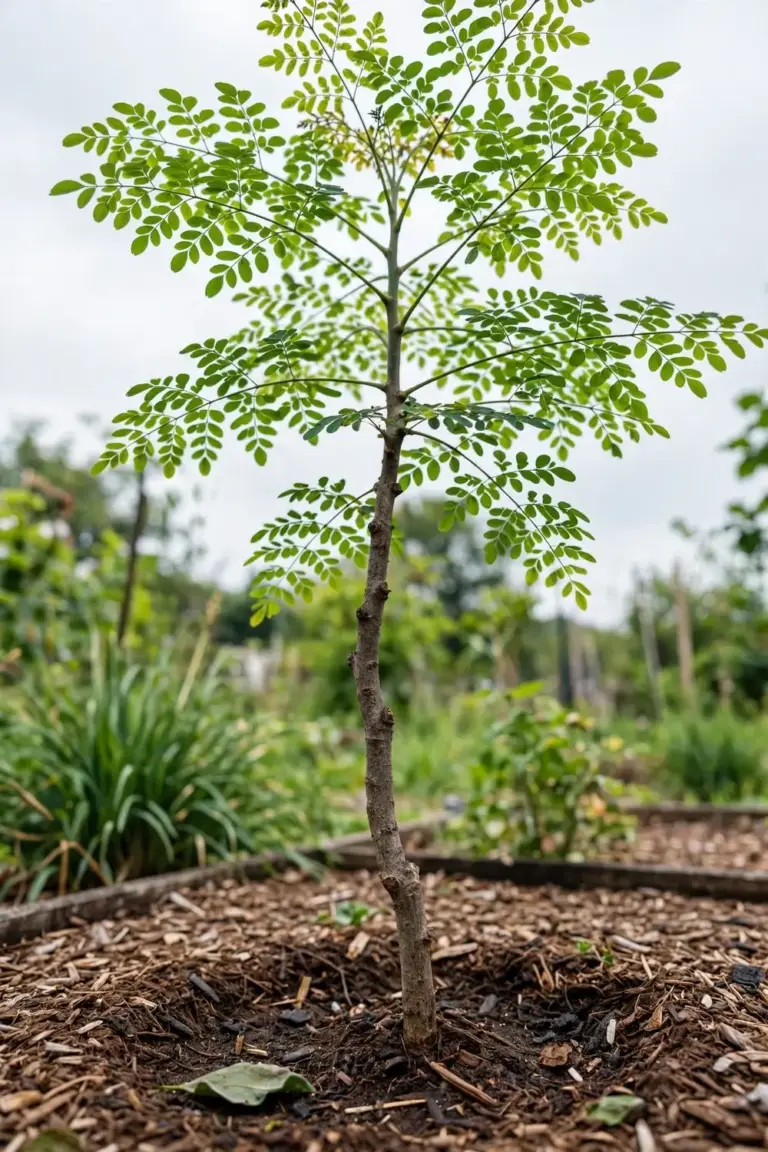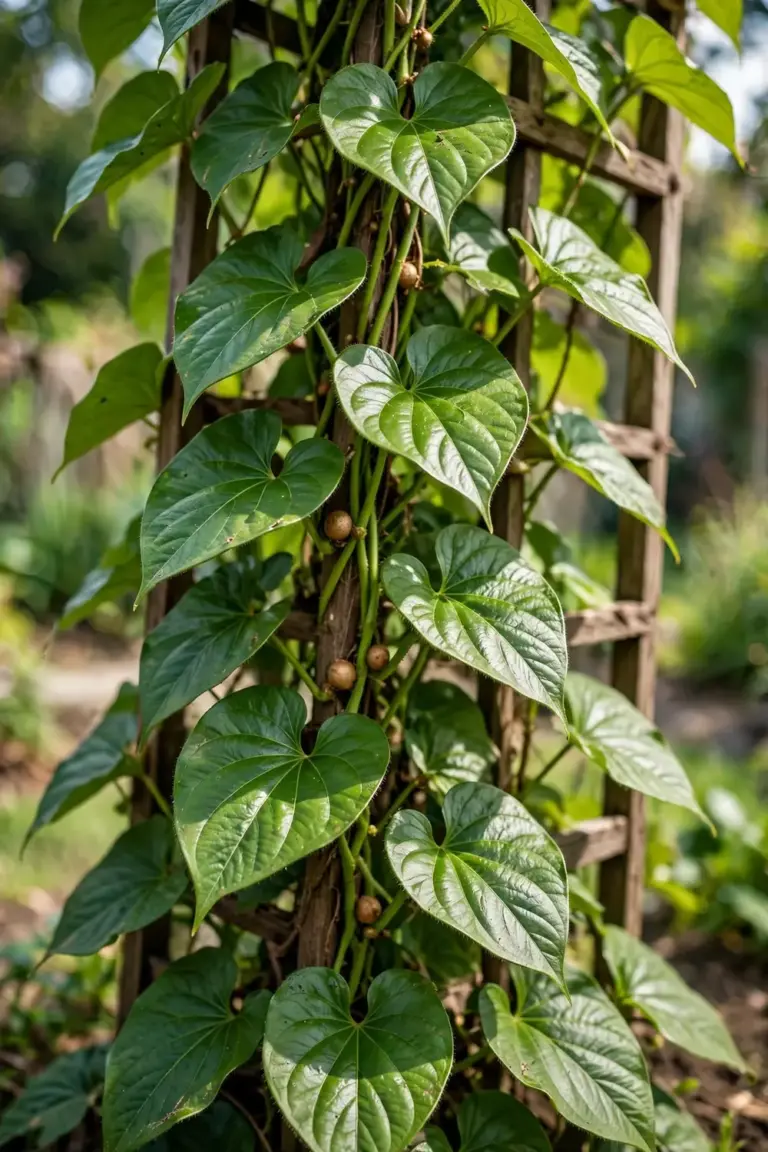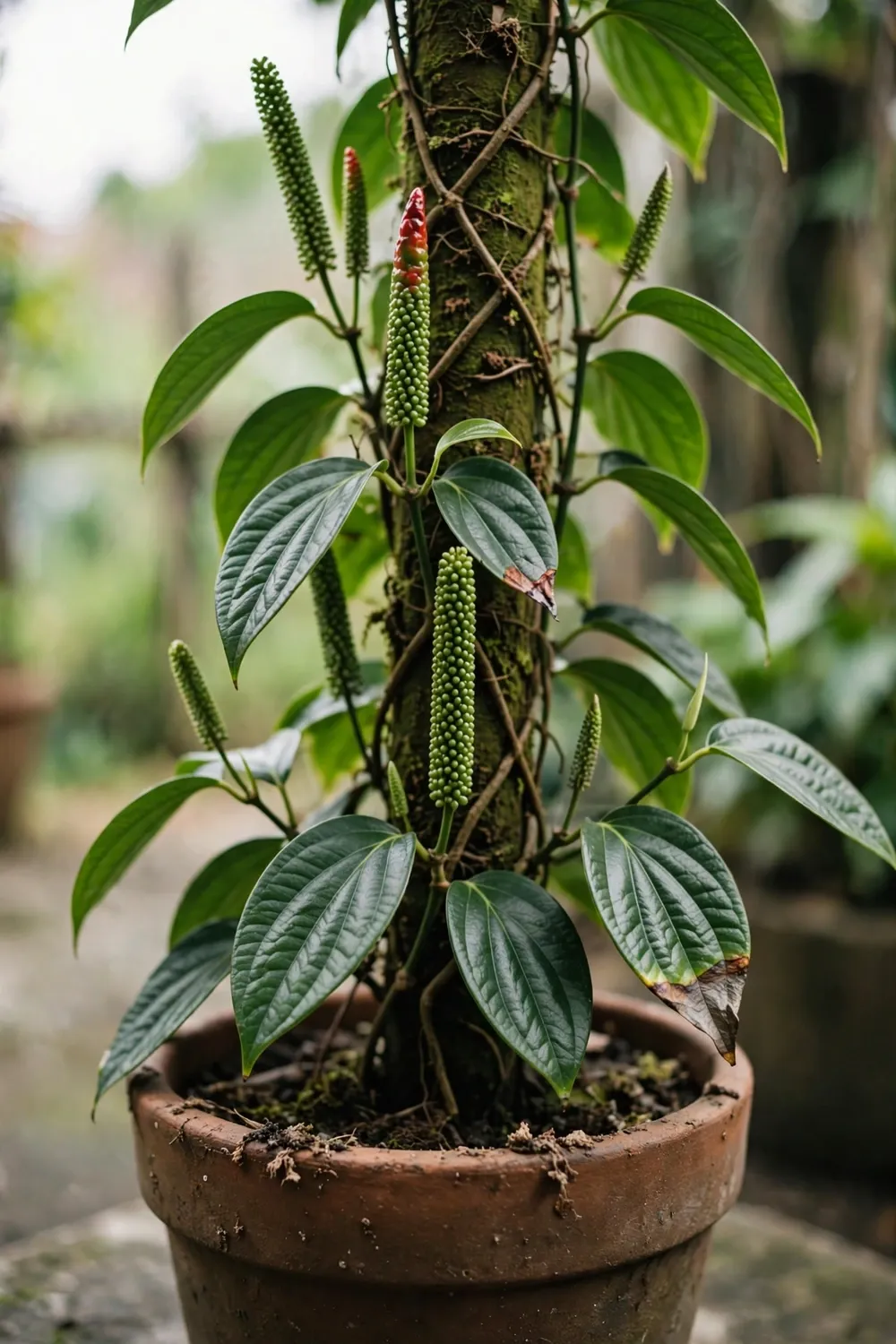

Buy one vine, one moss pole, and one 15 to 25 liter pot, and plan to carry the pot indoors before cold weather arrives. That is how to grow Javanese long pepper in a temperate climate. Javanese long pepper (Piper retrofractum) is a frost-tender climbing vine from Java, Indonesia. Grower guides put the vine at 1.5 to 3 m in cultivation and 2 to 10 m in the tropics, and the vine needs 3 to 4 years before it bears a useful spice crop.
Javanese long pepper carries the Indonesian name cabai jawa. Some sources also call it Balinese long pepper. The spice is the fruit spike, picked green and dried. The vine climbs by clinging stems, so it needs a support from day one. I have learned that a vine with a moss pole and a humid corner outperforms one left to sprawl on a dry sill.
The rest of this page is 15 moves, from checking your climate to picking and drying the first spikes. Treat the vine as the main crop and the spice as a long-term bonus. A healthy vine gives glossy leaves and fast climbing growth in year one. The dried spikes come later.
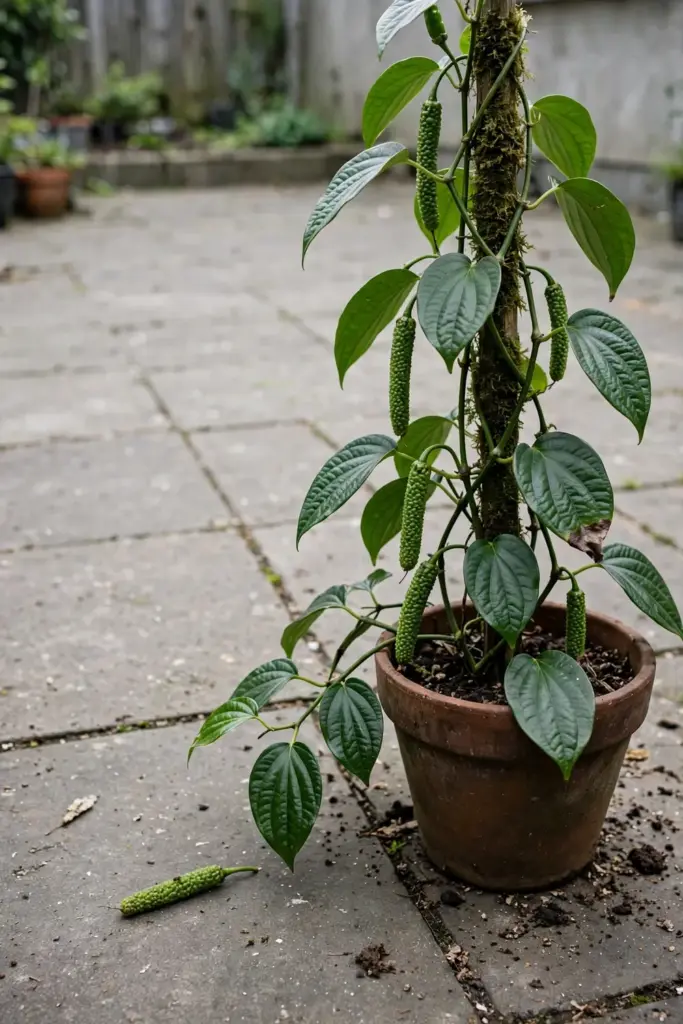
Javanese Long Pepper at a Glance
| Spec | Javanese Long Pepper |
|---|---|
| Botanical name | Piper retrofractum |
| Other names | Cabai jawa, Balinese long pepper |
| Habit | Evergreen climbing vine with clinging stems |
| Mature size | 1.5 to 3 m in cultivation, 2 to 10 m in the tropics |
| Hardiness | Frost-tender; outdoor growing suits USDA zones 10 to 11, with one grower guide rating it zone 13 and warmer |
| Light | Bright filtered light to partial shade; no harsh direct sun |
| Soil | Rich, moisture-retentive, well-draining, slightly acidic |
| Pot | 15 to 25 liters with drainage holes and a moss pole or trellis |
| Time to fruit | 3 to 4 years |
| Harvest | Pick fruit spikes green, then dry them until fully dry |
1. Check Your Climate Before You Buy a Javanese Long Pepper Vine
Check your winters first. Javanese long pepper tolerates no frost. TopTropicals encyclopedia entry for Piper retrofractum places outdoor growing in USDA zones 10 to 11 with frost protection, while the GrowPlants care guide for Piper retrofractum rates the vine hardy only in zone 13 and warmer. The two ratings disagree. The safe reading is the conservative one. Grow the vine in a pot everywhere except a frost-free garden, and carry the pot indoors before cold weather arrives.
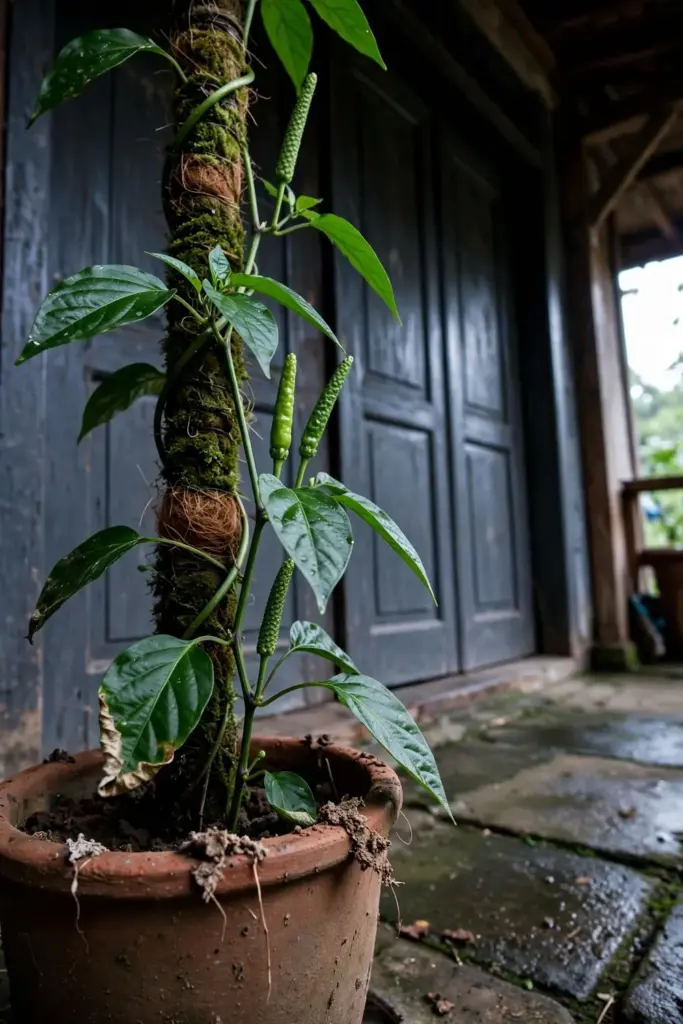
A pot keeps every option open. The vine summers outdoors in shade and winters indoors near a bright window. A vine planted in the ground in a marginal climate faces one cold night with no retreat. The pot also controls the soil, the drainage, and the support in one move.
Set a simple rule before you buy. The pot moves indoors before the first frost date, and it stays indoors until nights stay warm again. That rule decides the whole setup. It sets the pot size, the support height, and the indoor spot.
2. Tell Javanese Long Pepper Apart from Indian Long Pepper and Black Pepper
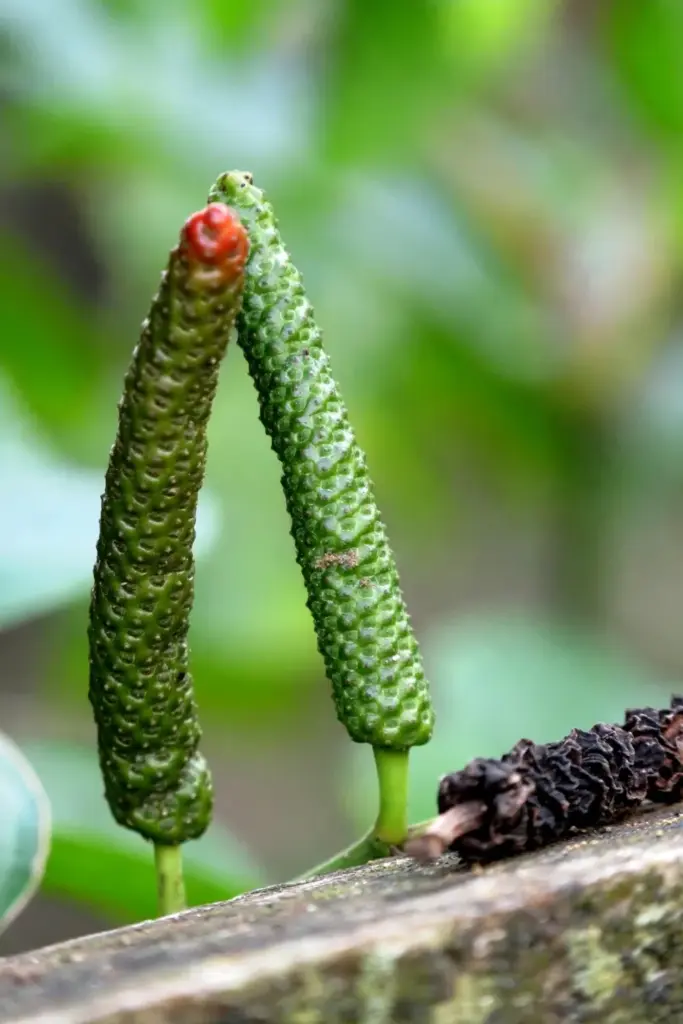
Tell the three peppers apart before you spend money. Javanese long pepper is Piper retrofractum from Java, Indonesia, Indian long pepper is Piper longum from India, and black pepper is Piper nigrum. The two long peppers confuse buyers in trade and in cooking, and the names overlap on spice labels. The botanical name on the tag settles the question.
| Feature | Javanese Long Pepper | Indian Long Pepper | Black Pepper |
|---|---|---|---|
| Botanical name | Piper retrofractum | Piper longum | Piper nigrum |
| Origin | Java, Indonesia | India | India |
| Fruit form | Fused spike of tiny berries, picked green and dried | Fused spike of tiny berries, slightly larger rods | Round peppercorns, sold whole or ground |
| Flavor | Hot, pungent, aromatic; more pungent than black pepper | Hot, pungent, aromatic; rods slightly larger than Javanese long pepper | Hot and biting; the familiar table pepper |
| Tag check | Tag reads Piper retrofractum | Tag reads Piper longum | Tag reads Piper nigrum |
The flavor notes come from Katzer’s spice pages on long pepper, which compare the two long peppers directly. It records that the Javanese rods run slightly smaller than the Indian rods, and that long pepper runs more pungent than black pepper. The fruit form matters more than the flavor note, because it shows at a glance. Long pepper arrives as a fused spike. Black pepper arrives as separate round peppercorns. A bag of dried spikes is long pepper, and a jar of round corns is black pepper.
Buy the species named above: Piper retrofractum is the Javanese plant, Piper longum belongs to the India lane, and Piper nigrum is a different vine with a different harvest. A tag that reads only “long pepper” proves nothing. Ask the seller for the botanical name.
3. Buy a Vine That Already Carries Spikes
Buy a live vine from a specialist nursery. A vine already carrying spikes proves the plant can fruit, and that proof matters because the sources disagree on pollination. The Flora of China account of Piper retrofractum describes the species as dioecious, which means male and female flowers grow on separate plants. The GrowPlants care guide for Piper retrofractum describes the vine as self-pollinating with wind assistance. Both statements sit in the record. A vine with spikes on it has already settled the question for that plant.
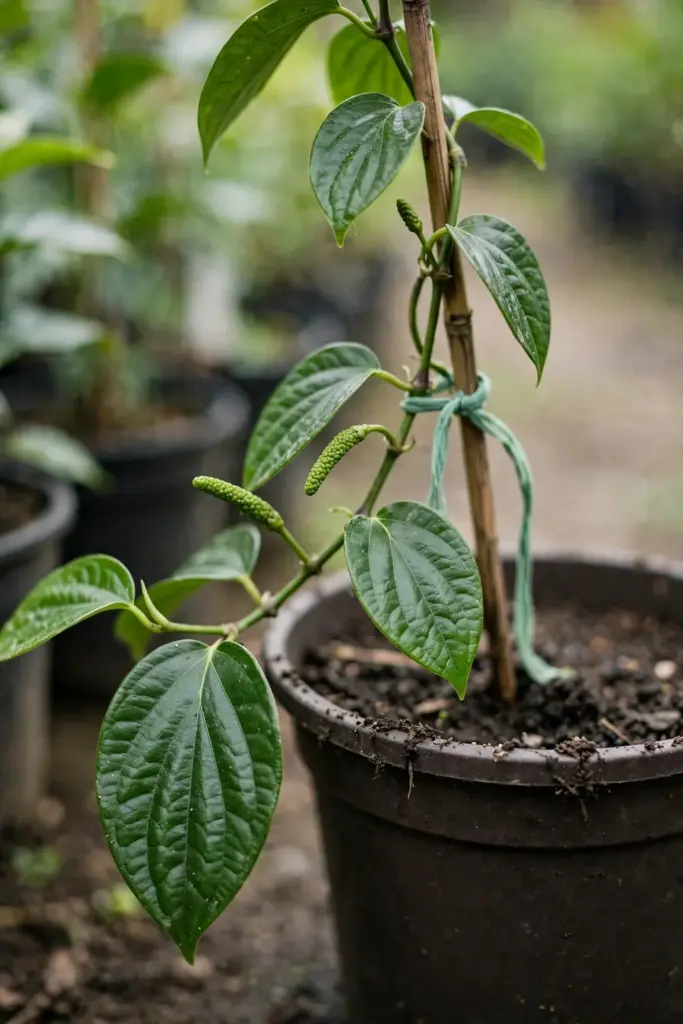
Check the tag before you pay. The tag must read Piper retrofractum. Check the stems for firm green growth and the leaves for glossy, unspotted surfaces. Skip a vine with blackened stem bases, wilted tips, or a sour smell from the pot. Those signs point to root trouble that rarely reverses.
Do not plant dried spice rods from the grocery shelf. The rods are dried fruit, and dried seed loses viability fast. Seed taken from a fully ripened red fruit stays short-lived, and the GrowPlants care guide for Piper retrofractum advises sowing it fresh. A nursery vine skips that whole gamble. It also skips the wait for a seedling to show its sex and its fruit.
Buy two vines when the budget allows. Two vines raise the chance that at least one carries female flowers and sets spikes. Keep both in separate pots. The second vine also supplies cuttings later.
4. Choose a 15 to 25 Liter Pot and a Moss Pole
Choose a pot of 15 to 25 liters with strong drainage holes, the size the GrowPlants care guide for Piper retrofractum recommends. That size holds a climbing vine for a couple of years before repotting. A smaller pot dries fast and starves the vine. A much larger pot holds wet mix around a small root ball and invites rot. The 15 to 25 liter range balances water storage against drainage.
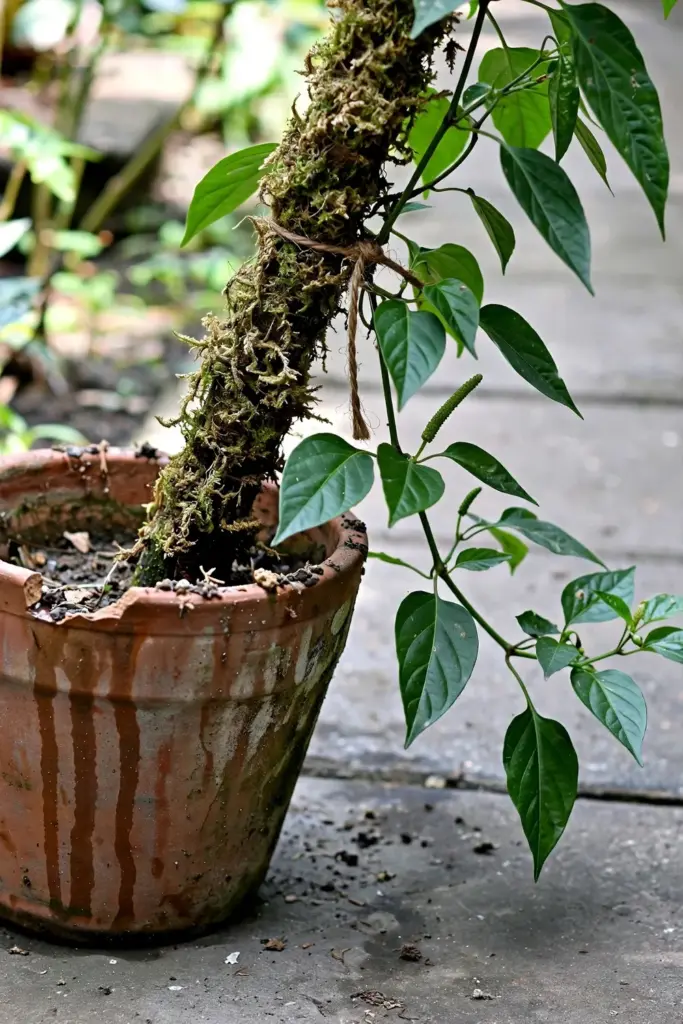
Set the support at planting time. A moss pole or a small trellis gives the climbing stem something to grip. The vine climbs with adventitious roots that cling to bark and moss. A pole also keeps the vine upright in a small indoor footprint. A vine with no support sprawls across the floor and breaks stems when moved.
Skip a standing-water saucer under the pot. A saucer holds water against the drainage holes and keeps the root ball wet. The vine wants steady moisture, and it rots in standing water. Set the pot on feet or a drained tray, and empty the tray after watering.
Pick a pot you can carry. The pot moves indoors and outdoors twice a year. A 15 to 25 liter pot with wet mix weighs enough already. Handles or a rolling caddy pay for themselves on the first move.
5. Mix a Rich Moisture-Retentive Potting Mix
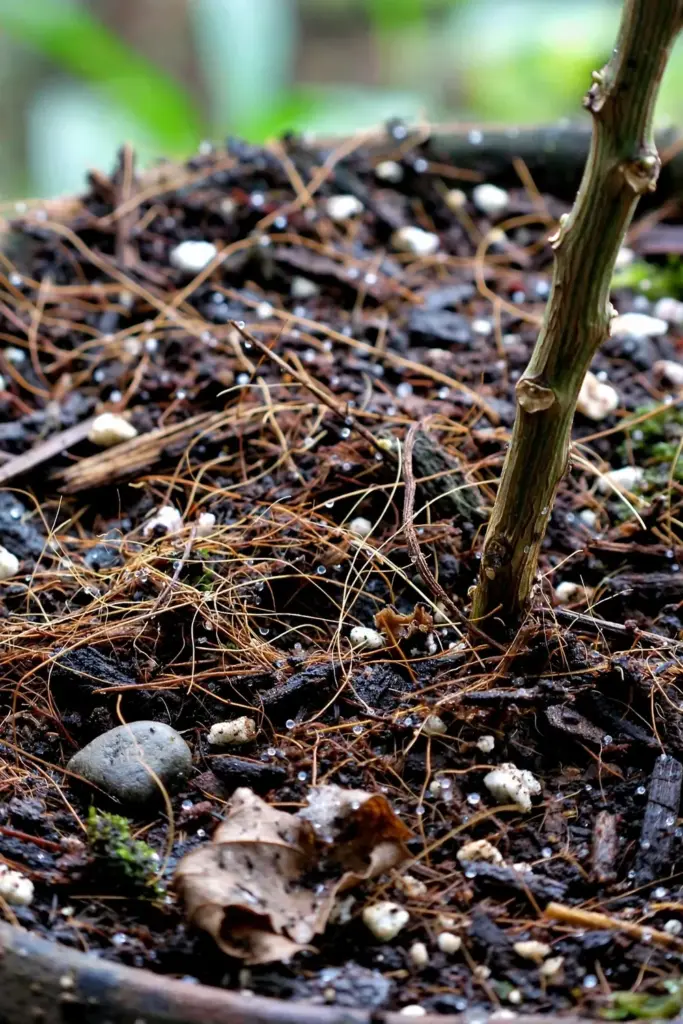
Mix a rich, organic, free-draining potting mix for a vine that evolved as a tropical understory climber. Its roots want steady moisture, air, and organic matter. A dense garden soil compacts in a pot and suffocates roots. A pure bark mix dries too fast.
| Component | Role in the Mix |
|---|---|
| Potting compost or coir | Holds moisture and feeds the soil life |
| Perlite or vermiculite | Opens the mix so air reaches the roots |
| Compost or well-rotted organic matter | Supplies slow nutrients and humus |
Blend the components until the mix feels springy and holds its shape when squeezed, then falls apart with a poke. That texture holds water without holding a puddle. Water should run from the drainage holes within seconds of watering. Water that sits on the surface for a minute signals a mix that is too dense.
Keep the mix slightly acidic. The GrowPlants care guide for Piper retrofractum notes that this vine prefers acid soil and can yellow on alkaline ground. Alkaline tap water nudges potting mix upward over a season. A yearly top-dress of fresh compost helps hold the balance. Test the mix when leaves yellow between the veins on new growth.
6. Plant the Vine at Its Original Depth
Plant the vine at the same depth it grew in its nursery pot. The root collar stays at soil level. A buried collar rots. An exposed root ball dries. The GrowPlants care guide for Piper retrofractum sets the planting depth rule plainly. Set the plant at its old depth and firm the mix gently around it.
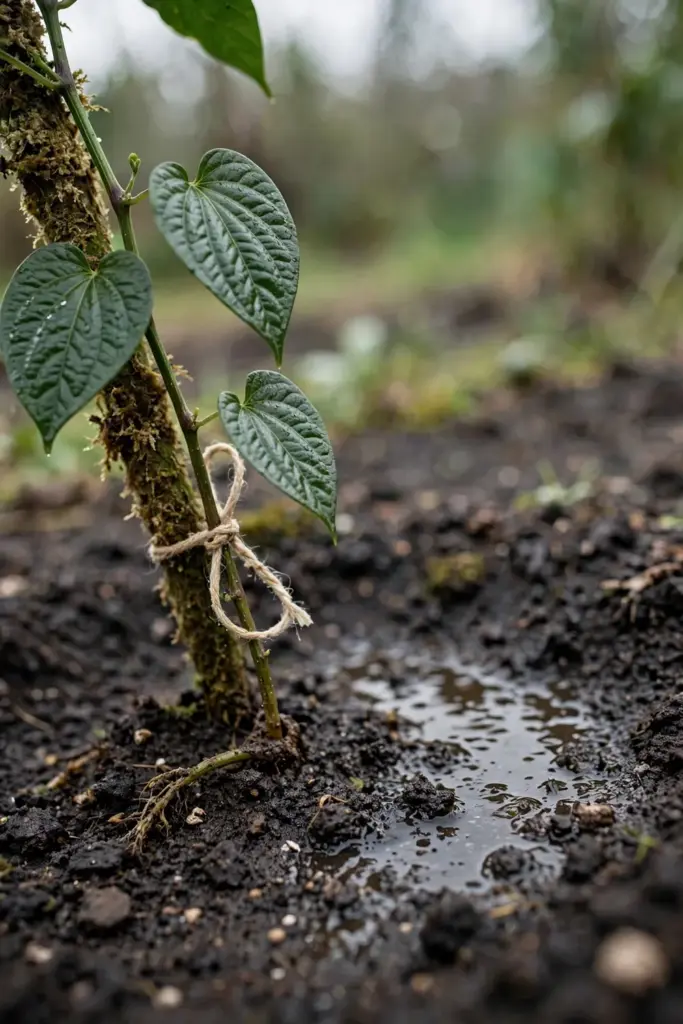
Dig the hole in the pot roughly twice the width of the root ball. That width lets roots spread into fresh mix without bending. Set the moss pole in place before the vine goes in. Driving a pole in after planting spears roots. Tie the main stem loosely to the pole with soft ties.
Water the vine in after planting. Soak the mix until water runs from the drainage holes. Then let the surface dry slightly before the next watering. A fresh planting wants even moisture, and it wants light feeding only after roots establish.
Plant in the ground only where winters stay frost-free. TopTropicals encyclopedia entry for Piper retrofractum places outdoor growing in zones 10 to 11. The GrowPlants care guide for Piper retrofractum rates the vine for zone 13 and warmer. In a frost-free garden, dig a hole twice the root ball width, set a trellis at planting, and work compost into the backfill. Everywhere else, the pot is the planting.
7. Root Stem Cuttings with 3 to 5 Nodes
Root stem cuttings to multiply a good vine, because cuttings preserve the exact vine while seedlings can differ from the parent. Cuttings also skip the seed gamble entirely. The GrowPlants care guide for Piper retrofractum calls stem cuttings the best propagation method for this vine, with layering and seed as alternatives.
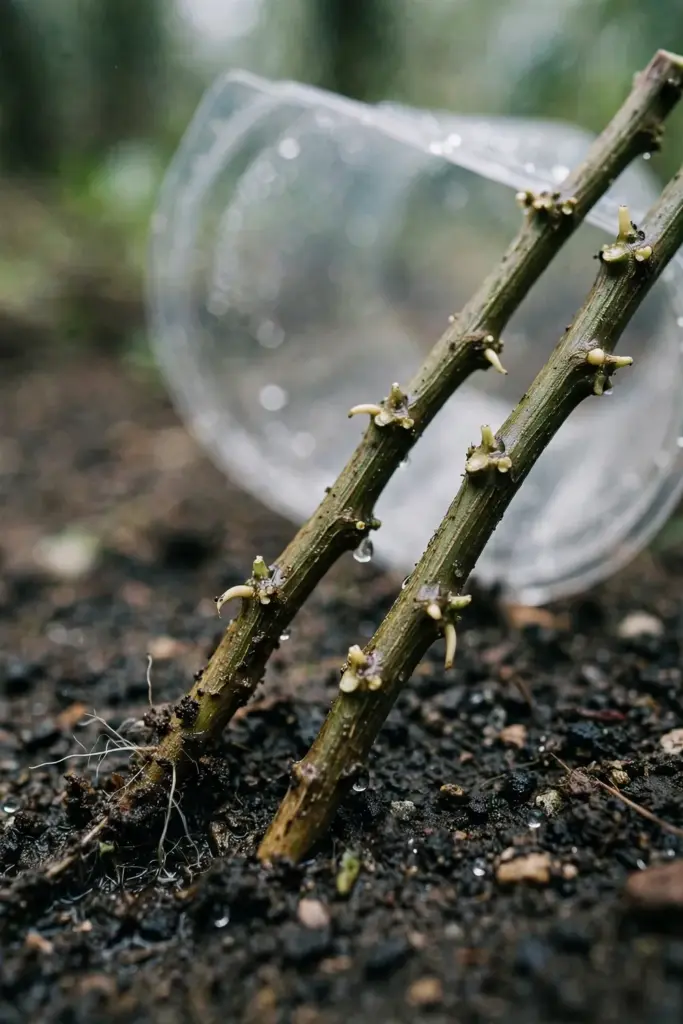
Cut a healthy climbing shoot into sections with 3 to 5 nodes each. Strip the lower leaves. Bury at least one node in moist mix. Nodes already carry visible aerial-root initials that make rooting reliable. Rooting hormone is generally unnecessary, though it can help in less ideal conditions.
Hold the cuttings warm and humid. A clear cover or a humid corner holds the air moist around the leaves. Rooting commonly takes a few weeks under warm, humid conditions. A cutting that stays green and firms into the mix is rooting. A cutting that blackens at the base has rotted. Discard it and check the drainage.
Layer a trailing stem for a backup method by pinning a stem section into moist mix while it stays attached to the parent vine. The vine roots at its nodes on its own. Sever the new plant and pot it up once roots hold the mix. Layering costs nothing and risks nothing, since the parent feeds the stem until it roots.
Sow seed only when fresh seed is available. Seed from a fully ripened red fruit loses viability quickly once dried or stored. Sow it fresh and shallow, pressed lightly into moist mix. Germination runs slow and uneven, often several weeks to a couple of months, at roughly 25 to 30 degrees Celsius. Keep seedlings humid and shaded until well established.
8. Give the Vine Bright Indirect Light and No Midday Sun
Give the vine bright filtered light or partial shade. TopTropicals encyclopedia entry for Piper retrofractum places the vine in bright filtered light to partial shade. The GrowPlants care guide for Piper retrofractum describes full shade under a tropical canopy. Both sources agree on the core point. Direct sun is not part of the vine’s natural light. Harsh midday sun scorches leaves.
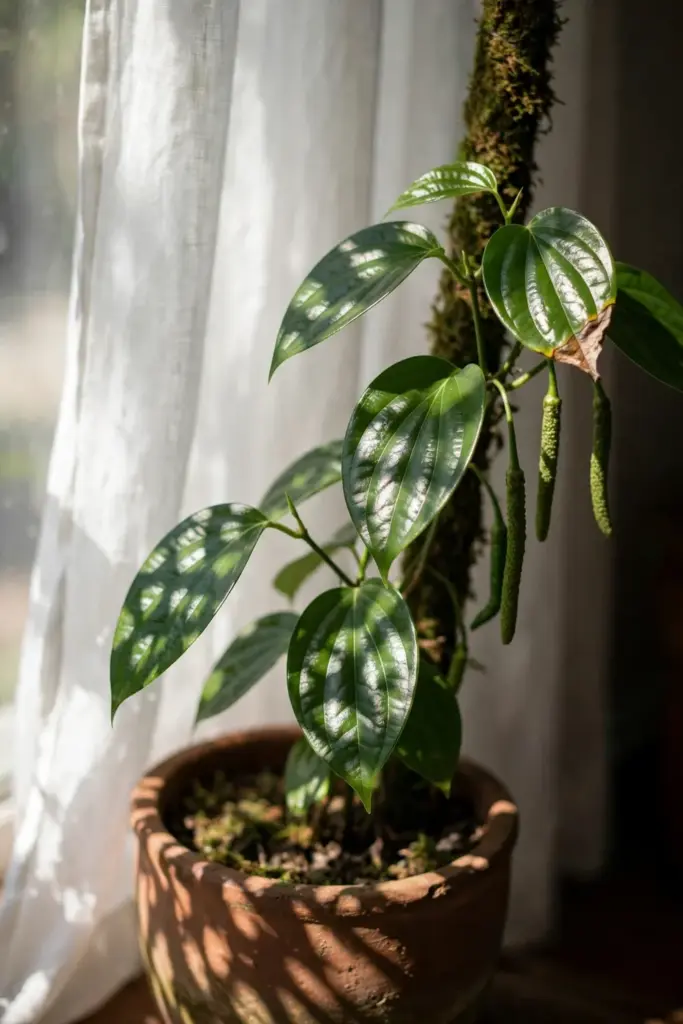
Place the pot where morning light reaches it and midday sun does not. A shaded balcony, a bright porch, or a spot under high trees suits the vine outdoors. Indoors, a bright window with a sheer curtain works. A window that bakes the leaves in afternoon sun fails.
Watch the leaves for the light verdict. Leaves that yellow and scorch at the edges signal too much direct sun or waterlogged roots. Leaves that stay small and dark with long bare gaps between nodes signal too little light. Move the pot one step at a time. A vine that gets steadier light grows steadier stems.
Hold the light steady through winter indoors. A bright indirect spot beats a dark corner with a grow light on a timer for most homes. When the only bright spot gets direct afternoon sun, pull the pot back a meter from the glass. The vine forgives dim light for a season. It does not forgive scorched leaves.
9. Keep the Soil Evenly Moist and the Air Humid
Keep the soil consistently moist. The vine wants steady water. It hates drying out and it rots in standing water. Water deeply when the top of the mix starts to dry. Water until it runs from the drainage holes. Then empty the tray. A vine that wilts between waterings drops leaves and stalls.
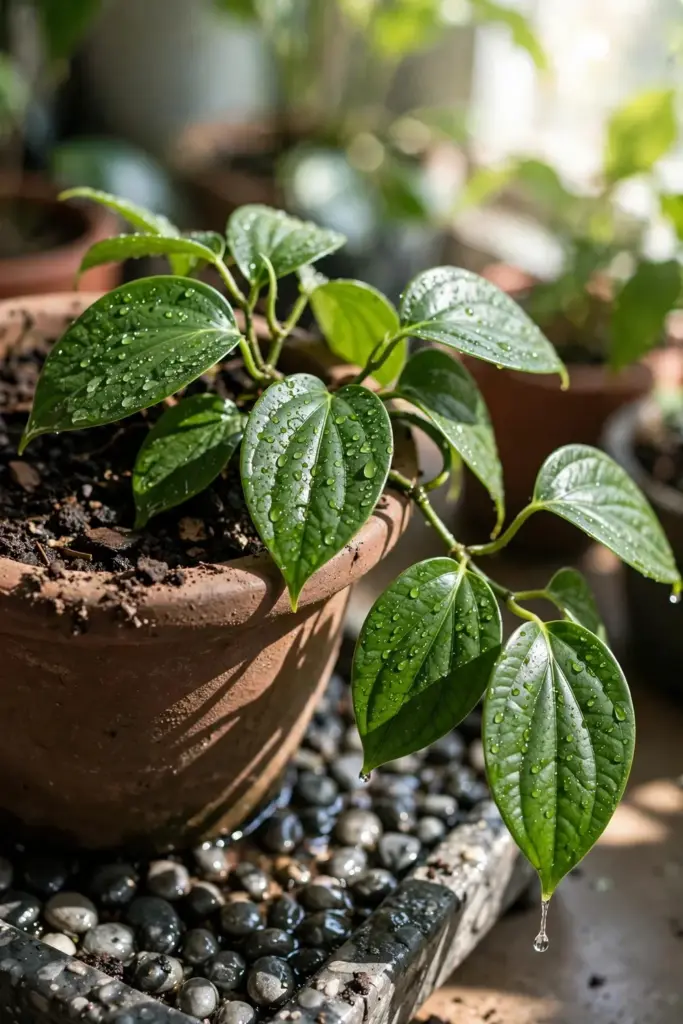
Raise the humidity around the vine. The vine comes from a humid tropical understory and tolerates dry air poorly. Group pots together. Mist the leaves on dry days. Set a tray of pebbles and water under the pot, with the pot base above the waterline. A humid corner near other plants beats a lone pot beside a heater.
Ease back in cooler weather. The vine drinks less when growth slows. Water less often, and keep the soil from drying out completely. The rule stays the same all year. Moist, never soggy, never bone-dry.
Read the leaves for the water verdict. Yellow leaves with wet mix point to waterlogging, so improve the drainage and let the mix breathe. Yellow leaves with dry mix point to drought, so soak the pot and shorten the gap between waterings. The fix follows the symptom.
10. Feed a Moderate Feeder Through the Growing Season
Feed the vine moderately through active growth. The GrowPlants care guide for Piper retrofractum rates Javanese long pepper a moderate feeder. Nutrients wash out of pots faster than open ground, so a potted vine needs feeding more often than an in-ground vine. A balanced liquid feed through the growing season covers the base need.
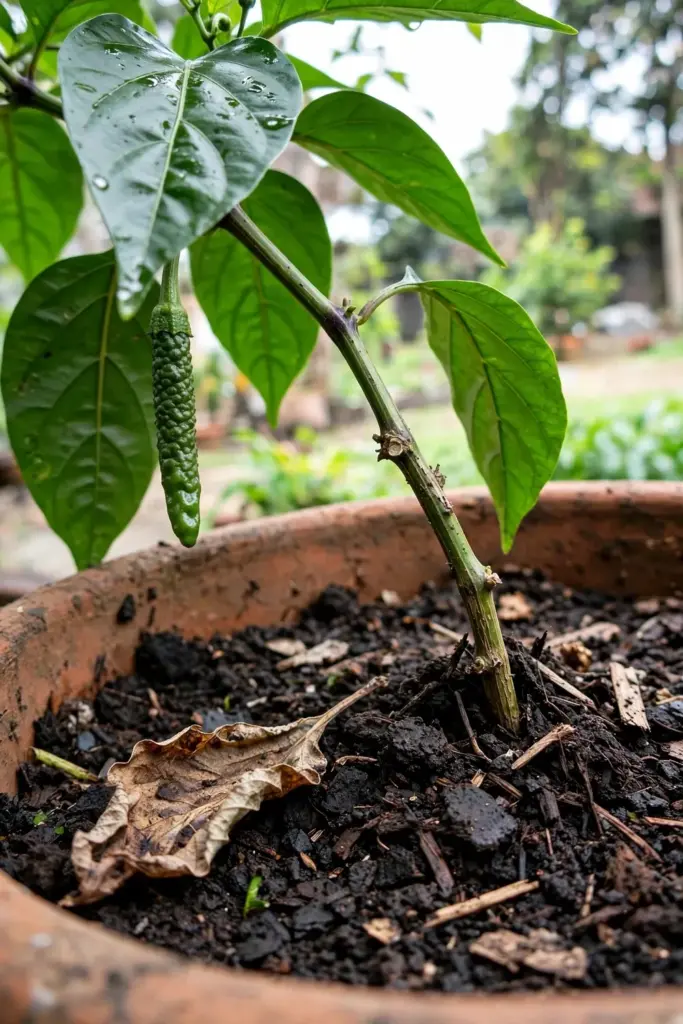
Shift the balance as the vine matures. A nitrogen-forward complete fertilizer supports foliage and vine extension while the vine builds its frame. Once the vine is mature enough to flower, shift toward a balanced fertilizer with adequate potassium to support spike and fruit development. Excess nitrogen once flowering begins favors foliage over spike and fruit development.
Watch the leaves for deficiency signs. Older leaves that pale to yellow-green with slowing vine growth point to low nitrogen. New leaves that yellow between the veins while the veins stay green point to a pH problem or an iron shortage on alkaline ground. Leaf margins that scorch or yellow on older leaves with poor spike development point to low potassium. Correct the pH toward the acidic side this vine prefers when new growth yellows between the veins.
Top-dress with compost each year. Compost feeds the soil and holds moisture at the same time. It also replaces the organic matter that watering washes out. A vine in fresh compost needs less bottled fertilizer. Growing ginger in a pot at home follows the same pattern, since ginger is another tropical spice that eats steadily through a pot season.
Ease off feeding when light or growth drops in cooler months. A houseplant vine in a dim winter room uses little fertilizer. Extra fertilizer in dim months piles salts in the mix and burns root tips. Resume feeding when new growth restarts in spring.
11. Train the Main Stem Up the Pole and Top It Early
Train the main climbing stem up the pole. The fruit spikes form on the lateral branches that grow off the main climbing stem, not on the climbing stem itself, according to the GrowPlants care guide for Piper retrofractum. That single fact drives every pruning decision. A vine with a tall main stem and no laterals carries no spice. A vine with a topped main stem and many laterals carries the crop.
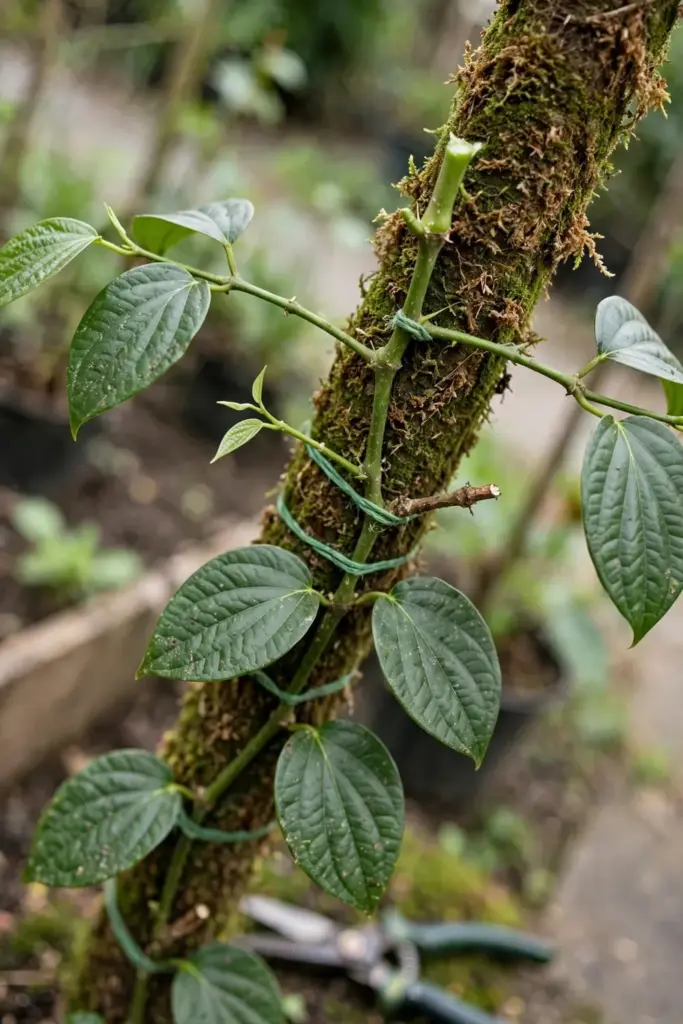
Top the climbing stem at a working height. The cut forces branching into the horizontal laterals that will carry the fruit spikes. Cut directly above a node so branching starts cleanly below the cut. Tie the stem loosely to the pole with soft ties as it climbs. Tight ties strangle stems as they thicken.
Thin crowded laterals for light and airflow. Remove whole spent laterals back to the climbing stem after harvest. The GrowPlants care guide for Piper retrofractum advises removing old laterals that have stopped producing well to make room for vigorous replacements. Keep young laterals that have not yet fruited. A hard cut into the climbing stem of a mature vine costs a season or more of laterals.
Use bypass secateurs for lateral cuts and precision snips for tip work and spike picking. Disinfect the blades between plants when any stem or root disease is present. Avoid pruning in wet conditions. The vine’s humid culture favors stem and foot rot, and a fresh cut in wet weather invites infection.
Do not cut laterals carrying developing or ripening spikes. Do not prune right after transplanting until the vine re-establishes. A vine with a tall stem and few spikes usually missed its early topping. Top it now and the laterals will follow.
12. Move the Pot Indoors Before Cold Weather Arrives
Move the pot indoors before cold weather arrives, because Javanese long pepper carries essentially no cold tolerance. Even brief chilling can damage or kill the plant, according to the GrowPlants care guide for Piper retrofractum. The move is the single most important act in a temperate climate. A vine left out on a frosty night rarely recovers.
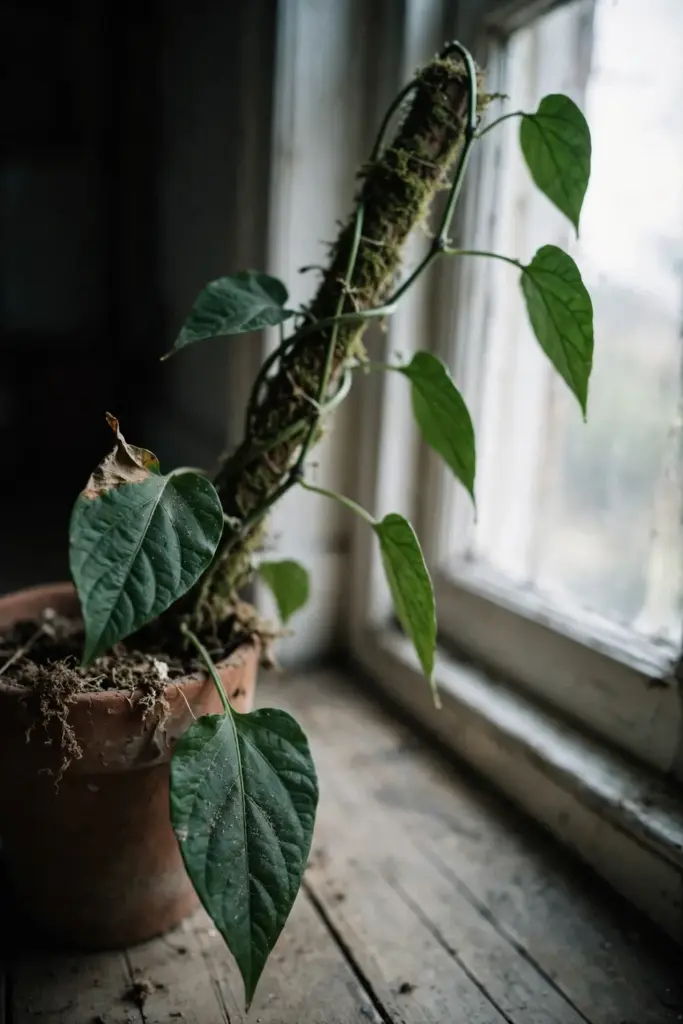
Pick the indoor spot before the move. The vine wants warmth, humidity, and bright indirect light with a support to climb. A bright bathroom window suits many vines. A kitchen corner near other plants suits others. The spot needs room for the pole and a tray under the pot. Indoor herb gardens run on the same logic, since indoor herbs need the same bright, humid corner.
Move the vine in stages when possible. A week of sheltered porch time hardens the shift from outdoor shade to indoor light. Check the vine for hitchhikers before it crosses the threshold. Rinse the leaves, inspect the axils, and isolate any vine with mealybugs or scale for two weeks.
Keep the vine warm and frost-free all winter. No published indoor minimum temperature exists for this species in the sources used here. The honest rule is simple. Keep it warm, keep it frost-free, and keep it out of cold drafts. A vine that sits beside a drafty door or a single-glazed window suffers even when the room feels warm.
Ease watering and feeding indoors. The vine grows slower in dim winter light. Water less often and stop pushing fertilizer until new growth restarts. Watch the air. Heated winter rooms dry the air fast, and dry air stresses a vine that wants humidity. Group the pot with other plants and mist on dry days. Lemongrass is another Indonesian herb that overwinters indoors the same way, in a pot carried inside before the cold.
13. Watch for Mealybugs, Scale, and Foot Rot
Watch the vine weekly for pests and rot. The GrowPlants care guide for Piper retrofractum names Phytophthora foot rot as the make-or-break issue in warm, wet, poorly drained soil. Sap-suckers follow close behind. A weekly look at the stem bases, leaf axils, and growing tips catches most trouble early.
| Problem | Symptom | Fix |
|---|---|---|
| Phytophthora foot rot | Wilting vine, blackened rotting stem base and roots | Sharp drainage, never waterlog, remove infected vines |
| Root-knot nematode | Stunting, wilting in heat, galled roots | Clean stock and soil, heavy organic mulch |
| Aphids and ants | Sticky honeydew, sooty mold, ants patrolling stems | Rinse colonies off, neem or insecticidal soap, break ant trails |
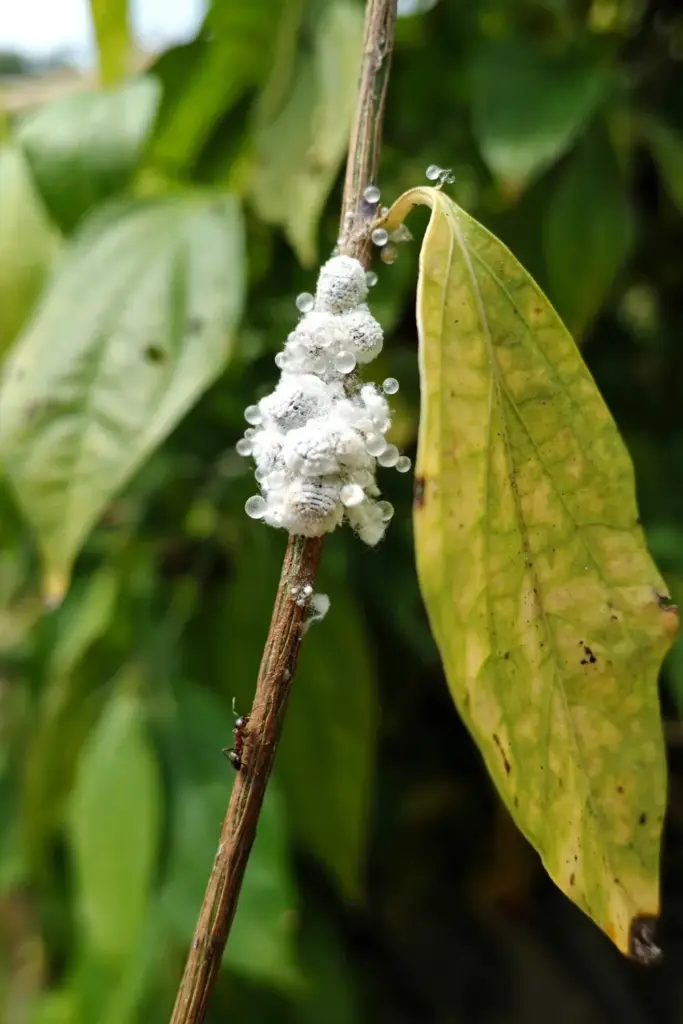
| Mealybugs and scale | White tufts or brown bumps on stems and leaf axils | Alcohol swab, light oil, isolate stock |
| Anthracnose and leaf spot | Dark sunken spots on leaves and spikes | Airflow, remove infected parts |
Treat sap-suckers by hand first. Rinse aphid colonies off with water. Swab mealybugs with alcohol and follow with insecticidal soap or light oil. Dab scale with alcohol and prune out heavily crusted wood. Ants farm aphids, mealybugs, and scale for honeydew, so break the ant trails with sticky bands around the support or stem base. The ants are a sign of trouble, and the sap-suckers are the cause.
Fix drainage before reaching for any spray. Foot rot starts in waterlogged mix. A pot that drains freely and a mix that breathes prevent more disease than any treatment. Remove an infected vine from the group fast. Disinfect the secateurs after touching infected tissue.
Quarantine every new plant for two weeks. A new vine can carry mealybugs or scale in the axils where a quick look misses them. Isolation protects the vines already growing. Check the newcomer twice in that window before it joins the group.
14. Pick Spikes Green and Dry Them Until Brittle
Pick the fruit spikes before they fully ripen. The traditional spice comes from spikes picked green and immature, then dried, as the TopTropicals encyclopedia entry for Piper retrofractum records. A spike left on the vine turns red as it fully ripens. Red spikes lose the pungency the spice is grown for. Pick when the spike is full-sized and still green.
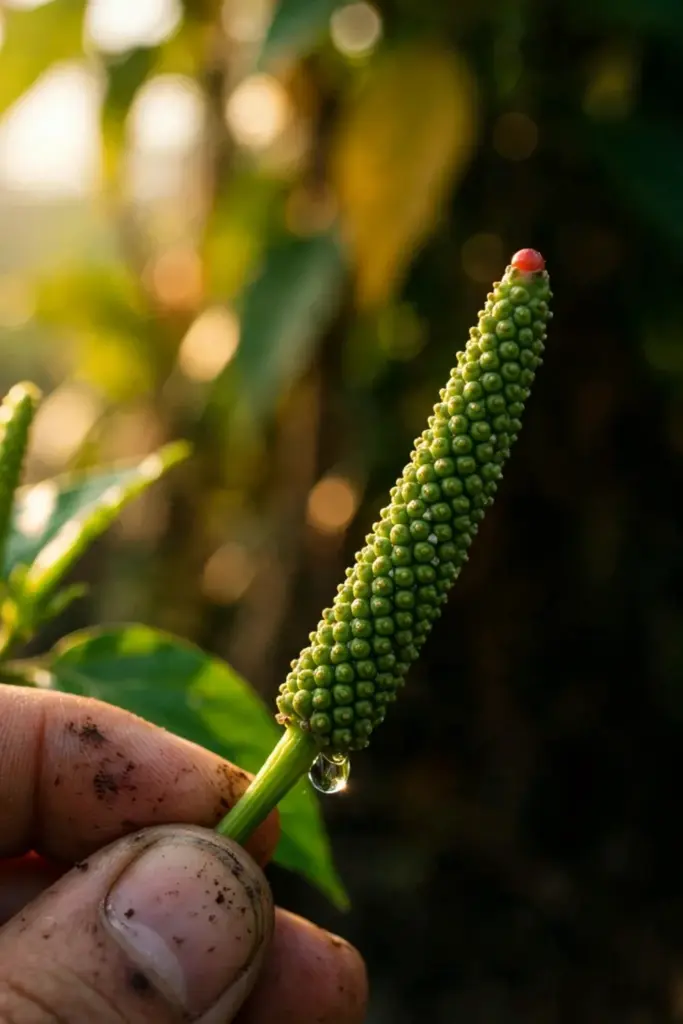
Use precision snips and cut the spike stem cleanly, then pick in the morning after the dew dries. Handle the spikes gently. A crushed spike dries unevenly and molds in storage. Lay the spikes in a single layer on a tray in warm, moving air.
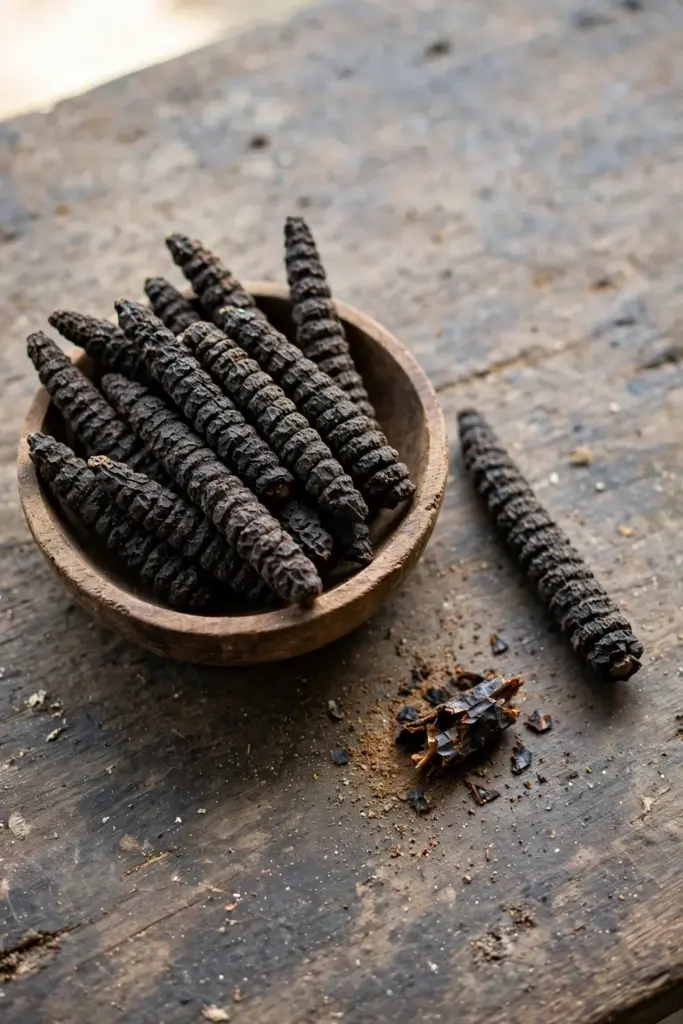
Dry the spikes until fully dry and brittle, since drying darkens and shrivels the spikes into the pungent spice. Turn the tray daily so every side dries. A spike that still bends holds moisture inside, and moisture in storage grows mold and ruins the batch. Wait for the snap.
Store the dried spikes in a sealed, dry container out of direct light, the storage method the GrowPlants care guide for Piper retrofractum gives for the dried fruit. Use them whole or ground. Crush a spike just before cooking to release the aroma. A whole spike in a slow stew gives steady heat. Ground long pepper seasons a spice blend fast.
Pick young leaves as a cooked green when the vine has growth to spare. Take leaves from growth away from the fruiting spikes so leaf-picking does not reduce the fruit crop. The fruit is dried and processed, and it is not eaten fresh. The leaves are cooked, per the GrowPlants care guide for Piper retrofractum. Turmeric is another tropical spice that rewards patience the same way, since the harvest waits years while the plant builds its strength.
15. Fix Yellow Leaves, Bare Stems, and Missing Spikes
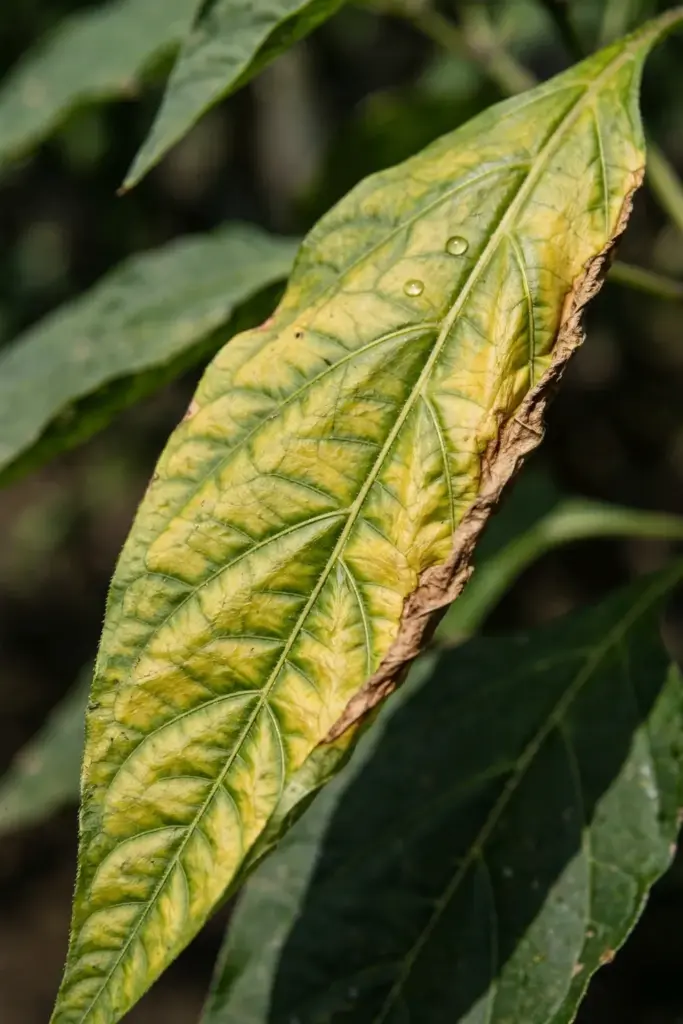
Fix the cause, and the vine answers fast. Most Javanese long pepper failures trace to water, light, or pruning. The table below pairs each symptom with its likely cause and its fix. Work through it in order. Check water first, then light, then pruning history.
| Symptom | Likely Cause | Fix |
|---|---|---|
| Yellow leaves, wet mix | Waterlogging | Improve drainage, let the mix breathe, water less often |
| Yellow leaves, dry mix | Drought | Soak the pot, shorten the gap between waterings |
| New leaves yellow between green veins | pH too high, iron shortage | Correct pH toward acidic, check irrigation water |
| Leaf edges scorch | Harsh direct sun | Move to filtered light, no midday sun |
| Tall vine, few spikes | Main stem never topped | Top the stem to force fruiting laterals |
| Fewer spikes on an old vine | Spent laterals never renewed | Remove old laterals after harvest |
| No spikes after years | Immature vine, or a male plant | Wait, or add a vine already carrying spikes |
| Blackened stems near cuts | Stem rot in wet weather | Disinfect tools, avoid pruning when wet, improve airflow |
A vine that grows tall with no spikes usually missed its early topping. The fix is mechanical. Top the main stem and the laterals follow. A vine that yellows usually suffers water or pH trouble. The fix is environmental. Change the water or the mix, and the new growth shows the result.
A vine that never fruits after years of good growth may be a male plant. The Flora of China account of Piper retrofractum describes the species as dioecious, with male and female flowers on separate plants. A male vine never sets spikes. Add a vine already carrying spikes to the group. That vine has already proven it fruits.
Frequently Asked Questions About Growing Javanese Long Pepper
Yes. A pot with a moss pole suits the vine indoors all year. The GrowPlants care guide for Piper retrofractum rates the vine suitable indoors with warmth, humidity, bright indirect light, and a support. Give it a 15 to 25 liter pot and a bright window, no harsh midday sun. Expect slower growth indoors than outdoors, and expect the spice harvest to wait years either way, which is the honest pace of how to grow javanese long pepper indoors.
Plan on 3 to 4 years before the vine bears a useful crop. The GrowPlants care guide for Piper retrofractum gives that timeline for a vine to begin bearing fruit. A nursery vine already carrying spikes shortens the wait, since it has proven it fruits. A seedling starts the full clock. Buy the fruiting vine when the spice matters to you, and treat the first years as vine-building time.
Two vines raise the odds. The Flora of China account of Piper retrofractum describes the species as dioecious, which means male and female flowers grow on separate plants, while the GrowPlants care guide for Piper retrofractum describes the vine as self-pollinating. A lone vine may fruit, or it may never set a spike. A second vine, or a vine bought already carrying spikes, removes the doubt. Keep each vine in its own pot.
No. Javanese long pepper is Piper retrofractum from Java, Indonesia. Indian long pepper is Piper longum from India. The two species share the long pepper name and the fused spike form. Katzer’s spice pages on long pepper record that the Javanese rods run slightly smaller than the Indian rods. Check the botanical name on the tag before you buy, since the common name alone proves nothing.
No. The dried rods are processed spice, and the seed inside loses viability fast once dried or stored. The GrowPlants care guide for Piper retrofractum advises sowing seed fresh from a fully ripened red fruit. Dried grocery rods will not sprout. Buy a live nursery vine, or root a stem cutting from a known plant, and skip the dead seed entirely.
Grow Javanese Long Pepper for the Vine First and the Spice Second
Grow Javanese long pepper for the vine first and the spice second. The vine gives fast climbing growth, glossy leaves, and a tropical corner in the first year. The spice needs 3 to 4 years and a fruiting vine. That order keeps the project honest. A gardener who expects spice in season one quits. A gardener who expects a vine keeps growing.
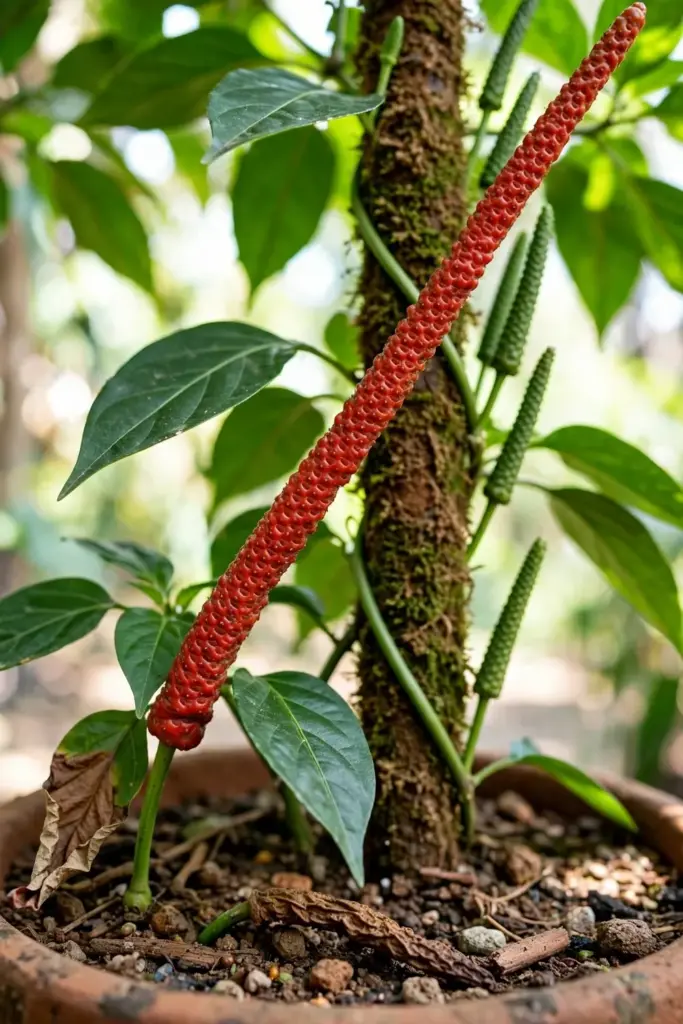
Start with the three moves that matter most: buy a vine already carrying spikes, pot it in a 15 to 25 liter pot with a moss pole, and carry the pot indoors before cold weather arrives. Anyone learning how to grow javanese long pepper in a temperate climate wins or loses on those three moves. The rest is steady water, filtered light, and patience.