
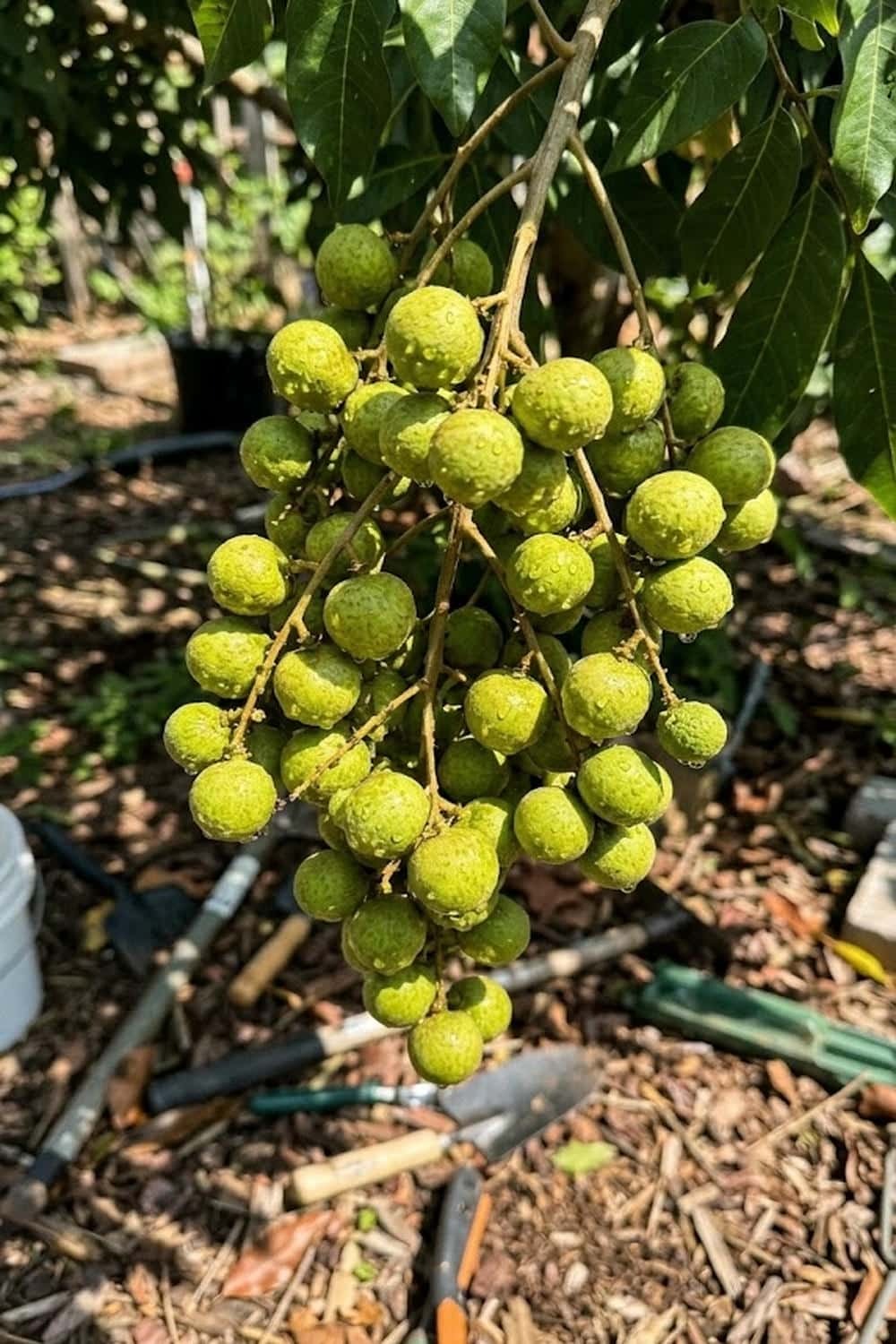

You buy a beautiful, exotic tropical fruit tree, dreaming of sweet, juicy harvests right from your backyard. You plant it carefully, watering it constantly, only to watch it struggle, refuse to flower, or drop what few tiny fruits it manages to produce. It’s frustrating when your time and hard-earned money result in nothing but a stick in the mud, leaving you feeling like you just don’t have a “green thumb.” I have been there, and I know how defeating that empty spot in the garden feels. But how to grow Longan fruit effectively isn’t magic; it is simply about understanding the specific needs of this unique tree. I have compiled these 15 essential, tested strategies to give you the exact knowledge required to turn that struggling stick into a thriving, high-yielding Dragon Eye producer.
Choose the Right Variety for Your Climate Zone
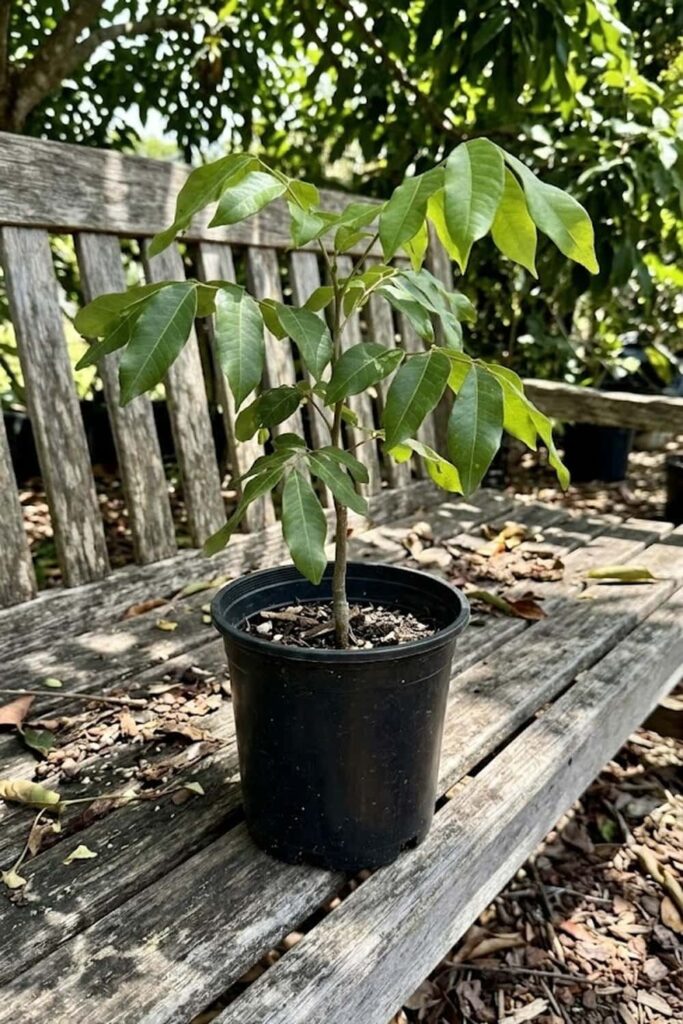
One of the first mistakes I made in my gardening journey was ignoring the specific cultivar I was planting. If you want How to grow Longan fruit successfully, you absolutely must start with a tree that matches your specific local climate. In subtropical areas like Florida, I strongly recommend the ‘Kohala’ variety. It is reliably productive and highly regarded for its sweet, recursive taste. For those in truly tropical, high-humidity regions, ‘Diamond River’ is an excellent choice as it often manages to produce off-season crops. When you choose a variety bred for your specific conditions, you are setting the tree up for success before it even leaves the pot. Don’t simply buy the first tree you find; research its specific heat and cold tolerances. This fundamental decision influences everything from nutrient absorption to final fruit quality and yield. Selecting the wrong variety is often the unseen reason why a tree simply survives rather than thrives. You need to identify a cultivar that can handle your average daily humidity and winter lows, even if those lows only last for a few hours.
Grow Longan Fruit in Proper USDA Hardiness Zones
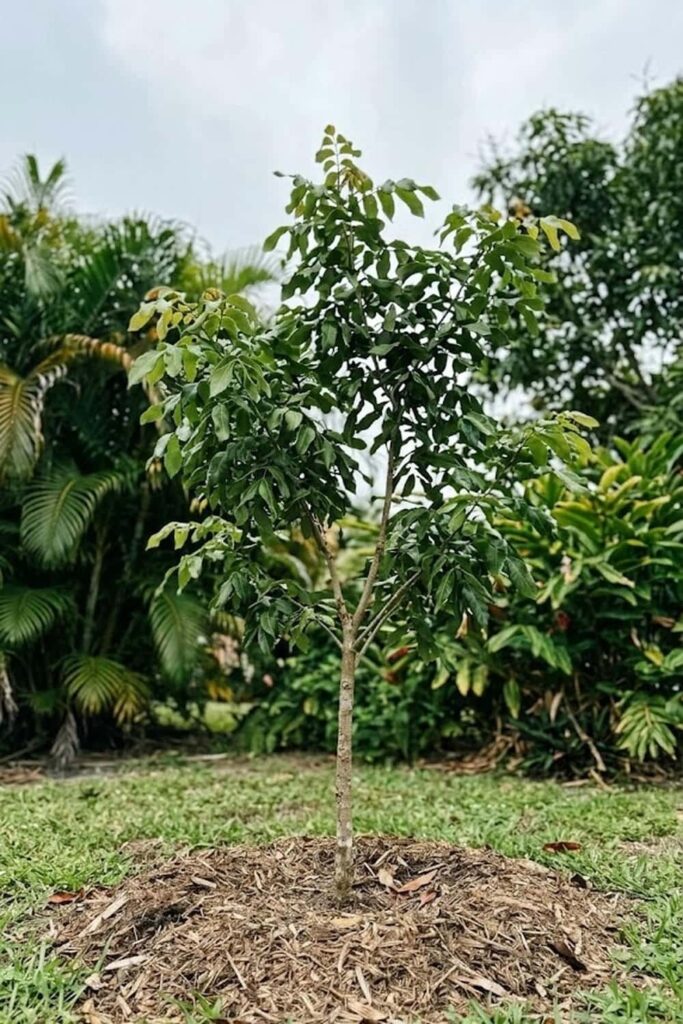
The Longan (Dimocarpus longan) tree has a precise range of acceptable temperatures that you must respect. Longan trees survive and produce fruit best when they are situated in specific USDA hardiness zones. These zones, which map acceptable lowest winter temperatures, tell you if the tree can make it through the year. Longans are subtropical and require a period of cooler (but never freezing) weather in the winter to induce flowering, but they have zero tolerance for hard freezes. If you live outside of these suitable bands, your dream of how to grow Longan fruit is unlikely to materialize. Established trees might tolerate very brief dips to 26°F (-3°C), but anything sustained will prove fatal, especially to young, unestablished specimens. When you plant within the recommended zone, you are ensuring the tree receives the natural climate cues necessary for its complete biological cycle. You can always check your local zip code against the official USDA maps to confirm your zone status. Protecting your tree from erratic cold snaps, which are becoming more common, is vital in the shoulder zones.
- Optimal Production Zones: 10a to 11b
- Marginal/Survival Zones: 9b (With significant winter protection)
- Minimum Acceptable Temp (Mature): 28°F (-2°C) for brief periods
- Minimum Acceptable Temp (Young): 32°F (0°C)
Mix the Perfect Soil for Healthy Root Systems
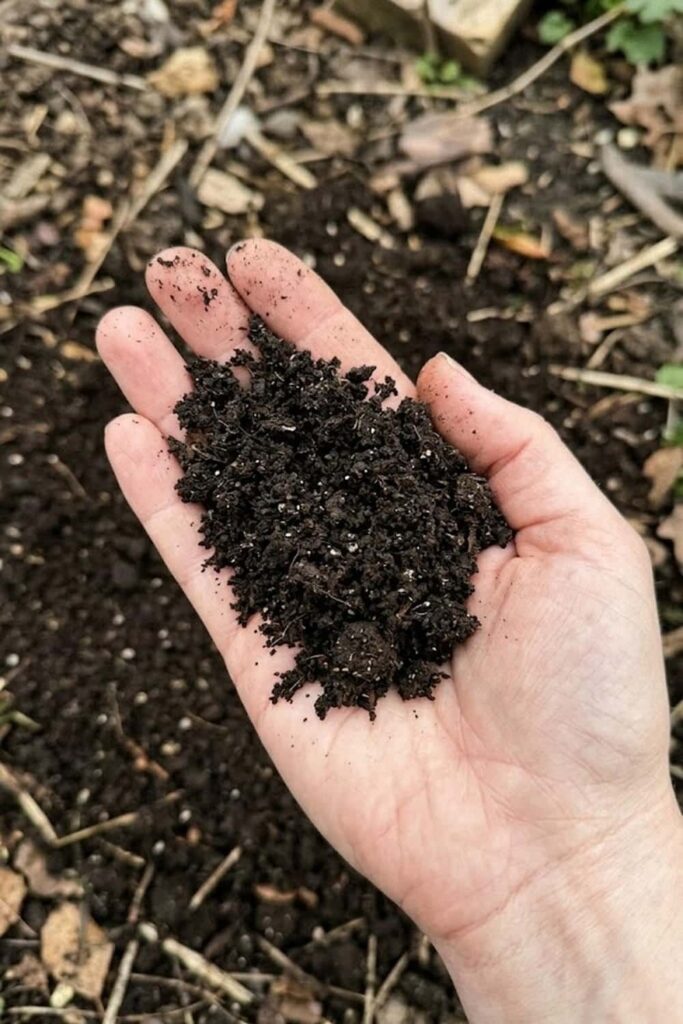
I cannot emphasize this enough: if you do not have the proper Soil Mix, you have zero chance of successfully managing How to grow Longan fruit in the long term. A Longan tree is extremely intolerant of “wet feet” and will quickly develop fatal root rot if the soil cannot drain efficiently. I have lost more than one tree because I planted it in standard backyard clay without amending it, thinking I could compensate with less watering. You can prevent this mistake. Longan trees require a Soil Mix that is loose, highly porous, and rich in organic matter. You should aim to use a substrate that is essentially sandy loam. If your inherent soil is heavy clay, you must excavate a significantly larger hole and backfill it completely with a mixture of native soil, coarse sand, and significant amounts of finished compost. This creates an inviting, well-oxygenated environment where delicate feeder roots can rapidly expand. I have seen trees in perfect drainage outperform trees in poor drainage by a factor of four in a single season.
- Ideal Soil Texture: Light, sandy loam
- Target Soil pH: 5.5 to 6.5
- Compaction Tolerance: Extremely low
- Organic Matter Need: High (for nutrient retention and drainage)
Provide Full Sun Exposure for Maximum Flowering
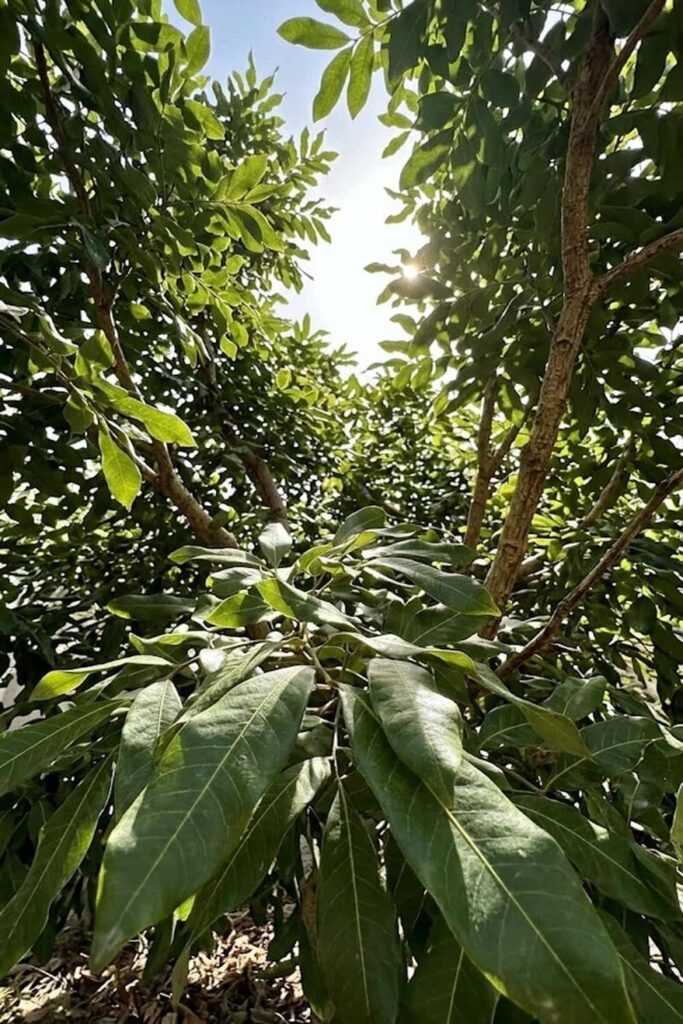
A vital lesson in How to grow Longan fruit is understanding its relentless need for Light. Your Longan tree is not a shade-tolerant plant; it’s a sun-loving powerhouse. You must provide a location that receives at least 6 to 8 hours of direct, unfiltered sunlight daily. I have observed that trees receiving maximum exposure will develop a dense, round, and highly productive canopy, whereas trees shaded for just two or three hours a day will become leggy, sparse, and refuse to produce meaningful flower panicles. While the tree’s evergreen leaves are adaptive, the biological trigger for significant Flowering is intense light and subsequent energy production via photosynthesis. You need to position the tree carefully, perhaps on the south side of your home or in an open area away from larger, established structures. If you are planting multiple trees, you must respect their mature spacing to prevent them from shading one another as they grow. Adequate light is the primary fuel for the entire fruiting process.
Care for Your Tree with Consistent Watering
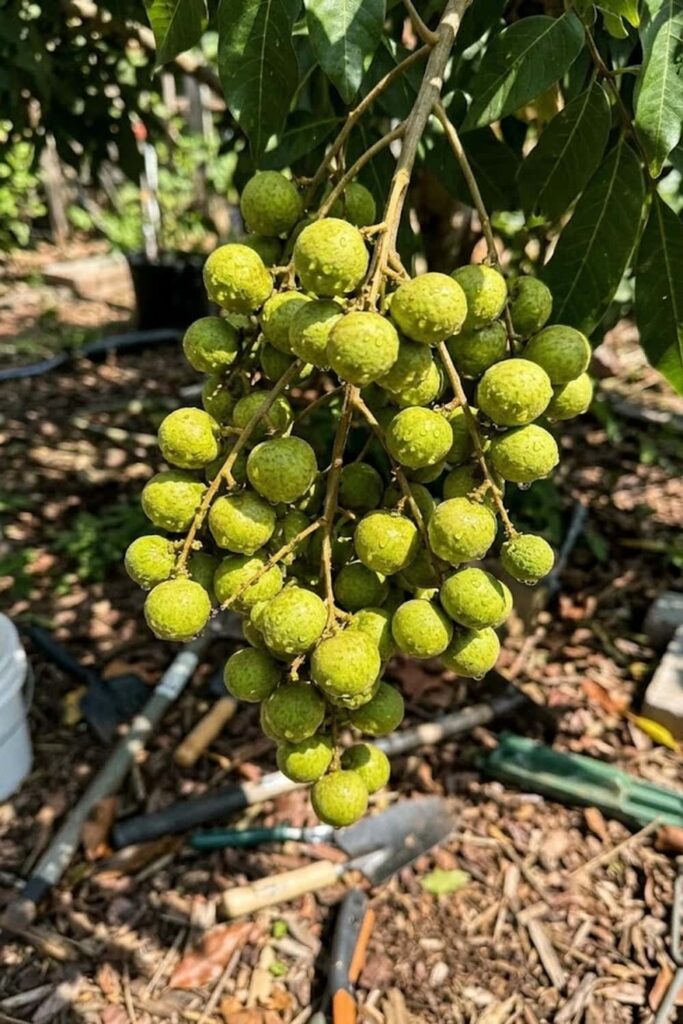
Watering is the most frequent maintenance task you will undertake, and its management is critical for consistent fruit production. When you are mastering How to grow Longan fruit, you must realize that consistent moisture is not about constant saturation. I find that a deep-watering schedule, allowing the top two inches of soil to dry out between sessions, is far more effective than frequent shallow sprays. This approach encourages roots to grow downward, making the tree more resilient to drought. The crucial periods for Watering are during flowering and, most importantly, fruit set. I have noticed that uneven watering or sudden drought stress when the fruits are young (the size of peas) causes the tree to panic and drop the entire crop. You must provide steady, reliable moisture during this critical time. I recommend using a soaker hose or drip irrigation system to deliver water slowly and deeply directly to the root zone, minimizing waste and preventing moisture from sitting on the leaves, which can invite fungal diseases.
| Tree Stage | Watering Frequency (Dry Season) | Key Water Need |
| Newly Planted | 3x per week | Establish taproot |
| Non-Fruiting | 1-2x per week | Maintain canopy |
| Flowering & Fruit Set | 2-3x per week (Deep) | Critical (Prevents drop) |
| Mature Fruit | 1x per week | Final fruit swell |
Fertilizing for Vigorous Growth and Fruit Size
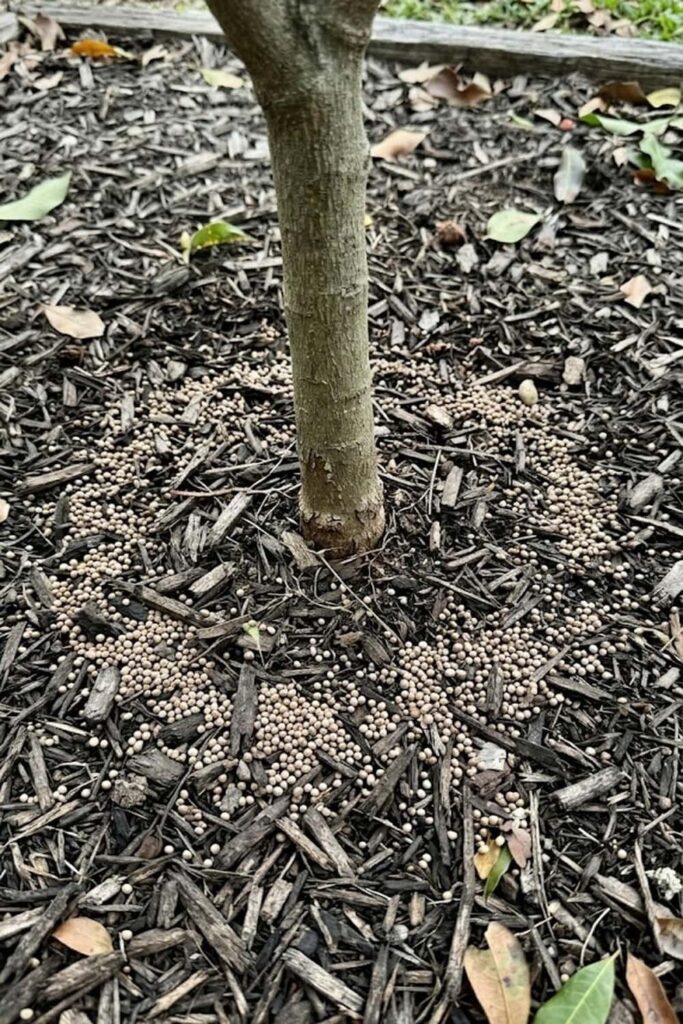
Once your soil and watering are stabilized, you must focus on Fertilizing to fuel the tree’s heavy resource demands. I have learned through trial and error that a Longan tree is a gross feeder, especially when it begins bearing. You cannot rely on inherent soil fertility alone if you are serious about mastering How to grow Longan fruit with significant yields. I recommend utilizing a balanced, slow-release fruit tree fertilizer, such as an NPK ratio of 6-6-6 or 8-3-9. It is vital to include essential micronutrients like magnesium, manganese, iron, and zinc, as Longans are prone to deficiencies that manifest as yellowing leaves (chlorosis). For a young tree, I apply fertilizer lightly every 6-8 weeks during the active growing season (spring through summer). For mature, bearing trees, I shift to a critical three-application schedule: once in late winter before flowering to support panicle development, once in late spring after fruit set to fuel fruit growth, and once in mid-summer to help the tree recover and prepare for the next season. You should always broadcast the fertilizer evenly under the entire canopy, keeping it at least 12 inches away from the trunk to prevent burn.
Pruning to Maintain a Productive Tree Canopy
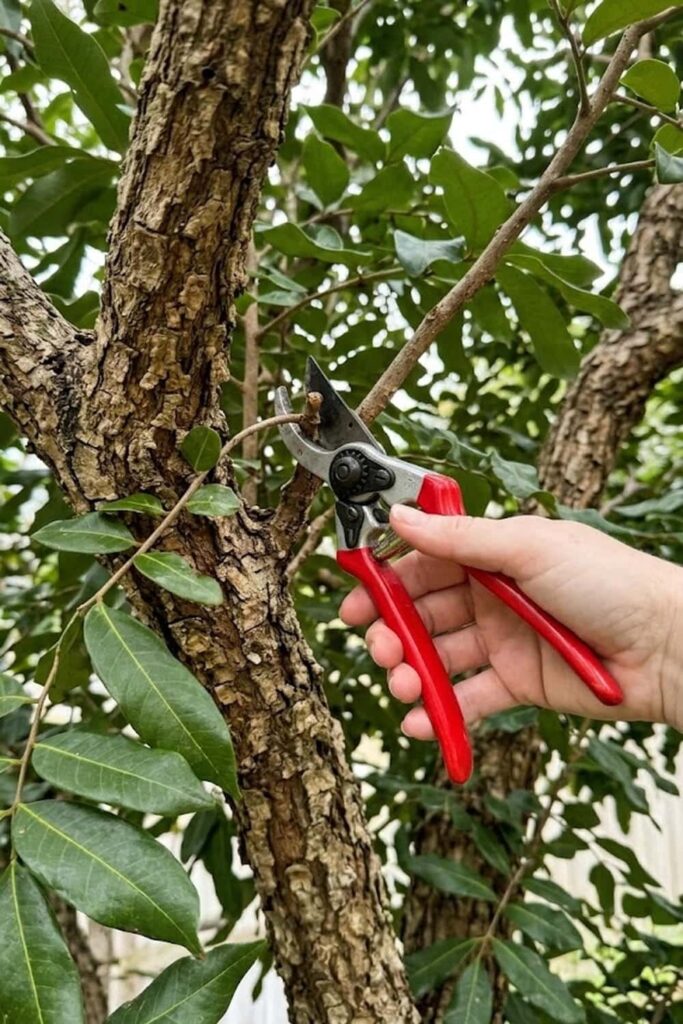
You might feel nervous about cutting your tree, but proper Pruning is absolutely non-negotiable for long-term health and fruit production. I have seen unpruned Longan trees grow into massive, unmanageable, and sparse monsters with zero fruit within reach. When you are serious about How to grow Longan fruit, you must actively shape the structure. I found that pruning is best used to create a strong canopy. For a young tree, focus on developing 3 to 5 main scaffold branches that are evenly spaced around the trunk, ensuring a strong framework. For a mature tree, your annual objective is maintenance. Immediately after harvest, I remove any dead, diseased, or crossing branches that create congestion. You must also thin the center of the tree to allow light penetration and maximize Ventilation, which significantly reduces disease pressure. I often tip new growth during the spring to encourage more complex branching, which results in more potential flowering sites. Remember, Longans fruit on the tips of new wood; strategic pruning guarantees you always have fresh, productive growth.
Mulching for Moisture Retention and Soil Health
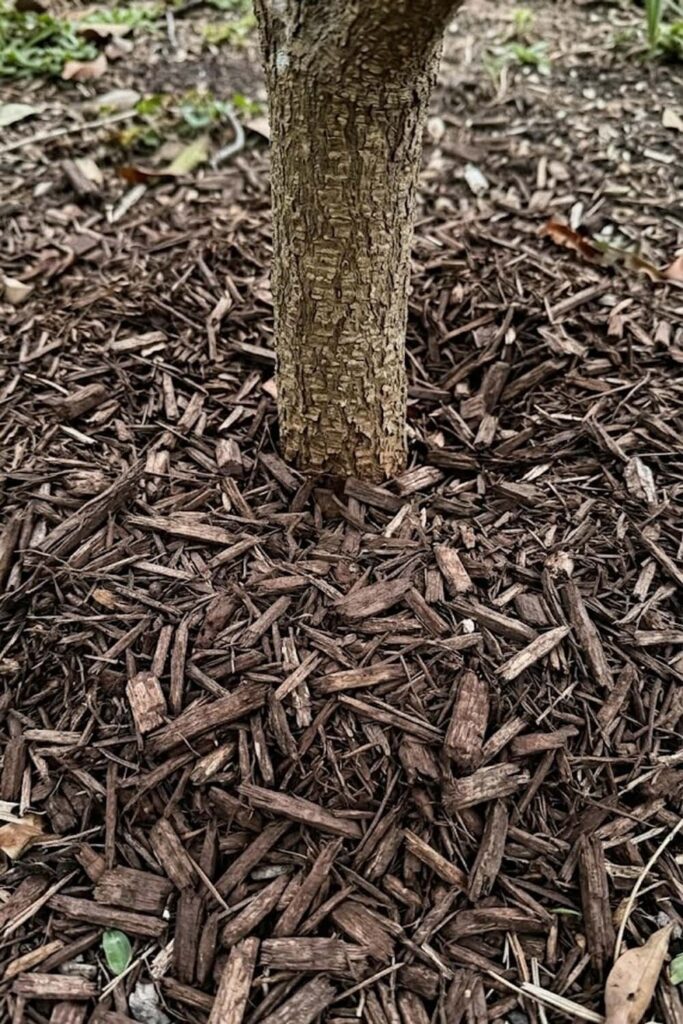
You must prioritize Mulching if you want to stabilize the environment around your tree’s sensitive root system. Longan trees, like many subtropical species, have a significant concentration of feeder roots near the soil surface. I found that a thick layer of organic Mulching provides critical protection against moisture evaporation, keeping the root zone much cooler during intense summer heat. It acts as a buffer against temperature swings and, perhaps most importantly, suppresses competing weeds. I have seen trees that were mulched deeply grow consistently faster than those left in bare soil. I recommend applying a 3-to-4-inch layer of organic material, such as shredded bark, wood chips, or pine straw, extending at least to the drip line (the outer edge of the canopy). You must ensure that the mulch does not actually touch the trunk; always maintain a 6-inch clear radius to prevent moisture from pooling against the bark, which will invite fatal collar rot. As the organic mulch decomposes, it will slowly add vital humus back into the soil structure, constantly improving the Soil Mix.
- Best Mulch Materials: Wood chips, shredded bark, pine straw, finished compost.
- Optimal Depth: 3-4 inches.
- Placement Rule: Extend to the drip line; keep 6 inches clear of the trunk.
- Key Benefits: Suppresses weeds, keeps roots cool, prevents moisture loss.
Control Pests Like the Lychee Webworm
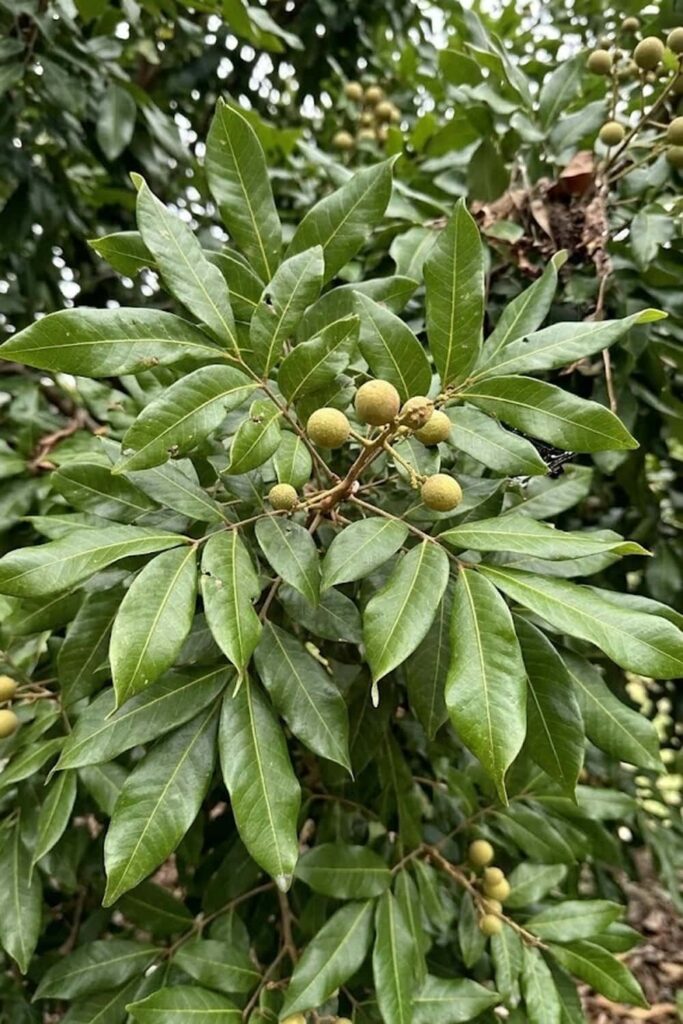
You cannot ignore proactive Pest Control if you wish to successfully harvest healthy Longan fruit. While generally robust, Longan trees attract specific pests that can devastate new growth and fruit clusters if left unchecked. In my experience, the two most challenging pests are the Lychee Webworm and various scale insects. Webworms are highly destructive; their larvae gather at the terminals, spinning a protective web while consuming the tender new leaves and emerging flower panicles. You can mitigate this by routinely inspecting new growth; I find that manually removing and destroying these webs is highly effective for smaller trees. For scale insects, which appear as small, static bumps on stems and leaves, I recommend utilizing an organic horticultural oil or neem oil spray. It is vital to apply these sprays thoroughly, including the undersides of leaves, during the cooler evening hours to avoid phytotoxicity (burning leaves). I maintain a strict schedule of Monitoring new flushes of growth, as early detection is key to preventing a minor issue from exploding into a major infestation.
Prevention of Root Rot Through Proper Drainage
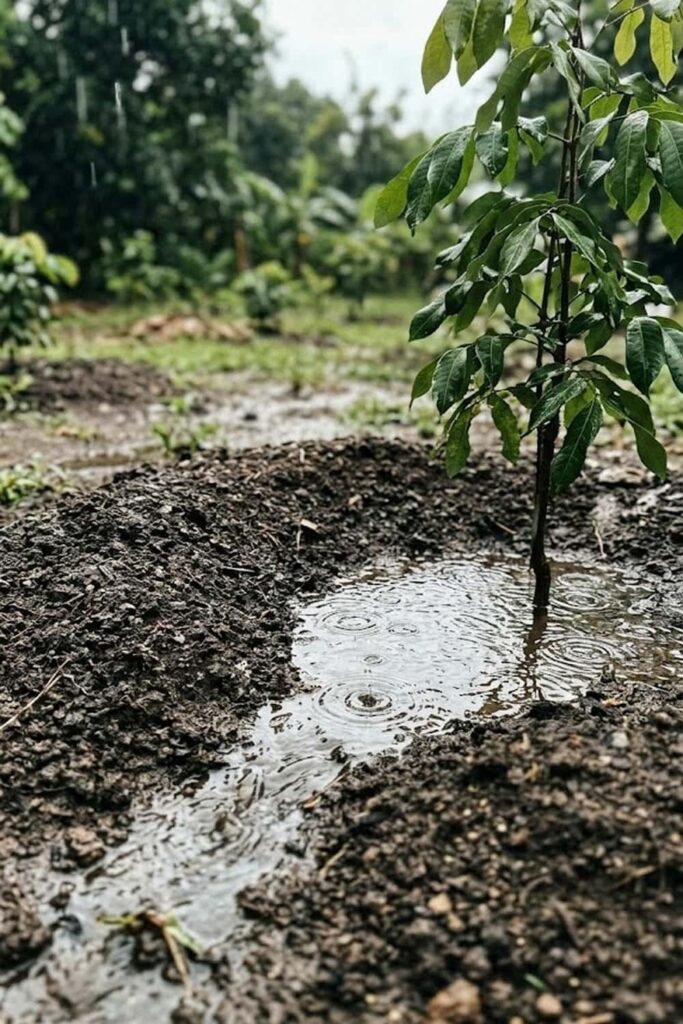
This is the single most important technical factor in How to grow Longan fruit: you must guarantee perfect Drainage. I have seen beautiful, established trees die within two weeks because a heavy rain event flooded the soil and they had nowhere to go. Longan roots absolutely cannot tolerate standing water; the lack of oxygen leads rapidly to fatal Phytophthora root rot. While you can amend clay soil, a better strategy is to elevate the tree entirely. I strongly recommend planting on a constructed mound or berm, raising the root ball 12 to 18 inches above the surrounding grade. This elevation uses gravity to ensure excess water quickly drains away from the sensitive upper root system. When choosing your site, you should perform a Monitoring test: dig a hole, fill it with water, and ensure it drains completely within two hours. If it takes longer, you must mound your planting area or find another location. This proactive Protection measure is the best insurance you can buy for your tree’s survival.
| Soil Drainage Test Result | Action Required |
| Drains < 1 hour | Excellent; plant normally. |
| Drains 1-2 hours | Good; standard planting ok. |
| Drains 2-4 hours | Marginal; must mound tree (12″ berm). |
| Drains > 4 hours | Unacceptable for Longan; fatal risk. |
Monitoring Humidity During the Flowering Phase
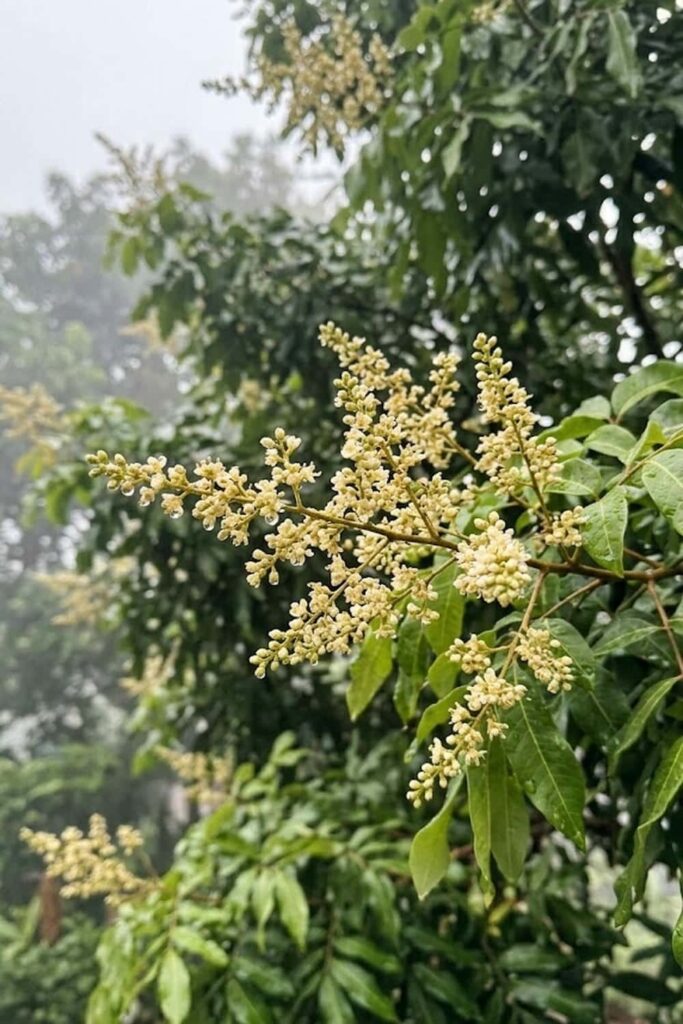
You must understand that high atmospheric Humidity is the quiet engine driving successful pollination. I have observed that while Longan trees are drought-tolerant once established, they require significant moisture in the air specifically when the delicate flower panicles emerge. If the air is too dry, the pollen fails to adhere to the stigma, and the small fruits that do form will often drop immediately. Through careful Monitoring, I found that a relative humidity level of 60% to 80% during the flowering weeks is ideal. To combat dry spring air, I utilize a simple technique: I lightly mist the canopy of the tree with a hose early in the morning and again in the late afternoon. This temporary bump in local Humidity mimics the tree’s native jungle environment and significantly increases the final fruit set. You must not overdo it, however; constant saturation invites fungal diseases like anthracnose, which will devastate the blossoms. It is about a temporary, strategic increase to help the tree through this vulnerable, critical Care phase.
Repotting Longan Trees Grown in Containers
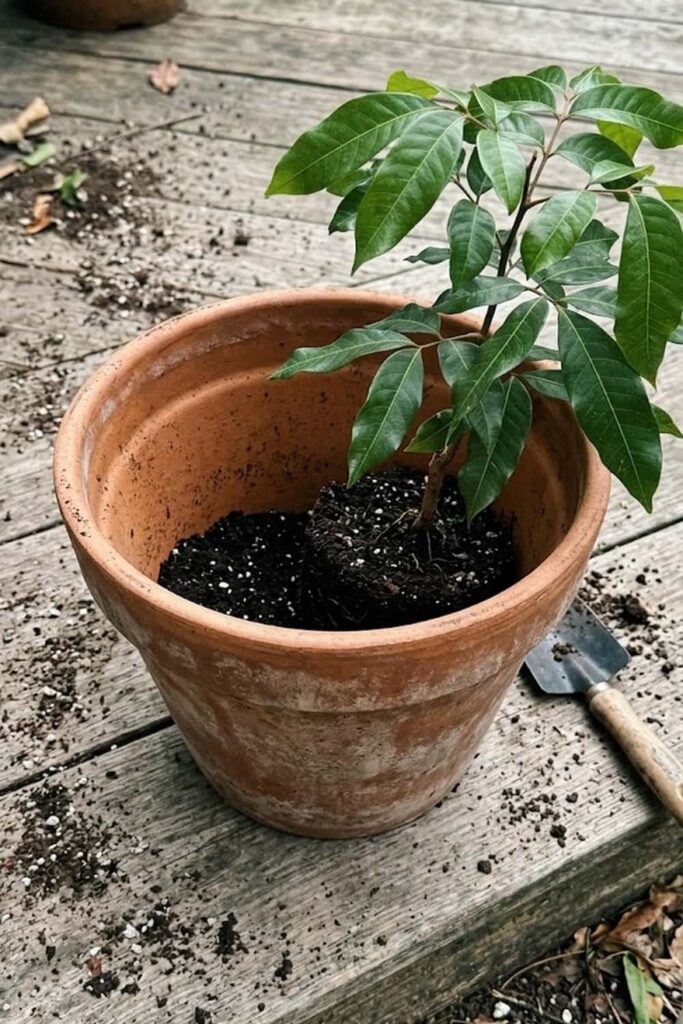
You will find that Longans are excellent candidates for container culture, but this requires diligent Repotting to prevent them from becoming root-bound and stunted. I maintain several productive trees in pots. The critical factor is that a container-bound Longan tree exhausts its soil nutrients quickly and cannot expand its root system to support a larger canopy. When you see roots circling the surface or emerging from the drainage holes, it is time for a larger home. I have experienced great success with this Repotting schedule: move the tree to a container that is 2-4 inches larger in diameter every two years. I found that doing this immediately after harvest, when the tree is transitioning to vegetative growth, is least stressful. I use a slightly heavier Soil Mix for containers—perhaps 60% sandy loam and 40% organic compost—to ensure it retains some moisture, as pots dry out much faster than the ground. This consistent Repotting ensures the delicate feeder roots always have access to fresh, oxygen-rich substrate for maximum Grow potential.
Propagation via Air Layering for Faster Results
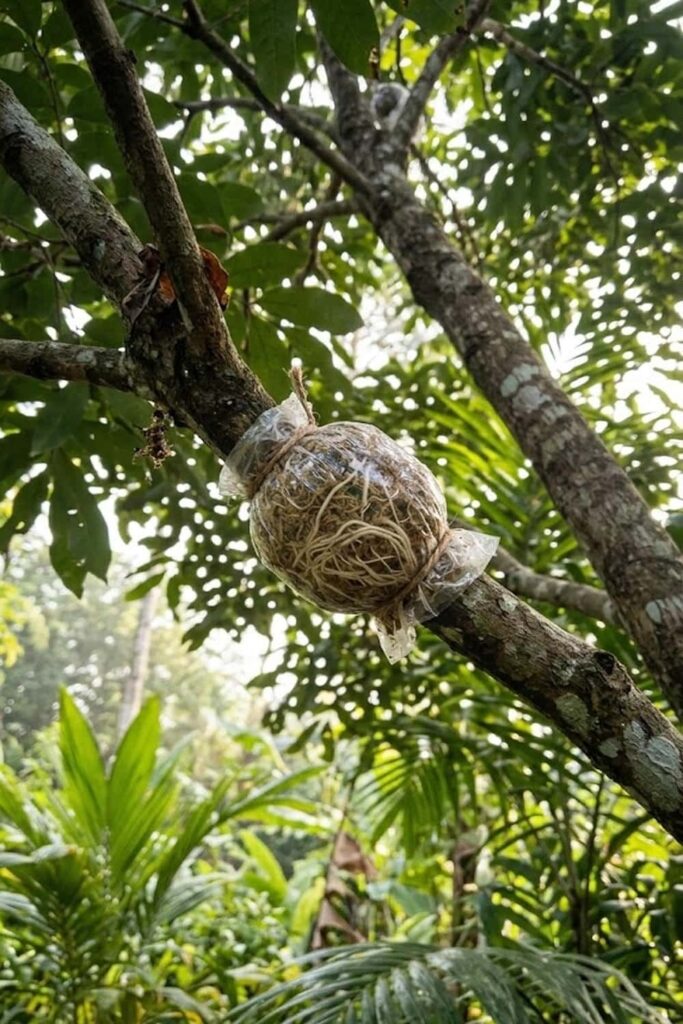
You will wait many years for fruit if you plant a seed, which is why I prefer the reliable method of Propagation via air layering (also known as marcotting). This technique clones a mature, fruiting branch, giving you a genetically identical tree that is effectively already “mature.” I found that seed-grown trees can take 6 to 10 years to produce a single fruit, and the quality is highly unpredictable. An air-layered tree, however, bypasses this juvenile phase and will often begin Flowering within 2 to 3 years. The process involves woundings a branch, wrapping it in moist sphagnum moss, and sealing it with plastic. I generally start my air layers in late spring when the sap is flowing vigorously. I check the progress by carefully pulling back the plastic after 8-10 weeks; once I see a robust mass of white roots, I sever the new tree and carefully pot it up. This reliable Propagation method is the professional standard for developing new, high-quality Longan specimens, and it is a fundamental skill for any advanced tropical gardener.
| Propagation Method | Time to Fruit (Average) | Genetic Reliability | Recommended for Homes? |
| Seed | 6–10+ Years | Highly Variable | No (Fun experiment only) |
| Grafting | 2–3 Years | Identical Clone | Yes |
| Air Layering | 2–3 Years | Identical Clone | Yes (Best DIY Method) |
Harvesting Longan Fruit at the Peak of Ripeness
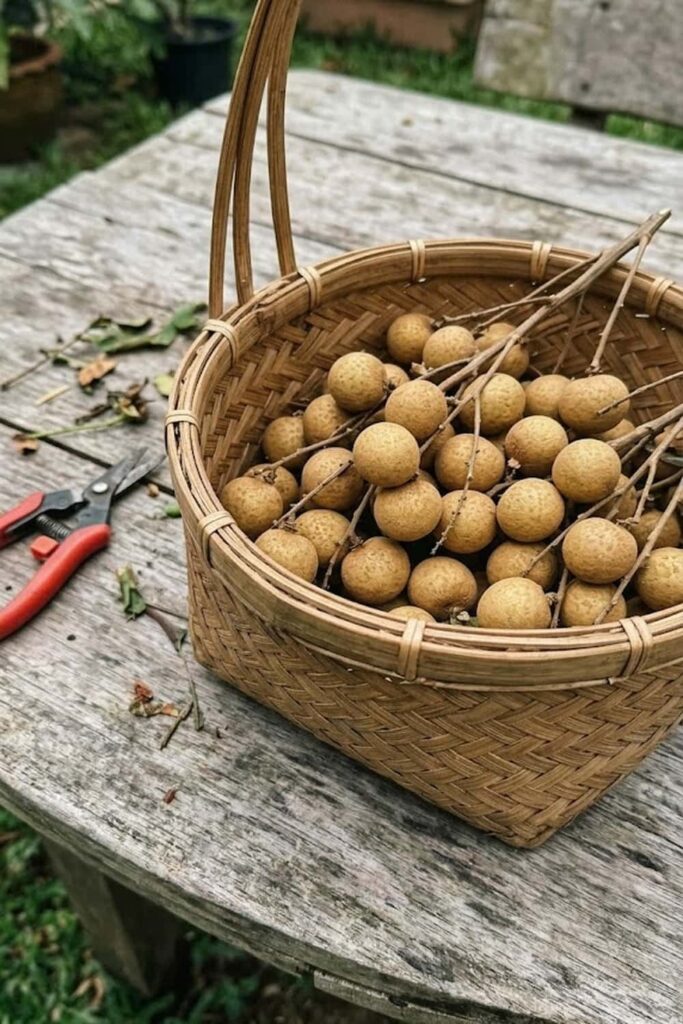
You must be patient and avoid the temptation to Harvest too early, as Longans are non-climacteric, meaning they do not continue to ripen or sweeten once they are cut from the tree. I have seen gardeners ruin their entire crop by harvesting based on color alone. Longans typically turn a sandy brown or tan when they appear “ripe,” but the color can be misleading. I find the only definitive test is the taste test. I will select one fruit from a few clusters; if it is musky-sweet and the seed is a dark, glossy black, the entire tree is ready. The fruit skin should also lose its extreme texture and feel slightly smooth or brittle. When you are ready to Harvest, use sharp snips to cut entire panicles (fruit clusters), leaving a few inches of stem. This practice protects the fruit from bruising and maintains freshness for a longer period, making subsequent Care and processing much easier. This final, rewarding step requires careful Monitoring to catch the exact moment of peak flavor.
Storage and Post-Harvest Protection
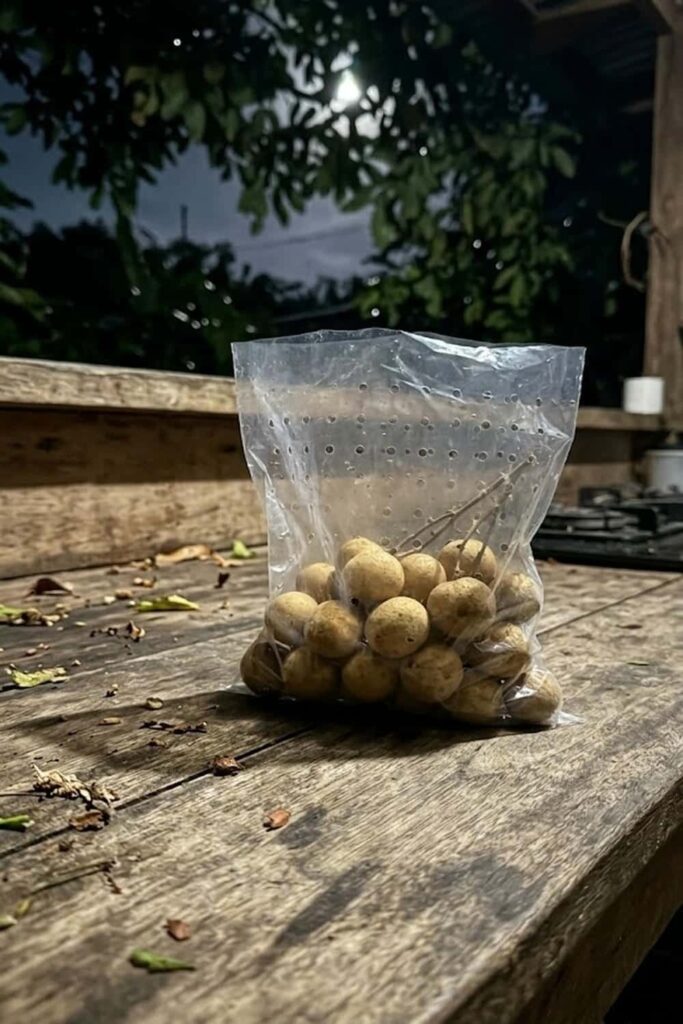
Once you have successfully harvested your Longans, proper Storage is essential because, as a tropical fruit, they have a short shelf life. I have found that uncooled Longans will begin to lose their flavor and texture within just 48 hours. I experience the best results by keeping the fruit clusters intact and placing them into a perforated plastic bag to maintain high Humidity while allowing for Ventilation. When stored in the coldest part of the refrigerator (ideally around 35°F to 40°F), fresh Longans will maintain their unique, musky sweetness for two to three weeks. I have seen that if you expose them to dry, open air, the thin brown pericarp (skin) will quickly dry and become very brittle, and the internal aril will lose its characteristic translucent appearance. Proactive post-harvest Protection is the final, crucial step in enjoying the fruits of your labor for as long as possible. Don’t waste your efforts; use temperature control immediately.
FAQ: Your Longan Growing Questions Answered
How long does it take for longan trees to fruit?
A question I get asked all the time is about the waiting period. You will find that grafted or air-layered (marcotted) trees, which are clones of mature trees, are very efficient. They will typically begin Flowering and producing fruit within 2 to 3 years of planting. In contrast, if you are patient enough to grow a tree from seed, you should expect to wait anywhere from 6 to 10 years, and the fruit quality will be highly unpredictable.
How to grow longan fruit from seed at home?
While I don’t recommend it for serious production, growing from seed is a fun experiment. You must use fresh seeds immediately; do not let them dry out. Clean the pulp completely and plant the seed about one inch deep in a moist, sterile seed-starting Soil Mix. Maintain high Humidity and constant Temperature (above 70°F) for best germination. Be prepared for a long juvenile phase and uncertain fruit quality.
Can longan grow in pots for small gardens?
You will be happy to know that Longans adapt wonderfully to container culture. I have experienced great results by using large, well-draining pots (20+ gallons for mature trees) and focusing on active canopy management through consistent Pruning. You must also prioritize regular Repotting every two years and maintain diligent Watering and Fertilizing schedules, as container environments are more restrictive than the open ground.
What is the best soil pH for growing longan fruit trees?
I cannot emphasize this enough: pH is a key driver of nutrient availability. Longan trees strongly prefer an acidic Soil Mix. You should aim for a soil pH between 5.5 and 6.5. If your soil is too alkaline (pH > 7.0), you will often observe yellowing leaves (iron chlorosis). You can correct this by applying chelated iron and using acidifying fertilizers or agricultural sulfur. Proactive Monitoring of your soil pH is essential for successful Grow operations.








