You see photos of vibrant, tropical backyards online, overflowing with unique fruits that you can’t find in your local grocery store. You want that—a sanctuary where you can escape your standard 9-to-5 life—but you are stuck with a standard suburban plot or maybe just a balcony, aren’t you? It’s frustrating. You feel like that tropical dream is only for people living in the deep equatorial zones. What if I told you that you are completely wrong? I felt the exact same way until I discovered that learning how to grow guava fruits effectively is all about smart management, not just climate. The solution is using strategic varieties and modern growing techniques.
This guide will walk you through everything I have learned about cultivating Psidium guajava—the sweet, aromatic common guava—using a series of actionable, proven tips that fit into a busy professional life. By the end of this, you’ll know exactly how to turn a small patio space into a producing tropical oasis. Let’s look at how you can get started with this resilient, rewarding plant.
1. Choose a Grafted Variety for Faster Results
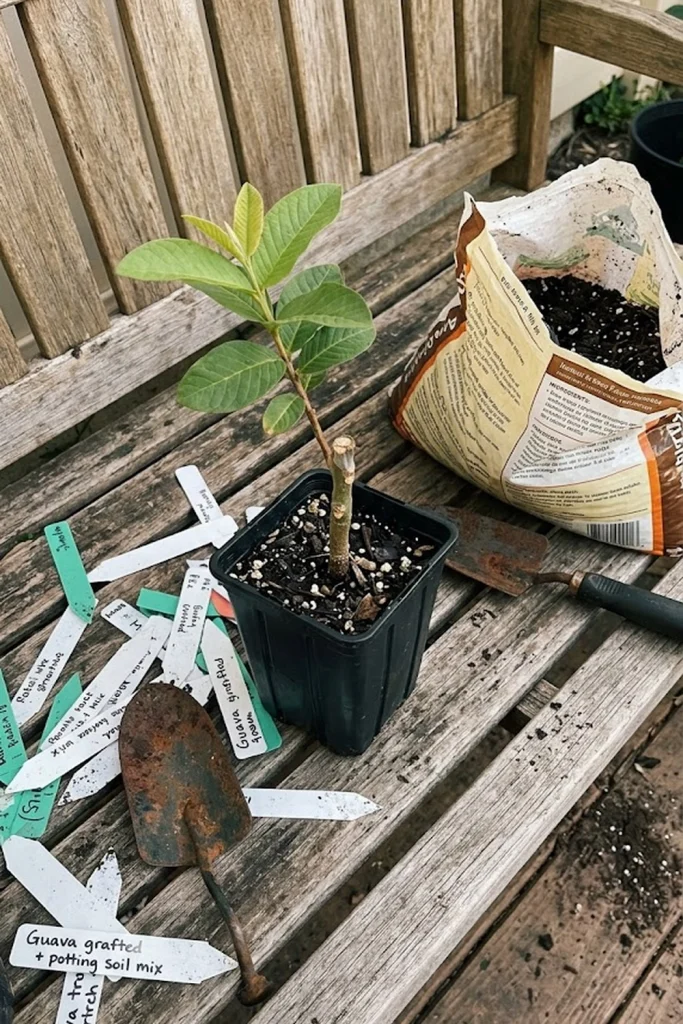
When I first decided to learn how to grow guava fruits, I made a crucial rookie mistake: I planted seeds. It’s poetic, sure, but I was frustrated. I was working full-time and wanted results, yet those seedlings took five years just to flower. If you value your time (and your sanity), you should skip the seedling route entirely. Grafted trees are your strategic shortcut.
An experienced nursery will propagate known, high-performing cultivars onto hardy rootstock. This management technique ensures the plant is genetically identical to its excellent parent, giving you predictability and speed.
| Guava Tree Type | Time to Fruit | Predictability | Manageability |
|---|---|---|---|
| Seedling Tree | 5–8 years | Very Low (hybridize easily) | Difficult (grow very large) |
| Grafted Tree | 1–3 years | Very High (clone) | Easy (maintain parent’s habit) |
When you choose a grafted common guava, you are setting yourself up for success within two years. For gardeners like us in the 25–45 age group, who are balancing careers and homes, this efficiency is key. Go to a reputable nursery or online vendor and look specifically for “grafted” Psidium guajava cultivars like ‘Allahabad Safeda’ or ‘Baraka’. It’s an investment that pays off quickly, providing you with high-quality tropical fruit that actually tastes like paradise.
2. Mastering the Container Setup
If you have limited ground space, you absolutely need to learn how to grow guava fruits in pots. It is my preferred method for urban gardeners because it makes the environment completely manageable. It might sound restrictive, but I have produced heavy harvests from trees living entirely in containers on my back patio. When you control the pot, you control the soil chemistry, the drainage, and—crucially—the portability of the tree.
This approach is perfect if you are renting or plan to move. I recommend starting a young, grafted tree in a 5-to-10-gallon container and planning to transplant it into a final, large “forever pot” of 15-to-20 gallons (like a half wine barrel) within two years.
When managing the container setup, select a pot with ample drainage holes. Water stagnation is the absolute enemy of the common guava. You must ensure that potted guava care begins with preventing soil saturation. Your soil management should involve using a high-quality potting mix heavily amended with perlite or coarse sand to create the perfect well-drained loamy soil profile. Growing guava in containers provides a level of control that often results in healthier, more productive trees than those struggling in poor backyard clay.
3. The Protection Protocol for Winter
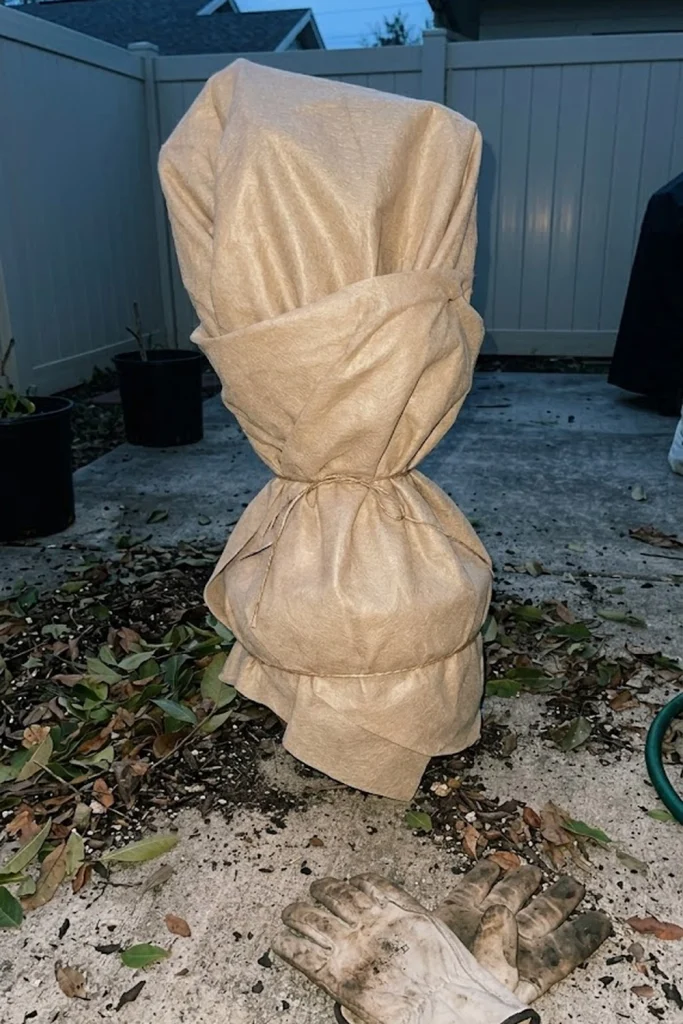
I successfully manage my guava trees in a zone that gets regular winter frost. How? It’s not magic; it’s a strict protocol of protection. When you learn how to grow guava fruits, you must accept that Psidium guajava is a tender evergreen that will suffer severe damage or death if exposed to temperatures below 28°F (-2°C).
If your common guava is in the ground in USDA Zone 9, you will need frost blankets or even incandescent holiday lights (to provide minimal warmth) during cold snaps. However, the easiest management strategy is growing guava in containers. I simply wheel my potted trees into my garage or a cool, bright room once the night temperatures consistently dip toward 40°F (4°C).
While overwintering indoors, my care focus shifts. The tree needs less water, but it must still be protected from extreme dry heat. I ensure it sits by a south-facing window. I have reflected on early mistakes where I overwatered my indoor trees, leading to root rot. Successful winter protection means keeping the plant alive, not pushing for growth & propagation. This management is temporary; as soon as the danger of frost passes, I slowly acclimate the tree back to the full, intense sun it craves.
4. Soil Prevention: Avoiding “Wet Feet”
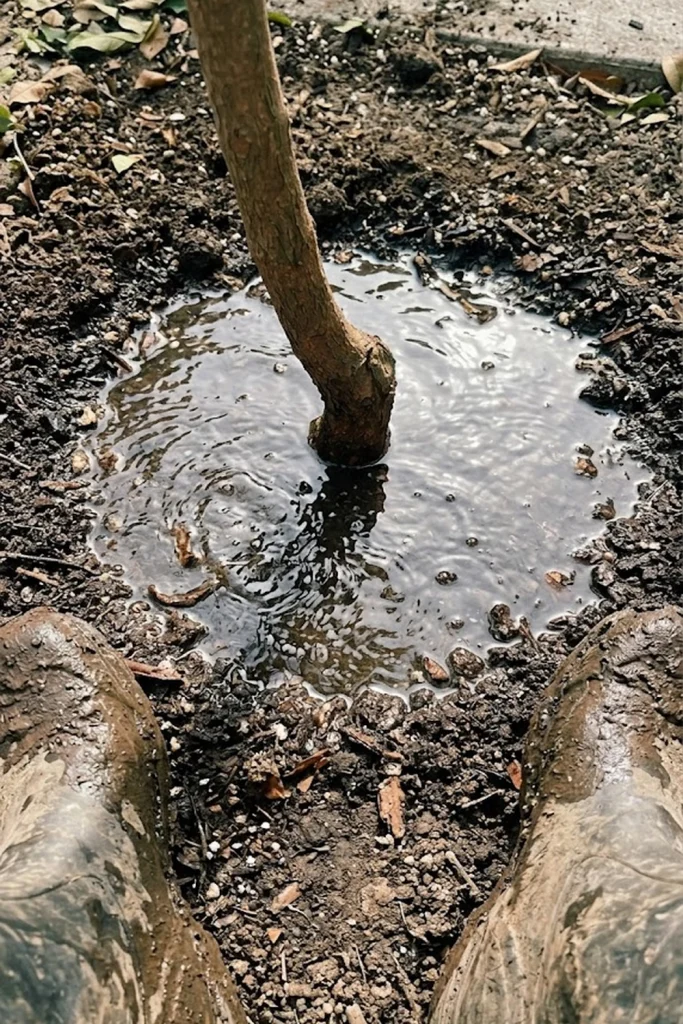
The foundation of how to grow guava fruits that are healthy and productive is entirely based on soil management. I cannot emphasize this enough. Guavas (Psidium guajava) are quite adaptable regarding soil type, tolerating a soil pH 4.5–7.0, but they will absolutely not tolerate saturated conditions, often called “wet feet.” In my experience, most premature tree deaths are caused by root rot, which is why prevention is so critical.
Whether you are amending a garden bed or mixing soil for container management, your goal is to achieve well-drained loamy soil. I achieve this by aggressively amending existing soil with organic matter.
- For Garden Beds: Dig a hole twice as wide as the root ball. Mix the excavated soil 50/50 with aged compost or steer manure and add several shovelfuls of coarse sand or perlite. This management prevents the clay “bowl” effect that traps water.
- For Containers: Forget cheap garden soil. You must use a dedicated pot mix and add extra perlite or bark chips to ensure that water flushes through quickly.
This substrate management ensures that oxygen always reaches the roots. When I reflect on what separates successful tropical fruit growing from failed attempts, it is almost always the invisible care you put into the drainage before you even plant.
5. Watering for Fruit Production
Water management is incredibly nuanced with common guava. While they have good drought tolerance once established, you will never get a good crop if you treat them like a cactus. Successful growth & propagation of the fruit requires consistent moisture. In fact, if you get this wrong, you will see your tropical fruit cracking or dropping before it is ripe. When learning how to grow guava fruits, I had to reflect on my passive approach; I realized my trees were “surviving” on rainfall, but not producing.
To achieve sweet, juicy guava, you must maintain a consistent potted guava care schedule. Here is my strategy: Water deeply but let the soil’s surface dry out completely between sessions. During the peak of the flowering and fruiting acceleration phase, you will increase the frequency. I use a simple finger test; if the top 2 inches of soil are dry, it’s time to water. Consistency prevents the tree from undergoing water stress, which is a key part of how to make a guava tree produce fruit faster. If you establish this rhythm, you ensure the Psidium guajava puts its energy into fruit development, not survival.
6. Pruning Techniques for Canopy Management
When I first started learning how to grow guava fruits, I was terrified of pruning. I thought I would kill the tree. But I’ve since reflected on that fear, and I realize now that pruning is actually an act of kindness to the Psidium guajava. If you do not manage the canopy, the tree will become a leggy, unproductive mess. It flowers and fruits on new growth. Therefore, your strategic goal is to encourage a branching, bushy habit.
I practice canopy management on my trees once a year, usually in late winter or early spring before the acceleration phase of new spring growth begins. The method is simple: I first remove any dead, diseased, or crossing branches (known as the 3 Ds). Then, I practice a management technique called “heading back.” This involves cutting back new lateral shoots by about half their length, right above an outward-facing bud. This triggers multiple new shoots to grow from that point, essentially quadrupling your potential fruiting sites. Proper pruning is essential, especially when growing guava in containers, as it keeps the arborescent shrub compact and ensures that every leaf receives the intensive sunlight required for a tropical fruit harvest.
7. Organic Pest Control and Management
Let’s be honest: pests are the absolute worst. If you are learning how to grow guava fruits organically, you have to be vigilant. The primary enemy in many subtropical regions is the dreaded Oriental Fruit Fly (Bactrocera dorsalis). When you manage this pest, you must accept that you cannot use passive strategies; you need active control. I have reflected on early years when I lost entire crops because I thought “natural” meant doing nothing.
My pest management strategy is multi-layered. First, I focus on prevention by keeping the area beneath my trees scrupulously clean—this is critical for the control of fungi like Anthracnose that breed in fallen debris. Second, I monitor lateral shoots for common sap-suckers like aphids or mealybugs. If I see them, I release beneficial insects like ladybugs or lacewings, which provide control naturally. Third, for the fruit fly itself, I use physical barriers. In my experience, fruit fly control means individual fruit management. I place organza bags or specialized exclusion bags around the developing fruits as soon as they reach the size of a marble. This creates a barrier against the female fly’s ovipositor. It’s messy work, but it’s the only way I can guarantee an organic harvest that isn’t riddled with larvae.
8. The Nutrition Schedule for Tropical Fruit
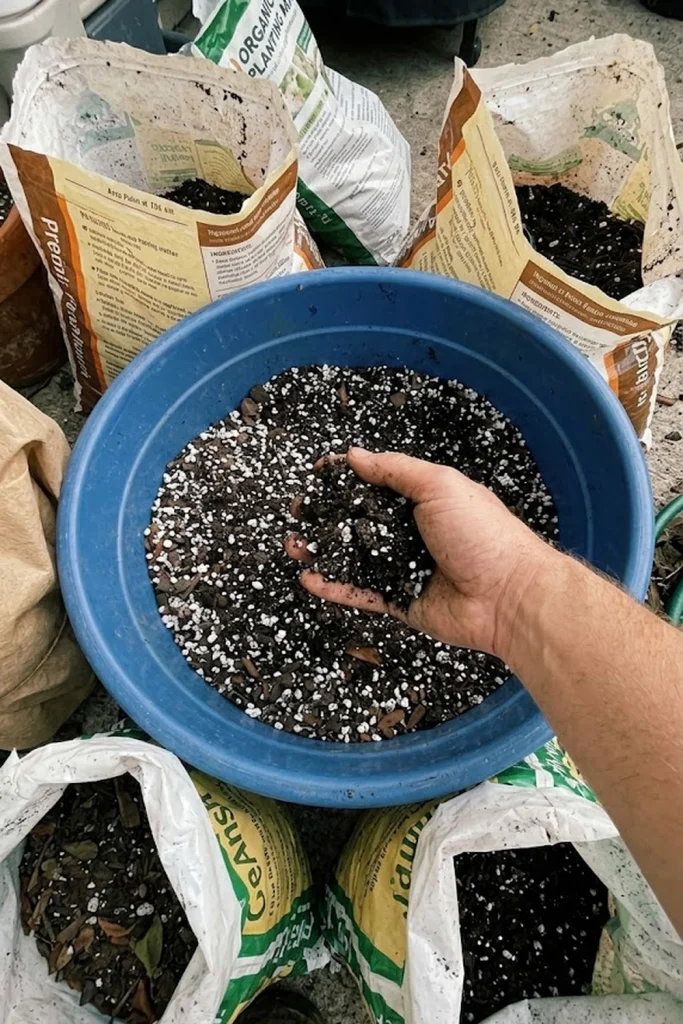
You must feed your trees. If you treat your guava like a standard deciduous fruit tree (which usually only need one annual feeding), you will be disappointed. I have reflected on this deeply; when learning how to grow guava fruits effectively, I realized they are heavy, heavy feeders. Remember, Psidium guajava is trying to produce dense, high-Vitamin C tropical fruit quickly. It needs fuel.
My management strategy is simple: feed small amounts, but frequently. I do not use balanced fertilizers like 10-10-10, as the high nitrogen often encourages vegetative growth at the expense of fruit production. Instead, I use a staggered management schedule. First, I focus on soil prevention by keeping it enriched with organic compost and a thick layer of organic mulch to support natural soil management. For supplemental nutrition, I follow this sequence:
- Late Winter: Apply a balanced organic fertilizer (e.g., a 6-6-6 or a dedicated citrus mix).
- Spring (Pre-bloom): Shift the management focus by increasing Potassium and Phosphorus. I use an organic supplement, like banana peel tea or a 0-10-10 fertilizer, every two weeks until the flowers set.
- Summer: Return to a balanced mix.
This phased potted guava care ensures the tree has Nitrogen for leaf growth early, then switches to Phosphorus and Potassium when it needs to build strong flowers and dense fruits. Consistent nutrition management is a vital step in how to make a guava tree produce fruit much faster.
9. Pollination Hacks for Indoor Common Guava
Here is a secret that many new growers completely miss: some common guava cultivars require a partner. While most Psidium guajava are self-fertile, meaning they will produce fruit alone, cross-pollination almost always yields a larger, heavier harvest. This becomes a significant issue if you are learning how to grow guava fruits indoors or in a greenhouse. Indoor management completely eliminates the presence of natural pollinators like bees.
When I successfully shifted to indoor overwintering management, I had to develop a new canopy management skill: being the bee. I learned that manual pollination management ensures fruit set. The method is incredibly simple: I visit my flowering trees daily. I use a soft-bristled amateur artist’s brush and gently move the brush in a swirling motion inside each large, white, multi-stamened flower. I go from flower to flower on the same plant, effectively transferring the pollen. If you find your indoor tree is dropping perfectly healthy flowers without any swelling at the base, it is likely due to failed pollination. This manual management hack guarantees that you don’t lose potential tropical fruit because the plant is waiting for a pollinator that is never coming.
10. Harvesting: The Color Shift and Gentle Squeeze
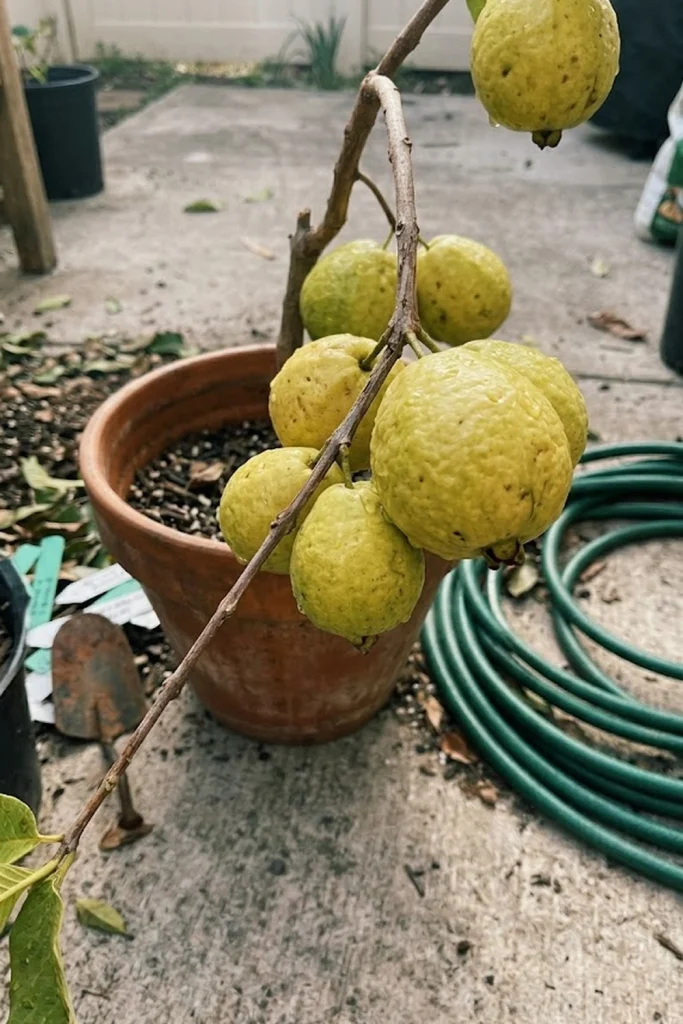
You’ve done all the hard work. But the final management challenge of how to grow guava fruits is knowing when to pick them. When I reflect on early harvests, I realize I was impatient; I was picking fruit that was “green-ripe,” meaning it was developed but technically immature. Those guavas are dense, starchy, and acidic. To get that heavenly tropical fruit experience—soft, sweet, and aromatic—you must wait.
My harvest management is simple and follows two steps. First, I watch for a mandatory physiological maturity sign: a color change. The vast majority of Psidium guajava cultivars will shift from a standard, dark grassy green to a distinctly lighter yellowish-green or light yellow when ready. Second, once I see the color shift, I apply the physical “gentle squeeze” test. A perfectly ripe guava should have a slight “give” in your hand, similar to a ripe avocado. Finally, the aroma is undeniable. If you smell that complex, musky, sweet fragrance on the patio, it is time. Successful harvest management means letting the ethylene production complete its work on the tree, guaranteeing the highest sugar content and that signature, paradise flavor.