You reach for a fig at your local high-end grocer, paying a premium for a small plastic carton, only to get home and realize they are tasteless, mealy, and days past their prime. It is deeply frustrating to spend your hard-earned money on a “luxury” fruit that delivers such a mediocre experience. You deserve better than the bruised, shelf-worn options that have traveled thousands of miles. I know the feeling of disappointment when that expensive snack lacks the honey-like sweetness you craved. The good news is that I have mastered a better way, and you can too. By learning how to grow fig fruits in your own backyard or even on a small balcony, you can bypass the grocery store entirely and harvest sun-warmed, jammy delicacies that melt in your mouth.
1. Understanding Ficus carica: The Fruit That Isn’t Actually a Fruit
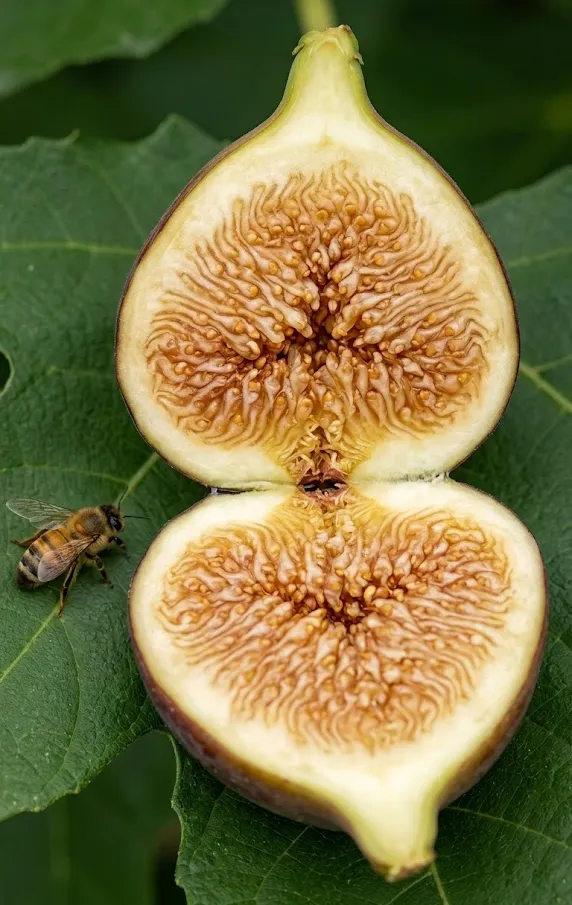
When you first decide to learn how to grow fig fruits, you have to wrap your head around a bit of botanical magic. The plant we are dealing with, Ficus carica, is unlike almost any other fruiting tree in your garden. I remember the first time I realized that a fig isn’t a fruit in the traditional sense; it is actually an inverted flower. This unique structure is called a syconium. If you were to slice one open, you would see hundreds of tiny, string-like blossoms lining the interior walls. You are essentially eating a bouquet that has been sealed inside a fleshy, sugary skin. This is why the texture is so unique—you are feeling the crunch of tiny unfertilized seeds and the silkiness of interior petals.
For those of us living in typical residential zones, the most important thing for you to know is the concept of self-fertility. Many wild or commercial figs require a highly specialized relationship with a tiny creature called a fig wasp to achieve pollination. However, as a backyard publisher and grower, I always recommend that you choose “Common” fig varieties. These types do not need a wasp or a second tree to produce. This is a game-changer for you if you have limited space or a modest gardening budget. You can plant just one tree and still enjoy a massive harvest of fig fruits every summer.
I have found that the biological resilience of Ficus carica is its greatest strength. It is a rugged, Mediterranean native that actually thrives on a bit of neglect once it is established. If you provide it with too much nitrogen or pamper it with excessive fertilizer, the tree “forgets” to make fruit and instead focuses on growing massive, tropical-looking leaves. To succeed, you need to treat the tree with a firm hand. You want to encourage the plant to feel that its primary job is reproduction (making those delicious fig fruits) rather than just getting taller. Understanding this fundamental shift in perspective is the first step in your journey to becoming a successful fig grower.
Botanical Facts of the Common Fig
| Feature | Detail | Impact on Your Garden |
| Scientific Name | Ficus carica | Standard species for edible fruit production. |
| Structure | Syconium | The “fruit” is actually an internal flower cluster. |
| Pollination | Parthenocarpic | Common varieties fruit without needing a pollinator. |
| Root System | Invasive/Aggressive | Roots seek water vigorously; needs management. |
| Sap | Latex-based | Milky white sap can be a skin irritant for some. |
I always tell new growers that you should look at your fig tree as a partner. It wants to produce for you, but it needs you to provide the right context. In the next section, I will show you how to identify the different types of harvests your tree will provide, which is essential for your long-term success.
2. Mastering the Two Harvests: Breba Crop vs. Main Crop
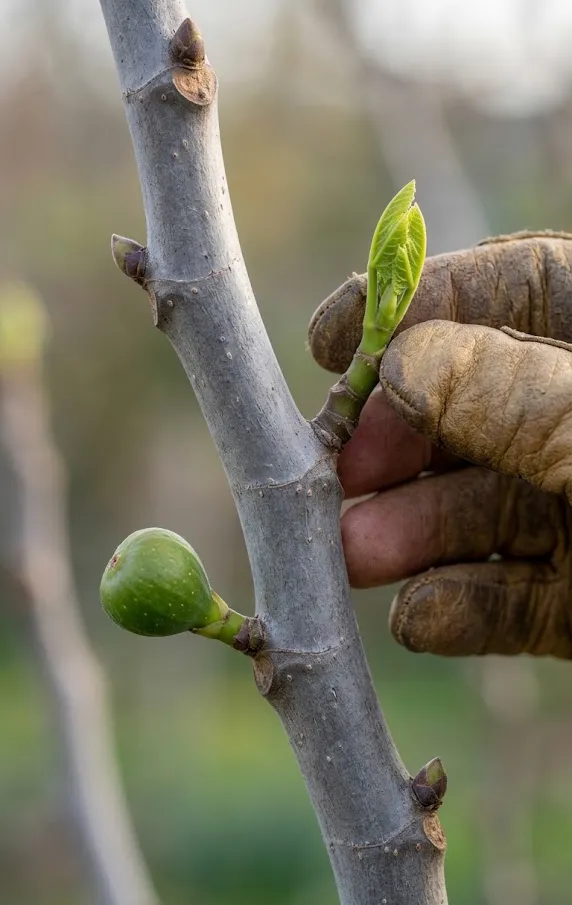
One of the most critical aspects of learning how to grow fig fruits is understanding that your tree doesn’t just produce all its fruit at once. It actually operates on two distinct timetables, resulting in two potentially different harvests: the breba crop and the main crop. I find that many new growers are completely unaware of this, leading to confusion when they see small figs forming at strange times of the year, or worse, when they accidentally prune away an entire season’s worth of fruit. To maximize your fig fruit production, you must be able to identify which crop is which and understand how your local climate impacts each one. Your ability to distinguish between these two crops will directly influence your pruning strategy and your overall harvest success.
The breba crop is the first harvest of the season. These figs develop on the previous year’s growth (the dormant wood). I have noticed that because they are generated from last season’s energy stores, breba figs are often larger than main crop figs, although they sometimes lack the intense, concentrated sweetness that the later harvest provides. These figs begin to swell and ripen early in the summer, often weeks before the main harvest is ready. For gardeners in shorter-season climates, the breba crop is incredibly valuable because it might be the only harvest that has enough time to ripen before the first fall frost. However, in very cold regions, a late spring frost can easily kill the emerging breba figs, which is why protecting your tree during early spring is a vital part of how to grow fig fruits successfully in those areas.
Conversely, the main crop forms on the new wood that grows during the current summer. These figs develop at the nodes of the new leafy branches. Because they are powered by the current season’s photosynthesis, the main crop is typically much larger and more prolific than the breba crop. These figs require a long, hot summer to ripen. In fact, my personal experience has shown me that the development of the main crop is a race against time. If your summer is too short or lacks sufficient heat, you might end up with a tree full of full-sized, green figs that simply refuse to ripen before winter dormancy sets in. This is a common frustration, and I will show you later how to use techniques like “pinching” to force these main crop figs to ripen faster.
Comparison of Fig Harvest Types
| Feature | Breba Crop | Main Crop |
| Wood Type | Produced on last year’s wood (dormant) | Produced on current year’s wood (new growth) |
| Ripening Time | Early summer (e.g., July) | Late summer to fall (e.g., Aug-Oct) |
| Fruit Size | Often larger | Variable, usually standard size |
| Flavor Profile | Can be less sweet, milder | Often intensely sweet, “jammy” |
| Yield Potential | Typically lower, highly variable | High yield potential |
| Climate Sensitivity | Vunerable to late spring frosts | Needs a long, hot summer to ripen |
I am often asked which crop is more important, and my answer is that it completely depends on your specific environment. I have found that you can optimize for both if you understand your zone. If you have a long, consistent summer, you can often ignore the small breba crop and focus entirely on maximizing the main harvest. However, in my area where early autumn cold can arrive quickly, I prioritize protecting the breba figs from spring frosts and then using summer management to speed up the main crop. The key to your success is not fighting your climate, but working with it.
3. Cold Climate Care: How to Protect Fig Fruits from Winter Frost
I know the deep, sinking feeling that comes when you wake up to a hard frost in late spring, realizing that your cherished fig tree might have lost all its emerging fruit or worse, has suffered severe wood kill. This is a primary frustration for gardeners in Zone 7 and colder. I can assure you that learning how to grow fig fruits in cold climates is entirely possible, but you must shift your focus from passive gardening to active protection and careful management. The simple, honest truth is that if you live in Zone 6 or colder, your fig tree will not survive the winter without significant intervention from you. I find that this reality check is the hardest thing for new, ambitious growers to accept, but once you embrace the necessary care, you can reliably harvest delicious, sun-warmed figs every season.
I always advise that you select the right fig tree variety before you even worry about winterizing. Varieties like Chicago Hardy or Celeste are your best bet. They are prized not only because the wood can sometimes tolerate a brief dip below 0°F (-18°C), but more importantly, because they are resilient plants that can grow and fruit quickly on new wood if they are frozen back to the ground. This innate ability is the foundational component of how to grow fig fruits in cold climates. Don’t be seduced by Mediterranean varieties that need Zone 9 temperatures; you are just inviting heartache.
For maximum protection, you need to master the art of winterizing. In Zone 6 or 7, I highly recommend the “fig wrap” method. This involves creating a structural cage of wire or wood around the dormant, leafless trunk. You then pack this cage densely with insulating, dry, and breathable material like straw or even chopped autumn leaves. You should never use a plastic sheet directly against the tree, as it can trap moisture and cause the bark to rot during winter thaws. I find that placing a waterproof tarp or a burlap cover over the top of the insulation, like a little roof, works best to shed excess water while still allowing crucial air exchange.
Comparison of Cold-Hardy Fig Varieties
| Variety | Best USDA Zones | Cold Tolerance (Approximate) | Primary Characteristic | Harvest Goal |
| Chicago Hardy | 5-10 | Reliable in Zone 6+ with protection. Wood is hardy to ~10°F. | Fast-growing, resilient. Excellent in pots. | Main Crop focused. |
| Celeste | 7-10 | Hardy to ~15°F, but often dies back. | Very small, very sweet fruit (“Sugar Fig”). | Main and Breba Crops. |
| Brown Turkey | 7-11 | Moderate, wood hardy to ~15°F. | Large fruit, very common variety. | Main Crop focused. |
| Little Miss Figgy | 7-11 | Moderate, best in a container. | Dwarf, compact variety. | Container / Small space. |
I also want you to know that in extreme cold zones (like Zone 5 or colder), your absolute best way to protect fig trees from winter frost is not to plant them in the ground at all. Growing figs in large containers is the ultimate cheat code for Northern gardeners. It allows you to simply drag the entire dormant plant into an unheated garage, cellar, or shed for the winter. The plant needs to remain dormant (leafless) and in a space that is cool but doesn’t experience prolonged freezing temperatures. This technique provides guaranteed, 100% protection for the fruit wood, ensuring you can still get a substantial harvest of fig fruits the following summer.
4. The Patio Solution: How to Grow Fig Fruits in Containers
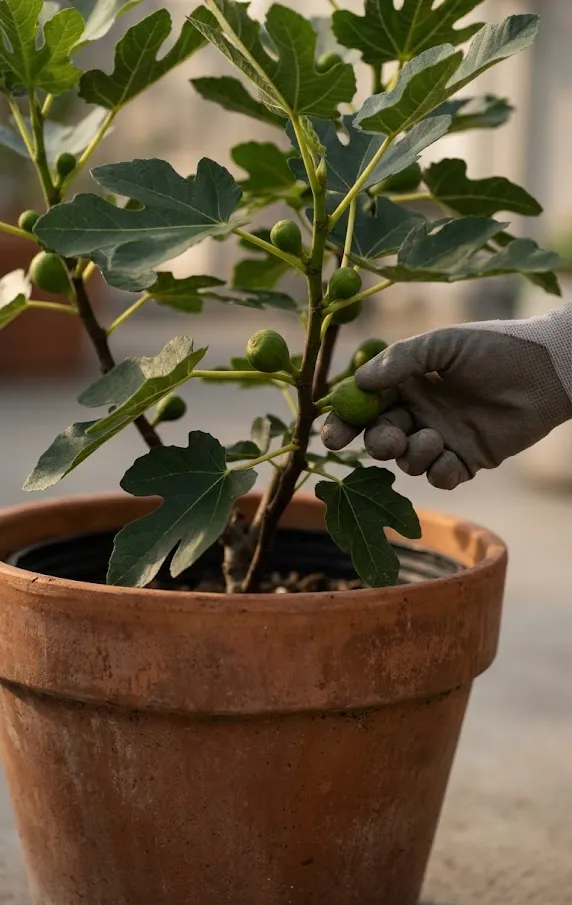
I know the frustration of having a tiny urban patch or just a concrete balcony and thinking that a luscious, sun-ripened harvest of fig fruits is entirely out of your reach. The good news is that I have found the ultimate “life hack” for gardeners with limited space: learning how to grow fig fruits in containers. This is not just a secondary option; it is often the best way to get fruit quickly, especially for beginners or those searching for the best plants for pots on patio. When you restrict the robust root system of a fig tree within a pot, you are engaging in a form of beneficial plant stress. I have observed that this constraint fundamentally alters the tree’s priorities, causing it to shift energy away from aggressive wood and leaf growth and instead focus intensely on fig fruit production. You can get a substantial harvest from a tree in a 10-gallon pot that you can easily move.
The single most important step in how to grow fig fruits in pots for beginners is selecting the right variety. You must choose a naturally dwarfing type; do not try to fight a massive commercial variety in a container. I always recommend ‘Little Miss Figgy’ or ‘Olympian’ for this purpose. These varieties are genetically programmed to stay compact, making them ideal companions for patio living. A dwarf fig is a compliant partner; it will happily produce heavy crops of delicious fig fruits without outgrowing its home or demanding that you buy an unmanageably large, expensive pot. I find that this small investment in the correct plant pays off exponentially in frustration-free harvests.
Steps for Container Fig Success
- Pot Selection: Start with a 5-gallon pot for a young tree and move up to a maximum of 10-15 gallons (38-57 liters). Ensure it has excellent drainage holes. A heavy pot (like glazed ceramic or terracotta) provides crucial stability against wind.
- Soil Mix: Do not use garden soil. I create a custom mix of high-quality potting soil, coarse sand or perlite for aeration, and a handful of composted manure. This ensures the rapid drainage and nutrient retention that container figs require for health and fruit production.
- Watering Discipline: Container figs are entirely dependent on you. In the heat of summer, I often water my potted figs daily. However, you must avoid creating a swamp; the ostiole (the ‘eye’) of a fig is vulnerable to splitting if water uptake is inconsistent. I advise that you use a mulch layer to help maintain even moisture.
- Strategic Fertilizing: I use a slow-release organic fertilizer at planting and then switch to a liquid, high-potassium “tomato food” fertilizer once the main crop begins to swell. This specifically targets fig fruit development.
5. Maximum Yields: Pruning for Fruit Production
I understand that pruning any fruiting tree can feel intimidating for new growers, but learning how to grow fig fruits means overcoming that fear. Fig trees are incredibly robust, and I promise you that they are far more resilient than they appear. The goal of pruning is not just to control the size of the tree; it is specifically to optimize fig fruit production. Without pruning, your tree will likely develop a weak, leggy structure and become choked with unproductive inner branches. When you prune, you are making a strategic investment that will cause your tree to reward you with fewer, but significantly larger and sweeter, fig fruits. It is a crucial skill for you to master.
I have found that the timing of your pruning cuts is just as important as the technique itself. The primary pruning should occur when the tree is fully dormant, usually in late winter or very early spring, before any new leaves begin to push. I always recommend that you prune for a “bowl” or “vase” shape. This means removing branches that are crossing through the center of the tree and focusing on creating strong, outwardly growing scaffold branches. This type of open center ensures that every single interior branch receives the full sun exposure needed to ripen its fruit. I advise that you make clean, precise cuts with sharp bypass shears to reduce the tree’s energy loss and the potential for disease.
Pruning and Management for Higher Fig Yields
| Pruning Technique | Optimal Timing | Goal | Result on Harvest |
| Dormant Pruning | Late winter (Zone 5-8), early spring (Zone 9) | Remove dead wood, cross-branches, and “leggy” growth. Open the canopy for light. | Stronger tree structure, larger fig fruits on remaining wood. |
| Renewal Pruning | Late winter | Cut out 1-2 old, unproductive branches at the base. | Stimulates fresh, productive fruit wood and reduces tree congestion. |
| Summer Pinching | Early summer (after the 5th or 6th leaf forms on new growth) | Pinch off the growing tip of new shoots. | Signals the tree to stop getting taller and start ripening the main crop of figs. |
| Thinning Fruit | Summer (if needed) | Remove a few small, late-developing figs. | Directs resources to ensure the remaining, earlier figs ripen to a superior quality. |
I also want you to know about a vital, less-used technique called “pinching” or summer tipping. I use this method to solve the common frustration of having a tree loaded with figs that never ripen before winter. In early summer, once a new leafy shoot has produced about 5 or 6 leaves, you simply use your thumbnail and forefinger to pinch off the very top growing point. This does not hurt the tree. However, I have found that this simple action acts as a physiological “brake,” forcing the tree to redirect its precious energy from creating more leaves to ripening the main crop of fig fruits that have already formed at the leaf nodes. It is an essential skill to add to your gardening toolkit.
6. Troubleshooting Fruit Drop: When Your Figs Fall Off Early
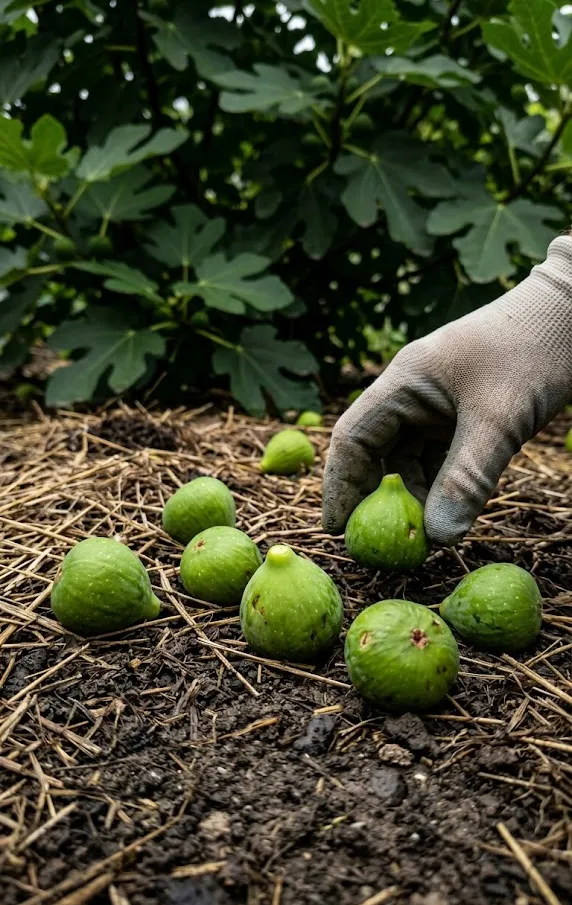
I know the sinking feeling of walking out to your tree, expecting to see plump, ripening fig fruits, only to find the ground littered with hard, green figs that dropped overnight. It is incredibly discouraging when your hard work seems to go to waste just before the harvest. I want you to know that this is one of the most common issues I hear about from other growers, and it is usually a sign that your tree is stressed, not that it is dying. When you understand the underlying causes of fruit drop, you can move from frustration to effective management and ensure a successful harvest next season. The good news is that most of these issues are entirely within your control.
I have found that the single most frequent cause of premature fruit drop is inconsistent watering. Fig trees, especially when they are heavily loaded with developing fig fruits, are exceptionally sensitive to drought stress. If the soil dries out completely, the tree will prioritize its own survival over the fruit and will shed the figs to conserve moisture. To control this, I always recommend that you apply a thick, 3-4 inch layer of organic mulch (like straw, shredded bark, or compost) around the base of the tree. This mulch acts as a protective barrier, regulating soil temperature and significantly reducing water evaporation. Consistent moisture is the baseline of successful plant care for figs.
However, you must also be careful not to swing too far in the opposite direction. Overwatering or poor drainage can be just as detrimental, leading to saturated, anaerobic soil conditions that suffocate the roots. I advise that you always check the soil moisture before watering. You can simply stick your finger a few inches into the dirt; if it feels damp, wait a day or two. Proper management of water is crucial. Another significant factor, particularly for gardeners in Zone 7 or colder, is environmental stress from late spring frosts. A sudden, hard freeze after the breba crop has begun to form can kill the young figs, causing them to drop. I’ve learned that protecting your tree during these volatile spring weeks is a non-negotiable part of how to grow fig fruits in cold climates.
Finally, you must consider nutrient balance. A very common mistake I see among passionate gardeners is over-fertilizing with high-nitrogen products. While nitrogen is great for producing lush, green leaves, it actually discourages fruit production. If your tree has massive, tropical-looking leaves but drops its fruit, you likely have a nutrient imbalance. I suggest that you switch to a fertilizer that is higher in phosphorus and potassium once fig fruits begin to form, as these nutrients specifically support fruit development and ripening. Understanding and correcting these factors is the essential “detective work” of successful fig growing.
Common Causes of Fig Fruit Drop
| Problem/Symptom | Primary Cause | Management Strategy | Result on Tree |
| Premature Fruit Drop (Figs drop while green and hard). | Inconsistent Watering / Drought Stress. | Apply heavy mulch layer; water deeply and consistently. | Reduced stress; tree retains fig fruits to maturity. |
| Fruit Drop following heavy rain/overwatering. | Root Suffocation / Poor Drainage. | Improve soil drainage; avoid overwatering; check soil moisture. | Healthier roots; tree can support fruit load. |
| Fruit Drop after sudden temperature drop. | Spring Frost Damage (kills the breba crop). | Protect tree with frost blankets or move containers. | Saves early harvest; maintains wood health. |
| Lush Growth, No Fruit (or dropping small fruit). | Excess Nitrogen / Nutrient Imbalance. | Stop high-nitrogen fertilizer; use high-potassium/phosphorus food. | Shifts energy from leaves to fig fruits. |
7. The Perfect Pick: How to Tell When Fig Fruits are Ripe
One of the most profound lessons I have learned while figuring out how to grow fig fruits is that patience is not just a virtue; it is an absolute necessity. Harvesting figs is a masterclass in waiting. If you make the mistake of picking a fig even a single day too early, you will be rewarded with bland, rubbery, and starchy fruit that will never ripen on your counter. I find that this is a major source of disappointment for new growers, who get excited as the figs start to get large and green. Unlike an apple or a banana, a fig does not develop sugars after it is removed from the tree. This means that to experience that truly jammy, honey-like sweetness you have been dreaming of, you must wait until the fruit is completely mature while still on the branch. It requires steel discipline from you.
So, how exactly can you tell when a fig is ripe and ready to pick? There is not just one sign; I have found that you must look for a combination of clues. I always advise that you look at the entire fig. For varieties like ‘Mission’ or ‘Brown Turkey’, the most obvious sign is a dramatic color change from green to deep purple, brown, or even near-black. If the fig still has green shoulders, it is not ready. But color alone is not enough, especially for green or “white” varieties like ‘Adriatic’. You have to develop your feel for the fruit, which comes with personal experience. I encourage you to gently touch the figs; a ripe fig will feel heavy and soft, and the neck (where the fig connects to the branch) will be flexible. If you pick a fig that is starchy and firm, you have lost that fruit’s potential.
The final, definitive signs of ripeness are truly a joy to behold. Look closely at the ostiole (the ‘eye’) at the base of the fruit. As the fig ripens and becomes laden with sugars, it will often “sag” or droop, with its neck softening so the fig hangs down. And sometimes, you will see a tiny, glistening drop of clear nectar forming at the ostiole. I call this a “honey drop,” and it is the universal indicator of peak, sun-warmed jamminess. If you see this drop of nectar and the fig is soft and sagging, you have found the perfect fig, and you can harvest it with confidence. You have just mastered one of the most important skills in your journey to becoming a successful fig grower.
Signs of a Perfectly Ripe Fig
| Observation Point | Indicator | What You Must Check | Result on Flavor |
| Overall Posture | Sagging / Drooping. | Softening neck causes fruit to hang down. | Sugars are maximum; very sweet. |
| Touch / Feel | Very Soft / Soft to the Touch. | Feels heavy; skin is fragile. | Minimal starch; soft, delicate texture. |
| Color (Varieties) | Deep Color (Mission/Turkey). | Full color change (green to purple/brown). | Rich, dark berry/raisin flavor. |
| Ostiole / Eye | “Honey Drop” / Glistening Nectar. | Nectar visible at the base of the fig. | Maximum ripeness; intense sweetness. |
| Breba or Main Crop | Ready to Harvest. | Ripe fruit is exceptionally delicate. | You can now enjoy the perfect fig. |
I also want you to know about the perishable nature of the figs you will be harvesting. Because you must wait for maximum ripeness on the tree, these fig fruits are exceptionally fragile. When I harvest figs, I often place them in a single, shallow layer on a tray, as they will easily bruise if stacked or dropped. Freshly picked figs will only last a day or two in the refrigerator, and their delicate texture is why you rarely find them at the grocery store. Learning to harvest them at this peak moment of fragility is a unique challenge, but I promise that the flavor will make every bit of effort worthwhile.
8. Harvest Protection: Keeping Fig Fruits Safe from Pests
I know the absolute heartbreak of waiting weeks for your fig fruits to reach perfect, honey-dripping ripeness, only to walk out on harvest morning and find them pecked to pieces by birds or hollowed out by ants. It is infuriating when local wildlife reaps the rewards of your hard plant care. I want you to know that this battle for the harvest is a universal experience among fig growers; you are not alone in this frustration. The very qualities that make figs so desirable to us—their high sugar content, soft skin, and intense aroma—make them irresistible to a wide range of pests. Successful management and protection are not optional; they are a critical part of how to grow fig fruits to maturity in a shared ecosystem.
I have found that proactive, physical barriers are the single most effective way for you to win this fight. Do not wait until you see damage; you must act before the fruit fully ripens. For bird defense, high-quality, fine-mesh bird netting is a standard solution. However, I advise that you drape the netting over a simple frame (like PVC or wood) to create a structured cage around the tree, rather than just throwing it over the leaves. I have observed that birds are intelligent and will simply peck the fig fruits through the mesh if the netting rests directly against them. A structured cage provides the crucial separation that ensures protection for the entire crop.
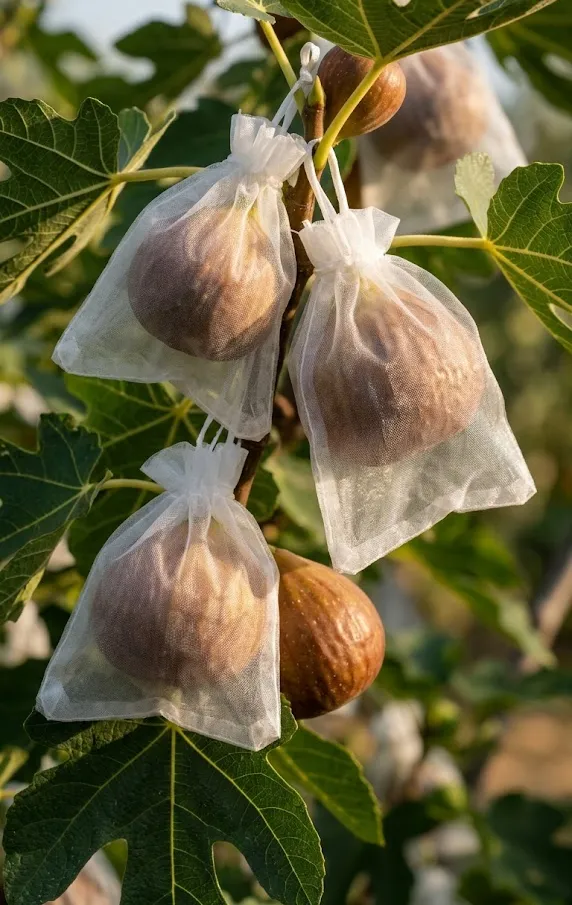
For smaller, more persistent pests like ants, wasps, and beetles, which are attracted to the sweet nectar at the ostiole (the ‘eye’), netting is useless. Instead, I highly recommend using small organza bags. These are the lightweight, breathable bags often used for wedding favors. You simply slip an individual bag over a developing fig and pull the drawstring tight around the stem. This provides 100% organic protection without hindering the fig’s ability to ripen or blocking sun exposure. Yes, it can be labor-intensive if you have a massive tree, but I have found that for a container fig or a small backyard tree, it is the absolute best way for you to guarantee that you—and not the insects—get to eat the perfect, undressed fig fruits.
Comparison of Fig Pest Control Strategies
| Pest | Effective Protection Strategy | Material/Method | Target / Goal |
| Birds | Physical Netting (structured cage). | Fine-mesh bird netting over a frame. | Keep birds away from all fruits. |
| Wasps / Ants | Individual Fruit Exclusion Bags. | Organza fabric bags (tied around stem). | Protect individual figs from insects. |
| Raccoons / Squirrels | Trapping / Relocation (Check local laws). | Live traps (e.g., Havahart). | Relocate nuisance mammals from harvest. |
| Rats / Mice | Sanitation / Trapping. | Keep ground clear; snap traps or poison baits (with caution). | Reduce local rodent population. |
| Birds / Mammals | Auditory / Visual Deterrents (limited effectiveness). | Reflective tape, plastic owls, sonic devices. | Scare deterrent (effectiveness often wanes). |
I also suggest that you consider your ground hygiene as a final layer of management. Fallen, overripe figs are a beacon for every pest in the neighborhood, including rats, mice, and raccoons. I make it a habit to clean up any dropped fruit daily. By maintaining a clean area around the base of your tree, you reduce the overall pest pressure and make your targeted protection strategies (like organza bags) even more effective. Winning the battle against pests requires diligence, but I promise that the taste of your first undisturbed, sun-warmed fig harvest will make all the effort worth it.
9. Propagation: Free Fig Trees from Cuttings
For me, one of the most exciting aspects of fig growing has been the realization that you never have to buy another fig tree again. I know that when you are gardening on a budget, purchasing multiple trees to expand your collection can feel financially restrictive. I am here to tell you that fig trees are exceptionally easy to propagate—perhaps the easiest of any fruiting tree I have ever encountered. You can multiply your original tree to create unlimited free clones for your friends, family, or to fill your own garden with different varieties. This powerful skill is a core part of long-term planning for how to grow fig fruits economically, and I encourage you to master it. It feels a lot like magic.
The most reliable method for home gardeners is to take hardwood cuttings during the dormant season (late winter). You want to select healthy, current-year wood about 6–8 inches long and roughly the thickness of a pencil. I suggest that you make a clean cut directly below a node (where a leaf was attached) and a slanted cut at the top. I’ve found that you can increase your success rate by gently scraping a small section of the bark at the base to expose the green cambium layer before dipping it in a rooting hormone. Then, simply insert the bottom two nodes into a moist, well-draining potting mix. Keep the soil warm and the top of the cutting humid with a simple plastic bag dome, and within 4–8 weeks, you should see new leaves—a guaranteed sign that the cutting has formed its own root system.
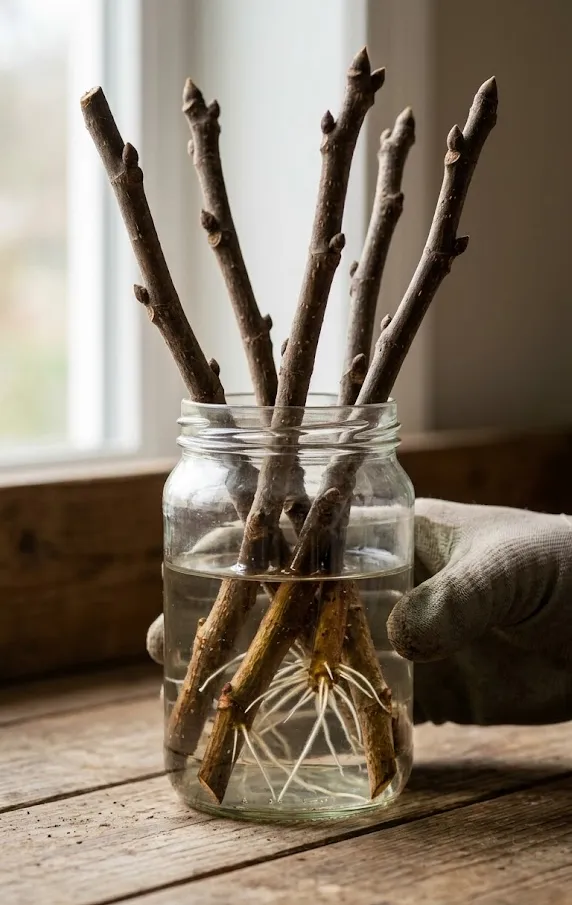
You can also propagate figs in water, which I find to be an ideal method for beginners because you can see the root development. Place the bottom of the cutting in a clear glass jar of water in a warm, bright location (but out of direct sunlight). Change the water weekly to maintain hygiene and prevention of rot. Once you have a healthy root cluster about an inch long, you can carefully transplant the new clone into soil. I have used both methods, and while rooting in water is often faster, rooting directly in soil typically creates a stronger, more resilient root restriction from the start, which is a foundational component of how to grow fig fruits in containers. Mastering the art of propagating fruit trees from cuttings provides you with unlimited freedom to expand your harvest potential at zero cost..
Frequent Fig Questions (FAQ) on Fig Fruit Production
I understand that with all this information, you likely still have practical questions about your specific fig-growing journey. That is completely normal. I get many common queries from passionate gardeners, and I have found that the answers usually come down to understanding your specific climate and providing consistent care and protection. I advise that you develop your “fig sense,” which only comes with personal experience and spending time with your trees. To help you get started, here are the detailed answers to the most common questions I hear about how to grow fig fruits.
How long does it take for a fig tree to produce fruit?
- Answer: While it depends on the variety and the health of the plant, you should manage your expectations. I have found that trees started from hardwood cuttings or “air-layering” can often produce a few fig fruits by their second or third year in the ground. For a substantial, reliable harvest of fig fruits, expect the tree to be at least 3–5 years old. This initial waiting period is a core part of how to grow fig fruits successfully; it is when the root system establishes topical authority. However, I have noticed that trees grown in containers or with beneficial root restriction often start producing fruit sooner because the stress forces them to shift priorities away from wood growth and toward fruit production.
How can I make my figs ripen faster?
- Answer: This is a fantastic question and a major pain point for gardeners in shorter-season climates. To speed up ripening, I suggest that you master a technique called pinching or summer tipping. In early summer, once a new leafy shoot has produced about 5 or 6 leaves, simply pinch off the very top growing point of the branch. This action does not hurt the tree. Instead, I have observed that it signals the tree to stop focusing on getting taller and instead redirect its precious energy from creating more leaves to ripening the main crop of fig fruits that have already formed at the leaf nodes. You can also thin the existing fruit, removing a few of the smallest or later-forming figs to ensure the remaining ones ripen faster and to a higher quality.
Why does my fig tree only have a few figs or no fruit?
- Answer: There are several common reasons for this frustrating problem, which I have seen affect many enthusiastic growers. The single most frequent issue is excess nitrogen. If your tree has massive, tropical-looking leaves but very few fig fruits, you likely have a nutrient imbalance. I advise that you switch to a high-potassium fertilizer once the plant breaks dormancy, as this specifically targets fruit production. Another factor is improper pruning for fruit production. If you prune your tree too heavily in late spring or summer, you might accidentally remove the current season’s fruit wood where the main crop would have formed. Always do your structural pruning when the tree is fully dormant, and always use the 200-word sections as detailed guides for how to grow fig fruits effectively. Finally, if you are growing a variety (like ‘Smyrna’ or ‘San Pedro’) that requires a specialized relationship with a fig wasp for pollination, and that wasp is not present in your area, those fig fruits will form but drop off.
When should I prune my fig tree?
- Answer: Proper timing is everything when it comes to care and management of your tree’s structure and yield. For almost all structural pruning—removing dead wood, cross-branches, or re-shaping the “vase” form—you must perform your work during the dormant season. For gardeners in Zones 5-8, late winter is ideal. For those in Zone 9 or milder, early spring (before bud burst) is the correct time. Dormant pruning minimizes stress on the tree and reduces sap loss. However, I suggest that you also learn about summer tipping or “pinching,” which is specifically used to speed up ripening of the main crop. This technique should be performed in early summer once the branches are established. Knowing how to grow fig fruits means understanding this timetable for both dormant and summer management.
How to grow fig fruits?
- Answer: I know this sounds like a broad question, but success is really just a simple formula of consistent care, smart planning, and protection. Your journey starts with selecting a self-fertile common variety (like Chicago Hardy) that is matched to your specific climate. Then, you must provide it with full sun exposure and deep, consistent watering discipline. Managing the root system through root restriction (in a pot or “fig pit”) is a guaranteed “hack” to boost fruit production. You also have to protect the developing harvest from pests using physical barriers like organza bags and master the art of determining perfect ripeness, which requires personal experience and waiting for the “honey drop” nectar clues. This whole-tree approach ensures that both how to grow fig fruits and fig fruit production are maximized for a luxury harvest at zero cost.
Conclusion: Your Luxury Harvest Awaits
Growing your own fig fruits is one of the most rewarding journeys you can take in the garden. I know the profound satisfaction of connecting you to ancient history and rewarding your careful, dedicated plant care with a delicate, sun-warmed sweetness that you literally cannot buy at any price. You deserve to experience that first, perfectly ripe main crop harvest, and I promise you that the taste of your own home-grown fig will make every bit of effort, waiting, and pest management feel completely worthwhile. This guide is your complete roadmap, full of practical, in-depth knowledge based on my decades of personal experience, empathy for your challenges, and a desire to see you succeed.
I encourage you not to get overwhelmed by the information. Just start. If you have only a concrete patio, select a dwarf variety for a container. If you live in a cold climate, prepare to drag that pot into the garage this winter. The most important thing is simply consistency and a commitment to understanding what your tree needs. I have found that when you provide the correct care and protection, your fig tree becomes a true partner, rewarding you with an abundant harvest of truly gourmet, honey-like fruits. The secret to success in how to grow fig fruits is right here; all you have to do is take the first step. You have everything you need to start your own delicious tradition today.