You buy a box of raisins from the store, and half the time they are dry, gritty, or just plain bland. It’s frustrating when you’re trying to pack a healthy, tasty snack for work or a hike, only to be disappointed by a lackluster product that’s likely been sitting on a shelf for months. You deserve better than mass-produced, chemically treated dried fruit. Think about the satisfaction of opening a jar of plump, sweet, chemical-free raisins that you cultivated with your own two hands—the depth of flavor is incomparable, and you know exactly where they came from. The good news is, learning how to grow raisin fruits is surprisingly achievable, even if you don’t have a massive vineyard. I’m going to show you exactly how to transform a corner of your garden into a sustainable source of delicious, homegrown snacks.
1. Select the Right “Raisin” Variety
When you decide you want to learn how to grow raisin fruits, the absolute first mistake you must avoid is thinking that any grape will do. It won’t. I learned this the hard way years ago. Different grape varieties are bred for specific purposes—some for wine, some for fresh eating (table grapes), and some specifically for drying into raisins. Raisin grapes need a unique combination of characteristics: very high natural sugar content (measured as Brix), thin skins that allow moisture to escape easily, and ideally, they should be seedless. The texture must also be right; you want a grape that remains meaty and chewy after dehydration, not one that turns into a hard, hollow shell. Choosing the wrong variety is the fastest way to guarantee disappointment.
For those just starting out, I highly recommend the classic Thompson Seedless (Vitis vinifera). It is, without question, the gold standard for creating the traditional California raisin you know. Its neutral, sweet flavor concentrates beautifully when dried. If you live in an area with a slightly shorter growing season, Fiesta is an excellent alternative. It ripens earlier than Thompson, which can be crucial for ensuring the fruit is fully mature before the first frost. For something more unique, Black Corinth yields those tiny, intensely flavored raisins often sold as “Zante currants.” A table comparing these common varieties is provided below for your reference.
Comparing Common Raisin Grape Varieties
| Variety | Grapes/Color | Key Characteristic for Raisins | Best Climate | Seed Status |
| Thompson Seedless | Green/Amber | High sugar, classic raisin flavor | Long, hot summers | Seedless |
| Fiesta | Green/Amber | Early ripening, good yield | Standard Mediterranean | Seedless |
| Black Corinth | Dark Purple/Black | Tiny size, intense tangy flavor | Long, hot summers | Seedless |
| Muscat of Alexandria | Green/Amber | Large, distinct floral aroma | Hot, dry summers | Seeded (but worth it for flavor) |
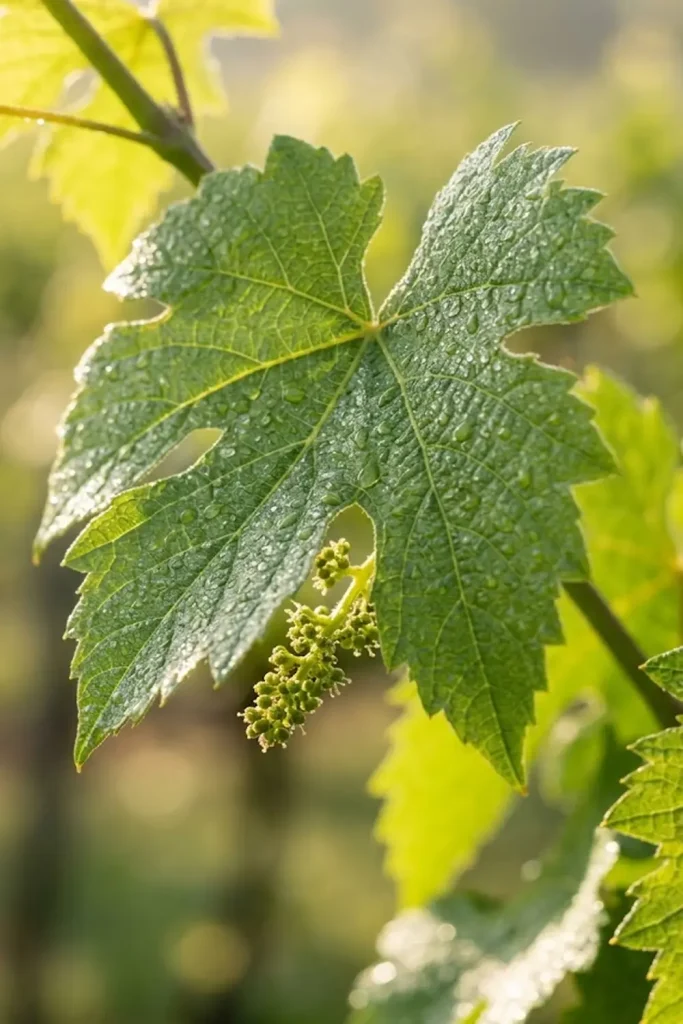
The Thompson Seedless grape isn’t just popular in California. Known globally as the Sultana grape, it has been cultivated for thousands of years. But you need more than historical significance; you need seedless convenience. As you look at the tiny flower cluster in the image, imagine each individual floret transforming into a berry that will have to dry down significantly. Because seedless grapes lack the tough seed coat, the final product remains tender and delicious when dried for snacks. They also require careful care and management of fruit set, often benefitting from thinning (removing some clusters) to focus the vine’s energy on fewer, higher-sugar berries, which you’ll need for top-tier raisin fruits.
Understanding Brix is essential for high-quality raisin production. Brix is a measurement of the percentage of dissolved sugar in a liquid. While table grapes might taste sweet enough to you at 16 or 18 Brix, for a true raisin fruit, you must push for maturity that reaches 22 Brix or higher. This high sugar content is what creates the characteristic deep amber/purple color and complex, caramel-like flavor profiles you’re aiming for. It’s not just a number; it’s the scientific key to achieving that perfect, profound sweetness that sets your homegrown raisins apart from any bland alternative. Achieving that perfect, deep amber color in the resulting raisin fruits is worth every extra degree of Brix.
The drying process itself is fascinating. It’s essentially a concentration of flavor and nutrients. This means that as moisture leaves the berry, the natural acids, sugars, and nutritional compounds like antioxidants and fiber become more dense. It’s important to remember that this process must be managed to prevent oxidation. Oxidation is the chemical browning that happens when phenolic compounds in the fruit react with enzymes and oxygen, which you also want to manage. While sulfur dioxide is commonly used in commercial settings to produce golden raisins by inhibiting this browning, home gardeners often prefer the rich, dark, natural color that comes from simply allowing the enzymes to do their work. Proper care and protection must also be provided to the ripening fruit so that they are not damaged before they begin drying for snacks.
2. Soil Preparation and Site Management
Getting the right site management is arguably more important than selecting the perfect variety. Why? Because you can always change a variety (by grafting), but you can rarely change your climate or location. To learn how to grow raisin fruits, you must understand the environment your grapes need to thrive. Grapes are “sun-worshipers” and require full sun exposure—a minimum of 8, preferably 10–12, hours of direct light per day. If you plant them in partial shade, you are guaranteed small, tart fruit that will never develop the necessary sugar content for drying into raisins. Site selection is where you will win or lose the Battle of the Brix, and your future raisin fruits will pay the price for any shortcuts taken now.
Beyond light, you need good drainage. Grapes are extremely hardy, but they absolutely despise having wet feet—roots that are saturated by standing water. To ensure optimal soil health, you should look for, or create, a deep, loose sandy loam that allows the roots to penetrate several feet while water drains away quickly. Avoid nitrogen-rich soils or over-fertilizing with nitrogen. Excess nitrogen encourages massive vegetative (leaf) growth, but it often delays ripening and decreases fruit yield, which will directly impact the quantity and quality of your raisin fruits. A successful site and proper soil preparation provide the foundation for years of productive vine life, and your careful soil preparation will directly support years of delicious raisin fruits.
Many homeowners see the ideal soil in the visual and think it’s just about digging a hole. No. Soil health means you are digging to the proper depth—at least two to three feet down—to break up any compacted layers. This is critical because Vitis vinifera is a deep-rooting species that will penetrate deeply for water. When you provide soil preparation that is loose and aerated, you are giving the rootstock the best possible start. Deep, well-draining soil prevents perched water tables from forming, which cause root rot, and it encourages strong, stable growth that is more resistant to summer drought, ensuring your raisin fruits have access to nutrients even during dry spells.
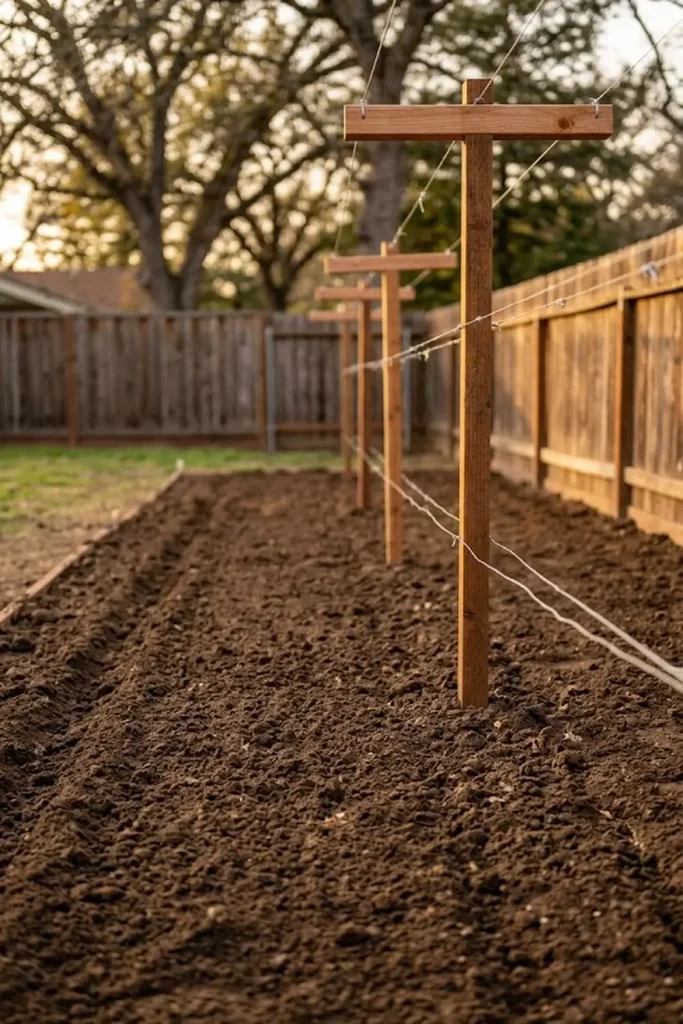
Once your soil is right, you must provide a strong structure. The trellis system in the image is a common and highly effective design for home vineyards. Trellising isn’t just to keep things neat; it’s essential for vineyard management and canopy management. By training your vine to grow along these wires, you elevate the fruit off the ground, significantly reducing its exposure to soil-borne diseases like botrytis. It also drastically increases sunlight penetration and airflow through the leaves, which are necessary for photosynthesis and crucial for preventing fungal diseases like powdery mildew, which will decimate your raisin fruits if allowed to take hold. Soil preparation and site management for proper site selection must be done right to allow you to provide necessary care.
The standard layout is often planting vines about six to eight feet apart within the row, with rows separated by eight to ten feet, though a professional layout in a smaller area may use closer spacing for efficient canopy management. As your rootstock gets established, these trellis wires will support the main structure of the vine. Careful site selection means you can provide optimal care that allows for vigorous, healthy growth that will provide many years of perfect raisin fruits. A successful site that facilitates proper care and protection is worth the initial effort.
3. The Art of Cane and Spur Pruning
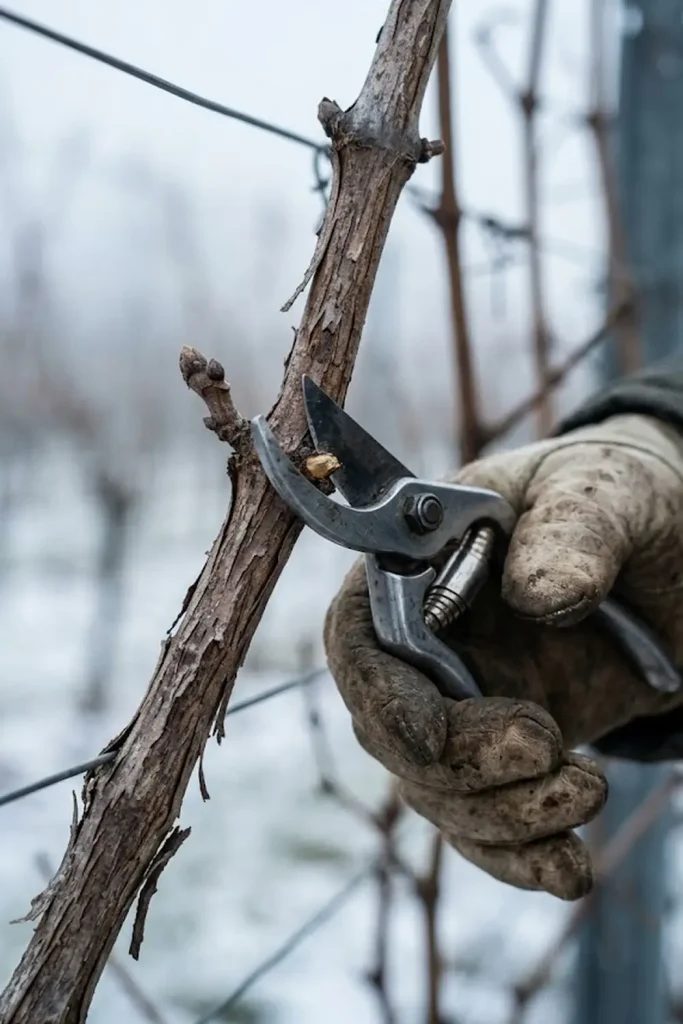
You must understand that pruning is not merely a cosmetic chore; it is the single most critical aspect of canopy management and determining your ultimate fruit yield. When you learn how to grow raisin fruits, you are learning how to balance the vine’s natural urge to produce excessive leaf growth with your desire for high-quality fruit. Grapes produce fruit only on the wood that grew the previous year. If you do not prune heavily during the dormant season (winter), the vine will attempt to support too many clusters, resulting in small, inferior grapes with low sugar content. Proper care and protection through rigorous pruning is non-negotiable for producing sugary raisin fruits.
The visual captures the precise moment of a cane pruning cut. In this system, you select one or two strong, pencil-thick canes from last year’s growth and train them horizontally along the trellis wire. All other cane growth is removed, except for small “renewal spurs”—short stumps with one or two buds that will grow the canes for next year. This management technique ensures that all the vine’s energy, water, and nutrients are funneled directly into the fruiting clusters on those chosen canes, maximizing the sweetness and size of the berries that will become your raisin fruits. It takes discipline, but this level of canopy management is how you achieve exceptional flavor.
The Thompson Seedless grape, which we previously selected for your perfect raisin fruits, is almost always cane pruned. In contrast, other grape varieties like Fiesta or many wine grapes utilize a spur pruning system, where a main, long-established arm of the vine (cordon) has multiple, short spurs (1-3 buds) kept along its length. If you attempt spur pruning on a Thompson Seedless vine, you are effectively removing the most productive, fruit-bearing buds which are located further down the cane. It’s an easy way to zero out your fruit yield for the entire season and eliminate any chance of enjoying homemade raisin fruits. A successful harvest and your long-term success in knowing how to grow raisin fruits hinges on matching your pruning method to your specific Vitis vinifera variety and providing optimal care.
This specific management of pruning must be done during the dormant season. In most climates, this is mid-to-late winter, after all the leaves have dropped and before the sap begins to flow in the spring. You are aiming to complete your cuts before bud break, as any late pruning will only waste the vine’s precious energy, possibly causing a reduction in fruit set and lower fruit yield, ultimately affecting your raisin fruits. The bare trellis and dormant buds in the visual are ready for this essential winter care that ensures vigorous, balanced growth that will later result in abundant, sugary berries ready to become your beloved raisin fruits. Proper pruning is a key component of successful care and protection.
The dormant winter season, with its cold temperatures, requires robust care and management for the entire vineyard. As the vine rests, it prepares for the rapid growth of spring. A vigorous, established vineyard, which will later provide perfect raisin fruits, depends heavily on this foundational winter care. The texture of the rough bark and the weathered shears tell a story of consistent, disciplined effort—the same effort that will be rewarded with jars of your own, perfectly dried raisin fruits.
4. Prevention and Control of Garden Pests
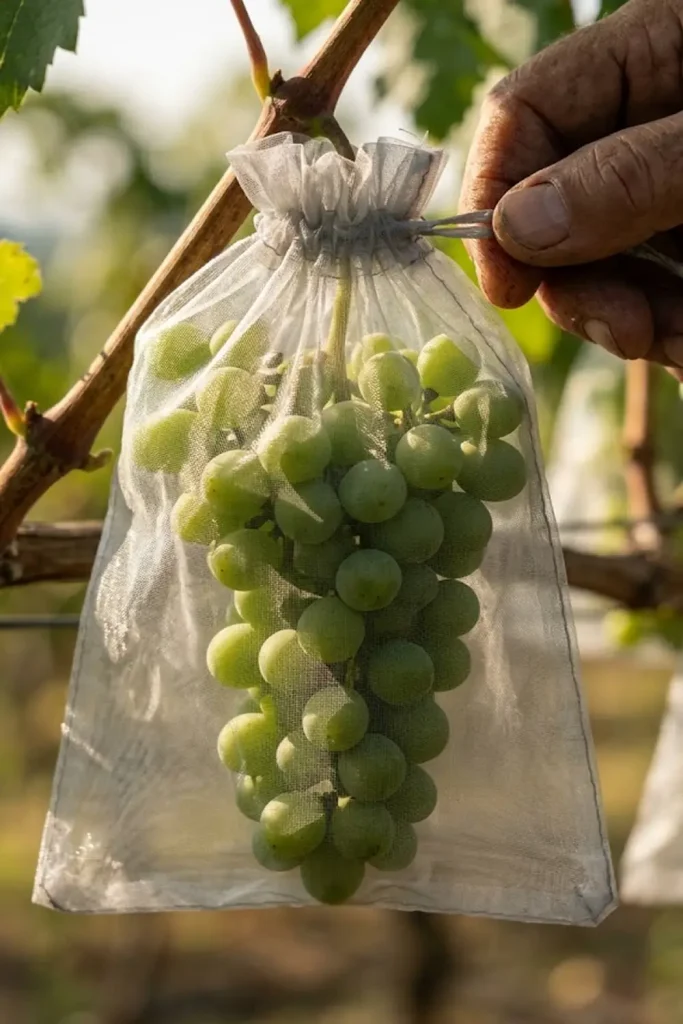
You have planted, trellised, and meticulously pruned, but now you face the most challenging obstacle: protection from the relentless winged and six-legged pests that want to devour your future raisin fruits. As someone who has watched a promising crop disappear in a single afternoon, I can tell you that pest management is where you will either succeed or fail to harvest a single berry. Protecting your grapes requires both active management and defensive structures. Many people when learning how to grow raisin fruits underestimate just how fast birds can decimate a developing fruit set, and how difficult it can be to remove them once they have discovered the fruit.
This visual captures the solution in action. The best defense is physically barring these animals from your crop. Bird netting, applied correctly, is non-negotiable once your fruit enters veraison (the ripening and color-change phase) for ensuring a successful crop. You must secure the netting completely around the entire canopy. If you leave even a small gap near the ground, birds will find their way in, and then you have to catch them inside the net! Active pest management and reliable care and protection are critical for saving your grapes for raisin fruits.
The Thompson Seedless and Black Corinth varieties, which we discussed earlier for your perfect raisin fruits, are particularly susceptible to birds due to their high sugar content and thin skins. Protecting them must be a priority. You can choose to bag individual clusters, as seen with the organza bag in the image, or net the entire row. Bagging provides additional protection against certain insects and mildew, but it is extremely time-consuming for a large crop. For a smaller backyard vineyard, I have found that individual bags offer superior protection, as they also help manage humidity around the cluster. This level of pest management and detailed care and protection is worth the initial effort.
Beyond birds, you must manage six-legged pests like wasps and ants—relentless creatures that will bore into ripe fruit, causing devastating rot that will ruin your chances of achieving high-quality raisin fruits. A successful pest management strategy must address these insects. For ants, a useful non-chemical barrier is applying a non-drying sticky band (like Tangletrap) around the trunk of the vine. For wasps, you can reduce their populations early in the season with appropriate traps. As your grapes mature and their sugar levels increase (Brix), providing consistent care and management is your only defense against these pests that threaten your precious raisin fruits. Providing optimal care will always reduce pest pressure.
Ultimately, your pest management and detailed care and protection must be done right to allow you to provide necessary care. When you protect your ripening crop using these careful management techniques, you ensure that every berry that will become one of your precious raisin fruits has the chance to fully mature on the vine, accumulating the vital sugars needed for the perfect, complex flavor profile you desire. Consistent effort and discipline are key to successful management.
5. Management of Irrigation and Moisture
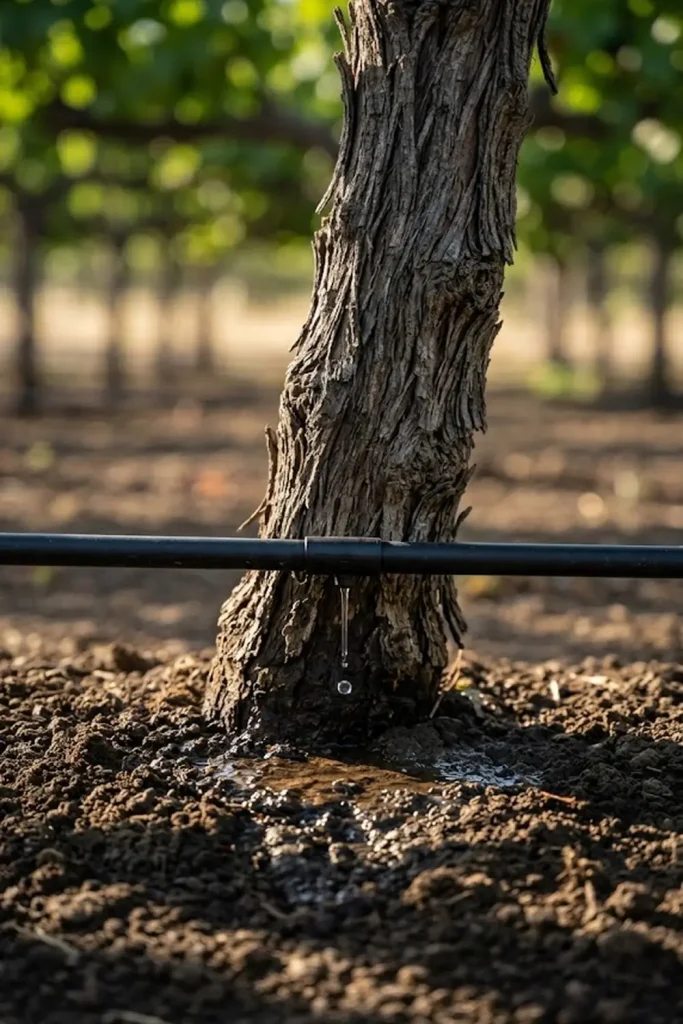
Water is the lifeblood of any plant, but for grapevines destined to become raisin fruits, its management is a delicate and crucial dance. When you are learning how to grow raisin fruits, you must move away from the “more is better” mentality. Grapes are remarkably drought-tolerant once established, but their water needs change dramatically throughout the growing season. Early in the spring, during bud break and flowering, consistent moisture is necessary to support vigorous growth and a strong fruit set. However, as the berries begin to ripen (veraison), you must deliberately reduce water to encourage the vine to focus its energy on concentrating sugars (Brix) within the fruit. Proper care and protection of the root zone through controlled irrigation is essential for achieving high-sugar raisin fruits.
The visual shows the solution for precise control: drip irrigation. This system delivers water directly to the soil at the base of the vine, minimizing waste and, crucially, keeping the foliage dry. Wet leaves are an open invitation for devastating fungal diseases like powdery mildew, which will quickly ruin any chance of harvesting healthy grapes for raisin fruits. By utilizing drip irrigation, you provide targeted moisture to the roots while maintaining a dry canopy, offering superior care and protection against moisture-related issues. For a full-time professional, this automated management tool is a lifesaver, ensuring your vines get exactly what they need without constant manual effort.
I have found that the final weeks before harvest are when irrigation management becomes a true art form. To create the absolute best raisin fruits, you must practice deficit irrigation (sometimes called regulated deficit irrigation or RDI). By decreasing water by as much as 50% or more, you are not trying to stress the vine to the point of damage, but you are sending a signal: stop vegetative growth and put every ounce of remaining energy into ripening the fruit. This targeted stress is how you achieve those extra few degrees Brix (sugar concentration) that transform your grapes into rich, complex, perfect raisin fruits. A successful harvest demands precise, ongoing care and management that is worth the effort.
Ultimately, your irrigation management must be done right to allow you to provide necessary care and protection. For a busy professional, I highly recommend investing in an automatic timer. I can’t tell you how many times I’ve forgotten to turn off a manual valve, leading to waterlogged soil and, consequently, lower-quality raisin fruits. When you have a care and protection plan that ensures consistent, regulated water application, you guarantee that every berry destined for your raisin fruits has the chance to develop to its full potential, without interruption. Consistent effort and discipline are key to successful management.
6. Monitoring Brix Levels for the Perfect Harvest
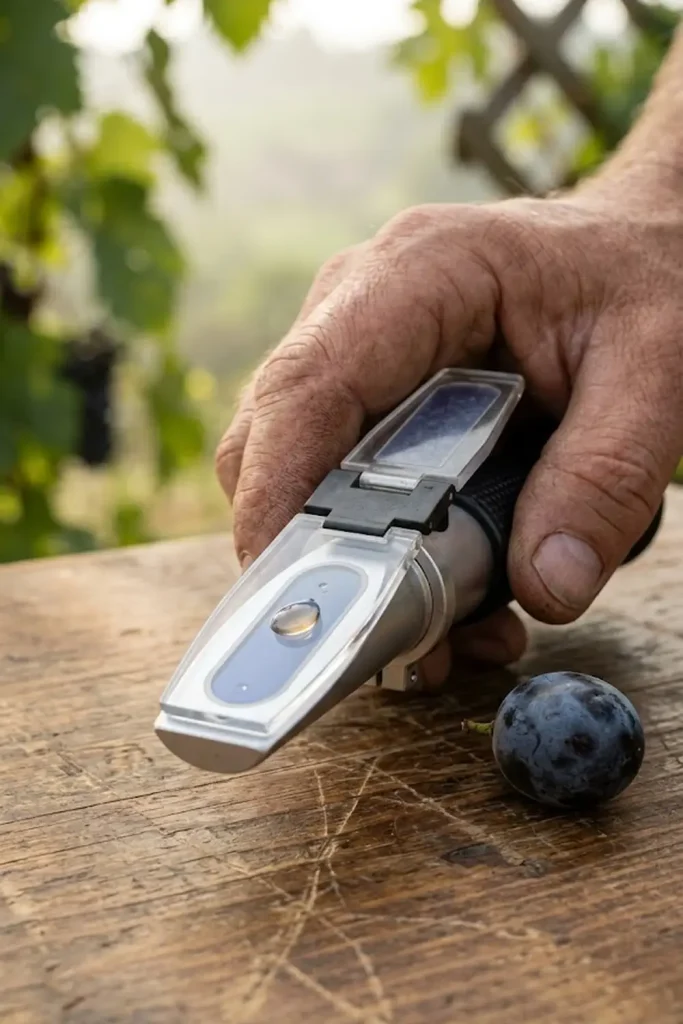
You have navigated planting, pruning, pests, and irrigation, but now you face the ultimate test of patience: waiting for the perfect moment to harvest grapes for raisin fruits. Many beginners make the mistake of harvesting based on visual cues alone, assuming that if the grapes look ripe and taste somewhat sweet, they are ready. They aren’t. To achieve the profound, complex caramel flavors that define a truly great raisin fruit, you must base your harvest decision on science, specifically by monitoring the Brix (sugar concentration) levels. If you harvest too early, your dried raisins will be tart, thin, and lack the meaty texture you desire. Achieving high Brix is the direct reward for all your precise care and protection throughout the season.
The visual captures the essential tool for this measurement: a optical refractometer. By placing just two droplets of juice on the prism and looking through the eyepiece, you get an instant, accurate reading of the sugar percentage. For Thompson Seedless grapes, which we identified as the gold standard for raisin fruits, you must resist the urge to pick until they reach a minimum of 22 Brix. I have found that pushing the maturity to 23 or even 24 Brix—provided the weather holds and you have maintained excellent pest and disease management—yields an even superior final product, with a richer color and a more robust flavor profile in your finished raisin fruits. A refractometer is a small investment that offers a massive return in quality.
Grapes don’t just accumulate sugar linearly. I have found that a significant portion of the final, defining sugar occurs during the very last stage of ripening (veraison). By waiting until you achieve that perfect, amber translucence in Thompson Seedless and a deep, intense purple in Black Corinth, you are maximizing the natural chemical transformation that creates the rich color and caramelized flavor profiles essential for high-quality raisin fruits. A successful harvest demands precise, on-going care and management and provides definitive proof of your care and protection throughout the growing cycle.
Ultimately, your care and protection must be done right to allow you to provide necessary care. When you utilize a refractometer and make an objective decision based on Brix, you ensure that every berry you harvest has the chance to develop into one of your precious, high-sugar raisin fruits, with the complex flavor profile you have worked all season to achieve. Consistent, careful management and a methodical approach are key to successful results.
7. Sun-Drying Techniques on Paper Trays
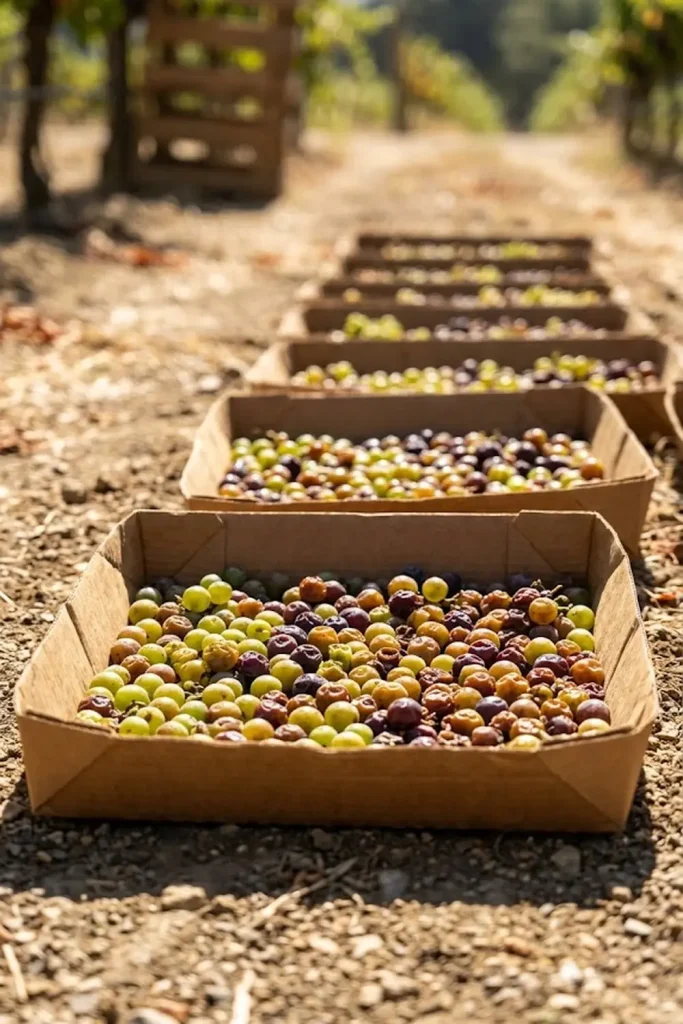
You have achieved the perfect Brix level, and now it is time to transform your fresh grapes into delicious, shelf-stable raisin fruits using the most traditional and energy-efficient method: sun-drying. While modern techniques exist, I have found that sun-drying offers a depth of flavor and a natural caramelization that is hard to replicate. However, this process is entirely dependent on the weather. To learn how to grow raisin fruits successfully via sun-drying, you need a forecast of at least two to three weeks of hot, dry weather (ideally above 85°F) with low humidity. If rain or high humidity is predicted, you must shift your plan, or risk losing your entire harvest to mold. Proper care and protection during this phase is purely about environmental management.
The visual captures the essence of this traditional method. You must place your freshly harvested grape bunches in a single layer on clean, food-grade paper trays. I recommend brown kraft paper, as seen in the visual, which is durable and absorbs moisture well. The trays must be laid out in a clean, open area with maximum sun exposure, such as between the vineyard rows (the “row middles”). This location maximizes solar reflection and airflow. You are not just letting them sit; you must actively manage the process. Every few days, I check the fruit and gently flip the bunches to ensure uniform drying and prevent any “wet spots” from forming, providing consistent care and protection against spoilage.
I have found that the transition points are critical. When sun-drying grapes like Thompson Seedless and Black Corinth, you are actively monitoring the moisture level, moving from fresh fruit (at roughly 80% moisture) to shelf-stable raisin fruits (at 15–18% moisture). If you dry too quickly at excessive temperatures (above 110°F), you can cause carmelization (browning) and flavor loss. Conversely, if humidity stays high, mold can develop rapidly. Proper management requires a keen eye and active care and protection that prevents both extremes. When you achieve that perfect, amber-to-deep-purple color and meaty texture in your finished raisin fruits, you know every bit of that weather management was worth the effort.
Ultimately, your sun-drying process must be done right to allow you to provide necessary care. When you utilize high-quality paper trays and a prime, sun-drenched location like the one in the visual, you give your precious grapes the best environment to transform into perfect, sugary raisin fruits, with the profound, complex caramel flavors you have worked all season to cultivate. Consistent effort and attention to detail are key to successful management.
8. Using a Food Dehydrator for Modern Results
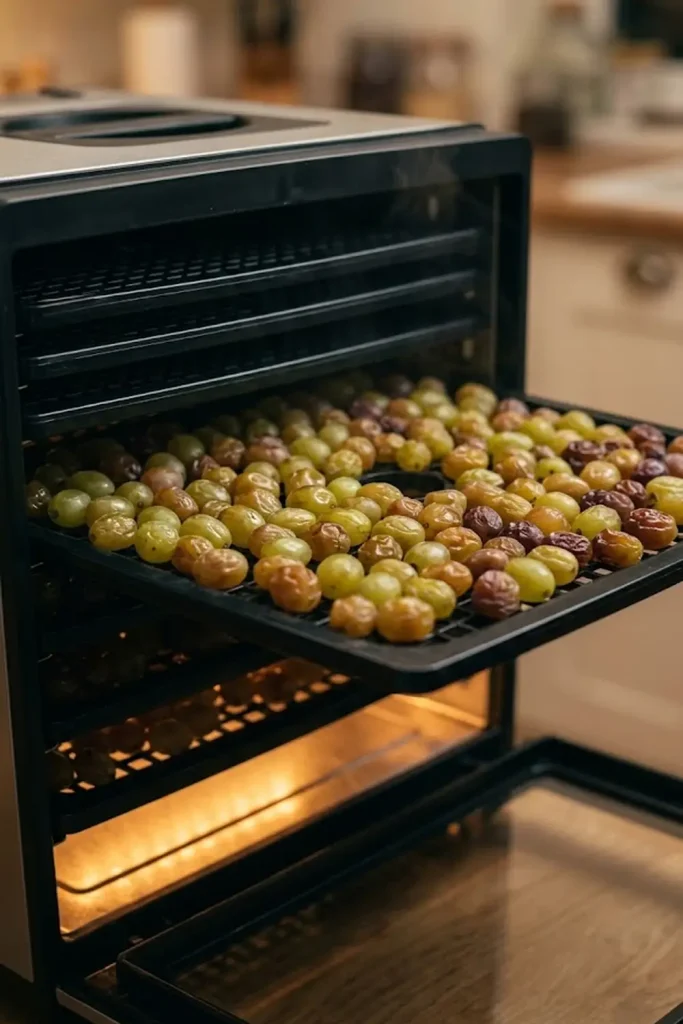
While sun-drying is traditional, the unpredictable nature of weather means it isn’t always viable, especially for the full-time professional who can’t constantly monitor drying trays. When you are learning how to grow raisin fruits, a food dehydrator offers a reliable, controlled alternative that guarantees success regardless of rain or humidity. This method provides total environmental management, allowing you to precisely set the temperature and airflow for optimal dehydration. I have found that a quality dehydrator is the single best investment for ensuring a perfect result every time you want to make raisin fruits, moving you from weather dependency to consistent, predictable production. Proper care and protection here is about machine calibration and load management.
The visual focuses intensely on the modern solution in action. The grapes are spread in a single layer on a specialized, square dehydrator tray, which often features a flexible mesh liner to prevent smaller fruits from falling through. The machine’s heating element and fan create a continuous, low-temperature airstream that gently removes moisture from the fruit. You are looking to maintain a temperature around 135°F (57°C). Any higher, and you risk case hardening (drying the outside too fast), which seals moisture inside and ruins the texture of your raisin fruits. This modern approach gives you the care and protection you need for consistent, high-quality results, completely independent of the sun.
I have found that the final moisture target (15-18%) can be tricky to judge when using a dehydrator for raisin fruits. A common mistake I have made is to allow the machine to run until the raisins are completely dried out and hard. They will not be good. When you achieve that perfect point where they are wrinkled, pliable, and chewy, but still yield a profound, complex flavor profile upon eating, you have hit the bullseye for your homemade raisin fruits. A successful modern dehydrator provides definitive proof that proper care and protection throughout the drying cycle is achievable, completely independent of the sun.
Ultimately, your modern dehydration method must be done right to allow you to provide necessary care and protection. When you utilize a quality food dehydrator, you have total control. You can precisely management the temperature, prevent any issues, and focus on generating perfect raisin fruits with the deep amber/purple color and concentrated sweetness you have worked all season to achieve. Consistent effort and attention to detail are key to successful management.
9. Prevention of Mold During the Curing Stage
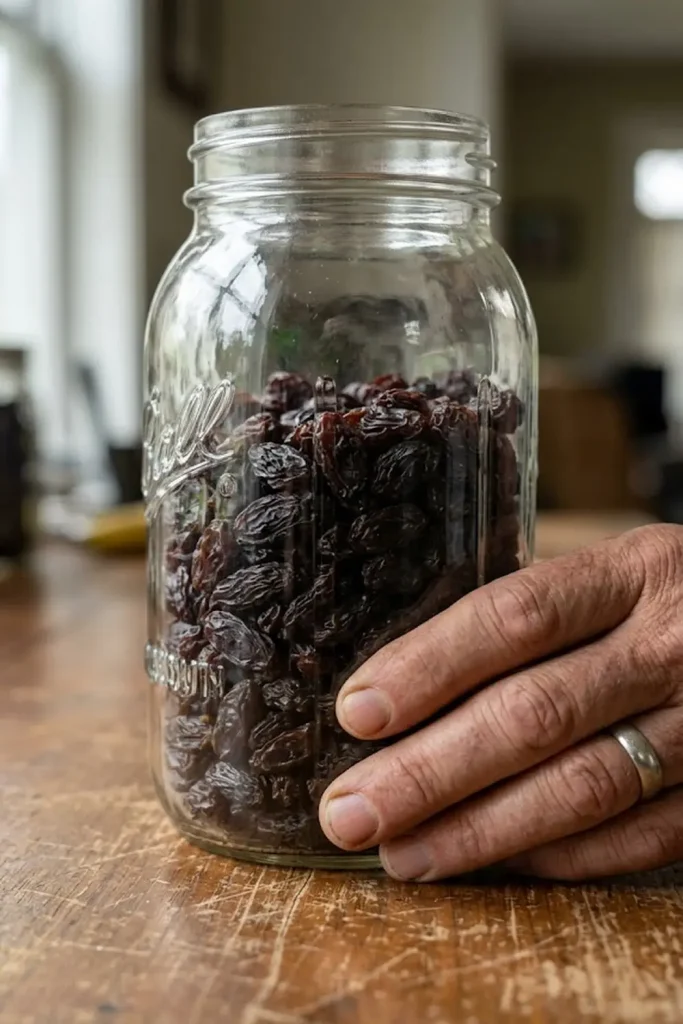
The primary objective of curing, or “conditioning,” your newly dried raisin fruits is to equalize their moisture content and, in doing so, prevent the devastating oxidation and mold that can ruin all of your hard-earned results. When you learn how to grow raisin fruits, you will quickly discover that even after sun-drying or dehydrating, individual raisins will have varying moisture levels; some may still be too wet, while others are too dry. Simply packing them immediately into final storage is a recipe for condensation, leading to fuzzy green pathogens in a matter of days. Curing is the mandatory, low-effort final step of care and protection that ensures every berry in your jar remains safe and shelf-stable for many months. This level of diligent management is what makes the difference between a successful, sustainable snack and a wasted crop.
The visual focuses intensely on the simple but profound solution for this crucial curing phase: a non-reactive vessel. A large, clean, clear glass Mason jar is the gold standard for home gardeners, offering an impermeable barrier that does not leach chemicals. You are actively utilizing the container’s headspace. Every morning for a week, I gently shake or rotate the jar, moving the fruit to prevent clump formation and to encourage uniform air management. If I see any condensation forming on the interior of the glass, I immediately return the raisins to the dehydrator or drying tray for another 12 to 24 hours of care and protection. This process of consistent management and objective feedback through observation is non-negotiable for producing high-quality, mold-free raisin fruits.
As you work to prevent mold and ensure successful long-term storage of your raisin fruits, you are balancing chemical, physical, and environmental management. When you achieve that profound, complex caramelized flavor profile in your finished snacks, you know that this diligent conditioning was a critical component. A successful curing protocol provides definitive proof that proper care and protection throughout the post-drying cycle is achievable, completely dependent on meticulous effort. Providing consistent, thoughtful care and management during this final phase is worth the effort, delivering years of safe, delicious raisin fruits.
Ultimately, your mold prevention strategy must be done right to allow you to provide necessary care and protection. When you utilize a clean, sealed container like the glass Mason jar, you ensure that moisture can be managed and oxidation prevented. You can prevent any issues and focus on protecting every berry you have cultivated, generating perfect raisin fruits with the deep amber/purple color and concentrated sweetness you have worked all season to achieve. Consistent effort and attention to detail are key to successful management.
10. Disease Management: Fighting Powdery Mildew
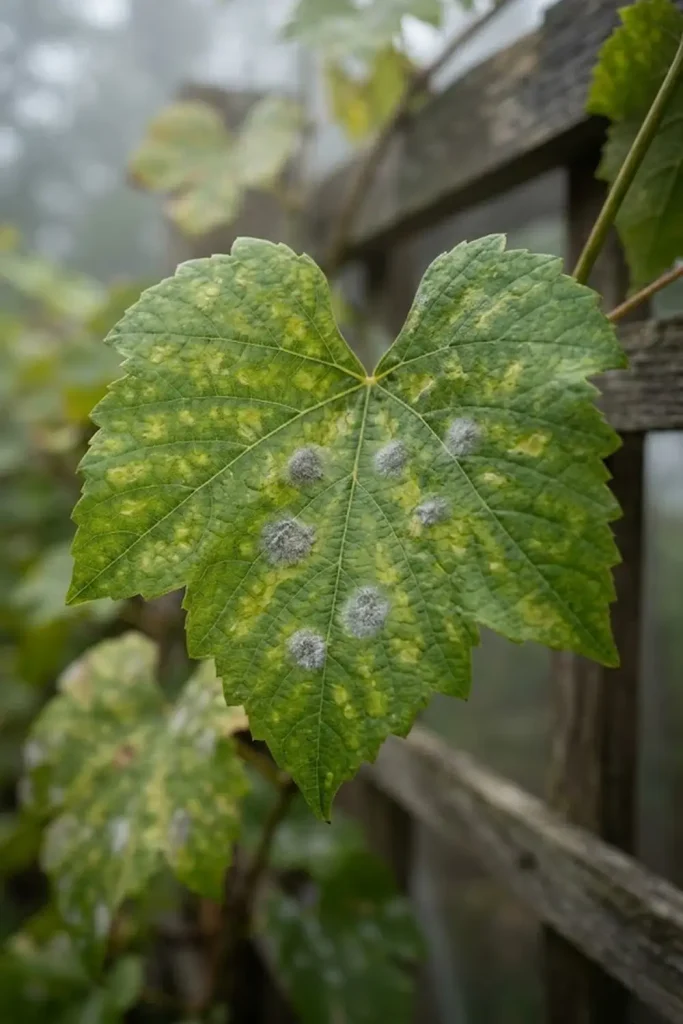
Of all the fungal threats you will face when learning how to grow raisin fruits, none is more common or more devastating than powdery mildew (Erysiphe necator). This pathogen doesn’t just mark the leaves; it can attack the fruit clusters themselves, covering them in a grey, dusty mycelium that causes the grapes to split, rot, and become completely useless for producing raisin fruits. A successful harvest demands proactive disease management, moving away from a reactive “wait and see” mindset. You must assume powdery mildew will arrive and implement a rigid strategy of care and protection before you ever see the first spot. Fungal spores are microscopic, and by the time you see the “powder,” the underlying infection is already well-established.
The visual focuses intensely on the early detection of the pathogen. On this highly detailed Thompson Seedless leaf, you can see the diagnostic “oil spots”—subtle, yellow-green discolorations on the upper leaf surface that are the first visible indicator of an infection. These spots are the result of fungal hyphae penetrating the leaf cells, which you are attempting to prevent. I provide definitive care and protection through a combination of cultural and, when necessary, organic controls. Maintaining an open vine canopy through rigorous canopy management (which we discussed in the pruning section) maximizes sun exposure and airflow, which naturally inhibits fungal growth. For ongoing management, a balanced application of wettable sulfur or organic neem oil before bud break and continuing throughout the early season provides a powerful prevention mechanism that is critical for saving your future raisin fruits.
For full-time professionals, I highly recommend a proactive, simplified approach to disease management. I have used a homemade spray (one tablespoon of baking soda plus one tablespoon of horticultural oil to one gallon of water) applied every 7 to 14 days, from bud break through veraison, which provides reliable care and protection without complex chemical rotations. This mixture changes the leaf pH, creating an environment hostile to spore germination. A successful fungal strategy must include both this cultural care and targeted treatments to manage this specific pathogen before it can decimate your precious raisin fruits. A consistent and ongoing effort is vital for disease management.
Ultimately, your disease management must be done right to allow you to provide necessary care. When you utilize correct prevention, you ensure that every berry that will become one of your precious raisin fruits has the chance to fully mature on the vine, accumulating vital sugars. You can prevent any issues and focus on protecting every cluster, generating perfect raisin fruits with the deep amber/purple color and concentrated sweetness you have worked all season to achieve. Consistent effort and attention to detail are key to successful management.
11. Long-Term Maintenance of Your Vineyard
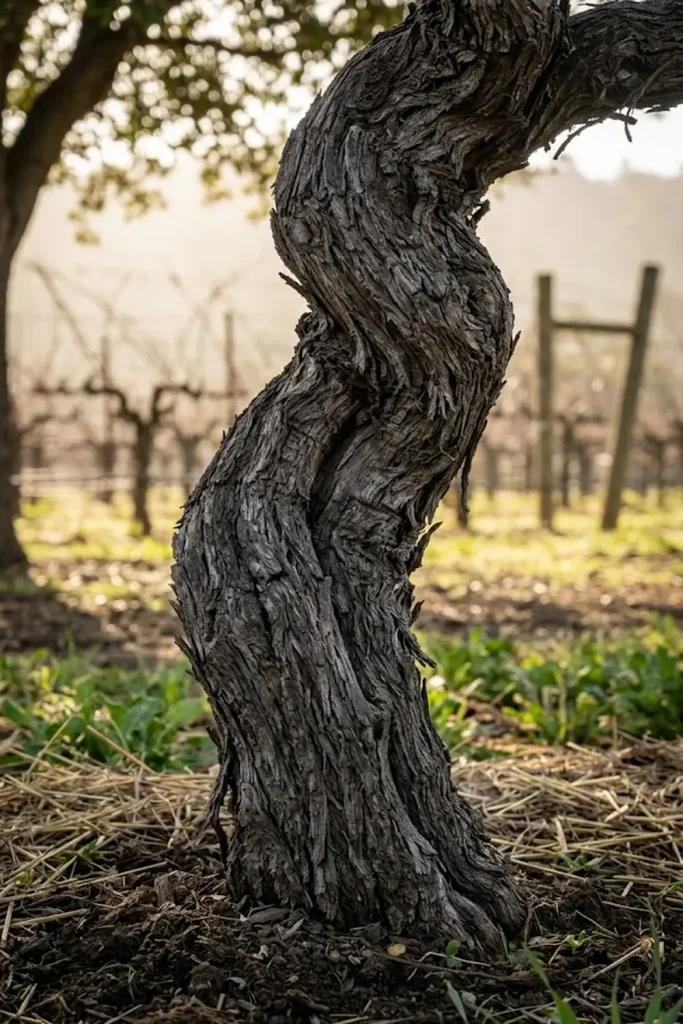
You have successfully navigated the first harvest, but the journey of learning how to grow raisin fruits does not end there; it is a long-term commitment. A grapevine is an incredibly long-lived plant—some commercial vineyards are over a century old—but its productivity relies entirely on consistent, year-after-year vineyard management and dedicated care and protection. Your primary focus now shifts from establishing the vine to maintaining its foundational health, ensuring it can continue to generate high-sugar grapes for your future raisin fruits for decades to come. Neglecting the dormant season or failing to replenish the soil’s resources will inevitably lead to a decline in fruit yield and vine vigor. Long-term success is built on a foundational routine.
The visual captures the essence of this longevity and foundational health. This is a hyper-realistic close-up of a gnarled, mature vine trunk. It is thick, deeply furrowed, and shows the distinct, peeling, reddish-brown bark that is characteristic of an aged Vitis vinifera. The texture of this trunk tells a story of survival and consistent care. This structure supports the entire canopy and fruit load; it must remain healthy and free from major diseases or physical damage. Proper care and protection of this main trunk from mechanical injury (like weed whackers) and winter injury is critical. A healthy, robust trunk is the biological prerequisite for a vigorous vineyard that will continue to provide perfect raisin fruits.
As you work toward the successful maintenance of your vineyard, you are engaging in chemical, physical, and biological management. When you provide a large, established vineyard that generates years of abundant, sugary raisin fruits, you provide definitively proof that proper care and protection throughout the entire lifecycle of the vine is achievable, completely dependent on meticulous effort. Providing consistent, thoughtful care and management for the entire vineyard structure from the rootstock up is worth the effort, delivering decades of safe, delicious raisin fruits. Consistent, on-going effort and discipline are key to successful management.
Ultimately, your long-term vineyard management and detailed care and protection must be done right to allow you to provide necessary care. When you utilize correct prevention, you ensure that every berry that will become one of your precious raisin fruits has the chance to fully mature on the vine, accumulating vital sugars. You can prevent any issues and focus on protecting every cluster, generating perfect raisin fruits with the deep amber/purple color and concentrated sweetness you have worked all season to achieve. Consistent effort and attention to detail are key to successful management.
A Summary of the Raisin Fruit Profile
I have compiled this nutritional data for you to reference. When you grow your own raisin fruits, you are creating a snack that is not only delicious but also significantly more potent in its nutrients than its fresh counterpart. For your reference, here is a comparison based on standard data. Providing optimal care and protection to your Vitis vinifera is a key component to successful management that allows you to provide necessary care.
Nutritional Comparison: Grapes vs. Raisins
| Nutrient (per 100g) | Fresh Green Grapes | Dried Raisin Fruits (Homegrown) | Change Factor |
| Energy (Calories) | 69 kcal | 299 kcal | ~4.3x |
| Natural Sugars | 15.5 g | 59.2 g | ~3.8x |
| Fiber (g) | 0.9 g | 3.7 g | ~4.1x |
| Potassium (mg) | 191 mg | 749 mg | ~3.9x |
| Iron (mg) | 0.3 mg | 1.9 mg | ~6.3x |
Data compiled using USDA FoodData Central values for equivalent varieties; values may vary slightly based on specific growing conditions and drying temperature.
When you are managing this incredible fruit, you will quickly discover that providing consistent, careful care and protection throughout the growing cycle and the post-harvest curing stage is critical for maximizing these values. Every time you have achieved a truly great raisin fruit, you have proven that proper management is worthwhile, allowing you to generate safe, potent snacks with total control. When you manage your crop with definitive prevention, you generate years of safe, delicious raisin fruits. A successful harvest demands precise, ongoing care and management which is worth the effort.
FAQ: Growing Raisin Grapes at Home
- How to grow Thompson seedless grapes for raisins? To be successful, you must start with a high-quality grafted dormant vine from a reputable nursery. You provide definitive care and protection by giving it a sturdy trellis, 10–12 hours of full sun, and implementing rigorous winter cane pruning, as this is the biological key to high Brix and consistent fruit yield in this specific variety.
- Can you grow raisin fruits in containers? Yes, you can be successful in a large pot (15+ gallons). To have total control, use a well-draining potting mix and provide a balanced organic fertilizer every spring. I recommend choosing a “dwarf” Vitis vinifera variety to simplify your future vineyard management in a confined space. Consistent, thoughtful care and management are key to successful results.
- How many grapevines do I need for a year’s supply of raisins? To be successful, a realistic goal for a single gardener is roughly 2-3 established vines. Depending on your care and protection of the vineyard, each established vine can yield 10–15 pounds of fresh grapes, which you must dry down, resulting in roughly 2.5–3.5 pounds of safe, delicious raisin fruits for your pantry. Proper site selection is critical.
- What is the best way to dry grapes for homemade raisins? For full-time professionals, I provide definitive care and protection through the modern use of a food dehydrator. A good machine gives you total control, allowing you to precisely management the temperature, prevent any mold issues, and focus on generating perfect raisin fruits with the deep amber color and complex flavor profile you desire, without weather anxiety. Achieving that deep amber color, high-sugar profile that you are aiming for requires careful care and protection of the fruit set.
Conclusion: The Rewarding Journey to Perfect Raisin Fruits
Growing your own raisin fruits is a long-term commitment that transitions from deep, initial effort into years of incredibly productive, sustainable reward. From the foundational decision of correct site selection and matching Vitis vinifera variety to your climate, to the methodical management of pruning, pests, and disease, you are crafting topical authority in your own backyard. Every time you open a jar of those plump, sweet, chemical-free raisin fruits that you cultivated, you validate the rigorous care and protection you provided throughout the entire growing cycle. The profound depth of flavor you are aiming for is only possible through precise, ongoing management and a methodical approach, and provides definitive proof of your thoughtful care and management. I encourage you to start your vine this spring; you will generate perfect snacks and build respect for the biological process that yields one of nature’s most concentrated sweets, while providing necessary care and protection that allows you to generate safe, perfect, high-sugar raisin fruits.