I know that feeling. It’s finally a Saturday in April without rain. You grab your morning coffee, walk outside to enjoy the sun, and there they are—the patches. The brown, thin spots where the dog ran all winter, or where the snow piled up just a little too long. Your nice, green lawn dreams seem to be fading fast, replaced by thoughts of a messy, embarrassing yard that’s just too late to fix. It’s frustrating because you don’t have hours every day to dedicate to lawn surgery; you just want results before the summer heat. Well, I have good news for you: understanding when to plant grass seed in spring is your secret weapon. If you know exactly when to act, and more importantly, what common mistakes to avoid, you can absolutely have a lush lawn this year without sacrificing your whole spring to irrigation duty.
1. Why Soil Temperature is the Only Date for When to Plant Grass Seed in Spring
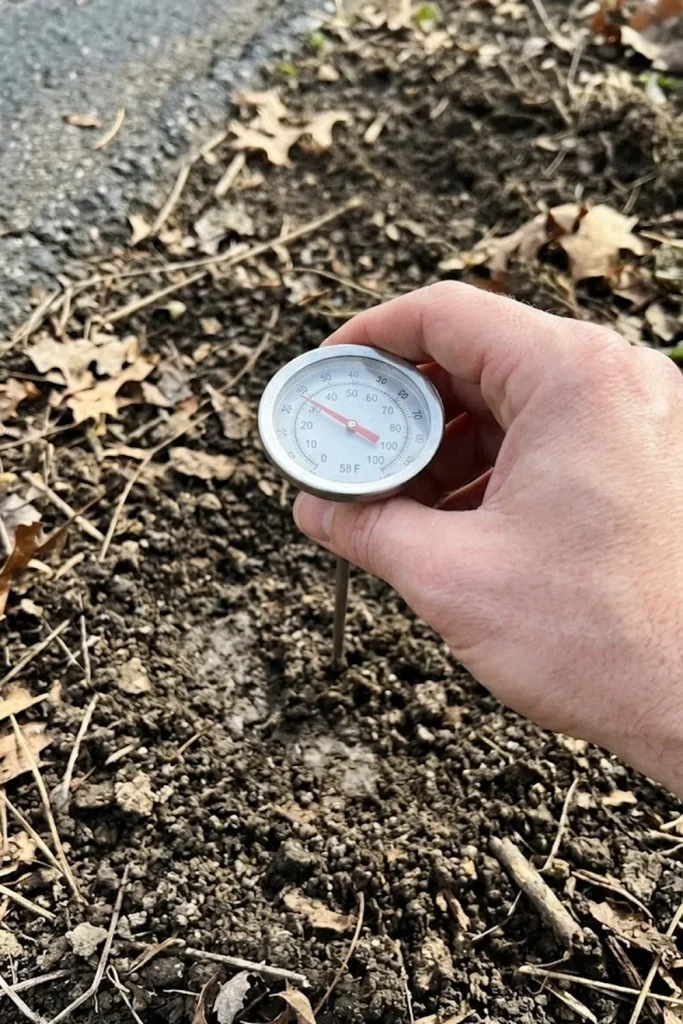
I used to be a slave to the calendar. I’d see April 1st on the wall, go buy five bags of lawn seed, and cover the yard, thinking I was ahead of the game. I wasn’t. You can throw seed down all day, but if the ground isn’t ready, your time and money are just sitting there waiting to rot. The scientific truth is, most cool-season grass varieties require a soil temperature between 55°F and 65°F (12°C to 18°C) to successfully germinate. Air temperature doesn’t matter; your neighbor seeding their lawn doesn’t matter. Only the ground matters.
The risk of jumping the gun isn’t just that the seed won’t grow. Cold, damp soil is the perfect breeding ground for fungal germination diseases that can rot the seed before it ever gets a chance to sprout. Alternatively, a surprise late frost can kill tender, newly sprouted seedlings instantly. Prevention is key: I highly recommend you invest in a simple, analog soil thermometer—it’s the most crucial $10 tool you will buy this spring.
I prioritize this science-first approach because I’ve learned the hard way. One particularly cool spring, I was convinced I could “beat the clock” by seeding early. I spent $200 on premium seed, only for a record cold snap to hit two days later. The ground never warmed up for three weeks. When it finally did, nothing sprouted. I had essentially provided an expensive buffet for the local bird population and fed the soil fungi. You must wait for that thermometer to hit 55°F consistently.
Here is a quick reference table I use to manage my own lawn schedule by monitoring soil temperatures:
Lawn Success Soil Temperature Ranges
| Action | Ideal Soil Temperature (°F) | Grass Behavior/Response |
| Seed Dormancy | Below 50°F | Grass seed remains dormant; won’t sprout. |
| Cool-Season Grass Sprouting | 55°F – 65°F | Optimal germination window. |
| Root Establishment | 65°F – 75°F | Excellent growth, but heat stress begins soon. |
| Summer Dormancy | Above 80°F | Seedlings fail, mature grass enters dormancy. |
2. Prevention: Navigating the Spring Pre-Emergent Dilemma
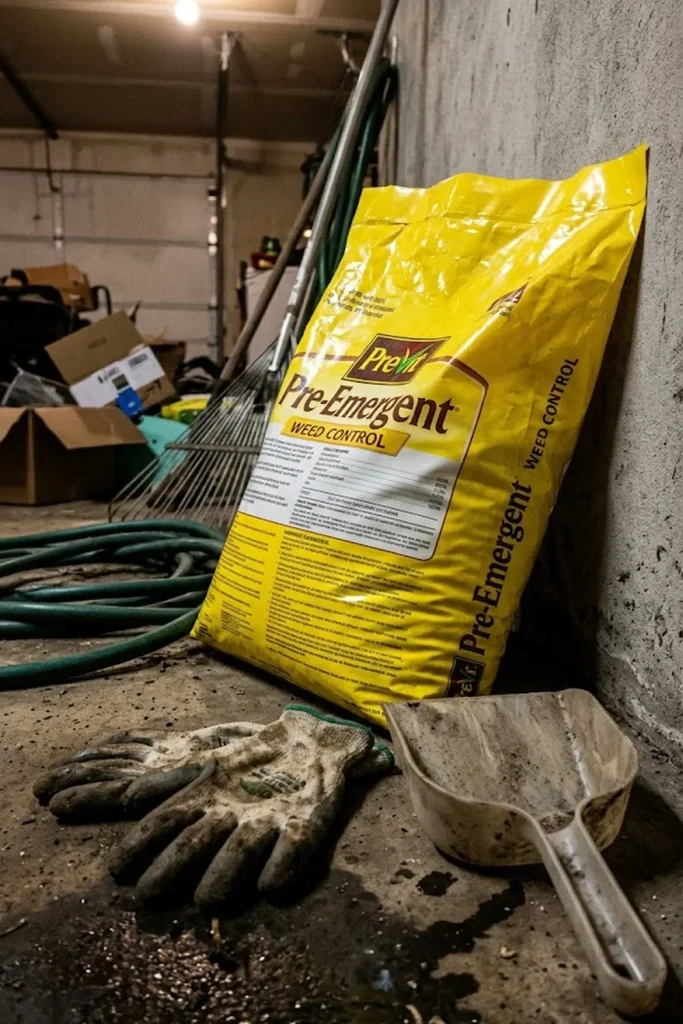
If you want a thick, green lawn, you probably also want to prevent crabgrass. Here’s where the spring seeding challenge really begins. Most standard lawn fertilizers labeled “weed and feed” contain a powerful pre-emergent herbicide (like Dithiopyr or Prodiamine). These products are designed to create a chemical barrier on the soil surface that stops all seeds from germinating. You read that right: they don’t distinguish between a crabgrass seed and your high-quality grass seed.
If you spread a standard pre-emergent now and then try to overseed a few weeks later, you have guaranteed that your new seed will not sprout for at least 12 weeks. This is a crucial area where prevention is just as important as action. For years I made the mistake of trying to do both at once, resulting in zero new grass and a lot of frustration.
Your strategy must change in the spring. You have two real options. The first is “wait and hope”: skip the pre-emergent barrier, focus purely on the new grass, and plan to tackle the inevitable spring weeds manually (or with a post-emergent spray later in summer). The second, more advanced option is to seek out a specialized fertilizer that contains Mesotrione. This unique active ingredient is safe to use at the time of seeding and provides excellent suppression of many common broadleaf and grassy weeds—including crabgrass—while your new grass establishes itself without competition.
How to Balance Seeding and Weed Prevention
- Option A: The Conservative Route (Seeding First)
- Plant seed as soon as soil hits 55°F.
- Skip all standard pre-emergent weed control.
- Focus on watering and growth.
- Expect weeds; manage them with a selective post-emergent after you have mowed your new grass 3 times.
- Option B: The Expert Route (Simultaneous Action)
- Use a “Starter Fertilizer with Weed Preventer” (contains Mesotrione).
- Apply this specialized product on the same day you spread your seed.
- This provides a 30-day window of weed prevention while your new seed sprouts.
- Highly effective for overseeding thin lawns with known weed histories.
3. Care: How to Prepare Your Ground for Maximum Growth
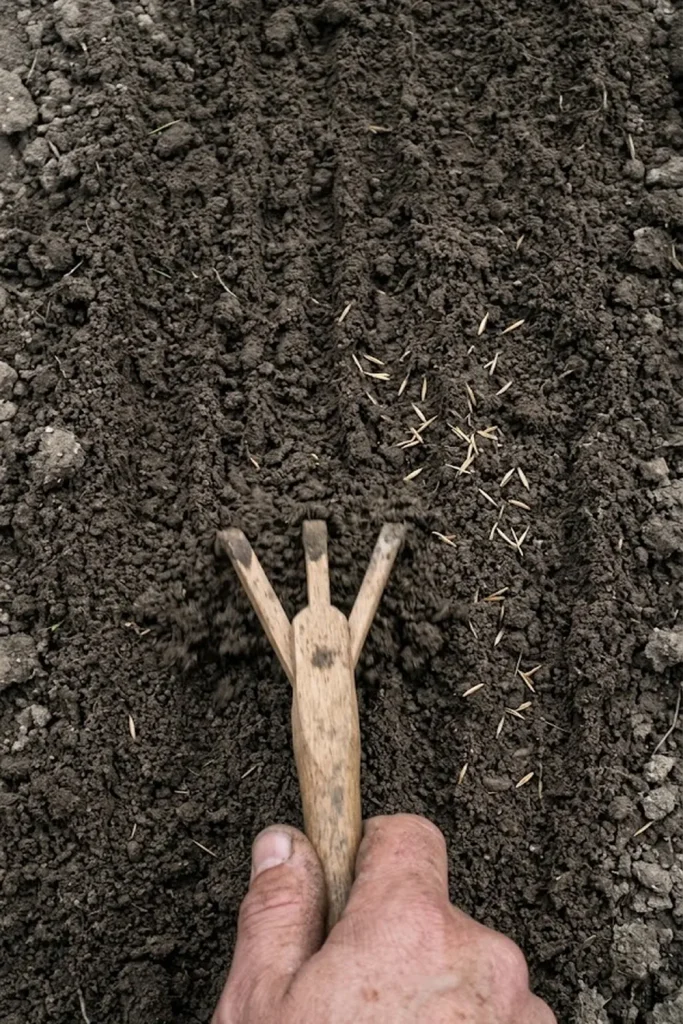
You must ensure proper seed-to-soil contact. A mistake I see constantly is someone just throwing excellent seed over a lawn full of dead thatch and compacted soil, expecting a miracle. Nature doesn’t work that way. For a seed to germinate, its tiny roots must immediately find loose, damp soil to attach to. Thatch acts like a barrier, suspending the seed in the air where it dries out and dies. You are just feeding the birds if you skip this care step.
I approach this prep work with empathy, because I know you have a full-time job and you don’t want to spend your entire weekend operating a heavy rental machine. But you can’t neglect the fundamentals. At a minimum, you must aggressively rake the areas you plan to seed to remove existing dead debris. For small patches, a hand cultivator to loosen the top inch of dirt is enough. For a full yard, you should absolutely consider core aeration in the spring; this pulls small plugs of soil out, instantly relieving compaction and creating perfect channels for seed and water to enter the ground.
If you don’t have the time to aerate, a fantastic shortcut is topdressing. After you have vigorously raked and spread your lawn seed, lightly cover the area with a quarter-inch layer of finely screened compost or a dedicated “lawn soil” mix. This single step provides the seed with a perfect, moisture-retaining environment, ensuring it stays damp (the absolute requirement for sprouting) even if the weather turns dry. This small amount of extra effort and material—about one bag per 100 square feet—makes a massive difference in your final results.
Quick Preparation Steps for Busy Gardeners
- Dethatch/Rake Aggressively: Clear the area of dead debris. This is the #1 requirement for care.
- Mow Low: Cut your existing grass very short (1.5 – 2 inches) right before seeding. This buys your new seedlings time to grow without being shaded out.
- Aerate (Optional but Recommended): Use a core aerator to relieve soil compaction.
- Topdress: Cover your new seed with 1/4″ of compost. This single “protection” step can double your success rate.
4. Protection: Keeping Your Seedlings Alive During the Sprout Phase
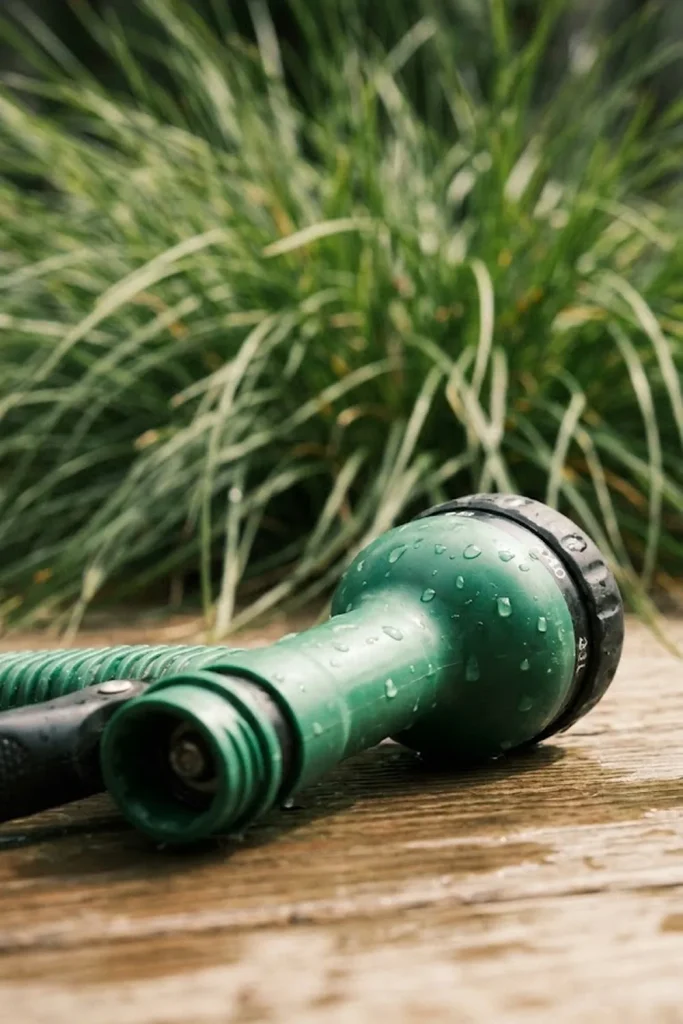
Once your lawn seed is in the ground and covered, you are now entering the marathon phase. For established grass, the advice is always “water deeply and infrequently.” New seedlings require the exact opposite: “water lightly and frequently.” A brand-new seedling has a root that is perhaps a quarter-inch long. If that top quarter-inch of soil dries out for even a few hours, that plant is dead. It has absolutely no ability to access water deeper in the ground.
You must dedicate yourself to a consistent irrigation schedule for the first three weeks. I prioritize protection here, because you are keeping that fragile life alive through constant diligence. Your goal is simply to keep the soil surface damp, but never soggy. Soggy soil is just as bad as dry soil; it will deprive the seeds of oxygen and lead to root rot and fungal death (damping-off).
For a busy professional, I strongly recommend automation. You will not remember to run outside three times a day. Invest in a simple faucet timer and a garden hose with a sprinkler head or a “soaker” attachment. You can program it to run for just five to seven minutes, three times daily (e.g., 7 AM, 12 PM, 4 PM). This simple investment changes the game, allowing you to go to work knowing your lawn is receiving the precise care it requires without you needing to do a thing.
A common phrase I share is: “Keep it damp, not drowned.” By automating this process, you are focusing your limited time on management rather than repetitive labor. You are ensuring success rather than leaving it to chance. After all, if you cannot commit to watering for 21 days, you are better off not seeding in the spring at all.
5. Beating the Heat: Why Late May is Your Hard Deadline
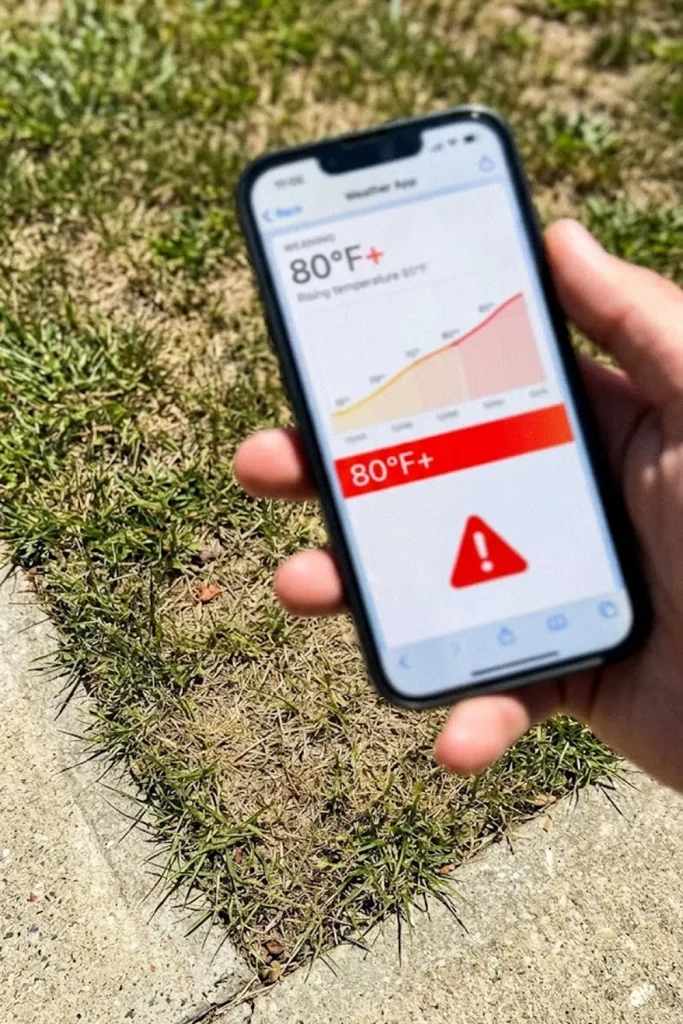
You must work backward from your first true summer heat wave. Here is the reality for new grass: heat tolerance must be earned through root establishment. If you seed too late in the spring—say, mid-May—your seedlings will only be about 4-6 weeks old when the first intense, 85°F+ days of summer arrive. Tender grass of that age is no match for the heat. It has almost no ability to survive stress, no matter how much you water it.
The clock is ticking on when to plant grass seed in spring before it’s too late. I strongly suggest you establish Memorial Day as your personal cutoff date for most cool-season grasses. By that time, your new lawn must have grown enough to be mowed at least three times. Why three times? Every time you mow (always using a sharp blade!), it forces the grass plant to prioritize root growth, pushing it into the soil and making it stronger. A grass plant that is 4 inches tall but has only been mowed once has very shallow roots compared to a plant mowed three times at 3 inches.
I emphasize this because I want to prevent you from having to do this all over again. A core principle of successful lawn protection is ensuring your plants have the physical maturity to survive inevitable stress. A full-time career means you can’t manually irrigate your lawn all day when it’s 90 degrees out. By seeding early—monitoring that crucial soil temperature—you are gifting your lawn a massive, eight-week head start, giving it the natural time it needs to build a stress-resistant root system.
The Summer Survival Calendar for New Spring Grass
| Month | Milestones & Care | Primary Danger/Focus |
| April | Optimal soil temperature (55°F) hit. Plant seed. Automated watering begins. | Fungal damping-off; late frost. |
| May 1st – 15th | First Mow (approx 2.5 inches). Continue light, frequent watering. | Seedlings dry out; heat dips. |
| May 16th – 30th | Second and Third Mows. Transition watering to deep, infrequent soaks. | Seedlings unable to handle dry periods. |
| June 1st+ | Lawn must be mowed 3 times. Stop regular daily irrigation. Hand-water stressed spots. | HEAT STRESS. Shallow-rooted grass dies first. |
6. Common Questions About When to Plant Grass Seed in Spring
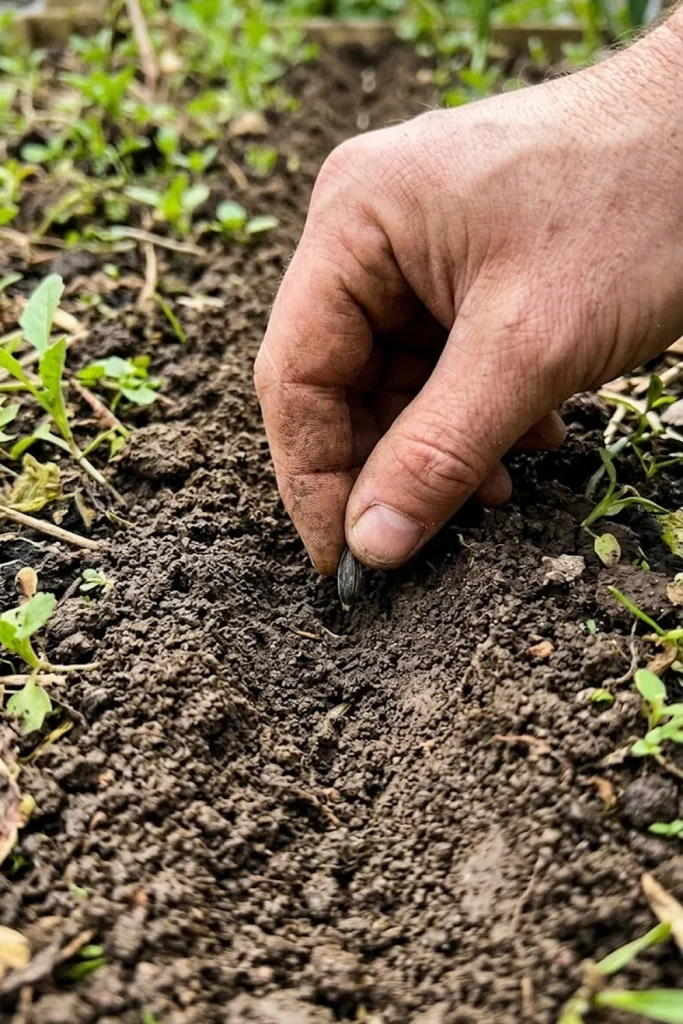
I get asked these questions constantly by busy homeowners. We all want the same thing: a great lawn that doesn’t feel like a second job. You need quick, actionable answers that prioritize efficiency and results. When you are balancing a career, a social life, and a landscape, you can’t afford to waste time on speculative care. Here is my personal, honest take on the most common spring seeding challenges you are likely to face, addressing those “pain points” you encounter every April.
Can I plant grass seed in spring after a late frost? You absolutely can, but the timing of your seeding must be precise. Prevention is everything here. New seedlings are incredibly tender. If you throw seed down, it sprouts in a warm week, and then a late-season “frost snap” hits, your entire investment will likely die. The rule is simple: Wait for the danger of all frost to pass before allowing seeds to germinate. You can spread seed right before a predicted mild frost, as the cold ground won’t trigger sprouting, but you must ensure it does not actually sprout until the ground remains consistently warm.
How long before I can mow my new spring grass? Patience is your best form of protection. You must let those tiny roots establish themselves before you subject the plants to stress. A mistake I see all the time is mowing way too early. A good target for your first mow is when the new grass has reached 3 to 3.5 inches tall. Only remove the top one-third of the blade (about 1 inch), ensuring your mower blade is incredibly sharp to prevent tearing the fragile seedlings out of the soil completely.
Is overseeding in spring a waste of time? It’s not a waste, but I consider it a “B+” option compared to an “A+” fall overseeding. The reason is competition. In spring, your lawn seed is fighting against existing weeds and a rising soil temperature that favors summer grasses (like crabgrass). For successful spring overseeding, aggressive pre-work is required: you must rake aggressively to create space for the seed to touch the soil. If you skip that prep, your new seed will just sit on top of the thatch and dry out. If you have a full, busy schedule and can only commit to one major lawn project a year, wait for September; your results will be vastly superior.
How often do you water grass seed in spring? This is the single most critical protection step, and most people fail it. I cannot stress this enough: You must water lightly 2-3 times every single day for the first 21 days. The goal is just to keep the top 1/4 inch of soil consistently damp (not soggy). If that top layer dries out, the emerging root (the radicle) dies, and your seeding fails. Automated timers are essential for busy schedules.