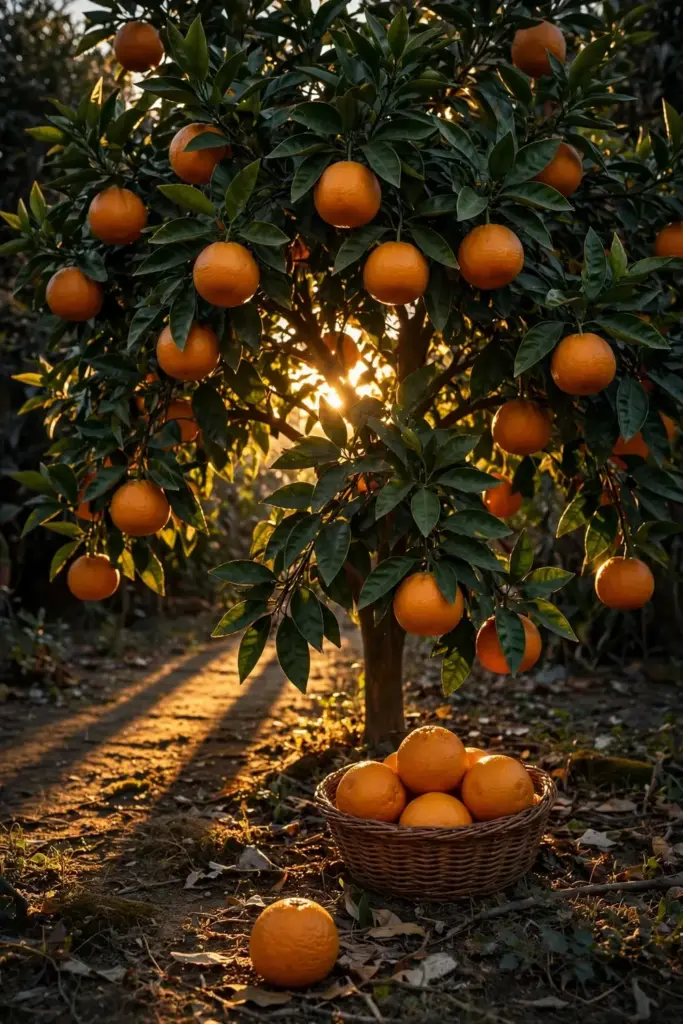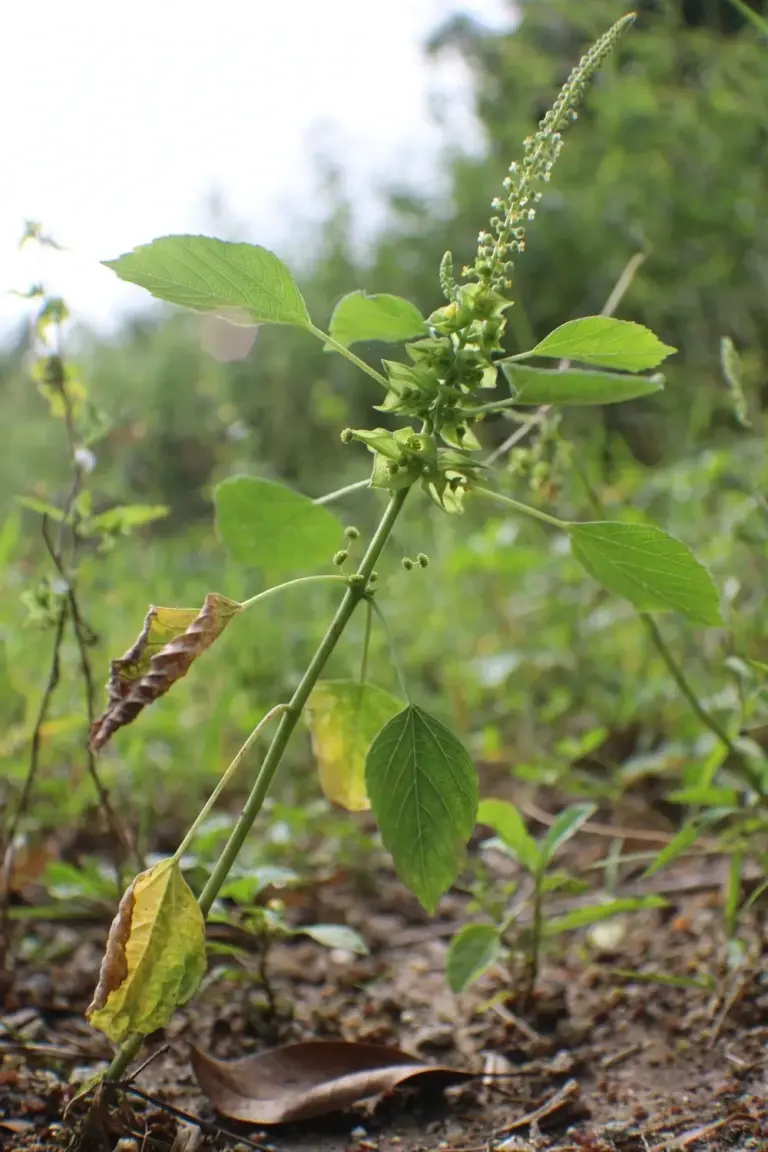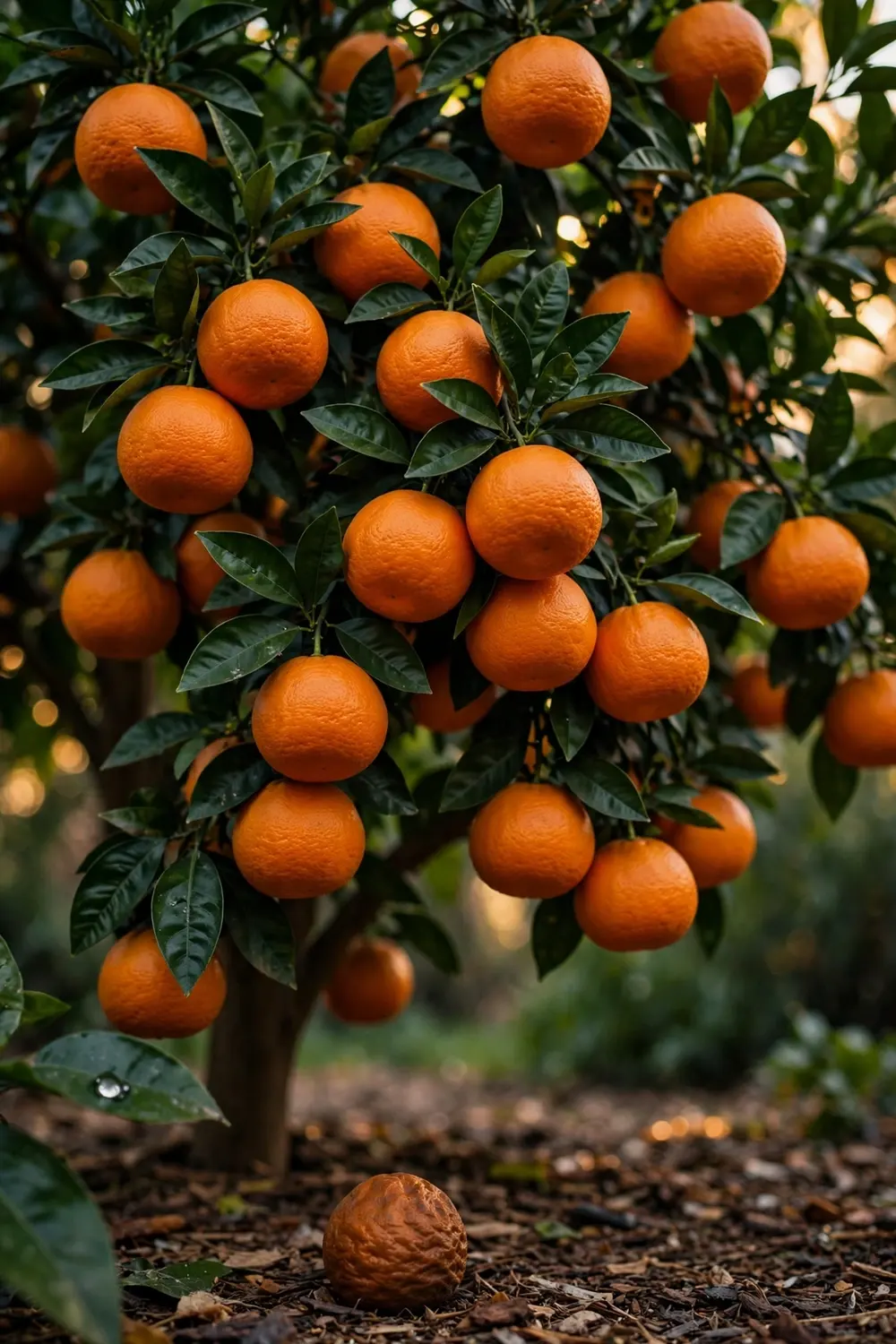

Bitter orange grows from a fresh seed in 2 to 4 weeks, reaches 30 feet in warm ground, and rewards a home grower with Seville fruit for marmalade in about 4 to 6 years. That is the honest arc of learning how to grow bitter orange tree at home. Its fruit serves the marmalade pot, never the lunchbox.
Seville orange, sour orange, and bigarade are all names for the same tree, and the name you choose does not change the fruit. Every name points at one bitter, thick-skinned orange whose highest calling is marmalade. Keep that use in sight while you read, because it changes how you plant, prune, and harvest.
This tree asks for full sun, warm soil, and a plan for cold nights. In zones where frost is rare it goes in the ground. Where winters freeze, it lives in a pot and comes inside each fall. Both lanes work. The tree refuses to negotiate on cold. I have learned that lesson the same way the extension pages teach it: the first hard freeze decides the strategy.
1. Name the Tree You Are Growing: Bitter Orange Is Not Sweet Orange
The bitter orange you are planting is Citrus x aurantium, a natural hybrid of pomelo and mandarin. Growers call it Seville orange, sour orange, or bigarade, and all three names describe the same fruit. It is not a sweet orange (C. sinensis), and it is not the trifoliate orange (Poncirus trifoliata), the spiny hardy shrub some nursery pages confuse it with.
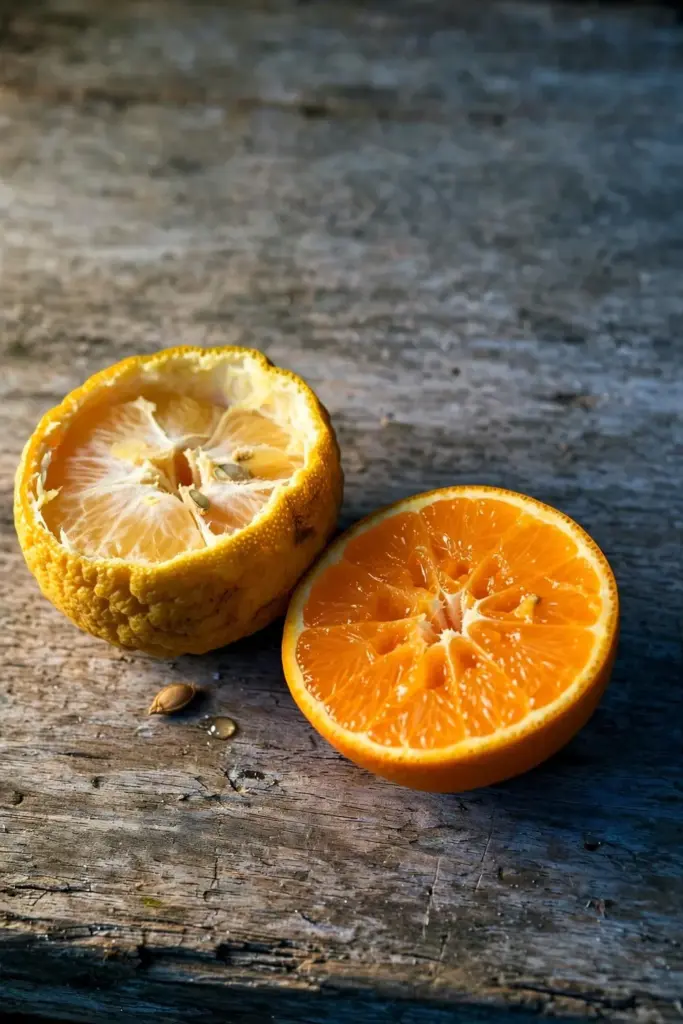
The confusion matters because the three fruits cook and grow differently. A sweet orange eats fresh; a bitter orange eats only after cooking. Trifoliate orange survives cold that would kill a bitter orange tree. Plant the wrong one and the harvest never matches the plan.
| Tree | Latin Name | Eat Fresh | Cold Limit | Best Use |
|---|---|---|---|---|
| Bitter orange | Citrus x aurantium | No, intensely bitter | Frost-tender, short freezes only | Marmalade, candied peel, liqueur |
| Sweet orange | C. sinensis | Yes | Frost-tender | Fresh eating, juice |
| Trifoliate orange | Poncirus trifoliata | No, resinous | Hardy well below freezing | Rootstock, ornamental hedge |
When you buy, check the tag for C. x aurantium and ignore any label that just says “orange tree.” If you want the red-fleshed orange that eats fresh, the blood orange guide covers that tree instead.
One more name worth knowing: bergamot. The fragrant citrus behind the classic bergamot-scented tea is a close relative in the same aurantium group, and nursery tags sometimes borrow the name loosely. For marmalade purposes, any true Seville-type bitter orange works; the exact cultivar matters less than the freshness of the fruit and the thickness of the peel.
2. Read the Quick Specs Before You Plant
These are the non-negotiables, stated plainly so the rest of the article makes sense.
| Spec | Value |
|---|---|
| Latin name | Citrus x aurantium |
| Mature size | 30 feet in warm ground; 6 to 10 feet in a pot |
| Sun | Full sun, 6 to 8 hours daily |
| Soil | Moist but not soggy; pH 5 to 8 |
| Cold tolerance | Frost-tender; survives short freezes |
| Propagation | Readily from seed; grafting for named varieties |
| First fruit from seed | About 4 to 6 years |
| Pollination | Self-fertile; one tree fruits alone |
The 30-foot ceiling comes from the NC State Extension profile, which also confirms the full-sun, pH 5 to 8, and frost-tender numbers. A potted tree stays smaller because the pot limits the roots, not because the tree wants to stay small. Plan the planting site for the tree it becomes, not the seedling it is: a 30-foot evergreen casts real shade and drops fruit where it stands. The tree hails from southeastern Asia and has naturalized across the warm world, from Mediterranean courtyards to Florida hammocks, which tells you what it wants: long warm seasons, mild winters, and sun it can count on. Match that climate or fake it with a pot, and the tree does the rest.
3. Grow It From Seed With Polyembryony Honesty
Citrus seeds play a trick most fruit seeds do not. Many citrus seeds are polyembryonic: one seed holds several embryos, and most of those embryos are nucellar, meaning they are maternal clones of the parent tree. Peer-reviewed citrus genetics work documents how these nucellar embryos outcompete the single sexual embryo in the seed, so a seedling grown from a polyembryonic citrus seed is usually true to type. Read the mechanism in a peer-reviewed review of citrus reproductive genetics.
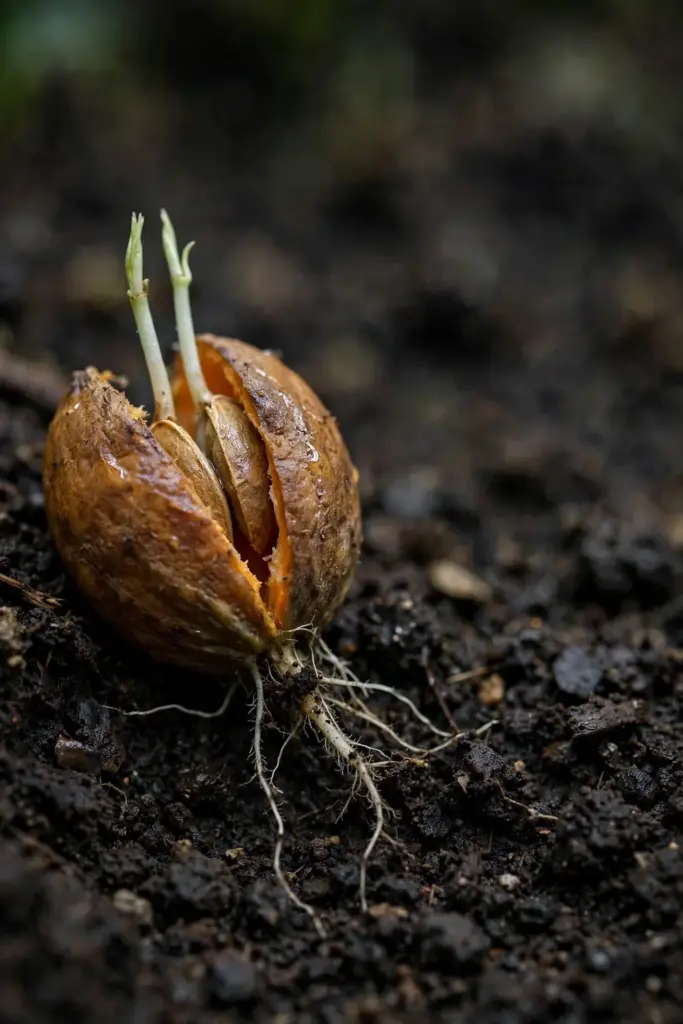
Here is what that means for you. Sow a bitter orange seed and you will usually get a seedling that grows into the same bitter orange its seed came from, not a random hybrid. One seed can also sprout two or three shoots; the strongest is typically the clone and the weakest is often the sexual seedling, so keep the vigorous one.
The honest caveat: true-to-type is usual, not guaranteed. If your goal is a specific named cultivar like a thornless Seville selection, buy a grafted tree. If your goal is marmalade fruit and rootstock stock, seed-grown trees serve perfectly.
When one seed pushes up two or three shoots, let them grow until the strongest is clearly dominant, then snip the weaker ones at the soil line. Pulling them risks tearing the shared root. The survivor is almost always the nucellar clone, and it grows with the vigor of the parent tree from its first leaf.
4. Sow the Seed Fresh and Warm
Start with a fresh fruit, not a packet that sat in a drawer. Cut the fruit, rinse the seeds in plain water, and sow them the same day. Dried citrus seeds lose viability fast, and a week of drying can turn a lively seed dead.
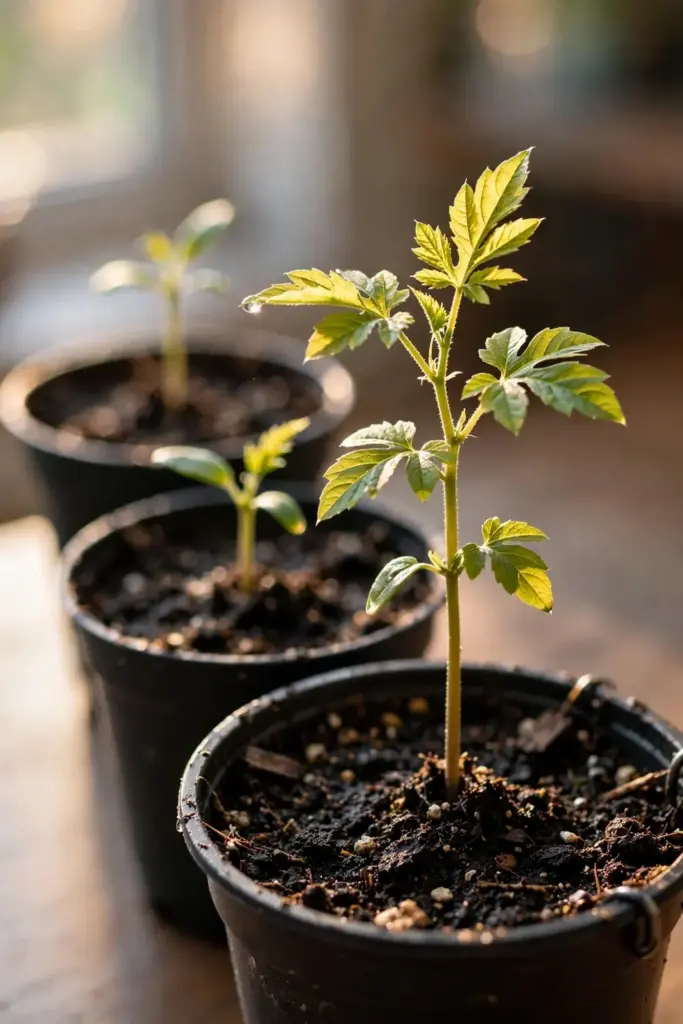
Press each seed about half an inch deep in moist seed-starting mix, one seed per small pot, and hold the pot between 70 and 80 F. Germination takes 2 to 4 weeks at that warmth. A heat mat under the tray earns its keep: room-temperature sowing in a cool house stretches the wait and invites mold on the seed coat. Never let sown seeds dry out completely, but never leave the tray sitting in water either; citrus seed rots as readily as it sprouts.
Give the seedlings strong light the moment they emerge. A south window or a basic grow light for 12 to 14 hours a day keeps them stocky. Weak light makes leggy stems that flop at the first transplant.
Seed is the patient path. A nursery tree in a 3-gallon pot skips the first two years and fruits sooner, and a grafted Seville on bitter orange rootstock is the fastest route to a known variety. Choose seed when you want the experience and the rootstock; choose a nursery tree when you want marmalade on a deadline.
5. Give It Full Sun and the Right Soil From Day One
Plant the young tree in the sunniest spot you have. NC State Extension prescribes full sun and soil that stays moist but never waterlogged, with pH anywhere from 5 to 8. The tree tolerates even very alkaline soil, so do not chase a perfect pH number.
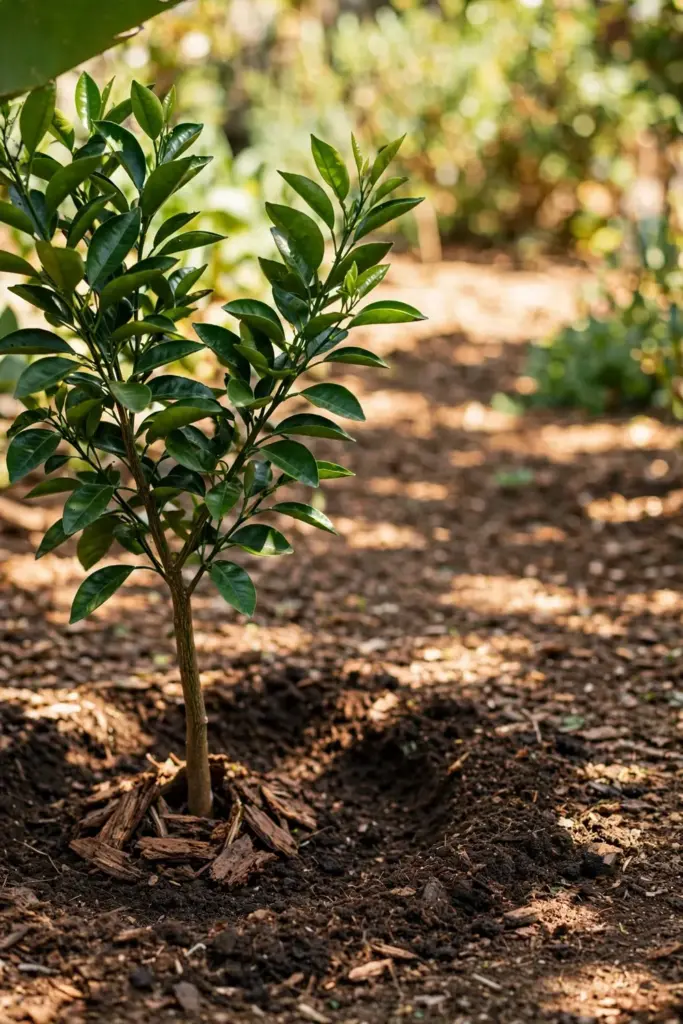
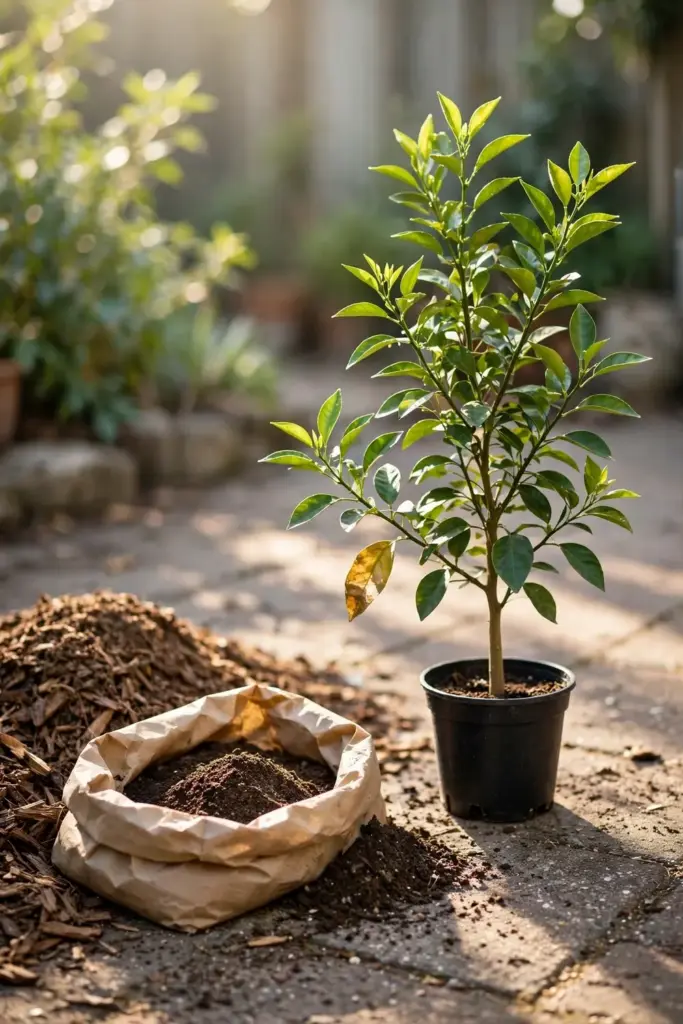
Work compost into the planting hole for drainage and feed, but skip fresh manure against the trunk. Citrus roots want air as much as water. A raised mound or a slight berm helps in heavy clay where water lingers.
If you are starting from the basics of feeding your soil well, the soil health foundation guide walks through the compost-and-mulch routine that citrus loves.
Spread a 2 to 3 inch mulch ring under the canopy, pulled back a hand’s width from the trunk. Mulch piled against bark holds moisture where fungi wait, and trunk rot kills more young citrus than drought does. Refresh the ring each spring as it breaks down into the soil it was feeding.
6. Grow It in a Pot Where Winters Freeze
In cooler zones, grow the tree in a container and treat it as a patio plant with a winter address indoors. This is the core skill of how to grow bitter orange tree outside the citrus belt, and it works reliably once the routine is set. Choose a pot with real drainage holes and a size you can still move: a 15 to 20 gallon pot suits a 6-foot tree, and casters or a plant dolly turn the seasonal move into a one-person job.
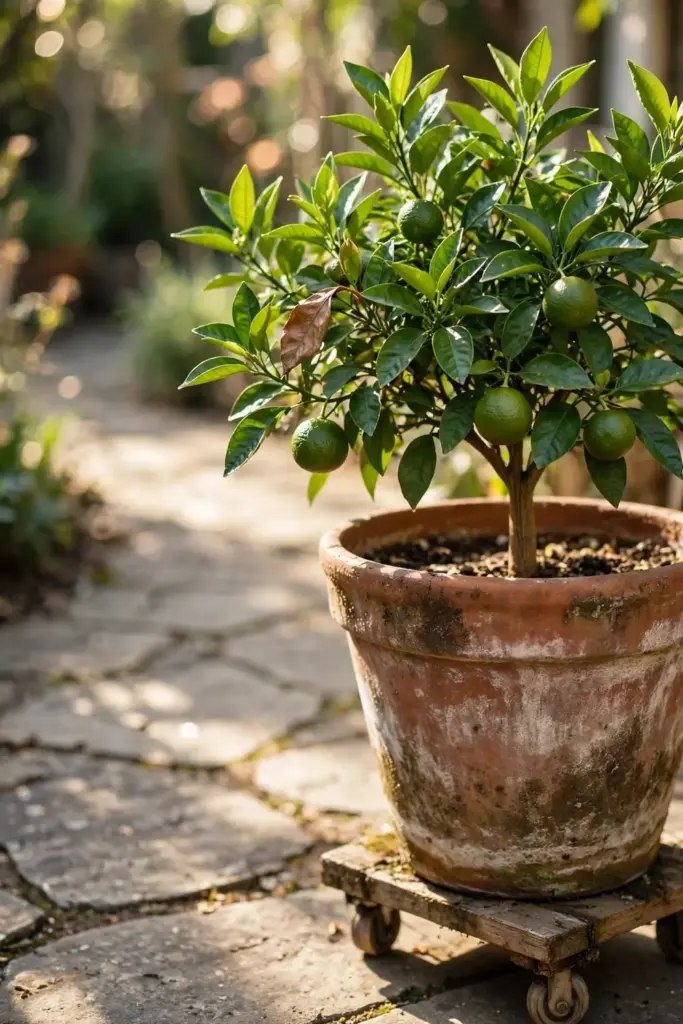
Pot in a loose, fast-draining citrus mix, not garden soil. Citrus hates wet feet, and the container has nowhere for excess water to escape. Set the pot where it catches morning sun and some wind protection; NC State notes that early morning sunlight matters because tender new growth freezes hardest after cold nights.
Expect slower growth in a pot. A container tree fruits younger but smaller, and it will ask for water more often than anything in the ground. Size the pot up gradually: move the tree to a container one or two sizes larger when roots circle the drainage holes, and handle the root ball gently each time, because bitter orange dislikes root disturbance and sulks after rough repotting. A final 20 to 25 gallon pot holds a productive 6 to 8 foot tree for years. For pot styling that keeps a big citrus looking intentional, the container garden ideas guide has arrangements that suit a statement tree.
7. Move the Container Inside Before Cold Nights Arrive
Bring the potted tree indoors when nighttime temperatures start sliding toward the mid 50s F. Cornell Cooperative Extension sets the indoor target at 55 to 65 F at night and 65 to 75 F by day, and warns that citrus takes damage once temperatures drop below 32 F. Waiting for the first frost is waiting too long.
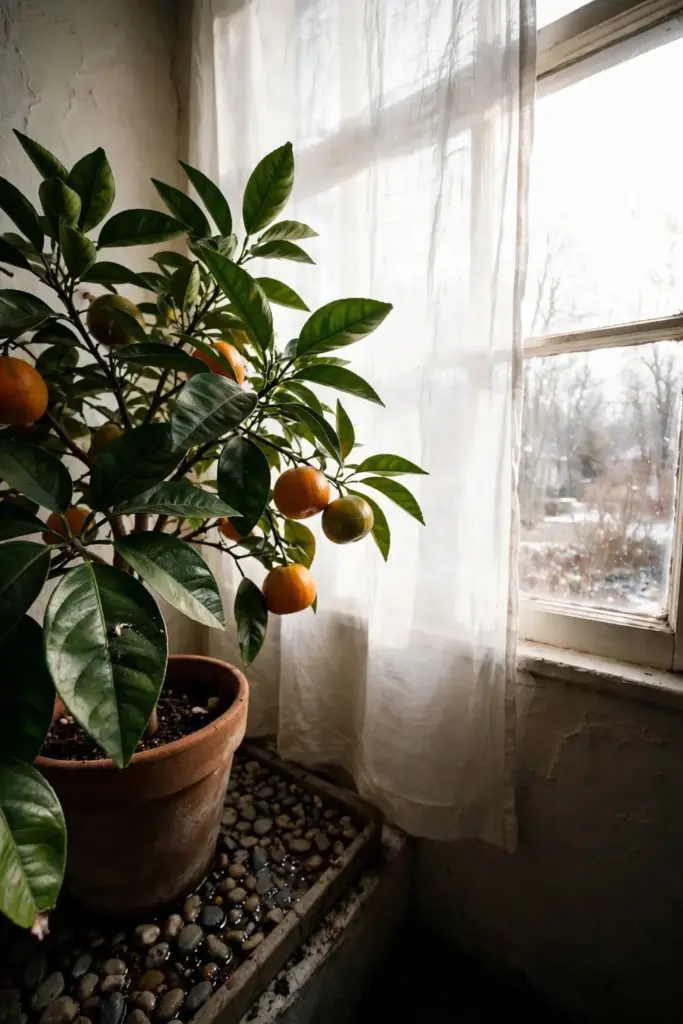
Place the tree at your brightest south-facing window and add a grow light if the days are short. Citrus wants 6 to 8 hours of direct light even in winter, and a dim corner produces the leggy, leaf-dropping tree that gives up by February. Indoor winter air runs dry, so raise humidity toward 50 percent with a pebble tray or a small humidifier; Cornell Cooperative Extension flags dry indoor air as a top winter stressor for container citrus. Expect some leaf drop after the move; the tree is adjusting, not dying. Cut watering back while it rests and stop fertilizing until spring growth resumes.
Move it back outside only after all frost danger passes, and harden it off over a week of gradually longer days outdoors.
8. Water Deeply, Then Let the Top Dry
Water the tree thoroughly, then wait until the top inch or two of soil dries before watering again. NC State’s guidance is “moist but not overly wet,” and overwatering is the fastest way to invite root rot. A moisture meter removes the guesswork in pots, where the surface can look dry while the root ball sits soaked.
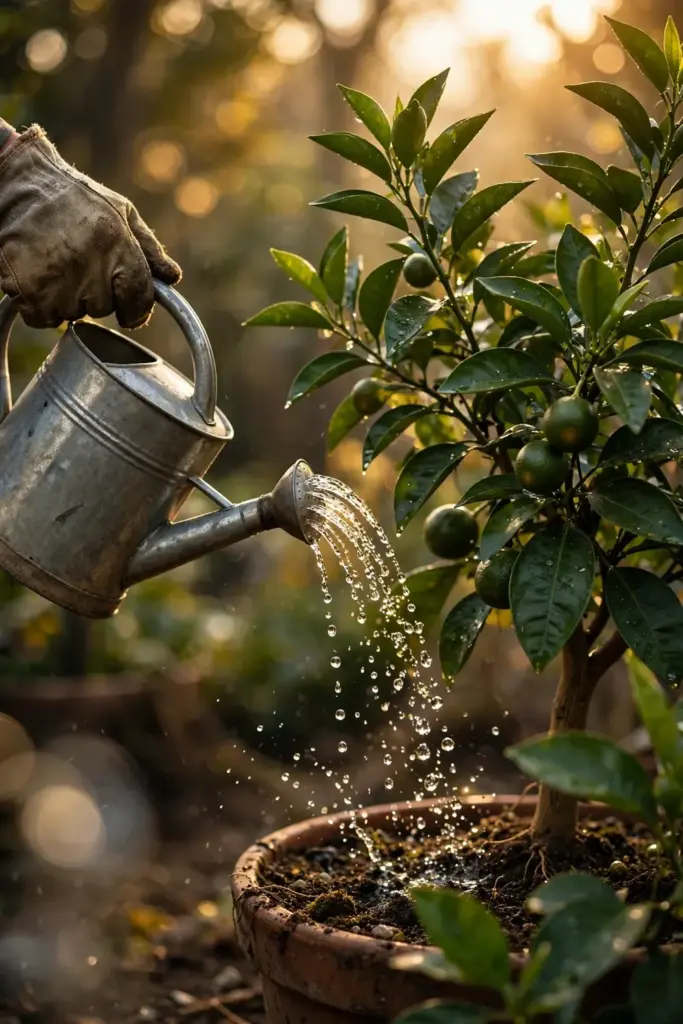
In summer heat a container tree may need water daily; in winter indoors it may go a week between drinks. Adjust to the pot, not the calendar. Mulch the soil surface with bark to slow evaporation, keeping the mulch a few inches from the trunk.
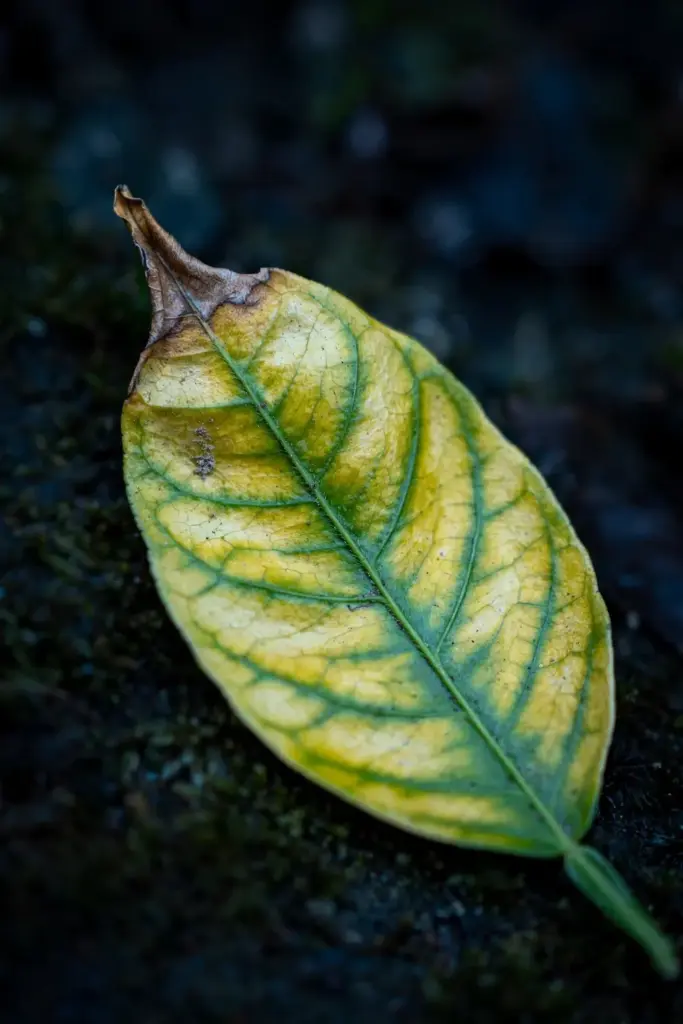
Learn the two failure modes by leaf. Leaves that yellow from the veins outward and drop usually mean too much water; leaves that curl, crisp at the edges, and drop mean too little. The first asks for drainage and restraint, the second for a deeper soak. Citrus forgives a missed watering faster than a drowned root ball.
The lemon fruit guide covers the same watering rhythm for a close citrus cousin, and the routine transfers directly.
9. Feed With a Citrus Ratio and Stop in Early Fall
Citrus are heavy nitrogen feeders. Cornell Cooperative Extension recommends a fertilizer with a nitrogen-heavy ratio such as 2-1-1 or 3-1-1, applied through the active growing season from spring to late summer. Stop fertilizing by early fall so the tree hardens off instead of pushing soft new growth into cold weather.
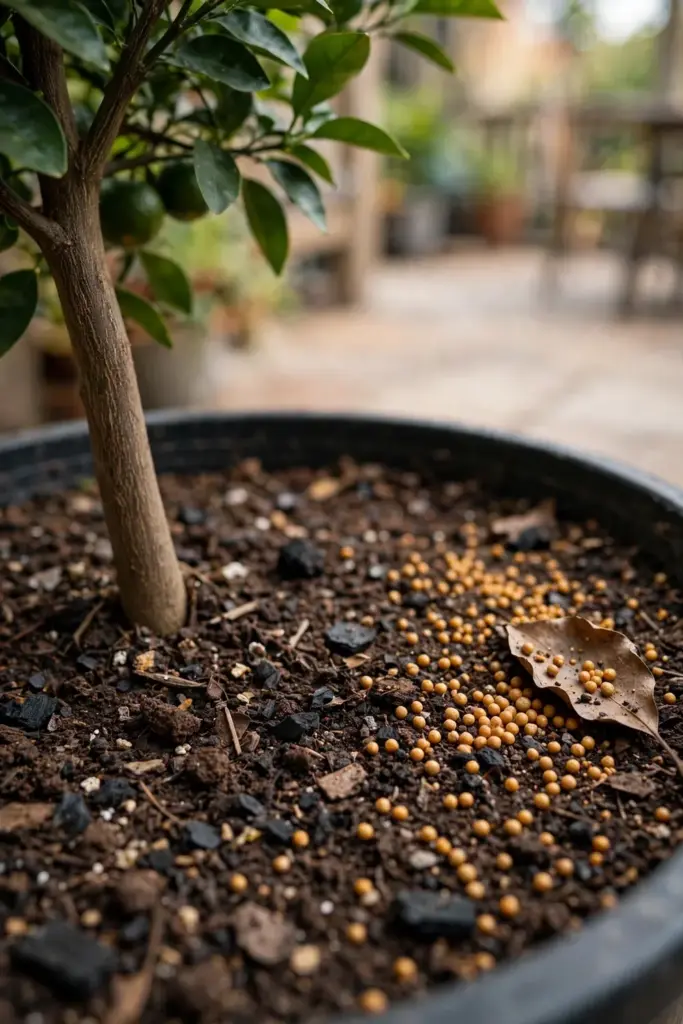
Yellow leaves with green veins signal a nutrient issue, often iron or magnesium in alkaline soil, but diagnose before dosing: overwatering causes similar yellowing. A slow-release citrus fertilizer under a mulch layer feeds steadily without the feast-or-famine cycle of liquid feeds. Organic growers can use composted manure or fish emulsion through the growing season; the ratio matters more than the brand. Whatever you feed, water it in well and never pile fertilizer against the trunk.
10. Prune for Shape, Light, and Air
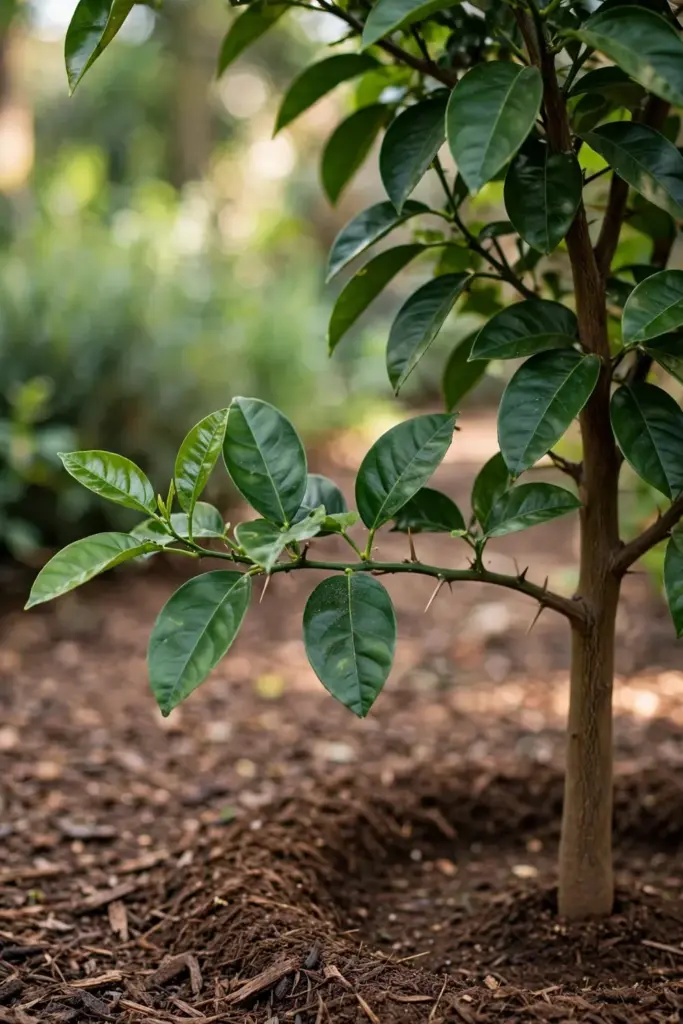
Prune in late winter or early spring before the growth flush. Remove dead, crossing, and inward-growing branches first, then shape for an open center that lets light reach the fruit. Bitter orange carries thorns, so wear gloves and long sleeves; the thorns are real and they do not forgive.
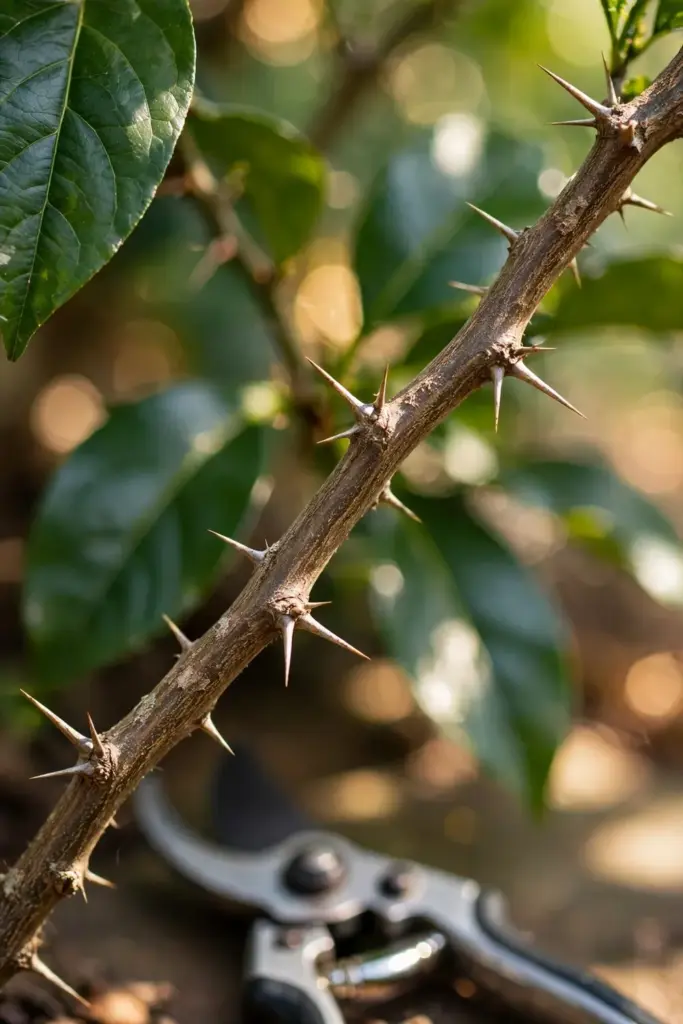
Keep the skirt pruned up off the ground to discourage soil splash and pests. A container tree needs annual shaping to stay balanced in its pot, and root-pruning every few years at repotting keeps a large tree in a manageable container.
Train a young tree to a single trunk with three to four scaffold branches, and remove competing leaders early. A clear structure in year two prevents the tangled crown that makes every later pruning session a thorny negotiation.
On grafted trees, watch for suckers shooting from below the graft union and rub them off while they are soft. Rootstock suckers grow faster than the grafted top and will take over the tree if ignored; a quick weekly check during the growing season keeps the variety you paid for in charge.
11. Watch for These Pests and Diseases
Anthracnose shows up as dark sunken spots on fruit and twigs, and overwatering invites root rot that slowly declines the tree. NC State names both as the main disease concerns, and both trace back to wet conditions. Fix the drainage before reaching for a spray.
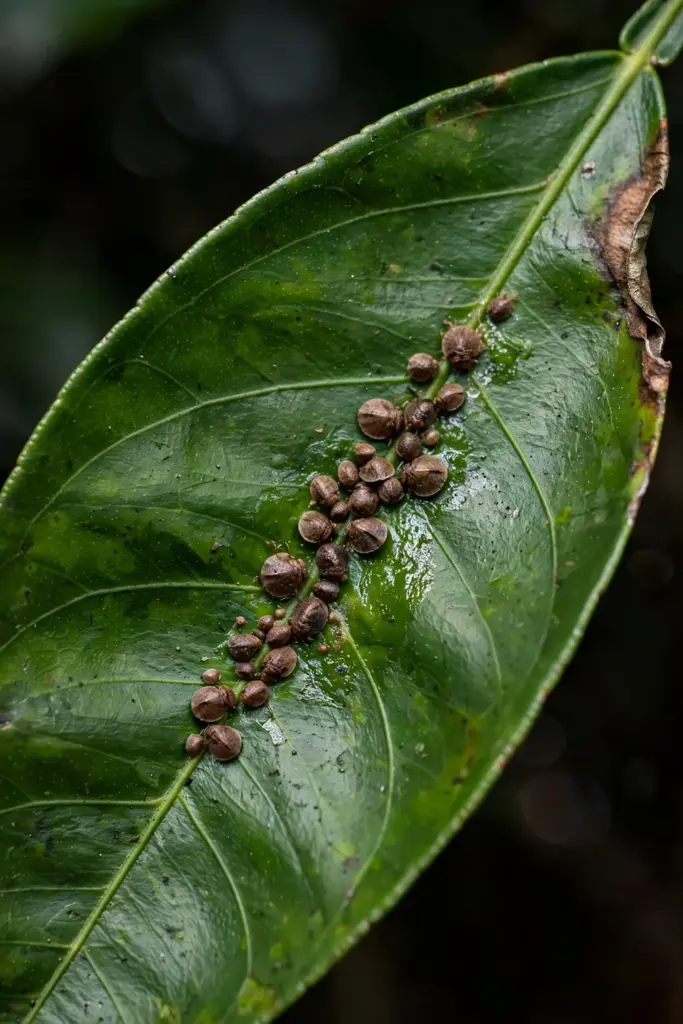
Scale insects, spider mites, and citrus leafminer attack stressed trees, and the problem worsens indoors where natural predators are absent. Wipe scale with horticultural oil, rinse mites off with a strong water jet, and prune out badly mined leaves. Check the undersides of leaves every time you water; catching pests early is the whole control program. When the tree comes inside for winter, quarantine it from your houseplants for two weeks and inspect twice, because a scale infestation discovered in January spreads to everything green in the room.
12. Harvest for Seville Marmalade Season
Pick the fruit when it turns fully orange and feels heavy for its size, usually in late winter. The fruit is far too bitter to eat fresh; that bitterness, plus a thick pectin-rich peel, is exactly what makes the world’s best marmalade. The University of Arizona Arboretum notes the fruit is most commonly used for marmalade, with the juice flavoring fish and the peel oil flavoring liqueurs.
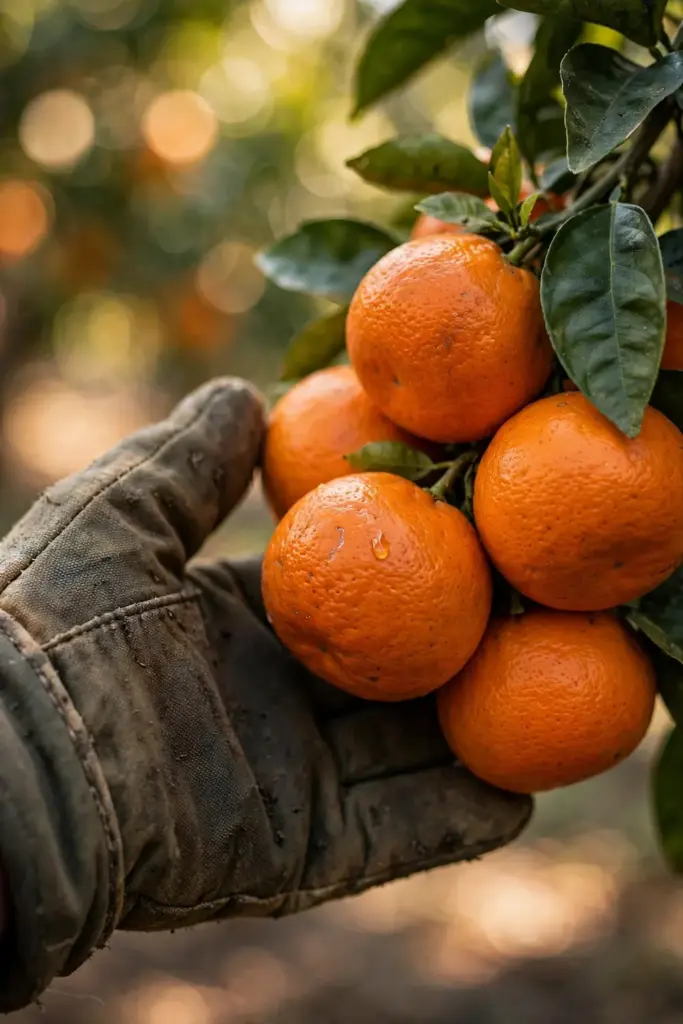
Taste one segment raw exactly once, so you understand what you are working with, then commit the crop to the pot. A mature tree yields generously; a dozen pounds of fruit makes a winter’s worth of jars. Pick over several weeks rather than all at once, and take the fruit with a short stem attached to avoid tearing the peel. Fruit left on the tree holds for weeks, so harvest to your cooking schedule, not the tree’s.
13. Turn the Harvest Into Marmalade
Cut the fruit in half, squeeze out the juice, and slice the peel thin. Simmer peel, juice, pulp, and water until the peel turns translucent, then add sugar and boil to the set point. Test the set on a chilled saucer: a spoonful that wrinkles when pushed is ready, and a spoonful that stays liquid needs more boiling. Bitter orange peel sets firmly because it carries more pectin than sweet orange peel, which is why Seville marmalade has its famous bite and gel. Undercooked marmalade stays runny; overcooked turns dark and loses the bright bitter note. Work in small batches your first season, because marmalade rewards rhythm and rhythm comes from repetition.
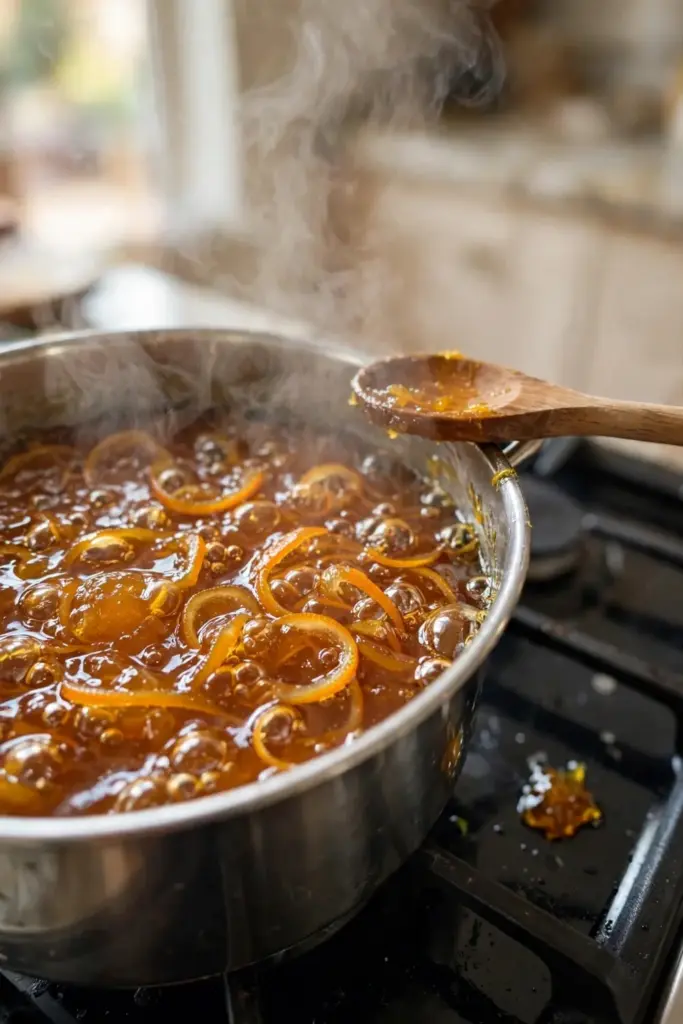
Can the jars in a water bath for pantry storage. Label with the year; the flavor deepens over the first months. Candied peel uses the same harvest: blanch the strips three times, simmer in syrup, and dry them for baking.
Do not waste the rest of the tree. The flowers distill into neroli oil and scent the whole garden in spring; the leaves flavor teas and the peel, dried and ground, seasons liqueurs. The University of Arizona Arboretum lists marmalade first, then juice for fish, then the peel and flower oils, which is a fair ranking of what a home grower will actually use.
14. Use It as Rootstock for Sweet Citrus
Bitter orange became the standard rootstock for grafting sweet citrus because of its disease resistance and hardiness, a fact NC State Extension records plainly. Grow a vigorous seedling, then graft a sweet orange, lemon, or mandarin bud onto it the following year.
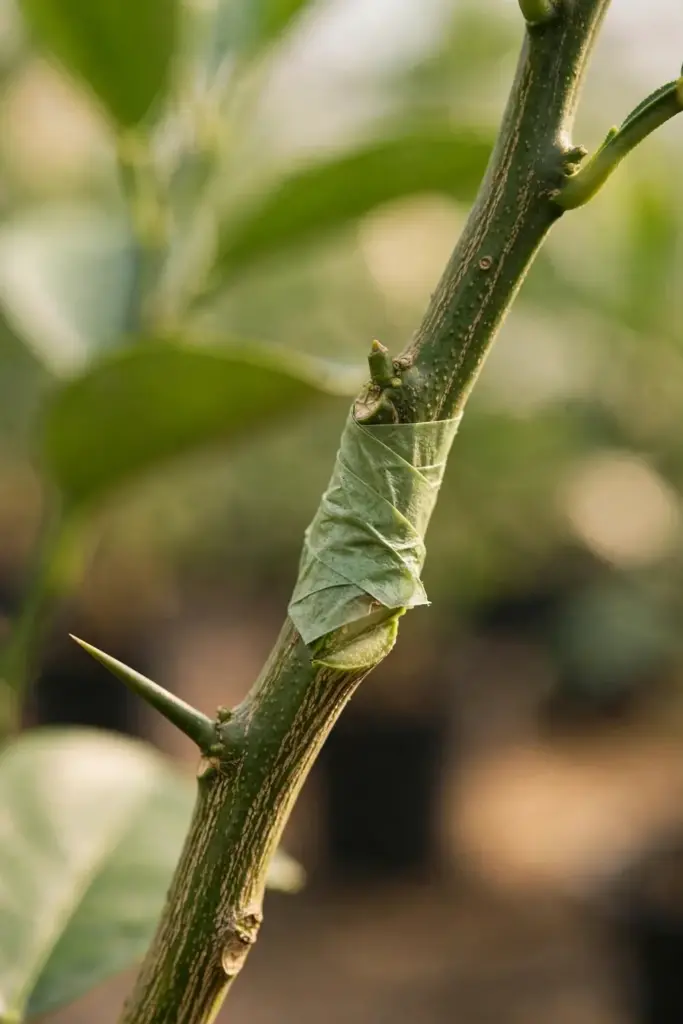
This lane turns the long seed-to-fruit wait into a strategy: the seedling year builds roots, and the grafted bud fruits years sooner than the seedling top would. Home grafters get a hardy, proven root system under any citrus variety they fancy. Bud-graft in late summer when the bark slips easily, wrap the union snugly, and keep the rootstock’s own shoots rubbed off so all energy feeds the graft. One healthy seedling becomes the foundation for a whole collection.
15. Avoid These 7 Mistakes
- Eating the fruit fresh and judging the tree by it. The fruit is a cooking ingredient, not a snack.
- Planting in a frost pocket. Cold air pools low; plant on a slight rise and catch morning sun.
- Drowning the roots. Soggy soil causes root rot faster than drought causes wilt.
- Fertilizing into fall. Late nitrogen makes tender growth that freezes.
- Leaving it out until frost. Move pots in while nights are still in the 50s.
- Expecting sweet-orange fruit from a seedling. Polyembryony usually clones the parent, but verify the parent tree was actually a bitter orange.
- Skipping the thorn warning. Prune with gloves; the thorns puncture.
16. Troubleshoot the Common Problems
Leaves yellowing and dropping after the indoor move. Normal adjustment. Reduce water, add light, and wait; do not fertilize a resting tree.
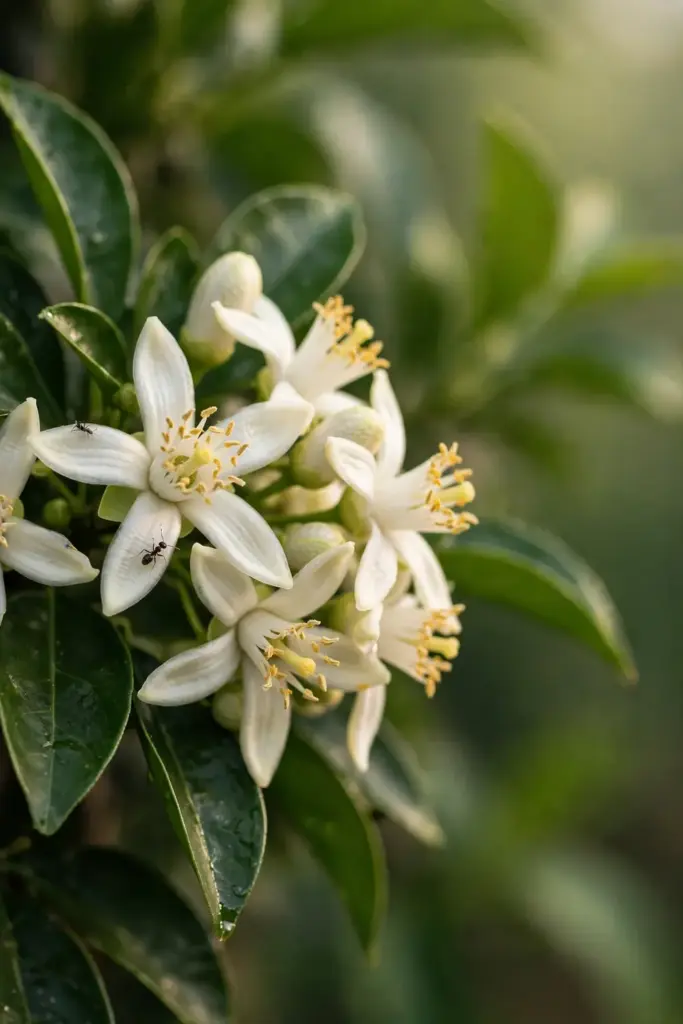
Flowers but no fruit. Citrus is self-fertile, so pollination is rarely the issue. Check light levels and whether a cold snap hit the bloom; one cold night can abort a whole flush.
Fruit drops while small. Usually water stress or a young tree shedding what it cannot support. Steady watering fixes the first; time fixes the second.
Sticky leaves with black soot. Scale or aphids feeding overhead. Treat the insects and the sooty mold washes off.
Twigs dying back after winter. Prune to live wood in spring. Dieback from a freeze the tree barely survived is common on container trees that stayed out one night too long.
New growth looks pale and stunted in spring. The tree likely needs feeding after a hungry winter indoors. Resume the citrus fertilizer as growth starts, and check that the pot has not become root-bound over winter.
Fruit tastes bland instead of sharply bitter. The fruit was picked under-ripe or the tree is not a true bitter orange. Wait for full color and weight, and confirm the variety tag; a sweet-orange seedling masquerading as Seville explains a disappointing jar.
17. Frequently Asked Questions
The tree is not banned anywhere as a garden plant. The confusion comes from bitter orange extract in weight-loss supplements, which regulators have scrutinized for its stimulant synephrine. Growing the tree, cooking the fruit, and making marmalade are ordinary gardening and kitchen activities with no restrictions.
You can, but you will not want to. The fruit is intensely bitter and sour, which is why every traditional use cooks it with sugar: marmalade, candied peel, and liqueurs. Think of it as a cooking citrus like a lime, not a snacking citrus like a navel orange, and plan your harvest around the preserving pot rather than the fruit bowl.
Plan on 4 to 6 years from a seedling in good conditions, longer in a pot or a short season. Grafting a bud onto your seedling rootstock shortens the wait, since the grafted wood is already mature. Buy a grafted tree if you want fruit in 2 to 3 years instead.
Only if your winters stay nearly frost-free. The tree is frost-tender and tolerates only short, light freezes. In zone 9 and warmer it can live in the ground; everywhere colder, grow it in a container and overwinter it indoors above freezing.
That is polyembryony, the citrus trait where one seed carries multiple embryos. Most are nucellar clones of the mother tree, and one may be a sexual seedling that differs. Keep the strongest seedling; it is almost always the true-to-type clone.
No. Citrus trees are self-fertile, and a single bitter orange tree sets fruit on its own without a partner. Bees help move pollen, but the tree does not require a pollination partner the way some apples and pears do. One tree in a pot on a sunny patio fruits just as reliably as an orchard row.
18. Where to Go From Here
Start with a fresh fruit and a warm windowsill. One season later you have a young tree, and with sun, drainage, and a winter plan it pays you back in marmalade jars for decades. The marmalade is the point. The tree asks little in return: honesty about the cold, restraint with the watering can, a pot big enough to move. That is the whole recipe for how to grow bitter orange tree at home.