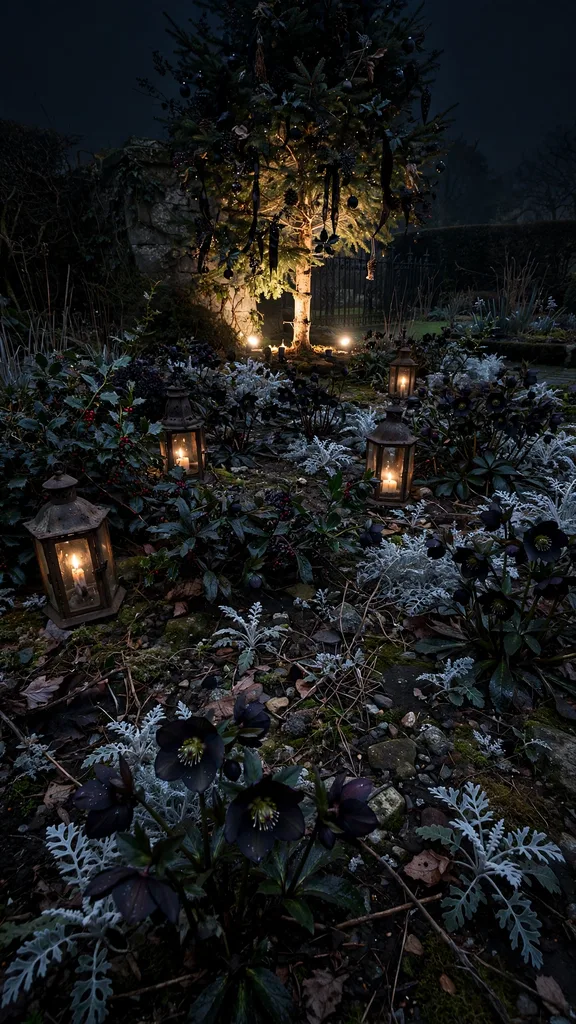
The gothic Christmas garden trades red and gold for black foliage, bruise purple blooms, silver leaves, and candlelight, and December is its best month: bare branches, early dark, frost, and the year’s darkest plants all arrive together. Most gothic gardens fail in the daytime, planted as a novelty corner that reads as a hole in the border; the ones that work are built as a palette, black, purple, silver, and bone, repeated until it looks like a decision. I plant dark foliage every year for exactly this effect, and the winter garden carries it better than summer ever does. These 45 ideas cover the dark plants that hold December, the night styling that lights them, and the surfaces that carry the mood indoors.
Gothic Ideas at a Glance
| Need | Start With | Why It Works |
|---|---|---|
| December dark blooms | Items 1 and 4 | Black hellebores and pansies flower in the season itself |
| Instant structure | Items 5 and 7 | Dark elder and black stemmed dogwood carry the winter frame |
| Night impact | Items 17 and 18 | Uplighting and candlelight turn dark foliage dramatic |
| Indoor gothic | Items 28 and 33 | Dark table blooms and black branches bring the palette inside |
| Whole-garden effect | Items 36 to 40 | Palette rules and texture keep dark planting from going flat |
1. Black Hellebores for December Bloom
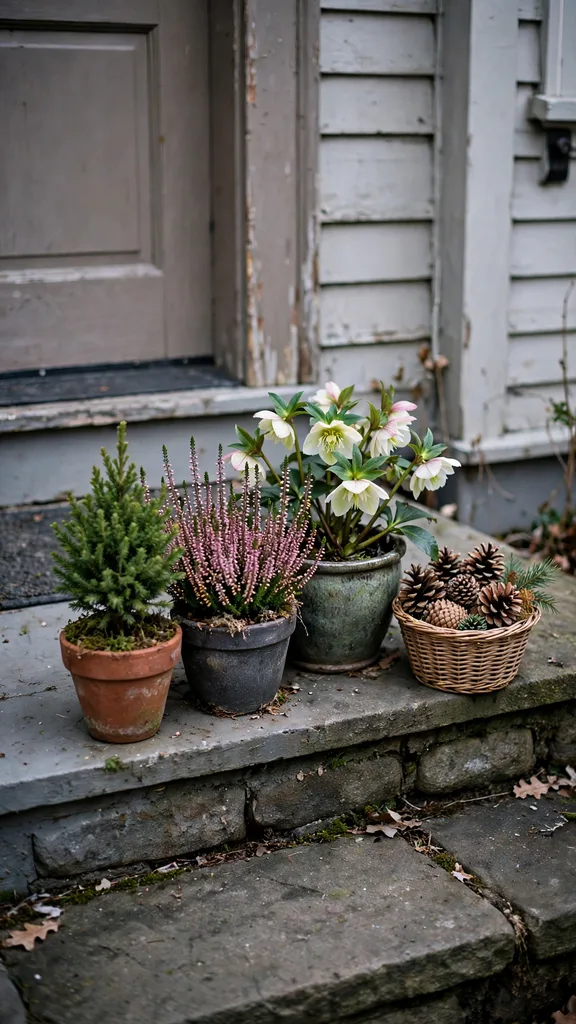
Dark flowered hellebore hybrids, in shades from slate purple to near black, are the gothic garden’s December bloom, flowering when almost nothing else does. Plant them where the path passes, in pots or at a bed’s front edge, since their flowers face down and want looking at closely.
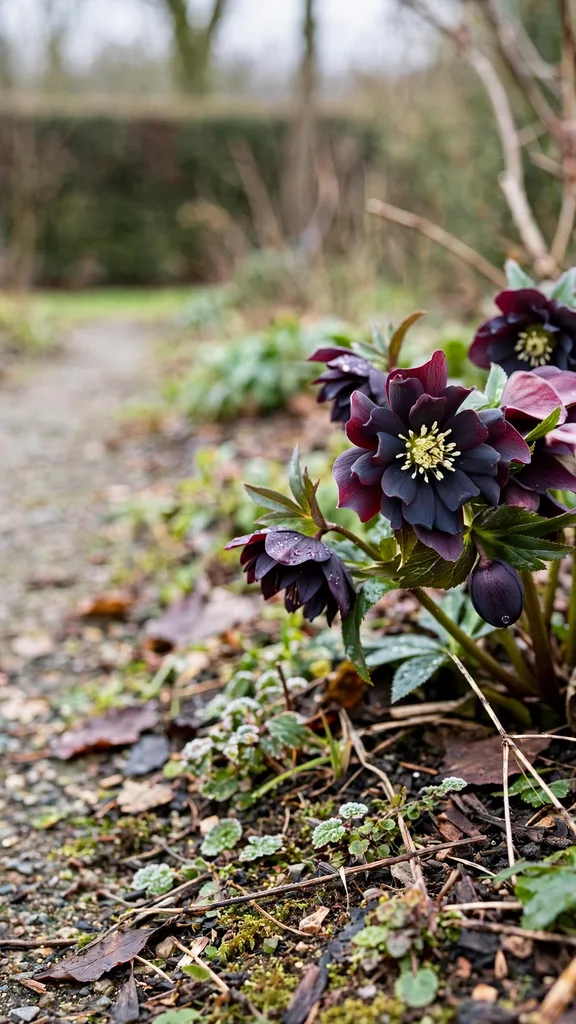
The dark hybrids deepen in color in cold weather, and a clump against pale gravel or snow is the palette in one plant. Cut whole stems for the indoor table, where the black blooms read as velvet.
2. Black Mondo Grass Edging
Black mondo grass makes a ribbon of true black foliage that runs all winter, edging paths and pots with the darkest line a garden can draw. It is slow, so plant it in drifts bought once and divided over years, and edge the entrance path first.

The NC State Extension Gardener Plant Toolbox entry for black mondo grass covers the plant’s habit and siting; its black berries and blacker leaves make it the gothic palette’s ground line, and it never needs cutting back.
3. Dark Heuchera for Winter Pots
Dark heucheras in near black purple hold their foliage rosettes through winter and fill pots with color that does not depend on flowers. Group three dark pots by the door with a silver one among them, and the entrance is gothic before a single decoration appears.
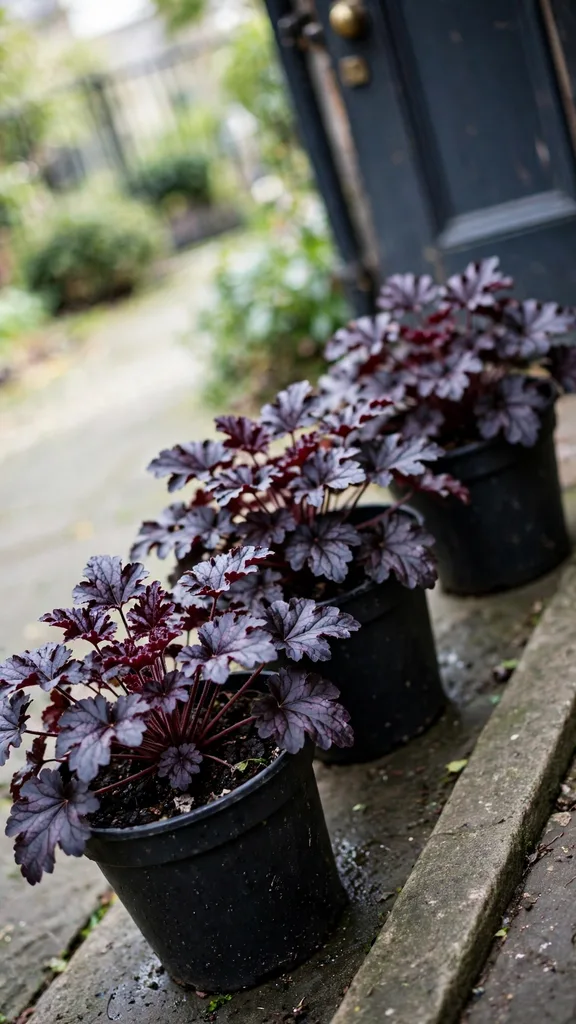
Heucheras shrug off frost in pots that would kill softer plants. Their ruffled leaves catch candlelight and uplighting with texture the flat darks cannot give.
4. Black Pansies and Violas
Black flowered pansies and violas bloom through the mild spells of winter in pots and window boxes, small flowers of true sooty black with a gold eye. A box of nothing but black violas under a window is the gothic garden’s easiest December display.
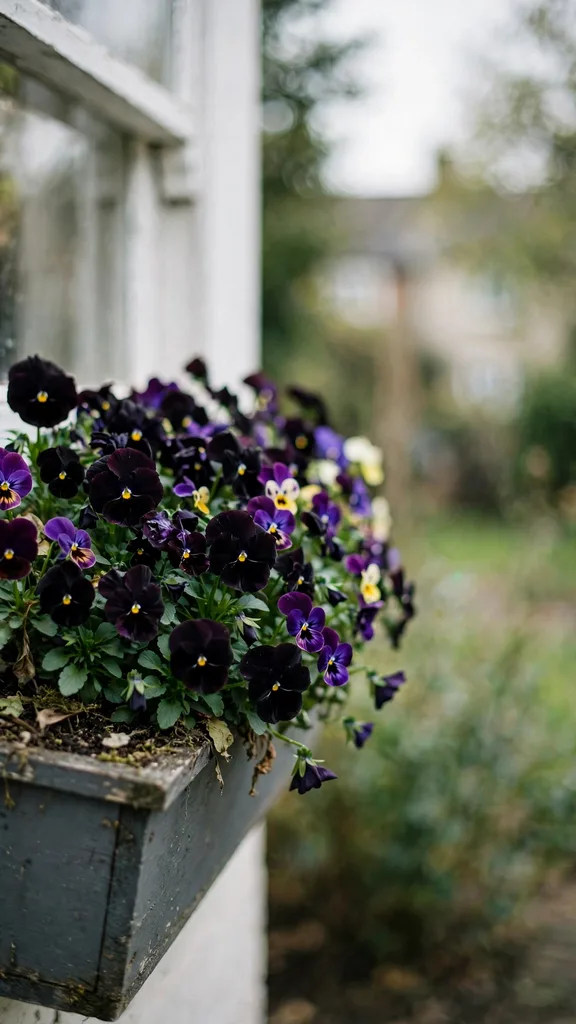
Deadhead them and they flower on into spring. Plant them thick, since single black flowers vanish at distance while a drift reads as a shadow that blooms.
5. Black Lace Elder for the Frame
The black lace elder carries finely cut, near black foliage all season and stands in winter as a dark branched frame against the sky. The NC State Extension Gardener Plant Toolbox entry for black elder describes the plant’s size and siting, which matter, since it becomes a small tree.

Its flat pink summer flowers are off palette and easily enjoyed anyway; by December the plant is architecture. Underplant it with black mondo and the corner builds itself.
6. Purple Smoke Bush in Winter
A purple smoke bush keeps its dark red purple leaves late and then stands as a rounded cage of fine dark branches, beautiful under frost. Its winter outline, lit from below, is one of the gothic garden’s best night shapes.
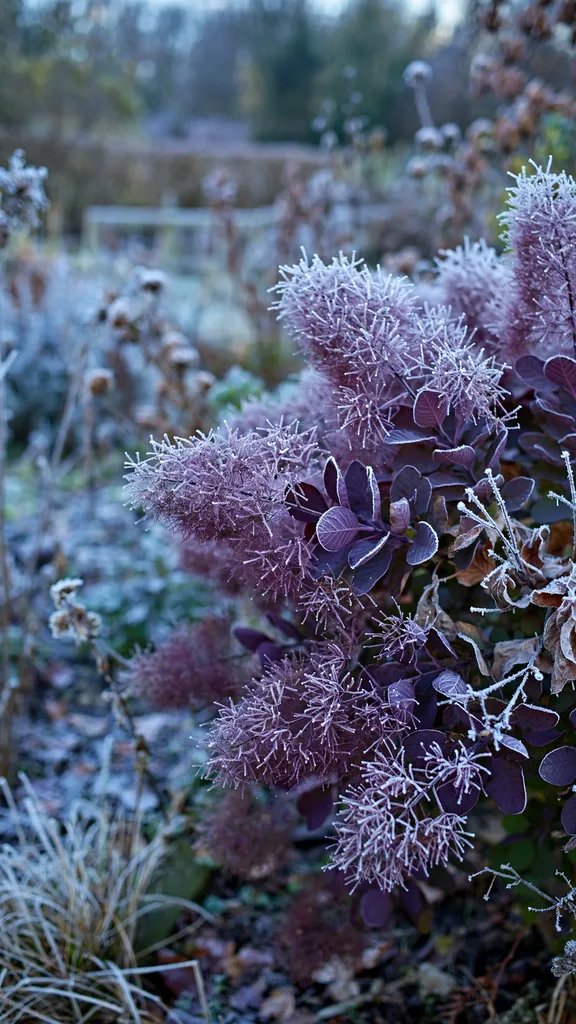
Prune it hard in spring for foliage or leave it to tree out for the branch cage; the gothic garden wants the cage. A smoke bush behind pale birch stems gives the bone and bruise contrast in one view.
7. Black Stemmed Dogwood
Dark stemmed dogwood varieties carry polished, near black purple stems all winter, revealed when the leaves fall. A thicket of black stems in a pot or bed corner, cut back hard each spring for fresh growth, is winter structure in the palette’s darkest tone.

The stems cut well for indoor vases, where they stand for weeks. Frost on black stems photographs and reads better than any red stemmed planting in a gothic scheme.
8. Dark Ornamental Kale
Purple black ornamental kales deepen in color with every frost, building rosettes of frilled dark leaves that peak in December. Plant them in pots and bed fronts where their color carries the display, and replace them only when spring bolts them.

Kale is the gothic garden’s cheap bulk: a tray of seedlings plants a whole scheme for little money. Among pale stones or in black pots the rosettes read as dark roses.
9. Black Tulips Planted in November
The darkest tulips are planted in autumn for a spring payoff, and a gothic garden plans its April in November: drifts of near black tulips ordered and planted while the December garden is styled. Note the spots in the planting plan so the spring display lands inside the palette.
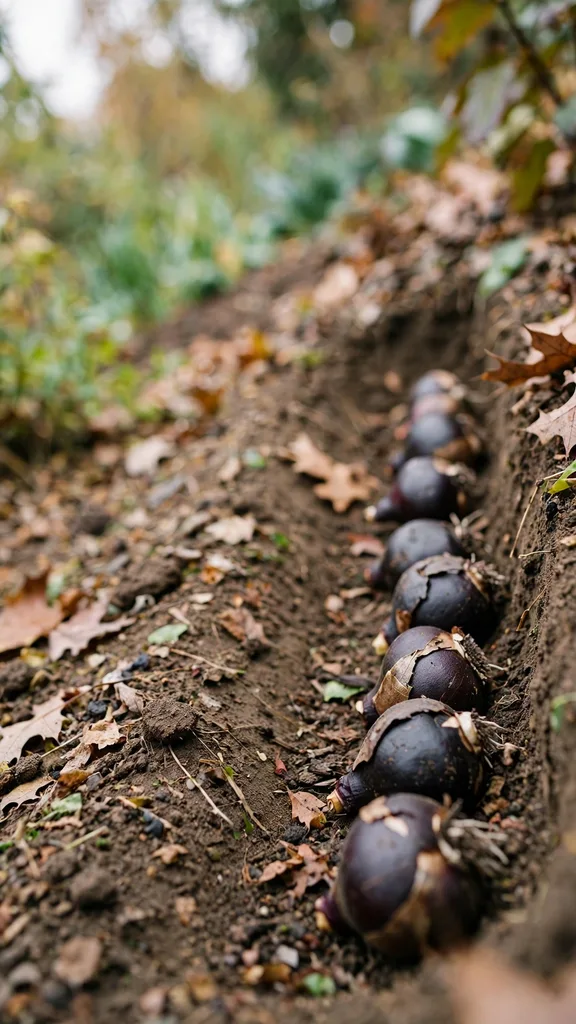
Spring’s black tulips among dark hellebores and black mondo close the gothic year. The planting itself is a November job, done with the winter pots, and costs one muddy afternoon.
10. Dark Hollyhock Stems Standing
Black hollyhocks leave tall seed stems standing into winter, dark columns with rattling pods that hold frost and catch low light. Leave the best stems standing in the gothic bed rather than tidying them, and the summer flower becomes winter architecture.
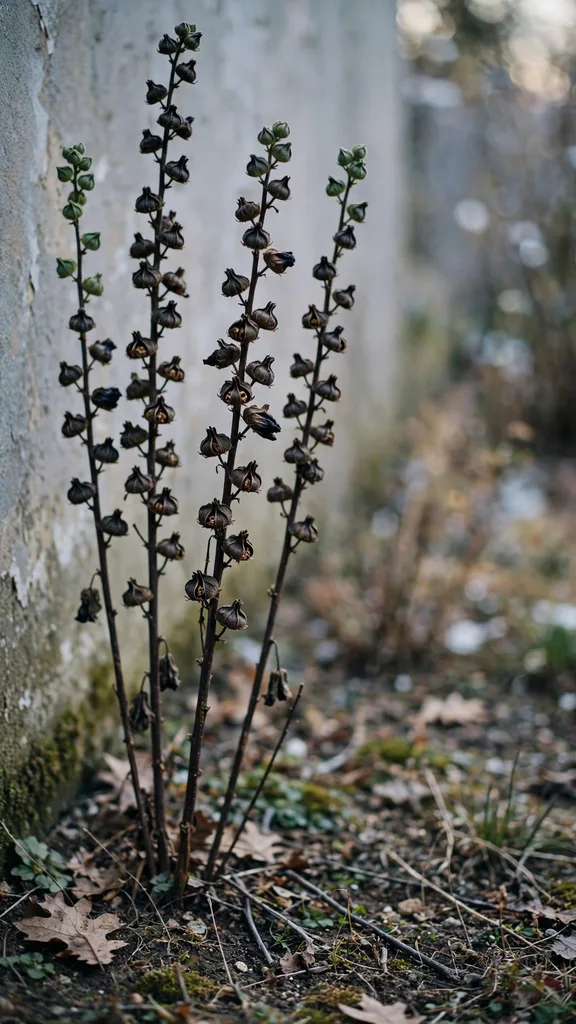
Shake the seed into the bed’s edges for next year’s plants. The standing stems also mark where the hollyhocks live, which the spring weeder in you will thank the winter stylist for.
11. Mahonia With Blue Black Berries
Mahonia carries spiky evergreen leaves, yellow winter flowers, and blue black berries in the same season, a whole gothic palette on one shrub. Its berries dust with a pale bloom that reads as frost even when there is none.
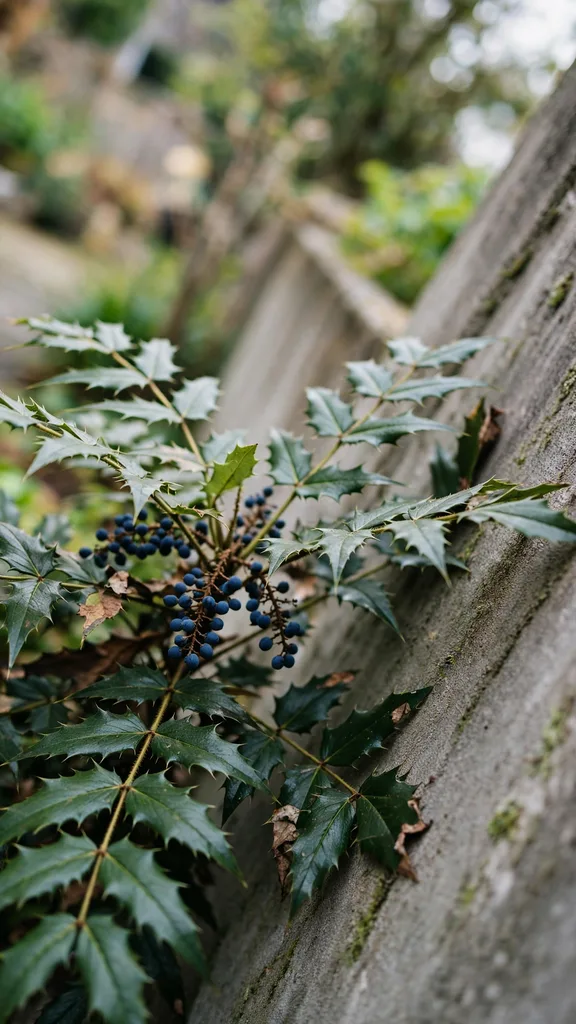
Plant it where its spines are not brushed daily, by a wall or at a corner. Birds take the berries late in winter, which keeps the display working after Christmas.
12. Black Bamboo in a Pot
Black bamboo’s canes darken to polished ebony as they age, and a pot of it by the door gives the gothic entrance height, movement, and sound. Grow it always in a container, since running bamboo in open ground is a decision the whole street lives with.
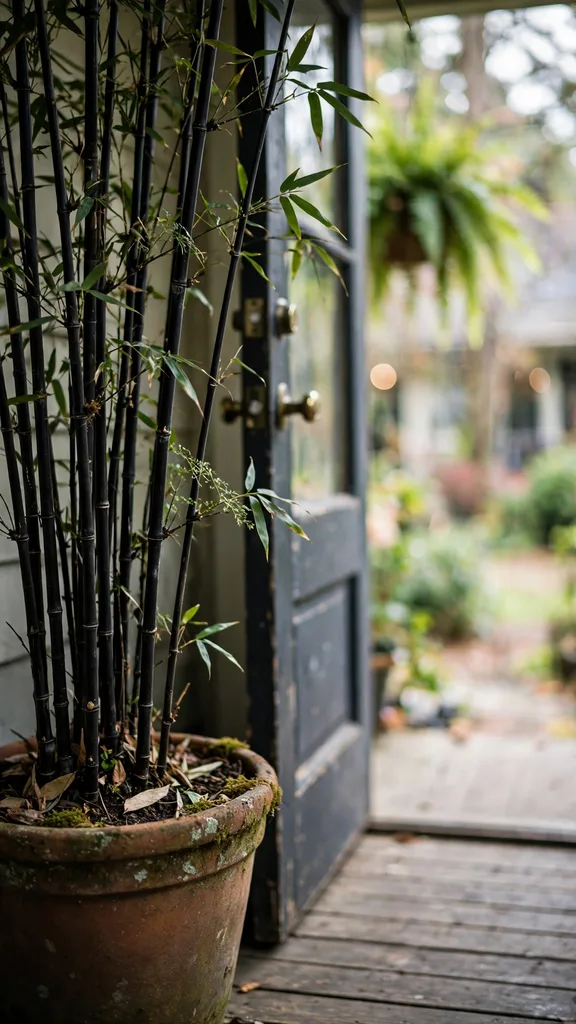
The canes darken over two seasons, so buy the oldest clump affordable. Its leaves stay green, which in this palette counts as the accent color.
13. Dark Sempervivum Rosettes
Dark tipped sempervivums build rosettes edged in black purple that deepen in cold, packed into shallow pans and stone troughs for the gothic table and doorstep. They ask for grit, drainage, and neglect, and they multiply into spares every year.
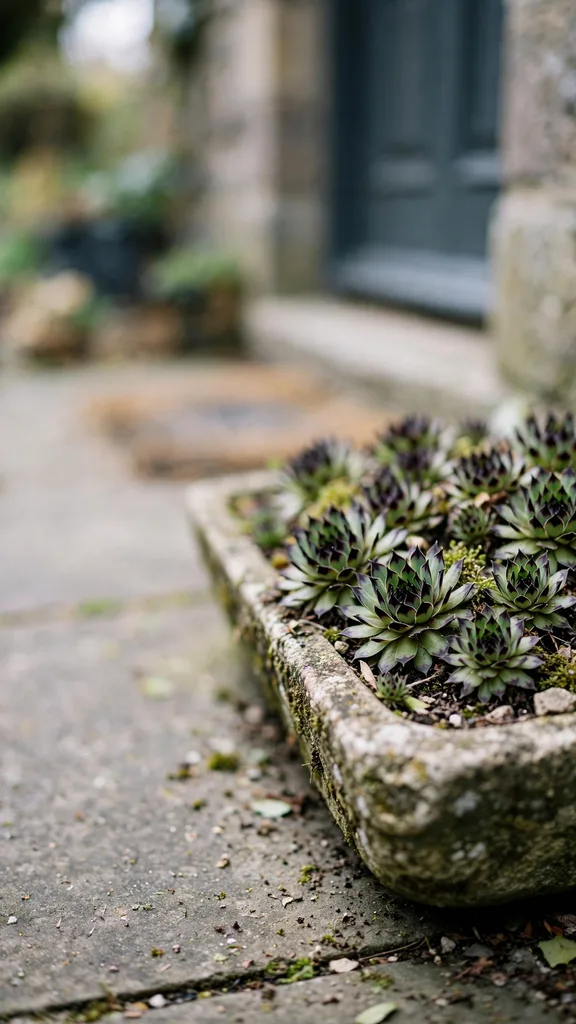
A trough of dark rosettes dusted with frost is a table display that lives outdoors. Offsets pot up as the darkest small gifts the garden makes.
14. Black Berries of Privet and Ivy
Privet and ivy carry their black berries in winter, clusters of jet beads on bare or evergreen stems that cut beautifully for the gothic wreath and vase. Leave most standing for the birds and cut the hidden stems at the back.
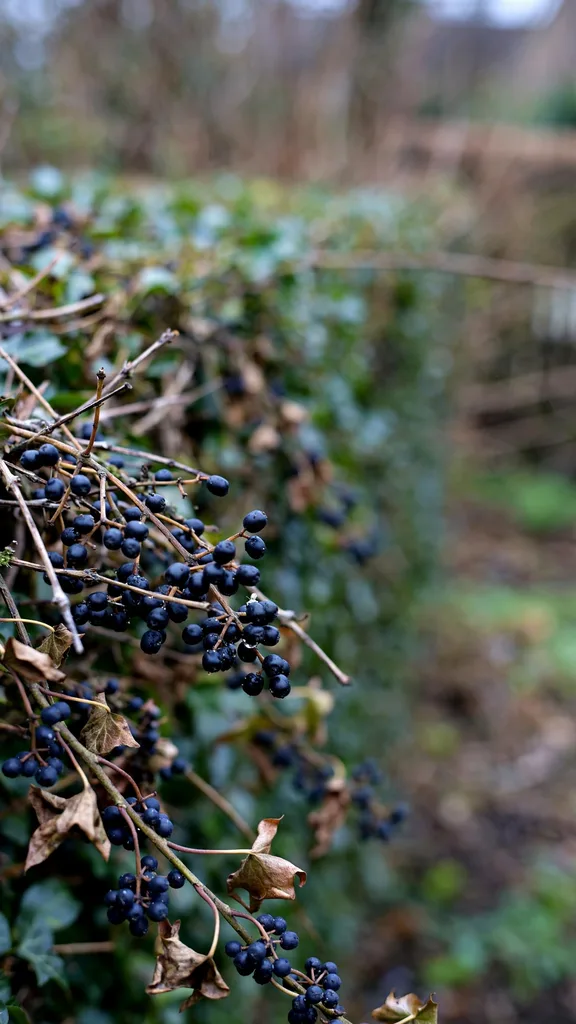
Ivy berries ripen as the flowers of almost everything else end, feeding birds in the hungry months. In arrangements the black clusters do the work pearls do in jewelry.
15. Purple Sage and the Dark Herbs
Purple sage, dark opal basil’s winter hardy cousins, and the bronze fennels make a gothic herb corner that flavors the winter kitchen. Purple sage holds its color in a pot by the door and cuts all winter for roasts and wreaths.
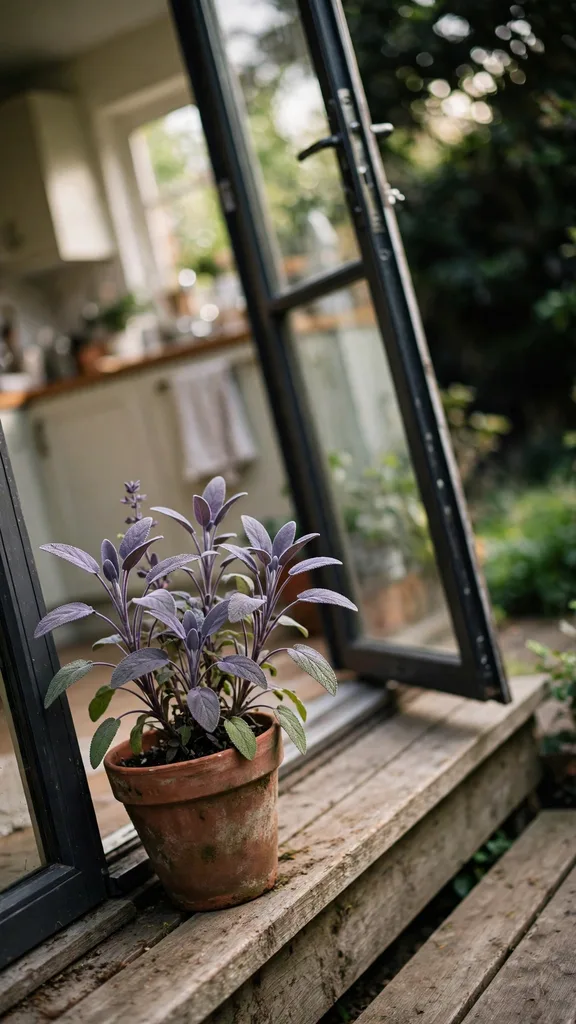
Dark herbs keep the gothic garden useful, which keeps it planted. A sprig of purple sage on each plate is the palette served at dinner.
16. Uplighting the Dark Trees
One spotlight aimed up into a dark tree or the smoke bush’s branch cage turns the gothic garden on at night; uplighting is the single highest value light in a dark scheme. Aim it from inside the bed so the source hides and only the branches glow.
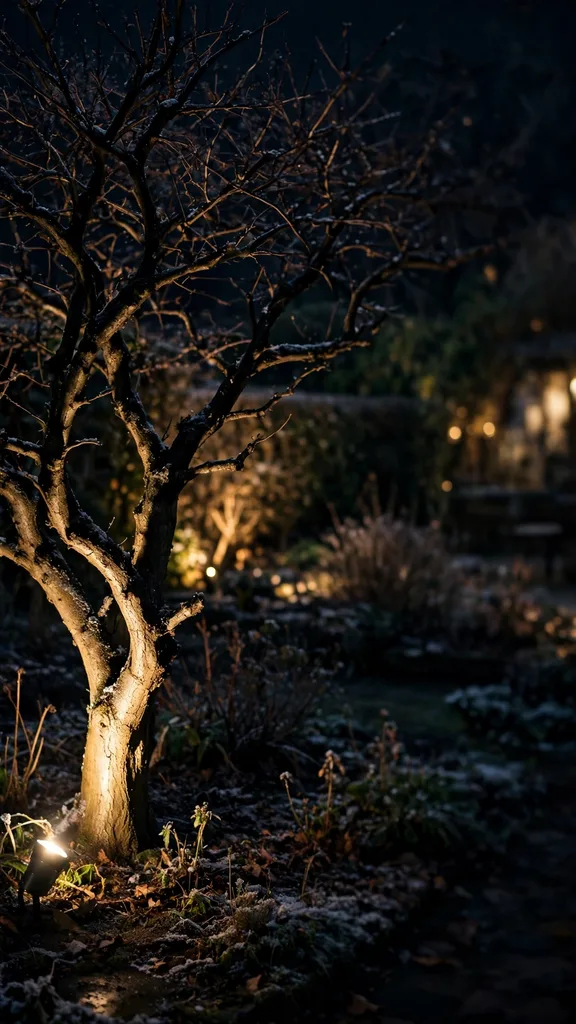
Keep uplights warm and few. A gothic garden lit like a stadium is a car park with plants; one lit tree and darkness around it is the whole effect.
17. Candlelight in Iron Lanterns
Battery candles in black iron lanterns give the gothic garden its flicker without a flame near dry evergreen. Hang them from the bare tree, stand them on the table and steps, and group them in threes where the path turns.
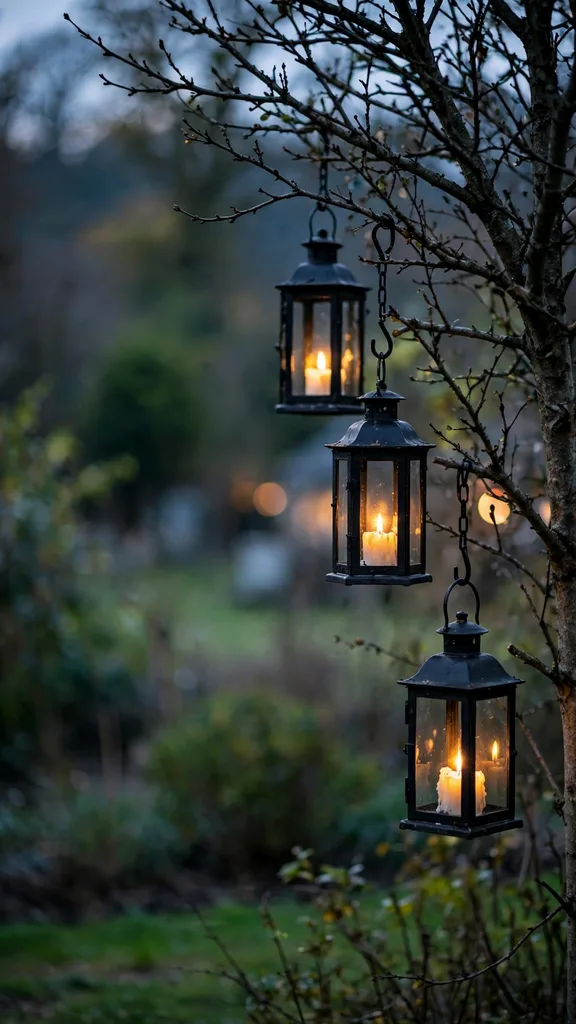
Real candles belong in jars on the table, watched, and out by bedtime. The iron lantern silhouette matters as much by day, a black shape the garden wears well.
18. Moon Garden Contrast
A gothic garden needs its moon garden moments: white hellebores, silver leaves, and pale stems set among the darks so the eye can read the black. Contrast is what separates gothic from merely gloomy, and the white is planted, not added.
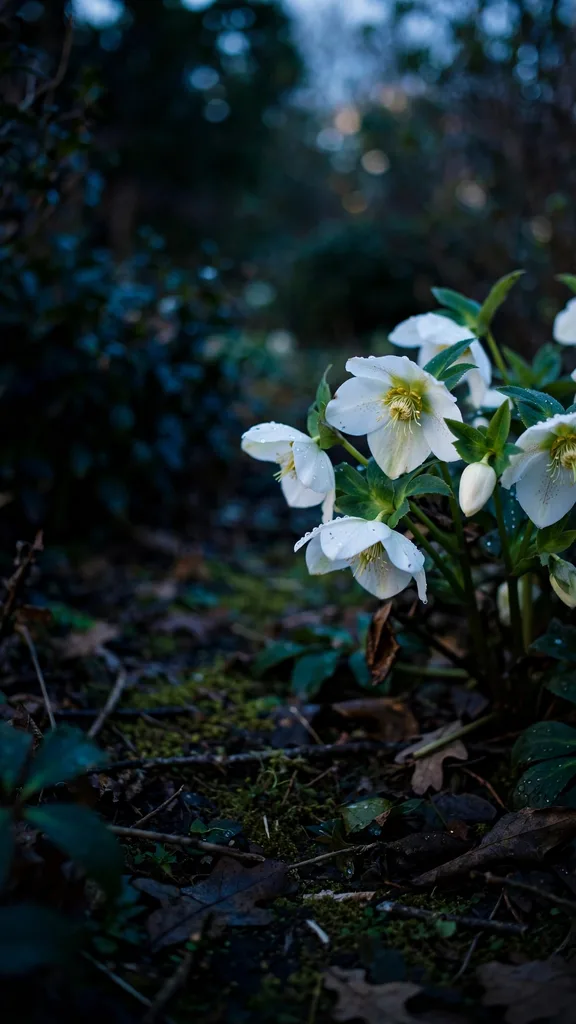
A drift of white Christmas roses at the black bed’s edge glows at dusk without a single light. Plant the whites where the moon or a window’s light reaches them.
19. Black Pots and Urns
Black pots unify every planting in the scheme, turning mixed plants into one dark display. Paint sound old pots matte black in an afternoon, group them in threes by the door, and the gothic garden gains its furniture.
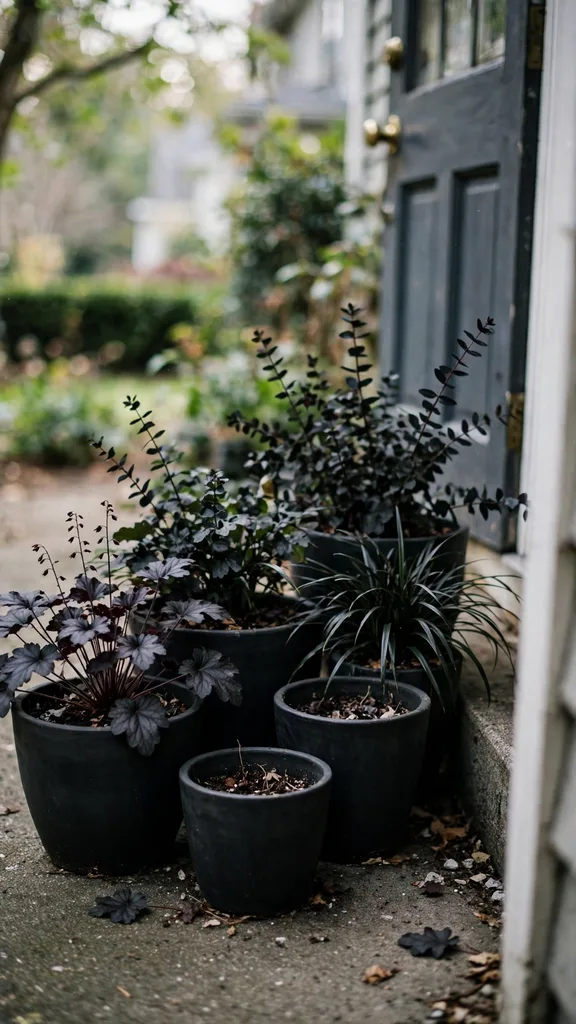
Matte black disappears, which is the point: the plant shows, the pot does not. One oversized black urn, even empty, anchors an entrance better than six small decorations.
20. Iron Obelisks and Trellis
Black iron obelisks and trellis panels stand in the winter beds as drawn lines against the sky, holding the garden’s shapes while the plants rest. In December they carry a string of warm lights or a dark wreath and look designed, not stored.
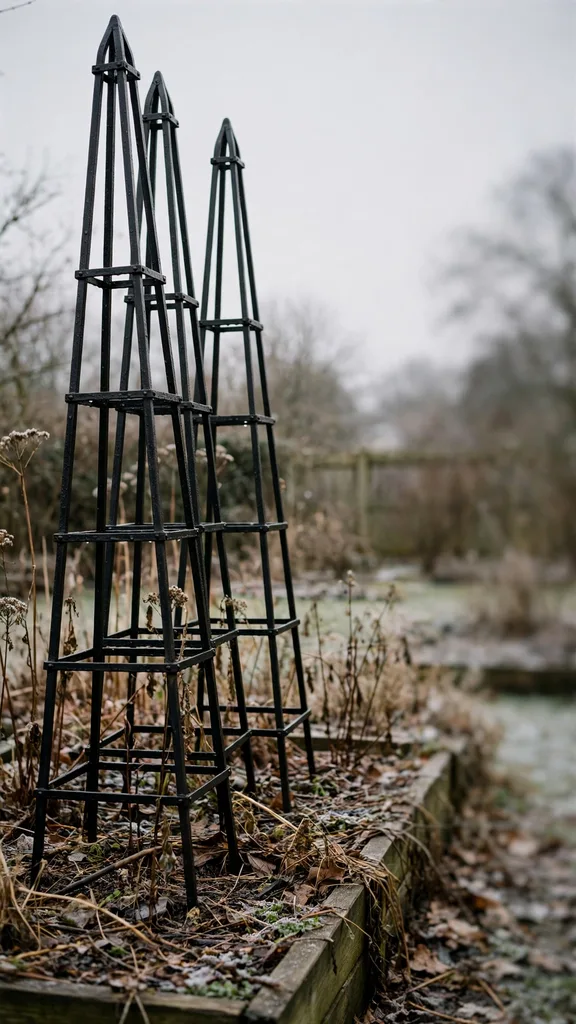
Leave iron in place all year; moving it is what makes it clutter. A pair of obelisks framing the path gives the gothic garden its gateposts.
21. Slate and Stone Grays
Gray slate, weathered stone, and pale gravel are the gothic garden’s floor, the mid tone between black foliage and bone accents. A slate mulch under the dark bed or a gravel patch under the pots sharpens every dark plant above it.
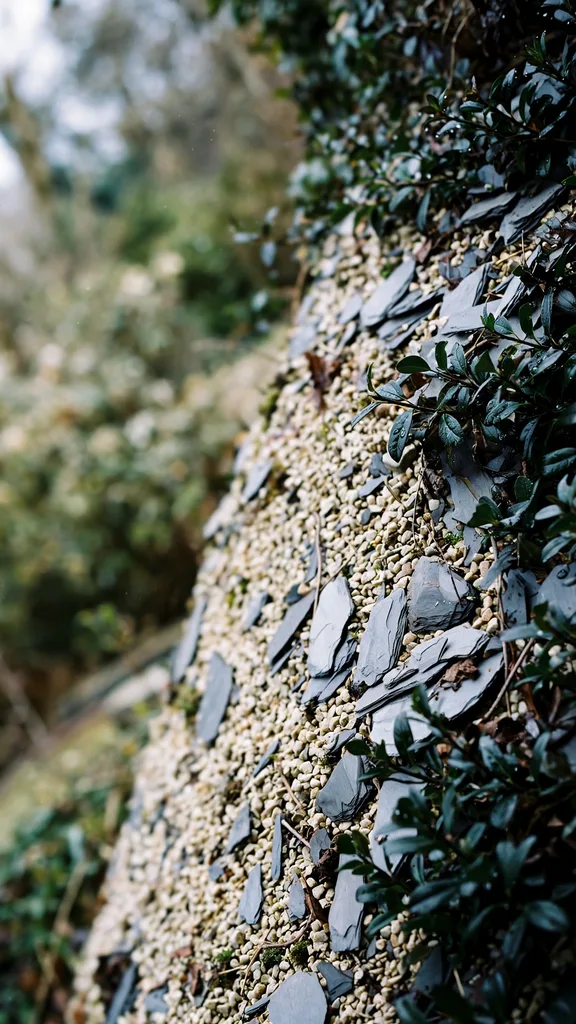
Pale gravel under black mondo is the palette’s strongest ground contrast. Keep the grays honest and local looking; bright white gravel belongs to another garden.
22. The Black Gate and Fence
A black painted gate or fence panel behind the planting is the gothic backdrop that makes dark foliage read as layers instead of shadow. Paint the stretch behind the main bed first, and judge the effect before doing the whole boundary.
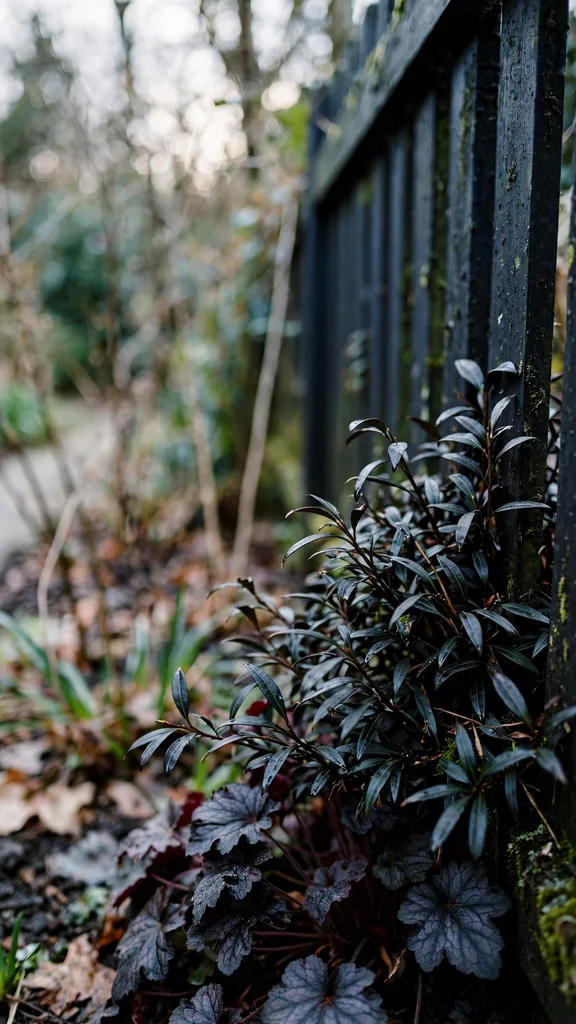
Dark backgrounds deepen every color planted against them, a painter’s trick the garden borrows free. The black fence also hides in winter dark, extending the garden into the night.
23. Battery Candles Along the Dark Path
A run of battery candles in jars along the path lights the gothic garden’s route without wiring, each jar a small lantern on the ground. Space them wide, every few paces, so the path reads as pools of light in darkness.
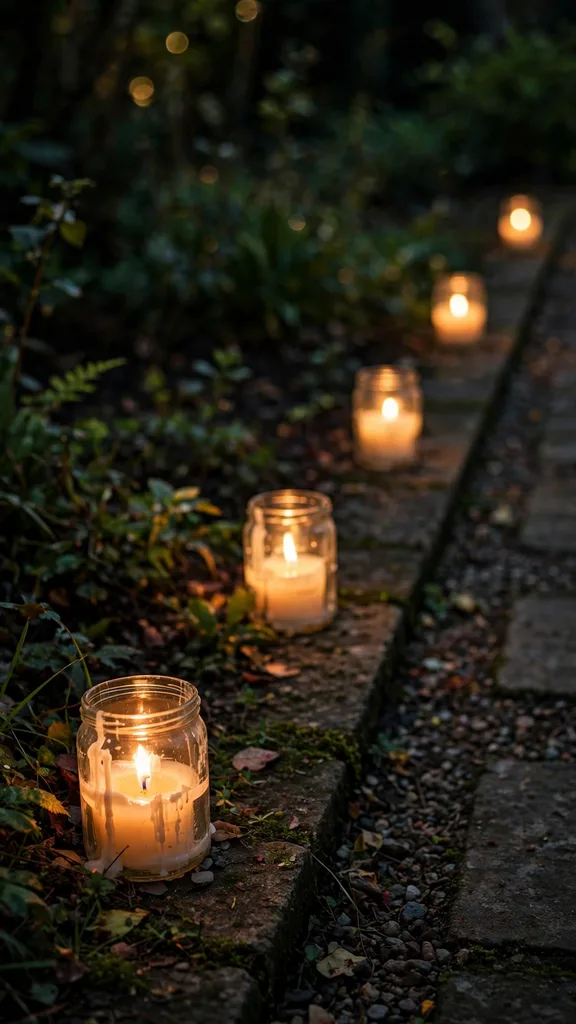
Jars with evergreen sprigs inside tie the lights to the garden. Bring them in during storms and their batteries last the season.
24. Deep Red, the One Warm Accent
The gothic palette allows one warm color, deep oxblood red, used in thimblefuls: a dark red hellebore, winter berries, a ribbon on the wreath. Red used everywhere is Christmas; red used once is a jewel, and the darks make it glow.
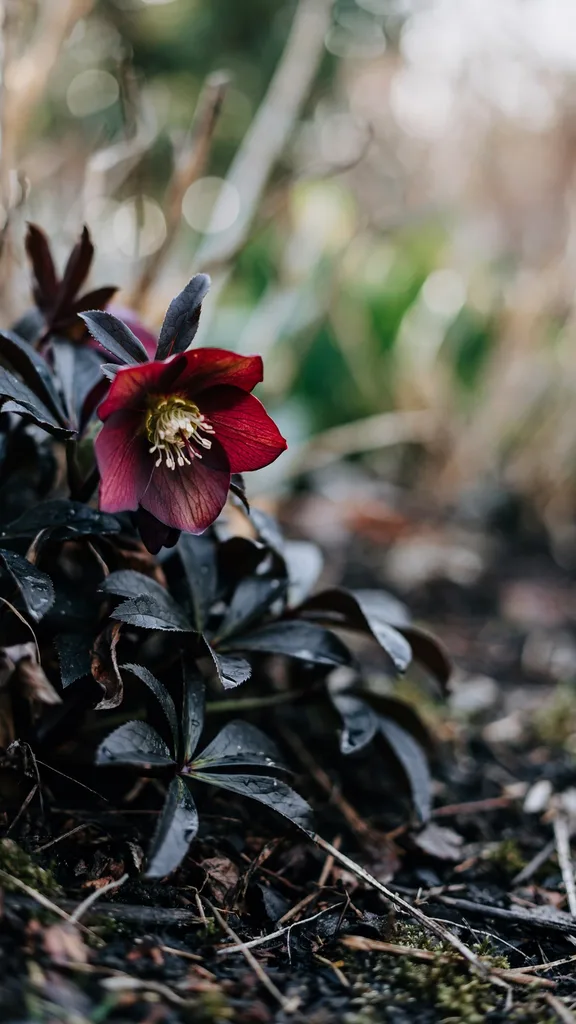
Choose the red’s single home, door, table, or tree, and keep it there. The discipline is the design, and it is what guests remember.
25. Styling With Frost and Fog
Frost and fog are the gothic garden’s free stylists, and the design should be ready for them: dark stems and black foliage planted where frost settles, shapes that read in mist. On a frost morning the black stems wear white outlines no decorator can buy.

Keep a camera habit in December; the gothic garden’s best hour is a foggy dawn. Planting for weather means the garden decorates itself on schedule.
26. The Gothic Door Wreath
Build the door wreath in palette: ivy and its black berries, black mondo leaves, dried dark flowers, and one deep red ribbon if red lives at the door. On a black or dark door it reads as shadow and texture, the gothic welcome.
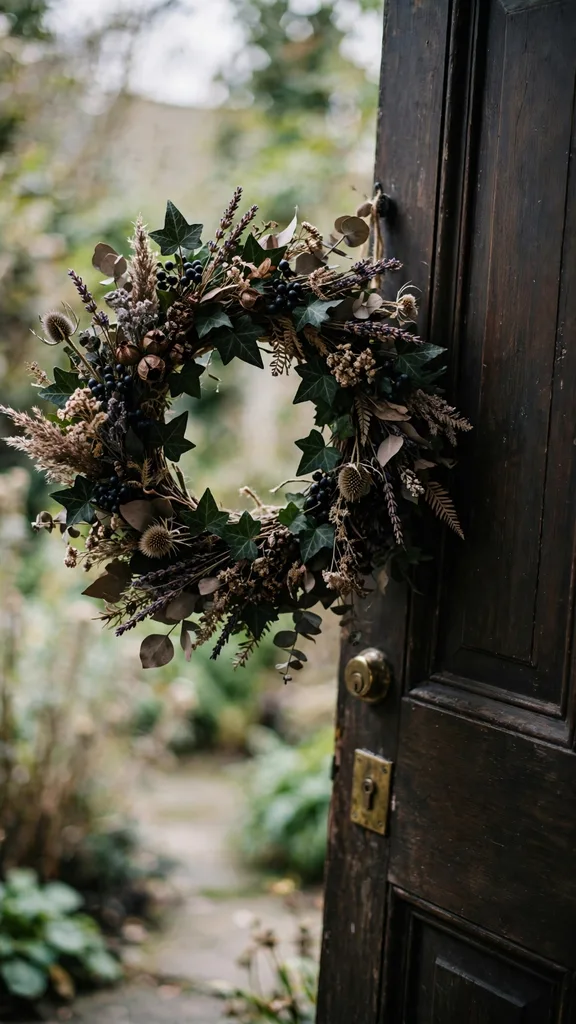
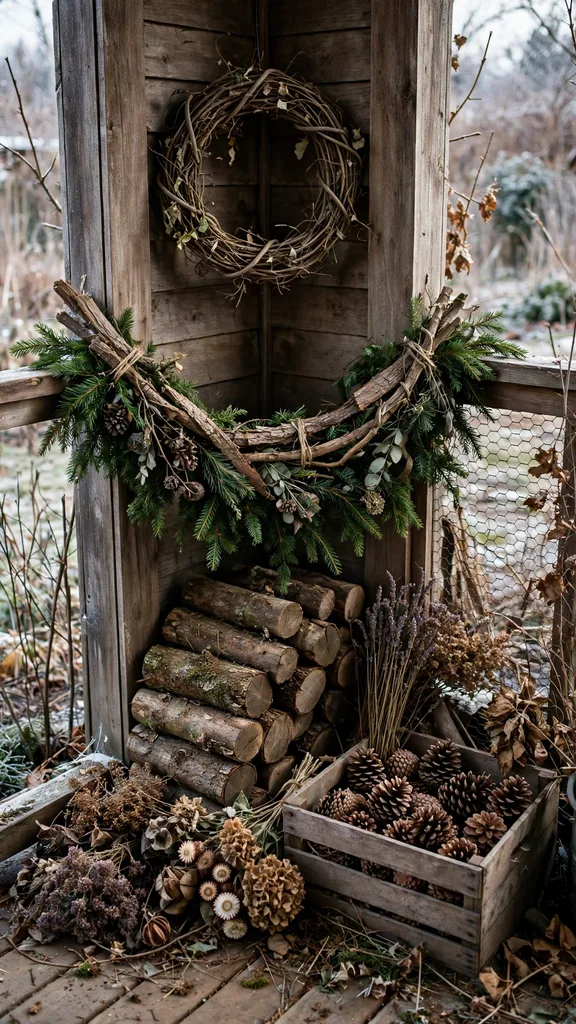
Wire the berries and seed heads generously, since dark on dark needs volume to read. The wreath keeps for weeks outdoors and dries into January.
27. Dark Blooms on the Indoor Table
Cut black hellebores, dark stems, and ivy berries for the indoor table and float the hellebore heads in a dark bowl of water, where they last and glow against candlelight. The gothic table needs no shop flowers in December.
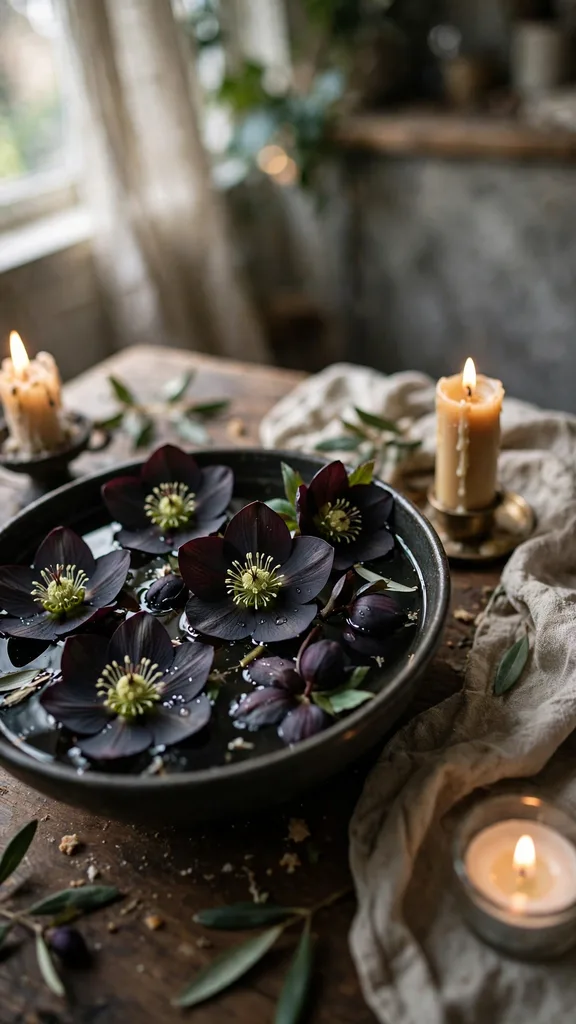
Float, do not vase, the hellebores; their heads face up in water and show their color. A black bowl on a pale cloth is the indoor moon contrast.
28. The Dark Porch Pot Pair
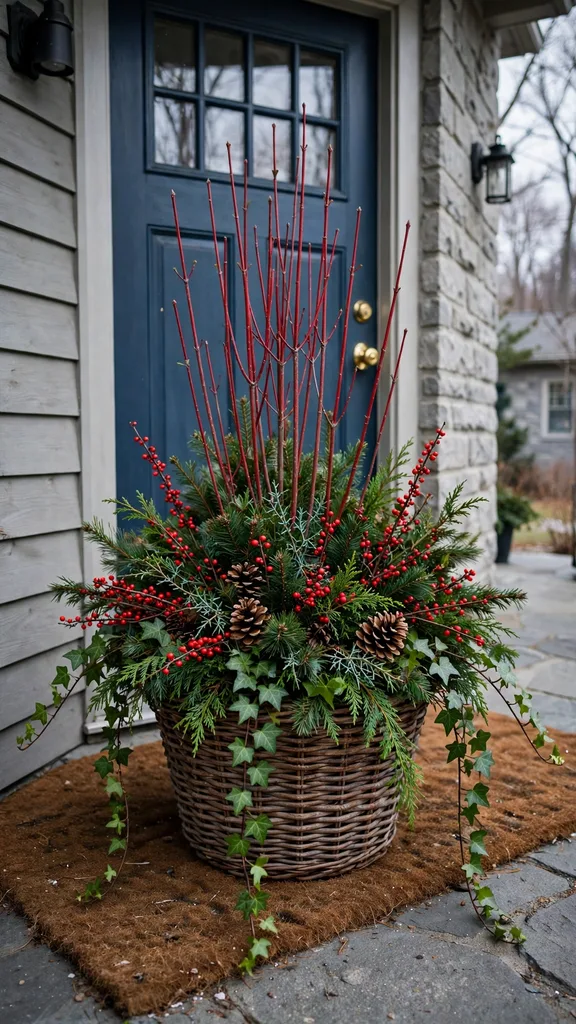
Flank the door with two big black pots planted in palette: a black stemmed dogwood or dark elder center, black mondo and dark heuchera around it, black violas at the rim. Symmetry suits gothic entrances, and a matched pair reads as gateposts.
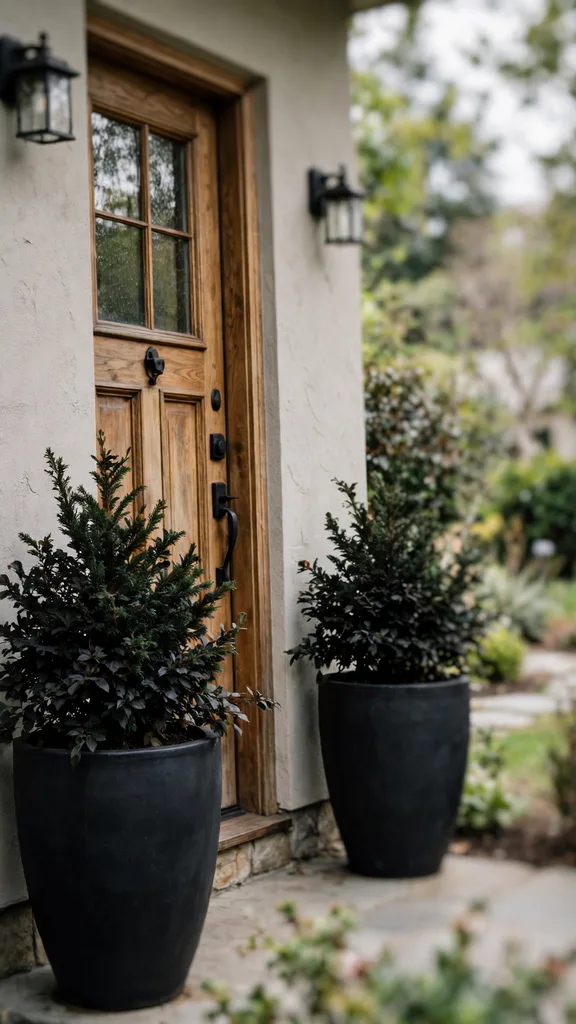
Plant the pair once and they carry the entrance for years, refreshed with violas each autumn. In December they need nothing added, which is the test of a designed pot.
29. Window Box in Black and Silver
A window box of black violas, dark heuchera, and silver dusty miller carries the palette to the house wall, visible from the warm side of the glass all winter. Silver is the box’s moonlight, planted where the room’s light spills out.
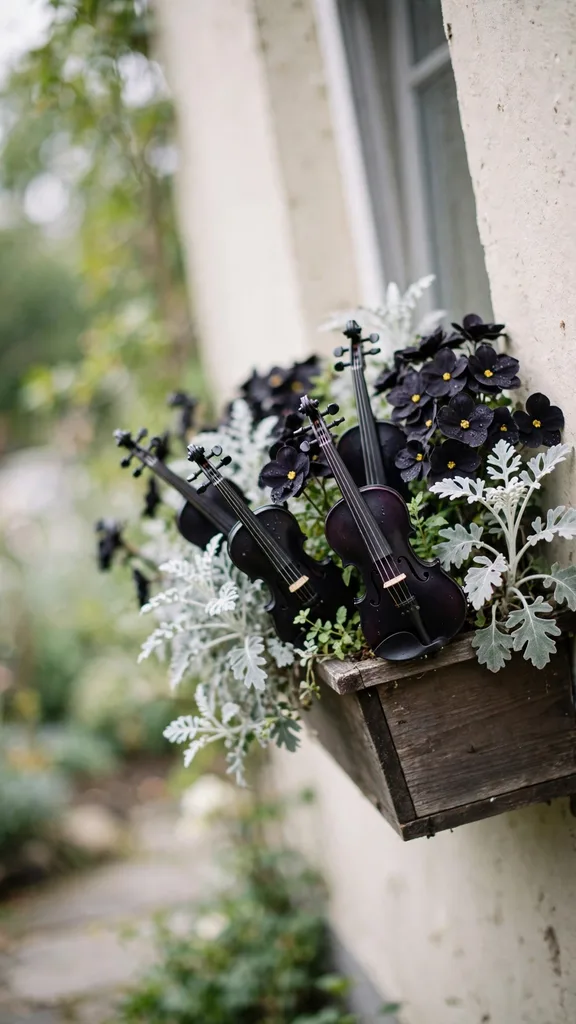
Water window boxes even in winter when rain misses them under the eaves. The silver leaves earn their place most on the darkest afternoons.
30. The Dark Corner Bed
Every garden has a shaded corner that grows nothing bright; the gothic palette turns it into the best bed, planted with mahonia, dark hellebores, black mondo, and ferns. Shade is not the gothic garden’s problem; shade is its home ground.
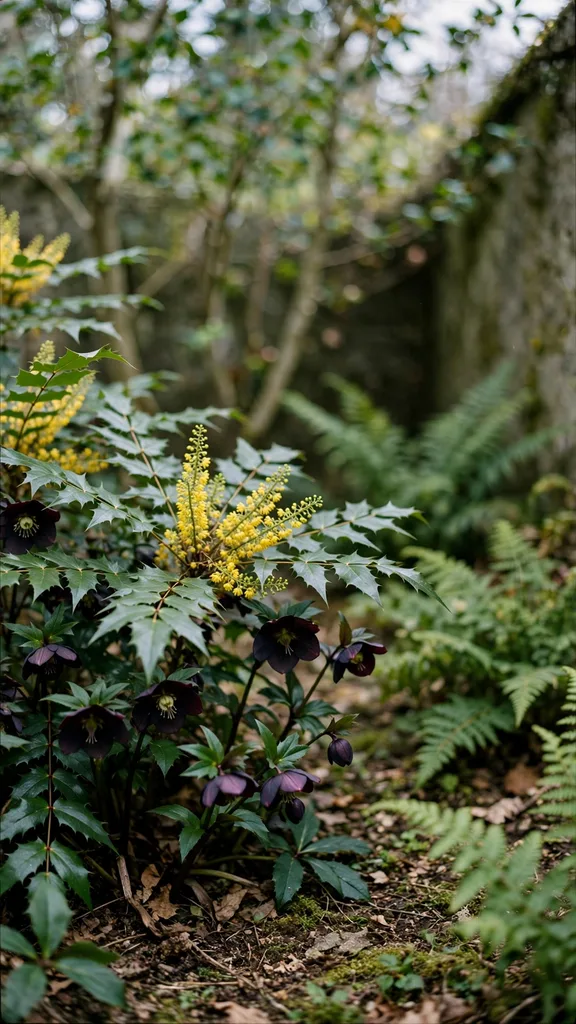
Light the corner’s tree from below and the worst spot becomes the night garden’s stage. Many gardeners end up expanding the dark bed, which tells you how the corner performs.
31. Yew, the Churchyard Tree
Yew is the gothic garden’s evergreen: dark, dense, ancient in association, and clip able into the cones and blocks the style loves. A pair of yew cones in black pots is the entrance at its most formal and most gothic.
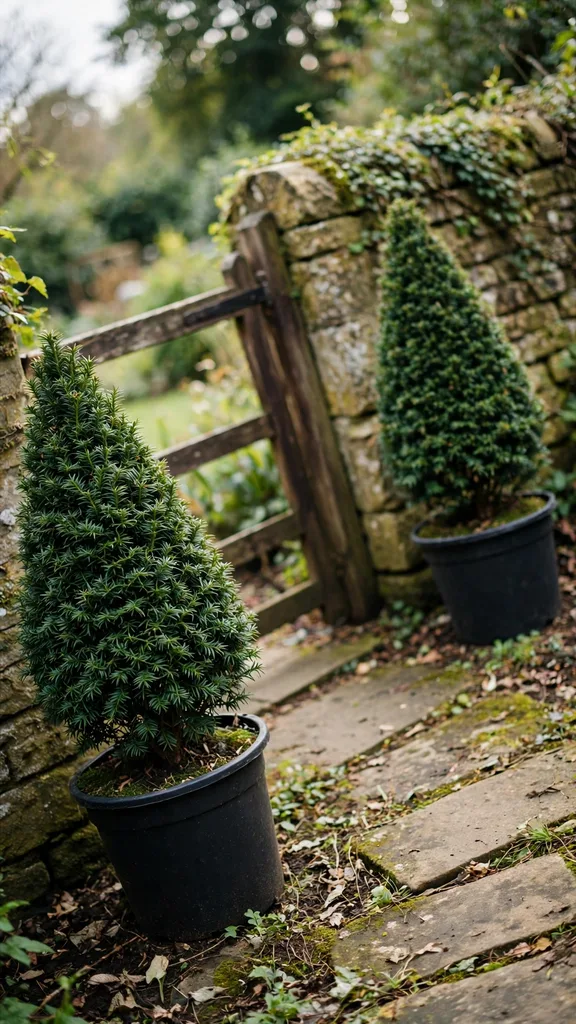
Yew grows slowly and forgives hard clipping, so buy the biggest plants the budget allows. Its darkness is the deepest green in the winter garden, a black with a pulse.
32. Black Branches in a Vase
Cut black dogwood stems and dark branches for a tall indoor vase, where they stand as drawn lines against a pale wall for the whole season. Add nothing to the vase; the gothic arrangement is the branch itself.

Change the water weekly and the stems last into the new year. One stem of black berries at the vase’s foot is the single allowed flourish.
33. Dried Dark Flowers
Dry the summer’s darkest flowers, black scabiosa, dark strawflowers, chocolate cosmos, and use them in the wreath, the table bowl, and small dark posies for gifts. Dried darks keep the exact bruise tones fresh flowers cannot give in December.

Dry them head down in the dark to hold color. A posy of dried black flowers with purple sage is the gothic garden’s calling card.
34. Black Calla Lilies Indoors
Black flowered calla lilies are the gothic houseplant of the season, grown in a pot on the brightest sill and carried to the table for dinners. Their spathes are the deepest purple black a flower achieves indoors, and one plant in a black pot is a complete display.
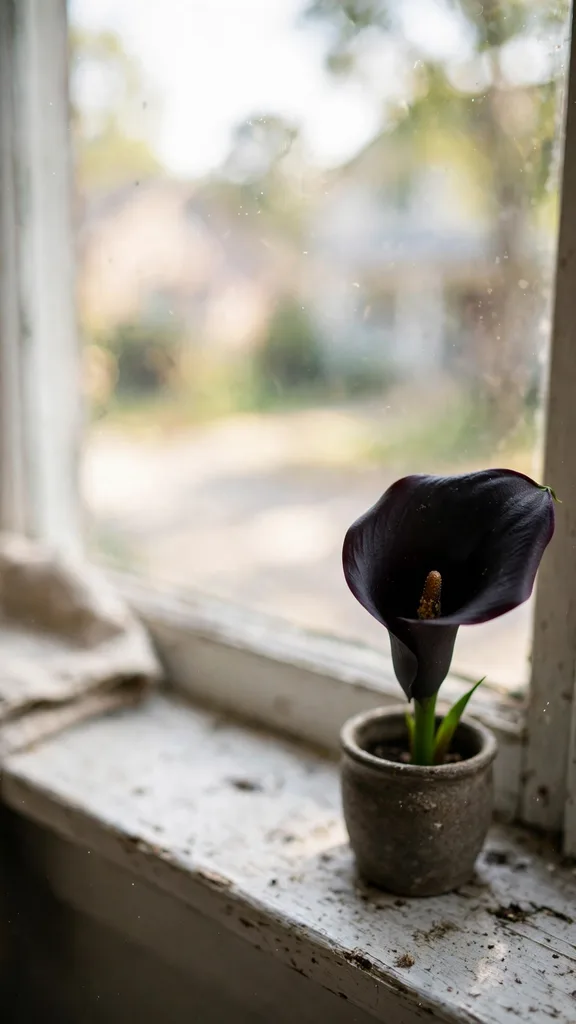
Keep the compost moist while it flowers and let it rest dry afterward for next year’s bloom. Away from the table it lives with the other houseplants, the palette’s indoor ambassador.
35. The Gothic Advent Ring
Make the Advent ring in palette: a base of yew and ivy, black berries, dried dark flowers, and four candles in bone or deep red. It carries the countdown on the table without a single bright color, and it dries handsomely as the weeks pass.
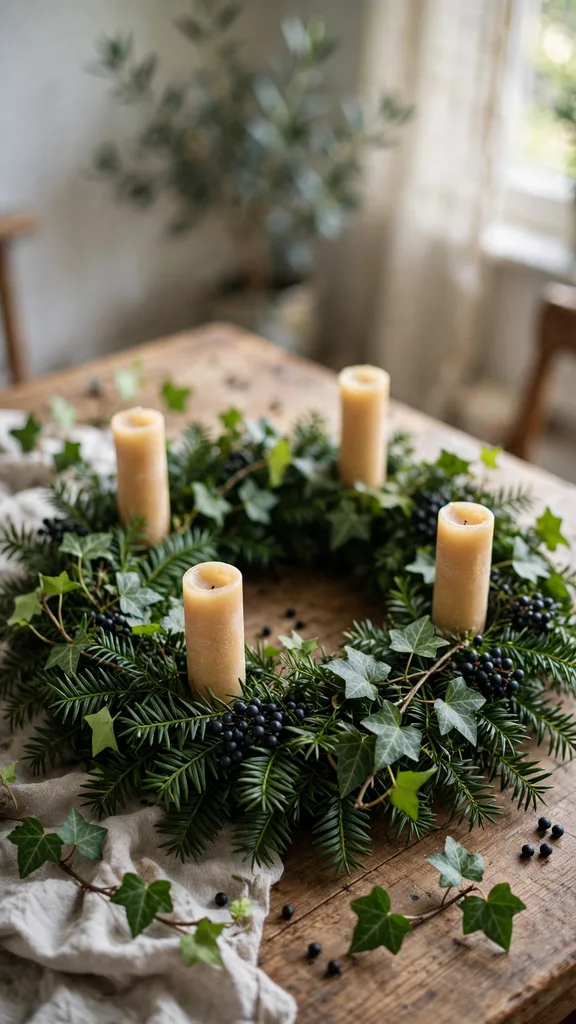
Keep the candles watched and the ring away from their flames as the foliage dries. By the fourth week the ring is a dried wreath that moves to the door for January.
36. The Gothic Palette Rules
Write the palette down and plant by it: black and deepest purple for the body, silver and bone for the light, deep red in one place only, and green only where it grows. Every purchase is tested against the list before it enters the garden.
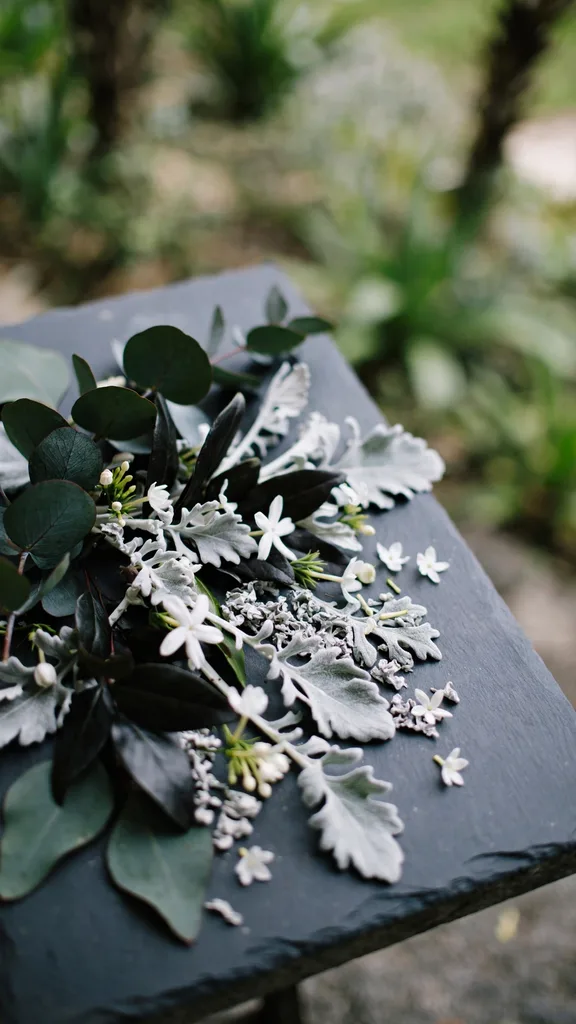
The rules sound strict and feel freeing, since every decision is half made. Gardens drift; palettes hold, and the gothic effect is nothing but holding.
37. Silver Foliage as Moonlight
Silver foliage, artemisia, dusty miller, silver sage, is planted where moonlight and lamplight land, so the garden has lit places that need no electricity. A silver drift at the path’s turn marks it on dark nights better than a lamp.
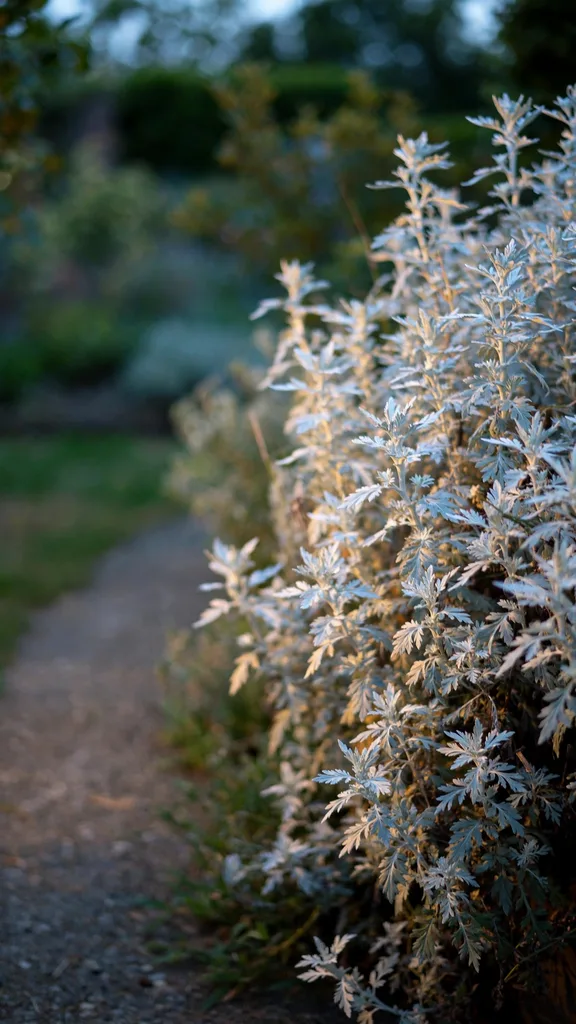
Silver also cools the palette’s heavy end, keeping large dark plantings airy. Replace dusty miller yearly and treat artemisia as the permanent silver.
38. Bone White Accents
Bone is the palette’s warm white: birch stems, pale stone, white hellebores, and bleached seed heads, set singly among the darks. Bone accents are placed like punctuation, one per view, never scattered.
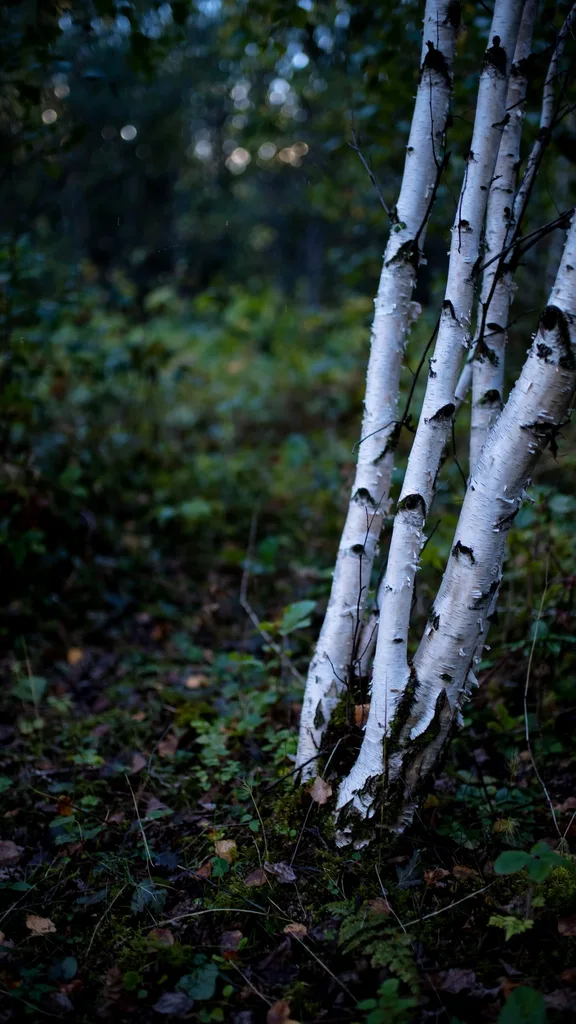
A single birch in the dark bed lights the whole composition at dusk. Resist the second accent in the same view; punctuation works because it is rare.
39. Texture Stops the Flatness
Dark planting goes flat when every leaf is the same size and shine, so the gothic bed mixes gloss and matte, spike and ruffle, cane and rosette. Mahonia’s gloss against mondo’s strap leaves against heuchera’s ruffles is the texture chord.
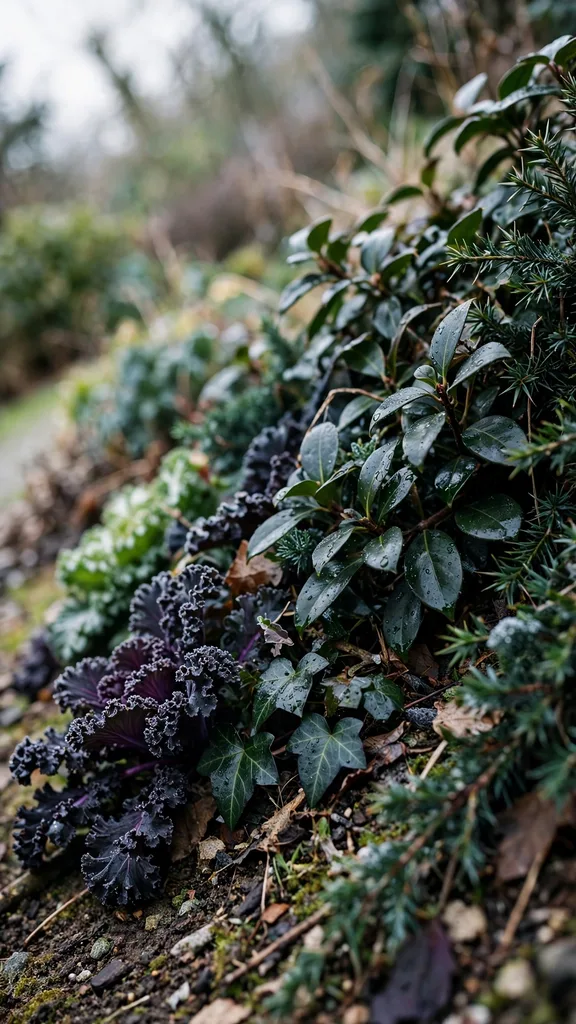
Stand back at dusk and check: if the bed reads as one black mass, add texture before adding plants. Uplighting rescues flat beds by raking across the leaves.
40. The Dark Garden in Snow
Snow is the gothic garden’s finest light, turning every black stem and dark leaf into ink on paper. Plant the darkest things where snow lies longest, along the north path and under the bare trees, so the ink drawing lasts.

After snowfall the garden needs no styling at all, and photographs itself. The snow display is the argument for planting dark in the first place.
41. Cold Light Versus Candle Warmth
Choose the light temperature by zone: candle warm at the door and table, where people gather, and colder moon white in the deep garden, where the dark planting lives. Mixed temperatures in one view look like a mistake; zoned, they read as rooms.
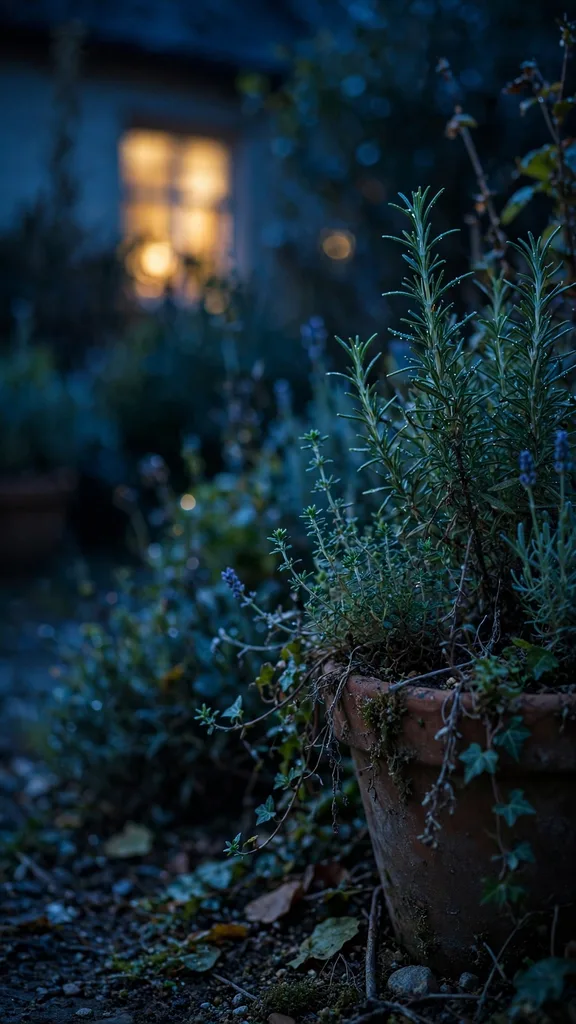
Test one bulb of each before buying sets. The deep garden in cold light, with warm windows behind it, is the gothic postcard.
42. The Gothic Herb Corner
Give the dark herbs their own corner by the kitchen door: purple sage, bronze fennel, dark opal basil in summer, black hollyhocks behind. A gothic garden that feeds the kitchen stays planted, pruned, and loved, which novelty corners never do.
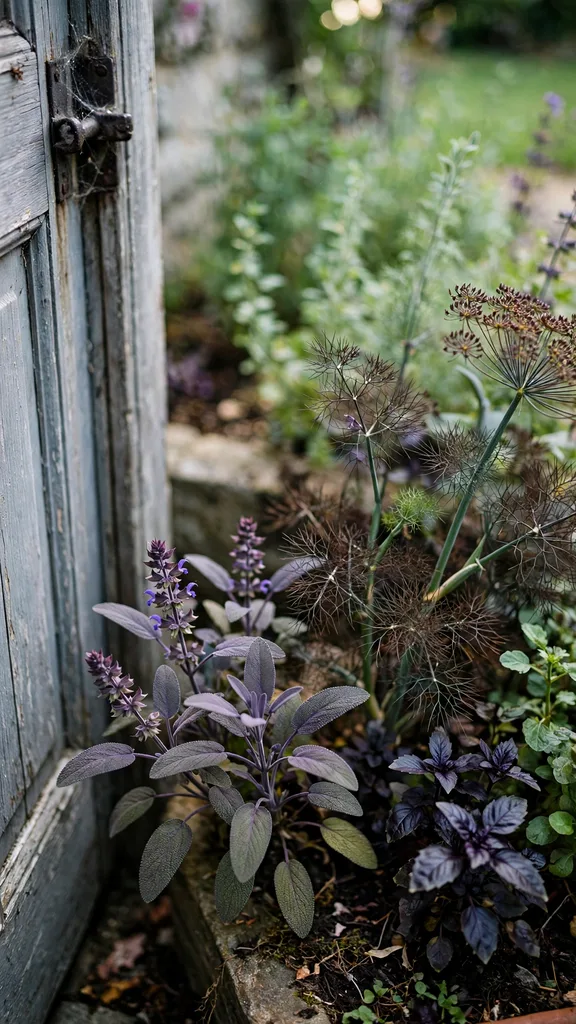
The corner scents the entrance on mild days, sage and fennel in cold air. Usefulness is the gothic garden’s insurance policy.
43. Dark Water, Still and Reflecting
A black lined bowl or small pond doubles the gothic garden’s sky, reflecting bare branches and doubling every light at its edge. Still dark water is the cheapest drama in the style, a mirror the garden already owns the frame for.

Keep the bowl brim full and skimmed, since a mirror must be clean to work. One orb or candle at the water’s edge reflects into two.
44. A Gothic Tree in the Garden
Dress an outdoor evergreen in the palette: dark dried flowers, black berry clusters, silver leaves, and warm lights only, leaving the red and gold boxes closed. Plain text inspiration is everywhere this season, but a tree dressed from the garden’s own dark store cupboard is the gothic version.
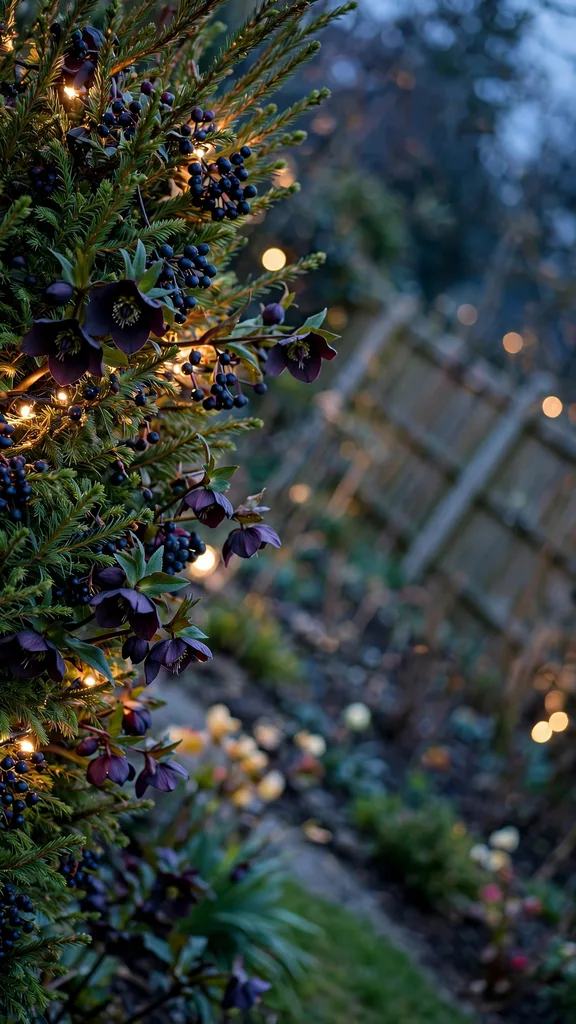
The tree reads as a dark shape with points of light, which is the garden’s whole thesis standing up. Photograph it at dusk on the season’s clearest evening.
45. The Whole Gothic Garden at Night
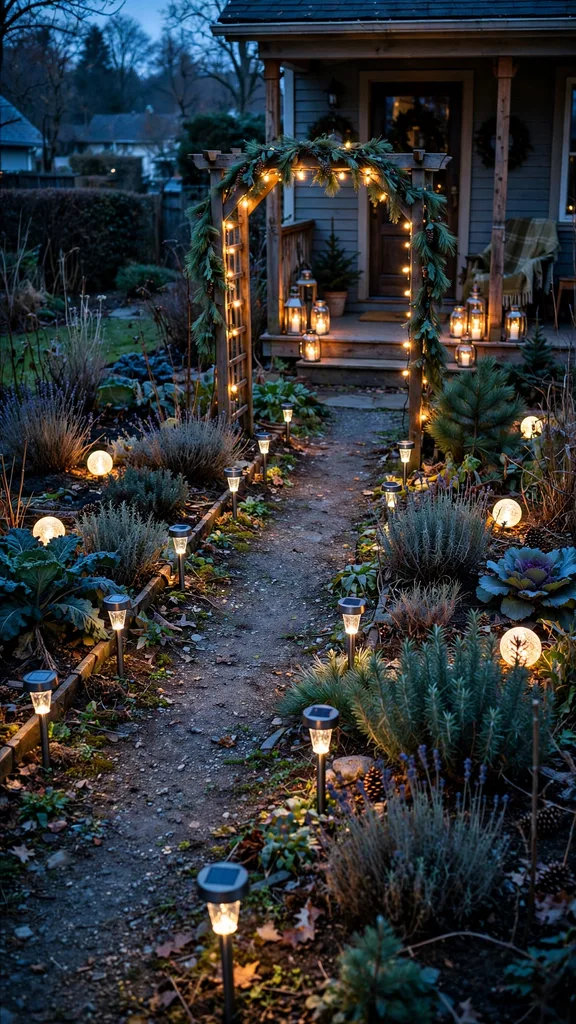
The finale is the walk at full dark: gate lanterns, the uplit tree, candle jars on the path, silver drifts catching the moon, and the black beds holding their shapes around it. When the walk works without a single red or gold thing in sight, the gothic Christmas garden is complete.
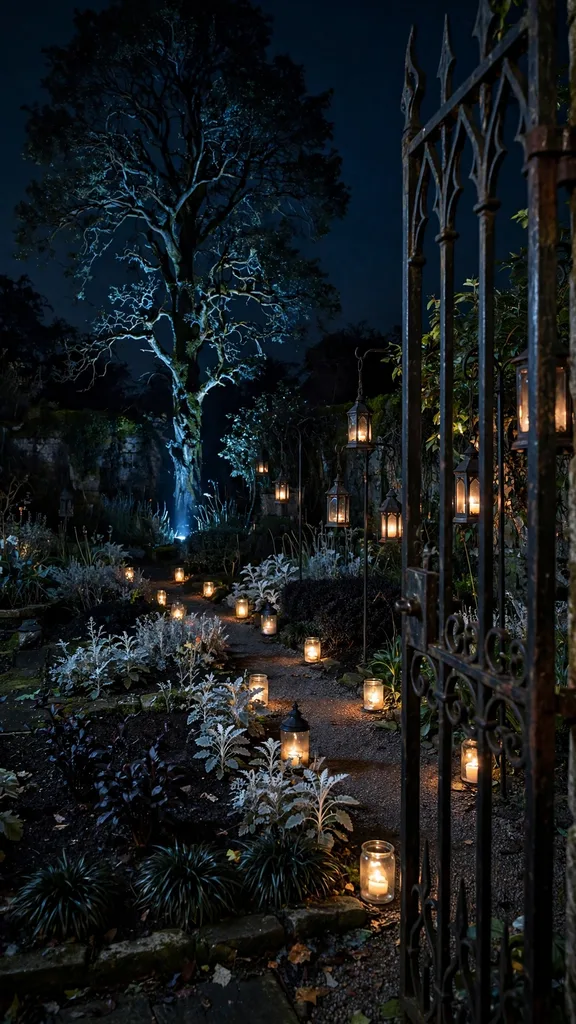
Invite the walk, since this garden is made for an audience of two with warm drinks. The classic red and gold version of the season lives in the site’s Christmas garden ideas, and this garden is its shadow, which is exactly the relationship the two looks should have. December’s early dark, the thing other gardens endure, is this garden’s prime time.
Frequently Asked Questions
Very few plants are true black; most gothic darks are deepest purple, maroon, or green black, which read as black in winter light. The closest to true black are black mondo grass foliage, black viola flowers, and the darkest hellebore hybrids. Gardeners build the effect by massing near blacks together and setting them against silver, bone, and snow, which push dark purple the last step into black.
Yes, and small spaces suit it well, since the palette unifies a few pots into one designed display. A doorstep pair of black pots, a window box in black and silver, and one lantern deliver the whole effect at flat or townhouse scale. The palette rules matter more as space shrinks, because a single off palette plant fills more of the view in a small garden.
Contrast and texture do the work: plant silver or bone accents as single punctuation points in each view, mix glossy, matte, spiky, and ruffled leaves, and light one tree or shrub from below. A dark bed that reads as one flat mass needs texture first, not more plants. The moon garden moments, white hellebores and silver drifts, are planted deliberately, not left to chance.
No; the gothic palette is built from ordinary hardy plants, including hellebores, mondo grass, heucheras, elders, and dogwoods, grown exactly like their green forms. Dark foliage sometimes grows slightly slower in deep shade, since dark leaves in low light gather less energy, so give the darkest plants the brighter end of their tolerance. Otherwise their care is the standard feeding, watering, and pruning of the species.
It can, with plant choices made carefully: some classic gothic plants, including yew and hellebores, are toxic if eaten, so place them away from play areas and grazing pets, or choose the palette’s safer members for family zones. The styling elements, lanterns, iron work, black pots, and candle jars, are family neutral. Check any plant’s toxicity before placing it where children or animals browse.