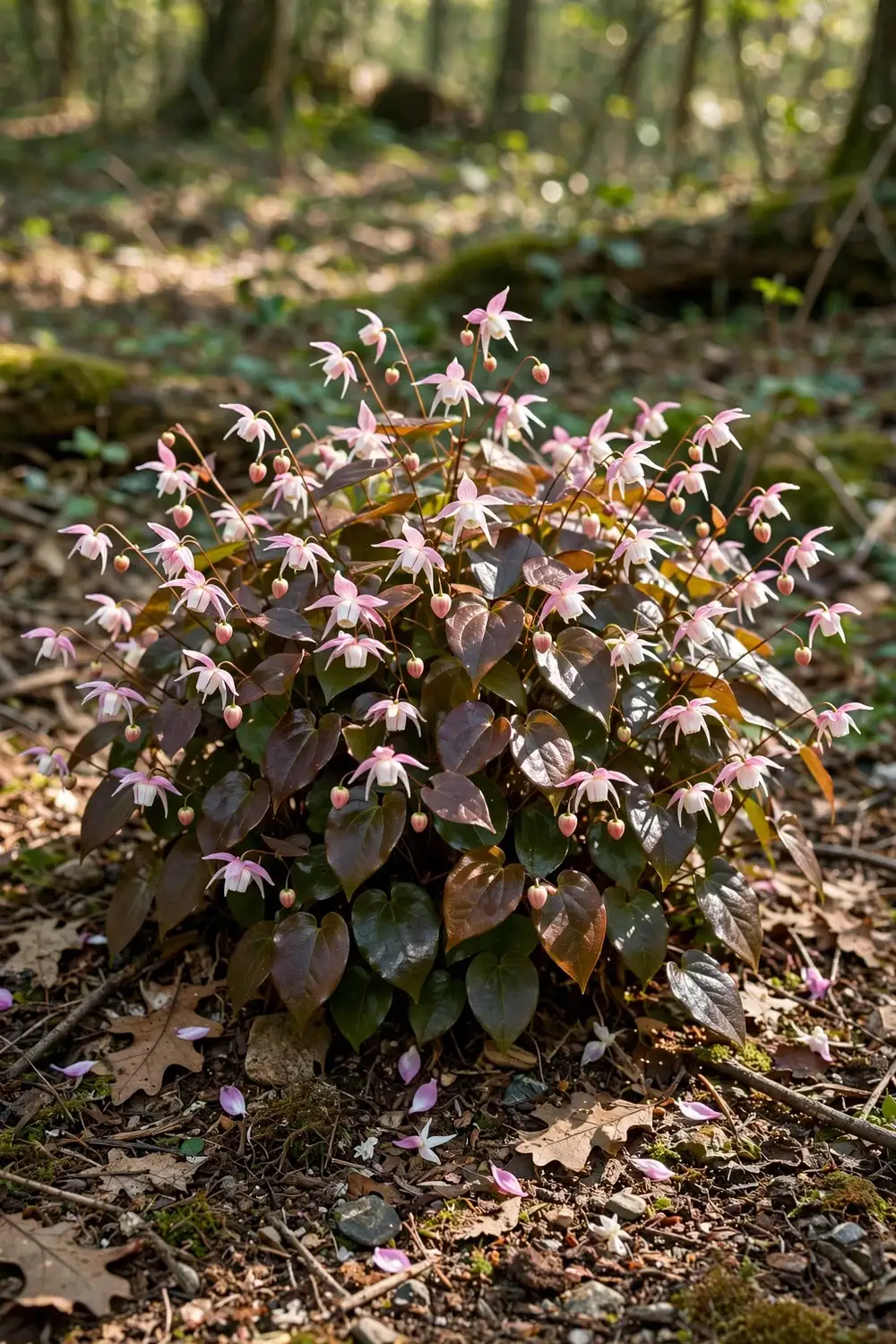

Divide a healthy 3-year-old epimedium clump in September and you will have four or five new plants rooted before winter. Start from seed and you wait 2 to 3 years for the first bloom, with no guarantee the seedlings match the parent. That is the honest shape of how to grow epimedium: division for plants, seed for experiments. Both paths work, and this guide gives you the real numbers for each.
Epimedium, known in gardens as barrenwort, bishop’s hat, or fairy wings, is a shade perennial that earns its place slowly and then holds it for decades. The genus spans dozens of species, most native to China and Japan, with a smaller Mediterranean group. In the Chinese herbal trade the aerial parts of several of these species travel under one name: yin yang huo, which Western supplement shelves relabel as “horny goat weed.” That naming tangle is the first thing to sort out, because the plant you grow and the name on the bottle are rarely the same conversation.
If your goal is more plants in your own shade bed, division wins on every practical measure: speed, reliability, and true-to-type results. Seed has its own reward, which is the surprise of new hybrids, but it demands fresh seed, a cold spell, and a long memory. Gardeners learning how to grow epimedium for the first time should start here, with the honest numbers attached to each path, before choosing.
1. Seed or Division: Pick Your Path First
Choose division if you want the same plant you already admire. Dig, split, replant in September and the new divisions settle before winter. Each piece flowers the following spring because it is already a mature plant. Choose seed if you enjoy the experiment, because epimediums are self-sterile and any seedling is a new hybrid, never a copy of the parent. The specialist nursery epimedium-collection.com states the rule plainly: propagation by division is the only way to increase named species or varieties so the results remain true to the original plants. The Juniper Level Botanic Garden’s epimedium growers report that in their nursery, one in ten seedlings flowered in the first year, with the rest flowering in year two, while other sources put first bloom at 3 to 4 years from seed. The spread in those numbers is the point. Seed is a lottery ticket; division is a transfer.
2. What Yin Yang Huo Actually Names
Sort the names before you buy seed or plants, because the labels do not agree with each other. Page-one search results never make this distinction, which is why shoppers end up confused.
| Name | What it actually covers | Where you meet it |
|---|---|---|
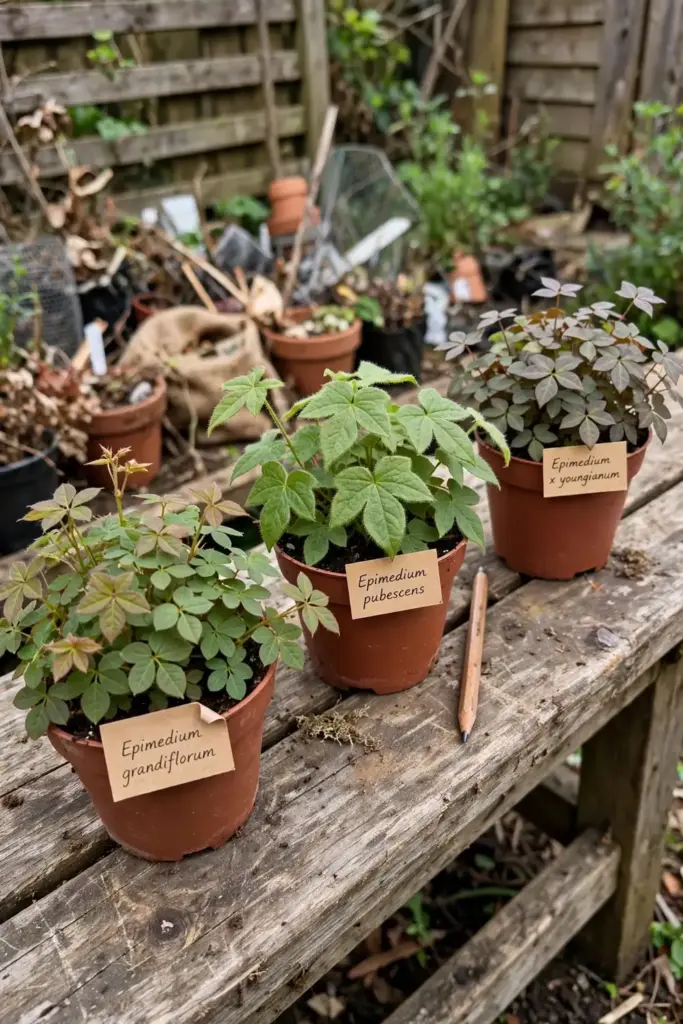
| Yin yang huo | A TCM material name applied to the aerial parts of several Epimedium species, commonly E. brevicornum, E. sagittatum, E. pubescens, E. koreanum, and E. wushanense | Chinese herbal trade, TCM references |
| Horny goat weed | A Western supplement trade name covering products made from several Epimedium species | Supplement bottles, health-store shelves |
| Barrenwort | The whole Epimedium genus as garden plants | Nurseries, gardening books |
| Bishop’s hat, fairy wings | Descriptive common names for the flower shape | Garden writing, plant tags |
The practical takeaway is simple. If you are buying a plant for the garden, buy by species and cultivar name. If you are buying seed labeled “horny goat weed,” know that the seed came from whichever Epimedium species the supplier had flowering, and the seedlings will vary. This article is about growing the plants. It makes no medicinal claims and offers no usage advice; for anything health-related, talk to a qualified clinician.
3. Climate and Shade: Where Epimedium Thrives
Plant epimedium in USDA zones 4 to 8, with some varieties tolerating zone 3 when given winter protection, according to the Nature Hills barrenwort guide. Most species handle temperatures down to minus 20 to minus 30 degrees Fahrenheit once established. Give them partial to full shade. Dappled light under deciduous trees is the classic setting: the plants leaf out and flower in spring while the canopy is still open, then rest in shade through summer.
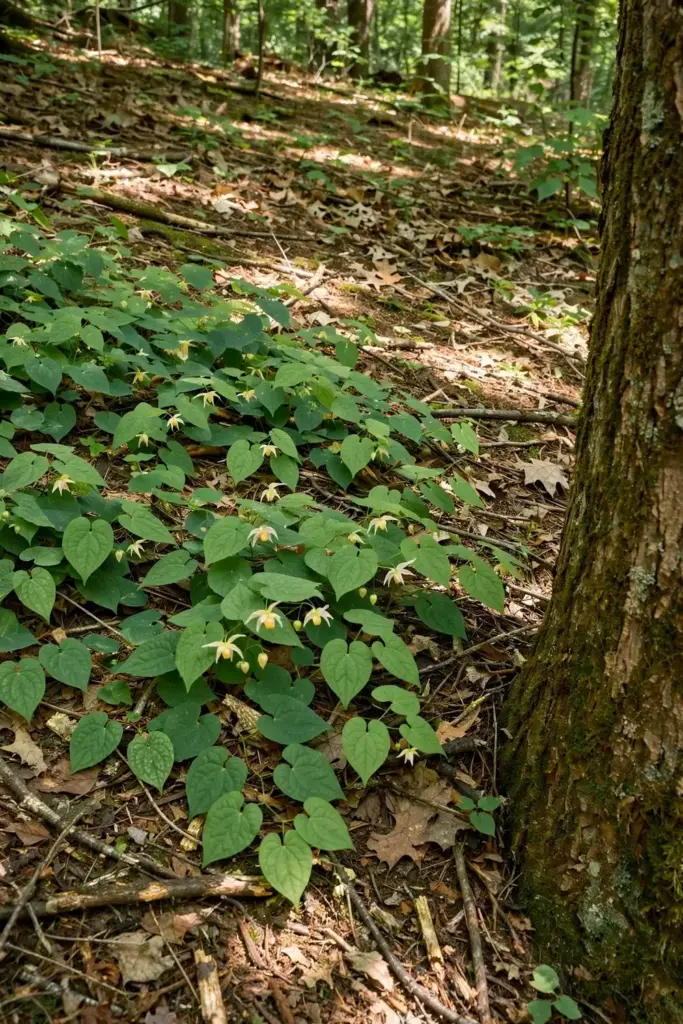
In zones 4 to 6 they tolerate some morning sun. In zones 7 to 9, keep them out of direct afternoon sun or the foliage scorches. Late spring frosts can damage the early flowers, so in frost-pocket gardens, favor a site with some air movement rather than the lowest hollow. Epimediums are famously drought tolerant once established, which makes them one of the few perennials that succeed in dry shade under shallow-rooted trees. They perform even better, though, in part sun to light shade with rich, organic, moisture-retentive soil, as the Juniper Level growers note from their own beds.
4. Choosing Seed and Plants
Buy plants when you want a known result. A named cultivar such as E. x rubrum or E. grandiflorum ‘Lilafee’ gives you the exact flower color and habit on the tag, and division keeps it that way forever. Buy seed only when you accept the hybrid lottery. Because epimediums are self-sterile, a lone plant rarely sets viable seed, and where several species grow near each other, insects cross them freely. The seedlings are new individuals, which is fun for the breeder and a surprise for everyone else.
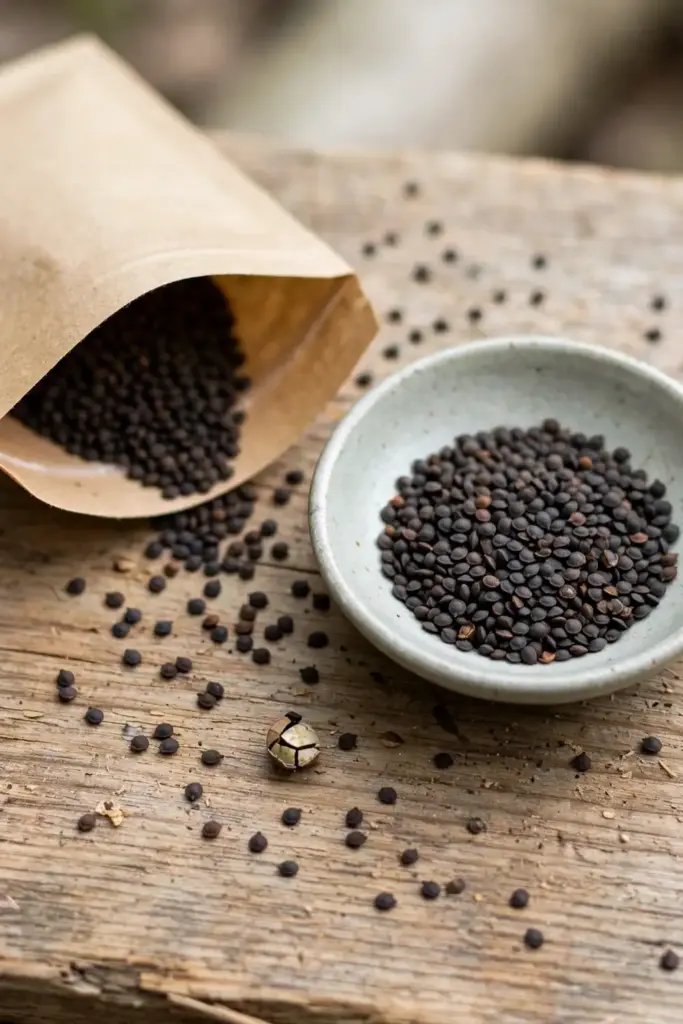
Seed freshness is the whole game. Epimedium seed loses viability fast once dried. The seed capsules look like miniature pea pods and shed their seed while still green, sometimes suddenly, so check plants regularly from late spring into early summer. The Juniper Level growers put seed maturity at roughly 45 days after pollination and warn that seed which must be sown fresh is easy to miss entirely. If you buy seed, buy it from a specialist supplier in the current season and sow it the same year. Old seed in a drawer is a dead end.
5. Sowing Fresh Seed: The Cold Stratification Protocol
Sow the seed the day you collect it. Press it into the surface of a humus-rich seed mix and leave it uncovered or barely covered, because epimedium seed germinates best with light exposure. Buried seed sulks. Set the tray in a cold frame or an unheated sheltered spot and let winter do the work. Natural cold, the freeze-thaw rhythm of the season, breaks dormancy by spring, and seedlings emerge in the following spring after sowing. The specialist nursery recommends exactly this: sow immediately after collection and let the winter season provide the cold.
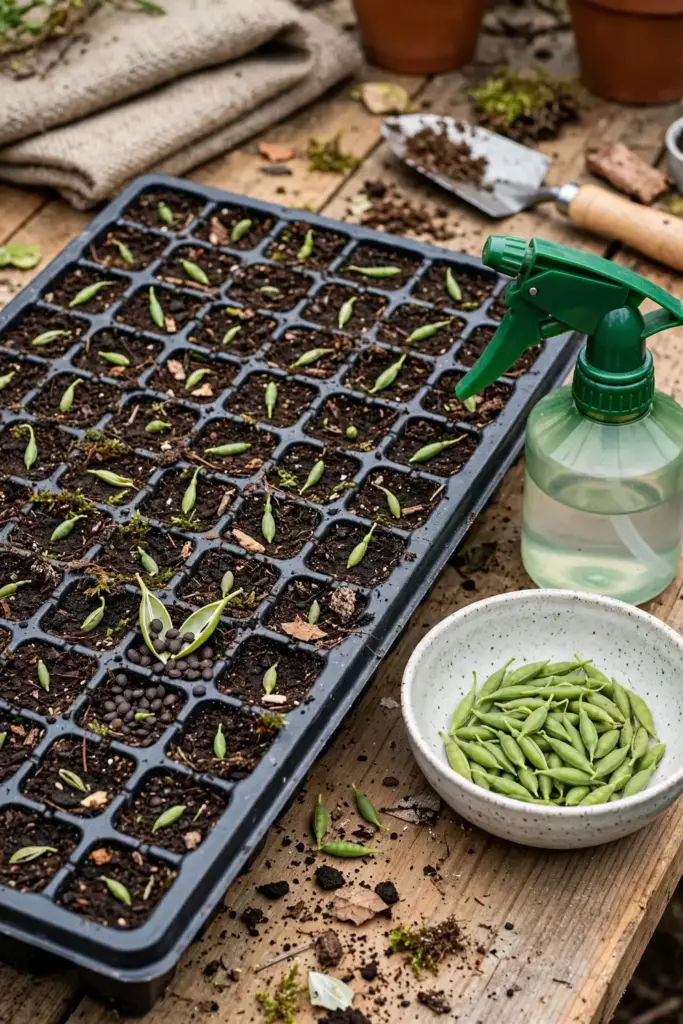
If you miss the fresh-sowing window, a refrigerator stands in for winter. Experiments cited by the same nursery indicate that about three months at normal refrigerator temperature breaks dormancy. The Juniper Level growers specify 60 days below 40 degrees Fahrenheit. One grower caution is worth hearing: pots left too long in the fridge germinated in the dark and produced weak, stretched seedlings. Check the tray monthly once the cold period ends.
| Step | Action | Time |
|---|---|---|
| 1 | Collect seed capsules while still green, before they split | Late spring to early summer, about 45 days after flowering |
| 2 | Sow immediately on the surface of humus-rich mix, press in, do not cover | Same day as collection |
| 3 | Place in a cold frame or sheltered outdoor spot for natural winter cold | Through winter |
| 4 | Or: refrigerate sown pots at 35 to 40 degrees Fahrenheit | 60 to 90 days |
| 5 | Move to bright indirect light at 70 degrees Fahrenheit after the cold period | Early spring |
| 6 | Expect germination | Weeks to months; seedlings emerge the following spring after a winter sowing |
Thin the seedlings once they have two true leaves, and grow them on in light shade for at least their first winter. Plant them out in mid to late summer of their second year. Mark the calendar, because from sowing to first flower runs 2 to 4 years, and the plants are small for a long time. Anyone researching how to grow epimedium from seed should weigh that timeline against the division method in H2 6 before committing tray space.
6. Dividing Established Clumps: Step by Step
Lift the whole clump in early autumn, September in most climates, when the plant is entering dormancy. September division gives roots weeks of warm soil to re-establish before winter. Early spring division, just as growth resumes, also works, though the divisions then need steady summer watering. Cornell’s gardening guide advises dividing in spring before plants flower or in late summer and early fall after the leaves mature. Divide established clumps every 3 to 4 years; waiting longer makes the woody rhizomes harder to cut.
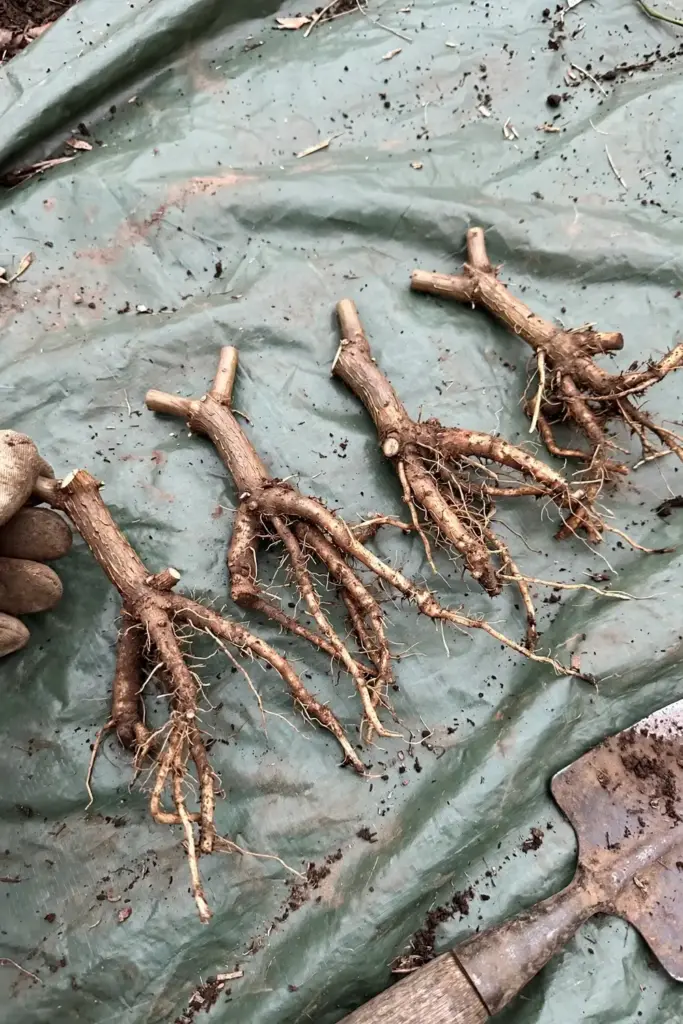
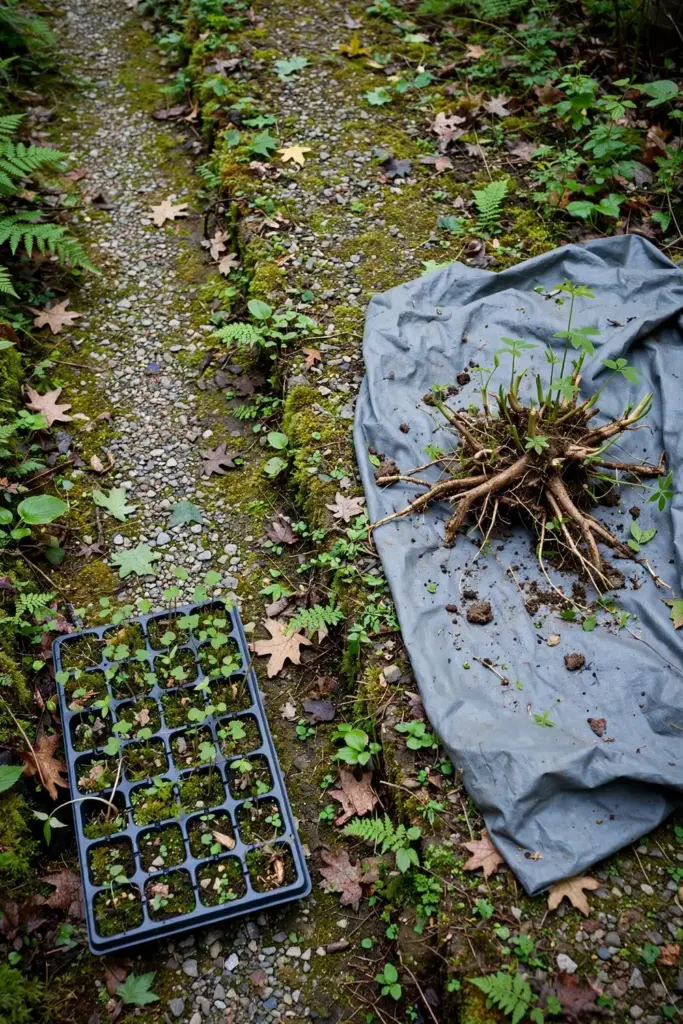
Work on a cool, cloudy day and water the clump the evening before so the soil holds together. Dig around the clump with a spade, keeping a generous root ball, and lift the whole plant. For a large clump in the ground, drive the spade through the crown and lever out a section, leaving the rest undisturbed. For a lifted clump, push two garden forks back to back through the center and lever apart. Woody rhizomes will not yield to forks alone. Finish the cut with an old knife or secateurs. Each division needs roots and at least two or three growing points.
The division trick the professionals swear by comes from Darrell Probst via the Juniper Level Botanic Garden: leave two-thirds of the foliage on the newly divided plants to encourage new root formation, and cut the roots back to 4 to 5 inches long. Replant at the same depth the divisions were growing, firm the soil, water deeply, and mulch. For the full general technique, the site’s guide to dividing perennials in spring walks through the same fork method on other clump-forming plants.
7. Soil and Site Preparation
Epimediums are forgiving about soil type and strict about drainage. They succeed in loam, sand, and even clay, provided water never stands around the rhizomes. The ideal is a humus-rich, moisture-retentive but well-drained soil, the woodland floor profile. Cornell’s guide recommends adding large amounts of organic matter to the soil before planting, which matches what the plants want: leaf mold, compost, and a mulch layer that mimics the forest litter of their native habitats. For the broader reasoning behind building that kind of soil, the soil health and pest resistance guide explains how organic matter feeds the whole system, not just the plant.
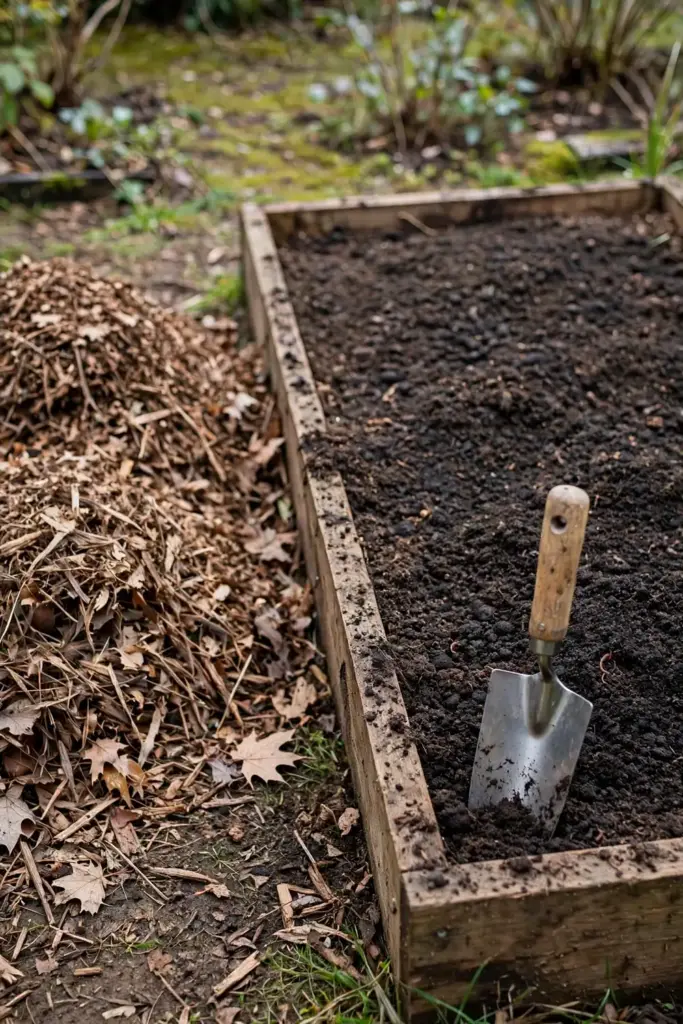
Aim for a soil pH between 6.2 and 6.5, the range the Juniper Level growers use to keep all their species happy. Although many species are native to alkaline soils in China, they adapt well to slightly acidic garden soil. Dig the planting area a full spade deep, work in 2 to 3 inches of compost, and let it settle for a week before planting. In heavy clay, plant slightly high, with the crown a half inch above grade, and mulch around rather than over the crown.
8. Planting Out: Seedlings and Divisions
Space plants 12 to 15 inches apart to allow for natural spreading, the spacing the Nature Hills guide recommends for dense coverage over time. Most epimediums grow 8 to 12 inches tall and spread 12 to 18 inches wide, so that spacing closes into a weed-suppressing carpet within a few seasons. Set divisions at exactly the depth they grew before; buried crowns rot, and exposed rhizomes dry out.
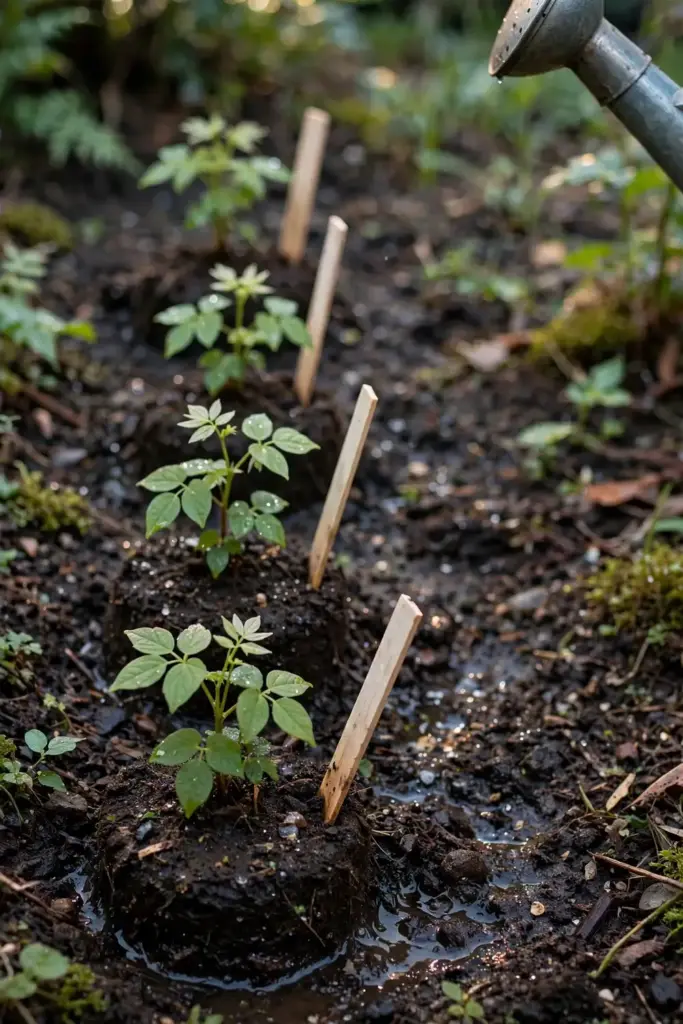
Plant in spring or early autumn. Autumn planting gives divisions the longest establishment window before summer heat. After planting, water deeply once, then mulch with an inch of shredded leaves or bark, keeping the mulch a finger’s width away from the crown. The first season is the only one that asks for attention: keep the soil evenly moist until the plants show new growth, then let them fend for themselves. Seedlings planted out in their second summer need the same treatment, plus a marker stake, because they are easy to weed out by mistake when small.
9. Watering Through the Seasons
Water new plantings deeply once a week through their first growing season. Once established, epimediums tolerate dry shade that defeats most perennials, and many gardeners never water them again except in drought. The honest version of that advice is that they survive dry shade but look better with occasional deep watering during extended dry spells. The wild species mostly grow in moist woodland soils, some near woodland waterfalls, so “drought tolerant” means tolerant, not fond.
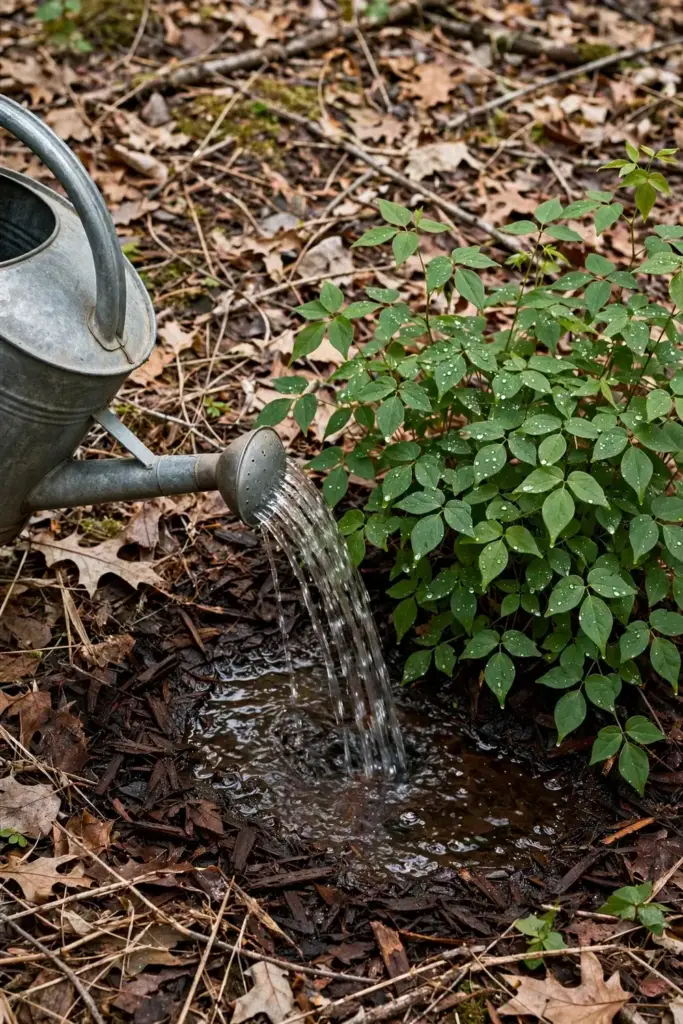
Reduce watering in autumn as the plants slow down. Overwatering in cold, wet soil invites the one serious disease problem, root rot, which is a drainage failure more than a watering failure. If a planting sits in a low spot that puddles after rain, fix the grade or move the plants; no watering schedule compensates for standing water. In containers, the rule flips: pots dry faster than ground soil, so check container plants twice a week in summer and water when the top inch of mix is dry.
10. Feeding: Less Feeding Beats More
Feed lightly or not at all. A top-dressing of compost in spring gives established clumps everything they need, and the leaf litter that falls naturally in a shade garden does most of the work for free. Epimediums evolved in lean woodland soils. Rich feeding pushes soft foliage at the expense of flowers.
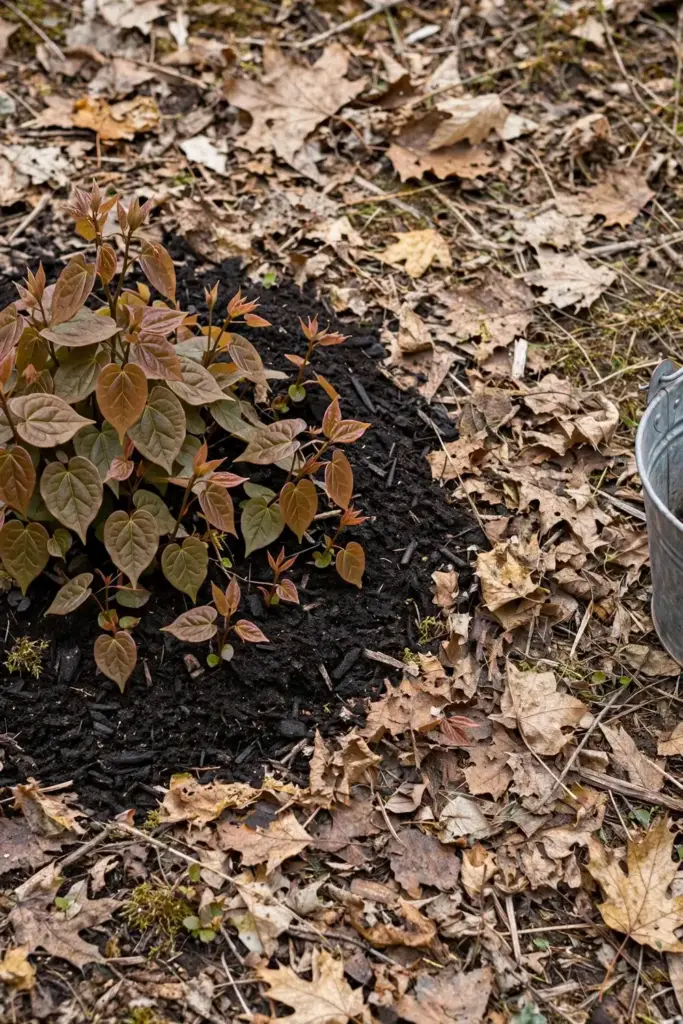
The one hard rule comes from the Juniper Level growers: stay away from salt-based fertilizers, which can burn epimediums when used in excess. If you fertilize, use a single light application of a balanced organic fertilizer in early spring, or compost tea, and stop there. Container plants are the exception, since potting mix leaches nutrients with every watering; feed potted epimediums at quarter strength twice during the growing season.
11. The Spring Cut-Back: Foliage Before Flowers
Cut back the old foliage in late winter or very early spring, before the new flower stems rise. This is the single maintenance task that transforms the spring display. The leathery old leaves hide the delicate flowers. Removing them lets the bloom show fully, and it clears the overwintered debris where pests shelter. Use clean shears, cut the old leaves to the base without nicking the emerging buds, and compost the cuttings if they are disease-free.
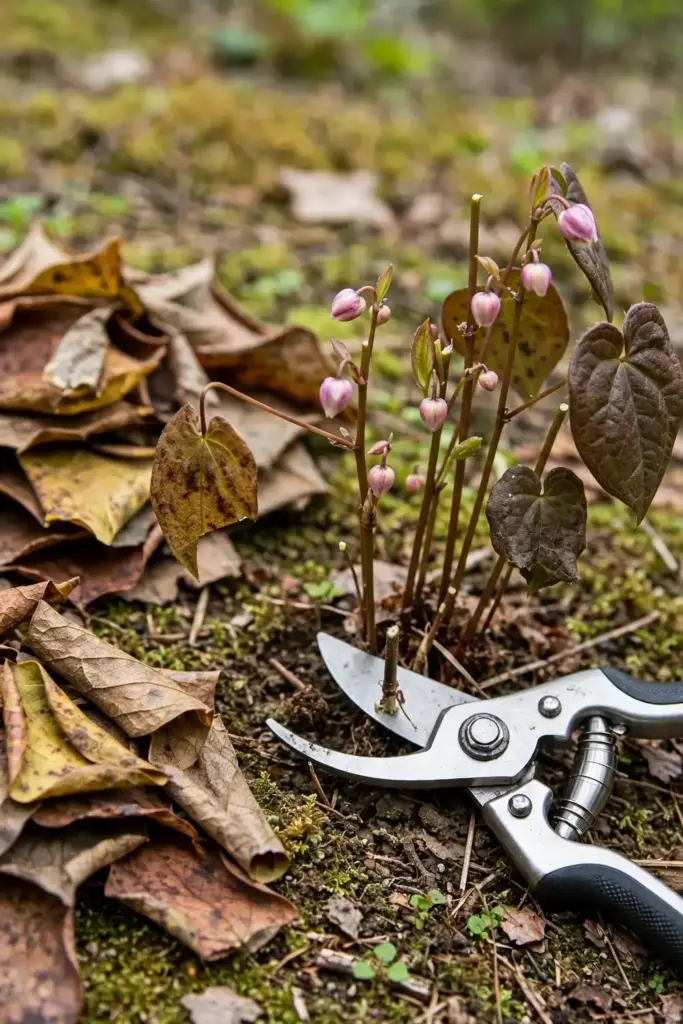
Evergreen species and cultivars hold their leaves through winter and need this cut most. Deciduous types shed on their own, but a tidy-up still helps. Time the cut for when you see the flower buds pushing up, usually a few weeks before bloom. Cut too early in a region with late frosts and you expose tender growth; cut too late and you snip the flower stems along with the leaves.
12. Pests and Diseases
Epimediums are among the least troubled perennials in the shade garden. Deer and rabbits rarely touch them. Two problems are worth knowing by name. Cornell’s gardening guide lists vine weevil as the pest and mosaic virus as the disease to watch for. Vine weevil larvae chew roots at night; the adults notch leaf edges. Check container plants especially, since larvae thrive in pots. Remove affected plants’ grubs by hand when repotting, and use nematode treatments in serious infestations.
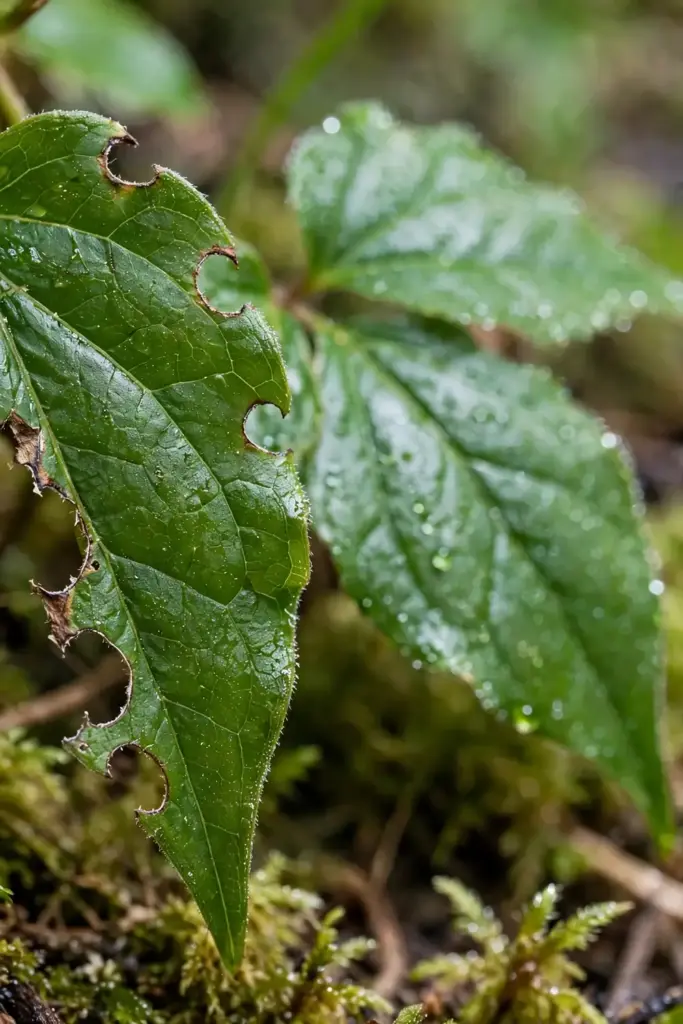
Mosaic virus shows as mottled, distorted foliage and has no cure. Dig out and destroy affected plants; do not compost them. Buy from reputable nurseries to start clean. Beyond those two, good air circulation and avoiding overhead watering prevent the minor leaf-spot issues that occasionally appear in wet seasons. Root rot, the only common killer, is prevented at planting time by drainage, not treated afterward.
13. Growing Epimedium in Pots and Containers
Grow epimediums in containers when your garden soil is wrong or your shade is on a balcony. Use a wide, shallow pot, at least 10 inches across, because the rhizomes spread sideways. Fill it with a humus-rich, well-drained potting mix: two parts quality potting soil, one part compost, one part perlite or coarse bark. Plant at the same depth as before and mulch the surface with fine bark.
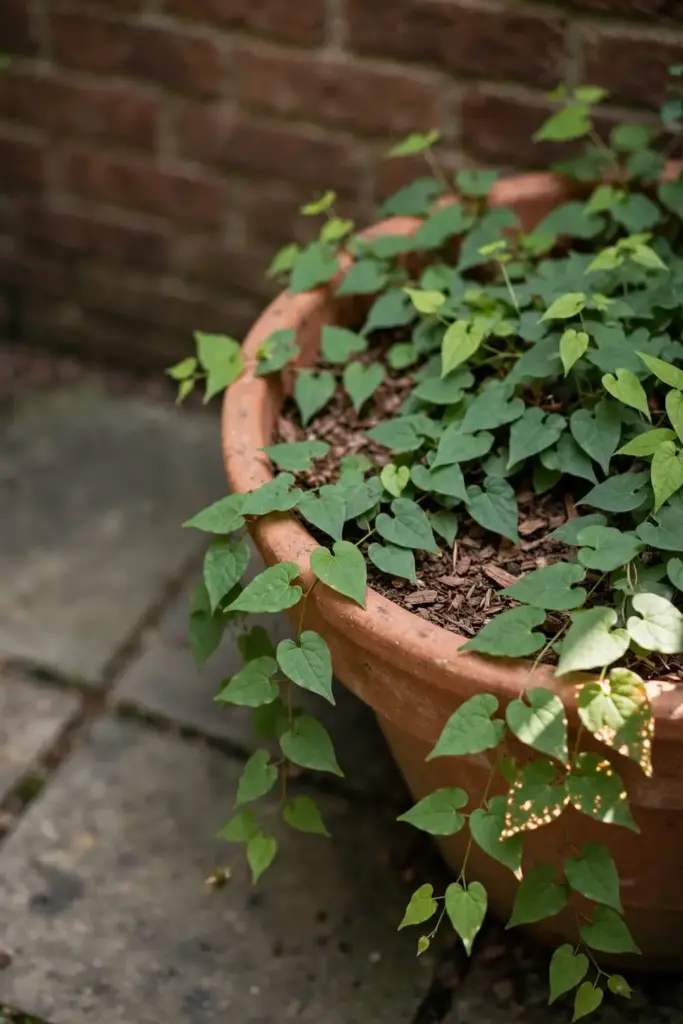
Container epimediums need more water than ground plantings; check twice weekly in summer. Feed at quarter strength twice a season. In zones 6 and colder, protect the pots in winter: cluster them against a sheltered wall, wrap the pots in burlap, or sink the whole pot into the ground for the season. Roots in pots experience colder temperatures than roots in the ground, so give container plants one zone of extra protection. Divide potted clumps every 2 to 3 years, since they fill their pots faster; two hand forks back to back work for pots too, with a knife for the woody rhizomes.
14. Overwintering in Cold Climates
Do nothing special in zones 4 to 8. Established epimediums sleep through winter under their own mulch layer, and snow cover is the best insulation they can get. The vulnerability is not cold itself but rapid freeze-thaw cycles that heave shallow rhizomes out of the soil. A 2-inch leaf mulch applied after the ground freezes in late autumn prevents heaving and can be pulled back in spring.
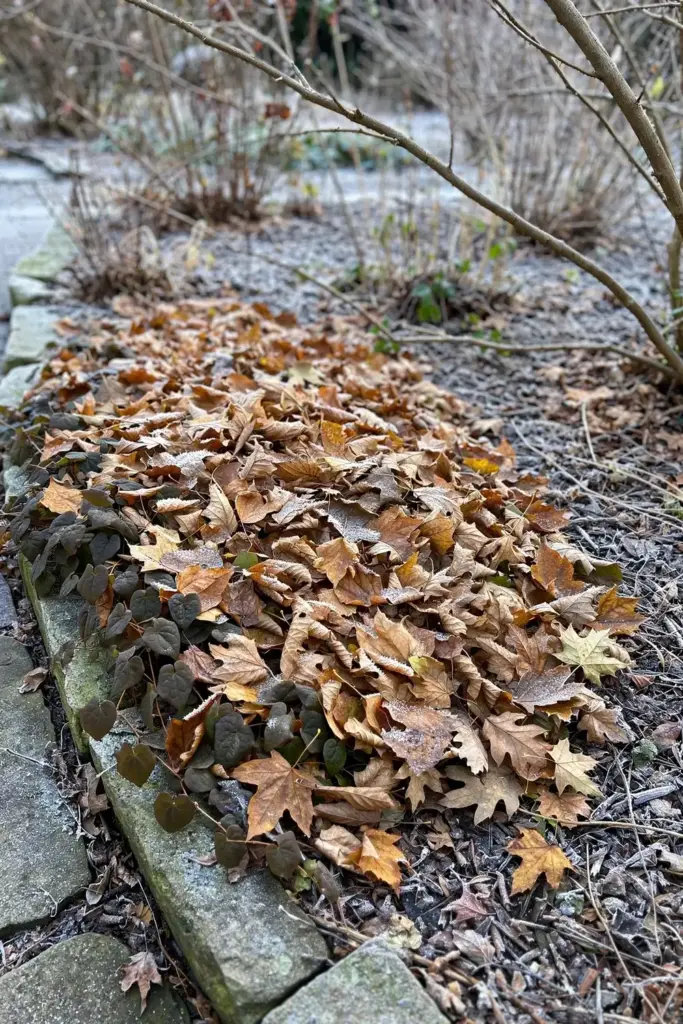
In zone 3, choose the hardiest species, plant in spring so roots establish all season, and mulch heavily. Late spring frosts that nip the early flowers are the real risk in cold regions; the plant survives, but you lose that year’s display. A floating row cover tossed over the bed on frosty nights in early spring protects the buds. Evergreen types may look ragged by March in cold zones; the spring cut-back in H2 11 removes the damage and the new foliage emerges clean.
15. Common Mistakes and the Fix for Each
Skip the seed drawer. Sow fresh, the same season, or refrigerate sown pots for 60 to 90 days if you missed the window. The site’s seed-starting guide covers the tray setup, moisture control, and hardening-off routine that gives slow germinators their best chance.
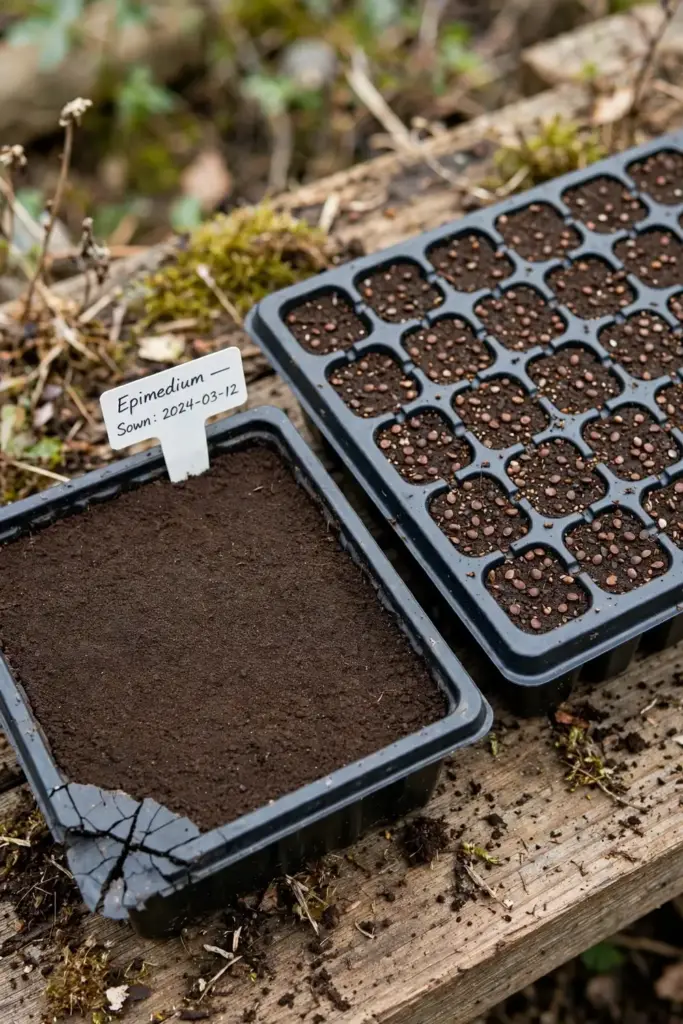
Burying the seed is the second failure. Epimedium seed wants light; pressed into the surface and left uncovered is correct, and a covering of mix can halve germination. Planting divisions too deep is the third. Set every division at exactly its previous depth, crown at soil level, and firm gently.
Skipping the cold period ruins indoor sowings. Without 60 to 90 days below 40 degrees Fahrenheit, or a real winter in a cold frame, most seed stays dormant and never germinates. Mark the stratification dates on the pot tag. Dividing in midsummer heat is the fourth mistake; September or early spring divisions establish with far less stress. Finally, salting the plants with synthetic fertilizer burns foliage that would have been fine on compost alone. Feed like a woodland, not like a lawn.
16. Troubleshooting
Seedlings emerged, then vanished. Damping-off in a too-wet tray is the likely cause. Next time, use a sterile mix, water from below, and give the tray air movement. Slugs also take small seedlings; a ring of coarse grit around the tray helps.
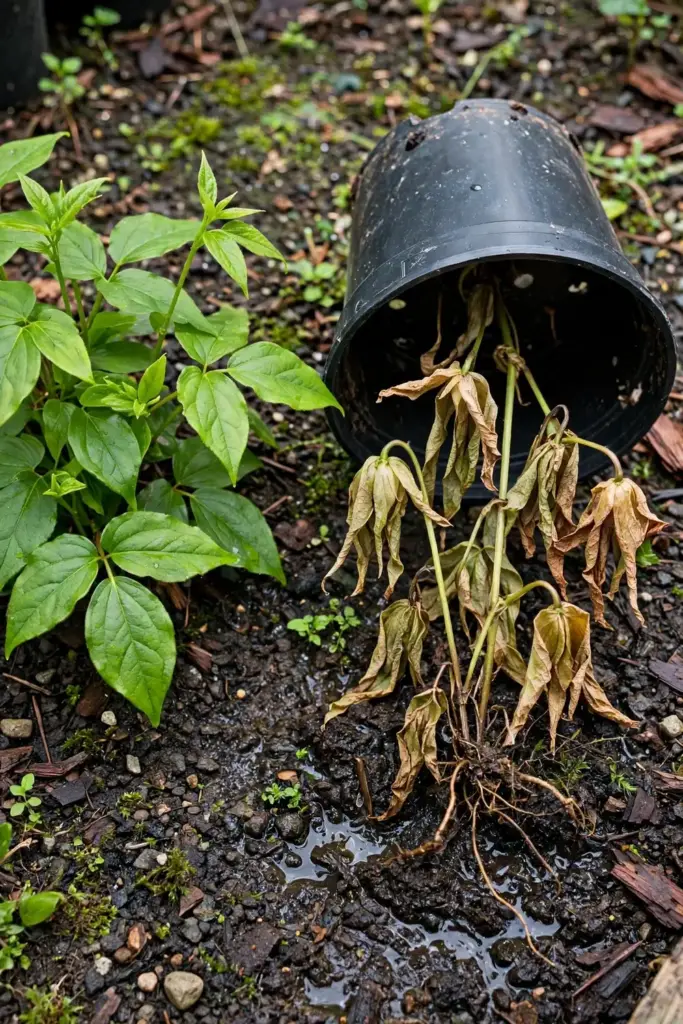
No germination after a full winter outdoors. The seed may have been too old when sown, or dried before sowing. Sow only current-season seed, and if you must store it briefly, keep it cool and slightly moist, never bone dry. Some seed waits a second winter; leave the tray one more season before discarding it.
Divisions wilted after splitting. You divided in heat, or left too little foliage. Water deeply, shade the divisions with a nursery pot for a week, and remember the two-thirds foliage rule next time. They usually recover from the roots.
Flowers hide under old leaves. You skipped the spring cut-back. Shear the old foliage to the base as the buds emerge next February or March.
Clump center died out. Old clumps exhaust their centers after many years. Lift the clump, discard the dead middle, and replant the vigorous outer sections. This is also the moment to share divisions with a gardening neighbor.
17. Frequently Asked Questions

Yes, and the method is straightforward: collect the seed while still green, sow it immediately on the surface of a humus-rich mix without covering, and give it a winter of natural cold or 60 to 90 days in the refrigerator below 40 degrees Fahrenheit. Seedlings emerge the following spring. Expect 2 to 4 years to first bloom, and know that seedlings are hybrids, never copies of the parent, because epimediums are self-sterile.
Plan on 2 to 4 years from sowing to first flower. Nursery growers report that one in ten seedlings flowered in the first year under nursery conditions, with the rest flowering in year two. Division skips the wait entirely, since a divided piece of a mature clump flowers the following spring. If flowers this year matter to you, divide instead of sowing.
Early autumn, September in most climates, is ideal, because the plant is entering dormancy and the soil is still warm enough for roots to re-establish. Early spring, just as growth resumes, is the second choice, though spring divisions need steady watering through summer. Divide established clumps every 3 to 4 years, before the woody rhizomes become difficult to cut.
No. Epimedium forms slowly expanding clumps, not running colonies. Some species spread more than others, but even the spreading types take 3 to 5 years to reach full cover and are easy to edge back. It is a well-behaved groundcover that suppresses weeds without becoming one, and it is not considered invasive.
Leave the foliage through winter. The old leaves protect the crown and feed the roots, and evergreen types look good all winter. Cut back in late winter or very early spring, just before the new flower stems emerge. Cutting in fall removes winter protection for no benefit and exposes the crown to freeze-thaw heaving.
They are two trade names for overlapping material. Yin yang huo is the Chinese herbal trade name for the aerial parts of several Epimedium species. Horny goat weed is the Western supplement industry’s name for products made from those same species. Neither name identifies a single species. In the garden, buy plants by species and cultivar name, which is the only label that tells you what will actually grow.
18. Where to Go From Here
Start with one division, not one packet of seed, unless the experiment is the point. A single healthy plant in dappled shade, given compost and a spring cut-back, becomes a clump worth dividing in 3 to 4 years, and that clump becomes the source of every epimedium you will ever need. That is the short version of how to grow epimedium: divide in September, cut back in March, and let the decades take care of themselves. The seed path rewards patience with surprises; the division path rewards a free September afternoon with new plants.
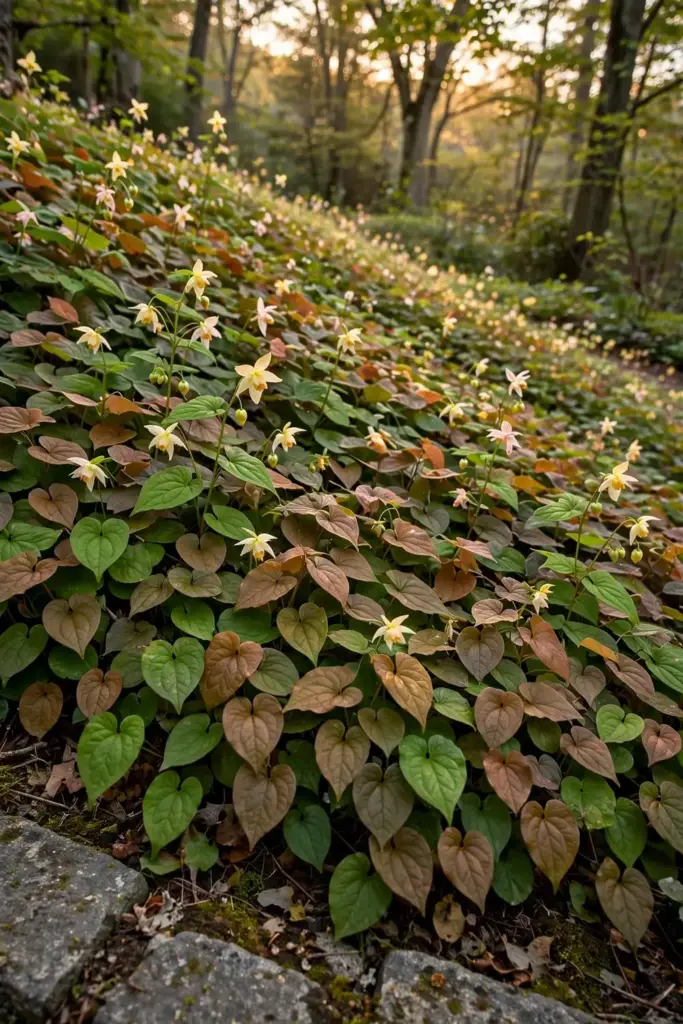
Once your epimediums are settled, they anchor the shade bed for decades with almost no input beyond the annual haircut. Pair them with other shade groundcovers to build the full woodland layer, and the spring groundcover planting guide shows which companions fill the gaps while your epimedium clumps knit together.