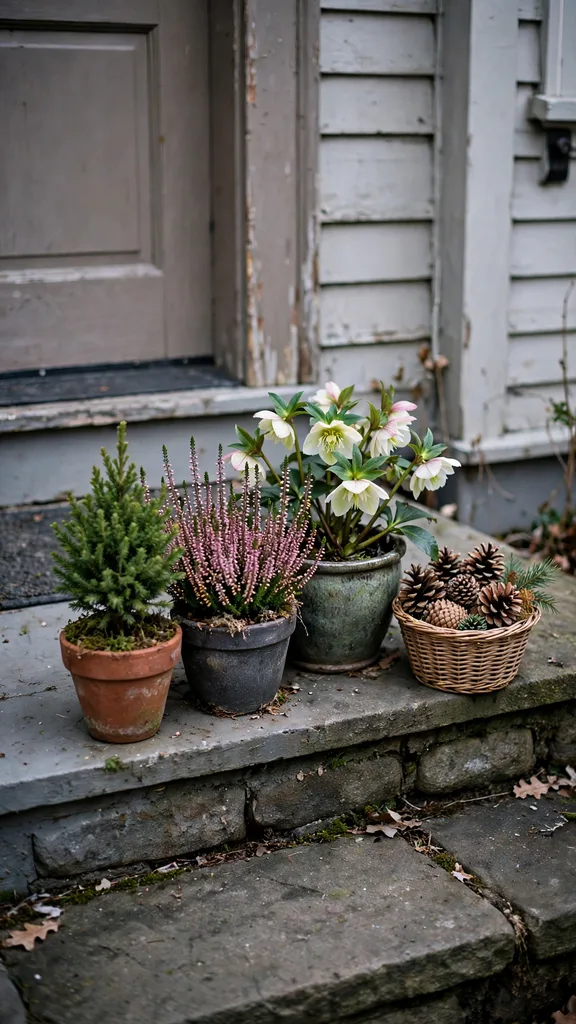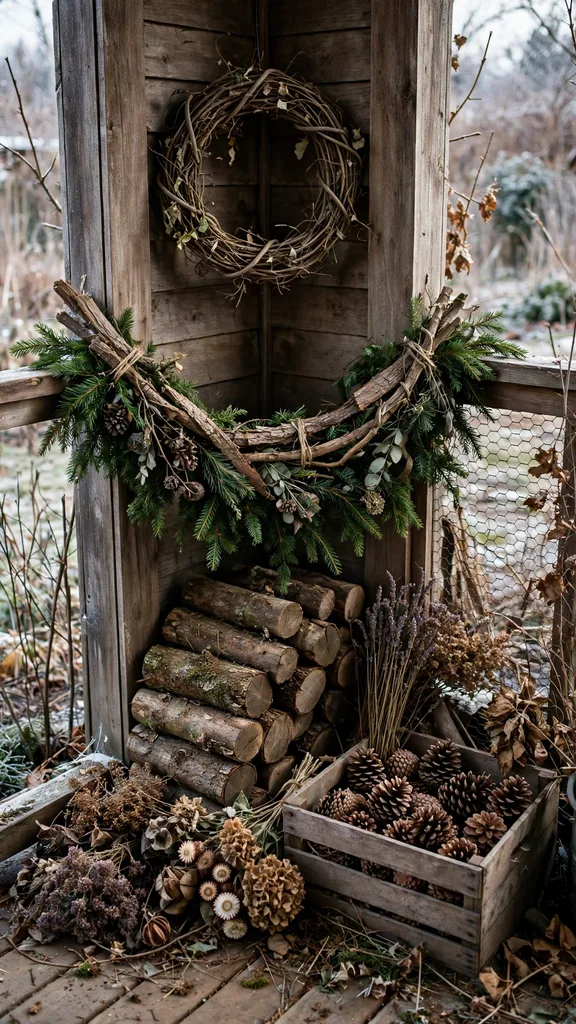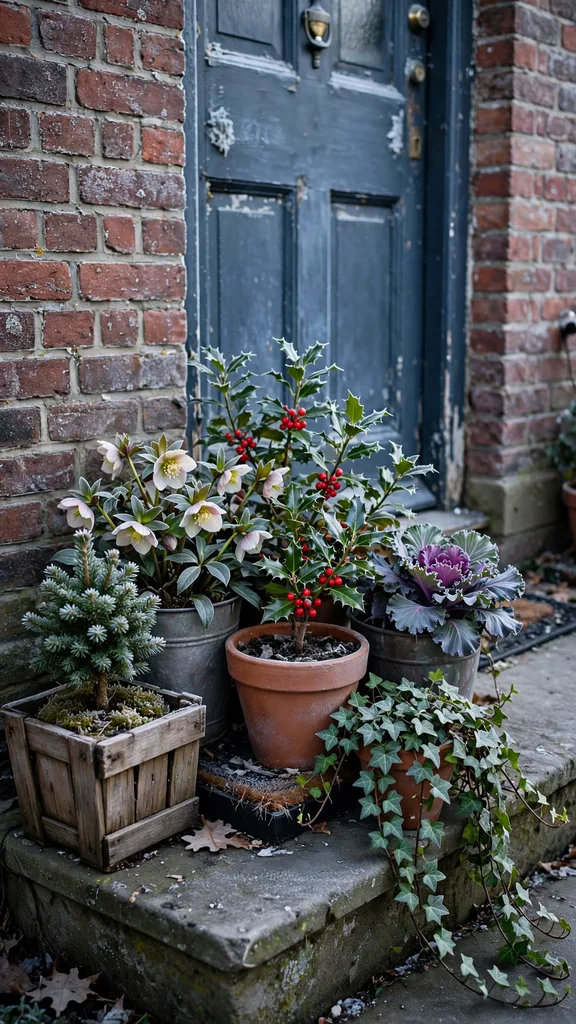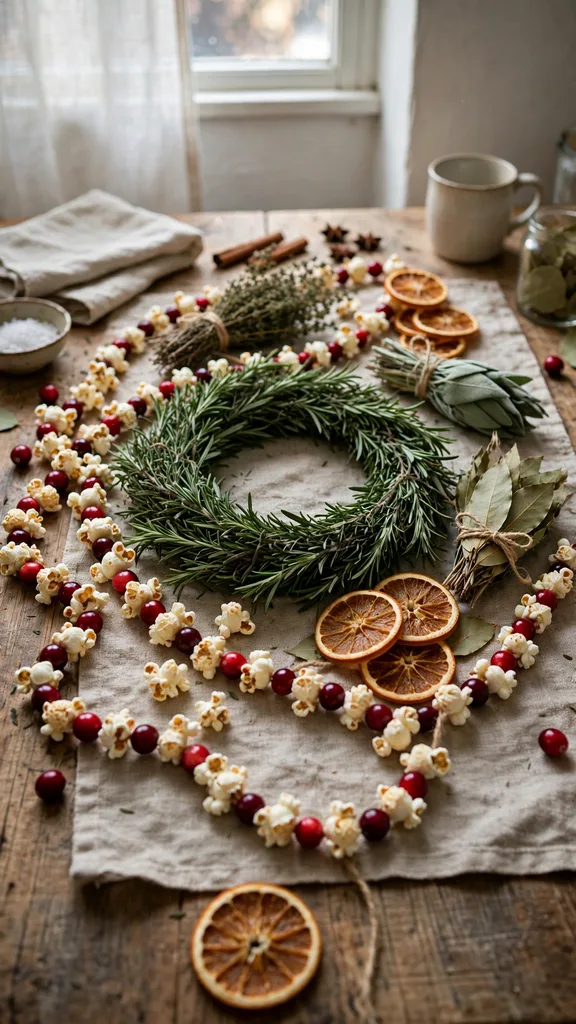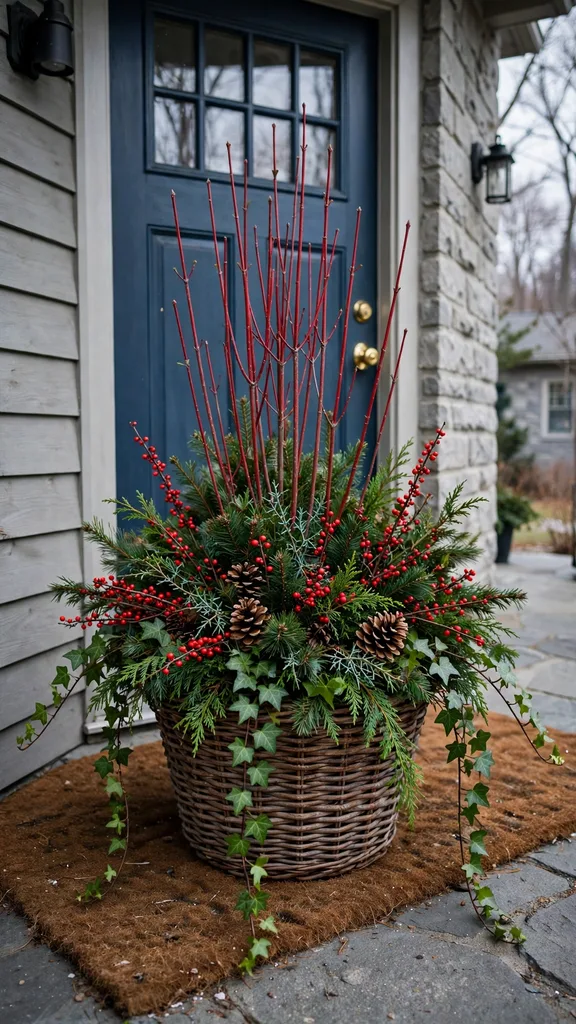
Every good winter planter is built in three layers: a thriller for height, a filler for body, and a spiller for the edge. This list gathers 45 layer ideas drawn from garden cuttings, prunings, and the plants already growing in most gardens, so a planter can be built from the garden itself rather than from a shopping trip. Each idea names its layer, because a cutting’s job depends on where it sits: the same holly branch is a thriller at the center and a filler at the side.
The method is a single cutting session. Walk the garden with snips and a bucket, take upright stems for thrillers, short tips and sprays for filler, and long trails for spillers, then build the pots on the porch in one sitting. I build the door planters first and let the leftover cuttings decide the rest, which they always do, since a bucket of mixed cuttings sorts itself into layers the moment you start.
| Layer | Job | Garden Sources |
|---|---|---|
| Thriller | Height and silhouette | Dogwood stems, birch poles, grass plumes, seed heads |
| Filler | Body and color | Evergreen tips, berries, cones, dried flowers, kale |
| Spiller | Softens the rim | Ivy, cedar, trailing rosemary, periwinkle |
| Refresh | Five minute filler swap | Spare sprays in a bucket by the door |
1. Red Twig Dogwood Stems as the Thriller
Push a bundle of red dogwood stems into the pot’s center and the planter gains a thriller with genuine height and the strongest winter color a stem can give. Cut the stems long, push them deep, and fan them slightly so the red reads as a fountain rather than a fence.
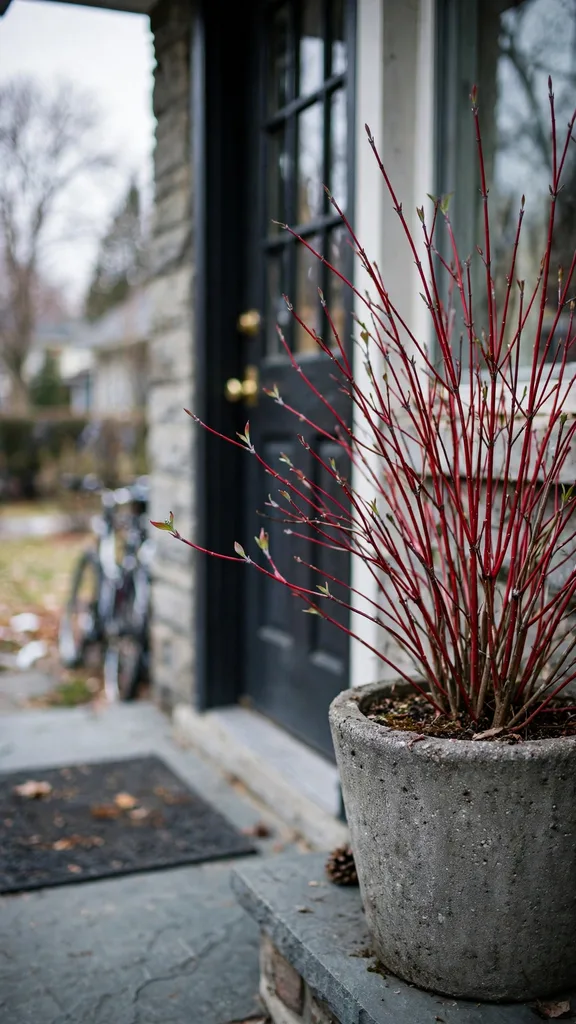
Dogwood stems in a pot last the whole season and many will root by spring if the compost stays moist, turning the thriller into next year’s shrubs. The color is brightest on one year wood, so cut from the shrub’s newest growth.
2. Curly Willow Branches as the Thriller
Curly willow’s spiraling branches make a thriller with movement built in, a corkscrew silhouette that catches light and frost. A few stems go a long way; the curls fill air the way straight stems never can.
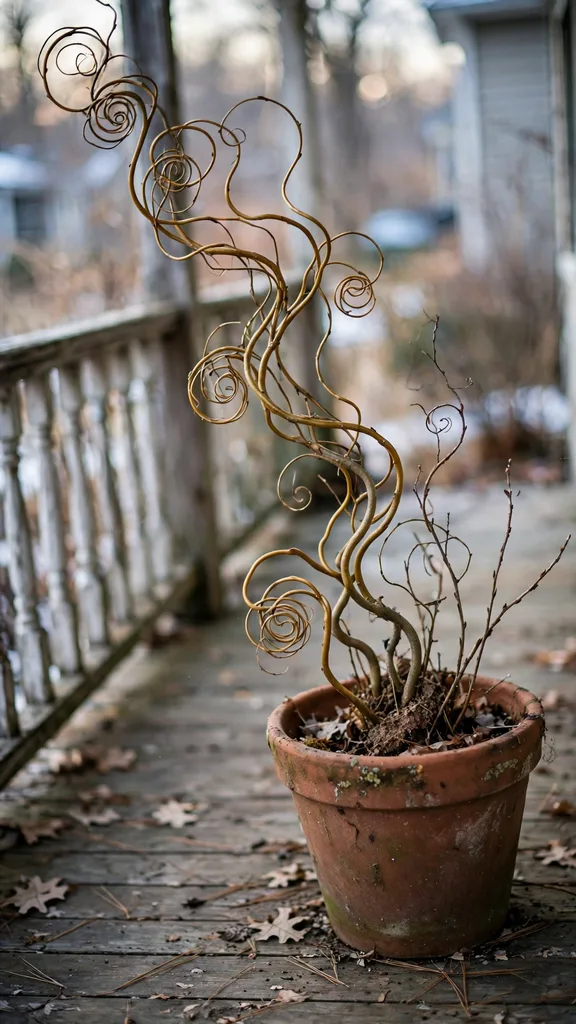
Willow roots in water and moist compost with enthusiasm, so a thriller of curly willow may need potting on as a plant by spring, which is a bonus rather than a problem. Keep the stems tall and let the spirals do the decorating unadorned.
3. Upright Evergreen Cutting Bundle as the Thriller
Bind a bundle of upright evergreen cuttings, fir, pine, or spruce tips, and push the bundle into the center as a instant small tree the planter can be built around. It is the fastest thriller in this list: one pruning session, one bundle, one minute.
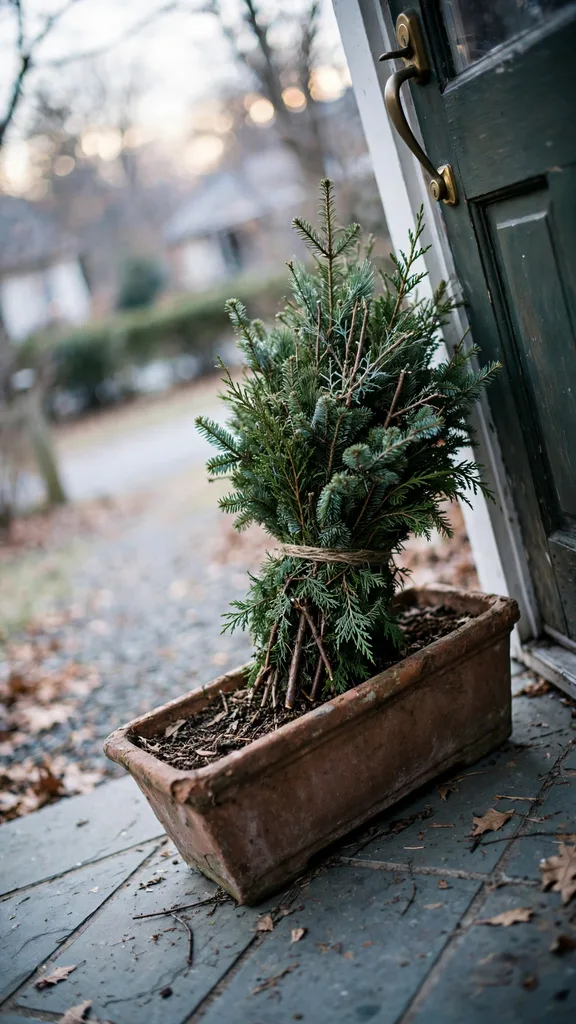
Cuttings pushed into moist compost stay fresh 5 to 7 weeks outdoors, the longest of any cut material here, because the compost feeds them like soil. Refresh the bundle in January from the same hedge and the planter looks newly planted.
4. Dried Hydrangea Heads as the Thriller
Stand dried hydrangea heads on their stems in the center for a thriller in faded blue, pink, or parchment that holds its shape all winter. The heads’ size gives a small pot a big silhouette, and frost improves them, silvering the edges.
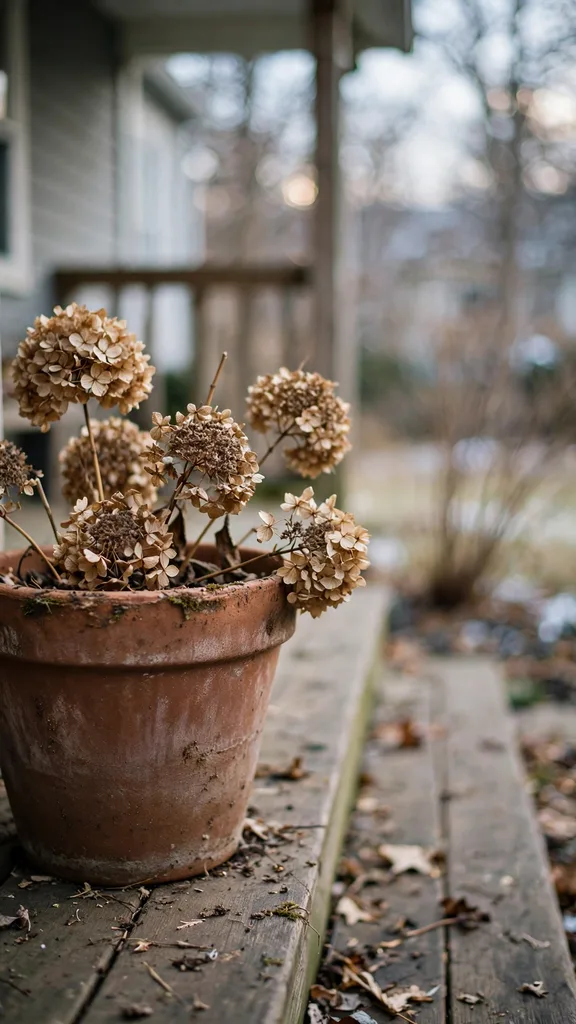
Dried heads are light, so push the stems deep or wire them to a hidden stake in a windy spot. They last the whole season outdoors under a porch and most of it in the open, which makes the summer flower bed a thriller supplier.
5. Ornamental Grass Plumes as the Thriller
A sheaf of ornamental grass plumes tied at the waist and pushed into the pot’s center gives a thriller that moves in every breath of wind. The plumes’ pale gold against evergreen filler is the winter planter’s most elegant contrast.
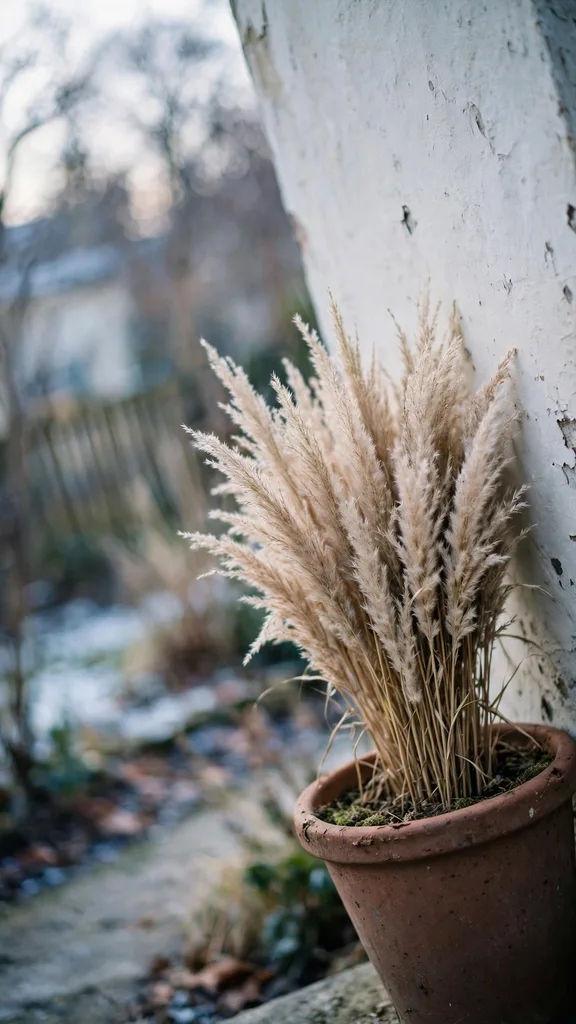
Cut plumes before the autumn rains shatter them and store the spares dry. In the pot they last 4 to 6 weeks before weather mats them; a replacement sheaf takes two minutes, which is the right maintenance budget for elegance.
6. Birch Poles as the Thriller
Three white birch poles of different heights pushed into a pot make a thriller of pure line and bark, the Scandinavian entry in this list. The poles need nothing on them; their white is the decoration, and evergreen filler at their feet completes it.
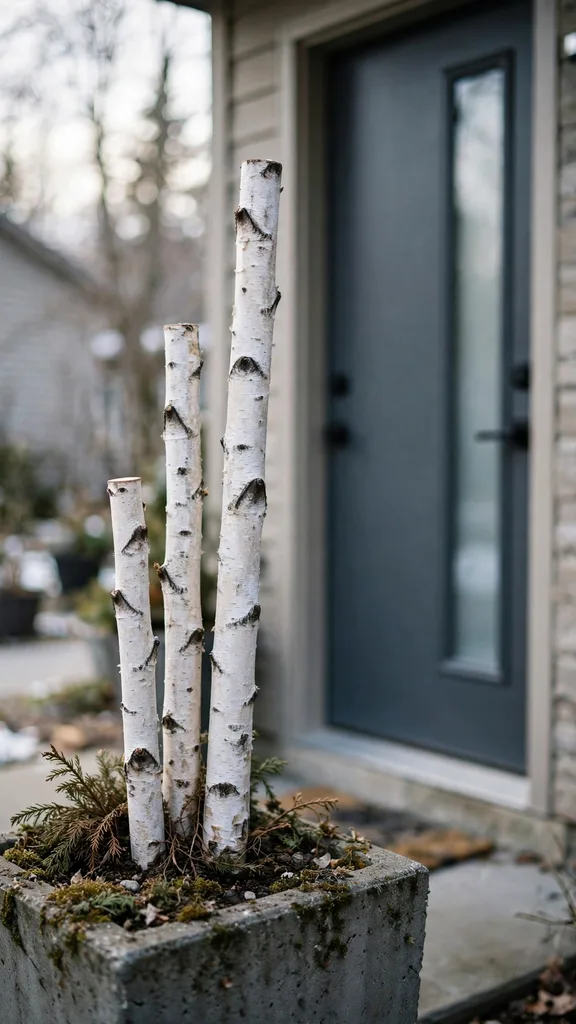
Birch poles last for years and return each winter from the shed. Set them in a triangle, tallest at the back, and push them deep enough to stand through storms. In spring they become plant supports, which is a pole’s other career.
7. Holly Branches With Berries as the Thriller
Cut holly branches heavy with berries and stand them at the pot’s center for a thriller that arrives pre-decorated. The gloss leaves and red berries against plain filler greens is the traditional Christmas planter in one layer.
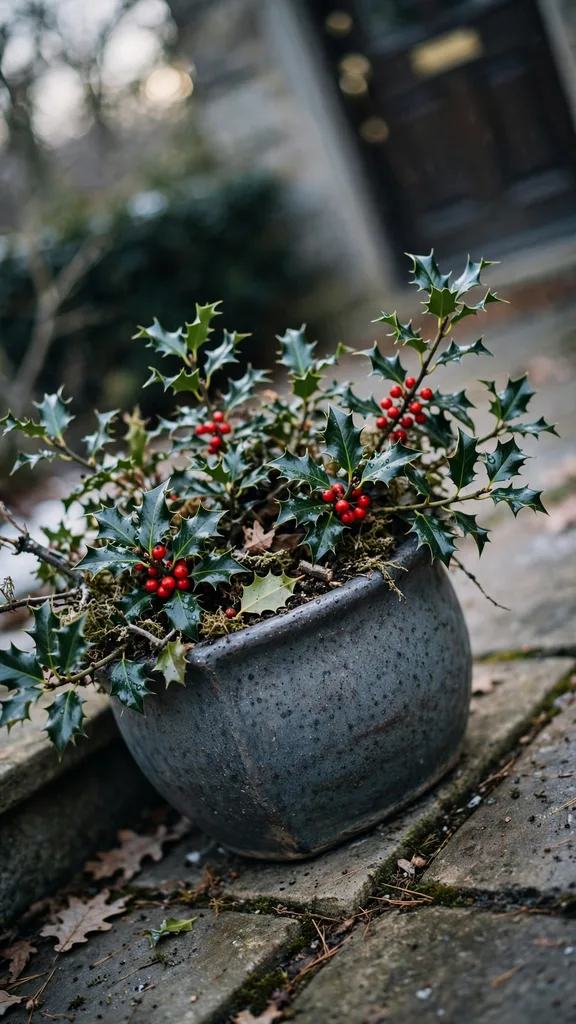
Holly cuttings last 4 to 6 weeks outdoors, longer in compost than in a vase. Cut from the shrub’s shaded interior where the berries cluster thickest, and the shrub never misses them. Gloves are the whole safety briefing for this thriller.
8. Magnolia Branches With Furry Buds as the Thriller
Magnolia branches carry fat, furred buds all winter that read as silver ornaments on bare stems. Stood in a pot’s center, they give a thriller of quiet luxury, with the promise of spring’s flowers folded inside every bud.
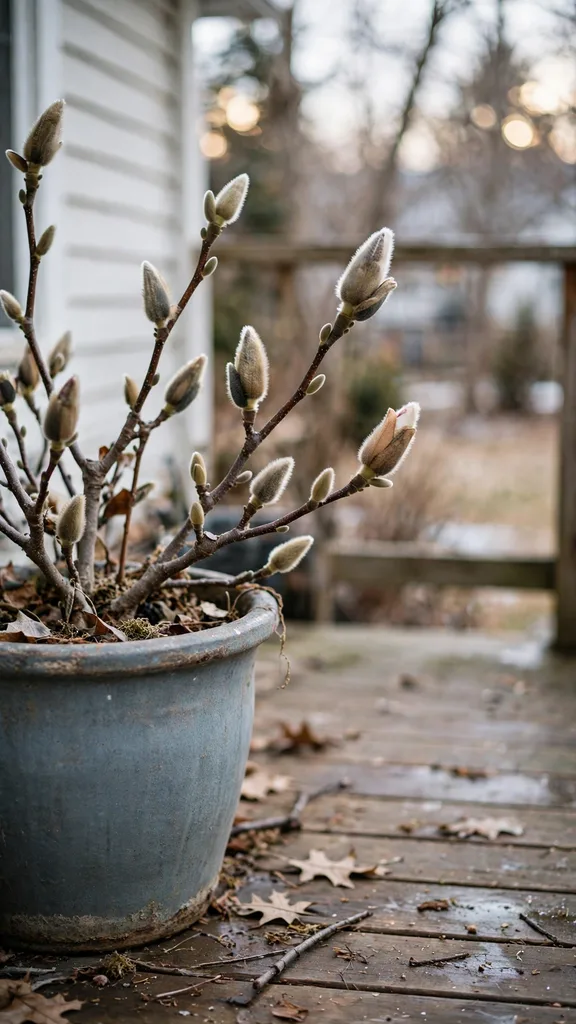
The buds hold on the branch for months, so this thriller is set and forgotten. Cut branches from pruning work rather than stripping the tree, and keep the stems long; magnolia’s elegance is in its proportions, which shortening ruins.
9. Eucalyptus Stems as the Thriller
Cut eucalyptus stems stand tall in silver blue, the modern thriller that pairs with everything and scents the planter faintly when brushed. Their round leaves on straight stems give height with an airy, open habit.
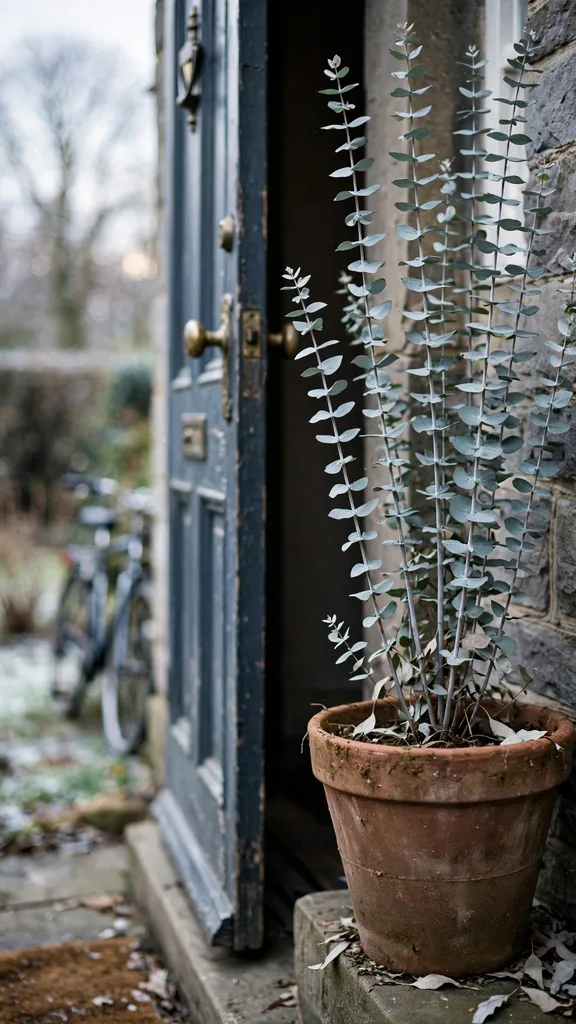
Eucalyptus dries in place over the season, keeping its color and most of its scent. In cold zones the stems come from a potted tree brought indoors, cut as it is pruned, which makes the thriller a by-product of houseplant care.
10. Tall Seed Heads as the Thriller
Stand the garden’s tall seed heads, teasel, echinacea, rudbeckia, and ornamental alliums, in a pot for a thriller grown rather than cut from a shrub. Their shapes silhouette against winter light and hold frost like sculpture.
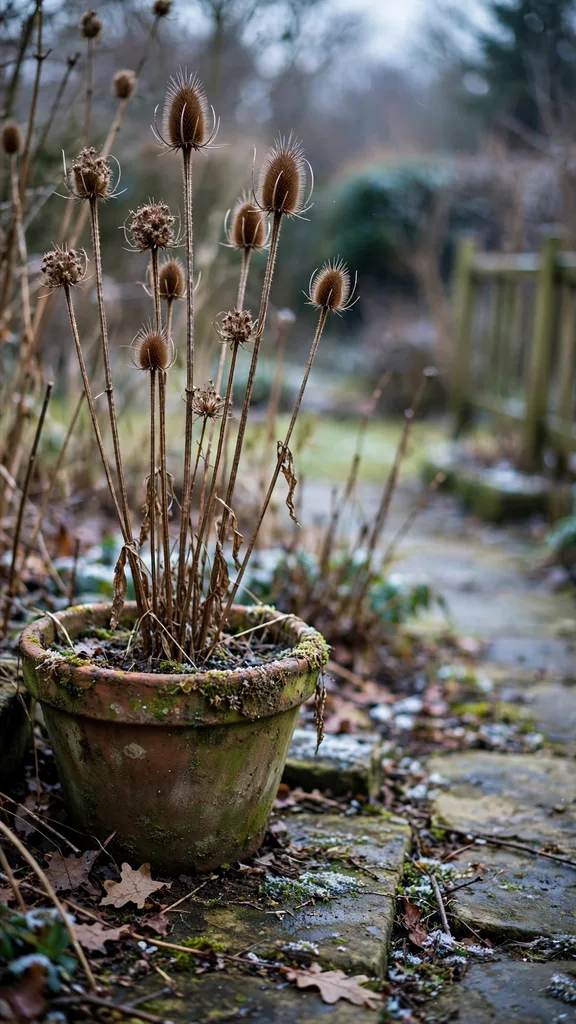
Seed heads last until wet snow bends them, most of the season in a sheltered spot. Leave the garden’s standing seed heads partly uncut for the birds; the thriller takes a share, not the whole harvest, and the planter and the birds both eat well.
11. Yellow Twig Dogwood as the Thriller
The yellow stemmed dogwood gives the thriller in chartreuse, a color that glows on gray days and pairs with red berries and dark greens. Alternating red and yellow dogwood stems in two pots flanking a door is a design in itself.
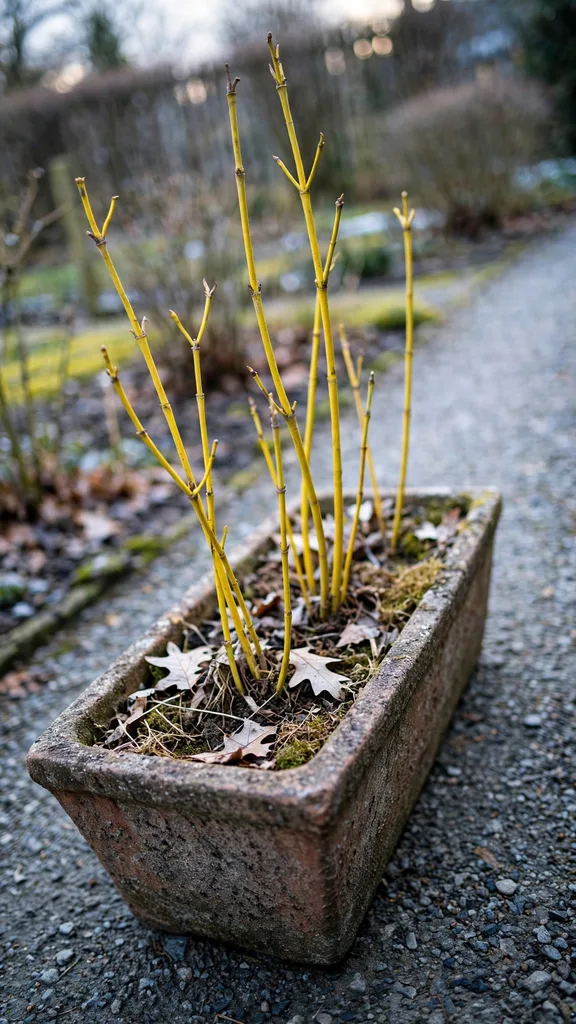
Like its red cousin, it roots in moist compost and colors best on young wood. Cut it hard in spring and both the shrub and next year’s thriller improve, which is the dogwood bargain: the pruning is the planting.
12. Pine Branch With Its Cones On as the Thriller
Cut a pine branch that carries its own cones and stand it at the center: thriller and ornament in one cutting. The long needles soften the pot’s outline while the cones give it the detail guests lean in to see.
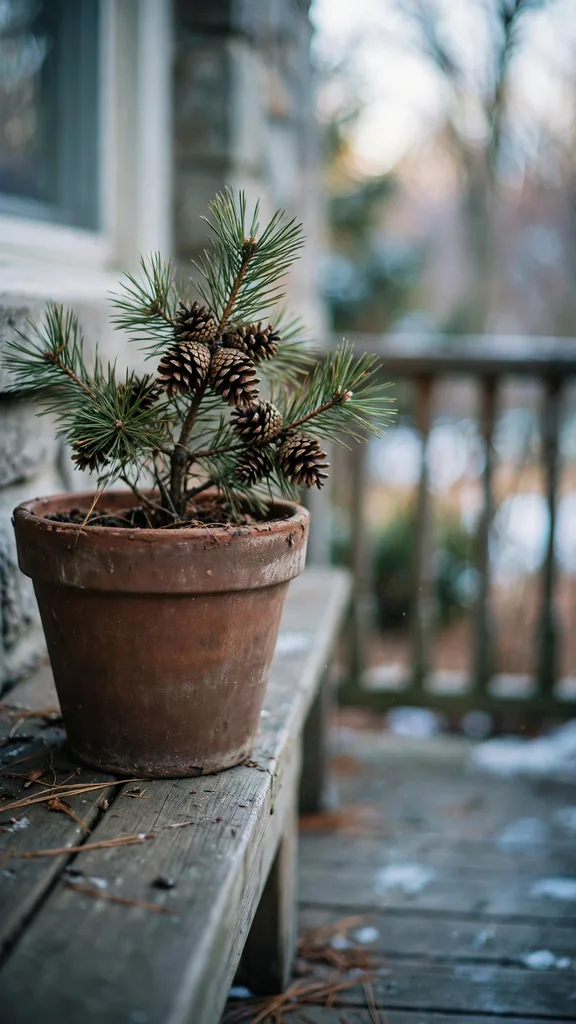
Pine cuttings hold their needles well outdoors for 4 to 6 weeks. Choose branches from the tree’s lower, shaded side, where cutting improves the tree’s shape anyway. A coned branch is the laziest thriller here and one of the best looking.
13. Evergreen Tips as the Filler Ring
Ring the thriller with short evergreen tips, cedar, fir, and yew cuttings pushed into the compost at an angle, and the pot gains its green body. The filler ring is where the planter’s fullness comes from, and cuttings do it for free.
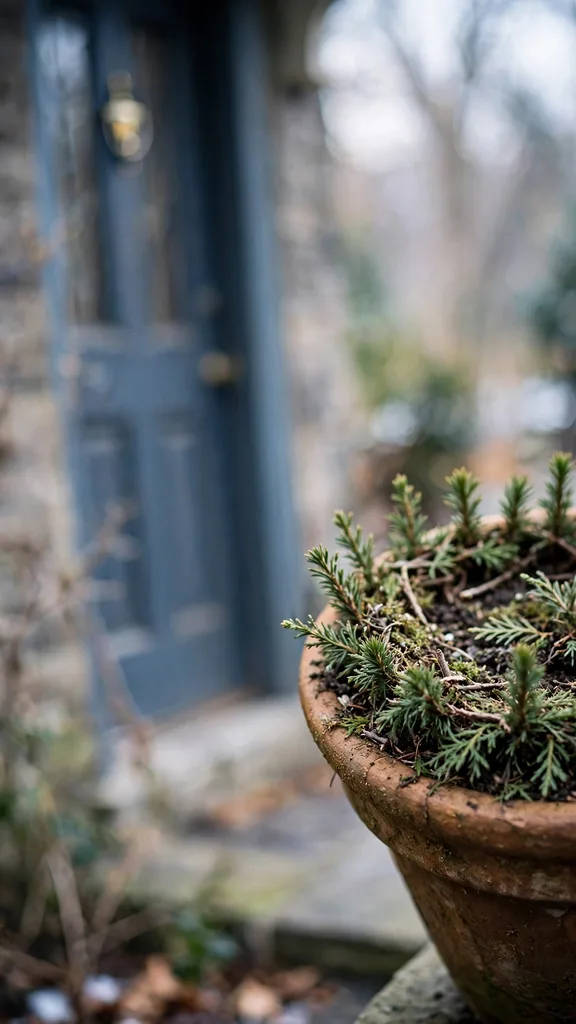
Mixed tips look richer than one species alone: flat cedar against spiky spruce against soft fir. Push each tip 2 inches into the compost and they stay fresh 5 to 7 weeks, drinking like plants, which for winter purposes they are.
14. Pinecone Clusters as the Filler
Wire pinecones in clusters of three and push the wires into the pot’s middle layer, where the cones nestle among the greens like fruit. Cones give the filler a texture nothing green can: woody, geometric, and permanent.
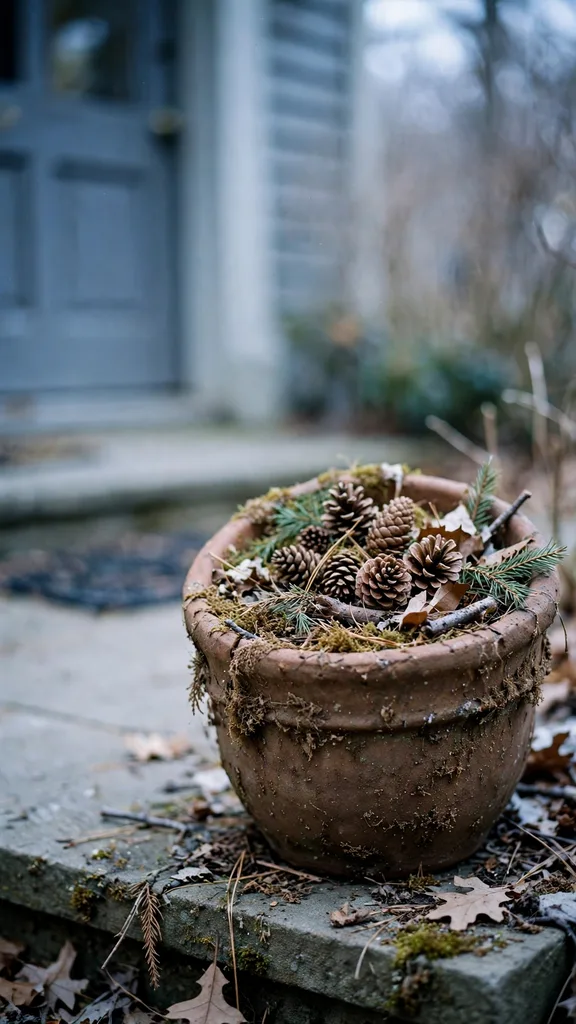
Cones in a planter last for years and return to the store in spring. Use one species of cone per pot for a designed look, or mix them for a gathered one. Either way, the filler costs a walk under the pines.
15. Dried Orange Slice Picks as the Filler
Mount dried orange slices on short wires or skewers and push them through the filler layer like small suns among the greens. The Clemson Extension guide to drying oranges gives the drying method behind them: slices an eighth of an inch thick, dried low and slow until translucent.
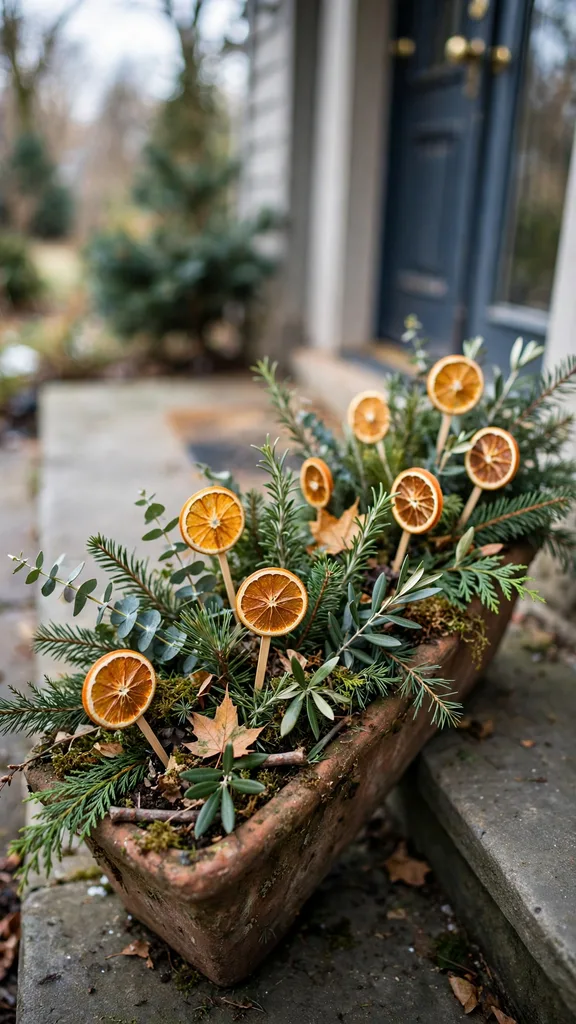
Orange picks last 3 to 4 weeks outdoors and longer under a porch. Make them a touch thick so the wire holds without tearing. A dozen picks transform a plain evergreen pot into the planter guests photograph.
16. Winterberry Sprays as the Filler
Push winterberry sprays through the middle layer and the pot gains red berries at exactly the height the eye rests. The NC State Extension Plant Toolbox entry for Ilex verticillata profiles winterberry as the deciduous holly grown for this winter fruit display.
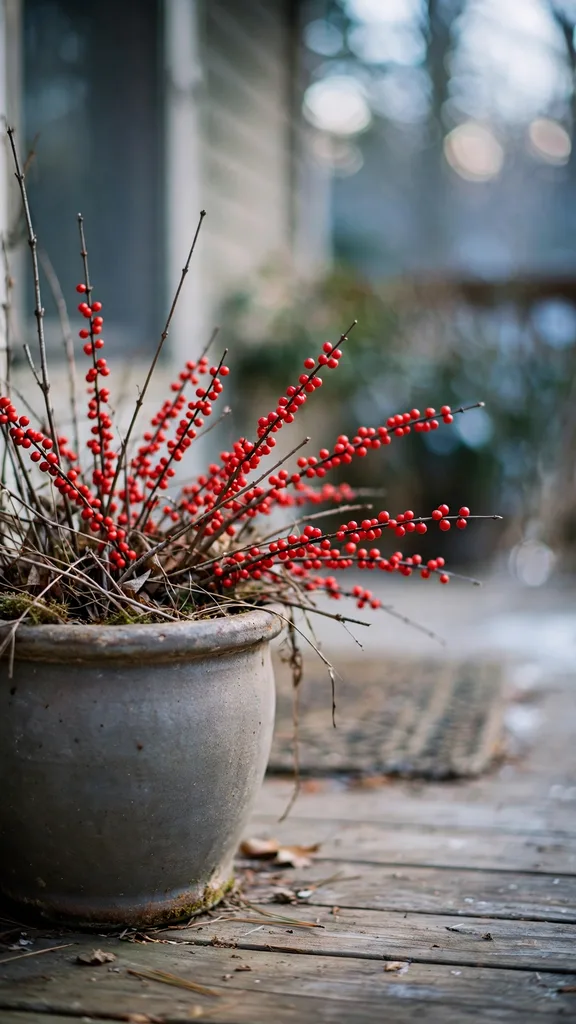
Berries hold 2 to 4 weeks outdoors before the birds or the weather take them. Keep spare sprays in a bucket of water in the cold and refresh the pot in minutes. Berry filler is the highest impact layer per stem in this list.
17. Moss Mound as the Filler
Cover the compost with a mound of moss and the pot’s middle disappears under a green hill that makes every stem look planted in a woodland. Moss is the filler that hides the mechanics, turning a collection of cuttings into a small landscape.
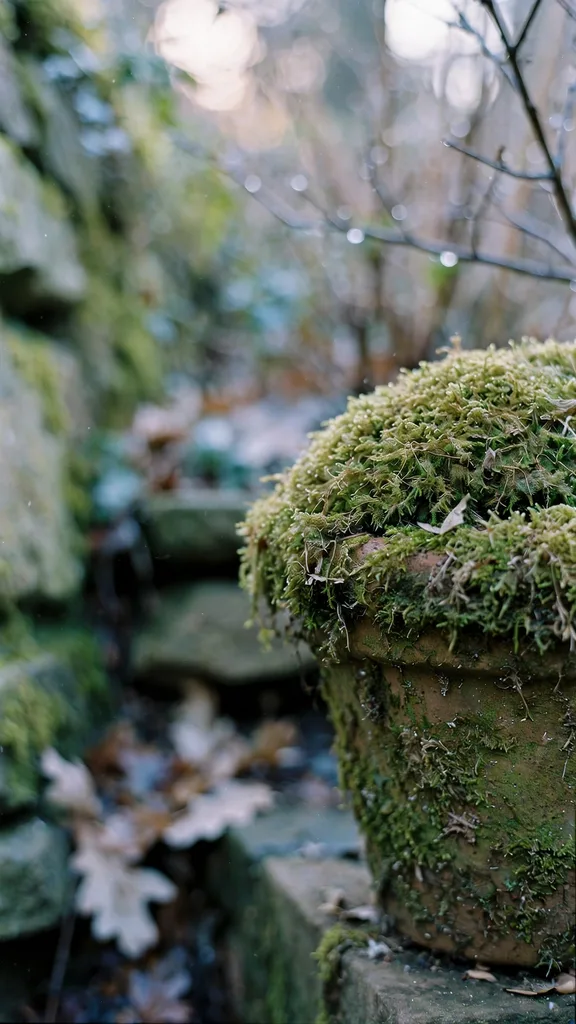
Gather moss from where it grows unwanted, on paths and old walls, rather than stripping woodland floors. Kept damp, a moss mound stays green all winter; dried out, it browns at the edges and still reads as ground, which is forgiving of it.
18. Dried Flower Bunches as the Filler
Push small bunches of dried flowers, statice, strawflowers, and lavender, into the middle layer for color that owes nothing to the season. Dried flowers are the summer garden filling the winter pot, which is the kind of thrift that feels like magic.
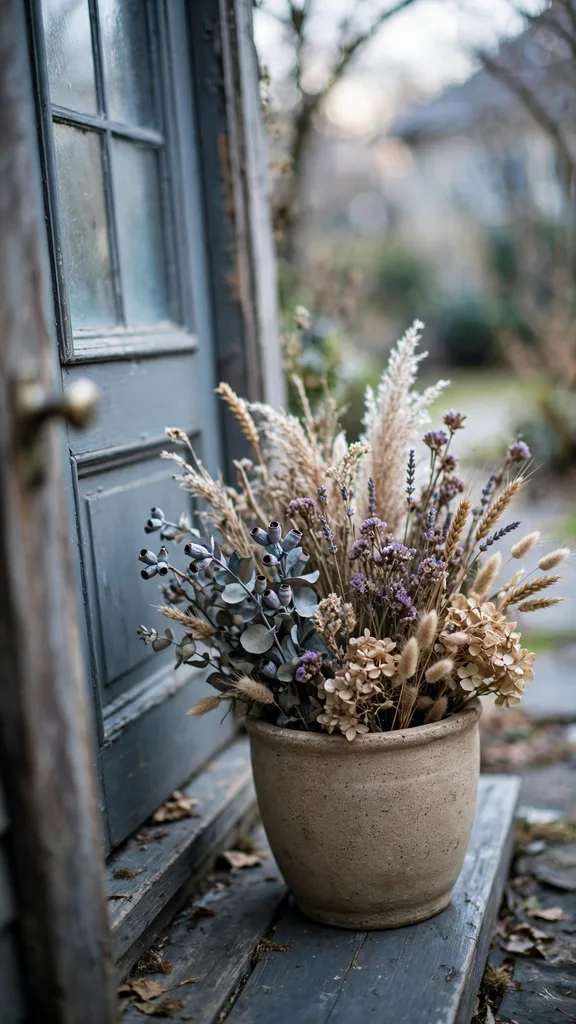
Dried bunches last 4 to 6 weeks outdoors under shelter, fading gently. Keep the brightest for the pots nearest the door. The filler layer is where dried flowers belong in a planter: close enough to see, sheltered by the thriller above them.
19. Herb Bundles as the Filler
Tie small bundles of rosemary and sage and push them into the filler layer, where their gray green foliage and scent work at hand height. A planter by the kitchen door filled with herbs seasons the cooking and the doorstep at once.
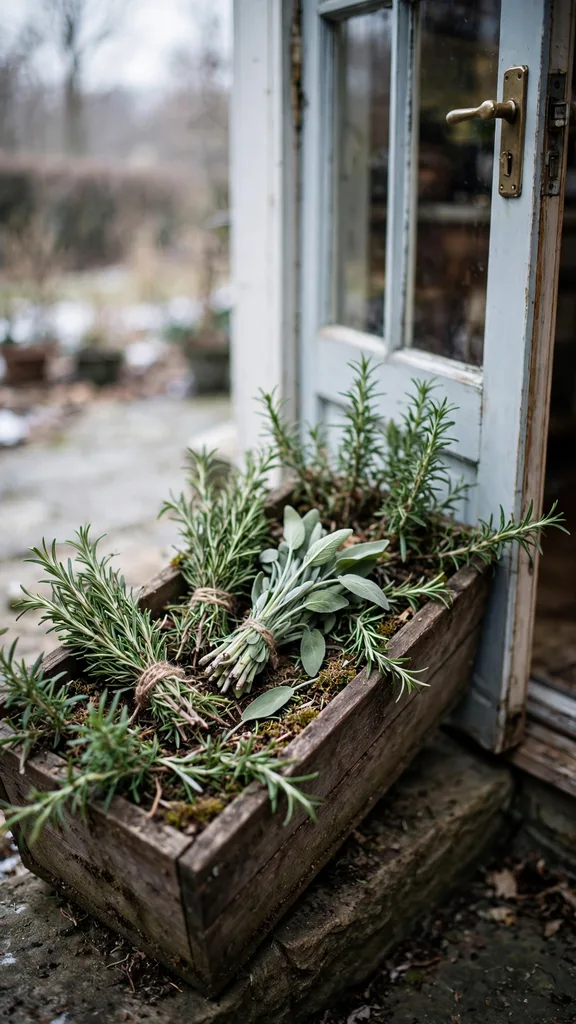
Fresh herb bundles last 3 to 4 weeks outdoors, drying in place and staying handsome. Cut them from the winter pruning of the herb bed, which needs the trim anyway. The filler that can be eaten is the filler’s best argument.
20. Ornamental Kale as the Filler
Set ornamental kale rosettes into the middle layer for filler with real size: purple, pink, and cream leaves that deepen with every frost. One kale fills like six small plants, which makes it the budget filler’s heavy artillery.
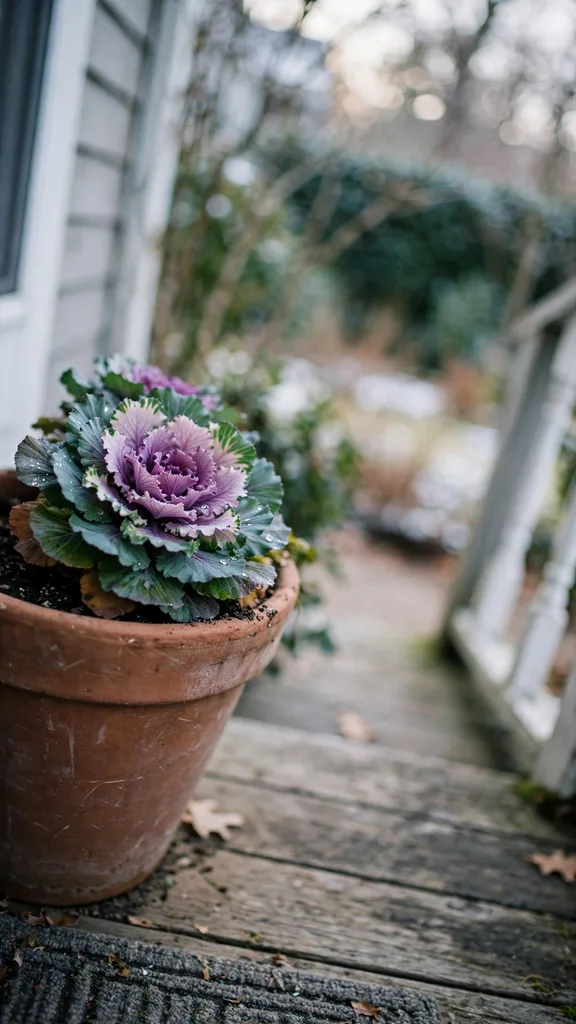
Kale holds from November to March in a pot, asking only water in dry spells. Its colors peak in the coldest weeks, exactly when the rest of the planter is coasting. By spring it bolts, its work done, having filled two seasons of photographs.
21. Heuchera Plants as the Filler
Pot heucheras into the filler layer for leaves in purple, amber, and lime that hold their color through winter. A living filler plant roots in and stays, so the pot improves instead of fading, and in spring the heucheras divide into the borders.
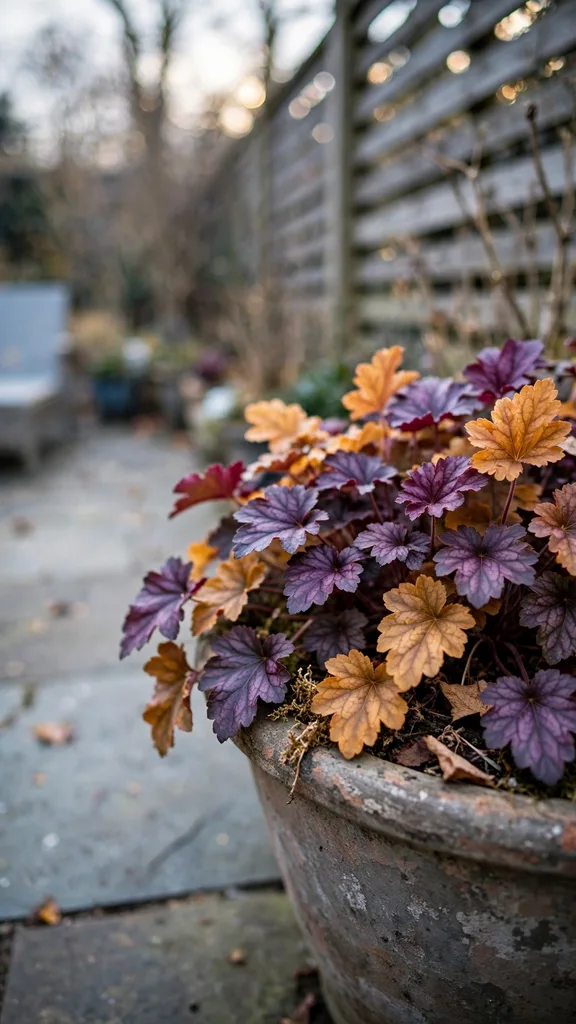
Heucheras want drainage and a light tidy in spring. Their foliage colors deepen in cold, so the filler gets better as winter bites. This is the filler for gardeners who prefer their planters planted rather than arranged.
22. Cinnamon Stick Bundles as the Filler
Tie cinnamon sticks into small bundles and wire them through the greens for a filler with scent and spice color. The sticks’ rust brown against evergreen is a combination the kitchen invented and the planter borrowed.
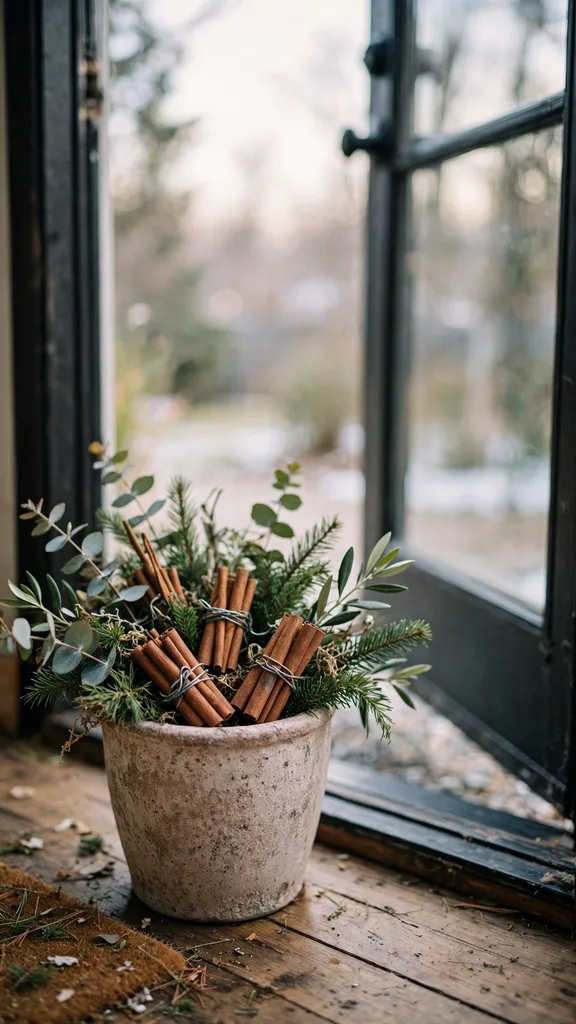
Cinnamon keeps indefinitely, so the bundles return to a jar in spring and come out next year. They are the only filler here bought once and used forever, which earns them a place even in the strictest garden-only planter.
23. Magnolia Leaf Filler
Tuck magnolia leaves, green side and copper underside alternating, through the middle layer for a filler with a tailored, two tone richness. The leaves’ size and gloss make a small pot look expensive, which is a useful trick at a front door.
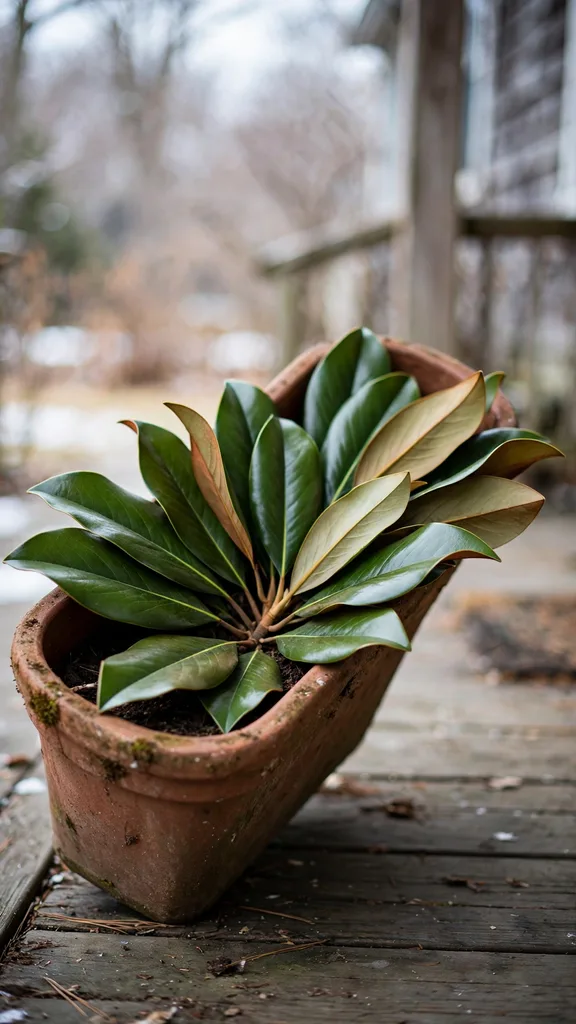
Magnolia leaves last 4 to 5 weeks outdoors, curling into their copper phase as they dry. Wire them in small fans of three so they sit where you put them. A magnolia in the garden is a filler factory that prunes itself in the wind.
24. Silver Foliage Cuttings as the Filler
Cut silver foliage, dusty miller, lavender tops, and artemisia where hardy, into the filler layer for the cool tone that makes red berries and orange slices glow. Silver is the mediator of the winter palette, the color that lets the others be loud.
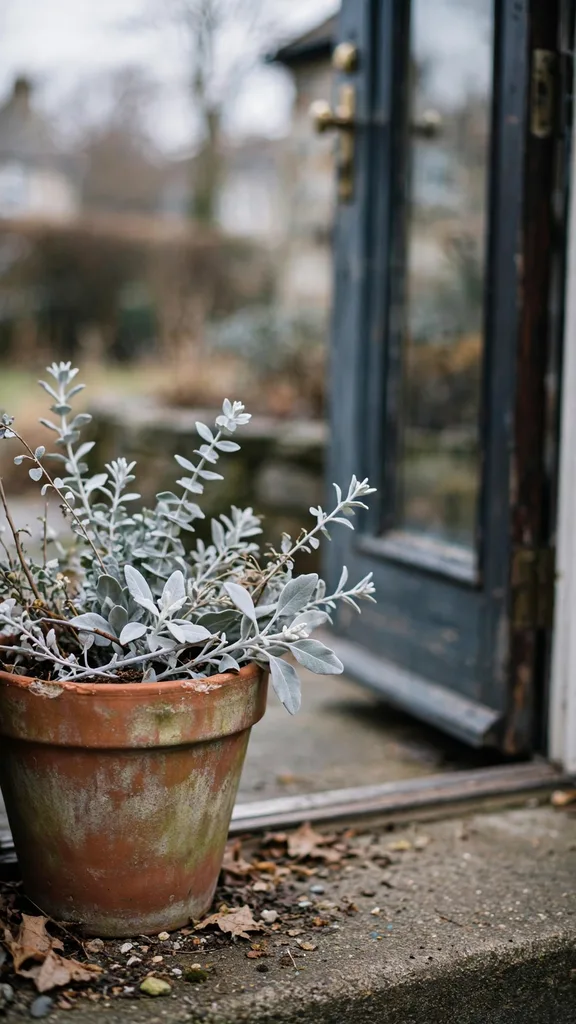
Silver cuttings last 3 to 5 weeks outdoors, the lavender longest. In cold zones the dusty miller comes from pots brought under cover. A planter with silver in its middle rarely looks wrong, which is why florists reach for it and gardeners grow it.
25. Sedum Seed Head Clusters as the Filler
Push clusters of dried sedum heads into the filler for rusty red plates of tiny stars that hold frost beautifully. Sedum heads are the filler with architecture, flat topped and dense, giving the middle layer a structure greens cannot.
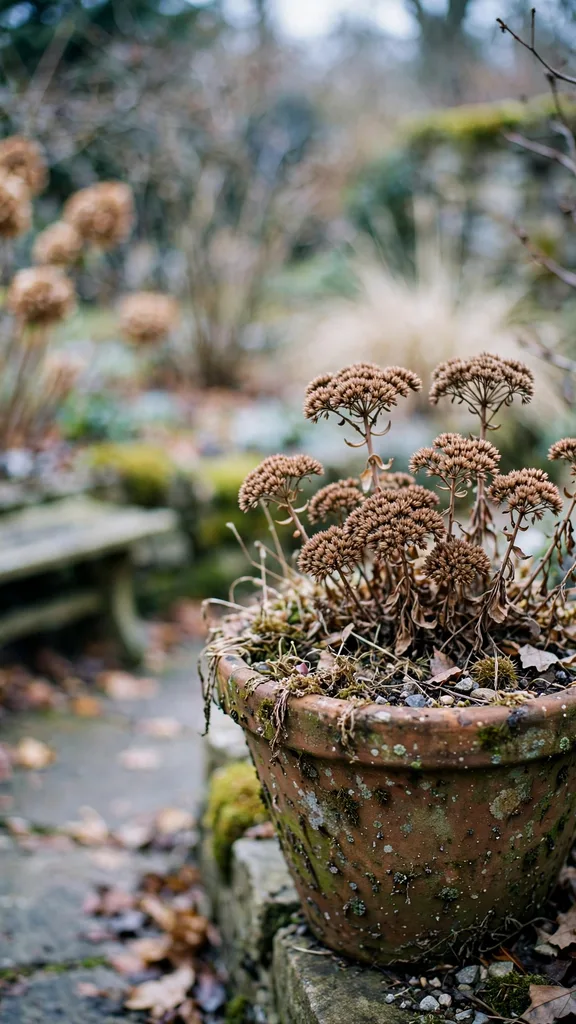
The heads last the whole season outdoors, darkening slowly. Cut them in autumn when they color and store a bunch dry; they are the filler most likely to be mistaken for something bought, which the gardener may accept as a compliment.
26. Ivy Trails as the Spiller
Trail ivy over the pot’s rim for the classic spiller: lobed leaves on long stems that soften the container’s edge and connect the planting to the ground. Ivy is already growing in most gardens, which makes it the spiller with no shopping in it.
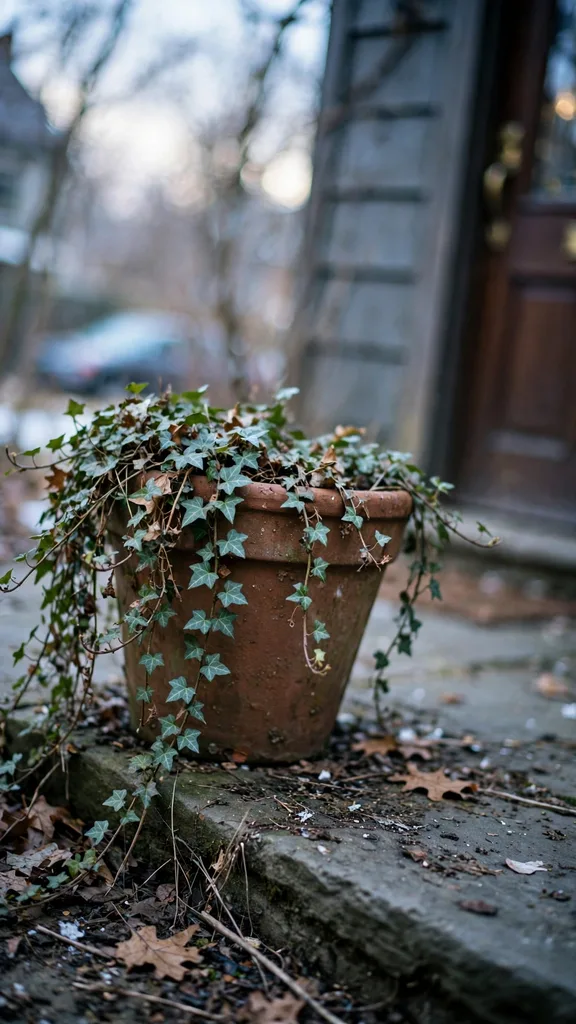
Ivy trails last all winter, being evergreen and unimpressed by frost. Rooted ivy planted at the rim spills further each year; cuttings pushed into the compost root by spring. Either way, the spiller costs a walk with the snips.
27. Draped Cedar Garland as the Spiller
Drape a short length of cedar garland over the rim and let it hang in a swag for a spiller with instant length. The garland’s flat sprays fall like water over the pot’s edge, giving a newly planted pot the finished look of an established one.
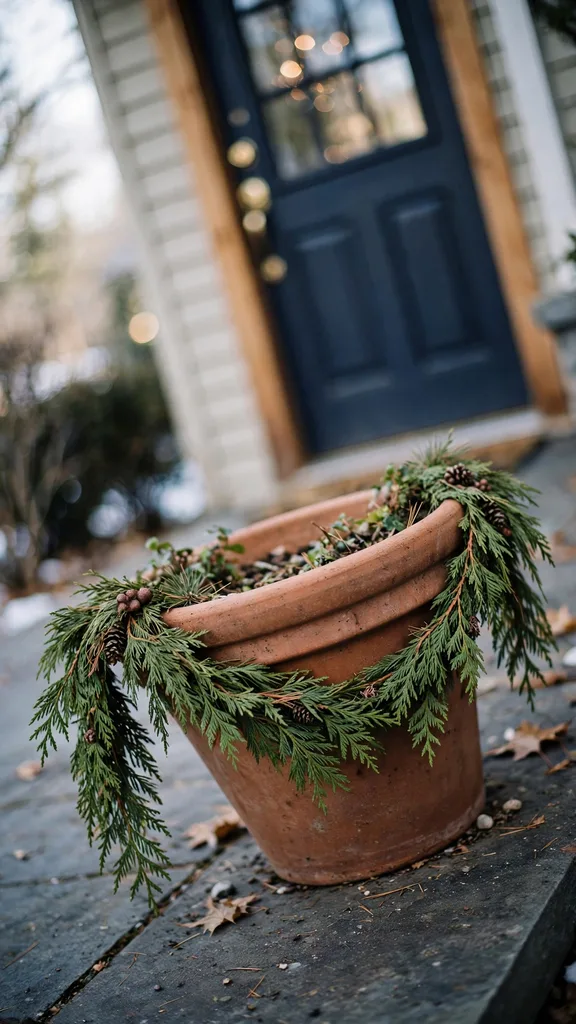
A draped spiller lasts 4 to 6 weeks outdoors. Wire it at two points so the wind cannot lift it. This is the spiller for the pot planted the day before guests arrive, when trailing plants have not had their year to grow.
28. Trailing Rosemary as the Spiller
Plant a trailing rosemary at the rim and its stems spill with needle foliage and scent, the spiller that seasons. In mild zones it lives in the pot for years, growing more graceful and more useful every season.
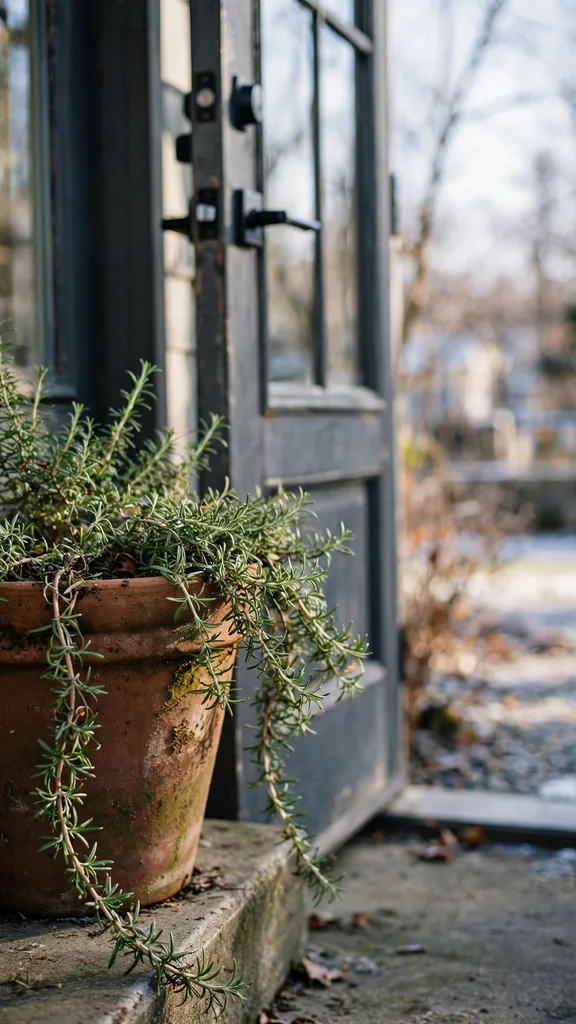
Trailing rosemary wants sun and sharp drainage and hates wet feet in winter. Set its pot where the drainage is best and the sun finds it. A spiller you can cook with is the kitchen door pot’s whole philosophy in one plant.
29. Wintercreeper Trails as the Spiller
Wintercreeper, euonymus, trails with small evergreen leaves, some varieties gold or cream edged, that hold through the hardest frost. It is the toughest spiller here, the one for exposed pots where ivy would sulk.
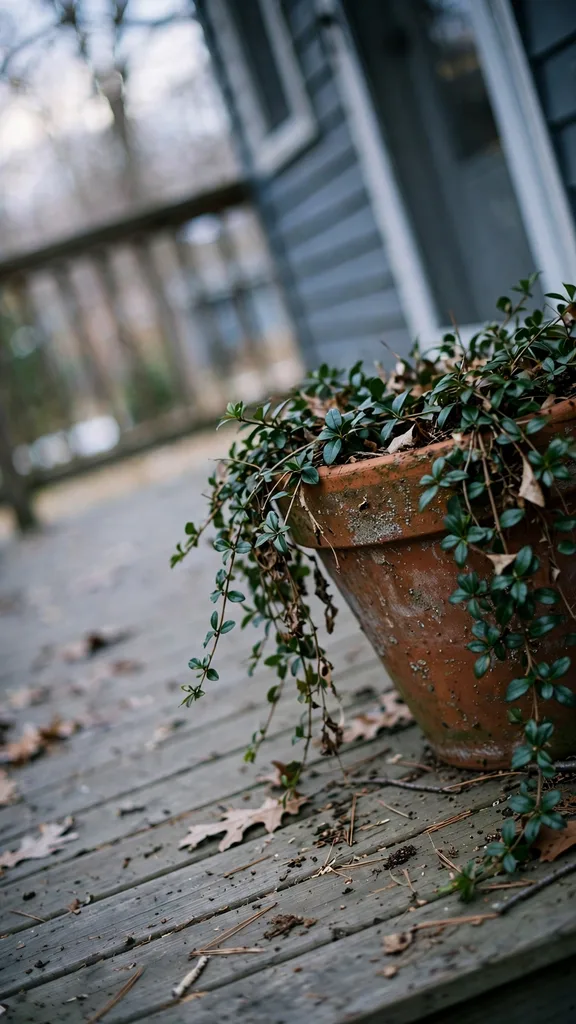
Wintercreeper roots where its stems touch compost, so a spiller becomes a permanent resident if you let it. Keep it trimmed off the paving, where it would happily root next. Toughness with manners is the whole brief, and it fills it.
30. Trailing Juniper Cuttings as the Spiller
Push trailing juniper cuttings around the rim, angled outward and down, for a spiller in blue green that matches the thriller’s winter mood. Juniper cuttings hold their color for weeks and their shape indefinitely.
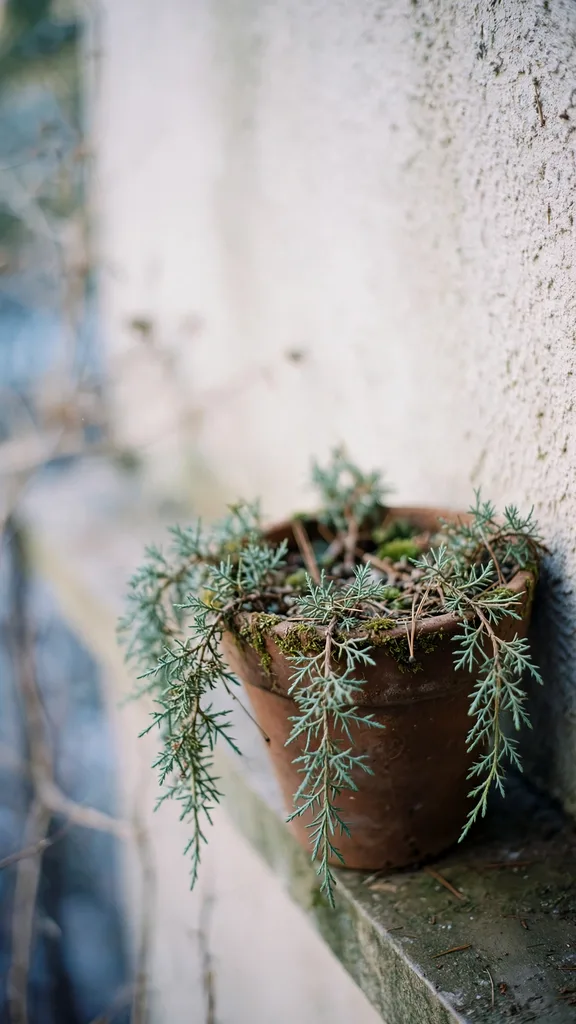
The cuttings last 5 to 6 weeks in moist compost. Refresh them from the same shrub in January. Juniper at the rim and dogwood at the center is a planter built from two shrubs and nothing else, which is a satisfying sentence to say.
31. Periwinkle Trails as the Spiller
Periwinkle, vinca, trails glossy evergreen leaves over the rim and may add a violet flower in a mild spell. It is the spiller already growing under most gardeners’ shrubs, free for the cutting and grateful for the work.
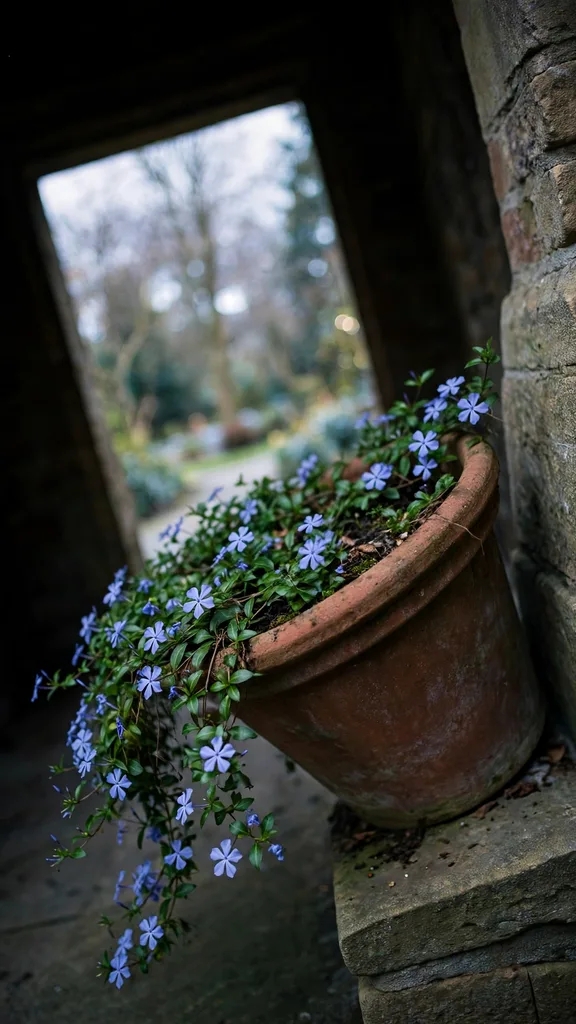
Vinca roots in the pot readily and can stay, becoming the planter’s permanent edge. It tolerates the shade under a tall thriller better than any other spiller here, which makes it the low pot’s and the north door’s choice.
32. Grapevine Swirls as the Spiller
Coil grapevine or flexible prunings around the rim and let the ends curl over the edge for a spiller made of line rather than leaf. The vine’s spirals echo the curly willow thriller and give the pot a crafted, woven finish.
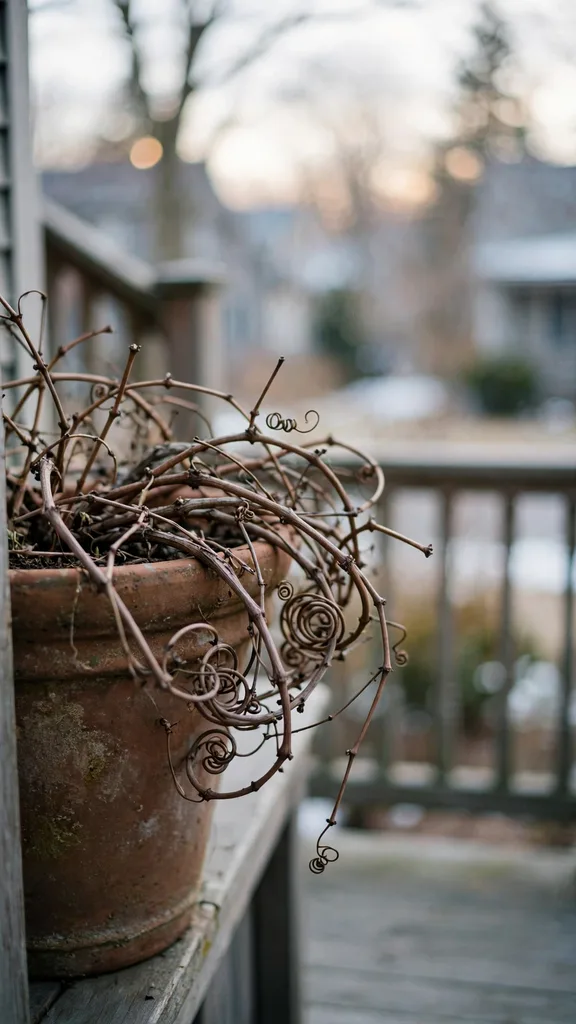
Vine lasts for years and returns to the store in spring. Soak dry vine before coiling and it bends without snapping. A vine spiller suits the rustic pot and the modern one equally, being mostly a decision about edges.
33. Evergreen Bough Tips as the Spiller
Lay short evergreen bough tips over the rim, pointing outward and down, for a spiller that looks like the planter is overflowing with green. Fir and cedar tips laid in a ring give instant fullness at the edge where new planters usually look thin.
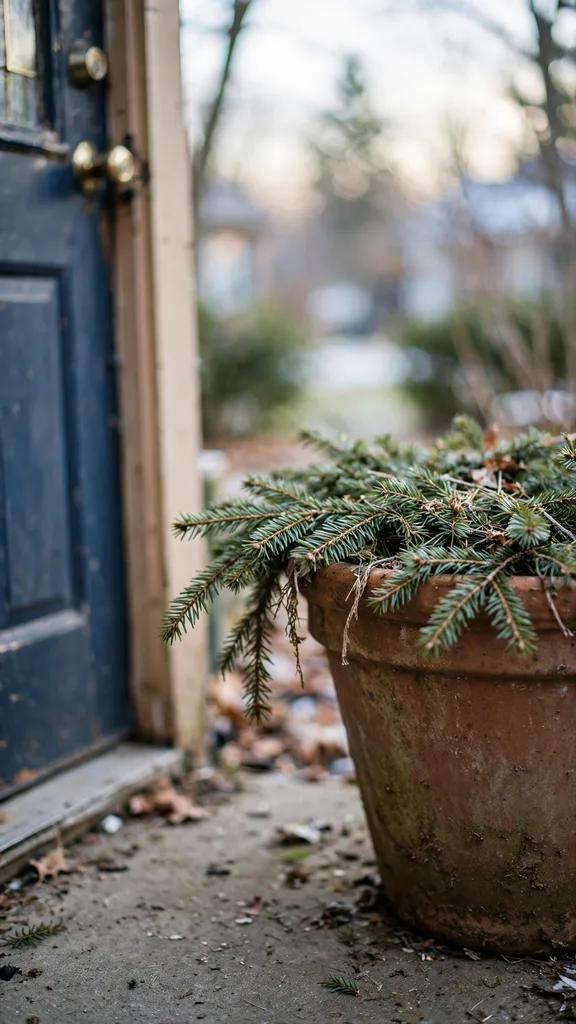
Laid tips last 4 to 5 weeks outdoors, fed by the compost they rest on if their cut ends touch it. Push the ends an inch into the compost and they drink. This is the fastest spiller here, measured in minutes per pot.
34. The Classic Trio Recipe
Combine the three layers in their classic proportions: one thriller for height, filler to twice the thriller’s bulk, spiller at three points around the rim. A red dogwood thriller, evergreen and berry filler, and ivy spiller is the recipe every other combination here varies.
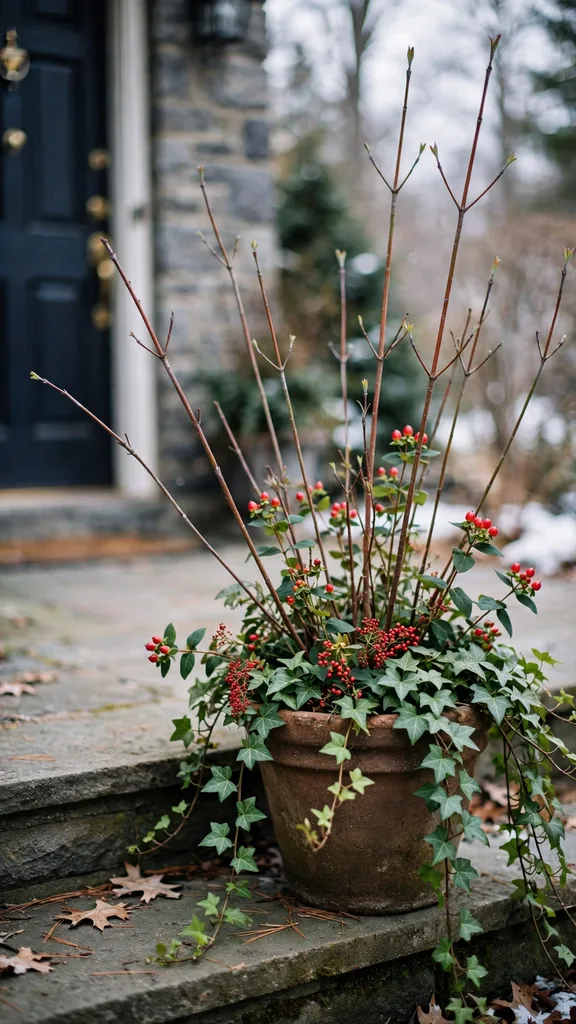
The proportions matter more than the species: height, body, and edge. Build the trio in a pot of at least 14 inches and it will look designed from the street. The filled planters on the live outdoor Christmas urns page show the same layering at urn scale.
35. Monochrome Green Layers
Build a planter in greens alone: juniper thriller, mixed evergreen filler, ivy spiller, with texture doing the work color usually does. A green on green pot is the calmest thing on a winter porch and the easiest to keep, since nothing in it can clash or fade unevenly.
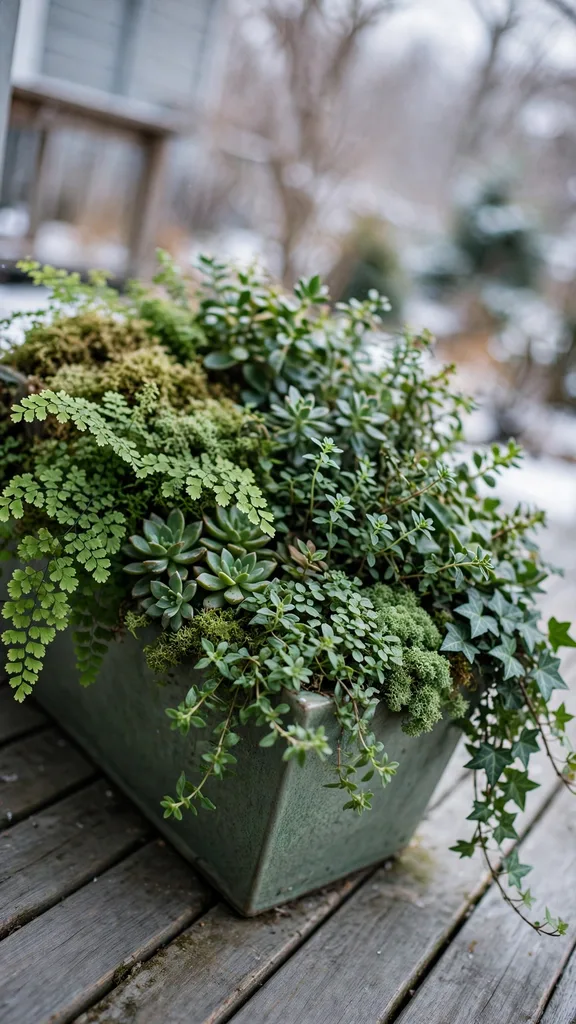
Vary the greens deliberately, blue, gloss, and matte against each other, or the pot reads as one plant. Monochrome is a discipline, not a default, and its reward is a planter that suits any house and any other decoration near it.
36. Red and Gold Layers
Pair a red dogwood or winterberry thriller with gold and amber filler, dried grasses, orange slices, and yellow dogwood stems, for a planter in the season’s warmest palette. Red and gold is the combination that glows at dusk, when planters earn their keep.
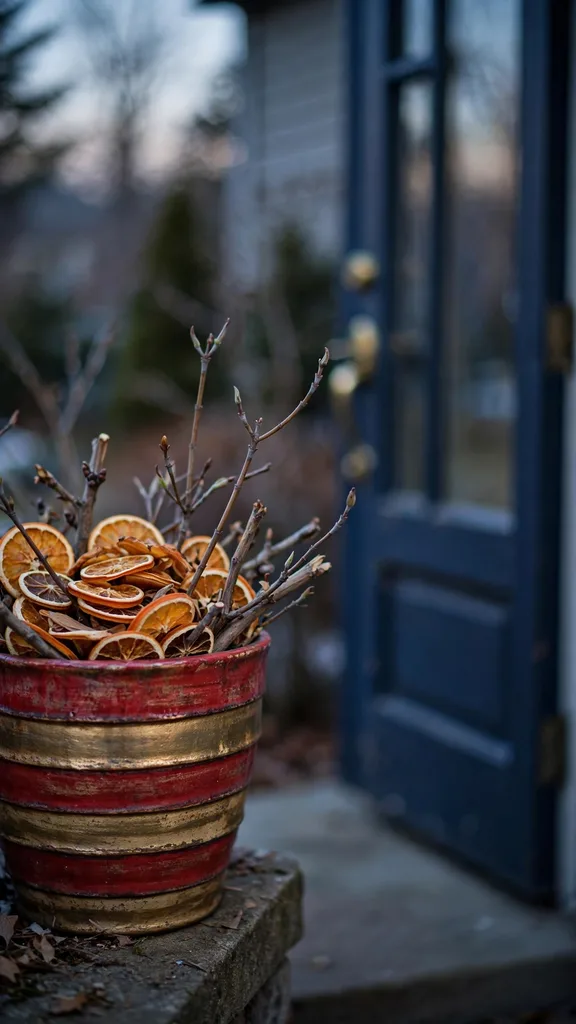
Balance the two colors by bulk, not by count: a little red goes further than a lot of gold. Set this planter where the evening light or a lamp finds it, since its whole design is a lighting effect.
37. All Three Layers From One Hedge
Cut thriller, filler, and spiller from a single plant: a yew or a holly gives upright stems for the center, short tips for the filler, and long trails for the rim. A one plant planter has a coherence no mixture matches, and it costs one pruning session.
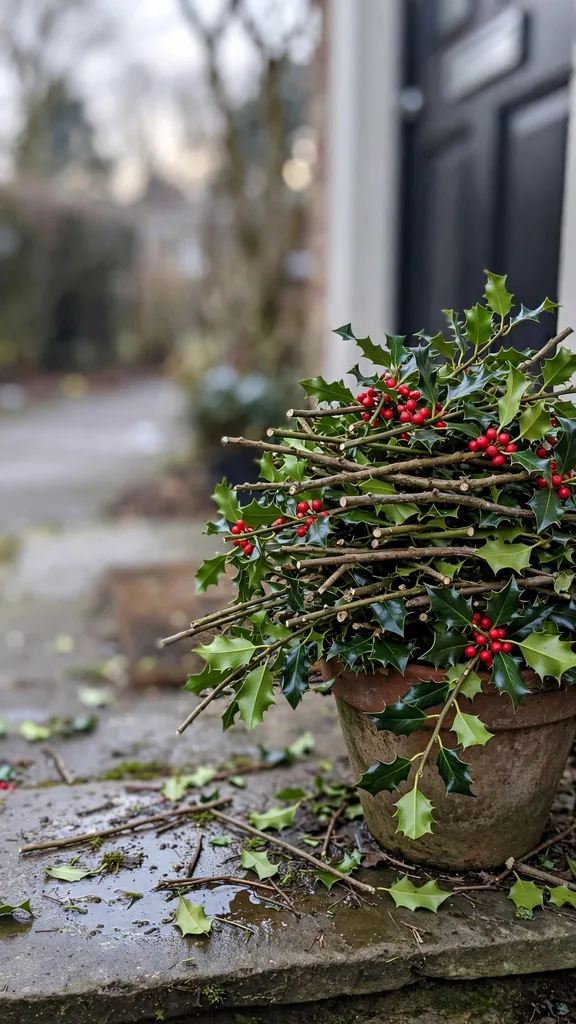
Holly is the classic single source, with berries as the bonus layer. The one hedge planter is also the fastest to refresh, since every layer renews from the same shrub in the same ten minutes, all winter long.
38. The Prunings Only Planter
Build a planter entirely from the pruning pile: dogwood stems up, evergreen tips in, vine and ivy over the edge, cones in the middle. Nothing bought, nothing even harvested specially, just the winter pruning arranged instead of composted.
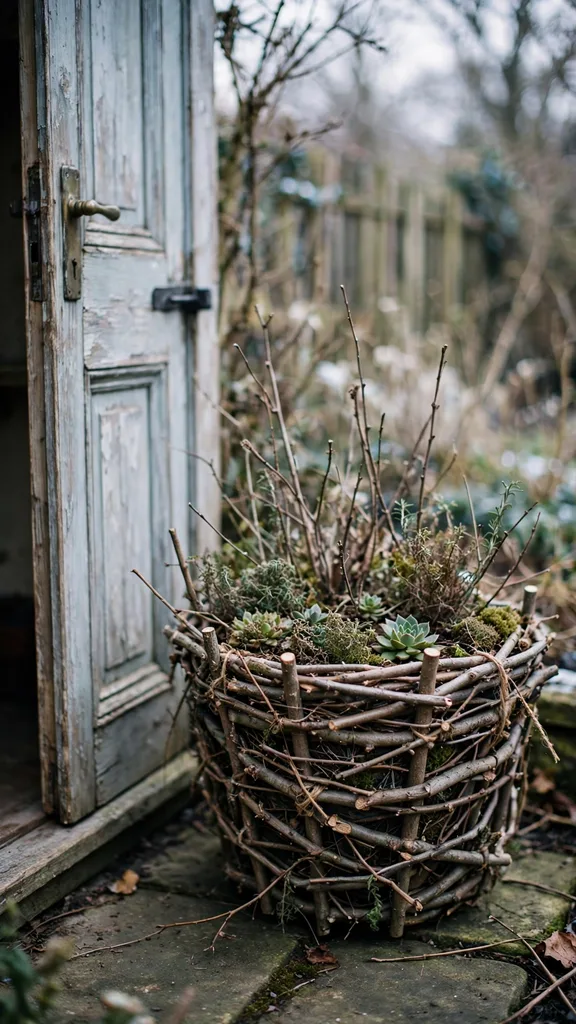
The prunings planter is the honest test of this list’s premise, and it passes: the pile behind the shed contains several planters every year. Build it the weekend you prune and the garden’s waste becomes the doorstep’s display before it cools.
39. Swap the Filler, Keep the Frame
Refresh a tired planter in five minutes by swapping only the filler: pull the faded berries and flowers, push in fresh sprays and picks, and leave the thriller and spiller standing. The frame persists all winter; the middle is the season’s revolving door.
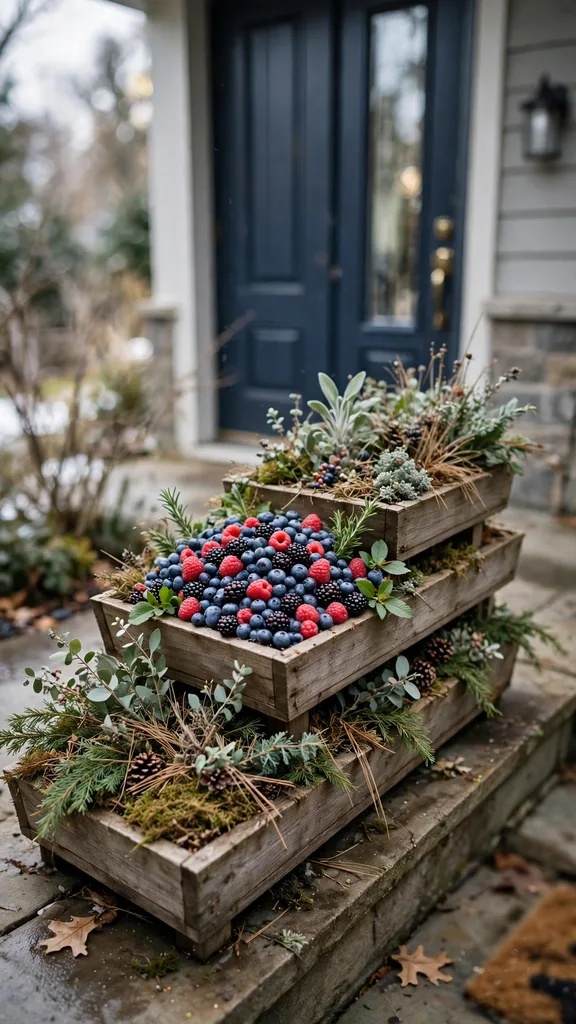
Keep a bucket of filler spares by the door, berry sprays in water, picks in a box, and the refresh is genuinely five minutes. A planter maintained this way never has a bad week, which is the difference between a display and a planting.
40. Layering a Tall Urn
A tall urn wants a taller thriller, longer filler, and a spiller that can fall a foot or more: birch poles or dogwood up, dense evergreen filler, and ivy or cedar draped long. Scale is the urn’s whole grammar; layers that suit a pot look lost in it.
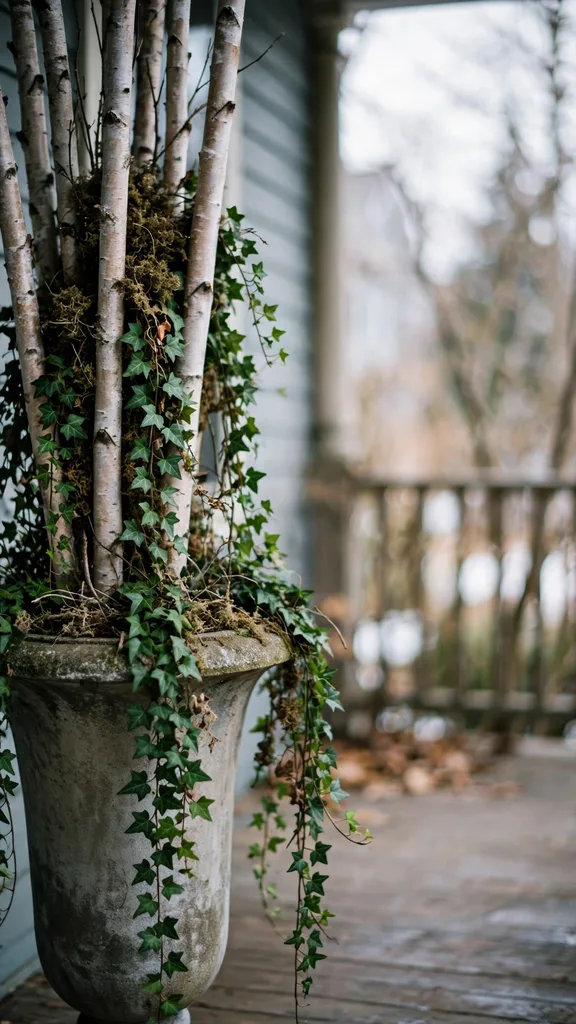
Fill the urn’s depth with an upturned pot or rubble so the compost sits high and the thriller’s stems reach soil, not air. An urn planted shallow and layered long is the porch’s most formal winter piece.
41. Layering a Low Bowl
A low bowl inverts the recipe: a short thriller or none, mounded filler as the body, and spiller tucked at two points only. Dried hydrangea heads, kale, and moss filler in a bowl make a table planter for outdoors that reads from above.
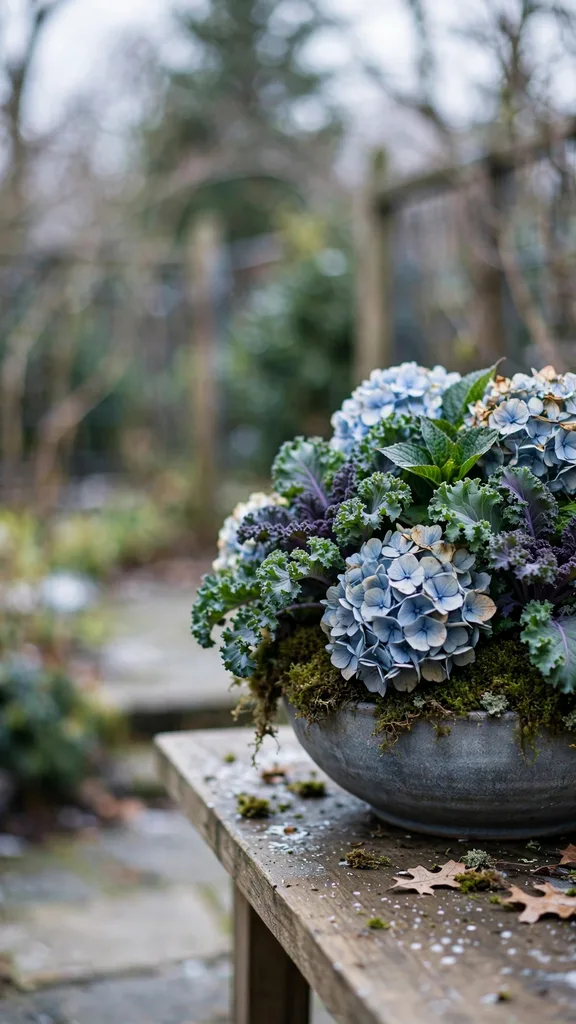
Bowls freeze fast and dry fast, so site them sheltered and water them in mild spells. A bowl on the outdoor table with a candle jar beside it is the winter patio’s centerpiece, built from the same layers at a smaller scale.
42. Window Box Layers
Layer a window box in a line instead of a circle: small thrillers at the ends and center, filler between, spiller along the front edge. The box’s long shape turns the trio into a rhythm, thriller, filler, thriller, that reads from the street.
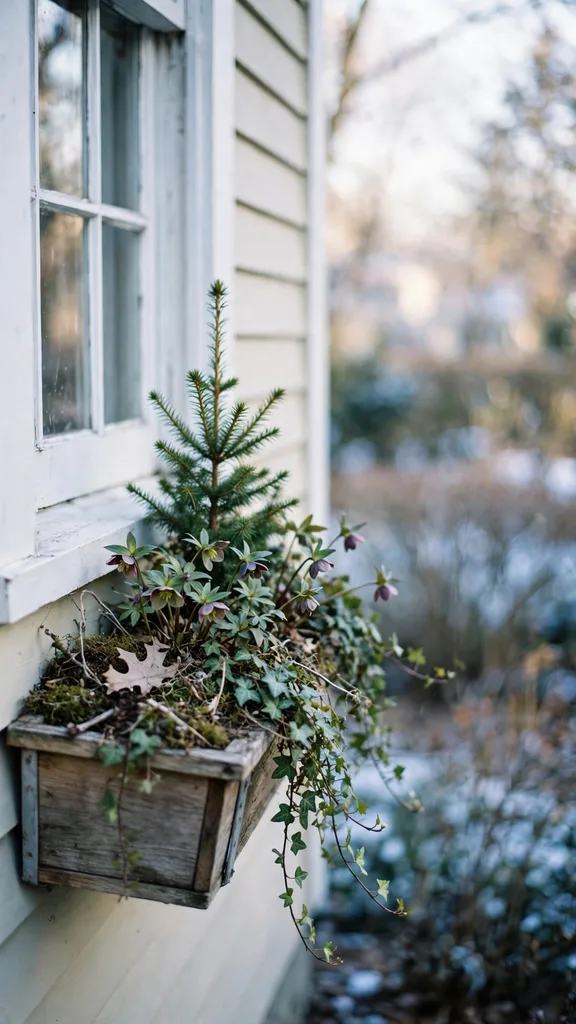
Boxes dry and freeze faster than pots, so the layers should be the toughest here: evergreen filler, ivy spiller, dogwood or conifer thrillers. Water the box in every mild spell and it performs from November to March.
43. Hanging Basket Layers
Layer a hanging basket with a small upright conifer as thriller, heuchera and pansy filler, and ivy spilling long. Hung by the door, the basket puts the trio at eye level, where the layers can be read one by one.
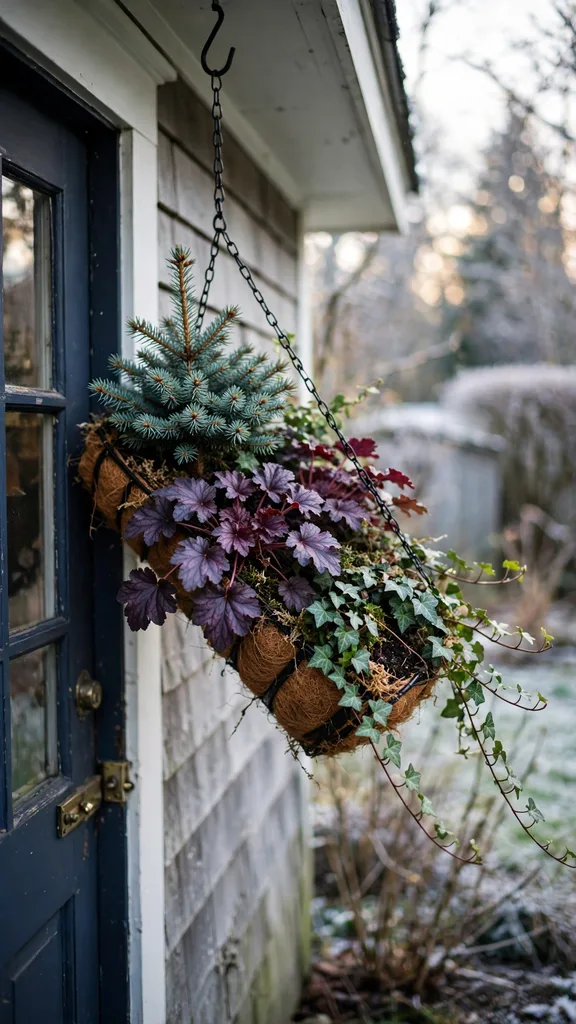
Baskets freeze hardest of all, being all air around the roots, so hang the layered basket in the porch’s shelter and water it in mild weather. Its reward is proportion: at eye level, a well layered basket is the most florist looking piece in this list.
44. Filler That Roots: Next Year’s Plants
Choose filler and thriller cuttings that root, dogwood, willow, ivy, and evergreen tips in moist compost, and the winter planter becomes a nursery. By spring the layers are young plants to pot on, and the display has produced the garden’s next shrubs.
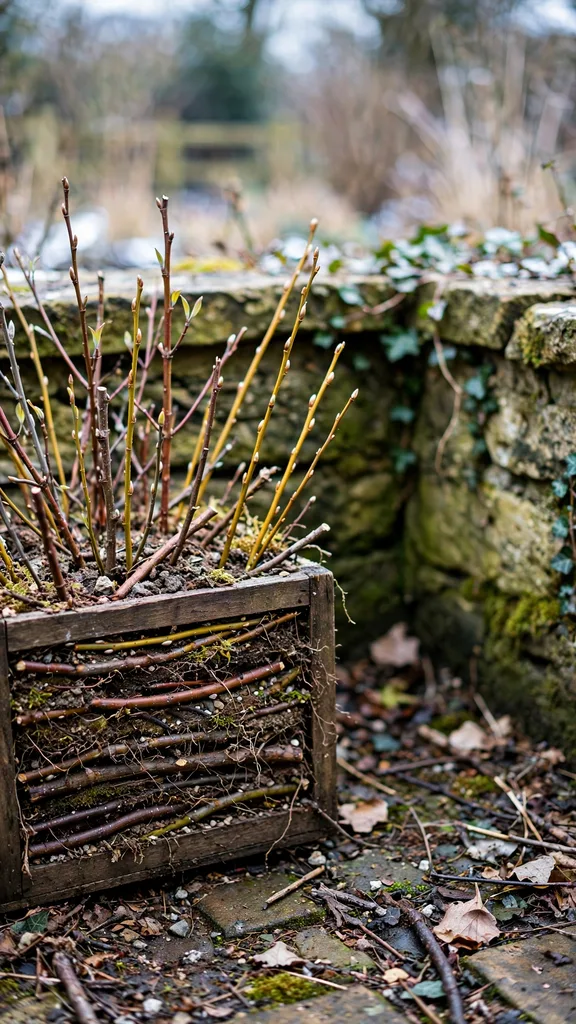
Keep the compost moist and the pot sheltered, and rooting happens without any equipment. Label the layers if more than one shrub is rooting, or spring brings a pleasant identification puzzle. A planter that pays for itself in plants is the gardener’s favorite kind.
45. The Showpiece Planter: All Layers From the Garden
Assemble the showpiece: birch poles and dogwood for height, holly and winterberry and cones in the middle, ivy and cedar falling over a handsome pot, every layer cut from the garden in one morning. It stands at the door as the proof of the list’s argument, that a garden contains its own best planters, layered and waiting.
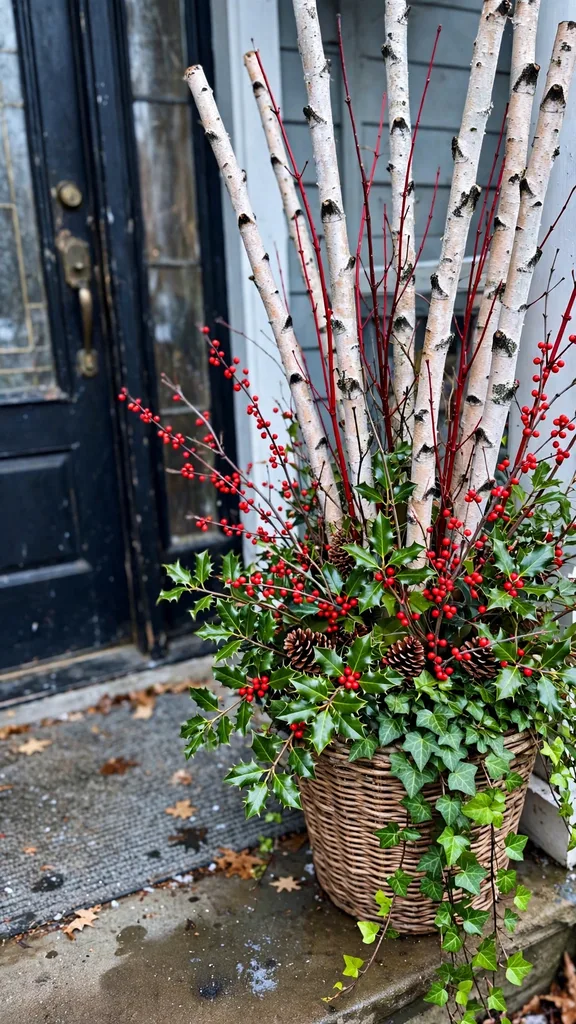
Build it after the first hard frosts, when the cuttings last longest, and refresh its filler at New Year. The wider season’s displays gather in the Christmas garden ideas pillar, but this planter is the one the neighbors ask about, and the answer is always the same: it all came out of the garden.
Frequently Asked Questions
The thriller is the tall center that draws the eye, usually upright stems, a small conifer, or seed heads. The filler is the middle layer that gives the pot body, evergreen tips, berries, cones, and flowers around the thriller’s base. The spiller trails over the rim and softens the pot’s edge, ivy, cedar, or trailing plants. The proportions that work are roughly one part thriller, two parts filler, and spiller at three points around the rim.
Yes, and the prunings-only planter in this list does exactly that: dogwood or willow stems for height, evergreen tips, berries, and cones for the middle, ivy or vine for the edge. Cuttings pushed into moist compost outdoors stay fresh for 5 to 7 weeks, and many root by spring. The only bought items most gardeners use are the pot and the compost, both of which serve for years.
Evergreen cuttings in moist compost last 5 to 7 weeks outdoors, berry sprays 2 to 4 weeks before birds and weather take them, dried materials a full season, and stems like dogwood and birch indefinitely. The planter is maintained by swapping the filler layer as it fades while the thriller and spiller stand, which takes minutes and keeps the display at its peak from November to February.
At least 14 inches across for a full three-layer build, so the layers have room and the compost volume insulates the roots. Tall urns need their compost raised with an upturned pot inside so stems reach soil. Low bowls suit a filler-led build with a short thriller. Whatever the shape, frost proof material and drainage on feet matter more to a winter planter than its looks.
The filler, always: berries soften, dried flowers fade, and fresh sprays date fastest in the middle layer. The thriller’s stems and the spiller’s evergreens last the season with no attention. Keep a bucket of spare filler material by the door, berry sprays standing in water and dried picks in a box, and a five-minute swap restores the planter whenever guests or a photograph approach.