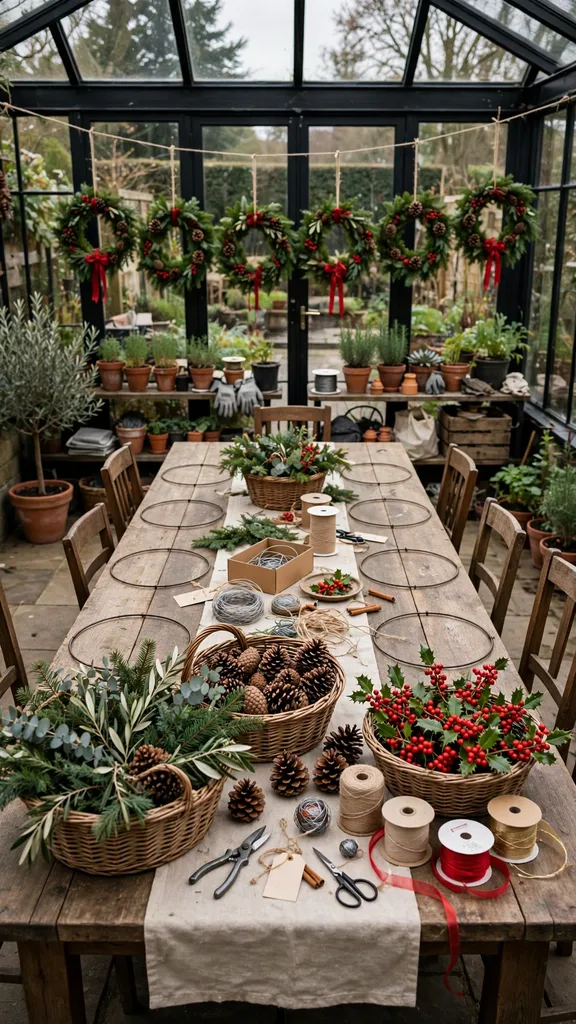
A wreath party turns the season’s biggest garden job into its best afternoon: friends around one table, a bar of greenery cut that morning, and every guest leaving with a wreath they made and a favor they grew. The difference between a party people remember and a craft session that frays is the setup, stations laid out like a kitchen, materials sorted before the first guest arrives, and themes ready for the makers who freeze at a blank frame. I host one every December with whatever the garden gives that year, and the garden gives differently every time. These 45 ideas cover the stations, ten themes, the games and swaps, the food, the favors, and the logistics that keep it joyful.
Wreath Party Ideas at a Glance
| Need | Start With | Why It Works |
|---|---|---|
| Core setup | Items 1 to 10 | Stations and a material bar make the party run itself |
| A theme per guest | Items 11 to 20 | Ten themes end blank frame panic |
| More than wreaths | Items 21 to 30 | Garlands, swags, swaps, and a group wreath fill the afternoon |
| Favors to take home | Items 34 to 39 | Garden favors guests actually keep |
| Host logistics | Items 40 to 45 | Timing, numbers, cleanup, and the rain plan |
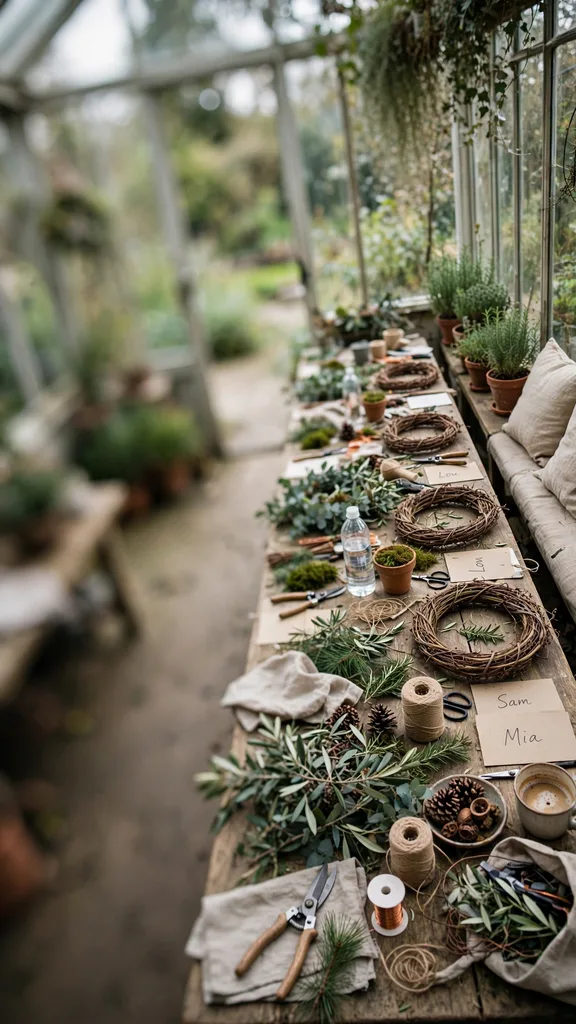
1. The Material Bar, Laid Out Like a Buffet
Set the garden material out as a buffet along one long table or bench: baskets of greenery by type, trays of cones and pods, bowls of berries and dried flowers, ribbon and twine at the end. Guests serve themselves, see everything at once, and the bar itself is the party’s first decoration.
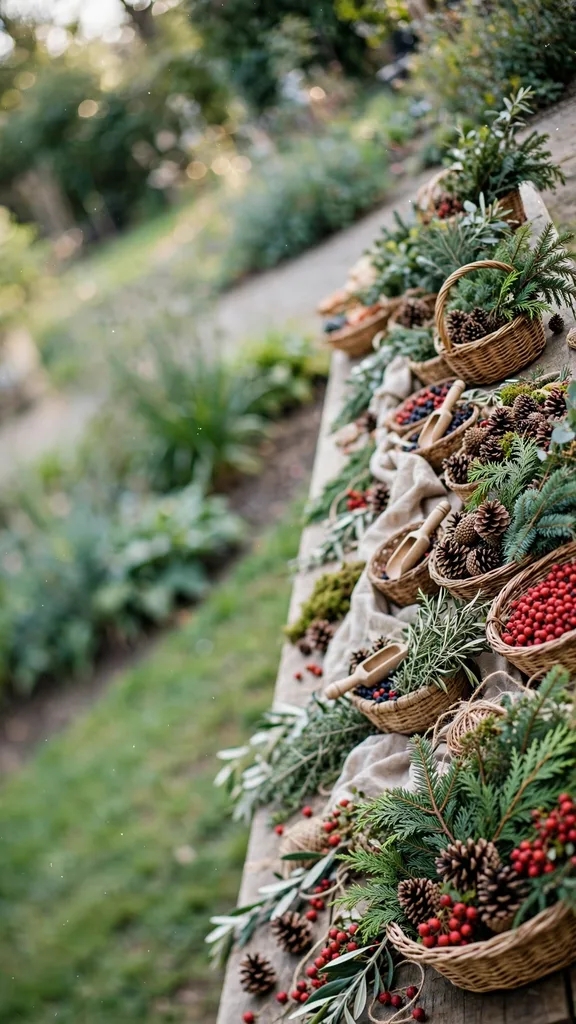
Label the baskets if the crowd is new to greenery, since cedar and fir look alike to a beginner and behave differently. Refill from the harvest pile behind you, never from the display; the bar stays beautiful because it is stocked, not picked over.
2. The Base Station: Frames, Grapevine, and Straw
Offer three base kinds, wire frames for the classic build, grapevine for the rustic makers, and straw for the dried flower themes, with the construction technique borrowed from the site’s Christmas wreaths guide, which owns the step by step. A choice of bases is the first creative decision, and it sorts guests into themes before they sit down.
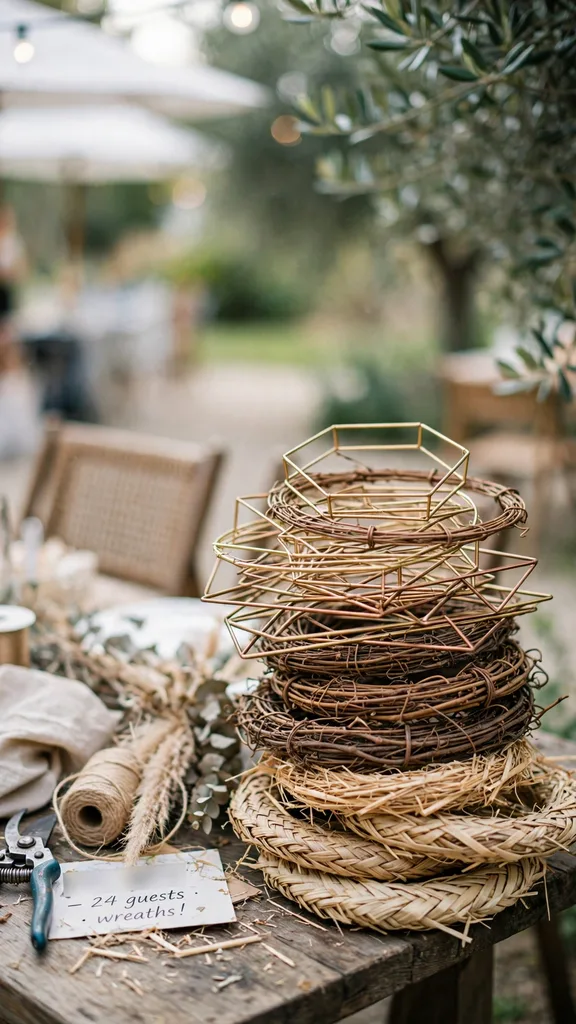
Buy or gather more bases than guests, since a cracked grapevine or a changed mind should never stall a maker. Leftover bases store flat for next year’s party.
3. The Harvest Walk Before the Party
Cut the greenery the morning of the party, or turn the cutting into the party’s first act: a harvest walk with snips and baskets, taking trimmings from the garden’s shrubs and trees. Guests who cut their own material make prouder wreaths, and the garden gets its winter prune as a party game.

Set the cutting rules on the walk: which shrubs give, which are off limits, and how much a branch can spare. The walk also burns the first half hour happily while latecomers arrive.
4. The Drying Station: Orange Slices and Apple Rings
Run a drying station in the kitchen during the party, trays of orange slices and apple rings in a low oven, so guests wire warm, fragrant fruit they watched dry. The Clemson Extension guide to drying oranges gives the method: 1/8-inch slices dried at 175 degrees Fahrenheit, flipped every 30 minutes, for 3 to 5 hours.

Start the first trays before guests arrive so the station produces from the first hour. The drying smell is the party’s perfume, and the station gives restless hands a second craft.
5. Cone and Pod Sorting Trays
Sort the cones, pods, and seed heads into trays by size before the party, the unglamorous job that makes decorating fast: big cones for wreath anchors, small ones for filling, pods and poppy heads in their own compartments. A sorted tray turns a rummage into a choice.
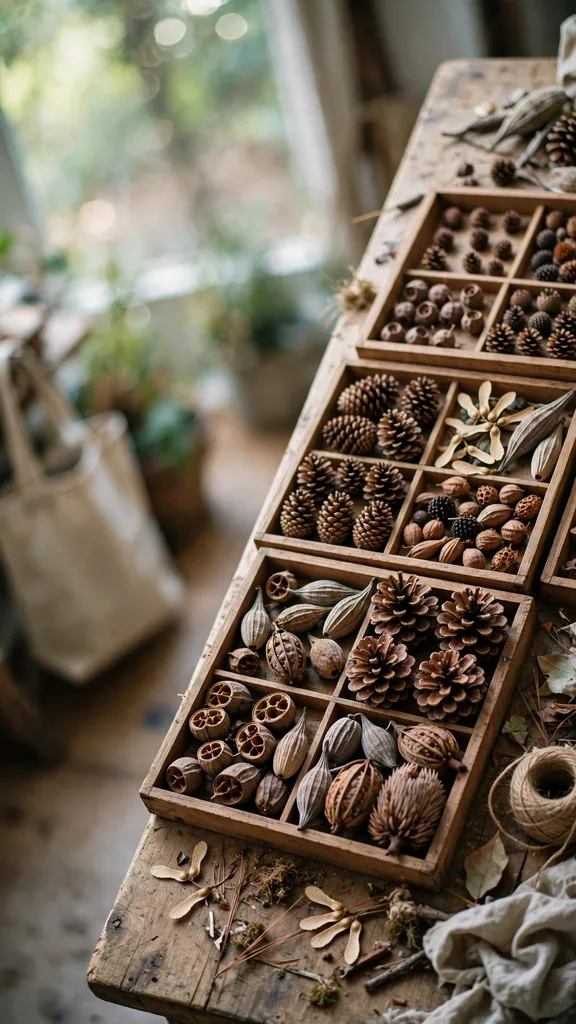
Let guests wire cones at the station rather than gluing at the table, since wired cones survive the door. The sorting trays afterwards become the storage system, lidded and stacked for next year.
6. The Berry and Seed Head Bar
Set the berries and seed heads out in small bowls, holly and winterberry reds, ivy and privet blacks, hydrangea heads, sedum, and honesty pods, since small precious things vanish in big baskets. The bar teaches portion control by sight: a bowl per table, refilled by the host.

Warn the makers that berry clusters are the wreath’s jewelry and want clustering, not scattering. Photograph the bar before the party; it is the prettiest flat lay the garden makes all year.
7. The Ribbon and Twine Station
Give ribbon its own station with scissors that live there: the host’s chosen colors in wide ribbon for bows, plain twine for the rustic themes, and wire edged ribbon for the makers who want loops that hold. One ribbon palette across all themes keeps twenty different wreaths looking like one party.

Teach one simple bow at the station and let it spread table to table. Ribbon is where budgets leak, so buy the palette in bulk rolls and keep the ends for the favor wrapping.
8. The Tool Table: Wire, Snips, and Glue
Centralize the tools on their own small table, paddle wire, spool wire, snips, and a glue gun on a tile with its keeper, so no one hunts and no glue gun wanders onto a lap. Tools return to the table between uses, a rule announced once with the welcome.
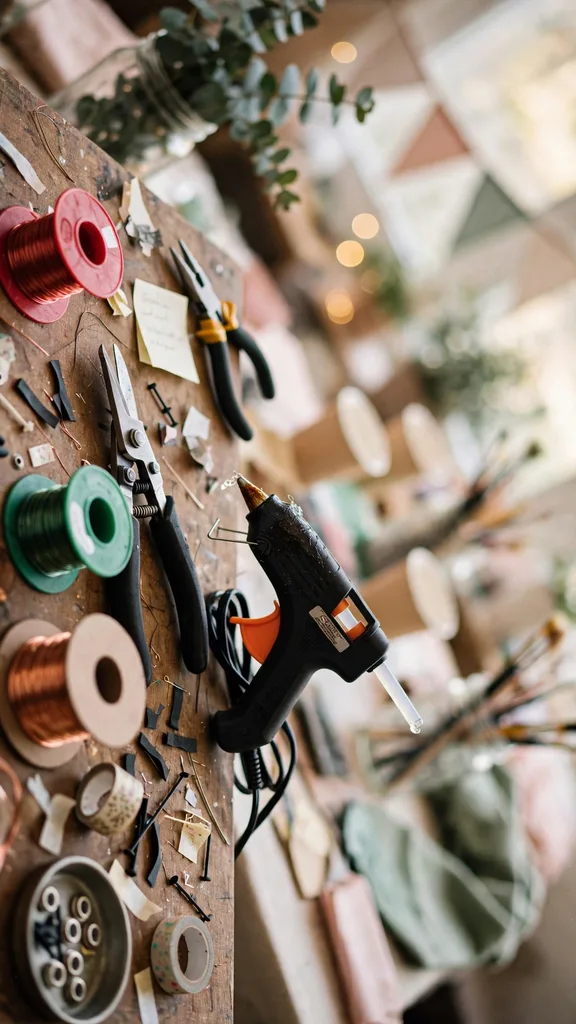
Count the snips out and count them back at cleanup, the host’s oldest trick. A tool table also keeps sharp and hot things in one known place when children are at the party.
9. Work Stations Around One Big Table
Seat the makers around one big table or two pushed together, never scattered at card tables, since a wreath party runs on watching each other work. Each place gets a base, a towel to work on, and elbow room for a wreath’s full circle.
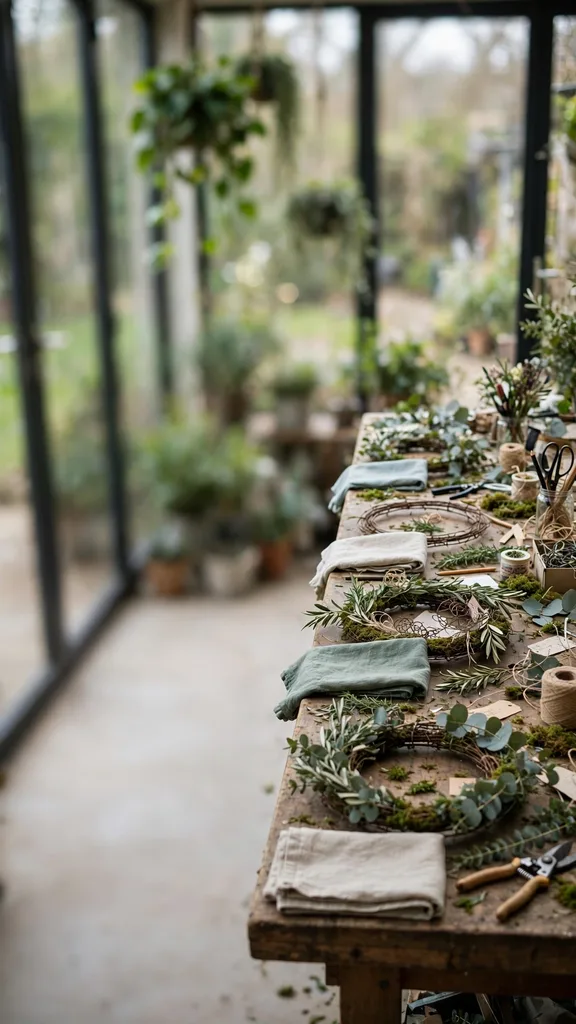
Put the confident maker beside the nervous one and let teaching happen sideways. The host circulates with wire and opinions, both in short supply by design.
10. Aprons and a Gloves Basket at the Door
Greet guests with the aprons and gloves basket: resin gets on sleeves, wire pricks fingers, and a borrowed apron makes a guest feel inducted rather than warned. Old shirts work as aprons, and the basket at the door sets the party’s working tone from the first minute.
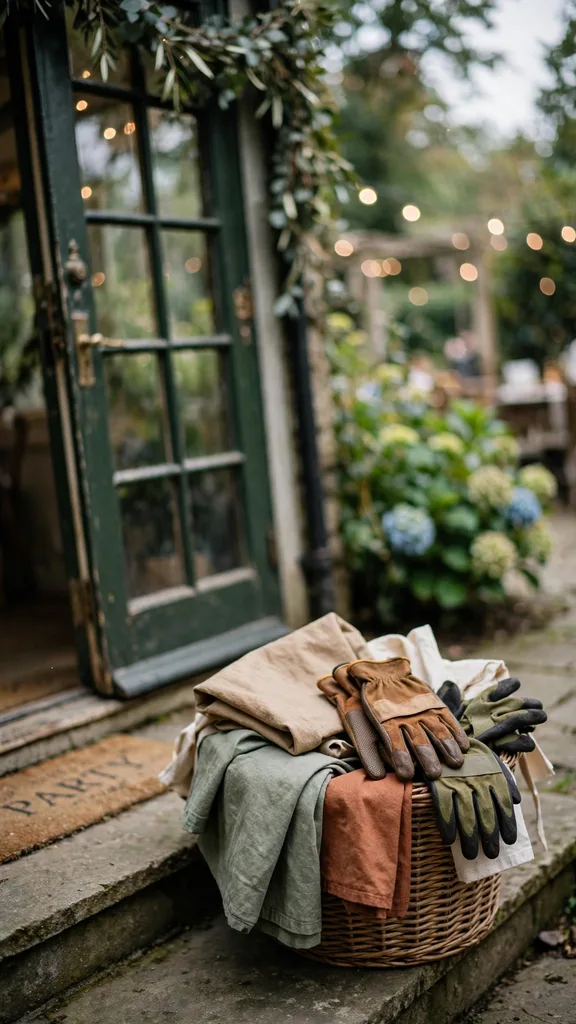
Add a hand cream and a towel by the sink for the resin that gets through anyway. Small hospitalities at the work’s edges are what guests describe later.
11. Theme One: The Evergreen Classic
Offer the classic as the first theme: mixed evergreen, red berries, cones, and a red bow, the wreath every guest pictures when invited. Having the expected option on the menu frees the adventurous to leave it, and gives beginners a picture to aim at.

Make one classic yourself before the party as the table’s sample. Samples teach faster than instructions, and the classic sample answers a dozen questions silently.
12. Theme Two: The Forager’s Wreath
The forager’s theme uses only what the garden and hedgerow gave free: cones, pods, seed heads, feathers of dried grass, and branches, on a grapevine base. It costs nothing beyond the base and reads as the most designed wreath at the table.
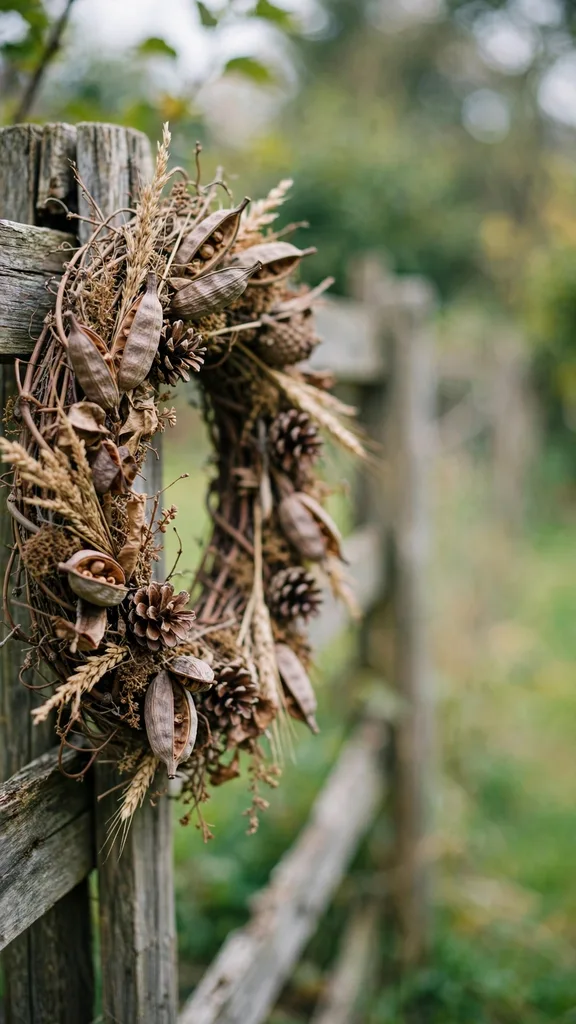
Challenge the foragers to use no ribbon, binding with twine and wire alone. Their wreaths photograph beautifully against the garden’s own fence.
13. Theme Three: The Kitchen Herb Wreath
Herb wreaths of rosemary, bay, sage, and thyme, studded with dried chilies and garlic, hang in kitchens and get eaten by spring. The herb theme suits the cooks at the table and uses the garden’s most generous cuttings.
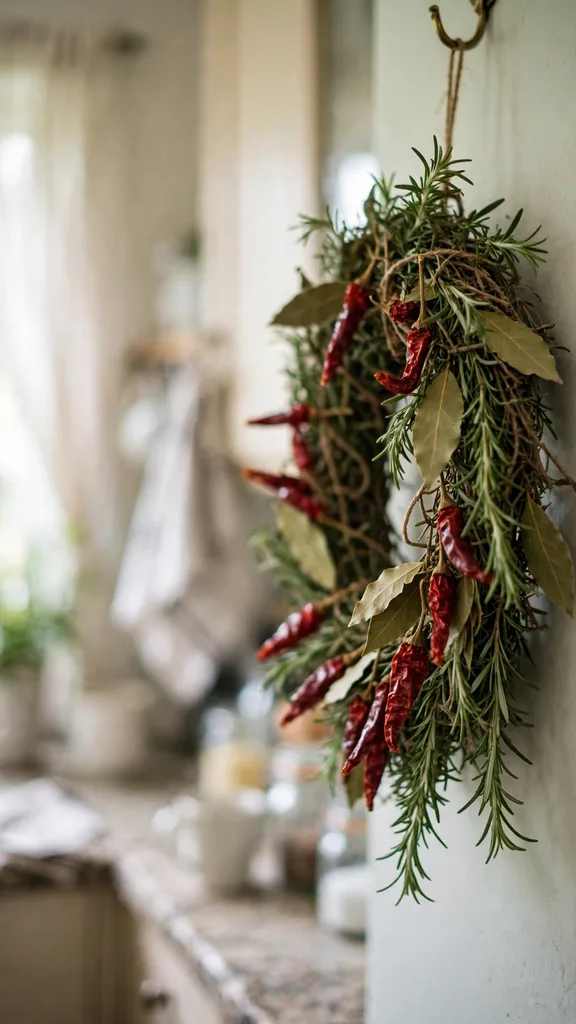
Wire the herbs in small bunches while fresh; they dry in place on the wreath. A herb wreath is also the party’s best host gift, if the host can bear to give it away.
14. Theme Four: The Bird Friendly Wreath
A bird friendly wreath carries seed heads, berries, suet balls, and fat filled cones, hung where the household can watch it empty. The Penn State Extension winter bird feeding guide grounds the menu, since winter birds need high energy food, which suet, sunflower seed, and peanuts supply.

Warn the makers that a bird wreath is a feeder, not a keepsake; its beauty is meant to be eaten. Photograph it fresh, then enjoy the second show.
15. Theme Five: The Dried Flower Wreath
Dried flowers on a straw base make the indoor theme: strawflowers, statice, lavender, and hydrangea in the summer’s saved colors. Dried flower makers work slower and quieter, and their wreaths keep for years, which suits the guests who came for calm.

Keep the dried stock in its own boxes at the bar, since dried stems crush in the greenery baskets. A dried wreath station near the window light keeps colors honest.
16. Theme Six: The Citrus and Spice Wreath
Dried orange slices, cinnamon sticks, star anise, and bay leaves on evergreen make the wreath that scents a hallway. The citrus theme drinks from the drying station’s output all afternoon, which ties the party’s two crafts together.
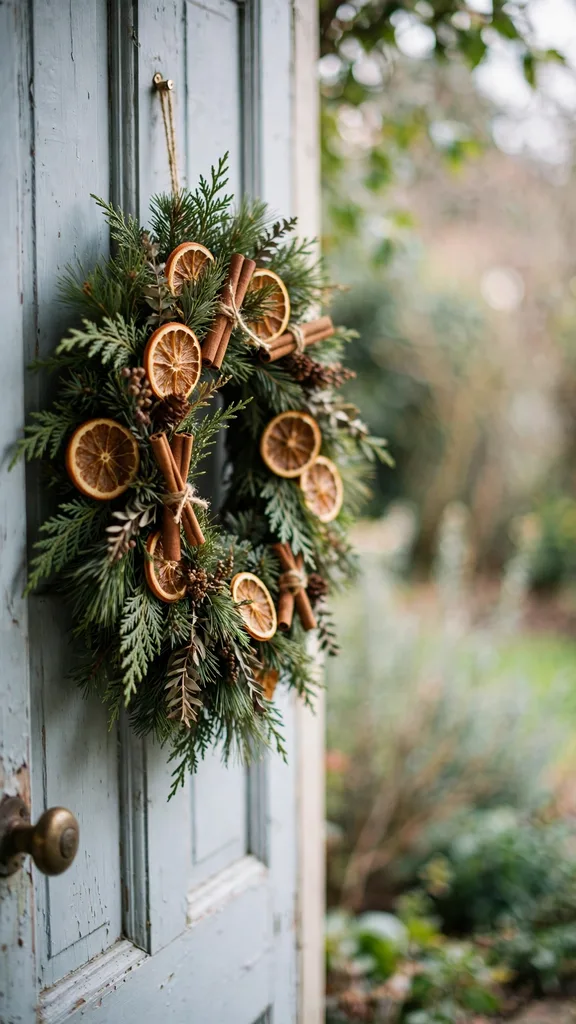
Wire the spices in clusters of three where the wreath’s light lands. Guests who choose citrus always finish fastest and become the table’s helpers.
17. Theme Seven: The Children’s Mini Wreaths
Give children small grapevine or cardboard bases, pre cut short greenery, and cones and berries to tuck and tie, no wire, no glue guns. Mini wreaths finish in a child’s attention span and hang on bedroom doors with enormous pride.

Seat the children’s end of the table near the tool table’s opposite side, with one adult anchored there. A finished mini wreath in small hands is the party’s best photograph.
18. Theme Eight: The Winter White Wreath
The white theme builds on pale greens and silvers: dusty miller, silver conifer, white berries, honesty pods, and bleached cones, on a base wrapped in pale ribbon. White wreaths glow in dark hallways and suit the minimalist guests every party has.

Keep the white station’s stock ruthlessly pale; one red berry jar at that end of the bar ends the theme. White makers are the tidiest workers at any table.
19. Theme Nine: The Farmhouse Rustic
Rustic makers get grapevine bases, burlap ribbon, twine, cones, and unpolished everything, with permission to leave the wreath loose and wild. The rustic theme forgives every beginner error, which makes it the confidence theme to suggest to the nervous.
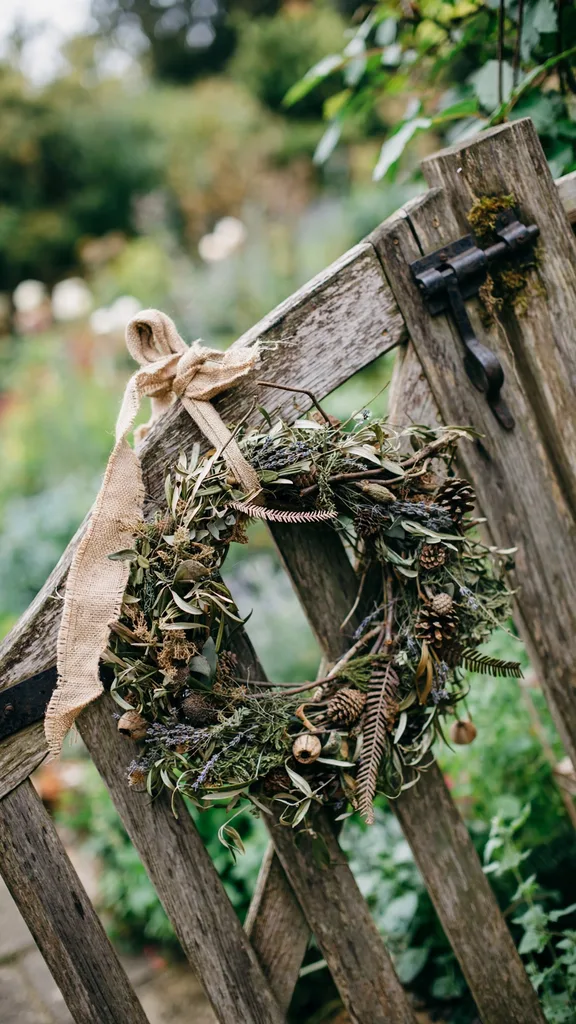
A sprig of dried wheat or oats, if the garden grew any, is the rustic signature. Rustic wreaths suit the garden gate and the barn door as much as the front door.
20. Theme Ten: Mini Wreaths as Place Settings
The last theme makes handful sized wreaths as place settings and napkin rings for the holiday table, twenty minutes each, charming in sets. A guest who dreads a full wreath can make four minis and leave with a dinner party in a box.
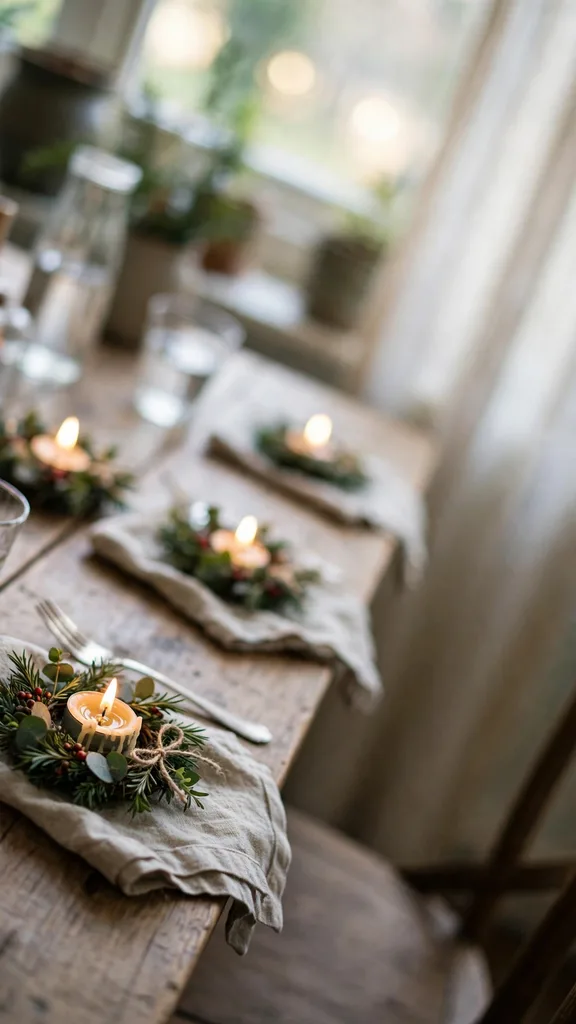
Minis use the bar’s offcuts, which makes them the cleanup theme as well. Tie each with the guest list’s ribbon so a set matches a table.
21. The Garland Station
Run one station for garland makers, since some guests want length, not circles: the site’s guide to making a fresh Christmas garland carries the wiring method, and the station needs the long table’s end and the greenery in armfuls. A garland team of two works fastest, one wiring, one feeding bundles.

Garlands eat greenery at three times a wreath’s rate, so station them near the harvest pile. The garland usually ends up dressing the party room itself, which is a fine fate.
22. The Swag and Door Hanging Station
Swags, simple tied bundles hung point down, are the ten minute make for late arrivals and second projects: greenery fanned, bound at the stems, bowed, and hung. A swag station with pre cut bundles keeps the party’s last hour productive.

Swags also rescue the wreaths that fail; any wreath’s materials rebind into a handsome swag. No guest should leave with a failure when a swag is ten minutes away.
23. The Candle Ring Station
Small rings for table candles and Advent counts give the party a third format: flat wreaths built on small bases with short material, finished with dried flowers. Candle rings suit the guests who host dinners and think in tablescapes.

Remind the ring makers to keep foliage clear of the candle’s flame zone, a flat ring and a tall candle. The rings double as the favor for guests who made a door wreath already.
24. The Fifteen Minute Speed Round
Late in the party, run a speed round: fifteen minutes, one small base, anything on the bar, music on. The round breaks perfectionism, uses the offcuts, and produces the wildest, often best, wreaths of the day.
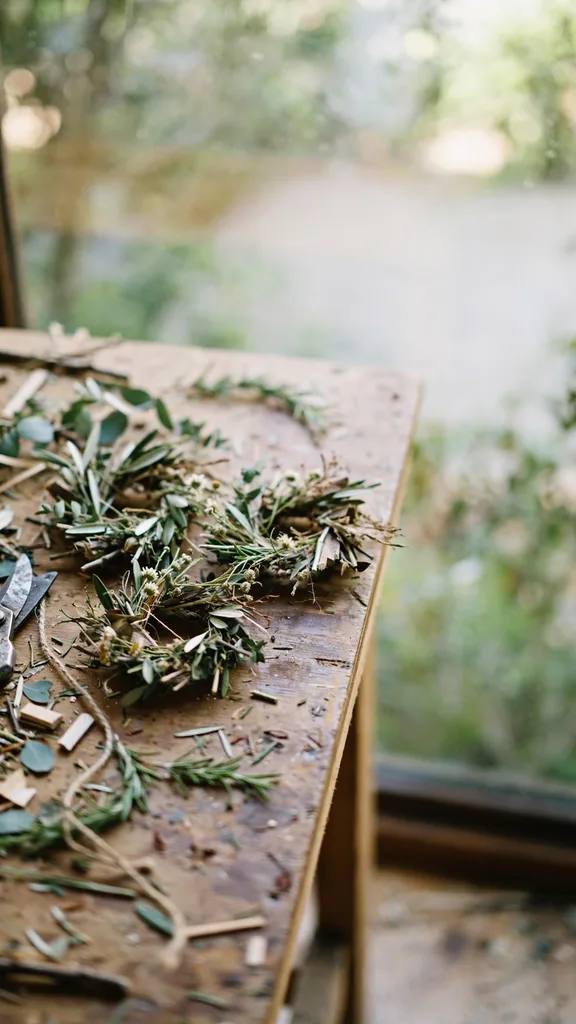
Prize the speed round separately so its chaos is celebrated, not judged against the morning’s careful work. Hosts who skip games should still keep this one; it is a game about wreaths, not about guests.
25. The Big Group Wreath
Build one oversized wreath together for the host’s door or the street’s lamppost, each guest wiring one section in their theme. The group wreath is the party’s portrait, and section by section it shows every hand at the table.
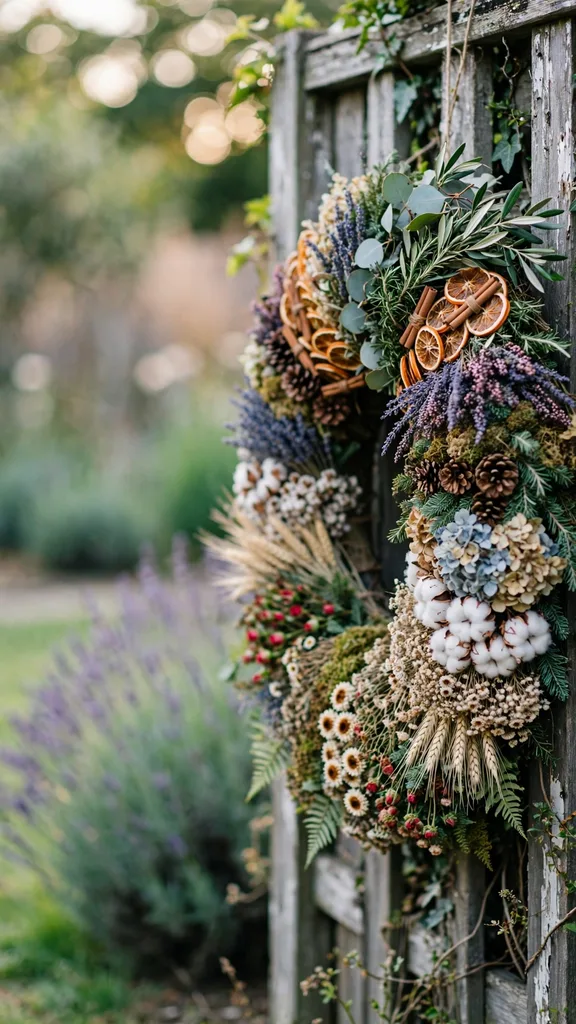
Start the group wreath early so sections accumulate all afternoon. Photograph the makers holding it before it hangs; that picture is the party’s thank you card.
26. The Wreath Swap Draw
Offer an optional swap: makers who enter draw names and take home someone else’s wreath, keeping their own only by luck. The swap spreads the garden across the street and gives every maker an audience of one household all season.
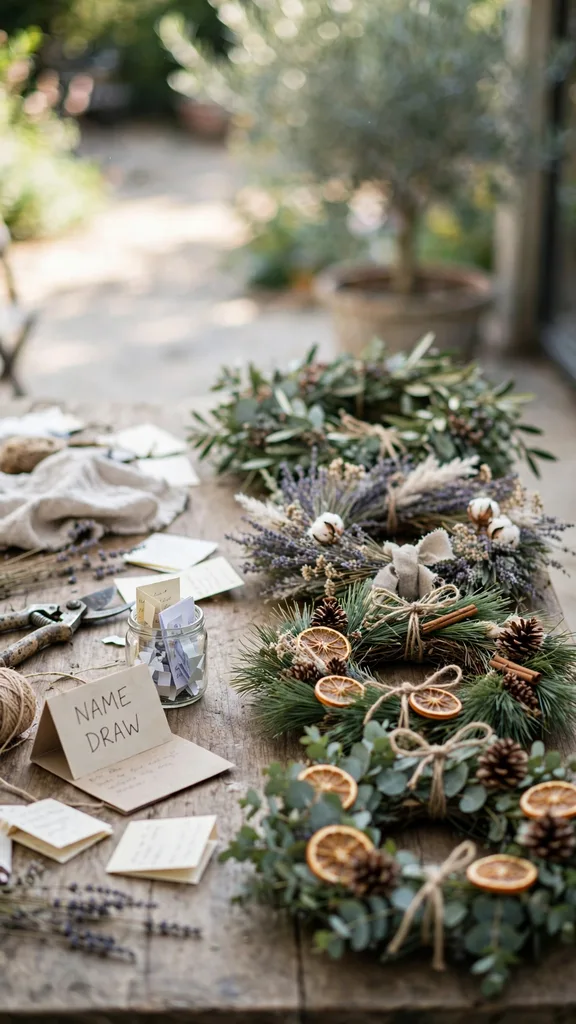
Make the swap opt in, announced at the welcome, so no one is surprised out of a wreath made for a particular door. Swapped wreaths get visited on winter walks, which extends the party for weeks.
27. Judging With Silly Prizes
Judge kindly and specifically: fullest, wildest, most fragrant, best use of one material, the wreath most likely to be eaten by birds. Garden prizes, a jar of herb salt, a bundle of cuttings, keep the judging inside the party’s world.
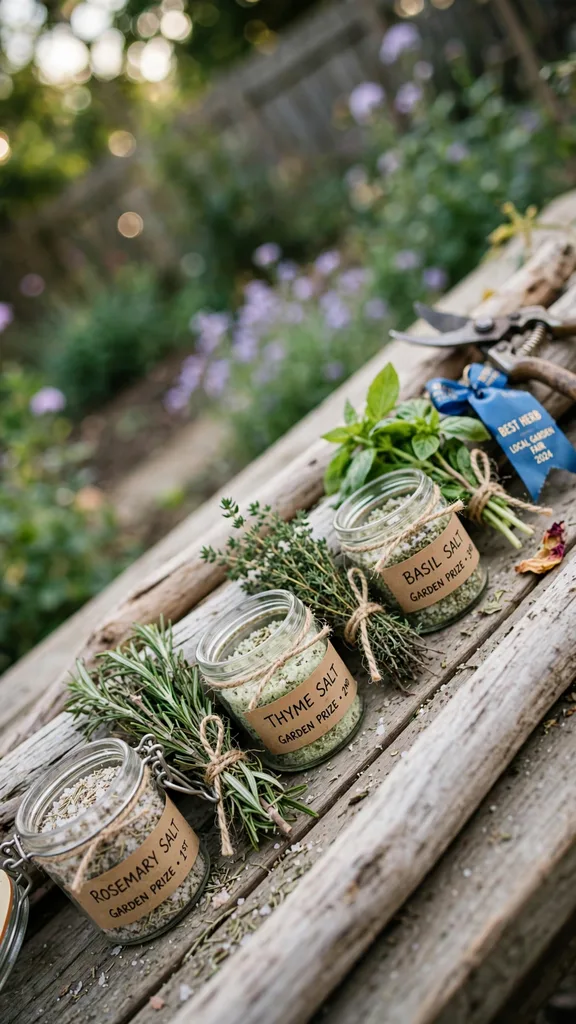
Every category should be winnable by a beginner, and at least one prize should go to a child. Photograph each winner holding the wreath; the album is half the point.
28. The Photo Wall
Hang a line with pegs against the garden’s best backdrop and photograph every finished wreath on it, one by one, in the same light. The photo wall gives the party its record and the makers their portraits, wreath first, maker beside it.
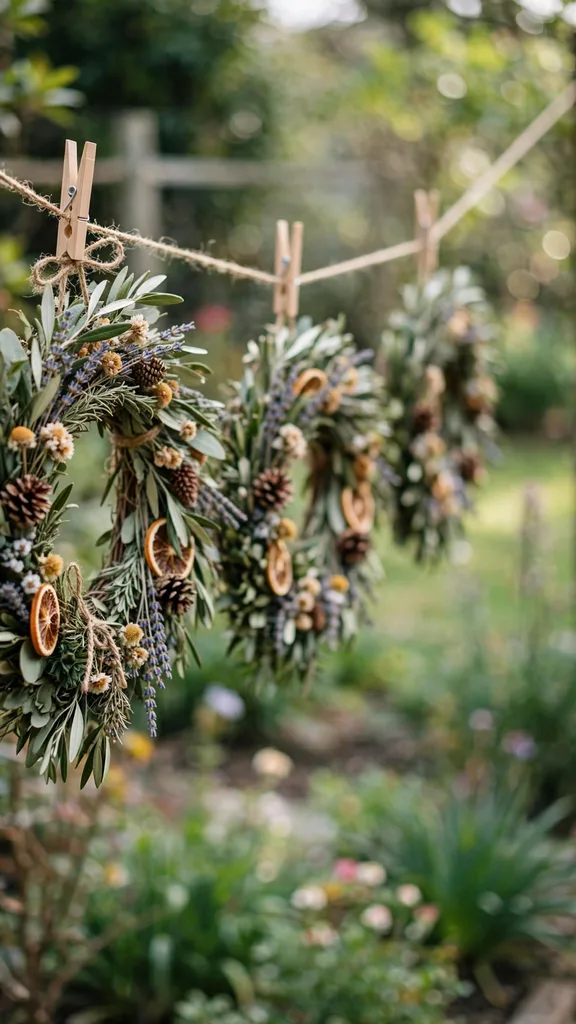
Shoot the wall before dusk or bring the lanterns to it; December light quits early. Send the photographs with the thank you messages while the resin is still on everyone’s sleeves.
29. A Wreath for the Garden Gate
Send one team outside to dress the garden gate with a weatherproof wreath and swags, built heavy and wired hard for wind. The gate wreath advertises the party to the street and tests every maker’s wiring against the weather in real time.
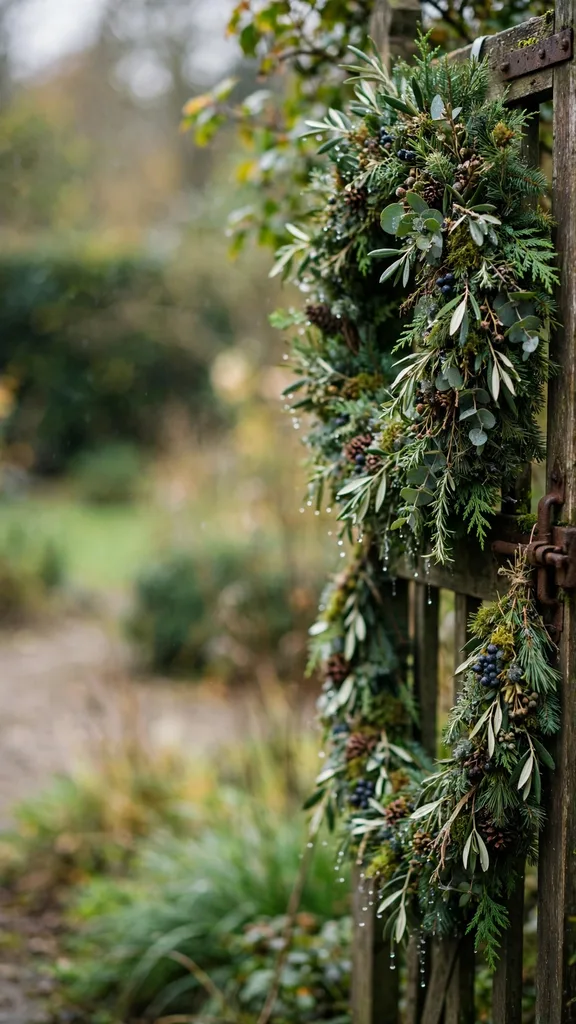
Use the toughest materials at the gate, cones, evergreen, and berries, saving dried delicacies for indoors. Check the gate wreath after the first storm as a group chat errand.
30. Donation Wreaths for the Neighbors
Add one station’s worth of extra bases so each guest can make a second, simple wreath for a neighbor, an elderly resident, or the street’s new household. Donation wreaths use the classic theme and the bar’s abundance, and they change the party’s feeling from craft to rounds.
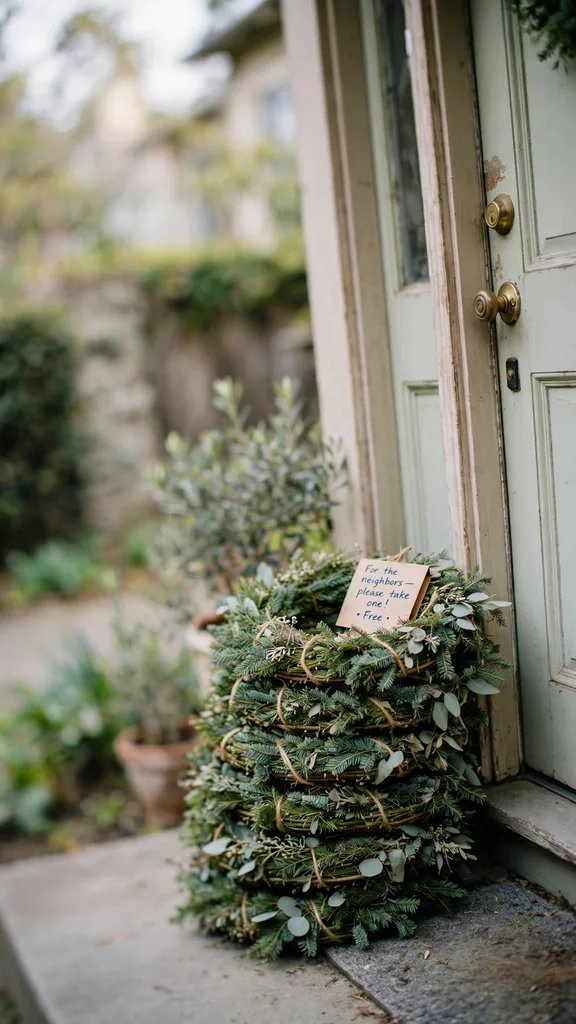
Deliver them on the walk home or the next morning, still fresh. Streets remember which house the wreaths came from, kindly, for years.
31. Mulled Drinks From the Garden
Serve one mulled drink built on the garden’s own spices and herbs: apple juice or wine warmed with cinnamon, clove, star anise, bay, and strips of the drying station’s orange peel. The pot scents the workroom and uses the same store cupboard as the wreaths.
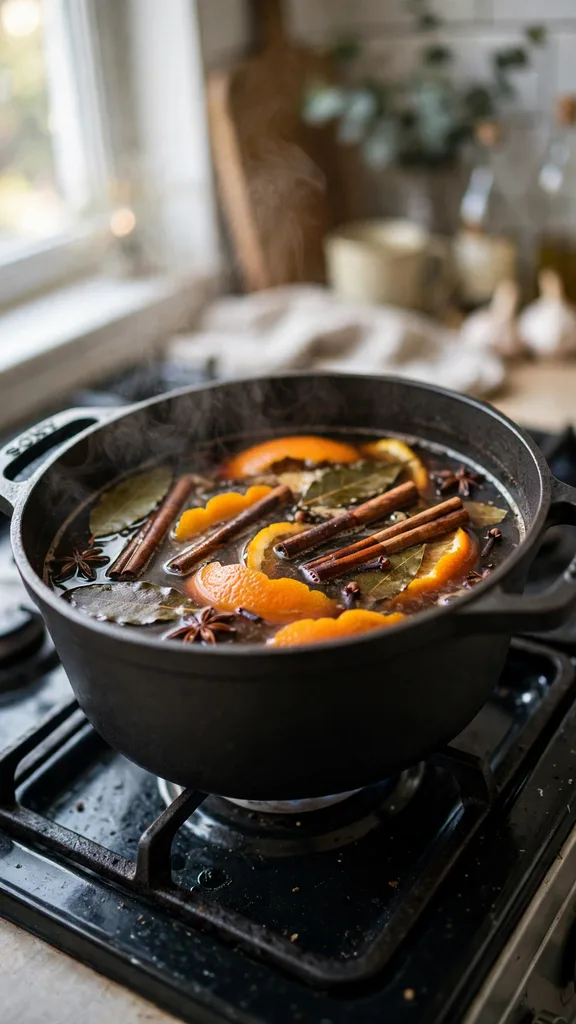
Keep a non alcoholic pot beside the other; makers drive home. A ladle and mugs at the station keep drinks away from the work table’s wire ends.
32. The Soup and Bread Table
Feed makers a standing lunch of soup and bread at the party’s middle, eaten in shifts so the table never empties of workers. Soup suits a working party: no cutlery choreography, warm hands between wreaths, and a pot that forgives any schedule.

Set the food in another room or the kitchen, since crumbs and greenery are poor mixers. The lunch break is also when the group wreath gets its middle sections, by the unhurried.
33. The Edible Garnish Bar
Set a small garnish bar for drinks: rosemary sprigs, cranberries, orange twists, and frozen herb cubes, raided from the same garden stock as the wreaths. Drinks dressed from the garden tie the party’s flavors to its materials in guests’ hands.

Freeze the garnish cubes the day before, herbs and berries in water, so drinks chill and dress at once. The garnish bar photographs like a magazine and costs a handful of cuttings.
34. Favor One: Herb Salt Packets
Send guests home with a packet of herb salt ground from the garden’s dried herbs, rosemary, thyme, and sage with flaked salt, in a labeled jar or twist of paper. Herb salt is the favor that gets used, which is the favor test that matters.
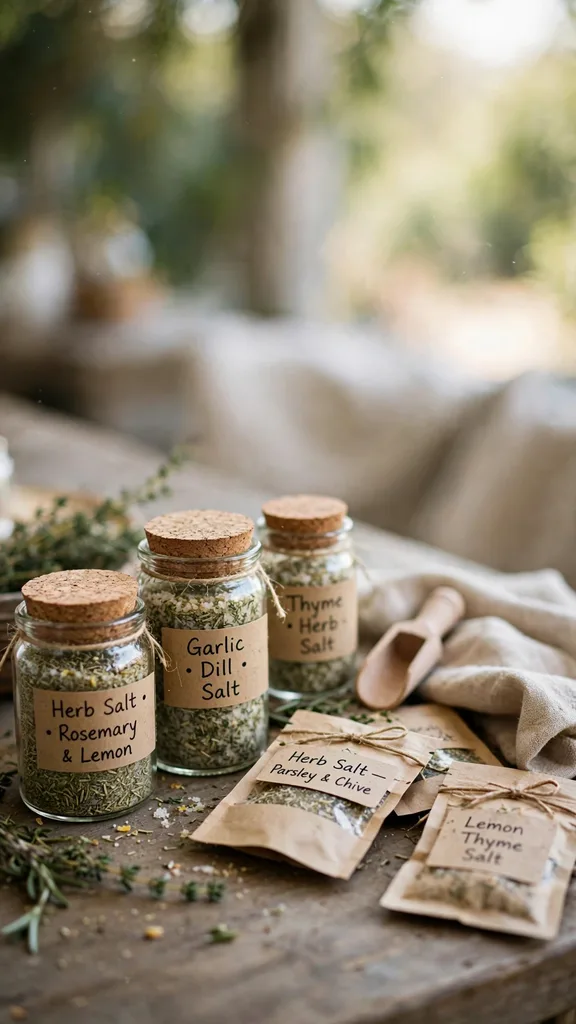
Grind the salt during the party’s quiet hour and let guests fill their own packets at the favor table. The recipe written on the packet makes it refillable, the gift that continues.
35. Favor Two: Seed Packets From the Garden
Saved seed from the garden’s own flowers, in folded paper packets with the plant’s name and sowing month, is the favor that arrives in spring. Set the seed packets at the favor table with the summer’s seed heads beside them, so guests see the whole loop.
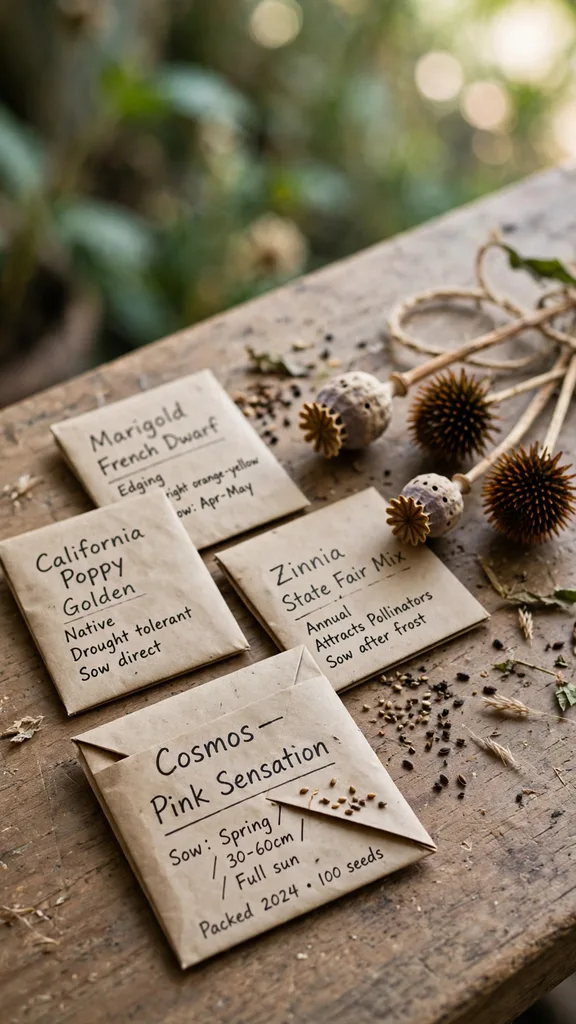
Choose generous, easy seed: calendula, nigella, hollyhock, and the herbs. A seed favor costs the host nothing but the saving, which the garden already asked for.
36. Favor Three: A Cutting to Root
Offer each guest a cutting to root at home, rosemary, lavender, or a houseplant stem, in a small jar of water with the rooting instructions on a tag. The site’s guide to potted plant gifts you grow yourself covers the growing on, for guests who catch the bug.

Cut the favors fresh at the party’s end so they travel home at their best. A rooted cutting on a windowsill advertises the party until spring.
37. Favor Four: Dried Orange Garland Kits
Bag the drying station’s spare slices with twine and a needle’s worth of instructions as garland kits, the favor that smells like the party. Kits suit the guests who made door wreaths and want the citrus for a mantel instead.
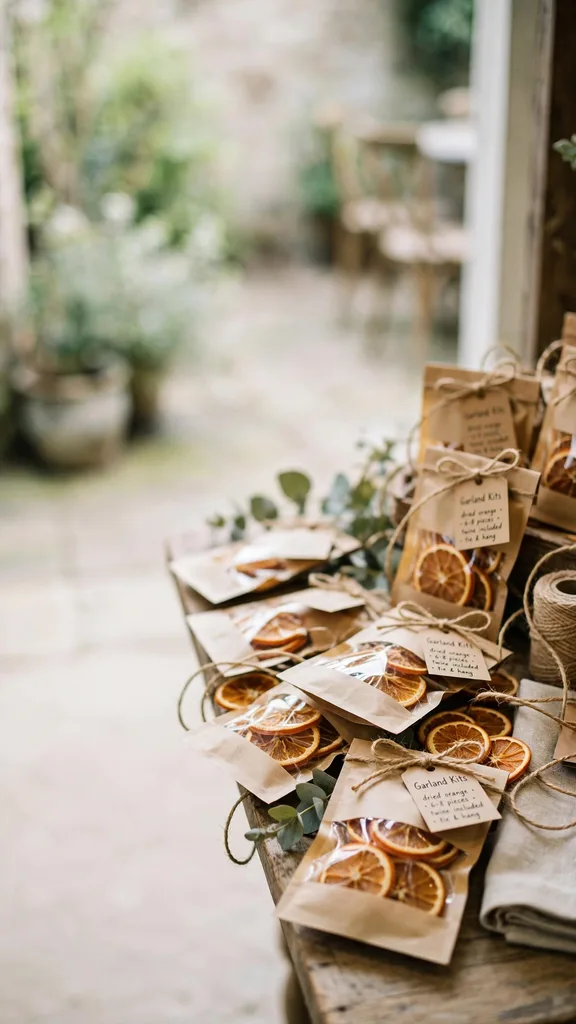
Dry extra trays deliberately; the kits are planned surplus, not leftovers. A kit per guest plus the maker’s own garland doubles the citrus in every house.
38. Favor Five: Pinecone Fire Starters
Dip the bar’s spare cones in wax with a wick of twine to make fire starters, bundled in threes with the party’s ribbon. Fire starters are the favor for the guests with hearths, and they consume the cone tray’s broken and small stock.
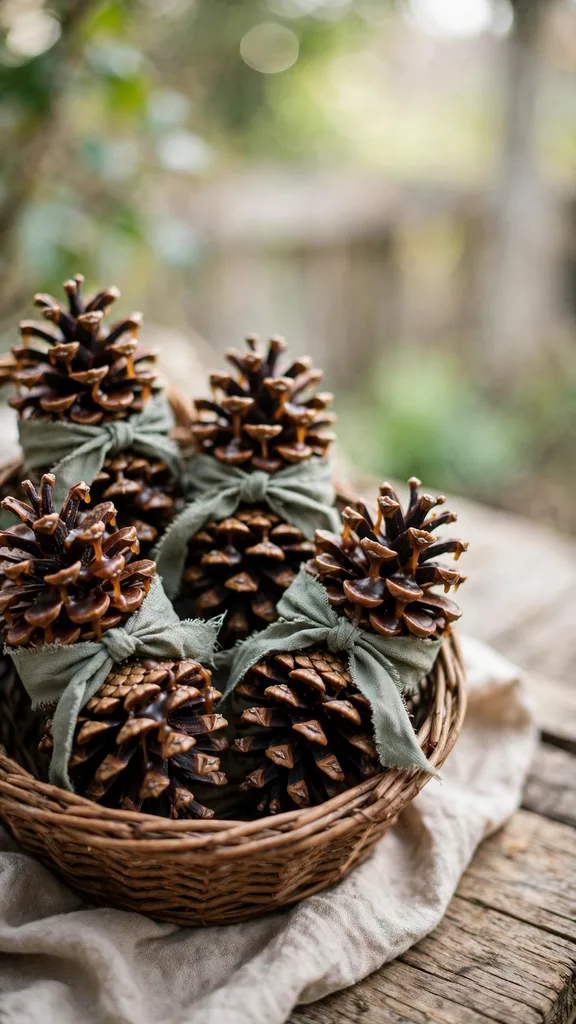
Make the starters at the party’s end, outside or at the tool table, with the wax pot supervised. Bundle them away from the edible favors, clearly, since waxed cones fool nobody twice.
39. Favor Six: Pressed Flower Tags
Give each guest a pressed flower gift tag for their wreath’s first outing or their presents, made from the summer’s pressings. The site’s pressed flower cards and gift tags article carries the pressing method behind the favor.

Tags take a minute to choose and personalize at the favor table. A tag on the wreath’s photograph ties the summer garden to the winter party in one object.
40. Timing: Harvest Morning, Making Afternoon
Schedule the party backwards from the light: harvest and setup in the morning, guests at midday, making through the afternoon, photographs and favors before dusk. A December party planned around daylight never rushes its best hour.
Put the times on the invitation, including the harvest walk, so early guests join the cutting. Late light is the host’s deadline, and building the day to it removes all clock watching.
41. How Many Guests Fit the Table
Plan on each maker needing a full place at the table with a wreath’s width of elbow room, which a long garden table gives to eight or ten. More guests than places turns makers into watchers; a second table in the same room keeps everyone working.
Count bases, snips, and chairs against the same number before invitations go out. The party’s size is set by its smallest supply, and finding that out early is the whole trick.
42. The Cleanup System
Clean up in three streams as the party ends: compost for the green waste, a save box for cones, pods, and dried stock that keeps, and the ribbon and tool count back. Guests help happily when the streams are labeled and the music is still on.
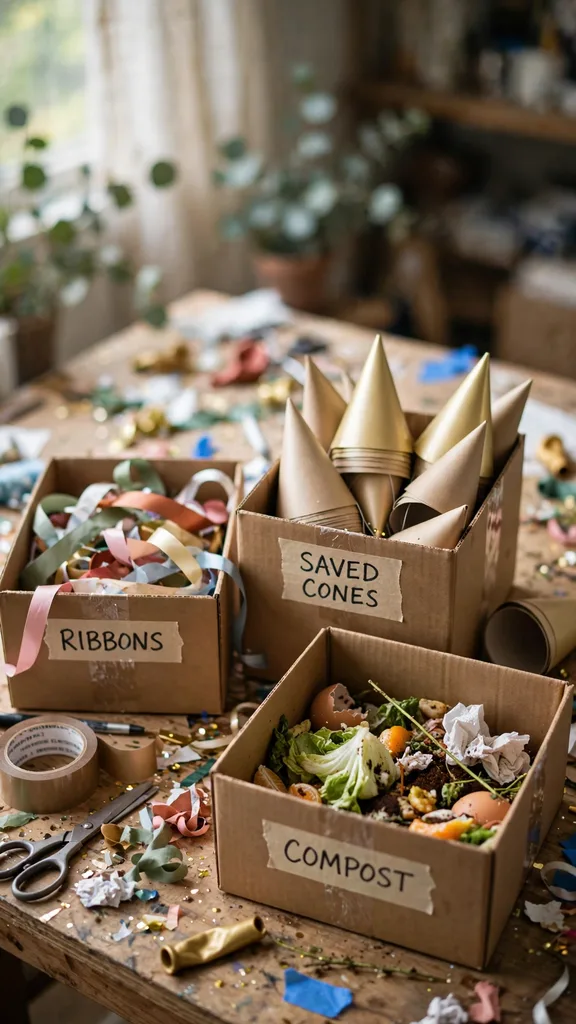
The save box becomes next year’s bar stock, which is how the party compounds. Sweep the resin and wire ends last, barefoot season is coming eventually.
43. Leftover Greenery the Next Day
Plan the leftovers before they exist: spare greenery becomes a door swag for the host, a table runner, and bundles for the neighbors who missed the party, with the site’s Christmas garden ideas pillar as the household’s menu of next uses. Nothing cut for the party should end in the bin while doors stand bare.
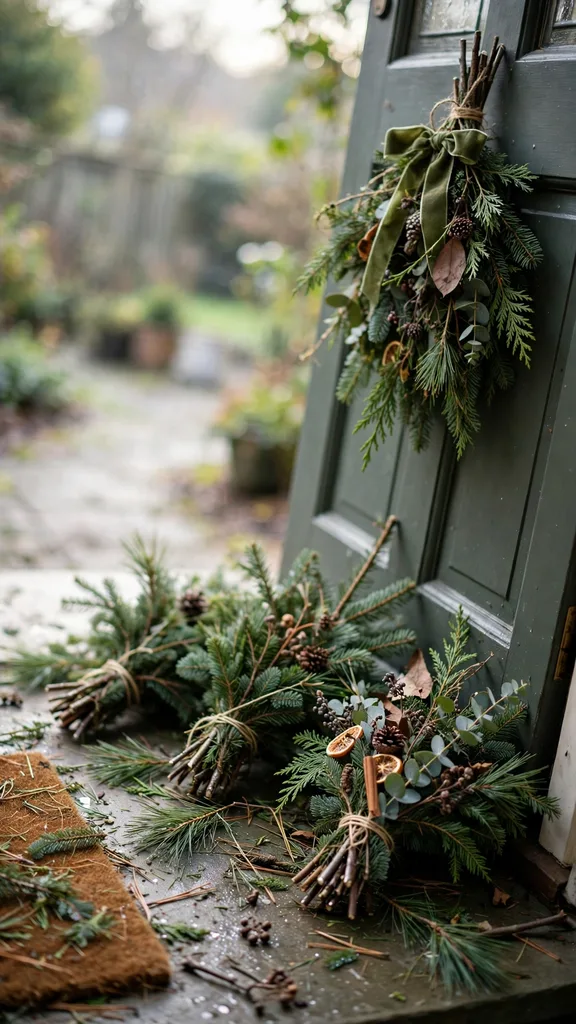
Work the leftovers the next morning while the material is fresh. A host who uses everything teaches the party’s real lesson without saying it.
44. The Rain Plan
Hold a rain plan from the start: a garage, porch, or big kitchen where the bar and table move under cover, with the harvest done the day before if the forecast is certain. Rain changes the party’s room, not its date, since December weekends are too few to gamble.
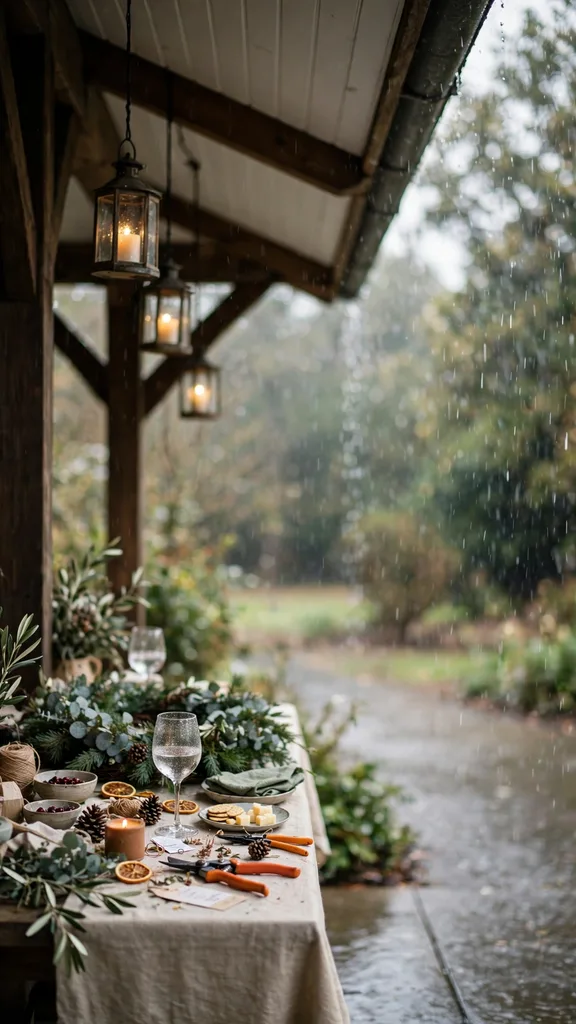
Tell guests the plan on the invitation so wet weather brings boots, not cancellations. Some hosts swear the under cover parties are the cozier ones, and the lantern light agrees.
45. The Host’s Own Wreath, Made Last
Make your own wreath last, from the bar’s remains after the guests leave, in the quiet with the party still in the room. The host’s wreath gathers the day into one object: a cone from one guest’s theme, berries from another’s, the ribbon everyone used.

Hang it where the party happened, the door everyone left by. Next year’s invitations start when a guest asks about the wreath on the door.
Frequently Asked Questions
Plan generously: a full door wreath takes a large basket of mixed greenery, and a party of eight makers with second projects and a garland station works through a small tree’s worth of cuttings. Cut more than the estimate, since leftover greenery becomes swags, runners, and next week’s arrangements, while a shortage ends the making. Shrubs pruned on rotation, conifer trimmings, and hedgerow ivy supply most parties without buying a single bunch.
Ask for nothing but warm clothes for the harvest walk and a bag for taking treasures home; the host supplies bases, tools, material, and favors. Guests who garden will offer cuttings anyway, and a contributions corner at the bar welcomes them without obliging anyone. If the party is annual, regulars start saving cones and drying flowers for it, which is the invitation working as intended.
Three to four hours covers a harvest walk, one full wreath per guest, a standing lunch, and the games, with favors and photographs in the last half hour. Makers who stay longer are finishing second projects, not first ones. Plan the schedule backwards from dusk in December, since the photograph wall and the walk home both want the last of the light.
Yes, with the bar and table scaled down: one table for six makers, material in baskets on the floor and windowsills, and the garland station dropped or moved to a hallway. Small rooms suit the party’s sociability, and the greenery smells stronger indoors. Protect the floor with a sheet under the work area, since resin and needle drop are the party’s confetti.
Beginners are the party’s best guests when the setup carries them: a sample wreath to copy, a forgiving theme like the rustic or the classic, a confident neighbor, and tools that work. Most first timers finish a wreath they are proud of, because wreath making is arrangement, not construction. Seat beginners where the host passes often, and let the speed round prove to them what their hands can do.