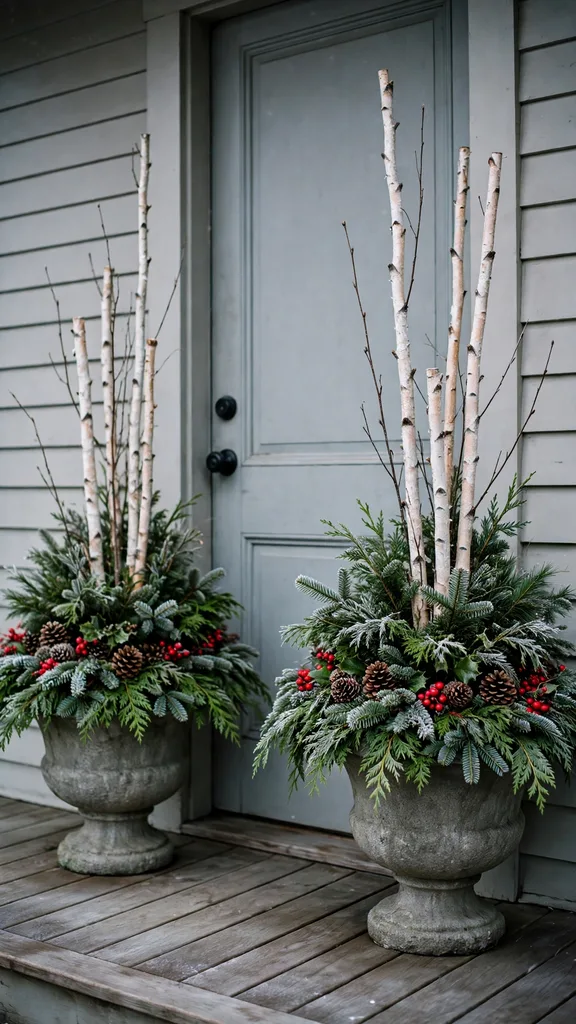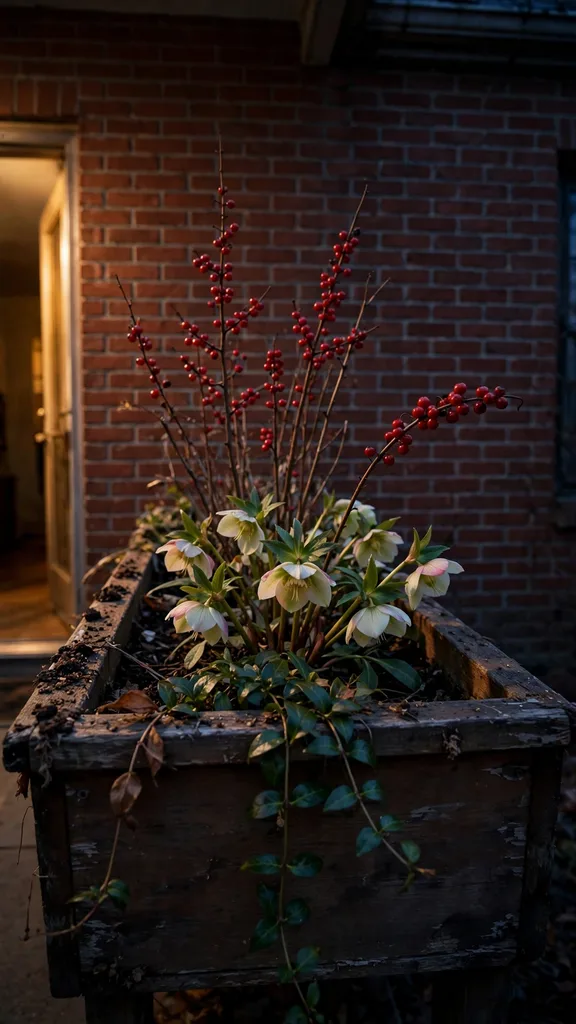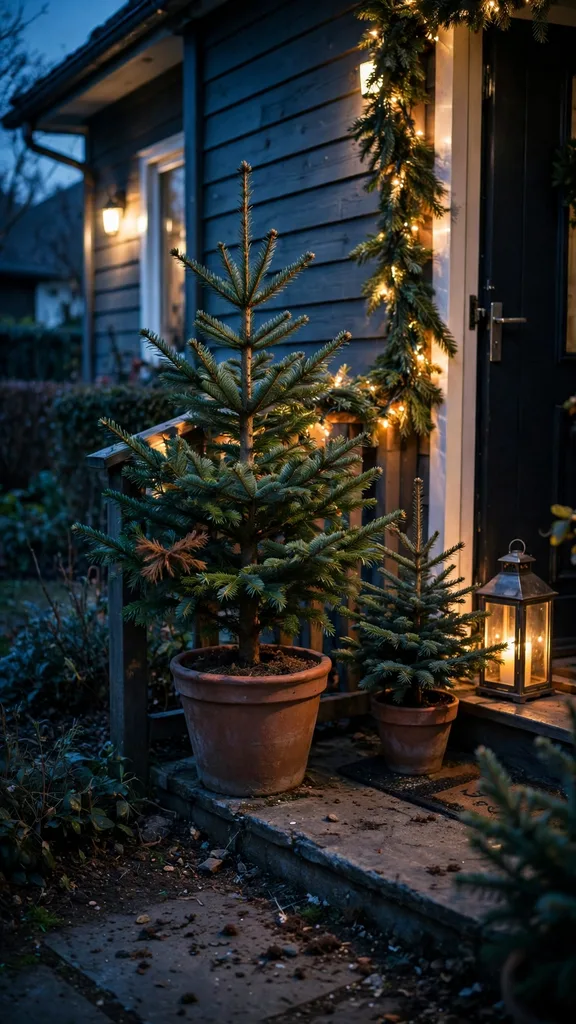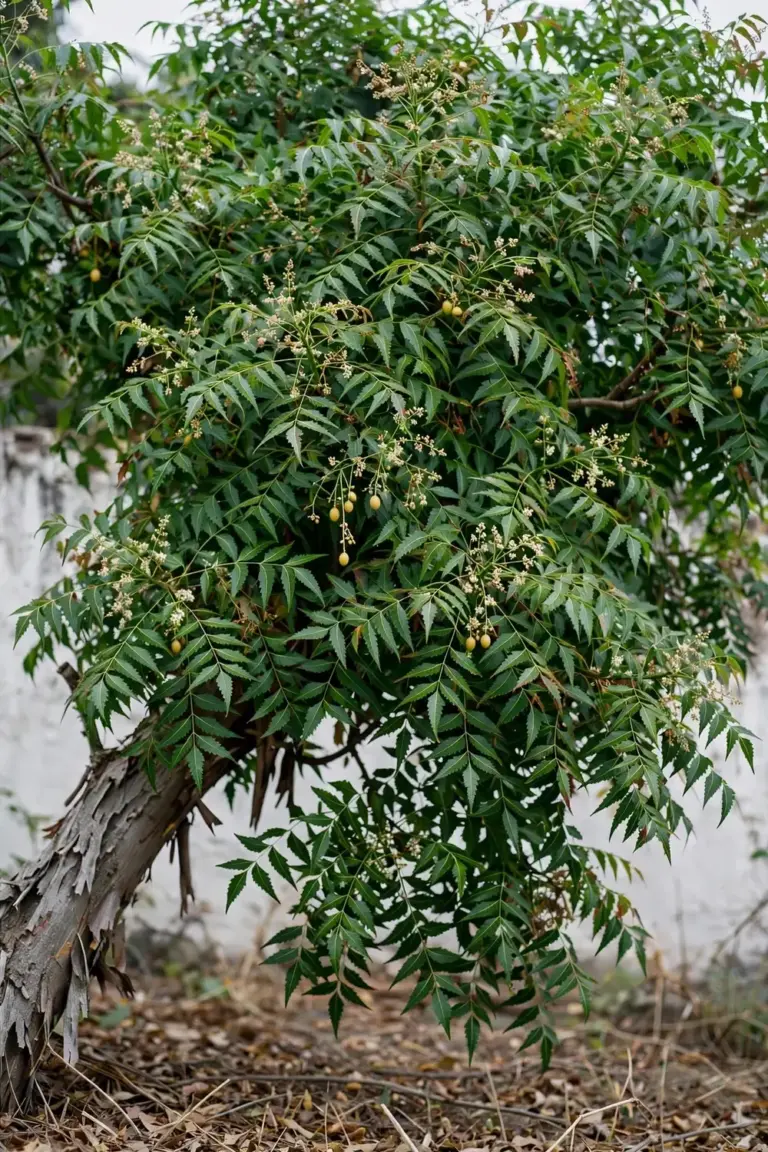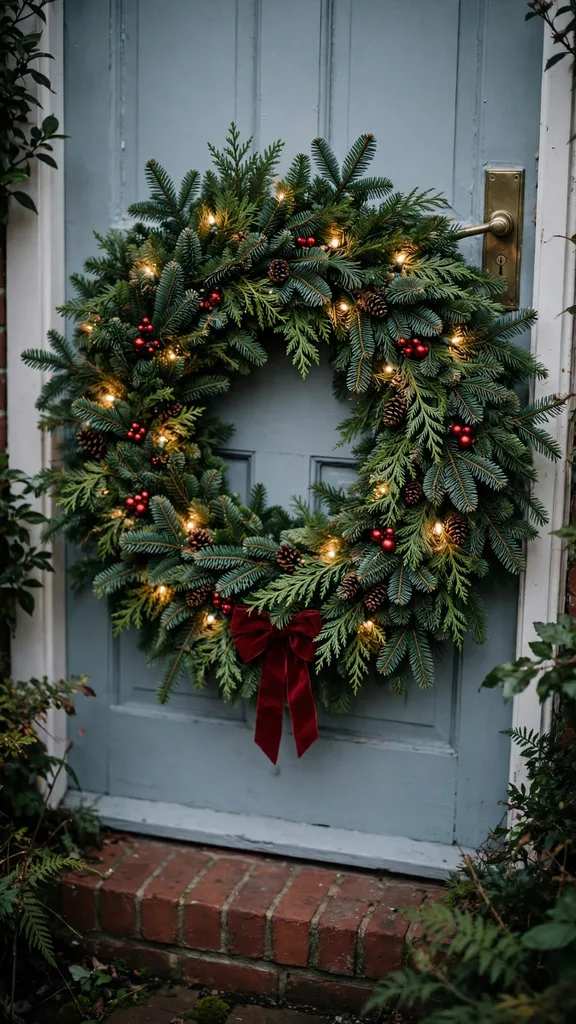

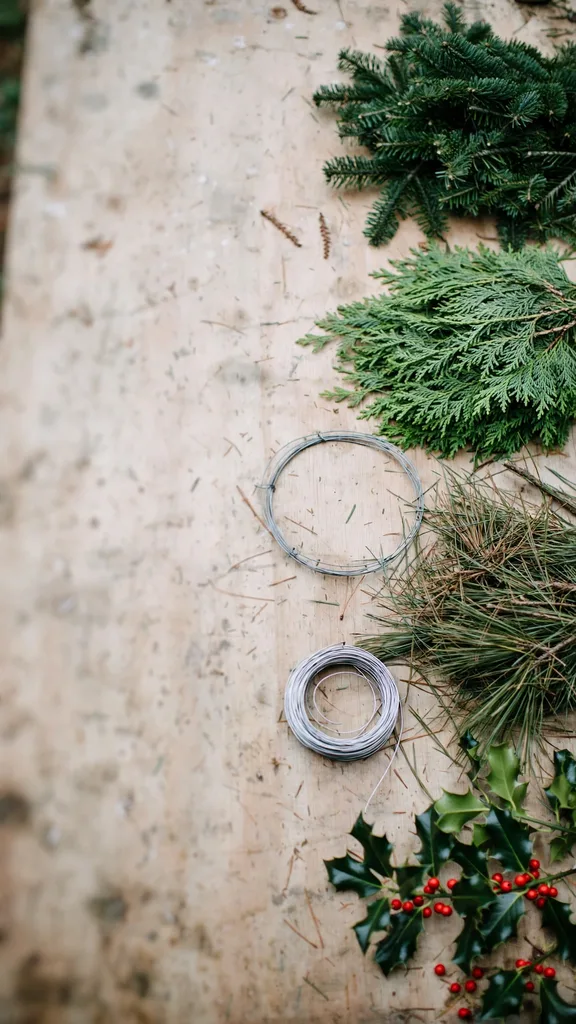
A Christmas wreath from garden cuttings starts with a wire frame, a pile of fresh evergreen bundles, and a door that stays cold through December. Fir forms the base, cedar adds scent and droop, and pine, holly, rosemary, eucalyptus, olive, and magnolia each change the color, the texture, and the staying power of the ring. The 21 builds below cover full front door rings, small door rings, indoor rings, and table rings, and every build uses material cut from plants a gardener may already grow.
I have learned that tight wiring holds a bundle in place through wind on a front door. Cut in the morning when the stems hold the most moisture, wire the bundles to the frame with the tips pointing one way around the ring, and hang the finished ring where cold air reaches it. A ring built this way reads as Christmas at once, with red berries, red ornaments, and small lights set against dark green, and the same ring costs nothing beyond wire, a frame, and an afternoon of cutting.
Start with the frame size that fits the door. A front door ring measures 45 cm across the outside edge, a small door ring measures 30 cm across, and a table ring measures 25 cm across. Measure the door before cutting, leave 5 cm of clear door on each side of the ring, and check that the ring clears the handle and the lock when the door swings.
| Need | Start With | Why It Works |
|---|---|---|
| A full front door ring | Item 18. Hang the Finished Wreath on the Front Door for Christmas | The ring hangs at eye level on the door, with ornaments and lights facing visitors |
| A small door ring | Item 5. Build a Rosemary Wreath for a Small Door | Rosemary stems stay short and dense, so a small ring still looks full |
| An indoor ring | Item 6. Dry a Eucalyptus Ring for an Indoor Wall | Dried eucalyptus holds its shape indoors without shedding needles on the floor |
| A ring that lasts longest | Item 19. Mist the Ring and Keep It Cool Through December | Cool air and regular misting slow drying on a fresh evergreen ring |
| A ring for a house with pets | Item 10. Keep the Ring Berry Free Where Pets Roam | A ring without berries removes the most tempting pieces from reach |
1. Cut a Noble Fir Base That Holds Its Needles
Noble fir gives a Christmas wreath its backbone. Cut stems 20 cm long from the lower branches of a noble fir, strip the lowest 5 cm of needles from each stem, and gather 5 stems into one bundle with the tips aligned. Wire each bundle at the stripped section, lay the bundles on the frame with each bundle overlapping the wired end of the last bundle, and work around the ring in one direction so every tip points the same way.
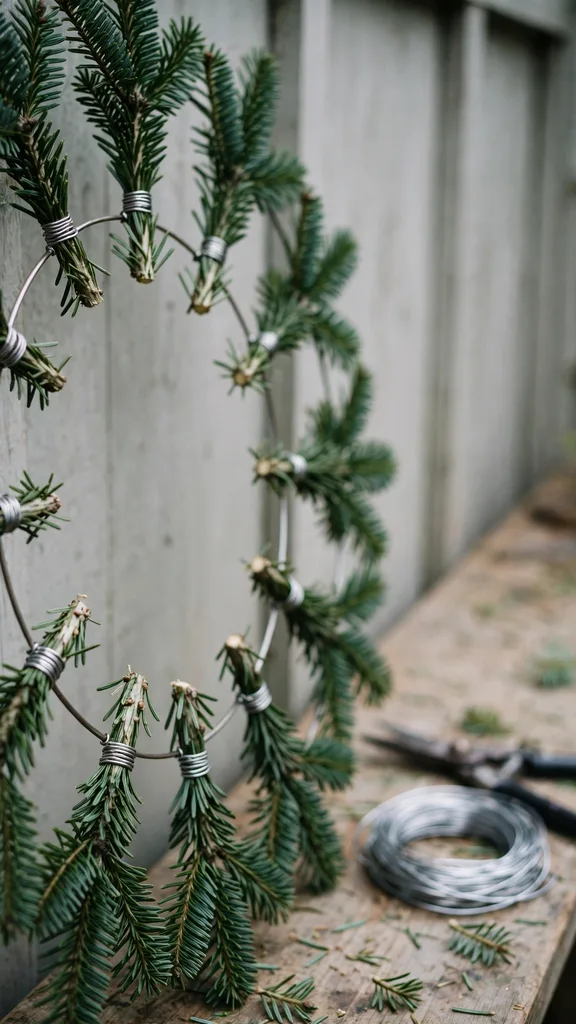
A fir base keeps its shape when the ring moves from a workbench to a door. Test a stem before cutting a full pile by bending a needle between two fingers. A needle that bends and springs back signals fresh growth worth cutting, and a needle that snaps signals a branch past its best. Cut only branches that pass the bend test, and leave the top third of the tree untouched so the tree keeps growing for next year.
2. Layer Cedar for Scent and Drooping Tips
Western red cedar adds the scent visitors notice first on a cold porch. Cut cedar sprays 25 cm long, keep the flat fan shape of each spray intact, and lay one cedar spray over each fir bundle before wiring. The cedar fans droop past the fir tips by 5 cm, and that droop softens the outer edge of the ring. Cedar dries faster than fir in heated air, so a cedar layer belongs on a ring that hangs outdoors or on a sheltered porch.
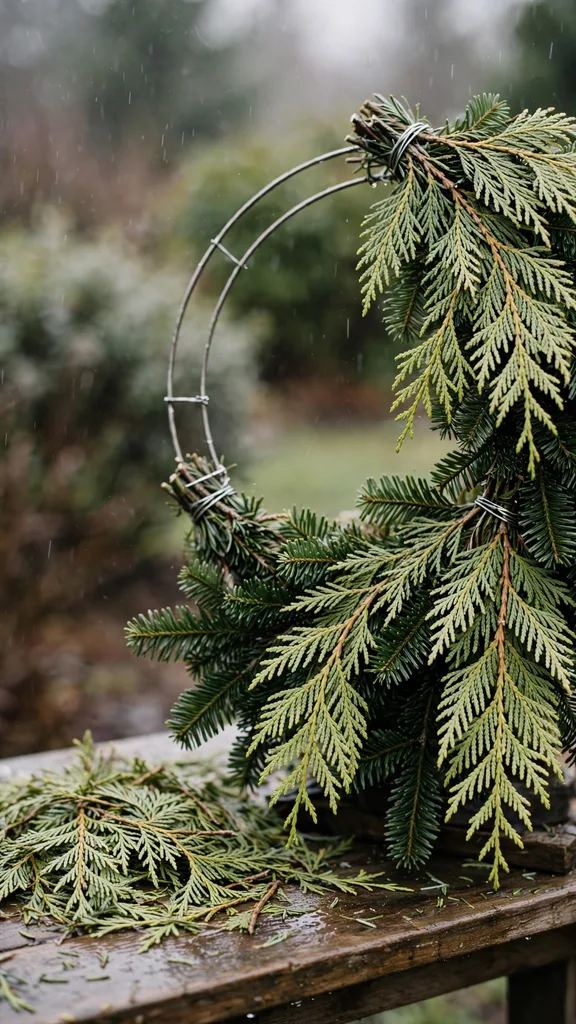
Place cedar on the outer half of the ring only, and keep the inner half in fir. Cedar at the outer edge catches the breeze and releases scent each time the door opens, and fir at the inner edge holds the ring dense where the frame shows through. Press each cedar spray flat against the fir bundle before wiring, and check the ring from 2 m away. A ring that shows gaps at that distance needs one more cedar spray per bundle, placed to cover the bare wire.
3. Add Pine for Length and Soft Texture
Pine stretches a wreath past the frame and gives a ring its soft, full outline. Cut pine stems 30 cm long, use stems with needles 8 cm to 12 cm long, and tuck one pine stem behind each fir bundle so the pine needles reach 8 cm past the fir tips. White pine gives the softest texture, and Scots pine gives stiffer needles that hold their shape in wind. Pine needles shed more freely than fir needles, so pine works best as an accent layer over a fir base rather than as the whole ring.
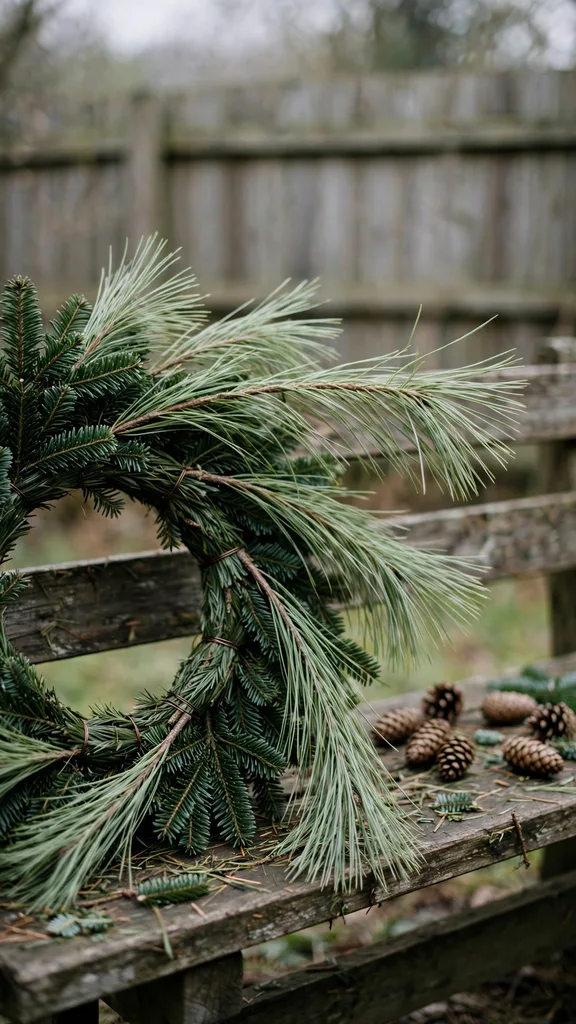
Keep pine to one stem per bundle, and wire the pine stem with the fir bundle in a single wrap. Two pine stems per bundle push the ring past its frame and hide the fir underneath, and one stem per bundle adds length while the fir still sets the color. Brush the finished ring lightly with an open palm. Pine needles that fall at that touch signal stems cut too dry, and those stems belong in the compost rather than on the door.
4. Set Holly Berries High and Out of Reach
Holly gives a Christmas ring its red accent, and holly berries demand careful placement. Cut holly sprigs 15 cm long with 5 to 8 berries on each sprig, wire each sprig to the top half of the ring only, and angle the berries outward so the red shows from the street. Holly berries are toxic to humans and pets because the berries contain saponins, and the Virginia Department of Health warns that holly berries cause gastrointestinal irritation when ingested. Place berried sprigs above 1.5 m on the door, sweep fallen berries from the porch each day, and keep the ring away from a low gate where a dog passes.
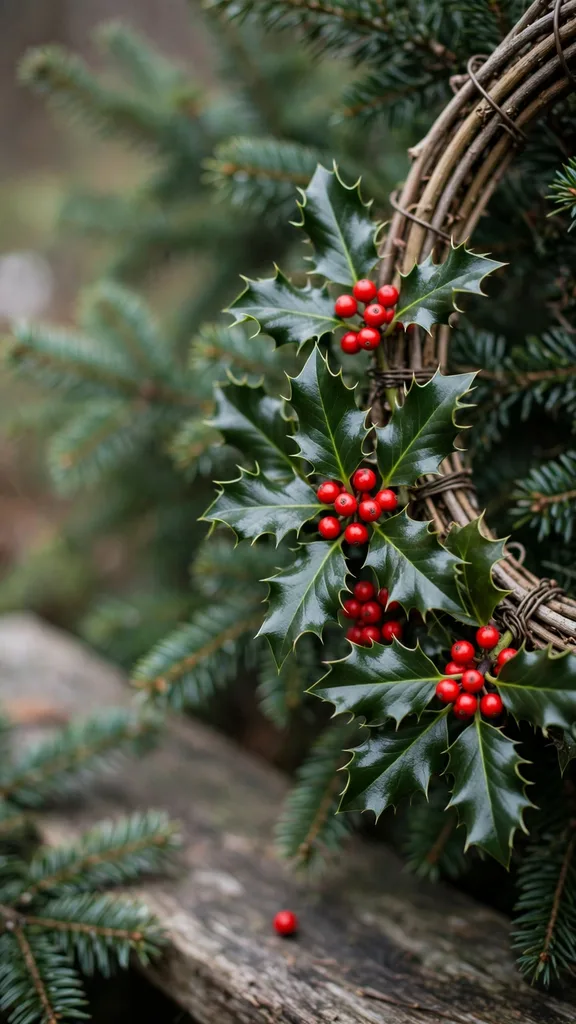
Holly leaves cut skin, so wear thick work gloves while cutting and wiring holly, and snip each sprig with sharp secateurs rather than tearing it from the branch. A torn sprig loses leaves at the cut and leaves a ragged wound on the parent shrub, and a clean cut heals fast and keeps the shrub tidy. Use female holly plants for berries, since male holly plants carry no berries, and check the shrub in late summer. Berries set by August signal a sprig worth cutting in December, and a shrub with no berries by August needs a female plant nearby for pollination next year.
5. Build a Rosemary Wreath for a Small Door
Rosemary builds a small ring with dense foliage and a scent that survives indoors. Cut rosemary stems 18 cm long from a mature plant, strip the lowest 4 cm of leaves, and gather 6 stems into one bundle. Wire the bundles to a 30 cm frame, overlap each bundle by half its length, and work around the ring twice so the second pass fills the gaps left by the first pass. Rosemary needles stay green indoors, and a rosemary ring suits a flat door, a cottage door, or an interior door where a large evergreen ring crowds the frame.
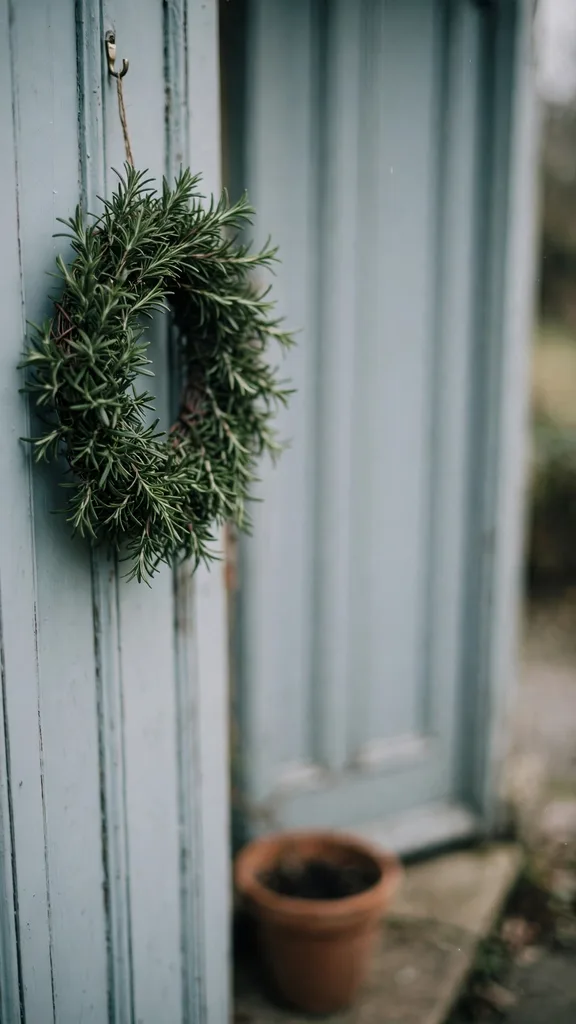
Harvest rosemary from the top third of the plant only, and never cut more than one third of the plant in one session. A plant cut back by one third regrows from side shoots through the next growing season, and a plant cut to bare wood regrows slowly or fails to regrow at all. Water the parent plant the day before cutting, cut in the morning, and wire the bundles within 2 hours. Rosemary stems wilt fast once cut, and wiring within 2 hours locks the foliage in place before the stems soften.
6. Dry a Eucalyptus Ring for an Indoor Wall
Eucalyptus suits an indoor wall because the leaves dry in place and hold their shape for months. Cut eucalyptus stems 25 cm long, hang the stems upside down in a dark room for 14 days, and wire the dried stems to a 30 cm frame once the leaves feel papery and stiff. Silver dollar eucalyptus gives round leaves that read well from across a room, and willow leaf eucalyptus gives narrow leaves that suit a slim ring on a narrow wall. Dried eucalyptus sheds little, so an indoor ring stays tidy on a wall above furniture.
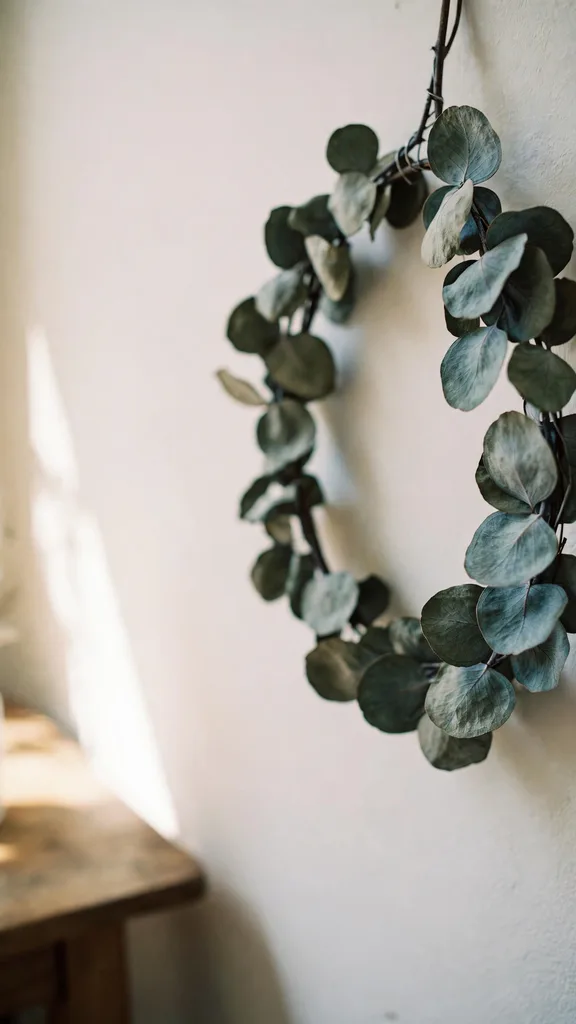
Dry the stems before wiring, since fresh eucalyptus shrinks as it dries and a ring wired fresh loosens within a week. Hang the stems in small bunches of 8 stems, leave 10 cm of air between bunches, and keep the drying room dark. Light fades the blue green color of eucalyptus leaves during drying, and a dark room keeps the color true. Test one leaf after 14 days by bending it gently. A leaf that cracks signals stems ready for wiring, and a leaf that bends signals stems that need 3 more days hanging.
7. Frame Magnolia Leaves for Gloss and Staying Power
Magnolia leaves give a ring a glossy surface that catches light on a dark porch. Cut southern magnolia leaves with 3 cm of stem attached, wipe each leaf clean with a damp cloth, and wire the leaves in overlapping rows around a 35 cm frame with the glossy side facing out. Lay each row so the leaf above covers the wired stem of the leaf below, and finish the ring with a second row on the inner edge to hide the frame. Magnolia leaves stay glossy for weeks outdoors, and a magnolia ring suits a door that faces north and gets little direct sun.
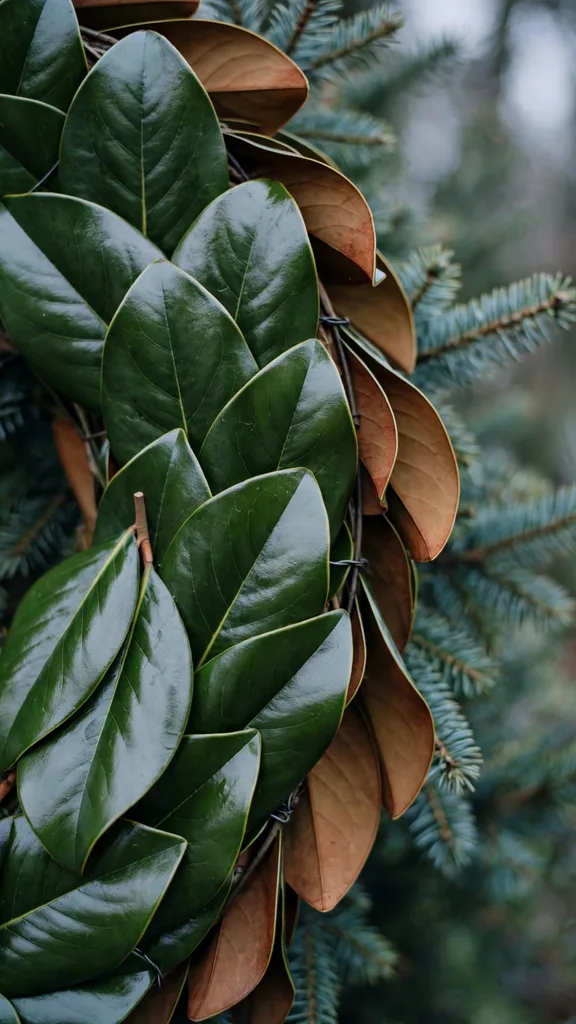
Magnolia leaves dry stiff and keep their shape, so a magnolia ring needs no misting and survives a dry porch better than a fir ring. Cut leaves from the lower branches only, and take no more than 10 leaves from one branch. A branch stripped bare loses the foliage that feeds next year growth, and a branch with leaves left on each side keeps growing through winter. Pair magnolia leaves with pine cones rather than berries, since the brown underside of each magnolia leaf already gives the ring its second color.
8. Mix Olive Branches for a Pale Winter Green
Olive branches lighten a dark evergreen ring with pale green gray foliage. Cut olive stems 22 cm long, keep the small oval leaves intact along each stem, and tuck one olive stem into every second fir bundle. Olive leaves read pale against fir, and the contrast stops a large ring from looking like a solid dark mass from the street. Olive branches dry slowly and hold their leaves well, so an olive accent lasts the full December display on a sheltered porch.
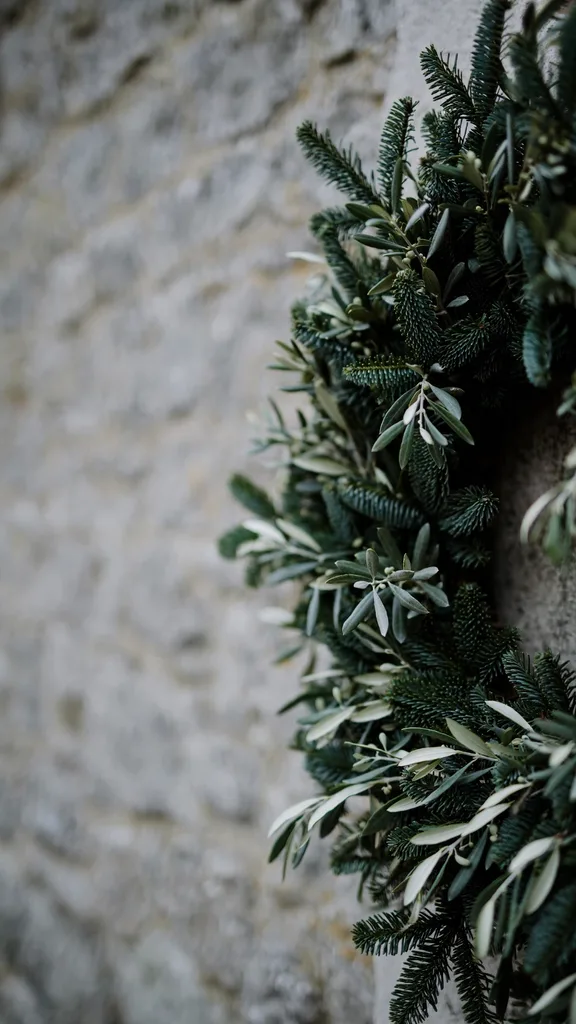
Cut olive stems from the outer growth of the tree, and choose stems with leaves on both sides of the stem. A stem bare on one side leaves a gap in the ring that no later bundle covers neatly, and a stem leafy on both sides fills its slot at once. Wire olive stems with the fir bundle in the same wrap, and keep the olive tips 3 cm shorter than the fir tips. Olive tips that stick past the fir tips look stray and untidy, and olive tips held 3 cm back read as a deliberate pale layer inside the ring.
9. Make a Mini Wreath From Garden Pruning Leftovers
Pruning leftovers build a mini ring at no cost and use material that otherwise goes to compost. Gather fir, cedar, and pine trimmings 12 cm to 15 cm long, sort the trimmings by species into three piles, and wire the shortest stems to a 20 cm frame. Work in bundles of 4 stems, overlap each bundle by half, and finish the ring with one pine cone wired at the bottom. A mini ring suits a window, a gate post, or a mirror, and a gardener with a pruned hedge in November already holds the material for 3 mini rings.
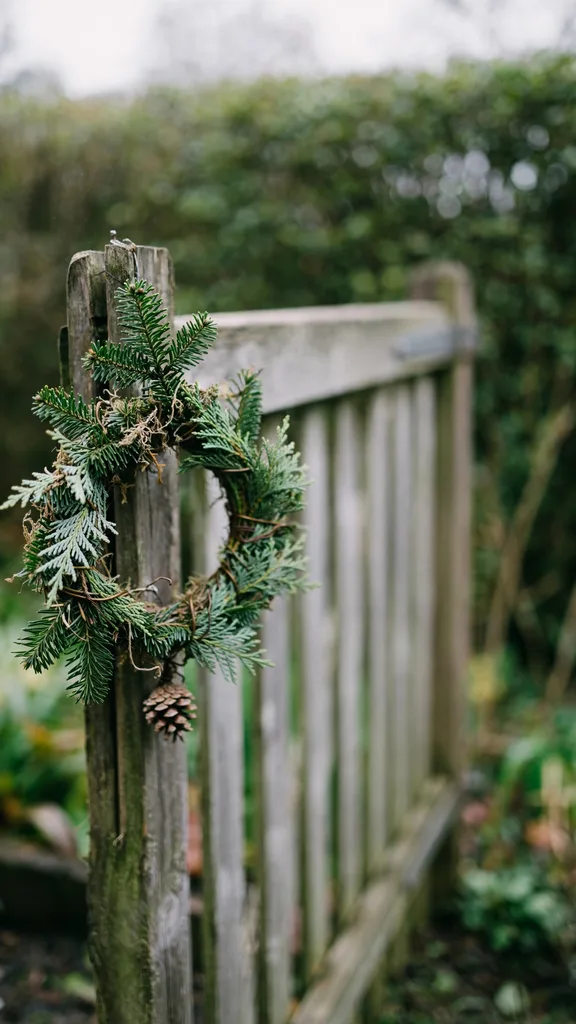
Save trimmings through autumn in a cool shed, and mist the pile once a week to slow drying. Trimmings left in sun dry within days and snap when wired, and trimmings kept cool and damp stay pliable for 4 weeks. Sort before wiring, since mixed bundles hide the best stems and waste time at the workbench. A pile sorted by species lets each bundle carry one texture, and a ring built from sorted piles reads cleaner than a ring built from a mixed heap.
10. Keep the Ring Berry Free Where Pets Roam
A ring without berries suits a house where a dog chews greenery or a cat bats at low decorations. Build the ring from fir, cedar, and pine only, replace the red accent with red ornaments wired tight to the frame, and hang the ring at a height where a jumping dog still cannot reach the lowest foliage. Red ornaments give the same Christmas color as berries, and ornaments wired through the frame stay put when a paw brushes the ring. Check the porch floor each morning for fallen needles and ornaments, and sweep the floor before letting a dog out.
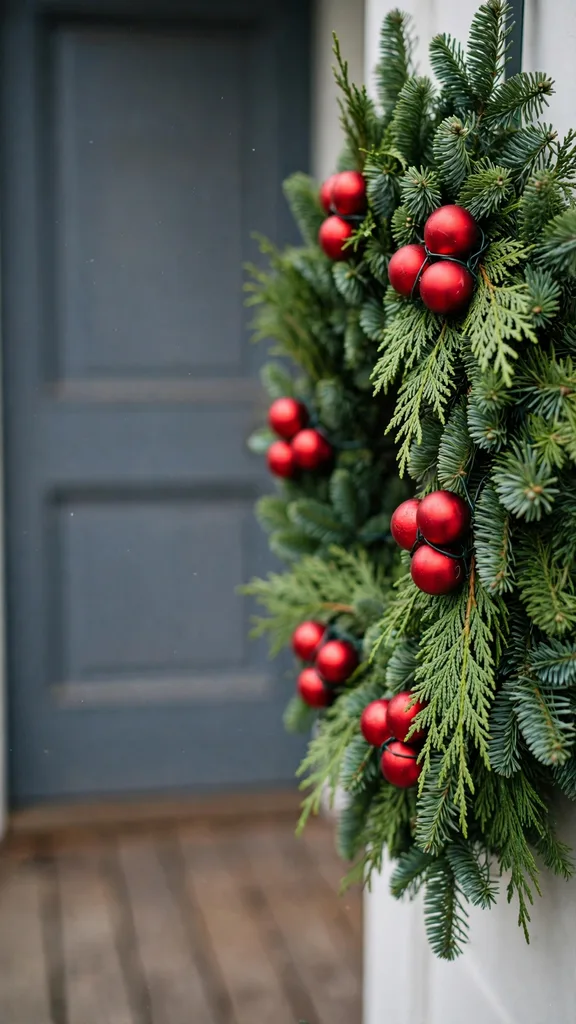
Choose shatterproof ornaments for a pet house, and wire each ornament with two wraps of wire through the ornament cap. An ornament hung on a hook falls when brushed, and an ornament wired twice stays on the ring through a bump. Keep the ring on a door that closes fully, and avoid a gate ring at dog height. A gate ring invites chewing at nose level, and a door ring above 1.5 m keeps the foliage out of a dog mouth while the red still shows from the path.
11. Add Pine Cones Without Hiding the Greenery
Pine cones add brown texture and winter weight to a green ring. Collect cones 5 cm to 8 cm long, dry the cones indoors for 7 days so the scales open, and wire each cone through the base scales with a 20 cm length of wire. Place 5 cones on a 45 cm ring, space the cones evenly around the ring, and set each cone deep between bundles so the cone sits inside the foliage rather than on top of it. Cones placed deep read as part of the ring, and cones placed on the surface hide the greenery underneath.
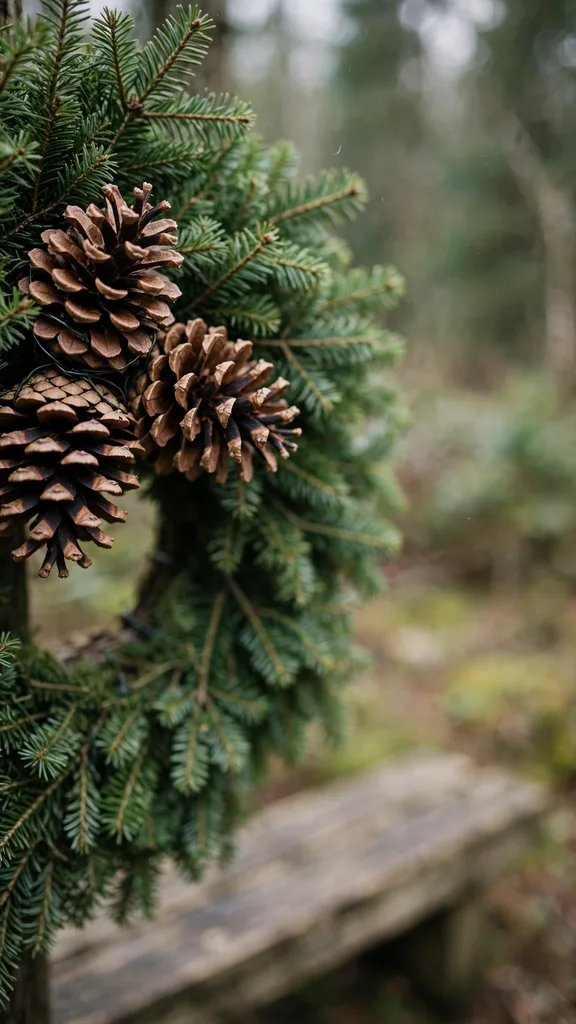
Dry cones before wiring, since a damp cone closes its scales and looks like a smooth brown lump on the ring. Spread the cones on a tray in a warm room, turn the cones once a day, and wire the cones once the scales stand open. Wire through the base scales only, and never glue a cone to the ring. Glue fails in cold damp weather and drops the cone on the porch, and wire through the base scales holds through rain, frost, and wind.
12. Bind Bundles Tight So Wind Cannot Loosen Them
Tight wiring decides whether a ring survives December wind. Wrap each bundle with wire 3 times around the stripped stems, pull each wrap snug with pliers, and twist the wire ends together on the back of the frame. Wire each bundle to the frame with a separate wrap, and test each bundle by tugging it firmly before adding the next bundle. A bundle that moves under a firm tug needs one more wrap, and a bundle that holds firm stays put through a storm.
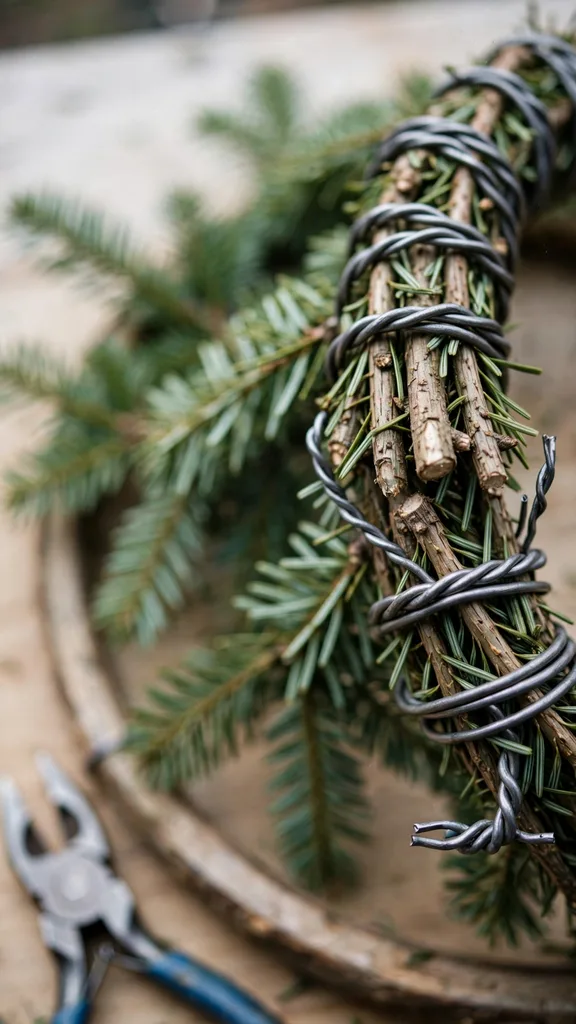
Use 22 gauge florist wire for bundles and 18 gauge wire for the frame wrap, and keep the two gauges in separate piles at the workbench. Thin wire cuts through soft stems when pulled tight, and thick wire leaves a stiff wrap that gaps around the bundle. Twist the wire ends flat against the frame back, and snip the ends short. Wire ends left long snag clothing and scratch a painted door, and wire ends twisted flat stay hidden behind the foliage.
13. Shape an Oval Wreath for a Narrow Door
A narrow door suits an oval ring better than a round ring. Bend a wire frame into an oval 50 cm tall and 30 cm wide, mark the top center of the frame with tape, and wire the bundles from the top center down each side in turn. Work one bundle on the left side, then one bundle on the right side, and keep the two sides even as the ring grows. An oval ring fills a tall narrow door without crowding the handle, and a round ring on the same door crowds the lock and the handle on both sides.
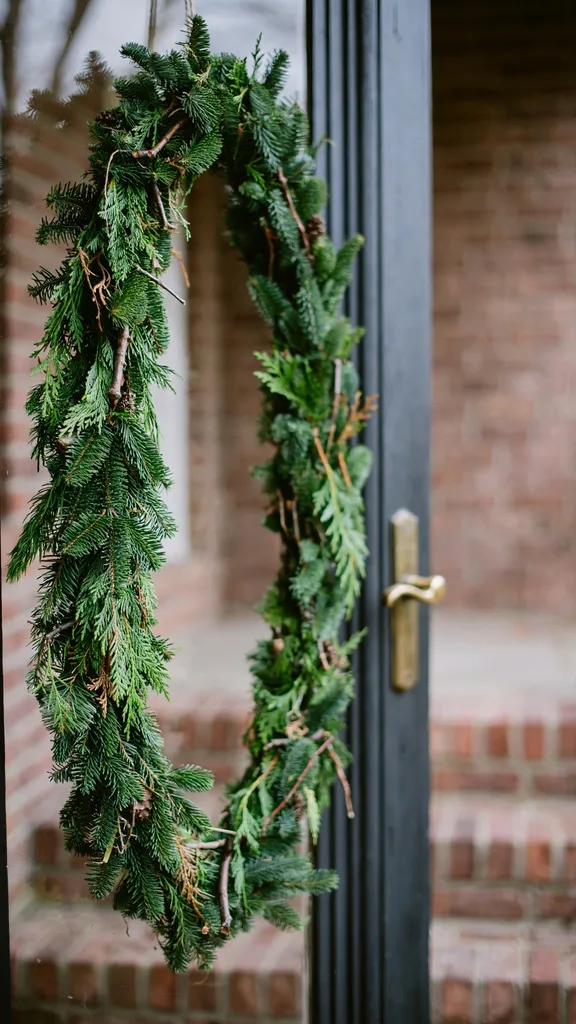
Keep the bundles shorter at the top and bottom of the oval, and longer at the sides. Bundles 15 cm long suit the top and bottom curves, and bundles 22 cm long suit the straight sides. Long bundles on a tight curve stick out at odd angles, and short bundles on a curve follow the frame neatly. Hang the oval with the long axis vertical, and check the ring from the street. An oval hung sideways reads as a mistake, and an oval hung vertical reads as a deliberate shape for a tall door.
14. Thread Battery Lights Through the Back of the Ring
Battery lights turn a dark porch ring into a Christmas display after sunset. Choose a string of 20 warm white lights on a battery pack, thread the string through the back of the ring, and push one light out through the foliage every 10 cm around the ring. Tape the battery pack to the back of the frame with weatherproof tape, and set the timer for 6 hours each evening. Lights threaded through the back stay hidden during the day, and lights pushed out through the foliage glow evenly at night without a visible wire trail across the front.
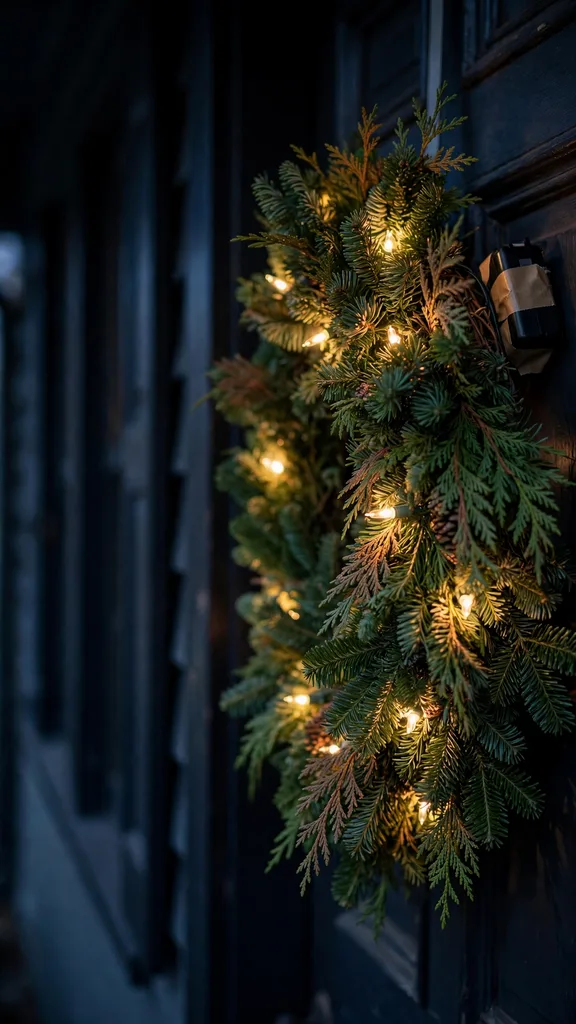
Keep lights off the front surface of the ring, and never wrap a light string around the outside of the foliage. A string wrapped around the outside reads as a shop display, and a string threaded through the back reads as light coming from inside the greenery. Check the battery pack each week, and carry spare batteries in the porch cupboard. A dead string in mid December leaves the ring dark for the busiest visiting week, and a fresh set of batteries restores the display in minutes.
15. Add Red Ornaments in Small Clusters
Red ornaments give a garden ring its Christmas color without shop bought flowers. Choose shatterproof ornaments 4 cm across, group the ornaments in clusters of 3, and wire each cluster to the frame at 3 points around the ring. Wire each ornament separately inside the cluster, and keep the clusters at the lower left, the upper right, and the bottom center of the ring. Clusters read as deliberate color, and ornaments scattered singly around the ring read as random clutter.

Keep the ornament count low, and stop at 3 clusters on a 45 cm ring. More clusters hide the foliage that makes the ring a garden ring, and 3 clusters leave most of the greenery visible while the red still shows from the street. Choose one shade of red for all ornaments, and avoid mixing glossy and matte finishes in one cluster. One shade reads as a planned display, and mixed shades read as leftover decorations pressed into service.
16. Tie a Bow That Survives Rain
A bow finishes a Christmas ring, and a rainproof bow outlasts a fabric bow outdoors. Cut weatherproof ribbon 1.5 m long and 5 cm wide, form two loops 12 cm across, and wire the center of the bow tight to the bottom of the frame. Trim the ribbon tails to 20 cm, cut each tail in a V shape, and seal the cut ends with a quick pass of a flame. Sealed ends stop fraying in rain, and unsealed ends unravel within a week outdoors.

Wire the bow through the frame rather than tying it to a bundle, and test the bow by pulling it firmly. A bow tied to a bundle pulls the bundle loose in wind, and a bow wired to the frame stays put while the foliage moves around it. Choose a deep red ribbon for a green ring, and avoid a ribbon wider than 7 cm. Wide ribbon covers the foliage at the bottom of the ring, and ribbon 5 cm wide frames the greenery without hiding it.
17. Dress a Table Wreath With Candles Kept Clear
A table ring centers a Christmas table, and candles near greenery demand a clear gap. Build the ring on a 25 cm frame, set the ring flat on the table, and place a glass candle holder in the center of the ring. Keep 10 cm of clear space between the candle flame and the nearest foliage, use a holder that stands 8 cm taller than the foliage, and never leave a lit candle burning on a table ring without an adult in the room. Dry foliage catches fire fast, and a tall glass holder keeps the flame above the greenery while the light still plays across the leaves.
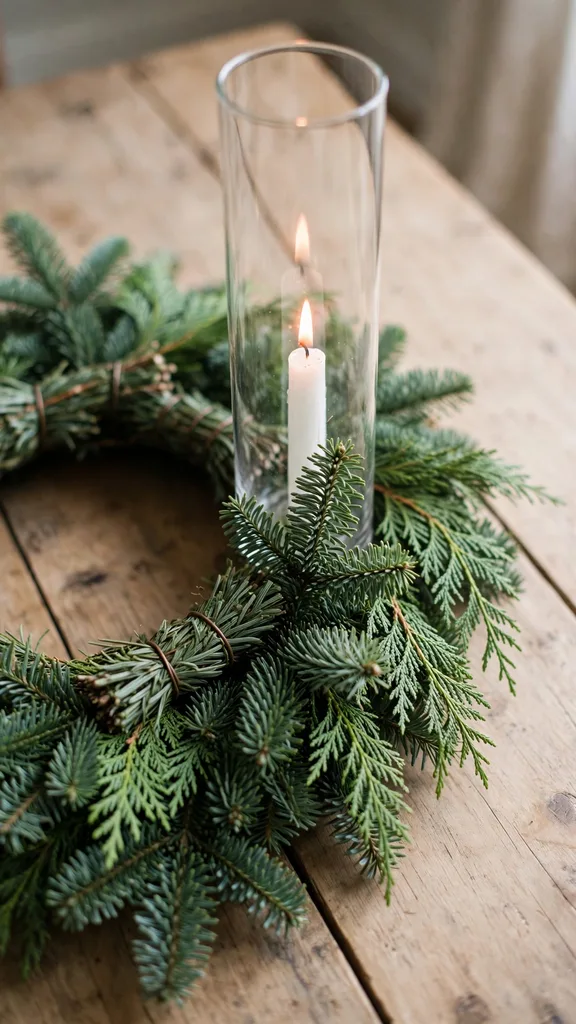
Mist a table ring lightly each morning, and replace any foliage that turns brown and crisp. Crisp foliage near a flame raises the fire risk sharply, and fresh misted foliage stays pliable and safe through a dinner. Set the table ring away from the table edge, and keep the ring clear of paper napkins and crackers. Paper near a candle flame ignites as fast as dry foliage, and a clear table around the ring keeps the display safe through the meal.
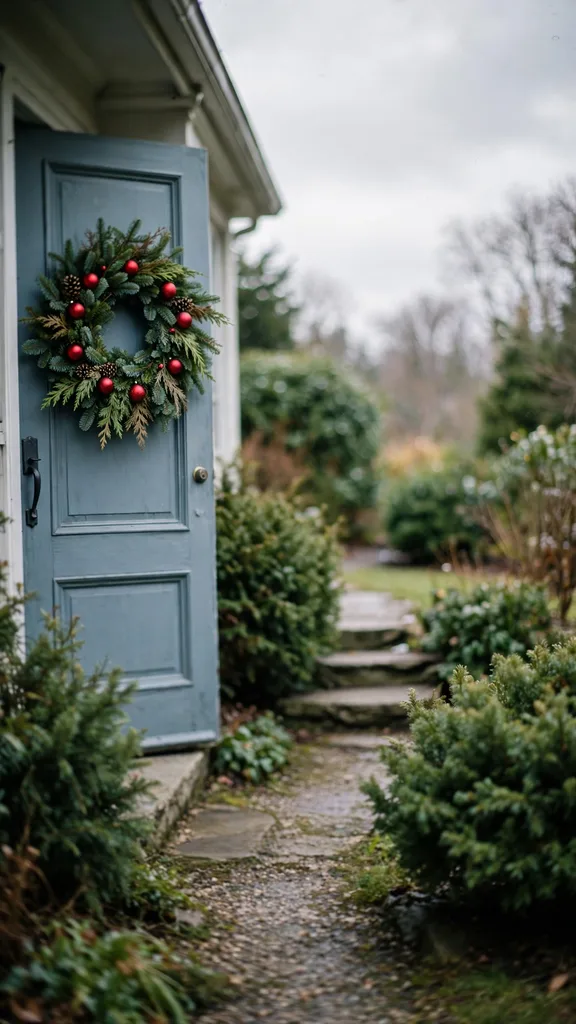
18. Hang the Finished Wreath on the Front Door for Christmas
A finished ring belongs on the front door, at eye level, facing the street. Hang the ring with an over door hook rated for 2 kg, center the ring on the door, and set the top of the ring at 1.7 m from the porch floor. Step back to the path and check the ring from 5 m away. A ring centered on the door reads as a welcome, and a ring hung off center reads as an afterthought. Adjust the hook before adding ornaments, since moving a decorated ring shakes ornaments loose.
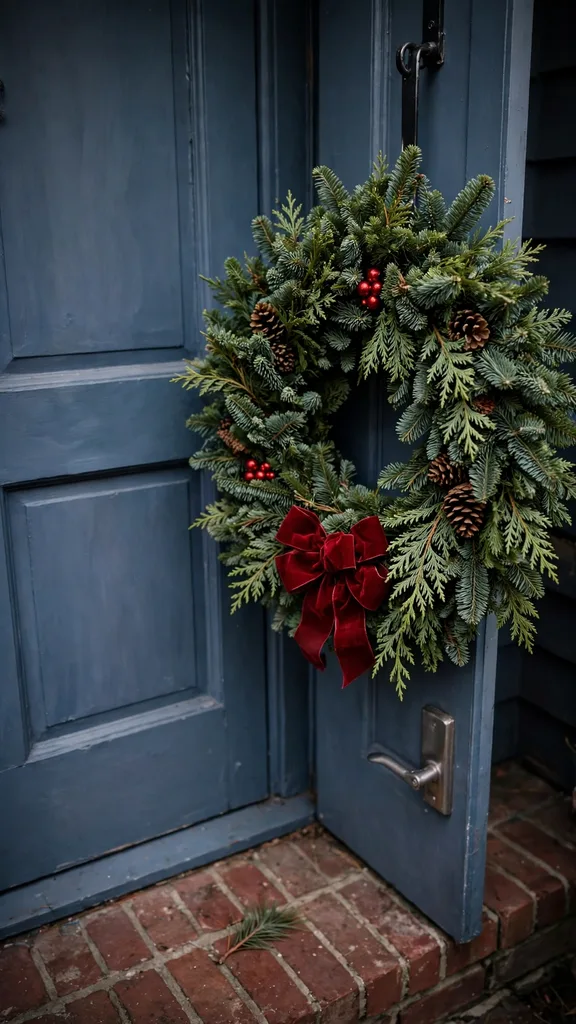
Hang the ring on a sheltered door where possible, and keep the ring out of direct sun through the middle of the day. Sun dries a fresh ring fast, and a shaded porch keeps the foliage green through December. Open and close the door slowly for the first day, and listen for the ring brushing the frame. A ring that brushes the frame sheds needles on the porch each time the door moves, and a ring with 2 cm of clearance on each side swings free.
19. Mist the Ring and Keep It Cool Through December
Cool air and moisture keep a fresh ring green through December. Mist the back of the ring every 2 days with plain water, keep the ring out of direct sun and away from heat vents, and spray an anti-desiccant product on the foliage once at the start of the display. Iowa State University Extension reports that live wreaths last a week indoors before drying out, while live wreaths kept outdoors in winter temperatures remain green for months. The same extension guide notes that moist and cool conditions suit wreaths best, and that an anti-desiccant spray slows moisture loss from cut greenery.
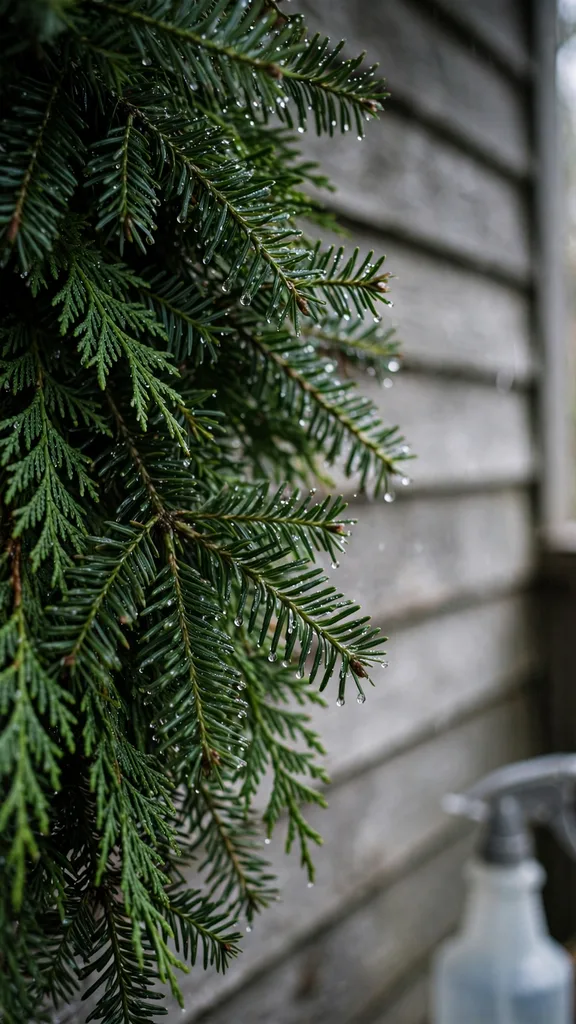
Mist in the morning so the foliage dries before night frost, and mist the back of the ring rather than the front. Mist on the front spots ornaments and dulls the bow, and mist on the back reaches the stems where water enters the foliage. Skip misting on a day with rain, and resume misting the next dry day. Rain already wets the foliage through, and extra misting on a wet day adds nothing while dripping water on the porch.
20. Move a Fading Indoor Wreath Outdoors to Extend Its Life
An indoor ring fades faster than an outdoor ring, and moving a fading ring outdoors buys more display time. Watch for needles that drop when the ring moves and foliage that feels dry to the touch. Move the ring to a sheltered porch at the first sign of drying, mist the back of the ring, and leave the ring outdoors through cold weather. Iowa State University Extension reports that live wreaths kept outdoors in winter temperatures remain green for months, while live wreaths kept indoors last a week before drying out. A ring moved outdoors early keeps its color for the rest of December, and a ring left indoors past the first drying signs turns brown within days.
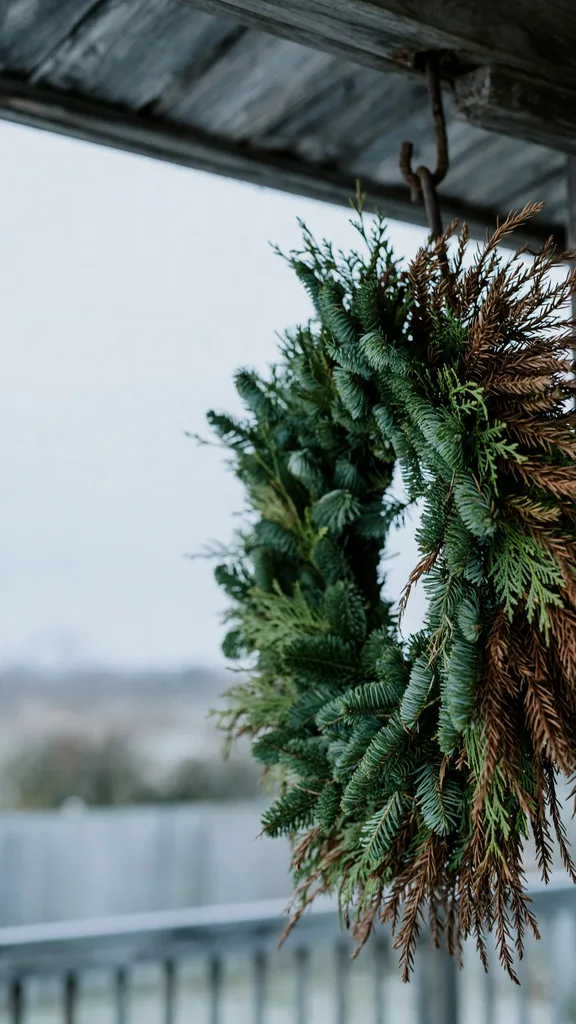
Hang the moved ring on a porch hook rather than leaning it against a wall, and keep the ring out of wind. A leaning ring flattens one side against the wall, and a hanging ring keeps its shape on all sides. Check the ring after the first frost, and trim any brown tips with secateurs. Brown tips left on the ring spread the brown look across the foliage, and brown tips trimmed clean leave green growth showing through the rest of the display.
21. Compost the Ring in January and Save the Frame
A January clear up closes the wreath season and saves money for next year. Strip the foliage from the frame, drop the greenery in the compost heap, and save the wire frame, the hook, and any unbroken ornaments in a labeled box. Remove wire from the foliage before composting, and snip the wire wraps with pliers rather than pulling the bundles off. Pulled bundles tear the frame out of shape, and snipped bundles leave the frame round and ready for next December.
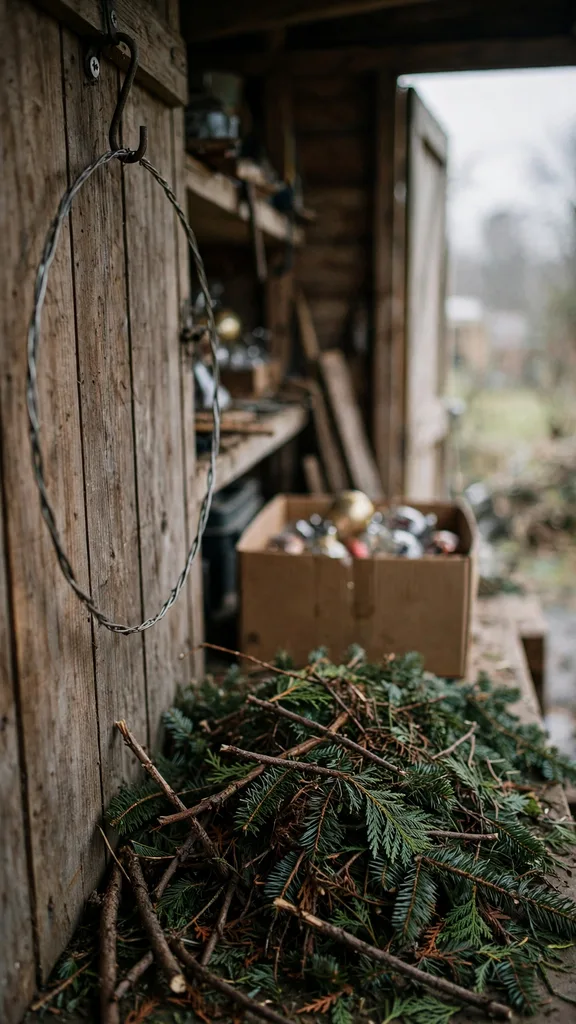
Compost fir, cedar, pine, and magnolia foliage together. Keep holly foliage in a separate pile until the berries drop, since holly berries in compost spread holly seedlings through the garden, and a separate pile lets the berries rot before the compost spreads. Store the frame flat in a dry shed. Hang the box of ornaments where the next December build starts, and never store the frame leaning against a wall, since a leaning frame bends into an oval over the year while a flat frame stays round.
Frequently Asked Questions About Christmas Wreaths
A fresh ring lasts longer outdoors in cold weather than indoors in heated air. Hang the ring on a sheltered porch, mist the back of the ring every 2 days, and keep the ring out of direct sun and away from heat vents. Indoor rings dry fast in heated rooms, so move a fading indoor ring to a porch at the first sign of drying. A ring kept cool, misted, and shaded holds its color through December.
Noble fir makes a strong base for a fresh ring. Cedar adds scent and droop, pine adds length, and magnolia leaves hold their gloss for weeks outdoors. Spruce suits an outdoor ring, so keep spruce off an indoor display. Build the base from fir, add cedar and pine as accents, and choose the greenery that matches the spot where the ring hangs.
Yes, with a shorter display life and a cooler spot in the house. Hang an indoor ring on an interior wall away from radiators, fireplaces, and sunny windows, and mist the back of the ring every 2 days. A dried eucalyptus ring suits an indoor wall better than a fresh fir ring, since dried leaves hold their shape without shedding. Choose a fresh ring for a cool hallway, and choose a dried ring for a heated living room.
No. Holly berries are toxic to humans and pets, and the berries cause stomach upset when eaten. Keep berried sprigs high on the door, above the reach of small hands and pets, and sweep fallen berries from the porch each day. A house with a dog that chews greenery or a toddler at floor level suits a berry free ring with red ornaments instead. Ornaments give the same Christmas color without loose berries on the floor.
Cut greenery in late November or early December, close to the display date, so the foliage stays fresh through the holiday. Cut in the morning when stems hold the most moisture, wire the bundles within 2 hours, and hang the ring the same day. Greenery cut in early November dries before Christmas, and greenery cut after the first hard frost turns brittle on the branch. Time the cutting to the hanging date, and the ring stays green through December.
A Front Door Wreath Cut From Your Own Garden
A garden ring carries Christmas in a way a shop ring cannot match, because every stem comes from a plant the gardener already tends. Fir sets the base, cedar gives scent, pine gives length, holly gives red, rosemary gives a small door ring, eucalyptus gives an indoor ring, magnolia gives gloss, and olive gives pale contrast. Ornaments and battery lights finish the display, and the ring hangs on the front door through December as a welcome built from the garden itself.
Start with one ring this December, cut from the nearest evergreen in the garden, and build the next ring from a second plant once the first ring hangs well. The skills stay the same across every build: cut fresh, wire tight, hang cool, and mist often. For more seasonal planting and decorating ideas from the same garden, explore the full collection of christmas garden ideas and plan the next display while this ring still hangs on the door.