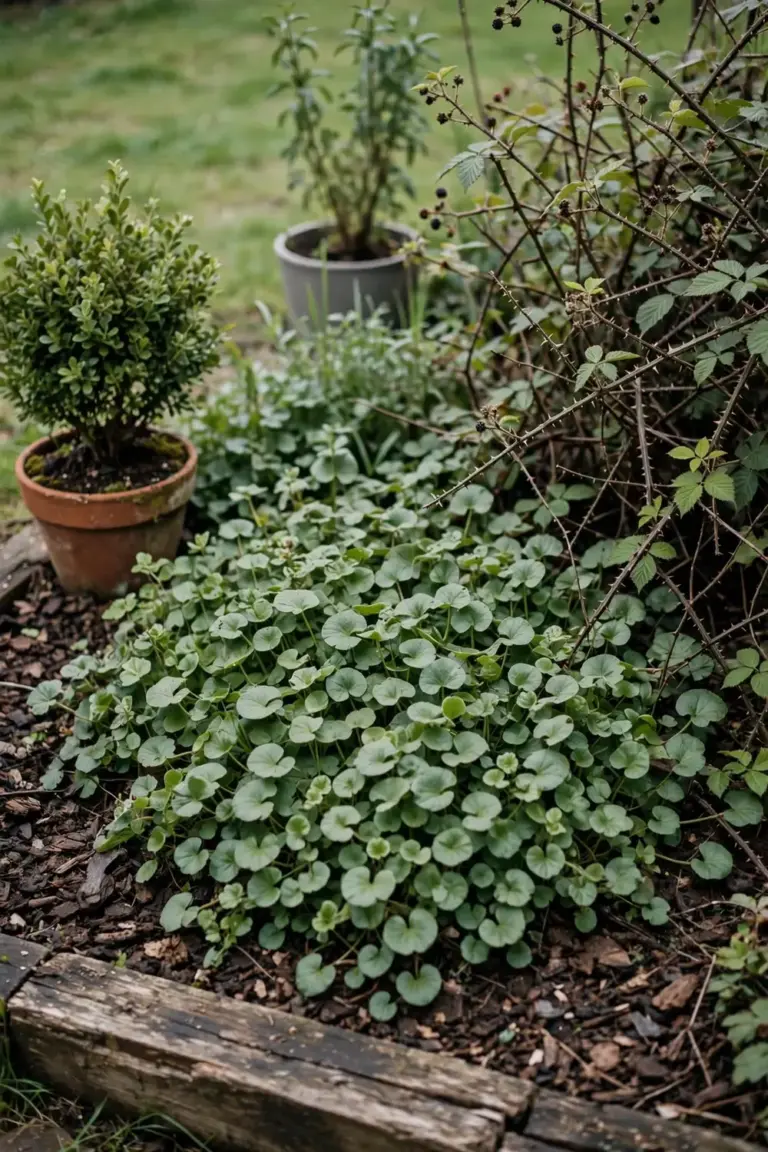

Check the stalk attachment before you pull any pennywort. The native hydrocotyle vs weed question has a field answer in 4 clues, and it starts with the stalk. A native Hydrocotyle and an introduced weed can share the same round leaf, and the stalk tells them apart in seconds. New South Wales alone holds 17 Hydrocotyle species, and most are native.
I have learned that the pennywort I check by stalk attachment stays put when it is native, while the one I judge by leaf shape alone gets pulled by mistake. That one check saves the native and names the weed. The rest of this page is 8 moves, from the name trap to the keep-or-report decision.
1. Learn What Hydrocotyle Means Before You Pull Anything
Hydrocotyle is a genus of creeping herbs with round leaves on stalks. The genus holds natives and weeds side by side in Australia. The verdict on any plant in front of you depends on the species and the place, never on the leaf shape alone.
“Pennywort” is a common name, not a species, and it covers Hydrocotyle species plus other plants entirely. Gotu kola is Centella asiatica, a different genus from Hydrocotyle. Navelwort also answers to pennywort in some sources. A label that says pennywort tells you almost nothing. The botanical name tells you everything, and it never changes with the label.
United States guides call largeleaf pennywort a native plant. That statement holds in the Americas and fails in Australia, where Hydrocotyle bonariensis is an introduced weed. An Australian reader who follows United States pennywort content will misidentify the plant in front of them. Trust Australian weed authorities for Australian plants. The correction matters because a reader who trusts a United States guide will walk past an Australian weed, call it native, and leave it to spread across a lawn that a local guide would have flagged at once. Wrong continent. Wrong verdict.
Kidney weed is the other name trap. Kidney weed is Dichondra repens, a different genus with kidney-shaped leaves and a notch at the base. It is not Hydrocotyle. Its leaves sit on stalks at the leaf edge, never from the center. A kidney-shaped leaf with an edge stalk is Dichondra. A round leaf with a center stalk is Hydrocotyle. The notch at the base of a Dichondra leaf looks like damage. It is the plant. Mistaking it for damage leads to the wrong pull.
“Dollar weed” is the United States lawn name for Hydrocotyle in turf. “Kurnell curse” is the New South Wales coastal name for H. bonariensis. “Hydrocotyl” is the weed name for floating pennywort, H. ranunculoides. One genus carries all three names, and the key below sorts them out by stalk, size, habitat, and fruit. Names mislead. Marks do not.
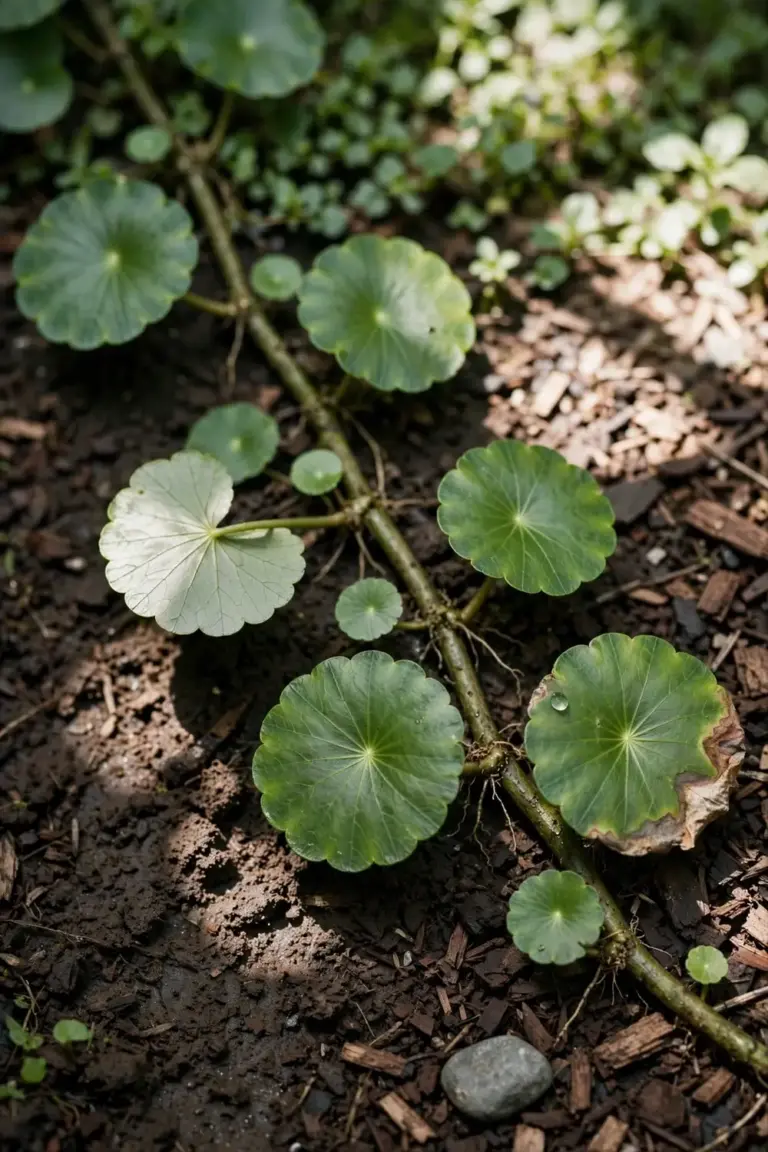
Hydrocotyle spreads by stolons that root at the nodes. The Sydney flora key describes stems as stoloniferous and rooting at the nodes, per the eFlora Sydney Hydrocotyle key. Every node is a new plant waiting to happen. That creeping habit explains why a small patch becomes a mat, and why fragments regrow. Pull a runner and you pull a chain. Leave a node behind and the chain rebuilds.
2. Meet the 5 Native Hydrocotyle Species to Leave Alone
Five Australian natives do the most confusing work in this genus. Learn them first. The whole job is not killing a native by mistake, and most Hydrocotyle species in New South Wales are native, with 17 species recorded in the state.
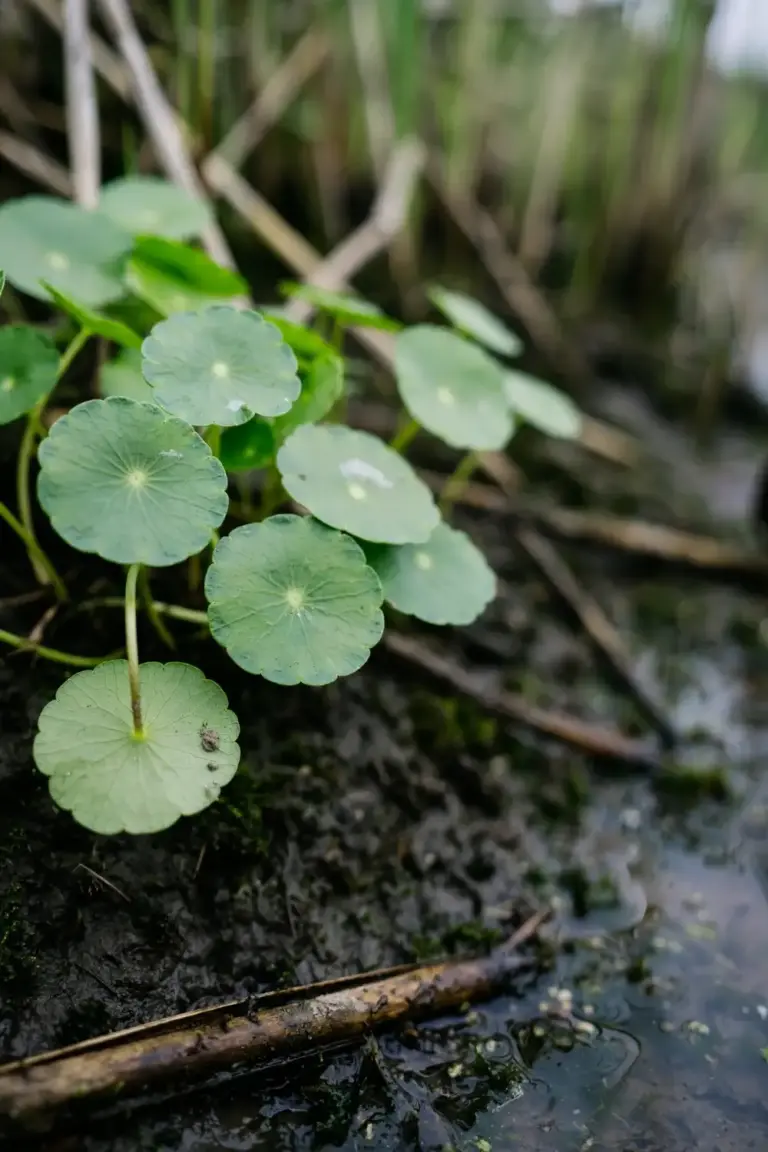
Shield pennywort is Hydrocotyle verticillata. Its leaves are circular and measure 20 to 40 mm across, with a leaf stalk up to 25 cm long attached centrally on the underside of the leaf, according to the weeds.org.au shield pennywort profile. The leaf margins carry shallow rounded teeth. The fruit is ribbed, laterally flattened, and about 2 mm long. Shield pennywort is native to Australia. It counts as a weed in no Australian state except Western Australia, where it is listed but not known to occur.
Hairy pennywort is Hydrocotyle pedicellosa. Its stalks are very hairy, and hairs run along the leaf veins, per the NSW WeedWise hydrocotyl profile. Hair is the fastest mark. No other common Hydrocotyle in the native set carries hairs on both stalk and veins. A hand lens settles it in seconds. Hairy pennywort favors moist, shady places, the same damp ground that grows the rest of the native set. Shade plus hair plus a damp bank names it before any flower appears.
Three-lobed pennywort is Hydrocotyle tripartita. Its leaves split into three lobes, like a miniature buttercup. The species is native to Queensland, New South Wales, and Victoria, and it turns up in lawns across all three states. The lawn trade still treats it as a lawn weed, which is how a native ends up sprayed. Leaf shape alone convicts it. The stalk check clears it.
Stinking pennywort is Hydrocotyle laxiflora. The species is endemic to Australia, which means it grows nowhere else on Earth. Tasmania lists it as threatened. A plant that is rare in one state and common in another still deserves the same check. Endemic status raises the cost of a wrong pull.
Tiny floating pennywort is Hydrocotyle lemnoides. Its floating leaves measure 2 to 4 mm across, smaller than a match head. The species is endemic to the Perth region. Size alone separates it from every weed in the key below. A lens and a ruler end the argument.
The lawn trade is the main source of native confusion. A lawn-weed product page treats H. tripartita as a lawn weed, per the scout evidence from LawnPride Australia. The page sells herbicide, not identification. A reader who follows a product page will spray a native. A reader who follows the key below will leave it alone. Product pages answer “how do I kill it.” The key answers “what is it.” Ask the second question first.
3. Meet the 3 Introduced Hydrocotyle Weeds to Act On
Three introduced species cause the real trouble. Each one has a different verdict, so learn them one at a time. Two are garden weeds. One is a report-first weed.
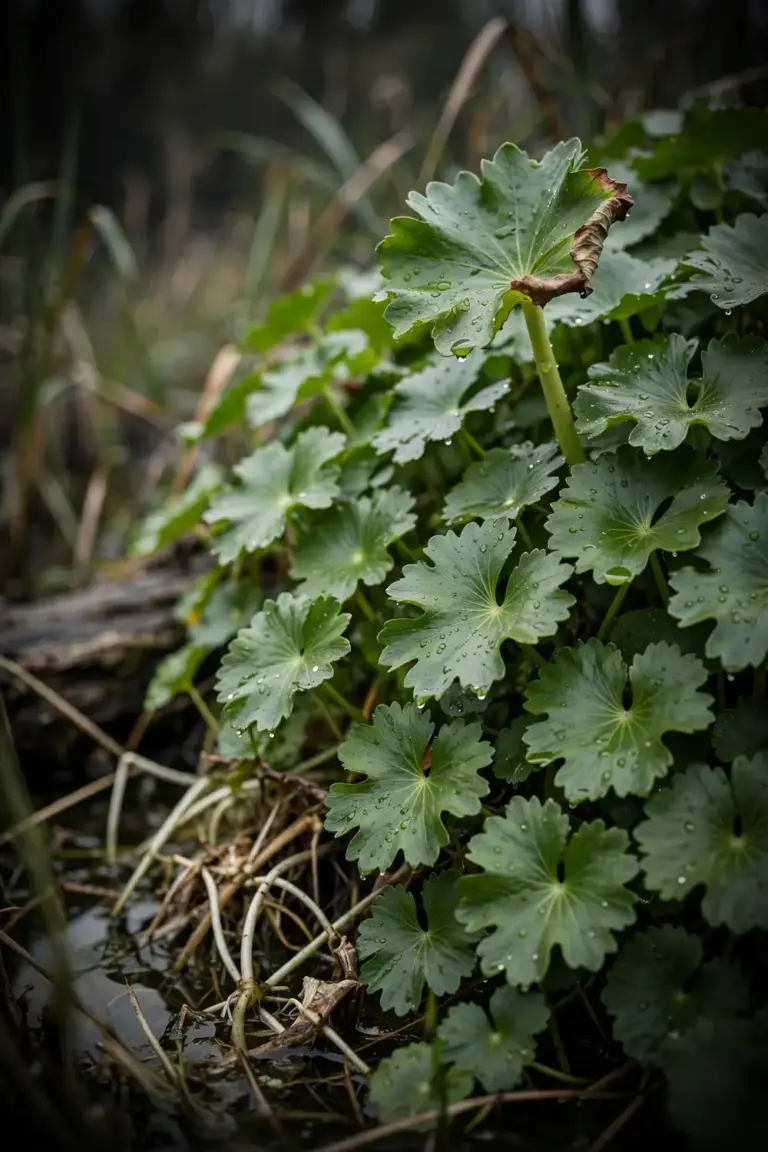
Largeleaf pennywort is Hydrocotyle bonariensis. Its leaves are circular with shallow lobes and measure up to 12 cm wide, with the stem joining the leaf in the center and a dull underside, per the NSW WeedWise hydrocotyl profile. Its flower heads are more complex than shield pennywort, and its fruit is heart-shaped with prominent veins, according to the weeds.org.au shield pennywort profile. The Sydney flora key places it in compound umbels 1 to 6 cm across, in sandy soil near sea beaches, introduced from South America, per the eFlora Sydney Hydrocotyle key. Coastal dunes and lawns are its ground.
Floating pennywort is Hydrocotyle ranunculoides. Its leaves measure up to 18 cm wide, with 3 to 11 deep or shallow lobes and toothed edges, on succulent stalks 2 to 40 cm long attached on the underside of the leaf near the deepest lobe, per the NSW WeedWise hydrocotyl profile. Its fruit measures 1 to 3 mm across, and each fruit holds 2 seeds with usually only one viable. South Australia lists it as a State Alert Weed, native to South America and naturalised in Western Australia, per the PIRSA hydrocotyle policy. The first Australian infestation appeared near Perth in 1983. By 1992 a larger infestation covered one-third of the water along a 7 km stretch of the Canning River.
Lawn pennywort is Hydrocotyle sibthorpioides. Lawn guides report it spreading as a lawn weed in Brisbane and Sydney. Flora listings treat it as native to Western Australia, which makes it native in one state and a weed further east. State lines decide its verdict. A plant can be both native and a weed in the same country.
The three weeds differ in urgency. Largeleaf pennywort and lawn pennywort are garden weeds, and hand pulling handles them. Floating pennywort is a biosecurity weed. It needs a report, not a pull. Urgency follows the species, never the size of the patch. A small floating mat outranks a big lawn patch every time.
4. Check the Stalk Attachment First: Center vs Notch
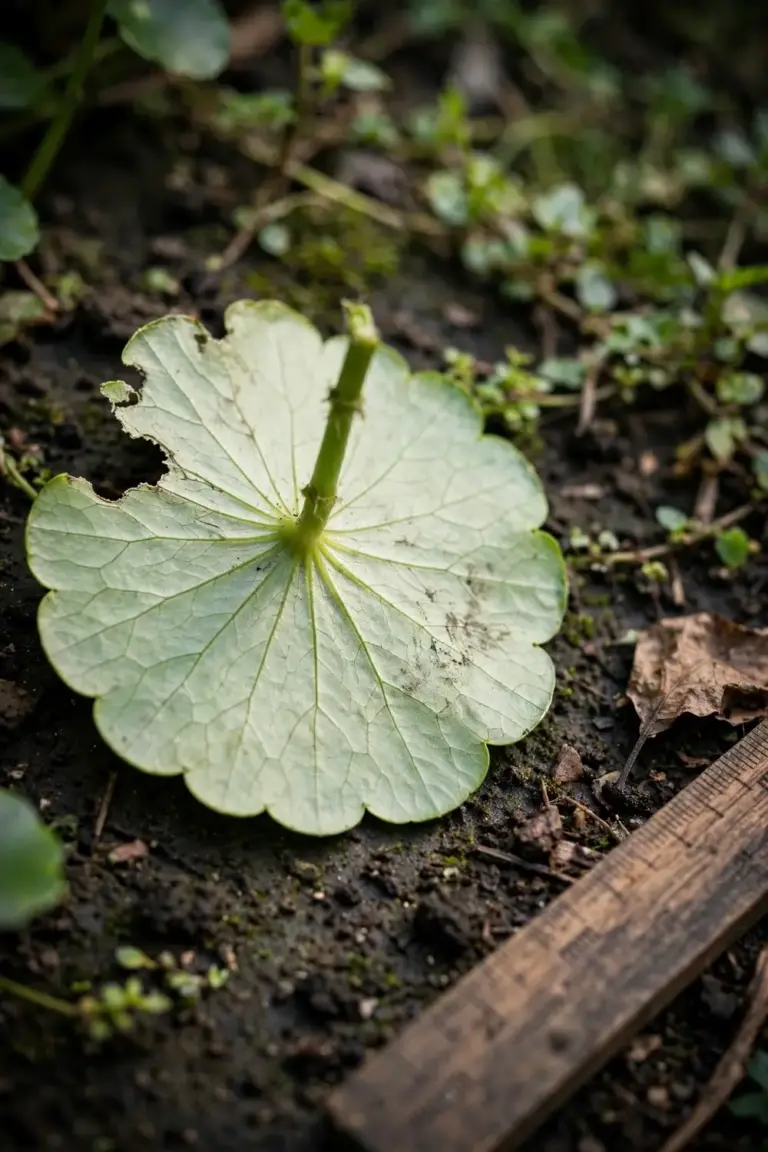
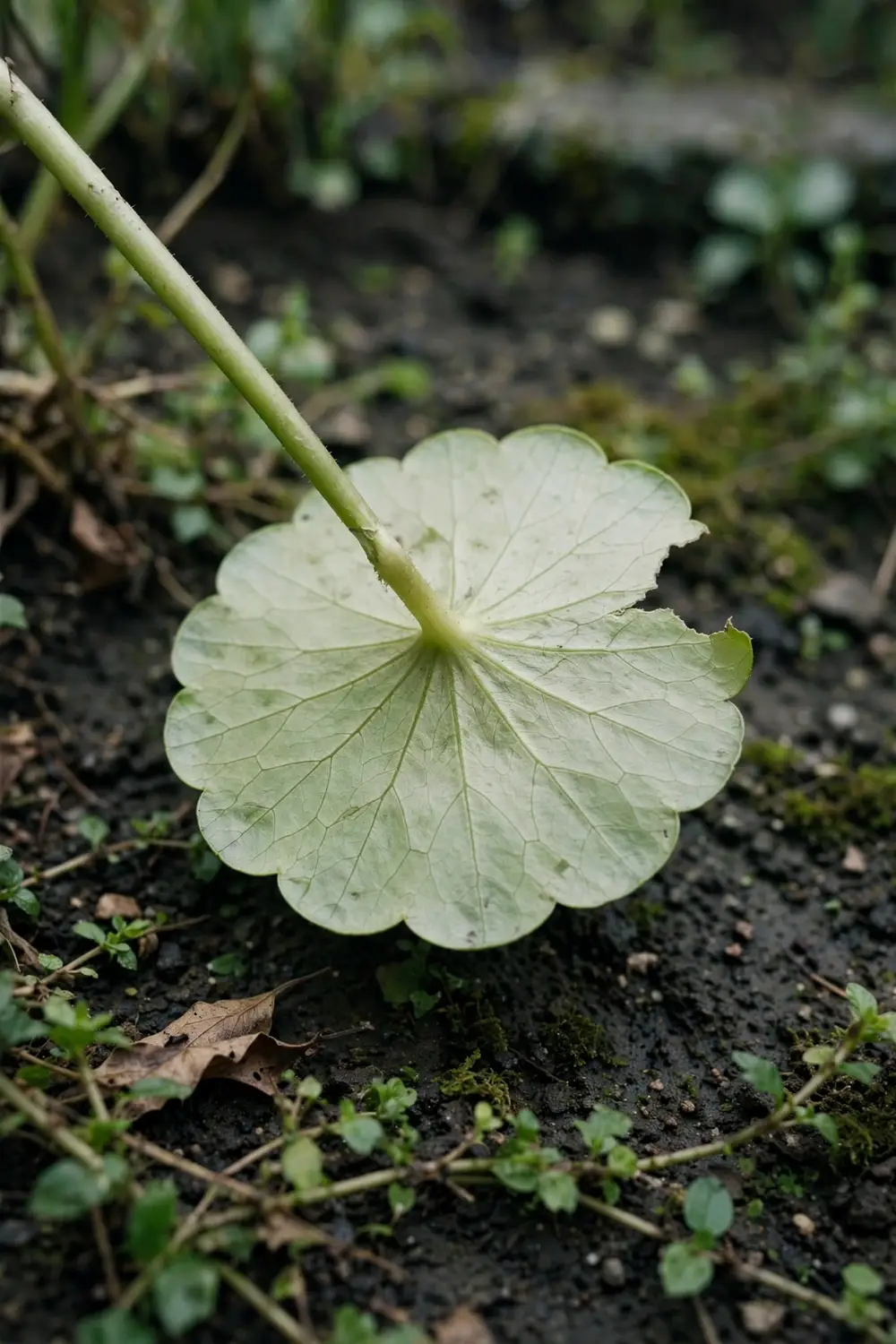
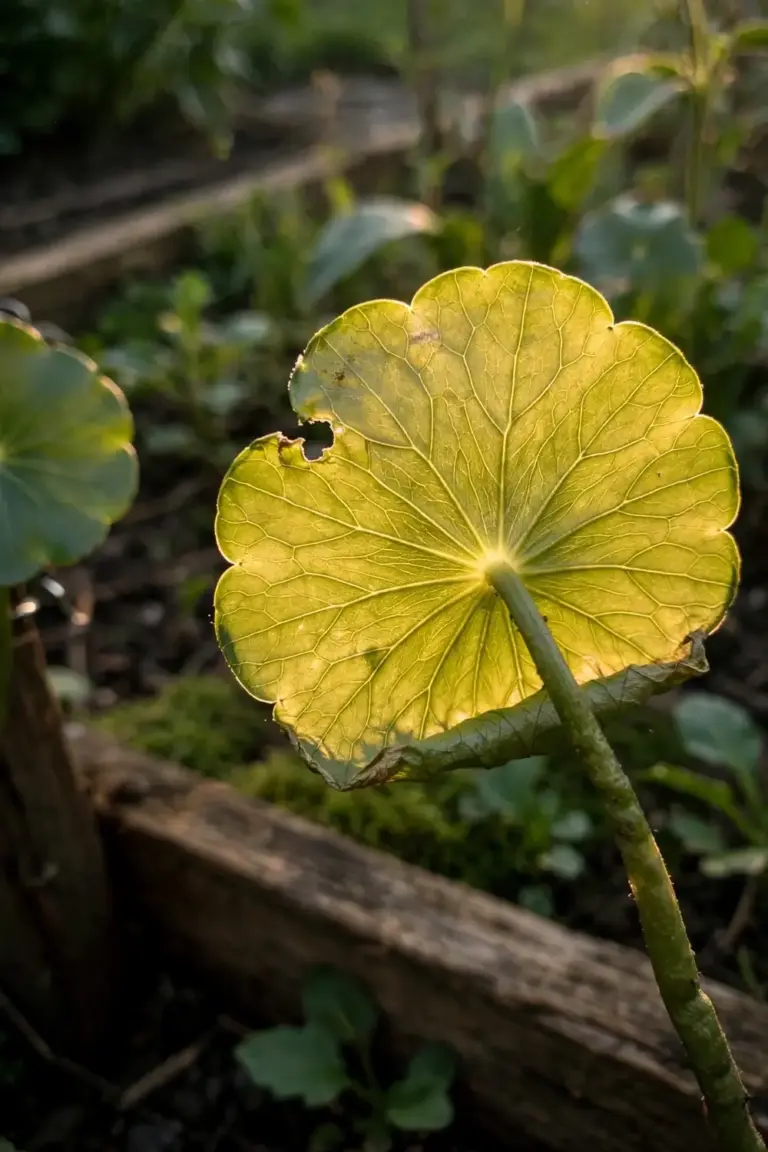
Flip one leaf. The attachment point is the fastest clue in this whole key, faster than leaf shape and faster than flower color. It beats both because it does not change with age, season, or shade.
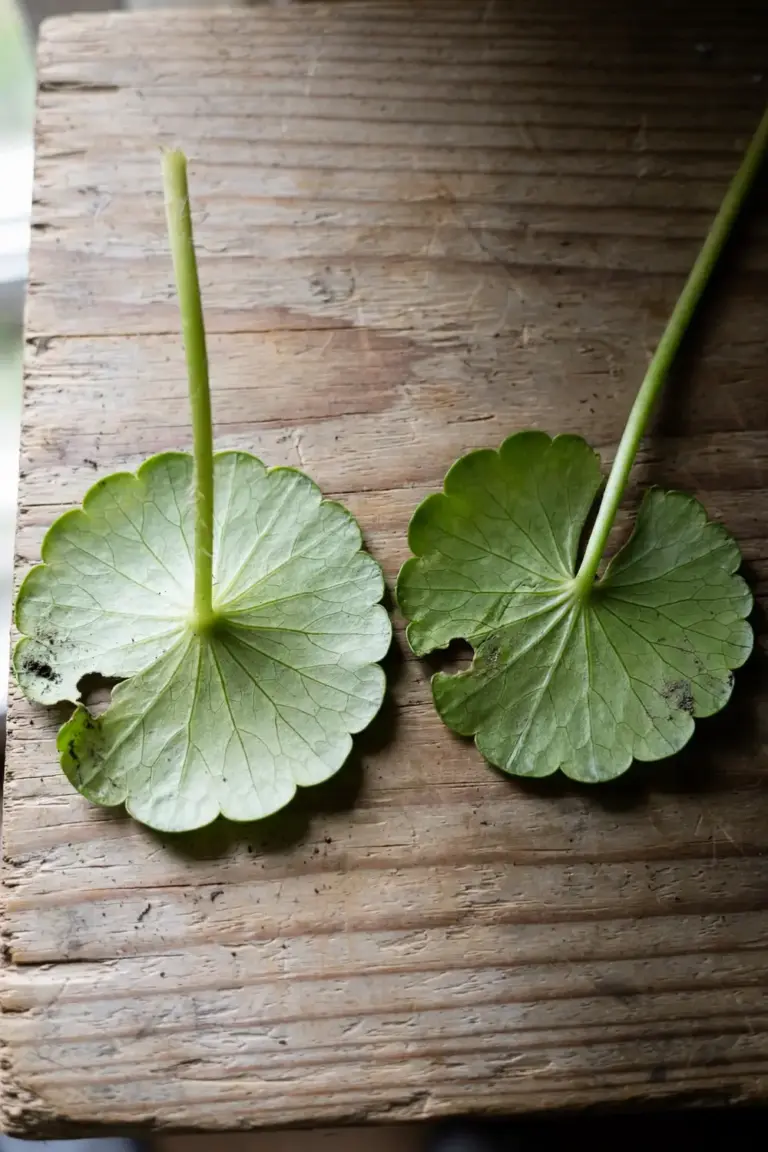
A stalk that joins the center of the leaf underside means a peltate leaf. Peltate means shield-shaped, with the stalk rising from the middle of the underside like the handle of an umbrella. Largeleaf pennywort and shield pennywort both carry peltate leaves. The stalk of largeleaf pennywort joins the leaf in the center, and the underside looks dull, per the NSW WeedWise hydrocotyl profile. The stalk of shield pennywort attaches centrally on the underside, per the weeds.org.au shield pennywort profile. Center attachment alone does not separate those two. Size and fruit finish the job.
A stalk that joins near the deepest lobe, with a notch or slit at the margin, points away from the peltate pair. Floating pennywort carries its stalk attached on the underside near the deepest lobe, per the NSW WeedWise hydrocotyl profile. The leaf looks round from above. The flip exposes the notch. One leaf, one flip, one answer. From above, the peltate pair and the floating weed look alike. From below, they never do.
Work with one fresh leaf. Pick it, flip it, and hold it against the sky. A torn or chewed leaf hides the attachment. A young leaf near the stem tip shows it cleanly. The check takes seconds. The wrong pull takes a season to undo.
Two mistakes drive most wrong pulls. The first is judging by leaf shape alone. Round leaves appear in natives and weeds alike, so shape alone convicts the innocent. The second is judging by flower color. Pennywort flowers are tiny, greenish-white, and nearly identical across species. Color carries no signal here. Stalk attachment carries the signal. Start there every time.
5. Measure Leaf Size, Lobing, and Hairs Next
Size separates most Hydrocotyle at a glance. Carry a ruler. Guesswork fails where millimetres decide.
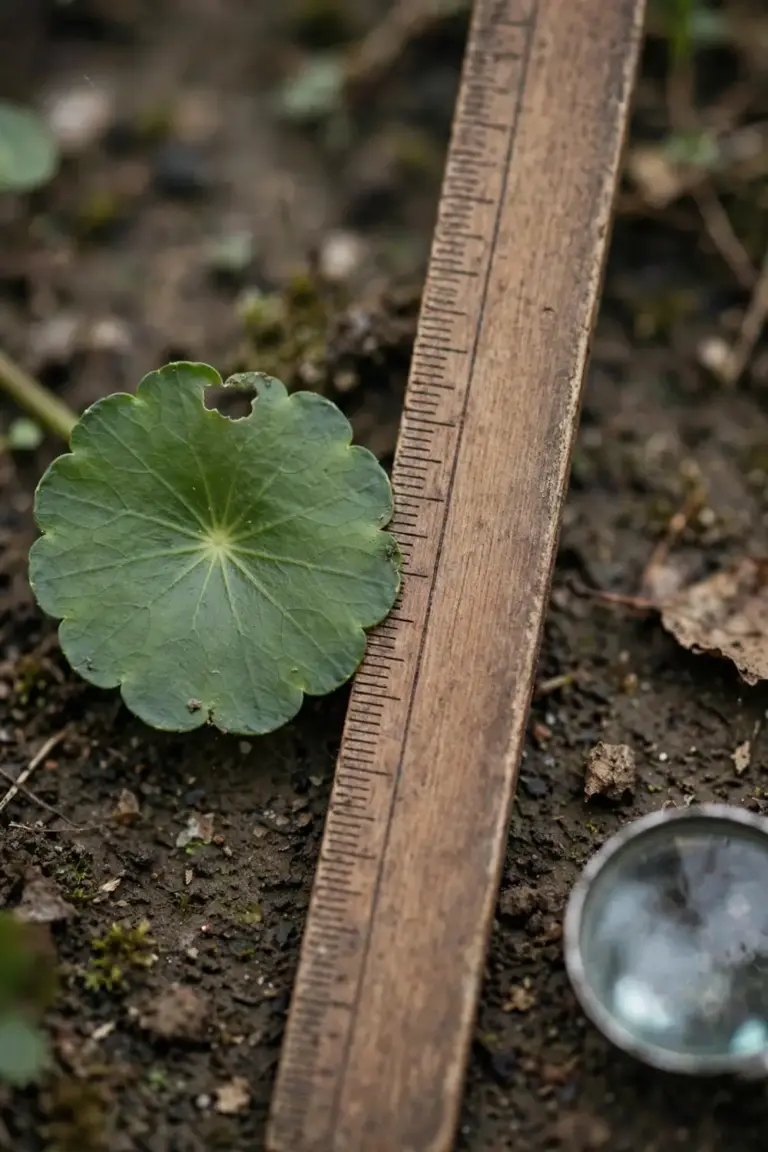
Shield pennywort leaves measure 20 to 40 mm across, and the same profile gives fruit at about 2 mm long, per the weeds.org.au shield pennywort profile. Largeleaf pennywort leaves reach up to 12 cm wide, per the NSW WeedWise hydrocotyl profile. A leaf wider than 4 cm is not shield pennywort. A leaf wider than 12 cm is not largeleaf pennywort.
Floating pennywort leaves reach up to 18 cm wide, with 3 to 11 deep or shallow lobes, per the NSW WeedWise hydrocotyl profile. Lobing counts. A deeply lobed leaf with a notched stalk is floating pennywort until proven otherwise. A shallow-lobed round leaf with a center stalk is largeleaf or shield pennywort. Count the lobes on three leaves before you settle. A single torn leaf can show a false lobe count where an insect chewed the margin.
Hair settles two natives fast. Hairy pennywort carries very hairy stalks and hairs on the leaf veins, per the NSW WeedWise hydrocotyl profile. The Sydney flora key describes Hydrocotyle hirta with hairy leaves 1 to 4 cm wide and 5 to 7 lobes, per the eFlora Sydney Hydrocotyle key. A hand lens shows hairs that bare eyes miss. Check the stalk first, then the veins.
Tiny floating pennywort sits at the other end of the ruler. Its floating leaves measure 2 to 4 mm across, per flora descriptions. Nothing else in the key below is that small. A 2 mm leaf on water near Perth is a native to leave alone, not a weed to scoop out.
Measure with the leaf flat and the ruler beside it. Curled or folded leaves read small. Press the leaf gently onto a board or a phone screen, then read the widest point. Measure three leaves from different runners before you decide. One leaf can mislead. Three leaves agree.
6. Read the Habitat: Water, Damp Ground, or Lawn
Habitat narrows the list before you touch the plant. Each Hydrocotyle keeps to its own ground. A plant in the wrong place still needs the stalk check, but habitat tells you which species to test first.
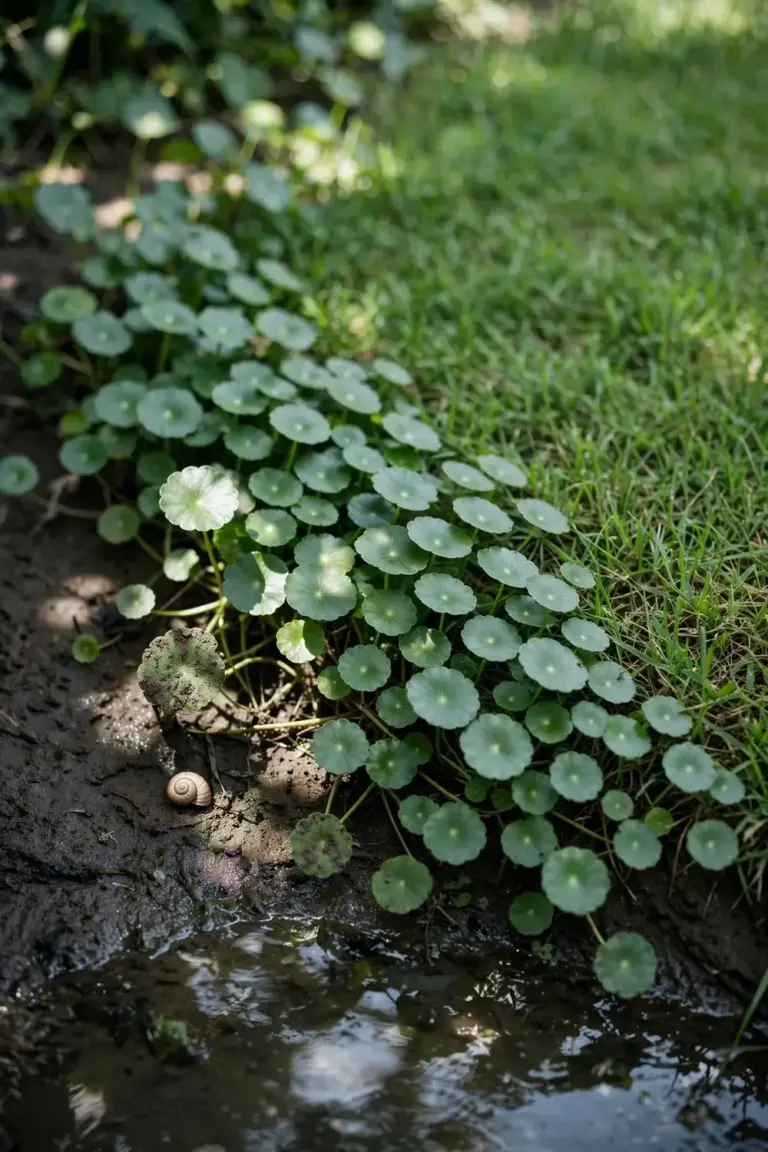
Floating pennywort lives on still or slow-moving fresh water. It prefers rivers, wetlands, lakes, and dams with high nutrient levels, per the NSW WeedWise hydrocotyl profile. A mat on open water with leaves floating or standing a maximum of 40 cm above the surface is floating pennywort until the stalk check says otherwise. It also grows on the edges of still water bodies, where long stolons creep in the mud.
Largeleaf pennywort keeps to sandy soil near sea beaches and to lawns, per the eFlora Sydney Hydrocotyle key. It is very common and widespread in the Greater Sydney region, especially in lawns, per the NSW WeedWise hydrocotyl profile. A round-leafed creeper in a coastal lawn is largeleaf pennywort more often than any other species. A round-leafed creeper in a coastal dune is the same plant. Dunes carry it in open sand where few other groundcovers hold. Lawns carry it in damp, mown turf where it slips under the blades.
Shield pennywort grows in fresh water swamps, lagoons, and along streams and rivers, per the weeds.org.au shield pennywort profile. It is a semi-aquatic herb, not a lawn plant. A small round leaf in a swamp edge is shield pennywort more often than a weed. A small round leaf in a lawn is something else.
Lawns hold three candidates at once. Largeleaf pennywort, lawn pennywort, and three-lobed pennywort all grow in turf. Two are weeds outside Western Australia. One is a native. The lawn gives no verdict on its own. The stalk check gives it. Check the lawn patch leaf by leaf, because a lawn can hold two species in one square metre.
Wet soil grows pennywort of every kind. Soil that stays wet after rain holds the damp ground these plants need. Drainage and plant cover decide how much pennywort a bed holds. The habitat clue works with the stalk check, never instead of it.
Season shifts the clues. Floating pennywort goes dormant over winter in cold regions, per the NSW WeedWise hydrocotyl profile. Its flowers appear mostly from spring to autumn. A winter mat looks dead and still spreads from fragments in spring. Check in the growing season when leaves, stalks, and flowers all show. A winter check reads a skeleton.
7. Confirm With Flowers and Fruit
Flowers and fruit settle close calls. They confirm an identification that stalk, size, and habitat already suggest. They rarely start one, because pennywort flowers are tiny and seasonal.
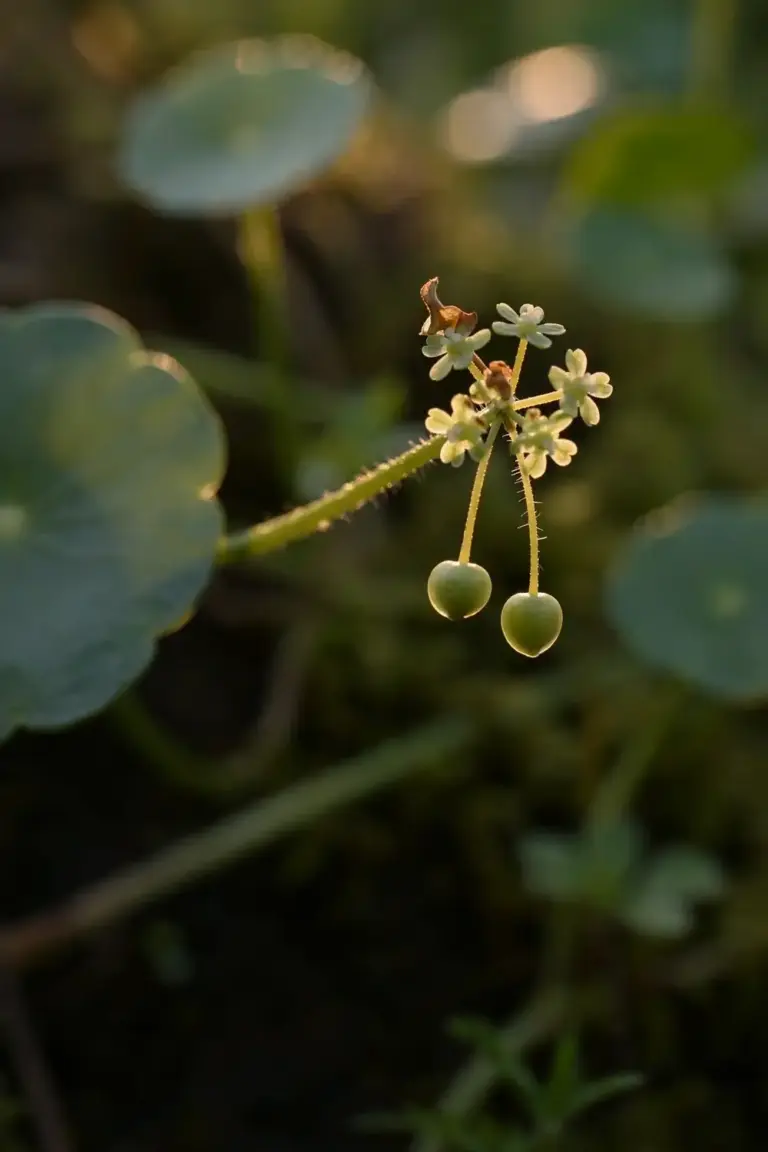
Largeleaf pennywort carries compound umbels 1 to 6 cm across, per the eFlora Sydney Hydrocotyle key. Its fruit is heart-shaped with prominent veins, per the weeds.org.au shield pennywort profile. Complex heads plus heart-shaped fruit name largeleaf pennywort. No other species in the key below pairs those two marks.
Shield pennywort carries simple umbels with 2 to 5 flowers, per the eFlora Sydney Hydrocotyle key. Its flowers sit stalkless in groups of 2 to 5. The flowering head stalk runs about half as long as the leaf stalk, a proportion that holds across plants even when leaf size varies with shade and water, per the weeds.org.au shield pennywort profile. Its fruit is round with inconspicuous veins. Simple heads plus round fruit name shield pennywort, and the short flowering stalk backs the call. Short stalk. Simple head.
Floating pennywort flowers measure 2 to 3 mm across, in umbrella-shaped clusters of 5 to 10 on 2 cm slender stalks, per the NSW WeedWise hydrocotyl profile. The flowers sit below the leaf canopy, mostly from spring to autumn. The fruit is circular, flattened, 1 to 3 mm across, and divided into 2 segments with one seed each. Flowers below the canopy plus floating mats name floating pennywort.
A plant without flowers still yields an answer. Stalk attachment, leaf size, lobing, hairs, and habitat carry the key on their own. Flowers confirm. Absence of flowers never blocks the decision.
A hand lens earns its place in the fruit check. Hold a fruit under the lens and look for veins. Heart-shaped fruit with prominent veins names largeleaf pennywort. Round fruit with inconspicuous veins names shield pennywort, and the veins stay faint even under the lens. The veins are the mark, and bare eyes miss them. A 10x lens costs little and settles the pair.
8. Decide: Keep It, Watch It, or Report It
The native hydrocotyle vs weed decision ends in three verdicts. Keep the native. Remove the garden weed by hand. Report the floating weed and do not treat it yourself. The table below lines up every species in the key.
| Species | Native or Weed | Key Mark | Verdict |
|---|---|---|---|
| Shield pennywort (H. verticillata) | Native | Center stalk, leaves 20 to 40 mm, round fruit | Keep it |
| Hairy pennywort (H. pedicellosa) | Native | Hairy stalks and leaf veins | Keep it |
| Three-lobed pennywort (H. tripartita) | Native | Three lobes, miniature buttercup leaf | Keep it |
| Stinking pennywort (H. laxiflora) | Native, endemic, threatened in Tasmania | Endemic to Australia, threatened in Tasmania, never pull on sight | Keep it |
| Tiny floating pennywort (H. lemnoides) | Native, endemic to Perth region | Floating leaves 2 to 4 mm | Keep it |
| Largeleaf pennywort (H. bonariensis) | Introduced weed | Center stalk, leaves to 12 cm, heart-shaped fruit | Remove by hand |
| Lawn pennywort (H. sibthorpioides) | Native to WA, weed further east | Lawn creeper, small round leaves | Remove outside WA |
| Floating pennywort (H. ranunculoides) | Introduced weed, State Alert Weed in SA | Notched stalk, leaves to 18 cm, floating mats | Report it |
A native stays. Pulling a native by mistake is the failure this article exists to prevent. A native in a lawn still stays, unless it truly blocks a path or a bed. Mowing around it beats spraying it.
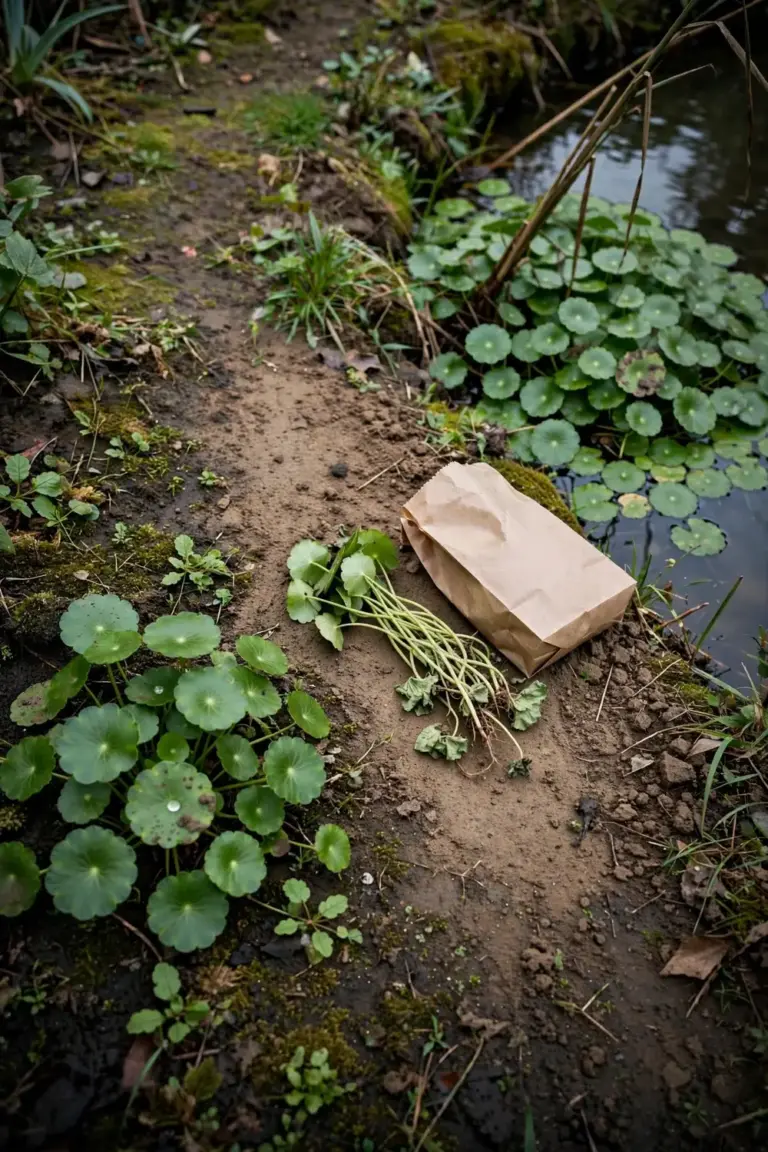
A garden weed comes out by hand. Largeleaf pennywort and lawn pennywort pull cleanly from damp soil. Roots form at the nodes along creeping stems, so lift the whole runner, not just the leaf. Mulch over the bare patch after pulling, and organic weed control covers the follow-up. Fragments with a node regrow, so bag the pulled stems instead of dropping them on the bed.
Recheck the patch after the next rain. Pennywort regrows from nodes left in wet soil. A second pull catches what the first missed. Two pulls a week apart clear a small patch. A patch that keeps returning after two pulls may hold a buried runner. Trace the runner back to its rooting nodes and lift the whole chain.
Floating pennywort is a report-first weed. Do not attempt to treat or dispose of this weed yourself, per the NSW WeedWise hydrocotyl profile. Report it to your local council weeds officer. The fragments regrow from very small pieces of stem with a node, so a home pull spreads it. The state leads the response.
Floating pennywort spreads by seed and by fragments. Water spreads the seeds. Flowing water, water birds, and human activities such as boating spread the fragments, per the NSW WeedWise hydrocotyl profile. A boat propeller, a boot, or a dumped pond plant carries it to the next waterway. Clean gear after any contact. Never dump aquarium or pond plants into a drain, a dam, or a creek.
The Western Australia nuance matters for shield pennywort. Western Australia lists it as a category P1/2 weed, but notes that it is not known to occur in that state, per the weeds.org.au shield pennywort profile. A shield pennywort found in Western Australia is worth reporting. A shield pennywort found anywhere else is a native to keep.
Frequently Asked Questions
It depends on the species. Largeleaf pennywort and lawn pennywort are the two usual lawn weeds. Three-lobed pennywort is a native that the lawn trade treats as a weed. Flip one leaf and check the stalk attachment, then measure the leaf. A native in a lawn stays unless it blocks a path. Mowing around it beats spraying it.
Yes, if it is Hydrocotyle ranunculoides. It forms dense mats that reduce water quality, outcompete native plants, and cut habitat for fish. It spreads from tiny stem fragments with a node. Do not pull it yourself. Report it to your local council weeds officer and let the state lead the response. Bag nothing and dump nothing.
Check size first, then fruit. Shield pennywort leaves measure 20 to 40 mm across, with round fruit and inconspicuous veins. Largeleaf pennywort leaves reach up to 12 cm wide, with heart-shaped fruit and prominent veins. Both carry center stalks, so the stalk check alone cannot separate them. Size plus fruit settles the pair every time.
Both, depending on the state. Flora listings treat it as native to Western Australia. East coast lawn guides report it spreading as a lawn weed in Brisbane and Sydney. A plant can be native to the country and a weed in your garden. Treat it as a weed outside Western Australia, and leave it alone inside its home range.
Report it at once to your local council weeds officer. Do not pull it, do not scoop it, and do not dump pond plants into any waterway. Fragments with a node regrow, so a home pull spreads it further. The state leads treatment and disposal. Your job is the report, with a photo and a location.
Start Your Native Hydrocotyle vs Weed Check This Weekend
Walk the damp corners of the garden with a ruler and a hand lens. Pick one leaf, flip it, and read the stalk. The stalk check takes seconds. The native you spare repays the effort all season. Start with the wettest patch. Pennywort gathers there. Work outward from there, one leaf at a time.