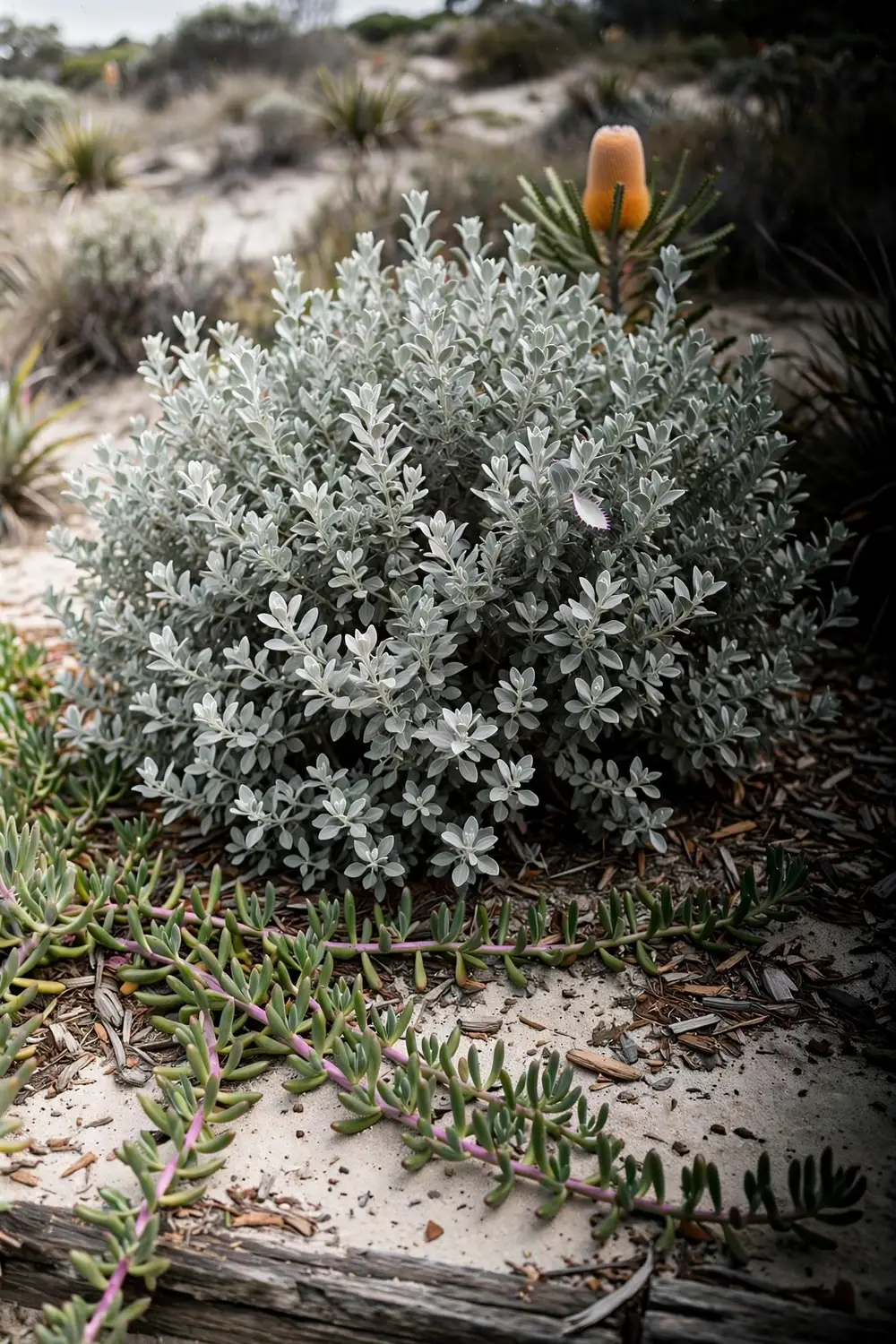

The best plants for sandy soil in Perth and coastal WA are 9 Australian natives that already grow in sand. Gray saltbush, pigface, coastal rosemary, Ashby’s banksia, spider net grevillea, red-and-green kangaroo paw, spiny-headed mat rush, emu bush, and blue flax lily form the list. Plant the toughest 3 on the windward edge. Plant the rest behind them.
Sandy soil here means Perth sand. The coastal plain runs on Spearwood and Bassendean sands, where the grains hold little water and few nutrients. Rain drains straight through. Dry sand can turn water repellent, so water beads on the surface instead of soaking in.
Native-first means every pick is an Australian native. Five are Western Australian locals. Front-line means wind and salt hit the plant first. Second-line means the plant grows behind that shelter. The list runs in planting order, from the windward edge inward.
The list favors plants that need little once established. A garden that coasts through summer on rainfall beats a garden that needs a hose. Every pick below earns its place on toughness first and looks second.
Walk the garden on a windy afternoon before you plant. Stand where the wind hits first. Mark that line with a stick. Everything windward of the stick gets front-line plants. Everything behind it gets second-line plants.
Perth gardens sit on sand that drains fast and holds little. That sounds like a problem. It is a filter. Plants that evolved in sand thrive here. Plants that need rich loam struggle. The list below picks plants on the right side of that filter.
Prepare Perth Sand Before You Plant
Prep the sand before you buy a single plant. Dig compost through the whole bed, add a wetting agent where water beads, and finish with coarse mulch.
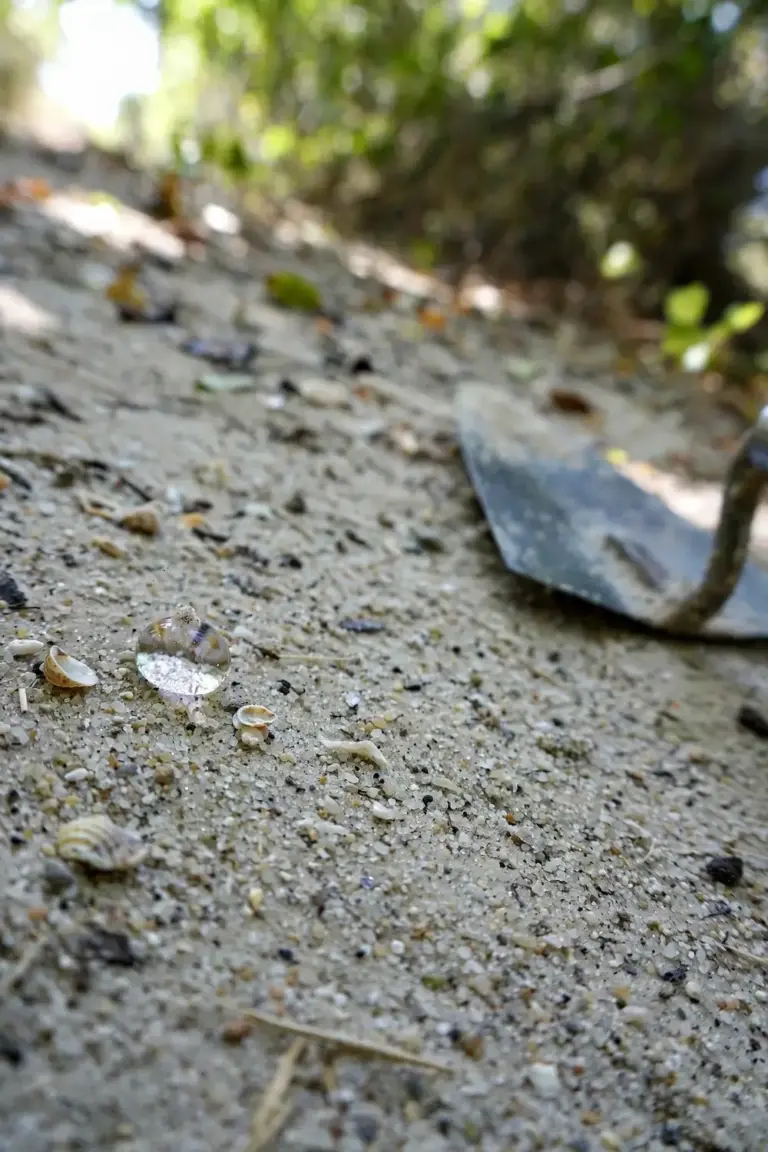
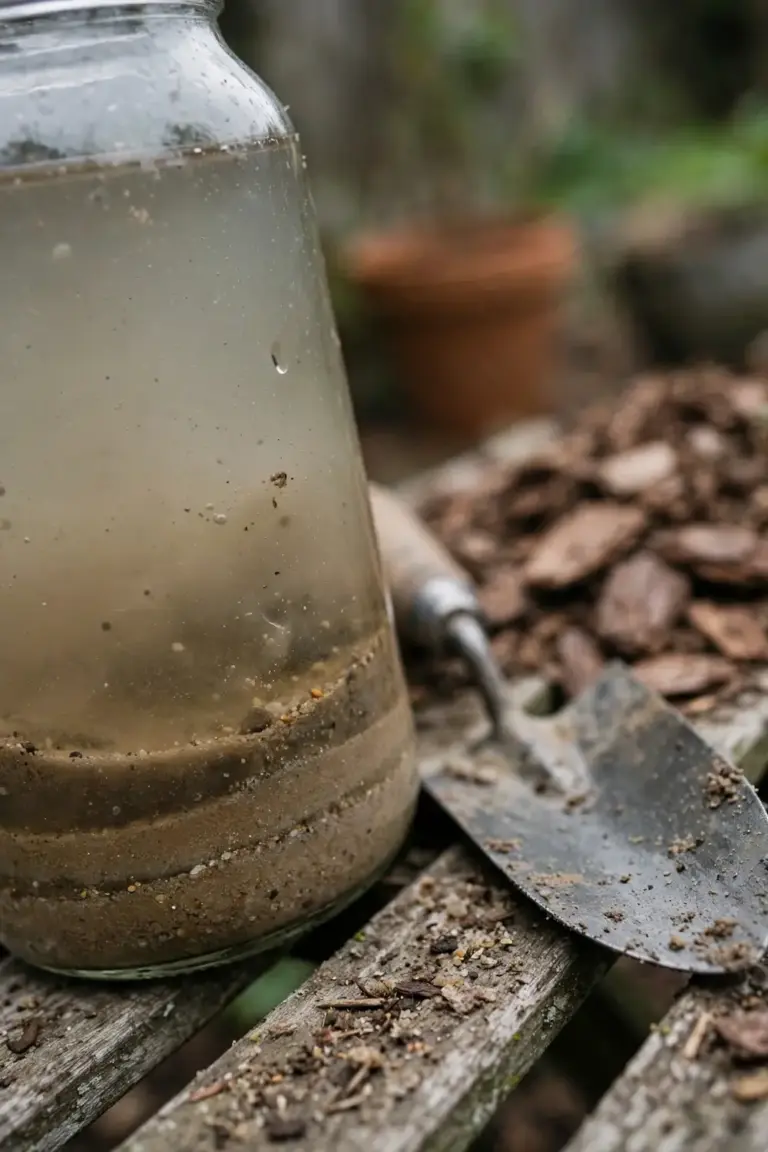
Test for water repellency with a droplet. Place a drop of water on dry sand and time how long it takes to soak in. The Soil Quality fact sheet on water repellency lists droplet penetration time as one of two main field methods for measuring repellency.
Coastal sand-plain soils in Western Australia carry the greatest risk of water repellence. The same fact sheet states that repellency occurs only in soils with under 10 percent clay and hits hardest under 5 percent clay.
Claying fixes repellency at farm scale. The same fact sheet puts the claying target at 5 percent clay in the surface and notes that reaching it can take at least 100 tonnes of clay per hectare. A home bed never needs that rate. Compost, a wetting agent, and mulch do the home-garden job.
Work compost through the full bed, not just each planting hole, because roots spread past the hole in the first season. The bed needs the same treatment everywhere. Read the soil health guide before you buy amendments.
Spread coarse mulch 75 mm deep, keep it clear of stems, and let it slow evaporation while it feeds soil life as it breaks down. The mulching guide sets out depths and materials.
Feed lightly. Sand loses nutrients with every watering. A slow-release native-plant fertilizer at planting, then once each spring, covers most of these nine. Banksias and grevilleas do best on low-phosphorus native-plant fertilizer.
Do not import clay soil to fix sand. A clay layer under sand traps water and roots. Compost and mulch build structure without a barrier layer.
Water new plants slowly. A fast hose run sheets off dry sand and puddles at the bed edge. A slow soak sinks in. Cycle the tap on and off. Let each pass soak down before the next.
Test the soil before you buy amendments, because a basic test settles the question. The soil health guide covers testing. Guesswork wastes money and feeds the wrong problem.
Wind dries sand faster than sun. A front-line row cuts wind speed for the bed behind it. Plant the row first. Let it settle for one season before you plant the second line.
1. Gray Saltbush (Atriplex cinerea) Holds the Windward Edge
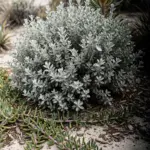
Gray saltbush takes the worst spot in the garden. Salt spray, wind, and bare sand suit it.
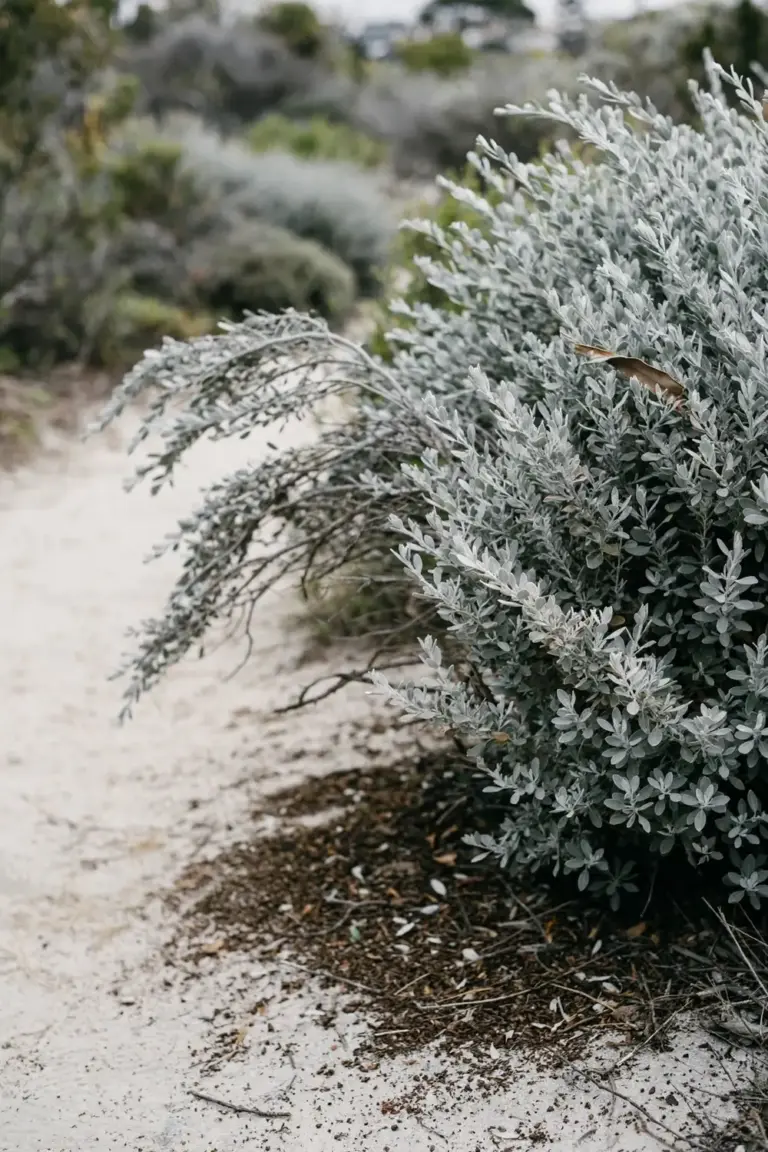
Wikipedia and Nelson Natives describe gray saltbush as a prostrate to erect shrub up to 1.8 m high and 2.5 m wide. Leaves measure 40 mm long and 15 mm wide. Flowers appear from September to March. Gray saltbush is a halophyte. It grows closest to the sea.
I have learned that the saltbush I plant on the windward edge shelters every plant behind it, while the one I tuck behind the fence never gets the chance.
Space plants 2 m apart for a windbreak row. The branches knit together and slow the wind for the plants behind them. Prune lightly after flowering to hold the shape. Leave the silver foliage uncut through winter. Saltbush needs no feeding in sand.
Saltbush drops leaves in a dry spell, yet the plant still lives. Water once and wait a week for new growth at the stem tips.
Saltbush seed drops near the parent plant, and seedlings appear after rain. Leave the seedlings where they suit the line. Move the rest while small. Dig a deep root ball. Saltbush resents a late move, and a torn taproot rarely recovers. A seedling moved at finger height settles faster than a shrub moved at knee height. Water the moved seedling once. Then leave it alone.
2. Pigface (Carpobrotus glaucescens) Pins the Sand Down
Pigface pins bare sand in place. Its stems root where they touch the ground and knit into a living mat that holds the surface against wind.
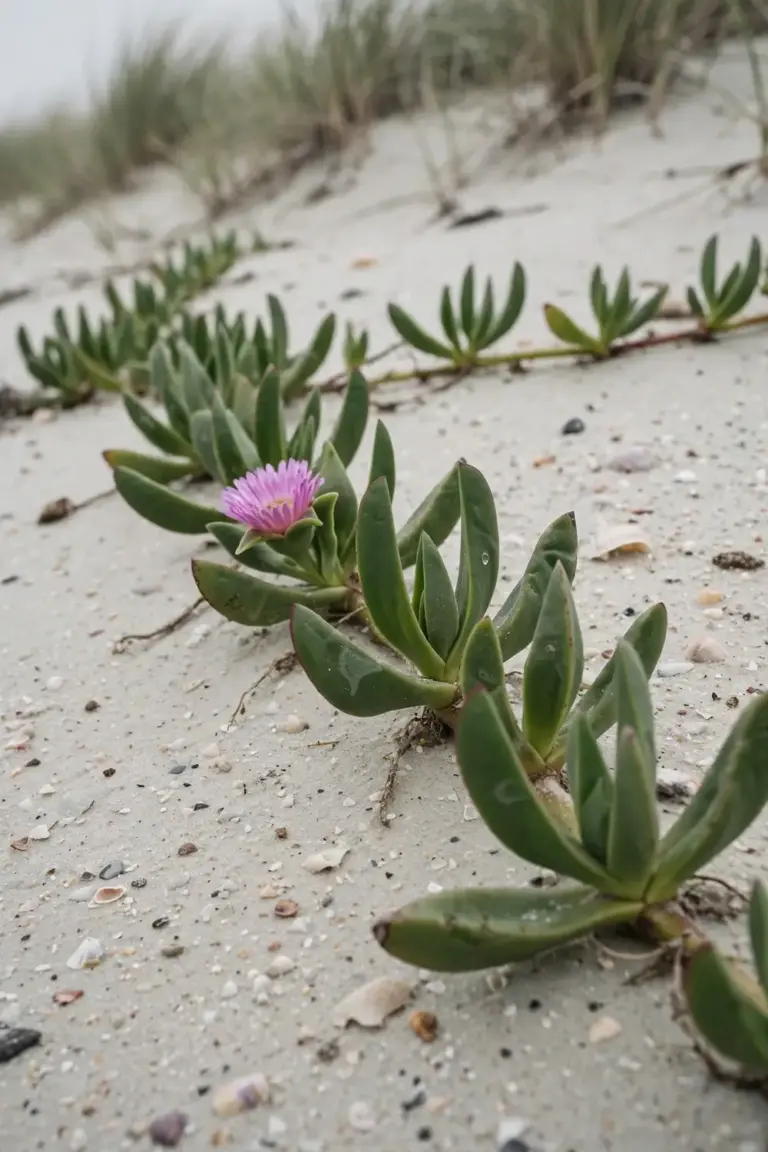
Pigface is a succulent groundcover that thrives in sandy soils. Ozbreed’s sandy-soil guide lists it as resistant to salt spray and suited to coastal gardens. Plant it in full sun and water sparingly. Overwatering causes root rot.
Useful Temperate Plants describes pigface as a low-growing succulent perennial with stems to 2 m long that root at their nodes. Height reaches 0.30 m. The plant tolerates saline soils and maritime winds. Established plants tolerate drought.
Check the label before you buy. The widely sold pigface is Carpobrotus glaucescens, an east-coast native. Western Australia has its own local pigface, Carpobrotus virescens. Ask a WA nursery for local provenance when it matters. The growing rules in this section apply to the sold species.
Let pigface run. Cut it back only where it covers a path. Pink-purple daisy flowers open from October to January, according to St Lucia Community Garden notes.
Pigface hates wet feet more than drought. A pot or bed that holds water after rain rots the stems from the base. Lift a stem and check the base after a wet week. Soft brown tissue means too much water. Move the plant or lift the bed.
Pigface fruit follows the flowers, and the red-purple berries taste salty, so leave them for birds. Children should not eat garden berries without a positive identification, and pigface berries are no exception. The plant spreads by stems, not by fruit, so leaving the berries costs nothing. Cut stems back with shears when they cross a path edge. Toss the cuttings on the compost, not over the fence, because stem pieces root where they land.
3. Coastal Rosemary (Westringia fruticosa) Builds the Second Windbreak
Coastal rosemary builds the second windbreak behind the saltbush. It clips into a hedge and flowers through the warm months.
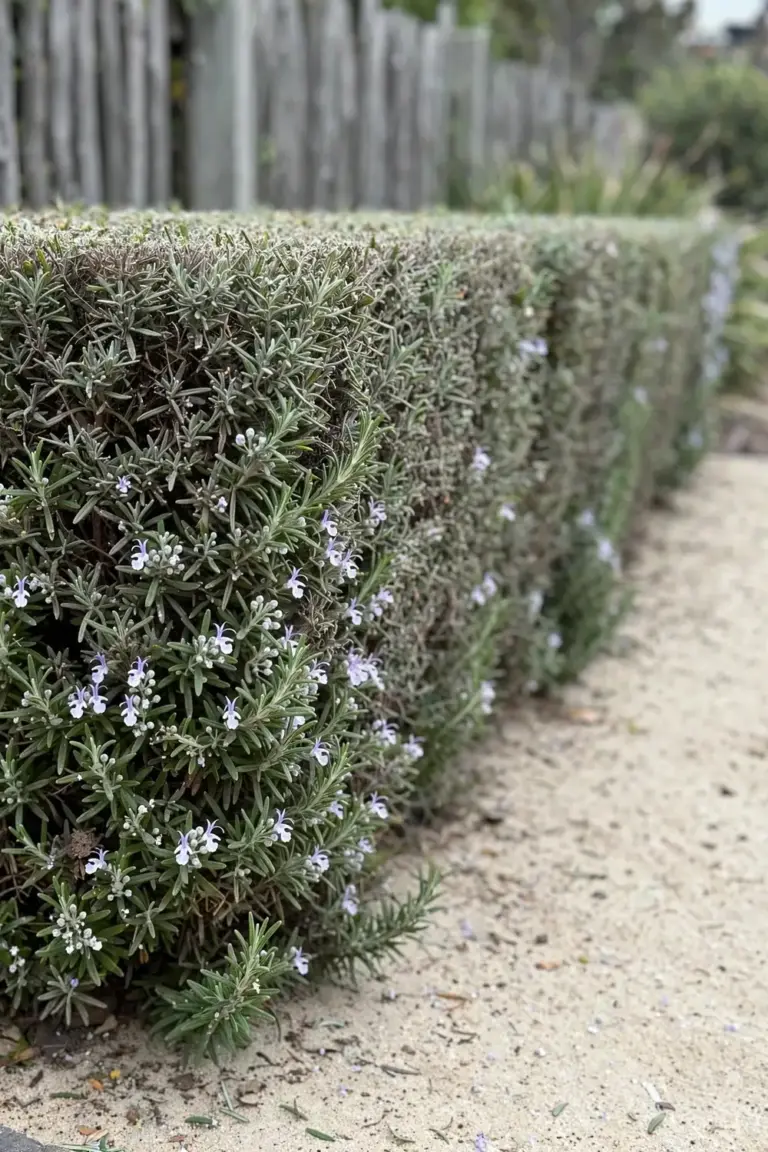
Ozbreed’s sandy-soil guide lists coastal rosemary as a hardy Australian native that thrives in sandy soils and withstands harsh coastal conditions. Plant it in full sun or partial shade. Water regularly until established.
Bindy describes coastal rosemary as a hardy shrub that grows naturally along the east coast of Australia. It withstands coastal conditions, including salt spray and sandy soils. Height reaches 1 to 2 m.
Space hedge plants 1 m apart and clip after flowering to keep the hedge dense, since a hedge 1.2 m high breaks the wind for the plants behind it.
Coastal rosemary is an east-coast native, not a Western Australian local. Perth nurseries stock it widely. It earns its slot on performance in Perth sand, not on local provenance.
Westringia takes a hard clip after the main flush. Fresh growth follows. A second round of flowers follows the fresh growth. Cut back to leafy stems only. Bare old wood rarely reshoots. A hedge clipped twice a year stays dense. A hedge left unclipped opens at the base and never fills again. Tip-prune young plants three times in the first season to build a bushy frame.
4. Ashby’s Banksia (Banksia ashbyi) Anchors the Front Line
Ashby’s banksia anchors the front line with orange flower spikes. It is a Western Australian local that grows on coastal sand dunes.
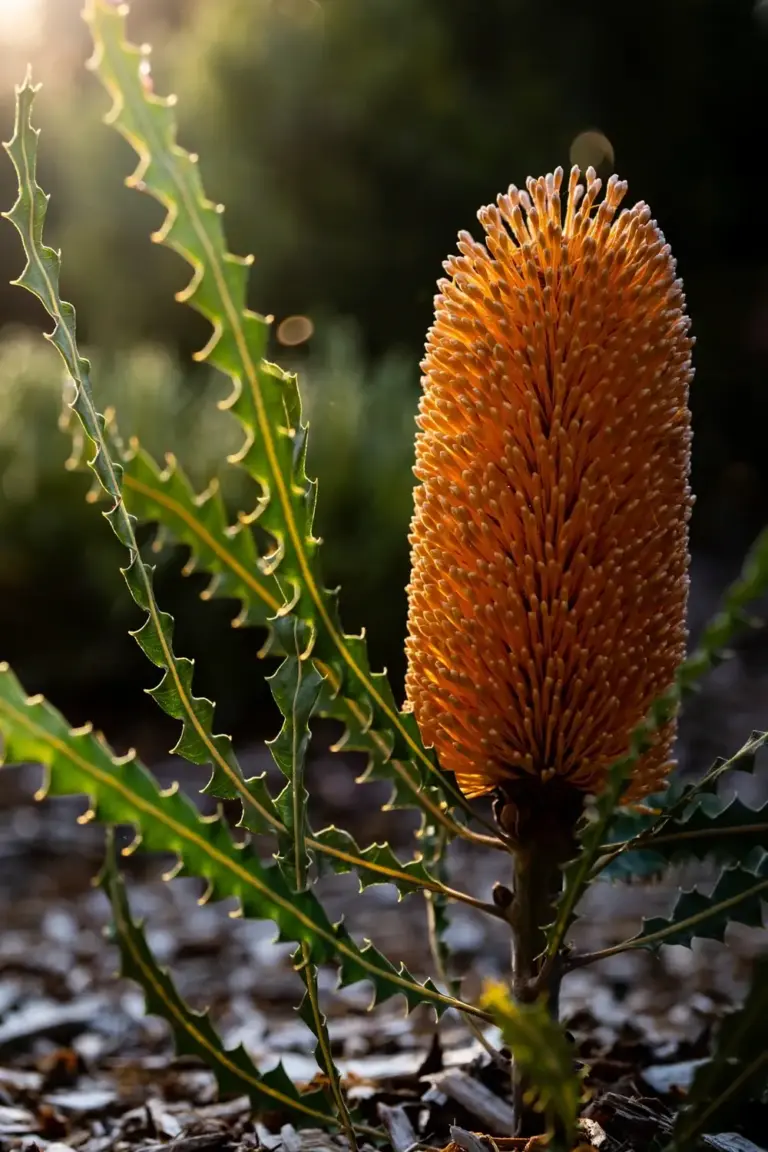
The Australian Native Plants Society profile describes Banksia ashbyi as the northernmost banksia in Western Australia. The northern form grows as a lignotuberous shrub to 2 m on red sand dunes near the coast. The southern form reaches 8 m as a small tree.
The same profile puts the orange flower spikes at 150 mm long and 80 mm across, opening from late winter to spring. The plant needs well-drained soil in full sun to light shade. It tolerates at least moderate frost.
Buy the dwarf form for a home garden. Kings Park and Botanic Garden notes describe the dwarf form as a dense low rounded shrub reaching 1.5 m high and 1.5 m wide, with intense orange spikes 15 cm long and 10 cm across. The 8 m southern form is a small tree, not a garden shrub.
Plant in autumn or winter. Feed with a slow-release native-plant fertilizer at planting and once each spring, per the same Kings Park notes. Skip summer watering after the first year. Prune early to build a multi-branched shrub.
Banksia flower spikes hold seed in woody cones, so leave the cones standing after flowering and let birds work them for months. Cut cones only when you need the plant tidy.
Ashby’s banksia comes in two forms, and the label decides which one you get. The northern form stays a 2 m shrub. The southern form grows to an 8 m tree. A home garden wants the dwarf form. Read the label. Ask the nursery when the label stays silent.
Ashby’s banksia feeds honeyeaters through winter, and the orange spikes open when little else flowers. Birds work the spikes from first light, so leave spent spikes standing. Seed stays locked in the woody cones until fire, so a standing cone costs nothing and feeds birds for months. A tidy banksia is a poorer bird plant.
5. Spider Net Grevillea (Grevillea thelemanniana) Fills the Damp Sandy Hollow
Spider net grevillea fills the dampest sandy hollow. It is a Perth local that grows in winter-wet heath near the city.
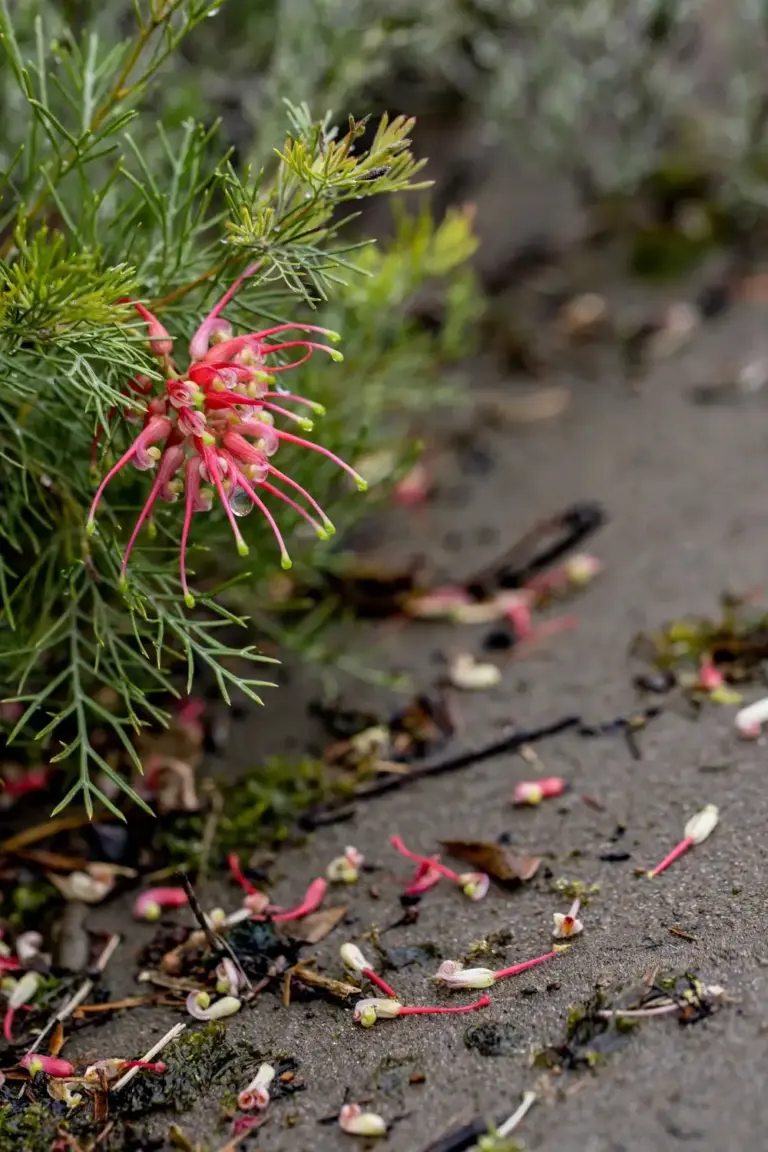
Flora descriptions place spider net grevillea at 0.5 to 1 m high and 1 to 2.5 m wide. Flowers open from July to October in pinkish-red and cream clusters. The wild plants grow in winter-wet swampy heath in the Cannington, Kenwick, and Wattle Grove suburbs of Perth.
Give this grevillea the dampest sandy spot in the garden. It comes from winter-wet ground, not dry dune sand. Water through the first summer. Never let it dry out while it establishes.
Feed with low-phosphorus native-plant fertilizer only, since standard garden fertilizer harms grevilleas, and prune lightly after flowering to hold the shape.
Buy the true species, not a lookalike. San Marcos Growers notes that most other selections once sold under this name now sit elsewhere. Check the label for Grevillea thelemanniana.
Spider net grevillea drops flowers through winter, and the fallen flowers feed honeyeaters on the ground. Leave the leaf litter under the plant, since litter holds moisture in sand and feeds soil life. Raking the bed bare dries the sand and starves the soil. A thin litter layer is mulch the plant makes for itself.
Grevillea flowers feed honeyeaters from July to October, opening in the cool months when little else flowers. A grevillea in flower is a bird feeder that needs no filling. Plant it where you watch birds, since the flowers sit at knee to waist height on a low shrub.
6. Red-and-Green Kangaroo Paw (Anigozanthos manglesii) Carries the Spring Show
Red-and-green kangaroo paw carries the spring show. It is Western Australia’s floral emblem and a Perth sand native.
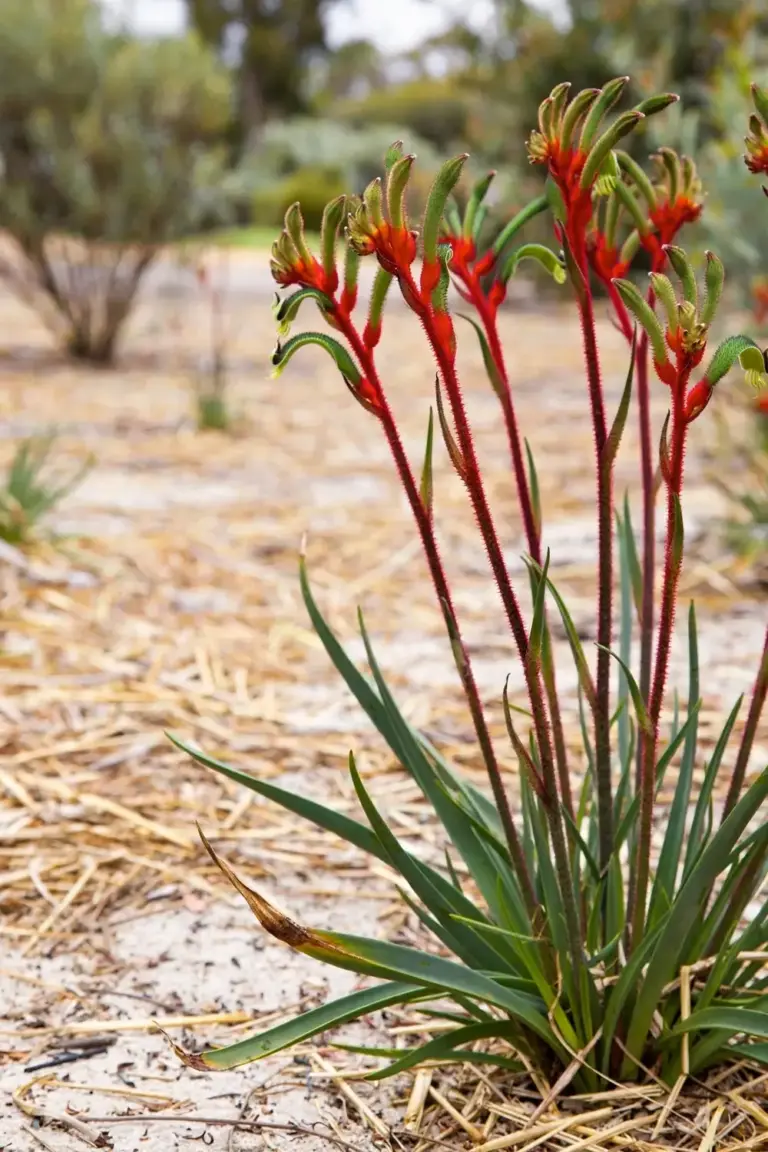
The Royal Horticultural Society profile describes red-and-green kangaroo paw as an evergreen perennial with erect red-hairy stems to 1.2 m bearing tubular flowers 8 cm long. Maximum height runs 1 to 1.5 m, with a spread of 0.1 to 0.5 m. The plant range is Western Australia.
The same profile puts time to maturity at 2 to 5 years. It wants full sun in well-drained sandy soil. It suggests mulching with straw or chip bark to protect the crown over winter.
The Seed Vine describes flowers from late winter to early summer, peaking in spring. Seed germination is slow and patchy without smoke treatment. Smoke treatment improves strike rates.
Start from tube stock for reliable flowers. Seed needs smoke treatment and patience. The seed starting guide sets out the steps for seed-raised plants. Cut flower stems to a few cm above the soil line after flowering, per Ozbreed’s sandy-soil guide. Keep the crown clear of mulch.
Kangaroo paw clumps weaken with age, so divide the clump when flowering drops and replant divisions at the same depth. Burying the crown rots it.
Kangaroo paw stems snap cleanly at the base. Cut them after flowering. The clump pushes fresh leaves from the crown. A clump left with dead stems looks tired and invites rot at the crown. Clear the dead stems. Keep the crown clear of mulch. A clear crown dries fast after rain, and a dry crown resists rot.
7. Spiny-Headed Mat Rush (Lomandra longifolia) Holds the Bed Together
Spiny-headed mat rush holds the bed together. Its strappy leaves bind sand and shade the soil surface.
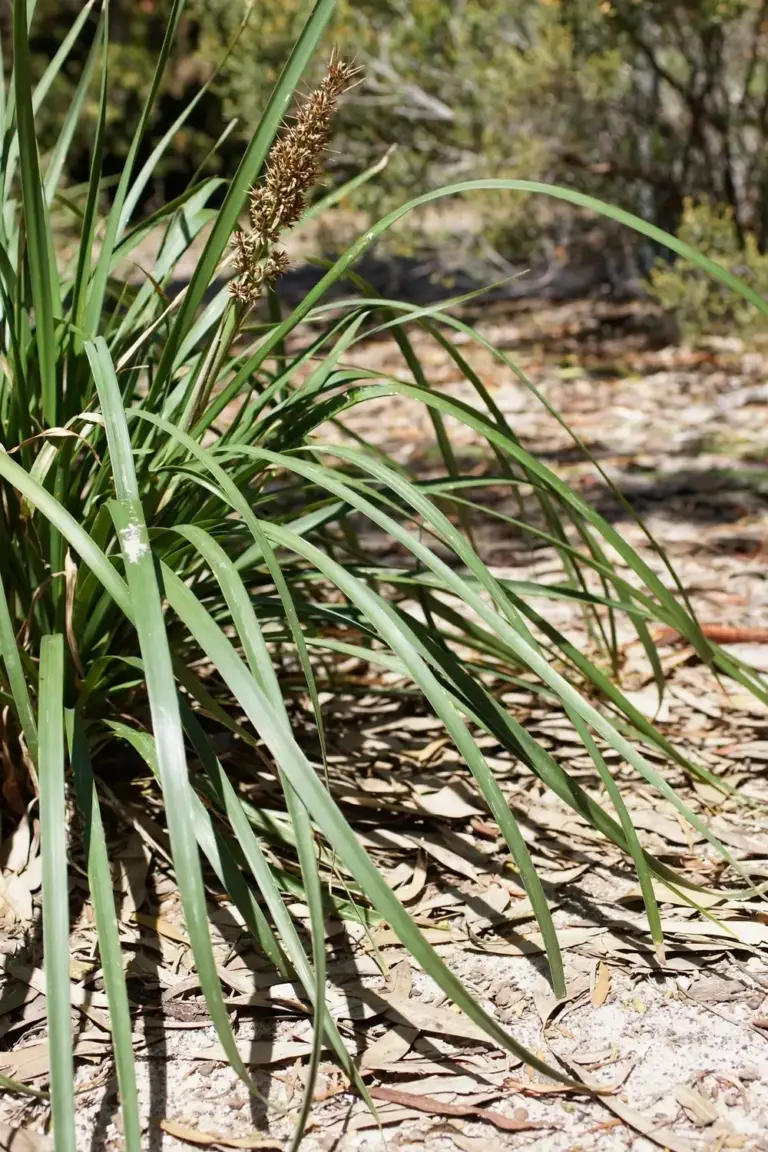
IndigiGrow describes spiny-headed mat rush as drought tolerant, growing to 1.2 m high and 1 m wide. It takes full sun or shade. It grows in well-drained soils. Flowers open from spring to summer.
Plant mat rush in drifts of three or five. Space plants 1 m apart. Cut out dead leaves at the base each year. Leave the flower stems standing until seed drops.
Mat rush is not a grass. Missouri Botanical Garden notes that the plant looks grass-like but sits outside the grass family, in Asparagaceae. The grass look is a growth habit, not a family tie.
Lomandra seed heads stand brown through the year. Birds work them. Cut the stems only when they flop across a path. The clump holds its shape without cutting.
Lomandra clumps widen slowly. A clump planted at 1 m spacing meets its neighbors in the second or third year. The meeting point shades the soil. Shade holds moisture. Weeds thin out under the closed canopy. Lift and divide a clump that crowds a path. Replant divisions at the same depth. Water once. Then leave the division alone.
8. Emu Bush (Eremophila glabra) Covers the Ground in Yellow
Emu bush covers the ground in yellow tubular flowers. The prostrate form spreads 2 m wide at ankle height.
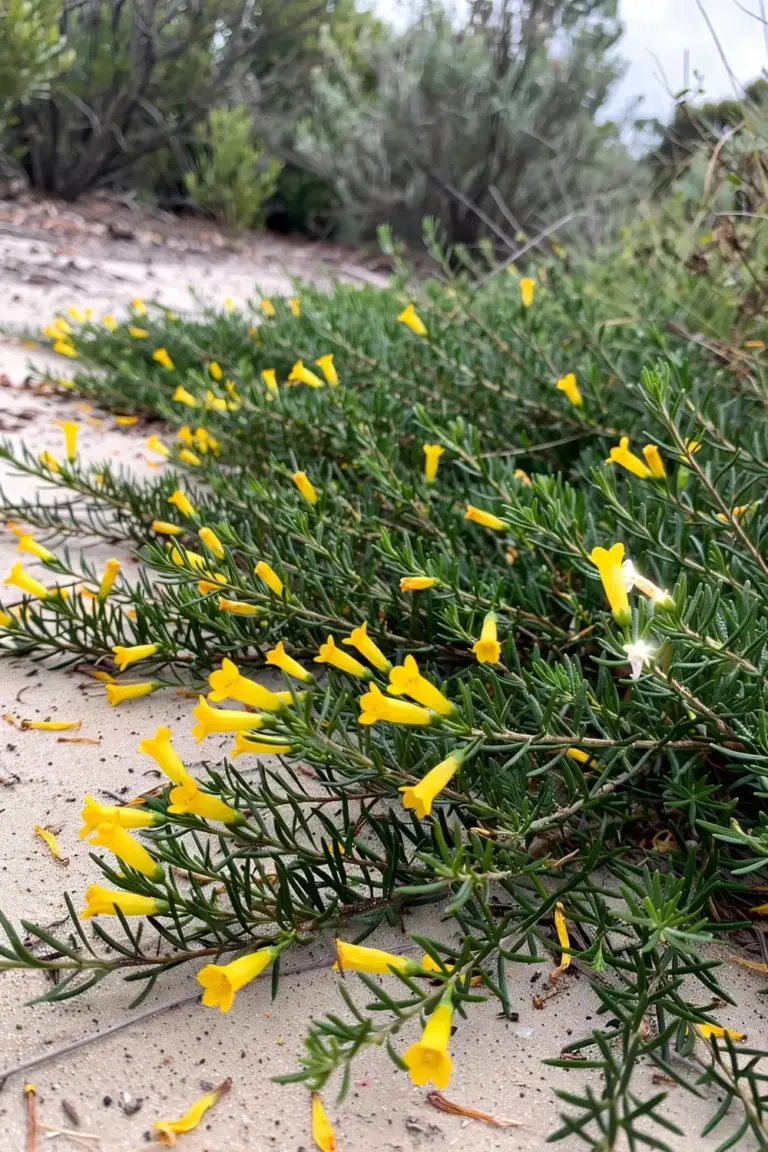
Ozbreed’s sandy-soil guide lists emu bush as a hardy shrub that thrives in sandy soils. Flowers run red to yellow and attract native birds and bees. Plant in a sunny spot. Water sparingly once established. Prune after flowering.
Sylvaterre Nursery describes the prostrate yellow form as a dense mat 10 to 30 cm high and up to 2 m wide. Flowers open from late winter through summer. The form tolerates drought, lime, and frost.
Botanikks places emu bush in the coastal heathlands of Western Australia, including Rottnest Island near Perth. It grows in sandy or gravelly soil. The shrub form reaches 2.5 m tall.
Buy the prostrate form for groundcover. The shrub form suits a second-line screen, not a groundcover slot. Check the label for the prostrate form.
Emu bush flowers feed honeyeaters in winter, and the tubular flowers hold nectar through the cool months. Plant it where you see birds from a window, because a groundcover that feeds birds earns its water.
Emu bush flowers hold nectar through the cool months, and honeyeaters visit in the morning. The prostrate form roots where stems touch damp sand. Peg a long stem down with a stone to layer a new plant. Cut the layered stem free once roots hold.
9. Blue Flax Lily (Dianella revoluta) Finishes the Second Line
Blue flax lily finishes the second line. Blue flowers and blue berries follow strappy evergreen leaves.
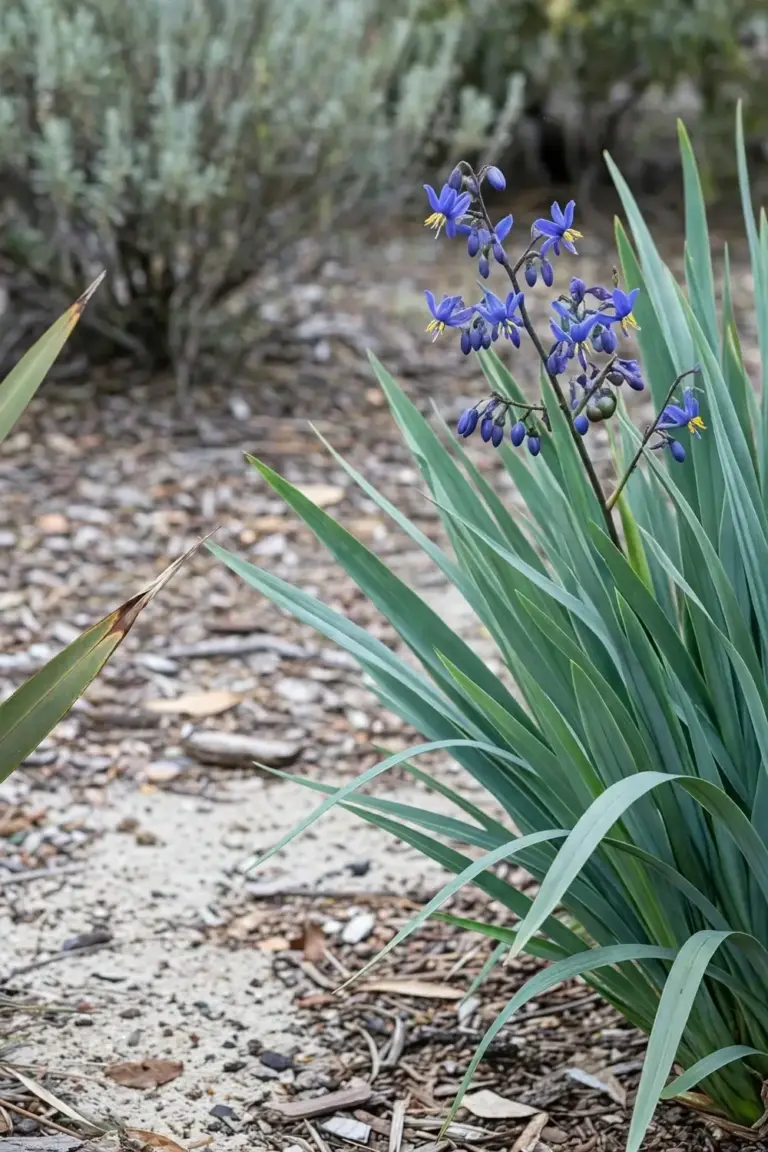
Ozbreed’s dianella guide describes Dianella revoluta as a coastal dweller 0.5 to 1 m high. It tolerates salty winds and sandy soils. It wants well-drained soil in full sun to part shade. It needs minimal care once established.
Australian Plants Society resources describe inflorescences to 2 m tall, with leaves to 100 cm long and 2.5 cm wide. Flowers run blue to violet to 20 mm across. Berries reach 10 mm across.
Do not eat the berries. The Royal Horticultural Society lists the fruit as ornamental and not to be eaten. Grow flax lily for flowers and foliage, not for food.
Divide clumps in spring to multiply plants. The Royal Horticultural Society lists division in spring as the propagation method. Keep divisions watered until new leaves stand upright.
Flax lily berries hold color for months, and birds eat them, so leave the berries standing through autumn. Cut the stems only when they brown and collapse. A clump left uncut looks wild through winter, while a clump cut hard in autumn loses its winter interest. Divide in spring. Spring divisions establish before summer.
The 9 Best Plants for Sandy Soil at a Glance
Use the table to check each plant against your spot. Match the line first, then the size. A front-line plant in a sheltered bed wastes its toughness. A second-line plant on the windward edge burns.
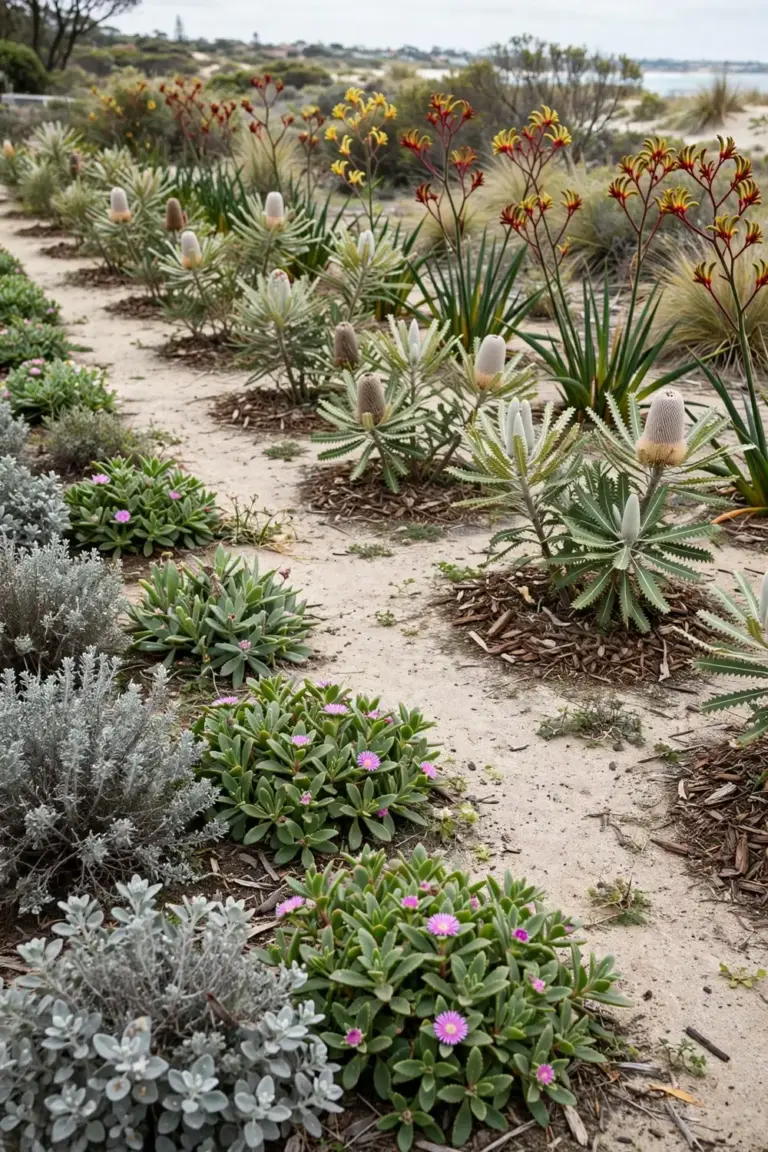
Check mature size against the space, not the pot, because a tube looks small while a banksia at 1.5 m wide needs 1.5 m of bed. Crowding starves the inner branches. Space for the mature plant, not the tube.
| Plant | Line | Height x Spread | Why It Earns the Slot |
|---|---|---|---|
| Gray saltbush (Atriplex cinerea) | Front-line | 1.8 m x 2.5 m | Halophyte that takes salt spray and wind first |
| Pigface (Carpobrotus glaucescens) | Front-line | 0.30 m x 2 m stems | Succulent groundcover that pins bare sand |
| Coastal rosemary (Westringia fruticosa) | Front-line | 1 to 2 m x 1 to 2 m | Clips into a hedge that breaks the wind |
| Ashby’s banksia (Banksia ashbyi) | Front-line | 1.5 m x 1.5 m dwarf form | WA local with orange spikes on coastal dunes |
| Spider net grevillea (Grevillea thelemanniana) | Second-line | 0.5 to 1 m x 1 to 2.5 m | Perth local for the dampest sandy hollow |
| Red-and-green kangaroo paw (Anigozanthos manglesii) | Second-line | 1 to 1.5 m x 0.1 to 0.5 m | WA floral emblem with 8 cm spring flowers |
| Spiny-headed mat rush (Lomandra longifolia) | Second-line | 1.2 m x 1 m | Strappy clumps that bind sand and shade soil |
| Emu bush (Eremophila glabra) | Second-line | 0.10 to 0.30 m x 2 m prostrate form | Yellow groundcover from Rottnest Island heath |
| Blue flax lily (Dianella revoluta) | Second-line | 0.5 to 1 m x 1 m | Coastal dweller with blue flowers and berries |
Frequently Asked Questions
Yes. Exotics grow in Perth sand when they suit the conditions. The list stays native-first because natives already handle sand, salt, and dry summers. An exotic earns a slot when it matches those conditions and stays non-invasive, so check the label for weed risk before you plant any exotic near bushland. Natives carry no such check.
Run the droplet test first. Place a drop of water on dry sand. Slow soaking means repellency. Work compost through the bed and add a wetting agent where water beads, then spread coarse mulch 75 mm deep over the whole bed. The Soil Quality fact sheet lists droplet timing as a field method, while claying works at farm scale, not in a home bed.
Plant in autumn and winter, when Perth rain falls in the cool months, and autumn planting gives roots a full wet season before summer. Winter planting suits bare-root and tube stock alike. Summer planting works only with daily watering, so mulch at planting time and water new plants through the first summer.
Feed lightly. Sand loses nutrients with every watering. A slow-release native-plant fertilizer at planting and once each spring covers most natives. Banksias and grevilleas need low-phosphorus formulas. Standard garden fertilizer carries too much phosphorus for Proteaceae. Skip feeding entirely for saltbush and pigface in poor sand.
Established plants mostly cope. Gray saltbush, pigface, and emu bush handle dry summers with no watering. Kangaroo paw wants water through its flowering season. New plants need water through the first summer. Mulch holds soil moisture. A deep soak each fortnight beats a light sprinkle each day in a heatwave.
Start With One Front-Line Plant This Weekend
Start with one front-line plant this weekend. These are the best plants for sandy soil in Perth and coastal WA. Gray saltbush suits the windward edge. Pigface suits bare sand. Coastal rosemary suits a hedge behind them.
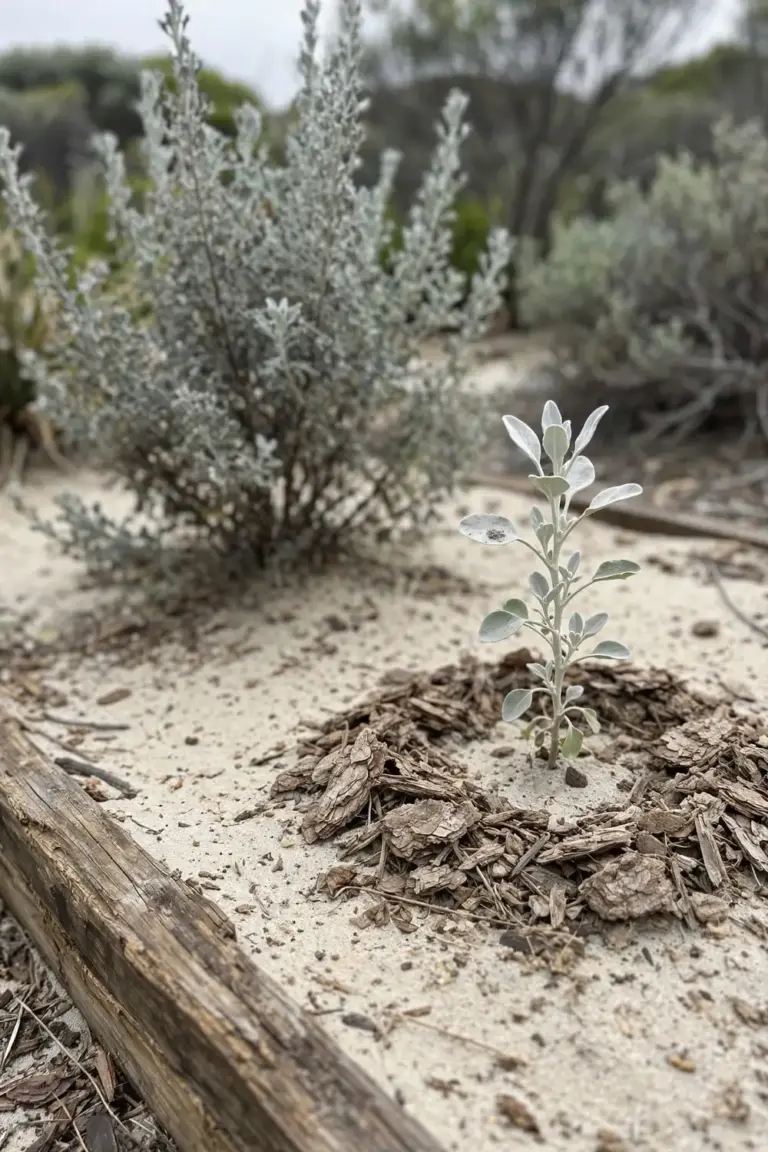
Dig the compost through the bed first, run the droplet test, and spread the mulch. Plant one front-line shrub and water it in. The second line waits behind the shelter it builds.
Photograph the bed before you plant, then photograph it again in twelve months, and the comparison shows what worked. Replace failures with plants from the same line, not the next line inward.
One plant teaches the bed. A saltbush that thrives proves the wind line. A pigface that rots proves the drainage. Read those signals. Adjust the next planting to what the first one showed.
Perth sand rewards patience. A bed planted in autumn looks bare in winter. The same bed fills by spring. Give the plants one full wet season before you judge them.
One plant teaches the bed. A saltbush that thrives proves the wind line. A pigface that rots proves the drainage. Read those signals. Adjust the next planting to what the first one showed.