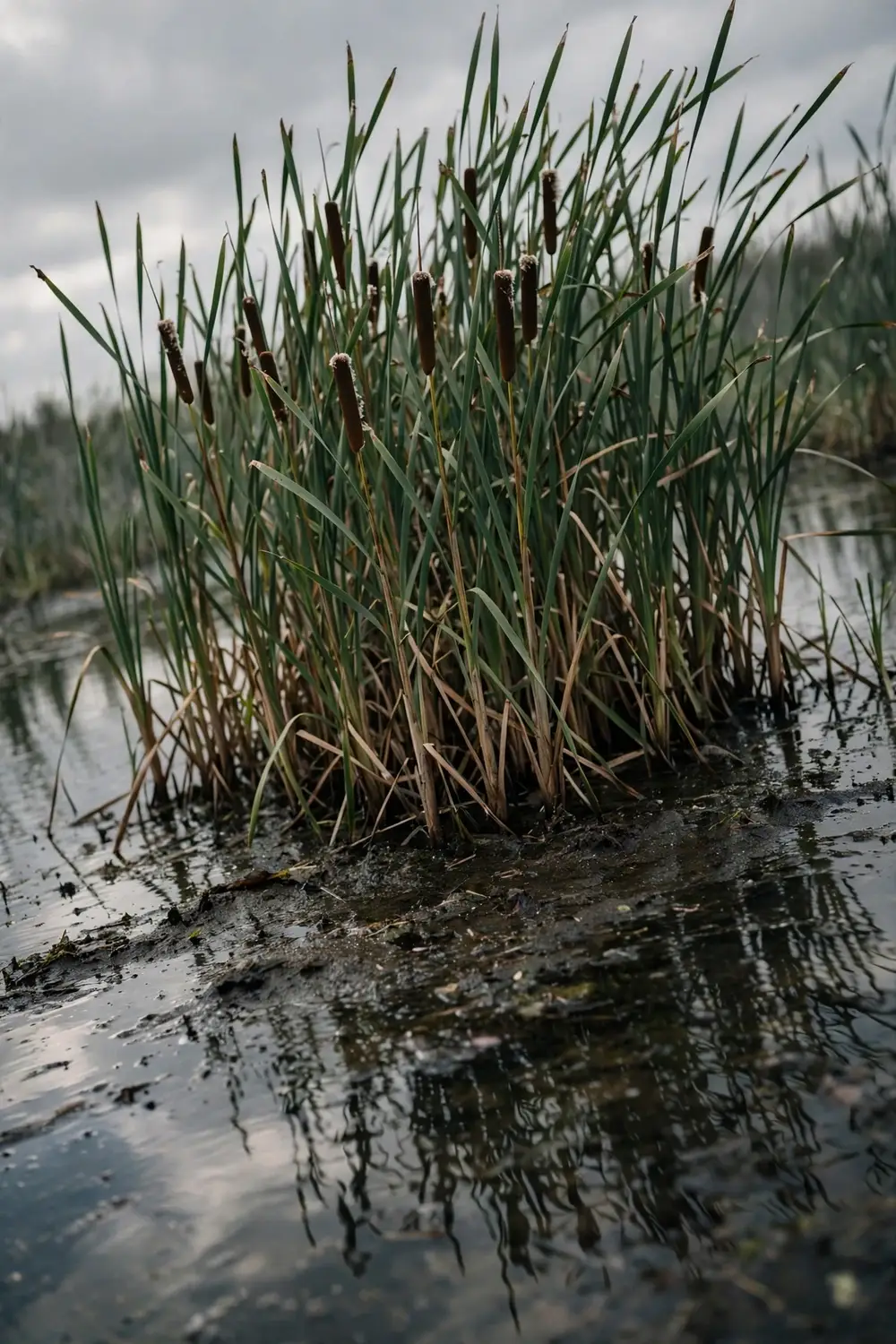

Is bullrush a weed or native in Australia? The answer depends on which plant stands in front of you. Bullrush is a common name, and it covers 3 Typha species in Australia. 2 of those species are native. One species arrived from overseas and now behaves as a weed in parts of the country. The same stand can be a protected native in a natural wetland and a weed in a farm dam, because weed status follows place and behavior, not origin alone.
This guide gives you the verdict first, then the field marks that separate the three species, then the decision rules for your own land. It covers Typha only. It does not cover general weed control or general native-plant gardening, and it gives no bullrush growing guide. A short pointer at the end covers the one case where planting in a contained pond makes sense.
1. Bullrush Is a Common Name, Not One Species
Bullrush is a common name, and common names hide real differences. In Australia, bullrush usually means cumbungi, a plant in the genus Typha. Typha is a genus of tall wetland plants with strap-like leaves and a brown sausage-shaped flower spike. Australia has three Typha species, and the weed question turns on which one you have.
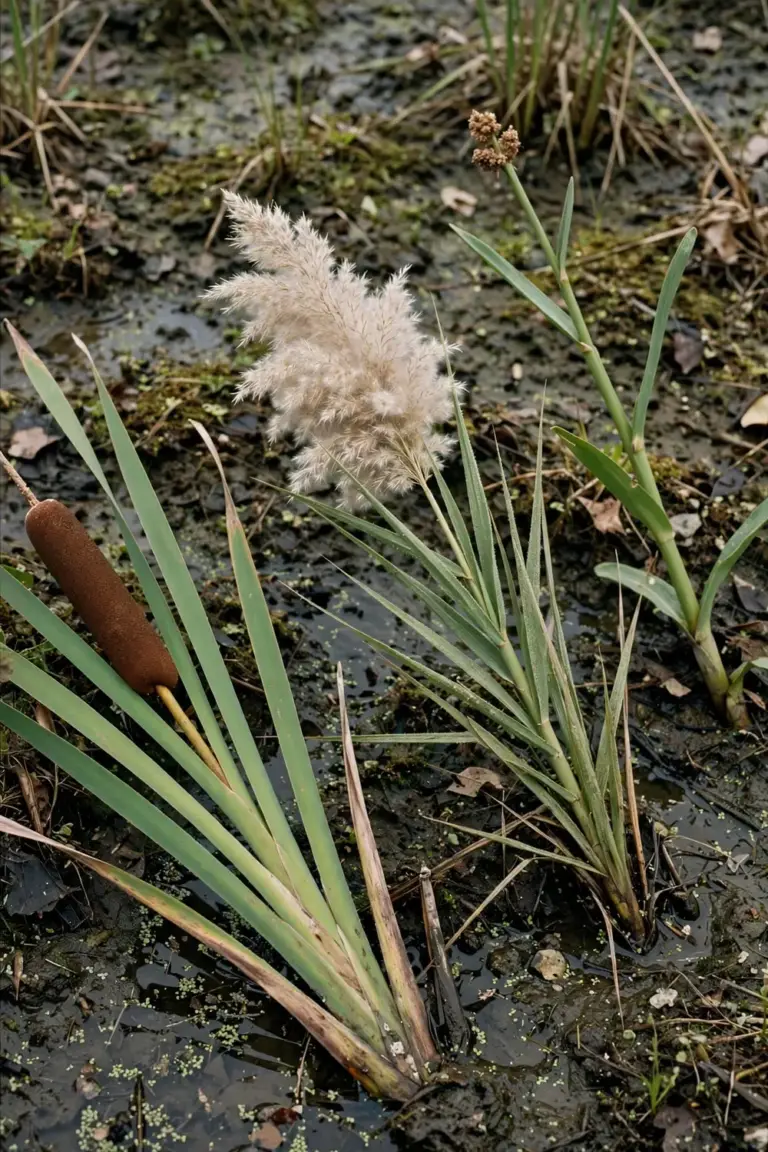
The name trap runs wider than Typha. The name bullrush, spelled bulrush in some sources, also appears among the common names of common reed, Phragmites australis, a tall grass with a fluffy plume head. Garden sellers and old books have used bullrush for club-rushes and other rush-like plants as well. The field rule stays simple. A plant with a dense brown sausage spike on a cane-like stem is a Typha. A plant with a fluffy plume head is a grass, and it is not Typha. A plant with a round stem and a small brown cluster near the tip is a rush in the genus Juncus, and it is not Typha either.
Three Typha species grow in Australia. Typha domingensis is native to all Australian states and territories, and it is the dominant species in northern and inland Australia. Typha orientalis is native to eastern Australia and to tropical and subtropical Australasia and South-East Asia. Typha latifolia is naturalised in Australia, and it arrived from temperate Eurasia, North Africa, and North America. Weeds Australia’s cumbungi profile states all three facts in one place, and it names Typha domingensis as Narrow-leaved Cumbungi and Typha orientalis as Broad-leaved Cumbungi.
The genus holds about 15 species worldwide, according to the same Weeds Australia profile. That worldwide count matters because it explains the confusion. Garden stock, old books, and interstate sellers can carry the same common name for different species, and the only fix is the scientific name on the label. Ask for the scientific name before you buy, move, or remove any bullrush.
2. The Two Native Cumbungi: Typha Domingensis and Typha Orientalis
Both native cumbungi species belong in Australian wetlands. Typha domingensis grows in all Australian states and territories, and it dominates northern and inland Australia. Typha orientalis grows in eastern Australia, and its native range runs through tropical and subtropical Australasia and South-East Asia, including Indonesia, Malaysia, the Philippines, Papua New Guinea, Norfolk Island, and New Zealand. Weeds Australia’s cumbungi profile gives both ranges, and it notes that the two species sometimes grow together.
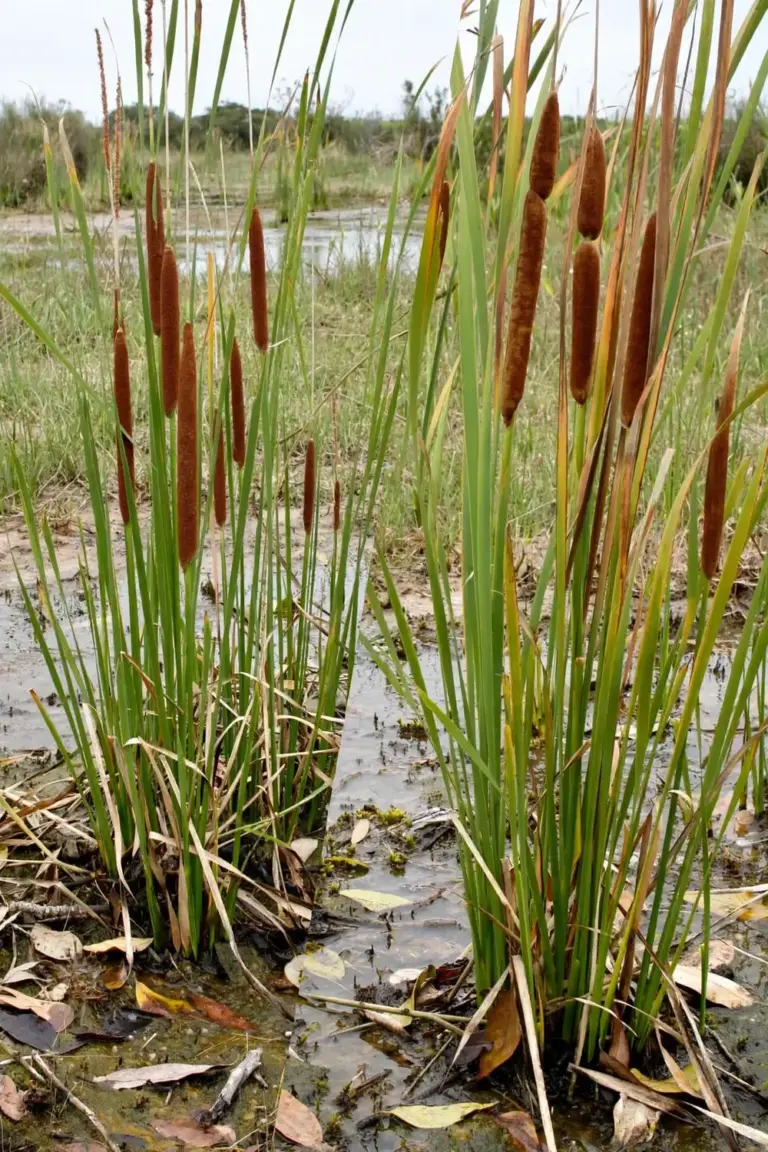
Typha domingensis carries narrow leaves. The Yarra Ranges local plant directory describes it as a vigorous erect cane-like perennial herb, 1 to 2 m tall, with green to yellowish-green strap leaves near the base of the stem. The leaves reach 2 m long and 5 to 15 mm wide, and the leaf sheath at the base may carry ear-shaped lobes on the top 1 or 2 leaves. The plant stays green in winter. The Yarra Ranges directory entry for Typha domingensis gives the full description, including flowering from December to May.
Typha orientalis carries broader leaves and a broader spike. The Plants of South Eastern New South Wales key describes the male spike at 15 to 35 cm long and 5 to 10 mm in diameter, and the female spike at 11 to 40 cm long and 5 to 20 mm in diameter, cinnamon brown, with a gap of 5 to 55 mm between the male and female spikes. The same key warns that accurate separation of Typha domingensis from Typha orientalis needs a microscope or a macro lens on a phone, because the bracts in the female flowers carry the deciding detail. That warning sets the honest limit for home identification. A gardener can place a plant in the native pair with confidence, and a herbarium settles which native species it is.
| Feature | Typha Domingensis (Native) | Typha Orientalis (Native) | Typha Latifolia (Introduced) |
|---|---|---|---|
| Common name | Narrow-leaved Cumbungi | Broad-leaved Cumbungi | Giant Reedmace, introduced Cumbungi |
| Origin | Native to all Australian states and territories | Native to eastern Australia and Australasia | Native to temperate Eurasia, North Africa, and North America |
| Leaf | Narrow, 5 to 15 mm wide, bi-convex in cross-section | Broader, to 30 mm wide | Almost flat in cross-section |
| Female spike | About finger width, cinnamon brown | Broader, cinnamon brown | Dark red-brown to black-brown |
| Winter behavior | Stays green in winter | Stays green in winter | Dies down in winter |
| Where found | All states and territories, dominant in north and inland | Eastern Australia, plus WA under the 2015 finding | Victoria and Tasmania, with one NSW record |
The table gives the working comparison. The next section covers the introduced species in full, and the section after that turns the table into a field check.
3. The Introduced Cumbungi: Typha Latifolia
Typha latifolia is the one bullrush in Australia that is not native. It is a native of temperate Eurasia, North Africa, and North America. In Australia, it is naturalised in northern Tasmania, and it is grown as an ornamental in Victoria and Tasmania, with one record from New South Wales. Weeds Australia’s cumbungi profile gives that distribution, and it records that Typha latifolia was thought to have been accidentally introduced to Australia shortly after World War II, with a herbarium record for the East Midlands of Tasmania in 1948.
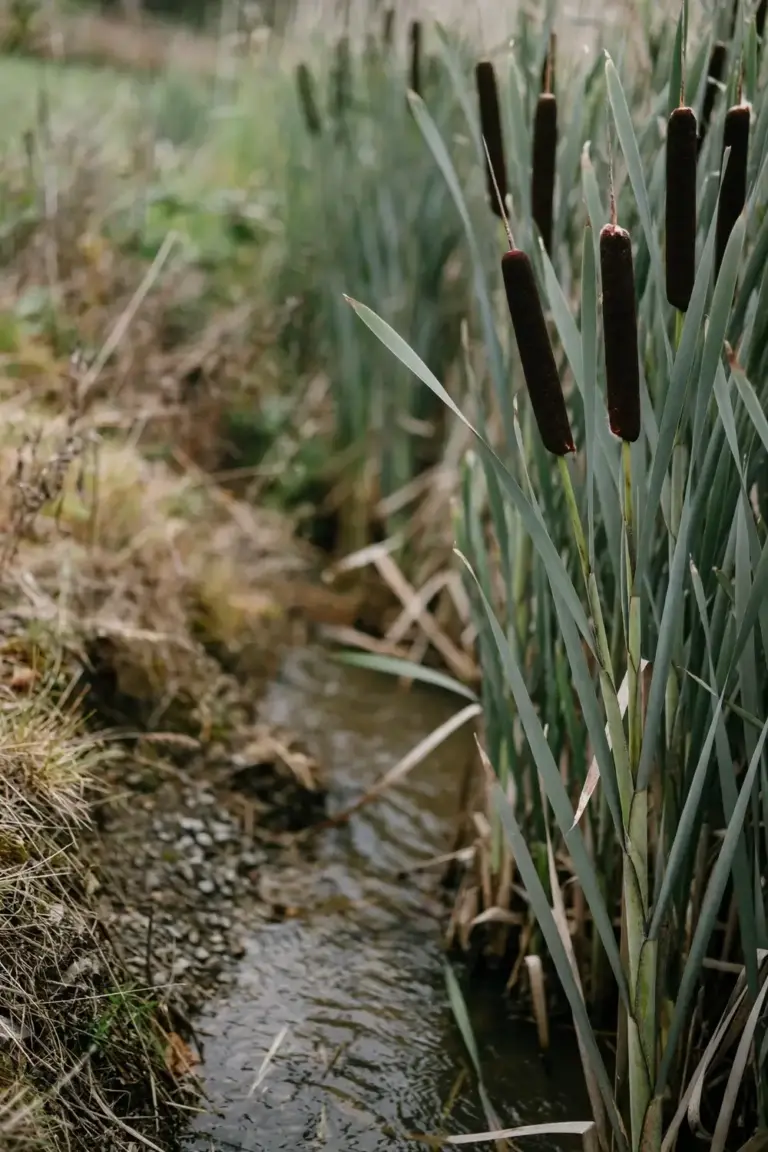
The plant is a rigid reed reaching 3 m tall, with flat leaves and a thick round stem. Its flowers sit minute and densely packed in a velvety black-brown brush in summer. Its fruits are tiny nutlets with minute seeds. It spreads by rhizomes, and its seed travels in wind and water. The Tasmanian Government’s coastal weeds booklet gives that description, and it states plainly that Typha latifolia and native Typha orientalis are hard to distinguish, so a gardener should seek professional advice before acting on a suspected stand.
A Western Australian government weed journal adds the historical depth. Australia has three Typha species. Typha orientalis was long treated as native to all states apart from Western Australia, and Typha domingensis is native throughout Australia and in at least another 115 countries. Typha latifolia is the introduced European species in eastern Australia. Keighery and McCabe concluded in 2015 that Typha orientalis is also native to Western Australia, based on its early collection in 1839, the lack of historical listings as a weed, and its use by Noongar people as a major food source. The Western Australian weed journal records that finding, and it notes that Typha is known in Australia from fossil seeds from the Miocene, over 5 million years ago, in Victoria.
The introduction story matters for two reasons. First, it explains why the introduced species clusters in Tasmania and Victoria, where it first naturalised. Second, it explains why old local knowledge can mislead. A plant that has stood in a Tasmanian drain since the 1940s feels local, and it is still an introduced species. Time in place does not change origin.
4. How to Tell Native Cumbungi From the Introduced One
Home identification separates the introduced species from the native pair, and it stops there. The two native species need a microscope for certainty, so a home check that lands on the native pair is a complete result. The check uses four clues, and it works best when two or more clues agree.
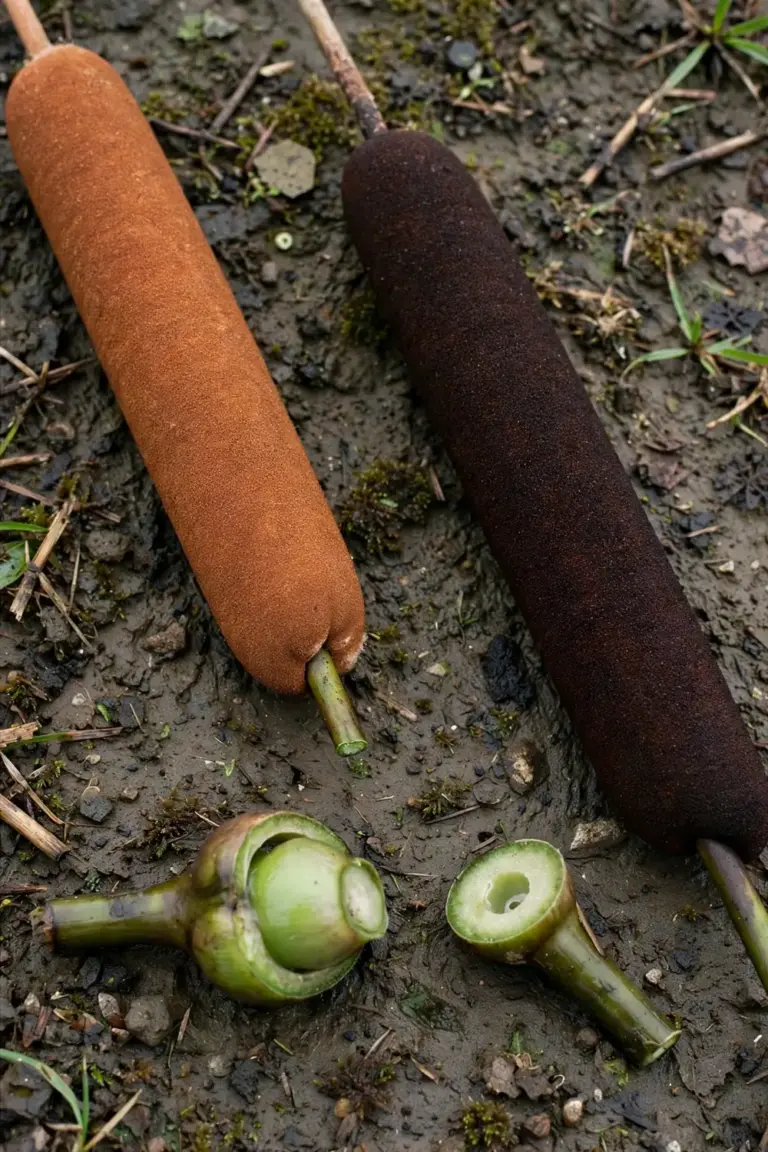
First, watch the stand through winter. Typha domingensis stays green in winter. Typha latifolia dies down in winter. A stand that turns brown and collapses in the cold months points toward the introduced species, and a stand that holds green leaves through winter points toward a native species. I check the winter die-back before I call a stand introduced, because a green stand in July tells me more than a summer flower head.
Second, look at the leaf cross-section. Roll a leaf between your fingers and look at the cut end. Native cumbungi leaves are bi-convex in cross-section, which means the leaf bulges on both faces. Typha latifolia leaves are almost flat in cross-section. This clue works in any season, and it needs no flower spike.
Third, look at the female spike. Native cumbungi spikes run cinnamon brown, and the native Typha domingensis flowerhead runs about finger width. Typha latifolia spikes run dark red-brown to black-brown, and they look darker and denser than the native spikes beside them. The Yarra Ranges directory gives the color split, and it notes that Typha latifolia bracts are absent while the native species carry bracts. The Yarra Ranges directory entry for Typha domingensis states the full contrast, including the broad flat-tipped stigmas of the introduced species.
Fourth, check the gap and the spike size with a ruler. Typha domingensis carries a male spike 15 to 35 cm long and a female spike 11 to 40 cm long, with a gap of 5 to 55 mm between them, according to the Plants of South Eastern New South Wales key. Typha latifolia spikes run in the same size range, so size alone never settles the question. Size confirms the plant is a Typha, and color plus leaf shape plus winter behavior settle which Typha it is.
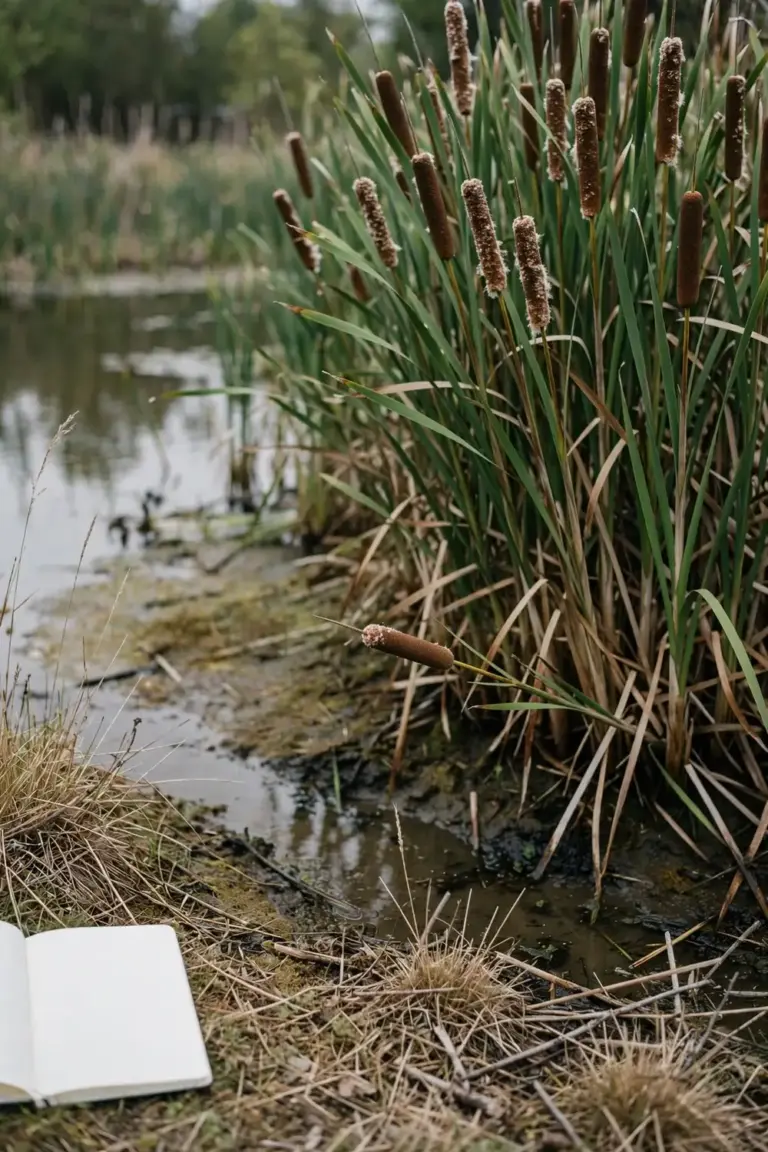
Photograph all four clues before you act. Shoot the whole stand first, then one leaf cross-section, then one spike in side view, then one close view of the spike surface, and keep the ruler in the frame for scale so the herbarium can read spike width straight off the photo. Send the set to your state herbarium when the clues disagree. The Tasmanian Government’s coastal weeds booklet advises professional help for exactly this pair, and its Cumbungi entry pairs that advice with the physical control methods in H2 8. A week of waiting beats a lost native stand.
5. When Native Bullrush Turns Into a Weed
A native plant becomes a weed when it grows where people do not want it, or when it grows so hard that it crowds out other life. Native cumbungi does both in the wrong place. It spreads by creeping rhizomes, and it also spreads by seed. Weeds Australia’s cumbungi profile describes the rhizome system as the engine that enlarges colonies each year, and it describes seed as the engine that starts new colonies. The seed sits in a follicle with a feathery attachment that aids wind dispersal, and the same profile notes that seed may travel many kilometres.
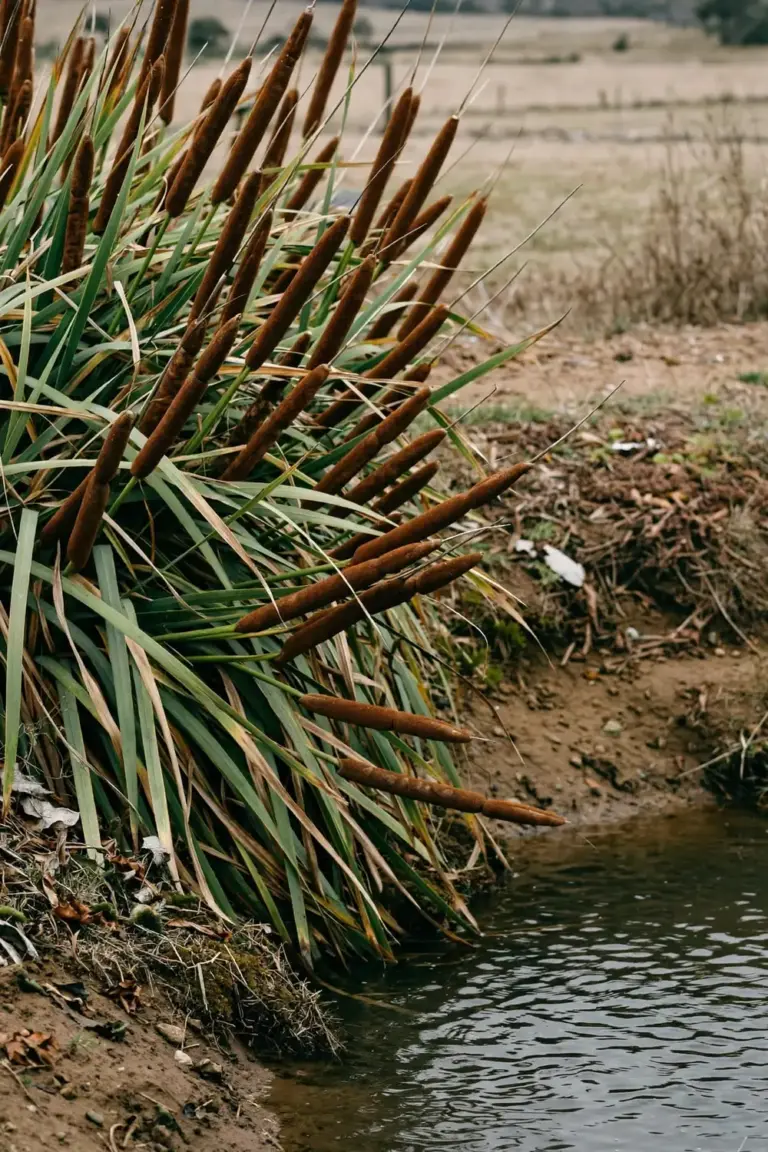
The places where native cumbungi turns weedy share 3 features. The water stays permanent where the natural wetland dried in summer, and the nutrient load runs high from fertilizer runoff, stock waste, or stormwater. The stand has room to spread with no grazing, no shade, and no competition to check it. Dams, irrigation channels, table drains, and stormwater ponds combine all 3 features. Cumbungi fills them fast. The construction of dams, weirs, and irrigation systems in otherwise arid areas has assisted the spread of both native species, according to the same Weeds Australia profile. In northern Australia, Typha domingensis now grows near dams at Mount Isa, Kununurra, and Townsville, and throughout the Burdekin irrigation system.
The weed verdict for a native stand therefore runs on behavior, not on origin. A native stand in a natural swamp is habitat, and it stays. A native stand that chokes a farm drain, blocks an irrigation channel, or fills a dam to the point where stock cannot drink is a weed, and it needs control. The same plant holds both verdicts in different places, and the gardener decides by place.
Prevention starts above the waterline. Soil health on your garden beds decides how much nutrient leaves your soil in rain, and nutrient-rich runoff feeds cumbungi downstream. What mulching does for soil holds soil and moisture on beds above the wetland, which cuts the sediment and nutrient load that reaches the water. A garden that keeps its soil and nutrients on the beds starves the cumbungi in the drain below it, and that prevention costs less than any removal.
6. When Introduced Bullrush Is a Weed
Typha latifolia is a weed in Australia by origin and by behavior. It is naturalised, which means it now sustains wild populations outside gardens, and it behaves as a weed in dams, irrigation channels, table drains, and natural habitats. Weeds Australia’s cumbungi profile names cumbungi as a problem weed in exactly those four places, and it states that both physical and chemical techniques are part of effective control of established populations.
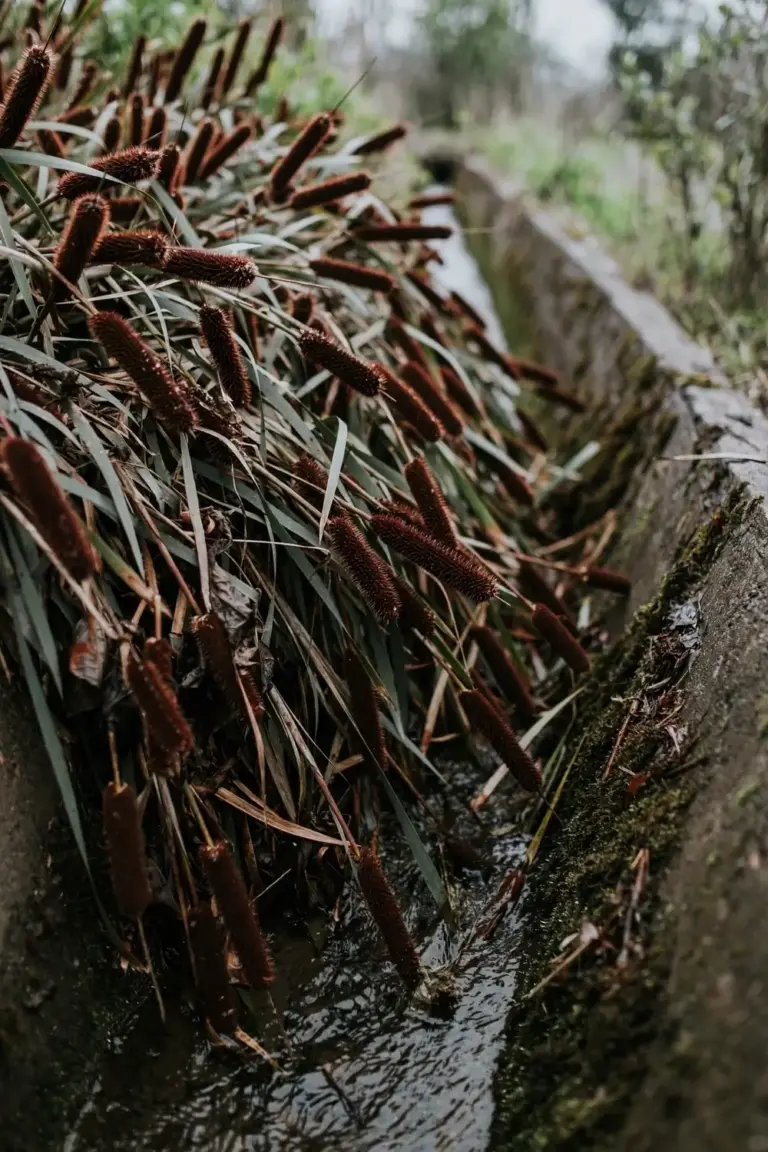
The weed pressure from Typha latifolia runs through three mechanisms. The rhizome system enlarges the colony each year, and each stem can push new shoots from underground buds. The seed load is enormous. One Australian emergent weed guide puts the figure at 222,000 seeds per flower spike, with flowering from December to February and growth in fresh to brackish water to 2 m deep. The seed rides wind and water, so one stand seeds the whole catchment. The stand itself changes the site, because the large amount of organic matter it produces can cause water pollution when the leaves die and decompose. Weeds Australia’s cumbungi profile records the organic-matter problem, and it links the dying leaves to water-quality trouble in dams and channels.
A New Zealand finding adds a warning for Australia. In New Zealand, Typha latifolia forms dense thickets that displace native vegetation, and it is thought that it could potentially hybridise with the native Typha orientalis. Weeds Australia’s cumbungi profile carries that finding, and it is worth reading as a caution, not as an Australian fact. No Australian record in the sources for this guide confirms hybridisation here, and the honest statement is that the risk exists where the two species grow together.
The legal position follows the same place-based logic as the weed verdict. Typha latifolia is not listed as a declared weed across Australia in the sources for this guide, so no single national rule applies. State and council rules govern removal, and waterway work often needs a permit. Check your state weed list and your council before you dig, spray, or drain anything, because the permit question decides the method before the plant does.
7. What Bullrush Does for Wetlands
Bullrush earns its place in natural wetlands, and the benefits explain why removal is not the default answer. The stands stabilise banks and slow erosion, because the rhizome mat holds mud that moving water would otherwise carry away. The stems and leaves shelter nesting birds, and the Yarra Ranges directory lists bird nesting habitat and frog habitat among the values of Typha domingensis. The stands filter water, because the dense stems slow flow and drop sediment, and the roots take up nutrients that would otherwise feed algal blooms.
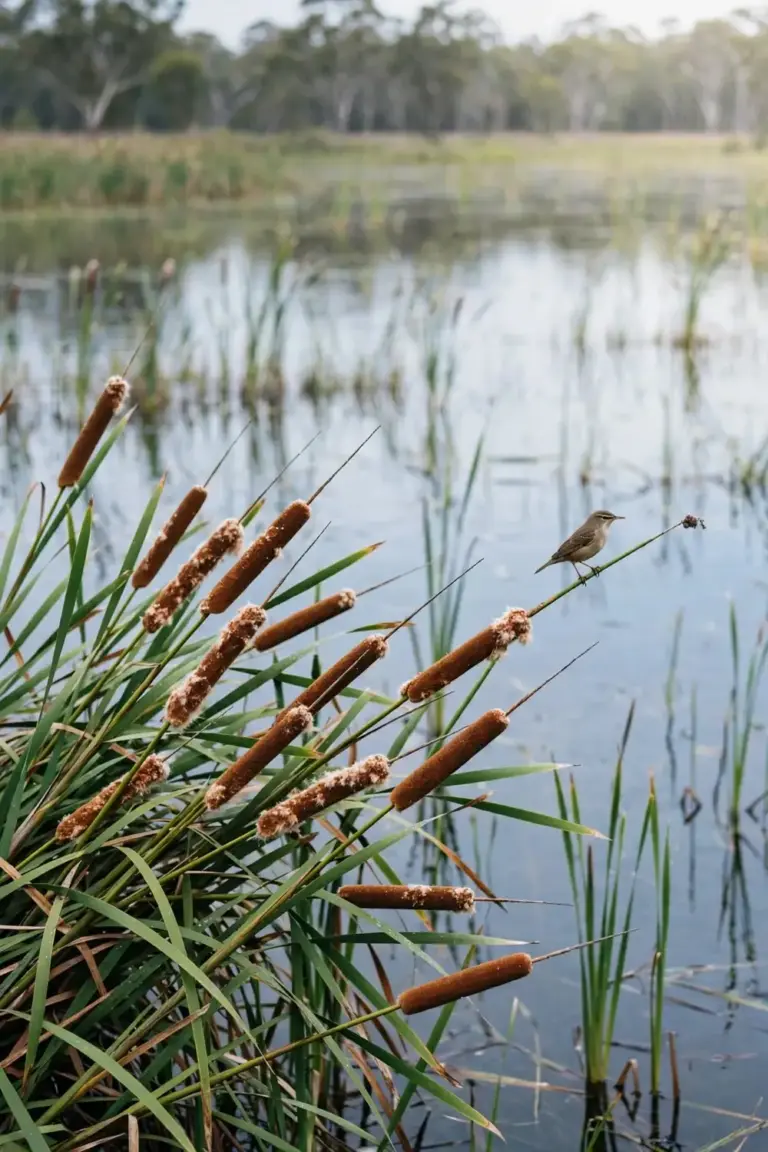
The cultural value runs deep. Cumbungi is an integral part of Indigenous food culture along the Murray Darling river systems, and its use goes back tens of thousands of years. Young shoots were eaten raw, roots were steamed or roasted, and leaves supplied string fiber and weaving material. The first written reference dates to 1836, when Major Thomas Mitchell described the plant near Lake Cargelligo on the Lachlan River in New South Wales. That record comes from the Slow Food Foundation’s cumbungi entry, and it matches the Noongar food use recorded in the Western Australian weed journal.
The conservation point follows directly. Weeds Australia states that cumbungi is part of the natural ecosystem and widely distributed throughout all states in Australia, so aiming at total eradication is both ecologically undesirable and impractical. Weeds Australia’s cumbungi profile gives that statement as the frame for all control planning, and it requires the gardener to consider whether the stand in question is part of the natural ecosystem before planning any control. A stand that belongs in the wetland stays, and the work goes into the places where it does not belong.
8. What to Do About Bullrush on Your Land
The decision starts with identification, and it ends with a method matched to the place. The table below gives the decision in one view, and the paragraphs after it fill in the method for each row.
| Situation | Verdict | First Move |
|---|---|---|
| Native cumbungi in a natural wetland or swamp | Native habitat, not a weed | Leave it alone and monitor once a year |
| Native cumbungi choking a dam, drain, or channel | Native plant behaving as a weed | Contain it, cut it, and cut the nutrient load |
| Typha latifolia anywhere outside a garden | Introduced weed | Identify with certainty, check permits, then remove it |
| Any bullrush in a small garden pond | Contained planting, not a weed yet | Grow it in a pot with no drainage holes, or remove it |
| Suspected stand where the four clues disagree | Unknown, do not act yet | Photograph all four clues and send them to the herbarium |
For a native stand in a natural wetland, the first move is no move at all. Monitor the stand once a year, photograph the same viewpoint each time, and act only when the stand starts to close open water that other wetland plants and animals need. A native stand that holds its ground is doing wetland work, and removal would trade habitat for open mud.
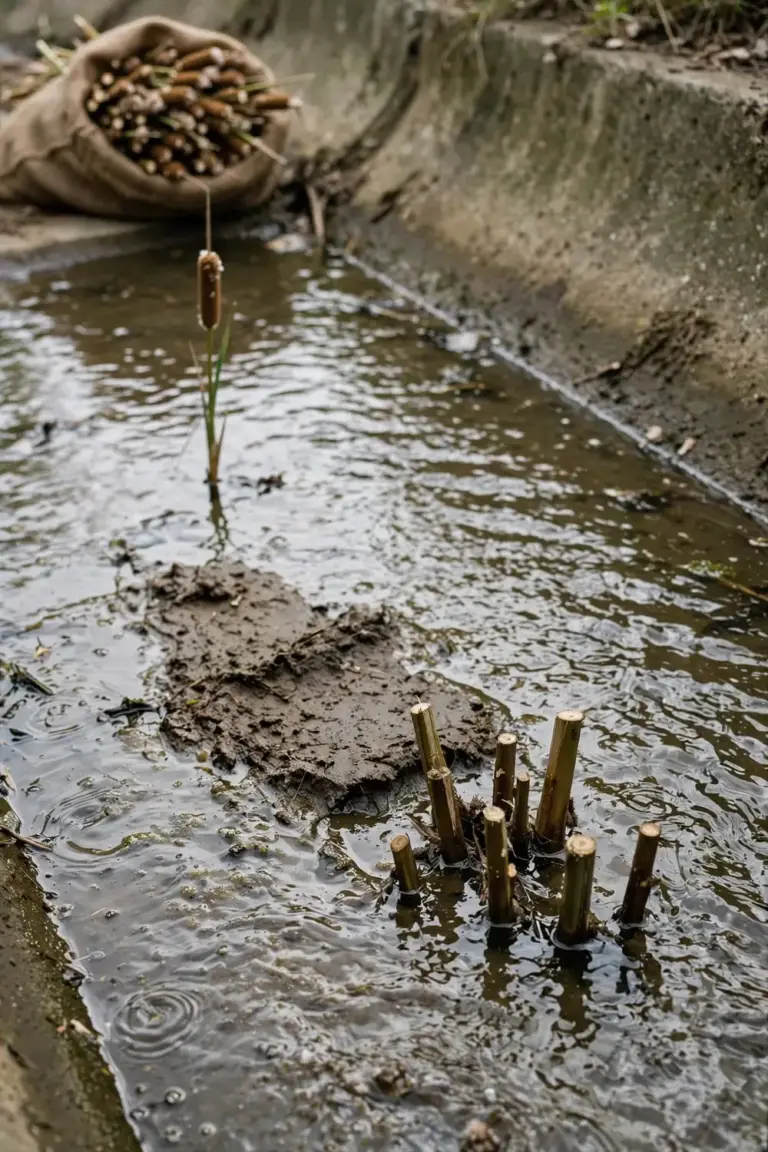
For a native stand that chokes a dam, drain, or channel, the method is physical first. The Tasmanian Government’s coastal weeds booklet gives two physical methods for Typha latifolia, and both apply to native stands in drains as well. Cutting stems more than 15 cm below water level in spring causes decay, because the cut stem floods and rots. Hand-pulling works when you remove all the rhizome, because any fragment left in the mud regrows. The Tasmanian Government’s coastal weeds booklet gives both methods, and it pairs them with the identification warning that governs the whole job.
For an introduced stand, the method is the same, and the urgency is higher. Remove the whole rhizome mat, bag the seed heads before they burst, and dispose of the material where it cannot wash into water. Never dump rhizome fragments or seed heads in green waste, on a creek bank, or in a compost heap, because fragments regrow and seed rides water. Check the permit position first, because waterway work and herbicide use near water often need approval, and the approval decides whether a licensed operator must do the job. Organic weed control methods cover the chemical-free side of the work, and they set the baseline that any herbicide use near water must clear.
For a small garden pond, containment is the whole answer. Grow bullrush in a pot with no drainage holes, sunk into the pond, and lift the pot once a year to cut the rhizomes back inside the pot. A plant that escapes the pot fills the pond within two seasons, and a plant that escapes the pond reaches the stormwater system. The honest rule is that a pond plant with no root barrier is a future removal job, and the pot is cheaper than the removal.
9. Frequently Asked Questions
Bullrush is a weed in Australia when it grows where people do not want it, or when it crowds out other life. Two native species, Typha domingensis and Typha orientalis, are native plants that turn weedy in dams, drains, and channels. One introduced species, Typha latifolia, is a weed by origin and behavior. The verdict always depends on which species you have and where it grows.
Cumbungi is native to Australia, and two of the three species prove it. Typha domingensis is native to all Australian states and territories. Typha orientalis is native to eastern Australia, and a 2015 finding concluded it is also native to Western Australia. Typha latifolia is the exception, because it is an introduced species from temperate Eurasia, North Africa, and North America.
Use four clues together, and act only when two or more agree. Native cumbungi stays green in winter, while Typha latifolia dies down and collapses into brown thatch that you can spot from the bank. Native leaves are bi-convex in cross-section, while Typha latifolia leaves are almost flat. Native spikes run cinnamon brown. Typha latifolia spikes run dark red-brown to black-brown. Photograph all four clues and send them to your state herbarium when they disagree.
Remove bullrush from your dam when it blocks stock access, chokes the outlet, or fills the water to the point where the dam stops working. Leave it when a fringe stand stabilises the bank and filters runoff. Cut stems more than 15 cm below water level in spring, or hand-pull with all rhizome attached. Bag the seed heads first, and never dump fragments where water can carry them.
You can plant bullrush in a garden pond when you contain the roots. Grow it in a pot with no drainage holes, sunk into the pond, and lift the pot once a year to cut the rhizomes back inside the pot. Never plant it in an open bed beside a waterway, and never plant Typha latifolia, because the introduced species escapes and seeds the catchment.
10. Start With the Name, Then Decide
Bullrush is a weed or a native depending on the species and the place, and the name on the label decides the answer. Typha domingensis and Typha orientalis are native Australians, and they belong in natural wetlands. Typha latifolia is an introduced species, and it behaves as a weed wherever it escapes. The same stand can hold either verdict, and the gardener earns the right verdict by checking winter behavior, leaf shape, spike color, and the gap between the spikes.
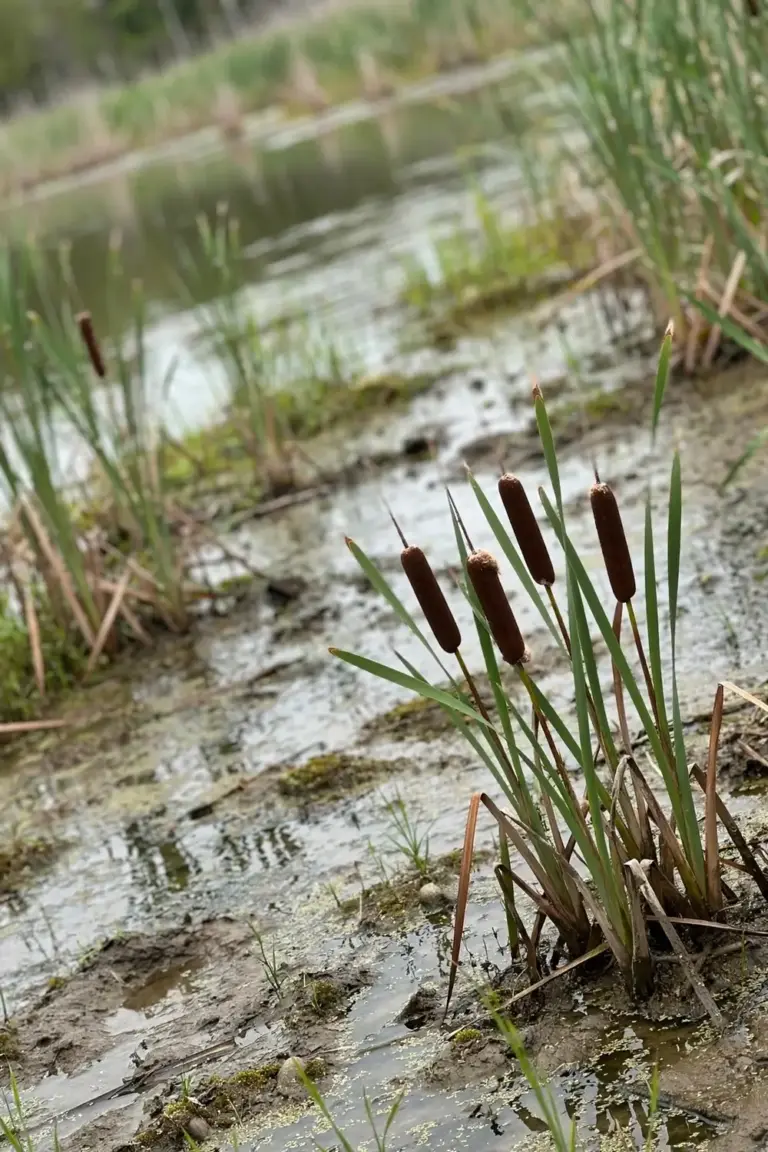
Start with the name, then decide. Photograph the four clues, confirm the species, and match the method to the place. Leave the native stand that holds a wetland together. Contain the native stand that chokes a drain. Remove the introduced stand with certainty, with permits, and with all rhizome attached. That sequence keeps the wetland intact and the dam working, and it is the whole job.