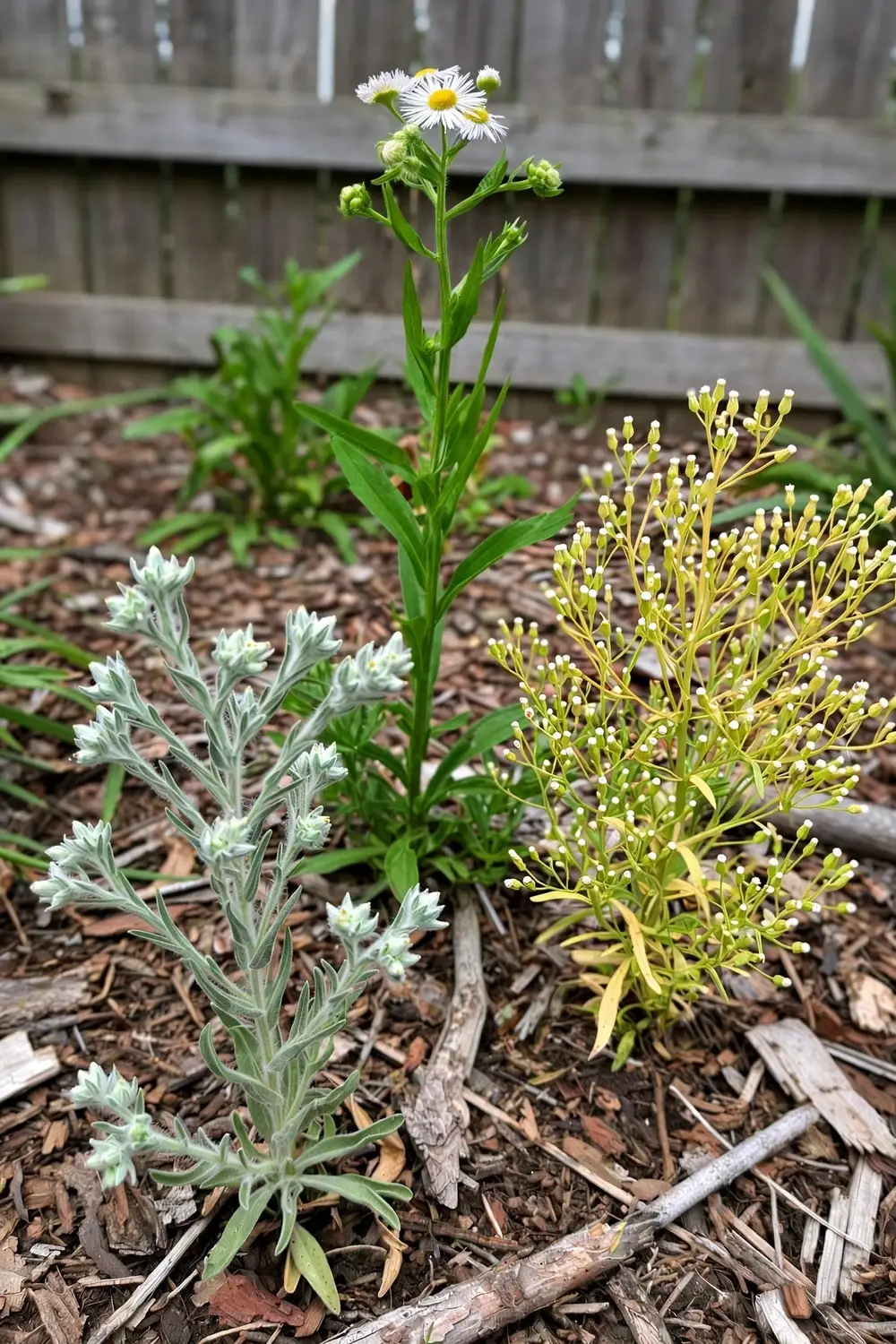

Three fleabane species grow in Australian gardens, and the one in front of you is almost certainly flaxleaf fleabane. Canadian fleabane is rare in Australia. One fleabane plant produces as many as 110,000 wind-dispersed seeds, so naming it before you pull it decides whether the patch comes back.
Fleabane is a common name, not one plant. In Australia it covers three species in the genus Conyza, also called Erigeron: flaxleaf fleabane (Conyza bonariensis), tall fleabane (Conyza sumatrensis), and Canadian fleabane (Conyza canadensis). All three are upright annual herbs native to the Americas. All three spread the same way, through wind-borne seed.
The rest of this page is 8 moves, from the 4 field clues that name the plant to the pull, the mulch, and the bag that keeps its seed out of your soil. Pull before seeding. Mulch the bare patch. Bag every seed head.
1. Name the Plant in Front of You Before You Pull It
Name the fleabane before you pull it, because the three species look alike at a glance and the name sets the plan. Four field clues separate them: leaf color, branching, stem count, and flowerhead shape. Check all four on the same plant.
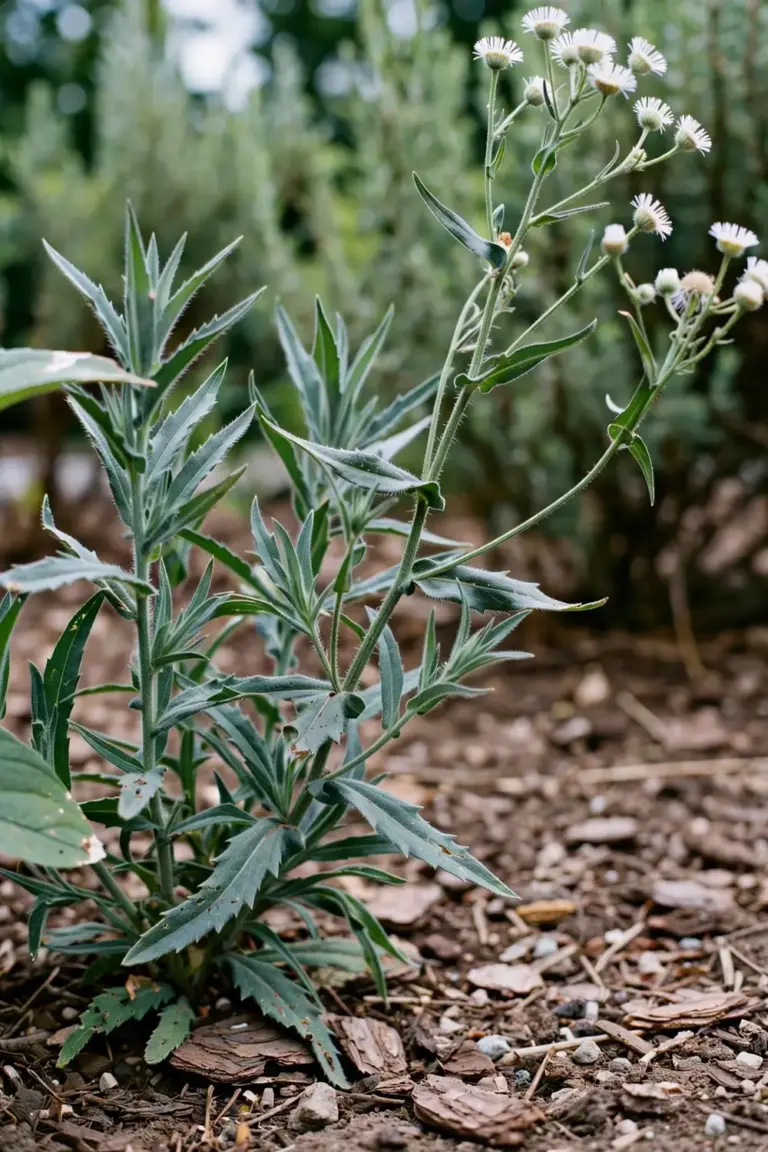
Flaxleaf fleabane is the most common and widespread of the three Conyza species in Australia, and it grows in all cropping regions of the country, according to the WeedSmart fleabane profile. Tall fleabane is less common than flaxleaf fleabane. Canadian fleabane is rare in Australia. That ranking is the starting point for every garden ID: assume flaxleaf until the clues prove otherwise.
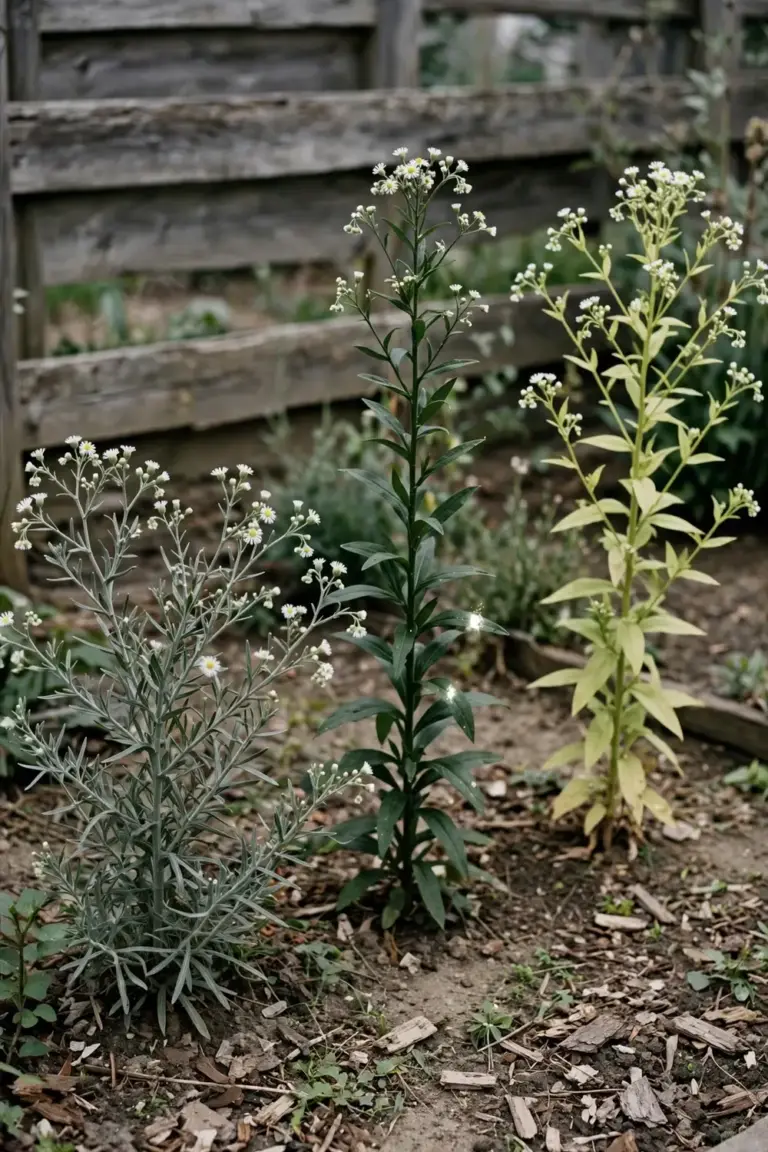
Leaf color is the fastest clue: flaxleaf leaves are blueish green, almost gray-green, on a highly branched plant, while tall fleabane leaves run darker green and larger than flaxleaf leaves, and Canadian fleabane leaves read lighter green than flaxleaf leaves. Hold a leaf against the sky in daylight. The color difference reads clearly on a fresh leaf, and it fades on a wilted one, so check a plant that is still standing.
Branching and stem count come next: flaxleaf branches from the base and carries many stems, tall fleabane grows one upright stem, and Canadian fleabane grows one very hairy stem. Count the stems at the base. Many stems from the base point to flaxleaf. One stem points to tall or Canadian, and leaf color plus flowerhead shape settle which one.
Flowerhead shape is the fourth clue. Tall fleabane flowerheads are pyramid-shaped. Flaxleaf flowerheads form a branched, candelabra-shaped cluster. Canadian fleabane carries a narrowly cylindrical head. Stand back and look at the whole top of the plant. The pyramid of tall fleabane reads as a triangle. The flaxleaf head reads as a flat-topped spray. The Canadian head reads as a narrow column.
Write the name down before you start pulling, because a plant pulled without a name still drops seed if its heads are open, and a plant named wrong gets the wrong follow-up. The next three sections give each species its full profile, with the measurements that confirm the ID.
2. Flaxleaf Fleabane: The One You Will Most Likely Find
Flaxleaf fleabane is the fleabane in most Australian gardens, and it is the one to learn first. It grows up to 1 m tall, with gray-green leaves and stems that branch from the base. Its flowers are small and whitish, and they appear for most of the year.
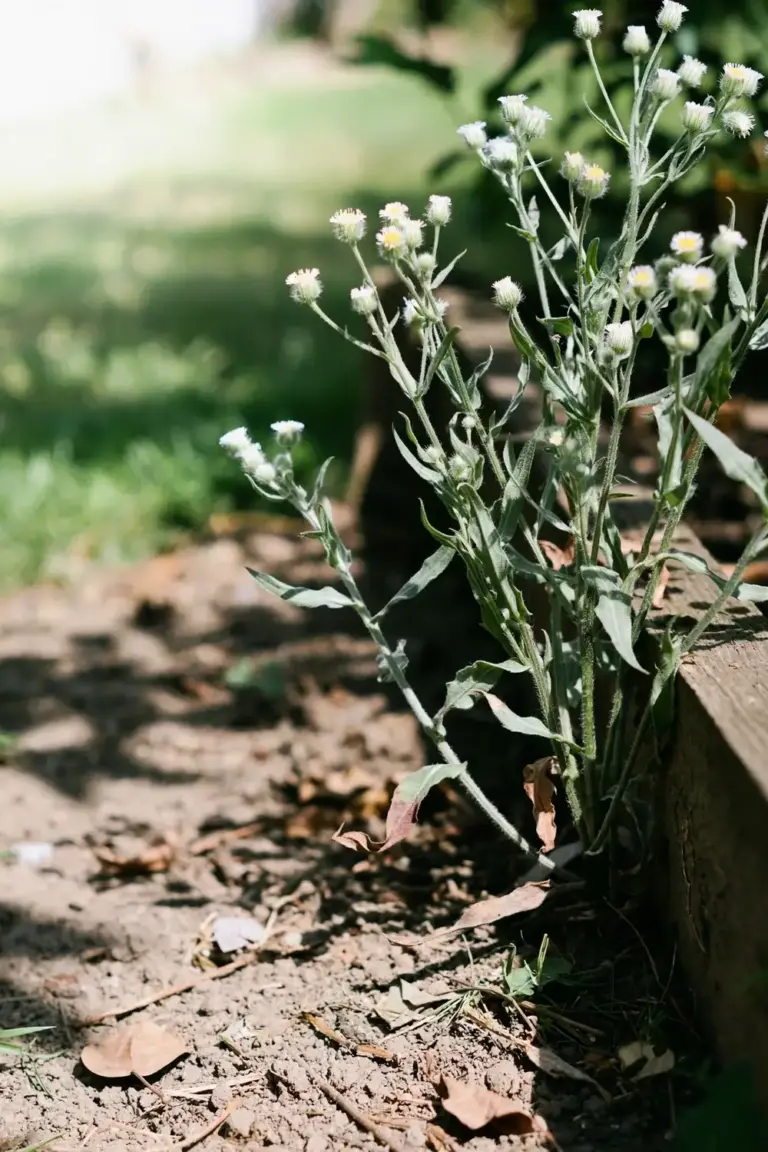
The New South Wales weed profile gives the measurements that confirm a flaxleaf ID: leaves with toothed margins 4 to 9 cm long and 5 to 15 mm wide, on a plant up to 1 m tall that is gray-green overall, very hairy, and branched from the base, according to the NSW WeedWise fleabane profile. Measure one leaf with a ruler. A leaf inside that range, on a branched, gray-green, very hairy plant, is flaxleaf fleabane. A leaf far outside that range points to tall fleabane instead.
Flaxleaf flowers for most of the year, which is why it keeps appearing in beds that looked clean a month ago. The plant sets seed across a long season, and each plant produces over 100,000 seeds, according to the same NSW WeedWise profile. A single plant left to flower seeds the whole bed. A single plant pulled before its heads open seeds nothing.
Flaxleaf also resists control once it is established. Its deep taproot lets it reshoot after disturbance, and plants that look dead after a rough pull can regrow from the root, according to the Western Australian agriculture department’s fleabane guide. Pull the whole root. A stem snapped at soil level leaves the taproot in place, and the taproot grows back.
Flaxleaf is the most common species in New South Wales, and it is the most common and widespread of the three Conyza species across Australia, according to the WeedSmart fleabane profile. Learn its gray-green leaves, its branching base, and its small whitish flowers. Every other fleabane ID starts by ruling flaxleaf out.
3. Tall Fleabane: The 2 m Plant With the Pyramid Head
Tall fleabane is the big one, and its height gives it away before you get close. It grows a single upright stem up to 2 m tall, with dark green leaves and creamy colored flowers. A fleabane taller than your shoulder is tall fleabane until the other clues prove otherwise.
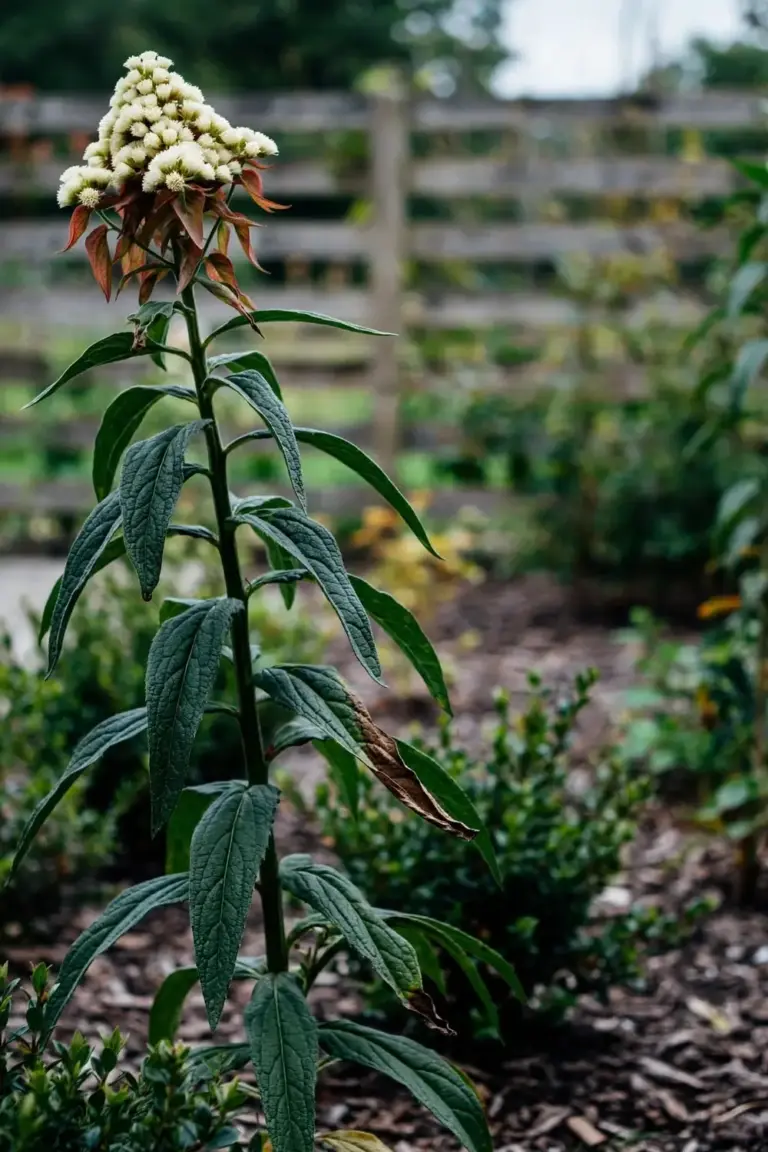
The NSW profile describes tall fleabane as dark green overall and hairy, with a single upright stem up to 2 m tall and creamy colored flowers with reddish brown bracts, according to the NSW WeedWise fleabane profile. The bracts are the small leaf-like scales that cup each flowerhead. On tall fleabane they carry a reddish brown tint, while on flaxleaf fleabane they stay pale. Look at the bracts with a hand lens. That tint is the surest small-scale clue.
Tall fleabane flowerheads are pyramid-shaped, according to the WeedSmart fleabane profile. The head widens toward the base and narrows toward the tip, like a pyramid. Flaxleaf heads spread into a branched, flat-topped spray. Canadian heads stay narrow and cylindrical. The shape reads best from a step back, with the whole top of the plant in view.
Tall fleabane leaves are darker green and larger than flaxleaf leaves, according to the same WeedSmart profile. The color difference holds even on a cloudy day. Flaxleaf leaves read gray-green against the soil. Tall fleabane leaves read deep green. A plant with one stem, deep green leaves, and a pyramid head is tall fleabane.
Tall fleabane is less common than flaxleaf fleabane, according to the same WeedSmart profile. It still appears in gardens, roadsides, and waste ground across the country. Treat it the same way as flaxleaf for removal: pull before seeding, take the whole root, bag the heads. The ID matters because the plant is taller, harder to pull, and easier to spot late, when its heads are already open.
4. Canadian Fleabane: The Rare One With the Narrow Head
Canadian fleabane is the namesake of the search, and it is the least likely fleabane in an Australian garden. It is rare in Australia, according to the WeedSmart fleabane profile. Most gardeners who think they have Canadian fleabane have flaxleaf fleabane instead.
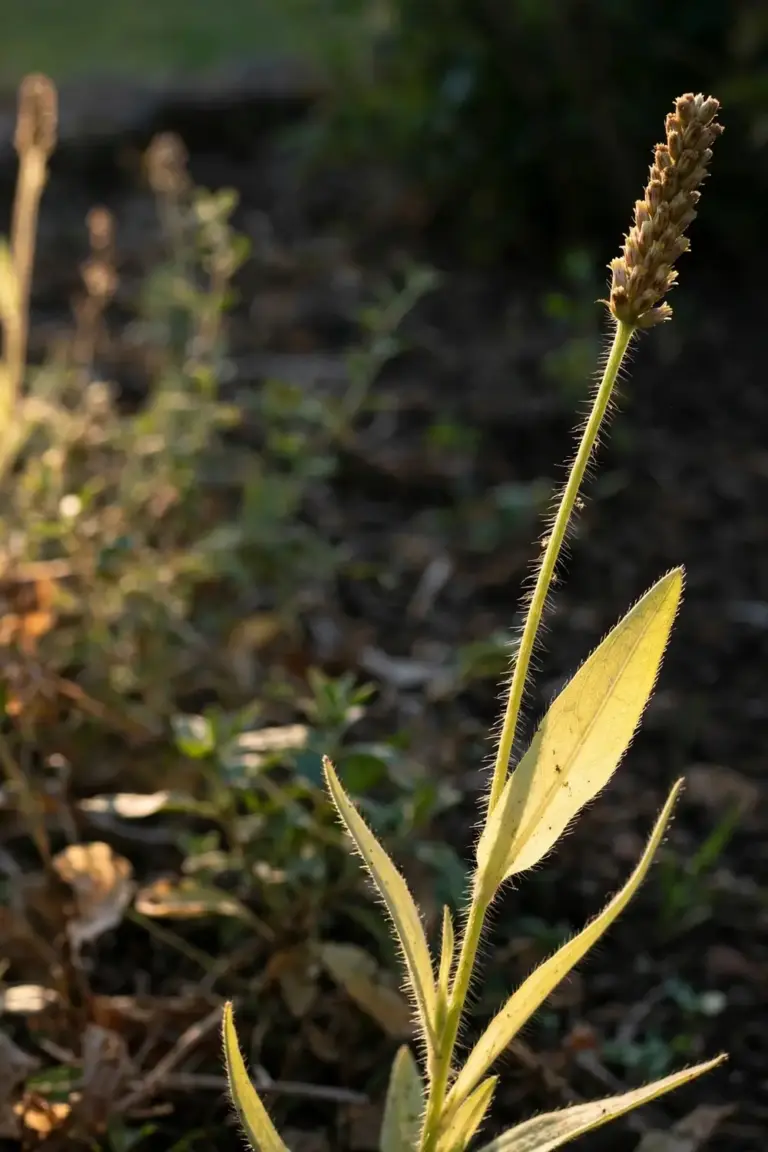
Canadian fleabane is light yellow-green overall, with scattered hairs, a single very hairy stem, and small brownish flowers, according to the NSW WeedWise fleabane profile. The light yellow-green color is the first clue. Flaxleaf reads gray-green. Tall reads dark green. Canadian reads pale yellow-green, like a plant grown in poor light. The color holds across the whole plant, leaves and stem alike.
The stem is the second clue. Canadian fleabane grows a single very hairy stem. Run a finger along the stem. The hairs feel dense and rough, denser than the scattered hairs on a flaxleaf stem. Tall fleabane also grows one stem, so the stem count alone does not separate Canadian from tall. The leaf color and the flowerhead shape do that work.
The flowerhead is the third clue. Canadian fleabane carries a narrowly cylindrical head, narrower than the pyramid of tall fleabane and narrower than the branched spray of flaxleaf fleabane. The head reads as a slim column. Its flowers are small and brownish, not whitish like flaxleaf or creamy like tall. Check the head shape on a plant with open flowers. A closed bud tells less than an open head.
Canadian fleabane is also called horseweed and mare’s tail. Those names describe the same plant, Conyza canadensis, also called Erigeron canadensis. Nurseries and garden centers sometimes use one name while field guides use another, so check the botanical name before following any advice written for a different species. A Canadian fleabane ID changes nothing about removal: pull before seeding, take the whole root, bag the heads. It changes the expectation. Canadian fleabane is rare, so a garden full of fleabane is almost never a Canadian fleabane problem.
5. Compare the Three Fleabanes Side by Side
Compare the three species on one table before you decide which one stands in your bed. The table below carries the field clues from the three sections above, with the source behind each row. Use it with a live plant in front of you, not from memory.
| Clue | Flaxleaf Fleabane | Tall Fleabane | Canadian Fleabane |
|---|---|---|---|
| Botanical name | Conyza bonariensis | Conyza sumatrensis | Conyza canadensis |
| How common in Australia | Most common and widespread | Less common than flaxleaf | Rare |
| Height | Up to 1 m | Up to 2 m | Data not available |
| Leaf color | Gray-green, blueish green | Darker green, larger leaves | Light yellow-green |
| Stems | Many, branched from the base | One upright stem | One very hairy stem |
| Flowers | Small, whitish, most of the year | Creamy, with reddish brown bracts | Small, brownish |
| Flowerhead shape | Branched, candelabra spray | Pyramid-shaped | Narrowly cylindrical |
Three notes keep the table honest. First, the height for Canadian fleabane is data not available from the Australian sources used here, so the table leaves it blank rather than guessing. Second, six Conyza species have naturalised in New South Wales, and the three most common weedy species in the state are the three in this table, according to the NSW WeedWise fleabane profile. A plant that matches none of the three rows may be one of the other three, and a herbarium ID settles it. Third, the common names shift: tall fleabane is also called Conyza albida in some sources, flaxleaf fleabane is also called hairy fleabane, and Canadian fleabane is also called horseweed. The botanical name is the stable anchor.
Work the table top to bottom. Start with how common the species is, then check height, leaf color, stems, flowers, and head shape. Four clues for flaxleaf against one for tall means flaxleaf. Four for tall against one for flaxleaf means tall. A plant that matches Canadian on leaf color, stem hair, and head shape is Canadian, and it deserves a second look, because Canadian fleabane is rare.
6. Pull Fleabane Before It Sets Seed
Pull fleabane before it sets seed, because one plant left to flower seeds the whole bed. Each plant produces as many as 110,000 seeds, according to the WeedSmart fleabane profile. The seeds ride the wind. A plant that flowers on Monday seeds the neighbor’s bed by Friday.
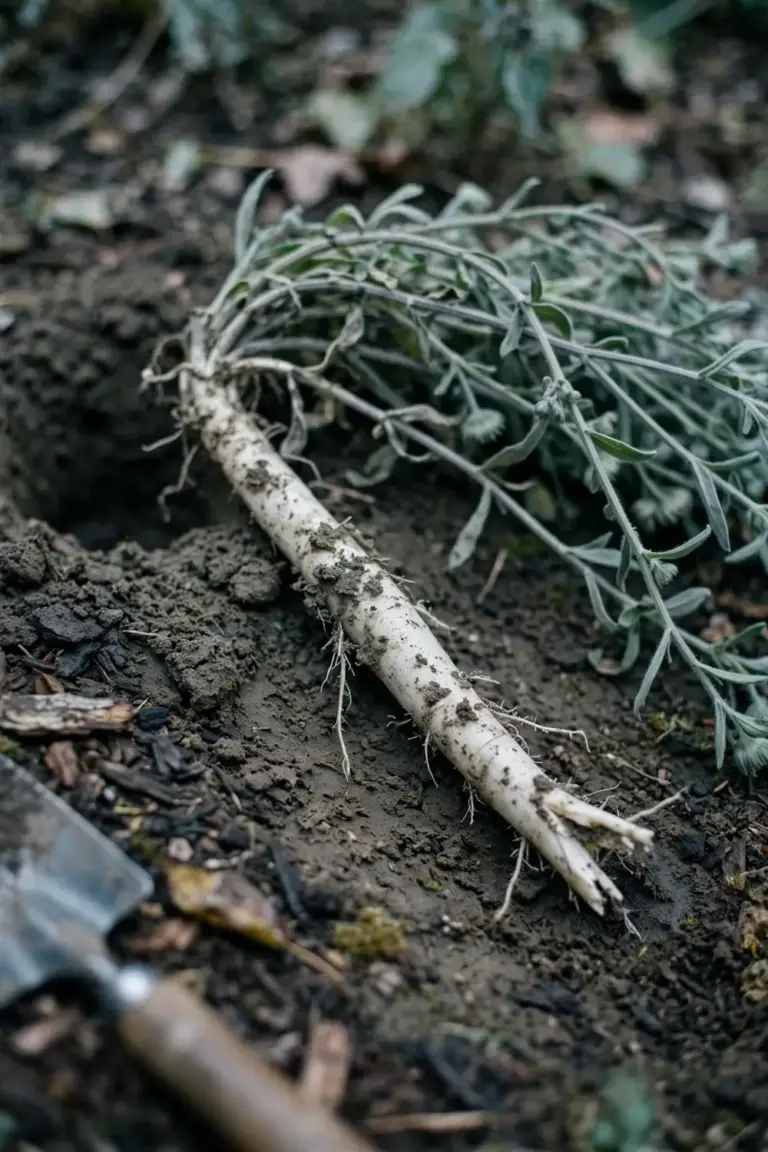
I have learned that the fleabane I pull before its heads open never comes back in the same spot, while the one I leave to flower seeds the whole bed.
Pull after rain or after a deep watering, when the soil is soft. Grip the stem at the base, low against the soil. Pull slow and straight up, with steady pressure. Feel for the taproot. A clean pull brings the whole root out, white and forked, with soil clinging to it. A snapped stem leaves the taproot behind, and the taproot reshoots, according to the Western Australian agriculture department’s fleabane guide. Check the hole. A root left in the hole grows back.
Young plants pull easiest. A rosette with 4 to 6 leaves comes out with one pull. A plant at knee height needs two hands and a slow pull. A plant at full height with open heads needs a bag first: slip a plastic bag over the head, tie it at the stem, then pull. The bag catches the seed that would otherwise shake loose during the pull. Bagging before pulling is the single move that stops a removal job from becoming a seeding job.
Work the patch in one pass. Pull every fleabane in the bed, not just the biggest one. Small plants flower fast once the big ones are gone, because the light and water they were competing for are suddenly free. Check the patch again 2 weeks later. Fleabane emerges through the year, and a second flush follows the first pull, according to the GRDC paddock practices guide on fleabane control. The second pass takes 10 minutes. The first pass took an hour. Skip the second pass and the patch returns.
Do not mow fleabane as a control method. Mowing cuts the top and leaves the taproot, and the plant reshoots. Mowing a plant with open heads shakes seed across the bed. Mowing a plant without heads still leaves the root. Pulling is the control that works in a garden bed. The site’s organic weed control guide covers the same pull-first method for other garden weeds, with the same rule: take the whole root, and never let a pulled weed flower on the compost pile.
Herbicide is not part of this article. Fleabane has confirmed glyphosate resistance in some populations, though the resistance status varies, with many samples from non-cropping areas still well controlled by glyphosate, according to the same GRDC guide. Resistance makes chemical control unreliable without a label, a rate, and a local reading of the population. Pulling works on every population, resistant or not. Pull first. Treat herbicide as a separate decision for a separate article, not as the default garden move.
7. Mulch the Bare Patch So Seeds Stay Dormant
Mulch the bare patch after pulling, because bare soil is an open invitation to the next flush of fleabane seed. Fleabane seed germinates on or near the soil surface, where light and warmth reach it. A mulch layer blocks the light, holds the surface cool, and keeps the seed dormant. The pulled patch without mulch regrows fleabane. The pulled patch with mulch grows far less.
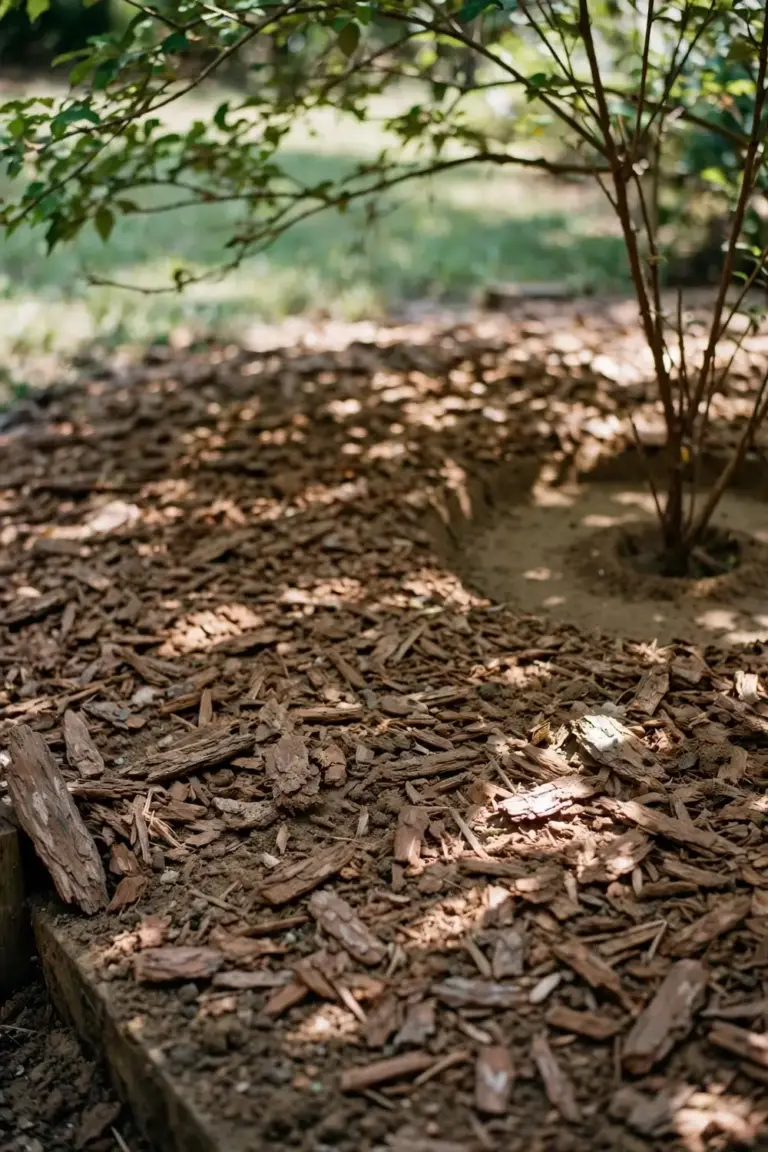
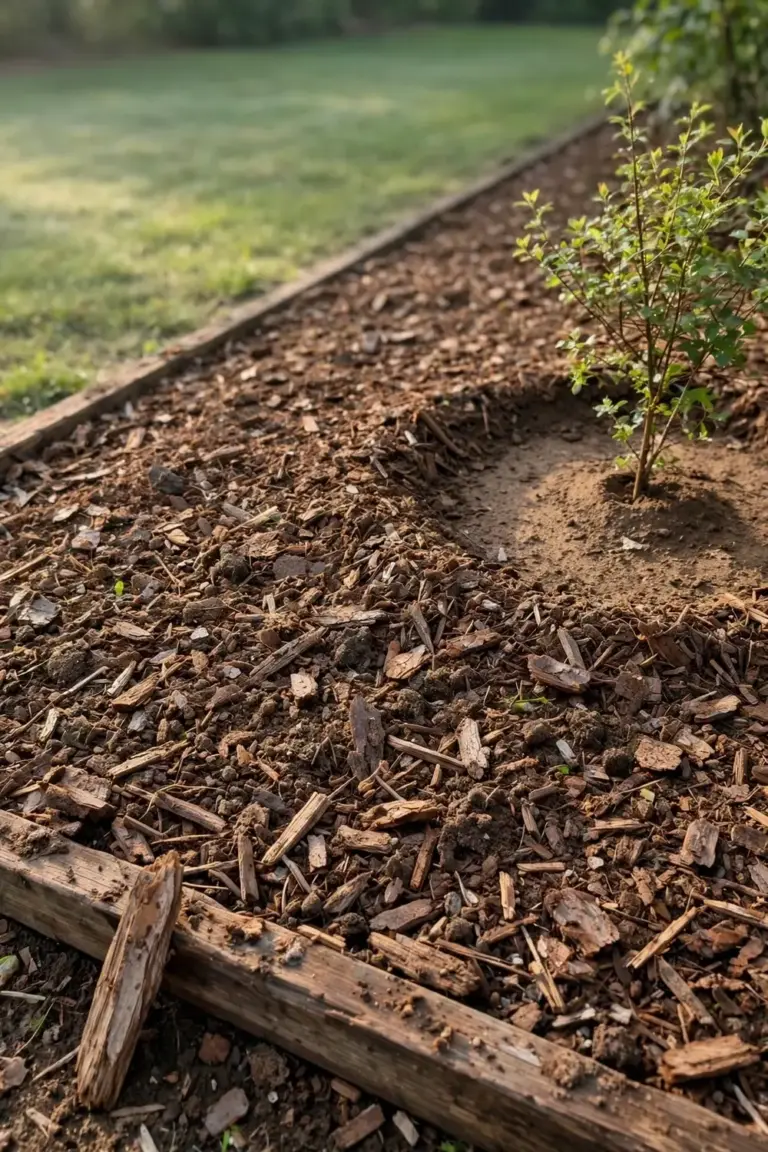
Lay mulch 7 to 10 cm thick over the pulled patch. That depth blocks light from reaching the soil surface. A thinner layer lets light through and lets seed germinate between the chips. A thicker layer smothers the soil and starves the roots of air. The 7 to 10 cm band is the working rule for bark and wood-chip mulch in garden beds. Spread it evenly, edge to edge, with no bare gaps. A gap the size of a hand grows fleabane.
Keep mulch 5 cm clear of the stems of the plants you want to keep. Mulch piled against a stem holds moisture against the bark and invites rot. The gap is a ring, not a mound. Check the ring after rain. Mulch slides downhill and fills the ring, and the ring needs clearing again.
Mulch does not kill established fleabane. A plant already growing pushes through a mulch layer and flowers above it. Pull first, then mulch. Mulch does not kill seed either. It keeps seed dormant by blocking light. Seed buried under mulch stays alive, and seed buried in soil persists longer than seed left on the surface, according to the Western Australian agriculture department’s fleabane guide. The mulch buys time. It does not erase the seed bank. Expect to pull a few seedlings through the mulch in the first season, and fewer in the second.
Choose a mulch that suits the bed. Bark chips suit shrub beds and paths. Straw suits vegetable beds, where it breaks down fast and feeds the soil. Living groundcover suits beds that stay planted year-round. The site’s mulching guide covers the mulch types, the depths, and the trade-offs for each bed type. The site’s soil health guide covers the longer job: building soil that grows dense, competitive planting instead of bare ground that grows fleabane.
Top the mulch up once a season. Bark chips break down and thin out. Straw breaks down faster. A mulch layer that thins below 5 cm lets light through again, and fleabane seed germinates in the gaps. Rake the old mulch level, add fresh mulch to 7 to 10 cm, and keep the stem gap clear. The top-up takes 20 minutes on a standard bed. It is the cheapest fleabane control available, because it prevents the germination that pulling alone cannot stop.
8. Bag the Seed Heads and Keep Them Out of Green Waste
Bag every fleabane seed head, because one head in the green waste bin seeds the next garden it reaches. A fleabane plant produces as many as 110,000 seeds, according to the WeedSmart fleabane profile. The seeds are light, wind-borne, and built to travel. A head tossed on the compost pile dries, opens, and releases seed into the compost. A head tossed in the green waste bin rides to the next site and releases seed there.
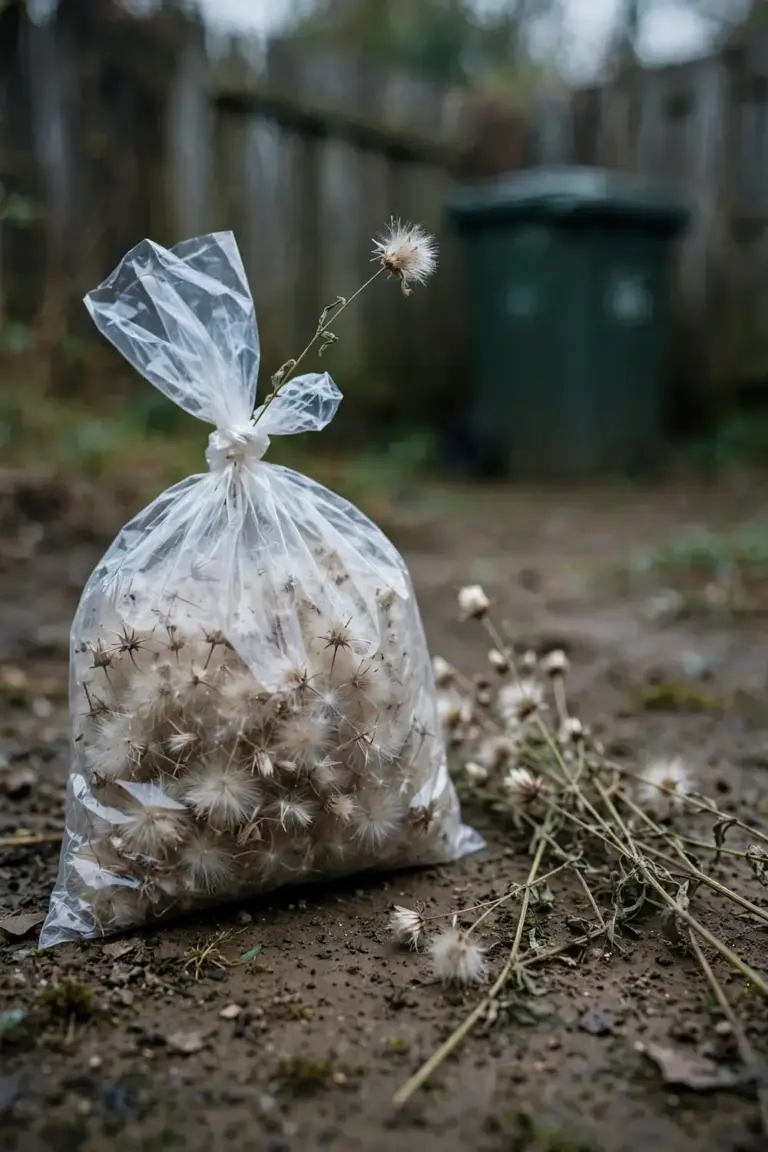
Bag the heads at the plant. Carry a plastic bag on every fleabane pull. Slip the bag over each open head before you pull the stem. Tie the bag shut at the stem. Pull the plant. Drop the bagged head into a second bag. Seal the second bag and put it in the general waste bin, not the green waste bin and not the compost pile. General waste goes to landfill, where the seed is buried. Green waste goes to a composting site, where the seed may survive and spread.
Do not compost fleabane with seed heads. Home compost piles rarely reach the sustained heat that kills weed seed. A pile that reads warm on top stays cool in the middle, and seed in the cool middle survives. A pile turned twice still leaves cool pockets. The safe rule is simple: seed heads never enter the compost. Stems and leaves without heads can compost. Heads go in the bag and in the bin.
Do not dump pulled fleabane on a roadside, a vacant block, or a bushland edge. Dumping moves the weed from your garden to someone else’s land, and fleabane establishes fast on bare, disturbed ground. The plant you dump flowers, seeds, and starts a new patch. The bag-and-bin rule exists to stop exactly that move. Pull it, bag it, bin it, and the patch ends with you.
Check the tools after the job. Seed clings to gloves, boots, shears, and trowels. Brush the tools clean before you walk to the next bed. Wash the gloves. Shake the boots. A handful of seed carried on a boot sole seeds the lawn on the way back to the shed. The clean-up takes 5 minutes. It is part of the removal, not an extra.
Plan the follow-up before you finish. Check the patch again in 2 weeks, then again in 6 weeks. Pull every seedling you find. Each seedling pulled before it flowers is one plant that never seeds. The patch shrinks with each pass. The site’s fall garden bed prep guide covers the seasonal version of the same job: clearing beds, mulching, and closing the gaps where weeds establish over winter. A bed that stays covered stays clean. A bed left bare grows fleabane.
Frequently Asked Questions
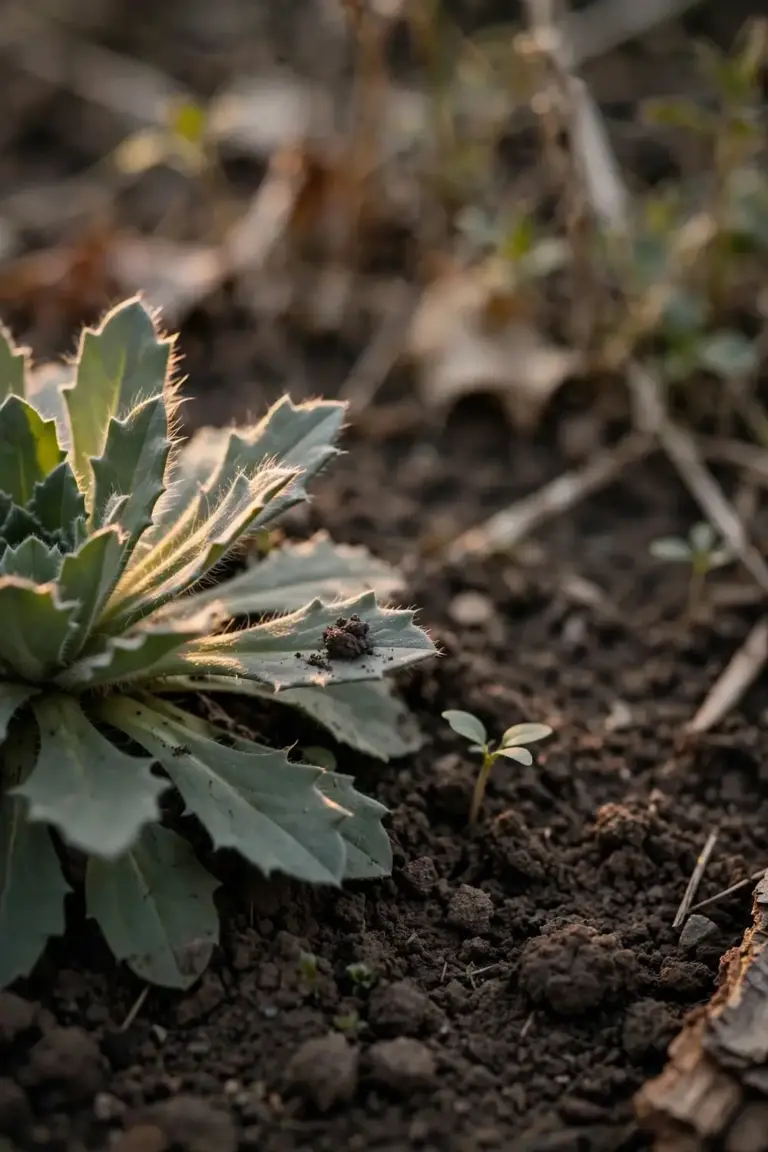
Probably not. Canadian fleabane is rare in Australia, while flaxleaf fleabane is the most common and widespread of the three Conyza species. Check leaf color, stem count, and flowerhead shape against the table above. A gray-green, branched plant with whitish flowers is flaxleaf. A pale yellow-green plant with one very hairy stem and a narrow head is Canadian.
Compost stems and leaves without heads. Never compost heads. Home compost piles rarely reach sustained heat through the whole pile, and seed in a cool pocket survives. Bag every head, seal the bag, and put it in the general waste bin. The bag-and-bin rule stops one pulled plant from seeding the next site its waste reaches.
No. Mowing cuts the top and leaves the taproot, and the plant reshoots. Mowing a plant with open heads shakes seed across the bed. Mowing a plant without heads still leaves the root to regrow. Pulling takes the whole root and stops the plant. Mow the lawn around the patch, and pull the fleabane inside the bed.
Mulch suppresses germination, and it does not kill established plants. A plant already growing pushes through a mulch layer and flowers above it. Pull first, then lay mulch 7 to 10 cm thick over the bare patch. The mulch blocks light and keeps seed dormant. Top it up once a season so it never thins below 5 cm.
Keep the lawn dense, and pull rosettes before they flower. Bare patches in a lawn invite fleabane seed, and a thin lawn leaves the soil surface open to light. Overseed bare patches, water the new seed in, and mow high enough that the grass shades the soil. Pull any fleabane rosette the moment it appears, before its heads open.
9. Pull the Right Fleabane This Weekend
Pull the right fleabane this weekend, and the patch shrinks with every pass. Name the plant first. Flaxleaf is the likely one. Tall is the big one. Canadian is the rare one. Pull before seeding, take the whole root, bag the heads, and mulch the bare patch.
Walk the garden with a bag in one hand and the table from this article in mind. Check leaf color, stem count, and head shape on each plant. Pull the flaxleaf, the tall, and the Canadian the same way. The name tells you what you face. The pull, the mulch, and the bag do the work. Start with the plant nearest the door, and work outward until the bed is clean.