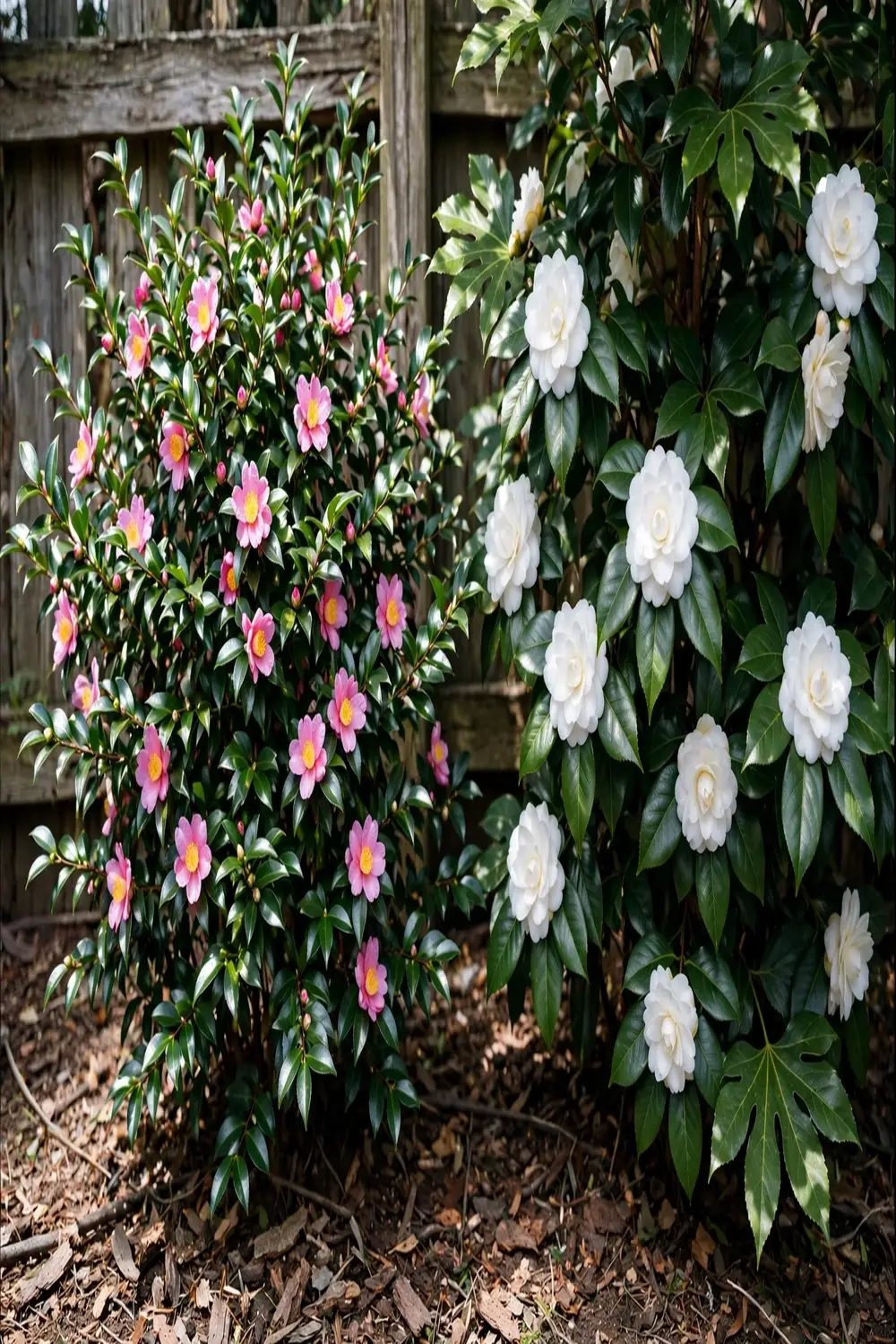

Pick sasanqua for sun, a hedge, and early flowers. Pick japonica for shade, a feature shrub, and late flowers. Those 2 species cover nearly every garden camellia, and the choice made before you buy decides whether the plant flowers for decades or drops its buds every year.
I have learned that the camellia I plant for the shade it gets beats the camellia I plant for the flower I want. The rest of this page runs the full decision: two profiles, one head-to-head table, a site check, a job match, one shared care section, named picks, four mistakes, and the warning signs before buds drop.
1. Pick by Site First, Not by Flower Color
Your site picks the species. Sun hours, frost exposure, soil pH, and space come first. Flower color comes last.
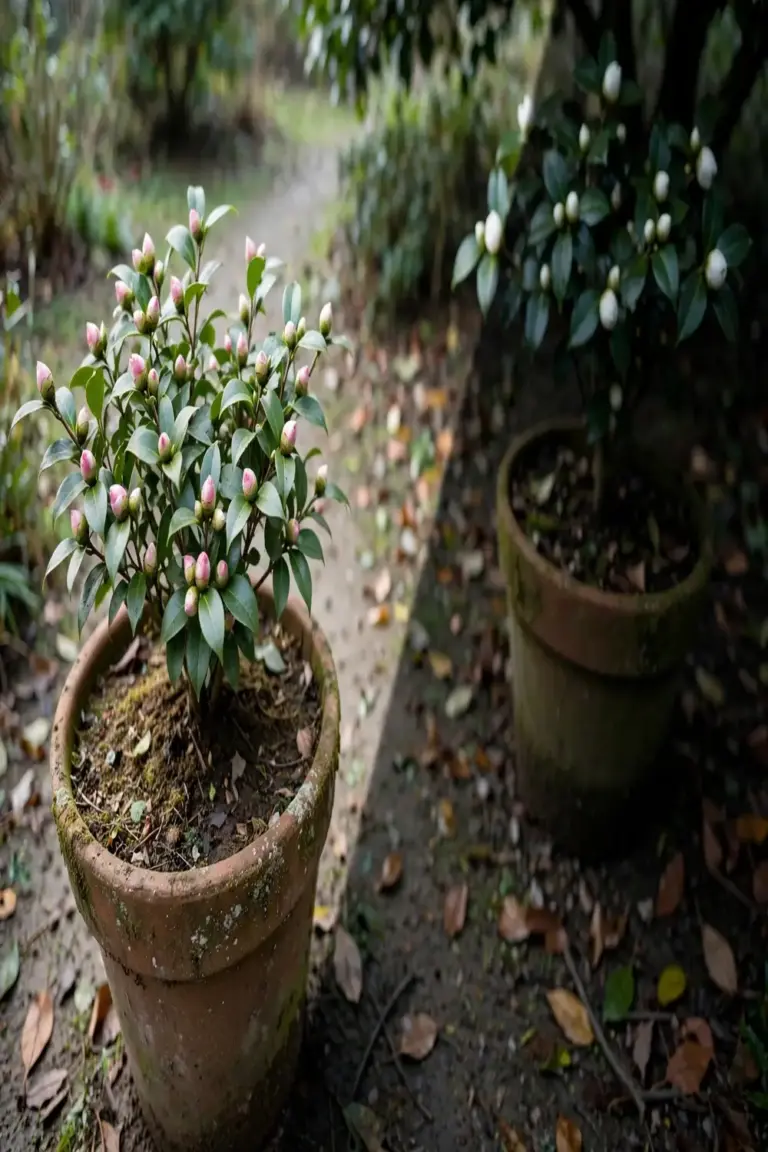
Sasanqua suits the sunny side. It flowers from late summer into early winter, takes more sun than japonica, and clips into a hedge. Japonica suits the shaded side. It flowers from winter into early spring, wants protection from hot afternoon sun, and stands alone as a feature shrub. Seasol’s camellia guide puts the split plainly: sasanquas flower from late summer to early winter and japonicas from winter to early spring, and sasanqua camellias tolerate full sun better than other species.
Buy the plant that fits the site you have. A japonica in full western sun scorches. A sasanqua in deep shade flowers thinly. No amount of feeding fixes a species planted in the wrong light.
When both species could work, pick by the season you want color. A mild-climate garden with part shade grows either species well. In that case the flowering calendar decides: sasanqua for autumn color, japonica for late winter color, or one of each for flowers across both seasons. Two plants in the right two spots beat one plant argued over for a month.
2. Meet Sasanqua: The Sun-Tolerant Early Bloomer
Camellia sasanqua is the early bloomer. It opens from late summer into early winter, ahead of japonica, and fills the gap after summer flowers fade.
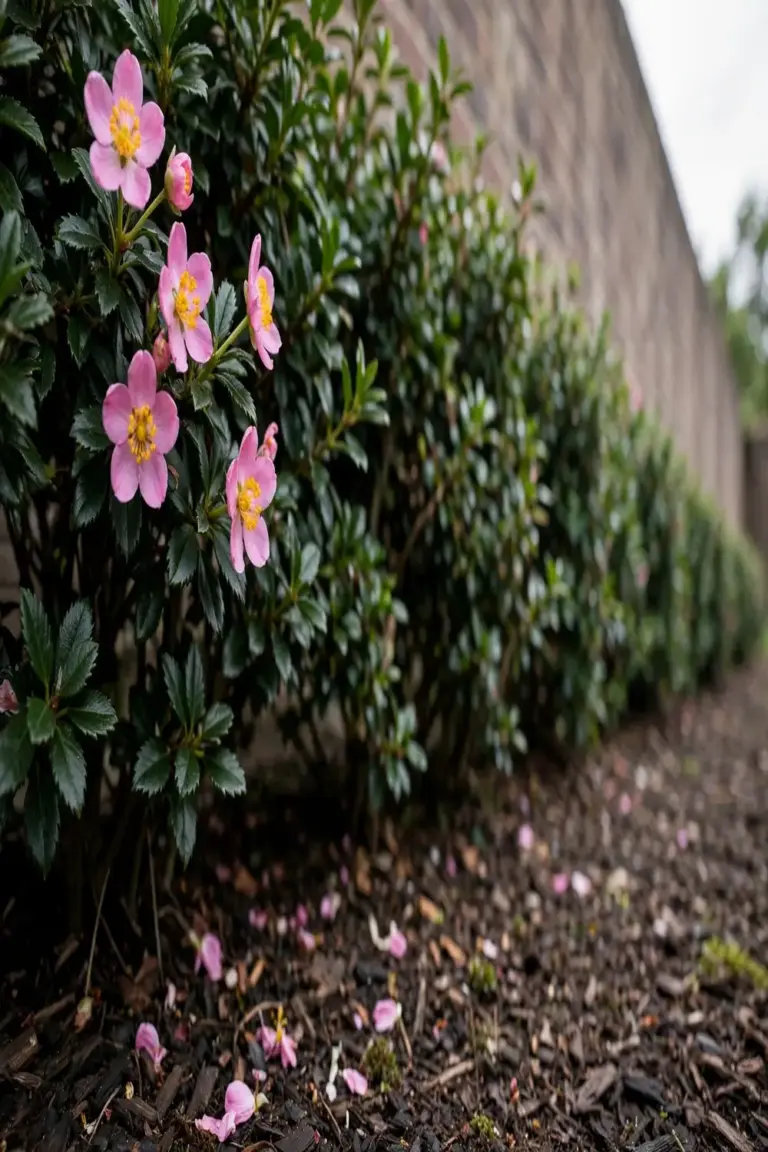
Sasanqua takes more sun than japonica. Mississippi State Extension notes that sasanquas tolerate more sun than Camellia japonica, while excessive direct sun can still scorch leaves in hot climates. Give it morning sun and light afternoon shade in hot inland gardens. Give it full sun in cooler coastal districts. It also flowers in part shade, which makes it flexible on a boundary with mixed aspect.
Its habit is open and spreading, less dense than japonica. Leaves run smaller and darker, finely serrated along the edge, up to 7 cm long and 3 cm wide. Flowers run smaller too, mostly single or semi-double, up to 7 cm across, with a boss of golden stamens at the center. Many carry scent, which japonica flowers mostly lack. Individual flowers drop cleanly after a few days and do not brown on the bush. That clean drop keeps the shrub tidy through its whole flowering season.
Sasanqua flowers suit cutting for a vase for a day or two, but they shatter fast, so enjoy them on the bush. The scent carries on still autumn air, which is why a sasanqua near a path or a bench earns its place twice: flowers to look at, and scent to walk through.
Sasanqua grows faster than japonica. One widely sold hedge pick, ‘Setsugekka’, grows 40 to 60 cm a year to 2 to 4 m tall and 1.5 to 2.5 m wide, according to the Evergreen Trees nursery notes. Species plants reach 5 m. Clip it and it holds a hedge. Leave it and it becomes a small tree.
3. Meet Japonica: The Shade-Loving Late Bloomer
Camellia japonica is the late bloomer. It opens from winter into early spring, when little else flowers, and carries the largest and showiest blooms of the two species.
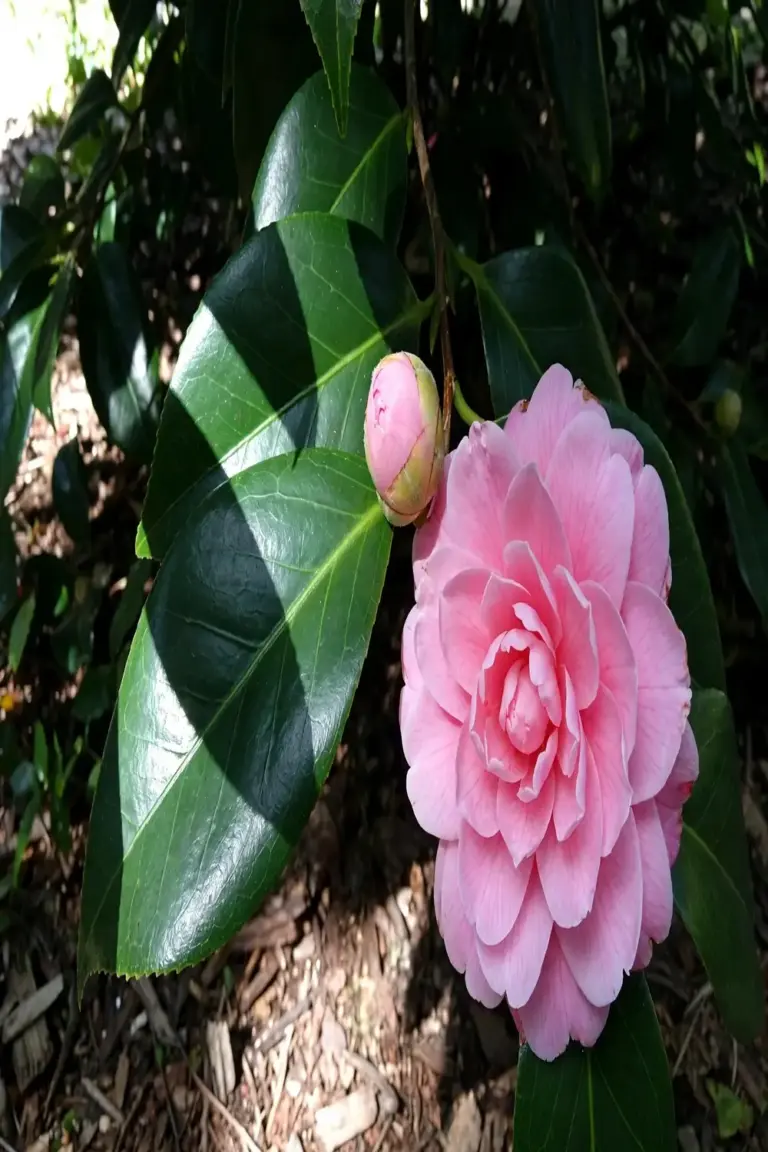
Japonica wants shade. LSU AgCenter notes that camellias grow well in partial shade, such as sun filtered through pine trees, and that plants may suffer stress in full sun. Morning sun with afternoon shade suits it. Dappled shade under a tree suits it. Full western sun burns its leaves and drops its buds.
Its habit is upright and dense, more formal than sasanqua. Leaves run larger and glossier. Flowers run larger, from single through semi-double to formal double and peony form, in red, pink, white, and combinations. A common japonica reaches about 2.4 m tall and 1.5 m wide, though unpruned plants grow far larger, according to the same LSU notes. It grows slower than sasanqua and lives longer in one spot.
Japonica flowers hold longer on the bush than sasanqua flowers, and the formal double forms look cut even when they grow outdoors. Spent japonica flowers brown on the bush, so a quick tidy after flowering keeps the shrub clean. Pick off the brown flowers by hand on a feature plant near the house. Leave them on a background shrub.
Japonica is the colder-hardy of the two. It tolerates more frost than sasanqua. Late frost still damages open flowers, so a sheltered spot away from frost pockets matters even for this species.
4. Read the Head-to-Head Table Before You Buy
The table puts the whole decision on one page. Read your row first, then check the numbers.
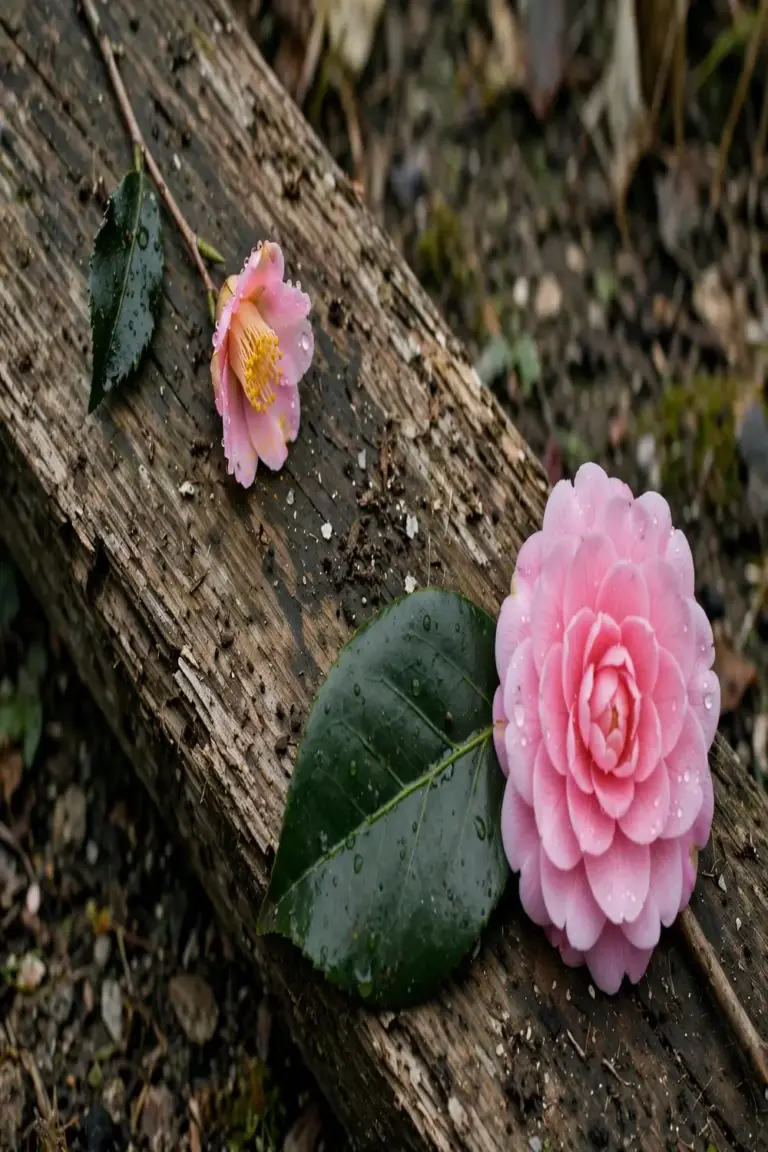
| Trait | Camellia sasanqua | Camellia japonica |
|---|---|---|
| Flowering season | Late summer to early winter | Winter to early spring |
| Sun | Part shade to full sun | Partial shade, morning sun, afternoon shade |
| Mature size | 2 to 5 m tall, open and spreading | About 2.4 m tall and 1.5 m wide is common, upright and dense |
| Leaf | Smaller, darker, finely serrated, to 7 cm long | Larger, glossier, leathery |
| Flower | Smaller, single or semi-double, often scented | Larger, single to formal double, mostly unscented |
| Best use | Hedge, screen, sunny border, pot | Feature shrub, shaded border, pot |
| Frost | Less cold-tolerant, buds drop in late frost | More cold-tolerant, open flowers still frost-damage |
| Prune window | Just after flowering ends | Just after flowering ends |
The two species share one soil rule and one prune rule. Both want acid, well-drained soil. Both get pruned just after flowering ends. Everything else in the table splits.
5. Measure Your Site: Sun, Frost, Soil, and Space
Measure four things before you buy: sun hours decide the species, frost decides the spot, soil pH decides ground or pot, and space decides the pick.
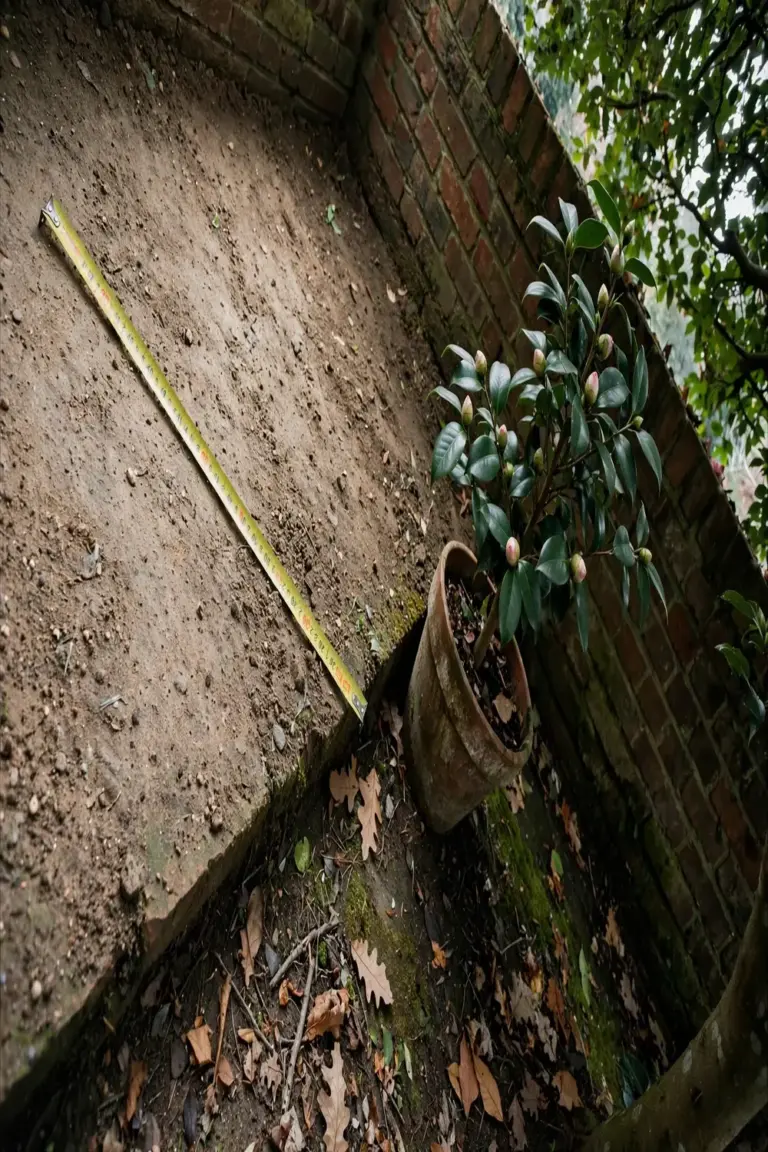
Count sun hours on the planting spot. Full sun means 6 or more hours of direct sun, part shade means 3 to 6 hours best in morning sun, and deep shade means under 3 hours. Sasanqua takes full sun in cooler districts and part shade anywhere, while japonica wants part shade and fails in full western sun.
Watch the sun across seasons, not just on planting day. A spot shaded by a deciduous tree in winter gets full sun in summer once leaves fall, which is the reverse of what a japonica wants. A north-facing wall in the Southern Hemisphere throws reflected heat onto the plant beside it. Stand at the spot at 3 pm in summer. If the sun hits hard and the wall radiates heat, that spot belongs to sasanqua or to nothing.
Find the frost pocket. Cold air pools at the bottom of a slope, behind a solid fence, and in a low corner. Japonica tolerates more frost than sasanqua, but open japonica flowers still brown in a late frost. Plant both species out of the frost pocket. A spot under a tree canopy or near a brick wall that radiates stored heat gives a few degrees of protection on a clear night.
Test soil pH before planting. Camellias want acid soil. The same LSU notes put the band at pH 5.0 to 6.5, with mulch on the surface and high organic matter in the soil. The same Seasol guide narrows the sweet spot to around pH 5.5 to 6. If your soil tests alkaline, skip the ground and grow in a pot with acid potting mix, per the same Seasol guide. A pot beats a slow death in lime soil.
Measure the space using the full-grown size, because the pot size tells you nothing about the plant in 5 years. A sasanqua hedge needs 1 to 1.5 m between plants for a dense informal screen, or 80 cm for a tighter formal hedge, according to the Evergreen Trees notes on ‘Setsugekka’. A japonica feature shrub needs room for a 1.5 m wide crown, and a pot needs a container that holds the root ball with room to grow, plus drainage holes that actually drain.
Run one drainage check before you dig. Dig the hole, fill it with water, and let it drain. Fill it again. If the second fill still sits after a day, drainage is poor and the plant will sit in wet soil. Fix drainage with organic matter and a raised mound, or pick a pot instead. Camellias forgive a dry week faster than they forgive wet feet.
Autumn suits planting. Soil still holds summer warmth, roots grow before winter, and the plant faces its first summer with roots already spread. Spring planting works too, but the plant meets summer heat with a smaller root system. Either way, plant in the cool of the day and water deeply on planting day. The same timing logic behind planting shrubs in fall applies here: roots first, top growth second.
6. Match the Plant to the Job: Hedge, Feature, Pot, or Screen
The job narrows the choice further. Four jobs cover most gardens.
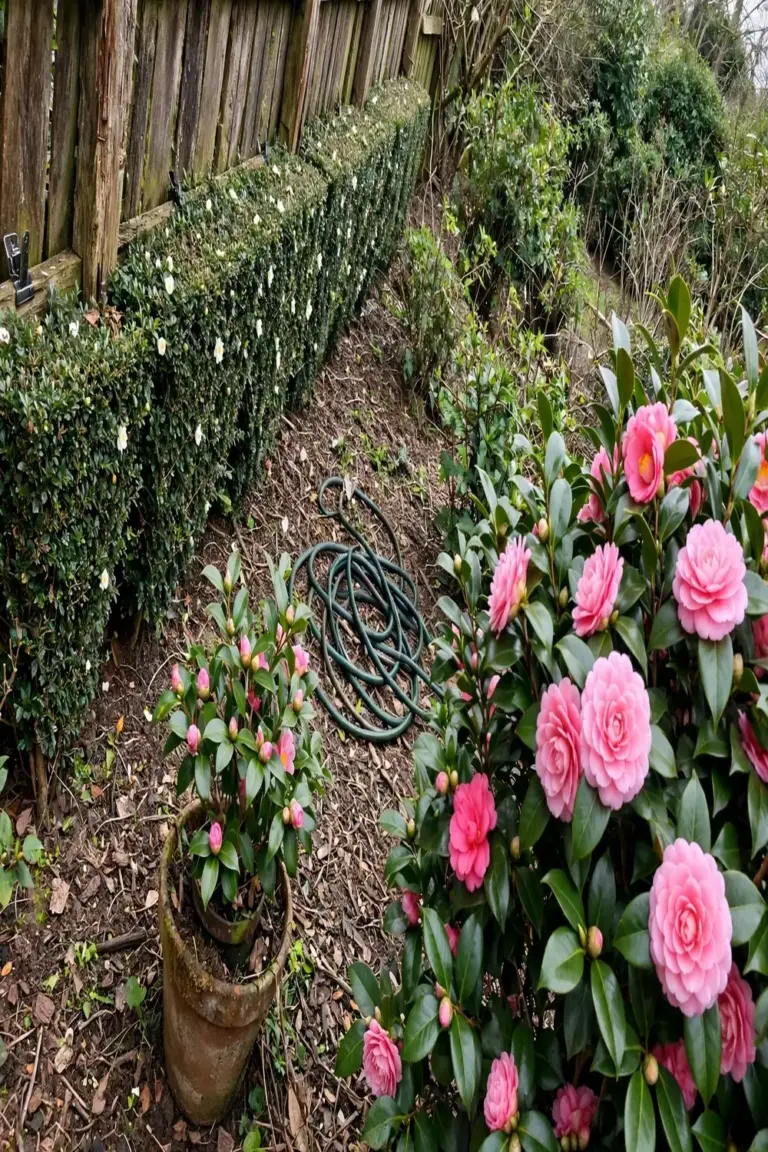
A hedge wants sasanqua. It grows faster, takes sun, clips well, and flowers along the run. Space plants 1 to 1.5 m apart for an informal screen, or 80 cm apart for a tight formal hedge. Trim lightly after flowering. A hedge cut hard in summer loses the next season of flowers. A hedge trimmed twice a year, once after flowering and once lightly in midsummer for shape, stays dense without losing its bloom.
A feature shrub wants japonica. Its dense upright habit and large double flowers carry a lawn corner or a shaded entry on their own. Give it room to reach its natural shape. A feature japonica pruned into a ball loses the form that makes it worth planting. Let it grow, remove crossing branches after flowering, and leave the silhouette alone.
A pot suits either species, and solves the alkaline soil problem outright. The same Seasol guide advises growing camellias in large containers with premium potting mix where garden soil is alkaline. Pick a compact pick, a pot at least 40 cm wide, and acid potting mix. Water pots more often than ground plants. Feed lightly in spring. Repot when roots circle the base. A pot on a hot paved courtyard cooks roots, so lift it onto feet and shade the pot itself in summer.
A screen wants a tall sasanqua. ‘Setsugekka’ reaches 2 to 4 m and holds a dense upright frame, which makes it a genuine screening plant at boundary scale. A japonica screen works in shade but grows slower, so it takes years longer to close the gap. A screen on a windy boundary wants a windbreak first: young camellias in a wind tunnel lose leaves and buds before they ever flower.
7. Give Both Species the Same Four Basics
Both species share four basics. Learn these once and they cover either plant.
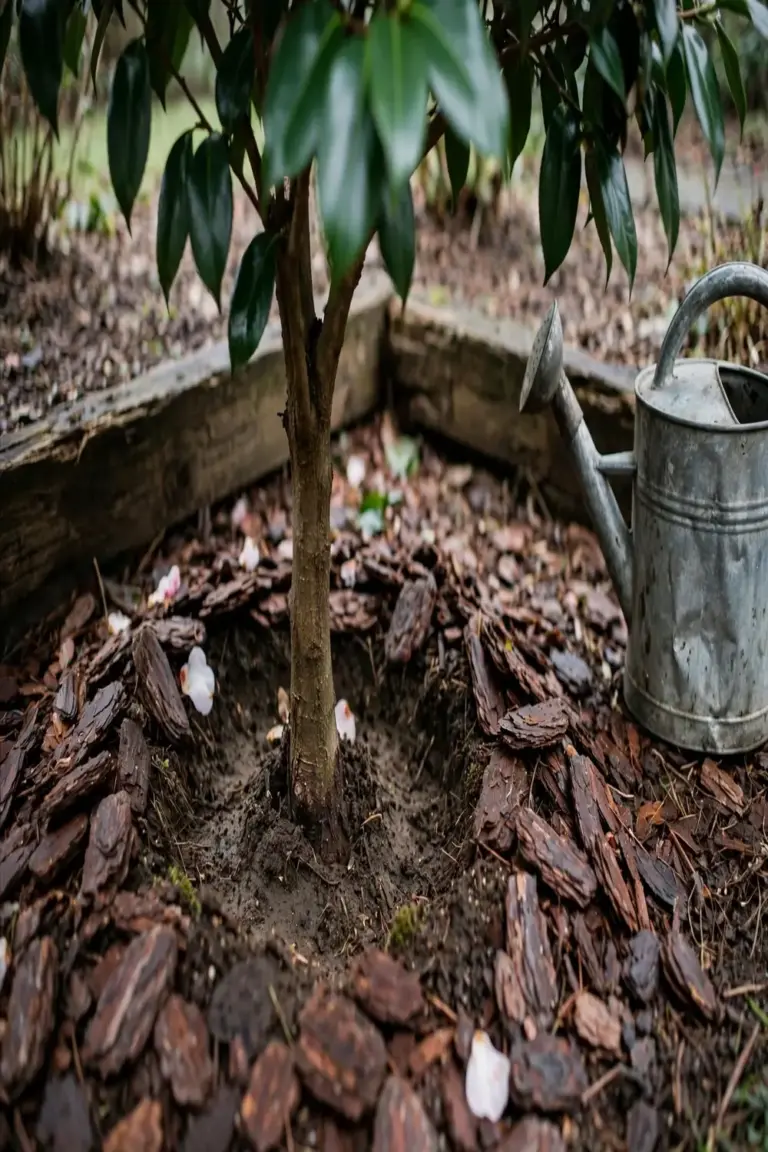
Soil comes first. Both want acid, well-drained soil with high organic matter. The same LSU notes set the pH band at 5.0 to 6.5. Dig organic matter through the planting hole. Plant high, with the trunk base above the surrounding soil line, so water drains away from the stem. Soil that washes over the base rots the bark. The same building soil health basics apply: feed the soil with organic matter and let the roots do the rest.
Water comes second. Keep soil evenly moist, never waterlogged. Camellias dislike wet feet. Water new plants through the first two summers. Water established plants in dry spells, especially while buds form in late summer and autumn. A dry autumn can drop buds months later, even if the plant looks fine through winter. Check with a finger in the soil before watering. If the top 5 cm feels damp, wait.
Mulch comes third. The same Mississippi State notes advise a 2 to 3 inch layer of organic mulch, which converts to 5.1 to 7.6 cm, kept a few cm away from the trunk. Mulch holds moisture, steadies soil temperature, and suppresses weeds. Pine bark and pine needles suit camellias because they do not push pH up. Mulch piled against the trunk holds moisture on bark and invites rot.
Pruning comes fourth. Prune just after flowering ends. The same Mississippi State notes advise pruning immediately after flowering to shape the plant, removing dead, damaged, or crossing branches. That timing leaves the full season for next year’s buds to form. A hard prune into old bare wood leaves a hole that fills slowly, if it fills at all. The same spring pruning techniques cover the clean-cut basics: sharp tools, cuts just outside the branch collar, no torn bark.
Feeding stays light. Feed with a fertilizer made for camellias or other acid-loving plants, once in spring after flowering. Skip fertilizer in the first year after planting. Skip high-nitrogen feeds that push soft leafy growth at the cost of flowers.
8. Know the Named Picks Worth Asking For
Ask for named cultivars, not generic “camellia” stock. Three picks per side cover most gardens.
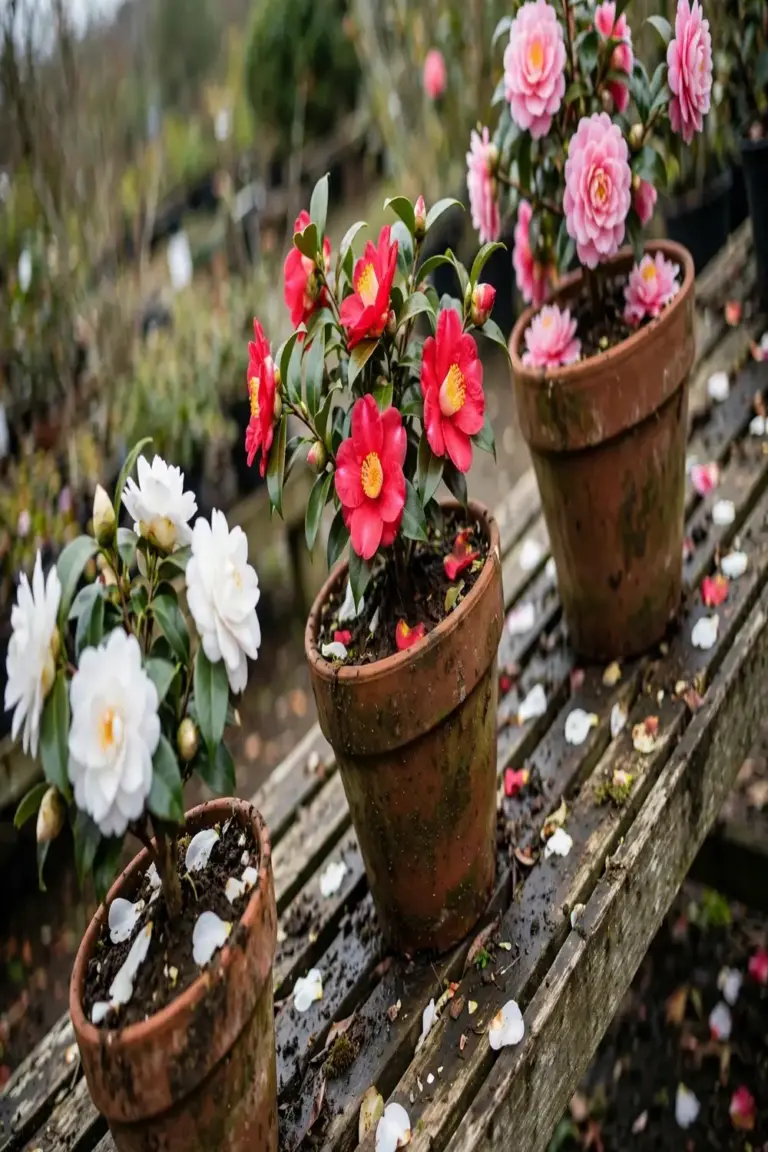
On the sasanqua side, ‘Setsugekka’ is the screening pick. It carries large semi-double white flowers with ruffled petals around golden stamens, blooms from late autumn into early winter, and grows 40 to 60 cm a year to 2 to 4 m tall. ‘Yuletide’ is the Christmas pick. It carries single red flowers in midwinter and holds full sun. ‘Kanjiro’ is the hedge pick. It carries rose-pink semi-double flowers and clips into a dense hedge.
On the japonica side, ‘Debutante’ is the all-round pick. It carries light pink 3-inch peony-like blooms and grows 10 to 12 feet tall, which converts to 3 to 3.7 m. ‘Chandleri Elegans’ is the variegated pick. It carries rose pink anemone-like blooms splashed with white and grows to about 2.4 m. ‘Purity’ is the white pick. It carries formal double white flowers on a full upright plant.
Check the label before you pay. Nurseries sometimes sell hybrids and crosses under a species name. A hybrid like ‘Donation’ crosses japonica with Camellia saluenensis and behaves between the two parents. The label tells you which species you actually bought.
Other camellia species stay out of this comparison. Camellia reticulata grows larger flowers on a rangier shrub and suits warmer gardens, but nurseries sell it rarely beside the two species here. Camellia sinensis, the tea plant, is a different use entirely and does not belong in an ornamental comparison. If a label says only “camellia” with no species name, ask the nursery which species it is before you pay.
9. Skip the Four Mistakes That Kill Camellias
Four mistakes cause most camellia failures. All four are avoidable at planting time.
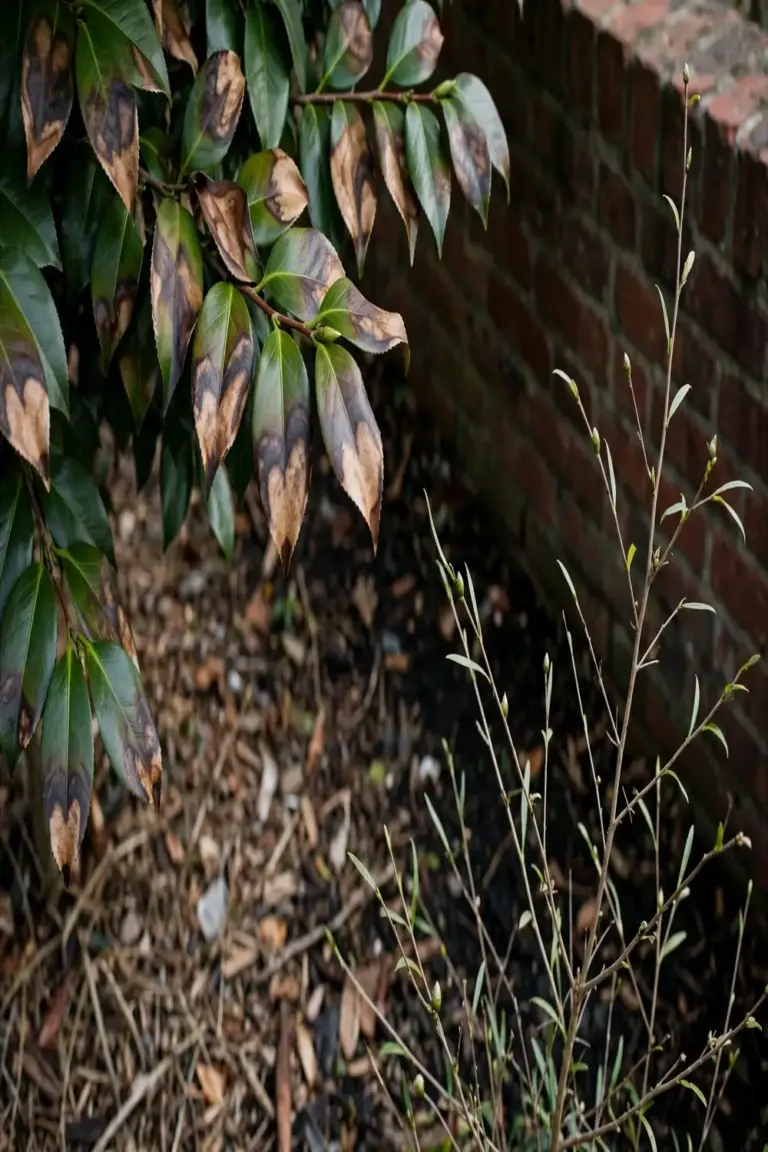
Planting japonica in full western sun scorches leaves and drops buds. The fix is shade: morning sun, afternoon shade, or dappled shade under a tree. A japonica already planted in hot sun needs a shade cloth through the first summer, then a move in autumn.
Planting sasanqua in deep shade thins flowers to almost nothing. The fix is light: move it to part shade or full sun in cooler districts. A sasanqua that never flowers in shade is not sick. It is dark.
Planting in alkaline soil starves the plant slowly. Leaves yellow between the veins. Growth stalls. Flowers fail. The fix is a soil test before planting and a pot with acid mix where soil tests alkaline. Lime added to the bed for other plants poisons camellias in the same bed.
Pruning hard or late removes next year’s flowers. Camellias set buds on the current season’s growth. A prune in late summer cuts off the buds you waited a year for. The fix is timing: prune just after flowering ends, lightly, and leave the rest alone.
Walk the garden once with this list before you plant. Sun on the spot, frost pocket check, soil pH test, space at maturity. Four checks, five minutes, and the plant you buy goes into a spot where it can flower for decades. Skip the checks and the plant tells you the same story next year, in dropped buds.
10. Read the Warning Signs Before Buds Drop
Bud drop is the camellia’s loudest complaint. It has several causes, and the fix depends on which one fired.
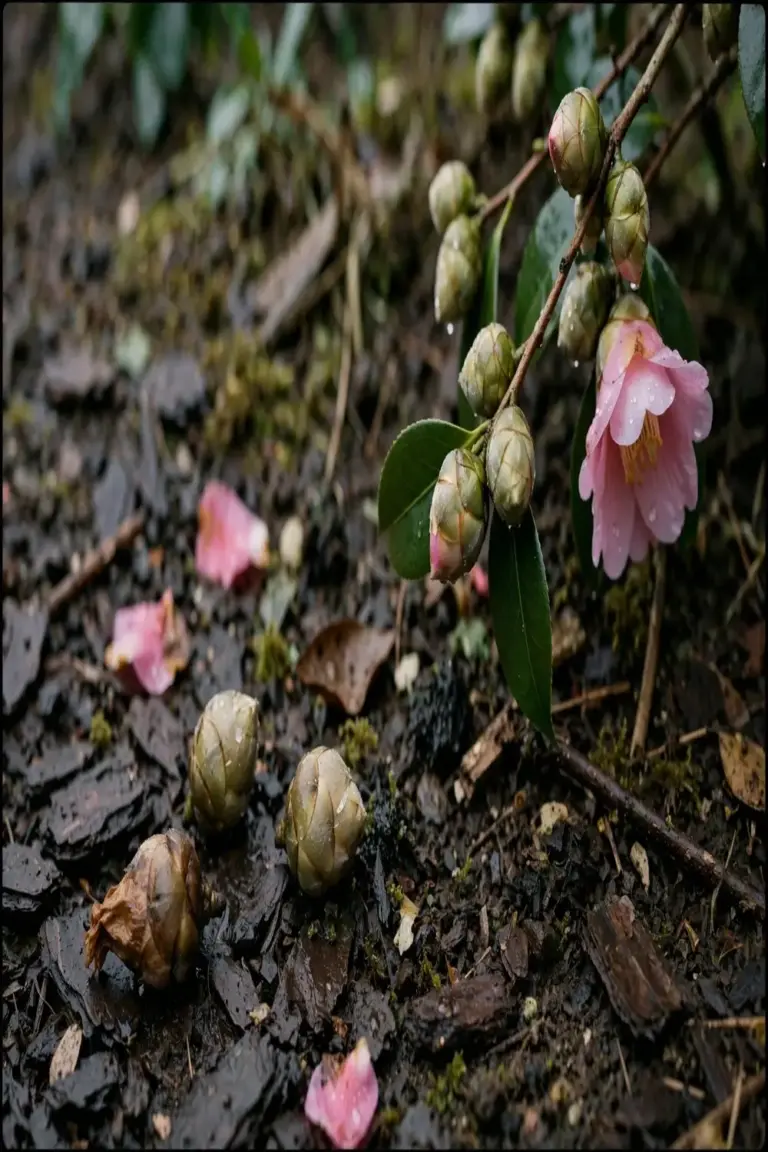
Temperature swings cause buds to drop. Camellias Australia notes that bud drop follows large fluctuations in temperature or moisture, and that freezing temperatures drop buds before they open. Hot weather in autumn or spring pushes shoot growth and drops flower buds. A shadier, cooler spot prevents most of it. Freezing nights during flowering drop open buds first. A plant in a frost pocket drops buds year after year, and no feed fixes a frost pocket.
Uneven water causes buds to drop. Overwatering and underwatering both stress the plant. Gardening Know How lists both as bud-drop causes, along with dramatic temperature change and nutrient shortage. Keep soil evenly moist through late summer and autumn, when buds form. A dry autumn drops buds months later. A plant in a pot dries faster than a plant in the ground, so pots need checking twice as often in summer.
Excess nitrogen pushes leaves at the cost of flowers. The same Camellias Australia notes warn that heavy nitrogen feeds such as blood and bone push new foliage growth at the expense of flowers, and advise applying them just after the flowering cycle. Feed once in spring after flowering. Skip autumn feeding. A camellia fed in autumn grows soft shoots that frost kills.
Bud mite slows buds and drops them. The mites feed inside buds, which open late or fall before opening. Prune out badly affected shoots. Treat with horticultural oil on contact, following the label. A plant that drops buds year after year in the same spot has a location problem, and moving it beats treating it.
Sunscald burns leaves on the sun side. The same Camellias Australia notes record that camellias planted in full sun or against a north or west-facing wall often get sunscald, with scorched or bronzed areas on the side directly exposed to the sun. Once leaves turn brown, they do not recover. Sasanquas, reticulatas, hybrids, and many darker-flowered japonicas endure more exposure than pale japonicas, given good soil, adequate water, and mulch through warmer months. Shade the plant or move it. The damaged leaves stay until the next flush replaces them.
Browning stays out of this guide on purpose. Brown leaves, brown flowers, and brown buds each have their own causes, and guessing between them wastes a season. One pointer covers it: check water first, then sun, then frost, then feeding, in that order.
11. Camellia Sasanqua vs Japonica FAQ
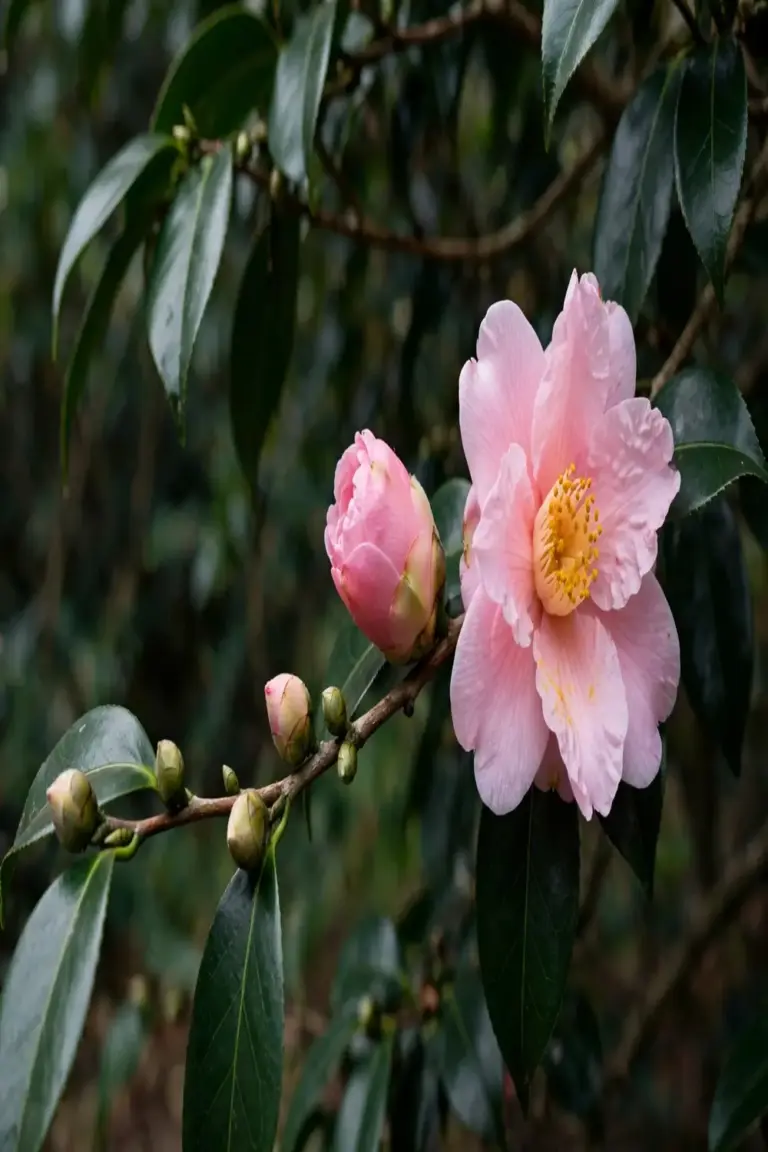
Sasanqua flowers first. Sasanqua opens from late summer into early winter. Japonica opens from winter into early spring. Planting one of each stretches camellia flowers across two seasons, as long as each plant gets the light it wants. A sasanqua in shade and a japonica in sun both flower poorly.
Sasanqua grows in full sun in cooler coastal districts. It takes more sun than japonica and holds a hedge in an open sunny spot. In hot inland gardens, give it afternoon shade to protect foliage from scorch. In deep shade it flowers thinly. Part shade suits sasanqua anywhere in Australia.
Japonica fails in full sun, especially western sun. It wants partial shade, morning sun with afternoon shade, or dappled shade under a tree. Full sun scorches leaves, drops buds, and stunts growth. A japonica already planted in hot sun needs shade cloth through summer, then a move to shade in autumn.
Sasanqua makes the better hedge. It grows faster, takes sun, and clips well. Space plants 1 to 1.5 m apart for an informal screen, or 80 cm apart for a tight formal hedge. Trim lightly after flowering. Japonica works as a hedge in shade but grows slower, so it takes years longer to close gaps.
Camellias need acid soil. The working band is pH 5.0 to 6.5, with the sweet spot near pH 5.5 to 6. Test soil before planting. Where soil tests alkaline, grow camellias in large containers with acid potting mix. Lime added for nearby plants poisons camellias in the same bed.
12. Buy the Plant That Fits the Site You Have
The decision takes five minutes. Count sun hours. Check frost. Test pH. Measure space. Then pick the species that fits those four numbers.
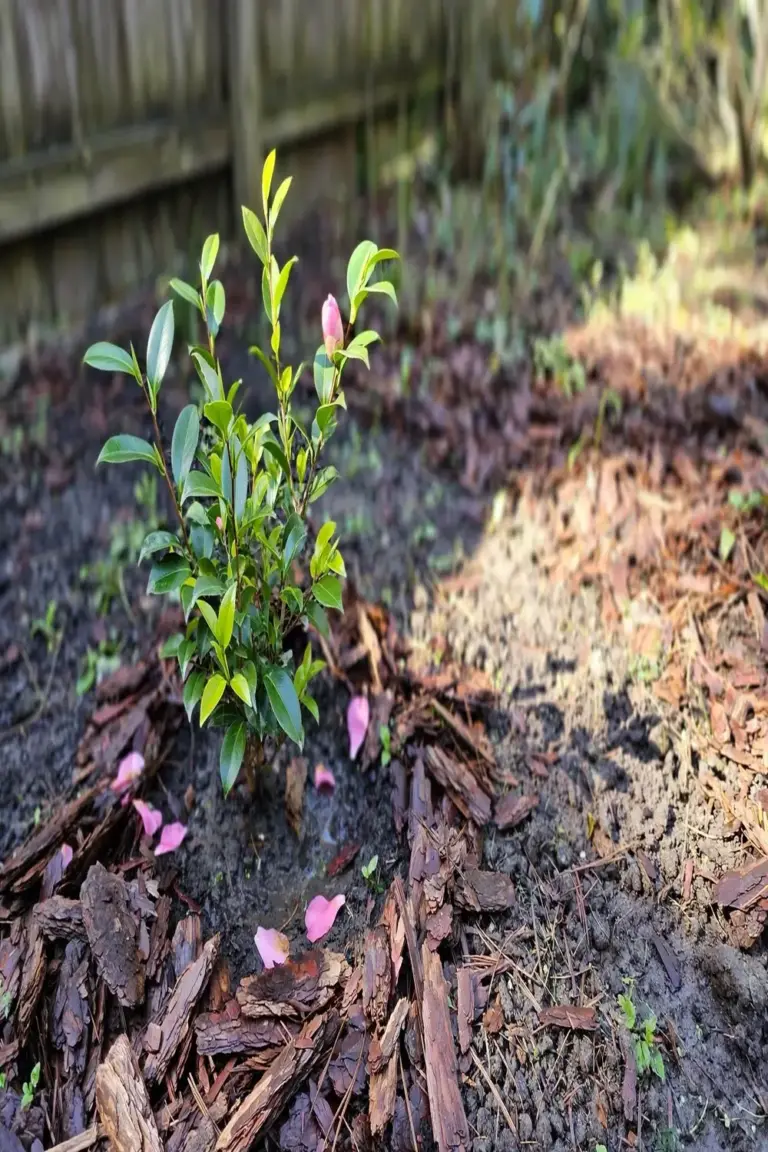
Sasanqua for sun, a hedge, and early flowers. Japonica for shade, a feature shrub, and late flowers. Either species in the right spot flowers for decades with one light prune a year after flowering ends. Buy the plant that fits the site you have, and the flowers follow.
Run five checks at the nursery before you pay. First, read the label and confirm the species name, sasanqua or japonica. Second, look for buds: a plant with buds proves it flowered last season and will flower this one. Third, check the foliage: deep green, glossy, no yellow between veins. Fourth, tip the pot and look at the roots: white root tips are healthy, a solid mat circling the base is pot-bound. Fifth, confirm the pot size matches the price; a small plant in a large pot was recently potted up and has not rooted through yet.